University of Huddersfield Repository
Harker, Alexander and Tremblay, Pierre Alexandre
Rethinking the Box: Approaches to the Reality of Electronic Music Performance
Original Citation
Harker, Alexander and Tremblay, Pierre Alexandre (2013) Rethinking the Box: Approaches to the
Reality of Electronic Music Performance. In: IRCAM Forum, 2022 November 2013, IRCAM,
Paris. (Submitted)
This version is available at http://eprints.hud.ac.uk/id/eprint/18549/
The University Repository is a digital collection of the research output of the
University, available on Open Access. Copyright and Moral Rights for the items
on this site are retained by the individual author and/or other copyright owners.
Users may access full items free of charge; copies of full text items generally
can be reproduced, displayed or performed and given to third parties in any
format or medium for personal research or study, educational or notforprofit
purposes without prior permission or charge, provided:
•
The authors, title and full bibliographic details is credited in any copy;
•
A hyperlink and/or URL is included for the original metadata page; and
•
The content is not changed in any way.
For more information, including our policy and submission procedure, please
contact the Repository Team at: [email protected].
RETHINKING THE BOX: APPROACHES TO THE REALITY OF
ELECTRONIC MUSIC PERFORMANCE
Alexander Harker, Pierre Alexandre Tremblay
CeReNeM
University of Huddersfield
Huddersfield, HD1 3DH, United Kingdom
[email protected]
/
[email protected]
ABSTRACT
This article extends certain methodological elements of the work presented in the Thinking Inside the Box Project [26], by exploring efficient software-based meth-ods for improving sound reproduction within the concert hall. The key problems discussed are: (1) the detrimental effects of room acoustic and/or sub-optimal loudspeaker design on the frequency response of amplification systems for concert use; (2) the non-ideal frequency responses typically encountered when using close-microphone tech-niques or contact transducers (the methods most suit-able for live applications, including the presentation of pieces utilising live processing). The need for pragmatic, musician-centric software addressing these issues is iden-tified, along with a set of criteria relevant to musicians working in the fields of live electronic performance and interactive technologies.
These problems, along with proposed solutions and software tools, are investigated practically in both con-trolled conditions and real world scenarios, and the out-comes of experimentation and testing are discussed in de-tail. Real world testing of the methodologies and tools is considered essential in order to ensure that any developed tools and correction procedures are robust and viable for use within the constraints of a typical concert performance of electronic music.
Finally, a generic procedure is presented for rapidly generating and applying inversions to speaker/room com-binations and close audio capture using software devel-oped to satisfy the requirements outlined earlier (The
HISSTools Impulse Response Toolbox[12].
1. CONTEXT
The research presented here builds on previous work by one of the authors into a number of issues relating to the concert presentation of works combining electronic and instrumental forces [26]. It extends this research by taking a complementary approach to issues involved in the live performance of electroacoustic music.
One strand of the prior research focused on recreating the sound of the concert hall when auditioning in the stu-dio, thus addressing the dichotomy between the sound of the studio and that experienced in the concert hall. This
study takes the opposite approach to the issue of dispari-ties between studio and concert hall conditions by explor-ing efficient software-based methods for improvexplor-ing sound reproduction within the concert hall. Here we attempt to deal with key issues in sound reproduction and sound cap-ture to allow more predictable results in the concert hall, with a better correlation to those experienced in the more ideal listening conditions of the studio. Whilst using a vir-tualisation of the concert hall might be considered as an accurate way of evaluating the realities of concert presen-tation, it implies a bias towards a certain venue type whilst composing. In reality there is often a need to present works in previously unknown spaces of differing size and design. Thus, this new approach seeks to ensure the high-est level of success when considering portability between venues.
Practical limitations and requirements were key in the design of appropriate tools for accommodating the real-ities of presentation within concert hall scenarios. Con-certs of electronic works are often highly constrained in terms of time and resources [6, p. 205-7], and these con-straints must be taken into consideration in order to reach workable solutions. The proposals presented here have been implemented not only as test cases, but also deployed successfully in a number of professional concert scenar-ios, both in-house and at external events.
2. PROBLEMS
The starting points for our research are two distinct but related problems encountered when presenting electronic music in a concert hall environment.
2.1. Problem #1: System Frequency Response
of the sound. Particularly problematic are prominent room modes that result in boosts within narrow frequency bands [28]. These can effectively destroy sound judge-ments taken at the mixing stage, rendering previously cor-rectly balanced materials inconsistently with misbalanced chords, non-fluid lines and inaccurate timbral balance.
Less ideal loudspeaker models can also have a sig-nificantly detrimental effect to the reproduced sound due to poor frequency response. However, regardless of the source of the issue, the combination of loudspeaker and room acoustics act as a system that affects the frequency response experienced by the listener. This system is in practice complex, with each individual path from loud-speaker to single-point listening position having its own characteristic frequency response. However, we can ex-pect many common asex-pects to the frequency responses of these paths [11].
It should be noted at this point that, of course, any sound made within an acoustic space (such as instrumen-tal sources) will be similarly affected by the room acous-tics. When combining instrumental and electronic forces this can become a relevant consideration (as discussed in section 4.3.1). However, whereas instrumental perfor-mance allows a high degree of flexibility in instrumental balance and response to the acoustics, electronic materi-als rarely offer the same level of flexibility, if in fact they offer any flexibility at all, an issue which complicates the successful presentation of works mixing instrumental and electronic forces [8, p. 108]. Additionally, the reverberant qualities of any concert hall space are part of the experi-ence of presenting work in that environment, and are not to be seen as purely ‘problematic’. In fact, for some pur-poses (such as in the practice of diffusion), these form a key aspect of the performance. Thus, our goal is to improve practical listening conditions in the concert hall, mitigating the most significant and problematic aspects of the system, and not to negate all acoustic effects of the space.
2.2. Problem #2: Close Microphone Capture
When presenting pieces that require processing of a live instrument or voice, close instrument capture with a di-rectional microphone or pickup is often used to drive the processing. This approach minimises spillage from other sound sources (instruments or loudspeakers), and reduces the potential for feedback. Choices of close capture may also be a matter of practical convenience (for instance the use tie-clip type wireless vocal microphones to allow mo-bility). However, the tonal balance of close capture is of-ten non-ideal, due to the proximity effects and instrumen-tal radiation patterns [7]. Given that the reproduction sys-tem may also be non-ideal (as discussed above), the result-ing sound (before any processresult-ing) is often significantly coloured, causing issues of blending with any acoustic sound. Here, the amplified/processed sound takes on an artificial quality due to formantic deformation resulting from the combined frequency response of the capturing and reproduction systems.
An ideal solution would allow for minimal feedback and spillage, whilst representing more faithfully the sound of the instrument or vocalist.
3. PROPOSED SOLUTIONS
3.1. General Approach
We take the approach of modelling both of these prob-lems as inversion probprob-lems, with the assumption that the unwanted effects of any system can be modelled as one or more linear time-invariant filters that can be inverted to form correction filters for the reproduced or captured au-dio. The effect of these correction filters is to mitigate the problematic effects of the system. Furthermore, assuming the filters (and associated inversions) are finite, the correc-tion filters can be applied using convolucorrec-tion. Such a model views the effects of loudspeaker and room as a single con-volution operation. As concon-volution is commutative, cor-rection can be appliedbeforethe loudspeaker/room sys-tem with the same result as applying the correction post system (which would be impossible in any case).
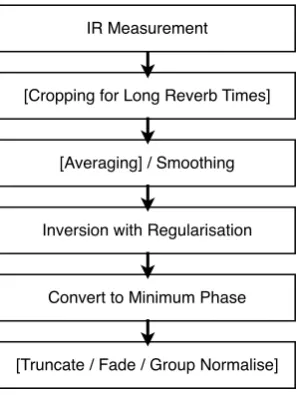
Thus, the procedure follows a general three-part pro-cess:
1. The system in question is measured to provide a set of frequency responses for inversion.
2. The measured responses are processed to form practically usable correction filters.
3. The correction filters are applied from impulse re-sponses (IRs) via convolution (either pre-output stage in the case of loudspeaker/room correction, or immediately post-input in the case of close cap-ture).
In order to measure the effects of close capture we follow a variation of the approach proposed by Bassuet [5], who suggests that the effect of close capture can be modelled by comparing the close capture with a micro-phone that has been placed to provide optimal tonal bal-ance. The instrumentalist or vocalist is then required to play across the range of their instrument (Bassuet sug-gests two full-range chromatic scales, one loud, one soft). We also propose the addition of a set of noise-based in-strumental techniques, in order to produce significant fre-quency content that may not be provided by conventional playing, but nonetheless may be musically relevant to the presentation of some works. The difference between the close and more distant captures gives the filter to be in-verted1.
As electronic musicians are typically computer-based, we propose in both cases a software-based solution that can be applied using readily available equipment that al-ready forms part of the musician’s toolset.
3.2. Existing Tools
3.2.1. Literature
The subject of room and loudspeaker correction has been explored in some detail, although not without some dis-agreement regarding effectiveness/viability (see [10, 20, 17, 21]). The existing literature forms the basis for many of the algorithms and approaches taken here. The area of microphone correction is less explored, although there is significant technical overlap in our approaches to the two identified issues. Importantly, as musical practition-ers, our goal is to develop a solid set of tools that can be deployed in practice for concert hall presentation, rather than to explore only theoretical, or experimental results. Additionally, our interests are in determining practically viable solutions combining the most robust and potent ap-proaches from the pre-existing literature. Specific algo-rithms and techniques are discussed below where relevant.
3.2.2. Pre-existing Software and Hardware Solutions
These fall into two categories:
The first category addresses only parts of the tech-nical problems explored (such as deconvolution or real-time convolution), suggesting that a user might be able to create a chain of tools to create and implement appropri-ate creation filters. These include open-source tools such as FScape [24](for batch deconvolution and other spec-tral processing), or any of the many available commercial or non-commercial convolution plug-ins (such as Audio Ease’s Altiverb [4], Wave’s IR-1 [27] or Lernvall Audio’s LAConvolver [15]). In the latter case, many of these are designed specifically for reverb usage. This means that the user cannot be certain to apply a IR-based correc-tion filter exactly as calculated, due to possible addicorrec-tional unwanted automatic IR processing (trimming/automatic gain matching etc.). However, the key issue when con-sidering this category of available technologies is finding a suitable tool for performing filter inversion appropriate to room, speaker and microphone correction tasks. Whilst there may be technical tools available that enable expert users to create correction filters (such as via MathWork’s signal processing toolbox for MATLAB [19]), these offer a very generalised interface to generic signal processing tools, rather than a rapid and viable solution to a specific problem. The use of tools in this category is impractical due to both the high level of technical knowledge required, and also the need for a simple and speedy process in the concert hall.
The second category of solutions are fully-formed room correction software or hardware solutions (such as Real Sound Lab’s CONEQ [23], IK Multimedia’s ARC [16] or the open source DRC [25]). These, are commonly targeted at studio or home listening usage and tend to of-fer an all-in-one black box solution to the problem of room correction (the exception being the somewhat experimen-tal DRC - an open source project), with little flexibility. This leads to a set of practical limitations including re-strictively short FIR lengths, induced system latency (not
suitable for realtime/live work), inflexible and lengthy measurement procedures and channel number limitations.
3.3. Musician-centric Solutions
To suitably address these problems requires that any tools are suited to the realities and limitations of concert hall performances. As previously advocated in [26], pragma-tism is of prime importance. We therefore take into ac-count a number of concerns specific to the musician pre-senting electronic works in a live context.
3.3.1. Noticeable Subjective Sonic Improvements
As musicians we must insist on the primacy of the ear for judging the quality of results. Improvements must not in-troduce noticeable detrimental effects. Our goal is a prac-tical gain, rather than a theoreprac-tical one.
3.3.2. Rapid Deployment
Rehearsal and preparation time for electronic music con-certs is often tight, and necessarily the focus must be firmly on musical, rather than technical concerns to ensure a successful presentation of the work. Lengthy or overly complex calibration procedures are therefore not viable.
3.3.3. Ease of Use
There should not be a requirement for in-depth technical knowledge on the part of the user. Many composers and performers of electronic music are non-specialists from a technical viewpoint, and should be able to achieve good results without having to acquire substantial additional knowledge or expertise.
3.3.4. Flexibility
Tools should be able to accommodate variable numbers of channels/measurement procedures and offer the ability to fine-tune results quickly for a particular task or space.
3.3.5. Low Latency for Live Use
Particularly in the case of interactive or live work (as opposed to playback), additional latency is undesirable within the system. Ideally, corrective filters should add no (or negligible) latency.
3.3.6. Appropriate Environment
Any software tools developed should fit into the workflow and toolset of a typical electronic musician.
4. DEVELOPMENT AND CASE STUDIES
4.1. Process
4.1.1. Empirical Methodology
processing literature, in order to develop a combination of steps that would produce practically usable, sonically convincing results. Our approach was to start from the least sophisticated techniques and increase sophistication as necessary in order to determine a minimally complex procedure of practical application, rather than assuming that the technically most elaborate solutions would be op-timal (which here should be read as the most suited to the design criteria, rather than simply as indicating technical optimality). Throughout the process, successive develop-ments were informed by practical evaluation and audition; both in the selection of algorithms, and in refining steps in the correction processes.
4.1.2. Synthetic Tests
Algorithms were first tested using predictable and known signals to ensure correctness and basic sanity. For in-stance, the convolution of single unit value sample (a dirac delta signal) with itself should yield a third identical sig-nal. Any deviation reveals deficiencies in the coding of the algorithm.
In other situations, synthetic tests are a good measure of the limits a real world solution might hope to achieve. For instance, from a theoretical viewpoint, if a signal is convolved with an impulse response (such as that of a room/speaker combination), and then the result convolved with the inverse impulse response, the result should be an exact replica of the input. However, in reality the im-pulse response is unlikely to be exactly invertible (in a nu-merical sense) [21], and typically a method to avoid filter blowup must be employed, alongside the use of a mod-elling delay to generate a causal inversion filter (both is-sues are addressed in [18]). Utilising such techniques it is possible to evaluate the efficacy of direct impulse response inversion given a completely stable impulse response (this is equivalent to an attempt to dereverberate a signal). Here we found significant issues with audible pre-ring or post-echo, with noticeable low-level ‘ghosting’ of the input, despite the theoretically optimal conditions of a time in-variant response. In practice, the frequency response(s) of a room/speaker combination will vary at least slightly over time and space, and real world test results of such an approach gave totally unusable results, not even ap-proaching convincing from a listening position coincident with the microphone. However, given that the results from a synthetic system produced audible artefacts, it was clear that such an approach would not be capable of produc-ing a viable solution in practice, even given a significant narrowing of the gap between real world and synthetic re-sults.
4.1.3. Module Design and External Testers
MaxMSP was chosen as a relevant and dominant platform for musicians working with instruments and electronics, or interactive media. It has a wide user-base with vary-ing levels of technical expertise. The aim in design was to follow the message format and naming conventions set
by the standard library of objects in MaxMSP. This aspect of the process was also aided by an international set of expert testers, in a range of musical and technical fields, all well-versed in the MaxMSP environment. The process of feedback on interface (as well as functionality) was in-valuable in ensuring that messages and object properties were consistent both with the core library, and across dif-ferent objects.
4.2. In-house Testing
4.2.1. University of Huddersfield Studios and Initial Pro-totyping
Initial tests focussed around a controlled studio setup. Al-though these do not provide a realistic model for a concert hall setup, the University of Huddersfield studios provided a good reference point for basic algorithm tests, and pro-viding a consistent and known setup to audition improve-ments in a more controlled environment.
Early prototyping focussed on the integration of mea-sured power levels across the spectrum using a known noise signal (typically pink or white). By comparing the relative power spectrum of the two signals (output -the noise signal, and input - -the same signal picked by a microphone in the space) it is possible to determine a inversion signal. It is important to note that ideally a flat microphone is required to make measurements, as the microphone is part of the system under measurement. We used aDPA 4006omnidirectional microphone for all speaker correction tests, as it is a class one microphone design. The approach is a similar approach to the one suggested by Bassuet for performing microphone correc-tion [5], where the power spectra are estimated using time-integration of successive STFFT frames. In our case, we also averaged measurements from a number of listening positions to represent a wider listening area more accu-rately, rather than that of a a single listening point. Whilst reasonably convincing results were obtainable, such an approach suffers several practical and theoretical limita-tions:
Measurement Time - This method of time integra-tion is highly approximate, and results vary wildly be-tween subsequent frames. Longer measurement times sig-nificantly improve the reliability of the measurement as the variance of the power spectra mitigated by the av-eraging of a number of frames, with larger numbers of frames resulting in less variance. However, the results do not compare particularly favourably with more ad-vanced methods of impulse response measurement. As rapid usage is a paramount concern, we did not consider the time/reliability trade-off to be acceptable for practical purposes.
reason-able time frame necessitates a limited frequency resolu-tion.
Frequency Smoothing - As mentioned, typically the results of this kind of measurement are highly noisy across the frequency range, due to both the complex nature of room frequency responses, and the approximate na-ture of the technique. Therefore it was necessary to ap-ply smoothing (see [13, 14]) to the power spectra prior to inversion. This results in spectra that are less noisy and better represent the overall frequency response of the room/speaker combination, rather than the details of reverberation. We verified that corrections based on smoothed spectra were both substantially more convinc-ing aurally than those without smoothconvinc-ing (which suffered many detrimental peaks/notches), and more applicable to a number of different listening points.
Time Alignment - The assumption made here is that the two power spectra equate to the exact same period of the known signal, ideally allowing each frame of the STFFT for each signal to be correctly aligned. However, the latency induced by the audio IO means that the sig-nals are not aligned in realtime. One option here is to estimate the time delay of arrival before averaging, in or-der to correctly align the signals. However, this adds an additional measurement requirement, for which a naive method (such as cross-correlation) may return an incor-rect result, thus reducing the reliability of the main power spectra measurement. Ideally we would avoid both the ne-cessity for another calibration (which is necessary at each new measuring position) and the possibility of significant error in the measuring process.
Lack of Time/Phase Information - This method dis-cards any time or phase information. Thus, it it gives equal weighting to all reflections in determining the fre-quency response, regardless of how late in the system’s impulse response. As concert halls may exhibit long re-verb tails this means the correction is based on the entire length of the impulse response, which may be a poor rep-resentation of what the listener hears as the direct sound. Reverb tails tend to increase in coloration over time (due to the cumulative filtering effect of repeated reflections off similar surfaces), and thus including the late reflections in the inversion potentially results in an over-correction of the perceived frequency response, which better corre-sponds to the earlier part of the impulse response.
Minimum Phase Corrections- As latency was a key concern, it was decided to convert filters to minimum phase, giving the same amplitude response in the fre-quency domain, but with the energy of the filter placed as early as possible to minimise latency. Before this, the filters (in the absence of phase information) were linear phase, requiring a latency of half the filter length. Min-imum phase filters were found to provide negligible la-tency.
4.2.2. A second approach
Due to the restrictions of an approach based on time integration of power spectra, it was decided that a
di-rect method of impulse response measurement would be preferable. For this, we employed the exponentially-swept sine wave method (or ESS - see [9]), along with less accurate methods based on the direct deconvolution of known noise signals (which may be preferable for occu-pied spaces, although less accurate results). As before, we propose averaging measurements from several listening positions, and smoothing the overall result (for the same reasons as given above). As well as providing a more ac-curate measurement of the system, without the need for explicit time alignment, this approach also allows for the truncation of the impulse response (with appropriate fad-ing out), in order to treat only the early part of the re-sponse, ignoring the longer reverb tail. This was found to be of particular use in larger venues, where a truncated re-sponse of around 300ms gave more perceptually pleasing results. Inverting the whole impulse response tended to overemphasise the upper frequency range. This is not un-expected, as most venues will exhibit a significant rolloff of high-frequencies over time.
As our concern is the correction of the amplitude spec-trum, we favour the dismissal of phase entirely, and thus smooth the power spectrum only (after truncation). The complex smoothing proposed in [14], arguably conflates phase and amplitude information, and we found this con-flation to produce undesirable and nonsensical results with long filter/measurement lengths.
It is important to note that individual channels are in-verted separately in a multi-mono approach, although this process is carried out in parallel, so as to preserve rela-tive level differences between channels (thus correcting for them during the inversion process).
For the inversion several methods of combatting over-correction were employed, including regularisation [18], which in practice we found to be sufficient for our pur-poses. However, the other methods explored are also available in the final software for applications where they might be relevant.
4.2.3. HISS System
Both the initial prototypes and the revised approach were tested usingHISS(Huddersfield Immersive Sound System [1]); a multichannel sound system for the presentation of electronic music.
Listening was carried out from a range of on- and off-axis positions within the concert hall. Tests of recorded material were played back over a range of loudspeaker types, both with correction and without for A-B compari-son, taking care to match the levels of both versions in or-der to avoid bias due to loudness. This balancing was per-formed manually, as it is the perceptual level that must be matched, rather than the numerical amplitude level (such as RMS), which will most likely not result in perceptually matched results.
Speakers tested were:
2. Bose L1mk2, with B1 subwoofer
3. Bellecour 360Sound
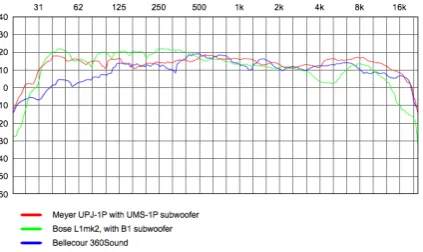
Typically, results were clearer with the corrected au-dio, and improvements were noticeable, once appropriate parameters had been chosen. The speaker design was an important factor, both on the efficacy of the procedure, and suitable choices for parameters. In particular, correct-ing theMeyer UPJ-1Psetup gave more subtle results than the other speaker designs, which have significantly more coloured frequency responses (both in their published specifications and the measurements taken). Figure 1 compares the frequency responses of theMeyerandBose
[image:7.595.65.280.391.514.2]models (responses shown with 1/3 octave smoothing). It is apparent that theBosesystem has noticeably larger de-viations in frequency response (for instance the obvious dip around 4.8kHz) and also less low and high frequency extension than theMeyersetup. Figure 2shows the Bel-lecour speaker also. The more colouredBoseand Belle-courmodels exhibited a more dramatic and obvious sense of correction. However, whereas with correction of more coloured speakers the improvement was a noticeably flat-ter frequency response, for theMeyerspeakers, subtleties of the mix became more apparent, such as stereo imaging, and depth perspective.
Figure 1.MeyerandBoseFrequency Responses(Hz / db)
Figure 2. Loudspeaker Frequency Responses(Hz / db)
Extremes of frequency were a particular listening fo-cus, as both very high and low frequencies tended to be the most obviously affected by parameter changes in the
correction. Typically, regularisation can be minimal for the majority of the frequency range (having almost no no-ticeable effect on the results of the inversion), but as the system rolls off at either end more regularisation is nec-essary to prevent the system from becoming overdriven. Before the onset of distortion, overcorrection results in a harsh and fatiguing sound, the result of driving the ex-tremes of the spectrum beyond the viable limits of the speaker/amplifier designs. Thus, it is necessary to exer-cise care in choosing both the amount of regularisation at the extremes, and also the frequency points at which to start applying noticeable correction. We employed trape-zoidal regularisation shapes in the log-log domain (log frequency vs. dB level). As the more coloured speaker designs tested had less low/high frequency extension than the Meyermodels, the trapezoid needed to be narrower and steeper in order to produce useable results for these speakers. Obviously, this also implies that the result has less low- and high-end content in these cases.
The earlier time-averaging approach (see sec-tion 4.2.1)was less convincing in dealing effectively with low frequencies. This is probably due to the reduced fre-quency resolution resulting from shorter filter lengths (for the direct IR measurement approach, filters of arbitrary length are possible, potentially lasting for several sec-onds), and the approximate nature of the measurement; which is liable to be more representative at higher fre-quencies. This is due to a greater degree of smoothing at high frequencies, and thus each high frequency bin value is result of the averaging of more data points, reducing the variance of the measurement. With this earlier ap-proach, issues of a perceived lack of bass were appar-ent. Using the ESS measurement technique as the basis for inversion resulted in a more even low end, in which balance between subwoofer and full-range speaker was improved, especially in the case of ‘hyping’ of the low end, which tends to sound more instantly attractive when quickly calibrating subwoofer levels by ear. The control of low-mid range frequencies, where the most problem-atic room modes tend to reside was also more precise us-ing correction based on ESS measurements.
[image:7.595.66.278.568.694.2]amount of smoothing at 0Hz and the Nyquist frequency in cycles/sample (units of normalised frequency). We found values of 0 cycles/sample at 0Hz and 0.08 cycles/sample at the Nyquist frequency to produce reliably useable re-sults, and propose these as defaults, although tweaking to taste may be desirable for specific scenarios and applica-tions.
We also auditioned linear phase filters against the min-imum phase equivalents, as an A-B comparison. Even when individually correcting channels, no perceivable dif-ference was noticeable when switching between phases, probably due to the similarity and smoothness of the cor-rection filters. Although one might expect that the differ-ence between filters may result in timing issues between channels, it would seem that the ear is simply not sensitive to the kinds of differences found in practice in the concert hall, and it was impossible to blindly identify the phase of the filter. We expect that if the low frequency compo-nents of two correction filters were significantly divergent, the phase differences between filters may result in notice-able timing issues; in practice we have not encountered this situation within a concert hall scenario. On the other hand, the latency when using minimum phase corrections can be considered negligible, making the correction filters suitable for realtime work.
4.2.4. Microphone Correction
As the problems of speaker/room correction and micro-phone correction are both fundamentally concerned with correcting system frequency responses, the methods for solving them practically can be substantially similar. Here the significant difference is that it is not possible to mea-sure the impulse response of the system of interest di-rectly (the difference between a close microphone and a more optimally positioned reference microphone) using a test signal. In part, this is because we wish to capture differences resulting from the radiation pattern of the in-strument, which are typically highly frequency dependent. Thus, we must use the instrument itself as the ‘test signal’. Whilst our starting point was based on time-integration of power spectra, we prefer to attempt to estimate the im-pulse response more directly. For this, we propose the di-rect deconvolution of two recorded inputs (one from each microphone or capture method). As these test files will typically be 40-60 seconds in length the required FFT size is relatively large, but modern computing power is suffi-cient to calculate the results of such a deconvolution in a few seconds. The resultant IR is a noisy approximation of the real impulse response. The noise will be dependent on the recorded material, which should give a good sig-nal to noise ratio across the entire frequency spectrum (as in the ‘ideal’ swept sine wave used for accurate impulse response measurements of speaker/room combinations). Hence, we advocate the use of a glissando or chromatic scale across the full range of the instrument, as in [5], with the addition of noise-based techniques as discussed in sec-tion 3.1.
The rest of the proposed method remains similar to that for room/speaker correction. After deriving an im-pulse response, smoothing is applied followed by inver-sion with regularisation. Finally the result is converted to minimum phase, and optionally truncated (with an appro-priate fade).
It should be noted that alongside microphone correc-tion we advocate use of speaker/room technologies (as in this example) to avoid the potential situation in which the balance achieved by microphone correction alone is ren-dered void by deficiencies in the speaker system or room.
4.2.5. Bass Clarinet Microphone Correction
Recordings were taken of bass clarinet in three contrasting venues; one a very reverberant space, the second a dry concert hall, and the last a very dry studio space. In each space three microphones were used:
1. An omnidirectional DPA 4060 attached to the mu-sic stand
2. An omnidirectional DPA 4006 at one metre
3. A cardioid DPA 4011 at one metre
Recordings were taken of calibration scales, broad-band noise techniques (breath sounds/tongue slaps etc.) and short passages of music. The resultant files were used to test the procedure, and to make a comparison between the use of cardioid and omnidirectional polar patterns for the reference mic. After deriving correction filters from the calibration recordings, the other recordings were then played back, with the close capture from the music stand corrected, and compared to either both of the captures at one metre.
to the balance between improvements gained from lower levels of smoothing as opposed to issues arising from re-duced levels of smoothing due to the inaccuracy of the measurement technique (partly due also to the high level of variance in radiation patterns across the range of most instruments). Regularisation parameters behaved much as with the speaker/room correction application, with the caveat that a higher level of regularisation overall was nec-essary to combat the higher levels of variance in the mea-surement, and avoid excessive ringing.
The cardioid capture exhibited perceivable low fre-quency loss at a distance of one metre (although also a higher ratio of clarinet to reverberation). This is not un-expected, as the microphone is advertised as at is flattest at 30cm from the source, and deviations from this posi-tioning will exhibit the proximity effect. Thus, the use of a cardioid microphone as a reference is problematic for instruments producing significant low frequency content. Closer placement of the reference microphone would de-tract from the aim of taking a suitably balanced sound as a reference.
4.2.6. Acoustic Bass Guitar Piezo Pickup Correction
This set of tests considered the correction of an acoustic bass guitar piezo pickup. In this case, two clear issues were present. One was the compromised frequency re-sponse of the piezo system, which is typically an issue even when using high-end transducers (e.g. [2]). The sec-ond issue is that the transducer system is designed to pick-up the vibration of the strings directly, and hence does not reproduce much of the resonances from the body of the instrument that are crucial to the acoustic sound.
Recordings were taken from the piezo pickup, as well as from aDPA 4006microphone placed at one metre from the source. Two passages were recorded: a set of quiet and loud chromatic scales for calibration/generation of the correction filters, and a passage of improvised over the range of the instrument. As with the clarinet microphone correction the regularisation parameters were more sensi-tive to fine-tuning, especially in the low frequency range, where poor choice of parameters at low frequencies re-sulted in either a lack of apparent low-end, or an overly boomy correction.
In this case the smoothing parameters were important in controlling not only the amount of room resonances simulated by the correction, but also the extent to which the resonance of the body (captured by the reference mi-crophone) were simulated. Whilst very low smoothing levels resulted in excessive filter ring, and emulation of the reverberant characteristics of the space, high smooth-ing levels tended to remove the characteristics of the gui-tar’s body. Whilst the frequency balance was clearly less coloured with this highly smoothed correction than with the raw piezo capture, it resulted in a sound with a more synthetic quality. Thus, in this circumstance, some com-promise between correcting only the broad shape of the frequency response, and the finer details necessary to vir-tualise the instrument’s body is necessary, according to
requirements and taste. However, acceptable results were again achievable within minutes, and the results of param-eter changes were predictable. Notably, if measurement is made in a well-treated acoustic environment (such as a studio) then the correction filters have the great advantage of portability, as the output from the piezo transducer will not be significantly affected by changes of venue.
[image:9.595.336.509.201.318.2]4.2.7. Vocal Microphone Correction
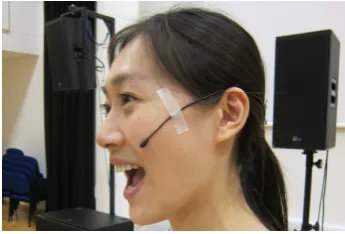
Figure 3. Vocal Mic Position
Further tests of the microphone correction procedure involved testing with tie-clip style microphone (a DPA 4060) taped to a soprano singer’s face in a concert hall environment, typical for operatic amplification (see Fig-ure 3). This mic’ing approach, enables both close-captFig-ure and mobility for the singer, but does not reflect well the tonal qualities of the voice as heard from a normal au-dience listening position. Here, the relevant comparison was between the amplified or electronically manipulated voice, and the sound of the singer unamplified. The refer-ence microphone used was again a DPA 4006, and tests were performed of both amplification and various pro-cessing types (delay, distortion and additive resynthesis of the input). The reference signal was chosen as a set of noisy vocal techniques (to provide sufficient broadband energy, especially for very high frequencies), followed by several full-range glissandi using different vowel sounds.
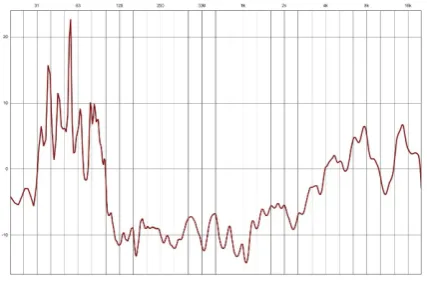
The amplification system consisted of five Meyer UPJ-1Pactive monitors, which were also corrected us-ing the speaker correction procedure. The frequency plot for the microphone correction is shown inFigure 4. Here we can see that a significant boost is necessary in the high and low frequency ranges, with a noticeably uneven curve in the mid-range showing, for instance, two clear peaks and troughs of around 5-6dB around 500Hz. A substantial correction in the low frequency range is also evident, al-though this is too low to affect the sinusoidal components of the soprano voice, and thus will be relevant mainly to transient and noise-based content.
Notably, the frequency response of the uncorrected mi-crophone sounded more clearly ‘amplified’, with a com-paratively dull sound due to the comparative lack of high-frequency content.
Figure 4. Vocal Mic Correction Curve(Hz / db)
4.3. Real World Case Studies
The techniques discussed above have been employed in a number of real world scenarios in order to test their prac-ticality and robustness to the demands of the realities of the concert scenario.
4.3.1. La Rupture In´eluctable
La Rupture In´eluctable by Pierre Alexandre Tremblay is an interactive work for unamplified bass clarinet and
MaxMSP. The electronics are presented over three speak-ers in LCR format behind the performer, and the majority of the electronic part is derived through processing of the live bass clarinet. Other materials in the electronic part are fixed soundfiles.
Composition of the piece was concurrent with the research into correction procedures, and the piece was designed to make use of both the microphone and the speaker/room correction. The piece has subsequently been presented in a number of venues of different types utilising both of these approaches. Notably, in concert the clarity and presence of the fixed parts is consistently improved by use of the correction, as high frequency rolloff is a typical characteristic of speakers and rooms, and the musical materials make use of digital distortion techniques producing a broad frequency content with sig-nificant high frequency content. At the premiere perfor-mance, in a large church-type venue with a 3-second re-verb time, the speaker system consisted of three Meyer UPJ-1P loudspeakers, each with a dedicated M1D-Sub subwoofer. Four listening positions were measured (left and right from front row and several rows further back). Here, we found that truncating the impulse responses significantly increased the perceived improvement of the speaker correction, which otherwise was overly aggres-sive in the high frequency range, presumably due to cu-mulative high frequency rolloff over the duration of the impulse response. In this venue listeners from a range of
seating positions noted that the electronics were present and penetrating, in a manner not usually experienced in that venue. However, in this particular case the acous-tic, unamplified bass clarinet was not as upfront in sound, due to the acoustics of the room, and there was a slight mismatch between instrumental and electronic parts. This might point to the necessity in more reverberant venues to account for this issue, perhaps by correcting to a fre-quency response that is not flat. This could be achieved, for example, by convolving by the desired frequency re-sponse post correction. This effect was not replicated in any of the less reverberant performance venues.
The microphone correction was in all cases notice-able in maintaining the spectral balance of the instrument. A significant part of the piece relies on additive synthe-sis in which the amplitudes of each frequency component replicate those measured at the input to the processing. Thus, correcting the feed to the processing results in a more faithful and even balance between different sinu-soidal components.
4.3.2. New York Counterpoint
A second case study involved the presentation of Steve Reich’s New York Counterpoint in which the recorded parts are spatialised using a multichannel speaker system. The set-up was a semicircle of seven speakers, spaced symmetrical around a central speaker placed directly be-hind the performer. The concert hall was of a large design with a raised staging area, and a reverb time of c. 1.5 sec-onds. In this case, as the concert was an external event, the sound system was supplied by the organisers, and was far from ideal.
Initially, rehearsal took place without speaker correc-tion, as preparation time was extremely tight for this and other pieces in the programme. However, during the ini-tial rehearsal period it became clear that the system was creating significant issues of balance both between tape and live performer, and also between different lines in the recorded parts. Typically, this was made most apparent by individual notes sticking out of uniform musical textures according to their spatial positioning. Broadband equali-sation was ineffective at significantly controlling such is-sues. This is a clear example of a situation in which man-ual treatment of the problems over seven channels would have been extremely time-consuming and would require a high degree of expertise and listening skills, with no guar-antee of accurate results.
mode (with no LF rolloff). Although far from class one, it was assumed that the apparent issues with the speaker system significantly outweighed any deviations from flat in the microphone frequency responses.
[image:11.595.65.278.207.310.2]The measurement procedure used a 15 second sweep for each speaker, thus totalling under 2 minutes for each pass. All aspects of the processing were automated so as to calculate immediately on the completion of the second pass, with the option to reprocess with different parame-ters after measurement.
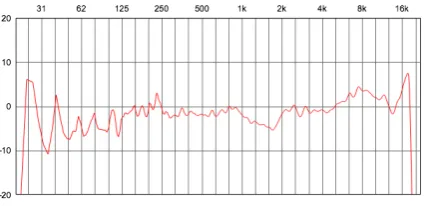
Figure 5. NYC Speaker Correction Curve(Hz / db)
Quick auditioning was carried out for the correction of each channel, using a known full-range audio record-ing. Immediately, issues of balance were noticeably im-proved throughout the seating area, and the tonal differ-ences between different speakers became less apparent. Some slight harshness resulting from extreme high fre-quency content was noticed, and the regularisation param-eters were adjusted to rolloff the high frequency correc-tion at a lower point. This removed the sense of harshness. The correction filters were then loaded into the spatiali-sation patch for the playback ofNew York Counterpoint, and the piece auditioned. Balancing between notes within a chord was substantially improved, and lines rendered more fluid. Figure 5shows the final correction curve for one speaker, which shows a clear set of peaks in the low midrange, explaining the issues of chord balance in the uncorrected playback. The entire correction procedure, including rigging of microphones, tests and adjustments was carried out in under 30 minutes.
4.3.3. Other Pieces
The authors have now implemented speaker/room correc-tion for a number of pre-existing pieces in live concert presentation, either combining instruments and electron-ics or for fixed media alone.
Retrofitting older pieces in this manner, or creating a suitable playback environment for fixed media pieces can be done in less than an hour, prior to the concert day. We have found this approach to be very beneficial to concert presentation in a range of venues. Results are most strik-ing when the uncorrected system exhibits significant is-sues, and the level of user expertise is far lower than would be required for manual equalisation, and with more accu-rate results.
5. OUTCOMES AND CONCLUSIONS
5.1. Outcomes
5.1.1. The HISSTools Impulse Response Toolbox
The tools developed for correction applications form the
HISSTools Impulse Response Toolbox, a set of modular tools forMaxMSPthat deal with convolution, deconvolu-tion and other impulse response-related tasks. The de-sign of these tools reflects the concerns set out in sec-tion 3.3, with particular focus on maximising reusabil-ity and speedy deployment. As a result of this method-ological research process, it became clear that providing a single black-box solution to deal with correction appli-cations would reduce the flexibility of the resultant soft-ware beyond a desirable point for supporting a range of users with specific and variable requirements of system size and setup. Thus, the decision was made to create a set of objects addressing individual subproblems (e.g. IR measurement, filter inversion, realtime convolution etc.) that would enable straightforward combinations of objects to be used, but would also generalise the tools to a much wider range of applications. More on the specifics of the
HISSTools Impulse Response Toolbox, and more technical details of the correction procedures can be found in [12].
As the design of the HIRT facilitates usage beyond the direct applications discussed here, since its public release the toolbox has been employed by a number of academic and non-academic practitioners to solve a range of con-volution, deconvolution and measurement problems. This includes uses within psychoacoustics, acoustic virtualisa-tion, impulse response measurement and reverb applica-tions. Examples are the use of various parts of the toolbox inside of a set of reverb-related Max for Live devices re-leased as part of Ableton’sMax for Live Essentials Pack
[3], as well as use of the externals as part of Rui Penha’s
Spatiumpackage [22]. There is also third-party interest in porting to other environments, including pd and Supercol-lider.
5.2. Currently Proposed Methods and Technical Dis-cussion
sepa-IR Measurement
[image:12.595.98.247.70.268.2][Cropping for Long Reverb Times]
[Averaging] / Smoothing
Inversion with Regularisation
Convert to Minimum Phase
[Truncate / Fade / Group Normalise]
Figure 6. Generalised Correction Procedure
rately, but in parallel (preserving any level relationships between channels). Although we opt to dismiss measured phase entirely in our procedure this has been demon-strated as suitable to our needs through a number of prac-tical tests and case studies. Likewise, we have not ex-perienced practical issues with conversion to minimum phase filters, which enables latencies suitable for realtime work. However, should be noted that presentation formats in which phase relationships are paramount (such as in ambisonic presentation formats) may suffer under these conditions, and have not been tested.
TheHISSTools Impulse Response Toolboxis not itself limited to implementing this approach, and is also suit-able for inversion problems in which the measured phase information must be corrected (given a suitable modelling delay to deal with non-casual components of the impulse response’s inversion), or for implementing variants on these steps. The software is thus open to future devel-opments, and additions enabling more sophisticated cor-rection techniques. However, our case studies show that significant benefits can be achieved rapidly from the cur-rent approach, which is both pragmatic and robust.
5.3. Future Work
Currently, some user guidance is necessary to fine-tune parameters for smoothing, regularisation and cropping lengths. Whilst in many cases default values will work sufficiently well, it is desirable to minimise any require-ment for the user to oversee the correction process. Fur-ther investigation of methods for automating parameter choice would be beneficial, along with a more compre-hensive understanding of the impact of the choice of crop-ping length for IRs prior to inversion. Although some pre-liminary investigation has been carried out in this area of auto-regularisation (based on the input IRs), and the tool-box supports further investigation in this area, we have not yet developed a method that can be shown to match
the results found by hand reliably. As parameters can be tweaked and auditioned rapidly, it would be necessary for any automated process to work both speedily and with a high degree of reliability.
Better understanding of the conditions in which phase may become relevant is also desirable, especially for phase-critical applications (e.g. ambisonic reproduction). Relevant improvements to the correction procedure would be to examine more sophisticated smoothing algo-rithms (such as perceptually-motivated smoothing based on ERB or Mel scales), and to review the averaging proce-dure to better represent the commonalities between mea-surements (for instance, by identifying common poles be-tween impulse responses).
Several video tutorials for the toolbox are planned, two of which are available at the time of writing, to max-imise the accessibility of the tools. Work on a set of na-tive measurement and correction applications and/or plug-ins is also underway, to accommodate users outside of the MaxMSP environment.
References
[1] HISS Website. [Online]. Available: http://www. thehiss.org
[2] RMC Pickup Co. [Online]. Available: http: //www.rmcpickup.com/
[3] Ableton. (2013) Max for live essentials. [On-line]. Available: https://www.ableton.com/en/packs/ max-live-essentials/
[4] Audio Ease. (2012) Altiverb 7. [Online]. Available: http://www.audioease.com/Pages/Altiverb/
[5] A. Bassuet, “Analyses du spectre de puissance des instruments de musique et application pour restitu-tion d’une scene sonore,” Master’s thesis, L’Ecole Nationale Sup´erieure Louis-Lumi`ere, June 1999. [6] S. Berweck, “It worked yesterday: On (re-)
perform-ing electroacoustic music,” Ph.D. dissertation, Uni-versity of Huddersfield, 2012.
[7] E. Boyer, “Le contrˆole du rayonnement appliqu´e `a la reproduction sonore d’un instrument de musique,” Master’s thesis, Universit´e du Maine, August 2009. [8] S. Emmerson, Living Electronic Music. Ashgate
Publishing, 2007.
[9] A. Farina, “Advancements in impulse response mea-surements by sine sweeps,” in Audio Engineering Society Convention 122, 5 2007.
[10] L. D. Fielder, “Analysis of traditional and reverberation-reducing methods of room equal-ization,” J. Audio Eng. Soc, vol. 51, no. 1/2, pp. 3–261, 2003. [Online]. Available: http://www.aes.org/e-lib/browse.cfm?elib=12249 [11] Y. Haneda, S. Makino, and Y. Kaneda,
[12] A. Harker and P. A. Tremblay, “The HISSTools Impulse Response Toolbox: Convolution for the masses,” inProceedings of the International Com-puter Music Conference. The International Com-puter Music Association, 2012, pp. 148–155. [13] P. D. Hatziantoniou and J. N. Mourjopoulos,
“Gen-eralized fractional-octave smoothing of audio and acoustic responses,” J. Audio Eng. Soc, vol. 48, no. 4, pp. 259–280, 2000.
[14] ——, “The application of complex-spectral smooth-ing in the analysis of room acoustics,” in ASME Greek Section National Conf. on recent advances in Mech. Eng., Patras, Greece,(2001 September), 2001. [15] http://audio.lernvall.com/. (2008) Laconvolver.
[On-line]. Available: http://audio.lernvall.com/
[16] IK Multimedia. (2012) Arc system 2. [Online]. Available: http://www.ikmultimedia.com/products/ arc/
[17] M. Karjalainen, T. Paatero, J. Mourjopoulos, and P. Hatziantoniou, “About room response equaliza-tion and dereverberaequaliza-tion,” in Applications of Sig-nal Processing to Audio and Acoustics, 2005. IEEE Workshop on, oct. 2005, pp. 183 –186.
[18] O. Kirkeby, P. Rubak, and A. Farina, “Fast deconvo-lution using frequency-dependent regularization,”to be submitted to IEEE Trans. Speech and Audio Pro-cessing.
[19] MathWorks. (2013) MATLAB Signal Processing Toolbox R2013a. [Online]. Available: http://www. mathworks.co.uk/products/signal/
[20] P. D. Mourjopoulos, John N.; Hatziantoniou, “Real-time room equalization based on complex smooth-ing: Robustness results,” inAudio Engineering So-ciety Convention 116, 5 2004.
[21] S. Neely and J. B. Allen, “Invertibility of a room im-pulse response,”The Journal of the Acoustical Soci-ety of America, vol. 66, p. 165, 1979.
[22] R. Penha. (2012) Spatium. [Online]. Available: http://spatium.ruipenha.pt/
[23] Real Sound Lab. (2011) CONEQ v3.2.0. [On-line]. Available: http://www.realsoundlab.com/ large/5448/
[24] H. H. Rutz. (2010) FScape v1.0.0. [Online]. Available: https://github.com/Sciss/FScape
[25] D. Sbragion. (2012) DRC v3.2.1. [Online]. Avail-able: http://drc-fir.sourceforge.net/
[26] P. A. Tremblay and S. Mc Laughlin, “Thinking in-side the box: A new integrated approach to mixed music composition and performance,” in Proceed-ings of the International Computer Music Confer-ence (ICMC 2009), Montr´eal, Canada, August 16-21, 2009. ICMA, August 2009, pp. 379–386. [27] Waves. (2005) IR1 Convolution Reverb v2.
[On-line]. Available: http://www.waves.com/plugins/ ir1-convolution-reverb
[28] R. Wilson, M. D. Capp, and J. R. Stuart, “The loudspeaker-room interface-controlling excitation of room modes,” inAudio Engineering Society