OR
IG
INAL ART
ICLE
Common and d
is
t
inc
t pa
t
terns o
f grey
-ma
t
ter vo
lume
a
l
tera
t
ion
in ma
jor depress
ion and b
ipo
lar d
isorder
:
ev
idence
from voxe
l
-based me
ta
-ana
lys
is
T Wise1, J Radua2,3,4,EVia5,6, N Cardoner5, O Abe7, TM Adams1, F Amico8, Y Cheng9, JH Cole10, C de Azevedo Marques Périco11,12,
DP Dickstein13, TFD Farrow14, T Frodl15,16, G Wagner17, IH Gotlib18, O Gruber19, BJ Ham20, DE Job21,22,23, MJ Kempton2,24, MJ Kim25,
PCMP Koolschijn26, GS Malhi27, D Mataix-Cols2,4, AM McIntosh28, AC Nugent29,JTO’Brien30,31, S Pezzoli2,32, ML Phillips33,
PS Sachdev34,35, G Salvadore36, S Selvaraj37, AC Stanfield38, AJ Thomas30, MJ van Tol39, NJA van der Wee40,41, DJ Veltman42, AH Young1,
CH Fu1,43, AJ Cleare1and D Arnone1
Findingrobust brain substrates of mood disordersis animportanttargetforresearch. The degreeto which major depression(MDD) and bipolar disorder (BD) are associated with common and/or distinct patterns of volumetric changes is nevertheless unclear. Furthermore,the extantliteratureis heterogeneous withrespecttothe nature ofthese changes. Wereport a meta-analysis of voxel -based morphometry(VBM) studiesin MDD and BD. Weidentified studies published upto January 2015that compared grey matter in MDD(50 data setsincluding 4101individuals) and BD(36 data setsincluding 2407individuals) using whole-brain VBM. We used statistical maps from the studies included where available and reported peak coordinates otherwise. Group comparisons and conjunction analysesidentifiedregionsin whichthe disorders showed common and distinct patterns of volumetric alteration. Both disorders were associated withlower grey-matter volume relative to healthyindividualsin a number of areas. Conjunction analysis showed smaller volumesin both disordersin clustersinthe dorsomedial and ventromedial prefrontal cortex,includingthe anterior cingulate cortex and bilateralinsula. Group comparisonsindicated thatfindings of smaller grey-matter volumes relative to controls in the right dorsolateral prefrontal cortex and left hippocampus, along with cerebellar, temporal and parietal regions were more substantialin major depression. Theseresults suggestthat MDD and BD are characterised by both common and distinct patterns of grey-matter volume changes. This combination of differences and similarities has the potential to inform the development of diagnostic biomarkers for these conditions.
Molecular Psychiatryadvance online publication, 24 May 2016; doi:10.1038/mp.2016.72
1Department of Psychological Medicine, Centrefor Affective Disorders,Institute of Psychiatry, Psychology and Neuroscience, King’s College London, London, UK;2Department of
Psychosis Studies,Institute of Psychiatry, Psychology and Neuroscience, King’s College London, London, UK;3Research Unit, FIDMAG Germanes Hospitalàries–CIBERSAM, Sant
Boi de Llobregat, Barcelona, Spain;4Department of Clinical Neuroscience, Karolinska Institutet, Stockholm, Sweden;5Mental Health, Parc Taulí Sabadell-CIBERSAM, University
Hospital, Sabadell, Barcelona, Spain;6Department of Psychiatry, Bellvitge University Hospital-IDIBELL, Barcelona, Spain;7Department of Radiology, Nihon University School of
Medicine, Tokyo, Japan;8Department of Psychiatry, Trinity CollegeInstitute of Neuroscience, Trinity College, Dublin,Ireland;9Department of Psychiatry, The 1st Affiliated Hospital
of Kunming Medical University, Kunming, PR China;10Computational, Cognitive and Clinical Neuroimaging Laboratory, Department of Medicine, Imperial College London,
London, UK;11Department of Neuroscience, Medical School, Fundação do ABC, Santo André, SP, Brazil;12ABC Center of Studies on Mental Health, Santo André, SP, Brazil; 13PediMIND Program, Bradley Hospital, Department of Psychiatry, Brown University, East Providence, RI, USA;14Academic Clinical Neurology, Department of Neuroscience,
University of Sheffield, Sheffield, UK;15Department of Psychiatry and Psychotherapy, Otto-von-Guericke University, Magdeburg, Germany;16Department of Psychiatry, University
of Dublin, Trinity College, Dublin, Ireland;17Psychiatric Brain and Body Research Group Jena, Department of Psychiatry and Psychotherapy, Jena University Hospital, Jena,
Germany;18Department of Psychology, Stanford University, Stanford, CA, USA;19Section for Experimental Psychopathology and Neuroimaging, Department of General
Psychiatry, Heidelberg University Hospital, Heidelberg, Germany;20Department of Psychiatry, Korea University College of Medicine, Seoul, South Korea;21Neuroimaging Sciences,
University of Edinburgh, Edinburgh, UK;22ScottishImaging Network–A Platformfor Scientific Excellence(SINAPSE), Giffnock, UK;23Centrefor Clinical Brain Sciences, University of
Edinburgh, Edinburgh, UK;24Department of Neuroimaging, Institute of Psychiatry, Psychology and Neuroscience, King’s College London, London, UK;25Department of
Psychological and Brain Sciences, Dartmouth College, Hanover, NH, USA;26Department of Psychology, Dutch Autism and ADHD Research Center, Brain and Cognition, University
of Amsterdam, Amsterdam, The Netherlands;27CADE Clinic, Discipline of Psychiatry, Sydney Medical School, University of Sydney, Sydney, NSW, Australia;28Division of Psychiatry,
University of Edinburgh, Edinburgh, UK;29Experimental Therapeutics and Pathophysiology Branch, Intramural Research Program, National Institute of Mental Health, National
Institutes of Health, Bethesda, MD, USA;30Institute for Ageing and Health, Newcastle University, Campus for Ageing and Vitality, Newcastle upon Tyne, UK;31Department of
Psychiatry, University of Cambridge, Cambridge, UK;32Department of Neuroscience, Medical School, University of Sheffield, Sheffield, UK;33Department of Psychiatry, University
of Pittsburgh, School of Medicine, Pittsburgh, PA;34Centre for Healthy Brain Ageing (CHeBA), School of Psychiatry, University of New South Wales, Randwick, NSW, Australia; 35Neuropsychiatric Institute, Prince of Wales Hospital, Randwick, NSW, Australia;36Janssen Research and Development, Titusville, NJ, USA;37Department of Psychiatry
and Behavioral Sciences, Center of Excellence on Mood Disorders, Medical School, University of Texas Health Science Center at Houston, Houston, TX,USA;38The Patrick
Wild Centre, Royal Edinburgh Hospital, University of Edinburgh, Edinburgh, UK;39NeuroImaging Center, University Medical Center Groningen, University of Groningen,
Groningen, The Netherlands;40Department of Psychiatry, Leiden University Medical Center, Leiden University, Leiden, The Netherlands;41LeidenInstitutefor Brain and Cognition,
Leiden, The Netherlands;42Department of Psychiatry, VU University Medical Center, Amsterdam, The Netherlands and43School of Psychology, University of East London, London,
UK. Correspondence: T Wise, Department of Psychological Medicine, Centre for Affective Disorders,Institute of Psychiatry, King’s College London, 103 Denmark Hill, London SE5 8AF, UK,
E-mail: [email protected]
Received 29 October 2015; revised 1 March 2016; accepted 23 March 2016
INTRODUCTION
Affective disorders such as major depression (MDD) and bipolar disorder(BD) are serious conditionsthat significantly affect quality of life.1,2In the absence of a definitive understanding of the
neuropathology underpinning these disorders, no clinical biomar -kers are currently available to aid diagnosis and treatment.3–5
This is a particularly significant issue given the frequency of misdiagnosis and inappropriate treatment in affective disorders.6
As a result, biomarker discovery and optimisation are essential steps for future progress.
Neuroimaging studies have identified a number of differences between patients with affective disorders and healthy individuals in brain volume, function, neurochemistry and connectivity in key neurobiological circuits involved in mood regulation.3,7–11
Grey-matter volume changesin affective disorders have been well documented in a number of cortical and subcortical structures including prefrontal regions and the hippocampus.10,12–14It is at
present unclearto what extent specific or common morphological alterations occur in MDD and BDs given the paucity of direct comparisons andinconsistenciesinthe availablefindings. Thetwo studies that have addressed this issue have identified differences in prefrontalregions; however,the preciselocation differsinthese studies.15,16Gaining a more detailedinsight into the neuropatho
-logical relationship between these disordersis an essential stepin providing a more precise definition of candidate diagnostic biomarkers at the brain level, which could improve current classifications of affective disorders.
The aim of this meta-analysis was to use the largest database of voxel-based morphometry (VBM) studies in affective disorders to date by taking advantage of a thorough and detailed meta-analytic technique to (1) identify morphometric changes in MDD and BD compared with healthy controls and (2) compare results across diagnostic groups to assess morphometric differ -ences and similarities that may reflect common and/or distinct neuropathological pathways in affective disorders. Most impor -tantly, we adopt an improved meta-analytic technique with increased sensitivity, specificity and reliability of the analyses, by combining statistical maps from some of the original studies with peak coordinates conventionally used in neuroimaging meta-analyses.
MATERIALS AND METHODS Literature searches
We searched Pubmed, Scopus and ScienceDirect for studies comparing patients with MDD or BD with control groups published up to January 2015 using the following keywords: Magnetic resonance imaging OR MRI AND depression OR BD OR mania OR mood disorders. Broad search terms were used to minimise the likelihood of missing any relevant studies. Reviews and meta-analyses were cross-referenced to identify studies that were missed in the literature searches. Authors were contacted for unpublished dataincluding t-maps from the original studies. A systematic approach compliant with PRISMA (Preferred Reporting Items for Systema -tic Reviews and Meta-Analyses) guidelines17was adopted.
Studies were excluded if: (1) they adopted neuroimaging techniques other than MRI whole-brain VBM; (2) participants age was below 18 or above 65 (to minimise the effect of neurodevelopment and neurodegen -eration, respectively); (3) samples were confounded by any comorbid neurological conditions; (4) t-maps were unavailable, consistent statistical thresholds throughout the brain were not used or peak coordinates were notreported; and(5)included⩽10 patients.Ifthe same patient group was used in multiple studies, then only the study with the largest sample was included. Conversely, when the same control group was used in several subgroup comparisons, only a combined summary result was included in the meta-analysis. For studies that used longitudinal treatment designs, only baseline pre-treatment data were included.
Meta-analysis
Meta-analysis was performed using the anisotropic effect size version of Seed-basedDMapping(formerly Signed Differential Mapping, AES-SDM).18
This method has been described in detail elsewhere.19,20In summary,
AES-SDM allows combination of peak coordinates and statistical para -metric mapsto create whole-brain effect size and variance maps, which are then used to perform voxel-wise random effects meta-analyses. Although meta-analyses based on peak coordinates alone are able to produce reliable results, the addition of original statistical maps substantially improves the sensitivity of the analyses.19AES-SDM allows meta-analytic
summaries of grey-matter volumes within each disorder (for example, MDD and BD vs healthy controls) and comparisons of abnormalities between conditions (for example, MDD vs BD) based on the evaluation of effect sizes. Finally, the multimodal analysis function of the AES-SDM statistical package allows conjunction analyses to be performed, which enabled us to identify regions where both patient groups show common differences with respect to controls, while takinginto account errorin the estimation of the magnitude of these differences.21
AES-SDM also allows heterogeneity to be systematically quantified in a voxel-wise manner using the Q statistic. The overlap between significant areas of heterogeneity with areas of grey-matter differences was system -aticallyinvestigated with separate simple meta-regressions using available potential confounders where these were provided in a sufficient proportion of the included studies. Given the relatively small number of studies, we set the cutoff for inclusion of potential confounders in meta -regressions to⩾20 studies in order to minimise the occurrence of false positives.22For MDD, we conducted meta-regressions with antidepressant
medication use, depression duration (from age of onset), depression severity, mean patient age and sex. For BD, we used mood state, depression duration, antipsychotic medication use, lithium use, mean patient age and sex. We also examined effects of magneticfield strength andimage smoothinglevelfor both conditions. Studiesthat did notreport these measures were excluded from these analyses. To enable meta -regressions to be conducted using a consistent measure of depression severity, when studies reported Montgomery-Åsberg Depressing Rating Scale23scores, these were converted to Hamilton Depression Rating
Scale24equivalents using the method devised by Heoet al.25Group
differences in demographic and clinical variables were explored to discover any potential confounders in group comparisons by using standard meta-analytic tests weighted by sample size.
Significant clusters were tested for publication bias using funnel plots and Egger’s test on effect size estimates extracted from the cluster peak, performed using the Metafor package26for R (http://www.rproject.org).
Funnel plots of effect sizes in each cluster were also visually inspected to ensurethatresults wererobust. Finally, we assessedreliability of our meta -analytic results with a jack-knife analysis, in which the meta-analysis is rerun iteratively with each study left out in one iteration. This method assessesthereliability of significantresults, onthe assumptionthatreliable results should be robust to the removal of individual studies, and should therefore remain present in the majority of jack-knife iterations. Clusters that were nolonger significantin the meta-analysisin 10% or more of the iterations were rejected as we wished to include the most robust results, which should be presentin the majority ofjack-knifeiterations.Inthe text, we onlyreport clustersthat met our criteriaforrobustness. We providefull results and details regarding the meta-analysis method in Supplementary methods.
RESULTS
Literature searches
Literature searches produced 14 951 results, of which 66 studies met criteria for inclusion (Supplementary Figure 1). We also identifiedfive studiesfrom previous meta-analyses andreviews.In addition, we had access to statistical maps from two unpublished studies, onein MDD andthe otherin BD. Thisresultedin atotal of 73 studies included in thefinal analysis. Details are presented in Supplementary Tables 1 and 2.
Study characteristics
studies included a total of 1736 patients and 2365 healthy controls. Patients’mean age was 38.5 years (s.d. = 9.7) and 38.7% were male. The mean age of healthy control participants was 37.1 years (s.d. = 7.8), and 39.5% were male. In studies that provided information on mood state, 1348 patients (94%) experienced symptoms of depression atthetime of scanning and 88(6%) were euthymic.
Demographic details were well reported across studies (41 studies, 98%). With regard to clinical information, 11 studies (26%) did not mention depression severity and 7 (17%) did not refer to duration of illness.
Bipolar disorder. We identified 32 studies with 36 comparisons between patients and healthy controls (Supplementary Table 2), representing a total of 980 patients and 1427 controls. Original statistical maps were available for six of these studies. Demo -graphic details were reported in all studies. Availability of clinical information wasless consistent with 8 studies(25%) not reporting the number of medicated patients, and 11 (34%) not providing treatment details. With regard to symptoms, 9 (28%) studies did not report the mood state, 17 studies (53%) did not provide a measure of depressive symptoms, 16 studies (50%) did not provide information on manic symptoms, 3 studies (9%) did not provide a measure of illness duration and 18 (56%) did not provide information on symptoms severity. The mean age of patients was 37.6 years(s.d. = 4.4) and 44.1% were male. The mean age of controls was 35.9 years(s.d. = 4.8), and 43.8% were male.In relation to sub-types, 808 patients (82%) experienced type I disorder, 91 (9%) were diagnosed as type II and for 81 patients (8%) this information was not available. In the studies that provided details of mood state, 438 patients(56%) were euthymic at the time of scanning, 218 (28%) experienced symptoms of depression, 118 (15%) were manic and 5 (1%) had mixed symptoms.
MDD vs BD. Studies in MDD and BD included patients of similar ages (omnibus test QM(1)= 0.28, P= 0.60) and sex (QM(1)= 0.95,
P= 0.33). Studies that reported duration of illness suggested shorter total durations of illness in patients with MDD than BD (weighted means 8.1 vs 12.5 years, QM(1)= 9.51, P⩽0.002).
Predictably, more patients were in a depressive state at the time of scanning in MDD studies (Χ2
(1)= 22.30,Po0.001).
Meta-analysis
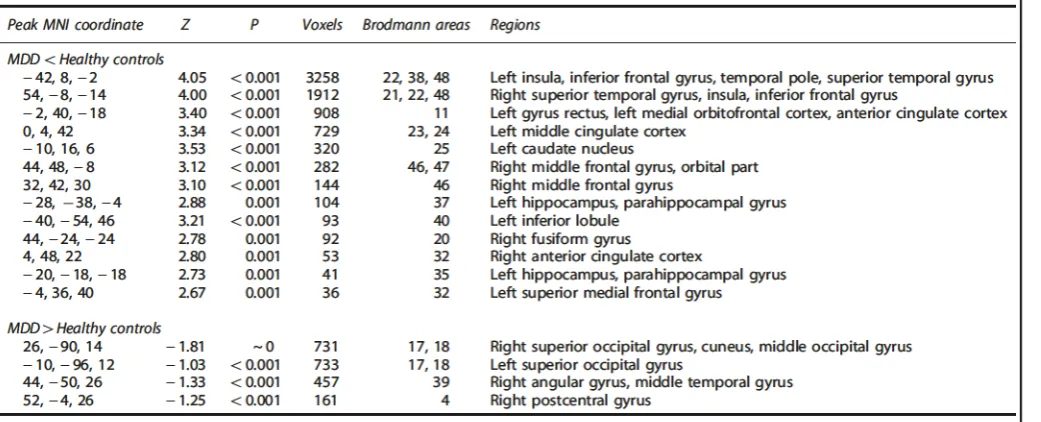
MDD vs healthy controls. Grey-matter volume differencesin MDD relative to healthy controls are shown in Table 1 and Figure 1a. Clusters that did not meet criteria for robustness are shown in Supplementary Table 3. Thelargest regions showing smaller grey -matter volume in MDD were observed bilaterally in two clusters comprising the insula, extending into the posterior part of the inferiorfrontal gyrus andthe anterior superiortemporal gyrus. The ventromedial prefrontal cortex showed lower volume in a large area, which was predominantly inferior to the anterior cingulate cortex. The posterior cingulate cortex and dorsal anterior cingulate cortex also exhibited lower volumes. Several lateral prefrontal regions showed smaller volumes, as did the left inferior parietal gyrus and the right fusiform gyrus. Regions oflower volume were also present in a number of subcortical and medial temporal regions, including the left caudate, left hippocampus and left parahippocampal gyrus.
Regions of greater volume relative to healthy controls were observed in the bilateral superior occipital gyrus, extending into the cuneus. Smaller clusters showing greater volume were found in the right angular gyrus and right postcentral gyrus.
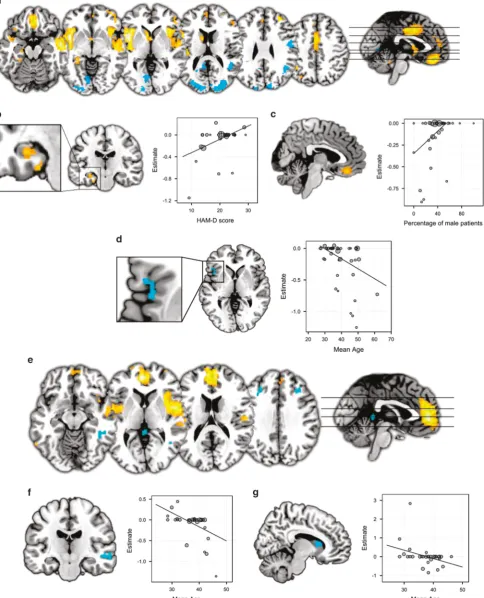
There was no evidence of publication bias or detectable small -study effectsin any cluster, asindicated by non-significant Egger’s tests of funnel plot asymmetry (allP-values 40.05). Details of brain regions where significant heterogeneity was measured are providedin Supplementary Table 4. Significant between-study heterogeneity was explored with meta-regression analyses. Results of these analyses indicated that studies with lower mean depression severity found smaller grey-matter volumes relative to controls in the left hippocampus (peak MNI =−30,−18,−16, Z= 2.73,Po0.001, 40 voxels), studies with a smaller proportion of menfound smaller grey-matter volume compared with controlsin bilateral ventromedial prefrontal cortex (peak MNI = 0, 38,−18, Z= 2.17,Po0.001, 359 voxels) and studies with older patients found smaller volumes relative to controls in the left insula (peak MNI =−42, 16,−2,Z=−2.73,Po0.001, 49 voxels; Figures 1b–d). We found no association with antidepressant medication use or depression duration. When examining methodological variables,
Table 1.Clusters showing differences between MDD and controls that met our criteria for robustness Peak MNI coordinate Z P Voxels Brodmann areas Regions
MDDoHealthy controls
−42, 8,−2 4.05 o0.001 3258 22, 38, 48 Left insula, inferior frontal gyrus, temporal pole, superior temporal gyrus 54,−8,−14 4.00 o0.001 1912 21, 22, 48 Right superior temporal gyrus, insula, inferior frontal gyrus
−2, 40,−18 3.40 o0.001 908 11 Left gyrus rectus, left medial orbitofrontal cortex, anterior cingulate cortex 0, 4, 42 3.34 o0.001 729 23, 24 Left middle cingulate cortex
−10, 16, 6 3.53 o0.001 320 25 Left caudate nucleus
44, 48,−8 3.12 o0.001 282 46, 47 Right middle frontal gyrus, orbital part 32, 42, 30 3.10 o0.001 144 46 Right middle frontal gyrus
−28, 38,−4 2.88 0.001 104 37 Left hippocampus, parahippocampal gyrus −40,−54, 46 3.21 o0.001 93 40 Left inferior lobule
44,−24,−24 2.78 0.001 92 20 Right fusiform gyrus
4, 48, 22 2.80 0.001 53 32 Right anterior cingulate cortex
−20,−18,−18 2.73 0.001 41 35 Left hippocampus, parahippocampal gyrus −4, 36, 40 2.67 0.001 36 32 Left superior medial frontal gyrus MDD4Healthy controls
26,−90, 14 −1.81 ~ 0 731 17, 18 Right superior occipital gyrus, cuneus, middle occipital gyrus −10,−96, 12 −1.03 o0.001 733 17, 18 Left superior occipital gyrus
44,−50, 26 −1.33 o0.001 457 39 Right angular gyrus, middle temporal gyrus 52,−4, 26 −1.25 o0.001 161 4 Right postcentral gyrus
Abbreviation: MDD, major depressive disorder.
[image:3.595.39.560.73.284.2]Figure 1. (a) Results of major depressive disorder (MDD) meta-analysis. (b) Results of meta-regression with depression severity in MDD. (c) Results of meta-regression with sex in MDD. (d) Results of meta-regression with patient age in MDD. (e) Results of bipolar disorder (BD) meta-analysis. (f, g) Results of meta-regressions with age in BD. Orange represents lower volume in patients relative to controls or positive relationships withregressorsin meta-regressions, bluerepresents greater volumerelativeto controls or negativerelationships withregressors. In meta-regression plots, point sizerepresents study weights. Allimages are shownin neurological convention;left ontheimage corresponds to left in the brain. Effect sizes represent effect sizes at the peak of the cluster.
[image:4.595.62.547.62.661.2]studies using higherfield strength scanners showed smaller volumes relative to controls in the left superior temporal gyrus (peak MNI =−50, 0,−2,Z=−2.53,Po0.001, 40 voxels), while the opposite pattern was observed in the ventromedial prefrontal cortex (peak MNI =−2, 40,−18,Z= 2.0,Po0.001, 187 voxels; Supplementary Figure S2).
Bipolar disorder vs healthy controls. Patients with BD differed from healthy controls in grey-matter volume in a number of regions(Table 2 and Figure 1e). Clusters that did not meet criteria for robustness are shown in Supplementary Table 5. The largest areas showing lower grey-matter volume in patients relative to controls were in the bilateral insula and superior temporal gyrus. Another large cluster where smaller volumes were observed was located in the medial prefrontal cortex, including the anterior cingulate cortex. We also found small clusters showing greater volume relative to controls in a number of areas, including a number of cerebellar regions, bilateral middle frontal gyrus, right middle andinferiortemporal gyrus, andright middle occipital gyrus. Regions in which BD showed greater volume relative to controls included the inferior temporal gyrus and bilateral middle frontal gyrus, as well as cerebellar and occipital areas.
Egger’s test of funnel plot asymmetry did not identify any evidence of publication bias in any cluster (allP-values40.05). A number of regions showed significant between-study hetero -geneity (Supplementary Table 6). Meta-regression analyses revealed that smaller volumes relative to controls were associated withincreasing agein the right middle temporal gyrus (Figure 1f, peak MNI = 62,−26,−6,Z=−3.07,Po0.001, 186 voxels). Higher patient age was also associated with smaller volumes compared
with controlsin the right caudate(Figure 1g, peak MNI = 8, 14, 12, Z=−2.60,Po0.001, 55 voxels). We found no significant associa -tions with mood state, antipsychotic medication use, lithium use, sex or methodological variables.
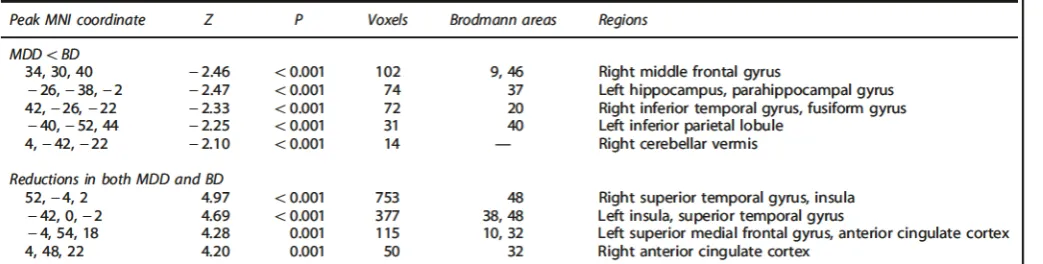
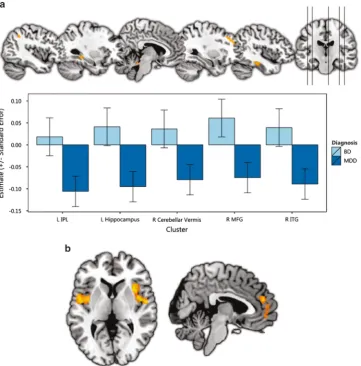
MDD vs BD contrast. MDD differedfrom BD with respect to grey -matter volume alterations in several regions (Table 3 and Figure 2a). The most substantial difference involved the right middlefrontal gyrus, where smaller grey-matter volumerelativeto controls was specific to MDD. A similar pattern was found in the left hippocampus, right inferior temporal gyrus, left inferior parietallobule and right cerebellar vermis. There were no regions in which the opposite pattern was observed.
Grey-matter volume alterations common to both disorders. Con -junction analysis indicated that several regions in the bilateral insula andin the dorsomedial and ventromedial prefrontal cortex, includingthe pre-genual anterior cingulate cortex, showed smaller volume compared with controlsin both conditions(Figure 2b). No regions showed greater volume compared with controls in both conditions.
DISCUSSION
In this paper, we reportfindings from the largest meta-analysis conducted to date of VBM studiesin MDD and BD. We compared resultsfrom thesetwo conditionstoidentify common and distinct patterns of grey-matter volume alterations. We showed that the two conditions share similar patterns of lower volume in the bilateralinsula and medial prefrontal cortex, suggestingthat there
Table 2.Clusters showing differences between BD and controls that met our criteria for robustness Peak MNI coordinate Z P Voxels Brodmann areas Regions
BDoHealthy controls
−4, 50, 4 4.04 o0.001 2210 10, 32 Bilateral anterior cingulate cortex, superior and ventral medial prefrontal cortex 54, 2, 0 3.95 o0.001 1898 21, 22, 38, 48 Right temporal pole, superior temporal gyrus, right insula
−48,−2, 0 3.06 o0.001 436 48 Left superior temporal gyrus, left insula, left rolandic operculum
BD4Healthy controls
40,−44,−12 −1.56 o0.001 158 20, 21, 37 Right inferior temporal gyrus, middle temporal gyrus 24,−36,−38 −1.59 o0.001 127 — Middle cerebellar peduncles
34, 26, 36 −1.73 o0.001 84 46 Right middle frontal gyrus −32, 22, 38 −1.41 0.001 71 46, 9 Left middle frontal gyrus 2,−38, 6 −1.54 0.001 54 — Cerebellar vermis
38,−78, 8 −1.35 0.001 15 19 Right middle occipital gyrus Abbreviation: BD, bipolar disorder.
Table 3.Clusters showing similar and different grey-matter changes in MDD and BD Peak MNI coordinate Z P Voxels Brodmann areas Regions MDDoBD
34, 30, 40 −2.46 o0.001 102 9, 46 Right middle frontal gyrus
−26,−38,−2 −2.47 o0.001 74 37 Left hippocampus, parahippocampal gyrus 42,−26,−22 −2.33 o0.001 72 20 Right inferior temporal gyrus, fusiform gyrus
−40,−52, 44 −2.25 o0.001 31 40 Left inferior parietal lobule 4,−42,−22 −2.10 o0.001 14 — Right cerebellar vermis
Reductions in both MDD and BD
52,−4, 2 4.97 o0.001 753 48 Right superior temporal gyrus, insula −42, 0,−2 4.69 o0.001 377 38, 48 Left insula, superior temporal gyrus
−4, 54, 18 4.28 0.001 115 10, 32 Left superior medial frontal gyrus, anterior cingulate cortex 4, 48, 22 4.20 0.001 50 32 Right anterior cingulate cortex
Abbreviations: BD, bipolar disorder; MDD, major depression disorder.
[image:5.595.43.550.72.210.2] [image:5.595.38.560.269.401.2]may be an underlying pathological mechanism that is common to affective disorders. A number of regions, including the left hippocampus and right dorsolateral prefrontal cortex, differed between conditions, indicating that these disorders may be associated with spatially distinct patterns of pathophysiology.
Both conditions showed smaller grey-matter volumesrelativeto control groups in the medial prefrontal systems, including the anterior cingulate cortex.In MDD, this was predominantlylocated in the most ventral and dorsal regions of the medial prefrontal cortex, whilein BDit waslocatedin alarge cluster anterior to the genu of the corpus callosum, although this difference in location was not statistically significant. The conjunction analysisindicated that the volumes of parts of the dorsomedial and ventromedial prefrontal cortex were robustly lower in both conditions, suggesting a consistent pattern across disorders. These regions have been strongly implicated in mood regulation, and the anterior cingulate cortex in particular has been shown to be crucialintheregulation of affective states,27and has been atarget
of treatment with deep brain stimulation.28Our results are
consistent with theories of mood dysregulation in affective disorders that posit that dysfunction in regions such as the medial prefrontal cortex leads to aberrant mood states.29Further
work is necessary, however, to determine whether the structural
differences here are responsible for the altered function of these networks.
We also found that bilateral insula volume was smaller in patents in both conditions. This region is involved in a range of functions, including affective processing and awareness of bodily states,30,31and atypical functioning of this region in
affective disorders has been found in functional neuroimaging research.32,33Notably, the insula has also been found by multiple
studies to predict treatment response in patients with depression.34,35Our finding of smaller insular volume in both
unipolar and bipolar subjects suggests that structural abnormal -ities are present in the same areas in which altered function has also been identified. The insula has been implicated in inter -oceptive processing and general bodily awareness,36and our
results may indicate that structural changes are associated with altered interoceptive function in affective disorders;37,38this is a
speculative interpretation, however, that requires direct testing. Our comparison of the conditions revealed several areas of smaller grey-matter volumethat were significantly greaterin MDD than in BD, most prominently in the left parahippocampal gyrus and right dorsolateral prefrontal cortex, specifically the middle frontal gyrus. Smaller volumes of the hippocampus and para -hippocampal gyrus have been well documentedin MDD, but have
Figure 2. (a) Regions showing differences between major depression disorder (MDD) and bipolar disorder (BD). Orange clusters represent smaller grey-matter volume than controls, which is more substantial in MDD. (b) Results of the conjunction analysis showing regions with similar volumetric alterations in both conditions. Here, orange represents regions showing significantly lower volume in both conditions relative to controls. IPL, inferior parietal lobule; ITG, inferior temporal gyrus; L, left; MFG, middle frontal gyrus; R, right. Effect sizes represent effect sizes at the peak of the cluster.
[image:6.595.123.485.58.425.2]been reported less often in BD.12,14,39 Investigators have
suggested that this may be due to neuroprotective effects of lithium, which counteracts volume loss in BD.40We did not
find any significant heterogeneity in the hippocampus in BD, suggesting that there was no variation in effect sizes due to medication or other variables. It is important to note, however, that we cannot exclude the possibility that this may be due to reduced sensitivity of whole-brain VBM analyses in small regions such as the hippocampus.41Additionally, it is unlikely that this
difference between conditions can be explained by mood statein MDD given that our meta-regressions showed that lower depression severity in MDD was associated with smaller volumes in this region. Alternatively, this may reflect sparing of the hippocampus in BD due to protective factors in individuals predisposed to the disorder.42
The dorsolateral prefrontal cortex has been linked to emotion regulation,43and the right dorsolateral prefrontal cortex spec
ifi-cally has been associated with attentional control during emotional tasks.44 Notably, repetitive transcranial magnetic
stimulation to this region has been reported to improve symptoms in treatment-resistant depression,45but results have
been less convincing in bipolar depression.46Ourfindings add to
this literature by suggesting that volumetric alterations in this region are specific to MDD,indicating that a differential pattern of prefrontal grey-matter volume may potentially differentiate these two disorders. It is important to mention that functional alterations have beenidentifiedintheright dorsolateral prefrontal cortexin BD.47The relationship between functional and structural
alterations in these conditions remains unclear; and further research is essential to understand potential functional and/or structural disease-specific alterations within affective disorders in the dorsolateral prefrontal cortex.
Our analyses within each condition also revealed a number of areas of grey-matter changes that did not differ significantlyin magnitude between disorders butthat were notreliably smallerin both disorders relativeto controls. One notable differencein MDD compared with controls involved the bilateral occipital cortex, including primary visual and extrastriate cortices, where patients showed a large area of greater volume relative to controls. Although a number of studies have highlighted the possibility of neurochemical48and functional49,50changes in these regions, we
believethisis thefirst study toidentify robust volumetric changes intheselocations. Given our effortsto ensurethat ourresults were reliable and robust,itis unlikely that thisis simply a false positive produced by the meta-analytic method, although we cannot exclude the possibility that methodological issues in the original studies may have caused spurious results. For example, it is possible this could be an artefact caused by correction for intracranial or total grey-matter volume combined with substan -tially lower grey-matter volume in other areas, although this is a speculative interpretation and would require confirmation. The potential role of occipital regions has rarely been investigated in major depression, and further research is required to understand whether these results are robust or whether they are a result of the method used.
We found a number of regions that showed significant between-study heterogeneity, and we explored these using meta-regressions. In MDD, studies with less severely depressed patients showed smaller grey-matter volumein the hippocampus than did investigations with more severe patients. This may seem contradictory given that previous studies have showed the opposite pattern.51,52Itis possible thatit may be explained by the
use of medication. Treatment with selective serotonin reuptake inhibitors is known to increase hippocampal volume,53,54and
given thisitis possible that more severely depressed patients had received more extensive pharmacotherapy in the past, leading to amelioration of pre-existing grey-matter volumetric abnormalities, although we were unable to test this here due to historical
treatment data being unavailablein the original studies. However, it is important to note that we only had access to information regarding current depression severity, and it is possible that lifetime depression severity, or chronic and treatment-resistant symptom profiles, may be associated with different neuroanato -mical profiles.
Our meta-regression analyses showed effects of demographic variables in both conditions. In MDD, volume of the prefrontal cortex was smallerin studies withfewer male patients. Anatomical differences between sexes have been reported previously in depression,55althoughit is unclear what drives these differences.
In addition, we found smaller left insula volumes in studies of MDD with older patients; in contrast, in BD studies with older patients, we found smaller volumes in the right middle temporal gyrus. Thus, there may be a different biological trajectory in affective disorders in relation to these regions, although meta -regressions should be interpreted with caution as they do not directly test relations within samples.
This meta-analysisimproves on previous studiesin several ways. First, the novel meta-analytic method used here allowed us to identify common and distinct areas of grey-matter volume alterations in affective disorders. Given the paucity of reports comparing affective conditions directly, this approach enabled us to identify volumetric aspects of common neuropathological mechanisms, and potentially distinctive biomarkers. Second, we were able to include a larger number of studies due to the rapid growth ofthefield and our accessto as-yet unpublished data sets. We are therefore able to provide the most conclusive picture of volumetric changes currently available. Third, we included a number of original statistical maps in our analyses. This substantially improves the sensitivity and specificity of the analysis, especiallyin casesin whichindividual studies have small samples.19Finally, the thorough and detailed approach used in
this work ensured thatfindings were robust and that hetero -geneity was comprehensively explored. We found no evidence of publication bias or small-study effects; nevertheless, it is important to note that, given the small sample sizes of the majority of the studies included in the analyses, we cannot exclude the possibility of small-study bias.
Despite these strengths, we should also note severallimitations of this meta-analysis. First, we cannot determine causality from these results due to the fact that all the included studies were cross-sectional group comparisons, and it is not clear whether these alterations are part ofthe pathogenesis ofthese disorders or a consequence of theillness.It should be noted however that our meta-regressions did not detect any effect of illness duration, providing some evidence against the latter explanation. Second, the effect size comparisons may not provide as accurate a picture of group differences as studies directly comparing the two conditions. To date,there have been veryfew VBM studies directly comparing affective conditions15,16makingit difficultto drawfirm
conclusions concerning potential similarities and differences between disorders. Hence, at present, the approach used in this meta-analysis, with the limitation of indirectly comparing studies’ effect sizes, offers the most viable option to reach conclusions generalisable beyond individual studies. Additionally, given the inherent robustness of the meta-analytic method, our results should provide a summary of the most reliable differences between these disorders.
Third, the samples used in the studies differed between disorders with respect to treatment status (for example, different types of pharmacotherapy). Given that psychotropic medications can have effects on brain structure,53it is difficult to be certain
that results are not entirely independent from medication status. As a related point, the samples also differed in mood state and illness duration. We found no evidence for effects of these variablesin meta-regressions within disorders, suggestingthatthis is notlikelyto be a major concern. However, effects of mood state
are particularly difficult to rule out, given that a number of studies included samples of mixed mood states and several did not provide information on mood state. Consequently, it is not possibleto comment with certainty onthe effect of mood state on our results. Furthermore, we cannot exclude the possibility that undiagnosed cases of BD presented as unipolar depressionin the original studies,6anditis not possible to rule out theinfluence of
comorbidities such as anxiety disorders on the results as these were not always well described in the original reports. Another concern is that many of the retrieved studies included more controls than patients. Although these unbalanced studies may have theoretically biased results,56itis not clear from the existing
literature that this is likely to affect ourfindings and conclusions. Finally, we cannot be certain that these regions of common grey -matter volume alterations are exclusive to affective disorders. A recent meta-analysis by Goodkindet al.57found that some of these
areas, such astheinsula and dorsomedial prefrontal cortex, arelower in volume across arange of psychiatric conditionsincluding affective, anxiety and psychotic disorders. This suggests that morphometric grey-matter changes in these regions are not specifically pathogno -monic to affective disorders, or are even a proxy for underlying common disease processes or for riskfactors such aslife stressors or effects of hormonal or inflammatory changes. Nevertheless, the locations identified by Goodkindet al.differ from those reported in this meta-analysisintheirlocationand size. For example,the authors demonstrated that the anterior left insula extending to the left inferior frontal gyrus was affected across disorders. In our work, a more posterior portion of theleftinsula was shown to be affectedin both MDD and BD, which has functional relevance given the anterior-posterior divisionininsulafunction, withthe posteriorregion being specifically involved in interoception and bodily awareness.36
In conclusion, we have shown that MDD and BD show a common pattern of lower grey-matter volume which predomi -nantly includes the medial prefrontal and insular cortices. In addition,thetwo conditions also show distinct patterns of volume alterationsin a number of other regions, most predominantly the right dorsolateral prefrontal cortex and left hippocampus, which are specific to MDD. There is significant heterogeneity within these results, but this could be partially explained by clinical and demographic differences in clinical samples. These findings suggest targets for neuroanatomical diagnostic biomarkers, but also indicate that affective disorders are more morphologically similar than they are different.
CONFLICT OF INTEREST
AJC has within the last 3 years received honoraria for speaking from Astra Zeneca and Pfizer; and received research grant support from Lundbeck. MLP is a consultant for Roche Pharmaceuticals. GS is employed by Janssen Pharmaceuticals. DA has received travel grants from Janssen-Cilag and Servier. The remaining authors declare no conflicts of interest.
ACKNOWLEDGMENTS
We thank Luke Norman, Alexandra Gillett and Steve Lukito forinsightful discussions on the statistical methods used in this meta-analysis. DA thanks colleagues who supplemented their published work with detailed auxiliaryinformation and Professor Ian Anderson and Dr Shane McKiefortheir support. TW, AJC, AHYreceive and DA has received funding support from the National Institute for Health Research (NIHR) Mental Health Biomedical Research Centre at South London and Maudsley NHS Foundation Trust and King's College London. The views expressed are those of the authors and not necessarily those of the NHS, the NIHR, orthe Department of Health. DAis supported by the Academy of Medical Sciences (reference AMS-SGCL8). ACNis funded through the National Institutes of Health. MJK is funded by an MRC CDA Fellowship(MR/J008915/1). MJvT was supported by a VENI grant(NWO grant number 016.156.077). MLP is funded by NIH grants R01MH1000, 1 P50 MH106435, R01 MH073953 and R01 MH060952. FA has received funding from the Trinity College School of Medicine. JR received grant support from Instituto de Salud Carlos III - Subdirección General de Evaluación and the European Regional Development
Fund (personal grant Miguel Servet CP14/00041 and project PI14/00292 integrated into the National Plan for research, development and innovation).
REFERENCES
1 Kessler RC, Berglund P, Demler O, Jin R, Koretz D, Merikangas KRet al.The epidemiology of major depressive disorder:resultsfromthe National Comorbidity Survey Replication (NCS-R).J Am Med Assoc2003;289: 3095–3105.
2 Merikangas KR, Akiskal HS, Angst J, Greenberg PE, Hirschfeld RMA, Petukhova M et al.Lifetime and 12-month prevalence of bipolar spectrum disorder in the National Comorbidity Survey replication.Arch Gen Psychiatry2007;64:543–552. 3 Wise T, Cleare AJ, Herane A, Young AH, Arnone D. Diagnostic and therapeutic utility of neuroimagingin depression: an overview.Neuropsychiatr Dis Treat2014; 10:1509–1522.
4 Botteron K, Carter C, Castellanos FX, Dickstein DP, Drevets W, Kim KLet al.Con -sensus report of the APA work group on neuroimaging markers of psychiatric disorders.Am Psychiatr Assoc2012.
5 Fu CHY, Costafreda SG. Neuroimaging-based biomarkers in psychiatry: clinical opportunities of a paradigm shift.Can J Psychiatry2013;58:499–508. 6 Angst J, Azorin J-M, Bowden CL, Perugi G, Vieta E, Gammaet al.Prevalence and
characteristics of undiagnosed bipolar disorders in patients with a major depressive episode: the BRIDGE study.Arch Gen Psychiatry2011;68:791–798. 7 Arnone D, Mumuni AN, Jauhar S, Cavanagh J. Indirect evidence of selective glial
involvement in glutamate-based mechanisms of mood regulation in depression: meta-analysis of absolute prefrontal neuro-metabolic concentrations. Eur Neu -ropsychopharmacol2015;25:1109–1117.
8 Price JL, Drevets WC. Neural circuits underlying the pathophysiology of mood disorders.Trends Cogn Sci2012;16:61–71.
9 Wise T, Radua J, Nortje G, Cleare AJ, Young AH, Arnone D. Voxel-based meta -analytical evidence of structural disconnectivity in major depression and bipolar disorder.Biol Psychiatry2015;79:293–302.
10 Kempton MJ, Geddes JR, Ettinger U, Williams SCR, Grasby PM. Meta-analysis, database, and meta-regression of 98 structural imaging studies in bipolar dis -order.Arch Gen Psychiatry2008;65: 1017–1032.
11 Arnone D, Job D, Selvaraj S, Abe O, Amico F, Cheng Yet al.Computational meta -analysis of statistical parametric mapsin major depression.Hum Brain Mapp2016; 37: 1393–1404.
12 Arnone D, McIntosh AM, Ebmeier KP, Munafò MR, Anderson IM. Magnetic reso -nance imaging studies in unipolar depression: Systematic review and meta -regression analyses.Eur Neuropsychopharmacol2012;22:1–16.
13Selvaraj S, Arnone D, Job D, Stanfield A, Farrow TF, Nugent ACet al.Grey matter differences in bipolar disorder: a meta-analysis of voxel-based morphometry studies.Bipolar Disord2012;14:135–145.
14 Kempton MJ, Salvador Z, Munafò MR, Geddes JR, Simmons A, Frangou Set al. Structural neuroimaging studies in major depressive disorder. Meta-analysis and comparison with bipolar disorder.Arch Gen Psychiatry2011;68:675–690. 15 de Azevedo-Marques Périco C, Duran FLS, Zanetti MV, Santos LC, Murray RM,
Scazufca Met al.A population-based morphometric MRI study in patients with first-episode psychotic bipolar disorder: comparison with geographically matched healthy controls and major depressive disorder subjects.Bipolar Disord2011;13: 28–40.
16 Redlich R, Almeida JJR, Grotegerd D, Opel N, Kugel H, Heindel Wet al.Brain morphometric biomarkers distinguishing unipolar and bipolar depression. A voxel-based morphometry-pattern classification approach.JAMA Psychiatry 2014;71: 1222–1230.
17 Moher D, Liberati A, TetzlaffJ, Altman DG. Preferredreportingitemsfor systematic reviews and meta-analyses: the PRISMA statement.Ann Intern Med2009;151: 264–269.
18 Radua J, Rubia K, Canales-Rodríguez EJ, Pomarol-Clotet E, Fusar-Poli P, Mataix-Cols D. Anisotropic kernels for coordinate-based meta-analyses of neu -roimaging studies.Front Psychiatry2014;5:13.
19 Radua J, Mataix-Cols D, Phillips ML, El-Hage W, Kronhaus DM, Cardoner Net al. A new meta-analytic method for neuroimaging studies that combines reported peak coordinates and statistical parametric maps. Eur Psychiatry2012; 27: 605–611.
20 Radua J, Mataix-Cols D. Voxel-wise meta-analysis of grey matter changes in obsessive–compulsive disorder.Br J Psychiatry2009;195: 393–402.
21 Radua J, Romeo M, Mataix-Cols D, Fusar-Poli P. A general approachfor combining voxel-based meta-analyses conductedin different neuroimaging modalities.Curr Med Chem2013;20:462–466.
22Higgins JPT, Thompson SG. Controlling the risk of spurious findings from meta-regression. Stat Med2004;23: 1663–1682.
23 Montgomery SA, Asberg M. A new depression scale designed to be sensitive to change.Br J Psychiatry1979;134: 382–389.
24 Hamilton M. A rating scale for depression.J Neurol Neurosurg Psychiatry1960;23: 56–62.
25 Heo M, Murphy CF, Meyers BS. Relationship between the Hamilton Depression Rating Scale and the Montgomery-Asberg Depression Rating Scale in depressed elderly: a meta-analysis.Am J Geriatr Psychiatry2007;15: 899–905.
26 Viechtbauer W. Conducting meta-analyses in R with the metafor package.J Stat Softw2010;36:1–48.
27 Rive MM, van Rooijen G, Veltman DJ, Phillips ML, Schene AH, Ruhé HG. Neural correlates of dysfunctional emotion regulation in major depressive disorder. A systematic review of neuroimaging studies.Neurosci Biobehav Rev 2013;37: 2529–2553.
28 Mayberg HS, Lozano AM, Voon V, McNeely HE, Seminowicz D, Hamani Cet al. Deep brain stimulation for treatment-resistant depression. Neuron 2005;45: 651–660.
29 Phillips ML, Ladouceur CD, Drevets WC. A neural model of voluntary and automatic emotion regulation: implications for understanding the pathophysiol -ogy and neurodevelopment of bipolar disorder. Mol Psychiatry 2008; 13: 833–857.
30 Critchley HD, Mathias CJ, Dolan RJ. Neuroanatomical basis forfirst- and second -order representations of bodily states.Nat Neurosci2001;4:207–212. 31 Uddin LQ. Salience processing and insular cortical function and dysfunction.Nat
Rev Neurosci2014;16:55–61.
32 Hamilton JP, Etkin A, Furman DJ, Lemus MG, Johnson RF, Gotlib IH. Functional neuroimaging of major depressive disorder: a meta-analysis and newintegration of baseline activation and neural response data.Am J Psychiatry2012;169: 693–703.
33 Miller CH, Hamilton JP, Sacchet MD, Gotlib IH. Meta-analysis of functional neu -roimaging of major depressive disorder in youth.JAMA Psychiatry2015;72: 1045–1053.
34 Fu CHY, Steiner H, Costafreda SG. Predictive neural biomarkers of clinicalresponse in depression: a meta-analysis of functional and structural neuroimaging studies of pharmacological and psychological therapies.Neurobiol Dis2013;52: 75–83.
35McGrath CL, Kelley ME, Holtzheimer PE, Dunlop BW, Craighead WE, Franco AR et al.Toward a neuroimagingtreatment selection biomarkerfor major depressive disorder.JAMA Psychiatry2013;70:821–829.
36 Craig AD. How do you feel? Interoception: the sense of the physiological condi -tion of the body.Nat Rev Neurosci2002;3: 655–666.
37 Avery JA, Drevets WC, Moseman SE, Bodurka J, Barcalow JC, Simmons WK. Major depressive disorder is associated with abnormal interoceptive activity and func -tional connectivity in the insula.Biol Psychiatry2014;76:258–266.
38 Barrett LF, Simmons WK. Interoceptive predictions in the brain.Nat Rev Neurosci 2015;16: 419–429.
39 Cole J, Toga AW, Hojatkashani C, Thompson P, Costafreda SG, Cleare AJet al. Subregional hippocampal deformations in major depressive disorder.J Affect Disord2010;126:272–277.
40 Hajek T, Kopecek M, Hoschl C, Alda M. Smaller hippocampal volumesin patients with bipolar disorder are masked by exposure to lithium: a meta-analysis.J Psy -chiatry Neurosci JPN2012;37: 333–343.
41 Bergouignan L, Chupin M, Czechowska Y, Kinkingnéhun S, Lemogne C, Le Bastard Get al.Can voxel based morphometry, manual segmentation and automated segmentation equally detect hippocampal volume differences in acute depression?NeuroImage2009;45:29–37.
42 Ladouceur CD, Almeida JRC, Birmaher B, Axelson DA, Nau S, Kalas Cet al.Sub -cortical gray matter volume abnormalities in healthy bipolar offspring: potential neuroanatomical risk marker for bipolar disorder?J Am Acad Child Adolesc Psy -chiatry2008;47: 532–539.
43 Golkar A, Lonsdorf TB, Olsson A, Lindstrom KM, Berrebi J, Fransson Pet al.Distinct contributions of the dorsolateral prefrontal and orbitofrontal cortex during emotion regulation.PLoS ONE2012;7: e48107.
44 Grimm S, Beck J, Schuepbach D, Hell D, Boesiger P, Bermpohl Fet al.Imbalance betweenleft andright dorsolateral prefrontal cortexin major depressionislinked to negative emotional judgment: an fMRI study in severe major depressive dis -order.Biol Psychiatry2008;63:369–376.
45 Fitzgerald PB, Benitez J, de Castella A, Daskalakis ZJ, Brown TL, Kulkarni J. A randomized, controlled trial of sequential bilateral repetitive transcranial magnetic stimulation for treatment-resistant depression. Am J Psychiatry2006; 163:88–94.
46Oldani L, Altamura AC, Abdelghani M, Young AH. Brain stimulation treatmentsin bipolar disorder: a review of the currentliterature.World J Biol Psychiatry2014;4: 1–13.
47 Hassel S, Almeida JR, Kerr N, Nau S, Ladouceur CD, Fissell Ket al.Elevated striatal and decreased dorsolateral prefrontal cortical activity in response to emotional stimuli in euthymic bipolar disorder: no associations with psychotropic medication load. Bipolar Disord2008;10:916–927.
48 Bhagwagar Z, Wylezinska M, Jezzard P, Evans J, Ashworth F, Sule Aet al. Reduction in occipital cortexγ-aminobutyric acid concentrations in medication -free recovered unipolar depressed and bipolar subjects.Biol Psychiatry2007;61: 806–812.
49 Keedwell P, Drapier D, Surguladze S, Giampietro V, Brammer M, Phillips M. Neural markers of symptomatic improvement during antidepressant therapy in severe depression: subgenual cingulate and visual cortical responses to sad, but not happy, facial stimuli are correlated with changes in symptom score.J Psycho -pharmacol (Oxf)2009;23:775–788.
50 Furey ML, Drevets WC, SzczepanikJ, Khanna A, Nugent A, Zarate CA. Pretreatment differences in BOLD response to emotional faces correlate with antidepressant response to scopolamine.Int J Neuropsychopharmacol2015;18: pii: pyv028. 51 Brown ES, Hughes CW, McColl R, Peshock R, King KS, Rush AJ. Association of
depressive symptoms with hippocampal volume in 1936 adults.Neuropsycho -pharmacology2014;39:770–779.
52 Schmaal L, Veltman DJ, van Erp TGM, Sämann PG, Frodl T, Jahanshad Net al. Subcortical brain alterations in major depressive disorder:findings from the ENIGMA Major Depressive Disorder working group. Mol Psychiatry 2015; doi:10.1038/mp.2015.69.
53 Arnone D, McKie S, Elliott R, Juhasz G, Thomas EJ, Downey Det al.State -dependent changes in hippocampal grey matter in depression.Mol Psychiatry 2012;18:1265–1272.
54 Frodl T, Jäger M, Smajstrlova I, Born C, Bottlender R, Palladino Tet al.Effect of hippocampal and amygdala volumes on clinical outcomesin major depression: a 3-year prospective magnetic resonanceimaging study.J Psychiatry Neurosci2008; 33:423–430.
55 Maller JJ, Thomson RHS, Rosenfeld JV, Anderson R, Daskalakis ZJ, Fitzgerald PB. Occipital bending in depression.Brain2014;137: 1830–1837.
56 Scarpazza C, Sartori G, De Simone MS, Mechelli A. When the single matters more than the group: very high false positive rates in single case voxel based mor -phometry.NeuroImage2013;70:175–188.
57Goodkind M, Eickhoff SB, Oathes DJ, Jiang Y, Chang A, Jones-Hagata LBet al. Identification of a common neurobiological substrate for mental illness.JAMA Psychiatry2015;72:305–315.
This work is licensed under a Creative Commons Attribution 4.0 International License. Theimages or other third party materialinthis article are included in the article’s Creative Commons license, unless indicated otherwiseinthecreditline;ifthe materialis notincluded underthe Creative Commons license, users will needto obtain permissionfromthelicense holdertoreproducethe material. To view a copy of this license, visit http://creativecommons.org/licenses/ by/4.0/
© The Author(s) 2016
Supplementary Information accompanies the paper on the Molecular Psychiatry website (http://www.nature.com/mp)