Journal of Chemical and Pharmaceutical Research, 2014, 6(3):890-894
Research Article
CODEN(USA) : JCPRC5
ISSN : 0975-7384
The study of information products art design of deaf children based on matrix
analysis method
Zhuo Chen
1,
FeiFei Gong
2,
YongMei Li
1,
JinXiang Ma
31
Art Institute, Hebei Normal University of Science & Technology, Qinhuangdao, China
2Art Design Department, Gengdan Institute, Beijing University of Technology, Beijing,
China
3
Art Design Institute, Environmental Management College of China, Qinhuangdao, China
_____________________________________________________________________________________________ABSTRACT
The research showed that “matrix analysis method” for deaf children is very useful and valid in the design practice of communication products by the analysis of the questionnaire and the confirmation of practical investigation. “Matrix analysis method” fulfils the needs of deaf children with informational communication of the assistive devices in the terms of physiology and psychology, which showed the humane care of modern product design of family intelligent.
Key words: Matrix analysis method, Deaf children, Information design, Evaluation of experiment
_____________________________________________________________________________________________
INTRODUCTION
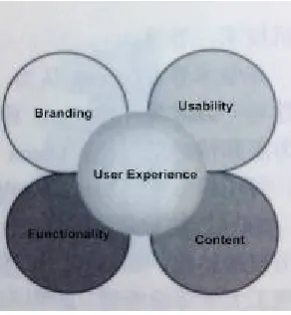
“To treat pre-disease, not to treat diseases that already happened; to take preventive measures against possible trouble, not to take action against those already existing”[1]. With the improvement of the social development and the social security system, it is increasingly urgent to protect and improve the lives of deaf children. Deaf children could grow up as normal children through reasonable rehabilitation training and product supporting. Currently, wearing hearing AIDS or implantable electronic cochlea, more and more deaf children could hear well. How to impair speech and exert treatments well becomes the focus of designers and developers of medical apparatus. According to the physical aspect, psychological aspect and user experience of deaf children, this article focus on product appearance, colors, and materials and so on to do the current and the actual investigation and analysis of existing products in the framework of medical module. Through the “matrix analysis method” to verify the real cases of deaf children’s products, the results can be better for design improvement to meet the demand of the market, to maximally adapt to the user's understanding of product use, to hopefully be able to provide the understanding and the expectation of user’s, and to provide abundant and effective data and theoretical support of deaf children's products. The user experience, in 2004, Robert Rubinoff divided User Experience into four elements: branding, usability, functionality and content and integrated these four elements to evaluate User Experience Design, as shown in figure 1 [2-4].
THE GROUP OF HEARING IMPAIRED CHILDREN AND RECOVERY DATA
to each child, which easily cause the result of the missing of the best treatment and rehabilitation period and influence the whole life of the children. As the survey shown in some city in 2013, which the author especially investigated in 32 children with hearing loss whose age are from 0 to 5, as shown in table 1, there are 31.2% of the hearing impaired children have never been carried out any treatment and rehabilitation training.
Figure 1.Four Elements of Robert Rubinoff
Some of these families are very poor, and some of their parents didn’t take measures on the issue of their children and didn’t have the consciousness of doing so and so on. 25% of children among these 32 are in some relevant training institutions of rehabilitation and treatment, and only three people are hospitalized. Now only 3 people are available with the related products to rehabilitation training, and until now the situation has not been changed and improved yet. Thus, it is necessary to improve the consciousness of the scientific recovery of this group and to fill the blanks of the market with more effective product design. With the improvement of Service, such as Context-Linked Service and New Business Model, Special Design become one of the characteristics of future design for users[5].
Table 1.The investigate of available of hearing impaired children
(1) rehabilitation form (2) The number of children
(3) Percentage
(4) None action (5) 10 (6) 31.2
(7) hospitalized (8) 3 (9) 9.4
(10) institutions (11) 8 (12) 25
(13) at home (14) 3 (15) 9.4
(16) With special product
(17) 3 (18) 9.4
(19) Deaf learning (20) 5 (21) 15.6
(22) total (23) 32 (24) 100
THE CHARACTERISTICS OF THE HEARING IMPAIRED CHILDREN
Children with hearing impairment, when six, seven months after birth, will understand the burbling once, but the complete language pattern cannot form at the same time because they don't get feedback from the outside and sound reinforcement, accordingly they cannot get the overall arrangement and understanding of what they hear by hearing, vision and mind set. In result, the hearing function will gradually lose. It is mainly reflected in the following aspects: The perception of incomplete information: when hearing impaired children carry on the processing of obtained information with various senses and other ways, the information obtained are relatively incomplete due to the lack of hearing. Information memory difference: hearing impaired children mainly memory images because of the hearing damage. For example, to remember the sentence “I go to school", normal person can comprehend it according to the word memory, but hearing impaired children have to rely on drawing images. Unique processing mode of thinking: normal children use language as the tool of thinking to quickly understand things, and deaf children can quickly understand things by looking at the physical content, but it is difficult to grasp the abstract and the concept of semantics. For example: hearing impaired children can comprehend the visible objects quickly, such as flowers, grass, fish, and insects; but they find it difficult to master the abstract concept like "beautiful"[6-7].
“MATRIX ANALYSIS METHOD” IN THE SPECIFIC PROCESS OF DEAF CHILDREN’S PRODUCTSANALYSIS MODULE
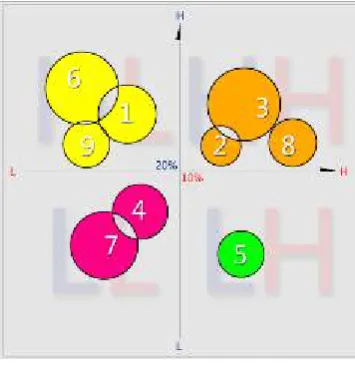
[image:2.595.169.443.435.531.2]and development strength growth, calculating the growth portfolio of the product function of users. Specific chart analysis is shown in figure 2.
Figure 2. Matrix analysis method chart analysis
Blue H vertical point: dividing new product research and development of the module power consumption present a product by R&D cost of the previous module is the spending growth rate of new product of a module R&D.Red H level point: the user’s satisfaction for the function of product module. Dividing the user’s satisfaction value of new product module by the user’s satisfaction value of previous product module is the user’s satisfaction for product of a module. The numbers 1 to 9 represent the name of each module. The sizes of circles are on behalf of the relative size of each module R&D input.
HL: high input of R&D, low satisfaction of customers HH: high input of R&D, high satisfaction of users LL: low input of R&D, low satisfaction of customers LH: low input of R&D, high satisfaction of customers
First draw a coordinate that has four quadrant of the plot here, on the vertical axis part identifies the current user experience research growth percentage growth rate, the horizontal axis to identify the product function of each module, each with 20% and 10% as a cut-off point again the halfway point of the distinction between High and Low, and the last four quadrants, respectively named HH, HL, LL, LH (H represents High, L represents Low).
The specific method is as follows: Accounting research and development efforts of new products modules on the user experience from the previous product modules in user experience research consumption ratio and users of new products each module of the ratio of compared with the previous product.
The degrees of the affection of user for new product modules can use absolute or relative favorability, but can only take one, then fill all the data on the transverse and longitudinal axis, identify its relative position according to the coordinate axis location (can use the dot), After locating, according to the relative ratio of research and development strength of various modules in that year, drawing circles of different area, and identify different numbers in order to distinguish and later analysis, finally respectively classify the digitals into HH, HL, LL, LH, analysis and calculation were conducted.
ANALYSIS OF INVESTIGATION FACTORS
This research is mainly about grading evaluation index and the content from the function, the color, the combination of three aspects of the user’s experience, which is on the communication product of hearing impaired children. When designers believe that the appearance of new product should be emphatically in research and development strength, there will be a lot of forms of appearance, such as round, oval, square, triangle and irregular shape etc. On the choice of the appearance, we will take 35% efforts of research and development for the creative circle, 8% efforts for elliptic, 35% efforts for square, 18% for rectangle, and 4% for triangle.
circular form are 35%, for the square form are 35%, for the rectangle form are 18%, for the oval form are 8%, for the triangle form are 4%. Then we got the data from the report of market research.
Appearance: the current shape of the products used. According to the results of the survey data from 17 people, it is concluded that 60% of users chose circular, 25% of users chose elliptic, 5% chose square, 2% chose rectangle, and 8% chose triangle, which obtained the ratio of user’s satisfaction in the product research and development in all directions for the future. We filled the two sets of data into the axis, with 10% of vertical axis (development efforts) and 20% of the horizontal axis (user’s satisfaction) to distinguish the four quadrants which only to distinguish the data location, regardless of data size order.
Therefore, according to the data above, in the future we should focus on designing the round products which is the most satisfied of users, and the form of the oval products is the second important choice of the users, relatively with more efforts on its research and development. Thus, the form of square products can be appropriately reduced with the development efforts. Users didn’t recognize rectangle and triangle products, which can be kept the existing strength of research and development and be ready for the future when the users need. According to statistics of survey, we summarized the percentage of the research results, and put them into the formula.
The author left enough space for attendants to make some comments, suggestions and insufficiency about the problems they conquered as they experienced. After summarizing and analyzing the questionnaire, investigator teased out the ideas and attitudes of users for the products absent, and added up the ratio between the customer’s satisfaction and the efforts of research and development for the products in order to set the data base for "the matrix analysis method" and to provide a reference for designers, who can accurately make an evaluation of product design.
THE ANALYSIS OF EXPERIMENTAL EXAMPLES
According to the previous analysis, we analyze communication products of deaf group from two modules which are vision and the sense of touch. We analyze “vision” from three aspects: appearance, color, and combination; we analyze “tactile” mainly from the materials and the functions. As shown in figure 2.
According to the formula, we respectively calculated the ratio between the efforts of development and the degrees of user’s satisfaction: the appearance color, the forms of combination, materials and functions, which added into four quadrants, and then analyzed the characteristics of each quadrant. Thus it is concluded that the following values:
HH quadrant: 3, 7, 8, 12, 13, 16, 18 HL Quadrant: 1, 10, 14, 19
LL quadrant: 2, 5, 6, 15 LH quadrant: 4, 9, 11, 17
Figure .2The keys of communication products for deaf children
CONCLUSION
We demonstrated that the "matrix analysis method” is scientific, convenience and effective by analyzing the samples of product design of language rehabilitation training for deaf children, added to the details of the product design, improved experiential and understanding level of users for the elements of product design, made up for the family with voice training devices on the market, and fulfilled this group with the demand and the experience towards these products. With “matrix analysis method” for deaf children, we analyzed and designed specifically in physical and psychological factors of deaf children, in order to make language rehabilitation training of the deaf children more lively and interesting. The result shows that the method also could take good effect in color, function, materials and combination design.
Acknowledgments
Name of the project : The Research of Heritage of Calligraphy and the Value of Contemporary Calligraphy Education. Organization of the Project :The development of social science research project in HeBei province
REFERENCES
[1] The theory of Four Mystery Qi , Plain Questions ,Yellow Emperor's Inner Canon. China Society Press. 2000. 2 [2] Shijian Luo, Shangshang Zhu. The User Experience and Product Innovation Design. Beijing: Mechanical Industry Press, 2010. 4
[3] Shijian Luo, Shangshang Zhu. The User Experience and Product Innovation Design. Beijing: Mechanical Industry Press, 2010. 4
[4] Youyuan Sun, Tan Jie. Present Situation and Prospects of the Domestic Medical Equipment At Present [J]. China medical equipment information, 2011.02,
[5] ShiGuo Li. Experience and challenges [M]. Nanjing: JiangSu Fine Arts Publishing House, 2008,01