Journal of Chemical and Pharmaceutical Research, 2015, 7(10):804-814
Research Article
CODEN(USA) : JCPRC5
ISSN : 0975-7384
Optimization of fermentation conditions for a caproic acid-producing strain
K
2by single factor and orthogonal design methods
Zhengkai Xue
1,21Luzhou Vocational and Technical College, Lu Zhou, Sichuan, China
2Institute of Biomedical Engineering, Lu Zhou, Sichuan, China
_____________________________________________________________________________________________
ABSTRACT
In present study,the high-yielding fermentation medium for strain K2 (Clostridium celerecrescens) producing
caproic acid (CA) was screened , and the saccharides , nitrogen source, the growth curve, CA-producing curve , single-factor tests, orthognal tests and verificatiing test for optimizating conditions were carried out. The results demonstrated that sodium acetate cultur medium was the best one among the four candidate medium tested, and the saccharides and nitrogrn source for the fermentation medium were glucose and yeast extracts respectively, the
relatively important factors for CA-producing ,which judged from the results of single-factor test were glucose,
ethanol,KCl, sodium acetate,temperature and PH value , and the further L18 (3
6) orthogonal experiment indicated
that the high-yielding CA fermentation conditions were: temperature 34 ℃, PH 9, 0.25g / L glucose, 10mL / L
ethanol , 20g /L of sodium acetate, 2g /L KCl, the optimized caproic acid-yielding was10.23±0.74(g / L),which was
more than the output of before optimization 7.30 ± 0.359 (g / L) 40.1%.
Key words: fermentation conditions; caproic acid-producing strain, orthogonal test
_____________________________________________________________________________________________
INTRODUCTION
Caproic acid (CA) is a flavor component in a variety of Chinese liquor, especially in Chinese strong-flavor liquor (CSFL). More importantly, CA is the precursor of ethyl caproate, which serve as the main-aroma substance in CSFL , and is produced during the production of CSFL by ethanol reacts with CA in mud pit ( a traditional vessel for CSFL making in China) , to a large extent, the quality of CSFL depended on the amount of CA concentration in the zaopei during the CSFL manufactured in mud pit(Hu et al 2015; Chen 2014; Zhu X2015).
CA is the secondary metabolites of caproic acid-producing bacteria such as Clostridium Kluyveri etc, it was produced in the fermentation process of caproic acid-producing bacteria inside or outside the mud pit, The caproic acid-producing bacteria play a vital role in the process of CSFL making. Such key functional bacteria, which functions as main caproic acid-producing bacteria in the process of liquor-making, can be cultured outside pit and utilized not only to culture manmade aged pits, maintain pits, string steaming fermented grains and fill inside the fermented pit for promoting the quality of CSAL, but also to produce caproic acid,butyric acid and other acidulants, further to obtain the ethyl hexyl, acetate butyrate and other flavouring agent ,which can be used to blend liquor (Wang et al. 2014; Qi et al. 2015; Hu et al. 2014).
In short, the culture of caproic acid bacteria in or outside mud pit have great significance in scientific industrial applications in improving the quality of the base liquor, blending liquor and finished liquor in CSFL.
flavor compounds.
EXPERIMENT SECTION
Materials
The strain K2 (Clostridium celerecrescens) ,which was isolated, identified and stored in ultra-low temperature freezer at -80℃ in author′ institute .
Strain activation
A loopful of freezed bacteria was inoculated into anaerobic culture tubeS containing agar slant culture. The bacteria were cultured for 3 days at 32℃ until the bacteria grew significantly colonies, and stored in refrigerator at 4 ℃ for further use.
Seed Liquor Culture
5ml clostridium medium was drawn and added to anaerobic culture tubes mentioned above in 1.2.1, the bacterial bodies of activated bacteria were scraped down with inoculating loop and inoculated into 50ml seed medium, cultured at 32℃ for 6 days, and then stored in refrigerator at 4 ℃ for future use.
Screening for caproic acid-producing medium
Four typical media listed following were prepared to serve as candidates for high-yielding CA fermentation of strain K2.
A. Sodium acetate medium
Sodium acetate medium composition for 1L contained: glucose 1g , KCl 1.8g, yeast extract 2.5g, 15g sodium acetate, ethanol 10 mL, CaCO3 5g, added tape water to 1L, the medium was sterilized at 121℃for 15 min.
B. Pasteur's synthetic medium
Pasteur's synthetic medium composition for 1L contained: Glucose 10g, MnSO4 0.01g, KH2PO4 0.5g , FeSO4 0.01g, K2HPO4 0.5g, Yeast extract 1g, MgSO4.7H2O 0.2g, Peptone 0.1g, NaCl 0.01g, CaCO3 5g,Added distilled water to 1L, pH 7.0, the medium was sterilized at 121℃for 15 min.
C. Ethanol-acetate Medium,EAM
Ethanol-acetate Medium for 1L contained: Ethanol 20 mL, NaAc5g, Yeast extract 1g, MgSO4 7H20 0.2g, K2HPO4 0.4g, (NH4)2 SO4 0.5g, CaCO3 10g, added distilled water to 1L, the medium was sterilized at 121℃ for 30 min, 20 mL ethanol was added after sterilization.
D.fermented grains- sodium acetate Medium
fermented grains- sodium acetate Medium composition for 1L contained: sodium acetate 5g, yeast extract1g, CaCO35g, 1:3 fermented grain extract 500mL, PH7-7.2, added tape water to 1000mL, the medium was sterilized at 121℃ for30 min.
Screening saccharides and nitrogen-source for caproic acid-producing
Based on the culture medium A, the nitrogen source and carbon source were screened for K2 to yield higher CA. as for nitrogen source, one of yeast extract, peptone, beef extract, Urea, ammonium chloride and ammonium sulfate at the concentration of 2.5g/L was added into culture medium A. and for carbon source, one of glucose, starch, lactose, sucrose was added. The fermentation conditions were Temperature: 32℃; period: 15days, degree of vacuum 0.06MPa.
Drawing growth and caproic acid-producing curve
Seed liquor was Inoculated into anaerobic culture bottle containing fermentation liquor medium, the condition of fermentation was 18 days, and the amount of inoculation was 5%(v/v), and the amount of culture medium solution was 50 ml, and the degree of vacuum was-0.06 MPa, every group had 3 replications, and Sampling fermentation liquor once every three days for analysis.
Single-factor test
In order to investigate the impacts of different fermentation factors at different level on the yields of caproic acid of strain K2, the fermentation factors and levels for single-factor test listed as follows:
ethanol concentration (0, 10, 20, 30, 40, 50, 600mL/L),sodium acetate concentration (0, 5, 10, 15, 20, 25, 30g/L), glucose concentration(0, 0.25, 0.5, 0.75, 0.1, 1.25, 1.5 g/L),yeast extract concentration(0, 1.5, 2.5, 3.5, 4.5, 5.5, 6.5g/L),KCl concentration(0, 1, 2, 3, 4, 5, 6g/L),inoculating amount(2.5, 5, 7.5, 10, 12.5, 15g/L), fermentation temperature(28, 30, 32, 34, 36, 38, 40℃), loading amount(45%, 90%), and CaCO3 concentration (0, 2.5, 5, 7.5, 10, 12.5, 15g/L), other fermentation conditions except for the factor investigated were described in item1.2.3 and 1.2.4.
Orthogonal test
In order to obtain a higher caproic acid production, the glucose, ethanol, sodium acetate, fermentation temperature, initial PH value and the KCl concentration and three levels were selected respectively on the basis of single-factor test, and the L18 (36) orthogonal test table was designed to optimize of fermentation conditions for K2 achieving higher caproic acid yields(table 1 and 2).
Tab 1 the factors and levels
levels
factors
A temperature
(℃)
B Ethanol concentration
(mL/L,V/V)
C Sodium acetate
Concentration (g/L,W/V)
D Initial PH value
E
Glucose concentration (g/L,W/V)
F KCl concentration
(g/L,W/V)
1 30 7.5 10 7 0.25 1.5
2 32 10 15 8 0.5 2
3 34 12.5 20 9 1 2.5
Tab 2 the L18 (36) standards orthogonal test array
Experiment No Factor A Factor B Factor C Factor D Factor E Factor F
1 2 2 1 2 2 3
2 1 3 3 2 2 2
3 3 1 1 2 3 3
4 3 1 3 2 1 2
5 2 1 2 3 3 2
6 1 2 1 3 3 2
7 1 1 2 1 2 3
8 2 1 3 3 2 1
9 1 2 3 3 1 3
10 3 3 2 3 1 3
11 2 3 1 1 1 2
12 2 2 2 2 1 1
13 3 2 3 1 3 1
14 3 3 1 3 2 1
15 1 1 1 1 1
16 3 2 2 1 2 2
17 1 3 2 2 3 1
18 2 3 3 1 3 3
Verification test for the optimized fermentation conditions
In present study,verifying experiments were carried out to verify the accuracy of conditions optimized by orthogonal test , each group of three repeats.
The GC--analysis and CA-producing bacteria count in the CA fermentation liquid
The methods for GC analysis and bacteria count in present study referred to the analytical procedures previously described by XUE(Xue,2014).
Data analysis
The software package spss19, Sigmaplot12.5 and excel was used for data analysis in this study
RESULTS AND DISCUSSION
Effects of four types of cultures on the CA yield
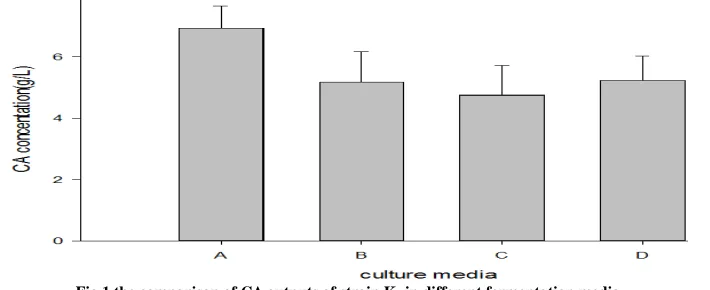
[image:4.595.132.487.216.361.2]The CA concentration of 15-day fermentation liquid based on A, B, C, D fermentation medium were detected by gas chromatography, the results were shown in Figure 1.
Fig 1 the comparison of CA outputs of strain K2 in different fermentation media
It is observed from fig1 that highest output of caproic acid for strain K2 achieved in the medium A , and the lowest output appeared in medium B, the highest output in medium A reached 6.97±0.72( g/L),which showed significant differences contrast with those of B,C, and D (P=0.003,0.005,0.046<0.05). Therefore, the medium A was utilized for subsequent experiments.
Effects of carbon sources on CA yield
The output of caproic acid detected by GC in 15-day fermentation liquid, which contained different types and concentrations saccharides , showed in fig 1.
sacchrides(g/L)
glucose lactose sucrose starch
C
A
c
o
nc
e
nt
ra
tio
n(
g/
L
)
0 2 4 6 8
A effects of saccharides on the output of CA B The effects of different concentrations of glucose on the output of CA
Fig2 the effects of sacharides on the output of CA
It was demonstrated in fig 2A that the highest yield of caproic acid appeared in fermentation culture medium containing glucose, the results in fig 2B showed that the glucose concentration, which produced highest yield of caproic acid 7.34±0.15(g/L), was 0.5%(W/V).
Effects of nitrogen source on CA production
The yields of caproic acid in fig3A demonstrated that the medium containing yeast extract produced highest output of caproic acid of 7.33±0.47(g/L), which was significant higher than those of media containing peptone, beef extract, ammonium sulfate, ammonium chloride and urea. The concentration of yeast extract 2(g/L) was to be suitable one for K2 to producing CA .
The curve of growth and CA production
The fig. 4 showed the growth and caproic acid-producing curves based on the caproic acid concentration and bacterial amount.
fermentation time (day)
0 3 6 9 12 15 18
b
a
c
te
ri
a
l
c
o
u
n
t(
1
0
7C
F
U
/m
L
)
0 10 20 30 40 50
time(day)
0 3 6 9 12 15 18
C
A
c
o
n
c
e
n
tr
a
ti
o
n
(g
/L
)
0 2 4 6 8 10
A the growth curve of strain K2 in culture medium A B The CA-producing curve of strain k2 in culture medium A.
Fig4 the curve of growth and CA-production
The growth curves in fig 4A showed that the lag phase was in 0-3 day, logarithmic phase was in 4-9 day, the bacterial count reached the peak of 5.06±0.34(108CFU/mL) on the 6th day, and stationary phase was in 9-18 day; the fig4B indicated that the caproic acid was produced rapidly for strainK2 in 6-12 day, and CA peak yield 8.017±0.52
(g/L)reached on the 15th day.
Effects of different ethanol concentration on CA yield
ethanol concentration(mL/mL)
0 10 20 30 40 50 60
C
A
c
o
n
c
e
n
tr
a
ti
o
n
(g
/L
)
0 2 4 6 8
Fig5 Effect of different levels of ethanol on the output of CA
It was observed in fig 5 that the production of caproic acid increased in the range of ethanol concentration 0-30g/L, the peak yield of caproic acid reached 7.86±087(g/L)at the ethanol concentration of 30g/L, When the ethanol concentration was greater than 30g/L, caproic acid production declined sharply with the increase of ethanol concentration.
The effects of different sodium acetate concentration on CA outputs
The results of yields of caproic acid detected by GC in the 15-day fermentation liquid, which composed of different sodium acetate concentration , were illustrated in fig6
sodium acetate(g/L)
0 5 10 15 20 25 30
C
A
c
o
n
c
e
n
tr
a
ti
o
n
(g
/L
)
0 2 4 6 8
Fig6 effect of different sodium acetate concentration on the CA output of strain K2
It was indicated in fig 6 that the yields of caproic acid increased gradually in the range of sodium acetate concentration 0-15g/L,as the sodium acetate concentration increased up to 15 g/L,the peak output of caproic acid 7.23±0.11g/L was reached on the edthanol concentration of 15 g/L,When sodium acetate concentrations were greater than 15g / L, the output of caproic acid decreased with the increase of sodium acetate concentration, so the optimal concentration of sodium acetate for K2 producing high-yielding CA was 15 g/L.
Effects of fermentation temperature on K2 producing CA
temperature(0C)
28 30 32 34 36 38 40
C A c o n c e n tr a ti o n (g /L ) 0 2 4 6 8
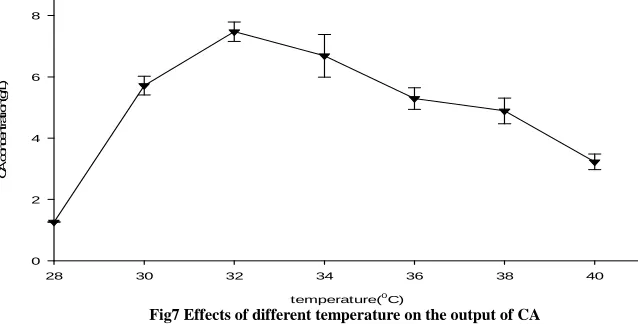
Fig7 Effects of different temperature on the output of CA
The CA-producing curve in fig7 demonstrated that the output of caproic acid increased with the fermentation temperature increase in the range of 28℃ to 32℃,the peak yield of caproic acid,which was 7.47±0.45 g/L,reached at the temperature 32℃,so the best temperature for CA yield was 32℃.
Effects of intnitail PH on the CA outputs
The results of detection of 15-day fermented liquid ,which was fermented in the conditions set above,were illuminated in fig 8.
initial PH
4 5 6 7 8 9 10
C A c o n c e n tr a ti o n (g /L ) 0 2 4 6 8
Fig8 effect of different initial PH on the output of CA
As shown in fig 8, the concentration of caproic acid in the fermented liquid was rather low at PH 4, and the output of caproic acid increased with the increase of initial PH in the fermentation liquid in the range of 4-8,and reached the maximum CA yeild7.18±0.45 g/L at PH 8.
Effects of O2 on the outputs of CA
The results of GC-analysis on the 15-day fermented liquid in different loading capacity were presented in fig 9.
different laoding capacity and environment
atmos pner e45% atmos pner e90% v ac uum45% v ac uum90%
[image:7.595.144.463.91.253.2]C A c o n c e n tr a ti o n (g /L ) 0 2 4 6 8
There were no significant differences(P=0.088,0.297>0.05)in statics by the comparison of the output of caproic acid in 45% loading capacity with that of in 90% loading capacity in stillness, no matter whether the fermentation processes in atmosphere or in vacuum, all the experimental evidences indicated that the metabolic types of strain K2 can bear trace oxygen environment,so the strain is facultative anaerobe bacterium.
Effects of CaCO3concentration on the outputs of CA
The results of GC-analysis of 15-day fermented liquid in different CaCO3concentration were shown in fig 10.
CaCO3 concentration(g/L)
0 1 2 4 6 8 10
C
A
c
o
n
c
e
n
tr
a
ti
o
n
(g
/L
)
0 2 4 6 8
Fig 10 Effect of different concentration of CaCO3 on the output of CA
The results in fig 10 were shown that the output of caproic acid increased with the CaCO3concentration in the range of 0~5 g/L, and the output of caproic acid kept almost remain unchanged when CaCO3concentration ≥5g/L,the data of in fig9 indicated that the CaCO3concentration of 5g/L was the best concentration for strain K2 to produce high-yield CA
Effects of inoculating amount on the output of CA
The results of GC-analysis of 15-day fermented liquid in different inoculating amount were shown in fig 9.
( )
Inoculating amount %,V/V
2 4 6 8 10 12 14
)
C
A
c
o
n
c
e
n
tr
a
ti
o
n
(g
/L
0 2 4 6 8
Fig11 Effect of different inoculating amount on the output of CA.
It was observed in fig 11 that the output of caproic acid increased with the inoculating amount in the range of 2~6%
(V/V), and the output of caproic acid kept slight fluctuation when inoculating amount>6%,those indicated that the inoculating amount of 6% was the effective concentration for strain K2 to produce CA.
Effects of KCl concentration on the yields of CA
KCl concentration(g/L)
0 1 1.5 2 2.5 3 3.5
C
A
c
o
n
c
e
n
tr
a
ti
o
n
(g
/L
)
0 2 4 6 8
Fig12 Effect of different KCl concentration on the output of CA
It was observed in fig 12 that the CA yields increased with the increase of KCl concentration in the range of 0-2g/L, the peak yield of CA 7.65±0.072 g/L reached in the KCl concentration 2g/L,and the CA yields decreased with the increase of KCl concentration when the KCl concentration was higher than the 2g/L.
Orthogonal Test
The results of GC and one-way ANOVA analysis of yields of 15-day fermented liquid of orthogonal test was shown in tab 3 .
Tab 3. The outputs of CA in orthogonal test
The analytical results by Univariate General Linear Models in spss for were shown in table 4. By comparing the Type III sum of squares in table 4,the conclusion can be drawn that the relatively important effect of temperature, glucose, ethanol, sodium acetate, PH values, KCl on the yields of CA were sodium acetate concentration> temperature>ethanol>PH values> KCl>glucose.
Fig13 Effects of temperature(A), glucose concentration(B), ethanol concentration(C), sodium acetate concentration(D), pH value(E), and
KCl (F)concentration on yield of CA
Analysis of the estimated marginal means of CA yield(in fig13) of different factor on different levels that the best optimizations of fermentation conditions was A3B1C2D3E3F3, which indicated that temperature 34℃,PH value 9, glucose concentration 0.25g/L,ethanol concentration 10mL/L,sodium acetate concentration20g/L,KCl 2g/L.
2.15 Verification of the optimized fermentation conditions
unoptimized fermentation optimized fermentation
C
A
c
o
n
c
e
n
tr
a
ti
o
n
(g
/L
)
[image:11.595.131.496.68.239.2]0 2 4 6 8 10
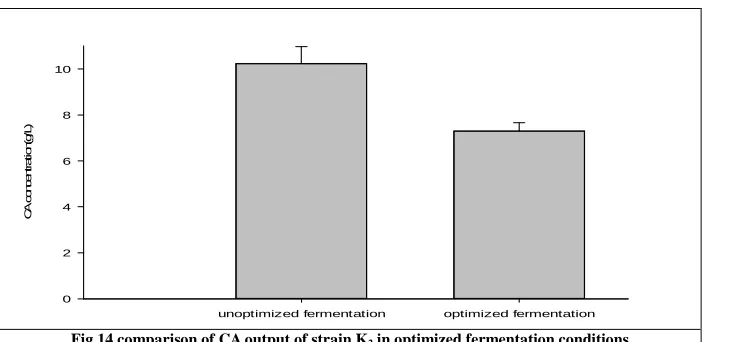
Fig 14 comparison of CA output of strain K2 in optimized fermentation conditions
It was indicated in fig 14 that the CA yield in optimized fermentation condition was 10.23±0.74g/L,which was higher 40.1% than that of unoptimization fermentation medium(7.30±0.359g/L). The comparison by paired-t test in SPSS showed that the CA yield in the two mentioned conditions was significant difference(P=0.044<0.05) .
CONCLUSION
1. In present study, the best culture medium for the CA production of strain k2 was McCLary culture among the four candidate fermentation media in CA outputs.
2. The sacharides and nitrogen sources were glucose and yeast extracts respectively in the McCLary culture based on the yield of CA.
3.The growth and CA production curves were obtained for strain K2,the Logarithmic growth phase was on the third and sixth day, and the rapid CA producing period was on the sixth and twelfth day, and the peak production of CA was on the fifteenth day.
At last,the single-factor test and orthoganal test were utilized to optimize the fermentation conditions(factor) for higher CA output, the relative important of fermentation conditions were revealed as follows: sodium acetate>temperature>ethanol>PH value>KCl>glucose, the most optimized fermentation conditions was temperature34℃, pH value 9, glucose concentration 0.25g/L, ethanol concentration 10mL/L, sodium acetate concentration 20g/L, KCl concentration 2g/L, and the fermentation period was 15 days.
Acknowledgements
This research was financially supported by the science and technology support plan project of Sichuan Province(No.2014FZ0018), the Social development project of Luzhou Municipal Science and Technology Bureau(NO.2013-S-44(4/8)), Key Fund Project of Sichuan Provincial Department of Education.
REFERENCES
[1] Hu X, Du H, Xu Y. (Int J Food Microbiol., 2015, 214: 116-122. [2] Zhu X, Tao Y, Liang C, et al. Sci Rep., 2015,5: 14360.
[3] Chen Y, Li F, Guo J, et al. J Ind Microbiol Biotechnol, 2014., 41(3): 563-572. [4] Wang C, Chen Q, Wang Q, et al. Food Res Int., 2014, 62: 894-901.
[5] Zheng Q, Lin B, Wang Y, et al. Food Res Int., 2015, 75: 305-314.
[6] Jeon B S, Kim B C, Um Y, et al. Appl microbiol biotechnol., 2010, 88(5): 1161-1167. [7] Choi K, Jeon B S, Kim B C, et al. Appl microbiol biotechnol.,2013,171(5): 1094-1107. [8] Xue Z. J. Chem. Pharm. Res.,2014 ,6(7):2021–2025.