h e a l t h s t u d e n t s t o r e c o g ni s e a n d
m a n a g e p h y si c al h e a l t h p r o bl e m s
u si n g a l e a r n i n g in t e r v e n ti o n
C h a d wi c k, AL a n d Wit h n e ll, N
h t t p :// dx. d oi.o r g / 1 0 . 1 0 1 6 /j. n e pr. 2 0 1 6 . 0 4 . 0 0 2
T i t l e D ev el o pi n g c o nfi d e n c e i n m e n t a l h e a l t h s t u d e n t s t o r e c o g n i s e a n d m a n a g e p h y sic al h e a l t h p r o bl e m s u si n g a l e a r n i n g in t e r v e n tio n
A u t h o r s C h a d wi c k , AL a n d Wit h n ell, N
Typ e Ar ticl e
U RL T hi s v e r si o n is a v ail a bl e a t :
h t t p :// u sir. s alfo r d . a c . u k /i d/ e p ri n t/ 3 8 9 2 0 / P u b l i s h e d D a t e 2 0 1 6
U S IR is a d i gi t al c oll e c ti o n of t h e r e s e a r c h o u t p u t of t h e U n iv e r si ty of S alfo r d . W h e r e c o p y ri g h t p e r m i t s , f ull t e x t m a t e r i al h el d i n t h e r e p o si t o r y is m a d e f r e ely a v ail a bl e o nli n e a n d c a n b e r e a d , d o w nl o a d e d a n d c o pi e d fo r n o
n-c o m m e r n-ci al p r iv a t e s t u d y o r r e s e a r n-c h p u r p o s e s . Pl e a s e n-c h e n-c k t h e m a n u s n-c ri p t fo r a n y f u r t h e r c o p y ri g h t r e s t r i c ti o n s .
M
ANUS
C
R
IP
T
AC
C
EP
TE
D
Title PageTitle:
Developing confidence in mental health students to recognise and manage
physical health problems using a learning intervention.
Full word count: 5496
Lead author – Angelina Lilja Chadwick RGN RMN MSc
Lecturer in Mental Health Nursing
School of nursing, midwifery, social work and social sciences
Tel: +44 (0) 161 295 7121 email [email protected]
Second author – Neil Withnell RMN MSc
Associate Head Academic Enhancement
School of nursing, midwifery, social work and social sciences
Tel +44 (0) 161 295 2731 email [email protected]
Acknowledgements to Leah Greene for technical support and to Sue
M
ANUS
C
R
IP
T
AC
C
EP
TE
D
1
Globally, there is increased recognition of a higher prevalence of physical ill health
and mortality in individuals with mental health problems. A review of the literature
highlighted the need to address deterioration in physical health of those with mental
health problems through better recognition and management on the part of mental
health nurses. However, mental health nurses have been found to lack confidence
and be unsure of their role within this area. The aim of the project was to develop
pre-registration mental health students’ confidence to be able to recognise and
manage physical health deterioration through the use of high fidelity human patient
simulation, the development of contextualised clinical scenarios and additional
theory around the A to E mnemonic structured assessment. The project involved 95
third year mental health student nurses, using a self-rating pre and post intervention
questionnaire to measure their perceived confidence levels and to evaluate the
effectiveness of the learning intervention. Findings demonstrate improved overall
confidence levels in recognising and managing physical health deterioration in
human patient simulators displaying mental health problems.
Highlights
• A project to develop student mental health nurses confidence.
• To be able to recognise and manage physical health deterioration.
• The learning intervention consisted of high fidelity human patient simulation.
• Contextualised clinical scenarios and theory development were utilised.
• Project evaluation was favourable in using experiential learning methods.
M
ANUS
C
R
IP
T
AC
C
EP
TE
D
2
INTRODUCTION
Mental health nurses need to be able to recognise and respond to patient’s physical
health problems in ever changing nursing practice (DH, 2006). Pre-registration
mental health nurse education is one area where this can be developed (MNC,
2010). Using advancements in technology, a project was developed by nursing
academics within the United Kingdom, using human patient simulation,
contextualised clinical scenarios and experiential learning to develop the confidence
of mental health student nurses in recognising and managing physical health
deterioration in those they are caring for.
BACKGROUND
There is a wealth of contemporary studies illustrating how individuals with severe
mental illness have an increased risk of co-morbid physical illness including; cardio
vascular diseases, diabetes, respiratory disease, HIV, infections gastrointestinal
disease and increased early mortality (Filik et al, 2006; McCabe & Leas, 2008;
Weiser et al, 2009). People diagnosed with severe mental illness have also been
found to be at greater risk of developing metabolic syndrome (McEvoy et al., 2005),
which can lead to premature mortality, these individuals being likely to die 25 years
earlier than the general population (Parks et al, 2006).
Certain barriers exist for individuals with severe mental illness wishing to access
physical health care services, thus contributing to their plight of unrecognised and
untreated physical illness. These include diagnostic overshadowing; current
M
ANUS
C
R
IP
T
AC
C
EP
TE
D
3
lack of education for service users with mental health problems (DeCoux, 2005) and
mental health nurses lacking appropriate knowledge regarding available services to
meet the physical health needs of their patients (Phelan et al., 2001: Robson & Gray,
2007; Chadwick et al, 2012). Furthermore, a study by Howard and Gamble (2011)
found mental health nurses lacked confidence in the area of providing physical
health care and were unsure of their role within this area.
The need to address physical health needs of people with mental health problems
can be found in the Chief Nursing Officers’ review of mental health nursing
(Department of Health (DoH), 2006) which called for competency changes within
pre-registration mental health nurse education in the United Kingdom (UK) (Nursing
and Midwifery Council (NMC), 2010). An audit undertaken by the National Patient
Safety Agency (2008) also highlighted the need for mental health nurses to be able
to recognise, assess and manage acute physical health deterioration of those with
mental health problems. The audit found that mental health nurses were putting
patients’ lives at risk through a lack of recognition of those who were acutely ill and
their inability to use vital emergency equipment, resulting in an increase in mortality
rates during cardiac arrest. However, in order to respond to unmet physical health
needs, mental health nurses must first be able to recognise such needs.
Furthermore, UK National Health Service (NHS) policy drivers, including the Mental
Health Strategy (DoH, 2011) and the National Health Service Outcomes Framework
(DoH, 2010), advocate mental health service providers need to address the issue of
physical ill health. Likewise, the recent Willis report (2015), a collaborative report
M
ANUS
C
R
IP
T
AC
C
EP
TE
D
4
between mental health, adult and learning disability nursing within nurse education
programmes, as a way forward in addressing existing deficits.
These educational recommendations and NHS policy drivers strongly influence the
expectations, in terms of knowledge and skills required of the future mental health
nurse workforce. Policy expectations include the need for improved screening, care,
treatment and partnership working to reduce health inequalities for people with
mental health problems. In 2007 the National Institute for Health and Clinical
Excellence (NICE) produced clinical guideline (CG) 50, exemplifying early indicators
and the management of physical health deterioration. Although this guideline targets
adult inpatient services in acute hospitals, it must also be considered in the context
of mental health service provision, due to the increase in physical health problems in
those diagnosed with mental illness (Robson & Gray, 2007).
Having identified the need to develop mental health nurses ability to recognise and
respond to physical health needs, consideration was given as to the methods to
employ within pre-registration nurse education. Simulation has been used effectively
in healthcare education, allowing students an opportunity to increase their
confidence by being able to practice dealing with high-risk events that may happen
infrequently (Brown, 2008). Simulation has been described as the reproduction of a
real incident where learners can experience an event and practise their skills without
any real risks to themselves or to others (Larew, Lessans, Spunt, Foster &
Covington, 2006; Broussard, 2008). Simulation has been used within the healthcare
arena since the 1940’s (Barrows & Tambling, 1980). Within mental health nursing
M
ANUS
C
R
IP
T
AC
C
EP
TE
D
5
skills; the therapeutic use of self; complex crisis management; establishing a
therapeutic relationship and de-escalation (Donovan, Hutchinson & Kelly, 2003;
Edward, Hercelinkskyj & Warelow, 2007; Crider & McNiesh, 2011; King & Ott, 2012).
Standardised patients have also been used in role-play with the employment of
trained individuals or paid actors (King & Ott, 2012). Role play simulation can be
used to develop mental health skills for managing mental health emergencies such
as dealing with a psychotic patient (Steeves, 2012).
Additionally films and videos, in conjunction with other educational materials, have
been used in mental health education to illustrate the assessment of an individual
with mental health problems using simulation (Brown, 2008). Where mental health
nursing has lacked simulated training the use of virtual reality to develop essential
nursing skills including communication, empathy, ethical insight and critical thinking
skills has been found to be invaluable (Guise, Chambers & Valimaki, 2012; Kidd,
Morgan & Savery, 2012). Criticisms of this approach include the frustration for
students navigating the virtual environment and the inferiority of this experience to
real life interaction (Kidd et al, 2012). Whilst these approaches maybe useful in
developing core mental health abilities, they are unable to simulate the experience of
physical health deterioration with the associated physiological changes (Brewer,
2011).
When discussing simulation the element of fidelity must be considered. This relates
M
ANUS
C
R
IP
T
AC
C
EP
TE
D
6
different levels of simulation, which include low, medium and high. High fidelity
simulation involves advanced computerised physiological models to replicate real
time physiological changes in response to interventions. For example, within a
simulated scenario a computerised physiological model could be programmed to
snore, replicating a partially occluded airway. In response to this the student may
performs a head tilt chin lift to open the airway and the model will respond
accordingly by breathing normally (Seropian et al., 2004). However, high fidelity does
not always imply high technology, as realism can be produced in a variety of forms,
for example role-play within a clinical environment (Cooper et al., 2012). The use of
high fidelity human patient simulation as a teaching tool in the area of physical health
deterioration has been used in several studies (Cooper et al., 2010; Liaw et al.,
2011). In their study of Australian acute and rural health nursing students’ Cooper et
al (2010) concluded that simulation has an important role in healthcare education as
it has the potential to improve knowledge and skills when using advanced life
support computerised mannequins to assess and manage physical health
deterioration. Liaw et al. (2011) involved adult pre-registration nurses using a
SimMan patient simulator to recognise and respond to physical deterioration. They
used the Airway, Breathing, Circulation, Disability, Exposure, ABCDE mnemonic,
(Resuscitation Council, 2011) as the process to underpin a systematic assessment
and management approach. The results demonstrated how simulation impacts
positively on student learning by developing their self confidence and competency in
assessing and managing the deteriorating patient. However, the study did not
address the complexity of recognising physical health deterioration in someone
M
ANUS
C
R
IP
T
AC
C
EP
TE
D
7
Further analysis of the literature surrounding physical health deterioration and
simulation was found to be limited within the sphere of mental health nursing.
Hermanns and Crawley (2011) developed an intermediate fidelity simulation
scenario whereby a hanging had taken place. Students were expected to identify,
assess and manage this situation using the Airway Breathing Circulation (ABC)
mnemonic and then by monitoring the patient until they were transferred to hospital.
Overall, the findings revealed that the simulation provided a positive learning
experience around crisis management and psychiatric intervention. It is suggested
simulation at the intermediate level has the potential to enhance student confidence
within their clinical practice (Ogilivie et al., 2011). An educational evaluation by
Unsworth et al (2011) explored knowledge and skill development in pre-registration
mental health student nurses in recognising physical deterioration in patients with
mental health problems. However, in their study some of the scenarios were
undertaken by groups of both adult and mental health students. As a result the
mental health nurses tended to focus on the mental health assessment leaving the
adult students to focus more the physical health aspect and technical skills. While
their overall results found that intermediate fidelity was a useful in learning about
physical health deterioration, caution needs to be exercised when working with a
mixed groups of nursing students.
After reviewing the literature, the project group developed, implemented and
evaluated a learning intervention within the pre-registration mental health nurse
programme. The aim of the intervention was to develop the confidence of mental
M
ANUS
C
R
IP
T
AC
C
EP
TE
D
8
required additional teaching and the employment of high fidelity human patient
simulation within contextualised clinical scenarios to enable the students, through
experiential learning, to recognise and manage physical health deterioration. The
project was evaluated using a pre and post intervention survey measuring the
students’ confidence levels.
AN EVALUATIVE PROJECT
Third year pre-registration mental health student nurses were chosen to participate
in the project as they had expressed concerns regarding recognising and managing
physical health problems.
Ethical considerations
Ethical approval was sought and granted through the university’s ethic committee
with subsequent consent obtained from each of the students who participated.
Further ethical considerations included the provision of written information to ensure
full disclosure, respecting student rights and providing debriefing sessions to ensure
a safe learning environment.
In total 95 students were initially introduced to the human patient simulators to
ensure familiarity and allay any anxieties with regards to working with them. A taught
session was delivered to introduce the students to the A to E mnemonic, a structured
M
ANUS
C
R
IP
T
AC
C
EP
TE
D
9
one of two developed contextual clinical scenarios. The first scenario centred on a
patient within an inpatient setting, who was low in mood and who had attempted
suicide by cutting their wrist. The second scenario involved a patient, within a
community setting, experiencing a psychotic episode and who had fallen resulting in
a compound fractured leg. In both scenarios the patient’s physical health
deteriorated due to hypovolaemic shock. These were chosen since they were
realistic with the first scenario, common within mental health settings.
Over four days, groups of approximately 24 students undertook the learning
intervention, splitting into two groups of 12 on each day. One group of 12 students
was then further split into smaller groups of three to work together on scenario one in
the simulation laboratory. While each group of three dealt with the scenario, the
remaining nine students waited in a holding area. The other group of 12 students
observed each of the four small groups undertaking the first scenario through a live
streamed video recording in another classroom. When each of the small groups had
undertaken the scenario the two larger groups swapped over with the second group
splitting into smaller groups of three in order to undertake scenario two. Whilst
students were observing their peers through the video stream, support was provided
from a facilitator, discussing the scenarios and actions as they occurred. Those
students actively engaged in the scenarios were also supported by a facilitator whilst
in the simulation laboratory. Before the students entered the simulation laboratory
the facilitator gave them a verbal brief of the situation and the environment that they
were about to enter and informed them of their roles. The laboratory was set up to
M
ANUS
C
R
IP
T
AC
C
EP
TE
D
10
cups and an armchair in relation to the community setting, and a bed, physiological
measuring equipment and charts for the inpatient environment, in order to increase
the fidelity of each scenario. Once the students had undertaken one of the two
scenarios a debriefing session was conducted with the facilitators. The observers
provided constructive feedback and the students engaged in personal reflection on
their practice and development. This learning intervention was repeated over four
days to enable all 95 students to take part.
This project was evaluated using pre and post intervention questionnaires. A rating
scale, based on a Likert scale (1932), was included within the questionnaire to
assign a statistical score to assess the strength of the student’s belief regarding their
confidence in relation to assessing their skills in recognising physical health
problems (Oppenheim, 1992). The adjectives used were evaluative with the poles of
the scale being ‘not confident’ to ‘highly confident’, the higher scores being applied to
the more positively worded adjectives. Following permission from the original
authors, the questionnaire (Table 1) used was an adapted version of the validated
Generalised Self Efficacy Scale (GSES) (Schwarzer & Jerusalem, 1995). The
original GSES was developed for measuring a person’s sense of self-confidence
regarding the stresses of daily life and contained a ten statement psychometric scale
(Schwarzer & Jerusalem, 1995). For this project the ten statements were modified to
include recognition of physical health deterioration and aspects of management. The
questionnaire used a four-point Likert scale asking the students to circle one of the
points in relation to each of the ten pre-determined statements in order to measure
M
ANUS
C
R
IP
T
AC
C
EP
TE
D
11
confident and 4 - highly confident. Additionally, the post questionnaire included
closed questions in an attempt to provide additional information relating to their
overall level of confidence improvement. Although the questionnaire sought students’
perceptions pre and post learning intervention to determine any change in their level
of confidence, demographic information was also collected, in order to develop a
profile of the students participating in the study and the effectiveness of the activity
on students with differing characteristics, for example gender and age groups.
In light of modifications made to the original questionnaire it was piloted for clarity of
understanding in terms of both instructions and content. Both reliability and validity
had been established through correlations in numerous previous studies. Reliability
measures using Cronbach’s alpha ranged from 0.76 to 0.90 with most in the high
0.80s, indicating good internal consistency (Bland & Altman, 1997). Criterion validity
highlighted positive correlations with favourable emotions and negative correlations
with negative moods and feelings (Scholz et al., 2002).
FINDINGS
The total population of those who took part in the learning intervention and
completed pre and post questionnaires was (n=95). Data collected from the 190
questionnaires were inputted using the computer software package Statistical
Package for the Social Sciences (SPSS) (version 20). The descriptive statistics in
M
ANUS
C
R
IP
T
AC
C
EP
TE
D
12
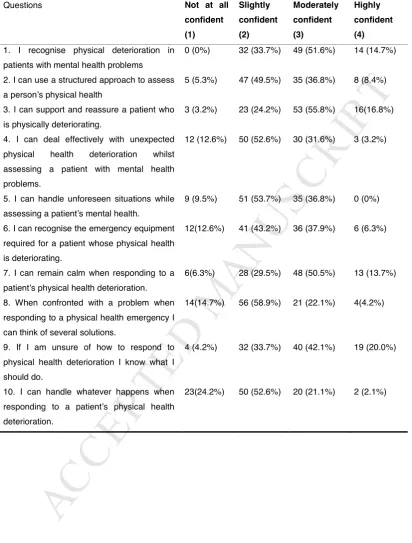
Table 1 – Inserted here
Each scale point is illustrated by the total number of respondents followed by its
representation in percentage values. In this evaluation study the 95 participants
equate to 100%; therefore the results are a percentage of the total number of those
that participated. Prior to the learning intervention the questionnaire findings show
that the majority of respondents circled either slightly confident or moderately
confident with a very small number indicating that overall they were highly confident.
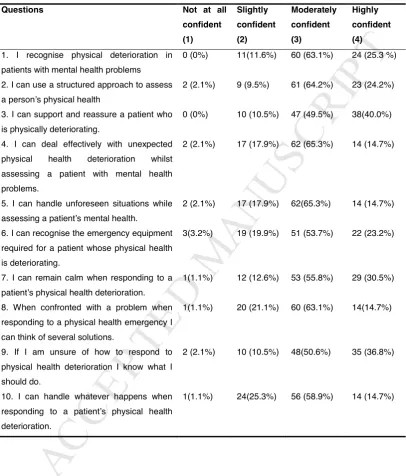
Table 2 (below) represents the post intervention responses using the same methods
as Table 1 for descriptive statistical presentation.
Table 2 – Inserted here
The post learning intervention questionnaire results highlight that the majority of
respondents indicated an increase in their confidence rating by circling the
moderately and highly confident items, with a very small number indicating that they
were overall slightly confident.
These findings demonstrate an overall increase in the perceptions of confidence post
M
ANUS
C
R
IP
T
AC
C
EP
TE
D
13
health deterioration. Overall, the greatest improvement in the students’ level of
confidence is highlighted in statement ten, where they felt more confident in being
able to handle whatever happens when a patient’s physical health deteriorates. This
suggests that the mental health students felt confident in managing a physical health
emergency as it unfolded. The smallest increase in relation to the students’ level of
confidence is associated with statement one and their ability to recognise physical
health deterioration. Although there was still an improvement in response to this
statement, it also indicates it is an area for further development. Interestingly
statement six, relating to recognition of emergency equipment, indicates a positive
improvement in relation to the National Patient Safety Agency (2008) audit findings,
which recommends mental health nurses need to be able to recognise emergency
equipment. Statement eight also demonstrates a significant improvement, the
students’ believing that they are confident in being able to identify several solutions
when confronted with physical health deterioration. This suggests that they perceive
an increase in confidence when managing a situation by being able to consider
available options open to them whilst dealing with the emergency.
DISCUSSION
Overall the results demonstrate that 90% of the students who had participated in the
activity reported an improvement in their level of confidence in recognising and
managing physical health deterioration. These results are in keeping with those of
other studies focusing on human patient simulation and its influence on improving
confidence levels (Childs & Sepples, 2006; Jefferies & Rizzolo, 2006; Decarlo et al,
M
ANUS
C
R
IP
T
AC
C
EP
TE
D
14
patient simulation and the development of specific contextualised scenarios can be
effectively used in mental health nurse education to improve the confidence of
students in an area of care where there has been criticism of their knowledge and
skills (Phelan et al., 2001: Robson & Gray, 2007; Howard & Gamble, 2011;
Chadwick et al, 2012).
The results suggest that students’ are able to increase their level of confidence
through many aspects of the learning intervention including; the use of a human
patient simulator used to replicate physical health deterioration within a mental
health presentation, experiential learning, observations, discussions through
debriefing and personal reflection. The results suggest the students overall
perception was that their confidence had developed in a number of areas. These
included recognition of physical health deterioration within a contextualised mental
health scenario. Although this area scored least in terms of improvement, it did
highlight their ability to recognise physical health deterioration, followed by an
increase in confidence in using the A to E structured assessment, and prompting the
achievement of a higher score regarding the management of physical illness.
Generally, the latter included their ability to handle whatever happened in unforeseen
situations and to consider several solutions. This is important since physical health
deterioration requires the ability to act in the situation in a timely manner as identified
M
ANUS
C
R
IP
T
AC
C
EP
TE
D
15
A criticism of the project could be that not one specific intervention was examined for
its impact on the students’ improved confidence. Nevertheless it must be
acknowledged that when using high fidelity human patient simulation it involves
many elements including, experiential learning using clinical scenarios, observation,
structured feedback and reflection. Likewise, Roberts & Greene (2011) also
acknowledge the important components of high fidelity simulation being; experiential
learning where student development occurs through the actual experience, the
‘audience’ involving observation and provision of feedback from peers, vicarious
learning where development takes place from one another’s experiences and
reflection. The students in this study used aspects of high fidelity simulation by
undertaking an experiential learning activity through the contextualised mental health
scenarios using a human patient simulator. They were also observed and provided
feedback to their peers to support the process of vicarious learning within the
debriefing sessions following the scenarios. However, it could be argued that high
fidelity simulation could have also been produced through role-play within a clinical
environment (Cooper et al, 2012) instead of attempting to reproduce it within a
simulated environment, the former perhaps being considered more realistic.
Furthermore, criticisms levied against the employment of high fidelity human patient
simulation include the cost of the computerised mannequins; their maintenance and
the need for additional staff, making this a resource intensive form of education for
small numbers of students to access at any one time (Brown, 2008). Other criticisms
include the lack of non verbal communication, body language and emotional
responses, making it unsuitable for mental health nursing per se (Unsworth et al,
2011). Despite these criticisms the benefits of using this type of technology to
M
ANUS
C
R
IP
T
AC
C
EP
TE
D
16
outweighs the disadvantages. Furthermore, whilst non-verbal cues are not visible in
the mannequins, their voices were operated by lecturers and conveyed intonation
and emotion to augment the authenticity of the scenario. Brown (2008) reported that
human patient simulation is scarce in mental health nursing due to the lack of
standardised mental health scenarios. This study has added to the work of others
(Brown, 2008; Hermanns & Crawley, 2011; Unsworth et al, 2011) and continues to
develop further mental health contextualised scenarios following this initial project.
Responding effectively in clinical practice requires nurse educators to ensure
students are confident in using the knowledge and skills they have acquired during
their nurse preparation (Maibach et al, 1996). It is suggested simulation enhances
knowledge development and skill acquisition, which contribute to greater confidence
(Ogilvie et al, 2011). Through the use of a learning intervention, which included
knowledge, skills and practice, using human patient simulators, an increase in the
students’ confidence resulted. The long term implications for these students in their
mental health practice could be that this increase in confidence to respond to
physical health problems will enhance the overall patient experience. Confidence to
recognise, manage and support those with physical health issues is becoming a
pre-requisite in mental health nursing through various National Health Service drivers to
improve the health outcomes of those with mental health problems (Parks et al,
2006; Department of Health, 2006; National Patient Safety Agency, 2008; Nursing
and Midwifery Council, 2010; Department of Health, 2011; Health Education
M
ANUS
C
R
IP
T
AC
C
EP
TE
D
17
The results of this project suggests that there are benefits of using high fidelity
human patient simulation within mental health nurse education to address the issue
of recognising and managing physical health problems experienced by those with
mental illness. The findings of this project are supported by a relatively small number
of studies where high fidelity human patient simulation has been used, with the
authors recommending further work in this area (Brown, 2008; Hermanns & Crawley,
2011; Unsworth et al, 2011). The reported lack of literature (Nehring & Lashley,
2009; Hermanns & Crawley, 2011) would suggest that further research would be
beneficial to examine the wider use of this mode of learning within mental health
nurse education. High fidelity human patient simulation would provide an opportunity
for qualified mental health nurses to advance their confidence with regard to
recognition and management of physical health problems in their field of practice.
Collaboration between organisations and disciplines could be developed using high
fidelity human patient simulation within practice, using a multi-professional approach.
This could further the fidelity of the learning whilst recognising the roles and
responsibilities of each of the disciplines and improve the overall package of care
available to individual patients.
Limitations of the project
Implementing this project to a large number of students within a limited time frame
presented a challenge. Furthermore, the students used a self-assessment
questionnaire to measure their confidence levels thus introducing a high level of
M
ANUS
C
R
IP
T
AC
C
EP
TE
D
18
CONCLUSION
The project has highlighted that using high fidelity human patient simulation can
develop pre-registration mental health students’ confidence in recognising and
managing physical health deterioration, through the development of contextualised
clinical scenarios.
Acknowledgements to Leah Greene for technical support with the project and to Sue
M
ANUS
C
R
IP
T
AC
C
EP
TE
D
19 References
Barrows, H.S & Tambling, R.M. (1980) Problem-Based Learning: AN Approach to
Medical Education. New York: Springer.
Broussard, L. (2008). Simulation-based learning: how simulators help nurses
improve clinical skills and preserve patient safety. Nursing for Women’s Health,
12(6), 521-524.
Brewer, E.P. (2011). Successful Techniques for Using Human Patient Simulation in
Nursing Education. Journal of Nursing Scholarship, 43(3), 311-317.
Brown, J.F. (2008). Applications of simulation technology in psychiatric mental health
nursing education. Journal of Psychiatric and Mental Health Nursing, 15, 638-644.
Chadwick, A., Street, C., McAndrew, S. & Deacon, M. (2012) Minding our own
bodies: Reviewing the literature regarding the perceptions of service users
diagnosed with serious mental illness on barriers to accessing physical health care.
International Journal of Mental Health Nursing, 21 211-219.
Childs, J.C. & Sepples, S. (2006). Clinical teaching by simulation. Lessons learned
M
ANUS
C
R
IP
T
AC
C
EP
TE
D
20
Cooper, S., Kinsman, L., Buykx, P., McConnell-Henry, T., Endacott, R. & Scholes, J.
(2010). Managing the deteriorating patient in a simulated environment: nursing
student’s knowledge, skill and situation awareness. Journal of Clinical Nursing, 19,
2309-2318.
Cooper, S., Bulle, B., Biro, M.A., Jones, J., Miles, M., Gilmour, C.,et al (2012).
Managing women with acute physiological deterioration: Student midwives
performance in a simulated environment. Women and Birth 25, 27-36.
Crider, M.C. & McNiesh, S.G. (2011) Intergrating a Professional Apprenticeship
Model with Psychiatric Clinical Simulation. Journal of Psychological Nursing, 59(5),
42-49.
Decarlo, D., Collingridge, D.S., Grant, C. & Ventre, K.M. (2008). Factors influencing
nurses’ attitudes toward simulation-based education. Simulation in Healthcare, 3,
90-96.
DeCoux. M. (2005). Acute versus Primary Care: The Health Care Decision Making
Process for Individuals with Severe Mental Illness. Issues in Mental Health Nursing,
M
ANUS
C
R
IP
T
AC
C
EP
TE
D
21
Department of Health (2006). From Values to action: The Chief Nursing Officer’s
review of mental health nursing. London: Crown.
Department of Health (2010). The NHS Outcomes Framework 2011/12. London:
Department of Health.
Department of Health (2011). No Health Without Mental Health: A
Cross-Government Mental Health Outcomes Strategy for People of All Ages. London:
Crown copyright.
Donovan, T., Hutchinson, T. & Kelly, A. (2003). Using simulated patients in
multi-professional communication skills programme; reflections from the programme
Facilitators. European Journal of Cancer Care, 12,123-128.
Edward, K., Hercelinkskyj, J. & Warelow, P. (2007). Simulation to practice:
developing nursing skills in mental health: an Australian perspective. International
Electronic Journal of Health Education, 10, 60-64.
Filik. R., Sipos. A., Kehoe PG., Burns, T., Cooper, S.J., Stevens, H., et al (2006).
The cardiovascular and respiratory health of people with schizophrenia. Acta
M
ANUS
C
R
IP
T
AC
C
EP
TE
D
22
Guise, V., Chambers, M. & Valimaki, M. (2012). What can virtual patient simulation
offer mental health nursing education? Journal of Psychiatric and Mental Health
Nursing, 19, 410-418.
Health Education England (2015). Raising the bar. Shape of Caring: A Review of the
Future Education and Training of Registered Nurses and Care Assistants. Health
Education England.
Hermanns, M., Lilly, M.L. & Crawley, B. (2011). Using Clinical Simulation to Enhance
Psychiatric Nursing Training of Baccalaureate Students. Clinical Simulation in
Nursing, 7, 41- 46. doi: 10.1016/j.ecns.2010.05.001
Howard, L. & Gamble, C. (2011). Supporting mental health nurses to address the
physical health needs of people with serious mental illness in acute in-patient care.
Journal of Psychiatric and Mental Health Nursing, 18(2), 105-112.
Jeffries, P.R. & Rizzolo, M.A. (2006). Designing and Implementing Models for the
Innovative Use of Simulation to Teach Nursing Care of Ill Adults and Children: A
National, Multi-Stie, Multi-Method Study. USA: National League for Nursing and
M
ANUS
C
R
IP
T
AC
C
EP
TE
D
23
Kameg, K., Clochesy, J., Mitchell, A.M. & Suresky, J.M. (2010) The Impact of High
Fidelity Human Simulationon S elf-Efficacy of Communication Skills. Issues in Mental
Health Nursing, 31, 315-323.
Kidd, L.I., Morgan, K.I. & Savery, J.R. (2012). Development of Mental Health Nursing
Simulation: Challenges and Solutions. Journal of Interactive Online Learning, 11(2),
1541-4914.
King, M.A. & Ott, J. (2012). Actors needed Clinical Faculty Get the Call. Nurse
Educator, 37(3), 105-107.
Lawre, C., Lessans, S., Spunt. D., Foster, D., & Covington, B.G. (2006). Innovations
in clinical simulation: Application of Benner’s theory in an interactive a patient care
simulation. Nursing Education Perspectives, 27, 16-21.
Lester. H.E., Tritter. J.Q. & Sorohan. H. (2005). Patients’ and health professionals’
views on primary care for people with serious mental illness: focus group study,
British Medical Journal, 330, 1122–7.
Liaw, S.Y., Rethans, J.J., Scherphier, A. & Piyanee, K.Y. (2011). Rescuing A Patient
M
ANUS
C
R
IP
T
AC
C
EP
TE
D
24
recognszing, responding and reporting of physiological signs of deterioration.
Resusitation, 82, 1224-1230.
Likert, R. (1932). A technique for the measurement of attitudes. Archives of
Psychology, 22, 1-55.
Maibach, E. W., Schieber, R. A. & Carroll, M. F. (1996). Self-efficacy in pediatric
resuscitation: Implications for education and performance. Pediatrics,97,94-99.
McCabe, M.P. & Leas, L. (2008). A qualitative study of primary health care access,
barriers and satisfaction among people with mental illness. Psychology Health and
Medicine, 13, 303-312.
McEvoy, J.P., Meyer, J.M. & Goff, D.C. (2005). Prevalence of the metabolic
syndrome in patients with schizophrenia: baseline results from the clinical trials of
national estimates from NHANES 111. Schizophrenia Research, 80, 19-32.
National Patient Safety Agency (2008). Rapid Response Report
NPSA/2008/RRR010: Resuscitation in Mental Health and Learning Disability settings
M
ANUS
C
R
IP
T
AC
C
EP
TE
D
25
National Institute for Health and Clinical Excellence (2007). CG 50 Acutely ill patients
in hospital: Recognition of and response to acute illness in adults in hospital.
Manchester: NICE.
Nehring, W.M. & Lashley, F.R. (2009). Nursing Simulation: A Review of the Past 40
Years. Simulation & Gaming, 40(4), 528-552.
Nursing and Midwifery Council (2010). Standards for pre-registration nursing
education. NMC [Online] Available at
http://standards.nmc-uk.org/Pages/standards-download.aspx
Ogilvie, S., Cragg, B. & Foulds, B. (2011). Perceptions of Nursing Students on the
Process and Outcomes of a Simulation Experience. Nurse Educator, 36(2), 56-58.
Oppenheim, A (1992). Questionnaire design, interviewing and attitude measurement
(2nd ed.). London: Pinter Publishers.
Parks, J., Svensden, D., Singer, P. & Forti, M.E. (2006). Morbidity and Mortality in
People with Serious Mental Illness. Alexandria, VA: National Association of State
Mental Health Program Directors (NASMHPD).
Phelan M., Stradins L. & Morrison S. (2001). Physical health of people with severe
M
ANUS
C
R
IP
T
AC
C
EP
TE
D
26
Resuscitation Council UK (2011). Immediate Life Support (3rd ed.). London:
Resuscitation Council UK.
Roberts, D. & Greene, L. (2011). The theatre of high fidelity simulation education.
Nurse Education Today,31, 694-698.
Robson, D. & Gray, R. (2007). Serious mental illness and physical health problems:
A discussion paper. International Journal of Nursing Studies, 44, 457-466.
Schwarzer, R. & Jerusalem, M. (1995). Generalized Self-Efficacy scale. In J.
Weinman, S. Wright, & M. Johnston, Measures in health psychology: A user’s
portfolio. Causal and control beliefs (pp.35-37). Windsor, England: NFER-NELSON.
Seropian, M.A., Brown, K., Gavilanes, J.S. & Driggers, B. (2004). Simulation: Not
just a manikin. Journal of Nursing Education, 43 (4), 164-169.
Steeves, S. (2012). Dealing with Mental Health Emergencies. In M. Alderidge & S.
Wanless (eds.), Developing Healthcare Skills Through Simulation (pp.184- 195).
M
ANUS
C
R
IP
T
AC
C
EP
TE
D
27
Unsworth, J., McKeever, M. & Kelleher, M., (2011). Recognition of physical
deterioration in patients with mental health problems: the role of simulation in
knowledge and skill development. Journal of Psychiatric and Mental Health Nursing
doi: 10.1111/j.1365-2850.2011.01828.x
Weiser, P., Becher, T., Losert, C., Alptekin, K., Berti, L., Burti, L., et al (2009).
European network for promoting the physical health of residents in psychiatric and
social care facilities (HELPS): background, aims and methods. BMC Public Health 9,
M
ANUS
C
R
IP
T
AC
C
EP
TE
D
Table 1. Self-Efficacy Instrument (Pre-intervention Questionnaire N = 95)
Questions Not at all
confident (1) Slightly confident (2) Moderately confident (3) Highly confident (4)
1. I recognise physical deterioration in
patients with mental health problems
0 (0%) 32 (33.7%) 49 (51.6%) 14 (14.7%)
2. I can use a structured approach to assess
a person’s physical health
5 (5.3%) 47 (49.5%) 35 (36.8%) 8 (8.4%)
3. I can support and reassure a patient who
is physically deteriorating.
3 (3.2%) 23 (24.2%) 53 (55.8%) 16(16.8%)
4. I can deal effectively with unexpected
physical health deterioration whilst
assessing a patient with mental health
problems.
12 (12.6%) 50 (52.6%) 30 (31.6%) 3 (3.2%)
5. I can handle unforeseen situations while
assessing a patient’s mental health.
9 (9.5%) 51 (53.7%) 35 (36.8%) 0 (0%)
6. I can recognise the emergency equipment
required for a patient whose physical health
is deteriorating.
12(12.6%) 41 (43.2%) 36 (37.9%) 6 (6.3%)
7. I can remain calm when responding to a
patient’s physical health deterioration.
6(6.3%) 28 (29.5%) 48 (50.5%) 13 (13.7%)
8. When confronted with a problem when
responding to a physical health emergency I
can think of several solutions.
14(14.7%) 56 (58.9%) 21 (22.1%) 4(4.2%)
9. If I am unsure of how to respond to
physical health deterioration I know what I
should do.
4 (4.2%) 32 (33.7%) 40 (42.1%) 19 (20.0%)
10. I can handle whatever happens when
responding to a patient’s physical health
deterioration.
M
ANUS
C
R
IP
T
AC
C
EP
TE
D
Table 2.Table 2 - Self-Efficacy Instrument (Post-Intervention Questionnaire)
Questions Not at all
confident (1) Slightly confident (2) Moderately confident (3) Highly confident (4)
1. I recognise physical deterioration in
patients with mental health problems
0 (0%) 11(11.6%) 60 (63.1%) 24 (25.3 %)
2. I can use a structured approach to assess
a person’s physical health
2 (2.1%) 9 (9.5%) 61 (64.2%) 23 (24.2%)
3. I can support and reassure a patient who
is physically deteriorating.
0 (0%) 10 (10.5%) 47 (49.5%) 38(40.0%)
4. I can deal effectively with unexpected
physical health deterioration whilst
assessing a patient with mental health
problems.
2 (2.1%) 17 (17.9%) 62 (65.3%) 14 (14.7%)
5. I can handle unforeseen situations while
assessing a patient’s mental health.
2 (2.1%) 17 (17.9%) 62(65.3%) 14 (14.7%)
6. I can recognise the emergency equipment
required for a patient whose physical health
is deteriorating.
3(3.2%) 19 (19.9%) 51 (53.7%) 22 (23.2%)
7. I can remain calm when responding to a
patient’s physical health deterioration.
1(1.1%) 12 (12.6%) 53 (55.8%) 29 (30.5%)
8. When confronted with a problem when
responding to a physical health emergency I
can think of several solutions.
1(1.1%) 20 (21.1%) 60 (63.1%) 14(14.7%)
9. If I am unsure of how to respond to
physical health deterioration I know what I
should do.
2 (2.1%) 10 (10.5%) 48(50.6%) 35 (36.8%)
10. I can handle whatever happens when
responding to a patient’s physical health
deterioration.