THE IMPLEMENTATION OF TQM MODELS IN AN
UNSTABLE MACRO-ENVIRONMENT
Aristeidis TASIOS
Salford Business School
University of Salford, Manchester, UK
Submitted in Partial Fulfilment of the Requirements
TABLE OF CONTENTS
List of Figures ... 7
List of Tables ... 7
List of Graphs ... 8
List of Abbreviations ... 9
ACKNOWLEGMENTS ... 10
ABSTRACT ... 11
1. Introduction Chapter... 12
1.1 Chapter Introduction ... 12
1.2 Background of the Research ... 12
1.3 Common Assessment Framework – The Model ... 13
1.3.1 Definition – Use ... 13
1.3.2 The description of the model ... 15
1.3.3 The evolution of the CAF ... 18
1.4 Reasons for researching into this area ... 19
1.4.1 Why investigate TQM implementation issues in times of an unstable macro-environment ... 19
1.4.2 Why investigate CAF? ... 19
1.4.3 Why investigate Greek Public sector and especially Greek LAs? .. 22
1.5 Aim and Objectives of the Research ... 23
1.6 Research primary question and secondary questions ... 23
1.7 Scope of the Research ... 25
1.8 Research Methodology ... 28
1.9 Intended Contribution of the Research ... 29
1.9.1 Lack of research done for TQM implementation issues in times of unstable macro-environments ... 29
1.9.2 Lack of research done about CAF ... 29
1.9.3 Theoretical Contributions of the Research... 31
1.9.4 Practical Contribution of the Research ... 32
1.10 Structure of the Thesis ... 33
1.11 Chapter Summary ... 33
2. Literature Review ... 34
2.2 Critical Success Factors for the CAF to be successfully implemented 34
2.2.1 The culture of the organization ... 35
2.2.2 The established motivation for the implementation of CAF ... 37
2.2.3 The senior management and political commitment to the project .. 38
2.2.4 The planning of the entire implementation process ... 40
2.2.5 The communication before, during and after the implementation process to all the stakeholders ... 41
2.2.6 The employee’s commitment and involvement to the project ... 42
2.2.7 The integration of the CAF model into the organization ... 43
2.2.8 The activities taken to maintain the momentum ... 44
2.2.9 The overall pace of the implementation ... 46
2.3 Steps to be followed for the CAF to be successfully implemented .... 48
2.3.0 Step 0: Start of the process – Initial decision for implementing CAF 50 2.3.1 Step 1: Decide how to organize and plan the self-assessment (SA) 54 2.3.2 Step 2: Communicate the self-assessment project ... 56
2.3.3 Step 3: Compose one or more Self-Assessment Teams ... 58
2.3.4 Step 4: Prepare the Self-Assessment-Team, Organize Training ... 62
2.3.5 Step 5: Undertake the Self – Assessment ... 63
2.3.6 Step 6: Draw up a report describing the results of the self-assessment ... 65
2.3.7 Step 7: Draft an improvement plan, based on the accepted self-assessment report ... 66
2.3.8 Step 8: Communicate the improvement plan ... 71
2.3.9 Step 9: Implement the improvement plan ... 72
2.3.10 Step 10: Plan next self – assessment ... 73
2.3.11 The usefulness of the ten steps guideline for using CAF ... 75
2.4 Marco – environmental factors affecting CAF’s implementation process ... 76
2.5 The framework for implementing CAF successfully ... 88
2.6 Chapter Summary ... 90
3.1 Chapter Introduction ... 91
3.2 The Philosophy of the Research ... 92
3.3 The Approach of the Research ... 92
3.4 Choice of Research Strategy ... 93
3.5 The Time Horizon of the Research ... 96
3.6 Data Collection Methods ... 96
3.6.1 Documents ... 98
3.6.2 Archival Records ... 99
3.6.3 Interviews ... 100
3.6.4 Principles of Data Collection Methods ... 102
3.6.4.1 Multiple Sources of Evidence ... 103
3.6.4.2 Case Study Data Base ... 104
3.6.4.3 Chain of Evidence ... 105
3.7 Research Design ... 105
3.7.1 Case Study Research Design ... 108
3.7.1.1 Components of Case Study Research Design ... 108
3.7.1.2 Types of Case Study Design ... 114
3.7.1.3 Selection of Cases ... 115
3.7.2 Theory Development ... 124
3.8 Ethical Approval ... 124
3.9 Preparation for Data Collection ... 125
3.9.1 Skills and Training ... 125
3.9.2 The Screening of Candidate Case Studies ... 126
3.9.3 The Conduct of a pilot case study ... 127
3.9.4 Protocol Development ... 128
3.10 Data Collection Methods and Instruments ... 129
3.10.1 Design of the Data Collection Methods and Instruments ... 129
3.10.1.1 Interview Design ... 130
3.10.1.1.1 Content of the Interview ... 130
3.10.1.1.2 Choice of Interviewees for the Interviews... 131
3.10.1.1.3 Interview Procedure ... 131
3.10.1.1.4 Time and Location of the Interviews ... 132
3.10.2 Contact of the Data Collection within the Case Studies ... 133
3.11.1 Analytic Techniques ... 135
3.12 Chapter Summary ... 137
4. Findings ... 138
4.1 Chapter Introduction ... 138
4.2 Case study “P” background ... 139
4.3 Case study “P” Interview and Document Analysis ... 140
4.4 Case study “P” Time-Series Analysis... 156
4.5 Case Study “P” Program Logic – Comparison with Theoretical Framework ... 159
4.6 Case study “J” background ... 167
4.7 Case study “J” Interview and Document Analysis ... 168
4.8 Case study “J” Time-Series Analysis ... 187
4.9 Case Study “J” Program Logic – Comparison with Theoretical Framework ... 192
4.10 Case study “F” background ... 201
4.11 Case study “F” Interview and Document Analysis ... 202
4.12 Case study “F” Time-Series Analysis ... 216
4.13 Case Study “F” Program Logic – Comparison with Theoretical Framework ... 219
4.14 Chapter Summary ... 227
5. Discussion ... 229
5.1. Chapter Introduction ... 229
5.2. Discussion of Case Studies ... 229
5.2.1. Case Study “P” ... 229
5.2.1.1. Key Success Factors in CAF’s Implementation Process of Case Study “P” 231 5.2.2. Case Study “J” ... 235
5.2.2.1. Key Success Factors in CAF’s Implementation Process of Case Study “J” 237 5.2.3. Case Study “F” ... 241
5.2.3.1. Key Success Factors in CAF’s Implementation Process of Case Study “F” 243 5.3. Cross-Case Discussion... 247
5.3.2. Discussion for the Critical Success Factors for implementing CAF 254
5.4. Discussion of the macro-environmental factors that influence TQM
implementation process ... 259
5.4.1.1. The role of the Macro-environment in Case Study “P” ... 259
5.4.1.2. The role of the Macro-environment in Case Studies “J” ... 265
5.4.1.3. The role of the Macro-environment in Case Study “F”... 274
5.5. Discussion of the Theoretical Framework ... 280
5.6. Discussion on the conduct of the Research and the Research Methodology ... 282
5.7. Chapter Summary ... 284
6. Conclusion ... 286
6.1. Chapter Introduction ... 286
6.2. Fulfilling the aim, the objectives of this study and answering the Key research and the secondary research questions ... 286
6.3. Limitations of the Research ... 290
6.4. Contributions of the Research ... 291
6.5. Recommendations for Further Related Research ... 292
APPENDICES ... 294
Appendix 1 – The CAF Model ... 294
Appendix 2 - Differences between CAF 2006 and CAF 2013... 299
Appendix 3 – CAF Users ... 300
Appendix 4 – The evolution of CAF ... 300
Appendix 5 –Structure of the Greek Public Sector in terms of Human Resources ... 302
Appendix 6 – The structure and competences of the Greek LAs ... 303
Appendix 7 - Greek CAF Users ... 305
Appendix 8 - Greek CAF Users from the LAs sector according to the Greek Ministry of Interior ... 309
Appendix 9 – Actual Greek LAs CAF Users ... 311
Appendix 10 - Steps to be followed in order to implement CAF ... 313
Appendix 11 – Choice of Research Strategies ... 326
Appendix 14 – Questionnaire about Municipality’s profile regarding CAF 337 Appendix 15 – Questionnaire about Municipality’s profile regarding CAF –
The answers of the organizations ... 339
Appendix 16 – The Interview questionnaire ... 345
Appendix 17 – Links between the interview questions and the elements of the theoretical framework ... 354
Appendix 18- Ethical Approval ... 362
Appendix 19 – Details of the interviewees ... 362
Appendix 20 – Document list of Case study “P” ... 364
Appendix 21 – Interview and document analysis of Case study “P” ... 365
Appendix 22 – Document list of Case study “J” ... 410
Appendix 23 – Interview and document analysis of Case study “J” ... 416
Appendix 24 – Document list of Case study “F” ... 458
Appendix 25 – Interview and document analysis of Case study “F” ... 461
REFERENCE ... 488
List of Figures
Figure 1.1: The CAF - 2006 Model ... 15
Figure 1.2: The CAF - 2013 Model ... 16
Figure 1.3: Picturing the Contribution of this study ... 32
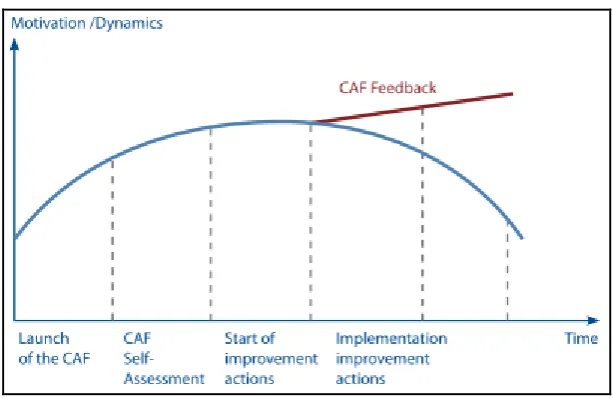
Figure 2.1: Presentation of the steps of each implementation phase of CAF 45 Figure 2.2: CAF implementation phases over time ... 47
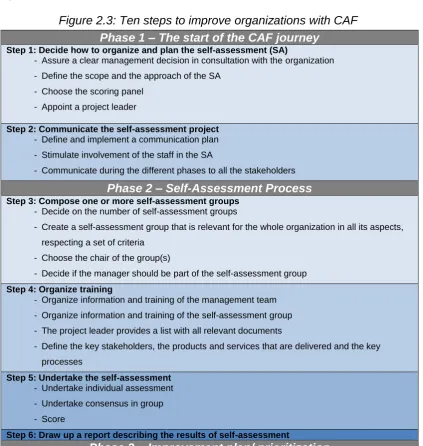
Figure 2.3: Ten steps to improve organizations with CAF ... 48
Figure 2.4: Pro forma Self – Assessment Sheet ... 65
Figure 2.5: Framework for implementing CAF ... 89
Figure 3.1: The research process “onion” ... 91
Figure 3.2: Convergence of Evidence ... 104
Figure 3.3: Chain of Evidence ... 105
Figure 3.4: The Research design of this study ... 106
Figure 5.1: Framework for implementing CAF in an unstable macro environment ... 281
List of Tables Table 2.1: Number of self-assessment team(s) ... 58
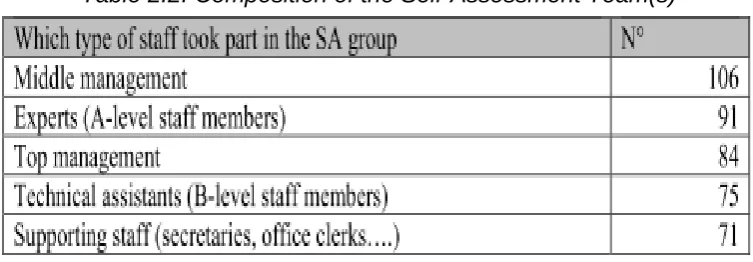
Table 2.2: Composition of the Self-Assessment Team(s) ... 59
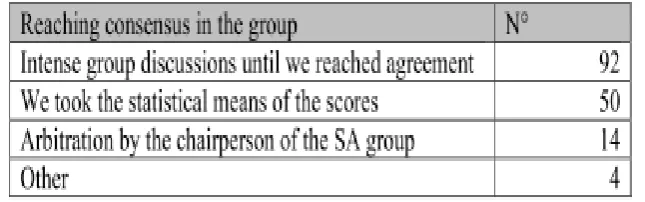
Table 2.3: Reaching consensus within the Self-Assessment Team(s) ... 64
Table 2.4: Reasons why an improvement plan was not developed ... 67
Table 2.5: Time table to use the CAF again ... 74
Table 2.6: Time table of the Greek Debt Crisis and the external macro-environment ... 81
Table 3.1: Six Sources of Evidence: Strengths and Weaknesses... 96
Table 3.2: Ensuring the quality of the research design of this study ... 107
Table 3.3: Possible cases for this study ... 120
Table 3.4: Context of the Case Study Protocol ... 128
Table 4.1: Time line of the macro-environmental factors and the cases of CAF’s Implementation process ... 138
Table 4.2: Case Study “P” – Time Series Analysis ... 157
Table 4.3: Case Study “J” – Time Series Analysis ... 187
Table 5.1: Case Study “P” – The role of the macro-environmental factors in
the process of implementing CAF ... 259
Table 5.2: Case Study “P” – The role of the macro-environmental factors at the Critical Success Factors of implementing CAF ... 264
Table 5.3: Case Study “J” – The role of the macro-environmental factors in the process of implementing CAF ... 266
Table 5.4: Case Study “J” – The role of the macro-environmental factors at the Critical Success Factors of implementing CAF ... 271
Table 5.5: Case Study “F” – The role of the macro-environmental factors in the process of implementing CAF ... 274
Table 5.6: Case Study “F” – The role of the macro-environmental factors at the Critical Success Factors of implementing CAF ... 279
List of Graphs Graph 2.1: Reasons for using CAF ... 51
Graph 2.2: Communication during the implementation process... 57
Graph 2.3: Size of the organization and number of SAT(s) created ... 58
Graph 2.4: Composition of the Self-Assessment Team(s) ... 60
Graph 2.5: Size of the Self-Assessment Team(s) ... 61
Graph 2.6: Size of organization and size of the SAT created ... 61
Graph 2.7: Number of improvement actions and quick wins ... 68
Graph 2.8: Integration of the improvement actions in the management plan . 70 Graph 2.9: Improvement actions started up versus implemented ... 73
List of Abbreviations
BEM Business Excellence Models BS Balance Scorecard
CAF Common Assessment Framework CSF Critical Success Factor
EFQM Excellence Model of the European Foundation for Quality Management EU European Union
GS General Secretary
IPSG Innovative Public Services Group LA Local Authority
LAs Local Authorities
NPM New Public Management SA Self-Assessment
ACKNOWLEGMENTS
The author, Aristeidis Tasios, would like to thank the following people who helped with the creation and completion of this PhD Thesis.
Professor John Davies, my supervisor, for kindly offering his knowledge, and for the many helpful comments and suggestions.
Dr Yiannis Polychronakis, Salford University lecturer, for helping me with his broad knowledge, about how to compose a PhD research study and how to defend it, during the final – viva exam.
ABSTRACT
This research is dealing with the implementation of Total Quality Management tools in an unstable macro-environment, by using a special TQM tool, the Common Assessment Framework and its implementation in the Greek Public Sector, which faced unusual circumstances over the last 8 years, due to the Greek debt crisis.
As many authors indicated in the past, literature has everything someone needs to know about TQM implementations, but in most of the cases the reality does not match with the original plan, because there are internal organisational factors that affect the TQM implementation process. Additionally, according to PESTEL analysis, external macro-environmental factors have an impact on an organisation, and its processes. These factors are; Political, Economic, Sociological, Technological, Environmental and Legal. Hence there are external organisational factors that affect the TQM implementation process.
On the other hand, in times of fiscal crisis and unstable economic macro-environment the adoption of quality principles by organisations may improve their ability to deal with uncertainty and offer citizens – customers quality services. Nevertheless, lack of resources and support in times of financial crisis may affect corporate culture and cause problems in TQM successful implementation. Additionally, uncontrollable factors in the external environment have an adverse impact on implementation process and cause strategy implementation problems.
Having the above in mind, the author combined TQM implementation theory with PESTEL analysis, in order to identify the critical factors for successful implementation of TQM tools, especially in times of an unstable macro-environment; finding out that an important area that needs attention is the attributes of the external environment where the organization operates, in order for the TQM implementation to be effective.
1. Introduction Chapter
1.1 Chapter Introduction
This research is dealing with the implementation of Total Quality Management tools in an unstable macro-environment, by using a special TQM tool, the Common Assessment Framework, and its implementation in the Greek Public Sector. In this chapter the background of the research area will be given, the reasons for researching into this area will be explained, the aim and objectives of the research will be provided, the primary and secondary research questions will be developed, the scope of the research will be identified, the research methodology will be described (its analysis will be developed in chapter 3), the intended contribution of the research will be highlighted and the structure of the Thesis will be described.
1.2 Background of the Research
It has been almost 30 years since the European Union first implemented public administration management programmes. This led to the actual establishment of Total Quality Management (TQM), as an innovative tool for managing public services. One of the TQM models that are widely used in the EU’s Public sector is the Common Assessment Framework (CAF).
As pointed out by Pollitt and Bouckaert (2000), cited by Staes et al. (2010, p. 35) “The launch of the CAF, placed in a context 13 years ago when, as is
still the case today, public sector had to cope with a lot of challenges and had
to respond to many new needs and demands in society. Due to these
challenges and pressure, the public sector has been the subject of large
reforms. Especially in times of financial crises and severe cost-cuts in public
administrations, the focus is on efficiency and effectiveness, attention to transparency and accountability, awareness for public service delivery”.
Alongside “with the principles of the New Public Management (NPM),
methods and techniques were constructed, focusing on one of these
principles or trying to combine more than one. Under this scope, TQM
EFQM and ISO, and later CAF, were used in the public sector. Indeed, as Engel (2002) stated, during the decade of 2000, there was a growing need within the EU, for a more concentrated and official attempt to maximize cooperation among EU countries, regarding the modernisation of government services and the preparation for the forthcoming enlargement.
Under this concept, since its early beginnings, CAF has been adapted by the EU’s public sector, as a TQM technique. Nevertheless, despite its high acceptance as a TQM tool, a lot of public administrations face problems when implementing it. But this is not only the case for CAF. The public sector faces problems when implementing any TQM tool. These problems lead to ineffective implementations.
This unfortunate reality also applies to the Greek Public Sector as well, and to the Greek Local Authorities. Especially nowadays due to the Greek debt-crisis, the renovation of the Greek Public sector is more necessary than ever. It is essential the Greek Public sector to be restructured in order to become more efficient and effective. That is why; the Greek Ministry of Interior is preparing a Presidential Decree for the evaluation of the public sector. This upcoming Presidential Decree is based upon the adoption of TQM techniques in general, and particular in the adoption of the Balance Scorecard and the implementation of CAF.
Having the above in mind this research investigates the implementation of CAF in the Greek LAs, especially in times of an unstable macro-environment, with a view to creating a framework, for successful implementation. It is one of the researcher’s great beliefs that the project will have both theoretical contribution and practical implications as it will be explained in the following parts of this chapter.
1.3 Common Assessment Framework – The Model
1.3.1 Definition – Use
such as: citizens/customers, people and society satisfactory, are achieved through enablers such as: leadership driving strategy and planning, people, partnerships, resources and processes. It looks at the organization from different angles at the same time. It is a holistic approach of organization performance analysis (EIPA 2006; 2013).
The model was created by the European Union Public Administration Authorities and its final form was agreed among the EU Ministries being responsible for the Public sector. It has been developed under the support of the Innovative Public Services Group (IPSG). The idea was to find innovative ways of modernizing government and public service delivery in EU Member States (EIPA 2006; 2013). Additionally, in order to have a holistic uniform implementation across EU, a CAF Resource Centre was created at the European Institute of Public Administration (EIPA) in Maastricht. This Centre has the purpose to promote and monitor the model and its implementation around EU and in any other country interested in CAF. The first version of the model was presented in May 2000 while revised versions were launched in 2002, in 2006 and in 2013.
CAF is a useful tool and is being designed to assist organizations across EU in implementing TQM techniques to improve their performance (EIPA 2006; 2013). According to its handbook, it is a tool that can be implemented freely and easily, due to the fact that it has been created from the public sector, i.e. it has taken into account all the special needs, requirements and restrictions that occur in the Public Services (EIPA 2006; 2013). The implementation of CAF gives the organization an opportunity to learn more about itself. It can be seen as the first step for quality management techniques to be developed and it is an extremely user - friendly tool. The implementation of CAF is the first step in developing and performing a fully developed TQM model (EIPA 2006; 2013).
implemented only in one part of the organization, i.e. in a chosen section or department (EIPA 2006; 2013).
1.3.2 The description of the model
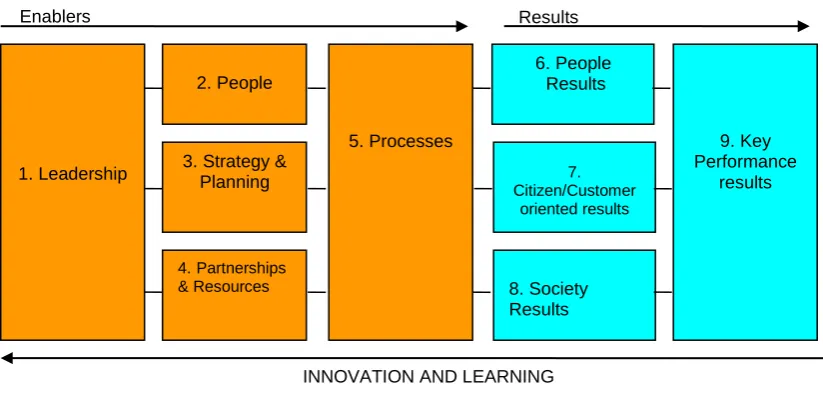
[image:16.595.91.503.254.451.2]The composition of CAF contains 9 criteria and 28 sub-criteria, which against each organization will be tested when implementing the model. Those criteria and sub-criteria are compulsory. The structure of the model can be easily demonstrated using the following figure:
Figure 1.1: The CAF - 2006 Model
Source: EIPA 2006, p. 3
The nine-box structure classifies the main aspects of organizational analysis. Criteria 1-5 are concerned with the Enabler features of an organization, i.e. with what the organization does. Criteria 6-9, deal with the results achieved in the fields of citizens/customers, people, society and key performance results. Each criterion is further broken down into a list of sub criteria (28 sub-criteria). These criteria identify the key issues that need consideration when assessing an organization (EIPA 2006; 2013). The detailed structure of the model is presented in Appendix 1.
The evolution of CAF has recently led to the CAF 2013 model. Having a six-year working experience with CAF 2006, the CAF Resource Centre, with the cooperation of the National Correspondents, based on the feedback of the 2011’s study, revised the model for the third time, launching the CAF 2013 version (EIPA 2013).
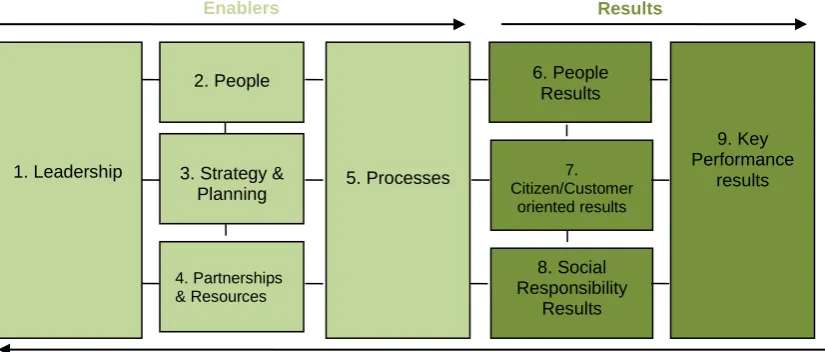
The CAF 2013 version can be easily demonstrated using the following
1. Leadership
5. Processes 9. Key
Performance results 2. People
3. Strategy & Planning
4.Partnerships
& Resources 8. Society Results
7. Citizen/Customer
oriented results
6. People Results
Enablers Results
figure:
Figure 1.2: The CAF - 2013 Model
Source: EIPA 2013, p. 9
According to EIPA (2013, p. 7) “this revision has made the CAF 2013
Model even stronger than before – better equipped to support the public
sector to the benefit of all its stakeholders in general and the citizens in particular. Concepts such as users’ orientation, public performance,
innovation, ethics, effective partnerships with other organization(s) and social
responsibility have been deepened and should result in the creation of new opportunities for further development of public sector organizations”.
As can be seen from the above figures the updated version of CAF, has kept the 9 criteria and the 28 sub-criteria structure, but a lot of them have been redefined. The main changes are:
➢ in the examples that used to support those criteria and sub-criteria coping with the changes,
➢ in the glossary used,
➢ in the adoption of the eight principles of excellence, which are put in the core concept of the model in order to cope with the External Feedback Procedure,
➢ in the criterion “Processes”, into which two sub-criterions have been merged and a new one has been adopted (EIPA 2013).
Analytically the differences between the two versions are presented in Appendix 2.
1. Leadership 5. Processes
9. Key Performance
results 2. People
3. Strategy & Planning
4. Partnerships & Resources
8. Social Responsibility
Results
7. Citizen/Customer
oriented results
6. People Results
Enablers Results
CAF gives an organization the opportunity to start a process of permanent improvement. As it is stated in CAF’s handbook (EIPA 2006, p. 3) “CAF provides:
➢ an assessment based on evidence, against a set of criteria which has
become widely accepted across the public sector in Europe,
➢ opportunities to identify progress and outstanding levels of
achievement,
➢ a means to achieve consistency of direction and consensus on what
needs to be done to improve an organization,
➢ a link between the different results to be achieved and supportive
practices or enablers,
➢ a means to create enthusiasm among employees by involving them in
the improvement process,
➢ opportunities to promote and share good practice within different areas
of an organization and with other organizations,
➢ a means to integrate various quality initiatives into normal business
operations,
➢ a means of measuring progress over time through periodic self-assessment.”
Organizations that implement CAF introduce a culture of change in the organization, growing towards excellence. The effective use of CAF can lead to the maturity of this type of thinking (EIPA 2013).
Taking into consideration the CAF 2013 version along with the two previous versions (CAF 2002 and CAF 2013) it can be stated that the evolution of the model is represented in the three versions and this evolution copes with the different emphasis highlighted over time. Under this scope three distinct phases in the evolution of CAF can be identified.
1. In the first phase according to Staes and Thijs (2005) quoted at Staes
et al. (2011, p. 14), “the emphasis was put on the introduction of TQM
principles and values in the public sector by using the CAF as a self-
assessment tool. Public sector organizations were not used to looking
at themselves, certainly not by involving their own people. A lot had to
methodology of self-assessment”. The first phase was well presented in the CAF 2002 version.
2. In the second phase the attention was driven to the next step of the self- assessment, i.e. to the implementation of the improvement plan as a result of the identified areas for improvement. In this second phase of the evolution of CAF the success of the model had to cope with the success of the improved management techniques integrated in an organization, especially in the result criteria (Staes and Thijs 2005). This phase resulted in the CAF 2006 version.
3. However, in the third phase, which is well presented by the CAF 2013 version and the CAF External Feedback Procedure, awareness is raised towards developing the concept of excellence. This concept is based on the eight principles of excellence, which they can be accomplished by a successful self-assessment and an effective improvement plan (Staes and Thijs 2010).
At this point it has to be clarified that the organizations participated in this study had all used the CAF 2006 version since the new version at the time of the study had not been expanded to all CAF users. Needless to say, that this had no effect on the study since this research is focusing on the implementation of the model and not on the model itself. Furthermore, in both CAF handbooks (for the CAF 2006 version and for the CAF 2013 version) the suggested action plan for implementing the model is exactly the same. Hence, the implemented version had no effect in the results of this study. Nevertheless, the CAF 2013 could not be ignored, in order for the literature of this study to be up to date, and since it is the new CAF and will be in use in the future.
1.3.3 The evolution of the CAF
model of excellence for the public sector in Europe”. More analytically the evolution of CAF since its first origin is presented in Appendix 4.
1.4 Reasons for researching into this area
1.4.1 Why investigate TQM implementation issues in times of
an unstable macro-environment
As many authors have indicated in the past, the literature has everything someone needs to know about TQM implementations, but in most of the cases the reality does not match the original plan (Zairi and Thiagarajan 1997; Vrakking 1995; Thiagaragan et al. 2001). “Quality strategies fail because what
is planned and what is implemented are not the same” (Zairi and Thiagarajan 1997, cited by Davies 2004, p. 6). Hence there are internal organizational factors that affect the TQM implementation process.
Additionally, according to PESTEL theory, external macro-environmental factors have an impact on an organization, and its processes. These factors are; Political, Economic, Sociological, Technological, Environmental and Legal. Hence there are external organizational factors that affect the TQM implementation process.
On the other hand, as stated by Vakalopoulou et al. (2013), in times of a fiscal crisis and an unstable economic macro-environment the adoption of quality principles by organizations may improve their ability to deal with uncertainty and offer citizens – customers quality services and thus contributing to the improvement of “every-day life’’.
Having the above in mind, the author thought of combining TQM implementation theory with PESTEL analysis, in order to identify the critical factors for successful implementation of TQM tools, especially in times of an unstable macro-environment.
1.4.2 Why investigate CAF?
Over the years, CAF has evolved and grown to become the well-known quality model for the public sector that it is today. In fact, over the past 20 years, more than 3900 public sector organizations all over Europe have used the model and the number of CAF users is still growing (Staes et al. 2010; Vakalopoulou et al. 2013). Hence, taking the above into consideration when we are talking about TQM in the European Union Public Sector we cannot ignore CAF.
have been identified by similar studies conducted for the implementation of other TQM models and particular for the implementation of the EFQM (Davies 2004). Hence, the author simply argues, that not all the 3900 implementations of CAF across Europe are successful, despite the fact that the organizations have followed the guide of the model, and this is due to other factors that this research aims to reveal. Moreover, especially in times of an unstable macro-environment an organization should be aware of other factors as well, that influence the process of implementing TQM tools, such as; political, economic, sociological, legal factors as these factors are suggested by PESTEL theory.
Finally, the need for “Effective CAF users” has also been identified by EIPA itself, and that is why it has established the “CAF External Feedback Procedure”. The objectives of this procedure are to:
“1. Support the quality of the CAF implementation and its impact on the
organization.
2. Find out if the organization is installing TQM values as the result of the
CAF application.
3. Support and renew enthusiasm in the organization for continuous
improvement.
4. Promote peer review and bench learning
5. Reward organizations that have started the journey towards continuous
improvement to achieve excellence in an effective way, without judging their
obtained level of excellence
6. Facilitate the participation of CAF users in the EFQM Levels of Excellence” (EIPA 2010, p. 7).
1.4.3 Why investigate Greek Public sector and especially
Greek LAs?
One of the most important issues nowadays in Greek democracy is the structural reformation and the modernization of its Public Administration. This unfortunate reality is well-known, not only by analysts all over the world but within Greek society as well. Almost 45 years after the rehabilitation of democracy in Greece, it is time to face and commence the meaning of quality and efficiency in the Public Administration system so as to meet the modern requirements of the society and the competitive environment of the globalization. Everyone agrees that the key issue in Greek Public Administration is neither the number of employees (almost 580.000 for 11.000.000 population), nor the number of laws, but the quality of the service it produces (Sotirakou and Zeppou 2006; Spanou and Sotiropoulos 2011).
On the other hand, Greek LAs play an important role within the big picture of the Greek Public Sector (Hlepas 2007) and they occupy the 14% of the total number of employees (Appendix 5).
Greek LAs are divided into two levels; the first level of self-Government Authorities (the Municipalities) and the second level of self-Government Authorities (the Peripheries). The detailed structure and competences of the Greek LAs are given in Appendix 6.
Moreover, Greek LAs are more familiar with the implementation of TQM techniques, when compared to the Central Government. This is basically due to their small size which enables them to adopt and implement such techniques, more easily. This is also the case concerning the implementation of CAF. As can be seen in Appendix 7, of the 64 CAF users all over Greece the 27 are from the Local Authorities’ sector.
Hence, having the above in mind, it is one of the author’s great beliefs that researching public administration in Greece and especially Greek Self– Government Local Authorities, in terms of quality and efficiency and in terms of their ability to implement CAF successfully, is a matter of high interest not only for the author but also for the Greek Government and the Greek Society.
severe macro-environmental factors that occur, in order to identify TQM implementation issues in times of an unstable macro-environment.
1.5 Aim and Objectives of the Research
The aim of this study is to find out how CAF has been implemented, in times of an unstable macro-environment, by examining a number of cases, with a view to create a framework for successful implementation.
The Objectives of this study are:
➢ To explore how CAF has been implemented in a number of cases, in order to identify the critical factors for successful implementation, in times of an unstable macro-environment.
➢ To investigate why CAF has been implemented successfully or unsuccessfully in times of an unstable macro-environment
1.6 Research primary question and secondary questions
Taking everything into account, the key research question in order for the above aim and objectives to be met is:
How external macro-environmental factors affect CAF’s successful
implementation?
The vital words in this key research question are the meaning of “successful” and the meaning of “implementing”.
According to the “Concise Oxford Dictionary of Current English” we can define “successful” as “having or resulting in success”, and we can define “success” as “the accomplishment of an aim”, as “specified outcome of an
undertaking that a person turns out well” (CODCE 1995, p. 1391). Similarly, according to the “Cambridge Advanced Learner’s Dictionary” we can define “successfully” as “achieving the desired result” (CALD 2005, p. 1297).
Similarly, according to the “Concise Oxford Dictionary of Current English” we can define “implement” as “to put into effect” (CODCE 1995, p. 681), and according to the “Cambridge Advanced Learner’s Dictionary” we can define “implement” as “to put a plan or system into operation” (CALD 2005, p. 639).
To be more specific, according to CAF’s handbook (EIPA 2006, p. 2)
“CAF has four main purposes:
1. To introduce public administrations to the principles of TQM and
self-assessment, from the current “Plan-Do” sequence of activities to a full-fledged “Plan-Do-Check-Act (PDCA)” cycle;
2. To facilitate the self-assessment of a public organization in order to
obtain a diagnosis and improvement actions;
3. To act as a bridge across the various models used in quality
management;
4. To facilitate bench learning between public-sector organizations”.
In addition to this, according to the “CAF External Feedback” handbook, in order for an organization to be recognized as an “Effective CAF User”, three issues have to be examined; the process of self-assessment, the process of improvement actions, and the TQM Maturity of the organization (EIPA 2010).
Having the above in mind in order to state that CAF has been successfully implemented, we have to identify in an organization the following:
1. To be in use as a model, to be in operation 2. To have led to a diagnosis report
3. To have led to an improvement plan, which is in use, in operation 4. To have led to the adoption of TQM techniques or to have bridged the
existing ones
5. To have been integrated into the day to day operation
Additionally, the meaning of the external macro-environment and its stability, for the purpose of this study, will be addressed by identifying the following factors as suggested by PESTEL analysis; Political, Economic, Sociological, Technological, Environmental and Legal.
Following on, the secondary research questions are:
1. What are the critical success factors that affect the implementation of CAF in times of an unstable macro - environment?
2. What is the theoretical framework for the implementation of CAF, in times of an unstable macro - environment?
3. How has CAF been implemented in a number of cases, in times of an unstable macro - environment?
Overall, the answers to the secondary questions and the completion of the two research objectives will contribute to the answer of the primary research question and to the completion of the aim of this study.
1.7 Scope of the Research
The scope of this research focuses on case studies selected from the Greek public sector and especially on Greek Local Authorities.
According to the new Greek constitution (1975/86/01) the Greek Public Sector has been consolidated on the “decentralization system” (art. 101). Following on, the local governmental bodies have become solely responsible for local affairs (art. 102) and the central government has maintained only the competence for national affairs, such as defence, monetary policy and industrial development.
To be more clarified the local government in Greece after the implementation of the Kallikratis Plan (Law 3852/2010- Kallikratis act) consists of 325 Municipalities (there were 1033 before the merge of Kallikratis had taken place), and of 13 peripheries (there were 51 – called Prefecture Authorities – before the merge of Kallikratis had taken place).
Municipalities are governed by a municipal council, led by a Mayor. Council members are elected via public elections every five years. Municipalities have responsibility for the administration of their local jurisdiction in terms of the social, financial, cultural and spiritual interests of their citizens. More specifically, Municipalities have responsibility in the areas of:
➢ Development
➢ Environment
➢ Quality of life and proper functioning of Cities and Settlements
➢ Employment
➢ Social Protection and Solidarity
➢ Education, Culture and Sport (theatres, museums, libraries, parks, sports and leisure facilities)
➢ Civil Protection
➢ Security and police
➢ Nurseries and kindergartens
➢ Repair and maintenance of all schools
➢ Family and youth services
➢ Water and waste cure
(Law 3852/2010- Kallikratis plan)
Peripheries are governed by a regional council and a regional governor, elected via public elections every five years. Each Periphery is divided into regional units, which are in most of the cases coterminous with the former Prefectures. Each regional unit is governed by a vice-regional governor. Peripheries have responsibility for
➢ Planning and Development.
➢ Agriculture and Livestock.
➢ Natural Resources - Energy – Industry
➢ Employment - Trade - Tourism.
➢ Transport - Communications.
➢ Works - Planning - Environment.
➢ Health – Welfare
➢ Education - Culture – Sports
➢ Civil Protection
(Law 3852/2010- Kallikratis plan)
Having the above administrative structure in mind, alongside with the justification for this research as it has already been presented in section 1.3 of this report, the author has selected the Greek Local Government sector for this research for the following reasons:
1. CAF has a lot of users from the LAs sector.
According to Staes et al. (2011, p.24) “the most organizations using the
CAF are from the sector of local administrations”. Actually, in the European database of CAF as it has been reflected in all EIPA studies so far, although CAF has been applied across a wide range of sectors the sector of Local Administration is the biggest one. Local Governments are concerned with quality matters for a long time throughout their existence. As Davison and Grieves (1996, p. 32) state “in addition to external political pressures for
change in local government, the emergence of quality control and total quality
discourses which include the concepts of excellence, value, conformance to specifications and meeting or exceeding customer expectations”. Hence the scope of this research has a lot of CAF users from the LAs sector.
2. Greek public sector has a lot of CAF users (especially LAs) and can be seen for the purpose of this study as a unique case
As it was stated by Makridimitris et al. (2000), Chryssanthakis (2000) and Michalopoulos (2001), quoted at Chondroleou et al. (2005), Greek LAs have started using TQM and New Public Management Techniques. Moreover, as it was stated by Karipidou (2011, p. 74) “the CAF has clearly earned a place
among the TQM tools used in Europe. This finding is true for Greece as well, although its use is still limited”. As can be seen at Appendix 7 over the 64 CAF users in Greece that were registered into the European database of CAF in EIPA, the 27 come from the LAs sector. Moreover, the author kept in mind that a lot of users might not have registered in the European database of CAF in EIPA when they started using CAF, but they might just have registered to the data base of the Ministry of Interior, he communicated via email with the Ministry of Interior, finding out that the LAs that were registered to this data base were 33 (Appendix 8). Combining the two data bases the author find out that the actual CAF users in Greece from the LAs sector are 35 (Appendix 9). Hence, the scope of this research has a lot of potential case studies to select from within the Greek public Sector.
According to PESTEL theory external macro-environmental factors have an impact on an organization. These factors are; Political, Economic, Sociological, Technological, Environmental and Legal. Obviously, these factors and their impact can be investigated when they occur, especially in a severe and more apparent way. Hence, Greece and its public sector is a unique case due to its special condition with the fiscal crisis and the severe macro-environmental factors that occur
3. Effective CAF implementation is more needed during times of financial crisis
As it was stated by Vakalopoulou et al. (2013, p. 762) “through this time of
financial crisis, many people would regard CAF use as a luxury for public
organizations. However, the truth is exactly the opposite. Effective CAF
common conception of public administration, without great cost or effort. The
adoption of quality principles by public administration may drive towards an
administration that is able to deal with malfunctions and grasp improvement
opportunities. It may also help to upgrade the quality of the services offered
and thus contribute to a parallel improvement of citizens’ every- day life’’. Hence it is one of the author’s great beliefs that researching Greek LAs in order to create a framework for effective CAF users is needed nowadays in the Greek Public Sector, more than any other time in its history, due the Country’s financial crisis.
1.8 Research Methodology
This study adopts an interpretivistic – realistic research philosophy, using the abductive approach (combining both the deductive and inductive approach) to implement the case study research strategy, cross-sectional, using the interviews, the archival records and the document research methods to explore the phenomenon of interest.
More specifically this research involves two stages.
During the first stage, the literature review part of the study will be completed. The literature review will be conducted in order to find out what research has already been done about the implementation of CAF. This literature review will combine knowledge of the implementation of TQM programmes, knowledge of the implementation of EFQM, knowledge of the implementation of CAF and knowledge of the Greek public sector and the Greek LAs and their TQM culture, especially in times of an unstable macro-environment. The completion of the literature review stage will generate the theoretical framework for implementing CAF that will be explored in the second stage of this research, using the case study research strategy.
Overall, after the completion of the two research stages (literature research and case study research) the key research question is expected to be answered, i.e.; “how external macro-environmental factors affect CAF’s successful implementation?”, and the aim of this study is supposed to be accomplished: “to find out how CAF had been implemented in Greek LAs, by examining a number of cases, with a view to create a framework for successful implementation”.
1.9 Intended Contribution of the Research
1.9.1 Lack of research done for TQM implementation issues in
times of unstable macro-environments
Literature has everything someone needs to know about TQM implementations, but in most of the cases the reality does not match the original plan, due to the fact that there are some critical success factors that affect the TQM implementation process (Zairi and Thiagarajan 1997; Vrakking 1995; Thiagaragan et al. 2001). Additionally, according to PESTEL theory external macro-environmental factors have an impact on an organization, and its processes. These factors are; Political, Economic, Sociological, Technological, Environmental and Legal Hence, there are external organizational factors that affect the TQM implementation process as well. Until now there is lack of academic research done compiling those two, i.e. critical success factors as suggested by many authors for successfully implementing TQM tools, with the critical factors that affect the organizations concerning the external environment as suggested by the PESTEL theory. Hence this study aims to fulfil this identified gap.
1.9.2 Lack of research done about CAF
Despite its high acceptance as a TQM tool there is little academic research done about CAF. Mostly, the basic studies conducted for the model and its implementation are made by the CAF Resource Centre in EIPA. Those studies are:
➢ Study on the use of CAF (EIPA, 2003)
➢ Five Years of CAF 2006 (EIPA, 2011)
These studies were made basically to highlight the use of CAF at the time being and were concerned about its upcoming future. They mainly study its implementation descriptively, using questions regarding the following aspects: how many authorities, in which countries, from which sector, reasons for using the model, aspects of the self-assessment process and the improvement plan, obstacles faced in the process, results of the CAF, aspects of project management, satisfaction and plans for the next CAF application and so on.
Furthermore, there are some publications made to support the expansion of CAF in EU’s public sector, such as:
➢ CAF WORKS: better service for the citizens by using CAF, published by the Austrian Federal Chancellery in 2006, which shows a selection from the current, 900 CAF users in different European countries that achieved remarkable results using the CAF
➢ CAF for Education, published by EIPA in 2010, which tailors the model for the educational public sector
➢ A decade of European collaboration with CAF, published by EIPA in 2010, which highlights the expansion of CAF in each EU Country, introduces the CAF External Feedback Procedure and the principals of excellence, and gives some case examples across Europe.
➢ CAF External Feedback, published by EIPA in 2010, introducing the CAF External Feedback Procedure, which is “a system of external
feedback on the introduction of total quality management with the help of
CAF – not only on the self-assessment process, but also on the way
forward organizations had chosen to reach for excellence in the long run” (Staes and Thijs 2010, p. 89). The “CAF External Feedback Procedure” has been developed to provide added value to CAF implementation in public sector organizations.
Furthermore, there is a publication made by the Greek Ministry of Interior in 2006 titled “Guide on how to implement Common Assessment Framework”, which provides an action plan, a questionnaire, scoring paradigms, and hints and tips so as to implement the model.
Additionally, there 9 MSc thesis in total regarding the implementation of CAF in Greece, each one referring to a case study within the Greek Public Sector. All these studies examine their cases descriptively, without identifying how to have an effective implementation of the CAF.
Finally, there is an article titled “Implementing CAF in public administration: Best practices in Europe – obstacles and challenges” published in 2013 which aims to stimulate the interest in implementing CAF, by reviewing the Best Practices in Europe that were presented by EIPA in some of its publications and in some of the conferences that EIPA carries out almost every two years.
Having the above in mind it is more than obvious that there is lack of academic research done for the model.
1.9.3 Theoretical Contributions of the Research
As stated earlier in this chapter there is lack of research made for what it takes in order for the model to be successfully implemented, especially in times of an unstable macro-environment. As many authors have indicated in the past, literature has everything someone needs to know about TQM implementations, but in most of the cases the reality does not match the original plan (Zairi and Thiagarajan 1997; Vrakking 1995; Thiagaragan et al. 2001). “Quality strategies fail because what is planned and what is
implemented are not the same” (Zairi and Thiagarajan 1997, cited by Davies 2004, p. 6). Moreover, external organizational factors affect the TQM implementation process as well, as suggested by PESTEL theory.
a. exploring TQM implementation issues in times of an unstable macro - environment
b. creating a framework for implementing the CAF model (a special TQM model) in times of an unstable macro - environment
1.9.4 Practical Contribution of the Research
In addition to the previously described theoretical contribution this research is expected to have practical application as well, by increasing the degree of effectiveness in the implementation of CAF. The outcome of this research will be a Framework for the successful implementation of CAF in Greek LAs. This framework will identify the comprehensive set of factors that influence the successful implementation of CAF, especially in times of an unstable macro-environment. Hence, each Greek LA could be assisted in its effort to implement CAF successfully. Moreover, the Greek Ministry of the Interior could benefit in reforming the Greek Public Sector by the implementation of TQM techniques, such as CAF
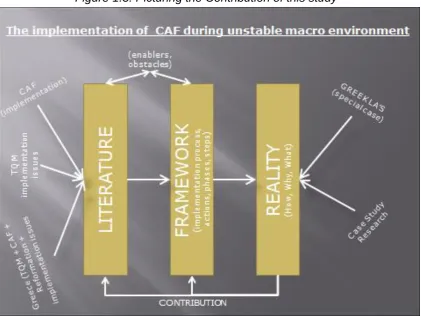
[image:33.595.91.513.461.777.2]The intended contribution of this study can be demonstrated using the following figure:
1.10 Structure of the Thesis
This thesis is divided into six chapters. In this first chapter, which is the introductory one, what this research is about was highlighted. Chapter two presents the literature review and outlines the theoretical framework of the study. Following on in chapter three the methodology of this research is being thoroughly explained. Next in chapter four the findings of the cases are being presented. In chapter five the discussion of the findings is being given, in comparison with the literature and the theoretical framework. Finally, in chapter six conclusions will be drawn, the limitations and the contributions of the research are being discussed and the recommendations for further related research will be given.
1.11 Chapter Summary
2. Literature Review
2.1 Chapter Introduction
In this chapter of the Thesis the literature review of the study is being given by presenting the theoretical framework for implementing CAF successfully, which will be tested in the case studies.
2.2 Critical Success Factors for the CAF to be
successfully implemented
During the literature review stage of this study and having in mind that due to the lack of academic research about CAF, there is also lack of literature about the implementation of the model, the author had to conduct research on TQM implementation issues in general and TQM implementation issues for EFQM. Additionally, there was a comprehensive literature review about the TQM implementation issues in the Greek public sector. Having done so, the following key success factors that influence CAF’s implementation process in an organization were revealed:
1. The organization’s culture should have been taken into account 2. Motivation for implementing CAF should have been established
3. Senior managements’ and politicians’ commitment should have been gained
4. The entire implementation process should have been planned and organized
5. The project should have been communicated before, during and after the implementation process to all the stakeholders
6. Employees’ commitment and involvement should have been assured 7. The project should have been integrated into the organization and its
processes
8. The momentum of the implementation should have maintained in the entire process
9. The pace of the implementation process should have been appropriate according to the organization’s culture.
2.2.1 The culture of the organization
According to Ott (1989) quoted to Rad (2006, p. 608) “organizational culture consists of the beliefs, values, norms, customs and practices of the
organization”. Additionally, Schein (1992) defined the concept of culture, as a
“system of norms, shared values, concerns, and common beliefs that are understood and accepted by the members of the organization”. “The members
of the organization accept these as valid, follow them and teach them to
incoming members as a pattern to be followed for problem solving and as
required thinking style and behaviour. Newcomers to an organization may
bring with them prior expectations about the culture when they join, but culture
is also transmitted to new arrivals by established staff, sometimes explicitly but more often implicitly” (Rad 2006, p. 609). Moreover, according to Langfield-Smith (1995) the organizational culture is shaped not just by individuals but also by new and old organizational features. The organizational routines, operational norms, and structures, all have their influence. According to Anjard (1995) culture is defined as a set of shared values and beliefs that guides of managers’, and employees’ behaviour.
As many authors of TQM agree one of the most important elements regarding the successful implementation of TQM techniques is that of organizational culture (Anjard 1995; Werner 1997; Shih and Gurnani 1997; Samuelsson and Nilsson 2002; Baidoun and Zairi 2003; Lomas 2004; Baidoun 2004; Seetharaman and Sreenivasan 2006; Rad 2006; Davies et al.
2007). As Rad (2006, p. 606) indicates “organizational culture is a major variance-causing factor in TQM implementation programs that inhibits or
allows the success of such a program. A number of studies have highlighted
that cultural variables drive TQM success (Sahney and Warden 1991; Dean and Bowen 1994; Hackman and Wageman 1995; Galperin, 1995; Powell 1995; Nasierowski and Coleman 1997; Katz et al. 1998; De Cock 1998; Tata and Prasad 1998; Kujala and Lillrank 2004; Metri, 2005). TQM programs are more likely to succeed if the prevailing organizational culture is compatible
are able to shape it policies of managing business, which in turn influence the development of quality management practices (Waldman, 1993)”
On the other hand, as pointed out in Kano (1993) culture is not a barrier to the implementation of TQM. But, as they both admit it should be taken into consideration when implementing TQM.
Furthermore, in the case of Greece and its public sector according to Vakalopoulou et al. (2013, p. 750) in their study for the implementation of CAF in public administration in Europe state as far as national and organizational cultural effects on quality implementation are concerned “in nations like
Greece, where people try to avoid unstable situations, they are not resilient to
new ideas and they require sets of rules and regulations to feel content, the
implementation of quality management systems is of ambiguous success, if
the above mentioned aspects are not taken into account and properly resolved (Tata and Prasad, 1998)’’. Additionally, as it is stated by many authors that have studied TQM implementation issues in the Greek Public Sector, the difficulties in the implementation process have to do with the administrative culture that exists in the Greek public administration and in particular the lack of culture change, the non-exercise by the middle management of their leadership, the obsolescence of the concept of evaluation and the lack of confidence of staff to the leadership as a whole (Alexopoulou 2011; Tsolaki 2011; Vakalopoulou et al. 2013).
Finally, in the literature review about the cultural aspect in TQM implementation process it came up that the understanding of the culture of the organization is so crucial that many authors suggest that before implementing TQM or similar initiatives a cultural assessment should be carried out in order to identify potential obstacles and help the designing of a successful TQM implementation process (Anjard 1995; Poirier and Tokarz 1996; Werner 1997; Vermeulen 1997; Bardoel and Sohal 1999; Chin and Pun 2002, Davies et al.
2007)
2.2.2 The established motivation for the implementation of
CAF
Motivation should be the basic component that drives people to the entire process of the implementation of CAF. People should have a completely clear view of the purpose of the CAF self-assessment process and the improvement of the overall performance of the organization (EIPA 2006; 2013). As Staes et al. (2011) found out in their research of the implementation of CAF 2006 lack of motivation is encountered to be as one of the biggest obstacles in the implementation process. Additionally, as Boys et al. (2004) and Van der Wiele et al. (1996) argue, the success of a quality management program relates strongly to the motivation of the organization to implement it.
Tan (1997) claims that most organizations find it hard to implement TQM techniques because there is lack of belief within the organization that TQM works, i.e there is lack of a clear motive. Thiagaragan et al. (2001) identify that a critical requirement to develop the necessary commitment to implement TQM is a clear belief in the benefits of doing it, i.e. a clear motive. Eugene (1998) agrees with this and identifies that having an established need is a primary reason for TQM successful implementation.
The research of Davies (2004) on the implementation of EFQM highlighted the importance of clarifying the motive(s) at the initial stages of the implementation process. This is also supported by the research of Vraldcing (1995), Sullivan-Taylor & Wilson (1996), Ritchie & Dale (2000), Wells (2001), and Chin & Pun (2002). Additionally, Dearing et al. (2006) in their research about best practices in Europe with CAF claim that the success of many organizations relies upon the engagement and motivation of the people in the organization.
Finally, the importance of motivation in the successful implementation of CAF has been highlighted by CAF Resource Center and that is why one of the reasons why the CAF External Feedback procedure has been established was to motivate the organizations to continue with CAF (Staes and Thijs 2010).
implementation.
2.2.3 The senior management and political commitment to the
project
The success of a TQM program relies a lot on senior management commitment. As it is argued by many authors in the past, involvement and commitment of managers at various levels are vital to implement TQM (Crosby 1992; Conti 1997b; Eriksson and Garvare 2005; Seetharaman et al.
2006; Najeh and Kara-Zaitri 2007). The senior management commitment is also highlighted as a crucial factor in the implementation of TQM by several empirical studies (Ramirez and Loney 1993; Thiagarajan and Zairi 1997; Lau and Idris 2001; Taylor and Wright 2003; Baidoun & Zairi 2003; Baidoun 2004; Hides et al. 2004; Rad 2006; Salaheldin 2009; Jamali et al. 2010).
The commitment of senior management in creating an organizational climate that empowers employees is necessary (Ugboro & Obeng 2000). According to Pheng and Jasmine (2004), the degree of management support in TQM implementation is very critical. TQM cannot be effectively implemented if there is lack of commitment from senior management (Jamali
et al. 2010).
Additionally, it is also highlighted by many studies that it is not sufficient for management just to be committed, but this commitment should be demonstrated during the entire TQM implementation process as well as being obvious (Ramirez and Loney 1993; Bertsch and Williams 1994; Thiagarajan and Zairi 2003). As Dean and Bowen 1994 stated, quoted in Calvo-Mora el al.
(2005, p.745) “the management’s commitment and leadership in quality must
be visible, permanent and present at all management levels, since it acts as the guide and promoter of the TQM implementation process”
implementation of EFQM it was stated that, “implementation of the Excellence
Model is much more successful when there is commitment from senior
leaders. It has been shown that commitment is significantly greater where
senior leaders are personally engaged in improvement and learning activities using the Excellence Model” (Consortium for Excellence in Higher Education 2003, p.14).
Moreover, in the case studies for the implementation of CAF in the Greek public sector, the importance of senior management commitment is also highlighted. Alexopoulou (2011) argues that a key prerequisite for the successful implementation of CAF is to ensure the support and commitment of the administrative leadership, which is translated into integrating an integrated quality policy in the organization. Karipidou (2011) highlights the need for senior management commitment and involvement in the implementation of CAF. Lagoudas (2001) states that support, commitment and the conscious participation of the leadership have an important role on the implementation of CAF. Finally, Tsolaki (2011) states that commitment and support from senior leadership is essential for any TQM program to succeed and continues by arguing that the adoption of a quality culture in the Greek public sector requires the continuous commitment of senior management to quality in order for the values and principles of TQM to become part of the mentality of the organization.