EXAMINATION OF THE PUBLIC POLICY
PROCESS IN LIBYA
Abuagela M. AHMED
EXAMINATION OF THE PUBLIC POLICY PROCESS IN LIBYA
Abuagela M. AHMED
School of Built Environment
University of Salford, Salford, UK
Submitted in Partial Fulfilment of the Requirements of the Degree
TABLE OF CONTENTS
LIST OF TABLES ... IV
LIST OF FIGURES ... V
ACKNOWLEDGEMENTS ... VII
DECLARATION ... IX
DEDICATION ... X
LIST OF ABBREVIATION ... I
ABSTRACT ... III
CHAPTER ONE:INTRODUCTION AND RESEARCH PLAN ... 1
1.1 INTRODUCTION ... 1
1.2 RESEARCH BACKGROUND ... 1
1.3 RESEARCH PROBLEM ... 9
1.4 AIM AND OBJECTIVES... 10
1.5 RESEARCH QUESTIONS ... 11
1.6 RESEARCH METHODOLOGY ... 11
1.7 SCOPE AND LIMITATION ... 13
1.8 STRUCTURE OF THE THESIS ... 13
CHAPTER TWO: PUBLIC POLICY PROCESS: A REVIEW OF LITERATURE ... 16
2.1 INTRODUCTION ... 16
2.2 DEFINITIONS OF PUBLIC POLICY ... 16
2.2.1 What is Public Policy? ... 17
2.2.2 Public Policy and other Related Concepts ... 25
2.2.3 The Classification of Public Policy ... 29
2.3 PUBLIC POLICY PROCESS ... 33
2.4 STAGES OF THE POLICY PROCESS ... 38
2.5 ACTORS IN THE PUBLIC POLICY PROCESS ... 47
2.5.1 Actors in the Initiation Stage ... 49
2.5.2 Actors in the Formulation and Implementation Stages ... 55
2.5.3 Actors at the Evaluation Stage ... 60
2.6 CONCLUSION ... 64
CHAPTER THREE: POLITICAL STRUCTURES AND POLICY PROCESSFRAMEWORKS IN LIBYA... 66
3.1 INTRODUCTION ... 66
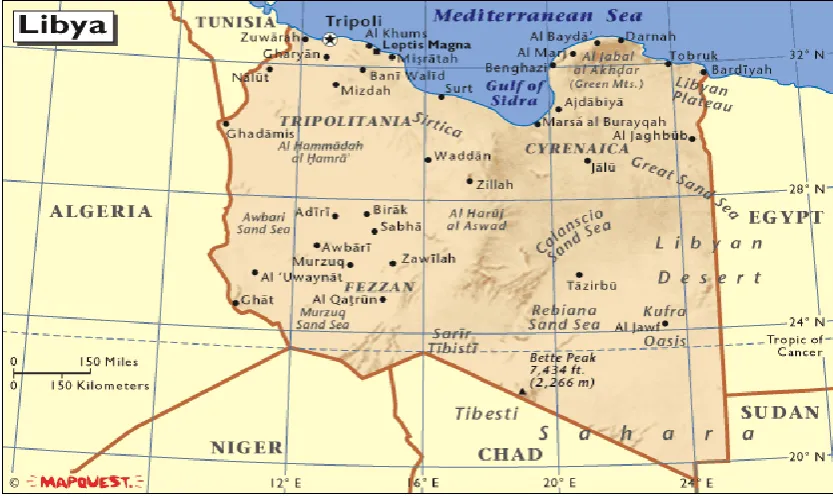
3.2 LOCATION AND GEOGRAPHICAL FEATURES ... 66
3.3 THE POPULATION ... 68
3.4 HISTORICAL BACKGROUND OF LIBYA ... 73
3.5 THE POLITICAL STRUCTURES AND POLICY PROCESS FRAMEWORKS 1952-1969 ... 78
3.6 THE POLITICAL STRUCTURES AND POLICY PROCESS FRAMEWORKS 1969-2011 ... 82
3.6.1 The Formation of the Revolution Command Council 1969-1971 ... 83
3.6.1.1 Policy Process Framework 1969-1971 ... 85
3.6.2 The Creation of the Arab Socialist Union 1971-1973 ... 87
3.6.2.1 Policy Process Framework 1971-1973 ... 90
3.6.3 The Announcement of the Popular Revolution 1973-1975 ... 92
3.6.3.1 Policy Process Framework 1973-1975 ... 94
3.6.4 The New Status of the ASU 1975-1977 ... 95
3.6.4.1 Policy Process Framework 1975-1977 ... 98
3.7 THE POLITICAL STRUCTURES AND POLICY PROCESS FRAMEWORKS 1977-2011 ... 101
3.7.1 The Structure of the Jamahiriya System ... 102
3.7.1.1 The People Congresses ... 104
3.7.1.2 The People Committees (PCs) ... 105
3.7.1.3 The Trade Unions and Syndicates ... 107
3.7.1.4 The General People Congress ... 109
3.8 CONCLUSION ... 114
CHAPTER FOUR:RESEARCH METHODOLOGY ... 117
4.1 INTRODUCTION ... 117
4.2 DEFINITION OF RESEARCH METHODOLOGY... 118
4.3 RESEARCH DESIGN ... 119
4.4 RESEARCH PHILOSOPHY ... 120
4.4.1 Ontology ... 122
4.4.2 Epistemology ... 123
4.4.3 Axiology ... 124
4.5 RESEARCH APPROACH ... 125
4.6 RESEARCH STRATEGY ... 127
4.6.1 Case Study Design ... 132
4.6.2 The Unit of Analysis ... 134
4.6.3 Triangulation ... 135
4.7 RESEARCH TECHNIQUES ... 137
4.7.1 Data Collection Techniques ... 137
4.7.2 Data Collection Techniques Selected for this Study ... 141
4.7.2.1 Literature Review ... 141
4.7.2.2 Documentations ... 143
4.7.2.3 Interviews ... 145
4.7.2.3.1 Setting of the Interviews Questions ... 149
4.7.2.3.2 Piloting Interviews ... 149
4.7.2.3.3 Conducting the Interviews ... 151
4.7.3 Data Analysis Techniques ... 154
4.7.3.1 Matrix Format. ... 156
4.7.3.2 Cognitive Mapping ... 160
4.8 ESTABLISHMENT OF THE RESEARCH QUALITY ... 164
4.8.1 Constructed Validity ... 165
4.8.2 Reliability ... 165
4.8.3 Internal Validity ... 166
4.8.4 External validity ... 167
4.9 ETHICAL CONCERN ... 168
4.10 CONCLUSION ... 169
CHAPTER FIVE:RESEARCH FINDINGS ... 171
5.1 INTRODUCTION ... 171
5.2 CASE STUDY FINDINGS ... 171
5.2.1 The Libyan Policy Concept ... 173
5.2.2 The Libyan Policy Process ... 176
5.2.2.1 Policy Initiation: Activities and Actors ... 178
5.2.2.2 Policy Formulation: Activities and Actors... 180
5.2.2.3 Policy Implementation: Activities and Actors ... 184
5.2.2.4 Policy Evaluation: Activities and Actors ... 187
5.3 CONCLUSION ... 193
CHAPTER SIX: AN EXAMINATION OF THE PUBLIC POLICY PROCESS IN LIBYA ... 195
6.1 INTRODUCTION ... 195
6.2 THE LIBYAN PUBLIC POLICY CONCEPT ... 196
6.3 THE PRACTICE OF THE LIBYAN POLICY PROCESS ... 201
6.3.1 The Stages in the Libyan Policy Process Practice 1969-1977 ... 203
6.3.2 The Stages in the Libyan Policy Process Practice 1977-2011 ... 210
6.3.2.1 Policy Initiation ... 210
6.3.2.2 Policy Formulation ... 219
6.3.2.3 Policy Implementation ... 230
6.3.2.4 Policy Evaluation ... 241
6.4 FACTORS AFFECTING THE LIBYAN POLICY PROCESS... 248
6.5 CONCLUSION ... 254
7.1 INTRODUCTION ... 255
7.2 RESEARCH SUMMARY ... 255
7.3 ACHIEVEMENT OF THE RESEARCH AIM AND OBJECTIVES ... 259
7.3.1 The Conceptual Framework... 259
7.3.2 Institutional Springboard/Political Structures ... 260
7.3.3 Policies and Actors ... 262
7.3.4 Factors Affecting the Policy Process ... 274
7.4 RESEARCH CONTRIBUTION ... 277
7.5 RECOMMENDATIONS AND SUGGESTIONS FOR FURTHER WORK ... 279
BIBLIOGRAPHY... 282
LIST OF TABLES
TABLE 1.1STAFF MEMBER IN THE POLITICAL AND PUBLIC ADMINISTRATION DEPARTMENTS, WHERE
PUBLIC POLICY IS TAUGHT IN THE ARAB UNIVERSITIES ... 4
TABLE 1.2:TEACHING PUBLIC POLICY MODULES IN THE ARAB UNIVERSITIES... 4
TABLE 3.1:POPULATION GROWTH RATE IN LIBYA 1955-2010 ... 68
TABLE 3.2:POPULATION AVERAGE GROWTH RATES IN ARAB STATES 1955-2010 ... 69
TABLE 3.3:THE LIBYAN POPULATION STRUCTURE AGES 1955-2010 ... 70
TABLE 3.4:THE POPULATION OF LIBYA ACROSS AGE GROUPS IN COMPRESSION WITH MORE AND LESS DEVELOPED COUNTRIES 1950-2010 ... 71
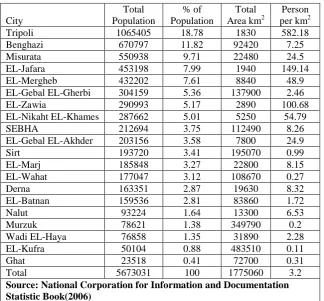
TABLE 3.5:THE POPULATION DENSITY RATES IN LIBYA ... 73
TABLE 3.6:POLITICAL AND ADMINISTRATIVE STRUCTURES IN LIBYA 1969-2011 ... 83
TABLE 4.1:KEY FEATURES OF THE POSITIVISM AND THE INTERPRETIVISM PARADIGMS... 122
TABLE 4.2:MAJOR DIFFERENCES BETWEEN DEDUCTIVE AND INDUCTIVE APPROACHES ... 126
TABLE 4.3:USED TACTICS IN ESTABLISHING THE RESEARCH QUALITY AND VALIDITY ... 168
TABLE 5.1.LIST OF INTERVIEWEES WITH THEIR JOB TITLES AND POSITIONS ... 172
TABLE 6.1:CONTRIBUTION OF THE FOREIGN ASSISTANCES TO THE GOVERNMENT EXPENDITURES 1954-62( IN MILLION) ... 197
TABLE 6.2:VALUES OF THE OIL REVENUES 1962-2010(IN MILLION $) ... 200
TABLE 6.3:VALUES OF THE OIL REVENUES% TO THE TOTAL FOREIGN CURRENCY INCOME 1962-2010 IN MILLION ($) ... 236
TABLE 6.4:ACTUAL OPERATING AND DEVELOPMENT EXPENDITURES FROM 1963 TO 2010 (IN MILLION LD) ... 239
LIST OF FIGURES
FIGURE 1.1:THE PROCESS OF SELECTING THE RESEARCH FOCUS ... 9
FIGURE 1.2:STRUCTURE OF THE THESIS ... 15
FIGURE 2.1:PUBLIC POLICY AND OTHER RELATED CONCEPTS ... 28
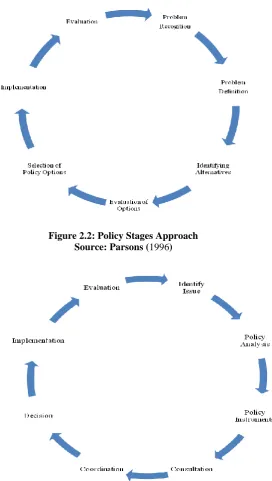
FIGURE 2.2:POLICY STAGES APPROACH ... 36
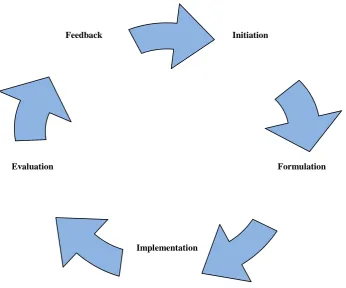
FIGURE 2.3:THE AUSTRALIAN POLICY STAGES APPROACH ... 36
FIGURE 2.4:THE RELATIONSHIP BETWEEN POLICY EFFICIENCY AND POLICY EFFECTIVENESS ... 43
FIGURE 2.5:SIMPLIFIED DIAGRAM OF THE MAIN STAGES OF THE POLICY PROCESS ... 46
FIGURE 2.6:TOP-DOWN PERSPECTIVE OF POLICY IMPLEMENTATION ... 58
FIGURE 2.7:DEVELOPED CONCEPTUAL FRAMEWORK:POLICY PROCESS:ACTIVITIES AND ACTORS ... 64
FIGURE 3.1:LOCATION AND PHYSICAL FEATURES OF LIBYA ... 68
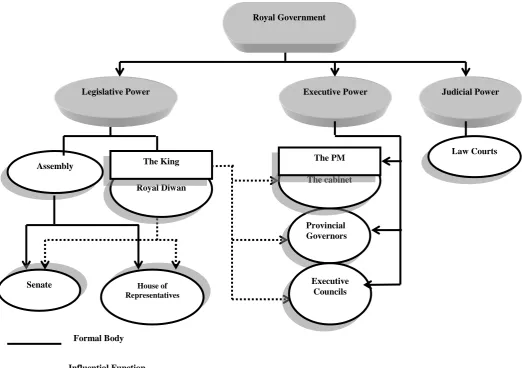
FIGURE 3.2:THE POLITICAL STRUCTURE 1952-1969 ... 80
FIGURE 3.3:POLICY PROCESS FRAMEWORK 1969-1971... 86
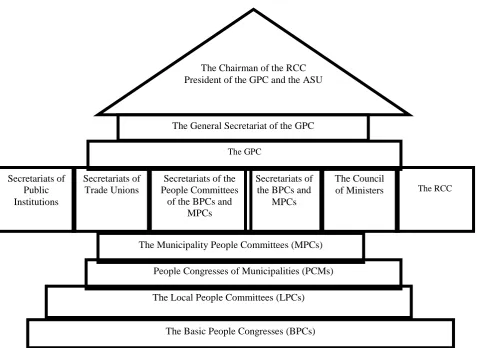
FIGURE 3.4:THE STRUCTURE OF THE ASU ... 89
FIGURE 3.5:POLICY PROCESS FRAMEWORK 1971-1973... 91
FIGURE 3.6:POLICY PROCESS FRAMEWORK 1973-1975... 94
FIGURE 3.7:THE NEW STRUCTURE OF THE ASU ... 97
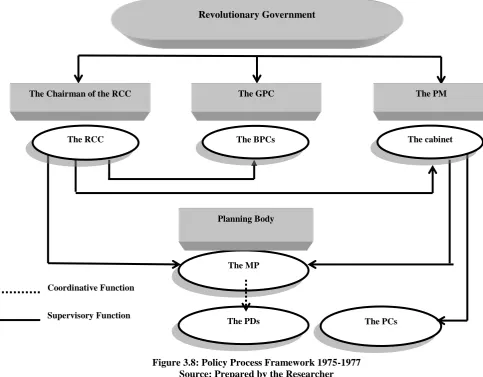
FIGURE 3.8:POLICY PROCESS FRAMEWORK 1975-1977... 99
FIGURE 3.9:ASIMPLE DIAGRAM OF THE POLITICAL STRUCTURE IN THE JAMAHIRIYA SYSTEM ... 103
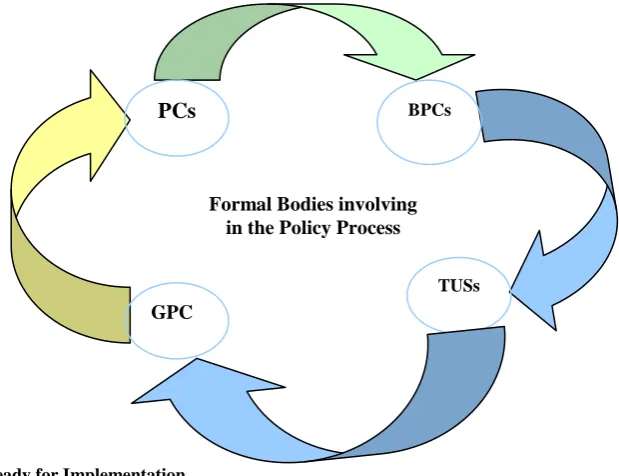
FIGURE 3.10: THE LIBYAN FORMAL BODIES INVOLVING IN THE POLICY PROCESS ... 110
FIGURE3.11:POLICY PROCESS FRAMEWORK 1977-2011 ... 114
FIGURE 4.1:THE RESEARCH DESIGN PATH ... 120
FIGURE 4.2:BASIC TYPES OF CASE STUDIES DESIGN ... 132
FIGURE 4.3:LITERATURE REVIEW PROCESS... 142
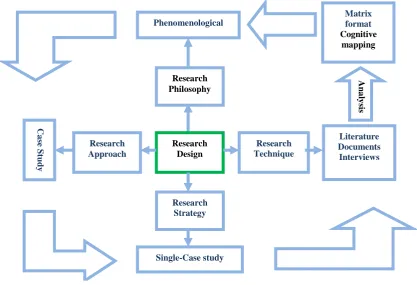
FIGURE 4.4:RESEARCH METHODOLOGY DESIGN ... 170
FIGURE 5.1:COGNITIVE MAP ON KEY IDEAS OF THE LIBYAN POLICY CONCEPT ... 176
FIGURE 5.2:COGNITIVE MAP ON THE LIBYAN POLICY PROCESS ... 178
FIGURE 5.3:COGNITIVE MAP ON THE LIBYAN POLICY INITIATION ... 180
FIGURE 5.5:COGNITIVE MAP ON THE LIBYAN POLICY IMPLEMENTATION ... 186
FIGURE 5.6:COGNITIVE MAP ON THE LIBYAN POLICY EVALUATION ... 191
FIGURE 6.1:VALUES OF OIL REVENUES 1962-2010 IN MILLION ($) ... ERROR!BOOKMARK NOT DEFINED. FIGURE 6.2:ACTIVITIES AND ACTORS INVOLVE IN THE POLICY INITIATION IN LIBYA ... 213
FIGURE 6.3:AGENDA SOURCES ... 218
FIGURE 6.4:ACTIVITIES AND ACTORS INVOLVED IN THE POLICY FORMULATION ... 227
FIGURE 6.5:ACTIVITIES AND ACTORS INVOLVED IN THE POLICY IMPLEMENTATION ... 234
FIGURE 6.6:VALUES OF OIL REVENUES IN % OF THE TOTAL FOREIGN CURRENCY INCOME 1962-2010 IN MILLION ($) ... 235
FIGURE 6.7:ACTUAL GOVERNMENT EXPENDITURES 1962-2010 IN MILLION ($) .... ERROR!BOOKMARK NOT DEFINED. FIGURE 6.8:STAGES AND ACTORS INVOLVE IN POLICY EVALUATION ... 244
FIGURE 6.9:FINANCIAL RESOURCES &POLICY PROCESS PRACTICE IN LIBYA ... 247
ACKNOWLEDGEMENTS
All praise and thanks are due to Allah the Almighty for his countless blessings on me. In this context, I emphasise that my prayers, sacrifices, life and death are for Him the Glory. The completion of this thesis would not have been possible without his help and the active support and advices I have received from many individuals and institutions with which I had the pleasure and privilege to work.
I would like to thank all those who have made this study possible. My special gratitude and appreciation go first to my supervisor Dr. Richard Haigh for his indefatigable source of encouragement, valuable support, guidance and constrictive advice throughout the course of this research. His supervision, comments, suggestions have made the completion of my study possible. I am sincerely grateful for his enthusiasm and patience in helping me in solving many problems I have encountered during the course of my study.
I would also like to thank the talented academics whom I have had the good fortune to meet and to discuss parts of the research in particular during my interim and internal evaluation exams and who have contributed many valuable suggestions. In particular I wish to acknowledge Professors D. Amaratunga, Professor Mel Lees, John Hudson and Gerard Wood. Sincerer gratitude must also go to all academic and supporting staff in the SoBE for their support, assistance and making the School such welcoming and fun place to pursue a postgraduate degree. Special thanks ought to go to the Carol Gordon and Batley Cheryl, for their valuable assistance.
help, large part of my study would never have been completed. Many of the official documents and materials related to public policies in Libya were found in the premise of the National Planning Council in Tripoli. Gratitude must go to all staff at this institute, particularly Rafaa Alzugni, the Head of Information Office for his great help.
Special thanks and deepest appreciation to Brother Muhammad Kabir Musa for his support and help in proof-reading the first draft of thesis. His kind help, positive ideas and comments have helped me in this study.
I wish to express my heartfelt thanks to all members of my family, relatives and family-in-law for their constant support and encouragement during my study. My special and deepest gratitude and appreciation are owed to my dearest wife Dr. Rabia for her unlimited academic support. She has been consulted many times about issues related to my work. My greatest gratitude also must go to my sons Mohamed, Saif and lovely Abdu for their patience, love, endurance and support during the course of my study.
DECLARATION
I declare that the work presented in this thesis entitled “Examination of the Public Policy Process in Libya” has not previously been submitted for any degree or similar award at Salford University or any other University or institution. To the best of my knowledge and belief, no material in this thesis has been previously published or written by another person, except where due reference is made.
………..
DEDICATION
This thesis is dedicated to my wife Dr. R. Elbasekeri and my children, Mohamed, Saif Elhaq and Abdu Alrahman
ALSO
LIST OF ABBREVIATION
Association of Arab Universities (AAU) Arab Socialist Union (ASU) Basic Congresses (BCs) Basic Executive Committee (BEC) Basic People Congresses (BPC s) Chairman of the Revolution Command Council (Chairman of the RCC) Chiefs of the Provinces Executive Councils (CPECs) City Expert Associations (CEAs) Councilof Ministries (CMs) Development Council (DC) General People Congress (GPC) General People Committee (GPCommittee) General Planning Council (GPCouncil) General Secretariat of the GPC (GSGPC)
General Secretariat of the Trade Unions and Syndicates (GSTUSs) Gross Domestic Product (GDP)
Muhafadha Congress (MC) Muhafadha Executive Committee (MEC) Municipal People Committee (MPC) Municipality Planning Council (MPCouncil) National General Congress (NGC) National Planning Council (NPCouncil) People Committees (PCs) People Congress of the Municipality (PCM) Planning Secretariat (PS) Planning Divisions (PDs) Political Research and Studies Centre (CPRS) Prime Minister (PM) Provisional Constitutional Proclamation (PCP) Public Administration Research and Consultation Centre (PARC) Provincial Governors (PGs) Sector Planning Committee (PSC) Technical Committee (TC) Revolution Command Council (RCC)
Royal Diwan (RD) Highest Planning Council (HPC)
ABSTRACT
Although the study of public policy and the policy process, as an academic and distinctive area, has received much attention in the West, it is still far from being the case in the Arab states, including Libya. Indeed, the policy process in Libya is still ill-defined and not well documented, and there is also an absence of detailed research work related to the policy process in the Libyan context. Therefore, this study aims to examine the practice of the policy process in Libya and compare with the policy process as defined in the conceptual framework developed from the Western literature. Policy initiation, formulation, implementation and evaluation were typically identified as the principal processes. Each of these was examined as a distinctive type of government activity in order to get a better understanding of how the Libyan government developed and put selected policies into effect, and took actions to implement them to bring policy outputs into existence. This was done by investigating the various activities and actors involved in each process so as to determine their characteristics and the factors affecting their effectiveness in achieving policy objectives.
A case study was selected as an appropriate strategy for explorative and descriptive analysis. The main sources of evidence were provided by semi-structured interviews with key people from different policy areas and government agencies who have been involved in the policy process, supplemented by a literature and documents review to achieve a higher degree of validity and reliability of the research. Collected data was analysed using matrix format and cognitive mapping.
Chapter One
Introduction and Research Plan
1.1 Introduction
This chapter provides an overview of the research topic and the research process. It provides a brief overview of the research background, research problem, and the research aims and objectives. It describes the research methodology and design by which the research has been conducted to achieve the intended aims and objectives. The research philosophy, approaches and techniques for data collection and analysis are also described in this chapter. The chapter concludes with the structure of thesis.
1.2 Research Background
schools, institutes and research centres of public policy in many American Universities, and soon later in Western European Universities. It is also reflected in the increasing number of professional public policy journals, the publishing of numerous textbooks used on many new policy courses and the explosion in the public policy literature. These developments have been dominated, for the greater part of history, by the American materials and ideas, and by the late 1970s flavoured by the Western ideas (Thomas, 1981; Parsons, 1996 and Birkland, 2010).
The most important development is the emergence of the study of policy analysis in the 1970s, as an approach concerned with policy analysis and development. It includes the analysis of policy content, policy process, policy outputs, policy evaluation, policy making, and policy advocacy (Hogwood and Gunn, 1991; Hill 2009). These types of policy analysis have attracted the attention of a wide range of academic interests, who made significant contributions with a view of developing this area of study, especially the analysis of the policy process. The latter, as Hill (2009) and Birkland (2010) argue, determines what government does or does not do. It explains how governments create resources and provide benefits to individual people and groups in society. It focuses on the functional role of governments in dealing with the problems of society that are viewed to be important and need a solution. It considers how governments deliver public services, public infrastructure and buildings and improve their quality. It is mainly concerned with the activities of the governments when making policy decisions.
1996; Simon, 1997; Genston, 2004; Sabatier, 2007; Hill, 2009; Anderson, 2010 and Dye, 2010). Their aim is to develop public policy area as a distinct field of study, particularly the policy process. The latter is regarded as continuous activities taking place over a long period of time to change and transform an issue into an existing policy as well as a sequential pattern of government actions on society, that is the ability to make things better or worse (Jenkins, 1978; Hogwood and Gunn, 1991;Akindele and Olaopa, 2004;Hyewood, 2007; Hill, 2009;Anderson, 2010 and Dye, 2010). This policy process ranges from three to eight stages, and is typically divided into four main ones, which involve policy initiation, formulation, implementation and evaluation. Each of these stages is functionally treated as a distinctive type of government activity through which policy ideas and issues are identified, defined, developed and processed into policy outputs. This would help get a better understanding of how governments select their policies, allocate financial resources, put selected policies into effect and take actions to bring policy outputs into existence.
This situation has made this area of study to be less developed in the Arab states. It has also led these countries to depend greatly on foreign references and materials in teaching public policy in their Universities. However, there are a number of studies that have been conducted in the UK and in other Arab Universities to examine the particular areas of public policy.
Table 1.1 Staff Member in the Political and Public Administration Departments, where Public Policy is Taught in the Arab Universities
Country Number of
Universities Political Science Area
Public Administration
Area Public Policy Area
Departments Staff
Members Departments
Staff
Members Departments
Staff Members
Algeria 7 1 10 0 0 0 0
Bahrain 2 0 0 0 0 0 0
Egypt 20 8 80 1 10 0 0
Iraq 15 7 63 1 7 0 0
Jordan 18 3 27 5 49 0 0
Kuwait 1 1 17 1 10 0 0
Lebanon 9 2 49 1 7 0 0
Libya 10 7 30 0 0 0 0
Mauritania 4 0 0 0 0 0 0
Morocco 4 0 0 0 0 0 0
Oman 1 0 0 0 0 0 0
Palestine 11 2 7 1 6 0 0
Qatar 1 0 0 1 10 0 0
Saudi Arabia 8 3 90 4 53 0 0
Somalia 2 0 0 0 0 0 0
Sudan 24 6 60 2 5 0 0
Syria 4 0 0 0 0 0 0
Tunisia 3 0 0 0 0 0 0
UAE 3 1 12 1 12 0 0
Yemen 15 6 45 2 12 0 0
Total 158 47 490 19 176 0 0
Source: Compiled by the author from data provided by the Information Centre of the Association of Arab Universities. . www.aaru.edu.jo/index.php?option=com_content&task
Table 1.2: Teaching Public Policy Modules in the Arab Universities
Country University
Department Teaching Level
No. Modules Modules Description Political Science Public Administration Under Graduate Post Graduate
UAE Sharijah * * 1 Introduction
UAE UAE * * 1 Introduction
Egypt Assault * * 1 Introduction
Egypt Cairo * * 1 Introduction
Saudi Arabia King Saud * * * 1 Introduction
Saudi Arabia King Abdel-Aziz
* * * 1 Introduction
Jordan Al al-Bayt * * 1 Introduction
Jordan Yarmouk * * 1 Introduction
Algeria Algiers * * 1 Introduction
Most of these have mainly focused on economic policies, in particular the impact of the oil revenues in developing other economic activities (El-Faqhir, 1982; Braadyi, 1983; Abbas, 1987; Qandeel, 1988; Al-Tunisik, 1995; Mohamed, 1997; Gzema, 1999; Waller, 2000 and Wershfani, 2003). A very limited number of studies have examined certain issues related to the housing and tourism policies in Libya (Omar, 2003; Abuharris, 2005; El-Hasia, 2005; Aburounia, 2007 and Shibani, 2008). These studies focus mainly on policy contents and directions, paying less attention to the examination of the policy development process.
The teaching of public policy as a subject in Arab Universities had also been neglected. A majority of Arab Universities did not even teach it. The lack of awareness continued until the end of the 1980s when some Arab Universities, particularly in Egypt, developed their postgraduate programme studies, offering public policy as an alternative module in the Political Science Department. Some Arab Universities have, since then, attempted to raise the awareness of the teaching of the public policy subject. As shown in Tables1.2, the subject has only been offered at 9 Universities out of 158 Arab Universities, which are members of the Association of Arab Universities (AAU). It has been offered as an optional module in the 11 political science and public administration departments, from a total of 66 departments in all 158 Universities in the AAU. In comparison with the Western Universities, the teaching of public policy modules in the Arab Universities is very limited and, in the majority of them, is non-existent.
specialist in this field (www.aaru.edu.jo). In Libya, the teaching of this subject commenced in 1993, and was only offered to the postgraduate students at the Academy of Postgraduate Studies in Tripoli. Indeed, the researcher was among the first students to be taught the subject.
The problem extends to public policy research centres: only three centres can be found in the Arab states. These are the Political Research and Studies Centre (CPRS) in Cairo, the Public Administration Research and Consultation Centre (PARC) in Cairo, and the Lebanese Centre for Policy Study (LCPS) in Beirut. This limitation of the existing research centres in the Arab states is further evidence of how this subject area has not been seen as an important one in the academic activity in these countries. The CPRS was established in 1986 and the LCPS in 1989, while the PARC was set up in 2000. These centres hosted several forums and seminars, yet just a few of them focused on issues related to public policy. In Libya, no public policy centre or institute has been established so far. However, only one conference on public policy was organised by the Garyounis University in June 2007. This discussed different aspects related to public policy, with a special reference to the case of Libya (Garyounis University, 2007).
(2001) as states with a) ineffective political institutions; b) a high degree of centralisation; c) political instability and d) an imbalance in economic and political development. In order to overcome these difficulties, they should achieve rapid development. However, this cannot easily be done without improving the practice of the policy process, something that is instrumental in producing effective policies.
The new government has foremost worked out a strategy for increasing oil revenues through the development of the activity of oil industry (Simons, 1996). Therefore, it started by extending its investments and expenditures in different policy areas. Four development plans were implemented during the periods of (1969-72, 1973-75, 1976-80 and 1981-85) (Ministry of Planning, 1973; 1976 and 1981). By doing so, the government took overall responsibility for preparing, financing and implementing public policies. This also led the government to extend the scope and intervention of the public sector in the economic activity in general. Public investments in these development plans were intended to develop public infrastructure and buildings, provide adequate services in different policy areas including in health, education and housing, and improve their quality. These services have been given high priority in the government investments programmes and largely financed and implemented by the public sector (General Authority for Information, 2006).
institutions established, the emerging government ought to be mindful of the deficiencies/shortcomings that marked the practices of the public policy process under former political regime, these are outlined in Chapter 6.4.
In summary, the various sequences of the research focus as discussed above, moving from the broader theme of public policy study to the specific case of Libya, are illustrated in Figure 1.1.
Figure 1.1: The Process of Selecting the Research Focus
1.3 Research Problem
implemented and evaluated to determine the characteristic features of these processes and identify factors affecting their effectiveness in achieving policy objectives. That being so, the following aim and objectives are identified to demonstrate whether or not the effectiveness of the policy process in developing and implementing the selected policies.
1.4 Aim and Objectives
The principal aim of this research is to examine the practice of the Libyan policy process and then comparing it with the policy process as defined in the developed conceptual framework. It investigates how the processes are formulated, implemented and evaluated and identifies the key stakeholders involved in the policy process. In order to determine the characteristic features of these processes and identify factors affecting their effectiveness in achieving policy objectives. In order to achieve this, the following objectives are identified:
To develop a conceptual framework for examining the public policy process in Libya based on a comprehensive review of existing literature.
To investigate the Libyan political structures and government institutions through which selected policies are developed and implemented.
To investigate how selected policies in Libya are developed and implemented and identify the principal participants/actors involved in the policy process.
To analyse the government‟s policy plans in order to demonstrate the differences between the stated policy objectives and the actual implementation and achievement.
To compare the practice of the Libyan policy process with the policy process as defined in the developed conceptual framework.
To make recommendations for improving the practices of the Libyan policy process while offering suggestions for further research work on this theme.
1.5 Research Questions
What is the meaning attributed to the concept of public policy?
How are the political structures in Libya working to produce public policies?
How are the selected policies in Libya developed and formulated, and who are the principal actors involved?
How are policy issues identified, defined, developed and put on the policy agenda?
How are selected policies developed into policy plan and put into effect?
How are the financial resources generated and allocated among policy objectives and priorities set on the policy plan?
Have the implemented policies satisfactorily achieved their objectives set out in the action plan? If not why?
How are the selected policies implemented and evaluated, and what methods and criteria are used for their evaluation?
What are the main factors affecting the policy process in Libya in achieving policy objectives?
How is the policy process practice in Libya examined in accordance with the developed conceptual framework?
1.6 Research Methodology
implemented, and identify the primary actors involved. It is essentially concerned with the nature of reality in the social world, therefore, it is seemed to be more descriptive and explanatory in nature with „how‟, „who‟ and „what‟ questions. It deals with the activities of humans within the Libyan political structures over an extended period of time. Therefore, the main unit of analysis is the process and the individuals involved in. The basic design was a single case study of Libya with embedded multiple units of analysis based around the policy process and the people involved in. The selection was made to show different perspectives on the issue under consideration by bring out detailed information from the viewpoint of the participants about the policy process practice in Libya in order to achieve the research aim and objectives.
In terms of triangulation of data analysis, the collected data was analysed by using a matrix format and cognitive mapping. Collected data was transcribed, collated, classified into meaningful categories, and displayed in matrices and mapping formats to be readily accessible for the process of interpretation. This technique was used to reduce and re-arrange collected data into a more manageable and comprehensible form. Qualitative data was analysed throughout the use of conceptualisations and presented in detailed textual analysis in a logical order, while statistical data was presented in table and chart form by using Microsoft Excel.
1.7 Scope and Limitation
The study is limited to the assessment of the policy process from the proclamation of the republic in 1969 until the popular uprising of February 2011, which plunged the country in a state of chaos. Despite this, the study has relevance to the post-uprising situation, as an effective policy process will be essential as the country rebuilds politically, economically, and socially. A brief review to the Libyan political structures from the independence of the state in 1952 until the establishment of the Republic, has also been made in this study.
1.8 Structure of the Thesis
The thesis is structured into seven chapters as illustrated in Figure 1.1.
Chapter Two presents detailed information about key issues and themes pertaining to the study, namely policy concepts and process through which selected policies ideas are developed, implementedand appraised. It outlines the principal processes, which typically include policy initiation, formulation, implementation and evaluation. Activities and actors involved in each process are described in this chapter in order to develop a conceptual framework by which the case in this study can be examined.
Chapter Three focuses on the examination of the Libyan political environment. It depicts the development of the Libyan political structures from the independence of state in 1951 until the popular uprising of February 2011. The geographical, human and historical background is also briefly described.
The Fourth chapter sets out the research methodology. It describes the research philosophies and their associated approaches by which data can be collected. The selection of the case study design as an appropriate strategy for data collection is justified in this chapter. Data analysis techniques andthe validity and reliability of the case study data are addressed in this chapter.
Chapter Six provides an in-depth discussion and analysis of the research findings. It focuses on the analysis of the empirical and supplementarydata obtained from interviews, Libyan official documents and literature in order to answer the research questions. It also explores the characteristics of the policy process practice and identifies the main factors affecting the policy process in Libya.
Chapter Seven concludes the study and summaries the research findings. It attempts to put forward a number of suggestions for improving the development and implementation of the policy process in Libya and makes a few recommendations for further research work.
Chapter One
Introduction and Research Plan
Chapter Two A Review of Literature and the
Development of Conceptual Framework
Chapter Five Research Findings
Empirical Part
Chapter Four Research Methodology
Chapter Seven
Conclusion and Recommendations Chapter Three Political Structures and Policy
Process Frameworks in Libya Theoretical
Part
Chapter Six Discussion and Implications
Examination of Policy Process practice in Libya
2 Chapter Two
Public Policy Process: A Review of Literature
2.1 Introduction
The study of policy analysis and processes has rapidly grown as a distinctive area of academic study, and sufficiently defined and documented to attract the attention of a wide range of academic interests, particularly in the Western world. Therefore, this chapter starts with a review of current definitions of public policy in order to grasp the precise meaning of the concept of public policy and determine its confines from other related terms such as decision, strategy, objective and programme. This review will be undertaken through an examination of the available literature from Western and Arab countries and is followed by a description of policy classifications. Yet the main focus of this chapter is the investigation of the public policy process, by which policy ideas and issues are generated, defined, developed and processed into policy outputs. Put differently, it looks at how public policy is made through a series of sequential processes – typically including policy initiation, formulation, implementation and evaluation, as well as identifying the key stakeholders involved in these processes. Each one of them is examined as a distinctive type of government activity in order to get a better understanding of how governments select and put policies into effect, and take actions to implement them to bring deliberated policy outputs into existence. The main purpose of this chapter therefore, is to develop a conceptual framework by which the case in this study can be examined.
2.2 Definitions of Public Policy
into a word game. The term of policy has occasionally been used in different senses and tangling with other relevant concepts such as politics, decision, strategy, objective and programme, leading to a definitional conceptual overlap difficulty. Thus, due to the lack of a consensus on reaching a specific definition, the different available sources of public policy definitions will be reviewed, to explore the multi-dimensional nature of policy, to establish the key elements of definitions in the study-field, to decipher the common characters of policy concept, and finally to allow, if possible, for developing a working definition. In order to demonstrate this, the starting point for a discussion should be the consideration of what it is meant by the term 'policy', which has been very widely used in the political and administrative contexts. This is particularly important in view of the fact that, as mentioned earlier, the term of policy has tended to overlap with other related terms. As a corollary, public policy should also be distinguished from those terms with a view to clarify its meaning.
2.2.1 What is Public Policy?
emerging the policy conception, focusing on public and its problems or as he described, „problem-focused‟. Since then, academics and political scientists have continued to develop their perspectives on government activities, and to contemplate the definition of public policy, which has been reflected in many textbooks and professional journals.
policies of the private organisations lack the legitimacy, universality and legal-bindingness which, according to Dye (2010), constitute the distinct characteristics of government policies. In addition, there is also a dividing line between policy and politics; the latter is defined by Easton (1953:129) as, “the authoritative allocation of values”, while the former, as Gerston (2004:7) notes, „results from the blend of politics and government‟. In a very real sense, if values predetermine policies, then policies are as important in defining existing values (politics) as they are in defining solutions to current problems through government activities. However, in actual fact, the term „politics‟, as Maddison and Denniss (2009) report, refers to more than just the activities of governments; it is an aspect of all social relations and is a central part of any situation where groups of people make decisions and policies.
As far as this argument is concerned, public policy is distinguished from politics and the policies of the private organisations, and it may be seen simply as the affairs of governments. Thus Baker et al (1975:23) define it as, “a body of principles to guide actions”. Similarly, Starling (1979:4) defines policy as, “a kind of guide that delimits action”. Nevertheless, this is how ideology is often defined in the political theory literature. In consequence, a risk of a conceptual overlap can occur here unless care is taken to specify the way in which the two concepts, ideology and policy, are related. Taking a descriptive approach, Paine and Naumes (1975:5-7) define policy as, “organisational decisions and goals involving wide ramification,
a long-term perspective and a use of critical resources towards perceived opportunities in
changing the environment”. A more universally applicable definition is presented by Pollitt et al (1979: ix) who see policy as, “a continuous process of decisions and activities which
take place principally within definite organisational structures; such structures may be
these writers, is seen as an intellectual and continuing process of decision-making that occurs within defined organisational structures. This view can be considered as an appropriate start for defining the policy concept, yet is still imprecise, as it does not demonstrate the whole understandable meaning of policy.
However, others have sought to do better than that; for example, Easton (1965:130) notes that, “a policy consists of a web of decisions and actions that allocate values on the whole
society as well as it is the means by which societal values are authoritatively allocated”. As a
variant on this, Heclo (1972: 85) suggests that a policy should usefully be considered as, “a
course of action pursued under the authority of governments”. Moreover, it “concerns organising purposive action in a society by state authority”. To Heclo, policy is something bigger than a particular or specific decision or action; it must include all government actions, whether what is intended or what has occurred as a result of the intention. Similarly, Smith (1976:13) states that, “the concept of policy denotes, among other things, deliberate choice of
action or inaction rather than effects of interrelating forces”. This definition emphasises that policy should refer to all government actions and inactions. According to Smith, non-action does not in fact mean ignorance on the part of those who should decide. It may mean that a decision has been made that no action would be taken about a particular matter or issue. Although the decision that no action would be taken is not represented in the legislative enactments, it is still a part of a possible response to the considered issue even though this may be difficult to observe.
Seeking to extend this linkage, policy is described in Dye‟s often quoted words, “what
trying to address, develop and process policy problems. It permits the exploration of the variety of meanings that have historically been attached to the process of producing policy. This simply means that a particular consideration should go to all government activities including the process of making a policy, which gets less attention until the late 1970s when some policy analysts and academics start to develop their interests in furthering understanding of policy analysis. The latter has emerged to provide a better understanding of the policy process and to supply decision makers with reliable policy-relevant knowledge about pressing economic and social problems. Thus, Hogwood and Gunn (1991), present a typology that comprises seven varieties of policy analysis including the analyses of: policy content, policy process, policy outputs, policy evaluation, policymaking, policy advocacy and policy advocacy. According to Hill (2009), the analysis of the policy process requires increased attention in order to focus on the stages through which policy issues are generated, developed and passed; and attempts need to be made to assess the influence of different factors on the development of the policy issue. Attention is also required in order to focus on the policy process within an organisation or a particular community. As the main focus of this chapter is to examine the public policy process, this issue will be discussed in detail later in the chapter.
Public policy as a course of government action or inaction has not inhibited some writers from suggesting a specific definition that can serve as a way to articulate public policy in similar terms. Jenkins (1978:13-5) for instance, defines public policy as, “an action and
16) who sees policy as, “a set of interrelated decisions towards achieving specific goals”. Jenkins‟ definition fits very well into what is being done in this study; it is a study of a set of decisions and actions taken by the Libyan authority concerning the direction, pattern and goals of public policy as well as the allocation of public resources to achieve planned goals, which at least in the perception of the authority is a task it can achieve. It is a study about what course of actions and how is it taken to meet intended goals, and ensure that those goals are being met to an optimal standard. It is concerned with the Libyan authorities‟ procedures in making policy decisions for dealing with policy problems through a sequential pattern of activities and a set of consistent processes.
In addition, Hogwood and Gunn (1991) discuss a number of common uses of the word policy: policy as a label for a field of activities; an expression of general purpose or desired state of affairs; a specific proposal; decisions of government arising from crucial moments of choice; a specific act or statute; and, outputs of the political process which is what the government actually delivers as opposed to what has promised or authorised through legislation. Further it is, “a series of patterns of related decision to which many
desired objectives and testing their consequences in structured processes (Anderson, 1979; Fischer, 1995; James, 1997; Fenna, 2004; Althaus et al., 2007 and Howlett and Ramesh, 2009). However Considine (1996:4) sees policy as, “an action which employs governmental
authority to commit resources in support of a preferred value”. It is also, “a continuing work
done by groups of actors who use available public institutions to express things they value”.
From what has been written so far, public policy may commonly be perceived as an authoritative course of actions or inactions with regards to a particular issue or a set of issues. It refers to a distinct path of action, which is suitable for the pursuit of desired goals within a particular context, directing the decision-making of a political organisation. Dye (2010) confirms this idea by suggesting a definition that responds to the all activities of governments, by defining policy as, “whatever governments choose to do or not to do” (p3). It is necessary to qualify this definition because it focuses not only on government actions that are taken to achieve definite goals; it also focuses on what is occurred as a result of the intention. It includes anything governments do or don‟t do as much whatever circumscribes influences or defines the action itself. However, Anderson (2010) comments that Dye‟s definition may be adequate for ordinary discourse, but for setting out a systematic analysis of public policy, a more precise definition or concept is needed. But, he does not depart from this view by defining policy as, “a relatively stable, purposive course of action or inaction
various people and writers, even in current times. This is similar to Cochran and Eloise (2007) who see public policy as the results of structured interaction among various authoritative actors within the political organisation, produced through complex horizontal relationships in which the end results are the product of compromise and the accommodation of competing interests. Considine (1996) also argues that, policy is the interplay of deals and alliances among individuals and groups, including elected officials, bureaucrats, political parties, the media, interest groups and social movements; each with values, assumptions, categories, stories and languages. These are usually having authority or influence to identify and consider selected issues and policies. Three aspects can be identified here: problem, players, and the policy. The problem is an issue that needs to be addressed, and theplayers are individuals or groups who are influential in forming a policy plan to address the issues in question, while the policy is the finalised course of action decided by a government. Thus, Peters (2007:4) describes public policy as, “the sum of the activities of
governments, whether acting directly or through agents, as it has an influence on the lives of
citizens”.
statement or plan composed of a series of policy objectives and programmes aimed at fostering progress in a society. In addition, it is an authoritative response to public issues or problems through the application of identified resources, and therefore, it is about making decisions and testing their consequences. Public policy in the most common of its meanings is something bigger than a particular or single decision; it is a set of interrelated decisions and purposive oriented actions, which are made to identify problems, decide what the best solution to those problems might be, and then to promote these policies in legislations. It is authoritative activities used to resolve problems and make positive changes in the community, considering a long series of related activities. It is generally regarded as what governments intended to do or not to do.
Nevertheless, public policy definition inseparably shares tangential boundaries with other related terms such as strategy, objective, programme, project and decision (Paine and Naumes, 1975; Charles, 2001). To gain a clearer understanding of public policy, it is essential to consider what delineates its confines from those of other tangled terms.
2.2.2 Public Policy and other Related Concepts
In order to facilitate a clearer understanding of the scope and substance of public policy, it is necessary to draw a distinction between policy and other related concepts that share with tangential boundaries.
A strategy, as described by Rose and Lawton (1999:121) is, “a process of making and
implementing objectives”. Davies, (2000:25) also states that strategy is, “a design or plan for
achieving policy objectives”. Further, it decides what operational agencies would be used to
It is, “a specific major actions or pattern of actions for attainment of policy objectives” (Paine and Naumes, 1975:6). Strategy therefore, may be taken as the design of a set of inter-related programmes for the attainment of a single objective. Thus, it is useful to state that strategy decides how policy objectives can be achieved and determines the necessary resources by which policy objectives would be achieved and how these resources would effectively be acquired and used. It can be seen as a guideline for designing, implementing and attaining stated objectives. In general, strategy can be seen as the organic component of the policy. So, if strategy is seen in most of its common senses, as a specific action or type of action for setting and attaining certain objectives, what then is objective?
Paine and Naumes describe objectives as, “hoped for results and goals or targets to be
attained” (p12). Hogwood and Gunn (1991:150) also describe objectives as, “a desirable
future and ultimate goals of the governmental organisations”. This verifies what has been discussed earlier; the government actions are taken to achieve definite objectives. Althaus et al. (2007) argue that a policy is selected and formed to help an organisation to meet particular objectives. Thus, objectives can be seen as goal to be attained, direction to the political organisation and an organic part of policy. However, objectives are usually stated within the political organisations and involved a long time of deliberation and spirited debate. They are defined by particular participants those who are either part of the political organisation or have institutionalised access. Objectives can also be either specific or general, translating into a set of programmes. So, what is a programme?
A programme, as defined by Starling (2010:189) is, “a specific element of plan and it is a
unit of strategy by which the organs of policy are made”. Hogwood (1991:153) also describes
aspect of policy, and policy cannot be implemented without being translated into action programmes. In this sense, a variety of programmes may be developed in response to the same policy objectives. Programmes can finally be administrated in the form of specific projects or as (Vereecke, 2003 and Pellegrinelli, 1997) note, it is a framework for interrelated projects, which are managed in a corresponding way to achieve a common objectives. This indeed has been the case with the present study, as the final shape of the Libyan public policy is expressed in the form of a policy plan that comprises a series of objectives, programmes and projects (the organic components of policy) aimed at achieving progress of the Libyan society. Details of how policy objectives and programmes are defined, developed and implemented as a key activity of the government will be discussed in Chapter 6.
Finally, policy should also be distinguished from a decision, which is defined by Simon, (1997:61) as, “a rational choice involves selecting alternatives which are conducted to
achieve a set of objectives within an organisation”. Hogwood and Gunn, (1991:15) also see a decision as, “a specific action that arises from a moment of selection among alternatives”.
Decision therefore, is a calculated choice and a selection among options whose consequences rank the highest in political organisation‟s evaluation function. However, Majone (1981:15) states that a decision in the sense of the decision theory is, “a choice or judgment made on
the basis of available data among well-defined courses of action whose consequences under
decisions are required at any stage during the designing and the selection of a policy as well as a strategy, objectives, programmes and projects.
2.2.3 The Classification of Public Policy
through fines or sanctions. A fairly successful example of regulatory policies is that of a speed limit act; however, these policies, as Jenkins (1978) notes, may draw much critical attention. The final type of policies in Lowi‟ typology is the constituent or structural policies, which create executive power entities and deal with laws as well as with fiscal policy in some circumstances.
Further writers have responded to this innovation by modifying Lowi‟s typology to include additional categories. For example, Salisbury and Heinz (1970) suggest „self-regulatory policies‟, where groups accept constraints in return for beneficial options regulated by offers and demands of the market or ethical ideas (e.g., doctors and professional licensing). Anderson (2010) also states that the self-regulatory policies tend to be controlled by the regulated groups, such as professional codes of conduct for lawyers or doctors. Salisbury and Heinz also argue that the distributive, redistributive, regulatory and self-regulatory policies that emerged as outputs of the political processes result from various types of interaction between different patterns of demands and the structures of the policy systems. They also suggest that the interaction within the political structure often generates two principal types of policies, namely, „distributive and structural‟. The distributive policies are, "decisions that confer direct benefits, materials or symbolic to have impacts on individuals and groups in a
include the proclamation of public holidays. However, in certain situations, the material policies may apparently be rendered largely symbolic if they are implemented ineffectively or not adequately resourced. Qandeel (1988:113) also suggests a further category called „tributary policies‟, which mainly deal with the ways and sources of government funds, such as taxations, voluntary services and foreign aids and loans.
However, Smith (2002) and Anderson (2010) argues that public policies can be categorised into seven pairs, including distributive and re-distributive, regulatory and self-regulatory, substantive and procedural, material and symbolic, collective and individual, behavioural and structural, liberal and conservative. According to them, substantive policies deal with substantive issues, such as decisions about infrastructure, the environment, defence, and social security. Procedural policies, by contrast, concern the process by which something is to be done or who is going to take action, such as the rules that govern the way by which a government can carry out its duties, the areas over which it has authority and the processes or strategies it can use to carry out its work. Collective policies are equally and universally provided for all people in society and usually include the national defence and security services. While, individual policies are private and provided in divisible ways, they target particular groups in the society, such as exemptions policies. Liberal policies are proactive and favour the public sector such as the pension-able policy, while conservative policies are related to reactions of the governments by adopting laissez faire policy. The principle of these policies is to allow private activity to develop without government control.
or structural policies). In fact, they have duplicated the understanding of this issue rather than resolving it, creating, as a result, a different set of classifications instead of specifying how to assign policies to those categories.
However, the classification of policies may be useful for analytical purpose, but in practice some policy categories are predominantly overlapped. For instance, the distributive policies may take the form of materials or symbols, such as providing directly services and advantages to all people equally and universally, while the re-distributive policies are set to target particular groups or individuals in society. These policies are considered as the main measurable types of policies that can be examined in this study, because the Libyan government has, since the establishment of the republic in 1969, adopted a strategy of achieving rapid social and economic development with a high degree of welfare. It has largely depended on oil revenues and the public sector in financing and implementing its policy programmes – many of which are in education, health and housing areas. It considers how to deliver and improve public services to the all citizens. These can be considered as distributive and re-distributive policies, having received the highest priorities, especially during the first years of the republic. Accordingly, some questions can be raised at this stage. Have the national resources appropriately been allocated among policy objectives and programmes? Have the public services, benefits and materials equally and universally been delivered to all people, either as individuals or groups, and how? These questions and others related to the Libyan government activities will be discussed in Chapter 6.
measured. In fact, as Eyestone (1984) argues, the major problem for public policy is that the quality of its outputs cannot be measured in quantifiable terms. Public satisfaction, therefore, cannot be measured in countable units in such matters as education, housing, and health services. The difficulty in measurement here arises because policy decisions deal with value choices and the provision of social services. Thus, at best, policy outputs only can be measured in terms of the values which are expressed in the selected policies. This is what will also be considered in this study, with an evaluation of how these policies are selected, which at least in the perception of the authorities is a task that can be achieved by preparing policy plans. Policies therefore, are not just static lists of goals or laws, they are dynamic and designed to be implemented, and often have unexpected results. They are only the ends of government products, which involve a long time of consideration, different activities and decisions concerning particular issues. Such decisions usually arise from the perception that there is a problem to be considered and issues should be addressed. Therefore, the policies, as the outputs of the political processes, should be considered from emergence to delivery. This is not easily understood without examining the policy processes through which policy ideas and issues are identified, defined, developed and processed into policy outputs. This is the main focus of this study, which investigates how public policy is made through a series of sequential processes, and identifies the key stakeholders involved in these processes to clarify the activities in the public policy process.
2.3 Public Policy Process
Anderson (2010) sees policy process as a sequential pattern of activities or functions that can readily be distinguished. Thus, policy process is, in many respects, continuous processes that have been developed for a long period of time. It reflects the impact of government actions on society; that is, its ability to make things better or worse. Therefore, it can be seen as a set of chronological stages; and each stage requires a significant amount of time and frequently debate, full of vigorous opposing opinions, concessions, and unanticipated complications. Accordingly, policy analysis, including the policy process as a distinctive area of study, have witnessed more development since the 1980s, to be used as a tool for analysing the development of a policy ideas and issues through a set of sequential processes. Birkland (2010) also suggests that policy process is a sort of system that translates policy ideas into policies that are implemented and have positive/negative effects on society. Therefore, it is important to understand the developments of the policy process and links between its various stages.
For these authors, the idea of policy stages is aimed at explaining how public policy is made through a cycle of sequential processes and demonstrate that policy processes are a series of interconnected stages and actions. Policy processes therefore can be examined in terms of stages. This view is supported by some authors, such as Anderson (2010), who provides a conceptual framework involving five stages: problem identification and agenda setting, policy formulation, adoption, implementation and evaluation. In a more-or-less similar way,
Figure 2.3: The Australian Policy Stages Approach
[image:52.595.162.435.53.535.2]Source: Althauset al. (2007) Figure 2.2: Policy Stages Approach
Dye (2010) suggests a model consisting of the following stages: identification of policy problems through demands for government actions, agenda setting concerning specific public problems or issues to decide what will be decided, formulation of policy proposals, legitimating of policy through political actions, policy implementation, and finally policy evaluation.
functional stages including the stages of problem identification and agenda setting, formulation of policy proposal or statement of intent, implementation and finally evaluation. The strength of this literature is its deconstruction of the policy process as an analytical separation into functional stages and identification of roles performed in various stages. Consequently, various authors have used this approach to develop concepts explaining the behaviour of actors throughout the policy process. A very accurate depiction of the policy process is captured by Heywood (2007) when he divides the policy process into four main stages including initiation, formulation, implementation and evaluation. It may be useful to think about the policy process from this perspective, at least for analytical purpose, as they may occur in identifiable stages in practice. Therefore, each of these stages will be examined as a distinctive type of government activity in order to get a better understanding of how governments select and put policies into effect, take actions to implement them and allocate financial resources to bring these outputs into existence.
2.4 Stages of the Policy Process
policy, and referred to as policy initiation. The latter is a very significant stage in the policy process because, as Heywood (2007) notes, it structures all subsequent debates, discussions and decision-making. It is crucial in that sense as it involves perception, recognition, and definition of policy problem and issue. In this stage, a policy problem is brought to the attention of the government for consideration, sometimes by individual citizens or groups, or by lobbyists who come to speak out on an issue. It is often thought that government, as an authoritative body, is the key body responsible for identifying policy problem and setting the policy agenda. Within the agenda-setting stage, the government officials and agencies meet to discuss the problem at hand and decide the agenda items. The latter usually includes a list of important issues that should be considered to resolve problems and make positive changes in the society (Dearing and Rogers, 1996).