
5
III
March 2017
Technology (IJRASET)
©IJRASET: All Rights are Reserved
1314
3 D Printing: Techniques and Applications
Mr. Vishal Chahare1, Saurabh M. Patil2, Sourabh V. Patil3
1
Assistant Professor, 2,3UG Student, DIEMS, Aurangabad, Maharashtra, India
Abstract: We will firstly elaborate the meaning of 3D printing and its technologies to look out the processes and material in different industries like manufacturing or production. 3D printing has become crucial and embryonic sector in the manufacturing. We have enumerated different technologies which are to bring technological revolution in production and prototyping. We will also focus on advantages and disadvantages of 3d printing technology. Applied criteria for classification: literature review, analysis method and finally conclusion with some future scope.
Keywords: 3D Printing, Stereolithography, Additive Manufacturing, Digital Light Processing, Techniques, etc.
I. INTRODUCTION
3D printing specifically known as additive manufacturing is a technology which transform a digital 3D model into physical 3D model by building up in layers. 3D printing enables to allow the local, on-demand production of final products or parts. By eliminating intricate production steps and using substantially less material, ‘additive’ processes could be able to reduce waste and save more energy compared to today’s ‘subtractive’ manufacturing processes, and reduce material costs which will aid in saving both money and time. Hence 3 D printing holds potential to change conventional production techniques.
A. 3 D Printing
The basic principle of 3 D printing is stereolithography which is patented by Charles Hull, co-founder of 3D Systems, Inc in 1986 which illustrates fabrication of product by deposition of material layer by successive layer. The term 3D printing incorporates processes and techniques which are able to manufacture parts with different material options.
1) Stereolithography (SLA): This process of printing involves a uniquely designed 3D printing machine called a stereolithograph apparatus (SLA), which converts liquid plastic into solid 3D objects. vat of liquid photo curable polymer is used as material. A UV laser beam then tracks the very first slice of part on the surface of this liquid, hardening very thin layer of photopolymer. The platform is then Moved downward very slightly and another slice is traced out which with exposure to laser will quickly hardened. This process of lowering the platform and tracing the slice is repeated until final part is manufactured. Then part is removed from vat of polymer, cleaned and is cured. Material Options- Liquid resin.
[image:2.612.143.411.503.699.2]2) Digital Light Processing(DLP): This process is quite similar to SLA but light source used is conventional source of light such as arc lamp. The results of such printing are sturdy and have fine resolution. Compared to SL, DLP uses less materials, gives detailed production, and thus is economical.Material option- Photopolymer
Technology (IJRASET)
©IJRASET: All Rights are Reserved
1315
3) Fused Deposition Modelling (FDM): FDM prints prototypes and final products with high degree of accuracy. FDM Technology build objects by repeating the process of laying material layer by layer by heating and extruding thermoplastic filament. Material options- thermoplastics, eutectic metals, edible materials, modelling clay, metal clay.
4) Laminated Object Manufacturing (LOM): Laminated object manufacturing (LOM) is one of the rapid prototyping systems. During the LOM process, layers of adhesive-coated paper, plastic or metal laminates are fused together using heat and pressure and then cut to shape with a computer controlled laser or knife. Then laser or knife traces dimensions of the object. After the layer is completed, the platform is lowered about one-sixteenth of an inch. A new sheet of the material is made adhered to it with a heated roller. This process of adding new layer and cutting is repeated until 3D object fully printed. Excess material is sanded and object is painted to obtain finished object.Material Options-Paper, Metal foil, plastic film.
Fig. 2Laminated Object Manufacturing (LOM) [17]
5) Selective laser melting (SLM): Selective laser melting (SLM) is a technique that also uses high-power laser beam that fuses and melts metallic powders. The fine metal powder is evenly distributed onto a plate, then each slice of 2D layer image is intensively fused by applying high laser energy that is directed to the powdered plate. Intensive energy of laser is so high that metal powder melts and forms a solid part. After the layer is finished the process is repeated until final product is formed. Material options- Metals and metal alloys.
B. 3 D-Bio Printing
3D bio printing is the process of generating cell patterns using 3D printing technologies. This process artificially construct living tissues, organs and skin by tracing biomaterial layer by layer of living cells. The materials which are used for bio printing can be naturally derived polymers, human tissues and synthetic molecules. 3D -bio printed tissues are being developed for transplantation, use in drug discovery, biological and toxicological agents. 3D bio printing has already been used for transplantation of several tissues including multi-layered skin, bones, heart tissues and cartilaginous [18].
C. Aerospace
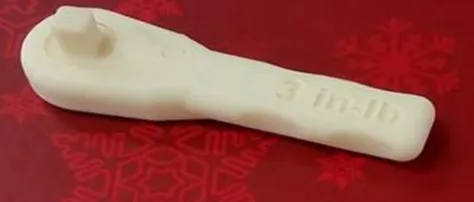
[image:3.612.129.470.208.381.2]NASA researchers have successfully printed 3D parts in space with the help of ‘Made in Space 3D printer’. Space station crew now can fabricate their tools with light but robust material. The first 3D printer in space uses extrusion additive manufacturing, which builds objects layer by layer out of Acrylonitrile Butadiene Styrene (ABS) plastic [16].
[image:3.612.186.423.609.710.2]Technology (IJRASET)
©IJRASET: All Rights are Reserved
1316
D. Defence
[image:4.612.188.427.129.296.2]Defence sector is employing 3D printing for making prototypes of parts rather than time consuming fabrication of tools which has speeded up the design validation process. Currently defence sector is using additive manufacturing to build satellite brackets, wearable sensors and weight sensitive products [12].
Fig. 4 ‘Liberator’ Gun [12]
E. Robotics
3D printed robots are low cost, fully customizable, light weight and sturdy. Hydrogel robot made by MIT has potential to manipulate human tissues and organs without damaging them. Currently its only limited for catching fishes without damaging them and release them after research on them. This robot can perform number of forceful tasks, including the ability to grab and release live fish as they swim [11].
Fig. 5 Application of robot in 3D printing [11]
II. CONCLUSION
In this paper we have focused, the importance of 3D printing, its working, different aspect of its technologies and application in various fields. In recent times 3D printing technologies have gained significance in various fields like Robotics, Defence and Aerospace.
REFERENCES
[1] Parth R. Kantaria, Shyam. A. Pankhaniya2,” Implementation of 3D printer”, International Journal for Technological Research in Engineering Volume 1, Issue 9, May-2014.
[2] 1Siddharth Bhandari, 2B Regina,”3D printing and its applications”, International Journal of Computer Science and Information Technology Research ISSN 2348-120X (online) Vol. 2, Issue 2, pp: (378-380), Month: April-June 2014.
[3] W. M. Keck” 3D Printing for the Rapid Prototyping of Structural Electronics”, IEEE Access March 13, 2014, date of current version April 7, 2014. Digital Object Identifier 10.1109/ACCESS.2014.2311810
[4] Alvaro Goyanes,Asma B.M.Buanz,Abdul W.Basit,Simon Gaisford,” Fused-filament 3D printing for fabrication of tablets”, International journal of pharmaceutics 2014
[5] Vivek srinivasan1, jarrod bassan2, “3D Printing and the Future of Manufacturing”, CSC LEADING EDGE FORUM, 2012.
[image:4.612.125.490.368.508.2]Technology (IJRASET)
©IJRASET: All Rights are Reserved
1317
[7] Walters,Huson, ,Parraman,Stanić.-“3D printing in colour: Technical evaluation and creative Applications”, Impact 6 international printmaking conference,Bristol,September 2009.
[8] S. Rahmati and P. Dickens, ‘‘Rapid tooling analysis of stereo lithography injection mold tooling,’’ Int. J. Mach. Tools Manuf., vol. 47, no. 5, pp. 740–747, Apr. 2007.
[9] C. Chua, K. Hong, and S. Ho, ‘‘Rapid tooling technology. Part 1. A comparative study,’’ Int. J. Adv. Manuf. Technol., vol. 15, no. 8, pp. 604–608, 1999 [10] D.Pham and R.Gault, ‘‘A comparison of rapid prototyping technologies,’’ Int. J. Mach. Tools Manuf., vol. 38, nos. 10–11, pp. 1257–1287, 1998 [11] http://news.mit.edu/2017/transparent-gel-robots-catch-release-fish-0201
[12] https://www.engadget.com/2013/05/06/the-liberator-the-first-completely-3d-printed-gun-gets-fired/ [13] http://www.idga.org/military-equipment-platforms/articles/top-ten-uses-for-additive-manufacturing-for-defe [14] http://www.defenseone.com/technology/2014/09/defense-industry-expanding-use-3d-printing/95396/ [15] https://en.m.wikipedia.org/wiki/3D_printing
[16] https://www.nasa.gov/mission_pages/station/research/news/3Dratchet_wrench
[17] http://3dprintingfromscratch.com/common/types-of-3d-printers-or-3d-printing-technologies-overview/
[18] Sean V Murphy, Anthony Atala, “3D bio printing of tissues and organs”, Article in Biotechnology, August 2014, DOI: 10.1038/nbt.2958
BIOGRAPHIES
Mr. Vishal Vijay Chahare received his Master of Engineering [CAD/CAM] in 2015 degree from Babasaheb Naik College of Engineering Pusad, Maharashtra, India. Presently he is working as Asst Prof in Deogiri Institute of Engg & Mgmt Studies Aurangabad. His research interests are automobile industry.
Email Id: [email protected]
Sourabh Vijay Patil Bachelor of Engineering [Mechanical] from Deogiri Institute of Engineering and Management studies presently pursuing final year, Maharashtra, India.
Email Id: [email protected]
Saurabh Maruti Patil Bachelor of Engineering [Mechanical] from Deogiri Institute of Engineering and Management studies presently pursuing final year, Maharashtra, India.
![Fig. 1 Digital Light Processing (DLP) [17]](https://thumb-us.123doks.com/thumbv2/123dok_us/8575956.859396/2.612.143.411.503.699/fig-digital-light-processing-dlp.webp)
![Fig. 4 ‘Liberator’ Gun [12]](https://thumb-us.123doks.com/thumbv2/123dok_us/8575956.859396/4.612.125.490.368.508/fig-liberator-gun.webp)
