5
IV
April 2017
www.ijraset.com Volume 5 Issue IV, April 2017 IC Value: 45.98 ISSN: 2321-9653
International Journal for Research in Applied Science & Engineering
Technology (IJRASET)
©IJRASET: All Rights are Reserved
1568
Advanced Airport Baggage System
Mamta M. Panchariya
Electronics & Telecommunication, YCCE, Nagpur
Abstract: The main aim of the project is to design an “Advanced Airport Baggage System ” for aiding airports in managing the baggage handling system more efficiently. Current baggage transport is labor intensive and bears the risk of damaging or losing bags. Our system is designed by using 8051 microcontroller. Our system contains RF transmitter receiver sensors, RFID, GSM module and motors for controlling movement. The RFID is not only a feasible, novel, and cost-effective candidate for daily object identification but it is also considered as a significant tool to provide traceable visibility along different stages of the aviation supply chain. In the air baggage handling application, the RFID tags are used to enhance the ability for baggage tracking, dispatching and conveyance so as to improve the management efficiency and the users’ satisfaction. The three major parts of the project are the box system, the basket system and the airport baggage handling system. The main concept lies behind in increasing the involvement of the passenger in the process of baggage handling.
Keywords: Airport system, basket system and box system.
I. INTRODUCTION
Every year more than 3-billion bags are checked in at airports around the world – a staggering number that will continue to rise sharply over the next two decades. Yet through the smart use of technology, only a small percentage of bags are mishandled each year. According to the SITA Baggage Report 2016, the rate of mishandled bags was 6.5 bags per thousand passengers in 2015, down 10.5% from the previous year, and down 65.3% cumulatively from 2007. However, no passenger wants to arrive at their destination without their personal belongings. And for airports and airlines each mishandled bag is an additional cost. Therefore the pressure remains on the industry to do even better, by further reducing the number of mishandled baggage while accommodating more bags every year Baggage handling is a complex area of airport operations. On the surface it seems that taking a bag from a passenger at his point of departure and returning it to him at their destination should be a very easy task. However, there is much more being undertaken behind the scenes, such as:
A. Identifying the bag and its flight
B. Moving the bag through security
C. Storing the bag until the flight is ready to be loaded
D. Sorting the bag in the system to the correct loading location
E. Ensuring the bag is on the right flight
F. Ensuring that the passenger and bag are on the same flight in certain jurisdictions. All the above steps are repeated for as many legs as the passenger flies, and at the end of the journey the bag has to be unloaded and placed on the right baggage reclaim carousel
II. BACKGROUND
What was to be the world’s largest automated airport baggage handling system, became a classic story in how technology projects can go wrong. Faced with the need for greater airport capacity, the city of Denver elected to construct a new state of the art airport that would cement Denver’s position as an air transportation hub. Covering a land area of 140 Km2 , the airport was to be the largest in the United States and have the capacity to handle more than 50m passengers annually [1,2]. The airport's baggage handling system was a critical component in the plan. By automating baggage handling, aircraft turnaround time was to be reduced to as little as 30 minutes [1]. Faster turnaround meant more efficient operations and was a cornerstone of the airports competitive advantage.
III. METHODOLOGIES
Technology (IJRASET)
©IJRASET: All Rights are Reserved
1569
originally planned. Rather than integrating all three concourses into a single system, the system supported outbound flights on a single concourse only. All other baggage was handled by a manual tug and trolley system that was hurriedly built when it became clear the automated system would never meet its goals. Even the portion of the system that was implemented never functioned properly and in Aug 2005 the system was scrapped altogether. The $1M monthly cost to maintain the system was outweighing the value the remaining parts of the system offered and using a manual system actually cut costs. This chapter reviews the work of previous research related to airport benchmarking. Airport benchmarking can be utilized to assess the performance within and across airports and to estimate productivity and the change of efficiency over time. A number of quantitative techniques have emerged that assess the productivity and efficiency of decision making units. This study uses two quantitative approaches to assess the efficiency and ranking of Indian airports. This chapter presents the review of the literature available on airport benchmarking. A systematic review is done to understand the methodological rigor, identify the gaps and evolve appropriate
frameworks of benchmarking in airport industry. The productivity of an airport can be simply calculated as the ratio of outputs per inputs. The division of one output by one input (e.g labor productivity: passengers per employee) gives an indication of the partial productivity and aggregating all factors results in an overall measure given by the total factor productivity. Technical efficiency defines the comparison of the observed outputs (inputs) to its optimal values while holding the inputs (outputs) constant. Farrell (1957) was the first author to empirically measure the technical efficiency non-parametrically. His work was then taken up by Charnes et al (1978) and developed Data Envelopment Analysis (DEA) to assess the technical efficiency. Then a number of quantitative techniques have emerged that assess the productivity and efficiency of decision making units.
www.ijraset.com Volume 5 Issue IV, April 2017 IC Value: 45.98 ISSN: 2321-9653
International Journal for Research in Applied Science & Engineering
Technology (IJRASET)
©IJRASET: All Rights are Reserved
1570
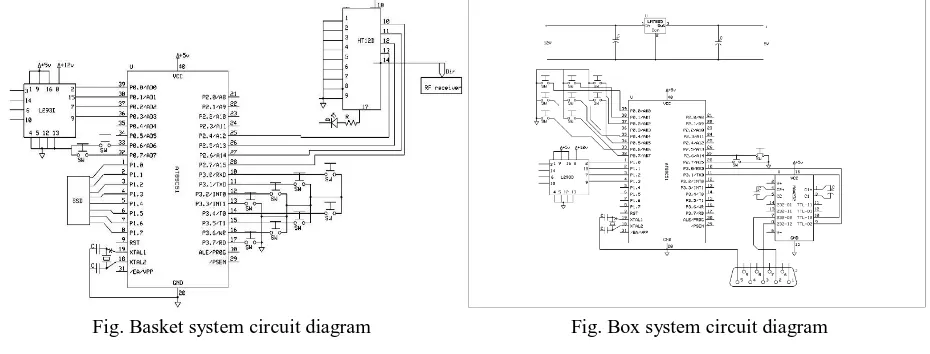
[image:4.612.76.541.93.270.2]B. Circuit Diagram
Fig. Basket system circuit diagram Fig. Box system circuit diagram
IV. FUTURE SCOPE
The ’Advanced Airport Baggage System’ project envisions future improvements that would make the system more efficient. One such improvement is the use of RFIDs enabled tickets instead so that system complexity would reduce and make it more time efficient at the receiving end. This will be more comfortable for the user. We can add most useful feature in this project is by using GPS for the luggage carrying boxes so that accurate tracking is made possible before reaching the destination. Passenger information can be linked via some intelligent software while booking tickets.
V. SUMMARY
This is a project to enable the airport authorities to handle the baggage system with ease and safety. Our proposed system is optimized to perform actions include tracking of the luggage and ensuring its safety by keeping the mishandlings and thefts in check . key role of unique identity of luggage boxes and for efficient tracking is performed by GSM and RFID. RFID tags are used for labeling the boxes carrying luggage from the source to destination airport. With the usage of the GSM Module, we have ensured the passenger involvement in the process.. To make the system automated and flexible we have used the motor driver IC which is used to operate the locking system to change directions of conveyor belt at will.
VI. CONCLUSION
In this presentation, the operation and automation was overviewed for the sake of efficient handling and safety. There have been so many attempts to make the system more friendly and usable for the airport authorities and the final model is a good alternative for the current baggage handling system. Firstly, the “Advanced Airport Baggage System” was presented as one of the improved version of the current system keeping only the mishandling point of view but it turned out to be much more important for the air transport sector such as the removal of usage of bag tags and barcodes on the luggage thus making system more reliable.