Copyright © 2017, Scholarly Research Journal for Interdisciplinary Studies
A STUDY OF PERCEIVED PARENTAL ENCOURAGEMENT OF HIGH SCHOOL
STUDENTS IN RELATION TO LOCALITY, CASTE AND PARENTAL INCOME
Geeta Rani, Ph. D.
Assistant Professor, M. D. College of Education, Abohar (Punjab).
Parents play an important role in all round development of the child. Parental encouragement plays a major role in determining the attitude, behaviour and self-image of the child. Adolescence is a period of dramatic change. Parental support and encouragement is critical in adolescence as anxiety and resulting problems related to adolescence may lead to depressed mood, lowered self esteem and impaired family and peer relationships. 200 students (100 rural and 100 urban) of 14-16 year (class 9th and 10th grade) from Government schools of Kurukshetra District of Haryana were included in sample. Parental Encouragement scale (PES) developed by Dr. R.R.Sharma was used to collect the data. t-test and ANOVA was used to analyse the data. Findings indicated that high school students do not differ significantly in getting parental encouragement in terms of locality, caste and parental income.
Parents play important role in the family. It is the responsibility of parents to imbibe
good values in children. Parents play an important role in all round development of the child.
Parental encouragement also contributes a lot in the development of the child and purgation
of his inherent qualities (Varshney 2007).The emotional bondage and the intimacy between
parents and their children give a sense of security to the children and helps in the
development of a positive concept of self. Parental encouragement plays a major role in
determining the attitude, behaviour and self-image of the child. Rossi (1965) defined parental
encouragement as “when father and mother approve or disapprove of any activity related to
education or revoke any hurdle felt by the student in the process, or guide him the right or
wrong- this entire spectrum activity comes in the purview of parental encouragement”.
Therefore, it is a treatment originating from parents towards the child with a view to
enhancing the possibilities of future occurrence of good behavior by care, concern, approval
and guidance.
Adolescence is a period of dramatic change that often sets the stage for losses in
positive feelings of self-worth or self-esteem. Adolescents often lack in academic motivation
and performance, as their attention is divided among a lot many things like creating an
identity for themselves, peer group, heterogeneous relations, fashion and incessant
Scholarly Research Journal's is licensed Based on a work at www.srjis.com
Copyright © 2017, Scholarly Research Journal for Interdisciplinary Studies
environment etc. Relationships with parents, peers and teachers are usually more positive
with a healthy dose of self-esteem. In adolescence, school/college experience plays and
support from parents have an important role in the development of self-perception and can
have powerful and long lasting effect on the self-esteem of the adolescents. Proper parental
encouragement if provided will help the adolescent to face lesser academic anxiety and
perform better in exams. On the other hand, if parents excessively pressurize the adolescents
for getting good marks, the adolescent may feel depressed and suffer with anxiety. Here
parental support and encouragement is critical as anxiety and resulting problems may lead to
depressed mood, lowered self esteem and impaired family and peer relationships. Mattanah
et al. (2011) also said that close and supportive relationships of adolescents with their parents
are important source of positive self-esteem. Parental support has been found to predict
global self-esteem similarly across both the genders (Rueger et al., 2010). So keeping in view
the above facts, the present investigation was undertaken with the following objectives:
OBJECTIVES
The objectives of the present study were:
1. To study the significance of difference between perceived parental encouragement of
rural and urban high school students.
2. To study the significance of difference between perceived parental encouragement of
high school students coming from general, backward class and scheduled caste
families.
3. To study the significance of difference between perceived parental encouragement of
high school students coming from families having high, middle and low parental
income.
HYPOTHESES
1. There will be no significant difference between perceived parental encouragement of
rural and urban high school students.
2. There will be no significant difference between perceived parental encouragement of
high school students coming from general, backward class and scheduled caste
families.
3. There will be no significant difference between perceived parental encouragement of
high school students coming from families having high, middle and low parental
Copyright © 2017, Scholarly Research Journal for Interdisciplinary Studies RESEARCH METHOD:
SAMPLE
The study was conducted in Kurukshetra district of Haryana state where two Government
high Schools from rural area and two from urban area were selected. From each of the four
selected schools of rural and urban area of Kurukshetra, 200 students (100 rural and 100
urban) of 14-16 year (class 9th and 10th grade) were included in final sample.
TOOLS USED
Selected adolescents were assessed to know their level of parental encouragement by using
Parental Encouragement Scale (PES) by Dr. R.R.Sharma (1988). Data of general, backward
class and scheduled caste information were collected from school records. Data of parental
income were collected from the students.
PROCEDURE
First of all permission was taken from the principals of the school for the collection of
data. The purpose of the study was explained to the participants and consent to participate
was obtained from all the participants involved. All the participants were administered the
Parental Encouragement Scale in an organised classroom setting.
Different Statistical techniques were used to analyse the data. t-test and ANOVA
were used to know the significance of difference between perceived parental encouragement
of high school students coming from different groups.
RESULTS
Table1. Difference between perceived parental encouragement of rural and urban high
school students
Sr. No. Locality N Mean SD df t-value Level of
significance
1 Urban 100 64.00 9.38 198 1.78 Not
significant
2 Rural 100 66.11 7.18
Table shows that no significant difference exists in the perceived parental encouragement of
high school students of urban and rural locality. t-value (1.78) is less than the t-critical value
at 0.05 level and 198 degree of freedom. Though rural students were found to have more
parental encouragement (M=66.11) than urban students, the difference is not statistically
significant. Therefore null hypothesis that there will be no significant difference between
Copyright © 2017, Scholarly Research Journal for Interdisciplinary Studies
Table 2. Difference between perceived parental encouragement of high school students
coming from general, backward class and scheduled caste families.
Sr. No. Sources
of
Variation
df Sum of
squares
Mean squares
F Level of
Significance
1 Between
the groups
2 390.47 154.73 2.22 Not
significant
2 Within the
groups
197 13748.92 69.79
3. Total 199 14058.39
Table 2 shows that the calculated value of F=2.22 is not significant at df 2 and 197.
Therefore it can be concluded that general category, backward class and scheduled caste high
school students do not differ significantly in terms of perceived parental encouragement.
Hence second null hypothesis is accepted.
Table 3. Difference between perceived parental encouragement of high school students
coming from families having high, middle and low parental income
Sr. No. Sources
of
variation
df Sum of
Squares
Mean squares
F Level of
Significance
1 Between
the groups
2 335.38 167.69 2.41 Not
Significant
2 Within
the groups
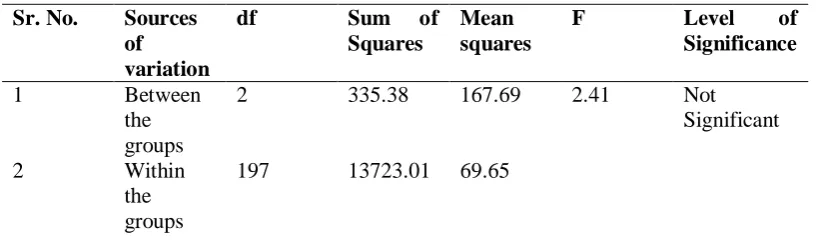
[image:4.595.91.510.129.236.2]197 13723.01 69.65
Table 3 shows that F value of 2.41 is not significant at df 2 and 197. So it is concluded that
difference between perceived parental encouragement of high school students coming from
families having high, middle and low parental income is not statistically significant.
Therefore null hypothesis 3 is accepted.
IMPLICATIONS
The findings can give an insight to teachers about the level of parental encouragement
which the students are getting from their parents. Keeping in view the findings of the study
the teachers can discuss with parents the strategies to increase parental encouragement for
development of students. Guidance and counselling programmes could be planned for
parents by different agencies (schools, NGOs, welfare department) to emphasize the role of
positive parental
encouragement. Better parental encouragement can contribute to better learning and better
[image:4.595.95.506.363.489.2]Copyright © 2017, Scholarly Research Journal for Interdisciplinary Studies REFERENCES
Agarwal K and Pande S K (1997). Influence of parental encouragement on educational achievement of students, Journal of Psychology and Education (28), 59-61.
Malik S and Chawla P (2009). A study of parental encouragement and achievement motivation of secondary school. Gujarat Journal of Psychology and Education (5), 33-35.
Mattanah, J..F., Lopez, F.G. and Govern, J.M. (2011). The contributions of parental attachment bonds to college student development and adjustment: A meta-analytic review, Journal of Counseling and Psychology (58), 565–596.
Mishra U (2004). Effect of parental encouragement on self-concept of higher secondary girls, Indian Journal of Psychology and Education 35, 81-83.
Priya, K. (2010). Impact of Parental Encouragement on Academic Performance and Academic Anxiety of Rural Adolescents (Unpublished Masters’ thesis), Punjab Agriculture University, Ludhiana, Punjab.
Rueger, S.Y., Malecki, C.K. and Demaray, M.K. (2010). Relationship between multiple sources of perceived social support and psychological and academic adjustment in early adolescence: Comparisons across gender, Journal of Youth & Adolescence (39), 47–61.
Saikia L R and Kalita S (2008). Parental encouragement and achievement motivation of Assamese English medium students, Psycho Lingua (38), 192-94.
Sharma, R.R. (1988). Parental Encouragement Scale. National Psychological Corporation. Agra (U.P.) INDIA.