PRO-ENVIRONMENTAL BEHAVIOR AMONG COLLEGE STUDENTS
Dr. Anuradha Sindhwani Associate Professor,
K.M. College of Education, Bhiwani (Haryana)
ABSTRACT
Environment sustains us all. The relationship between the environment and human beings has
reached at a critical stage. A point has been reached in history when we must shape our action
throughout the world with a more prudent care for their environmental consequences. It is
therefore, desirable to achieve wider societal change to catalyze, support and reinforce
environmental behaviour. The research objectives of the study are to find level of
pro-environmental behavior of college students and to study effect of gender, category, locality and
medium of education on the pro-environmental behavior of the college students. The present
study was carried out on 352 college students of Haryana. For the collection of data, the tool
used has been developed by the researcher herself. Significant differences have been found
among Pro-environmental behavior of the students in relation to their gender and category. The
study reveals that locality and medium of education has no significant effect on the behavior of
the students. Education is a powerful medium for changing our behaviour. The agencies of
education, particularly colleges and family should motivate the students to realize the nature of
environmental problems and ensure their participation in conservation of the environment. International Research Journal of Human Resources and Social Sciences
ISSN(O): (2349-4085) ISSN(P): (2394-4218) Impact Factor- 5.414, Volume 5, Issue 01, January 2018 Website- www.aarf.asia, Email : [email protected] , [email protected]
INTRODUCTION
The world scenario has undergone great upheaval during the last fifty years due to technological
advancement, rapid industrialization, urbanization, developmental projects and unprecedented
growth in population. This has resulted in irrecoverable destruction of natural resources affecting
biosphere‘s environmental quality such as soil erosion, freshwater availability, food production,
energy utilization, pollution loading, deforestation, desertification, global warming, ozone
depletion, acid rain etc. Nature is threatening to the mankind in the form of drought, floods,
earthquake, landslides, epidemics, glacier melting, super cyclones etc. Environmental problems
have reached up to a level where almost everyone is conscious of them. This raising
consciousness has also given rise to a widespread responsiveness to the idea for the need to do
something about it (Chhokar-2000). There is a great need that the society should not only be
aware of the present deteriorating environmental conditions but it should also feel the
responsibility to save the environment. Education is a powerful medium for changing our
behaviour. When students learn about the functioning of eco-system and about environmental
action strategies that contribute to their maintenance they develop more environmentally
responsible behavior (Marion & Mary – 1994).
The concerns have been reflected at different levels particularly in University Grants
Commission, and the Ministry of Human Resource Development. UGC has made it compulsory
to all universities and colleges in India to introduce a compulsory paper of environmental studies
at undergraduate level as per the directives of the Hon‘ble Supreme Court of India (UGC DO
No. F.13-1/2000(EA/ENV/COS-1) 24 July 2002). Though at present a fair amount of
information about the environment is being given through textbooks but the question is: whether
or not it has succeeded to generate a concern that may lead to effective action for conserving and
improving the environment? To what extent the youth participate in Solving Environmental
Problems? What is the status of Pro-environmental behavior among college students? Keeping in
view, the discussion made in the preceding paragraphs, the researcher set forth the following
objectives of the study:
(i) To assess the present state of Pro-environmental behavior among college students.
(iii) To recommend measures to combat the magnifying threat to environment.
Methodology
The paper presents a survey about the Pro-environmental behavior of college students.
The survey is explorative and diagnostic. Knowing exactly how students perceive of
environmental problems is an important first step. The identification of obstacles in effective
implementation of environmental conservation programmes will permit to take specific actions
for effective implementation of the conservation programmes. Knowing exactly how students
feel and participate in environmental management programmes will help in establishing support
structures and strategic development of environment friendly behaviour among the citizens of
our country.
Sample and Tool Used
The study has been carried out on a sample of 500 college students studying in various
colleges of Haryana. Cluster random sampling technique was employed to for the collection of
data. The tool used was been developed by the researcher herself. It consists of 36 statements
spread over seven dimensions related to pro-environmental behavior of students:
(i) Prevention of Pollution
(ii) Conservation of Natural Resources
(iii) Energy Conservation
(iv) Conservation of Wild-life
(v) Use of Eco-friendly products
(vi) Management of Wastes
(vii) Administrative Intervention
Five response categories have been provided for responding to each statement such as
always, frequently, sometimes, rarely and never. The range of scores varies from 36 to 180. The
test was given to 500 colleges students in informal setting out of which only 322 students
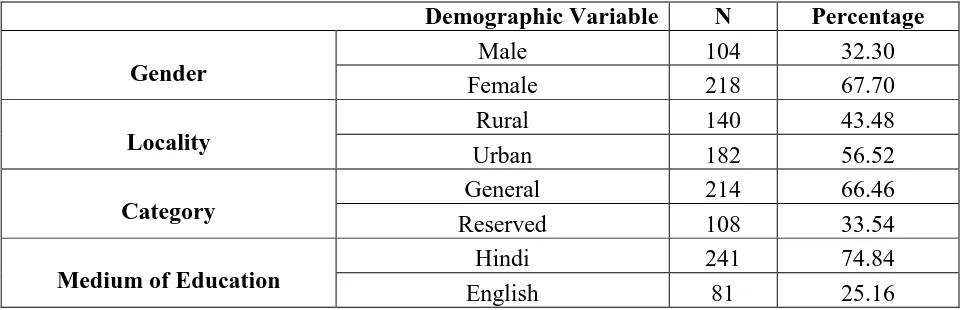
Table 1: Descriptive Statistics of Sample
Demographic Variable N Percentage
Gender Male 104 32.30
Female 218 67.70
Locality
Rural 140 43.48
Urban 182 56.52
Category General 214 66.46
Reserved 108 33.54
Medium of Education
Hindi 241 74.84
English 81 25.16
Data Analysis
Percentage, Mean, Standard Deviation and t-test were employed to analyze the data.
Results
Overall Status of Pro-environmental Behavior of College Students
On the basis of evaluation of students‘ responses and scores obtained, they have been
categorized in five groups. Group I includes students scoring 36-63 (Not Active), Group II
64-92, Group III 93-121, Group IV 121-150 and Group V 151-180 (Highly Pro-active)
environmental behaviour. The analysis of data reveals that out of 322 students studied, none of
them is placed in Group 1; 92 are in Group II; most of them i.e. 153 are placed in Group III; 66
are in Group IV and only 11 of them are classified in Group V. In other words, out of 322
students, only 23.9% students‘ exhibit high pro-active behavior with respect to environment and
its management; 47.5% show moderate pro-active behaviour while 28.6% students do not behave
in a pro-active manner with respect to environment.
Status of Pro-environmental Behavior by Gender
The results pertaining to status of pro-environmental behavior of college students with
Table 2: Mean, S.D. and t-value of Male and Female college students On Pro-environmental Behavior
Groups N Mean S.D. t-value
Male 104 101.24 8.7
3.28 S
Female 218 115.56 9.6
A study of table 2 reveals that Out of 322 students, 218 girls and 104 boys have been subjected
to assessment for their pro-active environment behavior reveals that the mean and S.D. value for
the girls is 115.56 and 9.6 whereas the same for the boys has been computed 101.24 and 8.7. The
differences in mean scores indicate significant differences in the pro-environmental behavior of
girls and boys. The scores when compared with t-test are significant at 0.01 level of significance.
This means girls exhibit more pro-active environmental behavior than boys. Therefore, it can be
concluded that gender affects pro-environmental behavior of students.
Status of Pro-environmental Behavior by locality
The results pertaining to status of pro-environmental behavior of college students with respect to
their place of residence have been presented in table 3.
Table 3: Mean, S.D. and t-value of Rural and Urban college students On Pro-environmental Behavior
Groups N Mean S.D. t-value
Rural 140 112.62 8.13
0.72 NS
Urban 180 114.18 10.2
The mean scores of urban and rural students have been found to be 114.18 and 112.62 with S.D.
10.2 and 8.13 respectively. No significant difference, thus, appeared between the
Pro-environmental behavior of urban and rural students. The calculated value between these two
groups 0.72 being less than the table value of ‗t‘ at 0.05 level of significance also shows little
difference between them. Though the students residing in urban areas have a little edge over their
counterparts residing in rural areas, there is no remarkable effect of the locality on the
Status of Pro-environmental Behavior by Category
The following table presents results pertaining to status of pro-environmental behavior of
college students with respect to their category.
Table 4: Mean, S.D. and t-value of General and Reserved category students On Pro-environmental Behavior
Groups N Mean S.D. t-value
General 214 113.46 8.7
3.02 S
Reserved 108 103.34 9.5
Table 4 reveals that t-value for difference in mean scores of general and reserved categories of
students is significant at 0.01 level of significance. The mean and S.D. Values for students
belonging to General Category are 113.46 and 8.7 respectively whereas for those pertaining to
the Reserved Category, it was counted to be 103.34 and 9.5 in the same order. When results are
compared in the context of means scores it is found that the mean scores of pro-environmental
behavior of students belonging to general category are higher by 10.12 than that of their counter
parts belonging to reserved category. Therefore, it can be concluded that the students belonging
to General Category exhibit better pro-active environment behavior than their counterparts.
Status of Pro-environmental Behavior by Medium of Education
The results pertaining to status of pro-environmental behavior of college students with
respect to their medium of education have been presented in table 5.
Table 5: Mean, S.D. and t-value of Hindi and English Medium students On Pro-environmental Behavior
Groups N Mean S.D. t-value
Hindi Medium 241 107.48 9.2
0.63 NS
English Medium 81 109.32 8.1
Table 5 reveals that the mean and S.D. value for the students have English medium background
has been calculated as 109.32 and 8.1 respectively whereas the same for the students coming
from Hindi medium was found to be 107.48 and 9.2 in the same order. It was found that there is
education of the students does not play any role in their pro-active behavior with respect to
environment conservation and management. However, apparently students from English medium
have an edge over those who are studying in Hindi medium.
Discussion
The results obtained suggests that girl students have better pro-active environmental
behavior than the boys; students of general category have better pro-active environmental
behavior than the reserved category; while there are marginal difference between students
belonging to rural or urban setting and studying in Hindi or English medium. The study reveals
that the students studying in different colleges in Haryana exhibit intermediate pro-active
environmental behavior. It could be prescribed due to various reasons which are as follows:
i. The problems of Environmental Education are universal in nature and directly related to
the complex problems of development process, persistent poverty, growing population
and environmental degradation.
ii. Environmental themes are widely integrated into formal education courses. Yet we do not
know how effective they are in real-life situations, or if formal education is the best way
to achieve a sustainable society, a society that meets the needs of the present generation
without compromising the needs of future generations. Research is necessary to provide
the answers.
iii. Numerous NGOs and other organizations are involved in the field of Environmental
Education. Any organization can boast that it is successfully undertaking Environmental
Education activities. Nevertheless, there is also duplication of activities and competition
among different organizations. When this is so, then it is necessary to determine their
status and synergize their strengths in promoting Environmental Education in the region.
iv. Finally, merely raising awareness is not enough to promote Environmental Education.
Environmental Education must go beyond raising of awareness. It must inspire interest
and encourage people to pilot-test new ideas and then, based on their evaluation, adopt
them as integral parts of their lives. For this, more projects and actions are required to
Conclusion
Environmental Education has obtained momentum but has not been able to make the quantum
leap towards preventing, stopping and reversing environmental degradation. In other words,
there is a gap between theory and practice of environmental education being imparted in our
educational institutions. Change in mental attitude, way of thinking, living styles can contribute
in shaping behaviour in an eco-friendly direction. The researcher opines that the students need to
be given intensive training in environmental education so that they could acquire, sustain and
develop relevant skills to impart the same to their students for making them aware of, and
concerned about the environment and its associated problems, besides having the knowledge,
awareness, skills, attitude, values, motivations and commitment to work individually and
collectively for the restoration, conservation and improvement of environment with zeal and
enthusiasm.
References
Chhokar, K.B. (2000) ―Sharing Concerns in Environmental Education‖. University News
Vol. 38 (26), 1-3.
Efrat Eilam & Trop Tamar. (2012), ‗Environmental Attitudes and Environmental Behavior—Which Is the Horse and Which Is the Cart?‘Sustainability Vol. 4, 2210-2246.
Ohler, A.M.& Billger, S.M.(2014) Does environmental concern change the tragedy of the
commons? Factors affecting energy saving behaviors and electricity usage. Ecological
Economics, Vol. 107, 1-12.
Sindhwani, Anuradha & Sharma, Hemant Lata (2007) ―Study of Responsible
Environmental Behaviour among Prospective Teachers in relation to Gender and
Category‖. Maharashi Dayanand University Research Journal, Vol.6, No. 1.
Siddiqui, Faisal Z (2006) ―Analysis of Policies and Strategies for Promotion of