Robinson, L and O’Hara, JP and Mathers, JC and Stevenson, E and Siervo, M (2018) Effects Of Inorganic Nitrate And Nitrite Consumption On Cognitive Function And Cerebral Blood Flow: A Systematic Review And Meta-Analysis Of Randomised Clinical Trials. Critical Reviews in Food Sci-ence and Nutrition. pp. 1-31. ISSN 1549-7852 DOI: https://doi.org/10.1080/10408398.2018.1453779 Link to Leeds Beckett Repository record:
http://eprints.leedsbeckett.ac.uk/4903/
Document Version: Article
This is an Accepted Manuscript of an article published by Taylor & Francis in Crit-ical Reviews in Food Science and Nutrition on 10 July 2018, available online: http://www.tandfonline.com/10.1080/10408398.2018.1453779
The aim of the Leeds Beckett Repository is to provide open access to our research, as required by funder policies and permitted by publishers and copyright law.
The Leeds Beckett repository holds a wide range of publications, each of which has been checked for copyright and the relevant embargo period has been applied by the Research Services team.
We operate on a standard take-down policy. If you are the author or publisher of an output and you would like it removed from the repository, please contact us and we will investigate on a case-by-case basis.
Full Terms & Conditions of access and use can be found at
http://www.tandfonline.com/action/journalInformation?journalCode=bfsn20
ISSN: 1040-8398 (Print) 1549-7852 (Online) Journal homepage: http://www.tandfonline.com/loi/bfsn20
Effects Of Inorganic Nitrate And Nitrite
Consumption On Cognitive Function And Cerebral
Blood Flow: A Systematic Review And
Meta-Analysis Of Randomised Clinical Trials
Tom Clifford, Abrar Babateen, Oliver M Shannon, Tess Capper, Ammar Ashor, Blossom Stephan, Louise Robinson, John P O'Hara, John C. Mathers, Emma Stevenson & Mario Siervo
To cite this article: Tom Clifford, Abrar Babateen, Oliver M Shannon, Tess Capper, Ammar Ashor, Blossom Stephan, Louise Robinson, John P O'Hara, John C. Mathers, Emma Stevenson & Mario Siervo (2018): Effects Of Inorganic Nitrate And Nitrite Consumption On Cognitive Function And Cerebral Blood Flow: A Systematic Review And Meta-Analysis Of Randomised Clinical Trials, Critical Reviews in Food Science and Nutrition, DOI: 10.1080/10408398.2018.1453779
To link to this article: https://doi.org/10.1080/10408398.2018.1453779
View supplementary material Accepted author version posted online: 04 Apr 2018.
Submit your article to this journal Article views: 48
Publisher: Taylor & Francis
Journal: Critical Reviews in Food Science and Nutrition
DOI: https://doi.org/10.1080/10408398.2018.1453779
TITLE: EFFECTS OF INORGANIC NITRATE AND NITRITE CONSUMPTION ON COGNITIVE FUNCTION AND CEREBRAL BLOOD FLOW: A SYSTEMATIC REVIEW AND META-ANALYSIS OF RANDOMISED CLINICAL TRIALS
Authors: Tom Clifford1#, Abrar Babateen1,2#, Oliver M Shannon3, Tess Capper1, Ammar Ashor1,4, Blossom Stephan5, Louise Robinson5, John P O’Hara3, John C. Mathers1, Emma Stevenson1 and Mario Siervo1
1
Human Nutrition Research Centre, Institute of Cellular Medicine, Newcastle University, William Leech Building, Newcastle on Tyne, NE2 4HH, UK
2
Faculty of Applied Medical Sciences, Clinical Nutrition Department, Umm Al-Qura University, Makkah, Saudi Arabia
3
ResearchInstitute for Sport, Physical Activity, and Leisure, Leeds Beckett University, Leeds, UK
4
College of Medicine, University of Al-Mustansiriyah, Baghdad, Iraq
5
Institute of Health and Society, Newcastle University, Newcastle upon Tyne, UK
Running title: Dietary nitrate, cognition and cerebral blood flow: A meta-analysis
Keywords: Inorganic Nitrate, Nitrite, Cognitive Function, Nitric Oxide, cerebral blood flow *Corresponding author: Mario Siervo, Human Nutrition Research Centre, Institute of Cellular Medicine, Newcastle University, William Leech Building, Newcastle on Tyne, NE2 4HH, UK. Email: [email protected]. Tel: 0191 248 1140
#Shared First Name
Abstract
We conducted a systematic review and meta-analysis of randomized clinical trials examining the
effect of inorganic nitrate or nitrite supplementation on cognitive function (CF) and cerebral
blood flow (CBF). Two databases (PubMed, Embase) were searched for articles from inception
until May 2017. Inclusion criteria were: randomized clinical trials; participants >18 years old;
trials comparing a nitrate/nitrite intervention with a control. Thirteen and nine trials were
included in the meta-analysis to assess CF and CBF, respectively. Random-effects models were
used and the effect size described as standardized mean differences (SMDs). A total of 297
participants (median of 23 per trial) were included for CF; 163 participants (median of 16 per
trial) were included for CBF. Nitrate/nitrite supplementation did not influence CF (SMD +0.06,
95% CI: -0.06, 0.18, P =0.32) or CBF under resting (SMD +0.14, 95% CI: -0.13, 0.41, P =0.31),
or stimulated conditions (SMD +0.23, 95% CI: -0.11, 0.56, P =0.19). The meta-regression
showed an inverse association between duration of the intervention and CBF (P =0.02) but no
influence of age, BMI or dose (P < 0.05). Nitrate and nitrite supplementation did not modify
CBF or CF. Further trials employing larger samples sizes and interventions with longer duration
Introduction
Cognitive impairment and dementia are global health challenges because of the costs associated
with management and treatment, severity of symptoms for the affected individual and impact on
patients’ families, carers and communities (Wortmann, 2012). Furthermore, the prevalence of
people diagnosed with dementia is rising at an alarming rate, with a recent report estimating that
by 2050 the total number of individuals living with dementia worldwide will increase from 47 to
131 million (Prince et al., 2016). Therefore, effective interventions to prevent cognitive decline
and dementia onset are a global research priority.
A major risk factor for cognitive decline is thought to be inadequate nitric oxide (NO)
availability (de la Torre & Stefano, 2000; Toda et al., 2009). NO is a free radical soluble
gasotransmitter with pleiotropic actions, of which several are integral to normal cognitive
function (CF), including regional blood flow, immune-surveillance, metabolic efficiency,
glucose homeostasis, and neurotransmission (Toda et al., 2009; Weitzberg & Lundberg, 2013).
NO availability is determined by the activity of NO synthases (NOS), which are widely
distributed across tissues in different isoforms (endothelial, inducible, neuronal) (Lundberg et al.,
becomes dysregulated resulting in chronic hypo-perfusion, neurodegeneration and impaired
cognitive ability (de la Torre & Stefano, 2000; Toda et al., 2009).
NO can also be produced by a distinct alternative pathway involving the conversion of nitrate
into nitrite and NO via a series of reducing reactions (Lundberg et al., 2008; Zweier et al., 1995).
Both nitrate and nitrite are present in a wide range of concentrations in a variety of foods with
the higher content found in green leafy vegetables, beetroot, or meat products that have had
nitrite salts added as preservatives (Lidder & Webb, 2013). In the past decade, it has emerged
that increasing nitrate and nitrite ingestion may improve vascular and metabolic outcomes via
increased generation of NO (Weitzberg & Lundberg, 2013). More recent evidence also indicates
potentially beneficial effects of both compounds, administered as ionic salts or nitrate-rich food
products, on cognition and brain metabolic and vascular health (Clifford et al., 2015; Gilchrist et
al., 2014; Justice et al., 2015; Presley et al., 2011; Wightman et al., 2015). Such effects could be
due to improved NO-mediated synaptic activity and/or as a consequence of increased cerebral
blood flow (CBF) and thus a better coupling of blood flow to metabolism (Presley et al., 2011;
Toda et al., 2009; Aamand et al., 2013).
Mechanistic support for the latter hypothesis in humans has been provided by Presley and
colleagues (2011), who observed that a diet rich in nitrate-containing foods (e.g., green leafy
vegetables) stimulated cerebral perfusion in the prefrontal cortex of elderly adults, the region of
the brain associated with executive function, working memory, and other processes reliant on
cognitive ability. However, subsequent studies measuring CBF, or directly measuring CF, after
inorganic nitrate or nitrite ingestion have produced mixed findings, possibly because of the small
size and diversity of study designs employed (Clifford et al., 2015; Kelly et al., 2013). Thus,
either nitrite salts or nitrate-rich foods is an effective strategy for increasing CBF and/or
mitigating cognitive deficits.
Consequently, we undertook a systematic review and meta-analysis of randomised clinical trials
(RCTs) examining the efficacy of inorganic nitrate and nitrite supplementation on CBF and CF
in adult participants with and without medical conditions. We set out to determine whether the
ingestion of nitrite-salts or nitrate-rich foods (i.e., beetroot, spinach, rocket, lettuce, cabbage;
Lidder & Webb, 2013) augments CBF and improves CF and to estimate effect sizes. We also
examined whether test conditions (e.g., exercise vs. rest), age, body mass index (BMI),
supplement dose, quality of the studies and intervention duration modified the effects of
inorganic nitrate or nitrite on CBF and CF. These results will help to inform whether nitrate or
nitrite supplementation holds promise as a relatively inexpensive strategy for augmenting CBF
and combatting cognitive decline.
Methods
The present systematic review was conducted according to the Cochrane guidelines and it is
reported according to PRISMA guidelines (Higgins & Green, 2011; Liberati et al., 2009). The
protocol of the systematic review is available on request.
Literature search: Two databases (PubMed, Embase) were searched for articles from inception
until May 2017. In addition, included reviews and eligible full text articles were searched
manually to identify other suitable articles to be included in the systematic review. The following
terms and keywords were entered and Boolean terms were used to increase sensitivity of the
search strategy: nitrate, nitrite, beetroot, rocket, cabbage, lettuce, spinach, green leafy vegetables,
vascular flow, perfusion. A summary of the specific search algorithms is reported in the Online
Supplementary Material (Box 1).
Study selection: Titles and abstracts were screened using pre-defined eligibility criteria in
accordance with the PICOS (population, intervention, comparator, outcome, study design)
framework (Table S1 of the Online Supplementary Material) before retrieval of the full-text
articles. The following inclusion criteria were used to assess the eligibility of articles for
inclusion in this systematic review: 1) randomised controlled trials (no exclusion criteria were
used for study design, or blinding); 2) trials recruiting adult participants (≥18 years) and no
exclusion criteria were applied in relation to participants’ health status; 3) trials based on nitrate
or nitrite supplementation were included if they provide information on the type of nitrate salt
(potassium or sodium), dose, formulation, frequency and route of administration. A list of .the
inclusion and exclusion criteria is provided in the Online Supplementary Material (Box 2). Trials
based on beet root juice supplementation or ingestion of nitrate-rich foods were included in the
analyses if they provided information on the frequency and amount of nitrate-containing food
provided; 4) trials reporting effects of nitrate or nitrite on global and domain-specific CF and
CBF measured by different techniques including magnetic resonance imaging (MRI), ultrasound
or near infrared spectroscopy (NIRS); 5) English-language restriction but not time restriction was
applied in searching the databases; 6) Full text papers and abstracts were included (if they
contained sufficient information to complete qualitative and quantitative analysis). Two
investigators (TC, OS) independently evaluated the titles and abstracts to check eligibility for
inclusion. If the reviewers agreed, each article was either excluded or moved to the next stage
(full-text). If agreement was not achieved, the article was moved for evaluation after retrieval of
systematic review. Disagreements were discussed with a third reviewer (MS) and resolved by
consensus.
Data extraction: Relevant information was extracted and tabulated separately for CF and CBF.
If information was not available from the full text, authors were contacted to obtain the relevant
data.
Cognitive function: The following information was extracted independently by two
investigators (AB, TC) from eligible articles: 1) authors and year of publication; 2) study
characteristics (design, sample size); 3) participant characteristics (age, male/female ratio, health
status and baseline values for BMI; 4) route, dose and duration of inorganic nitrate and nitrite
supplementation; and 5) cognitive tests and exercise condition. Any disagreements in data
extraction were resolved through discussion until consensus was reached.
Cerebral blood flow: Two independent reviewers (AB, MS) extracted relevant information
from the eligible articles: 1) authors and year of publication; 2) study characteristics (design,
sample size); 3) participant characteristics (age, male/female ratio, health status and baseline
values for BMI, and 4) route, dose and duration of inorganic nitrate/ nitrite supplementation 5)
method to assess cerebral blood flow (CBF) and testing conditions (i.e., exercise, mental
stimulation). Any disagreements in data extraction were resolved through discussion until
consensus was reached.
Quality Assessment: The modified Jadad score was applied to evaluate the risk of bias of the
trials. Specific questions linked to randomisation procedure, blinding and description of dropout
to 5; a score less than 3 indicates a low quality trial where a score greater or equal to 3 indicates
high quality trial.
Statistical Analysis
The primary outcomes of the meta-analysis were changes in CF and CBF after inorganic nitrate
or nitrite supplementation. Random effect models were applied to address the heterogeneity
related to differences in study design and application of different and concomitant methods for
the evaluation of CF and CBF. In addition, some trials used several cognitive tests to assess
domain-specific changes in CF and CBF, as shown in Table 1 and 2. This may lead to reduced
independence of measurements and to consequential over-estimation of the effect size derived
from the meta-analysis. These methodological aspects were taken into account into the analysis
by averaging the standardised effect sizes for each trial with the aim of providing a more
conservative estimate of the effect size. Forest plots were created to summarise and illustrate the
individual and overall effects of inorganic nitrate and nitrite supplementation on CF and CBF.
The meta-analysis was conducted using Comprehensive Meta-Analysis software (Biostat,
Engelwood, New Jersey). Results are described as standardized mean differences (SMDs) and
95% confidence intervals (95%CI). If data were not available in the main text or in tables,
figures were used to extract the information.
Sensitivity analyses were performed to investigate whether the effects of inorganic nitrate and
nitrite supplementation on CF and CBF were influenced by testing conditions (i.e., exercise or
mental stimulation). A random-effect meta-regression model was applied to examine the
associations between effect sizes for CF and for CBF and age, BMI, dose of nitrate/nitrite
were performed to evaluate the publication bias (Egger et al., 1997). Heterogeneity was assessed
by using Cochrane Q statistic; P > 0.1 indicates significant heterogeneity. The I2 test was utilised
to assess heterogeneity across trials where a value < 25% indicates low risk, 25-75% indicates
moderate risk, and >75% indicates a high risk (Higgins et al., 2003).
Results
Search results
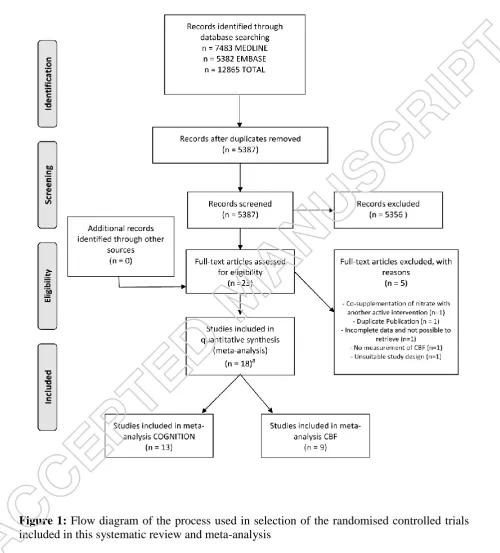
The screening process and the number of the studies included in the systematic review are
described in Figure 1. The initial search of the two electronic databases produced 12865 articles
which was reduced to 5387 after the deletion of duplicates. No relevant studies were found by
manual search of relevant reviews and studies. After the first title and abstract selection phase,
23 full-text articles were identified for further assessment and, from these, 18 trials were
included in the systematic review. Thirteen trials and nine trials were included in the
meta-analysis to investigate effects of nitrate and nitrite supplementation on CF and CBF, respectively.
Cognitive Function
Studies characteristics: The trials included in the systematic review reported on a total of 297
participants with a median of 23 (range 10-48) participants per trial. The median age of the
participants was 36 (range 21 – 73) years. The systematic review includes 2 parallel and 11
crossover trials and 12 of them were double-blind. Six of these studies included an exercise
rest and during exercise. The large majority (12 of 13 studies) supplemented with nitrate or
nitrate-rich foods; eleven trials used beetroot and one trial used spinach as sources of inorganic
nitrate, and one study supplemented with sodium nitrite (see Table 1). As placebo, eight trials
used nitrate-depleted beetroot juice (Kelly et al., 2013; Gilchrist et al., 2014; Lefferts et al., 2015;
Rattray et al., 2015; Thompson et al., 2015; Thompson et al., 2016; Vanhatalo et al., 2016;
Shannon et al., 2017), one studied employed nitrite-free capsules (Justice et al., 2015), two trials
combined apple and blackcurrant juice (Thompson et al., 2014; Whitman et al., 2015) and one
study did not report information on the control group (Bondonno et al., 2014).
Participant health status and intervention duration: Two trials included patients with type 2
diabetes (T2DM) (Gilchrist et al., 2014; Shepherd et al., 2015), four trials included middle-aged
and older healthy participants (Kelly et al., 2013; Bondonno et al., 2014; Justice et al., 2015;
Vanhatalo et al., 2016) and the remaining seven trials recruited young healthy participants
(Table 1). The median BMI of the adults included in the trials was 24.6 kg/m2 (range: 24.0 –
30.8 kg/m2). The duration of interventions ranged from 90 minutes to 10 weeks but ten trials (out
of 13) had a duration less than 7 days. For nitrate supplementation studies, the median dose of
inorganic nitrate provided was 7.2 mmol/day (range: 2.9 – 12.8 mmol/day); the trial using nitrite
supplemented with 2.4 mmol/day of sodium nitrite (Justice et al., 2015).
The greatest source of heterogeneity in the CF trials was the type of cognitive assessment with
23 different tests being reported. Three trials used a single CF test (Rattray et al., 2015;
Thompson et al., 2015; Vanhatalo et al., 2016) whereas one trial employed eight different CF
tests (Lefferts et al., 2015). A summary of the distribution of cognitive tests per trial is provided
in Table 1 whereas the frequency of application of each test across all the trials is summarised in
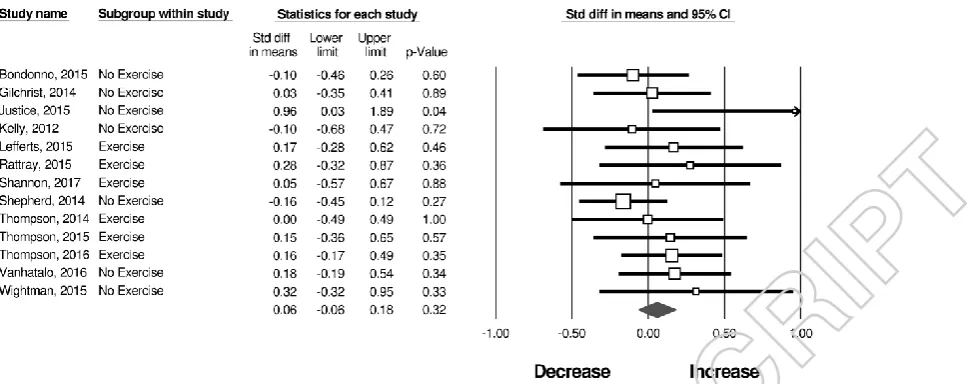
Meta-analysis: Overall, inorganic nitrate or nitrite supplementation did not improve CF (SMD
+0.06, 95% CI: -0.06, 0.18, P = 0.32) and we observed no significant heterogeneity between
studies (I2 = 0%; P = 0.68) (Figure 2). However, the only study which supplemented healthy
older individuals with inorganic nitrite for 10 weeks reported a significant improvement in CF
(Justice et al., 2015). When stratified by inclusion of exercise testing in the protocols, there was
no significant effect of inorganic nitrate supplementation in either the exercise (N=6, SMD
+0.13, 95% CI: -0.05, 0.32, P = 0.16) or non-exercise (N=7, SMD +0.02, 95% CI: -0.15, 0.21, P
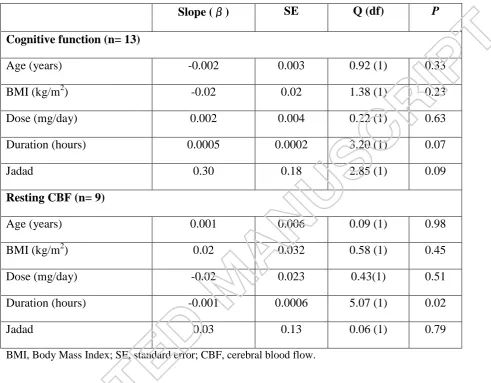
= 0.76) trials. Meta-regression analysis did not reveal any significant association between CF
effect size and age (β: -0.002, SE: 0.003, P = 0.33), BMI, (β: -0.02, SE: 0.02, P = 0.23), dose (β:
0.002, SE: 0.004, P = 0.63), study duration (β: 0.0005, SE: 0.0002, P = 0.07) or Jadad score (β:
0.09, SE: 0.18, P = 0.09) (Table 3).
Study Quality and Publication bias: The quality of the trials ranged from 2 to 5 (median: 3) on
the Jadad score and only one study had a score < 3 (Bondonno et al., 2014), indicating the
overall high quality of the trials (Table 1). Visual inspection of the Funnel Plot revealed a study
with a large positive effect size and the presence of publication bias was also confirmed by the
Egger’s Regression test (p=0.01; Figure S3 of the Online Supplementary Material). Exclusion
of the study (Justice et al., 2015) with the largest positive effect size removed the publication
bias (N=12, Egger’s test, P=0.13).
Resting and Stimulated CBF
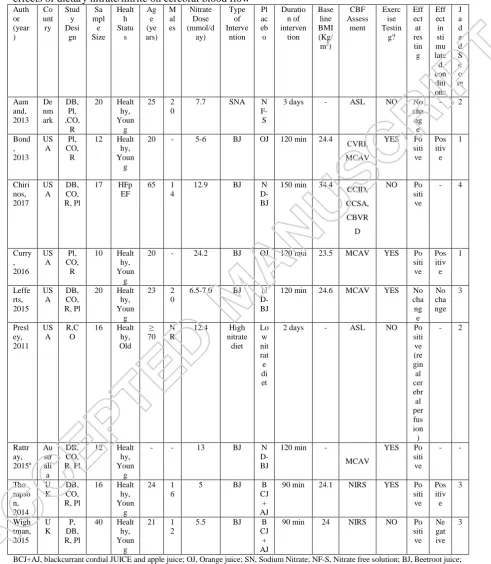
Studies characteristics: Nine trials assessed changes in CBF in resting conditions and included a
total of 163 participants (sample size range: 10 – 40); the overall median age of the participants
conditions (i.e., exercise (Bond et al., 2013; Curry et al., 2016; Lefferts et al., 2016; Thompson et
al, 2014), or mental stimulation (Wightman et al., 2015)).
One study employed a parallel study design (Whitman et al., 2015) whereas all remaining eight
trials used a cross-over design (Aamand et al., 2013; Bond et al., 2013; Chirinos et al., 2017;
Curry et al., 2016; Lefferts et al., 2016; Presley et al., 2011; Rattray et al., 2015; Thompson et al,
2014) (Table 2). Most studies (seven) used beetroot juice as a source of inorganic nitrate but
high nitrate foods or sodium nitrite were also used in some studies (Table2).
Cerebral blood flow tests: Four studies reported the effect of inorganic nitrate supplementation
on middle cerebral artery blood flow velocity (MCAV) (Aamand et al., 2013; Curry et al., 2016;
Lefferts et al., 2016; Rattray et al., 2015) and two reported the effect of inorganic nitrate on CBF
measured by arterial spin labelling (Presley et al., 2011; Aamand et al., 2013). Additional
measurements used to assess CBF included Near Infrared Spectroscopy (Thompson et al, 2014;
Whitman et al., 2015), cerebrovascular resistance index by Transcranial Doppler
Ultrasonography (Bond et al. 2013) and evaluation of changes in Carotid Characteristic
Impedance, Carotid Cross-Sectional Area and Carotid Bed Vascular Resistance (Chirinos et al.,
2017). The frequency of application of each method across all the trials is summarised in Figure
S2 of the Online Supplementary Material.
Participant health status and intervention duration: Eight trials recruited healthy individuals and
one trial recruited patients with heart failure (Chirinos et al., 2017) (Table 2). The duration of the
inorganic nitrate supplementation ranged from 3 hours to 3 days. The dose of inorganic nitrate
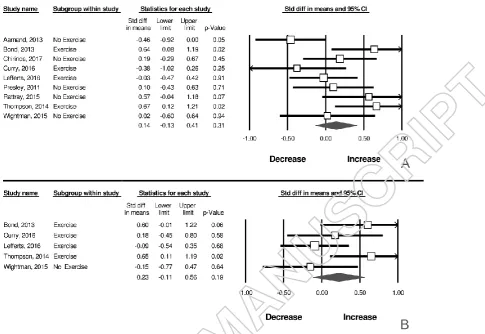
Meta-analysis: Overall, inorganic nitrate did not improve CBF under either resting (SMD +0.14,
95% CI: -0.13, 0.41, P = 0.31), or under stimulated conditions (SMD +0.23, 95% CI: -0.11, 0.56,
P = 0.19). We observed moderate heterogeneity between studies testing the effect of inorganic
nitrate on CBF at rest and stimulated conditions (I2 = 56.7%; P = 0.01; I2 = 44.1 %; P = 0.12,
respectively) (Figure 3). Meta-regression analysis produced no evidence for significant
associations of resting CBF effect size with age (β: 0.001, SE: 0.006, P = 0.98), BMI, (β: 0.016,
SE: 0.019, P = 0.41), dose (β: -0.01, SE: 0.019, P = 0.58), or Jadad score (β: 0.03, SE: 0.13, P =
0.79). However, there was a significant negative association between CBF effect size and study
duration (β: -0.001, SE: 0.0006, P = 0.02) (Table 3).
Study Quality and Publication bias: The quality of the trials ranged from 2 to 4 (median: 2)
according to the Jadad score. On this scoring system, 4 studies showed a score ≥ 3 (Chirinos et
al., 2017; Lefferts et al., 2015; Thompson et al, 2014; Wighman et al., 2015) (Table 2). We
could not assess the quality of one study (Rattary et al., 2015), as it was an abstract. Visual
inspection of the Funnel Plot revealed no evidence of publication bias and this was confirmed by
the Egger’s Regression test for both resting (p=0.43) and stimulated |(p=0.58) CBF; Figure S4
and S5 of the Online Supplementary Material).
Discussion
Our meta-analysis revealed that inorganic nitrate or nitrite supplementation was not associated
with improved CF or increased CBF. The combined standardized mean difference (placebo vs.
intervention) was +0.06 for CF and +0.14 and +0.23 for CBF at rest and in simulated conditions,
respectively. These findings were not influenced by whether the tests were performed at rest,
the dose of inorganic nitrate or nitrite. Overall, the studies had small sample sizes and were of
short duration, making it difficult to draw definitive conclusions about the efficacy of inorganic
nitrate or nitrite in modulating CF and CBF.
The quality of the studies assessing CF was generally high; all studies employed a randomized
design, used appropriate interventions, and in all but one of these studies (Bondonno et al., 2014)
the intervention agent was provided in a double-blind fashion. Similarly, with the exception of
one study, those assessing effects on CBF were all randomized, crossover trials. However, only 6
of the 9 trials were double-blind so that (along with other factors) meant they were generally of
lower quality than those assessing effects on CF (Table 2). The overall utility of all the included
trials was severely limited by the small sample sizes. Indeed, only 2 of the 21 studies reported
that they had conducted an a priori power analysis to determine if they had an adequate sample
size to detect a treatment effect for CF or CBF. One of these studies (Bondonno et al., 2014),
suggested that at 80% power, 30 participants was sufficient to detect subtle treatment effects
(e.g., 27 ms in simple reaction time) in various cognitive tasks. Given that the median sample
size in the studies that assessed CF was only 23, it would be reasonable to assume that many of
the studies were not adequately powered to detect potential effects of the nitrate or nitrite
interventions, and that the risk of type 2 errors was high. In view of this, it is vitally important
that future studies include larger sample sizes and ensure they are sufficiently powered to detect
anticipated nitrate/nitrite-induced changes in CBF or CF.
The participants in most studies were of normal BMI, male, healthy, and not suffering from a
cognitive-related disease. Of the two studies that examined effects of inorganic nitrate or nitrite
on CF in a non-healthy cohort (T2DM patients), one observed improvements following the
trials that investigated effects of nitrate/ nitrite supplementation on CF were performed in
participants with a BMI ≤25 kg∙m2. Because obesity is associated with impaired NO availability,
it could be argued that individuals with a BMI ≥30 kg∙m2
might be more responsive to nitrate or
nitrite induced vascular or metabolic effects (Ashor et al., 2016). Conversely, consequent to their
greater body mass, it is possible that obese individuals will require a larger absolute nitrate/nitrite
dose to manifest meaningful physiological changes. Prescribing a nitrate dose relative to body
mass could help ameliorate this issue. Future studies should compare the effects of nitrate or
nitrite supplementation on CF in both normal weight and obese individuals. As for studies that
assessed effects on CF, only one study assessed effects of inorganic nitrate supplementation on
CBF in non-healthy, obese participants. Chirinos and colleagues (2017) examined the effects of
nitrate-rich beetroot juice in heart failure patients, and observed no significant changes in carotid
artery hemodynamics. Arguably, older individuals suffering from a disease — especially a
diagnosed cognitive disorder — are more likely to benefit from an intervention attempting to
re-establish a dysfunctional pathway than young, healthy individuals, in whom NO availability is
less likely to be impaired. Thus, it would seem prudent that future research prioritizes studying
the effects of inorganic nitrate and nitrite supplementation on CF and CBF with older individuals
with some cognitive dysfunction e.g. mild cognitive impairment or subjective memory
complaints. In addition, few studies were carried out using female participants. Although there is
no strong a priori rationale to anticipate that the impact of such supplementation would differ by
sex, future studies should address potential effects in women.
Our meta-regression showed that the duration of the nitrate or nitrite supplementation had a
modest influence on CBF. More specifically, the longer the duration of the supplementation, the
caution because the majority of the trials had a very short duration. Of the nine studies assessing
effects on CBF, only two provided the supplement for >150 min pre-assessment — and both
displayed positive effects. The first, by Presley et al., (2011), was a randomized crossover trial in
which healthy older adults received either a low nitrate or high nitrate diet for 2 days prior to
measurements of cerebral perfusion using magnetic resonance imaging (MRI). Those in the high
nitrate diet (12.6 mmol/day) group had a substantial and preferential increase in frontal cortex
perfusion compared to those in the low nitrate diet group (0.9 mmol/day). The other study, by
Aamand and colleagues, (2013) found that 3 days of sodium nitrate (vs. nitrate-free saline)
decreased the haemodynamic lag of the blood oxygenation level dependent (BOLD) response in
the visual cortex of healthy, young males (Table 2). However, CBF, as measured by MRI, was
unchanged. Clearly, more studies with longer supplementation periods are required before we
can establish whether duration moderates the efficacy of nitrate/nitrite on CBF.
Most of the studies provided nitrate in the form of beetroot juice or nitrate-rich foods such as
green leafy vegetables. Given only two studies assessed the effects of nitrate/ nitrite salts on CF
or CBF, it was not possible to examine whether the vehicle for nitrate delivery (i.e., nitrate salts
or nitrate-rich vegetable products) influenced the efficacy of supplementation. Interestingly,
however, compared with nitrate salts, recent studies have reported greater effects of nitrate-rich
vegetable products on blood pressure (Jonvik et al., 2016), the oxygen cost of exercise (Flueck et
al., 2015), and post-exercise recovery (Clifford et al., 2017). This suggests possible additive or
synergistic effects between nitrate and other plant-based compounds. Indeed, several plant-based
compounds other than nitrate have potential benefits on CF and CBF (Ide et al., 2014; Desideri et
al., 2012; Macready et al., 2009). These compounds include polyphenols, such as catechins,
2008) that are purported, at least in part, to exert their beneficial effects on CBF and CF through
NO-dependent mechanisms, namely increased vasodilative effects (Sokolov et al., 2013). To our
knowledge, there is no evidence to suggest that beetroot, the main vehicle used in the RCTs
included in this analysis, contains high quantities of the polyphenolic compounds showing
potential for cognitive modulation. Indeed, the most abundant bioactive compound in beetroot,
other than nitrate, is betanin and, to date, its effects on cognitive function are unknown.
Notwithstanding, we acknowledge that the current evidence makes it impossible to differentiate
the effects of nitrate/nitrite salts and nitrate-rich plants on cognitive function, the latter of which
contains additional bioactive compounds. The independent effects of the bioactive compounds
and the nitrate/nitrite in these foods is an important question for future research.
Our study also has a number of other limitations. Firstly, because such a wide range of
assessments and methods were used to evaluate CF, several of which were domain-specific (e.g.,
reaction time vs. working memory), pooling the average effect size for all tests overlooks
potential changes for isolated tests. This is illustrated by the fact that when each cognitive test
was modelled as an independent outcome in the meta-analysis, nitrate supplementation showed a
modest benefit for CF (data not shown). Nonetheless, this latter finding, in which all tests are
considered independently, can overestimate the effect size; hence, to provide a more
conservative estimate, we chose to use the average effect size from each study as our main
outcome measure. Secondly, we observed moderate heterogeneity between studies for CBF,
likely because of the wide variability in participant age and health status, CBF measures used,
and the dose and duration of the nitrate/nitrite interventions used in each study. As outlined in a
recent commentary (Barnard et al., 2017), heterogeneity between studies may disguise the
duration, population) demonstrated real effects. This possibility needs to be taken into
consideration when interpreting our findings.
Conclusions: In conclusion, there is no robust evidence that inorganic nitrate or nitrate
supplementation influences CBF or CF. However, these findings might not be generalizable to
older people, those with higher adiposity or and those with reduced cognitive ability; all of the
included studies were performed in individuals <75 years old. In addition, all available trials
were characterized by small sample sizes and short intervention durations and, thus, most of the
studies may not have been designed optimally to observe any potential benefits. Consequently,
the main conclusion of this study is that there is insufficient evidence to know whether
supplemental inorganic nitrate or nitrite could improve CF or enhance CBF. Given the interest in
use of non-pharmacological approaches for maintenance and improvement of cognitive function
during ageing and the mechanistic rational for potential benefits of enhanced NO availability,
further well-controlled and sufficiently powered trials, especially in more at-risk populations,
with longer duration of nitrate/ nitrate supplementation, need to be conducted.
Acknowledgements: We would like to thank Dr Rattray for sharing the data from his studies.
Funding/Support: The write up of this work was undertaken within the framework of the NIHR Global Group: DePEC (Grant Number: 16/137/62).
References
Aamand, R., Dalsgaard, T., Ho, Y, C., Moller, A., Roepstorff, A., and Lund, T, E, A. (2013). NO
way to BOLD? Dietary nitrate alters the hemodynamic response to visual stimulation. Neuro
Image. 83:397-407.
Ashor, A. W., Chowdhury, S., Oggioni, C., Qadir, O., Brandt, K., Ishaq, A., and Siervo, M.
(2016). Inorganic nitrate supplementation in young and old obese adults does not affect acute
glucose and insulin responses but lowers oxidative stress. The Journal of Nutrition. 146:
2224-2232.
Barnard, N.D., Willett, W.C. and Ding, E.L., (2017). The Misuse of Meta-analysis in Nutrition
Research. JAMA. doi:10.1001/jama.2017.12083.
Bond, V., Curry, B. H., Adams, R. G., Asadi, M. S., Millis, R. M., and Haddad, G. E. (2013).
Effects of dietary nitrates on systemic and cerebrovascular hemodynamics. Cardiology Research
Bondonno, C. P., Downey, L. A., Croft, K. D., Scholey, A., Stough, C., Yang, X., ... and
Mubarak, A. (2014). The acute effect of flavonoid-rich apples and nitrate-rich spinach on
cognitive performance and mood in healthy men and women. Food & Function. 5: 849-858.
Chirinos, J. A., Londono-Hoyos, F., Beraun, M., Haines, P., Izzah, V. M., Varakantam, S., and
Segers, P. (2016). Effects of organic and inorganic nitrate on aortic and carotid hemodynamics in
heart failure and preserved ejection fraction. doi: 10.1002/ejhf.885.
Clifford, T., Howatson, G., West, D. J., and Stevenson, E. J. (2015). The potential benefits of red
beetroot supplementation in health and disease. Nutrients. 7: 2801-2822.
Clifford, T., Howatson, G., West, D. J., & Stevenson, E. J. (2017). Beetroot juice is more
beneficial than sodium nitrate for attenuating muscle pain after strenuous eccentric-bias exercise.
Applied Physiology, Nutrition, and Metabolism.doi: 10.1139/apnm-2017-0238.
Curry, B. H., Bond, V., Pemminati, S., Gorantla, V. R., Volkova, Y. A., Kadur, K., and Millis, R.
M. (2016). Effects of a Dietary Beetroot Juice Treatment on Systemic and Cerebral
Haemodynamics–A Pilot Study. Journal of Clinical and Diagnostic Research. 10: CC01-CC05.
De la Torre, J. C., and Stefano, G. B. (2000). Evidence that Alzheimer’s disease is a
microvascular disorder: the role of constitutive nitric oxide. Brain Research Reviews. 34:
119-136.
Desideri, G., Kwik-Uribe, C., Grassi, D., Necozione, S., Ghiadoni, L., Mastroiacovo, D., and
Marini, C. (2012). Benefits in cognitive function, blood pressure, and insulin resistance through
cocoa flavanol consumption in elderly subjects with mild cognitive impairment. Hypertension.
Egger, M., Smith, G. D., Schneider, M., and Minder, C. (1997). Bias in meta-analysis detected
by a simple, graphical test. BMJ. 315: 629-634.
Flueck, J. L., Bogdanova, A., Mettler, S., and Perret, C. (2015). Is beetroot juice more effective
than sodium nitrate? The effects of equimolar nitrate dosages of nitrate-rich beetroot juice and
sodium nitrate on oxygen consumption during exercise. Applied Physiology, Nutrition, and
Metabolism. 41: 421-429.
Gilchrist, M., Winyard, P. G., Fulford, J., Anning, C., Shore, A. C., and Benjamin, N. (2014).
Dietary nitrate supplementation improves reaction time in type 2 diabetes: development and
application of a novel nitrate-depleted beetroot juice placebo. Nitric Oxide. 40: 67-74.
Gómez-Pinilla, F. (2008). Brain foods: the effects of nutrients on brain function. Nature Reviews
Neuroscience. 9: 568-578.
Higgins, J. P., Thompson, S. G., Deeks, J. J., and Altman, D. G. (2003). Measuring inconsistency
in meta-analyses. BMJ. 327: 557.
Higgins, J. P., and Green, S. (Eds.). (2011). Cochrane handbook for systematic reviews of
interventions (Vol. 4). John Wiley & Sons.
Ide, K., Yamada, H., Takuma, N., Park, M., Wakamiya, N., Nakase, J., ... & Sagesaka, Y. M.
(2014). Green tea consumption affects cognitive dysfunction in the elderly: a pilot study.
Nutrients. 6: 4032-4042.
Jadad, A. R., Moore, R. A., Carroll, D., Jenkinson, C., Reynolds, D. J. M., Gavaghan, D. J., and
McQuay, H. J. (1996). Assessing the quality of reports of randomized clinical trials: is blinding
Jonvik, K. L., Nyakayiru, J., Pinckaers, P. J., Senden, J. M., van Loon, L. J., & Verdijk, L. B.
(2016). Nitrate-rich vegetables increase plasma nitrate and nitrite concentrations and lower blood
pressure in healthy adults. The Journal of Nutrition. 146: 986-993.
Justice, J. N., Gioscia-Ryan, R. A., Johnson, L. C., Battson, M. L., de Picciotto, N. E., Beck, H.
J., ... and Seals, D. R. (2015). Sodium nitrite supplementation improves motor function and
skeletal muscle inflammatory profile in old male mice. Journal of Applied Physiology. 118:
163-169.
Kelly, J., Fulford, J., Vanhatalo, A., Blackwell, J. R., French, O., Bailey, S. J., ... and Jones, A.
M. (2013). Effects of short-term dietary nitrate supplementation on blood pressure, O 2 uptake
kinetics, and muscle and cognitive function in older adults. American Journal of
Physiology-Regulatory, Integrative and Comparative Physiology. 304: 73-83.
Larsen, F. J., Schiffer, T. A., Borniquel, S., Sahlin, K., Ekblom, B., Lundberg, J. O., and
Weitzberg, E. (2011). Dietary inorganic nitrate improves mitochondrial efficiency in humans.
Cell Metabolism. 13: 149-159.
Lefferts, W. K., Hughes, W. E., White, C. N., Brutsaert, T. D., and Heffernan, K. S. (2015).
Effect of acute nitrate supplementation on neurovascular coupling and cognitive performance in
hypoxia. Applied Physiology, Nutrition, and Metabolism. 41: 133-141.
Liberati, A., Altman, D. G., Tetzlaff, J., Mulrow, C., Gøtzsche, P. C., Ioannidis, J. P., ... and
Moher, D. (2009). The PRISMA statement for reporting systematic reviews and meta-analyses
of studies that evaluate health care interventions: explanation and elaboration. PLoS Medicine. 6:
Lidder, S., and Webb, A. J. (2013). Vascular effects of dietary nitrate (as found in green leafy
vegetables and beetroot) via the nitrate‐ nitrite‐ nitric oxide pathway. British Journal of Clinical
Pharmacology. 75: 677-696.
Lundberg, J. O., Weitzberg, E., and Gladwin, M. T. (2008). The nitrate-nitrite-nitric oxide
pathway in physiology and therapeutics. Nature reviews. Drug discovery. 7: 156-167.
Macready, A. L., Kennedy, O. B., Ellis, J. A., Williams, C. M., Spencer, J. P., and Butler, L. T.
(2009). Flavonoids and cognitive function: a review of human randomized controlled trial
studies and recommendations for future studies. Genes & Nutrition. 4: 227-242.
Presley, T. D., Morgan, A. R., Bechtold, E., Clodfelter, W., Dove, R. W., Jennings, J. M., ... and
Burdette, J. H. (2011). Acute effect of a high nitrate diet on brain perfusion in older adults. Nitric
Oxide. 24: 34-42.
Prince, M., Comas-Herrera, A., Knapp, M., Guerchet, M., and Karagiannidou, M. (2016). World
Alzheimer report 2016: improving healthcare for people living with dementia: coverage, quality
and costs now and in the future.
Rattray, B., Egle-Marshall, L., Northey, J., Hone, S., Smee, D., and Brassard, P. (2015). Dietary
Nitrate improves Cerebral Perfusion, in Young Adults during Exercise: Relationship to
Cognitive Performance. The FASEB Journal. 29(1 Supplement): 989.
Shannon, O. M., Duckworth, L., Barlow, M. J., Deighton, K., Matu, J., Williams, E. L., ... and
O'Hara, J. P. (2017). Effects of Dietary Nitrate Supplementation on Physiological Responses,
Cognitive Function, and Exercise Performance at Moderate and Very-High Simulated
Shepherd, A. I., Gilchrist, M., Winyard, P. G., Jones, A. M., Hallmann, E., Kazimierczak, R., ...
and Wilkerson, D. P. (2015). Effects of dietary nitrate supplementation on the oxygen cost of
exercise and walking performance in individuals with type 2 diabetes: a randomized,
double-blind, placebo-controlled crossover trial. Free Radical Biology and Medicine. 86: 200-208.
Sokolov, A. N., Pavlova, M. A., Klosterhalfen, S., & Enck, P. (2013). Chocolate and the brain:
neurobiological impact of cocoa flavanols on cognition and behavior. Neuroscience &
Biobehavioral Reviews. 37: 2445-2453.
Thompson, K. G., Turner, L., Prichard, J., Dodd, F., Kennedy, D. O., Haskell, C., ... and Jones,
A. M. (2014). Influence of dietary nitrate supplementation on physiological and cognitive
responses to incremental cycle exercise. Respiratory Physiology & Neurobiology. 193: 11-20.
Thompson, C., Wylie, L. J., Fulford, J., Kelly, J., Black, M. I., McDonagh, S. T., ... and Jones, A.
M. (2015). Dietary nitrate improves sprint performance and cognitive function during prolonged
intermittent exercise. European journal of Applied Physiology. 115: 1825-1834.
Thompson, C., Vanhatalo, A., Jell, H., Fulford, J., Carter, J., Nyman, L., ... and Jones, A. M.
(2016). Dietary nitrate supplementation improves sprint and high-intensity intermittent running
performance. Nitric Oxide. 61. 55-61.
Toda, N., Ayajiki, K., and Okamura, T. (2009). Cerebral Blood Flow Regulation by Nitric
Oxide: Recent Advances. Pharmacol Rev. 61:62-97.
Vanhatalo, A., Bailey, S. J., Blackwell, J. R., DiMenna, F. J., Pavey, T. G., Wilkerson, D. P., ...
and Jones, A. M. (2010). Acute and chronic effects of dietary nitrate supplementation on blood
American Journal of Physiology-Regulatory, Integrative and Comparative Physiology. 299:
1121-1131.
Vanhatalo, A., Kelly, J., Winyard, P. G., Fulford, J., and Jones, A. M. (2016). Dietary Nitrate
Reduces Blood Pressure And Improves Walking Economy And Cognitive Function In Older
People. Medicine and Science in Sports and Exercise. 48(5 Suppl 1): 257.
Weitzberg, E., and Lundberg, J. O. (2013). Novel aspects of dietary nitrate and human
health. Annual Review of Nutrition. 33: 129-159.
Wightman, E. L., Haskell-Ramsay, C. F., Thompson, K. G., Blackwell, J. R., Winyard, P. G.,
Forster, J., ... and Kennedy, D. O. (2015). Dietary nitrate modulates cerebral blood flow
parameters and cognitive performance in humans: a double-blind, placebo-controlled, crossover
investigation. Physiology & Behavior. 149: 149-158.
Wortmann, M. (2012). Dementia: a global health priority-highlights from an ADI and World
Health Organization report. Alzheimer's Research & Therapy. 4: 40.
Zweier, J. L., Wang, P., Samouilov, A., and Kuppusamy, P. (1995). Enzyme-independent
Figure Legends
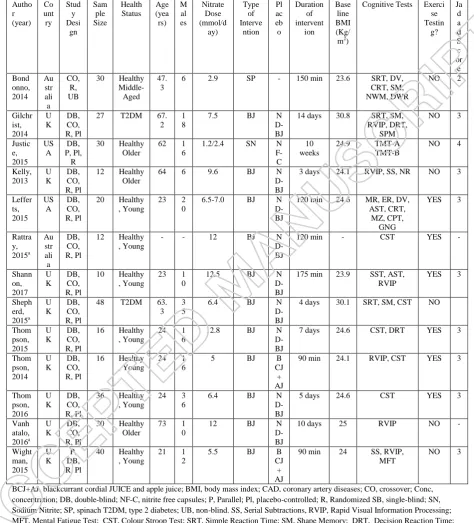
Table 1: Characteristics of the studies included in the systematic review and meta-analysis of the effects of dietary nitrate/nitrite on cognitive function
Autho r (year) Co unt ry Stud y Desi gn Sam ple Size Health Status Age (yea rs) M al es Nitrate Dose (mmol/d ay) Type of Interve ntion Pl ac eb o Duration of intervent ion Base line BMI (Kg/
m2)
Cognitive Tests Exerci se Testin g? Ja d a d S c or e Bond onno, 2014 Au str ali a CO, R, UB
30 Healthy
Middle-Aged 47.
3
6 2.9 SP - 150 min 23.6 SRT, DV, CRT, SM, NWM, DWR
NO 2
Gilchr ist, 2014 U K DB, CO, R, Pl
27 T2DM 67. 2
1 8
7.5 BJ N D-BJ
14 days 30.8 SRT, SM, RVIP, DRT,
SPM
NO 3
Justic e, 2015 US A DB, P, Pl, R
30 Healthy Older
62 1 6
1.2/2.4 SN N F-C
10 weeks
24.9 TMT-A TMT-B
NO 4
Kelly, 2013 U K DB, CO, R, Pl
12 Healthy Older
64 6 9.6 BJ N D-BJ
3 days 24.1 RVIP, SS, NR NO 3
Leffer ts, 2015 US A DB, CO, R, Pl
20 Healthy , Young
23 2 0
6.5-7.0 BJ N D-BJ
120 min 24.6 MR, ER, DV, AST, CRT,
MZ, CPT, GNG
YES 3
Rattra y, 2015a Au str ali a DB, CO, R, Pl
12 Healthy , Young
- - 12 BJ N D-BJ
120 min - CST YES -
Shann on, 2017 U K DB, CO, R, Pl
10 Healthy , Young
23 1 0
12.5 BJ N D-BJ
175 min 23.9 SST, AST, RVIP
YES 3
Sheph erd, 2015a U K DB, CO, R, Pl
48 T2DM 63. 3
3 5
6.4 BJ N D-BJ
4 days 30.1 SRT, SM, CST NO
Thom pson, 2015 U K DB, CO, R, Pl
16 Healthy , Young
24 1 6
12.8 BJ N D-BJ
7 days 24.6 CST, DRT YES 3
Thom pson, 2014 U K DB, CO, R, Pl
16 Healthy , Young
24 1 6
5 BJ B CJ + AJ
90 min 24.1 RVIP, CST YES 3
Thom pson, 2016 U K DB, CO, R, Pl
36 Healthy , Young
24 3 6
6.4 BJ N D-BJ
5 days 24.6 CST YES 3
Vanh atalo, 2016a U K DB, CO, R, Pl
30 Healthy Older
73 1 0
12 BJ N D-BJ
10 days 25 RVIP NO -
Wight man, 2015 U K P, DB, R, Pl
40 Healthy , Young
21 1 2
5.5 BJ B CJ + AJ
90 min 24 SS, RVIP, MFT
NO 3
Table 2: Characteristics of the studies included in the systematic review and meta-analysis of the effects of dietary nitrate/nitrite on cerebral blood flow
Auth or (year ) Co unt ry Stud y Desi gn Sa mpl e Size Healt h Statu s Ag e (ye ars) M al es Nitrate Dose (mmol/d ay) Type of Interve ntion Pl ac eb o Duratio n of interven tion Base line BMI (Kg/
m2) CBF Assess ment Exerc ise Testin g? Eff ect at res tin g Eff ect in sti mu late d con diti ons J a d a d S c o re Aam and, 2013 De nm ark DB, Pl, ,CO, R
20 Healt hy, Youn
g
25 2 0
7.7 SNA N F-S
3 days - ASL NO No cha
ng e
- 2
Bond , 2013 US A Pl, CO, R
12 Healt hy, Youn
g
20 - 5-6 BJ OJ 120 min 24.4 CVRI,
MCAV
YES Po siti ve Pos itiv e 1 Chiri nos, 2017 US A DB, CO, R, Pl
17 HFp EF
65 1 4
12.9 BJ N D-BJ
150 min 34.4
CCID, CCSA, CBVR
D
NO Po siti ve
- 4
Curry , 2016 US A Pl, CO, R
10 Healt hy, Youn
g
20 - 24.2 BJ OJ 120 min 23.5 MCAV YES Po siti ve Pos itiv e 1 Leffe rts, 2015 US A DB, CO, R, Pl
20 Healt hy, Youn
g
23 2 0
6.5-7.0 BJ N D-BJ
120 min 24.6 MCAV YES No cha ng e No cha nge 3 Presl ey, 2011 US A R,C O
16 Healt hy, Old ≥ 70 N R
12.4 High nitrate diet Lo w nit rat e di et
2 days - ASL NO Po siti ve (re gin al cer ebr al per fus ion )
- 2
Rattr ay, 2015a Au str ali a DB, CO, R, Pl
12 Healt hy, Youn
g
- - 13 BJ N D-BJ
120 min -
MCAV
YES Po siti ve - - Tho mpso n, 2014 U K DB, CO, R, Pl
16 Healt hy, Youn
g
24 1 6
5 BJ B CJ + AJ
90 min 24.1 NIRS YES Po siti ve Pos itiv e 3 Wigh tman, 2015 U K P, DB, R, Pl
40 Healt hy, Youn
g
21 1 2
5.5 BJ B CJ + AJ
90 min 24 NIRS NO Po siti ve Ne gat ive 3
Table 3: Meta-regression analysis to evaluate whether age, BMI, dose of nitrate and duration of the intervention modified the effects of nitrate/ nitrite supplementation on cognitive and cerebral blood flow
Slope (β) SE Q (df) P
Cognitive function (n= 13)
Age (years) -0.002 0.003 0.92 (1) 0.33
BMI (kg/m2) -0.02 0.02 1.38 (1) 0.23
Dose (mg/day) 0.002 0.004 0.22 (1) 0.63
Duration (hours) 0.0005 0.0002 3.20 (1) 0.07
Jadad 0.30 0.18 2.85 (1) 0.09
Resting CBF (n= 9)
Age (years) 0.001 0.006 0.09 (1) 0.98
BMI (kg/m2) 0.02 0.032 0.58 (1) 0.45
Dose (mg/day) -0.02 0.023 0.43(1) 0.51
Duration (hours) -0.001 0.0006 5.07 (1) 0.02
Jadad 0.03 0.13 0.06 (1) 0.79