R E S E A R C H A R T I C L E
Open Access
Development and validation of the patient-rated
ulnar nerve evaluation
Joy C MacDermid
1,2*and Ruby Grewal
1Background:Compression neuropathy at the elbow causes substantial pain and disability. Clinical research on this disorder is hampered by the lack of a specific outcome measure for this problem. A patient-reported outcome measure, The Patient-Rated Ulnar Nerve Evaluation (PRUNE) was developed to assess pain, symptoms and functional disability in patients with ulnar nerve compression at the elbow.
Methods:An iterative process was used to develop and test items. Content validity was addressed using patient/ expert interviews and review; linking of the scale items to International Classification of Functioning, Disability, and Health (ICF) codes; and cognitive coding of the items. Psychometric analysis of data collected from 89 patients was evaluated. Patients completed a longer version of the PRUNE at baseline. Item reduction was performed using statistical analyses and patient input to obtain the final 20 item version. Score distribution, reliability, exploratory factor analysis, correlational construct validity, discriminative known group construct validity, and responsiveness to change were evaluated.
Results:Content analysis indicated items were aligned with subscale concepts of pain and sensory/motor symptoms impairments; specific upper extremity-related tasks; and that the usual function subscale provided a broad view of self-care, household tasks, major life areas and recreation/ leisure. Four subscales were demonstrated by factor analysis (pain, sensory/motor symptoms impairments, specific activity limitations, and usual activity/role restrictions). The PRUNE and its subscales had high reliability coefficients (ICCs > 0.90; 0.98 for total score) and low absolute error. The minimal detectable change was 7.1 points. It was able to discriminate between clinically meaningful subgroups determined by an independent evaluation assessing work status, residual symptoms, motor recovery, sensory recovery and global improvement) p < 0.01. Responsiveness was excellent (SRM = 1.55).
Conclusion:The PRUNE is a brief, open-access, patient-reported outcome measure for patients with ulnar nerve compression that demonstrates strong measurement properties.
Background
Compression of the ulnar nerve at the elbow (UNE), sometimes referred to as cubital tunnel syndrome, is the second most common compression upper extremity neur-opathy [1]. The mean annual incidence has been estimated at 25 cases per 100,000 person-years, with the male to fe-male difference being 33 to 17. Work-relatedness has been suggested; since males performing manual work have an elevated incidence of 57 cases/100,000 person-years [2]. A number of studies have related development of symptoms to occupational activities including sustainable flexion postures [3,4] and repetitive elbow movement; or sporting
activities like cycling [5]. The prevalence of UNE is 3.5 times higher in people who report occupational activities that involve ‘holding a tool in position’ [4] compared to workers in the same setting who do not perform this task. However, other physical and psychosocial factors can also contribute to UNE [6]. In a multidimensional risk study, smoking, education level and work experience were identi-fied as risk factors; whereas, gender, BMI, alcohol con-sumption, trauma to the elbow, diabetes mellitus, and hypertension were not [7].
Evidence on the management of UNE is problematic; and indicates a need for better outcome reporting. A Cochrane review was only able to locate six low-quality clinical trials relating to management of ulnar neuropathy. This review concluded“available evidence is not sufficient to identify the best treatment for idiopathic ulnar neuropathy * Correspondence:[email protected]
1Hand and Upper Limb Centre, 268 Grosvenor St, London, Ontario N6A 3A8,
Canada
2School of Rehabilitation Science, McMaster University, Hamilton, Ontario L8S
1C7, Canada
at the elbow on the basis of clinical, neurophysiological and imaging characteristics.We do not know when to treat a patient conservatively or surgically.” [8] This review recommended that future research would be improved by the use of validated disease-specific clinical outcome mea-sures. Our systematic review of prognosis following anter-ior ulnar nerve transposition faced similar challenges [9]. Although, we were able to locate 26 studies addressing prognosis following ulnar nerve transposition surgery, only two of these were high-quality. We found profound inconsistencies in the design and conclusions of available studies; and were unable to make any conclusions based on the studies located. We found the lack of standardized evaluation of outcomes was a substantial barrier to the conduct of an effective systematic review.
Although the evidence about treatment and prognosis has flaws, it is clear that ulnar nerve compromise can lead to substantial disability. In a qualitative study of pa-tients with ulnar nerve palsy, the majority of people had difficulties with simple, everyday tasks including holding soap,eating, buttoning clothes, holding a glass or lifting small objects [10]. Ulnar nerve compression causes less compromise to the ulnar nerve, but also results in sub-stantial hand impairments [11]. Despite the unique and potentially profound consequences of ulnar nerve prob-lems, there has been little attention to developing and validating UNE disease-specific patient report outcome measures. A systematic review of the outcomes measures used to assess outcomes of UNE identified 42 clinical studies [12] that used 21 different health outcomes mea-sures including 2 generic instruments; 10 nonstandardized measures; 3 symptom-specific patient-reported instru-ments; and 6 patient questionnaires. A review of standard-ized rating systems for evaluation of the elbow did not locate any tools specific for UNE [13]. Further, this review noted that most scoring systems used to evaluate elbow function have limited supporting psychometric data.
In 2006, Mondelli and colleagues described a 9-item UNE scale developed in Italian and then translated to English [14]. It was developed in Italian, and published with an English translation. Data from this question-naire were compared to nerve physiological features, clinical measures and the Boston Carpal Tunnel Ques-tionnaire [15]. The scale had low correlation to electro-physiology grade, and moderate correlation to clinical severity. Test–retest reliability in the first 44 patients was excellent (0.97) and responsiveness was acceptable
in 25 patients followed 6–8 months of conservative
management (effect size = 0.46). The item development/ reduction process and translation process were not repor-ted. It has not been widely used in subsequent research.
The purposes of this paper are to report the develop-ment and validation of a patient-report outcome meas-ure that is designed for use in patients with ulnar nerve
compression. Specific objectives include to describe the development process, reliability, content and construct validity, and factor/structural validity.
Methods
The Patient-Rated Ulnar Nerve Evaluation (PRUNE) was developed based on iterative revisions and stakeholder consultation. A formal structured examination of content validity; a statistical analysis of test-retest reliability, factor structure, and construct validity were used for item reduc-tion and evaluareduc-tion of the final instrument.
Scale development process
The first author has developed previous PRO that have a common structure of pain, specific activity and usual ac-tivity subscales [16-19] disorders. This structure informed the structure of the PRUNE. The specific items were de-veloped through patient interviews, epidemiological and biomechanical studies. Symptoms that were relevant to patients with ulnar nerve compression neuropathy were
grouped into: pain and ulnar-nerve “specific” sensory
symptoms or motor symptoms. Together with the specific activities and usual functional activities, 4 subscales were derived. A long version of the instrument was completed by all participants and the final reduced scale was deter-mined by a structured item reduction process. Cross cor-relations between items, factor analysis, inspection for floor and ceiling effects and item distribution were used to reduce the item pool to the optimal set of items.
The patient-rated ulnar nerve evaluation (PRUNE)
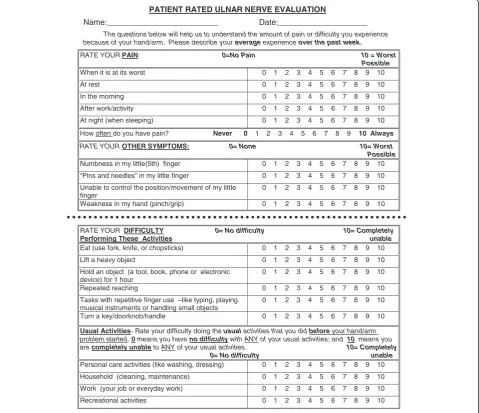
The final version of the PRUNE is presented in Figure 1. The PRUNE is a 20-item scale that measures pain, sensory/motor symptoms and functional disability in pa-tients with UNE. The 20 items include: 6 pain, 4 sensory/ motor symptoms 6 specific activity; and 4 usual activity (personal care, household, work and recreation) items. Each item is scored on a scale from zero (none/no dif-ficulty) to 10 (worst possible/completely unable). Each subscale is scored by adding the component questions (pain/60, sensory/motor symptoms/40, specific activity/ 60, usual activity/40). The total score is calculated to range
from 0–100 points with zero meaning no symptoms or
difficulty and 100 being worst possible symptoms and completely unable to do all functional activity. The total score equally weights the 10 items on symptoms and 10 functional items (by dividing the grand total by 2).
Treatment
This study was not designed to study intervention ef-fects. However, response to treatment was used as a context to evaluate the clinical measurement property of responsiveness. Patients underwent a submuscular or subcutaneous ulnar nerve transposition using established procedures [20-22].
Comparison study measures The SF-36
The SF-36 is a 36-item scale that addresses general health. Subscales address Physical Function, Physical Role, Bodily Pain, General Health, Vitality, Social Function Emotional Role, and Mental Health. These subscales are summarized into Physical and Mental Summary Component scores. While the SF-36 is less responsive than disease-specific scales [23,24], it is a valid indicator of general health status
in musculoskeletal disorders [25]. General health status measures are commonly used in construct validation and are expected to have a low to moderate relationship with a disease-specific measure like the PRUNE.
The bishop scale
The Bishop Scale (sometimes referred to as Kleinman and Bishop) [26] is a clinician administered measure developed specifically for UNE. The scale addresses: satisfaction, im-provement, severity of symptoms, work status, leisure ac-tivity, strength, and sensibility. There is no description of standardized application of the tool; nor has reliability, val-idity or responsiveness been reported [12]. The Bishop scale was administered by an independent evaluator and the items were used for criteria to test known group validity since the scale provides criteria for a number of clinically relevant subgroups.
PATIENT RATED ULNAR NERVE EVALUATION
Name:_________________________ Date:____________________
The questions below will help us to understand the amount of pain or difficulty you experience because of your hand/arm. Please describe your averageexperience over the past week.
RATE YOUR PAIN: 0=No Pain 10 = Worst Possible When it is at its worst 0 1 2 3 4 5 6 7 8 9 10
At rest 0 1 2 3 4 5 6 7 8 9 10
In the morning 0 1 2 3 4 5 6 7 8 9 10
After work/activity 0 1 2 3 4 5 6 7 8 9 10
At night (when sleeping) 0 1 2 3 4 5 6 7 8 9 10
How often do you have pain? Never 0 1 2 3 4 5 6 7 8 9 10 Always
RATE YOUR OTHER SYMPTOMS: 0= None 10= Worst
Possible Numbness in my little(5th) finger 0 1 2 3 4 5 6 7 8 9 10
“Pins and needles” in my little finger 0 1 2 3 4 5 6 7 8 9 10
Unable to control the position/movement of my little finger
0 1 2 3 4 5 6 7 8 9 10
Weakness in my hand (pinch/grip) 0 1 2 3 4 5 6 7 8 9 10
RATE YOUR DIFFICULTY 0= No difficulty 10= Completely
Performing These Activities unable
Eat (use fork, knife, or chopsticks) 0 1 2 3 4 5 6 7 8 9 10
Lift a heavy object 0 1 2 3 4 5 6 7 8 9 10
Hold an object (a tool, book, phone or electronic device) for 1 hour
0 1 2 3 4 5 6 7 8 9 10
Repeated reaching 0 1 2 3 4 5 6 7 8 9 10
Tasks with repetitive finger use –like typing, playing musical instruments or handling small objects
0 1 2 3 4 5 6 7 8 9 10
Turn a key/doorknob/handle 0 1 2 3 4 5 6 7 8 9 10
Usual Activities- Rate your difficulty doing theusualactivities that you did beforeyour hand/arm problem started.0means you have no difficultywith ANY of your usual activities; and 10 means you are completely unableto ANY of your usual activities. 10= Completely
0= No difficulty unable Personal care activities (like washing, dressing) 0 1 2 3 4 5 6 7 8 9 10
Household (cleaning, maintenance) 0 1 2 3 4 5 6 7 8 9 10
Work (your job or everyday work) 0 1 2 3 4 5 6 7 8 9 10
[image:3.595.59.539.91.504.2]Recreational activities 0 1 2 3 4 5 6 7 8 9 10
Patient recruitment
Patients (n = 89) were diagnosed in a multi-stage process. The preliminary diagnosis was made by the family phys-ician who then referred the patient for electrodiagnosis and examination by a physical medicine physician. The electrodiagnostic parameters as reported in patient demo-graphics and clinical presentation were considered to make the definitive diagnosis. Patient with a confirmed ulnar neuropathy were sent to surgical consultation with a fellowship trained hand surgeon, who again confirmed the diagnosis again using electrodiagnostic findings and clin-ical examination. Patients undergoing anterior nerve transposition were approached and agreed to participate in this study. Inclusion criteria included electrodiag-nostically confirmed ulnar nerve compression at the elbow, persistent symptoms for at least 3 months with failed con-servative management, and able to return for follow-up. Exclusion criteria included: unable to complete self-report forms, central or spinal neurological disorders, other neur-opathy affecting the hand (excluded by electrodiagnosis) and medical conditions that precluded participation. Re-spondents completed the full version of the PRUNE within 2 weeks prior to surgery; and again 3 and 24 months fol-lowing surgery.
The study was approved by the Western University Ethics Board. Written informed consent for participation in the study was obtained from all participants; none were under 18 years of age.
Analyses
Scale distributions and floor/ceiling
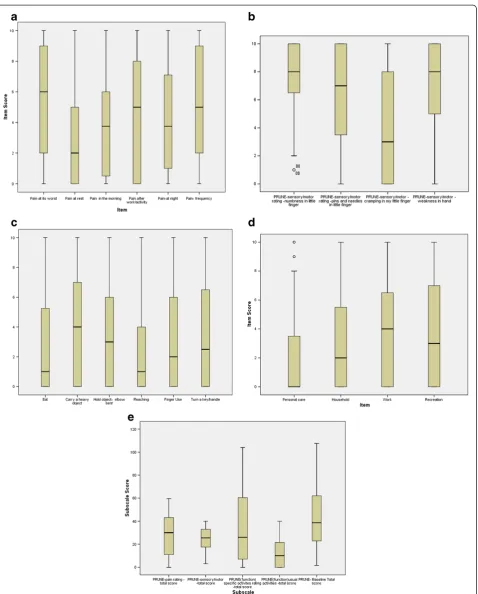
Box plots were used to examine the distribution of scores for individual items and subscales to examine potential floor/ceiling effects or distribution problems.
Content validity
Content validity is fundamental to scale validity and was assessed by four methods. Patient interviews were used during development and reduction of items, pilot testing and the psychometric study to assess content relevancy. The prototype instrument was reviewed by patients, 3 physical therapists, 1 physiatrist, 3 orthopedic surgeons and 2 research assistants. Patients and experts provided feedback on the appropriateness and wording of the items.
[image:4.595.58.291.98.659.2]Structured content analysis was performed using 2 methods. The International Classification of Functioning Disability and Health (ICF) linking procedures were performed according to established linking rules [27,28]. ICF coding provides a common international language to describe the elements of body structure, function, disability and environment contained in questionnaire items. The Item Perspective Classification was used to per-form a 2-level classification of type of decision (rational/
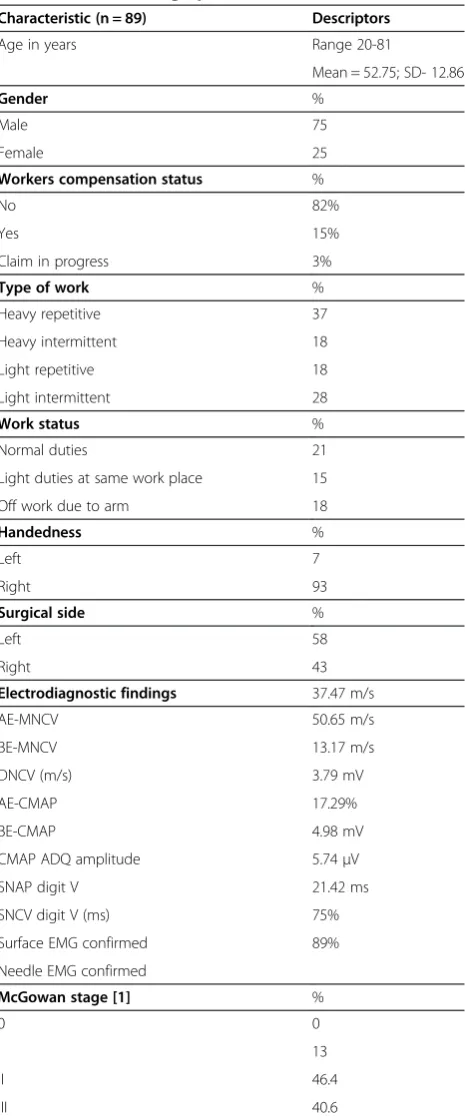
Table 1 Patient demographics
Characteristic (n = 89) Descriptors
Age in years Range 20-81
Mean = 52.75; SD- 12.86
Gender %
Male 75
Female 25
Workers compensation status %
No 82%
Yes 15%
Claim in progress 3%
Type of work %
Heavy repetitive 37
Heavy intermittent 18
Light repetitive 18
Light intermittent 28
Work status %
Normal duties 21
Light duties at same work place 15
Off work due to arm 18
Handedness %
Left 7
Right 93
Surgical side %
Left 58
Right 43
Electrodiagnostic findings 37.47 m/s
AE-MNCV 50.65 m/s
BE-MNCV 13.17 m/s
DNCV (m/s) 3.79 mV
AE-CMAP 17.29%
BE-CMAP 4.98 mV
CMAP ADQ amplitude 5.74μV
SNAP digit V 21.42 ms
SNCV digit V (ms) 75%
Surface EMG confirmed 89%
Needle EMG confirmed
McGowan stage [1] %
0 0
I 13
II 46.4
III 40.6
CMAP, Compound motor action potential.SNAP, sensory nerve action potential.MNCV, Motor nerve conduction velocity. AE-CMAP CMAP from above elbow to below elbow. AE-MNCV MNCV from above elbow to below elbow. BE-CMAP CMAP from below elbow to wrist.
BE-MNCV MNCV from below elbow to wrist. Reference List [1] McGowan AJ:
emotional) and content of items (psychological, social, bio-logical, inorganic or pure experience). More detail on this coding method can be found at https://sites.google.com/ site/ipcframework/.
Reliability
A subset of patients was re-tested 2–7 days after their com-pleting the PRUNE. The following statistics were calculated to establish the reliability of the PRUNE:
a) reliability intraclass correlation coefficients (2,1) [29], b) Standard error of measurement:
SEM¼standard deviation pffiffiffiffiffiffiffiffiffiffiffiffiffiffiffiffiffiffiffiffiffiffiffiffiffiffiffiffiffiffiffiffiffiffiffiffiffiffiffiffiffiffiffiffiffiffiffiffiffiffi1reliability coefficient
and
c) Minimal detectable change (90% confidence) [30,31]
MDC90¼SEMzvalue of 1:64
ffiffiffi 2
p
Structural validity
Exploratory factor analyses (principal components ana-lysis using varimax rotation) were used to assess how scale items distributed into subscales [32]. Analysis was
performed on data collected at baseline which included a larger subset of items; and these results contributed to decisions about item reduction. Thus, the factor ana-lysis performed at 3 and 24 months included only the final items.
Construct validity
The following hypotheses/expectations were constructed to assess construct validity of the PRUNE based on conver-gent relationships expected from theoretical and evidence perspectives [33,34]. The strength of these associations was assessed using Pearson correlations.
1. Scales measuring the same construct (pain or functional disability) should demonstrate high correlation (indicated by r >0.75)
2. Pain and function should moderately correlate (0.40-0.75)
[image:5.595.57.541.405.722.2]3. General health status would demonstrate low to moderate correlation with PRUNE subscale and total scores. PRUNE scores should correlate more highly with physical function than with mental function. Pain was expected to correlate with both physical and mental health status.
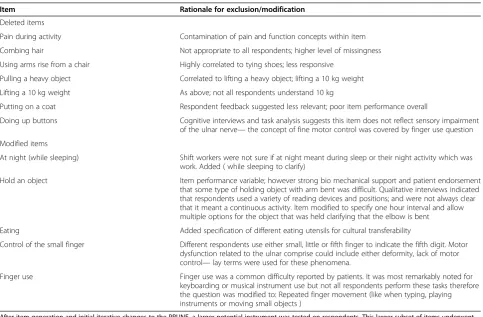
Table 2 Items that did not meet inclusion in the final instrument version of the PRUNE
Item Rationale for exclusion/modification
Deleted items
Pain during activity Contamination of pain and function concepts within item
Combing hair Not appropriate to all respondents; higher level of missingness
Using arms rise from a chair Highly correlated to tying shoes; less responsive
Pulling a heavy object Correlated to lifting a heavy object; lifting a 10 kg weight
Lifting a 10 kg weight As above; not all respondents understand 10 kg
Putting on a coat Respondent feedback suggested less relevant; poor item performance overall
Doing up buttons Cognitive interviews and task analysis suggests this item does not reflect sensory impairment of the ulnar nerve—the concept of fine motor control was covered by finger use question
Modified items
At night (while sleeping) Shift workers were not sure if at night meant during sleep or their night activity which was work. Added ( while sleeping to clarify)
Hold an object Item performance variable; however strong bio mechanical support and patient endorsement
that some type of holding object with arm bent was difficult. Qualitative interviews indicated that respondents used a variety of reading devices and positions; and were not always clear that it meant a continuous activity. Item modified to specify one hour interval and allow multiple options for the object that was held clarifying that the elbow is bent
Eating Added specification of different eating utensils for cultural transferability
Control of the small finger Different respondents use either small, little or fifth finger to indicate the fifth digit. Motor dysfunction related to the ulnar comprise could include either deformity, lack of motor control—lay terms were used for these phenomena.
Finger use Finger use was a common difficulty reported by patients. It was most remarkably noted for
keyboarding or musical instrument use but not all respondents perform these tasks therefore the question was modified to: Repeated finger movement (like when typing, playing instruments or moving small objects )
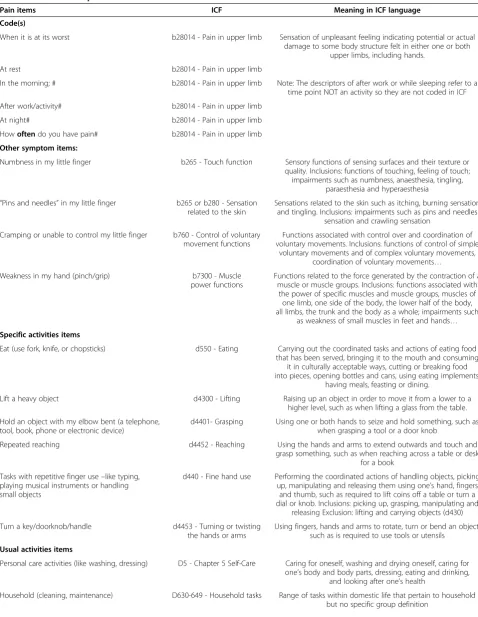
Table 3 ICF codes for patient-rated ulnar nerve evaluation items
Pain items ICF Meaning in ICF language
Code(s)
When it is at its worst b28014 - Pain in upper limb Sensation of unpleasant feeling indicating potential or actual damage to some body structure felt in either one or both
upper limbs, including hands.
At rest b28014 - Pain in upper limb
In the morning; # b28014 - Pain in upper limb Note: The descriptors of after work or while sleeping refer to a time point NOT an activity so they are not coded in ICF
After work/activity# b28014 - Pain in upper limb
At night# b28014 - Pain in upper limb
Howoftendo you have pain# b28014 - Pain in upper limb
Other symptom items:
Numbness in my little finger b265 - Touch function Sensory functions of sensing surfaces and their texture or quality. Inclusions: functions of touching, feeling of touch; impairments such as numbness, anaesthesia, tingling,
paraesthesia and hyperaesthesia
“Pins and needles”in my little finger b265 or b280 - Sensation related to the skin
Sensations related to the skin such as itching, burning sensation and tingling. Inclusions: impairments such as pins and needles
sensation and crawling sensation
Cramping or unable to control my little finger b760 - Control of voluntary movement functions
Functions associated with control over and coordination of voluntary movements. Inclusions: functions of control of simple
voluntary movements and of complex voluntary movements, coordination of voluntary movements…
Weakness in my hand (pinch/grip) b7300 - Muscle
power functions
Functions related to the force generated by the contraction of a muscle or muscle groups. Inclusions: functions associated with
the power of specific muscles and muscle groups, muscles of one limb, one side of the body, the lower half of the body, all limbs, the trunk and the body as a whole; impairments such
as weakness of small muscles in feet and hands…
Specific activities items
Eat (use fork, knife, or chopsticks) d550 - Eating Carrying out the coordinated tasks and actions of eating food that has been served, bringing it to the mouth and consuming
it in culturally acceptable ways, cutting or breaking food into pieces, opening bottles and cans, using eating implements,
having meals, feasting or dining.
Lift a heavy object d4300 - Lifting Raising up an object in order to move it from a lower to a
higher level, such as when lifting a glass from the table.
Hold an object with my elbow bent (a telephone, tool, book, phone or electronic device)
d4401- Grasping Using one or both hands to seize and hold something, such as when grasping a tool or a door knob
Repeated reaching d4452 - Reaching Using the hands and arms to extend outwards and touch and
grasp something, such as when reaching across a table or desk for a book
Tasks with repetitive finger use–like typing, playing musical instruments or handling small objects
d440 - Fine hand use Performing the coordinated actions of handling objects, picking up, manipulating and releasing them using one’s hand, fingers and thumb, such as required to lift coins off a table or turn a dial or knob. Inclusions: picking up, grasping, manipulating and
releasing Exclusion: lifting and carrying objects (d430)
Turn a key/doorknob/handle d4453 - Turning or twisting
the hands or arms
Using fingers, hands and arms to rotate, turn or bend an object, such as is required to use tools or utensils
Usual activities items
Personal care activities (like washing, dressing) D5 - Chapter 5 Self-Care Caring for oneself, washing and drying oneself, caring for one’s body and body parts, dressing, eating and drinking,
and looking after one’s health
Constructed hypotheses for known-group validity
The following known group differences were tested (by ANOVA) to assess construct validity of the PRUNE. The subgroups were defined by an independent assessor through patient interview and examination using criteria defined by Kleinman and Bishop [26].
1. Patients who perceived their global rating of change at 2 years as: improved, versus no change, or worse 2. Patient who were asymptomatic versus those who
had mild-occasional, moderate, or severe symptoms 3. Patients who were able to return to work at their
regular job versus those who are unable to work because of continued symptoms
4. Patients whose leisure was unlimited versus those who were limited
5. Patients who had both grip and pinch 80% of opposite hand versus those who had either grasp or pinch reach 80% of opposite hand versus those both where grip and pinch less than 80% of opposite hand 6. Patients who had normal sensibility defined as
two-point discrimination less than 5 mm versus those where it was abnormal greater than 5 mm.
Responsiveness
Changes over time were evaluated by calculating a stan-dardized response mean (change score divided by the standard deviation of the change scores) and effects size (change score divided by the standard deviation of the initial scores) [35].
Results
The final version is presented in Figure 1. Patients (See Table 1 for demographics) completed the PRUNE with few missing items (<1.0%).
Content validity
A prototype 25-item scale was developed based on items obtained item generation and early refinement proce-dures (expert and patient feedback). Subsequent item re-duction of the 25-item prototype scale was based on statistical analyses and cognitive interviewing [36,37] Cognitive interviewing with patients indicated wide
variability in interpretation (and use) in relation to the tele-phone item that led to modification of that item (Table 2).
ICF codes for the items are presented in Table 3. Pain
items were coded to the ICF code for “Sensation of
un-pleasant feeling indicating potential or actual damage to some body structure felt in either one or both upper limbs, including hands (b28014). Concepts that relate to severity like frequency and intensity are not linked to ICF. Experts considered pain assessment fundamental to self-report and approved the range of qualifiers used for the pain items. The sensory motor subscale captures four separate ICF codes addressing touch function, sen-sation related to the skin; control of movement and muscle power. The Specific Activities Subscale was linked to six ICF disability codes at the third or fourth level and comprises codes that describe specific ADLs. The Usual Activity items coded to a high ICF level, i.e., chapter is consistent with the intent of this subscale to address broad domains of usual activity. In ICF language this subscale addresses self-care, household tasks, major life areas and recreation and leisure.
Using Item Perspective Classification all items were ra-tional judgments because patients needed to recall infor-mation over the past week. Pain, symptoms and specific activities were classified as rational biological judgments. The first item of the usual activities subscale addresses personal care and hence falls under a rational judgment within the biological domain. The remaining three items (household, work and recreation) were classified as ra-tional judgments about the social domain.
Item behavior/distributions
The full range of scores was used for all items except for numbness. The boxplots of items for each subscale at base-line (Figure 2 a, b, c, d and e).
The 6 pain items (Figure 2a) indicate that least and most pain items behaved as expected; with the remainder of items falling in a moderate range. From the sensory/motor
symptoms subscale (labeled“Other Symptoms), numbness,
[image:7.595.56.539.101.197.2]pins and needles and weakness in the hand had high overall ratings; whereas, the motor control item was less severely affected. Numbness was the only item not endorsed by some individuals. Item responses for baseline specific func-tional activities (Figure 2b) indicated that“Carrying a heavy Table 3 ICF codes for patient-rated ulnar nerve evaluation items(Continued)
Work (your job or everyday work) D8 - Chapter 8 Major Life Areas Carrying out the tasks and actions required to engage in education, work and employment and to conduct economic
transactions.
Recreational activities D920 - Recreation and leisure Engaging in any form of play, recreational or leisure activity, such as informal or organized play and sports, programmes of physical fitness, relaxation, amusement or diversion, going
object”and holding an object with the arm bent were diffi-cult tasks; whereas, eating and use of the telephone had lower ratings. Work was the most difficult“usual activity”.
The subscale and total scores distributions and indica-tors of central tendency are reported in boxplots 2e. These illustrate that subscales are normally distributed.
Reliability
High ICCs were obtained with all subscales exceeding 0.90 except for usual activities (0.87). The ICC was 0.98 for the total score. Lower limits of the confidence interval were high with the exception of usual activities where the
[image:9.595.57.540.102.201.2]confidence interval was wide (Table 4). The standardized response mean (SEM) and Minimal Detectable Change (MDC) were 3.1 and 7.2 respectively for the total score (Table 4).
Construct validity
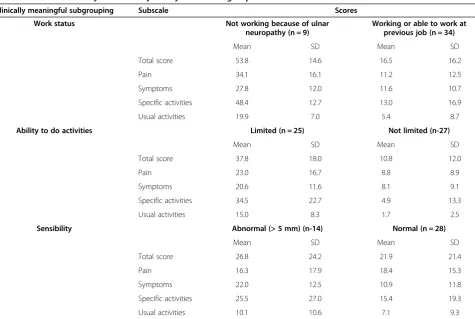
The PRUNE was highly discriminative between different functional outcomes across all of the defined subgroups (See Tables 5 and 6). The follow-up scores were signifi-cantly different between subgroups based on whether they were working or not (16.5 vs. 53.8), able to do their normal activities or not (10.8 vs. 37.8) or had 2-point
Table 5 Construct validity indicated by binary clinical subgroups at 24 months
Clinically meaningful subgrouping Subscale Scores
Work status Not working because of ulnar
neuropathy (n = 9)
Working or able to work at previous job (n = 34)
Mean SD Mean SD
Total score 53.8 14.6 16.5 16.2
Pain 34.1 16.1 11.2 12.5
Symptoms 27.8 12.0 11.6 10.7
Specific activities 48.4 12.7 13.0 16.9
Usual activities 19.9 7.0 5.4 8.7
Ability to do activities Limited (n = 25) Not limited (n-27)
Mean SD Mean SD
Total score 37.8 18.0 10.8 12.0
Pain 23.0 16.7 8.8 8.9
Symptoms 20.6 11.6 8.1 9.1
Specific activities 34.5 22.7 4.9 13.3
Usual activities 15.0 8.3 1.7 2.5
Sensibility Abnormal (> 5 mm) (n-14) Normal (n = 28)
Mean SD Mean SD
Total score 26.8 24.2 21.9 21.4
Pain 16.3 17.9 18.4 15.3
Symptoms 22.0 12.5 10.9 11.8
Specific activities 25.5 27.0 15.4 19.3
Usual activities 10.1 10.6 7.1 9.3
[image:9.595.62.538.396.715.2]All subscale scores and the total score were significantly different between subgroups for both work status and activity status. For sensory subgroups only the sensory/motor (SM) symptoms scale was different between subgroups. All p-values were significant at p < 0.01.
Table 4 Reliability of PRUNE subscales and total scores
Subscale Mean score test
Test SD
Mean score retest
Re-test SD
ICC 95% CI Standard error of measurement (SEM)
SEM% Minimum detectable change (MDC)
MDC%
Pain/60 25.1 17.3 25.0 18.0 0.98 0.91-0.99 2.5 4 5.8 10
Sensori-motor symptoms/40
12.6 7.9 14.0 9.8 0.91 0.70-0.98 2.7 7 6.2 15
Specific activities/40 35.7 31.9 36.0 30.5 0.99 0.97- 0.999 3.1 8 7.3 18
Usual activities/40 10.8 13.2 13.4 13.0 0.87 0.57-96 4.7 11 11.0 27
Total Score/100 34.4 21.5 36.0 23.1 0.98 0.95-0.997 3.1 3 7.2 7
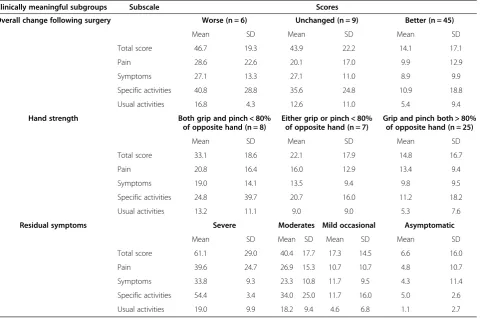
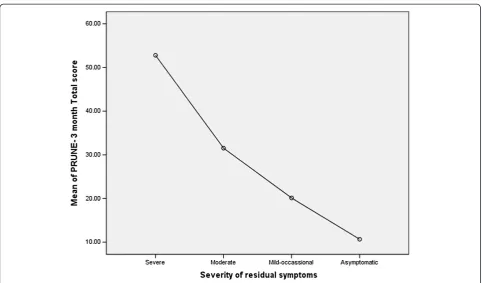
discrimination < 5 mm or not (21.9 vs. 26.8). People who reported their scores were the same or worse after sur-gery had PRUNE scores over 40 at follow-up; whereas, those who reporting being better had a score of 14.1 (see Tables 5 and 6 for subgroup scores). There was a linear trend to PRUNE scores based on whether patients reported mild to severe disability (Figure 3).
Correlations coefficients were more strongly associated with the physical health domains on the SF-36 in compari-son to the mental health domains (Table 7). The sensory/ motor symptoms subscale correlated most strongly with overall physical health status indicating the importance of the ulnar nerve symptom items. Stronger correlations were observed between more conceptually similar sub-scales of the PRUNE and SF-36. All of these findings supported the construct validity.
Factor validity
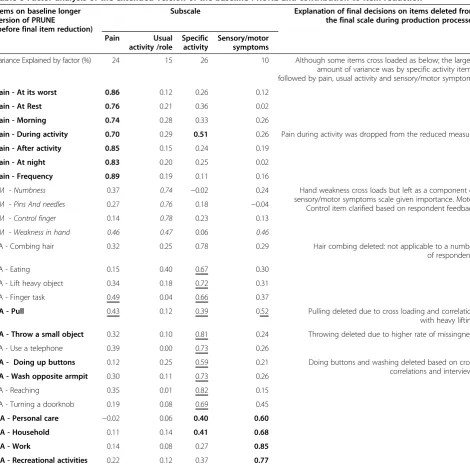
The baseline factor analysis included the items from the longer version of the PRUNE (before final item reduction). Items dispersed into 4 factors representing pain, symp-toms, specific function and usual functions at baseline (Table 8). At baseline, the larger subscales (pain-24% and specific activity-25%) explained the largest portion of the
variance. The smaller subset of final items included in the 3 and 24 month factor analysis also loaded on these same 4 factors (See Table 9). Pain explained more than 20% of the variance at 3 and 24 months. Although the item“
weak-ness in the hand” loaded most strongly on its assigned
subscale (sensory/motor symptoms function), it exhibited some cross-loading onto Specific Activity. At 24 months recreational activities cross loaded on pain, and specific activity- although its highest loading was on Usual Activity. Overall, factor analysis supported the structural validity of the subscales.
Responsiveness
A large effect size (and standardized response mean) was observed from baseline to 24 months (Table 10) for all sub-scales (all SRM <0.90) and the total score (SRM = 1.55).
Discussion
This study provides evidence that the PRUNE is capable of providing reliable, valid and responsive assessment of symptoms and function experienced by patients with ulnar nerve compression.
[image:10.595.61.542.100.418.2]Content validity analyses supported the theoretical con-tent of the PRUNE. ICF linking indicated that the PRUNE
Table 6 Differences between clinically meaningful subgroups
Clinically meaningful subgroups Subscale Scores
Overall change following surgery Worse (n = 6) Unchanged (n = 9) Better (n = 45)
Mean SD Mean SD Mean SD
Total score 46.7 19.3 43.9 22.2 14.1 17.1
Pain 28.6 22.6 20.1 17.0 9.9 12.9
Symptoms 27.1 13.3 27.1 11.0 8.9 9.9
Specific activities 40.8 28.8 35.6 24.8 10.9 18.8
Usual activities 16.8 4.3 12.6 11.0 5.4 9.4
Hand strength Both grip and pinch < 80% of opposite hand (n = 8)
Either grip or pinch < 80% of opposite hand (n = 7)
Grip and pinch both > 80% of opposite hand (n = 25)
Mean SD Mean SD Mean SD
Total score 33.1 18.6 22.1 17.9 14.8 16.7
Pain 20.8 16.4 16.0 12.9 13.4 9.4
Symptoms 19.0 14.1 13.5 9.4 9.8 9.5
Specific activities 24.8 39.7 20.7 16.0 11.2 18.2
Usual activities 13.2 11.1 9.0 9.0 5.3 7.6
Residual symptoms Severe Moderates Mild occasional Asymptomatic
Mean SD Mean SD Mean SD Mean SD
Total score 61.1 29.0 40.4 17.7 17.3 14.5 6.6 16.0
Pain 39.6 24.7 26.9 15.3 10.7 10.7 4.8 10.7
Symptoms 33.8 9.3 23.3 10.8 11.7 9.5 4.3 11.4
Specific activities 54.4 3.4 34.0 25.0 11.7 16.0 5.0 2.6
Usual activities 19.0 9.9 18.2 9.4 4.6 6.8 1.1 2.7
crosses a number of domains of the ICF. The sensory/ motor symptoms scale items linked to ICF codes for touch function, sensation related to the skin, control of move-ment and muscle power which is a fit with the conceptual target to measure symptoms arising from ulnar nerve com-pression symptoms. Use of patients, experts, ICF coding and cognitive content coding provided a comprehensive assessment of the content validity of the PRUNE. Given
[image:11.595.57.540.86.369.2]that content validity is the most foundational element of scale validity, it is critical that content issues be rigorously evaluated and resolved before proceeding to more statisti-cally based clinical measurement evaluations. The extent of content validation performed for this study exceeds previ-ous instrument development which is related to the devel-opment of clinical measurement methods for ICF linking and use of cognitive interviews in measure development. Figure 3PRUNE symptom score at 3 months post-op.
Table 7 Construct validity indicated by PRUNE scores to general health status subscales
PRUNE score (2-year)
SF- 36 subscale Pain SM symptoms Specific activities Usual activity Total score
76 76 75 75 76
SF36 - 2-Physical Functioning Subscale −0.5** −0.46** −0.39** −0.36** −0.52**
SF36 - 2 -Role -Physical Subscale −0.35** −0.41** −0.16 0.08 −0.25
SF36 - 2-Bodily Pain Subscale −0.59** −0.68** −0.53** −0.35** −0.64**
SF36- 2 -General Health Subscale −0.33* −0.34** −0.19 −0.25 −0.33*
SF36 - 2-Vitality Subscale −0.48** −0.37** −0.21 −0.12 −0.36**
SF36 - 2 -Social Functioning Subscale −0.60** −0.45** −0.31* −0.09 −0.45**
SF36 - 2 -Role- Emotional Subscale −0.39** −0.41** −0.30* −0.16 −0.38**
SF36 - 2 -Mental Health Subscale −0.34** −0.19 −0.20 −0.07 −0.25
SF36 - 2 -Physical Component Summary −0.58** −0.68** −0.42** −0.32* −0.59**
SF36 - 2 -Mental Component Summary −0.37** −0.23 −0.19 −0.004 −0.25
[image:11.595.56.540.518.699.2]Box plots indicated that the full range of scores was endorsed on almost every item. However, there were no
participants who reported having“zero”numbness
indi-cating that this was a consistent UNE symptom. Sensory symptoms (numbness and tingling) were rated as being more severe than motor control of the little finger. This is consistent with the pathology of nerve compression where sensory changes are an early impairment and motor changes occur with more severe or prolonged compression [38].
[image:12.595.62.533.96.563.2]A reliability coefficient of 0.90 has been recommended for measures to be used on individual patients [39]; whereas greater than 0.75 is considered excellent for group com-parisons [40]. The reliability of the total score or subscales scores of the PRUNE were all high, indicating either total or component scores could be used to make decisions about individual patients. A minimal detectable change of approximately 7 points for the total score suggests that cli-nicians should be confident that the PRUNE has indicated a true change in symptoms and disability when the score
Table 8 Factor analysis of the extended version of the baseline PRUNE and contribution to item reduction
Items on baseline longer version of PRUNE
(before final item reduction)
Subscale Explanation of final decisions on items deleted from the final scale during production processes
Pain Usual
activity /role
Specific activity
Sensory/motor symptoms
Variance Explained by factor (%) 24 15 26 10 Although some items cross loaded as below; the largest
amount of variance was by specific activity items; followed by pain, usual activity and sensory/motor symptoms
Pain - At its worst 0.86 0.12 0.26 0.12
Pain - At Rest 0.76 0.21 0.36 0.02
Pain - Morning 0.74 0.28 0.33 0.26
Pain - During activity 0.70 0.29 0.51 0.26 Pain during activity was dropped from the reduced measure
Pain - After activity 0.85 0.15 0.24 0.19
Pain - At night 0.83 0.20 0.25 0.02
Pain - Frequency 0.89 0.19 0.11 0.16
SM - Numbness 0.37 0.74 −0.02 0.24 Hand weakness cross loads but left as a component of sensory/motor symptoms scale given importance. Motor Control item clarified based on respondent feedback
SM - Pins And needles 0.27 0.76 0.18 −0.04
SM - Control finger 0.14 0.78 0.23 0.13
SM - Weakness in hand 0.46 0.47 0.06 0.46
SA - Combing hair 0.32 0.25 0.78 0.29 Hair combing deleted: not applicable to a number
of respondents
SA - Eating 0.15 0.40 0.67 0.30
SA - Lift heavy object 0.34 0.18 0.72 0.31
SA - Finger task 0.49 0.04 0.66 0.37
SA - Pull 0.43 0.12 0.39 0.52 Pulling deleted due to cross loading and correlation with heavy lifting
SA - Throw a small object 0.32 0.10 0.81 0.24 Throwing deleted due to higher rate of missingness
SA - Use a telephone 0.39 0.00 0.73 0.26
SA - Doing up buttons 0.12 0.25 0.59 0.21 Doing buttons and washing deleted based on cross correlations and interviews SA - Wash opposite armpit 0.30 0.11 0.73 0.26
SA - Reaching 0.35 0.01 0.82 0.15
SA - Turning a doorknob 0.19 0.08 0.69 0.45
UA - Personal care −0.02 0.06 0.40 0.60
UA - Household 0.11 0.14 0.41 0.68
UA - Work 0.14 0.08 0.27 0.85
UA - Recreational activities 0.22 0.12 0.37 0.77
changes by this amount. Some have suggested that a MDC of less than 10% of the score range is excellent. Whether the ICC, SEM or MDC are used to indicate reli-ability the PRUNE demonstrated high relireli-ability. We speculate that test-retest reliability can be influenced by the retest interval, the number of items on a subscale, the acuity of the patients tested; and the extent to which the
construct being measured is stable and definable by pa-tients. For example, the“usual” activities performed over the past 24 hours can vary and influence how people cali-brate that item even when the patient’s condition is stable.
Structural validity was supported by factor analysis that indicated the items fell into 4 subscales that matched the proposed structure. Only minor cross-loading was found. Pain explained more than 20% of the variance at all time points. The confirmation that pain and sensory/motor symptoms systems were separate concepts in the response patterns is important as it verifies the importance of an ulnar nerve specific measure which goes beyond pain questions to capture these additional more disease-specific symptoms.
[image:13.595.64.539.101.430.2]The known groups validity supported the ability of the PRUNE to discriminate between different clinical sub-groups like those who have/have not improved following surgery, or able/not able to return to work. Known group differences can be useful clinically as benchmark compari-son scores when assessing whether patient profiles match
Table 9 Results of factor analysis of the final PRUNE items at 3 and 24 months after surgery
Items on Final PRUNE 3 months after surgery 24 months after surgery
Pain Usual
activity/role
Specific activity SM symptoms Pain Usual activity/role
Specific activity SM symptoms
Variance explained by factor (%) 22 16 20 21 30 19 18 18
Pain- worst 0.82 0.09 0.34 0.17 0.84 0.25 0.26 0.27
Pain-at rest 0.86 0.38 0.14 0.23 0.83 −0.12 0.32 0.38
Pain -in morning 0.77 0.38 0.27 0.14 0.86 0.09 0.25 0.32
Pain -after activity 0.63 0.28 0.26 0.16 0.74 0.13 0.29 0.27
Pain- at night 0.89 0.17 0.10 0.23 0.80 0.04 0.34 0.33
Pain- Frequency 0.68 0.14 0.24 0.36 0.71 0.21 0.21 0.34
SM-Numbness 0.06 0.26 0.19 0.86 0.36 0.19 0.15 0.87
SM- Pins and needles 0.24 0.25 0.10 0.82 0.39 0.25 0.20 0.80
SM-Control 0.36 −0.00 0.17 0.77 0.33 0.04 0.23 0.68
SM-Weakness in hand 0.06 0.15 0.44 0.69 0.34 0.37 0.48 0.59
SA-Eating with fork or spoon 0.30 0.26 0.60 0.10 −0.02 0.88 0.66 0.196
SA- Lift a heavy object 0.23 0.22 0.78 0.14 0.38 0.44 0.58 0.25
SA-Hold an object 0.30 0.47 0.58 0.26 0.37 0.123 0.88 0.14
SA- Finger Task 0.32 0.02 0.78 0.24 0.36 0.38 0.60 0.37
SA-Reaching 0.23 0.22 0.78 0.14 0.45 0.36 0.59 0.31
SA-Turning a doorknob 0.10 0.30 0.70 0.35 0.20 0.30 0.68 0.25
UA-Personal care 0.09 0.84 0.05 0.34 −0.02 0.89 0.27 0.06
UA-Household 0.32 0.76 0.25 0.35 0.28 0.52 0.45 0.11
UA-Work 0.35 0.78 0.34 0.00 0.32 0.68 0.26 0.06
UA-Recreational activities 0.36 0.78 0.36 0.19 0.44 0.58 0.48 0.21
Principal Component Analysis with Varimax with Kaiser Normalization. Factor loadings are color-coordinated to highlight loading over 0.40. (Pain subscale items in bold, sensory/motor (SM) symptoms items in italics (SM), specific activity items in underline (SA) and usual activity items in bold (UA). Overall, cross loading was minimal and items differentiated onto the anticipated subscales. Cross loading occurred for item on weakness in grip at both 3- and 24- month follow-up. At 2-year follow-up heavy object and recreational activities also demonstrated some cross-loading. Overall, the loading confirmed the subscale structure.
Table 10 Standardized response means for improvement in PRUNE total and subscale scores from baseline to 24 months
Subscale Mean change SD Standardized response mean
Pain 18.8 19.4 0.96
Sensory/motor symptoms 11.8 11.3 1.0
Specific activities 17.0 16.2 1.04
Usual activities 12.9 12.0 0.92
[image:13.595.56.293.642.733.2]different categories of outcome. There were 10-fold differ-ences in score between those who rated themselves as asymptomatic versus those who experienced severe symp-toms; and a linear pattern was present for the scores for mild, moderate and severe rating. This suggests that in-creasing PRUNE scores reflect a linear trend of worsening outcomes that mirrors patient and clinician outcome ratings.
The construct validity of the scale was supported since the observed correlations matched the expected conver-gent relationships. The stronger relationships would be observed between PRUNE subscales and physical sub-scales of the SF-36 was expected and confirmed. We also anticipated that pain might interfere with social roles which was also confirmed. However, overall, the PRUNE demonstrated low correlation to mental health status which is consistent with its focus on the physical symp-toms of UNE.
Finally, the large effect sizes observed in measuring change over time supports the responsiveness of the PRUNE to detect change over time, i.e., following treat-ment. This is an important measurement feature be-cause assessing change in response to treatment is the most predominant use of outcome measures. A previ-ous study demonstrated a smaller (moderate) effect size for a different PRO, although the intervention was con-servative management in that study [14]. Others have cautioned that responsiveness can vary by treatment [35] and thus it would be premature to state that the PRUNE is more responsiveness than this measure.
Conclusion
This study led to the development of a reliable and valid measurement tool designed specifically for the patient population with ulnar nerve pathology. The next steps in evaluating the PRUNE should include analysis of the measurement properties through Rasch analysis which would address scale and differential item functioning issues (e.g. gender or age effects) not addressed in this study; and analysis of its responsiveness to detect clinical change in head-to-head comparison against other out-come measures. The PRUNE is provided by open access from the developer/copyright owner (J [email protected]) for free use.
Competing interests
The authors declare that they have no competing interests.
Authors’contributions
JMD developed the Patient-Rated Ulnar Nerve Evaluation, designed the psychometric study, provided oversight to all data collection, conducted the study analyses and wrote the initial drafts of the paper. RG enrolled patients, reviewed data analysis and contributed to revisions of the manuscript. All authors read and approved the final manuscript.
Received: 24 August 2012 Accepted: 10 April 2013 Published: 26 April 2013
References
1. Latinovic R, Gulliford MC, Hughes RA:Incidence of common compressive neuropathies in primary care.J Neurol Neurosurg Psychiatry2006, 77:263–265.
2. Mondelli M, Giannini F, Ballerini M, Ginanneschi F, Martorelli E:Incidence of ulnar neuropathy at the elbow in the province of Siena (Italy). J Neurol Sci2005,234:5–10.
3. Descatha A, Leclerc A, Chastang JF, Roquelaure Y:Incidence of ulnar nerve entrapment at the elbow in repetitive work.Scand J Work Environ Health 2004,30:234–240.
4. van Rijn RM, Huisstede BM, Koes BW, Burdorf A:Associations between work-related factors and specific disorders at the elbow: a systematic literature review.Rheumatology (Oxford)2009,48:528–536.
5. Patterson JM, Jaggars MM, Boyer MI:Ulnar and median nerve palsy in long-distance cyclists. A prospective study.Am J Sports Med2003,31:585–589. 6. Pellieux S, Fouquet B, Lasfargues G:Ulnar nerve tunnel syndrome of the
elbow and an occupational disorder. Analysis of socio-professional and physical parameters.Ann Readapt Med Phys2001,44:213–220. 7. Bartels RH, Verbeek AL:Risk factors for ulnar nerve compression at the
elbow: a case control study.Acta Neurochir (Wien)2007,149:669–674. 8. Caliandro P, La TG, Padua R, Giannini F, Padua L:Treatment for ulnar
neuropathy at the elbow.Cochrane Database Syst Rev2011(2):CD006839. 9. Shi Q, MacDermid JC, Santaguida PL, Kyu HH:Predictors of surgical
outcomes following anterior transposition of ulnar nerve for cubital tunnel syndrome: a systematic review.J Hand Surg Am2011, 36:1996–2001.
10. McCormick CA, Rath S, Patra PN, Pereira J, Wilkinson M:A qualitative study of common functional problems experienced by people with complete ulnar nerve paralysis.Lepr Rev2008,79:154–161.
11. Novak CB, Mackinnon SE, Stuebe AM:Patient self-reported outcome after ulnar nerve transposition.Ann Plast Surg2002,48:274–280.
12. Macadam SA, Bezuhly M, Lefaivre KA:Outcomes measures used to assess results after surgery for cubital tunnel syndrome: a systematic review of the literature.J Hand Surg Am2009,34:1482–1491.
13. Longo UG, Franceschi F, Loppini M, Maffulli N, Denaro V:Rating systems for evaluation of the elbow.Br Med Bull2008,87:131–161.
14. Mondelli M, Padua L, Giannini F, Bibbo G, Aprile I, Rossi S:A self-administered questionnaire of ulnar neuropathy at the elbow.Neurol Sci 2006,27:402–411.
15. Levine DW, Simmons SP, Koris MJ, Daltroy LH, Hohl GG, Fossel AH,et al:A self-administered questionnaire for assessment of severity of symptoms and functional status in carpal tunnel syndrome.J Bone Joint Surg Am 1993,75A:1585–1592.
16. MacDermid JC:Development of a scale for patient rating of wrist pain and disability.J Hand Ther1996,9:178–183.
17. MacDermid JC, Turgeon T, Richards RS, Beadle M, Roth JH:Patient rating of wrist pain and disability: a reliable and valid measurement tool. J Orthop Trauma1998,12:577–586.
18. MacDermid JC:Outcome evaluation in patients with elbow pathology: issues in instrument development and evaluation.J Hand Ther2001, 14:105–114.
19. MacDermid J:Update: the patient-rated forearm evaluation questionnaire is now the patient-rated tennis elbow evaluation.J Hand Ther2005, 18:407–410.
20. Shi Q, MacDermid J, Grewal R, King GJ, Faber K, Miller TA:Predictors of functional outcome change 18 months after anterior ulnar nerve transposition.Arch Phys Med Rehabil2012,93:307–312.
21. Bartels RH, Menovsky T, Van Overbeeke JJ, Verhagen WI:Surgical management of ulnar nerve compression at the elbow: an analysis of the literature.J Neurosurg1998,89:722–727.
22. Davis GA, Bulluss KJ:Submuscular transposition of the ulnar nerve: review of safety, efficacy and correlation with neurophysiological outcome. J Clin Neurosci2005,12:524–528.
23. Amadio PC, Silverstein MD, Ilstrup DM, Schleck CD, Jensen LM:Outcome after colles fracture: the relative responsiveness of three questionnaires and physical examination measures.J Hand Surg Am1997,21:781–787. 24. MacDermid JC, Richards RS, Donner A, Bellamy N, Roth JH:Responsiveness
25. Beaton DE, Bombardier C, Hogg-Johnson SA:Measuring health in injured workers: a cross-sectional comparison of five generic health status instruments in workers with musculoskeletal injuries.Am J Ind Med1996, 29:618–631.
26. Kleinman WB, Bishop AT:Anterior intramuscular transposition of the ulnar nerve.J Hand Surg Am1989,14:972–979.
27. Cieza A, Geyh S, Chatterji S, Kostanjsek N, Ustun B, Stucki G:ICF linking rules: an update based on lessons learned.J Rehabil Med2005, 37:212–218.
28. Cieza A, Stucki G:Content comparison of health-related quality of life (HRQOL) instruments based on the international classification of functioning, disability and health (ICF).Qual Life Res2005,14:1225–1237. 29. Shrout PE, Fleiss JL:Intraclass correlations: uses in assessing rater
reliability.Psychol Bull1979,86:420–428.
30. Turner D, Schunemann HJ, Griffith LE, Beaton DE, Griffiths AM, Critch JN, et al:The minimal detectable change cannot reliably replace the minimal important difference.J Clin Epidemiol2010,63:28–36. 31. Stratford PW, Riddle DL:When minimal detectable change exceeds a
diagnostic test-based threshold change value for an outcome measure: resolving the conflict.Phys Ther2012,92:1338–1347.
32. Joliffe IT, Morgan BJ:Principal component analysis and exploratory factor analysis.Stat Methods Med Res1992,1:69–95.
33. Zimmerman NB, Kaye MB, Wilgis EF, Zimmerman RM, Dubin NH:Are standardized patient self-reporting instruments applicable to the evaluation of ulnar neuropathy at the elbow?J Shoulder Elbow Surg2009, 18:463–468.
34. Kose G, Hepguler S, Atamaz F, Oder G:A comparison of four disability scales for Turkish patients with neck pain.J Rehabil Med2007, 39:358–362.
35. Beaton DE, Bombardier C, Katz JN, Wright JG:A taxonomy for responsiveness.J Clin Epidemiol2001,54:1204–1217.
36. Cibelli K:Cognitive Interviewing Techniques: A Brief Overview.http://www. docstoc.com/docs/98959508/Cognitive-Interviewing-Techniques. 37. Ojanen J, Gogates G:A briefing on cognitive debriefing.Good Clin Pract J
2006,13:1–29.
38. Gelberman RH, Szabo RM, Williamson RV, Dimick MP:Sensibility testing in peripheral-nerve compression syndromes. An experimental study in humans.J Bone Joint Surg Am1983,65:632–638.
39. The Patient-Reported Outcomes Measurement Grou. Instrument Selection.The National Centre for Health Outcomes Development, Oxford University; 2008. http://phi.uhce.ox.ac.uk/inst_selcrit.php.
40. Fleiss JL:Reliability of Measurement. InThe Design and Analysis of Clinical Experiments.Edited by Fleiss JL. Toronto: John Wiley and Son; 1986:1–32.
doi:10.1186/1471-2474-14-146
Cite this article as:MacDermid and Grewal:Development and validation of the patient-rated ulnar nerve evaluation.BMC Musculoskeletal Disorders
201314:146.
Submit your next manuscript to BioMed Central and take full advantage of:
• Convenient online submission
• Thorough peer review
• No space constraints or color figure charges
• Immediate publication on acceptance
• Inclusion in PubMed, CAS, Scopus and Google Scholar
• Research which is freely available for redistribution