VOLUME 15 ISSUE 1 (2017), Page 81 - 88
REVITALIZATION OF CHINATOWN AREA AS SUSTAINABLE
URBAN HERITAGE IN THE CITY OF MANADO
Verry Lahamendu1, Judy O. Waani2, & Aristotulus E. Tungka3
1,2,3
Faculty of Engineering
UNIVERSITY OF SAM RATULANGI MANADO
Abstract
China Village or Town is an urban region with Chinese as majority of the community. The China Town is located at the old part of the city of Manado and is well known as one of the oldest trade centres in Manado. As one of the urban heritage in the city of Manado, the Chinatown has unique landmarks with temples that are religious buildings for the Chinese community. With time, the quality of the environment has degraded and the image of the Chinatown has become vague. This paper investigates the existing condition of the town through site observation. It then proposes several suggestions with regard to the revitalisation of the Chinatown without discarding its existing function as a one of the trade centres in Manado. It is hoped that the revitalisation of the town would improve the quality of its urban environment that at the end would positively impact the quality of life of its dwellers, and construct the image of the city as a whole.
Keyword: Revitalization, Chinatown, urban heritage, sustainable
INTRODUCTION
The development of a city cannot be separated from the presence of the old town area. Old town within a city may be a positive asset to the city and acts as a reference point Nur, 2010). One form of heritage which is also a tourism asset of Manado City is the Chinatown (Pecinan, Kampung Cina or Chinese Village). The Chinatown is located in the old city centre of Manado. It was one of the oldest trading centres in the city, and today has become one of the tourist destinations in Manado City. It is known by the name of Kampung Cina, because almost all building owners here are of Chinese ethnicity. Bustling with activity and very crowded every day, Kampung Cina still keeps a number of relatively old buildings, and some of them are very old. The buildings are generally a legacy of the Dutch colonial era and were used as shops (Silomba, 2013).
Figure 1 The City of Manado and the Old Town Area
Source: Site observation.
in the course of time, the city experiences a decline in both its environment and its image or identity. On the other hand, to become a tourism destination, a region which has tourism potential must be equipped with a system of infrastructure and with socio-economic nature that are suitable to meet the needs of residents and tourists (Tondobala, 2013).
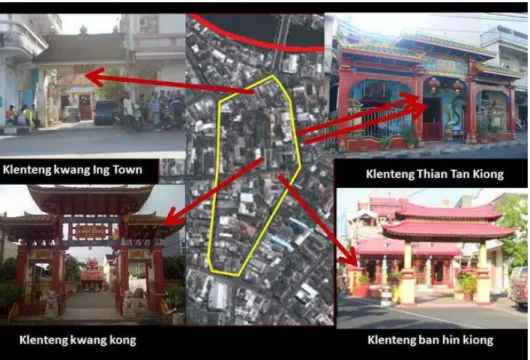
Figure 2 Area of Kampung Cina (Chinatown)
Source: Site observation.
LITERATURE REVIEW
The heritage or cultural heritage in the broad sense implies a legacy or historical inheritance of cultural heritage objects. The word itself is often associated with a legacy of something (value) that is derived or inherited (generation to generation) and are transferred from one generation to the next. Given its role as a carrier of past historical value, then the heritage is seen as an important part of the cultural tradition of a society. One way of managing urban heritage in a professional and sustainable is by undertaking revitalization.
Revitalization is an effort to restore the dynamics and to revive the assisted environment, which is affected by various factors, such as social, cultural, economic and political policies. Jefrizon and Rimadewi (2012) provide an understanding of the revitalization as an attempt to revitalize an area or a part of town that was once vital and alive, but then suffered a setback or degradation. According to the Ministry of Public Works, revitalization is an attempt to revive a dead region by redeveloping the area to rediscover their potential. Revitalization is also expected to provide improved quality of the urban environment, which in turn, improve the quality of life of its inhabitants (Jefrizon & Rimadewi, 2012).
RESEARCH METHODOLOGY
This study began with the identification of the context of the problem and goal setting. Based on the objectives, methods were selected for data collection and data analysis. Primary data were obtained through site observation while secondary data were gathered from secondary sources including research articles, maps, statistics and planning standards. Data were analysed in order to establish the history of the area and to make comparisons.
DISCUSSION
The city, as a complex assisted environment, is always changing, and the changes are believed to be somewhat normal and natural. The changes could be positive towards the improvement of the quality of an environment, or it could be otherwise. If a city is changing towards the decline, then it may not be feasible to accommodate new activities or functions.
The existence of historical buildings, sites or monuments is the potential for the development of cultural heritage tourism as an alternative to urban tourism development (Hayati, 2014). The development of cultural heritage tourism in urban area is ideal to be implemented because a city will not lose its local identity, as well as providing an understanding and a sense of pride in the town's history and culture of the local community.
Cina) in Manado City Centre, elements that have the potential to be revitalized are both the non-physical and the physical elements of the area. Dependencies between elements are very important. Physical elements would be valuable if it can provide added value to the economic and socio-cultural activities of the area. In other words, if the physical elements are well contained by non-physical element, they can provide attraction for visitors. A physical element will deteriorate if it is not used by the presence of non-physical elements. Non-physical element will be lost if its meaning is not understood by the public (Tondobala, 2013).
Revitalization of Physical Building and Environment
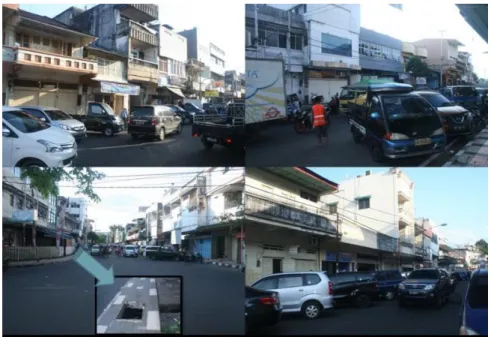
Based on the comparison between the building and the street (streetscape), the streets in Chinatown were lined with shops of varied conditions. The present layout of the shops does not provide adequate space for greenscapes and parking space for vehicles. Lack of parking space has resulted in the streets being congested most of the time. In terms of the buildings, in overall the buildings are still in good condition structurally, but they look ‘old’ and only minimum maintenance was conducted by the owners. The position of the buildings which are on lower platform level as compared to the streets’ has resulted in the buildings being often submerged in water during the rainy season. Some of the gutters are damaged and sidewalks are often used by street vendors to peddle their merchandise. These make the area look disorganized and shabby.
Figure 3 Physical Condition of Building and Environment at Kampung Cina
Some of the buildings in Chinatown, including the temples, portray Chinese architectural style. However, the buildings are in need of repairs and the area is in need of upgrades. Improvement and upgrades are required in terms of the building condition, green spaces, road connection system, signs and billboards, and open space. Besides the Chinese-style building, the area also has several buildings with colonial architecture. This is not inseparable from the Dutch colonial rule that at the time makes the Old Town Centre as the centre of residency government administration (Wulur, Kumurur & Kaunang, 2013). Buildings of colonial-style architecture in the Chinatown area help shaped values of locality in architectural form for the city of Manado. However, these buildings are slowly began to disappear. Thus, revitalization of the area need to include a clear benefit and contribution for the establishment of the community; not only for the present but also for the future.
Economic Revitalization
The Chinatown was the embryo of the economy of Manado City in colonial times. The ethnic Chinese were involved in mediating trade negotiations between the Dutch government and the natives. Although no longer an economic hotspot presently, the Chinatown has the potential as a tourism destination for the region because it has a distinctive tradition of good food and celebrations. The revitalization process of the area should begin with the rejuvenation of urban artefacts, which in turn would support the process of rehabilitation of economic activity. Chinatown short term physical improvements are expected to accommodate formal and informal economic activities, so as to provide added value to the city area. In the context of the revitalization is necessary to develop a mix of functions that can encourage economic activities in the region.
Social Revitalization
CONCLUSION
Despite the fact the Chinatown has the assets to become a tourist destination for the region, these has not being fully exploited. The historical buildings are decaying, and the environment is congested and without adequate infrastructure and greens. Thus, this paper proposes the area to be revitalized, not only in terms of the physical aspect, but also the economic and social aspects. The revitalization programme can be implemented as a cooperation between the Government and the private sector to create job, encourage home industry, increase levy and increase revenue from the region investors. Communities must also be involved in the programme. For instance, religious organizations (since there are several temples in the area) can play a role as a mediator or liaison between the communities and the Government so that community participation can accelerate the revitalization of the Kampung Cina in Manado. The revitalization of the area into a cultural heritage in urban tourism is ideal because it will not lose its local identity, as well as providing an understanding and a sense of pride in the town's history and culture of the local community.
ACKNOWLEDGEMENTS
REFERENCES
Hayati, R. (2014). Pemanfaatan bangunan bersejarah sebagai wisata warisan budaya di Kota Makassar.JUMPA, 1(1), 1-42.
Jefrizon, & Rimadewi, S. (2012). Arahan revitalisasi kawasan cagar budaya kota lama siak. Jurnal Teknik Pomits, 1(1), 1-4.
Nur, K. W. (2010). Revitalisasi kawasan pecinan sebagai pusaka kota (urban heritage) Makassar (Master’s thesis). Institut Teknologi Sepuluh Nopember, Surabaya,
Indonesia.
Silomba, D. (2013). Mengungkap perubahan arsitektur dan fungsi kawasan kota lama Manado sejak abad 16 hingga tahun 2012. Jurnal Matrasain, 10, 50-63. Tondobala, L. (2013). Kelayakan pusat Kota Manado sebagai destinasi pariwisata. Jurnal
Media Matrasain, 9(3), 82-103.