Annu.Rev.Genom.Hum.Genet.2018.19:201–22
FirstpublishedasaReviewinAdvanceon April25,2018
TheAnnualReviewofGenomicsandHumanGenetics isonlineatgenom.annualreviews.org
https://doi.org/10.1146/annurev-genom-083117-021329
Cystic
Fibrosis
Disease
Modifiers:
Complex
Genetics
Defines
the
Phenotypic
Diversity
in
a
Monogenic
Disease
Wanda
K.
O’Neal
and
Michael
R.
Knowles
Cystic Fibrosis/Pulmonary Research and Treatment Center, Marsico Lung Institute, University of North Carolina at Chapel Hill, Chapel Hill, North Carolina 27599, USA;
email: [email protected], [email protected]
Keywords
cysticfibrosis,geneticmodifiers,lungdiseaseseverity,GWAS,HLA, CF-relateddiabetes
Abstract
1. INTRODUCTION
Cystic fibrosis (CF; OMIM 219700) is one of the most commonly studied and referenced mono-genic, recessive diseases in human genetics and is caused by mutations in the cystic fibrosis trans-membrane conductance regulator gene (CFTR). Estimates of incidence are approximately 1 in 3,000 in populations of northern European origin, with reduced frequencies in other regions (115). The relatively high incidence, coupled with the high penetrance of the disease phenotype and the frequency of severe and life-threatening disease consequences almost immediately after birth, has provided the research community with a strong incentive to both understand and treat this devastating condition.
Early descriptions of the disorder referred to it as cystic fibrosis of the pancreas because of the cysts and fibrosis present in infant pancreatic tissue at autopsy (41, 44). Other consistent features noted in infancy were salty sweat, meconium ileus, and respiratory disease. The life spans of CF patients were short (41, 45, 149). Surgical treatments to correct the intestinal obstruction caused by meconium ileus and the development of pancreatic enzyme supplements were highly successful, and together they increased the expected life span from infancy to toddlerhood and childhood (97). These life-saving efforts changed the treatment focus to the morbidity and mortality associated with severe respiratory disease, which develops after birth and sits at the center of the lifelong disease burden in contemporary CF care.
Advances in the understanding of lung disease—in this case, the buildup of viscous mucus, or mucoviscidosis, as CF was called, with resultant airway infections—led to further dramatic increases in life expectancy into the teens and early 20s, with the development of physical therapy to clear mucus and antibiotics to reduce infectious burden (83, 97). Continued improvements in these modalities, augmented by additional treatment options, such as DNase to help reduce mucus thickness, hypertonic saline to hydrate airway secretions, and lung transplantation, have further served to increase life expectancy (53, 60, 125). With the development of CFTR-directed therapies that correct defective protein function (70, 73, 120, 136), the CF research community can happily report that the life expectancy of individuals with CF should continue to improve.
Thus, the history of CF and its treatment remains a model for progress in genetic disorders (35, 41, 45, 97). From its recognition as a familial and recessive hereditary trait to the delineation of key physiological processes associated with affected individuals, the localization of the genetic defect via linkage, the successful identification of the gene using chromosome walking approaches, the identification of the CFTR chloride/bicarbonate ion channel as the key protein defective in CF pathogenesis, the discovery of the functional consequences of key CFTR gene mutations, the development of newborn screening with demonstrable clinical benefit, and the present-day expectation of prolonged life based on personalized medicine and organ-specific treatments, the path of CF research and treatment provides a road map of impressive success.
Still, the disease burden is heavy for CF patients and their caregivers—economically, socially, and psychologically—and current treatments are not effective in all patients. Because of this, the search for new therapeutic options and the identification of druggable targets continue. A full understanding of the effect of environmental and non-CFTRgenetic influences in the context of CF disease development will lead to these new targets. Environmental influences, which include secondhand smoke and microbial exposures, pollution, climate, socioeconomic status, and nutri-tion, are important features of CF phenotypic expression that have been covered extensively in previous works (67, 89, 107, 114, 124). This review seeks to provide the latest perspectives in the CF genetic modifier research area. We refer readers to specific prior reviews to gain a perspective on how the field has advanced across time (34, 46, 62, 69, 82, 84, 145).
phenotypic expression is common in CF (16), as seen in other recessive Mendelian disorders, such as the presentation of sickle vaso-occlusion and hemolytic anemia in sickle cell disease (72). In the case of CF, it is important to appreciate the multiple sources of phenotypic diversity within the broader discussions. These sources include the tissue-specific phenotypes produced by CFTR loss, the phenotypic diversity associated with differentCFTRmutations, and the role of modifiers (environmental and genetic).
2. MAJOR TISSUE-SPECIFIC CYSTIC FIBROSIS PHENOTYPES
Defects inCFTRlead to clinically relevant phenotypes unique to each affected organ. For the most part, CFTR-dependent organ systems contain secretory epithelial layers, where CFTR functions at the apical surfaces to regulate fluid and ion homeostasis and pH (41, 97, 113). Airways, the intestine, the pancreas, the hepatobiliary system, airway submucosal glands and sweat glands, and reproductive organs all require functional CFTR in health. In disease, loss of CFTR affects each tissue in clinically important respects. Lung disease with mucus plugging and bacterial infections of the airways and sinuses accompanies CFTR loss in airway epithelium and submucosal glands (83). Failure of CFTR in the pancreas leads to loss of exocrine pancreatic function and subsequent fat and nutrient malabsorption, as well as greatly increased risk for developing CF-related diabetes (CFRD) (149). Male infertility results from obstructive azoospermia caused by developmental defects of the vas deferens (20). Elevated sweat sodium and chloride result from a failure of salt absorption in sweat ducts, producing complications related to heat stress (20, 28). Loss of CFTR expression in intestinal epithelium can lead to meconium ileus, nutrient malabsorption, and distal intestinal obstruction syndrome (43). CF liver disease occurs when the hepatobiliary ductal system is affected (123).
In the context of genetic modifiers, it is important to recognize that each of these affected systems has its own specific phenotypic heterogeneity and responds toCFTRmutations and en-vironmental and non-CFTRgenetic modifiers in unique ways (Figure 1). It is clear that in some organs, such as the male genital tract and sweat duct, CF mutations are highly penetrant, and phenotypic expression follows a strict Mendelian pattern of inheritance. In this context, nearly all males with CF mutations and multiorgan involvement are sterile because of developmental vas deferens defects, and high sweat chloride is so pathognomonic that it is used as a diagnostic test for the disease. In other organ systems, the effects ofCFTRmutations and environmental and genetic modifiers are clearly more relevant, and the situation can become quite complex (Figure 1). For example, while the development of airway disease over the lifetime is highly pene-trant, the rate of lung function decline, severity of lung disease, and age of onset of chronic bacterial infections in the lung are highly variable (38, 80, 146). Furthermore, while newborn presentation of intestinal obstruction with meconium ileus is pathognomonic for CF, only approximately 20% of CF patients are born with meconium ileus (51). Moreover, approximately 90% of CF patients have exocrine pancreatic insufficiency, which serves as a basis for newborn screening, and approx-imately 10% maintain adequate pancreatic exocrine function (92, 149). Finally, the development of CFRD is age dependent; while few children have CFRD, 40–50% of adult patients have it (100, 101).
Airways Hepatobiliary system Endocrine pancreas Intestine Exocrine pancreas Sweat duct Male genital Modifier gene
CFTR gene Environmental factor Multiple
Absence of vas deferens, male sterility
Organ Phenotype
High sweat chloride
Pancreatic enzyme deficiency
Meconium ileus, distal intestinal obstruction syndrome
CF-related diabetes
CF liver disease
Rate of lung function decline, age of onset of chronic infection
Complex traits • Chronic obstructive
pulmonary disease • Type 2 diabetes • Asthma • Colon cancer • Non-CF bronchiectasis
Notes
High penetrance, present without other organ involvement
High penetrance regardless of
CFTR genotype, used for diagnosis
High penetrance over lifetime Airways Development of airway disease
Limited mostly to severe (loss-of-function)
CFTR mutations
Variable, even with the same CFTR mutation
CF-related disorders • Pancreatitis • Male infertility • Sinusitus • Nasal polyps Mendelian
inheritance
Complex disease
Figure 1
Schematic showing the magnitude of effect of mutantCFTR(Mendelian) versus those of environmental influences and modifier genes for various organ systems. Mutations in theCFTRgene are the initiating and predominant genetic influence in cystic fibrosis (CF). There are non-CFTRgenetic variants (both adverse and beneficial) that modify disease severity in CF in conjunction with
environmental factors. Some affected organs are more susceptible to environmental influences andCFTRmutations than others. On the far end of the spectrum,CFTRitself is just one potential modifier in the presentation of complex disease traits. Adapted from Reference 84 (from original image used with permission of Dr. Peter Durie).
deferens is one well-documented example (106); in this condition, evaluation in fertility clinics in patients who are otherwise phenotypically normal leads to the discovery of CF mutations.CFTR -related disorders now extend beyond congenital bilateral absence of the vas deferens to include idiopathic chronic and acute recurrent pancreatitis, diffuse bronchiectasis, rhinosinusitis, allergic bronchopulmonary aspergillosis, and sclerosing cholangitis (106). Patients with these CF-related disease entities have a higher prevalence of carrying one or twoCFTRmutation variants than is seen in the general population (16, 27). On the far end of this spectrum are conditions whereCFTR itself could become a gene modifier for complex disease traits, such as chronic obstructive pul-monary disease and asthma (7, 39, 105, 112). In such cases, polymorphisms associated withCFTR become one of many environmental and genetic factors contributing to disease presentations.
3.CFTRGENETIC DIVERSITY
are available (127). It is notable that there are 281 verified CF-causing variants inCFTR, which account for mutations in approximately 99% of CF patients (37).
A useful paradigm was developed for classifyingCFTR mutations based on functional con-sequences, i.e., their ability to disrupt the normal ion transport functions of the CFTR protein (146, 147). In this classification,CFTRmutations fall into five generally distinct categories: class I, defective protein production (nonsense, frameshift, and splicing mutations); class II, defective protein maturation and processing (the most commonly observedCFTRmutation, Phe508del, is in this category); class III, defective CFTR channel regulation or gating; class IV, altered CFTR channel conductance; and class V, altered CFTR protein stability (98). While not all mutations fall neatly into these categories, the generalized scheme has stood the test of time. Understanding the features of each identified mutation is the goal of several recent initiatives (12, 24, 139).
Not surprisingly, the presentation of tissue-specific CF phenotypes is highly dependent on the type of mutation. For example, in the exocrine pancreas,CFTRmutation-specific effects have led to the widely used nomenclature of pancreatic-sufficient versus pancreatic-insufficient mutations (78, 80, 91, 155). Pancreatic insufficiency occurs when less than 5% of the exocrine pancreas is functioning, resulting in severe fat malabsorption and malnutrition (64). Pancreatic sufficiency occurs when there is residual CFTR function, and sufficient pancreatic function avoids the need for pancreatic enzyme replacement therapy. In general, severe class I–III mutations in both alleles are associated with pancreatic insufficiency (5, 52). While pancreatic-sufficient mutations are asso-ciated with better nutritional status, they are also assoasso-ciated with a risk of developing pancreatitis (109). In general, meconium ileus and distal intestinal obstruction syndrome are also usually asso-ciated with severe class I–III mutations on both alleles (87).CFTRmutations with residual function are uncommon in individuals with severe CF liver disease (characterized by portal hypertension resulting from cirrhosis) and CFRD, but beyond that, specificCFTRmutations are not associated with severe CF liver disease or CFRD (8, 150).
Genotype–phenotype relationships to lung disease severity are generally more complex than those in other tissues. As mentioned, most CF patients develop airway pathology across their lifetimes, with most developing it during childhood; thus, the phenotype as a broad class is highly penetrant, regardless of mutation class. In other words, the mechanistic pathophysiology of CF lung disease is similar regardless of the exact nature of the mutation (48); i.e., there is loss of lung function caused by CFTR deficiency accompanied by common features (mucus plugging and bacterial infections). Nonetheless, lung disease phenotypic diversity arises as patients develop lung disease across time. Patients with class I–III mutations (pancreatic-insufficient mutations, with loss of function) tend to have worse lung function with a faster decline in FEV1(forced expiratory
volume measured during the first second of the forced breath) and higher risk for more severe lung disease than patients who carry at least one class IV or V mutation (30, 42, 65). However, at any given age, the severity of lung disease for homozygotes (or compound heterozygotes) for class I–IIICFTRmutations is quite variable, and some older patients have relatively mild lung disease. Patients who carry at least one class IV or V mutation (pancreatic-sufficient mutations, with residual function) tend to have milder lung disease, but some develop severe respiratory disease. Furthermore, the considerable variability in the rate of lung function decline, the age of onset of lung function decline, and the age of onset of chronic respiratory pathogens means that it is difficult to reliably predict the severity of pulmonary disease within a given individual based only onCFTRgenotype (84, 146, 153, 155).
approximately 70% of allCFTRalleles worldwide and in the United States (37, 146). Importantly, there are enough CF patients homozygous for this mutation for the field to state accurately that CF phenotype presentation varies widely, even among CF patients with the sameCFTRmutation. In the next section, we explore the finding that variation in the CF phenotypes is significantly dependent on heritable non-CFTRinfluences, setting the stage for the rest of this discussion.
4. THE ROLE OF NON-CFTRGENE MODIFIERS
Outside theCFTRgene itself, phenotypic variation is dependent on both the environment and the host genetic background, and the potential role of gene modifiers is dependent on the latter. In the broadest sense, the strong potential role of genetic modifiers in determining CF phenotypes can be appreciated if we consider the disparate phenotypes associated with the various animal models (mice, pig, rat, and ferret), where background genetics clearly drives or determines phenotypic manifestation (119). CF pigs, for example, have highly penetrant development of meconium ileus, whereas only 20% of CF humans develop this phenotype. Lung disease with spontaneous devel-opment of mucus plugging and infection, which is highly penetrant in human CF, is missing in mice and rats, although recent interesting evidence suggests that mucus abnormalities observed in human airways are recapitulated in the rat model as the animals age (9). CF male mice are fertile, while CF male humans clearly are not. While environmental influences likely play some small role in these cross-species differences, the integration of CF function with the multitude of other species-specific genes and proteins is likely responsible for a majority of species-specific effects of CFTR loss. In this sense, it would be misleading to view findings in CF animal models as the true CF picture and insist that humans must model the animals to expand our understanding of CF pathogenesis, rather than the inverse. Thus, studying humans is the ideal way to evaluate CF phenotypic variation.
Along those lines, heritability studies in humans are the most direct way to define the CF phenotypes affected by gene-modifying traits (Table 1). Heritability studies in CF are possible owing to the relatively high incidence of the condition, and such studies have led directly to a measure of heritable, nonenvironmental, genetic modifier effects. Because they control for both the genotype and (for the most part) the environment, studies of phenotypic differences in twins
Table 1 Heritability estimates for cystic fibrosis (CF) traits established from twin and sibling
studies
Trait
Non-CFTR-related
heritabilitya Reference(s)
Lung disease severityb 0.54–0.80 99, 138
CF-related diabetesc >0.80 13
Meconium ileus occurrencec >0.80 11, 103
Nutritional status 0.54–0.82 18
Age of onset of chronicPseudomonas aeruginosa infection
>0.76 68
Serum immunoreactive trypsinogen as surrogate for early exocrine pancreatic insufficiency
>0.45 126
aRefers to the heritability that is not due to differences in phenotype that occur across differentCFTRmutations. bDependent on the methodological approach.
and siblings provide the strongest evidence for heritable nonrelated modifying traits. Such studies have demonstrated high degrees of heritability for several CF phenotypes, including pulmonary outcomes (99, 138), intestinal obstruction at birth (11), early exocrine pancreatic insufficiency (126), body mass index as a surrogate for nutritional status (18), age of onset of chronicPseudomonas aeruginosainfection (68), and CFRD (13). While all heritability estimates vary depending on the specific analyses and the specific population studied (dizygous twins versus monozygous twins versus siblings), they nonetheless have pointed to important roles of non-CFTRmodifiers in disease presentation.
5. GENE MODIFIERS: CANDIDATE GENE AND LINKAGE APPROACHES
The rationale for identifying gene modifiers for key phenotypes is established. As with other diseases, candidate gene approaches were common in the earlier years in the search for gene modifiers in CF (29, 33), and an excellent recent review is available on this topic (69). Many of these early CF candidate gene studies were relatively small and did not include a validation cohort, and many of these early findings were conflicting (22). One of the first larger studies, which included a replication cohort, found a genetic variant inTGFB1to be associated with lung disease severity (50). The association withTGFB1 was validated in a separate cohort (19) but was not validated (statistically) in the recently reported genome-wide association study (GWAS) findings (31).IL8(currently known asCXCL8) (61, 75) andMBL2(25) are additional candidate genes that are supported by multiple studies but are not statistically significant in GWASs. Linkage studies that localized the causal gene to chromosome 7 (chr7) were extremely useful during the initial search for the CF gene (85, 141), but linkage studies for the identification of gene modifiers (11, 18, 151) have not been extensively used to provide novel mechanistic insights at present.
6. GENE MODIFIERS: GENOME-WIDE ASSOCIATION STUDY RESULTS
As the field accrued larger cohorts, candidate gene and linkage approaches gave way to GWASs. The efforts of the International CF Gene Modifier Consortium in studying samples from the United States, Canada, and France have produced the benchmark results in this area (31). The consortium’s initial focus on airway phenotypes has expanded to include other phenotypes, such as CFRD and meconium ileus.
6.1. Lung Disease Severity
Because of the importance of lung disease in the pathogenesis of CF, the evidence for high heritability of lung disease phenotypic variability, and the need for improved treatments for CF pulmonary disease, identification of genetic modifiers for lung disease progression has been the major focus of current GWAS efforts. Several features of these efforts, including the key findings, are described in detail in the following sections.
has been termed Kulich normal residual mortality adjusted for CF-related mortality (KNoRMA) or the Consortium lung phenotype (where “Consortium” refers to the International CF Gene Modifier Consortium) (135, 151). KNoRMA requires three years of pulmonary function tests that are referenced to thousands of age- and gender-matched CF patients and adjusted for mor-tality (14, 135).
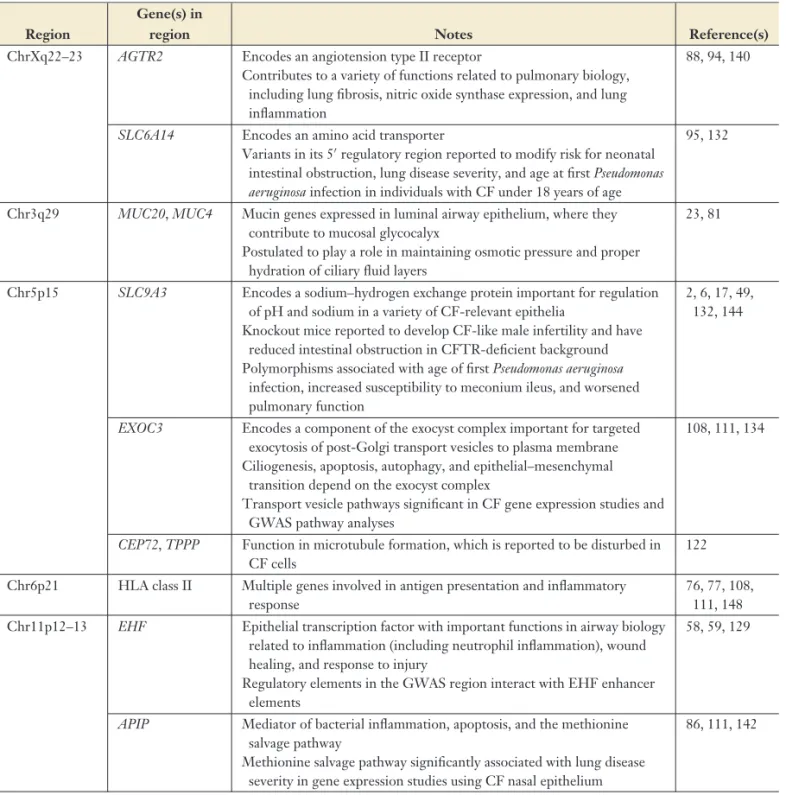
6.1.2. Loci associated with lung disease severity. Using KNoRMA as the quantitative lung phenotype, the International CF Gene Modifier Consortium has identified five loci with significant associations with lung disease severity (31) (Table 2). These results extend an earlier report that combined GWASs and linkage in a subset of the consortium participants (151). As discussed in the published work, all five regions contain genes of biological interest with high mechanistic probability. However, as with most GWAS signals, the regions of highest association are intergenic and therefore likely regulatory. To date, ongoing research has not directly linked a mechanism to the polymorphisms for any of the regions.
Nonetheless, the GWAS results provide a framework for the research needed to identify the mechanism of association. With the advent of improved and specific CF therapies that restore some function of CFTR, we anticipate a change in lung disease severity and trajectory, which will preclude calculation of a harmonized KNoRMA in younger CF cohorts. It will thus be challenging to extend the current findings to even larger studies, as is often done with other, more common, complex disease phenotypes, and these five loci potentially represent the best measurement of non-CFTRgenetic variation contributing to lung disease severity in the GWAS era.
Understanding the mechanistic effects of the polymorphisms in these five critical regions on CF lung pathophysiology will be an important next step in CF gene modifier studies. Global efforts to map regulatory regions, define chromatin domain structure, establish highly powered expression databases, and apply new statistical methods will facilitate these efforts. International CF Gene Modifier Consortium investigators and others are beginning to make strides in these areas, expanding knowledge of the functions of the genes in the region, increasing understanding of the role of the regulatory features encompassing the association signals, and delving deeper into the regions by fine mapping and deep sequencing. Two regions, the chr6p21 region containing human leukocyte antigen (HLA) genes and the intergenic chr11p12–13 region, provide examples.
6.1.3. Lung function and the chr6p21 region: HLA. The HLA region is the most polymorphic in the human genome and comprises hundreds of genes, including the major histocompatibility complex (MHC) genes. MHC molecules are critical in antigen presentation and the ensuing appropriate or pertinent inflammatory response. Before the advent of GWASs, there were hints that the region would be critical for CF pathogenesis. Class II HLA-DR7-negative CF subjects were shown to have lower IgE and protection againstP. aeruginosa, and the presence of allergic bronchopulmonary aspergillosis was associated with the presence of class II HLA-DR2 and absence of HLA-DQ2 expression (3). The first large GWAS found a suggestive signal in the HLA locus (151) that was replicated in the latest study, reaching genome-wide significance (31).
Table 2 Key features in the five genome-wide association study (GWAS) loci associated with lung disease severity in cystic fibrosis (CF) (31)
Region
Gene(s) in
region Notes Reference(s)
ChrXq22–23 AGTR2 Encodes an angiotension type II receptor
Contributes to a variety of functions related to pulmonary biology, including lung fibrosis, nitric oxide synthase expression, and lung inflammation
88, 94, 140
SLC6A14 Encodes an amino acid transporter
Variants in its 5regulatory region reported to modify risk for neonatal intestinal obstruction, lung disease severity, and age at firstPseudomonas aeruginosainfection in individuals with CF under 18 years of age
95, 132
Chr3q29 MUC20,MUC4 Mucin genes expressed in luminal airway epithelium, where they contribute to mucosal glycocalyx
Postulated to play a role in maintaining osmotic pressure and proper hydration of ciliary fluid layers
23, 81
Chr5p15 SLC9A3 Encodes a sodium–hydrogen exchange protein important for regulation of pH and sodium in a variety of CF-relevant epithelia
Knockout mice reported to develop CF-like male infertility and have reduced intestinal obstruction in CFTR-deficient background Polymorphisms associated with age of firstPseudomonas aeruginosa
infection, increased susceptibility to meconium ileus, and worsened pulmonary function
2, 6, 17, 49, 132, 144
EXOC3 Encodes a component of the exocyst complex important for targeted exocytosis of post-Golgi transport vesicles to plasma membrane Ciliogenesis, apoptosis, autophagy, and epithelial–mesenchymal
transition depend on the exocyst complex
Transport vesicle pathways significant in CF gene expression studies and GWAS pathway analyses
108, 111, 134
CEP72,TPPP Function in microtubule formation, which is reported to be disturbed in CF cells
122
Chr6p21 HLA class II Multiple genes involved in antigen presentation and inflammatory response
76, 77, 108, 111, 148 Chr11p12–13 EHF Epithelial transcription factor with important functions in airway biology
related to inflammation (including neutrophil inflammation), wound healing, and response to injury
Regulatory elements in the GWAS region interact with EHF enhancer elements
58, 59, 129
APIP Mediator of bacterial inflammation, apoptosis, and the methionine salvage pathway
Methionine salvage pathway significantly associated with lung disease severity in gene expression studies using CF nasal epithelium
86, 111, 142
evaluated for association with nasal epithelial gene expression levels (N= 134) from CF patients, HLA genes were frequently present in significant gene expression pathways (111).
Class l Class II HLA-DQA2 HLA-DQB HLA-DQB2 HLA-DRB3 HLA-J Class l
Class II Class II Class l
HLA-DMB HLA-DPB2 HLA-DOB HLA-DOA HLA-DPB1 HLA-F HLA-B HLA-E HLA-DOB HLA-DMB HLA-DMA HLA-B HLA-C HLA-A HLA-F HLA-DOA HLA-DQB2 HLA-DPB1 HLA-DPA1 HLA-DOA HLA-DQB1 HLA-DRB6 HLA-DMA HLA-DRA HLA-DOB HLA-DQA1 HLA-DMB HLA-DRB1 HLA-DRB5 HLA-DRB4 HLA-C HLA--E HLA-B HLA-F HLA-A HLA-F-AS1 HLA-G HLA-H HLA-DRA HLA-DPA1 HLA-DMA pvalue 0.09 0.52 0.87 0.30 Nasal epithelium KNoRMA LCL LCL KNoRMA HLA-DMB HLA-DOB HLA-DPB2 HLA-DPB1 HLA-DOA HLA-DPA1 HLA-DRA HLA-DMA HLA-F HLA-E HLA-B Class l Class II
Gene-level association (GWAS)
KNoRMA
HLA-DQA1
HLA-DQB1
HLA-DRB1 Meconium ileus
Differential gene expression
+ – + – + – Figure 2
The human leukocyte antigen (HLA) region and genes associated with lung disease severity in cystic fibrosis (CF) across multiple analyses. This schematic depicts the statistical associations identified in differential gene expression studies from nasal epithelium and lymphoblastoid cell lines (LCLs) and from genome-wide association study (GWAS) analyses (108, 111). HLA class I and II genes (listed on therightandleftsides of each vertical bar, respectively) whose mean expression values were above the cutoff of expressed genes in each study were ranked according to the association strength [tstatistic, with negative (−) associations to lung phenotype on the bottom and positive (+) associations to lung phenotype on the top] in expression data. HLA genes represented in the GWAS panel are depicted according to strength of association with Kulich normal residual mortality adjusted for CF-related mortality (KNoRMA) using gene-level statistical tests (111), withpvalues provided as a reference to aid interpretation. The width of the vertical bar represents the relative strength of the association finding. Individual genes are color-coded for convenience. A clustering of HLA genes toward the regions with high association signals is apparent for the lung disease severity panels. HLA genes in nasal epithelium are most strongly associated with a negative beta, indicating that increased expression is associated with worse lung function, while the opposite is true for LCLs. Associations with the meconium ileus phenotype from the LCL data highlight no significant HLA findings for this phenotype. Adapted from Reference 108 with permission.
these overall findings. Interestingly, from the LCL data, the HLA genes did not contribute at all to the development of meconium ileus in the same set of CF patients (108) (Figure 2), suggesting tissue-specific phenotypic regulation by HLA.
Thus, robust genetic and expression signatures for HLA genes are present across all of these studies (GWAS, gene-level GWAS, LCL gene expression, and nasal gene expression), and we conclude that HLA genes play an important role in CF lung disease severity. The mechanism of this effect eludes understanding, although the association of CF phenotypes with the HLA region is not surprising given the role of these genes in regulating immune responses. The MHC region contains the greatest number of significant associations from GWASs relative to any other region in the genome (76), associating with more than 100 different phenotypes (148). The CF-association MHC region contains GWAS signals for other respiratory and many inflammatory diseases, such as asthma and Crohn’s disease (77). It is unclear whether mechanistic insights discovered in airway diseases such as asthma will be applicable to CF. Any clarification on this complex issue must await a clear understanding of the specific HLA alleles present in the CF population and a much deeper appreciation for the role that single-nucleotide polymorphisms (SNPs) play in the expression of these HLA genes. Thus, the CF community is anxiously awaiting whole-genome sequencing and the application of other methods to fully define the different HLA alleles in this complex region.
6.1.4. Lung function and the chr11p12–13 region:EHFandAPIP. The first large GWAS in CF identified one significant association with lung disease severity, an intergenic region on chr11p between two genes,EHFandAPIP(151). This region remained significant in the larger International CF Gene Modifier Consortium analyses (31). Because it was the first region identi-fied, there has been considerable effort to identify the mechanistic links. Interestingly, CF patients homozygous for the Phe508del mutation drive the association between lung disease severity and polymorphisms in this region (40). This was the only region of the five major loci that exhibited this effect, with other loci showing association even in non-Phe508del patients. Any mechanistic links between polymorphisms and lung disease must seek to explain this finding.
to theAPIPpromoter (129). If further study reveals a critical role for the methionine salvage pathway, therapeutic options exist for its regulation (56, 57). Further complexity may evolve from recent identification of a long noncoding RNA (lncRNA) species in this region (116), which has not yet been studied. Ongoing work to delete regulatory regions, explore chromatin interactions on the risk and nonrisk haplotypes, and explore the effects of these haplotypes on airway epithelial biology using cell models should add clarity in the near future (129, 130, 133).
6.2. Genome-Wide Association Study Results for Cystic Fibrosis–Related Diabetes (Endocrine Pancreas)
Insulin-requiring diabetes is a clinically important complication that affects 25% of adolescents and 40–80% of adults with CF (96, 102). With increasing life expectancy, diabetes is becoming one of the most important and common complications for CF patients. Among CF patients who carry severe (pancreatic-insufficient) mutations, diabetes affects 40% by age 30 and 80% by age 50, and despite improving diabetes management, it still causes increased mortality (93). The prevalence of diabetes in people with CF is approximately 10 times that of type 2 diabetes in the general population, and it manifests at a significantly younger age (32).
The development of diabetes is dependent on the level of residual CFTR function, as patients with genotypes conferring residual CFTR function develop CFRD at a much lower rate than those with severe (pancreatic-insufficient)CFTRgenotypes (93), although this rate is still higher than that of type 2 diabetes in the general population. Interestingly, however,CFTRmutations do not otherwise explain wide variation in the risk of diabetes development among those with severe CFTRgenotypes, and gene modifiers were clearly demonstrated in twin and sibling studies (13). The most definitive GWAS to date identified SNPs nearSLC26A9associated with CFRD using the International CF Gene Modifier Consortium cohort (10).
The similarities between type 2 diabetes in the general population and CFRD, including an increased prevalence with age, a progressive defect in insulin secretion, and an accumulation of amyloid polypeptide in pancreatic islets, led to the suggestion that the two conditions would have similar susceptibility genes (12). Indeed, this hypothesis has turned out to be true, as first identified for CFRD susceptibility locusTCF7L2in a family-based study (12). In this CF study, variation in TCF7L2increased diabetes risk approximately threefold and decreased the mean age of diabetes diagnosis by 7 years. Variation inTCF7L2accounted for 32% of population-attributable risk. GWASs conducted on a larger group of CF patients also seemed to confirm the association with TCF7L2(4, 12).
The idea that type 2 diabetes susceptibility genes in the general population (104) are also sus-ceptibility genes in CFRD was solidified by the identification of significant associations with three additional type 2 diabetes loci, in SNPs at or near CDKAL1,CDKN2A/B, andIGF2BP2(10). Together with the GWAS SNP inSLC26A9and theTCF7L2SNPs, these loci accounted for 8.3% of the phenotypic variance in CFRD onset, with a combined population-attributable risk of 68%. More recent analyses of data from the larger consortium data set have extended these findings, demonstrating that genetic risk for type 2 diabetes [defined using a set of 155 type 2 diabetes risk variants available from the National Human Genome Research Institute–European Bioinformatics Institute catalog of published GWASs (http://www.ebi.ac.uk/gwas)] was asso-ciated with CFRD. This association persisted even after removing all SNPs in loci previously reported to be associated with CFRD. An analogous polygenic risk score for type 1 diabetes also showed evidence of association with CFRD development (4).
meconium ileus and exocrine pancreatic function (95). The involvement of type 2 diabetes loci such asTCF7L2implicates pathways involved in glucose metabolism that overlap between CFRD and type 2 diabetes.
6.3. Genome-Wide Association Study Results for Meconium Ileus
Neonatal intestinal obstruction (meconium ileus) occurs in approximately 20% of CF patients in the United States, with estimates varying between 14% and 21% depending on the country registry data (51). The present understanding is that theCFTRmutations are major determinants of meconium ileus occurrence; only those with severe (pancreatic-insufficient)CFTRvariants tend to develop this CF-specific bowel obstruction. Within patients with these severe mutations, however, further heterogeneity of expression of meconium ileus exists—e.g., it is more predominant in patients who carry the severe G542X and Phe508del alleles than it is in those who carry the G551D alleles (51). Beyond that, heritability estimates indicate a predominant role for non-CFTR genetic variants (Table 1).
In early studies focused on gene modifiers for intestinal disease manifestations of CF, genetic variation on human chr19 was associated with meconium ileus and neonatal intestinal obstruction (154), but this finding was not supported in later work (11). Linkage studies coupled with candidate gene association studies identified two potential genes of interest for the development of meconium ileus,ADIPOR2andSLC4A4(47), and confirmed an association ofCFM1, which was identified in the CFTR-deficient mouse as a modifier of meconium ileus development (121, 154). Furthermore, a region on chr8 containingMSRAthat showed linkage to meconium ileus (11) was validated in a family-based association analysis and in an animal model (74).
A hypothesis-driven GWAS found that CFTR-associated constituents of the apical plasma membrane as a group are associated with meconium ileus (132). The analyses for the larger International CF Gene Modifier Consortium set of 6,770 subjects with meconium ileus data and GWAS genotyping revealed three significant loci, including loci close toSLC26A9,ATP12A, and SLC6A14, and a suggestive signal atPRSS1(66). Interestingly, as a part of this work, using novel data integration statistics, the Toronto-led effort has found data suggesting that these loci may be affecting intestinal obstruction through gene regulation in the pancreas, providing evidence that normal pancreatic enzyme function during embryonic development is critical for CF fetal intestinal health.
7. PLEIOTROPY
The tissue-specific phenotypic effects of CFTR loss might predict the relative lack of congruency of gene modifiers for each of the phenotypes—i.e., in general, GWAS loci that associate with one phenotype might not necessarily associate with other phenotypes. However, there are a few exam-ples of pleiotropy worth mentioning.SLC26A9is pleiotropic for meconium ileus and pancreatic damage implicated in CFRD (10, 95);SLC9A3is pleiotropic for meconium ileus, lung disease, and infection (49, 95); andSLC6A14is pleiotropic for meconium ileus, lung disease, and age at firstP. aeruginosainfection (95).
8. GENE MODIFIERS: INSIGHTS FROM GENE EXPRESSION
eQTLs determined by combining the two types of studies often produce important mechanistic insights. Furthermore, subtle changes in multiple genes within specific biological pathways can occur, and integrated pathway analyses are often the only way to capture these signatures, which are especially important in populations like CF patients, where accumulating hundreds of thousands of subjects is not possible. Indeed, two studies have used integrated approaches to explore the role of heritable gene expression in CF LCLs (n = 754 CF subjects) (108) and nasal epithelium from CF patients (n = 134 CF subjects) (111). By associating measured gene expression with CF phenotypes (focusing primarily on KNoRMA as a quantitative lung function measure), we have been able to identify genes in significant pathways that provide new mechanistic insights.
LCLs are not the primary cell of interest for CF, but they were available in large numbers from the University of North Carolina GWAS cohort, and many environmental influences could be controlled for by growing them under identical conditions. The LCL study identified a series of pathways of genes where heritable variation, leading to altered gene expression, was associated with KNoRMA (108).LPAR6, a G protein–coupled receptor, was the single gene that was significantly associated with lung disease severity. Additional analyses identified pathways broadly annotated in three categories: endomembrane function (containing p.Phe508del processing genes), HLA class I genes, and endoplasmic reticulum stress response genes. Expression pathways were concordant for some endosome and HLA pathways with pathways identified using GWAS association data. In the same study, pathways associated with age of onset of persistentP. aeruginosa infection were enriched for HLA class II genes, and those associated with meconium ileus were related to oxidative phosphorylation.
By contrast, the nasal epithelium is a more CF-relevant tissue, but it is more difficult to obtain in large numbers and more likely to be directly affected by the environmental influences at the time of sample collection. Interestingly, the nasal epithelial study captured pathways relevant to airway mucosal host defense, reflecting host responses to insults influenced by the environment, including viral infection, inflammation and inflammatory signaling, lipid metabolism, apoptosis, ion transport, Phe508del CFTR processing, and innate immune responses, including HLA genes (111). Ion transport and CFTR processing pathways as well as HLA genes were identified across differential gene expression and GWAS signals. Compared with the LCL study, the nasal epithelial study found less evidence of a heritable genetic influence on the KNoRMA-associated pathways, implying a greater effect of environmental influences. While gene expression studies from other groups are more limited, they have also reported similar pathway associations from airway epithe-lium, with inflammation and viral responses clearly playing a role in disease outcome (90, 152). As mentioned above, both LCL and nasal epithelial tissues captured robust gene expression signals for the HLA genes and pathways associated with HLA functions (108, 111) (Figure 2).
9. CYSTIC FIBROSIS GENE MODIFIERS: CONCLUDING THOUGHTS
The not-too-distant future holds many more opportunities for discovery of CF gene modifiers. For example, whole-genome sequencing will expand GWAS-type studies to rare variant analyses. The successful use of exome sequencing to identifyDCTN4,CAV2, andTMC6as modifiers of chronicP. aeruginosainfection as part of work by the National Heart, Lung, and Blood Institute’s Exome Sequencing Project provides examples of the potential utility of this strategy (54, 55).
Because of improved treatments, CF patients born from the 1970s to the 2000s are likely to have lung disease severity phenotypes quite different from those in patients born more recently, and as a result, lung function will become more and more difficult to phenotype for gene modifier studies. Nonetheless, the ability to respond to new treatments, the development of adverse events with treatment, and the effect of CF as patients age are examples of new phenotypes for exploration. With large enough sample sizes and increasingly detailed records of patient responses to pharma-cologic agents and exposure to environmental insults, pharmacogenomics and gene–environment interaction studies are possible. As one example, treatment of CF patients with systemic glucocor-ticoids significantly increased the risk for CFRD diabetes conferred byTCF7L2(12). In another example, variants inSLC26A9modified the response of CF patients to the CFTR potentiator ivacaftor (131).
Finally, CF researchers have long argued the logic of collecting genotypes of known modifiers prospectively in CF clinical trials and longitudinal studies of infants identified through newborn screening in order to eventually be able to define the full impact of the modifiers on the disease course (1). While in theory this is a laudable goal, in practice the effects of modifier genes will be difficult to evaluate in this era of ongoing therapeutic improvements. We believe that the robust findings developed from the integrated GWASs and gene expression studies to date hold keys to improved health, and we would support energetic exploration to link the gene modifier variation to the disease outcome. Development of improved therapies will be the ultimate reward.
DISCLOSURE STATEMENT
The authors are not aware of any affiliations, memberships, funding, or financial holdings that might be perceived as affecting the objectivity of this review.
ACKNOWLEDGMENTS
We thank Eric Roe for outstanding technical assistance and Rhonda Pace and Drs. Scott Blackman, Hong Dang, and Jaclyn Stonebraker for editorial comments. We are grateful to all CF patients who have so generously contributed DNA and phenotype data to support modifier studies. We also thank the key funding agencies for supporting the studies highlighted here, especially the Cystic Fibrosis Foundation (grants KNOWLE00A0, DANG16I0, and BOUCHE15R) and the National Institutes of Health (grants DK066368, HL095396, HL117843, and RC2 HL102923-02ARRA).
LITERATURE CITED
1. Accurso FJ, Sontag MK. 2008. Gene modifiers in cystic fibrosis.J. Clin. Investig.118:839–41
2. Ahn W, Kim KH, Lee JA, Kim JY, Choi JY, et al. 2001. Regulatory interaction between the cystic fibrosis transmembrane conductance regulator and HCO3−salvage mechanisms in model systems and
the mouse pancreatic duct.J. Biol. Chem.276:17236–43
4. Atalar M, Vecchio-Pagan B, Strug LJ, Pace RG, Corvol H, et al. 2017.Diabetes in cystic fibrosis and type 2 diabetes (T2D) have overlapping genetic risk architecture. Poster presented at Am. Soc. Hum. Genet. Meet., Orlando, FL, Oct. 17–21
5. Augarten A, Ben Tov A, Madgar I, Barak A, Akons H, et al. 2008. The changing face of the exocrine pancreas in cystic fibrosis: the correlation between pancreatic status, pancreatitis and cystic fibrosis genotype.Eur. J. Gastroenterol. Hepatol.20:164–68
6. Bagorda A, Guerra L, Di Sole F, Hemle-Kolb C, Cardone RA, et al. 2002. Reciprocal protein kinase A regulatory interactions between cystic fibrosis transmembrane conductance regulator and Na+/H+ exchanger isoform 3 in a renal polarized epithelial cell model.J. Biol. Chem.277:21480–88
7. Barrios CR, Ortega VE, Ampleford EJ, Busse WW, Castro M, et al. 2017. Rare, pathogenic CFTR variants are associated with lung function in a multi-ethnic population from the Severe Asthma Research Program (SARP).Am. J. Respir. Crit. Care Med.195:A3245
8. Bartlett JR, Friedman KJ, Ling SC, Pace RG, Bell SC, et al. 2009. Genetic modifiers of liver disease in cystic fibrosis.JAMA302:1076–83
9. Birket SE, Davis JM, Fernandez CM, Tuggle KL, Oden AM, et al. 2018. Development of an airway mucus defect in the cystic fibrosis rat.JCI Insight3:e97199
10. Blackman SM, Commander CW, Watson C, Arcara KM, Strug LJ, et al. 2013. Genetic modifiers of cystic fibrosis-related diabetes.Diabetes62:3627–35
11. Blackman SM, Deering-Brose R, McWilliams R, Naughton K, Coleman B, et al. 2006. Relative con-tribution of genetic and nongenetic modifiers to intestinal obstruction in cystic fibrosis.Gastroenterology 131:1030–39
12. Blackman SM, Hsu S, Ritter SE, Naughton KM, Wright FA, et al. 2009. A susceptibility gene for type 2 diabetes confers substantial risk for diabetes complicating cystic fibrosis.Diabetologia52:1858–65 13. Blackman SM, Hsu S, Vanscoy LL, Collaco JM, Ritter SE, et al. 2009. Genetic modifiers play a substantial
role in diabetes complicating cystic fibrosis.J. Clin. Endocrinol. Metab.94:1302–9
14. Boelle PY, Viviani L, Busson PF, Olesen HV, Ravilly S, et al. 2012. Reference percentiles for FEV1and
BMI in European children and adults with cystic fibrosis.Orphanet J. Rare Dis.7:64
15. Bombieri C, Claustres M, De Boeck K, Derichs N, Dodge J, et al. 2011. Recommendations for the classification of diseases as CFTR-related disorders.J. Cyst. Fibros.10(Suppl. 2):S86–102
16. Bombieri C, Seia M, Castellani C. 2015. Genotypes and phenotypes in cystic fibrosis and cystic fibrosis transmembrane regulator-related disorders.Semin. Respir. Crit. Care Med.36:180–93
17. Bradford EM, Sartor MA, Gawenis LR, Clarke LL, Shull GE. 2009. Reduced NHE3-mediated Na+ absorption increases survival and decreases the incidence of intestinal obstructions in cystic fibrosis mice. Am. J. Physiol. Gastrointest. Liver Physiol.296:G886–98
18. Bradley GM, Blackman SM, Watson CP, Doshi VK, Cutting GR. 2012. Genetic modifiers of nutritional status in cystic fibrosis.Am. J. Clin. Nutr.96:1299–308
19. Bremer LA, Blackman SM, Vanscoy LL, McDougal KE, Bowers A, et al. 2008. Interaction between a novelTGFB1haplotype andCFTRgenotype is associated with improved lung function in cystic fibrosis. Hum. Mol. Genet.17:2228–37
20. Brennan ML, Schrijver I. 2016. Cystic fibrosis: a review of associated phenotypes, use of molecular diagnostic approaches, genetic characteristics, progress, and dilemmas.J. Mol. Diagn.18:3–14 21. Broad Inst. MIT Harv. 2017.GTEx Portal. V7, updated Sept. 18.https://www.gtexportal.org 22. B ¨uscher R, Grasemann H. 2006. Disease modifying genes in cystic fibrosis: therapeutic option or one-way
road?Naunyn Schmiedeberg’s Arch. Pharmacol.374:65–77
23. Button B, Cai LH, Ehre C, Kesimer M, Hill DB, et al. 2012. A periciliary brush promotes the lung health by separating the mucus layer from airway epithelia.Science337:937–41
24. Castellani C. 2013. CFTR2: How will it help care?Paediatr. Respir. Rev.14(Suppl. 1):2–5
25. Chalmers JD, Fleming GB, Hill AT, Kilpatrick DC. 2011. Impact of mannose-binding lectin insufficiency on the course of cystic fibrosis: a review and meta-analysis.Glycobiology21:271–82
26. Child. Hosp. Pa. 2014.4DGenome.https://4dgenome.research.chop.edu
27. Cohn JA. 2005. Reduced CFTR function and the pathobiology of idiopathic pancreatitis. J. Clin. Gas
28. Collaco JM, Blackman SM, Raraigh KS, Corvol H, Rommens JM, et al. 2016. Sources of variation in sweat chloride measurements in cystic fibrosis.Am. J. Respir. Crit. Care Med.194:1375–82
29. Collaco JM, Cutting GR. 2008. Update on gene modifiers in cystic fibrosis.Curr. Opin. Pulm. Med. 14:559–66
30. Corey M, Edwards L, Levison H, Knowles M. 1997. Longitudinal analysis of pulmonary function decline in patients with cystic fibrosis.J. Pediatr.131:809–14
31. Corvol H, Blackman SM, Boelle PY, Gallins PJ, Pace RG, et al. 2015. Genome-wide association meta-analysis identifies five modifier loci of lung disease severity in cystic fibrosis.Nat. Commun.6:8382 32. Cowie CC, Rust KF, Byrd-Holt DD, Eberhardt MS, Flegal KM, et al. 2006. Prevalence of diabetes and
impaired fasting glucose in adults in the U.S. population: National Health and Nutrition Examination Survey 1999–2002.Diabetes Care29:1263–68
33. Cutting GR. 2005. Modifier genetics: cystic fibrosis.Annu. Rev. Genom. Hum. Genet.6:237–60 34. Cutting GR. 2010. Modifier genes in Mendelian disorders: the example of cystic fibrosis.Ann. N.Y. Acad.
Sci.1214:57–69
35. Cutting GR. 2015. Cystic fibrosis genetics: from molecular understanding to clinical application.Nat. Rev. Genet.16:45–56
36. Cyst. Fibros. Cent. 2011.Cystic Fibrosis Mutation Database. Updated Apr. 25.http://www.genet.sickkids. on.ca/cftr
37. Cyst. Fibros. Found., Johns Hopkins Univ. Hosp. Sick Child. 2017.CFTR2 variant list history. Updated Mar. 17.https://cftr2.org/mutations_history
38. Cyst. Fibros. Genotype-Phenotype Consort. 1993. Correlation between genotype and phenotype in patients with cystic fibrosis.N. Engl. J. Med. 329:1308–13
39. Dahl M, Tybjaerg-Hansen A, Lange P, Nordestgaard BG. 1998.F508 heterozygosity in cystic fibrosis and susceptibility to asthma.Lancet351:1911–13
40. Dang H, Gallins PJ, Pace RG, Guo XL, Stonebraker JR, et al. 2016. Novel variation at chr11p13 associated with cystic fibrosis lung disease severity.Hum. Genome Var.3:16020
41. Davis PB. 2006. Cystic fibrosis since 1938.Am. J. Respir. Crit. Care Med.173:475–82
42. de Gracia J, Mata F, Alvarez A, Casals T, Gatner S, et al. 2005. Genotype-phenotype correlation for pulmonary function in cystic fibrosis.Thorax60:558–63
43. De Lisle RC, Borowitz D. 2013. The cystic fibrosis intestine.Cold Spring Harb. Perspect. Med.3:a009753 44. di Sant’Agnese PE, Andersen DH. 1948. Cystic fibrosis of the pancreas.Prog. Pediatr. Study1:160–76 45. Doershuk CF. 2001.Cystic Fibrosis in the 20th Century: People, Events, and Progress. Cleveland, OH: AM
Publ.
46. Dorfman R. 2012. Modifier gene studies to identify new therapeutic targets in cystic fibrosis.Curr. Pharm. Des.18:674–82
47. Dorfman R, Li W, Sun L, Lin F, Wang Y, et al. 2009. Modifier gene study of meconium ileus in cystic fibrosis: statistical considerations and gene mapping results.Hum. Genet.126:763–78
48. Dorfman R, Sandford A, Taylor C, Huang B, Frangolias D, et al. 2008. Complex two-gene modulation of lung disease severity in children with cystic fibrosis.J. Clin. Investig.118:1040–49
49. Dorfman R, Taylor C, Lin F, Sun L, Sandford A, et al. 2011. Modulatory effect of theSLC9A3gene on susceptibility to infections and pulmonary function in children with cystic fibrosis.Pediatr. Pulmonol. 46:385–92
50. Drumm ML, Konstan MW, Schluchter MD, Handler A, Pace R, et al. 2005. Genetic modifiers of lung disease in cystic fibrosis.N. Engl. J. Med.353:1443–53
51. Dupuis A, Keenan K, Ooi CY, Dorfman R, Sontag MK, et al. 2016. Prevalence of meconium ileus marks the severity of mutations of the Cystic Fibrosis Transmembrane Conductance Regulator (CFTR) gene. Genet. Med.18:333–40
52. Durno C, Corey M, Zielenski J, Tullis E, Tsui LC, Durie P. 2002. Genotype and phenotype correlations in patients with cystic fibrosis and pancreatitis.Gastroenterology123:1857–64
54. Emond MJ, Louie T, Emerson J, Chong JX, Mathias RA, et al. 2015. Exome sequencing of phenotypic extremes identifiesCAV2andTMC6as interacting modifiers of chronicPseudomonas aeruginosainfection in cystic fibrosis.PLOS Genet. 11:e1005273
55. Emond MJ, Louie T, Emerson J, Zhao W, Mathias RA, et al. 2012. Exome sequencing of extreme phenotypes identifiesDCTN4as a modifier of chronicPseudomonas aeruginosainfection in cystic fibrosis. Nat. Genet.44:886–89
56. Esther CR, O’Neal W, Polineni D, Mahon A, Isaacman S, Knowles M. 2017. A combined ’omics strategy identifies the methionine salvage pathway as a novel therapeutic target for cystic fibrosis airways disease. Am. J. Respir. Crit. Care Med.195:A4852
57. Esther CR, Polineni D, Mahon A, Isaacman S, Bonfield TL, et al. 2017. A novel therapeutic targeting the methionine salvage pathway reduces airway inflammation.Pediatr. Pulmonol.52:S328–29
58. Fossum SL, Mutolo MJ, Tugores A, Ghosh S, Randell SH, et al. 2017. Ets homologous factor (EHF) has critical roles in epithelial dysfunction in airway disease.J. Biol. Chem.292:10938–49
59. Fossum SL, Mutolo MJ, Yang R, Dang H, O’Neal WK, et al. 2014. Ets homologous factor regulates pathways controlling response to injury in airway epithelial cells.Nucleic Acids Res. 42:13588–98 60. Fuchs HJ, Borowitz DS, Christiansen DH, Morris EM, Nash ML, et al. (Pulmozyme Study Group).
1994. Effect of aerosolized recombinant human DNase on exacerbations of respiratory symptoms and on pulmonary function in patients with cystic fibrosis.N. Engl. J. Med.331:637–42
61. Furlan LL, Marson FA, Ribeiro JD, Bertuzzo CS, Salomao Junior JB, Souza DR. 2016.IL8gene as modifier of cystic fibrosis: unraveling the factors which influence clinical variability.Hum. Genet.135:881– 94
62. Gallati S. 2014. Disease-modifying genes and monogenic disorders: experience in cystic fibrosis.Appl. Clin. Genet.7:133–46
63. Gamazon ER, Wheeler HE, Shah KP, Mozaffari SV, Aquino-Michaels K, et al. 2015. A gene-based association method for mapping traits using reference transcriptome data.Nat. Genet.47:1091–98 64. Gaskin KJ, Durie PR, Lee L, Hill R, Forstner GG. 1984. Colipase and lipase secretion in
childhood-onset pancreatic insufficiency. Delineation of patients with steatorrhea secondary to relative colipase deficiency.Gastroenterology86:1–7
65. Geborek A, Hjelte L. 2011. Association between genotype and pulmonary phenotype in cystic fibrosis patients with severe mutations.J. Cyst. Fibros.10:187–92
66. Gong J, Zhang L, Baskurt Z, Panjwani N, Xiao B, et al. 2018. A novel integration statistic suggests gene expression in the exocrine pancreas may contribute to intestinal obstruction in cystic fibrosis.Pediatr. Pulmonol.In press
67. Goss CH, Newsom SA, Schildcrout JS, Sheppard L, Kaufman JD. 2004. Effect of ambient air pollution on pulmonary exacerbations and lung function in cystic fibrosis.Am. J. Respir. Crit. Care Med.169:816–21 68. Green DM, Collaco JM, McDougal KE, Naughton KM, Blackman SM, Cutting GR. 2012. Heritability
of respiratory infection withPseudomonas aeruginosain cystic fibrosis.J. Pediatr.161:290–95
69. Guillot L, Beucher J, Tabary O, Le Rouzic P, Clement A, Corvol H. 2014. Lung disease modifier genes in cystic fibrosis.Int. J. Biochem. Cell Biol.52:83–93
70. Guimbellot J, Sharma J, Rowe SM. 2017. Toward inclusive therapy with CFTR modulators: progress and challenges.Pediatr. Pulmonol.52:S4–14
71. Gusev A, Ko A, Shi H, Bhatia G, Chung W, et al. 2016. Integrative approaches for large-scale transcriptome-wide association studies.Nat. Genet.48:245–52
72. Habara A, Steinberg MH. 2016. Minireview: genetic basis of heterogeneity and severity in sickle cell disease.Exp. Biol. Med.241:689–96
73. Hanrahan JW, Matthes E, Carlile G, Thomas DY. 2017. Corrector combination therapies for F508del-CFTR.Curr. Opin. Pharmacol.34:105–11
74. Henderson LB, Doshi VK, Blackman SM, Naughton KM, Pace RG, et al. 2012. Variation inMSRA modifies risk of neonatal intestinal obstruction in cystic fibrosis.PLOS Genet. 8:e1002580
75. Hillian AD, Londono D, Dunn JM, Goddard KA, Pace RG, et al. 2008. Modulation of cystic fibrosis lung disease by variants in interleukin-8.Genes Immun. 9:501–8
76. Horton R, Wilming L, Rand V, Lovering RC, Bruford EA, et al. 2004. Gene map of the extended human
77. Karnes JH, Bastarache L, Shaffer CM, Gaudieri S, Xu Y, et al. 2017. Phenome-wide scanning identi-fies multiple diseases and disease severity phenotypes associated with HLA variants.Sci. Transl. Med. 9:eaai8708
78. Kerem B, Kerem E. 1995. The molecular basis for disease variability in cystic fibrosis.Eur. J. Hum. Genet.4:65–73
79. Kerem B, Rommens JM, Buchanan JA, Markiewicz D, Cox TK, et al. 1989. Identification of the cystic fibrosis gene: genetic analysis.Science245:1073–80
80. Kerem E, Corey M, Kerem B-S, Rommens J, Markiewicz D, et al. 1990. The relation between genotype and phenotype in cystic fibrosis—analysis of the most common mutation (F508).N. Engl. J. Med. 323:1517–22
81. Kesimer M, Ehre C, Burns KA, Davis CW, Sheehan JK, Pickles RJ. 2013. Molecular organization of the mucins and glycocalyx underlying mucus transport over mucosal surfaces of the airways.Mucosal Immunol. 6:379–92
82. Knowles MR. 2006. Gene modifiers of lung disease.Curr. Opin. Pulm. Med.12:416–21
83. Knowles MR, Boucher RC. 2002. Mucus clearance as a primary innate defense mechanism for mam-malian airways.J. Clin. Investig.109:571–77
84. Knowles MR, Drumm M. 2012. The influence of genetics on cystic fibrosis phenotypes.Cold Spring Harb. Perspect. Med.2:a009548
85. Knowlton RG, Cohen-Haguenauer O, Van Cong N, Frezal J, Brown VA, et al. 1985. A polymorphic DNA marker linked to cystic fibrosis is located on chromosome 7.Nature318:380–82
86. Ko DC, Gamazon ER, Shukla KP, Pfuetzner RA, Whittington D, et al. 2012. Functional genetic screen of human diversity reveals that a methionine salvage enzyme regulates inflammatory cell death.PNAS 109:E2343–52
87. Koch C, Cuppens H, Rainisio M, Madessani U, Harms H, et al. 2001. European Epidemiologic Registry of Cystic Fibrosis (ERCF): comparison of major disease manifestations between patients with different classes of mutations.Pediatr. Pulmonol.31:1–12
88. Konigshoff M, Wilhelm A, Jahn A, Sedding D, Amarie OV, et al. 2007. The angiotensin II receptor 2 is expressed and mediates angiotensin II signaling in lung fibrosis.Am. J. Respir. Cell Mol. Biol.37:640–50 89. Kopp BT, Ortega-Garc´ıa JA, Sadreameli SC, Wellmerling J, Cormet-Boyaka E, et al. 2016. The impact of secondhand smoke exposure on children with cystic fibrosis: a review.Int. J. Environ. Res. Public Health 13:1003
90. Kormann MSD, Dewerth A, Eichner F, Baskaran P, Hector A, et al. 2017. Transcriptomic profile of cystic fibrosis patients identifies type I interferon response and ribosomal stalk proteins as potential modifiers of disease severity.PLOS ONE12:e0183526
91. Kristidis P, Bozon D, Corey M, Markiewicz D, Rommens J, et al. 1992. Genetic determination of exocrine pancreatic function in cystic fibrosis.Am. J. Hum. Genet.50:1178
92. Ledder O, Haller W, Couper RT, Lewindon P, Oliver M. 2014. Cystic fibrosis: an update for clinicians. Part 2: hepatobiliary and pancreatic manifestations.J. Gastroenterol. Hepatol.29:1954–62
93. Lewis C, Blackman SM, Nelson A, Oberdorfer E, Wells D, et al. 2015. Diabetes-related mortality in adults with cystic fibrosis. Role of genotype and sex.Am. J. Respir. Crit. Care Med.191:194–200 94. Li J, Zhao X, Li X, Lerea KM, Olson SC. 2007. Angiotensin II type 2 receptor-dependent increases in
nitric oxide synthase expression in the pulmonary endothelium is mediated via a Gαi3/Ras/Raf/MAPK
pathway.Am. J. Physiol. Cell Physiol.292:C2185–96
95. Li W, Soave D, Miller MR, Keenan K, Lin F, et al. 2014. Unraveling the complex genetic model for cystic fibrosis: pleiotropic effects of modifier genes on early cystic fibrosis-related morbidities.Hum. Genet.133:151–61
96. Mackie A, Thornton S, Edenborough F. 2003. Cystic fibrosis-related diabetes.Diabet. Med.20:425–36 97. Massie J, Robinson PJ, Cooper PJ. 2016. The story of cystic fibrosis 1965–2015.J. Paediatr. Child. Health
52:991–94
98. McKone EF, Emerson SS, Edwards KL, Aitken ML. 2003. Effect of genotype on phenotype and mortality in cystic fibrosis: a retrospective cohort study.Lancet361:1671–76
100. Moheet A, Moran A. 2017. CF-related diabetes: containing the metabolic miscreant of cystic fibrosis. Pediatr. Pulmonol.52:S37–43
101. Moran A, Becker D, Casella SJ, Gottlieb PA, Kirkman MS, et al. 2010. Epidemiology, pathophysiology, and prognostic implications of cystic fibrosis-related diabetes: a technical review.Diabetes Care33:2677– 83
102. Moran A, Hardin D, Rodman D, Allen HF, Beall RJ, et al. 1999. Diagnosis, screening and management of cystic fibrosis related diabetes mellitus.Diabetes Res. Clin. Pract.45:61–73
103. Mornet E, Simon-Bouy B, Serre JL, Estivill X, Farrall M, et al. 1988. Genetic differences between cystic fibrosis with and without meconium ileus.Lancet331:376–78
104. Morris AP, Voight BF, Teslovich TM, Ferreira T, Segre AV, et al. 2012. Large-scale association analysis provides insights into the genetic architecture and pathophysiology of type 2 diabetes.Nat. Genet.44:981– 90
105. Nielsen AO, Qayum S, Bouchelouche PN, Laursen LC, Dahl R, Dahl M. 2016. Risk of asthma in heterozygous carriers for cystic fibrosis: a meta-analysis.J. Cyst. Fibros.15:563–67
106. Noone PG, Knowles MR. 2001. ‘CFTR-opathies’: disease phenotypes associated with cystic fibrosis transmembrane regulator gene mutations.Respir. Res.2:328–32
107. Oates GR, Schechter MS. 2016. Socioeconomic status and health outcomes: cystic fibrosis as a model. Expert Rev. Respir. Med.10:967–77
108. O’Neal WK, Gallins P, Pace RG, Dang H, Wolf WE, et al. 2015. Gene expression in transformed lymphocytes reveals variation in endomembrane and HLA pathways modifying cystic fibrosis pulmonary phenotypes.Am. J. Hum. Genet.96:318–28
109. Ooi CY, Dorfman R, Cipolli M, Gonska T, Castellani C, et al. 2011. Type of CFTR mutation determines risk of pancreatitis in patients with cystic fibrosis.Gastroenterology140:153–61
110. Penn State Coll. Med. 2017.3D Genome Browser.http://promoter.bx.psu.edu/hi-c
111. Polineni D, Dang H, Gallins PJ, Jones LC, Pace RG, et al. 2018. Airway mucosal host defense is key to genomic regulation of cystic fibrosis lung disease severity.Am. J. Respir. Crit. Care Med.197:79–93 112. Qiao D, Lange C, Beaty TH, Crapo JD, Barnes KC, et al. 2016. Exome sequencing analysis in severe,
early-onset chronic obstructive pulmonary disease.Am. J. Respir. Crit. Care Med.193:1353–63 113. Quinton PM. 1999. Physiological basis of cystic fibrosis: a historical perspective.Physiol. Rev.79:S3–22 114. Ramsay KA, Stockwell RE, Bell SC, Kidd TJ. 2016. Infection in cystic fibrosis: impact of the environment
and climate.Expert Rev. Respir. Med.10:505–19
115. Ratjen F, Bell SC, Rowe SM, Goss CH, Quittner AL, Bush A. 2015. Cystic fibrosis.Nat. Rev. Dis. Primers 1:15010
116. RIKEN. 2017.FANTOM: Functional Annotation of the Mammalian Genome.http://fantom.gsc.riken.jp 117. Riordan JR, Rommens JM, Kerem B, Alon N, Rozmahel R, et al. 1989. Identification of the cystic fibrosis
gene: cloning and characterization of complementary DNA.Science245:1066–73
118. Rommens JM, Iannuzzi MC, Kerem B, Drumm ML, Melmer G, et al. 1989. Identification of the cystic fibrosis gene: chromosome walking and jumping.Science245:1059–65
119. Rosen BH, Chanson M, Gawenis LR, Liu J, Sofoluwe A, et al. 2018. Animal and model systems for studying cystic fibrosis.J. Cyst. Fibros.17:S28–34
120. Rowe SM, Daines C, Ringshausen FC, Kerem E, Wilson J, et al. 2017. Tezacaftor-ivacaftor in residual-function heterozygotes with cystic fibrosis.N. Engl. J. Med.377:2024–35
121. Rozmahel R, Wilschanski M, Matin A, Plyte S, Oliver M, et al. 1996. Modulation of disease severity in cystic fibrosis transmembrane conductance regulator deficient mice by a secondary genetic factor.Nat. Genet.12:280–87
122. Rymut SM, Harker A, Corey DA, Burgess JD, Sun H, et al. 2013. Reduced microtubule acetylation in cystic fibrosis epithelial cells.Am. J. Physiol. Lung Cell. Mol. Physiol.305:L419–31
123. Sathe MN, Freeman AJ. 2016. Gastrointestinal, pancreatic, and hepatobiliary manifestations of cystic fibrosis.Pediatr. Clin. N. Am.63:679–98
124. Schechter MS. 2011. Nongenetic influences on cystic fibrosis outcomes.Curr. Opin. Pulm. Med.17:448– 54
125. Snell G, Reed A, Stern M, Hadjiliadis D. 2017. The evolution of lung transplantation for cystic fibrosis:
126. Sontag MK, Corey M, Hokanson JE, Marshall JA, Sommer SS, et al. 2006. Genetic and physiologic correlates of longitudinal immunoreactive trypsinogen decline in infants with cystic fibrosis identified through newborn screening.J. Pediatr.149:650–57
127. Sosnay PR, Salinas DB, White TB, Ren CL, Farrell PM, et al. 2017. Applying cystic fibrosis transmem-brane conductance regulator genetics and CFTR2 data to facilitate diagnoses.J. Pediatr.181S:S27–32 128. Sosnay PR, Siklosi KR, Van Goor F, Kaniecki K, Yu H, et al. 2013. Defining the disease liability of
variants in the cystic fibrosis transmembrane conductance regulator gene.Nat. Genet.45:1160–67 129. Stolzenburg LR, Yang R, Kerschner JL, Fossum S, Xu M, et al. 2017. Regulatory dynamics of 11p13
suggest a role for EHF in modifying CF lung disease severity.Nucleic Acids Res. 45:8773–84
130. Stonebraker JR, Dang H, Pace RG, Boyles S, Quinney N, et al. 2017. Exploring the biologic basis of the chr11p13 CF lung disease modifying locus using CF airway epithelial cells.Pediatr. Pulmonol.52:S265 131. Strug LJ, Gonska T, He G, Keenan K, Ip W, et al. 2016. Cystic fibrosis gene modifierSLC26A9
modulates airway response to CFTR-directed therapeutics.Hum. Mol. Genet.25:4590–600
132. Sun L, Rommens JM, Corvol H, Li W, Li X, et al. 2012. Multiple apical plasma membrane constituents are associated with susceptibility to meconium ileus in individuals with cystic fibrosis.Nat. Genet.44:562– 69
133. Swahn H, Stolzenburg L, Yang R, Lamar K, Kerschner JL, et al. 2017. Regulatory role of chromosome 11p13 in cystic fibrosis lung disease severity.Pediatr. Pulmonol.52:263
134. Tanaka T, Goto K, Iino M. 2017. Diverse functions and signal transduction of the exocyst complex in tumor cells.J. Cell. Physiol.232:939–57
135. Taylor C, Commander CW, Collaco JM, Strug LJ, Li W, et al. 2011. A novel lung disease phenotype adjusted for mortality attrition for cystic fibrosis genetic modifier studies.Pediatr. Pulmonol.46:857–69 136. Taylor-Cousar JL, Munck A, McKone EF, van der Ent CK, Moeller A, et al. 2017. Tezacaftor-ivacaftor
in patients with cystic fibrosis homozygous for Phe508del.N. Engl. J. Med.377:2013–23
137. Trouve P, Genin E, Ferec C. 2017. In silico search for modifier genes associated with pancreatic and liver disease in cystic fibrosis.PLOS ONE12:e0173822
138. Vanscoy LL, Blackman SM, Collaco JM, Bowers A, Lai T, et al. 2007. Heritability of lung disease severity in cystic fibrosis.Am. J. Respir. Crit. Care Med.175:1036–43
139. Veit G, Avramescu RG, Chiang AN, Houck SA, Cai Z, et al. 2016. From CFTR biology toward combi-natorial pharmacotherapy: expanded classification of cystic fibrosis mutations.Mol. Biol. Cell27:424–33 140. Wagenaar GT, Sengers RM, Laghmani el H, Chen X, Lindeboom MP, et al. 2014. Angiotensin II type 2 receptor ligand PD123319 attenuates hyperoxia-induced lung and heart injury at a low dose in newborn rats.Am. J. Physiol. Lung Cell. Mol. Physiol.307:L261–72
141. Wainwright BJ, Scambler PJ, Schmidtke J, Watson EA, Law HY, et al. 1985. Localization of cystic fibrosis locus to human chromosome 7cen-q22.Nature318:384–85
142. Wang L, Ko ER, Gilchrist JJ, Pittman KJ, Rautanen A, et al. 2017. Human genetic and metabolite variation reveals that methylthioadenosine is a prognostic biomarker and an inflammatory regulator in sepsis.Sci. Adv.3:e1602096
143. Wang Y, Zhang B, Zhang L, An L, Xu J, et al. 2017. The 3D Genome Browser: a web-based browser for visualizing 3D genome organization and long-range chromatin interactions. bioRxiv 112268.https:// doi.org/10.1101/112268
144. Wang YY, Lin YH, Wu YN, Chen YL, Lin YC, et al. 2017. Loss of SLC9A3 decreases CFTR protein and causes obstructed azoospermia in mice.PLOS Genet. 13:e1006715
145. Weiler CA, Drumm ML. 2013. Genetic influences on cystic fibrosis lung disease severity.Front. Phar-macol.4:40
146. Welsh MJ, Ramsey BW, Accurso FJ, Cutting GR. 2001. Cystic fibrosis. InThe Metabolic and Molecular Bases of Inherited Disease, ed. D Valle, AL Beaudet, B Vogelstein, KW Kinzler, SE Antonarakis, et al., pp. 5121–88. New York: McGraw-Hill
147. Welsh MJ, Smith AE. 1993. Molecular mechanisms of CFTR chloride channel dysfunction in cystic fibrosis.Cell73:1251–54