End-Users’ Involvement in the Development of
Web-based Learning Resources for English Literature
RashIDah Rahamat PaRILah m. shah shaRIFah NOR PUtEh
ROssENI DIN aIDah aBDUL KaRIm
aBstRaCt
Developing teaching and learning materials is one of the ways to improve the pedagogical approaches in today’s diverse classroom. Traditionally, teachers prefer to develop materials using the paper-based concept rather than an ICT-based one. However, with global changes, paper-based materials have gradually lost its charm and the focus is more on the promoting of ICT-based materials. The purpose of this study is to develop and evaluate the usability of a web-based learning resource for the English Literature Component for secondary school students. This article reports on end-user’s perceptions of the quality and importance of the interface of a prototype of the English literature website. A Participatory Design approach which involved four experienced teachers and three students was employed to evaluate the website interface. Questionnaire of Usability Evaluation of Website (QUEW) was adapted for this evaluation process. Results of this formative evaluation process show that almost all aspects categorized as the interface easiness and the website interface displays are considered most important by the end-users. The feedback and comments given by the end-users throughout the process of improving this web-based learning resource helped the researchers to make improvements on the development of the prototype. Keywords: end-users; formative evaluation; web-based learning resource, English Literature, participatory design
INtRODUCtION
“Your design will be much better if you work on the basis of an understanding of the users and their tasks. Then, by all means, design the best interface you can, but make sure validate it with user tests… It is no shame to have to revise a user interface design…
(Nielson, 1994, p.10)
in isolation (Richards, 200) as most teachers do. During the process of collaborative or shared planning, many things can be improved and this is beneficial for the materials developer to improve products. according to Oliva (200), the process and products of teaching materials are important since the products are meant “…to be put into practice, tried out, revised, tried again, revised again…” (Oliva 200, p.47).
Producing web-based teaching materials would also be more effective if the developer takes into account the intermediate processes involved before finalizing the products to be used. therefore, this paper discusses the process during the design and development of a prototype of the English language literature components website. this method is better known as the participatory design method that involves the end-users participation prior, during and after the design and development phase.
specifically in learning the texts in the literature component, online applications such as the Internet, blogs, websites or even online forums provide vast potential to enrich the learning experience as stated by sivapalan, Wan Fatimah and Nur Khairun Niysa (2009), Vethamani (200) and sivapuniam (2001). mohamed amin Embi, afendi and muhammad Kamarul Kabilan (200) for example had developed an online language learning approach and resources with aims to assist the development of language competency among language teachers and tertiary students. tan and Lim (2008), they carried out a study which looked at the efficacy of multimedia teaching instruction in an elementary mandarin class for university students. Results from the study showed that students who were exposed to the use of multimedia teaching approach showed significant higher results compared to the traditional classroom approach. still, these two studies focused more on tertiary students. however, there is still a lack of application of the approaches and resources of the web-based learning approach developed for secondary school level. sivapalan e.t a.l (2009) suggested that more enhanced approaches are required to develop and implement web-based teaching and learning platforms for secondary school. the enhancement would be more meaningful and effective if the approach is based on the participatory approach, which involved end-users who are language teachers and students. apart from this, according to Nam and smith-Jackson (200), there are two main aspects neglected in the process of developing instructional materials; the integration of user interface design with instructional design and the development of a formative evaluation framework for Web-based learning environment. since the developed web-based resource is going to be used as one of the tools in the process of teaching and learning English literature in school, the researchers carried out the formative evaluation using the participatory design approach in an effort to improvise the interface aspect of the website prototype before real classroom implementation.
OBJECtIVEs OF thE PaPER
the present study aims to seek answers to the following research questions:
1. What are the end-users’ perceptions of the importance of the English language literature components in the website interface?
REVIEW OF RELatED LItERatURE
this section shall briefly describe the literature related to the process of designing and developing teaching materials. to facilitate the process of teaching and learning, the use of suitable and relevant materials is undeniably important (Brown, 199; Oliv,a 200). Brown (199, p.139) has defined the term teaching material as “…any systematic description of the techniques and exercises to be used in classroom teaching”. according to mcGregor (2007), the teachers understanding of teaching materials can have a great impact on the way lessons are being performed. however, choosing the suitable materials that would fit the students’ needs are not easy and teachers need to make necessary considerations before using them in the class (mohammad Zohrabi & Parilah, 2009). One of the issues that arise regarding the use of teaching materials is whether the teacher needs to adapt or adopt the materials.
Developing teaching and learning materials has always been an integral part of the curriculum. Brown (199) believes the teachers are the individuals who know best when to use and how to use the materials. Brown (199) even highlights the fundamental issues involved in developing teaching materials as listed in the following table:
taBLE 1: the Checklist for Developing materials from scratch (Brown 199)
tasks
Creating
1. Find teachers who are willing to work as materials developers
2. Ensure that all materials developers have copies of relevant documents ( program descriptions, goals and objectives, materials blueprint, scope-and-sequence chart, Gantt chart, or whatever)
3. Divide the labor
4. Establish a resource file
. Consider working modularly in materials packets.
teaching
1. Pilot materials
2. Discuss their effectiveness 3. Revise
Evaluating
1. Evaluate your own materials 2. Revise materials
3. Produce materials in a relatively durable format 4. Consider publishing the materials
5. Remember that materials are never finished - that is, consider ongoing materials development
particularly in terms of how well all materials are meeting the needs of your students.
hata (2003, p.1) pointed out interestingly,
“…when computers were first used for language education, just bringing them into
the term technology-based materials would always be associated with the use of computers. Webster and murphy (2008) state that with the constantly up-and-coming new technologies, the field of education is not only being challenged to adapt but also “…being presented with exciting opportunities…” (Webster & murphy 2008, p.1). Wan Nor aishah and Norizan (2008, p. 171) highlight the use of Computer assisted Language Learning (CaLL) materials as an invigorating supplementary tool that “…can break the mundane monotony of classroom routine activities”. according to Laborda (2011, p. 103) there are three main factors which needed to be focused on when designing materials which are: “… the criteria for implementing or modifying the materials, the subjective criteria on what the students and teachers want from that material, and the objective criteria which is what the material really offers…”. In addition to this, Laborda (2011) also added that materials nowadays can be accessed through the internet, a valuable tool for students especially in the language learning aspect. thus, the internet has opened up a wider range of teaching and learning resources to be produced such as the websites or blogs and their numbers are increasing each day.
Laborda (2011) stressed that there are four reasons which require teachers to keep on revising their materials: the content, the availability, the internal changes and students’ attitudes. In the process of evaluating websites as a teaching and learning resource, interface quality is one of the important aspects which should be taken into consideration (Nam & smith-Jackson, 2007). according to these two researchers, effective user interface is vital since it determines how easy the students or learners can focus on the material without having to figure out how to access them. Interface design is described as “…a craft of activity in which the skill and experience of the interface designer or human factors expert play an important role in the design activity” (Dayton, 1991). according to sommerville (2004), user interfaces should be designed to match the skills, experience and expectations of its predictable users.
as mentioned in the initial part of the article, producing web-based teaching materials would also be more effective if the developer takes into account the intermediate processes involved before finalizing the products to be used. therefore, this paper discusses the process during the design and development of a prototype of the English language literature components website. this method is better known as the participatory design method which involves the end-users participation prior, during and after the design and development phase. Participatory design can be defined “…as a set of theories, practices, and studies related to end-users as full participants in activities leading to software and hardware computer products and computer-based activities” (muller, 2011). Rosseni (2010) views participatory design as “…involving users as co-designers in all stages of design work.” according to muller (2011, p. 7), there are two approaches to participatory design involve bringing the designers to the workplace and the workers in the design room. In a discussion of participatory architectural practice provides an insight that can be applied for hCI, Fowles (2000, p.) explains that:
“…design workshops should be located in the locality of the participating group and in the school of architecture.
Bringing the public into the school helps to de-mystify the profession, and taking students in the community
mEthODOLOGY
the process of developing the English language literature component website for the upper forms students in malaysian school employed combinations of the holistic and participatory design approach. In the holistic approach the researcher designed the website using previous teaching experiences and knowledge of the subject matter as well as surfing a few websites related to English literature components in order to get an overview of the presentations of the content. the design process began with paper-based sketches, which were then discussed together with a web designer. Discussions on a few applications and holistic design were done several times with the web designer through a few face-to-face as well as online meetings. In order to make sure the content fulfilled the users’ needs, a survey of needs analysis was carried out with approximately 23 form four students in several schools in Negeri sembilan. Based on the needs analysis data, the content of the website prototype was upgraded. Once the prototype of the website was ready, the researcher arranged for the second phase which was the participatory design approach involving four experienced English language teachers and three form five students. Figure 1 presents the steps involved in the designing phase.
FIGURE 1: the steps taken in designing the website
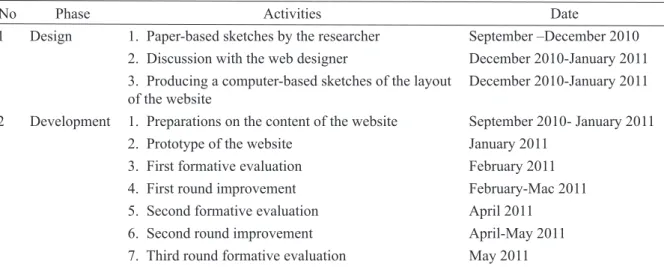
taBLE 2: schedule for the Formative Evaluation
No Phase activities Date
1 Design 1. Paper-based sketches by the researcher september –December 2010 2. Discussion with the web designer December 2010-January 2011 3. Producing a computer-based sketches of the layout
of the website December 2010-January 2011
2 Development 1. Preparations on the content of the website september 2010- January 2011
2. Prototype of the website January 2011
3. First formative evaluation February 2011
4. First round improvement February-mac 2011
. second formative evaluation april 2011
. second round improvement april-may 2011
7. third round formative evaluation may 2011
PaRtICIPaNts
the participants of this formative evaluation were the English language teachers and three Form Five students from two schools in Negeri sembilan. these English language teachers have 1 to 23 years of teaching experience and they have been teaching the literature component since its integration into the English language syllabus in 2000. apart from teaching experience, these four female teachers were also selected based on other criteria such as currently teaching the upper-form students, interest in using technology as well as willingness to take part in the study. as for the three Form Five students, they were selected based on recommendations by the teachers and their willingness to participate. they were also chosen as they had already been exposed to the English language literature component and had some background knowledge on the content of the prototype being evaluated.
INstRUmENt
the main instrument used to collect data was the Questionnaire of Usability Evaluation of Website (QUEW) which was adapted from Fu (1999). the questionnaire consisted of 30 questions which focused mainly on the users’ evaluation towards the importance and suitability of the interface design of the website. In order to get more information on the participants’ view towards the interface, open-ended questions were included at the end of the questionnaire.
REsULts
PERCEPtIONs OF thE ImPORtaNCE OF thE ENGLIsh LaNGUaGE LItERatURE COmPONENt
based on the average of the three cycles of meeting with the development team.
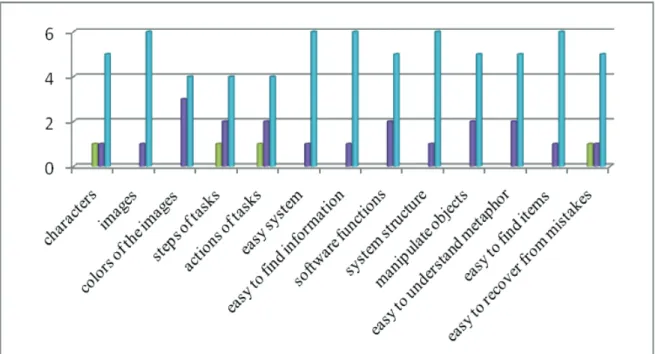
Figure 2 shows the data of the end-users’ views towards the aspect of the interface ease of use. It can be concluded from the figure that almost all aspects categorized as the interface easiness are considered most important by the end-users. the characters, images, colors of the images, steps to complete the tasks, actions to finish the tasks, system, software functions, structure, objects manipulations, metaphor, items locations as well as mistakes recovery are the list of aspects most important to the end-users when they are looking at the website prototype. all the seven participants in this process agreed with the importance level of these interface aspects.
FIGURE 2: the Importance of Ease of Interface
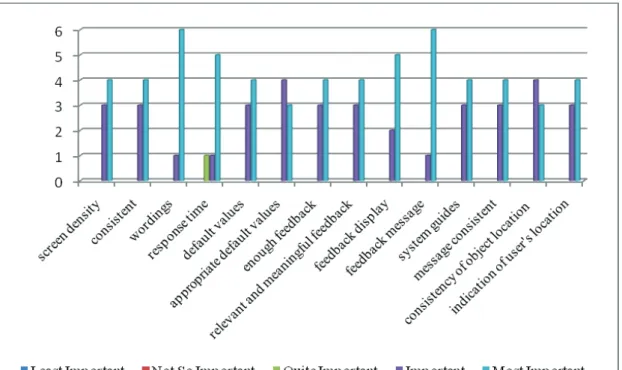
FIGURE 3: the Importance of Interface Display
On the other hand, the results in Figure 4 represent the end-users’ view towards the importance of interesting interface which eventually influence their opinion of the website. the analysis of these aspects shows that majority of the participants view interesting interface as important and most important aspects of a website. the end-users perceived good layout as well as interesting features as important in order for an interface to be interesting to look at. apart from that, this particular group of end-users also marked their preferentiality to the interface design of the webiste prototype as agree, 43 percent (n=3) and strongly agree with 7 percent (n=4).
PERCEPtIONs OF thE QUaLItY OF thE ENGLIsh LaNGUaGE LItERatURE COmPONENt
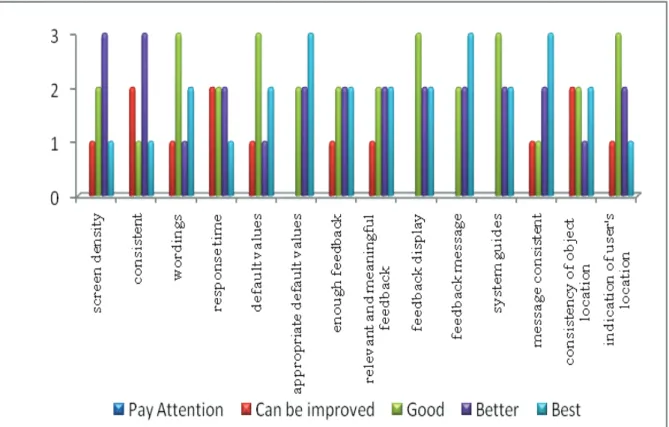
the analysis of the end-users’ views towards the quality of the website interface was also done based on the sub-constructs from the QUEW evaluation form. the quality of the interface is further segregated according to the aspects of easiness, display as well as appealing features. the results of the quality of interface easiness are presented in Figure which concentrated on thirteen aspects. the analysis from three cycles of meetings found that end-users perceived the quality of the interface easiness in terms of the characters, wordings, images, colors of the images, steps and actions to complete the tasks, system, locating information, software functions, system structure, object manipulations, understanding metaphor, locating items and also error recovery aspects to be in the range of good to best rating. From the chart, it can be seen that the quality of the characters as well as the wordings still need to be improved after the three evaluation stages.
FIGURE : the Quality of the Website Interface Easiness
FIGURE : the Quality of the Interface Display
In addition to this, the analysis of the interface quality was also done on the appealling features of the website prototype. Figure 7 shows the number of participants who felt the interesting features of the website prototype still have room for improvement, good, better and best quality. From the pie chart, it can be seen that three out of seven end-users, which is appoximately 43 percent, agreed that the website prototype is better, two or 29 percent rated as good, one marked it as best quality and the other one noticed that the features can be improved which equals to 14 percent respectively.
Figure 8 on the other hand displays the end-users’ view towards the quality in terms of the layout of the interface. the analysis also found that the end-users believed that the layout quality of the website prototype as good (n=2), better (n=3), best (n=1) and one rated the layout can be improved.
FIGURE 8: the Quality of Good Layout of the Website Interface
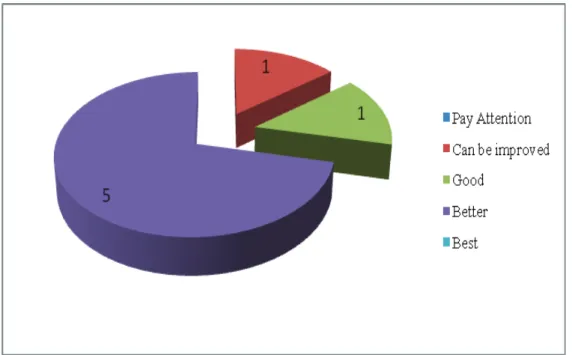
Figure 9 illustrates the end-users views of the overall interface and based on the analysis, the majority of the participants are of the opinion that the quality of the overall interface was better after the third evaluation. however, one end-user felt that the quality could be improved and while another indicated it as good. None of the development team members considered the interface as having the best quality.
ImPLICatIONs aND CONCLUsIONs
the findings of this formative evaluation gave insight into a few things needed in developing this web-based teaching material. the feedback and comments given throughout the process of improving the prototype helped the researcher to take note of a few things from the users’ perspective. since this process involved the participation of experienced teachers, they know whether the language used or the activities placed in the website is suitable or not for the diverse group of learners. Brown (199) reminds us that teachers are the ones who are most suited to decide what is best to enhance learning. Obtaining the teachers’ consensus on the quality of the interface as well as the content of the subject matter developed is definitely important in order to make the learning objective clearer.
One of the primary goals of e-learning is to encourage active involvement (hedberg & metro,s 2008). therefore, involving the end-users during the process of designing and developing web-based learning materials should fulfill this goal of e-learning. active involvement of end-users should not be restricted to the development phase only but should be carried out during the actual implementation of the final product as well. Nam and smith-Jackson (2007) claim that, one of the ways to design user-centered interface is through several techniques including the participatory design. Oliva (200) posits that the intermediate process is most important and this refers to the process of designing, revising, editing or even trying out the prototype before the product is being finalized. hedberg and metros (200, p.108) mentions that some educators design e-learning products with minimal understanding of the “…functional, usable, communicative and aesthetically appropriate interfaces…” thus, having this type of collaborative work involving the designers and end-users sitting together would eventually help to improve not only the product but also the understanding of the interface aspects: the usability, functionality as well as visual communication and aesthetics. Nielson (1994) and Brown (199) state that the processes of developing any teaching materials be it the hardcopies or softcopies, should not be an isolated and individual process. Collaborative work involving the end-users would benefit not only the developer of the materials but also the end-users as well. the process of revising as well as trying out the initial prototype of the curriculum product being developed is vital before coming out with the final product.
REFERENCEs
Brown, J.D. (199). The Elements of Language Curriculum. Boston: heinle & heinle Publishers.
Collis, B. & moonen, J. (200). the contributing student: learners as co-developers of learning resources for reuse in web environments. In hung, D. & Khine, m.s (Eds). Engaged Learning With Emerging Technologies. Netherlands: springer.
Fowles, R.a. (2000). symmetry in design participation in the built environment: experiences and insights from education and practice. In Proceedings of CoDesigning 2000. London: springer.
Fu, L. (1999). Usability Evaluation Of Web Page Design. Ph.D thesis, Purdue University.
hata, m. (2003). Literature review: using computer-mediated communication in second language classroom.
Osaka Keidai Ronshu, Vol 4 (3), september. Retrieved 20 may 2011 from http://www.citeseerx.ist. psu.edu/viewdoc/download?doi=10.1.1.12.pdf
hedberg, J.G. & metros, s. (200). Engaging learners through intuitive interfaces. In hung, D & Khine ,m.s.(Eds).
Engaged Learning With Emerging Technologies. Netherlands: springer.
hung, D. & Khine, m.s (Eds). (200). Engaged Learning With Emerging Technologies. Netherlands: springer. Kwan, R., Fox, R., Chan, F.t. & tsang, P.(Eds).(2008). Enhancing Learning through Technology: Research on
Laborda, J.G. (2011). Revisiting materials for teaching languages for specific purposes. 3L: The Southeast Asian Journal of English Language Studies, Vol 17(1), pp 102-112. Retrieved september 17, 2011 from http:// www.pkukmweb.ukm.my/~ppbl/3L/3LCurrentIssues.html.
mcGregor, D. (2007). Developing Thinking Developing Learning: A Guide to Thinking Skills in Education. New York: Open University Press.
mohamed amin Embi, afendi hamat & muhammad Kamarul Kabilan .(200). an online ELt resource center for the malaysian ELt community. In muhammad Kamarul Kabilan, Norizan abdulRrazak & mohamed amin Embi (Eds). Online teaching and learning in ELT. Pulau Pinang: Penerbit Universiti sains malaysia.
mohammad Zohrabi & Parilah mohd shah. (2009). Culture free and culture bound English language classes.
SoLLS Intec 2009 Proceedings. Retrieved 1 may 2011, from http://pkukmweb.ukm.my/~solls09/Proceeding/PDF_PPt.html
muller, m.J.(2011). Participatory Design: the third space in hCI. Retrieved september 19, 2011 from domino.research.ibm.com/cambridge/research.nsf/0/844f3de38f80282aaf00a4ab/$FILE/ muller%20Chapter%20v1-2.pdf
Nam, C.s & smith-Jackson, t,L. (2007).Web-based learning environment: a theory-based design process for development and evaluation. Journal of Information Technology Education, Vol (), pp23-43. Retrieved september 17, 2011 from http://jite.org/documents/Vol/JItEvp023-043Nam14.pdf
Nielson, J. (1994). Usability Engineering. Oxford: academic Press.
Oliva, P.F. (200). Developing Curriculum. United states of america: allyn and Bacon.
Richards, J.C. (2001). Curriculum Development in Language Teaching. Usa: Cambridge University Press. Rosseni Din. 2010. Development and Validation of an Integrated meaningful hybrid e-training (I-met) for
Computer science theoretical-Empirical Based Design and Development approach. Unpublished thesis, UKm, malaysia.
sivapalan, s., Wan Fatimah Wan ahmad & Nur Khairun Nisya Ishak. (2009). a web-based multimedia approach to literature in malaysian secondary schools: Design and learning preferences. In 18th mELta International Conference, June 11-13, 2009, Johor Baru. Retrieved september ,1th 2011, from http:// eprints.edu.my/201/.
sivapuniam, N. (2001). the use of we-based applications in English language programmes at selected malaysian universities. The English Teacher, XXX: 79-8.
sommerville, I. (2004). User-interface design. Retrieved september 17, 2011, from http://www.comp.lancs. ac.uk/computing/resources/Ians/sE7/Presentations/PDF/ch1.pdf
tan, t.G & Lim.t.h. (2008). Efficacy of multimedia teaching instruction in elementary mandarin class.
Proceedings of CLaSIC Conference 2008.
Vethamani, m.E. (200). Computer mediated communication in literature leaning. In muhammad Kamarul Kabilan, Norizan abdul Razak, & mohamed amin Embi (Eds). Online Teaching and Learning In ELT. Penerbit Universiti sains malaysia: Pulau Pinang.
Wan Nor aishah Wan Omar & Norizan abdul Razak. (2008). an insight towards the development of a vocabulary courseware for EsL learners. In mohamed amin Embi, muhammad Kamarul Kabilan & Norizan abdul Razak (Eds). Readings in Online Language Learning and Teaching: Research and Practice. shah alam: Karisma Publications sdn Bhd.
Webster, L. & murphy, D. (2008). Enhancing learning through technology: Challenges and responses. In Kwan, R., Fox, R., Chan ,F.t & tsang ,P (Eds). Enhancing Learning through Technology: Research on Emerging Technologies and Pedagogies. New Jersey: World scientific.
Wiles, J. & Bondi, J. (2007). Curriculum Development: A Guide to Practice. New Jersey: Pearson merrill Prentice hall.
Yusuf hashim. (2008). Konsep dan Perkembangan Kurikulum dan Instruksi. Kuala Lumpur: Utusan Publications & Distributions sdn Bhd.
Rashidah Rahmat