THE ROLE OF MASCULINE GENDER NORMS IN HIV VULNERABILITY AMONG DOMINICAN MEN ENROLLED IN A CIRCUMCISION FEASIBILITY TRIAL
Paul Joseph Fleming
A dissertation submitted to the faculty at the University of North Carolina at Chapel Hill in partial fulfillment of the requirements for the degree of Doctor of Philosophy in the Department of Health
Behavior in the Gillings School of Global Public Health.
Chapel Hill 2015
iii ABSTRACT
Paul Joseph Fleming: The Role of Masculine Gender Norms in HIV Vulnerability Among Dominican Men Enrolled in a Circumcision Feasibility Trial
(Under the direction of Clare Barrington)
Background: Masculine norms influence men’s sexual behaviors. Though this relationship has been extensively theorized, empirical evidence explaining this relationship is limited. This
dissertation aims to understand how masculine norms and concern about demonstrating masculinity contribute to men’s HIV vulnerability in the Dominican Republic.
Methods: I conducted three studies using qualitative and quantitative data from a feasibility trial of voluntary medical male circumcision for HIV prevention in two Dominican cities. In the first study, I analyzed survey data collected from men 6-12 months post-circumcision (n=293) to
examine the association between Gender Role Conflict/Stress (i.e. concern about demonstrating masculine characteristics) and HIV-related sexual behaviors. In the second study, I analyzed data from in-depth interviews with a sub-sample of men in the trial (n=30) to explore how masculine norms shape men’s sexual and violent behaviors. Finally, in study three, I used both data sources to explore the relationships between norms of masculinity, male sexuality, and circumcision.
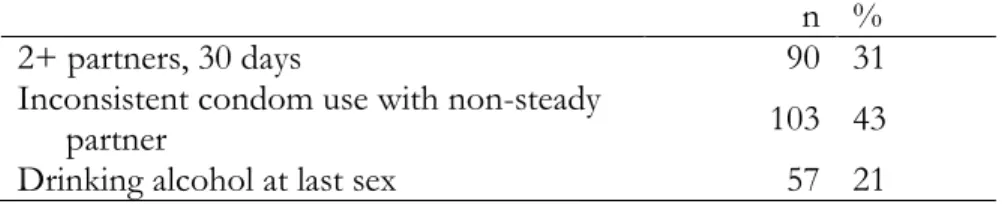
Results: Men’s Gender Role Conflict/Stress was significantly associated with having two or more partners in the past 30 days, inconsistent condom use with non-steady partners, and drinking alcohol at last sex, after controlling for socio-demographic characteristics. In the qualitative
iv
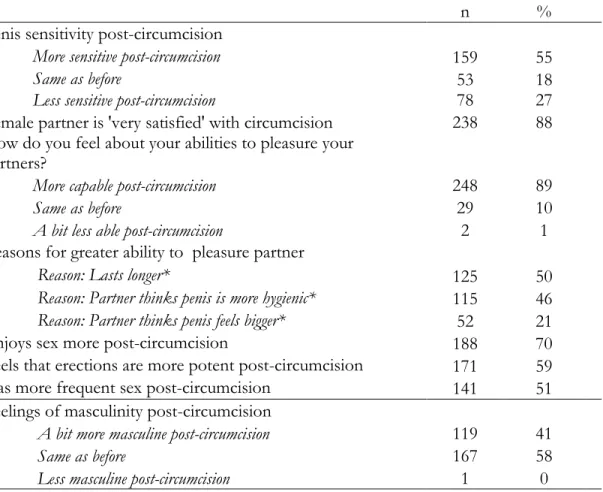
implications for losing status, which led to engaging in violence and sexual risk behaviors. Finally, nearly half of men reported feeling more masculine after receiving a circumcision. Their main reason for feeling more masculine was improved sexual performance which allowed them to avoid the humiliation associated with an inability to satisfy sexual partners.
v
ACKNOWLEDGMENTS
A special thanks to Dr. Clare Barrington for her guidance on this dissertation project. I am indebted to her for her generosity with her time and unfailing ability to push me just a little bit further each step of the way. This research – and my time at UNC – would not have been as rich without her mentorship, friendship, and encouragement.
I also want to thank the members of my committee for their advice and guidance over the past two years: Dr. Maximo Brito, Dr. Suzanne Maman, Dr. Wizdom Powell, and Dr. Lisa Pearce. Their insights helped uncover new ways of seeing my project and the resulting the data which ultimately enabled me to be a better researcher and write a better dissertation.
To Dr. Brito and the research team in the Dominican Republic, thank you for fully welcoming me to your project and supporting me all along the way. Dr. Yeycy Donastorg and Martha Perez are the ultimate hosts in Santo Domingo and have been invaluable to teaching me how to conduct research on masculinity in the DR. Anita, Miriam, Alex, and the rest of the Unidad staff were extremely helpful during my fieldwork and it was always a pleasure to sit and drink a
cafecito with them. Mina Halpern, Leo Lerebours, and Riqui Rosario introduced me to La Romana
and were amazing research collaborators. I am also thankful to Nicolas Gonzalez and Melchor Moya for their willingness to spend hours chatting with me about tigueraje and Dominican masculinity. And Dr. Brito, your whole-hearted embrace of my project truly made this dissertation possible; thank you for your support and guidance.
vi
a little more fun. Special thanks to my cohort-mates for inspiring me to do my best work and to Dr. Susan Ennett for her guidance through the doctoral program.
Only my dog Toby has the distinction of being physically by my side through nearly every word written in this dissertation; thanks buddy for the social support and for taking me on walks when I needed it. A special thank you to my parents who taught me to be curious and to pursue my passions. And, finally, I am incredibly grateful to my wife, Becca, for supporting me throughout this process. She kept me grounded and was my constant reminder that life is more than paper-writing and dissertations.
vii
TABLE OF CONTENTS
LIST OF TABLES ... xi
LIST OF FIGURES ... xii
LIST OF ABBREVIATIONS ... xiii
CHAPTER 1: INTRODUCTION AND SPECIFIC AIMS ... 1
CHAPTER 2: BACKGROUND ... 4
2.1 HIV in the Dominican Republic ... 4
2.2 Men’s HIV Vulnerability ... 6
Sexual Behaviors ... 6
Biological vulnerabilities: Circumcision and STIs ... 10
2.3 Male Circumcision and Men’s Sexual Behaviors ... 11
Voluntary Medical Male Circumcision and HIV protection ... 12
Changes in sexual behaviors post-circumcision ... 13
Sexual function and satisfaction for circumcised and uncircumcised ... 17
Uncircumcised men’s perceptions of circumcision’s impact on male sexuality ... 21
Dominican men’s perceptions of circumcision and sexual behaviors ... 23
CHAPTER 3: THEORETICAL FRAMEWORK... 26
3.1 Gender and Masculinities Theory ... 26
3.2 Latin American and Dominican masculinities ... 31
3.3 Masculinity and HIV Vulnerability ... 37
A note on measurement of ‘masculinity’ ... 38
viii
Dimensions of masculine norms that motivate men’s sexual
behaviors ... 41
Can condom use, monogamy or abstinence be masculine? ... 47
3.4 Theoretical Approach of Dissertation Research ... 49
CHAPTER 4: STUDY DESIGN AND METHODS... 52
4.1 Study Aims and hypotheses ... 52
4.2 Parent Study ... 53
Parent study locations ... 55
Parent study methodology and participant recruitment... 56
Parent study procedures ... 58
4.3 Methods for Study Aim 1 ... 60
Measures for Aim 1 ... 60
Quantitative analysis plan for Aim 1 ... 65
Power calculation ... 65
4.4 Methods for Study Aim 2 ... 66
Recruitment of participants for qualitative interview ... 67
Data collection procedures ... 67
Qualitative analysis ... 68
4.5 Methods for Study Aim 3 ... 69
Quantitative data collection and analysis... 69
In-depth Interview data collection and analysis ... 71
Integration of quantitative and qualitative data ... 72
4.6 Ethical approval for dissertation research ... 72
CHAPTER 5: MEN’S CONCERN ABOUT DEMONSTRATING MASCULINE CHARACTERISTICS INFLUENCES THEIR HIV VULNERABILITY (MANUSCRIPT 1) ... 73
ix
5.2 Methods ... 76
Study Setting ... 76
Recruitment and Data Collection ... 77
Measures ... 77
Analyses ... 79
Ethics Statement ... 80
5.3 Results ... 80
5.4 Discussion ... 84
Limitations ... 87
5.5 Conclusion ... 87
CHAPTER 6: STATUS, COMPETITION, AND HUMILIATION: HOW MASCULINE NORMS SHAPE MEN’S SEXUAL AND VIOLENT BEHAVIORS (MANUSCRIPT 2) ... 89
6.1 Introduction ... 89
Masculinity and Health ... 89
Caribbean and Dominican Masculinities ... 91
6.2 Methods ... 94
Study Setting and Context ... 94
Recruitment and Data Collection ... 94
Data Analysis ... 95
6.3 Results ... 96
6.4 Discussion ... 105
6.5 Conclusions... 109
CHAPTER 7: ‘I FEEL LIKE MORE OF A MAN’: A MIXED METHODS STUDY OF MASCULINITY, SEXUAL PERFORMANCE, AND CIRCUMCISION FOR HIV PREVENTION (MANUSCRIPT 3) ... 110
x
7.2 Methods ... 113
Study Setting and Context ... 113
Recruitment, Data Collection, and Analysis ... 115
Ethics statement... 119
7.3 Results ... 119
7.4 Discussion ... 127
Limitations ... 131
7.5 Conclusion ... 131
CHAPTER 8: DISCUSSION & CONCLUSIONS ... 133
8.1 Summary of Findings ... 133
8.2 Study Limitations ... 135
8.3 Implications for future research and interventions ... 136
Research gaps ... 136
Future directions for interventions ... 139
APPENDIX A: GENDER ROLE CONFLICT/STRESS SCALE ... 142
APPENDIX B: QUALITATIVE INTERVIEW GUIDE FOR IN-DEPTH INTERVIEWS ... 145
xi
LIST OF TABLES
Table 2.1 Review of three RCTs on VMMC in sub-Saharan Africa………...………..…….13
Table 4.1. Outcome measures for Aim 1 ……….………...…..61
Table 4.2 Control variables to be used in analysis for Aims 1…………...………...…...…..64
Table 4.3 Dependent variables for Aim 1……….…...…………....66
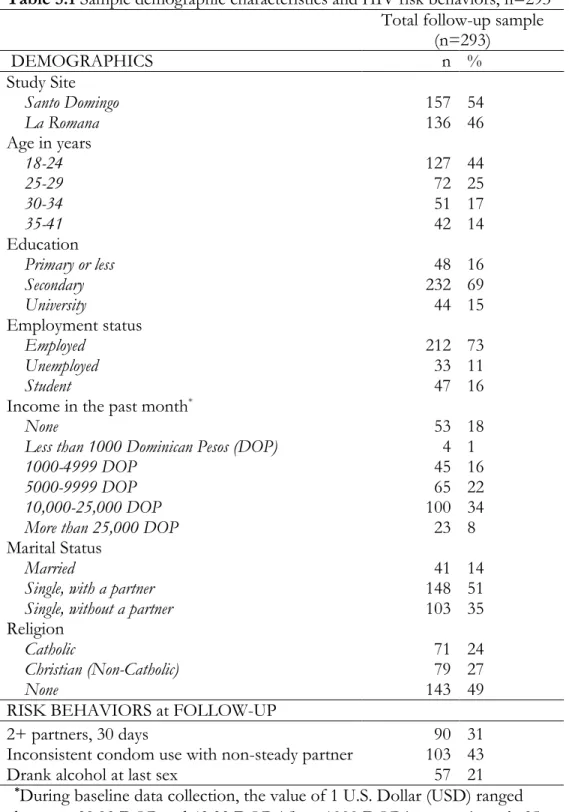
Table 5.1 Sample demographic characteristics and HIV risk behaviors, n=293………...……81
Table 5.2 Gender Role Conflict/Stress (GRC/S) Scale from follow-up survey, n=293…...….… 83
Table 5.3 Association between men’s GRC/S score and HIV risk sexual behaviors………..…... 84
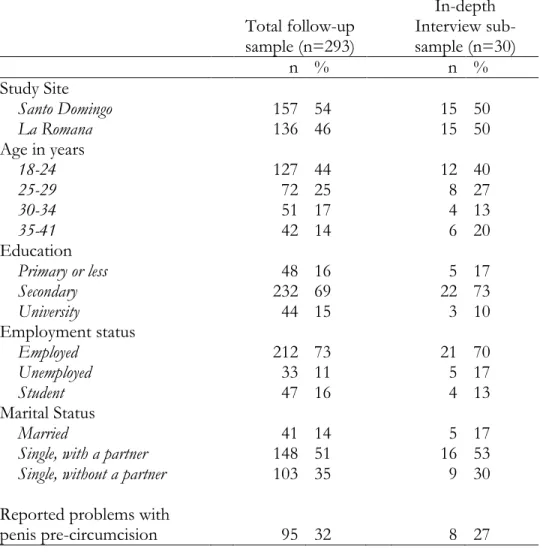
Table 7.1 Men’s Socio-Demographic characteristics from analytic sample (n=293) and in-depth interview sub-sample (n=30) ………...………...……….…..120
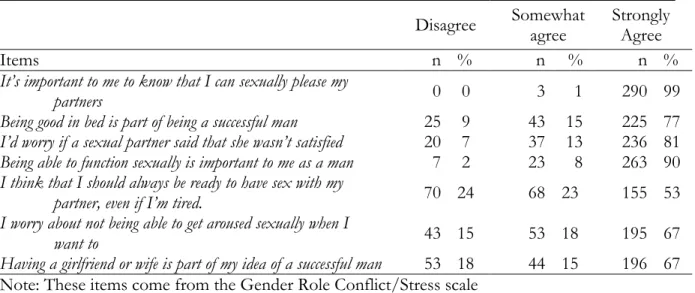
Table 7.2 Men’s concerns about sexual performance from follow-up survey, n=293…….……....121
Table 7.3 Men’s perceptions of sexual performance post-circumcision, follow-up survey, n=293…..………...………..122
xii
LIST OF FIGURES
Figure 2.1 Prevalence of circumcision among males over 15 years old by country……..………...….12 Figure 4.1 Conceptual model for Aim 1………...…...……….….53
xiii
LIST OF ABBREVIATIONS
AIDS Acquired Immune Deficiency Syndrome AOR Adjusted odds ratio
CI Confidence interval
CONAVIHSIDA Consejo Nacional para el VIH y el SIDA [National Counsel for HIV and AIDS]
COPRESIDA Consejo Presidencial del SIDA de República Dominicana [Dominican Republic Presidential Council on AIDS] CESDEM El Centro de Estudios Sociales y Demográficos
[Center for Social and Demographic Studies] DHS Demographic and Health Surveys
DOP Dominican Peso
DR Dominican Republic
GEM Gender Equitable Men GRC/S Gender role conflict/stress HIV Human immunodeficiency virus
MC Male circumcision
MGRS Masculine gender role strain MSM Men who have sex with men
OR Odds ratio
PI Principal Investigator
RCT Randomized controlled trial STI Sexually transmitted infection
TMSC Transactional Model of Stress and Coping VCT Voluntary counseling and testing (for HIV) VMMC Voluntary medical male circumcision UIC University of Illinois Chicago
UNAIDS Joint United Nations Programme on HIV/AIDS
xiv
1
CHAPTER 1: INTRODUCTION AND SPECIFIC AIMS
Globally, the majority of HIV transmission occurs through heterosexual sex and men who have sex with women represent an important population to engage in HIV prevention interventions to reduce transmission of HIV (UNAIDS, 2013). Two recent reviews demonstrate that heterosexual men continue to be underrepresented in HIV prevention interventions (Dworkin et al., 2009;
Townsend et al., 2013) and they have been called the “forgotten group” in HIV prevention (Bowleg, 2013; Exner et al., 1999). Due to gender norms in most societies, men tend to have greater decision-making power within heterosexual relationships (Connell, 1987; Wingood & DiClemente, 2000) and are encouraged to engage in sexual risk behaviors (Cohan, 2009; Courtenay, 2000; Crook et al., 2009; Flood, 2008; Stern et al., 2003). Despite the importance of men and gender norms for preventing HIV, most HIV prevention strategies for heterosexual men (i.e. condom promotion, HIV testing and treatment, and medical male circumcision) have failed to incorporate a rich theoretical understanding of how norms of masculinity influence men’s sexual health behaviors and decision-making.
2
about demonstrating masculine characteristics, including sexual prowess, and stresses the
importance of men’s interactions with their social networks (Pleck, 1995). Masculine gender role strain has been operationalized in the Gender Role Conflict Scale (O'Neil et al., 1986) and Gender Role Conflict/Stress scale (Gottert, 2014) and has been associated with perpetration of violence and other health outcomes (Copenhaver et al., 2000; Jakupcak et al., 2002; O'Neil, 2008); however, its relationship with heterosexual men’s HIV vulnerability has rarely been examined. Since the concern a man feels about demonstrating masculine characteristics is a modifiable factor (Dworkin et al., 2013), examining this relationship – including its mechanisms and its role in shaping men’s experience of HIV prevention interventions – helps to identify new strategies to improve upon existing HIV prevention strategies for men.
In response to this research gap, I designed a mixed-methods study of the overarching research question: How do masculine norms and concern about demonstrating masculine
characteristics contribute to HIV vulnerability among men enrolled in a circumcision feasibility trial in the Dominican Republic? My specific study aims are:
Aim 1: Examine the association between the Gender Role Conflict/Stress scale and HIV risk
behaviors including: (1a) multiple partners in the last 30 days, (1b) inconsistent condom use with non-steady partners, and (1c) drinking alcohol at last sex. (Chapter 5)
Aim 2: Explore how masculine norms influence men’s interactions with members of their social
networks and how those interactions drive men’s sexual behaviors and use of violence (Chapter 6)
Aim 3:Assess the relationships between norms of masculinity, male sexuality, and medical male circumcision for HIV prevention. (Chapter 7)
3
interviews with a sub-sample of study participants (n=30). Finally, to address Aim 3, I used both the survey and in-depth interview data.
This study fills important gaps in HIV-prevention research. First, the relationship between Gender Role Conflict and HIV risk behaviors among heterosexual men has rarely been studied and never been examined in a Latin American context. Second, while there is a general understanding that masculine norms influence men’s behaviors, there is limited evidence for the specific social dynamics that help explain this relationship. Third, while previous research has examined the role of masculinity in men’s sexual behaviors, there has been no exploration of the role of masculinity in how men respond to and experience an HIV prevention intervention. As HIV prevention interventions target men, including circumcision for HIV prevention, it is critical for these
4
CHAPTER 2: BACKGROUND
2.1 HIV in the Dominican Republic
In 1983, the Dominican Republic (DR) was one of the first countries in the western hemisphere to report an AIDS case (Rojas et al., 2011) and has continued to have a higher HIV prevalence – estimated to be 0.8% in 2014 – than most other countries in the hemisphere
(CESDEM & Macro International Inc., 2014). The most recent Joint United Nations Program on HIV/AIDS (UNAIDS) estimates showed that the DR had the 9th highest prevalence of the 29 countries in the hemisphere (UNAIDS, 2013). Of the 17 countries in the hemisphere with over 5 million inhabitants, Haiti had the highest adult HIV prevalence (2.1% of adults 15-49) and the DR was tied for second highest prevalence with Guatemala (UNAIDS, 2013). The estimated adult HIV prevalence in the DR peaked at 2.5% in 2001 and has been in decline since then (CESDEM & Macro International Inc., 2014; UNAIDS, 2013). According to 2010 modeling estimates, HIV in the DR is almost exclusively transmitted sexually: 65.9% of cases are transmitted due to heterosexual sex, 33.3% due to homosexual sex (UNAIDS et al., 2010). Less than 1% of cases are transmitted by injection drug use or other modes of transmission (UNAIDS et al., 2010).
The HIV epidemic in the DR is characterized as concentrated since there is low general prevalence (<1%) and HIV transmission occurs primarily among key populations including female sex workers and their sexual partners, men who have sex with men, residents of bateyes1, and individuals who use drugs (CONAVIHSIDA, 2014; UNAIDS, 2013). Compared to 0.8% national HIV prevalence among 15-49 year olds, HIV prevalence across cities ranges between 1.7% to 6.3%
5
among female sex workers, 3.9% to 6.9% among men who have sex with men, and 1.3% to 6.2% among individuals who use drugs (CONAVIHSIDA, 2014). Based on data from the 2013 Encuesta Demográfica y de Salud (the Dominican Demographic and Health Survey), the most recent
population-level data available, HIV prevalence is 1.9% among men who had paid for sex in the past 12 months (CESDEM & Macro International Inc., 2014).2 According to the same data, residents of
bateyes have an HIV prevalence of 2.5%, 2.4% for adult females and 2.6% for adult males (CESDEM
& Macro International Inc., 2015). These most recent prevalence estimates for each of these populations are slightly lower than the previous estimates (CESDEM & Macro International Inc., 2008; COPRESIDA, 2008).3
Like many places in the world, HIV in the DR is associated with socioeconomic status (Fortson, 2008; Wojcicki, 2005). In the DR, HIV prevalence increases as education decreases. For example, those with no education have a prevalence of 4.3% compared to 0.1% prevalence for those with a university education (CESDEM & Macro International Inc., 2014). There is a similar trend when looking at wealth quintiles; the lowest wealth quintile has a prevalence of 1.8% and the highest quintile 0.2% (CESDEM & Macro International Inc., 2014).
According to the 2013 Demographic and Health Survey, men ages 15-49 in the DR have an HIV prevalence of 0.9% compared to 0.7% among women and 2.8% report having had symptoms of a sexually transmitted infection (STI) in the past 12 months compared to 11.0% of women report
2This may underestimate the HIV prevalence among male sexual partners of female sex workers since the main partners
of female sex workers are least likely to use condoms and often do not pay for sex
3 In 2008, COPRESIDA estimated that HIV prevalence 3.3-8.4% for female sex workers, 5.1%-7.6% for men who have
6
having a symptom) (CESDEM & Macro International Inc., 2014). Across age groups, men aged 25-49 have the highest HIV prevalence at 1.4% (CESDEM & Macro International Inc., 2014).
2.2 Men’s HIV Vulnerability
Sexual Behaviors
A large proportion of men aged 15-49 in the DR report sexual behaviors that put them at risk for HIV or STIs. Nationally, the mean number of lifetime sexual partners for men 15 to 49 years old is 14.9 (CESDEM & Macro International Inc., 2014). An estimated 28.7% of men report having two or more sexual partners in the past year and of those men with 2 or more partners, 45.8% used a condom at last sex (CESDEM & Macro International Inc., 2014). These data suggest that a significant proportion of men have opportunities to contract HIV or other STI.
While this dissertation does not focus on men who have sex with men, it is important to acknowledge that sex with men may still be a factor in heterosexual men’s overall risk for HIV (UNAIDS et al., 2010). Same-sex attraction and sexual behaviors are highly stigmatized in the DR, and thus reliable data on the proportion of Dominican men who have sex with other men are hard to find since some men may not disclose their same-sex sexual behaviors (Halperin et al., 2009). One survey of men who have sex with men (MSM) in Santo Domingo reported that over half of the men self-identified as heterosexual (Tabet et al., 1996). Additionally, ethnographic research has shown that some heterosexual-identifying men engage in sex with men for income (Padilla et al., 2008). MSM are at substantial risk for HIV and STI infection (national HIV prevalence is estimated to be between 3.9% and 6.9% for MSM (CONAVIHSIDA, 2014)). A recent five site surveillance survey found that between 24.9% and 45.0% of MSM used a condom the last time they had anal sex, suggesting the need to improve HIV primary prevention efforts (CONAVIHSIDA, 2014).
7
venues throughout the country, as well as women who find clients in the street or via telephone (Barrington et al., 2009; Kerrigan et al., 2006). HIV prevalence among female sex workers is
approximately eight times higher than Dominican women who are not sex workers (5.3% vs. 0.7%) (CONAVIHSIDA, 2014) and thus unprotected sex between men and female sex workers have increased risk for HIV transmission. In the 2013 Demographic and Health Survey, 20.8% of men have ever paid for sex and 5.1% of men report having paid for sex within the past twelve months (CESDEM & Macro International Inc., 2014). Men with low levels of education and in the lowest wealth quintiles were more likely to report paying for sex in the past 12 months. Among men with no education, 11.0% had paid for sex, and among the lowest wealth quintile 10.5% had paid for sex (CESDEM & Macro International Inc., 2014). It is important to note that these data represent self-report of paying for sex, and not the percentage of men who had sex with a woman who is involved in sex work. Ample research in the DR demonstrates that men often do not pay per sex act with sex workers with whom they have trusted and/or intimate relationships and some men are financially dependent on their sex worker partners (Barrington et al., 2012; Fleming et al., 2014a; Murray et al., 2007).4 Additionally, husbands and boyfriends of sex workers would likely not report paying for sex. Thus, the DHS likely underestimates the number of men having sex with sex workers.
Reported condom use when paying for sex was relatively high in the 2013 Dominican Demographic and Health Survey: 79.8% of men reported using a condom every time they paid for sex (CESDEM & Macro International Inc., 2014). These behaviors also have an education gradient: 67.4% of men with no education used a condom last time they paid for sex compared to 81.3% of men with secondary school education5 (CESDEM & Macro International Inc., 2014). Men who
4Often, in these cases, men provide regular economic support for the woman, but do not pay per sex act. Sometimes
these are repeated clients of sex workers, or boyfriends or spouses.
8
report paying for sex had a HIV prevalence of 1.9%, representing a substantial difference from the prevalence among men who did not pay for sex (0.9%) (CESDEM & Macro International Inc., 2014). Thus, paying for sex represents a risk factor for HIV, even when using this indicator that may underestimate this behavior.
Researchers in the DR have also demonstrated an association between relationship
characteristics and condom use for female sex workers and their male sexual partners. Murray et al. (2007) showed that men who report higher levels of intimacy with a female sex worker (e.g. more trust, more future orientation with partner) are less likely to use condoms with that partner (AOR: 0.51, 95% CI 0.31-0.85). These authors also showed that relationship intimacy corresponds with a more ‘steady’ or ‘regular’ ongoing relationship between a man and a sex worker (e.g. regular client, boyfriend, husband). Kerrigan et al. (2006) conducted an environmental-structural intervention to promote consistent condom use among female sex workers and their partners in the DR and the baseline data showed that 75.3% of sex workers used consistent condom use with new clients but only 14.6% reported consistent condom use with regular partners.6 To further explore condom use by ‘regular partners’ of female sex workers, Barrington et al. (2009) conducted a study with male regular partners (n=380) in La Romana, DR recruited from thirty-six commercial sex establishments. Over half (64.5%) of the participants reported consistent condom use with their sex worker
partners, but men who had been with their partner for over 3 months had lower odds of using a condom compared to men who had been with their partner less than three months (AOR: 0.45, 95% CI 0.25-0.81). Additionally, these men reported having multiple sexual partners; almost half had had four or more sex partners in the last 3 months which, in the absence of condom use, could facilitate the spread of HIV and STI through these sexual networks (Mah & Halperin, 2010).
6A male regular partner of a female sex worker is defined has having had penetrative sex with the woman at least three
9
Men’s sexual behaviors, including condom use and having multiple partners, are influenced by the norms within their social networks. Barrington et al. (2007) showed that visiting venues where sex workers were present was a common social activity for male regular partners of sex workers in La Romana. Of men participating in that study, 61.4% reported that all of their network contacts had female sex worker partners and 24.3% reported that some did. A majority (70.4%) of these men reported pro-condom injunctive norms (measured as whether or not their friends encouraged condom use), but only 41.5% perceived pro-condom descriptive norms (perception that all of their friends always used condoms with sex workers). Those men who thought ‘some’ or ‘all’ of their friends always used condoms with sex workers had 3 times the odds of using condoms compared to men who thought that ‘none’ of their friends always used condoms with sex workers (AOR for ‘Some’: 3.10, 95% CI 1.52-6.32; AOR for ‘All’: 3.43, 95% CI 1.80-6.51). In analysis of qualitative in-depth interviews with regular partners in the same city, these authors found that men perceived pro-condom injunctive norms (e.g. they should use condoms with sex workers), but these injunctive norms did not necessarily connect to men’s actual behaviors (Barrington & Kerrigan, 2014).
10 Biological vulnerabilities: Circumcision and STIs
There are some biological factors that increase men’s risk for HIV infection. Being uncircumcised or having an active STI have both been shown to increase vulnerability for HIV infection (Auvert et al., 2005; Bailey et al., 2007; R. Gray et al., 2007; Sobngwi-Tambekou et al., 2009). In the case of uncircumcised penises, the inner mucosal surface of the foreskin is exposed during sexual intercourse when a man has an erection. The inner mucosal surface of the foreskin has been shown to have a higher proportion of HIV target cells (i.e. CD4+ T cells, macrophages, and Langerhans’ cells) than cervical mucosal tissue (Patterson et al., 2002). Since HIV cannot infiltrate the outer surface of the penis, the inner mucosal surface in uncircumcised men represents a
relatively large additional area of exposed surface area that increases vulnerability for HIV infection. Uncircumcised men are also more vulnerable to STI, including syphilis, chancroid, and herpes simplex virus type 2 (HSV-2) (Weiss et al., 2006). Previous history of infection with a STI has also been shown to increase the proportion of HIV target cells in the foreskin’s inner mucosal surface when compared to foreskin of men without history of STI (Donoval et al., 2006; Patterson et al., 2002).
11
Inc., 2014). This measure likely underestimates actual STI prevalence since men can have a STI without symptoms.
2.3 Male Circumcision and Men’s Sexual Behaviors
Male circumcision is practiced across the globe, often as a religious or cultural rite of
12
Figure 2.1 Prevalence of circumcision among males over 15 years old by country (WHO, 2007)
Voluntary Medical Male Circumcision and HIV protection
As mentioned previously, uncircumcised men are biologically more vulnerable to HIV infection than circumcised men during vaginal sex with an infected partner and tend to have higher prevalence of HIV infection (Baeten et al., 2005; Cameron et al., 1989; R. H. Gray et al., 2000; Lavreys et al., 1999; Moses et al., 1990; Reynolds et al., 2004; Weiss et al., 2000). Based on this strong evidence, it was hypothesized that circumcising adult men in areas with high HIV prevalence and low circumcision prevalence could reduce HIV incidence. To test this hypothesis, HIV
13
Table 2.1 Review of three RCTs on VMMC in sub-Saharan Africa Location Orange Farm,
South Africa Kisumu, Kenya Rakai, Uganda Principle Investigator/
Lead author B. Auvert R. C. Bailey R. H. Gray
Year published 2005
(PLOS Medicine)
2007 (Lancet)
2007 (Lancet)
Years research conducted 2002-2005 2002-2006 2003-2006
Total n 3274 2784 4996
Age range of men 18-24 18-24 15-49
Reduction in risk of acquiring HIV
60%
(95% CI: 32%-76%)
53%
(95% CI: 22%-72%)
51%
(95% CI: 16%-72%)
Length of follow-up 21-month 24-month 24-month
Not only were there significant differences between intervention and control groups at the initial 2-year follow-up, these protective effects were sustained in follow-up studies at each site in 2010 (Auvert et al., 2013; R. Gray et al., 2012; Mehta et al., 2013). Based on these convincing results that medical male circumcision protects against HIV acquisition, governments and
non-governmental organizations in Africa started to organize circumcision campaigns for adult men (WHO, 2011). It is estimated that if 14 African ‘priority’ countries can achieve 80% circumcision coverage for men 15 to 49, 3.36 million HIV infections could be prevented for a long-term cost-savings of over US$16 billion (Njeuhmeli et al., 2011). By the end of 2011, 1.4 million circumcisions had been performed in these priority countries (WHO, 2011). To date, formal medical male
circumcision programs for HIV prevention have only been adopted in African countries with generalized HIV epidemics. The circumcision feasibility trial in the DR represents the first time circumcision for HIV prevention has been implemented outside of Africa.
Changes in sexual behaviors post-circumcision
14
2007a). Risk compensation, as defined by Pinkerton (2001), refers to “any behavioral change that acts to offset a reduction in risk resulting from other changes” (p. 727). Since the intervention in the RCT paired circumcision with voluntary HIV counseling and testing, it is not surprising that there was an general decrease in reported sexual risk behaviors in both intervention and control groups (Auvert et al., 2005; Bailey et al., 2007; R. Gray et al., 2007). The researchers from the Orange Farm study found no differences between the intervention and control group for having unprotected sex or number of non-spousal sex partners at 12-month and 21-month follow-up. However, they did find that men who were circumcised reported a higher mean number of sexual contacts in the previous nine months at 12-month follow-up (5.9 vs. 5.0) and at 21-month follow-up (7.5 vs. 6.4). The Kenya study team did the most comprehensive reporting of risk compensation (Bailey et al., 2007; Mattson et al., 2008; Riess et al., 2010; Westercamp et al., 2014). Bailey et al. (2007) found some evidence that compared to men in the control group, men who were circumcised were more likely to report having two or more sex partners in the previous 6 months, less likely to report consistent condom use in the previous 6 months, and more likely to report unprotected sex in the previous 6 months.7 However, in a more detailed analysis from a subsample of participants from the Kenya study, Mattson et al. (2008) found no evidence for differences in 18 sexual risk behaviors between the men who received a circumcision and those who did not. Additionally, Westercamp et al. (2014) conducted an analysis of the 24-month follow-up data and found no evidence of risk compensation. In the study in Rakai, Uganda, Gray et al. (2007) found no differences between number of sexual partners, number of non-marital partners, and reported consistent condom use
7Since this focus of Aim 3 of this dissertation is to look at men’s sexual experiences 6-12 months after circumcision, it is
15
between men who received a circumcision and men who did not at 6-month, 12-month and 24-month follow-up. One prospective cohort study in the Siaya and Bondo regions of Kenya found that men who were circumcised in a hospital (not as part of a RCT) demonstrated no significant differences in sexual behaviors from men in a comparison group over the course of a 12 month follow-up period (Agot et al., 2007).8
Despite no evidence for overall risk compensation, there is some evidence that men may go through an ‘experimental’ phase after their circumcision heals. One prospective cohort study in the Siaya and Bondo regions of Kenya found that men who were circumcised in a hospital (not as part of a RCT) demonstrated no significant differences in sexual behaviors from men in a comparison group over the course of a 12 month follow-up period (Agot et al., 2007).9 Interestingly, in the 4-6 month follow-up period, there was a small spike in the rate of unprotected sex acts with a non-marital partner among the circumcised men but not among the uncircumcised men. While the spike was not significantly different than uncircumcised men (OR 2.28, 95% CI 0.69-7.53), it may be indicative that some men ‘experiment’ post-circumcision (Agot et al., 2007). A recent qualitative study of post-circumcision risk compensation in Swaziland also found that a few men reported a period of experimentation where their sexual risk behaviors were increased (Grund & Hennink, 2012). For example, one participant said:
“I wanted to try out my new tool and that lasted for about a month. If I try and count them [sexual
partners], I think it’s six, but then all that stopped before March when I decided to stick to one partner.” (p. 249)
8In the one-month post-circumcision follow-up, circumcised men were significantly less likely to engage in sexual
behavior, but the results were non-significant in follow-up periods. The one-month results were likely due to the fact that men are told to abstain for at least a month after the circumcision.
9In the one-month post-circumcision follow-up, circumcised men were significantly less likely to engage in sexual
16
This temporary increased risk-taking resulted from curiosity about potential changes in his sexual experience after being circumcised. Though a few men in this study experimented, most men maintained the same behaviors, or adopted new protective sexual behaviors such as condom use. Some men reported that condoms were easier to use after circumcision10 and, similar to findings from men in Kenya (Riess et al., 2010), most Swazi men attributed their adoption of more protective behaviors to the HIV counseling they received (Grund & Hennink, 2012).11 In the study of Kenyan men, among the five participants that engaged in new sexual risk practices after VMMC, one wanted to ‘test’ out unprotected sex with his wife and the others reported being more desirable to potential sexual partners after circumcision (Riess et al., 2010). Another five participants reported reducing the number of sex partners they had and six reported increasing their condom use (Riess et al., 2010). They attributed their adoption of more protective behaviors to the HIV counseling and testing they received. For example, one Kenyan participant said: “When I received these teachings, some skills and knowledge, which I didn’t have. I realized that I was messing up. I could lose my life. So that is why I decided to change” (p. e12366). The rest of the participants reported maintaining the same behaviors before and after circumcision.
Since major life events or changes in lifestyle, such as becoming circumcised, can serve as a ‘cue to action’ for behavior change (Champion & Skinner, 2008), some changes in behavior after circumcision should be expected. While this dissertation does not specifically focus on risk compensation, Aim 3 examines men’s perceptions of their sexuality after being circumcised and experimentation or changes in men’s sexual behaviors are important factors to men’s sexuality.
10One man said:“When you are trying to put it [the condom] on, you may fumble, but then the head is smaller than the
foreskin so when you put it on, it just goes. It just goes and the thing is the foreskin, especially if your foreskin doesn’t roll all the way back. If it doesn’t roll back, then you are in trouble, but I’ve heard my friends say that having a foreskin that doesn’t roll back is really trouble . . . So it’s hard to put it on if you are not circumcised.” (p. 248)
11“I’m more cautious and responsible in terms of scrutinizing things and using condoms, and this is because I have the
17
Sexual function and satisfaction for circumcised and uncircumcised
Since men’s sexual function and satisfaction are components of masculinity (see section 3 for more detail), understanding how circumcision may cause these factors to change is important background information for this study. Changes in men’s perceptions of sexual function and satisfaction after being circumcised varies and provides little consistent evidence. There is some biological basis for decreased sensitivity for circumcised men. Typically, it is understood that when the foreskin is removed, the skin of the glans of the penis becomes more keratinized (thickens) and becomes less sensitive (Halata & Munger, 1986; Sorrells et al., 2007; Taylor et al., 1996). But, there is no evidence for how long this process of keratinization occurs for men who are circumcised in adulthood. Overall, there have been over 35 studies published in peer-reviewed literature examining differences in sexual experiences between circumcised and uncircumcised men with conflicting results. However, the controversial nature of the topic requires careful consideration of each study to verify the quality of the research methods.
18
2013). In studies that are less explicitly biased, it can be challenging to decipher any biases of the researcher that may influence how data are collected and presented. In the studies reviewed below, I aim to present data that appears to be rigorously collected and analyzed, but there is still potential for bias and conclusions should be drawn cautiously.
Changes in sexual performance due to circumcision could be viewed positively or negatively depending on the culture and the individual. Though greater duration between penetration and ejaculation – also referred to colloquially as ‘lasting longer’ – is viewed positively in most societies due to its association with sexual prowess and masculinity (Castro-Vázquez, 2013c; Connell, 1995; Gilmore, 1990; Herold et al., 2001; Khan et al., 2008; Mlewa, 2013; Senkul et al., 2004), lasting longer may imply reduced penile sensitivity due to circumcision, a primary drawback of circumcision given by anti-circumcision activists (Denniston, 2004). Due to these factors, perceptions of changes in sexual function is likely to vary between individuals and between societies depending on their ideology and preferences regarding sexual experiences.
Two recent systematic reviews assess whether circumcision affects sensitivity, sexual function, and satisfaction (Morris & Krieger, 2013; Tian et al., 2013). Tian et al (2013) conducted a meta-analysis from 10 published studies that either used a RCT, case-control, or self-controlled study design. In their analysis of pooled data, these authors found no significant relationships between circumcision status and a) premature ejaculation, b) difficulty keeping an erection, c) low sexual desire, d) pain during or after sex, and e) orgasm difficulties. Regarding ejaculation latency time, Tian et al. (Tian et al., 2013) report no significant differences in the text but the results in the tables suggest that circumcised men can last significantly longer than uncircumcised men. See footnote for more details.12
12In the text, they report: “The IELT [intravaginal ejaculation latency time] between the circumcised and control groups
19
Morris and Krieger (2013) examined a greater number of papers than Tian et al. (2013) and compared the rigor of studies by utilizing the Scottish Intercollegiate Guidelines Network grading system (Harbour & Miller, 2001). They highlighted the findings from two RCTs they deemed high quality (Krieger et al. (2008) and Kigozi et al.(2008)) and the eleven case-control or cohort studies also deemed high quality (Bleustein et al., 2005; Hoschke et al., 2013; Hosseini et al., 2008; Laumann et al., 1997; Mao et al., 2008; Masters & Johnson, 1966; Payne et al., 2007; Senel et al., 2012; Senol et al., 2008; Waldinger et al., 2009; Waldinger et al., 2005). The review of these non-RCT studies found almost no differences based on circumcision status for penile sensitivity, sexual arousal, sexual sensation, erectile function, premature ejaculation, ejaculatory latency time, orgasm difficulties, sexual satisfaction, pleasure, or pain during penetration (Morris & Krieger, 2013). The only exceptions are that Mao et al. (2008) found that circumcised men had fewer problems with premature ejaculation, and Senol et al. (2008) found that adult men who were circumcised had longer ejaculation latency time after they were circumcised compared to before they were circumcised.
The two RCTs included in each of the systematic reviews were the Kenya and Uganda medical male circumcision studies. The Kenya study team found that 50.1% of men reported at 6-month follow-up that their penis is ‘much more sensitive’ than before the circumcision and 37.1% reported that reaching orgasm is ‘much easier’ (Krieger et al., 2008). Unfortunately, it is unclear whether ‘much more sensitive’ and ‘much easier’ are perceived as positive or negative. The
proportion reporting increased sensitivity and ease in reaching orgasm increased in every subsequent
1.97). They report in the figure that the ‘test for overall effect: Z=4.10 (p<0.0001)’. This suggests that they
20
follow-up period.13 This increased sensitivity over time reported by Kenyan men is counter to the idea that circumcised penises keratinize over time and become somewhat less sensitive (Halata & Munger, 1986; Sorrells et al., 2007; Taylor et al., 1996). Additionally, over 46.7% of men also
reported at 6-month follow-up that condom use is easier after circumcision. While the Krieger et al. (2008) did not address whether this change is due to circumcision or due to HIV counseling about condom use, in-depth interviews by Riess et al. (2010) with this population found that men reported greater ease in using condoms because of the new form of their penis:
“When you’re not circumcised wearing a condom takes a lot of time. And then you know, normally you find
that maybe that when you’re wearing that condom and you take a lot of time, you find you’re losing some
erection. As compared to when you’re circumcised, it’s very easy to wear a condom.” (p. 7)
This increased ease in condom use due to not having a foreskin is similar to the Grund & Hennink findings (2012). Riess et al. (2010) also found that men reported decreased pain during sex due to no longer having cuts/raw-skin on the foreskin during sex, and increased ability to engage in more rounds of sex with a sex partner. Regarding their female partner’s satisfaction, 46.9% report at 6-month follow-up that their partner is ‘very pleased’ or ‘somewhat pleased’ by their circumcision (31.3% were neutral and only 0.7% report that their partner was ‘somewhat’ or ‘very displeased’) (Krieger et al., 2008).
The Uganda study team measured sexual function and satisfaction at baseline and each of the follow-up visits. They found that that there were no changes in function or satisfaction experienced by men who received a circumcision that were not also experienced by men in the control group (Kigozi et al., 2008). In general, both groups reported minor increased sexual function and satisfaction over the duration of the study (over 95% reported satisfaction and function in both
13By 24-month follow-up, the proportion responding “much more” to the question, “Compared to before you were
21
arms at each time point) (Kigozi et al., 2008). Notably, they also asked women about their satisfaction after their male partner was circumcised and found that 39.8% of women reported improved sexual satisfaction after their partner was circumcised (Kigozi et al., 2009). Of those who reported increased satisfaction (n=177), 28.8% said it improved because of better hygiene, 25.4% said it improved because it took the male partner longer to achieve orgasm, and 24.9% said it improved because the male partner wanted sex more often (Kigozi et al., 2009). Those women also reported that the partner had less difficulty maintaining an erection (14.7%) and that the female achieved orgasm more often (11.3%) (Kigozi et al., 2009).
Taken together, these results suggest that there are few clear differences between
circumcised and uncircumcised men regarding sexual satisfaction and performance. There is limited but mostly unconvincing evidence that circumcised men might have longer ejaculation latency time and fewer problems with premature ejaculation, possibly indicating decreased sensitivity. But, since circumcised men from the Kenya RCT reported that they had increased sensitivity and greater ease reaching orgasm, it is difficult to make any population level conclusions from these results. There is evidence that condom use may be easier for some men after being circumcised, but whether the increased ease is due to the new form of the penis or due to counseling not fully explored. Aim 3 helps explore the role that masculine norms play in perceptions of changes post-circumcision.
Uncircumcised men’s perceptions of circumcision’s impact on male sexuality
22
increases sexual performance (only 13.6% said circumcision decreases pleasure) (Lagarde et al., 2003).
In several studies in sub-Saharan Africa and elsewhere, the strongest predictor of men’s willingness to be circumcised was positive opinions about future sexual performance
post-circumcision (e.g. post-circumcision increases sexual pleasure for women) (Brito et al., 2009; Mattson et al., 2005; Montano et al., 2014; Price et al., 2014; Skolnik et al., 2014). Another study in South Africa showed that the odds of a man wanting a circumcision were 8 times higher if they thought
circumcised men enjoyed sex more and 6 times higher if they thought women enjoyed sex with circumcised men more (Scott et al., 2005). In a study conducted in Kenya, 43% of men thought circumcised men enjoy sex more, 55% thought women enjoy sex more with circumcised men, and 40% thought that circumcised men have more sensation during sex (Mattson et al., 2005). These feelings related to sexuality were some of the strongest predictors of whether uncircumcised men would want to receive a circumcision (Mattson et al., 2005). A focus group study by Obure et al. (2009) with the traditionally non-circumcising Luo tribe in Kenya found that men and women perceived that getting circumcised allows for prolonged sex and therefore greater pleasure to a woman. Similar findings related to prolonged sex and women’s pleasure were reported in focus groups with men and women in Malawi (Ngalande et al., 2006) and among young men in Zambia (Mlewa, 2013).
23
complexity of these issues, the Obure et al. (2009) also found that some men felt that circumcision would reduce penis size and inhibit their ability to please their female partners (Obure et al., 2009).
Outside the context of medical male circumcision for HIV prevention, studies show that circumcision has been marketed in certain settings as a strategy to increase masculinity and sexual prowess. For example, in a series of qualitative studies in Japan, Castro-Vasquez demonstrates that the uncommon practice of circumcision in Japan is being promoted by plastic surgeons in
advertisements claiming that it boosts sexual performance and prowess (Castro-Vázquez, 2013a, b, c). Additionally, Hull and Budiharsana (2001) describe how Southeast Asian men’s decision to be circumcised or undergo other penis modifications is due to desires to increase their sexual prowess. Anthropological studies from societies across the world have also documented the central role of circumcision in conferring masculinity to boys or young men and preparing them for adult male sexuality (Gilmore, 1990; Silverman, 2004).
Adams and Moyer (2015) concluded their acceptability study in Swaziland emphasizing a “need for more research in to the relationship between sexuality, masculinity, and health
interventions seeking to involve men.” Aim 3 examines changes in sexual experiences before and after circumcision; understanding how men’s perceptions of their own sexual prowess have changed may provide clues to how masculinity shapes men’s experiences of circumcision.
Dominican men’s perceptions of circumcision and sexual behaviors
24
HIV (0.9% of circumcised vs. 0.9% for uncircumcised) (CESDEM & Macro International Inc., 2008).
In 2007 and 2008, formative research was conducted in the Altagracia province of the DR (which includes La Romana) to inform the feasibility study of VMMC for HIV prevention, the parent study for this dissertation research. The purpose of the formative research was to assess the feasibility and acceptability of adult male circumcision in the DR and consisted of surveying medical providers (i.e. physicians and nurses) and men and conducting focus groups with men, women, and physicians (Brito et al., 2009; Brito et al., 2010).
Of the surveyed medical providers (n=43), 100% felt that circumcision improved hygiene, 58% thought circumcision increased sexual pleasure, and 35% thought circumcised men were more promiscuous (Brito et al., 2010). In the focus groups with community members, both men and women mentioned that discomfort and pain related to the foreskin was a problem for some men in their community. The majority of women thought that circumcised men experience more pleasure during sex. They also thought that a circumcised penis was cleaner and more appealing. For example, one woman said: “When a man is peeled [circumcised], it’s easier for the woman to go down on him [perform fellatio]. When the penis is all covered, it’s hard to do that” (p. 1533) (Brito et al., 2010). Interestingly, the majority of men thought that woman preferred uncircumcised men for the same reasons: “Women like the skin (foreskin) during oral sex. They like to play with it.” (p. 1533). Almost all men and women acknowledged the potential for increased hygiene associated with getting circumcised (Brito et al., 2010).
25
26
CHAPTER 3: THEORETICAL FRAMEWORK
3.1 Gender and Masculinities Theory
The social constructivist view of gender posits that gender is not a trait of an individual, but rather is constructed through social interactions, (Connell, 1995; West & Zimmerman, 1987). West and Zimmerman’s (1987) seminal paper, ‘Doing Gender’, solidified gender theorists transition from understanding gender as something that an individual was, to something that individuals do.The distinction moves away from gender as a trait, and instead puts the focus on the actions of
individuals, and importantly, the institutions and social environment that ascribe meaning to those actions.
“We contend that the ‘doing’ of gender is undertaken by women and men whose competence as members of
society is hostage to its production. Doing gender involves a complex of socially guided perceptual,
interactional, and micropolitical activities that cast particular pursuits as expressions of masculine and
feminine ‘natures’.” (p. 126) (West & Zimmerman, 1987)
Men and women are obliged to act a certain way, and if they do not they may be unable to be ‘competent’ men or women in society. This is fundamentally interactional since it relies on both the individual doing the behavior and those who are evaluating that behavior for competence.
27
Hegemonic masculinity, as defined by Connell (1995) in his book Masculinities, is the form of masculinity that is recognized as the most dominant in a society’s pattern of gender relations.
Connell describes that this position is not static, and different forms of masculinity or femininity can challenge and potentially supplant the dominant form over time. This view places different types of masculinities within other power structures such as income, race and class. Thus, a man’s ability to achieve the hegemonic masculinity is constrained by his position within other power structures. Most important to understanding masculinity are the relationships between this hegemonic masculinity and the ‘complicit’ and ‘subordinate’ forms of masculinity. As Connell states in Masculinities:
“The number of men rigorously practicing the hegemonic pattern in its entirety may be quite small. Yet the majority of men gain from its hegemony, since they benefit from the patriarchal dividend, the advantage men in
general gain from the overall subordination of women.” (p. 79)
Men complicit in the practice of hegemonic masculinity do not necessarily actively support the subordination of women; however, the entire patriarchal social and power structure gives men power and status over women, so most men are incentivized to not fight against it (Connell, 1995). Hegemonic masculinity, therefore, permeates throughout most males in the society even though individual males may not be performing the masculine ideal. The influence this system of power has on almost all males in a society is extremely important to the resulting behaviors of men (Butler, 1993; Courtenay, 2000; West & Zimmerman, 1987). As men weigh their decisions, their position in this power structure, and their desire to maintain position or advance, will typically play a role in how they behave in social situations.
28
concept of Precarious Manhood was formalized through the research of Vandello and colleagues (Bosson & Vandello, 2011; Bosson et al., 2009; Vandello & Bosson, 2012; Vandello et al., 2008), but has been mentioned by other masculinities theorists over the decades. Prominent masculinities theorist Joseph Pleck wrote in his seminal 1981 book, The Myth of Masculinity,that manhood is a “risky, failure-prone process” (p. 20) (Pleck, 1981). Anthropologist David Gilmore (1990) conducted an in-depth examination of gender and manhood in seven cultures across the globe. He writes in
Manhood in the Making: “Real manhood . . . is not a natural condition that comes about spontaneously
through biological maturation but rather is a precarious or artificial state that boys must win against powerful odds” (p. 11-12). In contrast, he writes, “an authentic femininity rarely involves tests or proofs of action, or confrontations with dangerous foes” (p. 12). Sociologists Michael Kimmel and Michael Messner (2001) have also weighed in on the topic in the introduction of their prominent anthology of masculinities research, Men’s Lives. They write: “men are not born; they are made. And men make themselves, actively constructing their masculinities within a social and historical
29
characterized as masculine (Butler, 1993; Reeser, 2010). To learn how to perform, an individual draws on the performances of other individuals (both real and fictional) who were in a similar situation. And thus, gender norms are established through the repeated performances of individuals and the social meaning attached to those behaviors. These norms, in turn, become powerful
parameters on the appropriate behaviors for men.
Men are often obligated to adhere to masculine gender norms and project a masculine image since the consequences of not projecting a masculine image can be great. Non-adherence can result in lower social status and sometimes incur social opprobrium, social ostracism (Cohan, 2009), or violence (Dorais & Lajeunesse, 2004; Kimmel & Mahler, 2003). One of the most common gender norms for men across cultures is to be the provider and protector of their families (Connell, 1995; Gilmore, 1990). Men who are able to support their families are performing an important masculine characteristic and projecting their masculinity for their community. Characteristics of virility and strength are also commonly established as normative for masculine status (e.g. the tiguere in the DR). Thus, men sometimes use their sexual activity, capacity for drinking, or shows of force, to
demonstrate their masculine characteristics for their peers (Courtenay, 2000). In this way, men’s behaviors, including HIV-related behaviors, help them construct an outward image aligned with the hegemonic ideal masculinity.
risk-30
taker and distance himself from femininity. Courtenay also contends that men use their health behaviors as a way of posturing among their peers to gain masculine status. As men weigh their decisions for how to behave (consciously or subconsciously), their position in this power structure, and their desire to maintain position or advance, will typically play a role in how they behave in social situations. Courtenay concludes his paper:
“If men want to demonstrate dominant ideals of manhood as defined in North American society, they must
adhere to cultural definitions of masculine beliefs and behaviours and actively reject what is feminine. The
resources available in the United States for constructing masculinities - and the signifiers of ‘true’ masculinity
- are largely unhealthy…By successfully using unhealthy beliefs and behaviours to demonstrate idealised forms
of masculinity, men are able to assume positions of power - relative to women and less powerful men - in a
patriarchal society that rewards this accomplishment. By dismissing their health needs and taking risks, men
legitimize themselves as the ‘stronger’ sex. In this way, men's use of unhealthy beliefs and behaviours helps to
sustain and reproduce social inequality and the social structures that, in turn, reinforce and reward men's poor
health habits.” (p. 1397)
While Courtenay focuses this paper on the North American context, most of the masculine characteristics and power dynamics are the same across the world, including in the DR. The key concept here is that men’s health behaviors, including sexual behaviors, cannot be fully understood unless we take into account how men’s desire to be perceived as masculine shapes their behaviors.
31
shape the way that they experience gender norms (Griffith et al., 2013). Specifically, the opportunity structures available to men are determined by race/class/sexual orientation and poor, minority, and gay men are afforded fewer means to achieve hegemonic success (Barker, 2005; Courtenay, 2000). The performance of behaviors that put men at-risk for diseases, injury, or bodily harm can
sometimes be the only option for men with low or marginalized social status to demonstrate their masculine characteristics. Notably, poor men and minority men are often marginalized and denied access to institutions and power that are available to other males (Courtenay, 2000; Williams, 2003), thus preventing them from portraying more positive aspects of masculinity like providing for their family. They may generally have more power or authority than the women of their lives, but their power in society is limited. For example, some men have insufficient power and freedom to access opportunities and advocate for structural changes that could improve their lives and the lives of their family (Munoz Boudet et al., 2012). Without access to these power structures, these men have few simple options for fulfilling societies’ expectations for men. And yet, the masculine gender norms still apply and they still need to project a masculine image to access the limited power available to them (i.e. the patriarchal dividend). Men can sometimes find this perceived lack of power frustrating and may adopt certain behaviors (e.g. violence, sexual behaviors) that give them a sense of power over others (Barker, 2005; Courtenay, 2000).
3.2 Latin American and Dominican masculinities
Many researchers examine Latino men under the frame of machismo (Cianelli et al., 2008; Fragoso & Kashubeck, 2000; Quevedo-Gómez et al., 2012). Machismo is presumed to be the
32
with the masculine and a denigration of characteristics associated with the feminine.” (Merriam-Webster,
2014)
While machismo is popularly defined by negative characteristics like violence and female domination, Arciniega and colleagues (2008) suggest that machismo is a composite of negative and positive characteristics. They describe that negative characteristics include subordination of women and restrictive emotionality and the positive characteristics include putting the family before the man and treating others fairly (Arciniega et al., 2008). Finding an agreed upon academic definition of machismo is challenging. As Gutmann writes in his chapter on the etymology of machismo:
“The terms macho and machismo have been used in contradictory ways. . .many anthropologists and
psychologists writing about machismo utilize characterizations like ‘manly,’ ‘unmanly,’ and ‘manliness’
without defining them.” (p. 223) (Gutmann, 2006)
This ambiguity alone calls into question the utility of using the concept of machismo as a useful lens for studying Latino men’s masculinity. But, using machismo as a frame for studying Latino men has also been criticized for limiting our understanding of how Latino men are understood. First, the characteristics of machismo are not unique to Latino men and unfairly stereotype Latino men as aggressors (Gilmore, 1990). Additionally, Gutmann, a prominent Latino masculinities theorist, has described Mexican men’s masculinities as more complex than the simplistic definition of machismo (2006). Machismo may be a masculine cultural identity present in men’s lives, but there are various other masculinities that are not represented by the machismo frame. For example, Gutmann (2006) conducted a multi-year ethnography in Mexico and found that working-class Mexican men
33
Peter Wilson, a Caribbean gender scholar, developed a model of gender relations based on anthropological studies in the region (Wilson, 1969, 1973). Wilson's (1969) framework posited that men are subject to two interconnected value systems which he calls ‘respectability’ and ‘reputation.’ A man’s reputation is judged by his male peers and depends on his ‘masculine activities.’ The activities include sexual prowess, athletic competition, strength, seducing women, and fathering children. A man’s ‘respectability,’ on the other hand, is judged by the entire society and tends to be based on European middle-class values (stemming from norms during colonization). To be respectable, a Caribbean man needs to conform to the rules set by the church and government, as well as work hard, provide for one’s family, and participate positively in the society. Wilson notes the contradictory nature of these two social pressures on men:
“Between reputation and respectability there is a constant struggle in which authority is validated only through
reputation, and power granted only through respectability. For example, no official can hope to have his orders
or requests properly carried out unless he has some positive reputation among those he is commanding. He
does, of course, have the power to enforce his orders, but though respectable, he has no respect.... [T]he main
point to notice here is that reputation and respectability are in a sense dependent on each other: both together
make up a single system. The nature of this system is that it is dual and contradictory.” (Wilson, 1974) (p.
118)
Men are rewarded for being both respectable and reputable and thus must fulfill the norms of each types. To achieve this, the man must behave differently in different social situations. This
34
Thus, there are different behaviors expected of men depending on which social space they are in. Hirsch’s ethnography in rural Mexico has also identified multiple social spaces that she describes as ‘homosocial’ and ‘heterosocial’ with different norms in each. Hirsch defines homosocial spaces as places where men spend their free time together; sometimes in the presence of women but characterized by the way these spaces serve to reinforce males’ relationships with each other. Accordingly, she also defines heterosocial spaces as places that are organized around the mixing of sexes; where men and women form and strengthen their socially accepted relationships. Importantly for HIV vulnerability, both Kerrigan et al. and Hirsch note that the calle/homosocial spaces is where drinking and sexual risk behaviors often occur.14
While there are risks associated with the respectability norms and casa/heterosocial spaces (namely, low perceived risk for HIV infection and therefore low condom use) (Hirsch, 2009;
Kerrigan et al., 2001), the reputation and calle/homosocial spaces are where we see male peer groups dynamics that facilitate sexual risk behaviors and other potentially harmful behaviors such as alcohol abuse and risk-taking. Mark Padilla, an anthropologist who examined masculinity among Dominican male sex workers who have sex with men, connects Wilson’s concept of ‘reputation’ with the
Dominican concept of tigueres (Padilla, 2008). The tiguere masculine identity is a common cultural reference for Dominican men and Padilla notes that, “the complex notion of tigueraje [the practice of being a tiguere] is central to the construction of Dominican masculinity” (p. 133) (2008). Padilla describes: “the term tiguere is often used to describe a man who regularly engages in a range of street behaviors, including drinking in all-male groups, carousing, womanizing, infidelity, aggression, and various kinds of delinquency” (p. 134) (2008). He goes on to note that tiguere in common Dominican parlance is a catch-all for various types of men, but often refers to a ‘smooth-operator’ or ‘trickster.’
14Kerrigan also notes the risk inherent in casa relationships since most do not perceive risk and therefore do not use
35
E. Antonio de Moya, the most prominent Dominican masculinities scholar, described tigueraje as: “a life style and an attitude that combines the extreme traits of masculinity according to the street culture: slyness, courage, aggressiveness, indiscriminate sexual relations, etc.” (personal
communication, March 21, 2013).
While the tiguere is especially salient, there are also other styles of masculinity in the DR. De Moya has framed his exploration of Dominican masculinities within the hierarchy developed by Connell: hegemonic, subordinate, and marginalized masculinities (Connell, 1995; de Moya, 2003, 2004). The hegemonic masculinity is the dominant form, and subordinated and marginalized masculinities are lower status (Connell’s framework to be discussed in further detail in Chapter 4) (Connell, 1995). De Moya has identified typologies of the hegemonic masculinity in the DR: the
hombreserio (a serious man), hombre con pelo en pecho (man with hair on his chest, both literally and
figuratively), and hombre de palabra (a man of his word). De Moya also makes a distinction between the newer types of upper class hegemonic masculinity (e.g. empresario [businessman], ejecutivo [executive]) and hegemonic masculinity within the cultura de la calle (culture of the street, typically understood as the culture of poor urban Dominicans). The hegemonic masculinities within the street culture includes el tiguere, el macho proba’o (the man who has proved himself), and el machazo (the super-macho man). Notably, these ‘street’ masculinities, including the tiguere, are mostly defined by their sexuality whereas the upper-class masculinities are defined by work. Like Kerrigan et al. (2001), he makes a distinction between the casa (home) masculinity and the calle (street) masculinities. The predominant calle masculinity is the tiguere with an emphasis on virility and sexual conquest, whereas
the casa masculinity is defined by providing and solving problems for one’s family (de Moya, 2004).