The articles in this issue demonstrate the widening range of possibilities for
e-learning. The technologies continue to develop and change, and issues of adoption
and innovation persist. Like any other technologies, e-learning hardware and
software is best used when it is introduced to solve a real problem which has been
carefully thought through. The articles show that there is tremendous promise and
opportunity, but there are no quick fixes, and no one-size-fits all solutions.
Kyalo and Hopkins investigated attitudes towards online learning for continuous
professional development in medical colleges in Kenya, which are facing financial
and multi-site challenges. Online learning was found to be acceptable in principle,
but the survey confirmed doubts about using online learning for practical and,
particularly, for clinical subjects. Fears about the credibility of online qualifications
did not seem to be warranted, but this could depend on the clinical or theoretical
focus of a course. Motivation was seen a potential problem too, and although many
of the staff who had previous experience of online learning were positive, the
majority were decidedly neutral. The recommendation of the authors is to adopt a
hybrid approach, which is likely to deal with many of these problems.
Hramiak asks whether experience of using blogs in teacher training can simply be
cascaded into schools, or whether it is much more complex than that.
T
confidence in using blogs came up against
Time,
access and support were issues. Not surprisingly, the use of blogs needed to be
integrated with pedagogy, specifically with ways to support, share and reflect on
experience and interaction, and with the curriculum. Strategically, there is a need for
too.
T
embrace students opportunities to interact, and learn in different spaces, outside of
the narrow circle of teacher-student interaction in the classroom. Perhaps this has
some bearing on the reluctance of head-teachers to adopt whole school approaches
too. This can be mission-critical, where issues such as firewalls are not solved,
enclosing the school in its own walled garden, in which one of the major affordances
of blogs to reach out of the classroom, is prohibited.
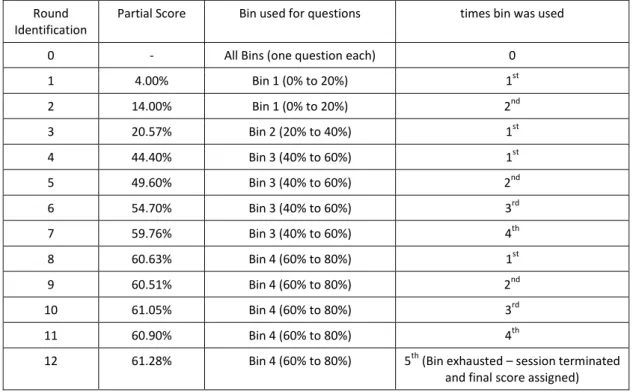
Xanthou has developed a dynamic e-assessment tool which responds not just to
whether the answer to a particular question is right or wrong, but also to the level of
accuracy of the answer. It then raises or lowers the level of the following questions.
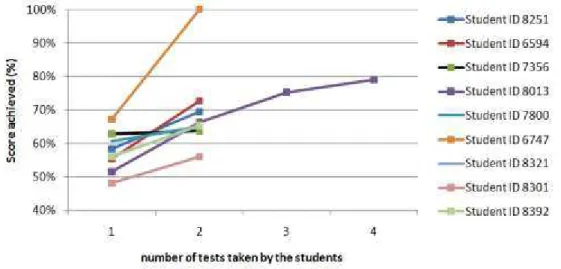
This provides the student with the motivation to repeat the tests until they become
familiar with the course content.
This includes both adaptive presentation and adaptive navigation the latter in
particular provides
has freedom of choice which enables them to determine their own learning paths.
She concludes that while physical contact with a tutor is clearly ideal, these adaptive
81
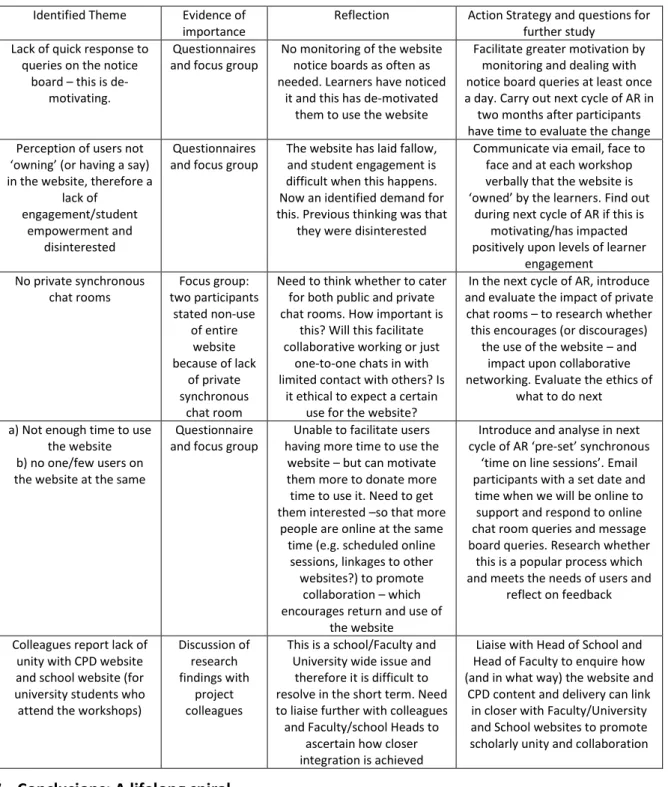
Worrall and Harris conducted action research with a group of professionals hard
pressed for time, and dissatisfied with the lack of responsiveness of their currently
available networking platforms. They conclude that feedback needs to be improved,
and they need to have more ownership of the site, as well as more facilities for
private interaction in private chat rooms.
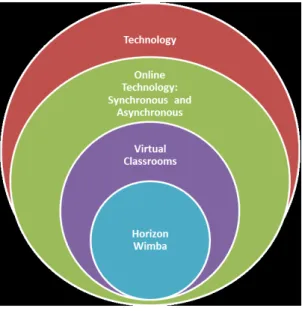
Florence Martin and Michele A Parker explore the adoption of synchronous online
R
They found
that availability and ease of use, and efficiency and reliability of the system were key
extrinsic the motivators, although the faculty were wary of using particular tools if
they lacked confidence.
Personal factors that rated highest for adoption were an interest in improving
teaching and learning, supporting studies elsewhere. Archiving and play-back, and
the audio and text chat feedback facilities were used extensively. Conferencing was
used for online courses as well as to extend interaction in blended courses, and to
offer virtual office hours.
Moten et al tackle the ever growing problem of online cheating, as availability and
Procrastination and
time-management, peer pressure and behavior, and a less personalized and distant
relationship to students all played a role. The authors discuss a range of problems
and possible solutions, but it remains an ongoing issue.
Kotsilieris and Dimopoulou explore the possibilities offered by 3D virtual worlds for
students to interact via avatars, in ways which are not possible in the real world.
They discuss the way Sloodle can be used to bring together Moodle and OpenSim,
and their experience in setting up an experimental virtual class.
Roy Williams
EJEL Editor
June 2013
ISSN 1479-4403 82 ©ACPIL Reference this paper as: Kyalo, I, W and Hopkins “ Exploring the Acceptability of Online Learning for Continuous
Exploring the Acceptability of Online Learning for Continuous
Professional Development at Kenya Medical Training Colleges
Isaac William Kyalo
1and Sandra Hopkins
21
Department of e-Learning, Kenya Medical Training College, Nairobi, Kenya
2Centre for International Health, Curtin Health Innovation Research Institute, Curtin
University, Perth, Australia
[email protected]
[email protected]
Abstract: This study explores the acceptance of online learning (OL) for continuous professional development among lecturers at Kenya Medical Training College in 2009. The large and multi-campus College faces logistical and cost challenges in ensuring that its 700 lecturing staff have access to continuous professional development. Online learning potentially provides an effective and efficient solution to this problem. A questionnaire was administered to a sample of the lecturers to assess the perceived usefulness and perceived ease of use of online learning, taking into account lecturers .
Two focus group discussions were also he OL W
high level of acceptability of the idea of undertaking further training using OL as user attitudes towards web-based training were positive. The benefits of OL over face-to-face learning for clinical training and the accreditation of OL courses are issues of ongoing concern to lecturers. Successful and large scale adoption of OL course requires promotion of their benefits in addition to clarification of the accreditation of the available courses.
Keywords: online learning; professional development; perceived usefulness of technology; perceived ease of use of technology; online qualifications
1.
Introduction
Kenya Medical Training College (KMTC) is the largest medical and health training institution in East and Central Africa with 700 lecturing staff and a responsibility for 14,000 students enrolled in more than 50 different medical and health courses across 28 campuses. Lecturers at KTMC are required to keep up-to-date in their field and in addition, are encouraged to enrol in degree and masters programs. A number of factors such as limited conventional classroom learning opportunities, insufficient training funds and restrictions on release of lecturers from their KMTC duties have resulted in management advocating online learning for continuous professional development.
This study explores the attitudes to and the use of online learning (OL) for professional development among lecturers at KMTC through the administration of a questionnaire. The study undertook to find out the appropriateness, barriers and potentials of online learning through the participating and non participating
Previous studies in other parts of the world have commended online learning as an appropriate method of fostering continuous professional development while others have pointed out its limitations especially in remote areas where technology is lagging behind (Beller and Ehud, 1998, Bartolic and Bates, 1999). Most analyses on technology acceptance, however concentrate on high income countries. Kenya as a low income country thus makes an interesting case for analysis as quality and availability of technology is likely to be different to that of the richer countries. This study is able to cast some light on whether technology acceptance is influenced by the availability and quality of the technology. Formative findings in Kenya have suggested negative beliefs and myths have surrounded the use of OL materials, and their delivery and quality (Amutabi and Oketch, 2003).
2.
Background
2.1
Training needs at Kenya Medical Training College
Kenya Medical Training College (KMTC) was established in 1927 and is the largest medical training institution in East and Central Africa. With over 14,000 students attending more than 50 different medical and health courses, KMTC makes the biggest single contribution to the health sector in Kenya with more than 2500
Electronic Journal of e-Learning Volume 11 Issue 2 2013
www.ejel.org 83 ©ACPIL
graduates every year for both the Kenyan public and private health sectors, and the foreign job market. KMTC contributes to more than 80 percent of the health workforce in Kenya and in response to regional needs, also train students from other African countries such as Uganda, Tanzania, Burundi, Rwanda, Sudan, and Nigeria. In total, there are 28 constituent colleges spread throughout the country with 1,500 members of staff of which almost 50% of these are lecturers (Kenya Medical Training College, 2008).
KMTC has a core function of training competent, multidisciplinary health professionals. In order to deliver this, qualified and experienced lecturers are fundamental. To facilitate learning and training of competent health professionals, the lecturers must continually validate their knowledge and skills to reflect the changing nature of health care needs (Mazmanian and Davis, 2002). This calls for a vigorous engagement in Continuous Professional Development (CPD) programs.
In addition to routine CPD, the management of the institution has continued to encourage lecturers to enrol in degree and masters programs. Currently, the majority of KMTC lecturers are holders of higher national diplomas and a minority with bachelors and masters degrees in different fields.
Amutabi and Oketch (2003) note that conventional classroom learning opportunities are limited in local universities. In addition the budget situation means that KTMC has limited funds for training and restrictions on the number of lecturers who can be released for full time and part-time courses. The combination of pressure of work, lack of finances and personal limitations is driving many lecturers to consider the use of online learning for their CPD as a more cost effective means of staff development.
To cope with the demands and challenges of CPD and higher degree acquisition, online learning opportunities are increasingly being introduced in Kenya by both local and foreign universities (Amutabi and Oketch 2003). This study examines the acceptance of the lecturers and the management of KMTC of the use of OL and its perceived impact in improving the quality of training. There exists a view that positive perceptions about the learning method can affect the achievement of the learning objectives, outcomes and their transfer to others (Ames and Archer, 1988, Lockwood and Gooley, 2001).
2.2
Research objectives
This study aims to explore general experiences and beliefs of lecturers regarding online learning, and analyze its use and acceptance as a method of enhancing professional development and quality of training in KMTC. In order to explore these general issues, the research has a number of specific objectives. A questionnaire was OL, to determine their experiences of OL, to find out the perceptions of lecturers towards online learning as a method of professional development and to assess the attitudes of online learning over face to face learning. A
(Kyalo, 2009).
In addition, the information obtained from the questionnaire was used to test a number of research hypotheses of the relationship between demographic and socioeconomic characteristics of the lecturers and their acceptance of OL. These hypotheses are:
1: Lecturers based in urban areas are more likely to accept and use OL than those based in rural areas;
2: Lecturers who are computer literate are more likely to participate in OL; 3: Experienced lecturers are more likely to use OL;
4: Lecturers with higher qualifications are more likely to use OL;
5: Lecturers with past or current experience in OL are more likely to have positive attitudes towards OL.
2.3
Theoretical framework
Africa and the rest of the developing world are experiencing a surge in the use of electronic technology for communication and educational purposes. The potential use of this technology however remains largely unexploited due to limited access to ICT facilities (Wilson, 2008). The region depends heavily on high income
countries for both ICT materials and technical support leading to high costs of internet services and a technological gap in both education and business sector. While internet coverage appears to be improving in big cities and business centers, connectivity still remains poor and expensive in remote areas (Harasim, 2001). Kenya is in the process of installing fiber optic technology which is expected to boost and reduce the cost of internet communication and other ICT services in the country (Limo, 2009).
Online learning (OL) which is also called e-learning and web-based learning refers to the use of the web-based technologies to delivery material to enhance knowledge and skills. There are 2 possible modes for OL: distance learning or computer-assisted instruction (Ruiz JG et al., 2006). Considerable literature across a number of disciplines attests to the efficiency and effectiveness of OL as means of delivery for teaching and learning (Tallent-Runnels MK et al., 2006). OL is welcomed by students as it provides them with convenience and autonomy as learning is generally self-paced. These characteristics enhance motivation and performance. From the instructors' viewpoint, OL content can be more easily updated.
Whilst not disputing the importance of issues of technological capacity and cost, this paper concentrates on the factors that may impact on the acceptance of OL as a means for obtaining further qualifications or updating skills in KMTC. Lack of acceptance of new technology as evident in rejection, partial engagement or active resistance may be very costly to both the individual and the employer (Hashim, 2008). Thus employers tend to be concerned about financial, pedagogical and attitudinal barriers to use of new technology. All are instrumental in judging the success of the introduction of technology but attitudinal problems are considered to be the most difficult to manage.
I TAM
acceptance of new technology (Davis F.D., 1989). The model uses two technology acceptance measures of perceived usefulness and perceived ease of use, as the keys to success. Perceived usefulness is defined in the
l
P
. (Davis F.D., 1989).
Earlier research by Schultz and Slevin found that the perceived usefulness of technology, especially in terms of the likely effect on job performance and advancement is highly correlated with self-predicted use (Schulz R.L and Slevin D.P., 1975). A system which does not help people in the performance of their job is unlikely to be viewed favourably, and thus adopted.
Both perceived usefulness and perceived ease of use have strong behavioural elements. Thus more recent research is strongly linked to the literature of psychology. Bagozzi, Davis and Warshaw (Bagozzi R.P. et al., 1992) note that the general model underlying the acceptance or rejection of technology follows a sequence of factors that run from systems design characteristics, beliefs and evaluations of consequences of use, attitudes, decision-making and intentions to use and finally to usuage. In the TAM, it is anticipated that positive attitudes towards technology are more likely to lead to an intention to adopt. Bagozzi et al (1992) suggest that the weakest link in the causal chain, and the least researched, is attitudes. Measurement and definition of attitudes may be problematic as attitudes may be linked to both goals and actions.
In conclusion, while studies have shown that OL can achieve the same or even better results than the traditional methods in fostering knowledge and skills, there is need to evaluat
this ease and usefulness of OL (Tallent-Runnels MK et al., 2006). Attitudes and beliefs are strong determinants of behavior and will affect the acceptance of any methodology hence affecting its effective use and overall impact in quality improvement.
3.
Methods
3.1
Sample and data collection
Since it was not possible to survey all 700 lecturers in all the 28 locations of the KMTC colleges, 120 study subjects were drawn from 6 of the 28 colleges. The participating colleges, both urban and rural were selected through cluster sampling. After that selection, all full-time lecturers in the 6 participating colleges were used as
Electronic Journal of e-Learning Volume 11 Issue 2 2013
www.ejel.org 85 ©ACPIL
study subjects. The research design is a cross-sectional analytical study with data collected from 6 of the 28 colleges of KMTC using a researcher designed questionnaire.
In a second stage of the study, qualitative data were collected via Focus Group Discussions (FGD) with an aim to complement, strengthen and explain quantitative results. The data were derived from two FGDs each consisting of 7 lecturers who had participated in OL and personal interviews with three key informants. The key informants included a human resource officer in KMTC, a principal in one of the KMTC colleges and a lecturer dealing with e-learning in one of the local universities.
The survey instrument is a modified version of a validated questionnaire used in a previous and related study by Chin (2004). In order to allow for clarification of issues for both the researcher and study subjects, one of the authors (William Kyalo) undertook all the data collection procedures including the surveys reported in this paper and the interviews and FGD.
The study instruments were designed in such a way that useful information was collected at the same time as responses to the research questions. The information collected included socio-demographic characteristics, user rate of OL, perceived usefulness of OL, and beliefs, experiences and attitude towards online learning as a tool for continuous professional development.
This section summarises the survey results based on the 120 questionnaires filled by the lecturers in the 6 KMTC constituent colleges. The responses to the interviews are also summarised. The first set of results summaries the demographic and qualifications of the survey respondents (Table 1).
Table 1: Demographic details of surveyed lecturers at KMTC (n=120) Socio-demographic variables
Gender Male 58.3 %( n=70)
Female 41.7 %( n=50)
Age (years) Mean 44.9
Median 47.0
Work Experience (years) Mean 18.5
Median 20
Work Location: Urban 54.2 %( n=70)
Rural 45.8 %( n=50)
Profession Nurse 48.3% (n=58)
Environmental health officer 11.7% (n=14)
Medical doctor 1.7% (n=2)
Medical lab technologist 10.0% (n=12)
Clinical officer 10.8% (n=13)
Medical engineer 5.0% (n=6)
Pharmaceutical technologist 1.7% (n=2)
Medical imaging 1.7% (n=2)
Dental technologist 1.7% (n=2)
Occupational therapist 3.3% (n=4)
Orthopedic technologist 3.3% (n=4)
Medical records 0.8% (n=1)
Highest Qualification attained Diploma 6.7% (n=8)
Higher National Diploma (HND) 65.8% (n=79)
Undergraduate Degree 15% (n=18)
Postgraduate Degree 12.5% (n=15)
The majority of the lecturers (58.3%) were males while 41.7% were females. The age of the lecturers ranged
T T erience ranged from 1 to
34 years with an average of 18.5 years.
Work locations were categorized as urban or rural. Colleges located in big cities and provincial headquarters were categorized as urban while those located in district headquarters and counties were categorized as rural. 54.2% of the lecturers worked in urban environment while 45.8% were based in rural areas. It is expected that urban and rural environments enjoy some differences in terms of telecommunications infrastructure.
Nearly half (48.3%) of the lecturers involved in this study were nurses. This is consistent with the KMTC statistics which show that the majority of lecturers are in the nursing discipline. The next most common occupancy groups are: environmental health officers (11.7%) and the medical laboratory technologists and clinical officers (10% each). The majority of the lecturers (65.8%) who responded to this study had a higher national diploma as their highest qualification while 15% and 12.5% had undergraduate and postgraduate degrees respectively. The remaining 7% had a basic diploma as their highest qualification. In Kenya, a Higher National Diploma refers to one year of specialized training following the award of a basic diploma. Usually, it is argued that Higher National Diploma , though many authorities still believe
The majority of the lecturers (68.3%) have not engaged in online learning (OL). Only 31.7% had engaged in OL in the past and at least 20% of the lecturers were still participating in online learning at the time of this study. Overall, only 33.3% of the lecturers had experience of OL through past or present participation. However, the overwhelming majority (73.3 %) expressed their intention to engage in OL in the near future.
Nearly 90% of the lecturers reported to have basic computer skills though at different levels of proficiency. All these lecturers who had basic computer knowledge were accessing the internet daily, weekly or at least on a monthly basis. Most of the internet access was happening at work place and in internet cyber cafés. Over 80% of the lecturers could easily access a computer and technical assistance if needed and about 70% felt that they had the necessary and adequate computer skills to participate in OL. 65% stated that the internet connection is usually reliable and fast enough.
4.
Results and discussion
4.1
Survey results
The survey results assessing the degree of technology acceptance by the KMTC lecturers are provided in Table 2. The results are divided into two sections of perceived usefulness and perceived ease of use. As was explained earlier, perceived usefulness indicates the capacity of the new technology to enhance job performance. Perceived ease of use indicates the effort required to use the technology. The higher the perceived usefulness of a new technology, the more likely people are to adopt it. A system which does not help people in the performance of their job is unlikely to be adopted.
The responses to the survey questions which focus on perceived usefulness of OL reveal a high level of agreement that the use of technology is beneficial (refer to Table 2). Questions on feeling positive (question a), quality of knowledge acquired (question b) and recommending the use of the technology to colleagues (question f) received high approval ratings. Questions on the capacity of the knowledge acquisition to enhance job performance are not regarded so positively. Questions on the acceptability of the online qualifications to the institution (question d) and to the professional body (question e), and whether online learning was successful (question j) receive agreement rankings of 50% or less. While there is not strong disagreement to these 3 questions, there appears to be some hesitancy or uncertainty regarding the acceptability of the online qualifications. This is apparent in the high percentage of respondents who feel neutral towards the questions. The qualitative responses from the FDG support the survey responses. One of respondents in the FDG
commented that: T I OL
the employers and professional bodies While this uncertainty exists, it is unlikely the perceived usefulness will translate into unqualified acceptance of online learning by the lecturers.
Convincing lecturers of the value, acceptability and recognition of online learning requires strong leadership within the institution. The managers at KMTC interviewed as part of this study acknowledged the place of online learning as a cheaper and more practical alternative than face-to-face training for professional development. One manager commented that: our training budgets are insufficient and
lecturer for a full time course, we hope most of them will enroll in online courses which are cheaper and can be self funded. Institutional funding of OL would signal wide acceptance of the qualifications. Funding, even partially, would also enable the college to keep track of the professional development activities of the staff. A comment was that: It is hard to know the number of staff enrolled in OL courses; most of them only come to us after they have completed their courses.
Electronic Journal of e-Learning Volume 11 Issue 2 2013
www.ejel.org 87 ©ACPIL
Even in the absence of any available funding, it would be beneficial to the institution and its staff to send a clear message that OL training is valued. One manager noted that: W
their online qualifications just like any other qualification when interviewing staff for better job position. The second part in Table 2 with respect to perceived ease of use can be divided into two types of responses. The responses to the first 2 questions rate OL highly for its practicality, especially in terms of its flexibility for adults.
The last 3 questions all focus on the perceptions of OL versus face-to-face learning. The link between theory and practice when learning materials are delivered online and thus distant from the clinical area is an issue of concern for health education in all countries, not just low income ones like Kenya (Hewitt-Taylor J, 2003). The significance of this concern needs to be evaluated against the fact that much classroom instruction is also predominantly delivered at a distance from the client care environment (Hewitt-Taylor, 2003).
Table 2: L online learning
Strongly Agree +
Agree Neutral
Strongly Disagree +Disagree PERCEIVED USEFULNESS
I feel positive about using online learning to further my skills and knowledge.
80.8% 16.7% 2.5 %
Online learning can give me the same quality of knowledge and skills as face to face learning.
80.8% 11.7% 7.5%
I would like to see online learning established in all the universities.
85.0% 9.2% 5.9%
Online qualifications are acceptable and recognized in my institution.
45.8% 45.8% 8.3%
Online qualifications are acceptable and recognized by my professional organization/body.
50.0% 40.8% 9.2%
I would encourage my colleagues to try online learning for their professional development.
87.5% 8.3% 4.2%
Online learning can improve my knowledge and skills level 89.2% 5.0% 5.8%
Online learning can improve my job performance 83.3% 12.5% 4.2%
Overall, staff development through online learning can improve the quality of training in KMTC
85.8% 10.0% 4.2%
My experience in online learning is/was a successful one(for those who participated or are participating)
27.5% 66.7% 5.8%
PERCEIVED EASE OF USE
I prefer looking for reading materials online than in libraries. 74.2% 16.7% 9.2% Online learning is flexible and suitable for me as an adult learner. 80.8% 11.7% 7.5%
One can successfully complete a course online without face to face sessions
57.9% 21.7% 20.8%
Overall, online courses are cheaper than those offered through face to face contact.
54.2% 40.8% 10.0%
I prefer online learning to face to face learning. 55.2% 26.7% 18.3% There was modest agreement (54.2%) to the question on the cost of OL compared with face-to-face. With respect to cost, one of the FGD participants commented that: Overall, OL is cheaper but the hidden costs like internet and printing can be very distressing to the students if not anticipated.
T OL
participating in OL - they feel positive and like the flexibility of it but that a number of dimensions create some doubt such as the cost, acceptability by the institution and their profession and the benefits of OL against to-face learning. This indicates that for OL to be successfully promoted as an alternative to face-to-face for continuous professional development, the accreditation issues need to be resolved and marketed to the lecturers to encourage broad uptake.
Overall the group of lecturers who have participated in OL did not provide strong endorsement of participation. Only 27.5% of those who had participated agreed that OL is successful for them with 66.7% of lecturers indifferent to the question. Since word of mouth may be important for generating ongoing support for and participation in OL, it would be wise for the institution to explore further the reasons for the neutrality towards the success of the OL experience.
4.2
Hypothesis testing
The second part of the data analysis presents tests of association between the lecturers demographic profiles and their use and acceptance of OL. This enables the 5 hypotheses presented earlier to be tested and discussed. The test statistics for the 5 hypotheses are in Table 3.
Table 3: H ut Online Learning
Hypotheses Pearson Chi-Square Asymp. Sig.
(2-sided) Lecturers based in urban areas are more likely to accept and use OL
than those based in rural areas
3.290 0.070
Lecturers who are computer literate are more likely to participate in OL
13.147 0.004
Experienced lecturers are more likely to use OL 11.313 0.010
Lecturers with higher qualifications are more likely to use OL 4.706 0.195 Lecturers with past or current experience in OL are more likely to
have positive attitudes towards OL
4.865 0.027
N=120
The first hypothesis is whether lecturers based in urban areas are more likely to participate in OL compared to those based in rural areas. This hypothesis was tested as it is believed that urban and rural environments enjoy some differences in terms of infrastructure. To test this hypothesis, a chi-square test was run between work locations of urban or rural and a value representing past and current participation in online learning. The Chi-square statistic in equal to 3.290 with a p-value of 0.070. Hence we conclude that there is no association between use of online learning and work location (urban or rural).
The second hypothesis is whether lecturers who have better self-assessed computer skills are more likely to participate in OL. In order to test this, a chi square test was run between a computer skills indicator and a value representing current and past OL participation. The chi square statistic is equal to 13.147 with a p-value of 0.004. Hence we conclude that there is an association between the use of online learning among lecturers and their level of self-assessed computer skills.
The third hypothesis addresses the issue of whether lecturers with more years of work experience are more likely to participate in OL than lecturers with less work experience. Based on a Chi-square statistic of 11.313
with a p-value of 0.010, we conclude that there is
learning and their years of work experience. The relationship may reflect the fact that lecturers who have been longer in their job are more likely to have been exposed to OL and its potential benefits.
The fourth hypothesis is whether lecturers with higher qualifications are more likely to participate in online learning compared to those with lower qualifications. The Chi-square statistic is equal to 4.706 with a p-value
equal to 0.195, allowing us to conclude that there is
learning and their qualifications.
Finally, we considered the hypothesis of whether past or current experience in OL is more likely to be associated with a positive attitude towards OL. The result was a Chi-square statistic equal to 4.865 with a p-value of 0.027. Hence we can reject the null hypothesis and we conclude that there is an association between
OL T
at KMTC, experience or participation in OL is associated with the higher positive attitude towards OL. This result is supported by a review of research on OL by Tallent-Runnels et al (2006).
While this result might seem to contradict the result in Table 2 that only 27.5% of those who had participated in OL agreed that it was successful, the percentage who thought it was successful far outweighed that those
Electronic Journal of e-Learning Volume 11 Issue 2 2013
www.ejel.org 89 ©ACPIL
that thought it was not of 5.8%. The most favoured option for the success or otherwise held by those who had already undertaken OL was neutrality. The issue of neutrality is an obvious candidate for further investigation, especially since this group of lecturers will either recommend or condemn OL to their colleagues.
In further tests of association based on results obtained by the questionnaire, we found no significant association between gender and self assessed computer skills, between gender and participation in online learning and between age and computer skills.
4.3
Quality issues
A OL ent
should be both prudent and cautious. OL courses have the potential to enhance the learning experience where face-to-face courses are either unavailable or too expensive, but the quality of the process and of the OL courses should be carefully evaluated. It is imperative that OL courses are well designed and well implemented in accordance with sound educational theories (Tallent-Runnels MK et al., 2006). The ability of students to effectively use any technology associated with course materials must be considered in course design, so that any such applications enhance student learning. For clinical education, well-designed curricula are essential regardless of the method of delivery (Chumley-Jones H et al., 2002).
The quality issues were highlighted in the FGD. One of the lecturers commented: But the most discouraging thing is that online learning opportunities are not readily available in our country and even if you get one, you are worried about authenticity and quality of the providers.
5.
Conclusion
Based on the findings of this study, it can be concluded that there is a high level of acceptability of the idea of undertaking further training using OL. User attitudes towards web-based training were undoubtedly positive. Kenya as a low income country makes an interesting case for analysis as quality and availability of technology is likely to be different to that of the richer countries. However, we find little evidence that the quality and availability of technology is impacting on the decision of whether to undertake an OL course or not. Rather it appears that some of the practicalities of OL training create uncertainties in the minds of the lecturers. There seemed to be some hesitation about the benefits of OL over face-to-face learning in light of the clinical nature of the subjects being studied and also about the accreditation of OL courses. The two questions which address the preferences of OL versus face-to-face registered the highest disagreement of all the answers.
The results are not surprising when considered in the context of OL training world wide. Bassett notes that classroom training is still the norm for most training (Bassett, 2006) . Companies in the United States conduct only 30% of training using OL methods (Hashim, 2008). On the surface, OL seems like a good option for time and financially constrained professionals. But in fact, the challenges of OL are many and include the difficulty of remaining motivated and self-directed. Indeed a comprehensive cost benefit analysis of OL may indicate that whereas the direct cost of OL is less than that of face-to-face teaching, the indirect costs of OL may be higher due to a high drop-out rate. The fact that those who have already participated in OL did not strongly agree about its success provides support to possible high indirect costs of OL.
Given the reservations expressed by respondents to the question on the benefits of OL, hybrid approaches to learning which integrate face-to-face learning with online learning merit some discussion in any decision to introduce more CPD courses at Kenya Medical Training Colleges. Blended learning has the potential flexibility to accommodate the varied requirements of pedagogies, disciplines and levels of course, together with the needs of a wide variety of learners (López-Pérez MV et al., 2011). What makes blended learning particularly effective is its ability to facilitate a community of inquiry for open communication and at the same time allow limitless access to information on the Internet (Garrison DR and Kanuka H, 2004). A study by López-Pérez et al (2011) shows that the implementation of blended learning has a positive effect on reducing dropout rates and in raising exam pass rates in the subject.
In the FDG, it was noted that: Online learning is more theoretical than practical; it is not good for practical subjects like nursing and For practical subjects, I would advocate for a blended methodology whereby OL still comes with some face to face sessions.
In the case of the suitability of OL or other modes of learning for the Kenya Medical Training College, a full assessment of the costs and benefits of OL would require an analysis of data over many years. Obviously this current study due to a limited time frame has not been able to undertake a comprehensive analysis. The results presented here do highlight both some of the advantages of OL and some of the ongoing problems. There is no doubt that OL particularly where it is supported by a face-to-face component has much to offer an institution like KTMC which is endeavouring to improve the CPD training for its staff. There are a number of features of the KTMC environment which support this conclusion. First, KTMC is a multiple campus college with both urban and rural colleges with considerable distances between them. Second, the complexity and breadth of health and nursing education content coupled with the scarcity of expertise and resources required for effective CPD makes OL delivery a reasonable proposition for both the lecturers themselves and the organisation.
References
ames, C. & Archer, C. 1988. Achievement Goals in the Classroom: Students' Learning Strategies and Motivation Processes. Journal of Educational Psychology, 80, 260-267.
Amutabi, M. N. & Oketch, M. O. 2003. Experimenting In Distance Education: The African Virtual University (Avu) And The Paradox Of The World Bank In Kenya. International Journal Of Educational Development, 23, 57-73.
Bagozzi R.P., Davis F.D. & Warshaw, P. R. 1992. Development And Test Of A Theory Of Technological Learning And Usage. Human Relations, 45, 660-686.
Bartolic, Z. S. & Bates, A. W. 1999. Investing In On-Line Learning: Potential Benefits And Limitations Canadian Journal Of Communication, 24.
Bassett, M. 2006. Classroom Setting Still The Rule For Training. Corporate Meetings And Incentives, 25, 20.
Beller, M. & Ehud, O. 1998. The Crossroads Between Lifelong Learning And Information Technology: A Challenge Facing Leading Universities Journal Of Computer-Mediated Communication, 4.
Chin, K. L. 2004. The Perceptions Of Lecturers And On-Campus Students On Online Teaching And Learning In Higher EducationMaster of Information Systems, Curtin University.
Chumley-Jones H, Dobbie A & Alford C 2002. Web-Based Learning: Sound Educational Method Or Hype? A Review Of The Evaluation Literature. Academic Medicine, 77, S86-S93.
Davis F.D. 1989. Perceived Usefulness, Perceived Ease Of Use, And User Acceptance Of Information Technology. Mis Quarterly, 13, 319-340.
Garrison Dr & Kanuka H 2004. Blended Learning: Uncovering Its Transformative Potential In Higher Education. Internet And Higher Education, 7, 95-105.
Harasim, L. 2001. Shift Happens: Online Education As A New Paradigm In Learning The Internet And Higher Education, 3, 41-61.
Hashim, J. 2008. Factors Influencing The Acceptance Of Web-Based Training In Malaysia: Applying The Technology Acceptance Model. International Journal Of Training And Development, 12, 253-264.
Hewitt-Taylor, J. 2003. Facilitating Distance Learning In Nurse Education. Nurse Education In Practice, 3, 23. Hewitt-Taylor J 2003. Facilitating Distance Learning In Nursing Education. Nurse Education In Practice, 3, 23-29. Kenya Medical Training College. 2008. Kenya Medical Training College [Online]. Available: Http://Www.Kmtc.Ac.Ke/
[Accessed May 2, 2009].
Kyalo, I. W. 2009. Towards Sustainability & Quality In Healthcare Training: Exploring The Use And Acceptability Of Online Learning As A Method Of Enhancing Continuous Professional Development Among Lecturers In Kenya Medical Training Colleges. Masters Of International Health, Curtin University.
Limo, A. 2009. Fibre Optic Cables Set To Boost Trade In Kenya Daily Nation, Friday, February 27, 2009.
Lockwood, F. & Gooley, A. 2001. Innovation In Open & Distance Learning: Successful Development Of Online And Web-Based Learning, London, Kogan Page.
López-Pérez Mv, Pérez-López Mc & Rodríguez-A L B L I H E “ P
And Their Relation To Outcomes. Computers And Education, 56, 818-826.
Mazmanian, P. E. & Davis, D. A. 2002. Continuing Medical Education And The Physician As A Learner: Guide To The Evidence. Journal Of The American Medical Association, 288, 1057-1060.
Ruiz Jg, Mintzer Mj & Leipzig Rm 2006. The Impact Of E-Learning In Medical Education. Academic Medicine, 81, 207-212. Schulz R.L & Slevin D.P. 1975. "Implementation And Organizational Validity: An Empirical Investigation. In: Schulz R.L &
Slevin D.P. (Eds.) Implementing Operations Research/Management Science. New York: American Elsevier. Tallent-Runnels Mk, Thomas Ja, Lan Wy, Cooper S, Ahern Tc, Shaw Sm & Xiaoming L 2006. Teaching Course Online: A
Review Of The Research. Review Of Educational Research, 76, 93-135.
Wilson, T. 2008. New Ways Of Mediating Learning: Investigating The Implications Of Adopting Open Educational Resources for tertiary education at an institution in the United Kingdom as compared to one in South Africa International review of research in open and distance learning, 9, 1.
ISSN 1479-4403 91 ©ACPIL Reference this paper as: Hramiak, A and Boulton H Escalating the use of Web 2.0 Technology in Secondary Schools in the United Kingdom: Barriers and Enablers Beyond Teacher Training The Electronic Journal of e-Learning Volume 11 Issue 2 2013, (pp91-100), available online at www.ejel.org
Escalating the use of Web 2.0 Technology in Secondary Schools in
the United Kingdom: Barriers and Enablers Beyond Teacher Training
Alison Hramiak
1and Helen Boulton
21
Sheffield Hallam University, UK
2Nottingham Trent University, UK
[email protected]
[email protected]
Abstract: This paper reports on research that took place at Nottingham Trent University (NTU) and Sheffield Hallam University (SHU), United Kingdom, over two years. The project formed the basis of an iterative, interpretive, action research study focussing on a particular set of participants trainee teachers. The insights gained from the initial cycle fed into planning the second cycle, for which the action plan was modified and the research process repeated (Zuber-Skerritt 1992). The research project focuses on the use of Web 2.0 technology, specifically web logs, (or blogs) with trainee teachers, both during their university programme and during the first year of teaching as full-time newly qualified teachers. The purpose of this research was to add to a developing body of knowledge identifying whether technology used by trainee teachers during their training course can be cascaded into their practice once qualified. Participants from the two collaborating universities were introduced to blogs and blogging during their time at university, and encouraged to use it for themselves, and to also think about how it could be used in their own classrooms when they were teaching. Questionnaires were used to ascertain their thoughts on the use of blogs during training, and these were followed up with interviews with a number of the trainees to determine the cascading of this technology, once they had become newly qualified teachers (NQTs) and were teaching in schools. These interviews explored the reasons for enabling or inhibiting the use of blogs in their teaching in school. This paper presents the findings of the research and discusses the enablers and inhibitors that were identified in the light of current research findings. The research supports the view that developing innovative use of technology in the classroom is complex and experiences during training are not always transferred into practice.
Keywords: pre-service teacher education; secondary school teachers; technology uses in education; teaching methods, weblogs, blogs
1.
Introduction
Developments in Web 2.0 technology have seen an increased usage in secondary education, which is reflected in teacher training courses across Europe. At Nottingham Trent University (NTU) and Sheffield Hallam University (SHU) in the United Kingdom (UK), research has taken place over the last two years in the use of Web 2.0 technology in Initial Teacher Education courses. This paper focuses on how Web 2.0 technology, specifically web logs (blogs), are developed as a learning and teaching tool within secondary teacher education, and how this is cascaded into secondary schools. The research which was undertaken identifies the enablers and barriers to trainee teachers with respect to their use of Web 2.0 technology in their transition into full-time employment as newly qualified teachers (NQTs).
The speed of change in technology within education across Europe means that it is essential for trainee teachers to be familiar with the latest technology as a means for enhancing their own teaching and learning skills and those of their pupils. Clear links are established between teacher training and information communications technology (ICT) across Europe in a report by Pelgrum and Doornekamp (2009). The report, commissioned by the European Commission (EC), indicates that of the 28 European countries that took part in
t ICT (Pelgrum &
Doornekamp 2009). The report further indicates that of the 28 countries, 90% regard pedagogical support for The figure was similar for pedagogical ICT competencies of
One
We want all teachers to display a full repertoire of pedagogical skills with technology
The trainees at NTU and SHU who took part in the research reported in this paper were all on a one year Post Graduate Certificate in Education (PGCE) course for trainee teachers (Europe = Second Cycle) working in the secondary education phase (age 11-18). The PGCE courses at both universities follow a similar pattern, both
being one-year courses involving time in secondary schools as well as periods in university. In the first term the trainee teachers spend approximately six weeks in university followed by approximately seven weeks in a secondary school setting. The trainees then return to university in the second term for a further seven to eight weeks, followed by approximately thirteen weeks in a different secondary school setting before completing the course. The research reported in this article reflects two phases. Phase one took place during the PGCE one year course. Phase two took place when the trainees had finished their PGCE and were working as full-time NQTs in secondary schools.
B
(Mason & Rennie 2006). They have become widely used across the internet as a tool, partially because of their accessibility, and partially because of their ease of use, allowing non-technical people to contribute to websites (Hramiak et al. 2009).
Using blogs as an embedded part of teacher training enables trainee teachers to understand the wider implications of Web 2.0 technologies within a broad learning context. The practical uses of blogs during teacher training is far more powerful as an introduction to the tool than merely reading about it in the literature. Hammond et al indicate that the introduction of technologies during teacher training enables trainee teachers to develop an understanding of related pedagogy (Hammond et al. 2009). Trainee teachers
(Gaffney 2010).
2.
Literature review
There are mixed findings reported by researchers on the use of Web 2.0 technologies in teacher education. For example, Divintini et al report limited use of blogs by teacher trainees (Divintini et al. 2005) and research undertaken with dyslexia and trainee teachers, found that blogging could be time consuming and question its value (Oti & Clarke 2007). Martindale and Wiley (2005) quote millions of people using blogs all over the world but indicate limited success when using blogs for educational purposes, (Beldarrain 2006; Martindale & Wiley 2005).
However, researchers such as Bonk and Zhang (2006), and Hramiak et al (2009) report success with the use of Web 2.0 technologies and trainee teachers. Larose et al (2009) argue that practices observed by trainees during training might optimise the chances of these future teachers using technology in their own classrooms (Larose et al. 2009). Reports in the educational press have also indicated that there may be some positive resistance to the use of e-learning and associated technology with teacher trainees by academics, the latter being reluctant to adopt technology in their sessions with trainees (Attwood 2009).
Research findings align the successful integration of technologies in the classroom with appropriate pedagogy. For example Mukama and Andersson found the need to develop school based curricula and appropriate pedagogy to allow trainee teachers time to develop criticality with respect to new ICT based tools (Mukama & Andersson 2007). A study by Hammond et al (2009) found that a pedagogical rationale was an important success factor when trainee teachers used new technologies and could result in an inclination to use ICT, or a propensity to see its value in the classroom (Hammond et al. 2009). H
the findings of Davies et al (2008) indicating that a more ecological approach may be at play with respect to the use of information technology by teachers in classrooms, suggesting that the interaction of the trainee and the environment is pivotal (Davis et al. 2008; Galan & Blanco 2004). Also Granberg (2009) found that where teachers share a pedagogical vision, then the difficulties of integrating information technology into courses can
I G s were required to use information technology as
part of their teaching and then to cascade this use, it was found that, in the absence of formal structures for pedagogical discussions, teachers could experience barriers when trying to develop ICT supported methods of teaching and learning (Granberg 2009).
Beyond teacher training, researchers report more confident results in the use of blogs in education. For example Beldarrain (2006) reports success with fostering student interaction on-line using blogs. Kim, in
ICT I
attemp (Kim 2008). Other researchers have analysed the
Alison Hramiak and Helen Boulton
www.ejel org 93 ISSN 1479-4403
might play in education and professional contexts (Oravec 2003). Recent reports from Australia indicate a use of blogs as part of a range of tools used to transform a face to face course at masters level to one that was predominantly online in order to improve student communication during placement (Hoven 2006), while Instone reported positively on the use of multi-participant blogs as a component of a professional development program for managers (Instone 2005).
The aims of the research reported in this paper was to add to this growing body of knowledge, and to identify whether technology used by trainee teachers during their training course, supported by appropriate pedagogy, was cascaded into their own practice once they had qualified. The research also identified the enablers and inhibitors once the trainees were in their first year of teaching.
3.
Methodology and methods
The methodology used for this research was action research as discussed by Carr and Kemmis, Kolb, Lewin, Whitehead and McNiff and Zuber-Skerritt (Carr & Kemmis 1986; Kolb 1984; Lewin 1946; Whitehead & McNiff 2006; Zuber-Skerritt 1992). Action research theorists adopt a methodical, iterative approach to research, embracing a hierarchical cycle of problem identification, action planning, implementation, evaluation, and reflection. The insights gained from the initial cycle feed into planning the second cycle, for which the action plan is modified and the research process repeated. This theory has been applied to Higher Education by Zuber-Skerritt (1992) whereby the researcher is considered to be involved in the process:
The ultimate aim [of action research] should be to improve practice in a systematic way and, if warranted, to suggest and make changes to the environment, context or conditions in which that practice takes place, and which impede desirable improvement and effective future development.' (Zuber-Skerritt 1992).
The acknowledged founder of action research, Lewin, developed the basic principles and recognised the participatory nature of action research in relation to social change. Masters (1995) uses McKernan (1988) in her discussion in which she argues that action research as a method of inquiry has evolved and is rooted in scientific methodology (McKernan 1988). Action research produces both knowledge and new ways of
(Noffke & Somekh 2009).
Two phases of research took place reflecting the cyclical nature of action research. The methods used for each stage are reported below. Throughout the research the authors wanted to embrace the use of new technologies and provide opportunity for trainee teachers to develop skills in using blogs, identify where the use of this technology would enhance the experience of their pupils, and be confident in using blogs in
The authors believed it was important to introduce the technology methodically and reflectively to encourage similar processes for their trainee teachers to follow once they were qualified teachers. Drawing on the experiences of other researchers discussed in the literature survey the authors ensured opportunity for criticality, a shared pedagogy, as well as support and encouragement from university tutors, school based mentors and their peer group; these are all cited by McNiff and Whitehead as essential for successful action research.(McNiff & Whitehead 2009).
A predominantly qualitative and interpretive approach was taken for this study (Bogdan & Biklen 1998). The research represents small scale research investigating a particular set of trainees at different institutions on similar training courses; the Post Graduate Certificate of Education. The collaboration between NTU and SHU focussed on collating similar data sets (Groom & Maunonen-Eskelinen 2006) to identify how the blogs supported reflective practice and as a classroom resource (phase one) and then investigated its cascading into schools (phase two). The use of multiple sources of evidence, gained from using different methods to collect the data provided triangulation of data and added rigour to the conclusions drawn from the data (Cohen et al. 2007).
The use of blogs at both universities by the trainee teachers in the two respective cohorts for the duration of their time on the PGCE course was mandatory. There were eighteen trainees in the SHU cohort and fifteen trainees in the NTU cohort, totalling 33. Both cohorts comprised of male and female teacher trainees with an age range from 21 to 55. All had access to ICT facilities throughout their university course including the blog tool. The blog tool was different at each institution: at SHU this was part of their Virtual Learning Environment
(BlackBoard©), w NTU Internet (LiveJournal).
In phase one, an analysis was undertaken by the two universities to determine attitudes and perceptions of blogging as a tool for reflective practice which developed into the use of blogs as a resource in the secondary school classroom (Hramiak et al. 2008). The data collection for this analysis was via questionnaires. In addition, an evaluation and review of existing practice within the two courses at NTU and SHU in this area of teacher training was undertaken. Trainees were introduced to the pedagogy of using blogs in secondary schools and encouraged to identify a range of activities in secondary education where blogs could enhance the curriculum, both within and outside the classroom. At NTU observations of the use of blogs while the trainees were teaching, and their evidence of using blogs as a classroom resource was recorded.
In phase two a total of five trainees from the SHU cohort and five trainees from the NTU cohort, now qualified teachers, were interviewed. These participants were selected to provide a representative sample based on age and gender. The interviews followed open questions to identify if and how trainees were using blogs in their own teaching in schools now they were qualified teachers, or if they had included the use of blogs in their planning for the academic year. Questions were also used to ascertain what the respondents perceived the barriers to be if they were not cascading the use of blogs into their teaching. Where possible, interviews were conducted face to face, this depended on availability of trainees at the different institutions. Where face to face interviews were not possible the participants were interviewed via the telephone. Interviews were conducted during the second term of the academic year in which the respondents were fully qualified teachers. At NTU, an invitation was also sent to the remainder of the phase one cohort resulting in an additional seven participants completing an on-line questionnaire which had been designed to reflect the interview questions and which also provided opportunity for additional comments and data. This represented a total of seventeen respondents, that is, 50% from phase one who participated in phase two.
Table 1: A summation of the methodology for each phase is indicated below:
University Phase 1 (as part of taught University Course) Phase 2 (students from phase one are now newly qualified teachers)
Participants Data collected Participants Data collected
NTU 15 Questionnaire +
observations of teaching
5 7
Interviews On-line questionnaire
SHU 18 Questionnaire 5 Interviews
NTU and SHU Analysis undertaken to determine attitudes and perceptions of blogging by trainee
teachers.
Evaluation and review of existing practice within the PGCE at each University.
The data collected from phase two was analysed looking at similarities and differences between the trainees from NTU and SHU. Analysis also took place to provide evidence of enablers and inhibitors to cascading the
These findings are described in the next
section of this paper.
4.
Findings
The findings from the study are described in detail by phase, in this section following.
4.1
Reflections on findings from phase 1
As stated above, the use of blogs was mandatory for all the trainee teachers in phase one. During the first term of the course the trainee teachers at both universities were introduced to using blogs, both as a reflective tool as part of their professional development (Hramiak et al. 2009), and as a classroom tool supported by pedagogy (Hammond et al. 2009). The teacher trainees were encouraged, prior to their first secondary school experience, to identify possible uses of blogs in the secondary curriculum and to build this into their developing repertoire of learning and teaching methods. At the end of the first school placement a review took place with the trainees; the results of this were drawn on to inform changes in their training, prior to their
Alison Hramiak and Helen Boulton
www.ejel org 95 ISSN 1479-4403
second placement, thus following the cyclical nature of action research. In the second term further discussion on using blogs in the classroom, and opportunities to share their experiences from their first school experience, again supported by pedagogy, took place. In addition the secondary school curriculum was explored to identify appropriate opportunities for using blogs in the classroom and for out of school learning. During this second term trainees were encouraged to cascade their use of blogs into their teaching and share their experience with their peers. Observations of the trainees on teaching practice by university tutors reported observing the use of blogs in a variety of ways, such as a reflective tool by the trainee teacher, and within the classroom such as group reflections on the development of projects and for recording a field trip. By the completion of their course the trainee teachers had developed blogs for reflection as part of their professional development requirement and had examples of using blogs to support their teaching and classroom practice. This latter usage was predominately in their second placement where their classroom experience was more developed and the trainee teachers were more confident with pedagogy, thus ensuring the blog tool was a resource to support learning and teaching rather than used as a tool driving the learning. At the end of their PGCE course qualitative data indicated that the teacher trainees were planning to develop the use of blogs in their teaching and saw Web 2.0 technologies as a way of engaging secondary school pupils. In general class discussions between trainees during university seminars it was noted that all of the trainee teachers found the engagement of their pupils increased when they used blogs as an appropriate tool in their classrooms. Some reported that the motivation of their pupils also increased. At NTU a discussion of the use of
B
when they had used the blogs in their classrooms. The trainees reported that this did require carefully planning but the additional time spent planning the use of this tool was:
engagement. Being able to use different media in the blogs also helped pupils with learning
This approach to cascading the use of blogs into their teaching as part of their university training, supported by experienced tutors and developed over two years, proved successful. At NTU mentors in schools who were experienced teachers supporting the teacher trainees while on placement, were also asked to encourage the use of this technology while the trainee teachers were on placement. These mentors reported that the trainee teachers were encouraged to lead staff development events in using this technology, providing further evidence of successful cascading during their training. Trainees therefore completed their PGCE course with a portfolio of uses of blogs supported by their personal experiences and knowledge of pedagogy.
4.2
Phase 2: Cascading the blogs into classroom practice
Findings from the data indicated that while the respondents continued to reflect on their developing professional practice only one ex-trainee from each university was using a blogging tool for this purpose at the time the research was conducted. The remainder had changed to annotating their lesson plans, word processing, or handwriting their reflections.
Forty-nine per cent of ex-trainees from each cohort had utilised blogs within their classrooms; in each case this was a different ex-trainee to those using the blogs for reflection. Sixty seven per cent of the respondents were intending to develop the use of blogs within their classroom practice in the next twelve months. In addition fifty per cent of the respondents indicated that they had either trained colleagues in how to use blogs, or had been asked to run a training session within their school.
When asked why the blogs in their classrooms a variety of barriers were identified: pupils lacked the skills for
virtual learning environment did not support a blog tool; there was a lack of support to introduce new technologies; there were problems accessing blogging sites due to their school internet firewalls; the school policy relating to e-safety did not support the use of blogs.
Comments from respondents included:
W
Another respondent commented that
VLE
VLE
Another reported
W VLE I
Respondents also commented on the lack of support with thirty per cent commenting on the level of support in using blogs during their teacher training year (phase one), but did not have the same level of support now they were qualified (phase two). These respondents stated that they were too inexperienced and new to their respective schools to start up a group with other interested colleagues where they could have established a mutual support group.
There were some positive responses. For example, one of the teachers who was using blogs in teaching was particularly positive, and had been identified as the digital champion for the school. He was using blogs for his Key Stage four and five classes (age fourteen to eighteen) and had built this into formative assessment thus encouraging his pupils to develop their use of blogs. He reported that he was teaching them to reflect on project development through their blogs. This teacher had also used blogs with some Key Stage three (age twelve to thirteen) children and commented that the blogs were engaging the children:
5.
Analysis and discussion
The analysis suggests that there were several factors which influenced the teachers in cascading their use of blogs into their teaching once they had completed their PGCE, some of which reflects the research of others as discussed below.
5.1
Barriers to cascading the use of blogs into teaching
Research by Stuart et al (2009) reports that the ICT competence of school leaders may determine whether or not ICT is championed in a school (Stuart et al. 2009). This aligns to comments by forty five per cent of the respondents in phase two of this research, which included a perceived lack of support and vision by managers of the schools they were working in which is discussed further in 5.3 below. The data analysis indicated that a more positive culture to the use of innovative technologies would help new teachers to cascade this into their teaching.
Bingimlas (2009) draws on existing literature including Grabe and Grabe (2007) to identify barriers to the integration of ICT in education, (Bingimlas 2009; Grabe & Grabe 2007). From the literature he identifies barriers at teacher level as a lack of teacher confidence, resistance to change and negative attitudes; and barriers at school level as lack of time, lack of accessibility and lack of effective training and lack of technical
N B the respondents in
this research as they all experienced the use of blogs as part of their PGCE course both in University and while on school placement. However, there were comments from the respondents relating to perceived negative attitudes in school being a barrier to cascading. Lack of time and accessibility to blog software were identified in this research and thus correlate with Bingimlas; lack of training and technical support were not reported. This may be because the respondents in this research were trainee ICT teachers who were familiar with the technology prior to entering teaching.
Hodgkinson-Williams et al
affect the take up of ICT in schools (Hodgkinson-Williams et al. 2008). Findings in this research indicate that the student teachers supported each other through communities of practice while at University. However, the data indicated that once they became full-time teachers they did not continue with existing communities and lacked confidence to build a new community of practice in the schools where they were employed: