Prostate Cancer Screening in African American Men
The Role of Culturally Sensitive Informed Decision Making with Values
Clarification
By
Ekene
A.
Enemchukwu
A Master's Paper submitted to the faculty of
the University of North Carolina at Chapel Hill
In partial fulfillment of the requirements for
the degree of Master of Public Health in
the Public Health Leadership Program.
Table of Contents
I. Introduction ... 5 Burden of Disease
II. Prevention Options
Primary Prevention: Chemoprevention
Anti-androgens
Vitamin and Mineral Supplementation
Secondary Prevention Strategies: Prostate Cancer Screening Current Recommendations for Prostate Cancer Screening Ill. Shared Decision Making
IV. Systematic Evidence Review Background
Objective of Systematic Review
Identification of Systematic Review Articles Appraisal of Literature
Methods Results
Meade et al 2003 McFall et al (2006) Chan et al (2003) Nash et al (2002)
Conclusion Across Studies V. Research Design
Introduction
Values Clarifications with Shared Decision making Focused Clinical Question
Methods
Study Participants
Administration of Intervention and Surveys Intervention Groups
Culturally Tailored Intervention Neutral Intervention
Control Group
No Education
Randomization
Primary Outcomes Measures Secondary Outcomes Measures Data Analysis
Results
Primary outcomes of interest VI. Discussion
Summary
Strengths and Limitations VII. Future Directions VIII. Acknowledgements IX. Appendix
Figure 1-5
Abstract
Objectives: The purpose of this paper is to determine the culturally based values, attitudes and beliefs that influence African American men in their decisions to undergo prostate cancer
screening. These beliefs, values and concerns will then be used to create a research design to
assess effectiveness of a culturally tailored intervention (educational video and values
clarification exercise) in helping men make decisions that are consistent with their values and
beliefs, by increasing knowledge, identifying values, attitudes and beliefs, reducing decisional
conflict and identifying preferred role in decision making.
Methods: A systematic evidence review was conducted to determine the culturally specific values, attitudes and beliefs of African American, Latino and White men. The thematic results of
the systematic evidence review were used to craft a research design including surveys,
educational videos, and values clarification exercises (social matching and ranking and rating).
Results: Important recurring themes were identified in the systematic evidence review. These themes included lack of knowledge, machismo, fear, patient doctor relationship, family and faith.
All men reported poor patient doctor relationship, negative perceptions of prostate cancer, lack
of knowledge and the importance of family. African American and Latino men were more likely
to fear prostate cancer screening methods (DRE). All groups gave specific and unique
suggestions for the content, design and themes they would prefer in educational materials.
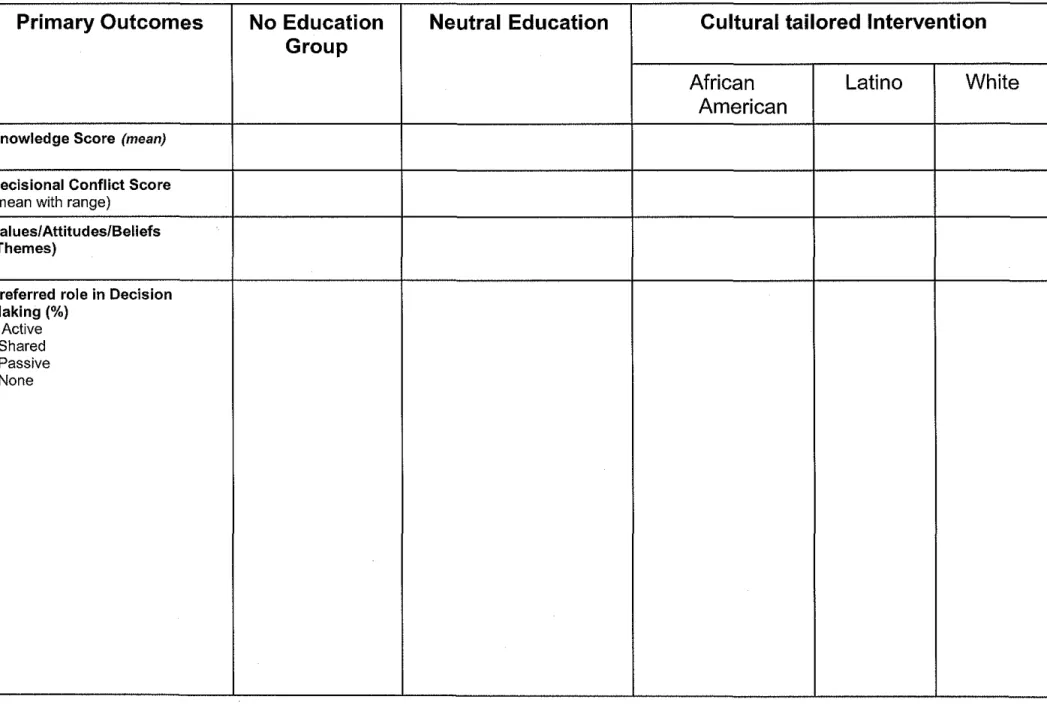
In the research design, the primary outcomes will be knowledge, decisional conflict and
values, attitudes and beliefs and preferred role in decision making. We do not expect a
statistically significant difference between groups in intent to screen and knowledge. However, a
statistically significant difference in decisional conflict is hypothesized between the culturally
tailored, neutral and no education groups. Values, attitudes and beliefs will be assessed through
Introduction
Prostate cancer is the most common cause of non-melanoma cancer in men as well as
the second leading cause of cancer related mortality in American men (tl. Age is perhaps the
most important risk factor since prostate cancer is rarely diagnosed before the age of 45 (2).
Diets high in animal fat and alcohol and low in fruits and vegetables have been associated with
higher prostate cancer risk (3·4·5). Race and family history are also important risk factors in
prostate cancer. African Americans are disproportionately affected by high prostate cancer
incidence, morbidity and mortality (tl. The incidence rates of prostate cancer in the overall
population and African Americans peaked in 19931argely due to the advancements made in
screening and diagnostic measures (tl. Since 1993, the number of prostate cancer cases and
deaths has steadily declined due to better treatment efficacy, however the large disparity in
cases and mortality between African Americans and the rest of the population remain.
Therefore, culturally tailored interventions are of particular interest in prostate cancer prevention
in this population.
For all populations, prostate cancer screening is currently an area of intense debate.
Awareness surrounding the prevalence of prostate cancer has raised media coverage and
increased screening rates. However, the media reports are not educating men on the
uncertainties surrounding the benefits of screening (77). Treatment side effects may permanently
and unnecessarily impact patient quality of life. Men should be aware of these issues and be
empowered to make their own personal decision regarding screening. Professional
organizations recommend that physicians fill the role of educator and invite men to participate in
the decision making process.
In this paper, current prostate cancer prevention strategies and recommendations will be
discussed. New strategies that involve patient participation in prostate cancer prevention, such
agents that will decrease their risk of developing cancer without conferring unnecessary harm
on the individual. Multiple agents have been studied, including anti-androgens, non-steroidal
anti-inflammatory drugs (NSAIDS), Caretenoids, Selenium and Vitamins C, D and E. To date,
studies have shown conflicting findings on the efficacy of vitamin and mineral supplementation
in the primary prevention of prostate cancer.
Anti-Androgen Therapy
The primary prevention of prostate cancer with anti-androgens, such as 5-alpha
reductase inhibitors, is of particular interest in African American men given reports of higher
androgen levels and the known androgen dependent nature of prostate cancer ('l. The use of
the anti-androgen, Finasteride, has shown promise in the Prostate Cancer Prevention Trial
(PCPT) (B3)
The study enrolled 24,482 men and randomized 18,882 men who were::: 55 years old, with
normal digital rectal exam (ORE), PSA levels <3.0ng/ml and no clinically significant coexisting
conditions. Healthy men were randomized to Finasteride therapy (n = 9,423) or placebo (n =
9457) over a seven year period. Baseline characteristics were similar between groups, selection
bias was minimal with similar loss to follow up rates in both the intervention and placebo groups
(8% vs. 7.4%). Researchers utilized an intention to treat analysis for loss to follow up,
crossovers and drop-ins.
To assess adherence, study participants were included in a 3 month placebo run-in
period after which they were randomized by an unspecified dynamic allocation scheme to
ensure balanced randomization throughout the 221 study sites. Annually, participants received
ORE and serum PSA levels. If PSA levels were >4ng/ml or abnormal ORE was assessed on
exam, TRUS guided prostate biopsy was recommended. Due to the PSA lowering effects of
Finasteride, there was a potential for detection bias in the control group since higher PSA levels
Consequently, this potential preventive strategy is undergoing further study in the
REDUCE trial. This international, multi-center, double-blind, placebo-controlled
chemoprevention trial is designed to determine if the 5-alpha reductase inhibitor, Dutasteride,
decreases the risk of prostate cancer in high risk populations (11l. A race stratified analysis was
not conducted and the small sample size (n=298; 3.3%) was insufficient to power a subgroup
analysis. Therefore, these study results may not be generalizable to African American men as a
whole. Given this shortcoming of the previous study, REDUCE researchers have indicated that
they intend to make a strong effort to recruit this high risk group.
Given that the etiology of prostate cancer is poorly understood, primary prevention of
prostate cancer will be challenging. However, with the high incidence of prostate cancer and
the high morbidity and mortality associated with its treatment, primary prevention of prostate
cancer serves as a particularly attractive option and remains an area of interest in prostate
cancer prevention research.
Vitamin and Mineral Supplementation
Overall, the current data on vitamin and mineral supplementation and the primary
prevention of prostate cancer is largely weak and inconsistent (12l· (13l· (14
J Much of the available
data on primary prevention of prostate cancer are based on secondary analyses.
Alpha Tocopherol was studied in the primary prevention of prostate cancer due to its
antioxidant properties. The Alpha Tocopherol and Beta Carotene Study (ATBC) trial was
developed to study the effect of alpha tocopherol and beta-carotene on lung cancer incidence in
male smokers between the ages of 50 and 69. The study was a randomized, double-blind,
placebo controlled trial that found no overall effect on lung cancer, however it found that alpha
tocopherol and beta-carotene was associated with a reduction in prostate cancer incidence(12l .
This finding prompted a secondary analysis. This analysis revealed a 32% decrease (95%
Consequently, there are new randomized controlled trials underway that look at prostate
cancer prevention as a primary outcome. The Selenium and Vitamin E Cancer Prevention Trial
(SELECT) and Physician Health Study II (PHS-II) are two such trials. The SELECT trial, which
began enrollment of 35,000 men in 2001, will examine prostate cancer incidence as the primary
outcome in healthy men receiving Vitamin E and Selenium supplementation or placebo. The
final study results are expected in 2013 c15) The Physician's Health Study II (PHS-II) which is
slated to end in December 2007, is another study that looks at the efficacy of vitamin C, vitamin
E, beta-carotene, and a multivitamin in the primary prevention of cardiovascular disease, total
cancer, and prostate cancer
cnl_
The PHS-II study enrolled 16,743 physicians in the study andwill likely give us some answer in the next year. Given the studies available, it is difficult to
identify the strategy with the most potential benefitC10l. The ongoing SELECT trial and the
Physician's Health Study II may help shed light on this ongoing debate.
Secondary Prevention Strategies
The aim of prostate cancer screening is to identify low stage prostate cancer in
asymptomatic men, at a stage when the disease may be most treatable C16l. However, it is
unclear if early detection of prostate cancer is of beneficial. The natural history of prostate
cancer is heterogenous. Most prostate cancers are slow growing, low grade neoplasms that
remain within the capsule of the prostate gland. The men who develop these slow growing
cancers typically die of other causes. However, other prostate cancers are rapidly growing,
highly differentiated neoplasms that spread quickly. If these cancers are detected early, they
are potentially more treatable. Currently, digital rectal exam (DRE) and Prostate Specific
Antigen (PSA) are the two main secondary prevention strategies being utilized for the
identification of early prostate cancers in asymptomatic men.
DRE involves the palpation of the prostate gland for nodularity and abnormalities. If
to determine the true benefit of prostate cancer screening in the reduction of prostate cancer
related deaths and improvement of other health outcomes.
Raising further questions, the large prostate cancer incidence to mortality ratio brings the
benefit of early detection into question. Additionally, the various prostate cancer treatment
options are not without risk. In fact, these treatments are often accompanied by urinary, bowel,
and sexual dysfunction '19) Given the latent nature and variable natural history of prostate
cancer, some men with harmless cancers will inevitably be treated and will needlessly be
subjected to treatments known to lower quality of life in about 50% of men receiving treatments.
Given this uncertainty about the benefits in the face of known harms, it is felt that men
should be involved in the decision making process until additional researchers can learn more
about the net benefits of screening.
Summary of Primary and Secondary Prevention Strategies
The efficacy of primary prevention methods in the prevention of prostate cancer is still
unclear. The benefits of prostate cancer screening are still unknown and the limitations of our
current screening methods are substantial. In addition, the known risks of treatment create
challenges in determining who to treat and who to watch. The complexity of the prostate cancer
screening decision is reflected in the lack of consensus among professional societies.
Current Recommendations for Prostate Cancer Screening
American Urological Association (AUA): Recommends that men _:::50 years old should be
screened for prostate cancer with a combination of DRE and PSA to detect small cancers
missed by the PSA test (PSA< 4 ng/ml). All men should participate in the decision making
study, the Prostate, Lung, Colon and Ovarian (PLCO) cancer screening study is a 16 year
multi-center randomized control trial whose major aim is to determine whether cancer screening
reduces mortality in individual between the ages of 55 and 7 4. Multicenter randomized control
studies such as the PLCO will hopefully help us determine whether a survival benefit exists for
prostate cancer screening.
Systematic Evidence Review
Background
Shared Decision making and Values Clarification
Given that immediate answers to the uncertainties surrounding prostate cancer
screening are not yet present and professional medical societies agree that patients should
participate in the decision making process, we must develop strategies to empower all
populations of men to make informed decisions. Prostate cancer screening is a perfect
example of a decision that should be shared between the physician and patient. Shared
decision making with educational videos and decision aids are essential in educating men on a
screening decision that is best tailored to their prostate cancer risk and their beliefs and
attitudes. Effective decision aids include clear information and instruments that incorporate
individual risk profiles and personal preferences which increase their confidence in making
medical decisions and decreasing their decisional conflict (24· 25· 29)
Shared decision making is process whereby a patient and physician make joint health
care decisions. According to Sheridan et al, this process requires that the patient understand
their risk, susceptibility and the severity of the condition. It also assumes that the patient
understands the screening process, the alternatives to screening and the risks, benefits,
uncertainties, and limitations of the screening process. Effective shared decision making also
necessitates patient consideration of the risks and benefits of screening, and an assignment of
exercise by trained health care workers, thereby allowing the physician to move immediately to
the discussion and decision making.
Beyond the challenges and uncertainties surrounding health outcomes and satisfaction,
it is the ethical duty of physicians to educate their patients, grant them autonomy and help them
become informed consumers.
Special issues in shared decision making for African American Men
In addition to the traditional challenges of shared decision making previously discussed,
African American men face additional challenges. There are sociocultural factors that influence
when and how men seek medical attention. Poor access to care, lack of insurance and general
mistrust of the health care system are all factors that limit opportunities for men to engage in the
decision making process. In addition, African American men may have unique concerns that are
not addressed in the decision making process. Consequently, non-traditional strategies with
tailored decision aids (e.g. pamphlets, videos, posters) administered by traditional,
non-medical members of the community should be considered in order to more effectively involve
these populations.
Culturally Sensitive Decision Aids
Effective decision aids take differences in cultural, ethnic, religious, and social beliefs
into consideration '26l- '27) Hence, culturally-sensitive values clarification, a process by which
people make decisions based on the values they place on the features of each decision option,
also plays an important role in creating effective decision aids '26)
A culturally sensitive intervention is defined as an intervention that takes the target
population's ethnic, cultural and sociodemographic characteristics, experiences, norms, values,
behavioral patterns and beliefs into consideration during its development, implementation and
systematic evidence review of qualitative work exploring prostate cancer related knowledge,
values, attitudes and beliefs surrounding prostate cancer and prostate cancer screening.
Objectives of the Systematic Review
To determine the culturally based values, attitudes and beliefs that influence African American
men in their decision to undergo prostate cancer screening as compared to White and
Hispanics.
Identification of Systematic Evidence Review Articles
A MEDLINE and Psych Info databases were searched. The MEDLINE search was
conducted on March 14; 2007, and the following MeSH terms were used: "African American",
"mass screening/psychology", "health knowledge, attitudes, practice", "cultural factors", "social
values" and "ethnology". The keyword "values" retrieved articles specifically addressing PSA
results and therefore, the MeSH term "social values" was more appropriate. The search was
limited to "English" language articles and "Human" subject studies. All studies addressing
"Adult", "Middle Age: 45+" and "Male" were also included. Given the recent questions
surrounding prostate cancer screening benefits and the new screening guidelines in 2000, it
was felt that article that addressed the new screening deadlines would be most appropriate.
Therefore, the literature search was limited to articles published since 2000. The final Medline
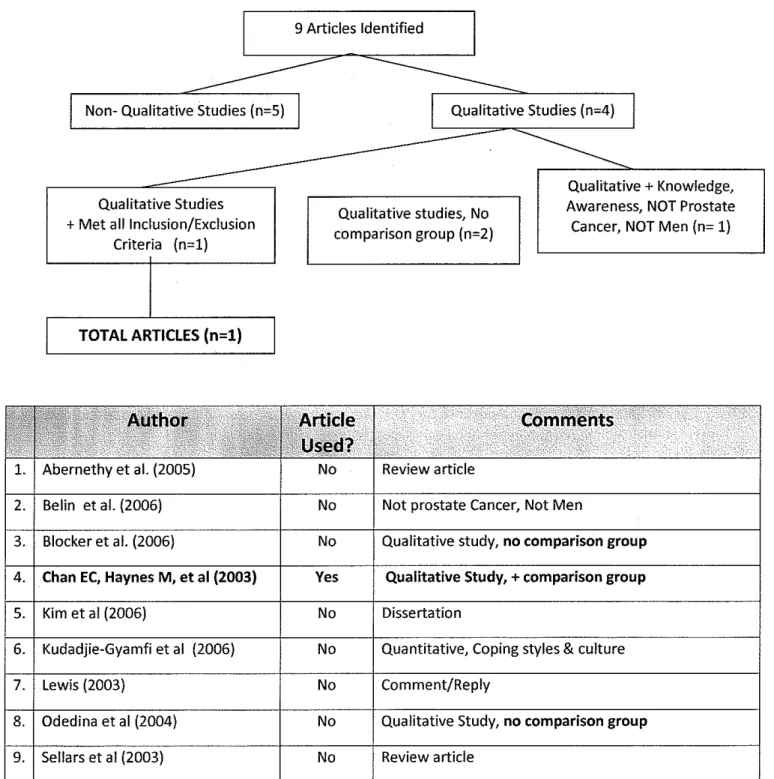
search yielded 29 articles (Figure 2). Qualitative Studies about African American Men,
White/Latinos, Prostate Cancer and Screening, Culture or Cultural Factors, Knowledge,
Attitudes and Values were included (Figure 1 ). Non-English articles that had one ethnic/racial
group, focused on cancers other than prostate cancer, prostate cancer treatment decisions,
genetic testing or prostate cancer study participation were excluded. Quantitative designs, case
The use of fair dealing and grounded theory was also evaluated. A qualitative study that
utilizes grounded theory collects themes and theories from the dataset, rather than using a
pre-existing theory'69>. This is thought to contribute to existing knowledge more so than using one
existing theory as the foundation of the study. Fair dealing utilizes existing theories. However, it
uses different theories to ensure that different viewpoints are incorporated into the study design
and interpretation of data '68>.
Sampling and the description of data collection and analysis were also carefully
appraised to determine whether selection bias presented a threat to the internal validity. All
articles were evaluated to determine whether purposive sampling was utilized to reduce
selection bias and increase external validity, The use of multiple coding, a method of assessing
agreement of coding between coders, was checked to determine the level of inter-rater reliability
'67>. The presence of triangulation, a technique that uses different methods of data collection to'
answer one focused question, was also assessed. Triangulation is often used to confirm or
refute internal validity however this technique is difficult to perform and is more likely to refine
study findings '67>.
The study context was also evaluated to determine whether the setting can be
generalized to other populations in different settings. To ensure that all ideas were collected
from the target population, we checked each study to determine if thematic saturation was
achieved. Lastly, the presence of respondent validation was assessed to determine whether the
study participants agreed with the researchers' interpretation of their interview responses.
Results
Meade et al
(20o3r
In 2003, Meade et al conducted a focus group based qualitative study in a community
setting in Tampa, Florida. They sought to determine the everyday priorities and concerns,
community based grass roots organizations and other community sites throughout the Tampa
area. This served to reduce selection bias and increase the ability to generalize the results
across populations. An additional strength of the study was the use of a different cultural group.
Although you cannot do head to head comparisons in unstructured interview setting, the
inclusion of a different group contributed additional viewpoints.
Although focus group sample sizes are typically small, it serves as a weakness. The
recruitment of a small group of men from one region, with a relatively low SES, and low levels of
education is not representative of African American and Hispanic men in this country. Further
study with larger groups of African Americans and Hispanics from different regions of the US will
be necessary to improve the generalizabilty of the results.
The age range is also problematic given that prostate cancer is a health concern for
middle aged and older men. The purpose of including younger men in the study was to
determine how health information was obtained and viewed across generations. However, the
results were not reported in this manner. Younger men who will not be faced with this decision
for another 20 or 30 years may have biased attitudes and beliefs compared to the older men in
the study. It was also unclear whether, data saturation, the recruitment of participants until all
new ideas are obtained, was achieved.
Finally, three African American men (8.8%) with a history of prostate cancer were
included in the study. This is a potential source of bias for a few of reasons. Men who have
prostate cancer or have been successfully treated for prostate cancer will have different
attitudes and beliefs regarding prostate cancer because they have experienced the disease. So,
the reader would need to be made of aware of comments made by these men as their
comments will be biased by their personal experiences. Meade et al did not make this
differentiation when they reported their results. In addition, the men with histories of prostate
cancer were all African American men, so there were no cancer survivors in our comparison
believed that early detection meant that "you have a good chance". White men agreed, adding
that one can also "avoid impotence if you catch it early so they don't have to do drastic radical
surgery". Hispanic men simply wanted to know. One Hispanic man said, "If I have something, I
want the doctor to tell me ... then I know in advance".
All groups seem to have mixed feelings regarding the question of shared decision
making. African American men felt as if their doctors "won't tell you anything that you ask them".
White men felt that "most doctors won't explain it. They never have time".
Overall, it appeared that lack of knowledge and unrealistic beliefs surrounding the utility
of prostate cancer screening were major themes for all three groups. These misconceptions
were prevalent across racial groups. Beliefs, thoughts and opinions regarding the actual
prostate cancer screening exams (DRE/PSA) were not discussed or reported.
Quality, Strengths and Weaknesses
The overall quality of the study was good. The internal validity was good, but the
external validity was poor. The strengths of the study included recruitment of three racial/ethnic
groups, which allowed comparative inference. The focused clinical question was clear and
relevant for our systematic review. They utilized grounded theory, increasing the potential for
new theory and further insight into existing information obtained from past studies. The design
was appropriate and the data collection and analysis was clear and easy to follow. McFall and
colleagues utilized multiple coding to improve demonstrate inter-rater reliability. However,
triangulation was not utilized to confirm internal validity.
The study weaknesses and limitations include the use of a convenience sample. This
reduces external validity and introduces selection bias. Study participants were recruited from a
health care setting reducing the generalizabilty of the study. These men are potentially more
knowledgeable of the health care system, prostate cancer screening than the average American
man. The use of a female moderator could have affected the validity of responses. Using a
African American and Hispanic participants. One African American man said he felt as if "your
manhood has been compromised". There was also concern about homosexual tendency" in the
African American group. In addition, some African American participants expressed "fear and
embarrassment" regarding prostate cancer screening. Hispanics had similar feelings. One
Hispanic man said, "it's a disgrace". Some expressed that "it makes us embarrassed".
The physician-patient relationship was also a recurring theme during the focus group
interviews. Non-Hispanic White men and Hispanic men in the study did not like going to the
doctor. One White man said, "Guys don't like to go to the doctor." A Hispanic man said they
"don't go to doctors", instead they try to manage their symptoms on their own and may consult
community healers ( Curanderas) prior to consulting Western medicine. Therefore it is important
that information regarding prostate cancer and screening be made widely available outside of
the traditional health care setting.
All men agreed that they should talk to their doctors about the test. One White man said
he had "blind faith in his doctor" but sometimes there is a failure to communicate. One Hispanic
man was confused at the notion that "respected doctors disagree [on screening]". African
American participant felt that "there are a lot of myths" and that speaking to your physician was
a good solution. However, African American men expressed distrust for physicians. Overall, all
men felt that there was a lot of uncertainty and communication should improve.
Hispanic men felt that culturally sensitive brochures should include information about the
anatomy of the prostate. In describing the prostate, each group of men preferred different
language. African American men preferred "ping pong ball", Hispanic men preferred "lime",
whereas White men preferred "walnut". Hispanic and African American men wanted to know
more about risk factors and whether diet and exercise played a role. White men felt it was
important that men know that early prostate cancer can be asymptomatic. Hispanic men wanted
as opposed to the complete strangers (as in the McFall study). Lastly, the study sample size
was small.
Researchers used a convenience sample from a health care setting, resulting in two
problems. This reduces external validity and therefore the generalizabilty of the study. Secondly,
this introduces selection bias. The men are potentially more knowledgeable of the health care
system, and prostate cancer screening than the average American man. Purposive sampling
was not utilized, so men from different regions, socioeconomic backgrounds and different
settings were not likely represented. This reduces the ability to generalize these results to other
men across the country. Lastly, it was unclear from the short study description whether data
saturation was achieved.
Nash et al (2002)69
Nash and Hall conducted a qualitative study to assess knowledge, attitude and beliefs
about prostate cancer in African American and White men. Nash et al conducted open-ended
focus group interviews based on the Health Beliefs Model. African American and non-Hispanic
White men, ages fifty and over were recruited using purposive sampling from a University
setting in Arkansas. A total of 37 total men were recruited for the study ( 11 urban White men, 1 0
rural White men, 8 urban African American men and 8 rural African American men). The mean
age was 62 years old. By group, mean age was slightly lower for African American men ( 45.5
for Urban African Americans, 45.7 for rural African Americans, 51 for Urban White men and 54.5
for Rural White men). Most men had at least a high school education (82% of urban white men,
80% of rural white men, and 75% of rural and urban African American men).
Results (Table 3)
In the study, major themes arose when the focus group questions were presented.
and relevant for our systematic review. For their interview guide, they utilized an established
theory in the development process. the health beliefs model. increasing the validity of study
results. The research design was appropriate. Nash used purposive sampling to reduce
selection bias and increase external validity of the results.
The study weaknesses and limitations included the short. non-detailed description of
the data collection process and analysis. It was unclear if Nash and Hall performed multiple
coding to demonstrate inter-rater reliability. Even so, they did not report the percentage of
agreement between coders. Also. the study sample size was small, although purposive
sampling was performed to reduce selection bias and increase generalizability. So men from
different socioeconomic backgrounds and different settings were likely represented to some
extent. Lastly, it was also unclear from the study description, data saturation was achieved.
Conclusions across studies
Overall, a few recurring themes were identified in the study. There were five dominant
themes that seem to recur in the majority of articles identified in the systematic evidence review.
These five themes described below. were found to influence the prostate cancer screening
attitudes, beliefs and health behaviors of all men. Some themes were found to be more
influential to a particular racial/ethnic group than others.
Lack of Knowledge
Knowledge was a common theme among the articles identified in the systematic
evidence review. Lack of knowledge regarding the prostate, prostate cancer risk factors. the
presentation of early and advanced disease, prostate cancer screening methods, prostate
cancer treatment and treatment side effects was common among all three racial groups. In the
systematic evidence review. African Americans were slightly more knowledgeable about
prostate cancer risk factors and their increased risk of developing and dying from the disease.
access and health care utilization (66>. However, the impact of baseline cultural differences and
use of community healers (Curanderas) cannot be underestimated.
African American men associated prostate cancer with poor prognosis and death. They
also feared that they may not have access to treatment if they were to be diagnosed with
prostate cancer.
Family and Faith
Family was a common theme in the systematic evidence review for all three groups.
Men felt that they were the providers and needed to be there for their families. Men also felt
pressure from their social support systems. Men reported that wives were particularly influential
in encouraging health behaviors (66>. Men also felt that they should be screened in order to place
the needs of the family first.
Patient Doctor Relationship
Communication between the physician and patient was a common theme. Men felt that
they needed to ask the doctor more questions, but the doctor was always rushed and simply did
not have time. An African American study participant felt that doctors wouldn't take the time to
answer the questions even if you did ask. Lack of trust for the health care system was also a
common theme for African American and Hispanic men. All three groups agreed that
communication should improve. Hispanics and African Americans felt that community outreach
through community leaders, and cancer survivors would more effectively deliver the intended
message.
Future decision aids should not only function to improve knowledge for these groups, but
to dispel myths. For African American and Hispanics men, decision aids should address these
questions of homosexuality, loss of dignity and humiliation. Physicians should better
Qualitative methods, such as focus groups and interview methods have other inherent
problems. These qualitative methods can also weaken the validity of the study results. They do
not allow direct comparison of groups. Sample sizes are typically small, so representative
samples are unusual. However, performing purposive sampling and achieving thematic
saturation can help researchers avoid these threats to internal validity.
Lastly, quality rating in qualitative studies is a challenging task. Consequently, efforts
have been made to apply quantitative measures of quality, such as internal validity, external
validity and reliability, to qualitative research. The end result has been the creation of a number
of quality checklists, however, these quality checklists have not been validated, r68· 69•77• 78J
These checklists were not created to confer rigor, but to help improve rigor in qualitative studies
r68l. Hence, satisfying these checklists does not automatically confer validity and rigor upon a
qualitative study. Readers must critically appraise the use of these technical methods to ensure
that they have been adequately applied. Even then, quality rating must be made and interpreted
with caution. The quality rating assigned to the SER articles used in this study are all based on
these non validated checklists. Hence, the quality ratings assigned to each study cannot be
assured. Overall, this weakens conclusions of the systematic evidence review quality ratings.
Research Design
Introduction
For my research study, I plan to apply the systematic evidence review findings in the
development of my interventions. The systematic evidence review was valuable in identifying
common themes that resonated among three different racial/ethnic groups. These themes will
be used to develop the culturally tailored interventions for the proposed research study. They
will be incorporated into study educational videos and values clarification exercises. The
ultimate goal will be to effectively increase knowledge, identify important values, attitudes and
The second category is intuition enhancing strategies. These are also valuable methods
of clarifying values and reducing decisional conflict. These exercises attempt to dismantle
organized thought and allow for the free flow of ideas and self confrontation(53>· Social matching
could be seen as an exercise in self-confrontation that allows the patient to see a situation from
two different perspectives. Values clarification exercises are potentially effective methods of
helping patients make their decisions about prostate cancer screening. According to Krist,
"Even if a clear benefit to screening was found, value uncertainty would persist-- a trade off
versus benefit, the magnitude of each inherently dependent on individual values." (so) Volk et al,
concluded education helps increase knowledge, but does not effectively help clarify values (s•>.
The ranking and rating exercises used in this study design will serve to present the issues and
help men place value on each one.
Focused Clinical Question
Research Design Overview:
Design: Randomized Controlled Trial+ Post Trial Focus Group
Focused Question: Do culturally tailored decision aids effectively increase knowledge, reduce
decisional conflict and identify values, attitudes. beliefs and preferred role in decision making, compared to neutral decision aids and no decision aid?
Secondary Question: Do culturally tailored decision aids influence intent to have prostate
cancer screening. screening behavior at 6 months. satisfaction with screening, and final screening behavior?
Population: African American, White and Latino Men, 40- 80 years of age
Intervention: Culturally Tailored Educational Video+ culturally tailored values clarification exercise.
Comparison: Neutral Educational video + neutral values clarification exercise
Comparison 2: No prostate cancer screening related educational video + no prostate cancer screening related values clarification.
Outcome. Primarv: (1) Determine whether prostate cancer knowledge improved,
participants call, their eligibility will be determined. If they are eligible, appointment for study
participation will be scheduled.
Administration of the Intervention and Surveys
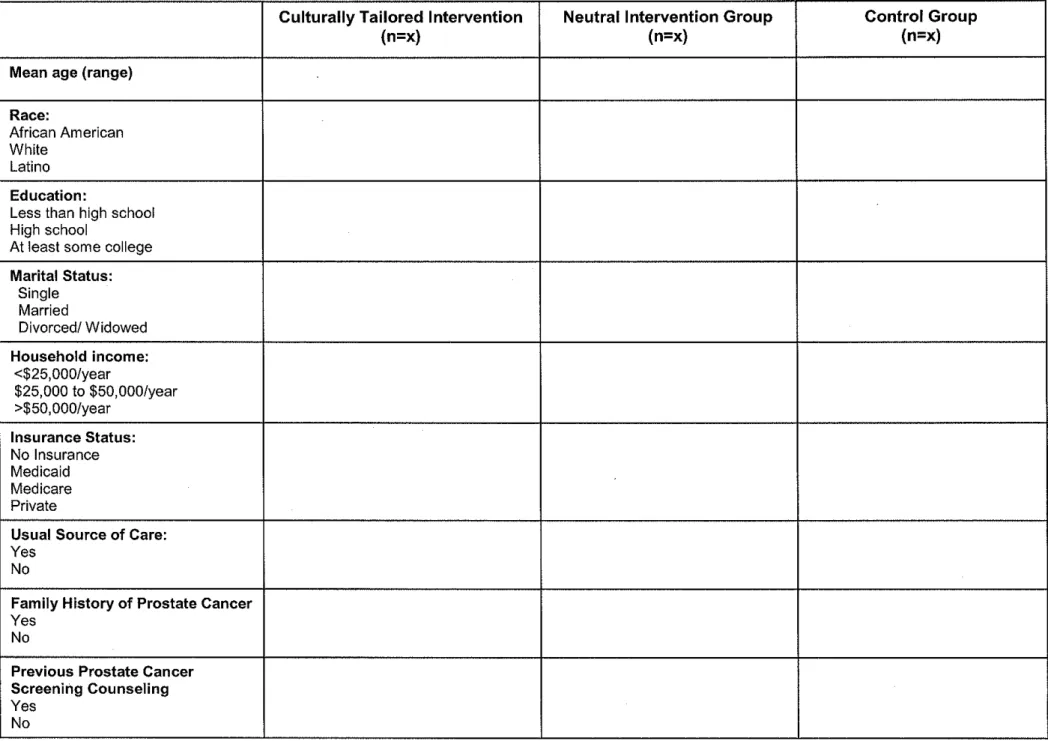
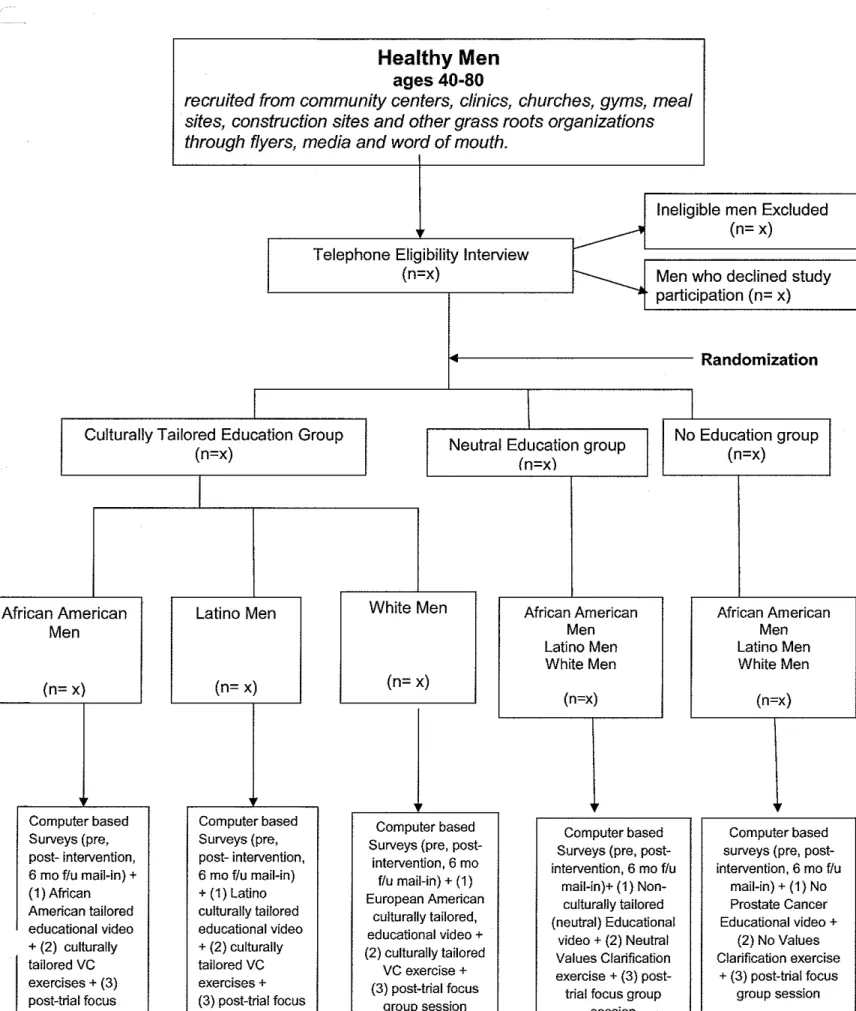
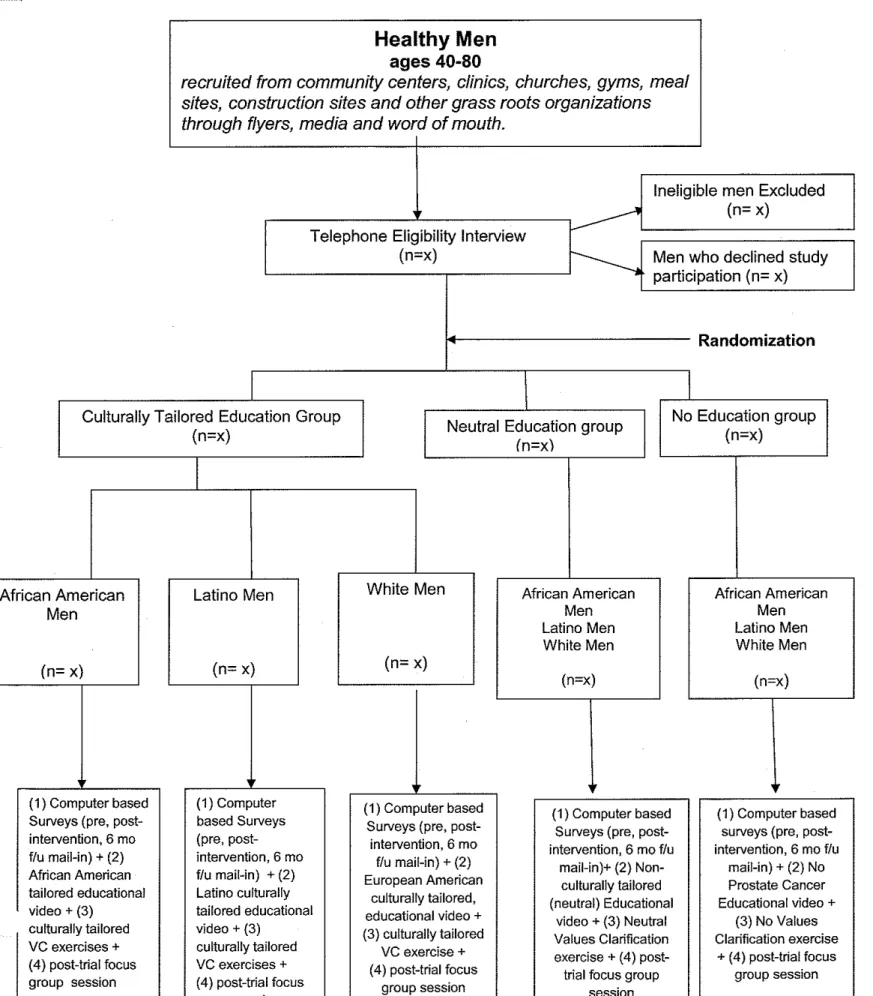
The study will have three arms. Eligible men who agree to participate will be randomized
to (1) the appropriate computer based culturally tailored educational video and ranking and
rating values clarification exercise, (2) a computer based neutral educational video on prostate
cancer, screening and treatment and a ranking and rating values clarification exercise or (3)
computer based "no education" exercise (Figure 5).
The intervention will take place in three parts. First, study participants will complete
computer based surveys (pre and post intervention). Second, study participants will review the
educational video and complete a values clarification exercise. Finally, study participants will
complete post-intervention surveys immediately after the intervention and at follow up 6 months
post intervention. This 6 month follow up survey will be mailed to them via US mail. The study
interventions and related surveys will be administered at the local library. This site will provide
five small rooms with computers, where the participants can complete their surveys, watch their
videos and participate in the focus group sessions. Computers and headphones will be
available in each room.
At their study visit, participants will first complete their surveys, watch their assigned
educational video and complete their values clarification exercise on the computer. Computers
will be used in this study to address literacy issues. Headphones will be made available with
every computer. Survey questions, values clarifications exercises and instructions will be read
aloud through the headphones. Two member of the research team will be available in each
The educational videos will last about 30 minutes and highlight topics from prostate
cancer, screening methods, screening options (ORE and PSA), misconceptions,
patient-physician relationships and other culture specific themes that arose in past studies (Table 3).
The first portion of the video will consist of narrated information with images and graphs to
educate men on anatomy, culturally tailored statistics, and prostate cancer facts (symptoms,
screening options, and diagnosis and treatment options). The second portion of the video will
feature a dramatization of four men currently in the decision making process, discussing their
differing views, attitudes and beliefs regarding prostate cancer, screening and treatment. Their
discussion will feature their free flowing thoughts, brainstorming process and the logic
surrounding their decision. Men will be instructed to listen carefully and identify which character
most represents them and why, a process known as social matching. The question will appear
on the screen after the educational video is complete.
After the educational video, study participants will participate in a computer based
ranking and rating exercise. Participants will be given four statements corresponding to a
particular topic (i.e. health status, religious views, patient-physician relationship status, prostate
cancer screening exam, family support etc.). They will then be asked to choose the statements
that most represent their opinion or beliefs. They will be given the option adding to this
statement in order to further customize the statement to their personal values. This will serve to
reduce the limitations of ranking and rating, allowing us to uncover additional value conflicts that
we may not have anticipated. They will then be asked to rate the importance of each topic
(corresponding to the statement they chose in the first part of the exercise) on a scale from 1 to
10. Finally, participants will be asked to briefly type why they chose the options they chose in
the exercise. Upon completion of the exercise, the men will complete the computer based post
intervention surveys and participate in a short focus group session to give intervention
to obtain intervention feedback.
Control Group
No Education Group
The participants in the control group or the "no education" group will watch a neutral
video about the history of American football. They will also complete a non-prostate cancer
related social matching exercise and a computer based values clarification exercises ranking
and rating the importance of family, work, leisure activities and hobbies. Study participants will
be given four statements corresponding to a particular topic and asked to choose the
statements that most represent their opinion or beliefs. They will then be asked to rate the
importance of each topic (corresponding to the statement they chose in the first part of the
exercise) on a scale from 1 to 10. To complete the exercise, participants will be asked to briefly
write why they chose the options they chose. Lastly, the group will complete the same computer
based post-intervention survey completed by the other groups. They will also be asked to
participate in a short focus group session conducted by members of the research team to obtain
intervention feedback.
Randomization
A computerized random-number generator will be used to randomize subjects in a 3:1:1
fashion to the culturally tailored intervention, neutral education intervention group or the "no
education" control group, respectively. Randomization will be done within race strata to ensure
that equal numbers of men in each racial group are randomized to each study arm. We will use
a computer generated random number scheme with blinded allocation to control (no education)
and intervention groups (culturally tailored and neutral education) to ensure adequate
randomization. Group assignments will be sealed in a security envelope until the telephone
Data Analysis
Sample Size Calculation
The sample size for the pilot research study will draw from calculations performed by
Sheridan et a! in a pilot study to assess decision making with PSA testing. A conservative
average mean difference of 0.40 will be used in the decisional conflict scale. This will be based
on the difference between those who made a decision and those who delayed their decision in
decisional aid intervention studies for various preventive conditions <33
>.
This effect size is similar to the changes observed in the decisional conflict scales in those who received adecision aid intervention for prostate cancer screening and those who did not in a previous
decision aid study, providing validation for this approach <34>.
A decisional conflict score of 2.0, a standard deviation of 0.6, a two-sided alpha of 0.025
and a power of 90%, will be used to determine the sample size and the number of participants
needed in each group to detect a difference in the decisional conflict score between the
intervention and control group using a Wilcoxon Rank Sum test.
Statistical Analysis
In order to assess the effects of the values clarification interventions, the intervention
and control groups will be compared with respect to decisional conflict score means. If
necessary, we will control for any baseline variables that are not similar between groups using
linear or logistic regression models when appropriate. Intervention and control groups will also
be compared to determine the differences in the proportion of participants who decide to be
screened using the intent to be screened instrument in the pre-intervention, post intervention
and 6 month follow up survey. We will use an intention to treat analysis.
To determine whether participant characteristics (including age, education, health status,
socioeconomic status, preferred role in decision making and patient knowledge etc.) correlate
responses, as the educational video may potentially increase knowledge and influence men's
decisions to participate in the decision making process.
Knowledge:
I would expect the knowledge score to be low for all groups. I do not expect a statistical
difference between groups. Men will likely be more knowledgeable in different areas, based on
their experiences. For example, African American men will probably be more likely to know that
family history and race are risk factors for prostate cancer because they are directly affected by
this fact. However, I do not anticipate a statistically significant difference in knowledge between
groups by race, but I do expect the two educational video groups to have significantly higher
prostate cancer knowledge in the post-intervention survey as compared to the "no education
group". It would be interesting, to look at differences between other characteristics such as level
of education, income or insurance status.
Secondary outcomes of interest:
Intent to be screened: A statistically significant difference between the culturally
tailored, neutral and no education group is not expected due the weight carried by individual
values in this decision. It is difficult to make a prediction, because decision aids can improve
knowledge, encourage men to participate in the decision making process without increasing
their anxiety (36l. However, properly constructed decision aids are unbiased and utilize balanced
framing in the presentation of the known harms, benefits, uncertainties and limitations. The
decision to be screened is utility sensitive and therefore the value placed on the harms, benefits
and limitations of screening is personal and will vary from individual to individual based on their
values, experiences, preferences for outcome of treatment and preferences for quantity of life
versus quality of life (43• 44l· Therefore, the participants' final decisions should not be predictable.
Seven trials have measured screening behavior following administration of decision aids
Discussion
Prostate Cancer is a disease that affects men of all races and walks of life. However, it
affects men of different races to differing degrees. African American men are 2.4 times more like
to be affected than White men. Questions regarding the benefit of screening have prevented
unified recommendations from medical experts, further increasing the complexity of the
screening question. Studies that should give us important answers such as, the European
Screening Research Study and the PLCO study, are still underway. Medical experts and the lay
public alike are waiting in anticipation for the completion of these studies in hopes of the long
awaited answer to the prostate screening debate. As we wait, we must find more effective ways
to implement the current recommendation of shared decision making.
Knowledge and the personal awareness of values appear to be important components of
the patient's decision making process. With challenges ranging from lack of time, lack of
knowledge, poor access to health care to fear of the health care system, it becomes difficult to
educate and involve patients in the decision making process. The systematic evidence review
(SER) was valuable in elucidating some of the barriers and concerns that men of different races
face when they are making decisions regarding prostate cancer screening. The themes that
were uncovered in these studies were instrumental in creating our research design. The
themes will be incorporated into the values clarification exercises, survey questions, interview
guides as well as the educational video.
The SER made us aware that all groups were lacking in prostate cancer knowledge. It
also made it clear that prostate cancer is perceived negatively by men of all ethnicities, however
White men felt more positively about the possibility of cure. Hispanic men appeared to be more
fatalistic, whereas African American men were more negative about prognosis. Screening with
ORE was an issue for all groups due to pain and discomfort. However African American and
Latino men were also strongly opposed to the screening test due to feeling of violation and
address the individual concerns of each racial group may be an effective strategy. It is also
possible that a multicultural intervention that addresses all unique concerns of each ethnic/racial
group in one video or pamphlet may be most effective.
Strengths and Limitations
Our research design suggests an effective way of determining whether culturally tailored
decision aids that incorporate men's preferences will make a difference in level of prostate
cancer knowledge as well as reducing decisional conflict by addressing men's values, attitudes,
and beliefs about prostate cancer and screening in an efficient manner. The strengths of this
study design include a clear, focused clinical question. Given the growing number of men
entering their 40s and 50s, prostate cancer will continue to be an issue of concern among
medical experts and the public. Hence, the clinical question is clear and relevant. The design of
the research study is appropriate. Men will be randomized and split into groups by race in order
to determine if there are any differences in prostate cancer knowledge, values, attitudes, beliefs
about prostate cancer and screening and decisional conflict after no education, a neutral
intervention or a culturally tailored intervention. The inclusion of men of the three races most
affected by prostate cancer will strengthen the study. This study will likely give us insight into
culturally based health beliefs and health behavior, which will give us information on which to
build on new theories or information to refine and develop existing ones. Lastly, the inclusion of
a no education group will help us determine whether any of the educational videos were
effective in improving knowledge and reducing decisional conflict.
In our focus group, the use of purposive sampling is a strength. This will serve to reduce
selection bias and increase ability to generalize the results to a larger population. Multiple
coding, which is used to assess for inter-rater reliability, will also serve to reduce measurement
bias and increase internal validity of the study. The use of male moderators will also serve as a
curaraderas to address gaps in knowledge. Physician extenders should be trained to assist
physicians in educating patients, answering questions and addressing concerns. Images on
brochures and educational videos should reflect the intended audience, facilitating the
audiences' ability to identify with the characters. Our research study will further elucidate the
effectiveness of culturally sensitive decision aids and will help us further refine the content of the
ideal prostate cancer decision aid.
Future studies should take a look at age specific concerns. Age specific educational tools
may help address some of the concerns younger versus older men face when deciding whether
or not to be screened for prostate cancer. In addition, future studies with a larger sample size
should look at level of education and prostate cancer knowledge. The challenge with this
question is that income and insurance status are difficult to separate, therefore it will be
necessary to control for income and other SES markers.
Future studies should also look at the role of literacy and attitudes, beliefs about prostate
cancer. Level of education and literacy may play a larger role in lack of prostate cancer
knowledge and desire to participate in the decision making process than race and ethnicity.
Acknowledgements: I would like to thank Dr. Stacey Sheridan for her endless support and
expertise throughout this writing process. I would also like to thank her for giving me the
opportunity to participate in some hands on research which, not only provided mewith further
insight to create my research design but the foundation of my design. I would also like to thank
Dr. Margaret Gourlay for her guidance and encouragement. Finally, I would like to thank Drs.
18.) Partin AW, Oesterling JE. The clinical usefulness of prostate specific antigen: update. Journal of Urology, Vol. 152 (5 Pt 1), pp. 1358-68, 1994.
19.) Eton DT, Lepore SJ, and Helgeson VS. Early quality oflife in patients with localized prostate carcinoma. 2001, Cancer, Vol. 92, pp. 1451-1459.
20.) llic D, O'Connor D, GreenS, Wilt T. Screening for Prostate Cancer. 3, 2006, Cochrane Database of Systematic Reviews 2006. Art No.:CD004720.
21.) Berg AO, for the US Preventive Services TaskForce. Screening for prostate cancer:
recommendations and rationale .. Dec 3, 2002, Annals of Internal Medicine, Vol. 137(11), pp. 915-916.
22.) Recommendations of for Clinical Preventive Services: Prostate Cancer. American Academy of Family Physicians. [Online] Accessed: AprilS, 2007. www.aafp.org/exam.
23.) Smith RA, Cokkinides V, Eyre HJ, for the American Cancer Society .. American Cancer Society guidelines for the early detection of cancer. 2003, Cancer Journal for Clinicians, Vol. 53(1 ), pp. 27-43.
24.) Feldman-Stewart D, Brennenstuhl S, Brundage MD, Roques T. An explicit values clarification task: development and validation. 3, Nov 2006, Patient Education Counseling, Vol. 63, pp. 350-356.
25.) Feldman-Stewart D, Brundage MD, Van Manen L, Svenson 0. Patient-focused decision-making in early stage prostate cancer: insights from a cognitively based decision aid. June 2004, Vol. 7(2), pp. 126-41.
26.) Charles C, Gafni A, Whelan T, O'Brien MA. Cultural influencers on the physician-patient encounter: The case of shared treatment decision-making. 3, Nov 2006, Patient Education and Counseling, Vol. 63, pp. 262-7.
27 .) Braithwaite RL, Taylor SE. Health Issues in the Black Community. San Francisco : Jossey-Bass, 2001. pp. 62-80, 516-542.
28.) Pasick R, D'Onofrio C, Itero-Sabogal R. Similarities and differences across cultures: Questions to inform a third generation for health promotion research. 1996, Health Education Quarterly, Vol. 23(suppl), pp. Sl42-Sl61.
29.) Adams JR, Drake RE. Shared Decision Making and Evidence Based Practice. Community Mental Health Journal. 2006 42(1):87-102.
30.) Robinson SB, Ashley M, Haynes MA. Attitude of African Americans regarding prostate cancer clinical trials. 1996, Journal of Community Health, Vol. 21 :(1), pp. 77-87.
31.) Lee MC. Knowledge, barriers and motivators related to cervical cancer screening among Korean-American women: A focus group approach. 2000, Cancer Nursing, Vol. 23 :(1 ), pp.
168-175.
32.) O'Connor, AM. Decisional Conflict Scale, 3rd Edition. Loeb Health Research Institute. [Online] [Cited: 3 9, 2007.] http://www.lri.ca/programs/ceu/ohdec/measures.htm.
33.) O'Connor, AM. Validation of a decisional conflict scale. Jan-Mar 1995, Medical Decison Making, Vol. 15(1), pp. 25-30.
34.) Davison BJ, Kirk P, Degner LF, Hassard TH. Information and patient participation in screening for prostate cancer. Patient Education Counseling 1999 Jul;37(3):255-63 ..
35.) National Cancer Institute. Prostate Cancer. [Online] [Cited: March 9, 2007.] www.cancer.gov. 36.) Charles CA, Gafni A, Whelan T, O'Brien MA. Treatment decision aids: conceptual issues and
53.) K.innier RT. A reconceptualization of Values Clarification: Values Conflict Resolution. Journal of Counseling and Development. 1195, 74(1 ): 18-24.
54.) Meade CD, Calvo A, Rivera MA, Baer RD. Focus Groups in the Design of Prostate Cancer Screening Information for Hispanic Farmworkers and African American Men. Oncology Nursing Forum 2003;(30)6:967-975.
55.) Forrester-Anderson IT Prostate Cancer Screening Perceptions, Knowledge and Behaviors among African American Men: Focus Group Findings. Journal of Health Care for the Poor and
Underserved 2005;(16):22-30.
56.) Odedina FT, Scrivens J, Emanuel A, eta!. A Focus Group Study of Factors Influencing African American Men's Prostate Cancer Screening Behavior. Journal of the National Medical
Association. 2004;(96):780-788.
57.) Woods VD, Montgomery SB, Belliard JC, Ramirez-Johnson J and Wilson CM. Culture, Black Men, and Prostate Cancer: What is Reality? Cancer Control. 2004;11(6):388-396.
58.) O'Connor Am, Wells GA, Tugwell P, Laupacis A eta!. The effects of an explicit values clarification exercise in a woman's decision aid regarding postmenopausal hormone therapy. Health Exect 1999;2(1):21-32.
59.) Blocker DE, Romocki LS, Thomas KB, Jones BL, eta!. Knowledge, Beliefs and Barriers Associated with Prostate Cancer Prevention and Screening Behaviors among African-American Men. Journal of the National Medical Association. 2006(98)6:1286-1295.
60.) RimerBK, Briss PA, ZellerPK, Chan ECY, WoolfSH. Informed Decision Making: What Is Its Role in Cancer? Cancer 2004,101(5 suppl):l214-1228.
61.) O'Connor AM, Rostom A, Fiset V, Tetroe Jet al. Decision aids for patients facing health treatment or screening decisions: systemic review. BMJ 1999, 319(1):731-734.
62.) Hohnes-Rovner M, Kroll J, Rovner D eta!. Patient decision support interventions: increased consistency with decision analytic model. Medical Care 1999;37(1):270-284.
63.) Lerman C, Biesecker B, Benkendorf JL et al. Controlled trial of pretest education approacheds to enchance informed decision-making for BRCAl Gene testing. Journal of the National Cancer Institute. 1997;89(1);148-157.
64.) Volk RJ, CassAR, Stephen JS. A Randomized Controlled Trial of Shared Decision Making for Prostate Cancer Screening. Archives of Family Medicine. 1999, 8(1):333-340.
65.) McFall, SL, Hamm RM and Volk RJ. Exploring beliefs about prostate cancer and early
detection in men and women of three etlmic groups. Patient Education and Counseling. 2006; 109-1116.
66.) Chan ECY, Haynes MC eta!. Cultural sensitivity and informed decision making about prostate cancer screening. Journal of Community Health: The Publication for Health Promotion and Disease Prevention, 28(6), Dec 2003. pp. 393-405
67.) Barbour RS. Checklists for improving rigour in qualitative research: a cae of the tail wagging the dog? BMJ 2001 :322(1):1115-1117.
68.) Mays N, Pope C. Quality research in health care: Assessing quality in qualitative research BMJ 2000:320(1 ):50-52.
69.)Nash C and Hall C. Prostate cancer in Arkansas. Journal of Arkansas Medical Society. 2002 Apr;98(10):331-8.
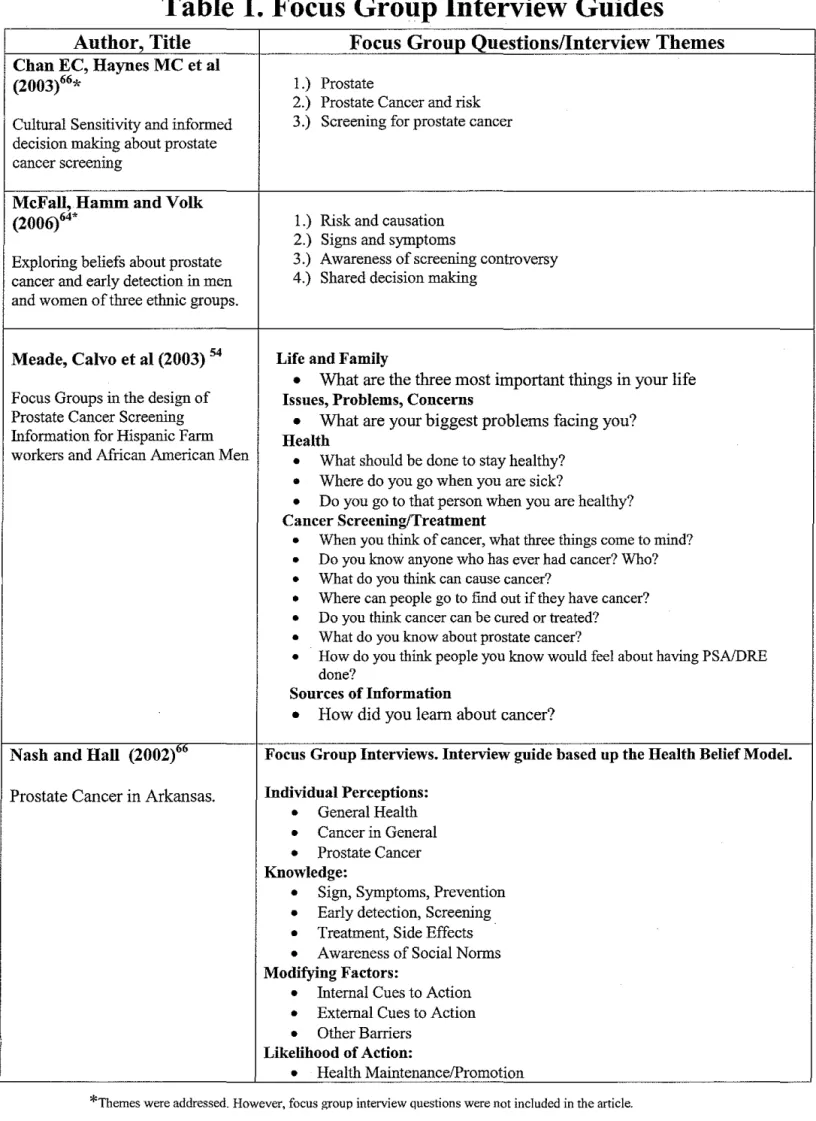
Table 1. Focus Group Interview Guides
Author, Title
Focus Group Questions/Interview Themes
Chan EC, Haynes MC et al
(2003)66
*
!.) Prostate2.) Prostate Cancer and risk Cultural Sensitivity and informed 3.) Screening for prostate cancer decision making about prostate
cancer screenmg
McFall, Hamm and Yolk
(2006)64* I.) Risk and causation
2.) Signs and symptoms
Exploring beliefs about prostate 3.) Awareness of screening controversy cancer and early detection in men 4.) Shared decision making
and women of three ethnic groups.
Meade, Calvo et al (2003) 54 Life and Family
•
What are the three most important things in your life Focus Groups in the design of Issues, Problems, ConcernsProstate Cancer Screening
•
What are your biggest problems facing you? Information for Hispanic Farm Healthworkers and African American Men
•
What should be done to stay healthy?•
Where do you go when yon are sick?•
Do you go to that person when you are healthy?Cancer Screening/Treatment
•
When you think of cancer, what three things come to mind?•
Do you know anyone who has ever had cancer? Who?•
What do you think can cause cancer?•
Where can people go to find out if they have cancer?•
Do you think cancer can be cured or treated?•
What do you know about prostate cancer?•
How do you think people you know would feel about having PSA/DRE done?Sources of Information
•
How did you learn about cancer?Nash and Hall (2002)"" Focus Group Interviews. Interview guide based up the Health Belief Model.
Prostate Cancer in Arkansas. Individual Perceptions:
•
General Health•
Cancer in General•
Prostate CancerKnowledge:
•
Sign, Symptoms, Prevention•
Early detection, Screening•
Treatment, Side Effects•
Awareness of Social NormsModifying Factors:
•
Internal Cues to Action•
External Cues to Action•
Other BarriersLikelihood of Action:
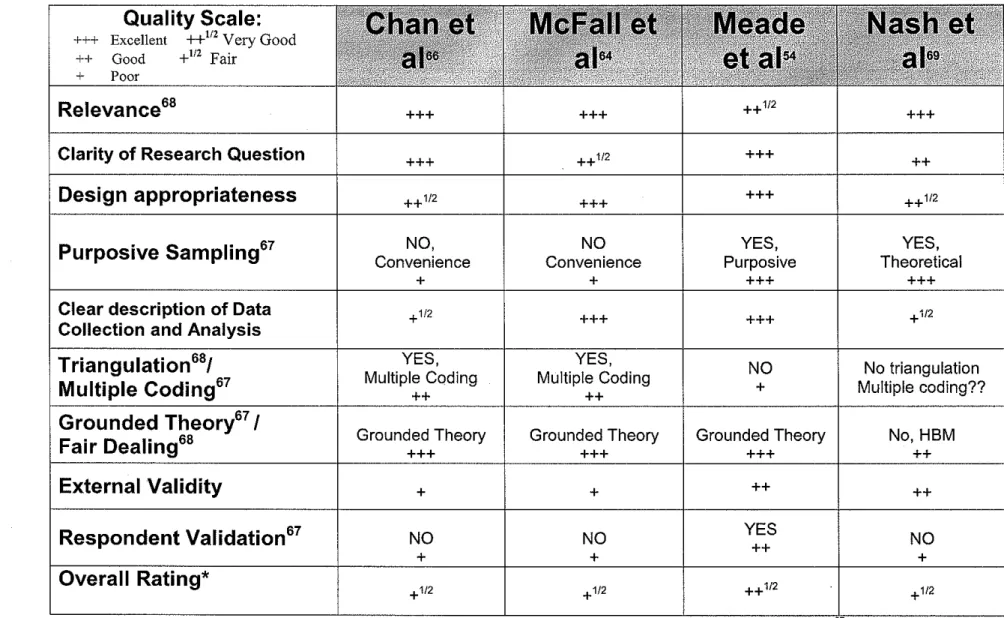
Table 2. Quality Rating
Quality Scale:
+++ Excellent
++
112Very Good ++ Good +112 Fair
+ Poor
Relevance
68 +++ +++ ++ 1/2 +++Clarity of Research Question
+++ ++1/2 +++ ++Design appropriateness
++1/2 +++ +++ ++1/2Purposive Sampling
67I
Convenience NO, Convenience NO Purposive YES, Theoretical YES,+ + +++ +++
Clear description of Data
I
+1/2 +++ +++ +1/2Collection and Analysis
Triangulation
68/ YES,I
I 1-'-'!
I
NOI
No triangulationMultiple Coding
67 Multiple Coding ++ Multiple Coding ++ + Multiple coding??Grounded Theory
671
Grounded Theory Grounded Theory Grounded Theory
I
No, HBMFair Dealing
68 +++ +++ +++ ++External Validity
+ + ++ I ++Respondent Validation
67 NO NO YESI
NO++
+ + +
Overall Rating*
+1/2 + 1/2 ++1/2
I
+1/2Grounded Theory: Alleges that all theories are derived from the dataset rather than using prior theoretical viewpoints.
Table 3. Descriptive studies that address reasons why African American men do not undergo Prostate Cancer
Screening.
HaynesMC et al (2003)66
Jniversity Setting, Focused Clinical Question:
Focus Group
I
University of Texas- How would African Americans, Caucasians and Houston Hispanics want information regarding ProstateCancer screening (DRE and PSA) presented in culturally sensitive brochures?
AAMen(n~5)
White Men (n~5)
Hispanic Men (n~lO)
(Ages :0:50, married)
Mean age: 62
AA: 65 White: 63 Hispanic: 60
Results from Focus Group Interview Guide: Caucasians:
Physician-Patient Relationship:
"guys don't like to go to the doctor" "blind faith in any doctor"
failure to communicate about details of the DRE: "my doctor doesn't say a word, just drop your
pants"
"talk to your doctor about it"
African Americans: Machismo
"your manhood has been compromised"
"fear, embarrassment"
"homosexual tendency"
Physician-Patient Relationship:
"there are a lot of myths"
"should discuss this with their doctor"
Latinos Machismo:
"it's a disgrace"
''makes us emabarrassed"
Physician-Patient Relationship:
"respected doctors disagree"
"we don't believe in screening"
"don't go to doctors"
Common themes:
Lack to desire to visit the doctor's office
uverau (,luaury: Fair
Internal Validity: Fair
External Validity: Poor
Strengths:
I.
Recruitment of differentracial/ethnic groups-comparative study
2. Inclusion of 3 ethnic groups 3. Multiple Coding
Weaknesses:
I. Small Sample Size 2. Small geographic region 3. Convenience sample: No
purposive sampling 4. Inter-rater Reliability- not
reported
5. Poor external validity
6. There was no clear description of data collection and analysis. 7. No mention of whether
data/thematic saturation was achieved.
8. Did reflexivity occur??