In the African-American Population
Natalie L. Wilson April 14, 2003
A Master's paper submitted to the faculty of the University of North Carolina at Chapel Hill in partial fulfilhnent of the requirements for the degree of Master of Public health in the School of
Public Health, Public Health Leadership Program
Factors in HIV Transmission 2
Abstract
The primary period of the HIV infection along with cultural behaviors have public health
implications on infectiousness within the African American population in the United States. The incidence of HIV infections determined by heterosexual transmission continues to rise. HIV continues to spread and cause Acquired Immunodeficiency Syndrome (AIDS) that claims the lives of almost 315,000 since the beginning of the AIDS epidemic. That is 35% of the 816,000 of the AIDS deaths reported.1 Social networks within the black community are a key determinant of HIV transmission. Understanding cultural determinants will help target interventions to control HIV infection and mitigate the impact that HIV is having on the African American culture in the United States.
i
f
f
)
Factors Influencing the Rise in Incidence of Heterosexual Transmission In the African-American Population
Over a span of20 years, Human Immunodeficiency Virus (HN) has disseminated throughout the globe crossing barriers of race, gender, socioeconomic groups, and sexual orientation. HN continues to spread and cause Acquired Immunodeficiency Syndrome (AIDS) that claims the lives of almost 315,000 since the beginning of the AIDS epidemic. That is 35% of the 816,000 of the AIDS deaths reported.1 In recent years, HN has spread explosively to the African American heterosexual population. While HN continues to be transmitted in the homosexual white population in the United States, the rates of new infections have decreased in recent years due largely to the acceptance of information regarding the transmission and effects ofHN.2.2I
Despite the overwhelming global spread of HN, in the United States HN remains elusive to prevention interventions in the African American heterosexual population as demonstrated by the continued rise of transmission rates. Understanding the determinants
involved in the heterosexual transmission ofHN may assist in targeting interventions to prevent further increase in incidence of HN infections. Framing prevention messages to appeal to the cultural values of the African American community may be a beneficial strategy.
Global. National. Community Impact
According to the Joint United Nations Programme on AIDS, (2002) Forty-two million people are living with HIV/AIDS and an estimated 14,000 people are infected with HN
Factors in HIV Transmission 4
are infected every year. Out of the 30% of newly infected women, 75% of those women acquired the virus through heterosexual transmission.1
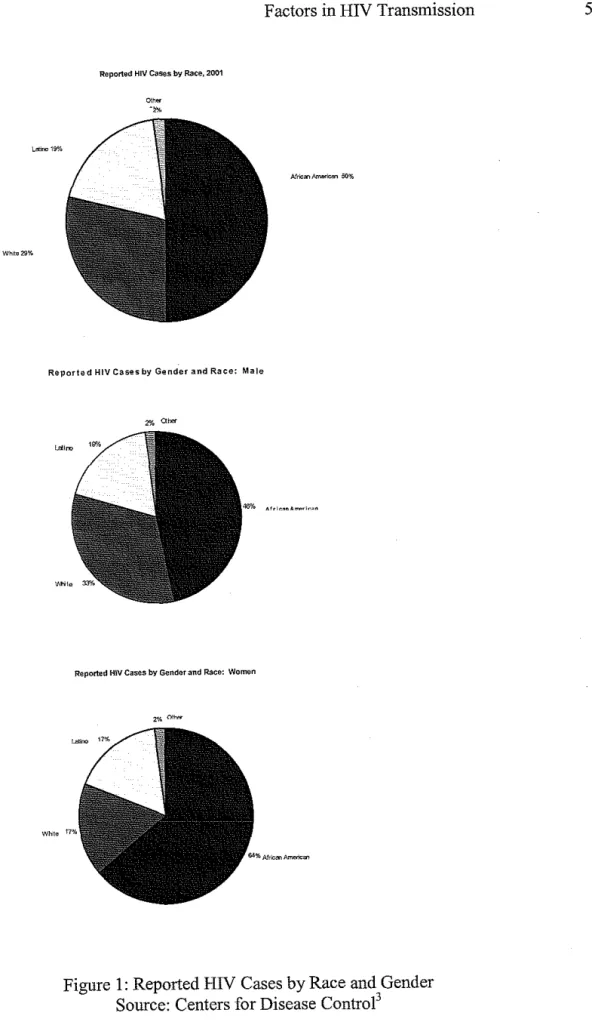
African Americans comprise approximately 13% of the United States population and they account for 54% ofthe new HIV cases in this country. Black women account for 64% and black men 50% of all new infections (Figure 1 ). 2 For those living with AIDS, African American children represented almost two-thirds ( 65%) of all reported pediatric cases. 3 As the incidence in HIV I AIDS continues to rise, it indicates a crisis situation for the African American population. The leading determinant ofHIV infection in African American women is heterosexual
transmission. 1 It is critical that action is taken at all levels to avert millions of new cases over the next decade.
WMe29%
Reported HIV Cases by Race, 2001
Reported HIV Cases by Gender and Race: Male
Reported HIV Cases by Gender and Race: Womt>n
Figure 1: Reported HIV Cases by Race and Gender Source: Centers for Disease Control3
Factors in HIV Transmission 6
Financial Impact o(HIV
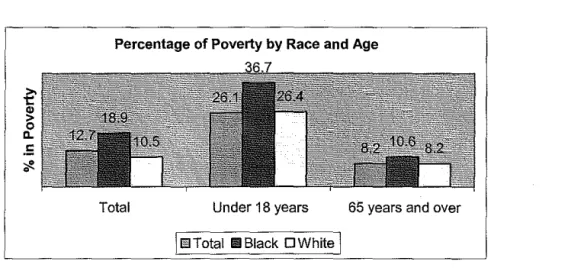
Socioeconomic status is a risk factor for HIV. 29 The poverty rate for African Americans was 26 percent compared to the 13 percent for the total US population (Figure 1 ). 9 Poverty is an antagonist for the initiation and maintenance of marriage. Poverty is a key factor in the
increased prevalence of single mothers and female head ofhouseholds.9' 29 Therefore; economic factors also impact the sexual behaviors and create circumstances that promote concurrent sex partners.
Percentage of Poverty by Race and Age
Total Under 18 years 65 years and over
I~EITotaiiiBiack OWhite I
Figure 1 Source: U.S. Census Bureau Population Survey. March 1999
In 1997, the cost ofHIV care was about $6.7 billion per year. Annually, there are over 2 million outpatient visits, 100,000 Emergency Room visits, and 900,000 hospital days associated with HIV infections. Annually, the estimated amount spent per patient in 1998 was $18,300?3 HIV Mortality
age group 25-34 years, and 3'd in the 35-44 years of age groups.23 Table l shows the age groups
with rank representing number of deaths caused by HIV disease in the top 10 leading causes of
death. These statistics have significant public health implications by indicating that there is a
problem that is contributing to the increased incidence and hence deaths in these groups. This
paper will examine some key determinants that are contributing to the increase in incidence
within this group.
Table 1
Rank for HIV Disease as Leading
Cause of Death for African Americans
by selected age groups, U.S., 1999
I
RankAge Group Male Female
15-19 10 8
20-24 6 5
25-34 3 1
35-44 1 3
45-54 3 3
*
55-64 7
*not listed in top ten
National Vital Statistics Report, 2001
The primary period ofthe HIV infection has significant public health implications on the
infectiousness within the African American population in the United States. Understanding the
importance ofthe social networks within the black community and its role in the transmission of
Factors in HIV Transmission 8
Primary HIV Intection
Primary HIV infection (PHI) is the early stage ofHIV infection. It is a highly infectious period. During this time the viral load in the blood plasma increases to a high level and then declines. Primary HIV infection has an onset of 4 days to 4 weeks following exposure to the virus. The median time to symptom development is 15 days within an interval range of 5 - 29 days after the acquisition of HIV .17
One of the major factors in the sexual transmission ofHIV is the presence of the virus in genital secretions. The seminal and vaginal mucosal cells also can contain the virus. There is a high level ofHIV present in genital secretions in acute infection and advanced disease.U· 13' 14
Sexually transmitted diseases (STD) enhance the transmission ofHIV.11 There are numerous studies showing the correlation between gonorrhea, chlamydia, syphilis, trichomonas, herpes genitalis and the enhanced facilitation of the transmission ofHIV.12•13•14•17•24 Fleming and Wasserheit ( 1999) demonstrated strong evidence supporting HIV transmission augmentation by the presence of ulcerative and non-ulcerative STDs. STDs both promote infectiousness ofHIV and the susceptibility to HIV .12
When HIV is transmitted into a new host, the virus replicates to high levels. As part of the immune response, newT-Lymphocytes are drawn out. When T-Lymphocytes respond to the virus, the virus infects these cells. When HIV sheds in the genital tract it enhances the
infectiousness ofHIV. STDs promote this shedding. STDs appear to recruit the inflammatory cells that are susceptible to HIV and they disrupt the cells of the mucosal lining that serves as a
b arner to m ectwn. . . fi . 12
infected person increases the concentration ofHIV in the seminal plasma, semen, and the blood plasma. A person with a genital ulcer has a compromised mucosal integrity. This increases a cell-mediated immune response. This response activates specialized cells that are HIV susceptible and brings them to the surface of the ulcer.12
In non-ulcerative STDs, infections increased the shedding ofHIV by initiating a normal immune response. In men, HIV levels are elevated in the semen. Levels of HIV concentrations were reduced to levels of the control groups after treatment of the STD infection. Among women, cervicitis, vaginitis, and gonorrhea showed an increase in HIV viral shedding in the vaginal tract. Following treatment of the STD, HIV shedding was decreased significantly.12
;_
Susceptibility in non-infected women was increased by the presence of a STD because HIV
I
target cells, CD4+ lymphocytes, are recruited to the endocervix.12
During the initial acute stage of infection CD4+ Lymphocytes and some macrophages will be infected. Replication ofHIV occurs rapidly to high levels. The host has not fortified an
immune response to the HIV intrusion. Lymphoid tissue becomes infected. CD4+ '
i
lymphocytes will decline initially as CD8+ cells increase. When the antiviral cellular immune response and later the formation of antibodies to HIV appear, the number of CD4+ and CD8+ cells will return to near normal levels. A sharp decline of the virus will also occur during this immune response. However, a small number of cells will continue to host a replicating virus
. h . ' II
escapmg t e Immune system s responses.
Factors in HN Transmission 10
1, 3, 4 identified a specific high-risk sexual exposure with another sex partner. Couples 1 and 5 had co-infection with additional sexually transmitted diseases15• 16
Transmission rates occurred within weeks of exposure to HN. For couple I there were multiple exposures occurring prior to the onset of the transmitter's symptoms. The incubation period, the time from sexual exposure to the onset of symptoms, in this couple was 20 days. There was a single sexual exposure on 7 days after symptoms started in the male transmitter in couple 3. The female partner developed symptoms 12 days after this sexual exposure. It took the female in couple 4, 17 days to develop symptoms after sexual exposure. HN is clearly transmitted during acute stages of infection 15
During this acute time period where HN viremia is at a high level, the response of the immune system has not yet produced antibodies to the virus. The Elisa Immunoassay (EIA) and Western Blot, the standardized assays for HN testing are limited in that they are designed to detect antibodies. During the acute stage ofHN and PHI, the EIA and Western Blot are
negative. Tests for the p24 antigen, HN-RNA or HN-DNA are specific tests for the presence of
HN infection. The p24 antigen levels however, may not be detected during the first few days making the test limited in its sensitivity. There are also assays that are sensitive for measuring the HIV-RNA or proviral DNA in the blood plasma.17' 18 However, because these tests lack specificity, there is a chance of false-positive results.18
influenza and individuals remain unaware of their infection and proceed in their current sexual behavior.
Influential Cultural Practices
The social structure of the African American community influences beliefs, perceptions, and behaviors. There is a role that cultural norms, values, beliefs, language, and systems play in the behavior of an individual. Understanding that role is possibly the key to understanding the epidemiological spread of this disease. When the HIV epidemic began to emerge, prevention efforts focused on key social factors to influence modifications in risk behaviors. 5 The social context of risk behaviors have a significant impact on the transmission ofHIV.
Locus of Control
Guidry eta! (2003) explained that ifthere is a belief that a disease belongs to another group, the belief itself has to be dispelled if the mortality rates are to be reduced. African Americans must accept that the disease belongs to their group and is not solely affecting other groups or subgroups. The role and impact of culture requires evaluation as an important factor ofHIV acquisition rates, especially among African Americans. Because the behavior of the African American population is so closely based on cultural values, understanding these values is the key to understanding the epidemiological dilemma behind the rise in HIV incidence and understanding the barriers to prevention efforts.
Factors in HIV Transmission 12
individuals are less likely to pursue medical care, screening, or follow prevention strategies presented by tbe health system. 2
Mistrust
There are serious and valid issues of mistrust against the mainstream American scientific and medical community rooted in tbe historical context of American racial relations. Fear and mistrust of the medical system is rooted in slavery. During tbe antebellum era, organized medicine alleged that blacks had anatomical differences that were peculiar. For this reason, slaves were brutalized to develop medical techniques. For instance in 1845 and 1849 Dr. Marion Sims, used female slaves to develop a gynecological technique for repairing vesico-vaginal fistulas without the use of anesthesia. After the technique was perfected, white volunteers refused to endure tbe painful procedure.
Other undocumented medical abuses were recounted in the oral histories of tbe African American families. Fear of medical experimentation especially if one entered a hospital has been passed through generations. The African American community can be preoccupied witb conspiracy theories because of historical events.40
1n 1932, the United States Public Health Service recruited 400 unsuspecting black men for a Syphilis study. 35' 37' 38 The government promised treatment for "bad blood" a euphemism used for Syphilis. The study was performed in Macon County, Alabama. This sanctioned medical investigation was The Tuskegee Study of Untreated Syphilis in tbe Negro Male. No drugs were being tested and no treatment for Syphilis was provided. It was a nontherapeutic study on the long-term effects of untreated Syphilis.
meals on their examination days, free treatment for minor ailments, and a burial stipend was guaranteed to be paid to their survivors. The Public Health Service failed to provide participants with information about the risks involved with the life threatening disease being studied. In addition, they failed to obtain informed consent.
Forty years later, in 1972, it was discovered that no protocol for the study ever existed and that the researchers had never intended to treat the subjects. The study existed to compile data on the untreated effects of Syphilis. Over 100 men had died, and more had severe complication that may have later contributed to their deaths?7•38
This study led to an increased distrust of the medical community. This mistrust is a barrier to research and medical care within the black community.37•39 Although laws exists to protect participants, African Americans still perceive possible exploitation in medical research and the historical evidence validates those fears regardless ofthe accuracy of the history. In other words, it may not be accurate that men were injected with Syphilis but the evidence surrounding the lengthy study support reasons not to trust. In the opinion of many, HN was created to control the African American population. The opinion may not be accurate, but the historical evidence is enough not to trust in the medical system. 39
Even thought there is a general negative attitude toward participation in medical research, African Americans are able to identify theoretical benefits. However, an individual is less likely to perceive a direct link between the theoretical benefits and their personal life. These attitudes apply not only to participating in research but also to options for medical treatment and
recommendations?9
Factors in HIV Transmission
between providers or investigators and patients. Therefore, the African American community should be consulted for suggestions in designing research protocols and strategies to recruit participants for studies and programs. 39
Concurrent Sex Partnerships
14
Sexual networks fuel the spread of STDs. Social networking enhances risk behaviors because people circulate in their interactions with each other. Sexual mixing patterns and concurrent sex partnerships increase the rate of the spread of sexually transmitted infections. In
concurrent sex partnerships, one partner will have a steady partner and at least one other sex partner that overlaps in time. 24
Louman and Y oum (1999) stated that sexually transmitted infections are based on factors of assortative and disassortative mating. In assortative mating, blacks tend to limit sexual mixing within their own ethnic group. This factor alone leads to blacks being 1.3 times more likely to have sexually transmitted infections because of the likelihood that the partner choices of blacks are more segregated than with other racial groups. In addition, African Americans who have had one partner in the past year are 5 times more likely to choose an African American partner who has had four or more partners in the past year. 26 There is a higher rate of infection due to the patterns of sexual networks. This pattern allows HIV to efficiently spread within the African American population and elevates the incidence rates compared to whites who tend to choose partners who have had low numbers of partners like themselves. 26• 28
and other various aspects of life. The impact of these perceptions in conjunction with an insufficient availability of recreational outlets provided for an increase in high risk behaviors. 29
Respondents from focus groups reported concurrent sexual partnerships throughout the African American population among unmarried persons. Among unmarried couples, sexual partnerships that overlap in time are common. This is partially influenced by the perception of gender imbalances and behaviors that women tolerate. Monogamous relationships are threatened because of these perceptions and promote concurrent sexual relationships. Behaviors that will secure a person's chance of maintaining a sexual partner are prevalent within the black
community. 6• 25
A monogamous sexual relationship reduces the risk of acquiring an infection. However, even if one of the sex partners has only one other sex partner, the risk of infection is still lower than if both sex partners each had a concurrent sexual relationship. Marriage reduces the likelihood of concurrency of sexual relationships. There is a dramatic difference in marriage rates between blacks and whites. By 1993, the percentage of unmarried black men (58%) and women (61 %) were significantly higher than their white counterparts, 29% and 22%
. I 29 respective y.
Adimora eta!. (2002a) examined the prevalence, distribution, and correlates of women in the United States by evaluating their involvement in concurrent partnerships. Sexual partnership data was analyzed on 10,847 women; age 15-44 years from the 1995 National Survey of Family Growth. The prevalence of concurrent sexual relationships in women was 21% among blacks, 11% among whites. Prevalence of concurrent sexual relationships was lowest among married women (4%)?4 The US Census Bureau (1997) reported that persons who were married and living with their spouse was 34%, significantly lower than rates for couples who were white
;--L
Factors in HIV Transmission 16
(59%). 27 Married persons were less likely to have a concurrent sex partner. Other factors such as poverty, age, and age at first intercourse were also strongly associated with concurrency. Less
" d d " " d k 24 associate were e ucat10n, mcome, an wor status.
A couple of factors contribute to this disparity of low marriage rates. There is a low sex male to female ratio among blacks. Black males have a higher mortality rate. Although, African-Americans comprise approximately 13% of the nations population, they comprise approximately 50% of the nations prison population. The shortage of men may be the reasoning behind the low marriage rates. Due to the relative scarcity, men have the option of moving from partner to partner or taking up simultaneous relationships. Mate availability may create the promotion of concurrent partnerships.Z9
Figure 2
Sample of Sexual Network
Subsequent Infections
0
Index Infection
Prior or future sex partnerships
Sexual Contact
Mathematical models can be used in forecasting the course of an epidemic.
Mathematical modeling grants the opportunity to explore the outcome possibilities of prevention interventions. 28 Sampling methods, accurate measurement, and interpretation of data are key to understanding the role of sexual behavior in transmission of infections and in designing
interventions that will have successful prevention outcomes.
Patterns of sexual networks are difficult to measure. Ghani et al. (1998) analyzed three sampling methods: Individual reporting, snowball sampling, and contact tracing. Individual reporting is an efficient method for collecting data in which partners disclose the numbers of sex partners of their sexual contacts. This is ideal if the participant has full knowledge of their partners' sexual behavior. It also assumes that the participant is willing to disclose the
Factors in HIV Transmission 18
sampling set of people is identified. A proportion of the partners in this initial set are selected and a new set is formed from each participant selected. This continues until the process ends or reaches a predetermined number of steps.
Contact tracing is a very common practice among STD clinics. Partner information is obtained in order to identify and contact partners for treatment. Those persons diagnosed with an infection inform their sexual partners and encourage them to have screening and treatment. In some cases, the index partner gives information and consent to the clinic staff to contact the sex partner( s ). The staff member informs the partner( s) of the contact with an infected individual and encourages them to come in for screening and treatment. Data collection methods have limitations and offer the introduction of biases due to participant unwillingness or the inability to reveal or contact sex partners.30
Biases may be introduced in the study of sexual partner networks. If sampling individuals is non-random the potential for bias is created in the measurement of estimates describing the networks. For example, if participants are recruited in a sexually transmitted clinic and consent to giving information on partnerships. Consequently partners referred into the clinic give information but one decides to withhold information or fails to give accurate
information due to recall. Measurement bias will then be created. By ignoring these biases, researchers may underestimate the persistence and establishment of infection in a population. 30 An adjustment or an understanding of the existence ofbias will grant a better perception of the data in its interpretation.
estimating patterns. They present a more accurate description of highly connected sexual networks.
Understanding this bias is important because if the degree of assortative mixing is nnderestimated, the estimated risks of infection derived from the data collected would also be nnderestimated. When the relationships that provide data and indicate possible paths for
transmission of infection are underestimated, the results are skewed. They will indicate that the potential for the transmission of infection will have been underestimated as well. 30
Snowball sampling and contact tracing prove to create less biased estimates on sexual mixing patterns. Of these methods, contact tracing best serves the purpose of sampling. It
allows for the persons at risk for acquiring the infection to be contacted. It provides rationale for collecting information on the sex partner. The information is being collected to prevent
re-infection and control further disease transmission by contacting the partner for treatment. The awareness of potential bias will increase the nnderstanding of the analyses of sexual patterns and allow for adjustments to be made. By focusing on highly sexually active groupings where STDs are more likely to exist, sampling through contact tracing would be a better
sampling for collection of data30 Prevention Efforts
Factors in HIV Transmission 20
qualified staff, lack of experience of ministry staff, and lack of financial resources, and lack of a general knowledge about HIV I AIDS served as barriers. 32
Perception of susceptibility to HIV I AIDS is an important determinant of prevention strategies. Tesoriero (2000) surveyed religious congregations in New York State to document the existence of education and prevention services related to HIVI AIDS, identify barriers to services, and assess willingness to meet with service providers. Only 16.7% of the
congregations contacted provided prevention services. In high need areas for prevention services, 41% of respondents perceived a low need for HIVIAIDS related services in their community.
Eighty-seven percent of the respondent congregations reported on or more barriers dealing that were attitudinal. Forty-one percent of the responding churches opposed homosexuality/bisexuality, drugs and alcohol, or condom use. Thirty- five percent of congregations did not think that HIVIAIDS was considered a serious problem in their community. This study did not address feasibility of persuading religious groups to become more involved. Other reasons for not offering services or referrals were "fear of HIV I AIDS" and negative attitudes toward those at risk or infected with HIV. 32
The CDC is committed to working in collaboration with community-based organizations to prevent HIV in African Americans. For example, one program in Indiana identifies key leaders in the African American community and trains them as "community conversationalists". The conversationalists discuss HIV and syphilis prevention with other African-American men and women in non-traditional setting. Non-traditional settings include beauty salons,
information with customer purchases. This program reaches about 2,000 African Americans each week. 3
Another program in Chicago had a goal to reduce the risk ofHIV among African Americans living in shelters and transitional housing. The program trains the staff and volunteers of the shelters to be HIV and STD prevention peer educators. They provide
personalized HIV counseling, testing and referral services for those with behavioral risk factors. One of the programs interventions is conducting group education classes. Risk reduction strategies and behavior modification techniques are discussed at the group education classes?
Discussion
There are significant factors contributing to the rise in heterosexual transmission of HIV in the African American population. Cultural factors confounded with the epidemiology ofHIV transmission are leading to a surge in incidence. The fact that HIV is in the African American population means that interventions for prevention must not only focus on risk reduction but the factors that contribute to the risks that need to be reduced. Because these risks factors are cultural norms stimulated by "outside" forces, strategies must also begin to focus on cultural values and changing social norms, such as concurrent sex partnerships.
L
Factors in HIV Transmission
22
with sex or potential partners are valued over their perceived relationship with God must be answered.
As long as the social norm allows sexual networking and concurrent partnerships and sexually transmitted infections remain in circulation, incidence rates and the prevalence ofHIV will continue to rise. As the prevalence rises, the costs of health care will continue to rise. Because many African Americans are living in poverty, the nation will have to increase funding allocated for treatment and health care for HIV disease.
A continued effort to increase the screening and treatment of sexually transmitted infections will be a key to decreasing shedding of the virus and susceptibility of HIV
L
genital secretions and or the immune response cells in the genital tract that increase
I
transmission. The treatment of sexually transmitted infections decreases the virus present in thesusceptibility. Testing all sexually active African Americans for HIV infection should be offered as opposed to offering antibody testing alone. HIV Counseling should be performed with every sexually transmitted screening session.
It will be important in the future to market behavior changes. Marketing health behaviors will provide targeted interventions for the African American population. The Centers for
Framed messages, marketing behavior change, based on formative research will provide practical solutions that are feasible and designed around the values and desires of the African American population. Messages should be pre-tested in the African American community prior to release. The one-size fits all approach to messages will not bring change in the African American population.
It would be beneficial for the United States Public Health Service to be a front line partner and supporter of efforts to linking the African American community to the medical community. The Public Health Service has an opportunity to build and promote trust by providing leadership in communication with the African American community. Leadership by the Public Health Service should be positioned for suggestions in the design of research
protocols and strategies as well as for the promotion of informed consent in the recruitment of participants for studies and programs.
Because HN is ranked so high as a leading cause of death, policy should be developed to increase the protection of the public's health. Testing and counseling should be increased for
HN infection. Policy to encourage cultural changes such as the encouragement of marriages within the population should be developed and implemented. Sex outside of a marriage relationship, once a strong religious issue is now considered high-risk behavior. Policy to provide necessary programming to keep black men out of the prison system should be established.
Factors in HN Transmission 24
unaware that they are at risk for HN infection dnring this period of time and therefore does not perceive susceptibility to infection. In the light of sexual social networks, HN transmission will continue dnring this period of obscurity. Within a few weeks 2 or more people may be infected before the first person develops symptoms. Policy is needed to train health care providers to recognize signs of primary HN infection. Providers also need to know about what the culturally based risk factors of HN are in the African American population and inquire about those
behaviors.
In conclusion, prevention efforts focused on changing cultural norms from a population-based level are needed desperately. Formative research is needed to understand the cultural norms, values, and practices of the heterosexually active African American population prior to marketing change in risk behaviors or developing programs. The velocity and direction of the incidence of HIV transmission in the heterosexually active African American population will not reverse or decline until evidence based programming is designed and implemented for behaviors focused upstream.
!
J
.
Abbreviations
AA
African American
AIDS
Acquired Immunodeficiency Syndrome
CDC
Centers for Disease Control
DNA
Deoxyribonucleic Acid, the primary genetic material of all cells.36
EIA
Enzyme linked immunoassay. Utilizes an antibody labeled with an enzyme marker such as horseradish peroxidase. 36
HIV
Human Immunodeficiency Virus
STD
Sexually transmitted disease
STDs
Sexually transmitted diseases
T Lymphocytes
Lymphocytes responsible for cell-mediated immunity. 36
CD4+ Lymphocytes
A critical subpopulation of regulatory T-lymphocytes involved in the induction of most immunological functions. Includes helper and suppressor inducer T -lymphocytes. CD4 is the name of a surface molecule. 36
CDS+ Cells
A critical subpopulation of regulatory T-lymphocytes involved in MHC Class !-restricted interactions. Includes cytotoxic and suppressor T -lymphocytes. CDS is the name of a surface molecule. 36
PHI
Primary Human Immunodeficiency Virus Infection
RNA
Ribonucleic Acid, a polynucleotide consisting essentially of chains with a repeating backbone of phosphate and ribose units to which nitrogenous bases are attached. 36
-
Factors in HIV Transmission
References
1. Centers for Disease Control (CDC). (2001) HIV/AIDS Surveillance Report. 13(2) 2. Centers for Disease Control and Prevention (CDC). (1999). Epidemiological notes and
reports Acquired Immune Deficiency Syndrome. www.cdc.gov/hiv/stats
3. Centers for Disease Control (CDC). (2000) Fact Sheet: HIV/AIDS among African Americans. [Available: On-line] http://www.cdc.gov/hiv/pubs/facts/afam.htm
4. Centers for Disease Control (CDC) HIV/ AIDS Update: A glance at the HIV epidemic. [Available: On-line] http://www.cdc.gov/nchstp/odlnews/ At-a-Glance.pdf
26
5. Plowden, K., Miller, J.L., & James, T. (2000, July/August) HIV Health Crisis and African Americans: A Cultural Perspective. The Association of Black Nursing Faculty. 88-93.
6. Adimora, A.A, Schoenbach, V.J., Martinson, F.E., Donaldson, K.H. Fullilove, R.E., & Aral, S.O. (2001, February) Social Context of Sexual Relationships Among Rural African Americans. Sexually Transmitted Diseases. 28 (2): 69-76.
7. Guidry, J., Matthews-Juarez, P., & Copeland, V. (2003, January) Barriers to breast cancer control for African-American women: the interdependence of culture and psychosocial issues. Cancer. 1 Suppl: 318-23
8. Joint United Nations Programme on HIV/AIDS& World Health Organization. AIDS Epidemic Update. December, 2002
10. Centers for Disease Control. (2003). Sexually Transmitted Disease Surveillance Report, 2001. [Available: On-line] http://www.cdc.gov/std/stats/TOC200l.htm
11. Ambroziak, J. & Levy, J.A. Epidemiology, Natural History, and Pathogenesis ofHN
Infection. In: Hohnes, K., Sparling, P.F., Mardh, P., Lemon, S.M., Stamm, W.E., Piot, P.
& Wasserheit, J.N.eds. Sexually Transmitted Diseases. Third Edition. New York:
T--McGraw-Hill: 1999; 251-258.
12. Fleming, D. & Wasserheit, J. (January, 1999) From epidemiological synergy to public health policy and practice: the contribution of other sexually transmitted diseases to sexual transmission of HN infection. Sexually Transmitted Infections. 7 5:3-17 13. Kovacs, A., et.al. Determinants ofHIV-1 shedding in the genital tract of women. The
Lancet. November 10,2001. 358 (1593-1601).
14. Pilcher, CD, Shugars, DC, Fiscus SA, et.al. (2001) HN in body fluids during primary
HN infection: implications for pathogenesis, treatment and public health. AIDS.
15:837-845.
15. Pilcher, C.D., Eron, J.J., Salvi, A, et al. (2001) Sexual transmission during the incubation period of primary HIV infection. JAMA; 286(14)
16. Pilcher, C.D. (2002) PHI and Transmission Risk (Part 2): Epidemiology and Infectivity. ThePRNNotebook. 11-15.
17. Apoola, A, Ahmad, S, & Radcliffe, K. (2002) Primary HN infection. international Journal ofSTD &AIDS. 13:71-78.
Factors in HIV Transmission 28
19. Centers for Disease Control. (1998, June) Critical Need to Pay Attention to HIV Prevention in African Americans. http://www.thebody.com/cdc/afram.html 20. Centers for Disease Control. (1981, June 5) MMWR 30(21); 1-3.
21. Centers for Disease Control. (2001, June 01) MMWR. 50(21); 430-4.
22. National Center for Health Statistics. (2002). National Vital Statistics Report. 50(16). 23. National Center for Health Statistics. (2002) National Vital Statistics Report. 49(11) 24. Aral. S & Holmes, K. Social and behavioral determinants ofthe epidemiology of STDs:
Industrialized and developing countries. In: Holmes, K., Sparling, P.F., Mardh, P., Lemon, S.M., Stamm, W.E., Piot, P. & Wasserheit, J.N.eds. Sexually Transmitted Diseases. Third Edition. New York: McGraw-Hill: 1999
25. Adimora, A.A., Schoenbach, V.J., Bonas, D.M., Martinson, F.E., Donaldson, K.H., & Stancil, T.R. (2002a) Concurrent Sexual Partnerships Among Women in tbe United States. Epidemiology. 13(3): 320-7.
26. Laumann E & Youm, Y. (1999) Racial/ethnic group differences in the prevalence of sexually transmitted diseases in the United States: a network explanation. Sexually Transmitted Diseases. 26(5):262-4.
27. US Census Bureau. (1997) Selected Characteristics of the Population by Race: March 1997. Vol. 2000
28. Jolly, A.M., Muth, S.Q., Wylie, J.L. & Potterat, J.J. (2001) Sexual Networks and Sexually Transmitted Infections: A Tale of Two Cities. Journal of Urban Health. 78(3). 433-445.
30. Ghani, AC, Donnelly, CA, & Garnett GP. (1998) Sampling Biases and missing data in explorations of sexual partner networks for the spread of sexually transmitted diseases. Statistics in Medicine. 17:2079-2097.
31. DeGroot, A.S. Update from the 61h Conference on Retroviruses and Opportunistic Infections. [Abstract] Chicago, Illinois, Jan 31-Feb 3, 1999
32. Tesoriero, J.M., Parisi, D.M., Parisi, D.M., Sampson, S., Foster, J., Klein, S.Ellemberg, C. Faith Communities and HIV/AIDS Prevention in New York State: Results of a Statewide Survey. Public Health Reports. 115(6): 544-556.
33. Bozzette, S.A., Joyce, G., McCaffrey, D.F., Leibowitz, A.A., Morton, S.C., Berry, S.H. et a!. (2001 )Expenditures for the Care ofHIV -infected patients in the era of highly active antiretroviral therapy. New England Journal of Medicine. 344(11 ): 817-823.
34. Centers for Disease Control (2001) Special Focus Profiles: STDs in Racial and Ethnic Minorities. STD Surveillance Report. 59-64.
35. Pickle K, Quinn SC, & Brown JD. (2002) HIV/AIDS coverage in Black newspapers, 1991-1996: implications for Health Communication and Health Education. Journal of Health Communication. 7(5):427-44.
36. Medical Dictionary Online. (2003) [Available: On-line] http://www.online-medical-dictionary.org.
37. Forgotten History Foundation. The Tuskegee Study. Retrieved April2, 2003 from http://www.forgottenhistory.org/exhibits/tuskegee.html
Factors in HIV Transmission 30
39. Corbie-Smith, G., Thomas, S.B., Williams, M.V., Moody-Ayers, S. (1999) Attitudes and Beliefs of African Americans Toward Participation in Medical Research. Journal of General Internal Medicine. 14:537-546.
40. Smith, C. (1999, September). African Americans and the Medical Establishment. The Mount Sinai Journal of Medicine. 66 ( 4): 280-281.
±---~