Outcomes of Patients Declined or Who Refuse Transport by Orange County (NC) Emergency
Medical Services
By
San jay Kumar Premakumar
A Master's Paper submitted to the faculty of The University of North Carolina at Chapel Hill in partial fulfillment of the requirements for the degree
of Master of Public Health in the Public Health Leadership Program,
Chapel Hill
Table of Contents
Page
I. List of Tables ... i
II. List of Figures ... ii
III. Abstract.. ... 1
IV. Introduction ... 3
V. Background... 4
a.History of EMS ... 4
b.Creation of Positions ... 7
c.Changing Scope of Practice ... 8
dA New Model ... 10
VI. The Orange County, NC Experience ... 12
a.Demographics ... ... 12
b.System Issues and Pressures ... 12
c.A New Way of Thinking ... 14
VII. Outcomes of Patients Who Refuse or are Declined Transport in Orange County, NC a.Introduction ... 17
b.Methods ... ... 24
c.Study Setting ... ... 24
d.Study Population and Protocol. ... 24
e. Outcome Measures ... 26
f.Results ... ... 27
g.Discussion ... 35
h. Conclusions ... ... 50
VIII. Appendices ... 59
IX. References ... 69
I
List of Tables
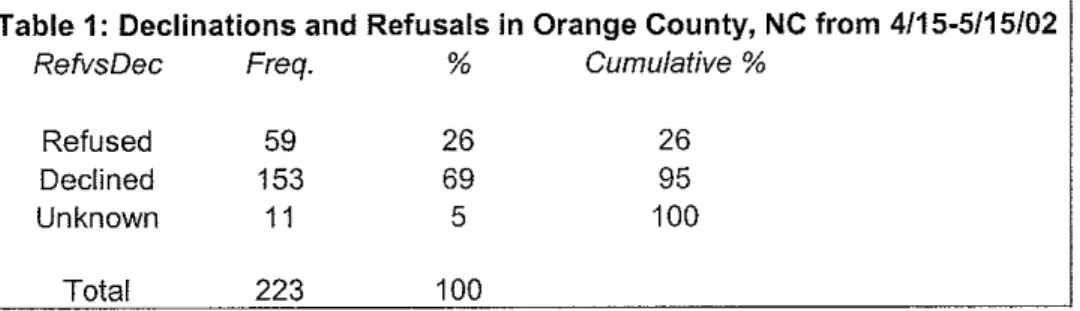
Table 1: Declinations and Refusals in Orange County, NC from 4/15-5115/02
Table 2: Demographic Characteristics for Study Population
Table 3: Exclusion Criteria for Study Population
Table 4: Study Subjects Able to be Contacted by Phone
Table 5: Total Number of Phone Attempts required to make Contact
Table 6: Emergency Medical Dispatch Complaints for All Patients
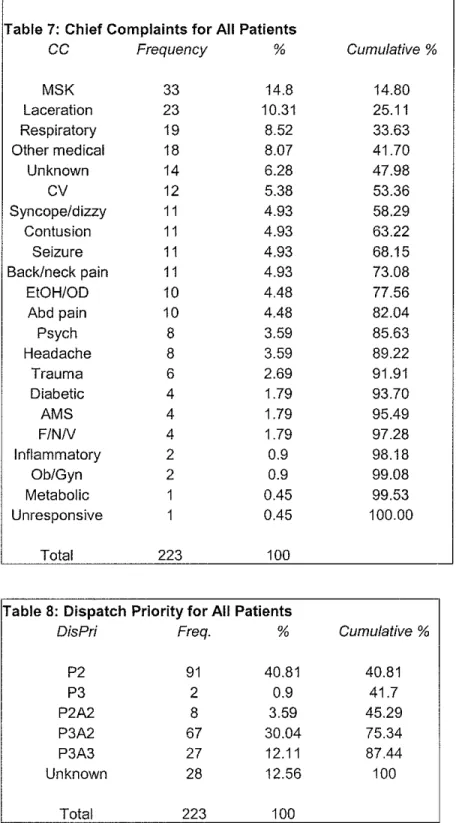
Table 7: Chief Complaints for All Patients
Table 8: Dispatch Priority for All Patients
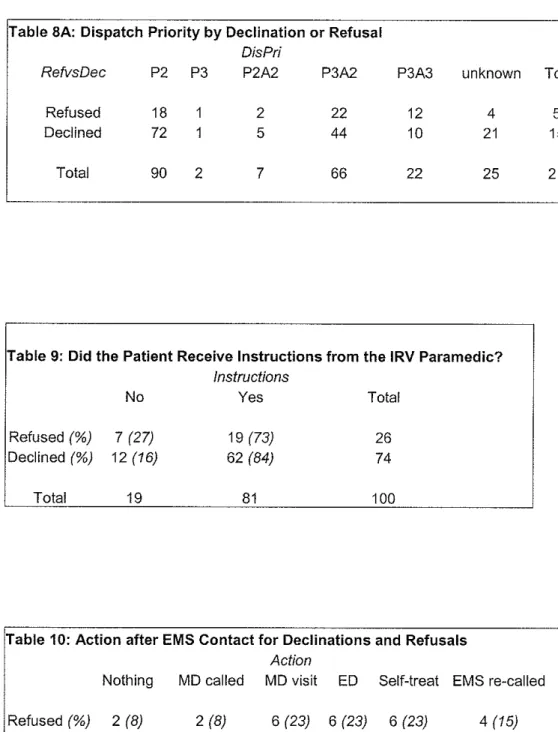
Table SA: Dispatch Priority by Declination or Refusal
I
fTable 9: Did the Patient Receive Instructions from the IRV Paramedic?
Table 10: Action after EMS Contact for Declinations and Refusals
Table 11: Time in Hours Before Seeking further Medical Care
Table 12: Patient Disposition after Seeking Further Medical Care
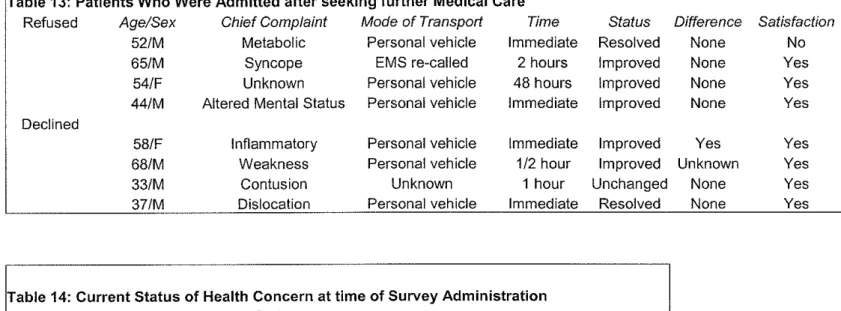
Table 13: Patients Who Were Admitted after seeking further Medical Care
Table 14: Current Status of Health Concern at time of Survey Administration
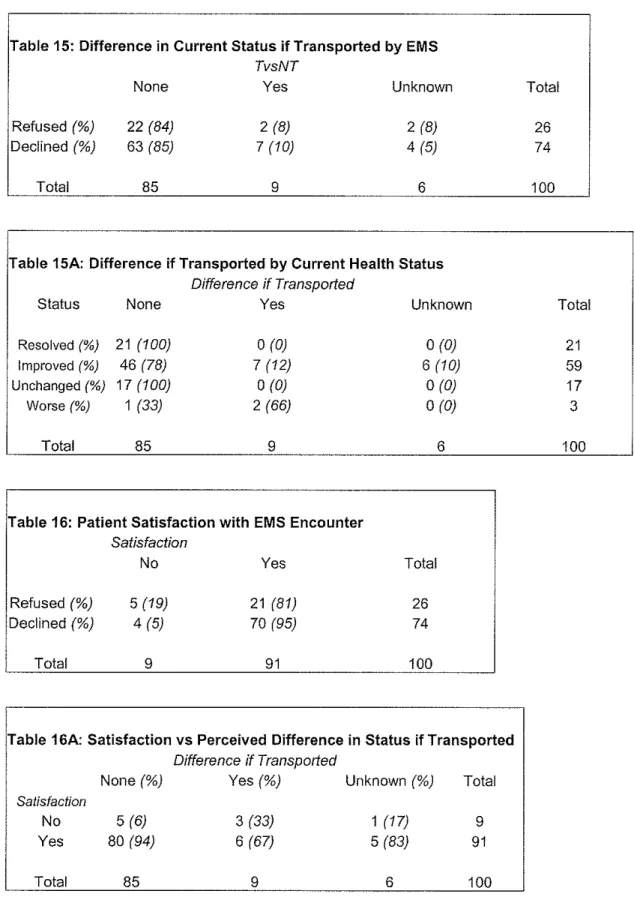
Table 15: Difference in Current Status if Transported by EMS
Table 15A: Difference if Transported by Current Health Status
Table 16: Patient Satisfaction with EMS Encounter
List of Figures
Abstract
Objective: In October of 1996, a unique Emergency Medical Services (EMS)
system based on separation of paramedic treatment and ambulance transport was
implemented in Orange County, NC. The core of the program was having
paramedics operate independently and respond to all calls to evaluate the need
for transport or further treatment. Paramedics were authorized to decline
ambulance transportation to patients for whom other transportation options were
more appropriate. This study is an attempt to evaluate the system for quality and
safety using several outcome measures. L
Methods: A retrospective, cross-sectional study of patients who had been
¥
f j
declined transportation by Orange County EMS during a one-month interval was
conducted to assess self-reported medical outcomes and patient satisfaction via a
I
previously tested survey instrument administered by phone. Outcomes were: 1)
subsequent medical attention sought; 2) time lapse between paramedic evaluation • and subsequent medical attention; 3) status of patient's condition at the time of
survey administration; 4) if patient received instructions from the paramedic
about the problem; 5) would status of medical condition be different at time of
survey if transported; 6) desire for change in the encounter; and 7) overall
satisfaction with care received. Also reviewed prehospital EMS call reports for
demographic and system-wide trends. Descriptive statistics were utilized and
IRB approval was obtained.
Results: FromAprill5, 2001, to May 15,2001, there were 658 EMS activations
in Orange County, NC. A total of223 (34%) were recorded as non-transports by
the paramedics. Of these, 212 (95%) had designations of paramedic declination
74% (74/100) of included patients were declined. Of these declined patients, 84%
remembered receiving instructions, 64% sought further medical care ( 41% going
to an ED) and 9% (4/46) of those were admitted to the hospital. 82% reported
resolved or improved health status, and 95% of declined patients were satisfied
with their EMS encounter. Compared to a previous unpublished study in 1999,
these results showed an increase in satisfaction, but also an increase in
admissions (from 0% to 9%).
Conclusions: Over five years of implementation, the IRV system has
accomplished the goals set out for it. Even with some under-triage noted (9%),
the negative sequelae from the use of a declination protocol was negligible,
especially when viewed in the context of patient satisfaction. The system is
performing at an acceptable level and should continuously be evaluated in order
to determine need, patient safety and acceptable levels of undertriage, and
Introduction
In October of 1996, a unique Emergency Medical Services (EMS)
system based on separation of paramedic treatment and ambulance
transport was implemented in Orange County, NC. This action was a
result of continuing increased demand of limited EMS resources and a
shift of philosophy from treatment to patient outcome. After thorough
analysis, an appointed EMS Strategic Planning Committee proposed a new
system as a feasible compromise to achieve their stated goals which were
to preserve volunteer participation, extend paramedic capabilities, and
improve resource utilization.
The new program is founded on the use of Emergency Medical
Dispatch (EMD) in triaging all 911 requests for assistance and the
discretionary empowering of the separate, initial response vehicle (IRV)
paramedic. The core of the program was having paramedics operate
independently and respond to all calls to evaluate the need for transport or
further treatment.
The scope of the decision-making also includes the newly created
treat-and-release, treat-and-refer, treat-and-authorize Basic Life Support
(BLS) transport, and treat-and-Advanced Life Support (ALS) transport
algorithms, with the goal of the new program being the delivery of
appropriate emergency medical intervention to match the need of the
evaluation and to determine if a higher level of care is needed. The IRV
system approached this aspect of prehospital care from the opposite
perspective, and wanted the most highly trained individuals making the
initial assessment and deciding what resources were necessary.
Up to the present, from a system perspective, this program has
performed to expectation and accomplished its stated goals. However,
there is no firmly established follow-up procedure for those patients who
are declined transport, treated-and-released, or treated-and-referred. Since
Orange County is the only known EMS system to operate in this manner,
there are no published data that address outcomes of patients in such a
scenario. Do those patients not transported return to baseline status? Do
they follow referral instructions if given and where do they seek further
medical care? Are these citizens satisfied with their respective
experiences? In order to address these questions, a retrospective
cross-sectional study design was utilized to describe statistically how the system
is performing in 2001.
Background History of EMS
To better understand the innovation that Orange County's EMS
system represents, some background on EMS and its history is warranted.
Prehospital care, as EMS is known in professional circles, has been
form the foundation of EMS today- recognition of a need for action,
evolution of emergency treatment techniques, a system of communication,
and a system of transport- can be found as far back as 1500 BC in Egypt.
The inspiration for many of the advances in prehospital care can be
directly linked to military medicine and battlefield care. The lessons of the
Civil War, especially, provided the framework ofthe system used in the
United States (US) today. 1
The personnel that manned the earliest ambulances in the US were
t
rhospital interns (physicians), and the ambulance drivers had no formal
medical training at all. This was the case throughout the early twentieth
century, until World War II (WWII). Anthony Mustalish, in his chapter on
the history of EMS in Prehospital Systems and Medical Oversight, cites
the increased military demand for physicians as effectively removing them
from ambulances in the US for good.1 For the next twenty years or so,
mortuary attendants with no medical training operated half of all
ambulances and the prime goal of EMS was getting a patient to a hospital
as fast as possible, now known as "scoop and run. "2
It was during this post-WWII period that modem EMS began to
evolve. The evolution took place along geographical lines, specifically
urban and rural. In cities, ambulance services that had been more
hospital-based began to form into citywide programs administered by
municipalities. Prior to WWII, rural areas were serviced by local funeral
care. This modality was slowly replaced by a variety of units operated by a
local fire department or a newly formed rescue squad.1 Mustalish states
that this slower pace of evolution was supplanted by a veritable revolution
in the mid-1960's due to multiple factors.
Cardio-pulmonary resuscitation (CPR) was introduced as a viable
medical therapy in 1960 by Kouwenhoven3, and was quickly adopted as
the prehospital medical standard for cardiac arrest. The demonstration that
CPR, defibrillation, and pharmaceuticals could save lives created a
demand for that level of service in communities. 1 Further research
documented the success of bringing the hospital to the patient in the
setting of cardiac arrest via mobile coronary care units4 It was this
newfound knowledge of what the potential for prehospital care was, and
the recognition that such systems in the US were "woefully inadequate,"
that lead to exponential change in 1966.
That year, the National Academy of Sciences-National Research
Council (NAS-NRC), a private entity chartered by Congress to advise the
federal government on scientific matters, published a scathing report.
"Accidental Death and Disability: the Neglected Disease of Modern
Society," which chronicled the lack of emphasis that the healthcare system
placed on the emergency civilian patient as compared to the care available
to military personnel at that time. This was evidenced by soldiers in
Vietnam reaching medical care faster than civilians injured on US
Twenty-four recommendations were put forth to close the gap and
rectify what was viewed as a failure of the US health care system5 The
ideas located therein were coupled with a highway safety report from a
year earlier, and the Highway Safety Act of 1966 was passed.
This law established the cabinet-level Department of
Transportation, and gave it the legislative and financial authority to
improve EMS. The mandate was passed on to states, and each was
required to develop regional systems that could accommodate prehospital
emergency needs. 1
Creation of Positions
The beginnings of EMS in the US depended on a physician
delivering care. After WWII, the prehospital provider was not much more
than a chauffeur. With the advent of newer prehospital technologies and
procedures in the 1960's, the framers of the Highway Safety Act
recognized that a more formal and standardized curriculum for ambulance
attendants was necessary. The physician assumed a more supervisory role
and dealt with system-wide issues, rather than direct patient care. Thus, a
sub-specialty of Emergency Medicine (EM), the EMS physician, was
created.
The new position that was created for prehospital care was titled
Emergency Medical Technician-Ambulance (EMT-A) and the first 200
(EMT-P), was also formalized during this period and these practitioners
had expanded capabilities. EMT-P's were based on the physician mobile
Coronary Care Unit response programs of the 60's, and were
physician-extenders. This two-tier system came to be known as Basic Life Support,
or BLS (EMT-A), and Advanced Life Support, orALS (EMT-P). Between
these two categories, several different intermediate certifications came
into being over the years, which blurred the distinction between BLS and
ALS.1 These newly created certifications serve to illustrate one of the most
important observations about EMS in the US.
Even with federal mandates and oversight, the development of
EMS systems had a very local flavor. Each state had its own curriculum
and certification requirements, and even though there had been a National
Registry for EMT-A's since 1970, that certification alone was rarely
enough to practice in most states. The same was true for paramedic
practice. In 1982, EMT-P training ranged from a few hundred to 2000
hours of educational and clinical experience. 1 By the early 1990's, most if
not all paramedic and EMT educational programs had to meet national
accreditation, which provided for a higher level of standardization, but still
allowed for significant local variations.
Changing Scope of Practice
The scope of practice for BLS and ALS providers has continually
needs of the patient are and what can be safely done in the prehospital
setting. Noting that each system may have variations on the theme,
EMT-A's typically have basic first aid skills including CPR, hemorrhage
control, splinting, oxygen therapy, extrication, and transport. Recently,
many EMS systems have begun phasing out intermediate level skills and
incorporating these into the EMT-A's scope of practice. This adds airway
management, fluid administration via peripheral intravenous catheters,
defibrillation, and limited pharmaceuticals to the basic skill set. The
paramedic skill set is much more complex and involves more
interpretation of the situation at hand and more decision-making.
Typically, this involves more advanced cardiac defibrillation and rhythm
I
recognition, endotracheal intubation, and a more comprehensive formularyof drugs_~
The earliest days of the modem EMS system required "on-line"
medical control for all calls. This means that the pre-hospital provider,
especially at the paramedic level, would have to get permission from a
physician before initiating therapy in the field. With time and the
aforementioned better understanding of prehospital medicine, protocols
were developed and incorporated into practice and there was a greater use
of standing orders. As one can imagine, this allowed the prehospital
provider to use more and more of his or her own judgement in the course
of patient care. Across the country, the amount of medical control varies
that significantly decrease direct physician involvement. However, those
systems also have a threshold within a protocol when medical control
must be notified, or stipulate if there is any doubt, then one should contact
medical control.
ANew Model
One of the major noteworthy trends in prehospital medicine is the
idea of bringing the hospital to the patient, rather than the patient to the
hospital. The goal is a more efficient, cost-effective, and safe way to bring
healthcare resources to patients, especially those who have difficulty with
access. The scope of practice for EMS providers is in a state of flux. The
fact that other aspects of the healthcare system are undergoing critical
evaluation provides an opportunity for EMS systems to do the same.
A group of EMS stakeholders met in 1996 and drafted a document
that addresses an agenda for the future. 6 The consensus from the meeting
was that EMS should evolve into a community-based health management
system that is fully integrated within the larger healthcare network. The
new system will have the ability to identify and modify illness and injury
risks, provide acute illness and injury care and follow-up, and contribute
to treatment of chronic conditions and community health monitoring.
After better coordination with public health, public safety, and other health
providers, the resultant improved community health should lead to more
In order to accomplish this change in EMS, the development of
new tools and resources to facilitate innovative roles and skills will be
necessary7 One of these new ideas is the further expansion of paramedic
decision-making in the field. In most systems, there are three points along
the response continuum where resource-allocation decisions are made: at
dispatch, on the scene, and upon transport. 8 In most systems, there is only
one option available at each point. 911 calls almost always result in
dispatch of EMS resources, and those patients who do not refuse care are
treated and transported to an Emergency Department (ED). Neely, et al.
suggest a multiple-option decision point (MODP) model based on unique
clinical pathways that guide patient movement from point to point. 8
This new model will require 911 dispatchers to be able to triage
calls and determine who requires emergent response, and those who can
be served by non-emergent resources. At the scene, paramedics will have
the option of directing patients to alternative means of transportation,
referring to a personal care provider (PCP), or simply treating the
presenting condition and releasing the patient. 8
There are many important questions concerning the
implementation of the MODP-type model, primarily is the model safe for
patients? Within that concern, lie many procedural issues, such as the
triage ability of dispatchers and paramedics and correlation with ED
personnel. 9 Also, what are the implications for ED overcrowding, potential
perspective and due to some specific system trends that Orange County
conceived the IRV paramedic system, and why it deserves assessment five
years after implementation.
The Orange County, NC Experience Demographics
Orange County is located in the central piedmont of North
Carolina. The population, based on the 2000 census, is 118,227 not
including the 25,000 students who attend the University of North
Carolina-Chapel Hill. It is 420 square miles of land dissected by
I
Interstates 85 and 40. The southern half is suburban, whereas the northernhalf is completely rural. The three major townships are Chapel Hill,
Carrboro, and Hillsborough. The percentage of whites is 78.0%, of blacks,
or African-Americans, is 13.8%, and of others is 8.2%. The percentage of
persons 65 and older is 8.4%, and reflects the increasing popularity of the
area as a retirement destination. The percentage of females in the county is
52.6%.13
System Issues and Pressures
l
In 1991, officials at Orange County Emergency Management's
(OCEM) Division of EMS identified four developing trends that were
leading to a decrease in the productivity of services. 14 These trends were T
(EMSSPC) over the course of three and a half years. The 48-member
EMSSPC was made up of a cross-section of community persons who had
an interest in EMS, specifically EMS professionals, doctors, nurses,
citizens, firefighters, law enforcement, and representatives of city and
county government. 15
The first trend identified was the EMS system's reliance on
volunteers.16 As many other EMS systems in the nation, Orange County's
was started in 1968 by a group of volunteers. These people were
dissatisfied with the quality and time the old infrastructure took to
respond, so they formed a rescue squad. Over time, the county government
took over some aspects of the system, but the manpower component was
still heavily dependent on volunteers.
With advances in prehospital medicine and an emphasis on quality
control, training requirements at both the state and local levels increased.
Coupled with increasing call volumes, these added burdens made
volunteering in EMS almost a second occupation and the numbers of
certified members in the squads fluctuated greatly. In addition, the squads
recruited many personnel from the university community as numbers were
decreasing. This lead to an even higher attrition rate as many of these
members would graduate and move away, taking their experience with
them.
The second trend was related to the high attrition rate mentioned
many of the rescue squad members, only to have them leave after training
for other careers or other systems. The knowledge and experience-level of
the members was always decreasing, as the higher skilled members would
invariably leave soon after completing training. Thirdly, staff workloads
(especially overtime) were ever-increasing for both paid and volunteer
personnel. The increases in workload directly lead to the fourth trend, an
. . . " 11 16
mcrease m response limes 10r ca s.
A New Way of Thinking
The EMSSPC's first goal was to change the conventional way of
thinking in EMS. Typically, the response rationale for EMS was "scoop
and run." That idea stemmed from the time when EMS was simply a
transport modality, and response times were the primary quality
measurement variable. The newer vision of EMS as a treatment modality
dictated that patient outcomes be the most important measure. A paucity
of outcomes-based research in the field has been cited in the EMS
literature; 17 Delbridge, et al. in the EMS Agenda for the Future mention
this as a prime area for improvement6 Recognizing this, the EMSSPC
sought to emphasize patient outcome rather than response time when
developing their recommendations. The committee also defined short-term
outcomes (result of care provided from time of contact to disposition) and
long-term outcomes (death, survival, satisfaction) for the purposes of
future study.16
l
i i
l
'
i
l
;1 I
After redefining the goals of EMS for Orange County, the
committee received training in planning process and split into four
sub-committees: cardiac, pediatric, major trauma, and mass casualty. Each one
deliberated and made recommendations regarding their subject area, and a
consensus was reached about how best the system could accomplish and
implement change.
The major issue that was the foundation for most of the other
concerns was the volunteer role and the pressures that declining numbers
meant for the system. It was clear that the county could not afford to
replace the volunteers with a fully paid service. So the concept of
separating treatment and transport was developed to preserve volunteer
participation, utilize better resource management, and most importantly, to
raise the level of care received by patients who activated the 911 system.
That lowering EMS net costs was not an explicit goal of the new IRV
system should be noted; modest cost increases were actually expected
initially. 14 In light of this, the committee recommended charging for EMS
services for the first time in a fee-for -service manner.
The critical components of the new IRV system are the reliance of
EMD to triage the 911 calls and on the paramedic to evaluate and triage
the patient at the scene. The dispatch component is not evaluated critically
in this study, other than to note dispatch priority and dispatch complaints.
The transport component is maintained by a combination of contract
each of the four ambulances maintained by the county daily. Routine
(non-911) transports are conducted by a private ambulance service contracted
by the county for that express purpose.
The paramedic is dispatched to every call for medical assistance
and makes a decision about disposition based on patient assessment. In
order to prepare for this, Orange County conducted several pilot studies
and introduced a new training curriculum that all IRV paramedics had to
complete before beginning work. This culminated in a rigorous evaluation
using simulated patients and scenarios. The medical director also
revamped all the protocols and introduced the new treatment and transport
algorithms into each. Since continuing education is such an important part
of prehospital training, the system also enhanced the level and breadth of
these requirements to match the new responsibilities of the paramedics.
During the first year of implementation (1996), every time a
paramedic determined that the treat and release/declination option was
warranted, he or she had to phone the medical director, Greg Mears, MD,
to justify it. With careful assessment of the practice, this is no longer
required. The continuing education is now structured so that the
paramedics are taught to form a symptom-driven differential diagnosis.
They then explore that differential with physical exam and history taking
which has been expanded beyond what a "normal" paramedic would do.
The protocol manual contains written categories and instructions that may
transport. When a patient is declined, they are given a copy of a discharge
sheet that has pre-printed instructions. The medical director also
periodically reviews the declinations for quality assurance purposes.
Outcomes of Patients Who Refuse or are Declined Transport in Orange County, NC
Introduction
The evolution of prehospital care in the US is reaching new
heights. With newer technologies and more outcomes-based research, the
breadth and depth of what can be accomplished for patients is being
redefined. One area where change is already occurring is the expansion of
paramedic decision-making in the out-of-hospital setting. Also known as
paramedic triage, out-of-hospital decision-making includes rapidly
identifying a patient's presentation, resource allocation, implementing the
correct therapeutic protocol, and determining what transport modalities
may be needed.
One aspect of paramedic triage that has not received much
academic attention is the role of paramedic-initiated refusal to transport
patients to emergency facilities, based on paramedic assessment of
non-emergency conditions. Also termed paramedic declination, an example of
such a situation would be a patient calling 911 for a sprained ankle. Upon
evaluation by the paramedic, it may be determined that the complaint is
ED for further work-up and not use an ambulance. This decision should
not be made indiscriminately, but with firm protocols in place.
In Orange County, NC, the county-based EMS system has had an
active declination protocol in effect for almost five years. With periodic
system evaluations and random follow-up, the medical director noted in
1998 that the Initial Response Vehicle (IRV) program was achieving its
stated goals. It is time for another assessment of this expanded-scope
pre-hospital system, and evaluation of the outcomes of patients who are
declined transport by ambulance.
Paramedic-initiated non-transport of prehospital patients is a fairly
recent phenomenon. The traditional approach in EMS dictated that when a
patient called 911, he would get transported to the ED for further medical
evaluation. However, recent trends in prehospital care show that a greater
percentage of911 activations are resulting in non-transport, as much as
25-70% ofthe time.18 A majority of these involve patient-initiated refusal, and this entity has been studied frequently.
The literature is quite consistent in showing that patients who
refuse care suffer more adverse outcomes and subsequent hospital
admission rates range from 6-25%.19-21 There are very little data that
evaluate paramedic triage and patient outcome, though Zacariah, eta!. do
include paramedic declinations in their analysis.18 In that study,
approximately one third of all patient contacts resulted in non-transport
determined solely on the discretion of on-scene providers with no written
guidelines for paramedic declination or on-line medical control.
A major reason for the lack of data is the lack of established
paramedic declination programs in place aronnd the country. In 1996, only
17% of the EMS systems in the 200 largest cities had protocols allowing
for paramedic declination. Of the 34 systems in that study, 62% had
off-line protocols (standing protocols that do not require medical control
contact) and 21% had alternative transport plans available for declined
patients.22
In the current prehospital care environment, there are various
pressures on EMS systems that point to paramedic-initiated non-transport
as a viable option. These factors range from medically unnecessary
ambulance usage, ED overcrowding, managed care influences, and
resource management.8-11 In the case of Orange County, the impetus for
the IRV system was a lack of resources in the setting of increasing call
I d . . . 16
vo umes an mcreasmg response times.
The prehospital care community has acknowledged the need for
innovative system redesign to address the above concerns, but change
must be conducted in an evidence-based manner. Zachariah postulates that
it may be possible to design EMS systems that more closely approximate
patient needs by including priority dispatch systems, non-911 access
points, alternatives to ambulance transport, or initiating medically
Krohmer states that EMS should "strive to identify criteria that will allow
us to make decisions about the proper use of EMS resources (including the
use of ambulances) without jeopardizing the system and its resources,
without risk of medical legal consequences and without risk to the
patient." 10
The wide-ranging effects that the above-mentioned pressures may
have on EMS systems also prompted the National Association of EMS
Physicians (NAEMSP) to publish two position papers on the subject in
2001. In conjunction with the American College of Emergency Physicians
(ACEP), NAEMSP stated that patient non-transport can only be
implemented in the presence of online medical direction or detailed offline
protocols. In addition, educational programs must be in place for both
paramedics and the community.23 The second position paper stated that
alternative transportation for patients might be appropriate if ALS or ED
evaluation is deemed not necessary. This includes patients driving
themselves to the ED or to the office of another healthcare provider, or the
f bl. . ?4
use o pu IC
transportatiOn.-The EMS system in Orange County is administered by the county
commissioners through Orange County Emergency Management
(OCEM). The paramedics operate under the medical direction ofUNC
Hospitals Department of Emergency Medicine, and subscribe to state
charged for services rendered by paramedics only if medications are used
or if they are transported to an ED.
Initial Response Vehicles (IRV) are dispatched to all calls by
Emergency Medical Dispatch trained 911 operators located in central
Orange County. After initial triage at the access point, resources are sent
to the call based on pre-set dispatch protocols. The variations include a
paramedic alone (Code 2, no lights or siren, or 3, with lights and sirens),
paramedic with a non-emergency ambulance (Code 2), and paramedic
with emergency ambulance (Code 3).
The county also benefits from a well-established first responder
system. In the municipalities of Chapel Hill, Carrboro, and Hillsborough,
fire departments equipped with Automatic External Defibrillators (AED)
are dispatched for all Code 3 calls and are available for assistance at other
times. The rural areas have volunteer-based systems and also have AED's
available.
The ambulances are staffed with at least EMT-B trained personnel
24 hours a day. They consist of a mix of volunteers and paid staff, all
working through Orange EMS and Rescue Squad which contracts with the
county for 911 transports. Routine nonemergent transports are contracted
to two private ambulance companies, and keep county ambulances free for
response to 911 calls. The IR V paramedics are assigned to zones rather
Since the implementation of the IRV system in 1996, paramedics
have been empowered to decline patients transport via ambulance. This is
not a judgement on the necessity of further medical evaluation or care, but
rather an assessment that the patient does not require ambulance transport.
The criteria used to develop the declination protocol were chosen after
through review of Orange County's 911 database, EMS trip sheet
database, hospital database, and other literature collected regarding patient
care and outcome.16 L
The policy statements on transport and declination are included
(Appendix 2 and 3), as well as some sample protocols for specific
complaints (Appendices 4-9). Those patients that are declined care are
then instructed to either seek medical care at an ED or primary care
provider within some time frame, to self-treat or call EMS back if a
problem worsens or doesn't resolve. Some sample discharge instructions
are provided in Appendix 10.
For those patients that the paramedic refers to the ED, he is
required to call ahead and provide a report to the triage nurse about the
potential patient. Depending on the time of the day, paramedics may or
may not contact a patient's primary care provider (PCP) and advise him or
her about the situation. Even though they are not required to do so,
paramedics contact PCP's approximately 50% of the time according to the
Paramedic Declination in the Literature
A search of the Medline, PubMed, and MD Consult databases was
conducted using the keywords: paramedic, triage, decision-making,
declination and refusal. Only five germane articles were identified, so
relevant prehospital and emergency medicine journals were searched by
hand and cross-referencing also identified additional articles.
Patient-initiated refusal of care was also included because it makes
up a significant proportion of non-transports in the country as a whole and
provides some interesting comparisons. An unpublished research study by
Clifton Lavenhouse, MD (written communication, 2002) describing the
Orange County IRV system and paramedic declination was also used for a
Methods
Study Design
A retrospective, cross-sectional study of patients who had been
declined transportation by EMS assessing self-reported medical outcomes
and patient satisfaction was conducted via a previously tested survey
instrument administered by phone (Appendix I). This study was approved
by the Institutional Review Board of the University of North Carolina at
Chapel Hill.
Study Setting
The study was conducted in Orange County, NC, the response area
for Orange County EMS. Orange County EMS had an annual call volume
of9,231 in 2001, with 3,143 ALS transports and 1,647 BLS transports
(52% of all dispatches result in EMS transport). In addition, there were
354 dispatches where paramedics provided ALS treatment on the scene,
but there was no transport.
Study Population and Protocol
EMS call reports were reviewed from 4/15/01 to 5/15/01 for
designation of refusal or declination, dispatch complaint, chief complaint,
age, sex, dispatch priority, and phone number. All patients who were
declined or refused transport were identified with a unique number to
was the primary data collector. For all patients who were declined or who
refused transport, seven attempts were made to contact them by phone.
The first attempt was made one week after activation of EMS. This was
arbitrarily chosen as sufficient time for the patient to have sought further
care or to self-treat the presenting complaint. If no contact was made, then
six more attempts were conducted on different days at different times of
the day in order to take into account different work schedules and timings.
Once contact was established with the patient or guardian, verbal
consent for a survey was obtained. If a patient refused, he was excluded
from the study. The survey instrument (Appendix 1) was adopted from a
previous study by Lavenhouse, who validated it with a pilot study in 1999.
Some of the questions were modified for the purposes ofthis
investigation. Responses were recorded on a data sheet and identified only
by the unique identifier, and all identifying information was destroyed.
The chief complaints were recorded for a majority of patients and
should represent what the patient states is the reason for calling 911. It was important to record chief complaints because it is the best measure we
have of identifying trends in the reasons a person activates the 911 system.
In addition, EMD codes were recorded for all calls. The EMD code is the card that the dispatcher uses to triage the phone call. Orange County uses
AMPDS v10.2 (Medical Priority, Salt Lake City, UT) EMD cards that
have been modified to reflect the IRV system's goals. These codes were
extracted from the 911 database, which has a run history for every call to
I
the 911 center. The code was then referenced to the actual EMD card and
dispatch priority was then recorded.
Inclusion criteria were defined as activation of Orange County
EMS from 4/15/01 to 5115/01, refusal or declination noted on EMS call
report, contact number available. Patients less than 18 years of age were
included if their guardian would agree to serve as a proxy and was present
at the time of the paramedic encounter. Exclusion criteria were patient
refusal to participate, persons in police custody, non-English speakers, no
phone, disconnected phones, and incompetent patients. Patients who gave
a long-distance number were also excluded because the phones at OCEM
are prevented from dialing long-distance.
Outcome Measures
Patient outcome data collected: 1) subsequent medical attention
sought; 2) time lapse between paramedic evaluation and subsequent
medical attention; 3) status of patient's condition at the time of survey
administration; 4) if patient received instructions from the paramedic
about the problem; 5) would status of medical condition be different at
time of survey if transported; 6) desire for change in the encounter; and 7)
Statistical Analysis
Using the Intercooled STAT A 6.0 (College Station, TX) statistical
package, descriptive statistics were obtained. No inferential applications
were used for the purposes of this study.
Results
Demographics
From April15, 2001, to May 15, 2001, there were 658 EMS
activations in Orange County, NC. A total of223 (34%) were recorded on
EMS call reports as non-transports by the paramedics. Of these, 212
(95%) had designations of paramedic declination (153/212 or 72%) or
I
patient refusal (59/212 or 28%) (Table 1 and Figure 1). This corresponds
to the average number of non-transports in the previous study by
Lavenhouse, which found approximately 200 refusals and declinations per
month in a 3-month study. 1n the 1999 study, the percentage of
declinations was 36% (214/598). The demographic data approximates the
prevailing census data from the year 2000, with a mean age of 38 (range
from 6 months to 92 years), 47% male, and 67% white (Table 2).
55% (123/223) of the patients were excluded from the study, with
l
almost 50% (611123) ofthose because they either did not have a phone orthe contact number extracted from the EMS record was disconnected.
Another 18% had long-distance numbers and were not called due to I
'
restrictions at OCEM. Only 17 (14%) of patients were unable to be
patients that had no designation on the call report, if a phone number was
available an attempt was made to contact them to see if they could provide
that information. None ofthis group was contacted successfully.
A total of 50.2% (112/223) patients were contacted by phone, and
9% (111112) refused to participate in the study (Table 4 and 5), and one
patient contacted was excluded because she was a non-English speaker.
So 100 patients were included in the study and this constituted 45%
(100/223) of the total non-transported patients and 89% (100/112) of the
included group. Of the contacted persons, 18% (20/112) were parents or
guardians of minors and served as proxies.
I
System Data
All223 patients had dispatch complaints or EMD codes recorded.
It is important to note that paramedics often make errors when entering
this data into their call reports35, but there is still value in evaluating the
difference between the dispatch complaint and what is recorded as the
main complaint at the actual scene, also known as the chief complaint.
The dispatch complaints and EMD codes were matched to the
EMD cards that dispatchers use and assigned a number. Of the 32 possible
EMD cards used by Orange County, only 23 were referenced during the
study period (72%). This indicates that there may be some types of
complaints that just were not seen in Orange County, NC in the study
Based on the data in the EMS records, 15% (33/223) were for sick
calls (non-specific complaints that do not have a separate EMD card), 14%
(31) for motor vehicle crashes (MVC), 10% (22) were dispatched as
respiratory calls, 8% (18) were falls, and 7% (15) were for general trauma.
The percentages for the other dispatch complaint groups are located in
Table 6.
The chief complaint is supposed to be a subjective description of
why a patient activated the EMS system. Once again, due to the vagaries
of the prehospital setting, it is possible that what is recorded in the call
report is not completely accurate. Paramedics may be influenced by the
dispatch complaint, or if a patient has multiple complaints, then only one
may get recorded. However, just as with the dispatch complaints, it is
useful to note and compare the two types of complaints.
When extracting the chief complaints, the investigator found that
different patients used different words to describe similar complaints (e.g.
"chest pain", "chest pressure", and "chest discomfort"). For analysis
purposes, such responses were grouped by physiological system whenever
possible. For example, the previous chest complaints were recorded as
"Cardiovascular" on the data sheet (Table 7).
Musculoskeletal complaints made up 15% of the total (33/223),
and consisted of sprains, strains, fractures or other symptoms localized to
an area, such as the knee or ankle. The next most frequent were lacerations
general weakness, rectal pain, hemorrhoids) at 8%. For 6% (14/223) of the
total, paramedics did not record a chief complaint in the space provided.
One of the goals of the IRV system was to create an EMS
environment that maximized safety for both patient and practitioner. Many
EMS related accidents occur when vehicles are using their lights and
sirens (Code 3). With the use of cars, rather than ambulances, paramedics
can arrive on scene much faster, even while traveling without lights and
sirens (Code 2).
Dispatch priority is determined by the dispatcher based on the
modified EMD protocols for the IRV system. Our study revealed that 41%
(91/223) of dispatches were for a IRV paramedic Code 2 only, 30% (67)
called for a IRV medic Code 3 and ambulance Code 2, 12% (27) were for
both Code 3, and 13% (28) of calls did not have a dispatch priority
recorded on the call report (Table 8). When viewed by declination, 50% of
the time a paramedic goes Code 2 and 35% he or she progresses at Code 3.
In cases where the patient refuses, paramedics travel Code 2 34% of the
time, and Code 3 59% of the time (Table 8A).
Outcome Data
As noted earlier, 72% (153/212) of patients were declined transport
by IRV medics. Of the 112 patients contacted in the study, 11 refused
participation and one patient was a non-English speaker. This left 100
for analysis. Declinations made up 74% (741100) of the respondents, while
refusals accounted for 26%.
An important part of the IRV system is the paramedic delivering
instructions for the patient regarding what actions to take in the future if a
patient is declined or refuses care. The investigators were concerned that
patients may not remember such crucial information, especially if in a
stressful situation. 81% of patients remembered receiving instructions
from the paramedic on the scene about their medical condition at least
seven days after EMS contact (Table 9). Respondents were not asked
exactly what they remembered for this study, but many offered such
information without prompting. 84% (62/74) of declined patients
remember receiving some instructions, compared to 73% (19/26) of
refusal patients.
When asked what action was taken after EMS contact, 36% stated
they went to a local ED (this could include UNC Hospitals, Durham
Regional, Duke, or Alamance Regional). 20% did not seek further medical
care, 19% visited their primary care provider or another health care
resource, 15% opted for self-treatment oftheirproblem, 5% called their
primary care provider for advice, and 5% called EMS back and were
subsequently transported to an ED (Table 1 0).
When broken down by refusal or declination, 41% (30/74) of
declined patients sought care at an ED, whereas only 23% (6/26) of refusal
and only 8% (2/26) of refusals chose to not seek further care. This actually
brings up a point of potential confusion with the survey. Some patients
may have constmed "doing nothing" as just not actively seeking medical
care from a professional, and not mentioned any self-treatment done at
home. In order to minimize this, if a patient stated they did nothing, they
were specifically asked if they did anything at home for their problem.
18% (13/74) of declined patients went to their PCP, and 23% of refusal
patients did the same. Of note, 15% of refusal patients called EMS back to
their location for re-evaluation and only 1% declined patients chose to do
that.
The majority of patients sought care within 24 hours of being
evaluated by an IRV paramedic (87.5% or 56/64). The range of time was
immediately (27%) to 192 hours, or 8 days (1.6%). For declined patients,
89% (42/47) sought care within 24 hours, and 28% of those went
immediately and 57% within 2 hours. In the refusal patient pool, 82%
(14/17) were seen within 24 hours, and 24% went immediately and 53%
within 2 hours (Table 11 ). One patient in the declination group initially
chose self-treatment, and was not included in this table. However, he did
seek further care in the ED because there was no improvement in his
complaint and he is included in that data.
Upon evaluation by whatever medical care was sought, 88%
(57/65) were discharged or managed on an outpatient basis and 12% (8)
admitted to an intensive care unit (ICU) as reported to the investigators.
Death records were not checked in this study, but for the patients
contacted by phone this was not an issue. 91% (42/46) of declined patients
were discharged with only 4 being admitted. 79% of refusal patients were
discharged, and another 4 were admitted.
This study also was concerned with the status of patients' health
concerns at the time offollow-up (Table 14). 82% (61/74) of declined
patients stated that their health problem was either resolved or improved,
as compared to 73% (19/26) of refusal patients. Three declined patients
(4%) actually called their status at the time ofthe survey worse than at the
initial EMS contact. No patient who refused EMS care reported worse
status.
One interesting measure for how well the IR V system is doing is
patients' perceptions on whether or not transportation to the hospital might
have affected their health concern, particularly when that perception is
viewed in the context of the current status of their initial problem. 85%
(85/1 00) of all patients felt that transport would not have made a
difference, with the same proportion holding when declinations and
refusals are viewed separately (Table 15).
10% (7/74) of declined patients and 8% (2/26) of refusal patients
perceived that their current status would have been different had they been
transported. Mostly because they felt they would have been evaluated in
and then possibly wait. Upon further examination, when compared to
current status, 7 of the 9 reported improved status (Table 15A). The 2
patients reporting worse status and a perceived difference if transported
were both from the declined group.
Patient satisfaction with the EMS encounter in the IRV system is a
marker for how well paramedics are communicating the methodology, and
also for gauging patients' understanding. In addition, it can serve as a
qualitative assessment of triage accuracy. Overall satisfaction was 9 I%
(911100), which is slightly less than the 95% calculated by Lavenhouse in
1999. However, among declined patients the satisfaction rate was almost
95% (70/74), up from 90% previously. In the refusal group, 81% (21/26)
I
r
reported to be satisfied, down from 97% in the previous study.
Lastly, respondents were asked some subjective questions about
their respective experiences, namely, what are some things they would like
to change or comment on about their EMS activation? A majority of
patients stated they would not change anything about the encounter;
several were unsure and said they did not know what, if anything, they
would change. Many others had both positive and negative comments to
share.
A strong theme in the negative comments was difficulty
understanding the discharge instructions. A patient stated that she did not
feel listened to and that the paramedic was "too hasty." Several patients
surprised. They felt more public education would be helpful. One patient
expressed frustration at not having any choice in the matter. Of those who
gave responses, a few thought their problem (usually pain) would have
resolved faster if transported.
The positive things patients had to say essentially praised the
kindness and knowledge of the paramedics. One thought the system was
well designed but wanted to see a more formal follow-up procedure after a
couple of days. Others recognized that their condition probably was not an
emergency, but they appreciated the assessment. One patient even asked
if the paramedics would consider doing suturing so he wouldn't have to go
to the ED and wait. These responses were completely subjective, and not
submitted to any type of analysis.
Discussion
Expanded paramedic decision-making forms the core of Orange
County's EMS system today. For that reason, on-going assessment and
evaluation ofthe practice is necessary and this study is a part of that
process. The IRV system has made an impact on how EMS is delivered in
Orange County. Since it is such a novel approach to EMS, there are very
few accepted methodologies to test the quality of such a system. This
study was an attempt to assess quality through self-reported patient
outcomes and perceptions, and to evaluate system-specific trends and
Spaite, et al. recognized the potential for expanded-scope EMS and
developed some potential guidelines that one could use in an evaluation25
Their first approach is most appropriate for our purposes and involves
system-wide incorporation of expanded-scope. The main outcome
considered is out-of-hospital cardiac arrest because the authors note that
this complaint is the only entity on which EMS has proven positive effect.
The supposition is that if expanded-scope decreases the survival for
cardiac arrest, then it may be more harmful than beneficial.
In 1998, Orange County actually conducted a productivity analysis
that has been cited previously. They concluded that average Code 3
response times decreased by I minute and 33 seconds after the IRV
system, and the average cardiac save ratio increased from 9% to 22% with
the IRV system (a cardiac save is defined as a patient surviving to
discharge from the hospital).14
Spaite actually is very wary of enhancing the power of paramedics
with regards to triage, and focuses his study on expansion of public health
initiatives. However, based on Spaite's own criteria, one can say that the
improvement in cardiac save ratios, coupled with the decrease in overall
response time for the most serious of dispatches, supports the value of the
IRV system. One aspect of the new system that probably plays an
important role in these findings is first responder defibrillation, but that
c
!
In addition, the system cut overall transports from 80% of allt
dispatches to 60% in the first year of implementation. In 2001, 52% of
dispatches resulted in transport according to Kent McKenzie, Director of
EMS for Orange County. During our study period this number was 66%,
but this time period may also represent a seasonal phenomenon with
respect to EMS use.
Yet, the annual data represents sustained gains in ambulances
available for other more serious calls in the county. One trend that is of
note concerns the percentage of ALS transports. McKenzie stated that
over the last four years ALS transports have been increasing, and he
attributed that to either over-triage by some of the newer medics, or
I
increasing acuity secondary to an increasing elderly population. This is atrend that bears close scrutiny, because as acuity increases so does the
need for more transport resources, and could fundamentally alter the role
of paramedic declination or expanded scope services.
Several studies have investigated the feasibility of paramedic
triage, and evaluated potential protocols.26-28 One should note that none of
these studies evaluated an existing program. Our study did not examine
the accuracy of the declination protocols used in Orange County, and thus
makes it difficult to compare them to this previous work. However, a
similar concept of triaging non-emergency patients from an ED to an
outpatient clinic has been implemented successfully, and deserves
The ED has become a primary care delivery center, with as many
as 50% of visits for non-emergency conditions.29 It can be extrapolated
that increases in ED usage for such complaints also are found in EMS
systems, and studies show as many as ll-61% of ambulance transports are
unnecessary.30 Derlet and colleagues introduced a program of referring
non-emergency patients from the ED to other health care providers31
They found that patients could be successfully triaged out using their
criteria and not suffer adverse outcomes. The majority of the
non-emergency chief complaints were found to be musculoskeletal in nature,
with at least 18.2% having that presentation.
i
j
In our study, dispatch and chief complaints were assessed to
I
identify what trends were present in Orange County. It is reassuring to see
that the largest fraction (15%) of our chief complaints were also for
musculoskeletal injuries, and this approximates well with what Derlet
found. When one compares some of the other non-emergency complaints
described by Derlet, one also sees much agreement with the rest of our
chief complaint profile for non-transports.
This trend of agreement between a tested ED referral program and
our IR V system provides a foundation for future comparisons, and
reaffirms the supposition that similar trends are present in the prehospital
and hospital settings. The findings from such comparisons are useful and
can help this EMS system tailor training curricula and future protocols to
The dispatch priority assigned to each call can provide some
interesting information about appropriateness of the dispatch. In declined
patients, 51% ofthe time a paramedic was sent Code 2, or non-emergency.
This shows that the dispatch protocols appropriately evaluated a
non-emergency condition, sent the medic Code 2, and it resulted in a
declination a majority ofthe time. 36% of the declinations had a
paramedic attached Code 3, and this speaks to the conservative nature of
the EMD protocols currently in place.
In the refusal group, paramedics were dispatched Code 3 59% of
the time. These patients refuse medical care and transport against medical
advice. The fact that a majority of dispatches were Code 3 indicates that
the protocol identified a potentially serious medical condition. It is little
surprise then that studies have shown increased adverse outcomes in
patients who refuse transport, with admission rates on follow-up ranging
from 6-25%.19-21 Without any quantitative data, it would be difficult to say
that the dispatch component of the IRV system is accurate; yet, the
numbers for dispatch priority are favorable and show a trend that potential
declinations are dispatched appropriately.
There is no data assessing how much patients who are declined
transport remember about the instructions given by a paramedic. One
study by Schmidt, et al. did look at patients who refused transport, and
found that only 49% of patients contacted between 7 and 30 days after
written and verbal)32 In our study, 84% of declined patients remembered
receiving some instructions, and 73% of refusal patients did as well. As a
measure of how well the paramedics are communicating, this seems to
bode well. In addition to verbal instructions, patients are given fairly
detailed written instructions modeled after discharge instructions given in
the ED setting (Appendix 10) which can be referred to at the patient's
convemence.
This variable is important to the overall success of a paramedic
triage program because patient involvement and understanding of
instructions positively correlate with those instructions being followed.
The patient is made to be a part of the health care team in a declination
program, because they are asked to make some assessment of his or her
condition after some time and decide whether to call EMS back, go to
their PCP or an ED, self-treat, or do nothing. So it is imperative that
paramedics communicate effectively, especially in what may be a stressful
situation for the patient. The fact that some patients expressed that they
had difficulty understanding the discharge instructions is an area of
concern, and may be a skill where IRV medics should receive more
training.
The actions taken by patients after EMS contact represent a major
marker for success ofthis type of prehospital declination. The main idea
put forward by the framers of the IRV system was not evaluating medical
patients who then did not seek the further care recommended, adverse
outcomes might increase and be attributed to declination being a new
barrier to care. Only 65% of the contacted and consenting patients sought
subsequent care, and the rest, 35%, either did nothing or self-treated their
problem. The number who did nothing or self-treated is a fairly large
percentage considering that they activated 911.
This shows that in Orange County, many people may use 911
services for perceived emergencies, and may not need to after all. Of
course, it would be more complete to ask patients why they chose to do
nothing or self-treat to exclude other barriers to seeking further care, such
as financial ones or lack of transportation.
Of declined patients, 41% sought care in an ED, compared to 23%
of refusal patients. Lavenhouse found that 38% of declined patients went
to an ED in 1999, and 27% of refusal patients chose to do that. The
difference is slight over the three years, but could possibly be due to
paramedics being better at conveying referral information to the declined
patient pool. The refusal patients are difficult to assess because they are
refusing further medical care from the paramedic, but still seem to go to
the ED 20% of the time.
When viewing the other options for subsequent medical care,
another 20% of both groups go to their PCP, and an additional20% of the
10% of the refi.Jsals. One finding particularly interesting found refusal
patients calling EMS back 4 times more frequently than declined patients.
This could be a pseudo-marker for satisfaction since only 1% of
declined patients chose to call EMS back for transport. If more people
were uncomfortable or upset with their care upon declination, one would
expect more repeat calls to EMS, especially since this is always given as
an option to all patients, declined and refusal. However, one must also
consider that patients may feel more reluctant to call EMS again if they
were declined transport for the same complaint; the patient may be
thinking that he may just get declined again, when what he really wants is
transport to an ED or PCP for further evaluation.
Patient disposition after evaluation by subsequent medical care is
the best marker we have for assessing accuracy of paramedic triage in this
investigation. Though a more formal correlation between paramedics and
hospital staff was not conducted in this study, contacted patients were
asked about their disposition ifthey sought further care. 91% of declined
patients stated that they were discharged from the ED or had outpatient
contact with their PCP (either via phone or clinic visit). 9% (4/46) were
admitted to the hospital, but none were admitted to an ICU setting and no
deaths occurred. In 1999, 5% of declined patients were admitted to the
hospital. Of refusals, 21% were admitted and this compares to 4% in 1999.
This rate of admission is important because it represents the
worst, but it is also a very efficient tool for delineating what resources a
patient may need both in-hospital and out-of-hospital. Triage is
particularly useful in disaster situations when resources are particularly
scarce. However, there is much debate on what are acceptable rates of
under and over-triage.
Under-triage is defined as appropriating fewer resources to the
patient than they actually need (e.g. declining a patient who subsequently
needs admission). Over-triage is defined as appropriating more resources
than a patient may need, or transporting a patient that could have been
safely declined. One study suggests that 5% is an acceptable under-triage
rate, and 50% for over-triage. 33 Other studies that investigated the
accuracy of paramedic triage found under-triage rates of around 10%.28•30
Our rate of9% under-triage for declinations is similar to these earlier
findings, but higher than the 5% for declined patients in 1999. The rates
found for refusal patients also seem to fall within what previous studies
have determined, and deserve more careful assessment in light of the
dramatic increase from 1999. It is very difficult to discuss this population
without better understanding why they refused care, but they definitely
deserve more study in this system.
Upon closer examination of the declined patients who were
admitted (Table 13), one can see that the chief complaints were for general
medical issues and one instance oflocalized trauma. Also, the reason for
admission is not exactly clear in these cases, though the woman with
l
L
I
,.
inflammation was given IV antibiotics for cellulitis. In that case, one could
argue that she did not need an ambulance, especially since she had a
personal vehicle and went immediately to the ED for further evaluation.
The other patients also seem to have had conditions that, in hindsight, did
not require EMS transport. Most importantly, all patients who were
admitted after declination expressed satisfaction with their EMS
encounter. One would assume that if they experienced adverse outcomes
as a result of pre-hospital triage, then they would be more likely to be
dissatisfied, and this was clearly not the case.
This brings up the point that maybe hospital admission is a poor
indicator of ambulance necessity, and Derlet mentions the same thing with
I
regard to referral out of the ED: "the use of hospital admission as a
measure of poor outcome is not necessarily valid. For example, not every
patient with pneumonia needs to be admitted. "34 Further evaluation of
hospital records for admitted patients would also be helpful in determining
why patients were admitted. If a diabetic with poor control was admitted
for social work reasons, that would also not be due to under-triage by
paramedics.
Lastly, it may be worthwhile to document which triage protocol
IRV medics use in each case to better assess whether they are following
the guidelines correctly. Schmidt et al. found that misuse of guidelines
was a prevalent issue in their study.30 She also states that each EMS