Prostate Cancer Screening and the Role of Clinical Practice Guidelines
By
Pradeep Poonnen
A Master’s Paper submitted to the faculty of the University of North Carolina at Chapel Hill
in partial fulfillment of the requirements for the degree of Master of Public Health in
the Public Health Leadership Program
Chapel Hill
2013
_____________________________________
/ Advisor
_____________________________________
Date
_____________________________________
/ Second Reader
_____________________________________
ABSTRACT
Background: In recent years, clinical practice guidelines (CPGs) have become more
heavily relied upon by clinicians to navigate the expansive, ever-changing scientific literature. With no central guideline-issuing body, guidelines are issued by a variety of medical organizations and governmental agencies; with no mandatory standards for guideline development process, these guidelines are not all of the same quality. The contentious prostate cancer screening debate provides a useful backdrop to examine the development process and role of clinical practice guidelines.
Methods: To assess the guideline development processes of the five “major”
guideline-publishing bodies on prostate cancer screening (ACP, ACPM, ACS, AUA, and USPSTF), pre-defined variables were used to evaluate important characteristics of publishing bodies, CPG development committees, evidence review processes, clinical recommendations, and conflicts of interest. These variables were chosen to reflect Institute of Medicine standards as well as to highlight important steps in the recommendation development process.
Findings: All five recommendation statements fell considerably short of IOM standards,
particularly in regards to committee selection, guideline crafting and addressing conflicts of interest. The CPG-issuing groups published a variety of
recommendations statements ranging from insufficient evidence to recommend prostate cancer screening to recommending against screening in all men.
Conclusion: IOM standards as a whole have yet to gain traction with CPG-issuing
ACKNOWLEDGEMENTS
TABLE OF CONTENTS
Abstract ii
Acknowledgments iii
Table of contents iv
Introduction 1
Background and significance 1
Methods 3
Findings 4
Discussion 8
Conclusion 10
Tables and Figures 12
References 18
Introduction
Clinical practice guidelines (CPGs) have become an increasingly important part of medical practice over the past few decades. Physicians from all specialties rely heavily on CPGs to determine courses of action for individual patients, insurance companies and other payers use CPGs to help determine reimbursement, and CPGs are often utilized as
benchmarks in quality improvement programs in physician offices and hospitals (Nissen, 2011). In these and many other ways, CPGs play an important role as undergirding for both physician and patient decision-making. In the current climate of medical practice where CPGs are thought of as standards rather than guidelines, it is imperative that we critically and deliberately examine the overall composition and individual members of the panels that publish these
recommendations, as well as the CPG development process as a whole.
The issue of prostate cancer screening provides a useful example of the difficulties inherent in crafting a CPG. PSA-based testing for prostate cancer is a subject with diverse clinical and scientific stakeholders which includes urologists and other specialists, primary care providers, cancer and prevention societies, public health and policy experts, and most importantly, patients. The issue of screening for prostate cancer also carries an ever-changing evidence base, which has been significantly shifted in the past few years by the publication of somewhat conflicting, large RCTs, and is fueled by heated debate and controversy between groups like the U.S. Preventive Services Task Force and the American Urological Association over the
appropriate course of action moving forward.
Background and Significance
“…clinical practice guidelines are statements that include recommendations intended to optimize patient care that are informed by a systematic review of evidence and an assessment of the benefits and harms of alternative care options. Rather than dictating a one-size-fits-all approach to patient care, clinical practice guidelines offer an evaluation of the quality of the relevant scientific literature and an assessment of the likely benefits and harms of a particular treatment. This information enables healthcare providers to proceed accordingly, selecting the best care for a unique patient based on his or her preferences” (2011: 1).
In order to help clinicians make sense of the increasingly complex and often conflicting mountain of clinical and research data generated daily, the U.S. Preventive Services Task Force (USPSTF), medical specialty and subspecialty societies, government agencies, and a myriad of other organizations publish CPGs on topics ranging from prevention strategies to diagnostic criteria to treatment protocols. Kuehn counts about 2700 guidelines in the Agency for Healthcare Research and Quality (AHRQ) National Guideline Clearinghouse, and more than 6800 in the Guidelines International Network database (2011).
With such a variety of CPG development groups, it is not surprising that conflicting or outright contradictory guidelines can exist simultaneously, leaving physicians wondering which recommendation(s) to adhere to. Until very recently, prostate cancer screening was one of these topics with openly contradictory guidelines. As Schmidt commented, “…when the U.S. Preventive Services Task Force (USPSTF) issued guidelines against prostate specific antigen (PSA) screening last May [2012], the American Urological Association responded with a scathing rebuttal: The move was outrageous, claimed the association, whose own guidelines take a far more favorable view of the PSA screen. Covered widely in the media, the volatile debate over PSA tests pitted one set of clinical practice guidelines against another.” (Schmidt, 2013: 2)
quality of the evidence base of many guidelines, a lack of transparency in the creation of guidelines, and the handling of conflicts of interest to prevent bias” (Kuehn, 2011: 1847). In response to these and many other concerns about guideline development, the Institute of Medicine (IOM) published a report entitled Clinical Practice Guidelines We Can Trust in March 2011. In the report, the IOM established eight standards for developing and maintaining CPGs, tackling issues of transparency, conflicts of interest, development group composition,
establishing evidence bases, careful articulation of guidelines, external review and regular updating of CPGs (Institute of Medicine, 2011).
Methods
First, in order to gain a better understanding of the role prostate cancer screening guidelines play in the physician-patient relationship, I conducted a literature review focusing on prostate cancer screening decision-making from both physician and patient perspectives; the methods, findings and discussion of which are attached below (Appendix A).
I then generated original data for this paper through critical inspection of five major clinical practice guidelines; these include the most recent versions (as of June 2013) of the American College of Physicians (ACP), American College of Preventive Medicine (ACPM), American Cancer Society (ACS), American Urological Association (AUA) and U.S. Preventive Services Task Force (USPSTF) guideline statements regarding prostate cancer screening. I coded original data from these guideline statements. In the specific case of the USPSTF clinical practice guideline, I considered the recommendation statement and the evidence summary publications in conjunction, treating them as the Task Force’s guideline for prostate cancer screening.
body variables included the title of the guideline, publication date, the name and type of publishing organization, and to whom the guideline is targeted. CPG development committee variables included committee group composition, and specific stakeholder (specialist, primary care and public) involvement in guideline creation. Variables pertaining to the evidence review process included details of how the systematic review was conducted, the inclusion of Prostate, Lung, Colorectal and Ovarian (PLCO) and European Randomized Study of screening for
Prostate Cancer (ERSPC) trial data in the review process, studies cited and their relative strengths according to the recommendation statement, and the external review process.
Guideline variables included the age distinctions mentioned by the guideline and the actual guideline recommendation. Finally, variables related to conflicts of interest included whether COIs were disclosed, and the procedure for addressing COIs beyond mere disclosure. I chose these variables specifically to reflect many of the IOM criteria and to highlight important
differences in the guideline development process and final recommendations of these organizations.
Findings
Publishing body characteristics (Table 2)
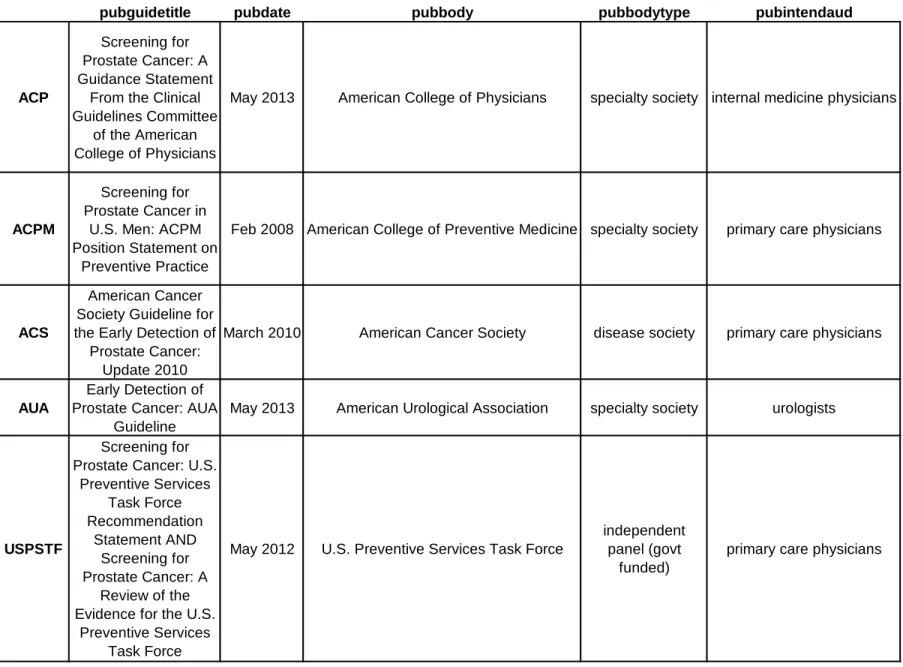
First, I established some baseline characteristics of the publishing bodies of these guidelines. Guidelines were published in 2008, 2010, 2012, and 2013 (two). There were several types of organizations represented; three of these bodies were specialty societies, one was a disease society, and one was a government funded, independent panel. Four of the clinical practice guidelines were written for primary care providers, while only one was intended for specialists – in this case, urologists.
Acommon difficulty in producing trustworthy, unbiased guidelines is a lack of multidisciplinary involvement in the guideline development group. Unfortunately, most
guideline-producing committees are made up of members of a single-specialty society, who are predisposed to recommend guidelines that promote the interests of their own specialty
(Shaneyfelt, 2012). Shaneyfelt further remarks that this homogenous group composition leaves less room at the table for other important stakeholders, claiming that
Expertise is needed in both clinical and nonclinical disciplines (eg, methodological experts, decision scientists, health economists)… expertise should include both
generalists and subspecialists because each possesses different vantage points for the same clinical problem... generalist input is needed to temper the recommendations for patients with multiple morbidities…[and] patients or patient representative should be included…because they offer perspectives that clinicians and scientists can’t (2012: 1633-1634).
Having more diverse guideline development groups tends to mitigate individual biases, leading to more evidence-based guidelines (Shekelle, Woolf, Eccles & Grimshaw, 1999).
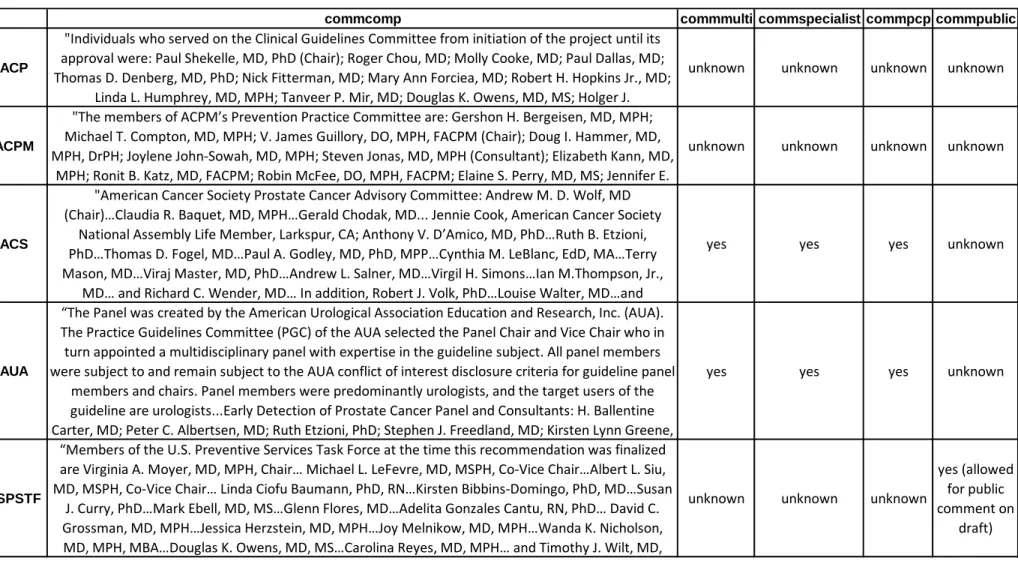
All five of the guideline-issuing organizations named their committee members in their recommendations, which had no members in common with any other guideline evaluated in this paper. Three of the five guidelines did not specify whether their guideline development
committee had multidisciplinary membership; only the ACS and AUA recommendation
statements indicated the involvement of primary care physicians as well as specialists. Finally, only one guideline statement allowed for public commenting on the recommendation draft; no others reported involving the public in the CPG development process.
Evidence review process (Table 4)
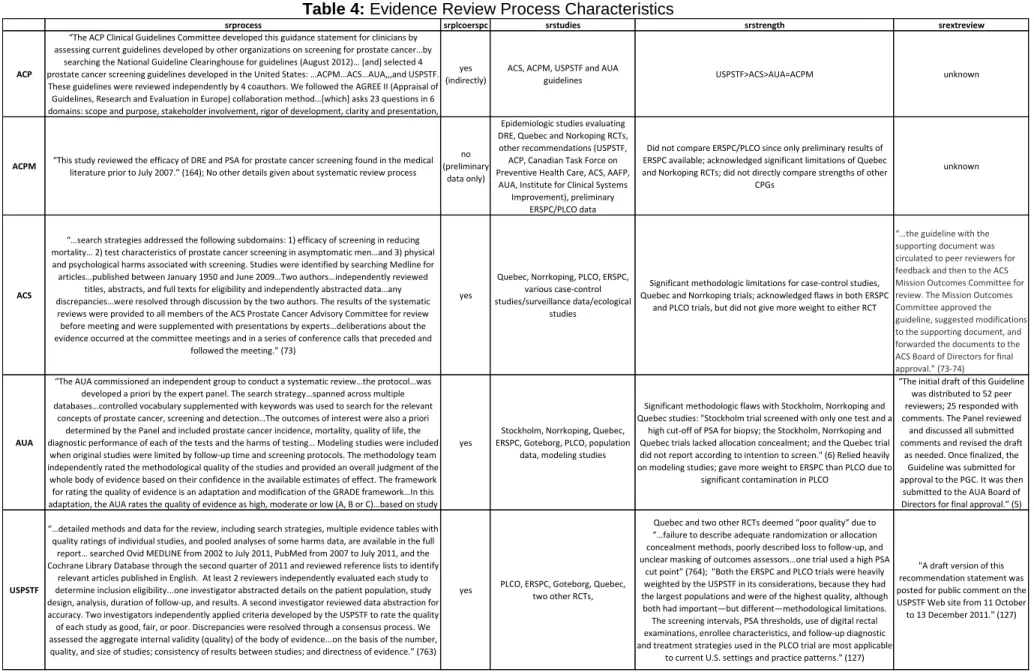
Four of the guideline-developing bodies conducted their own systematic review of the literature; the remaining organization, the American College of Physicians, relied solely on review of other clinical practice guidelines available at the time when producing their own
(ACPM) gave no details of its review process, stating that the study “…reviewed the efficacy of DRE and PSA for prostate cancer screening found in the medical literature prior to July 2007.”
Three guideline groups included the large, randomized PLCO and ERSPC trials; one group indirectly considered these trials (by way of reviewing other guidelines that had included the results of these studies in their deliberation), and one group did not include these RCTs in its evidence review, since only preliminary data from them were available at the time of its guideline development.
Of the three groups including PLCO/ERSPC trials, which had seemingly conflicting results (with PLCO showing no statistically significant difference in prostate cancer mortality between screening and control groups, and ERSPC showing a slight reduction in prostate cancer mortality in the screening group), one weighted PLCO more heavily, one weighted ERSPC more heavily, and the remaining group weighted the two studies equally.
Finally, only three of the five CPG development groups evaluated in this paper included details of an external review process; two of these three circulated guidelines to peer reviewers, whereas the remaining group allowed public commenting on the recommendation draft before final publication of the guideline.
Recommendation statements (Table 5)
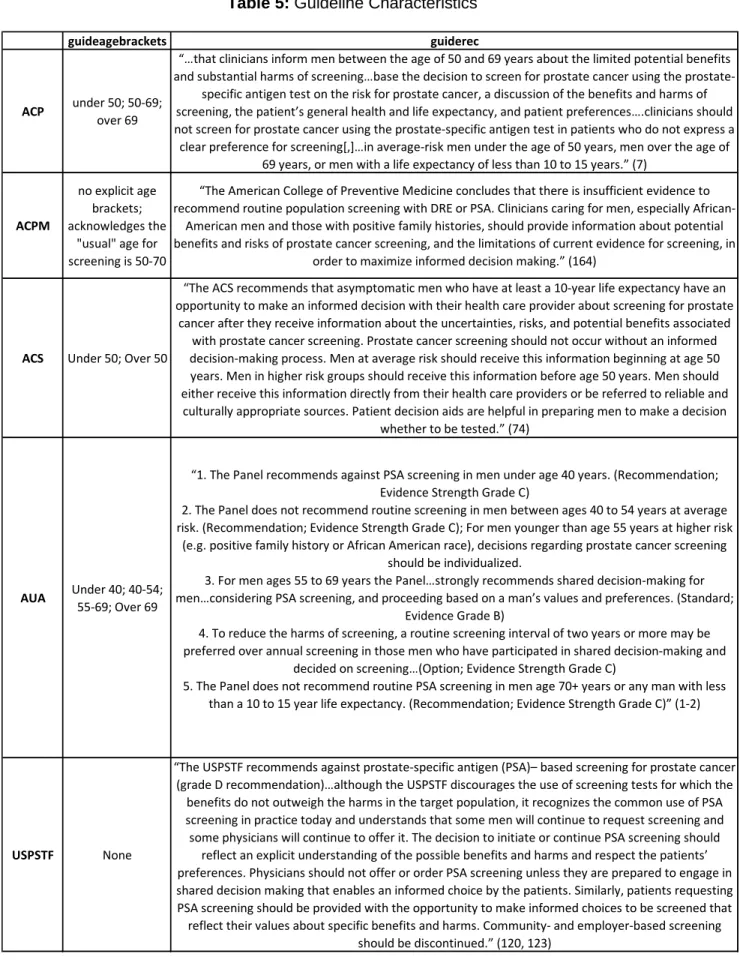
Recommendation statements were quite diverse, with no two guidelines using the same age brackets in their recommendations, although three of the guidelines did recommend that men under 50 receive information regarding screening in order to facilitate informed decision-making. Overall, one guideline recommended strongly against PSA-based screening for prostate cancer (USPSTF), one claimed that there was insufficient evidence to make a
recommendation (ACPM), and the remaining three advocated shared decision-making based on patient preferences and values, albeit with different age brackets used in their
informed or shared decision-making, and none advocated population-based screening without patients being informed about the benefits and harms of prostate cancer screening.
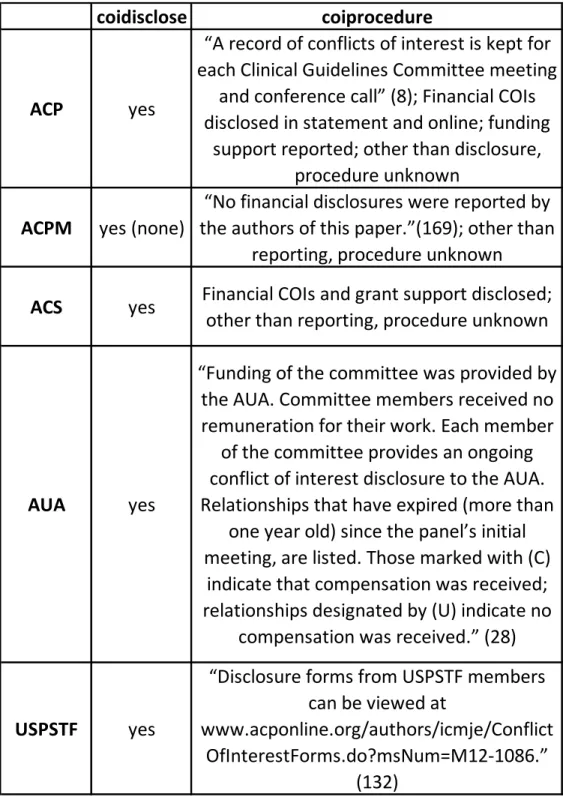
Conflicts of Interest (Table 6)
One of the largest sources of mistrust in CPGs is conflict of interest (COI), which can be either financial or intellectual in nature. Financial COIs seem to be easier to grasp; they include any relationship, direct or indirect, in which a member of a CPG development group stands to gain financially from the guideline being developed. Intellectual COIs, on the other hand, are a little more challenging to define, but can bias guidelines just as much as do their financial counterparts. According to the ACP, examples of nonfinancial COIs include
…leadership or close involvement in an advocacy group that stands to gain from a Clinical Guidelines Committee member’s opinion; being a chair or member of another guideline committee relevant to the topic under discussion; acting as an expert witness or having a membership…or relationship…with organizations and funding bodies…or a membership in a lobbying or advocacy organization; writing or consulting for an
educational company; having personal relationships…with persons involved in the submission or evaluation of a paper…; and having personal convictions…related to a paper’s topic that may interfere with an unbiased publication process… (Qaseem, Snow, Owens & Shekelle, 2010: 195).
Discussion
Many interesting themes emerged out of my critical evaluation of these five “major” prostate cancer screening guidelines. In general, it was interesting to note that despite similar evidence bases, there were a variety of guideline statements, ranging from recommendations against PSA screening in all age groups (USPSTF) to insufficient evidence to make a
recommendation (ACPM) to identifying specific age ranges where prostate cancer screening might be appropriate (AUA). These findings are likely simultaneously based on and biased by the individual guidelines’ target audience; for example, the AUA’s reluctance to categorically recommend against screening may be in part due to the specialty’s case mix, which tends to be weighted toward patients with more aggressive prostatic cancer.
Differences in recommendations despite similar evidence also shed light on the important role of expert opinion, value judgments and other “non-evidence” that is taken into account when crafting a guideline statement. Only rarely in clinical practice guideline
development is the evidence so abundant and clear that no other input is needed; much more often, evidence gaps are traversed using the clinical judgment of experts, committee members and other reviewers. However, it is important that the role that these judgments play in the guideline development process be clearly delineated in order to provide transparency to
consumers of these guidelines (clinicians). This transparency was unfortunately lacking in most of the recommendation statements evaluated in this paper.
development groups should recognize the importance of timely updating of both systematic reviews of the literature as well as guideline statements, keeping in mind that clinical practice change can often lag behind the medical literature.
A major area in which bias can be minimized is CPG development group selection. Selection processes should strive to include generalists, subspecialists, economists,
epidemiologists, industry leaders, patients and other topic-specific stakeholders. Unfortunately, the majority of the publishing bodies studied in this paper either did not conduct such a process, or failed to report doing so. Ensuring this sort of multidisciplinary approach allows the
committee to hear all sides of complex, controversial issues, and to ensure that all parties feel invested in the final recommendation, a crucial component to guideline uptake by the larger medical community. Inclusion of diverse, issue-specific interest groups is often more compatible with an ad hoc structure of guideline development group, but similar principles can and should be applied to committees of all structures.
Minimizing the potential bias that COIs pose is a much more difficult issue to tackle. Many groups have touted transparency as the answer to dealing with financial COIs, but despite a growing trend in disclosure over the past decade, most guideline committees contain panel members with significant COIs of both financial and intellectual natures (Neuman, Korenstein, Ross & Keyhani, 2011). According to a recent study, less than 50% of the guidelines randomly screened provided any information on COIs; of those guidelines which provided this information, 71.4% of chairpersons and 90.5% of co-chairpersons had COIs (Kung, Miller and Mackowiak, 2012).
the selection of any members with COIs. While all these approaches have merit (and many are being implemented by select groups), it is naïve to think that we will completely eradicate COIs from guideline development. Instead, we should attempt to change the culture surrounding guidelines, making it clear that guidelines (and their authors) are subject to the same scrutiny applied to other medical and basic science research.
Conclusion
After delving into the most recently published, “major” prostate cancer screening guidelines and the controversy surrounding the issue, it is clear that each and every one of these recommendation-issuing bodies falls short of the IOM standards for developing trustworthy guidelines. Unfortunately, these findings seem to be indicative of the majority of clinical practice guidelines. A 2011 study by Kung, Miller and Mackowiak screened 130
randomly selected guidelines from the National Guideline Clearinghouse for adherence to 18 of the 25 IOM standards; only 49.1% of these CPGs met >50% of the standards assessed, with subspecialty-developed guidelines performing the poorest (only 39.0% met >50% of standards).
So why do these bodies fare so poorly when compared to IOM criteria? One partial explanation is chronological in nature: the IOM released their criteria for developing trustworthy clinical practice guidelines in 2011, so it is conceivable that medical society guidelines were either developed before the IOM standards were released, or that guideline development groups were unaware that these standards existed. However, a second explanation is more likely for guidelines published after the IOM’s report: IOM standards for CPG development have not gained sufficient traction among the medical and scientific communities. Tensions between specialists and primary care providers, and population- and individual-based approaches, as well as both financial and intellectual special interests constantly threaten to bias
is a field full of more questions than answers. The fact remains, however, that just as health care providers have lagged behind CPG development group recommendations in the quantity and quality of informed/shared decision-making interactions with patients before prostate cancer screening (Appendix A), development groups themselves have been hesitant to adopt the rigorous standards prescribed by the IOM for trustworthy guideline development.
The decision to undergo prostate cancer screening, like most medical decisions, should draw upon CPGs, clinical judgment and patient values; guidelines should be used as a
component of, rather than in place of, the shared decision-making of patient-physician dyads. At their best, CPGs “…are supposedly evidence based, but the published evidence…is rarely sufficient to fill the evidence gap…a guideline [can] easily become a substitute for the evidence it is supposed to represent” (Gale, 2011: 1). As prostate cancer screening demonstrates, well-intentioned CPG-publishing bodies drawing on similar evidence can come to very different conclusions regarding the state of the literature. Because they are so heavily relied upon for clinical decision-making, it is imperative that CPG-issuing groups strive to be transparent in all aspects of the guideline-crafting process, from beginning to end. Despite these efforts, it remains of utmost importance that physicians critically evaluate these multiple
Table 1: Description of Variables
Variable Name
Input Type
Variable Description
pubguidetitle
Text
Title of publication(s)
pubdate
Date
Date published
pubbody
Text
Name of publishing body
pubbodytype
Text
Publishing body type
pubintendaud
Text
Intended audience (who the guideline is intended for)
commcomp
text
Self-described committee composition
commmulti
yes/no
Is the committee multidisciplinary?
commspecialist
yes/no
Presence/Absence of specialists on the committee
commpcp
yes/no
Presence/Absence of PCPs on the committee
commpublic
yes/no
Presence/Absence of public involvement in guideline development
srprocess
text
Self-described systematic review process
srplcoerspc
yes/no
Included PLCO & ERSPC trials in review?
srstudies
text
Studies cited
srstrength
text
Strength of studies cited
srextreview
text
External review process (if applicable)
guideagebrackets
age ranges
Age distinctions for guidelines
guiderec
text
Guideline recommendation
Table 2: Publication Characteristics
pubguidetitle pubdate pubbody pubbodytype pubintendaud
ACP
Screening for Prostate Cancer: A Guidance Statement
From the Clinical Guidelines Committee
of the American College of Physicians
May 2013 American College of Physicians specialty society internal medicine physicians
ACPM
Screening for Prostate Cancer in
U.S. Men: ACPM Position Statement on
Preventive Practice
Feb 2008 American College of Preventive Medicine specialty society primary care physicians
ACS
American Cancer Society Guideline for the Early Detection of
Prostate Cancer: Update 2010
March 2010 American Cancer Society disease society primary care physicians
AUA
Early Detection of Prostate Cancer: AUA
Guideline
May 2013 American Urological Association specialty society urologists
USPSTF
Screening for Prostate Cancer: U.S.
Preventive Services Task Force Recommendation
Statement AND Screening for Prostate Cancer: A
Review of the Evidence for the U.S.
Preventive Services Task Force
May 2012 U.S. Preventive Services Task Force
independent panel (govt
funded)
Table 3: CPG Development Committee Characteristics
commcomp commmulti commspecialist commpcp commpublic
ACP
"Individuals who served on the Clinical Guidelines Committee from initiation of the project until its approval were: Paul Shekelle, MD, PhD (Chair); Roger Chou, MD; Molly Cooke, MD; Paul Dallas, MD; Thomas D. Denberg, MD, PhD; Nick Fitterman, MD; Mary Ann Forciea, MD; Robert H. Hopkins Jr., MD;
Linda L. Humphrey, MD, MPH; Tanveer P. Mir, MD; Douglas K. Owens, MD, MS; Holger J.
unknown unknown unknown unknown
ACPM
"The members of ACPM’s Prevention Practice Committee are: Gershon H. Bergeisen, MD, MPH; Michael T. Compton, MD, MPH; V. James Guillory, DO, MPH, FACPM (Chair); Doug I. Hammer, MD, MPH, DrPH; Joylene John-Sowah, MD, MPH; Steven Jonas, MD, MPH (Consultant); Elizabeth Kann, MD,
MPH; Ronit B. Katz, MD, FACPM; Robin McFee, DO, MPH, FACPM; Elaine S. Perry, MD, MS; Jennifer E.
unknown unknown unknown unknown
ACS
"American Cancer Society Prostate Cancer Advisory Committee: Andrew M. D. Wolf, MD (Chair)…Claudia R. Baquet, MD, MPH…Gerald Chodak, MD... Jennie Cook, American Cancer Society
National Assembly Life Member, Larkspur, CA; Anthony V. D’Amico, MD, PhD…Ruth B. Etzioni, PhD…Thomas D. Fogel, MD…Paul A. Godley, MD, PhD, MPP…Cynthia M. LeBlanc, EdD, MA…Terry Mason, MD…Viraj Master, MD, PhD…Andrew L. Salner, MD…Virgil H. Simons…Ian M.Thompson, Jr.,
MD… and Richard C. Wender, MD… In addition, Robert J. Volk, PhD…Louise Walter, MD…and
yes yes yes unknown
AUA
“The Panel was created by the American Urological Association Education and Research, Inc. (AUA). The Practice Guidelines Committee (PGC) of the AUA selected the Panel Chair and Vice Chair who in turn appointed a multidisciplinary panel with expertise in the guideline subject. All panel members were subject to and remain subject to the AUA conflict of interest disclosure criteria for guideline panel
members and chairs. Panel members were predominantly urologists, and the target users of the guideline are urologists...Early Detection of Prostate Cancer Panel and Consultants: H. Ballentine Carter, MD; Peter C. Albertsen, MD; Ruth Etzioni, PhD; Stephen J. Freedland, MD; Kirsten Lynn Greene,
yes yes yes unknown
USPSTF
“Members of the U.S. Preventive Services Task Force at the time this recommendation was finalized are Virginia A. Moyer, MD, MPH, Chair… Michael L. LeFevre, MD, MSPH, Co-Vice Chair…Albert L. Siu, MD, MSPH, Co-Vice Chair… Linda Ciofu Baumann, PhD, RN…Kirsten Bibbins-Domingo, PhD, MD…Susan
J. Curry, PhD…Mark Ebell, MD, MS…Glenn Flores, MD…Adelita Gonzales Cantu, RN, PhD… David C. Grossman, MD, MPH…Jessica Herzstein, MD, MPH…Joy Melnikow, MD, MPH…Wanda K. Nicholson, MD, MPH, MBA…Douglas K. Owens, MD, MS…Carolina Reyes, MD, MPH… and Timothy J. Wilt, MD,
unknown unknown unknown
yes (allowed for public comment on
Table 4: Evidence Review Process Characteristics
srprocess srplcoerspc srstudies srstrength srextreview
ACP
“The ACP Clinical Guidelines Committee developed this guidance statement for clinicians by assessing current guidelines developed by other organizations on screening for prostate cancer…by
searching the National Guideline Clearinghouse for guidelines (August 2012)… [and] selected 4 prostate cancer screening guidelines developed in the United States: …ACPM…ACS…AUA,,,and USPSTF. These guidelines were reviewed independently by 4 coauthors. We followed the AGREE II (Appraisal of Guidelines, Research and Evaluation in Europe) collaboration method…[which] asks 23 questions in 6 domains: scope and purpose, stakeholder involvement, rigor of development, clarity and presentation,
yes (indirectly)
ACS, ACPM, USPSTF and AUA
guidelines USPSTF>ACS>AUA=ACPM unknown
ACPM “This study reviewed the efficacy of DRE and PSA for prostate cancer screening found in the medical
literature prior to July 2007.” (164); No other details given about systematic review process
no (preliminary
data only)
Epidemiologic studies evaluating DRE, Quebec and Norkoping RCTs, other recommendations (USPSTF, ACP, Canadian Task Force on Preventive Health Care, ACS, AAFP,
AUA, Institute for Clinical Systems Improvement), preliminary
ERSPC/PLCO data
Did not compare ERSPC/PLCO since only preliminary results of ERSPC available; acknowledged significant limitations of Quebec and Norkoping RCTs; did not directly compare strengths of other
CPGs
unknown
ACS
“…search strategies addressed the following subdomains: 1) efficacy of screening in reducing mortality… 2) test characteristics of prostate cancer screening in asymptomatic men…and 3) physical and psychological harms associated with screening. Studies were identified by searching Medline for articles…published between January 1950 and June 2009…Two authors…independently reviewed
titles, abstracts, and full texts for eligibility and independently abstracted data…any discrepancies…were resolved through discussion by the two authors. The results of the systematic reviews were provided to all members of the ACS Prostate Cancer Advisory Committee for review before meeting and were supplemented with presentations by experts…deliberations about the evidence occurred at the committee meetings and in a series of conference calls that preceded and
followed the meeting.” (73)
yes
Quebec, Norrkoping, PLCO, ERSPC, various case-control studies/surveillance data/ecological
studies
Significant methodologic limitations for case-control studies, Quebec and Norrkoping trials; acknowledged flaws in both ERSPC
and PLCO trials, but did not give more weight to either RCT
“…the guideline with the supporting document was circulated to peer reviewers for feedback and then to the ACS Mission Outcomes Committee for review. The Mission Outcomes Committee approved the guideline, suggested modifications to the supporting document, and forwarded the documents to the ACS Board of Directors for final approval.” (73-74)
AUA
“The AUA commissioned an independent group to conduct a systematic review…the protocol…was developed a priori by the expert panel. The search strategy…spanned across multiple databases…controlled vocabulary supplemented with keywords was used to search for the relevant
concepts of prostate cancer, screening and detection…The outcomes of interest were also a priori determined by the Panel and included prostate cancer incidence, mortality, quality of life, the diagnostic performance of each of the tests and the harms of testing… Modeling studies were included
when original studies were limited by follow-up time and screening protocols. The methodology team independently rated the methodological quality of the studies and provided an overall judgment of the
whole body of evidence based on their confidence in the available estimates of effect. The framework for rating the quality of evidence is an adaptation and modification of the GRADE framework…In this adaptation, the AUA rates the quality of evidence as high, moderate or low (A, B or C)…based on study
yes
Stockholm, Norrkoping, Quebec, ERSPC, Goteborg, PLCO, population
data, modeling studies
Significant methodologic flaws with Stockholm, Norrkoping and Quebec studies: "Stockholm trial screened with only one test and a
high cut-off of PSA for biopsy; the Stockholm, Norrkoping and Quebec trials lacked allocation concealment; and the Quebec trial did not report according to intention to screen." (6) Relied heavily on modeling studies; gave more weight to ERSPC than PLCO due to
significant contamination in PLCO
“The initial draft of this Guideline was distributed to 52 peer reviewers; 25 responded with comments. The Panel reviewed
and discussed all submitted comments and revised the draft
as needed. Once finalized, the Guideline was submitted for approval to the PGC. It was then
submitted to the AUA Board of Directors for final approval.” (5)
USPSTF
“…detailed methods and data for the review, including search strategies, multiple evidence tables with quality ratings of individual studies, and pooled analyses of some harms data, are available in the full
report… searched Ovid MEDLINE from 2002 to July 2011, PubMed from 2007 to July 2011, and the Cochrane Library Database through the second quarter of 2011 and reviewed reference lists to identify
relevant articles published in English. At least 2 reviewers independently evaluated each study to determine inclusion eligibility...one investigator abstracted details on the patient population, study design, analysis, duration of follow-up, and results. A second investigator reviewed data abstraction for accuracy. Two investigators independently applied criteria developed by the USPSTF to rate the quality of each study as good, fair, or poor. Discrepancies were resolved through a consensus process. We assessed the aggregate internal validity (quality) of the body of evidence...on the basis of the number, quality, and size of studies; consistency of results between studies; and directness of evidence.” (763)
yes PLCO, ERSPC, Goteborg, Quebec, two other RCTs,
Quebec and two other RCTs deemed “poor quality” due to “…failure to describe adequate randomization or allocation concealment methods, poorly described loss to follow-up, and unclear masking of outcomes assessors…one trial used a high PSA
cut point” (764); "Both the ERSPC and PLCO trials were heavily weighted by the USPSTF in its considerations, because they had the largest populations and were of the highest quality, although both had important—but different—methodological limitations. The screening intervals, PSA thresholds, use of digital rectal examinations, enrollee characteristics, and follow-up diagnostic and treatment strategies used in the PLCO trial are most applicable
to current U.S. settings and practice patterns." (127)
"A draft version of this recommendation statement was posted for public comment on the USPSTF Web site from 11 October
Table 5: Guideline Characteristics
guideagebrackets guiderec
ACP under 50; 50-69;
over 69
“…that clinicians inform men between the age of 50 and 69 years about the limited potential benefits and substantial harms of screening…base the decision to screen for prostate cancer using the
prostate-specific antigen test on the risk for prostate cancer, a discussion of the benefits and harms of screening, the patient’s general health and life expectancy, and patient preferences….clinicians should not screen for prostate cancer using the prostate-specific antigen test in patients who do not express a clear preference for screening[,]…in average-risk men under the age of 50 years, men over the age of
69 years, or men with a life expectancy of less than 10 to 15 years.” (7)
ACPM
no explicit age brackets; acknowledges the
"usual" age for screening is 50-70
“The American College of Preventive Medicine concludes that there is insufficient evidence to recommend routine population screening with DRE or PSA. Clinicians caring for men, especially
African-American men and those with positive family histories, should provide information about potential benefits and risks of prostate cancer screening, and the limitations of current evidence for screening, in
order to maximize informed decision making.” (164)
ACS Under 50; Over 50
“The ACS recommends that asymptomatic men who have at least a 10-year life expectancy have an opportunity to make an informed decision with their health care provider about screening for prostate
cancer after they receive information about the uncertainties, risks, and potential benefits associated with prostate cancer screening. Prostate cancer screening should not occur without an informed decision-making process. Men at average risk should receive this information beginning at age 50 years. Men in higher risk groups should receive this information before age 50 years. Men should either receive this information directly from their health care providers or be referred to reliable and culturally appropriate sources. Patient decision aids are helpful in preparing men to make a decision
whether to be tested.” (74)
AUA Under 40; 40-54;
55-69; Over 69
“1. The Panel recommends against PSA screening in men under age 40 years. (Recommendation; Evidence Strength Grade C)
2. The Panel does not recommend routine screening in men between ages 40 to 54 years at average risk. (Recommendation; Evidence Strength Grade C); For men younger than age 55 years at higher risk
(e.g. positive family history or African American race), decisions regarding prostate cancer screening should be individualized.
3. For men ages 55 to 69 years the Panel…strongly recommends shared decision-making for men…considering PSA screening, and proceeding based on a man’s values and preferences. (Standard;
Evidence Grade B)
4. To reduce the harms of screening, a routine screening interval of two years or more may be preferred over annual screening in those men who have participated in shared decision-making and
decided on screening…(Option; Evidence Strength Grade C)
5. The Panel does not recommend routine PSA screening in men age 70+ years or any man with less than a 10 to 15 year life expectancy. (Recommendation; Evidence Strength Grade C)” (1-2)
USPSTF None
“The USPSTF recommends against prostate-specific antigen (PSA)– based screening for prostate cancer (grade D recommendation)…although the USPSTF discourages the use of screening tests for which the benefits do not outweigh the harms in the target population, it recognizes the common use of PSA screening in practice today and understands that some men will continue to request screening and some physicians will continue to offer it. The decision to initiate or continue PSA screening should
reflect an explicit understanding of the possible benefits and harms and respect the patients’ preferences. Physicians should not offer or order PSA screening unless they are prepared to engage in shared decision making that enables an informed choice by the patients. Similarly, patients requesting PSA screening should be provided with the opportunity to make informed choices to be screened that reflect their values about specific benefits and harms. Community- and employer-based screening
Table 6: Conflict of Interest Disclosure and Procedure
coidisclose
coiprocedure
ACP
yes
“A record of conflicts of interest is kept for
each Clinical Guidelines Committee meeting
and conference call” (8); Financial COIs
disclosed in statement and online; funding
support reported; other than disclosure,
procedure unknown
ACPM
yes (none)
“No financial disclosures were reported by
the authors of this paper.”(169); other than
reporting, procedure unknown
ACS
yes
Financial COIs and grant support disclosed;
other than reporting, procedure unknown
AUA
yes
“Funding of the committee was provided by
the AUA. Committee members received no
remuneration for their work. Each member
of the committee provides an ongoing
conflict of interest disclosure to the AUA.
Relationships that have expired (more than
one year old) since the panel’s initial
meeting, are listed. Those marked with (C)
indicate that compensation was received;
relationships designated by (U) indicate no
compensation was received.” (28)
USPSTF
yes
“Disclosure forms from USPSTF members
can be viewed at
www.acponline.org/authors/icmje/Conflict
OfInterestForms.do?msNum=M12-1086.”
References
Gale, EA. (2011). Conflicts of interest in guideline panel members. BMJ. 2011; 343:d5728. DOI: 10.1136/bmj.d5728
Institute of Medicine (IOM). (2011). Clinical Practice Guidelines We Can Trust: Report Brief. Washington, D.C. Retrieved April 4, 2013, from http://www.iom.edu/Reports/2011/Clinical-Practice-Guidelines-We-Can-Trust/Standards.aspx
Kuehn, BM. (2011). IOM sets out “gold standard” practices for creating guidelines, systematic reviews. JAMA. 2011; 305(18): 1846-1848. DOI: 10.1001/jama.2011.597
Kung, J, Miller, RR, Mackowiak, PA. (2012). Failure of clinical practice guidelines to meet institute of medicine standards: two more decades of little, if any, progress. Arch Intern Med.
2012; 172(21): 1628-1633. DOI: 10.1001/2013.jamainternmed.56
Neuman, J, Korenstein, D, Ross, JS, Keyhani, S. (2011). Prevalence of financial conflicts of interest among panel members producing clinical practice guidelines in Canada and United States: cross sectional study. BMJ. 2011; 343:d5621. DOI:10.1136/bmj.d5621
Nissen, SE. (2011). Can We Trust Cardiovascular Practice Guidelines? Arch Intern Med. 2011; 171(6): 584-585.
Qaseem, A, Snow, V, Owens, DK, Shekelle, P. (2010). The Development of Clinical Practice Guidelines and Guidance Statements of the American College of Physicians: Summary of Methods. Ann Intern Med. 2010; 153(3): 194-199. DOI: 10.1059/0003-4819-153-3-201008030-00010.
Schmidt, C. (2013). Conflicting clinical guidelines. J Natl Cancer Inst. 2013; 105(1): 2-3. DOI: 10.1093/jnci/djs630.
Shaneyfelt, T. (2012). In Guidelines We Cannot Trust. Arch Intern Med. 2012; 172(21): 1633-1634. DOI: 10.1001/.jamainternmed.335
APPENDIX A: Systematic Review
Decision-Making in Prostate Cancer Screening: A Review of the Literature
Introduction
In May 2012, the U.S. Preventive Services Task Force (USPSTF) released its most recent guidelines for prostate cancer screening; in its statement, the Task Force recommended against population-based screening, giving prostate-specific antigen (PSA) testing a Grade D recommendation for men of all ages. In issuing its guideline, the USPSTF cited a lack of evidence that the benefits of PSA-based prostate cancer screening outweighed the
demonstrable harms of such testing.1 The USPSTF’s recommendation did not preclude the use of PSA testing altogether; however, the Task Force insisted that physicians “not offer or order PSA screening unless they are prepared to engage in shared decision making that enables an informed choice by patients” and that patients “be provided with the opportunity to make informed choices…that reflect their values about specific benefits and harms.”1
Despite these recommendations, there is growing evidence that providers continue to offer prostate cancer screening without engaging in the type of shared decision-making the USPSTF deems essential to informed patient choice. Many patients report that their health care provider failed either to provide sufficient information regarding the harms of screening or to ask for patient input when deciding whether to undergo screening; even “well-informed” patients consistently demonstrate poor knowledge, and overestimate incidence of cancer, mortality, and predictive value of PSA testing.2
Methods
I performed a review of the literature, searching MEDLINE and Web of Science
databases for relevant articles in English from 4/20/2008 to 4/20/2013, the date of the search. MeSH terms were chosen through consultation with a research librarian, as well as from key sentinel articles found during preliminary searches. My search strategy included the use of both MeSH terms and selected keywords; my exact search string was:
((physician-patient relations OR patient participation OR communication OR
decision making) AND (prostatic neoplasms OR PSA OR prostate-specific
antigen) AND (mass screening OR early detection of cancer))
The search strategy detailed above yielded 164 MEDLINE and 42 Web of Science articles (206 articles total). From these 206 publications, I methodically selected articles which were deemed relevant to the key objective, which was elucidating the roles patients and providers play in prostate cancer screening decision making. During my first stage of review, I excluded articles on the basis of title alone; reasons articles were excluded during this stage were 1) lack of relevance to the research question 2) duplicate publications found in both databases 3) clinical screening guidelines or commentaries on guidelines 4) publications regarding specific decision aids. After this stage, the 46 remaining publications were evaluated on the basis of their abstracts. After examining the abstracts, I excluded another 30
lack of access to the full-text publication, and one was excluded since it included the same results as another study included in this final stage (of which I picked the publication dedicated solely to prostate cancer screening, and excluded the article that dealt with a myriad of cancer screenings).
Results
The twelve remaining publications included four cross-sectional surveys of patients, four cross-sectional surveys of providers, one cross-sectional survey of both patients and providers, and three qualitative studies. Three publications addressed the decision making process of African American men, a high risk group who tends to have both a greater incidence and more aggressive forms of prostate cancer. Finally, four of the publications surveyed either providers or patients on a national level, while eight sampled from specific geographic areas within the United States.
Patient Surveys
Upon reviewing the literature, I found four cross-sectional surveys regarding patients and the prostate cancer screening decision-making process; summaries of the aims, methods, findings and limitations of each study are detailed below.
Allen et al.3
Allen et al. surveyed 812 men at 12 separate worksites in Massachusetts from 2006-2007 regarding their involvement in the decision-making process, as well as their knowledge of prostate cancer screening, decisional consistency, decision self-efficacy and social influences on the decision-making process. They found that only 46% of men reported having a
Furthermore, physician discussion was correlated with increased prostate cancer screening knowledge as well as patient decisional self-efficacy.
Hoffman et al.4
Hoffman et al. aimed to characterize patient screening decision-making while also evaluating factors associated with the process. They conducted a telephone survey from
November 2006 to May 2007 of 375 men who had either undergone or discussed PSA testing in the past two years. When they occurred, prescreening discussions were initiated by the
provider 64.6% of the time. 30.1% of patients reported being tested without ever discussing screening before hand. 54.8% of patients were asked for their screening preference, and only 20.6% of physician-patient discussions addressed both pros and cons of testing before eliciting testing preference. However, 60.1% of patients still felt as though they had taken part in shared decision-making, and performance on knowledge questions was inversely related to the
perception of being informed. This study was especially susceptible to recall bias since it relied on patient self-report, often two or more years after discussing or undergoing PSA testing, and was limited in its generalizability since a large number of the study participants were affluent, married and of Caucasian descent.
Ross et al.5
performed without their knowledge. In addition, this study did not address the length or quality of these prescreening discussions, only whether or not they occurred. Finally, the study did not differentiate whether the providers serving this population were primary care physicians or specialists.
Williams et al.6
Williams et al. attempted to assess African American men’s desired level of engagement in shared decision-making regarding prostate cancer screening, as well socio-demographic characteristics associated with shared decision-making preferences. The authors conducted telephone interviews of 286 African American members of the Prince Hall Masons (D.C. area), ages 40-70. In these interviews, they assessed prostate cancer knowledge, decisional conflict (using DCS), satisfaction with their screening decision, and preferred level of shared decision-making (using Degner SDM, where 1. the doctor alone should decide; 2. mostly the doctor should decide; 3. the doctor and you should decide equally; 4. mostly you should decide; 5. you alone should decide); they later collapsed this scale to either doctor (1 & 2), shared (3), or patient (4 & 5). They found that 57% of patients preferred shared decision-making, 36% preferred making their own decision, and only 7% wanted the doctor to make the decision. Older men, college graduates, and more educated persons were more likely to prefer shared decision-making, whereas younger men were more likely to prefer to make the decision themselves. The study, while attempting to measure decision-making engagement in the African American population, picked a quite homogenous population to study, since members of the Prince Hall Masons are mostly older middle to upper middle class African American men. The result of studying this particular population is that the study may not apply to the African American population as a whole.
A limitation of all four studies was that they relied on patient self-report to characterize the decision-making process, making all four studies susceptible to potential recall bias. In addition, the studies conducted by Allen et al.3 and Williams et al.6 were confined to a well-defined geographic region (Massachusetts and Washington D.C., respectively), and are thus limited in their generalizability to the nation.
Provider Surveys
I also retrieved four cross-sectional descriptive surveys of physician attitudes toward the shared decision-making process, and have briefly summarized each study’s aims, methods, findings and limitations below.
Davis et al.7
Davis et al. assessed primary care provider attitudes toward shared decision making using a cross-sectional descriptive survey of 135 interns, residents, academic and community clinicians in the Washington D.C. area from 2007-2008. The vast majority of providers surveyed favored either shared decision-making or that patients made the decision to undergo screening. More than half of providers were in favor of annual PSA testing, despite only a little over a third of providers believing that the sensitivity and specificity of the test was adequate. More than half of providers espoused barriers to shared decision making such as competing health
demands, lack of time, and a low level of patient interest. This study was limited by its relatively low sample size, and might not be generalizable beyond the D.C. area.
Hall et al.8
recommendation of screening and other practice and physician related factors. 80.1% of physicians in this study reported discussing screening with all of their patients; of these screeners, 64.1% encouraged PSA testing, 34.4% remained neutral, and only 1.5% discouraged testing. The authors identified two major groups, which they termed “routine screeners” and “non-routine screeners”: routine screeners were more likely to recommend PSA testing and engage in less prescreening discussion with their patients regardless of the
evidence, while non-routine screeners were more likely to be neutral or recommend against PSA testing, and encouraged prescreening discussions with their patients. The likelihood of providers routinely discussing prostate cancer was greater if the PCP was African American or Asian, and was directly related to the provider’s weekly patient volume and time spent in patient care.
Linder et al.9
Linder et al. explored the use of pre-screening discussions by providers to promote informed decision-making. In February 2004, the authors surveyed 63 PCPs from a university-based family medicine clinic and six community health centers in Houston. 20.6% of physicians reported not using prescreening discussions; these providers who did not routinely discuss prostate cancer screening with their patients generally ordered PSA tests anyway, while those who did discuss the benefits and harms of testing either let patients decide or actively
recommended testing. A limitation of this study was the fact that it took place in an academic setting, which affects the generalizability of the study to other rural or urban settings.
Volk et al.10
Volk et al. explored the use of prescreening discussion of benefits and harms by
Academy of Family Physicians National Research Network, allowing physicians to self-report their screening and discussion practices. The authors found 24.3% of family medicine
physicians routinely screened patients for prostate cancer without discussion, 22.6% discussed the pros and cons of screening and ultimately recommended PSA testing, 44.7% discussed pros and cons and allowed the patient to decide, 3.7 % discussed pros and cons but ultimately recommended against PSA screening, and 1.2% who did not discuss or recommend screening. Physicians who screened without discussion were less likely to practice at an academically affiliated site. Physicians who discussed pros and cons but ultimately allowed their patients to decide whether or not to undergo PSA testing were more likely to believe that patients had a right to know about the lack of evidence behind prostate cancer screening, whereas physicians who ordered PSA testing without discussion believed that patients wanted testing, and that discussion and education about the benefits and harms of screening was not required. This study was limited to family practitioners, who may have a different distribution of practice styles than primary care physicians in general.
Additional Comments
All four studies are limited by the data being self-reported by physicians, who may over- or underestimate the occurrence and/or quality of prescreening discussions; in order to
accurately evaluate how often discussions about prostate cancer screening take place, authors would need to directly measure their frequency, which is understandably difficult and time-consuming. In addition, the studies by Davis et al.7 and Linder et al.9 have limited
generalizability since they were conducted in specific geographic regions (Washington, D.C. and Houston, TX, respectively).
One cross-sectional, descriptive survey addressed both patient and provider factors influencing decision-making; it is summarized below.
Bowen et al.11
In 2004, Bowen et al. used a state-wide, population based survey of 1680 men and 345 primary care providers in order to determine the extent of informed decision making involved in prostate cancer screening from both the patient and provider perspective. 43.3% of men reported having PSA in the past year without discussing screening, whereas 74% of physicians reported “always or almost always” discussing risks and benefits of PSA testing. When these discussions did take place, 64% of providers reported discussing the test’s performance characteristics, but only 35% discussed more “downstream” issues, like side effects from prostate cancer treatment. The study did have a few major limitations, namely a response rate of only 43%, and the fact that the providers surveyed were not the same providers that the patients were reporting on, and vice-versa. Since this survey relied on both patient and provider self-report, it is subject to the same limitations as described above in the patient survey and provider survey sections; this survey was conducted in the state of Washington, which again may make the results of this survey not easily generalizable to the whole country.
Qualitative studies
Finally, three publications were qualitative in design. Again, I have summarized the aims, methods, findings and limitations of each study below.
Ferrante et al.12
few men in the study who reported some understanding of the benefits and risks of screening reported that this knowledge came from friends, family members or media sources and not through discussions with health care providers, and none of the men who had been screened reported being informed of the risks of PSA screening. The authors noted two types of men who were never screened, who they described as “passive avoiders”, who would have
undergone screening if their PCP recommended it, and “active refusers”, who chose to decline screening for various reasons, including the perception of low risk, skepticism about screening benefits, not wanting to know, and confusion over screening procedures. This study was mainly limited in its generalizability, as it was mostly composed of white, educated men.
Jones et al.13
Jones et al. explored how rural African American men make the decision to undergo prostate cancer screening, using a qualitative study design of one-on-one interviews of 17 African American men from central rural Virginia with no previous history of prostate cancer. One of the major themes that emerged from these interviews were limited education about prostate cancer; men in this study were unaware that African Americans in particular are at higher risk, and desired more information about prostate cancer. Another theme was the importance of family involvement; many men reported that family members were their most trusted advisors while going through the decision making process. The final theme that emerged was the necessity for trust in health care providers; those men whose providers recommended screening were much more likely to do it. While the study showed that men wanted more information regarded screening, this study did not address whether this indicated a desire for a more active role in decision-making. In addition, most men in the study were employed, insured, and had previous PSA screening, which all limit the study’s generalizability.
Leader et al. used a qualitative study of 146 patient-physician encounters at two general internal medicine practices and one family/community medicine practice in Philadelphia in order to measure the extent of informed decision making about prostate cancer screening. Audio recordings of these encounters were dual coded using IDM-9, which scored the content of prescreening discussions using nine elements of informed decision-making. The mean total IDM-9 score was 2.7, meaning that, on average, less than 3 elements related to informed decision making were discussed per encounter, and 15% of encounters had no discussion or informed decision-making. The most commonly discussed informed decision making elements were the nature and context of the decision (74% and 56%, respectively), and the least
discussed were the patient’s role (6%) and desire for input from trusted others (3%). The major limitation of this study was the fact that this IDM-9 measure had not been validated before this study, and was only able to measure the relative level of informed decision making taking place in these discussions.
Discussion
In comparing the findings of these 12 publications, I found many themes regarding providers, patients and the prostate cancer screening decision-making process. On the
provider side, multiple studies alluded to a natural tension between clinical practice guidelines at the time, which often stated that the evidence for prostate cancer screening was insufficient or incomplete, and the concern over repercussions of missing a cancer diagnosis. This tension manifested itself in a “pressure” felt by PCPs to screen patients for prostate cancer even though many clinicians had serious doubts about the evidence for doing so and the adequacy of the test. In addition, providers may have been hesitant to initiate conversations about PSA
different styles of practice also emerged; especially interesting were the trends of “routine screeners” and “non-routine screeners”, where routine screeners were pro-PSA but tended to not engage their patients in discussion, and non-routine screeners were either neutral or against PSA testing and were more likely to discuss the benefits and risks of screening.8 This is a disturbing trend: non-routine screeners seem to be practicing more in line with the clinical guidelines, which stress the importance of informed/shared decision-making, but routine
screeners seemed to continue their practicing styles even in the face of shifting clinical practice guidelines and evidence. This has implications for the effect of the most recent guidelines from the USPSTF on screening policy. The USPSTF recommends against population based
screening for prostate cancer using PSA, a recommendation routine screeners will likely be slow to adopt.1 Finally, these studies suggest that a group of physicians who do not discuss the harms and benefits of PSA screening continue to recommend testing because they feel that patients want testing and that educating patients is not worth it, from a practical standpoint.10 By taking this approach, where the focus is on the decision and not the decision-making process, physicians do a great disservice to their patients. According to the principle of patient
autonomy, patients have the right to know the benefits and harms of the diagnosis and treatment choices that are laid out before them even if such evidence would not lead to a change in decision. Until physicians treat prostate cancer screening as a serious medical decision akin to prostate cancer treatment, which emphasizes communication of benefits and harms, careful deliberation, and subsequent patient or shared decision-making based on patient values, prostate cancer screening will continue to be ordered as an add-on test, with many patients unaware of what they are getting themselves into or that they had a choice in the matter.
blame on poor communication on the part of the provider. However, it is also important that patients are activated consumers of health care, who understand the critical role they play in the decision-making process. Despite the popularity of using decision aids for difficult choices in the doctor’s office, using aids at that point may in fact be too late. If we want to promote more truly informed/shared decision-making, attempts should be made to tackle the problem
“upstream”, by activate patients in the community through education, awareness and other media campaigns about how to be their own patient advocate. These campaigns should educate patients about the choice behind prostate cancer screening, including the benefits and harms of screening, screening modalities, and test performance characteristics.
African American men, according to these studies, may require their own targeted approach. This group is at high risk of developing aggressive prostate cancer, and is often not aware that they are considered high-risk. They not only bear a greater burden of disease, but also have distinct factors that affect screening that differ from the general population. Trust in providers and the health care system is a major barrier to screening and decision-making in this population; according to Jones et al., these men are more likely to rely on family members and community leaders for information and advice13, so community interventions described above may need to be tailored to the way in which these men gather information and make decisions.
Conclusion
informed/shared decision-making. So, how can we improve the quality of these prescreening discussions?
References
1. Screening for Prostate Cancer: U.S. Preventive Services Task Force Recommendation Statement. AHRQ Publication No. 12-05160-EF-2, May 2012.
http://www.uspreventiveservicestaskforce.org/prostatecancerscreening/prostatefinalrs.htm#c ontents. Last accessed 2/4/13.
2. Hoffman RM, Lewis CL, Pignone MP, Couper MP, Barry MJ, Elmore JG, Levin CA, Van Hoewyk J, Zikmund-Fisher BJ. “Decision-making processes for breast, colorectal, and prostate cancer screening: the DECISIONS survey.” Med Decis Making. 2010 Sep-Oct; 30(5 Suppl):53S-64S. doi: 10.1177/0272989X10378701
3. Allen JD, Othus MK, Hart A, Jr, Mohllajee AP, Li Y, Bowen D. Do men make informed decisions about prostate cancer screening? baseline results from the "take the wheel" trial.
Med Decis Making. 2011;31(1):108-120. Accessed 4/20/2013 7:18:38 PM. doi: 10.1177/0272989X10369002; 10.1177/0272989X10369002.
4. Hoffman RM, Couper MP, Zikmund-Fisher BJ, et al. Prostate cancer screening decisions: Results from the national survey of medical decisions (DECISIONS study). Arch Intern Med. 2009; 169(17):1611-1618. Accessed 4/20/2013 7:18:38 PM. doi:
10.1001/archinternmed.2009.262; 10.1001/archinternmed.2009.262.
5. Ross LE, Powe BD, Taylor YJ, Howard DL. Physician-patient discussions with african american men about prostate cancer screening. Am J Mens Health. 2008; 2(2):156-164. Accessed 4/20/2013 7:18:38 PM. doi: 10.1177/1557988307309323;
10.1177/1557988307309323.
6. Williams RM, Zincke NL, Turner RO, et al. Prostate cancer screening and shared decision-making preferences among african-american members of the prince hall masons.
Psychooncology. 2008; 17(10):1006-1013. Accessed 4/20/2013 7:18:38 PM. doi: 10.1002/pon.1318; 10.1002/pon.1318.
7. Davis K, Haisfield L, Dorfman C, Krist A, Taylor KL. Physicians' attitudes about shared decision making for prostate cancer screening. Fam Med. 2011; 43(4):260-266. Accessed 4/20/2013 7:18:38 PM.
8. Hall IJ, Taylor YJ, Ross LE, Richardson LC, Richards TB, Rim SH. Discussions about prostate cancer screening between U.S. primary care physicians and their patients. J Gen Intern Med. 2011; 26(10):1098-1104. Accessed 4/20/2013 7:18:38 PM. doi:
10.1007/s11606-011-1682-0; 10.1007/s11606-011-1682-0.
9. Linder SK, Hawley ST, Cooper CP, Scholl LE, Jibaja-Weiss M, Volk RJ. Primary care physicians' reported use of pre-screening discussions for prostate cancer screening: A cross-sectional survey. BMC Fam Pract. 2009; 10:19-2296-10-19. Accessed 4/20/2013 7:18:38 PM. doi: 10.1186/1471-2296-10-19; 10.1186/1471-2296-10-19.
10. Volk RJ, Linder SK, Kallen MA, et al. Primary care physicians' use of an informed decision-making process for prostate cancer screening. Annals of Family Medicine. 2013; 11(1):67-74. doi: 10.1370/afm.1445.
11. Bowen DJ, Hannon PA, Harris JR, Martin DP. Prostate cancer screening and informed decision-making: Provider and patient perspectives. Prostate Cancer Prostatic Dis. 2011; 14(2):155-161. Accessed 4/20/2013 7:18:38 PM. doi: 10.1038/pcan.2010.55;
10.1038/pcan.2010.55.
12. Ferrante JM, Shaw EK, Scott JG. Factors influencing men's decisions regarding prostate cancer screening: A qualitative study. J Community Health. 2011; 36(5):839-844. Accessed 4/20/2013 7:18:38 PM. doi: 10.1007/s10900-011-9383-5; 10.1007/s10900-011-9383-5. 13. Jones RA, Steeves R, Williams I. How african american men decide whether or not to get
14. Leader A, Daskalakis C, Braddock CH,3rd, et al. Measuring informed decision making about prostate cancer screening in primary care. Med Decis Making. 2012; 32(2):327-336.
Accessed 4/20/2013 7:18:38 PM. doi: 10.1177/0272989X11410064; 10.1177/0272989X11410064.