Proyecto Puentes de Salud:
Implementation of Cardiovascular Screening in Rural Mexico Program and Evaluation Plan
By
Trista Snyder
A Master’s Paper submitted to the faculty of the University of North Carolina at Chapel Hill
In partial fulfillment of the requirements for the degree of Master of Public Health in
the Public Health Leadership Program.
Chapel Hill
2008
Abstract:
According to the World Health Organization, approximately 17.5 million people died of
cardiovascular disease in 2005.1 In Mexico, heart disease has steadily been increasing over the
past 30 years to become the leading cause of death in the country.2, 3 Because the burden of
disease is high for Coronary Heart Disease (CHD), the progression is slow and preventable,
treatment is effective, and the detection tools are cheap and accurate, both the National
Cholesterol Education Program and the United States Preventive Services Task Force have
recommended cholesterol screening in the adult population.
In particular, rural Mexican communities suffer from an identical CHD disease burden
compared to the national average, yet farming communities may have less access to care to
prevent and treat the disease; 75% of physicians in Mexico are located in sixteen urban areas. 4-6
For this reason, Proyecto Puentes de Salud (PPS) has conducted cardiovascular and associated
risk factor screening in the rural farming communities of Juventino Rosas, Mexico for the past
two years. Thus far, PPS planners have not examined the program screening implementation to determine if the current methods are the most effective means to achieve the program’s
Table of Contents:
Introduction ………...…4
Introduction to Proyecto Puentes de Salud ……….……..4
Rationale for Health Screenings in Juventino Rosas, Mexico ………...4
Rationale for Cardiovascular Screenings ……….……5
Screening Method Improvement ……….…….7
Review of the Literature ……….…..8
Practice Guidelines for Cardiovascular Screenings ……….…….9
Effective Cardiovascular Screening Methods in Mexico ………16
Program Plan ……….…..23
Program Context ……….…….…23
Program Theory ……….…. 27
Program Goals and Objectives ………....29
Logic Model ………...….32
Program Implementation ………..….…..33
Organizational Structure ………..37
Participating Clients and Recruitment ……….…37
Screening Methods ………..…38
Referrals ………..…40
Future Program Improvement ………...……..40
Evaluation Models and Evaluators ………..42
Evaluation Issues Identified by the Logic Model ……….…...44
Evaluation Design and Methods ……….….…45
Focus Group Results ………53
Conclusion ………64
Dissemination Plan ………..64
Summarization of the PPS Plan and Evaluation ………..64
Barriers and Limitations ………..65
Recommendations ……….…..66
Acknowledgements ………...……..68
Appendices ………..………69
Appendix A: Literature Review: Rationale for Focus Groups ...………69
Appendix B: Protocol of the Proyecto Puentes de Salud Focus Groups …………76
Appendix C: Program Objectives and Evaluation Planning Tables ...………78
Introduction
Introduction to Proyecto Puentes de Salud
Continual planning and evaluation are important to ensuring that a project is being run
efficiently and is truly achieving its primary goals. This manuscript is a program planning and
evaluation paper that examines Proyecto Puentes de Salud (PPS), a research, Spanish immersion,
and service learning project developed two years ago by medical students in response to an
expressed need by the rural community of Juventino Rosas, Mexico. PPS sends UNC-Chapel
Hill and Duke faculty, doctors, and first year medical students to Juventino Rosas for six to eight
weeks each summer. These volunteers provide free cardiovascular and HIV screenings and
education in small farming communities that have limited access to care. The aims of the
program are to improve community health and knowledge and to facilitate student leadership,
cultural competency, clinical aptitude, and research skills.
Since a main objective of PPS is to improve community health, I will focus my planning
and evaluation on the process of screening implementation in Mexico, examining the methods
that the project uses to achieve that purpose. I will assess the cardiovascular health screenings
because 1) cardiovascular disease, particularly arteriosclerosis and coronary heart disease (CHD),
is an escalating health problem with a growing burden of disease among Mexican residents and
immigrants to the US; and 2) currently, cardiovascular screening is our central outreach.
Rationale for Health Screenings in Juventino Rosas, Mexico
Juventino Rosas (JR) is a rural Central Mexican municipality in the state of Guanajuato
people. According to the World Bank, income per capita in Mexico is US $7,310. Poverty in
rural Central Mexico hovers around 30%, compared to 17% in urban Central areas.8
Access to care issues are prevalent in the JR area. The nearest tertiary care facility that
serves the municipality is approximately 45 minutes away by vehicle. Some villages have “casas de salud”, but these health centers only house reading material and rarely employ a lay health
worker. Although the government has recently built a new hospital in JR, officials have directed
the allotted funding almost entirely towards building infrastructure; verbal interviews with local
doctors and the municipal Secretary of Health and Education have revealed that the hospital does
not have money for equipment and has one ambulance, one defibrillator, and no ECG machine.
Few people go to the new hospital, partly because they do not trust the government, and partly
because the hospital does not have equipment. Waiting times for necessary surgeries at any
facility may be as long as three or four months.9, 10
In interviews, the local inhabitants cited socioeconomic, cultural, and political reasons for
the access to care problems.6 A need exists for accessible health services within the satellite
communities of JR. In the fall of 2005, community members from both JR and Carrboro, NC, the
sister city of JR in the US, expressed an interest in a medical project in Mexico. In response, Ian
Nelligan and Dr. Sandy Clark traveled to Mexico in 2005 to conduct a needs assessment, and
discovered overwhelming community support for cardiovascular health screenings and education.
Rationale for Cardiovascular Screenings
CHD is a disease with significant morbidity and mortality, and is defined as,
“symptomatic ischemic heart disease, including myocardial infarction, stable or unstable angina,
procedures.” 11
Major modifiable risk factors include increased low density lipoprotein
cholesterol (LDL-C), decreased high density lipoprotein cholesterol (HDL-C), elevated
triglycerides, hypertension, smoking, thrombogenic/hemostatic states, obesity, diabetes, physical
inactivity, and an atherogenic diet.11
Cardiovascular health in Mexican communities is important for numerous reasons. Heart
disease in Mexico has been steadily increasing over the past 30 years to become the leading
cause of death in the country. Mortality rates have climbed for diabetes, myocardial infarction,
and hypertension parallel to increases in obesity regionally and nationally.2, 3 According to the
American Heart Association and World Health Organization, the 2004 death rate for
cardiovascular disease was 273 per 100,000 population years for Mexican men 35-74 years old.
Although this number is lower than the US rate of 348 per 100,000 population years, the death
rate for Mexican women surpassed the rate for US women (197 compared to 177.)12
Although some urban investigations, such as the San Antonio Heart Study, have fairly
comprehensive data sets on the multiple variables that contribute to CHD in Mexico, little
information is available on the overall cardiovascular health of rural Mexicans.13 One small
study (n=73) demonstrated that the prevalence of the metabolic syndrome among rural Mexicans
was significantly higher than the prevalence at the national level.14 Data from a larger study have
revealed that the poor in rural Mexico have proportionate rates of overweight and obesity to the
national rates.4 Although the rates for risk factors may be similar, farming communities may
have less access to care to prevent and treat the disease; 75% of physicians in Mexico are located
in sixteen urban areas.5
studies key in on a few factors, looking only at overweight or hypertension and neglecting the
full range of cardiovascular risk factors.4, 15 Hispanics represent the fastest growing minority
group in the US, with a growth rate of 394% in North Carolina during the 1990s. A large
percentage of these immigrants hail from rural farming villages, therefore information on this
burgeoning patient population’s antecedent lifestyles and cardiovascular risks is necessary.16, 17
Screening Method Improvement
Some major assumptions are that the screening implementation is important in
maximizing the benefit to a community and that screening for cardiovascular risk factors does improve a society’s health. Using appropriate screening implementation is critical to improving a
population’s well-being for several reasons. Tailoring the methods to a specific community
structure maximizes public understanding of, acceptance of, and participation in a project and its
ideas. In any society, external factors such as politics, the environment, culture, and religion
influence the interaction between the local people and the program. If screenings do not adapt to
address these variables, the medical outreach may be ineffective.18-20
Screening for cardiovascular risk factors is an appropriate first step to improving a
society’s health. According to the American Heart Association and the Adult Treatment Panel III
(ATPIII) report, a third of persons who have a myocardial infarction are under the age of 65 and
a third die within 24 hours.21, 22 CHD is a condition that has a high burden of suffering, is
extremely prevalent, and that develops slowly, thus allowing for monitoring and detection of the
disease. Screening promotes early discovery of risk factors that can be modified through
after the irreparable damage has been done, particularly considering that the first symptom of
disease is often an infarction.
The 2007 United States Preventive Services Task Force (USPSTF) gave an “A”
recommendation for blood pressure screening in adults and lipid screening in men older than 35
years and women older than 45 years. The task force concluded that the substantial burden of
suffering produced by CHD, the existence of effective treatment, and the reliability of tests
support lipid screening and blood pressure monitoring in the general population.23, 24 Treating
and counseling at-risk individuals early in the disease progression should increase awareness of
CHD and its prevention, as well as reduce mortality, medical costs, and disabilities such as
congestive heart failure, angina, arrhythmias, and risk of sudden death.21
The goals of this paper are to outline the program, Proyecto Puentes de Salud, and to evaluate the project’s screening implementation, serving as a template for future project
improvements. The project initiated cardiovascular screenings to align with an expressed need of
the rural Mexican communities surrounding Juventino Rosas, however more structured planning
and thorough evaluation are necessary to maximize the effectiveness of the screenings. This
paper consists of a program plan and a program evaluation of Proyecto Puentes de Salud, with a
focus on the implementation of cardiovascular screening. A portion of the evaluation component
will include focus groups and qualitative data that explore project member attitudes and opinions
towards the effectiveness of screening methods.
Review of the Literature
the evidence-based guidelines for cholesterol screening in the general adult population? In addition, information on other programs’ screening practices would also be useful to PPS,
therefore I posed a second question: In cardiovascular screening programs that have been
implemented in rural Mexican populations, what are the screening methods used?
Practice Guidelines for Cholesterol Screening
Key Question: What are the evidence-based guidelines for cholesterol screening in the general
adult population?
Search Strategy:
I searched PubMed with the MeSH terms “Hypercholesterolemia OR Cholesterol AND
screening AND Guideline*”, limiting the search to practice guidelines in English, published
within the last ten years. The initial search yielded seventeen results, seven of which were
relevant after examining the abstracts. I limited the search to US guidelines, thus three were
relevant. After pulling the articles, I included one in the literature review; two of the articles were
variations of the Third Report of the National Cholesterol Education Program (NCEP) Expert
Panel on Detection, Evaluation, and Treatment of High Blood Cholesterol in Adults (Adult
Treatment Panel III) guidelines. I found two additional articles through bibliography review.
Articles One & Two Overview:
The United States Preventive Services Task Force (USPSTF) has given an “A”
recommendation for lipid screening in men ≥ 35 and women ≥45 years of age, signifying that the
panel strongly recommends this service because it discovered good evidence that screening
frame is uncertain, but other guidelines and experts have suggested every five years, unless risk
factors warrant more frequent testing.
In terms of which lipids clinicians should screen for, the task force gave a “B”
recommendation for both total cholesterol (TC) and HDL-C. A “B” recommendation means that
a systematic review encountered fair evidence for the service. The best predictor of CHD risk is
TC and C screening with Framingham risk calculation, followed closely by TC and
HDL-C with NHDL-CEP II guidelines, LDL/HDL-HDL-C ratio, and THDL-C/HDL-HDL-C ratio. Although THDL-C testing alone
is also acceptable, it is less accurate. According to the panel, experts consider a TC of 200mg/dL – 239 mg/dL to be borderline high and a TC of 240mg/dL to be high. The recommendations did
not mention low HDL-C values.25
The USPSTF acknowledged that CHD is a multifactorial disease, therefore cholesterol
alone may not be wholly indicative of risk. The task force also gave a “B” recommendation for
screening in men aged 20 to 35 and women aged 20 to 45 with other risk factors such as diabetes,
a family history of CHD in male relatives before 50 years of age and in female relatives before
60 years of age, a family history of familial hyperlipidemia, and multiple CHD risk factors.25
The USPSTF systematic review, conducted by Pignone, Phillips, Atkins, et al., also determined
that screening for dyslipidemia is both reliable and valid. Taking into account analytic and
biological variability, venous blood testing can detect a patient’s TC within ten percent of the actual value, and a patient’s HDL-C within ten to fifteen percent of the true value. Two separate
measures ensure this level of consistency, and fasting samples are slightly more accurate than are
fasting ones. Capillary point of care services have similar reliability. Interestingly,
Overall, Pignone. Phillips, Atkins, et al. concluded that drug therapies are effective,
testing is reliable, screening is acceptable and feasible, and that the likelihood of identifying
persons with dyslipidemia and elevated risk for CHD is high. The slow progression of CHD and
the strong link between lipids and the disease make screening appropriate. The most notable
harm was mild anxiety from high test results.23
Articles One & Two Appraisal:
The purpose of the systematic review was to determine if the benefits outweigh the harms
for lipid screening and treatment in adults without known cardiovascular disease, based on the
effectiveness of treatment and the reliability, accuracy, acceptability, and feasibility of testing. I
outline the strength of evidence and grading scales in Table 1. The systematic review increased
the validity of the results by accessing a broad scope of the literature and limiting the evidence to RCTs of at least one year’s duration and systematic reviews from January 1994 to July 1999. 23
Authors explicitly detailed the methods, search strategies, sources, and inclusion and exclusion
criteria. A summary of the design, methods, and outcome measures is listed in Table 1.
The three main studies that the review appraised relating to screening methods were
Grover, Coupal, and Hu; Kinosian, Glick, and Garland; and Avins and Browner.26-28 These
investigations were all secondary analyses that used data from the Lipid Research Clinic, the
National Health and Nutrition Examination Survey II, and the Framingham study for a combined
n of 11,327 patients with a range of 20 to 74 years of age. The studies came to similar
conclusions about which lipids clinicians should screen for. Patient characteristics were not
well-defined, however I noted a general, disproportionate number of white males, a population sample
systematic review characterized the internal validity of the studies as “good”, however it did not
offer an explanation for this assessment.
Article Three Overview:
The Third Report of the NCEP Panel was not entirely consistent with the USPSTF’s
findings, recommending a full fasting lipid panel with Low Density Lipoprotein Cholesterol
(LDL-C), triglycerides, TC, and HDL-C.21 In particular, the review recommended LDL-C as a
target based on strong evidence from major RCTs, smaller RCTs, meta-analyses, and
observational and metabolic studies. HDL-C also received a recommendation to be followed as a
major independent CHD risk factor based on strong evidence from observational and metabolic
studies and moderately strong evidence from major RTCs. A full lipid panel may not be
financially feasible for small screening programs, however the review conceded that TC alone is
also acceptable because it reflects LDL-C levels well.
One strength of the NCEP article is that it details the procedures for measurement as well.
Patients should be fasting for nine to twelve hours and must be seated for five minutes prior to
testing to avoid hemoconcentration. Preferably, the patient does not have an acute condition such
as stroke, trauma, recent surgery, infection, weight loss, or pregnancy that might affect the lipid
values. Finger-stick sample collection must be done carefully to avoid tissue fluid dilution.21
Unfortunately, the report does not cite any articles or evidence to support these procedures.
An additional discrepancy between NCEP and the USPSTF is that NCEP has
recommended screening every five years in adults beginning at age 20 and older, the rationale
USPSTF failed to specify cut-off values for HDL-C, NCEP defined low HDL-C as <40 mg/dL in
men and <50 mg/dL in women.21 The review simply mentioned that cholesterol testing is
reliable, but did not go into detail about analytic and biological variance as did the USPSTF.
Because of the potential benefits of primary prevention and the strong link between
cholesterol and CHD, NCEP recommended both clinical and population health approaches,
emphasizing that screening, risk reduction, and therapy should not be limited to persons who are
at high short-term risk. The report outlined the advantages of looking at several risk factors, and
detailed the evidence connecting CHD mortality and diabetes, obesity, and hypertension. In
particular, NCEP identified CHD risk equivalents, which are co-morbidities that place patients at
high risk for acute myocardial events, and general risk factors, which confer high risk if two or
more are present in a patient. The review listed prior personal history of CHD, Diabetes Mellitus
type II, and other clinical atherosclerotic disease as risk equivalents. General risk factors were a
blood pressure of ≥140/90 mmHg or use of antihypertensive medicine, cigarette smoking, low
HDL-C, a family history of CHD in male relatives before 55 years of age or in female relatives before 65 years of age, and an age of ≥45 years in men and ≥ 55 years in women.
Article Three Appraisal:
The Third Report of NCEP was a systematic review that aimed to define the clinical
approach to CHD prevention, focusing on cholesterol testing andmanagement.21 The grading
scale, which is outlined below in Table 1, was a weakness of the report because it did not include “Recommendation Against” or “Insufficient Evidence” categories as did the USPSTF. Thus, the
authors provided no information on harmful practices or areas of research that need more
NCEP included major RCTs, smaller RCTs, meta-analyses, observational studies, and
metabolic studies in its systematic review. As I mention in Table 1, the authors gave a very brief
description of search methods, indicating MEDLINE as the only source. Although the drug
outcome tables were extensive and the review cited over 1000 articles, I wondered why they
mentioned searching only one database for such a multidimensional topic, as many relevant
articles are not necessarily documented in MEDLINE.
The report used numerous studies to craft its recommendations, however one drawback
was that most of the studies were related to the effectiveness of therapy and the link between
lipids and CHD. The review did not compare and contrast screening methods. Recommendations
for cholesterol screening were based mainly on the Framingham Heart Study, in particular the
cohort studies Wilson, D’Agostino, Levy, et al. and Lloyd-Jones, Larson, Beiser, and Levy.29, 30
Wilson, D’Agostino, Levy, et al. followed 2489 men and 2856 women aged 30 to 74 for
twelve years, and Lloyd-Jones, Larson, Beiser, and Levy followed 2420 men and 2895 women
aged 40 to 94 for 109,908 patient-years, prospectively from their 1971-1975 baseline
Framingham examination. Wilson, D’Agostino, Levy, et al. examined the link between risk
factors and the development of CHD, measured by Framingham clinic regular examination and
outside medical records, while Lloyd-Jones, Larson, Beiser, and Levy used three physicians to
check medical records and death certificates to determine the lifetime risk of angina pectoris,
coronary insufficiency, myocardial infarction, and death from coronary heart disease for
different age and risk categories. Differential measurement bias could be present if doctors
checking medical records were unmasked and knew that patients were participating in the
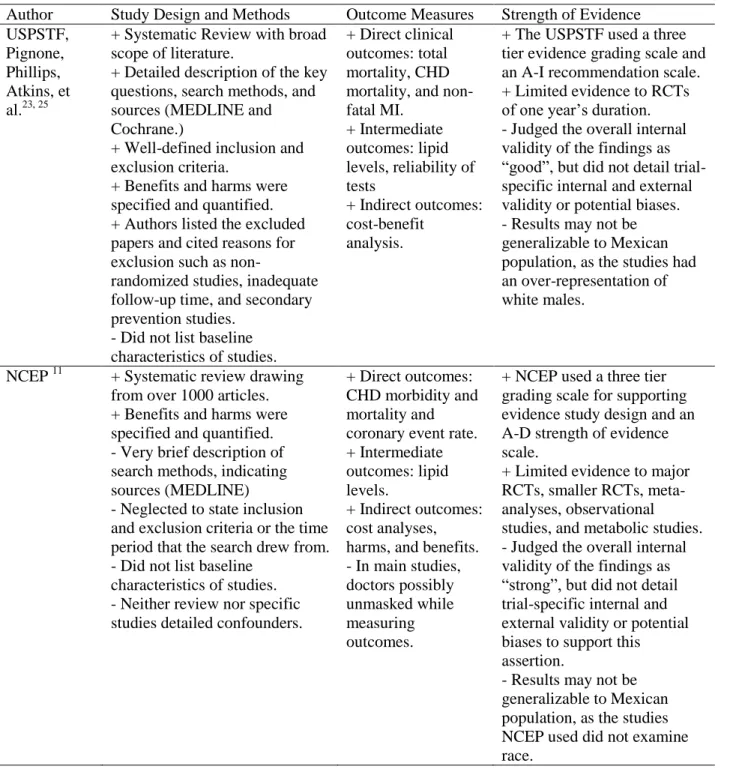
Table 1: Article Appraisal
Author Study Design and Methods Outcome Measures Strength of Evidence USPSTF,
Pignone, Phillips, Atkins, et al.23, 25
+ Systematic Review with broad scope of literature.
+ Detailed description of the key questions, search methods, and sources (MEDLINE and Cochrane.)
+ Well-defined inclusion and exclusion criteria.
+ Benefits and harms were specified and quantified. + Authors listed the excluded papers and cited reasons for exclusion such as
non-randomized studies, inadequate follow-up time, and secondary prevention studies.
- Did not list baseline characteristics of studies.
+ Direct clinical outcomes: total mortality, CHD mortality, and non-fatal MI.
+ Intermediate outcomes: lipid levels, reliability of tests
+ Indirect outcomes: cost-benefit
analysis.
+ The USPSTF used a three tier evidence grading scale and an A-I recommendation scale. + Limited evidence to RCTs of one year’s duration. - Judged the overall internal validity of the findings as “good”, but did not detail trial-specific internal and external validity or potential biases. - Results may not be generalizable to Mexican population, as the studies had an over-representation of white males.
NCEP 11 + Systematic review drawing from over 1000 articles. + Benefits and harms were specified and quantified. - Very brief description of search methods, indicating sources (MEDLINE) - Neglected to state inclusion and exclusion criteria or the time period that the search drew from. - Did not list baseline
characteristics of studies. - Neither review nor specific studies detailed confounders.
+ Direct outcomes: CHD morbidity and mortality and coronary event rate. + Intermediate outcomes: lipid levels.
+ Indirect outcomes: cost analyses, harms, and benefits. - In main studies, doctors possibly unmasked while measuring outcomes.
+ NCEP used a three tier grading scale for supporting evidence study design and an A-D strength of evidence scale.
+ Limited evidence to major RCTs, smaller RCTs, meta-analyses, observational studies, and metabolic studies. - Judged the overall internal validity of the findings as “strong”, but did not detail trial-specific internal and external validity or potential biases to support this assertion.
- Results may not be generalizable to Mexican population, as the studies NCEP used did not examine race.
Applicability to PPS:
Currently, PPS is following USPSTF guidelines, but is not entirely aligned with NCEP’s
recommendation of a full lipid panel, however both guidelines seem to agree that TC and HDL-C
capillary point-of care screening with a risk factor assessment is effective. As outlined by the
USPSTF, the Framingham risk calculator, and NCEP guidelines, PPS accounts for all major
CHD independent risk factors. Some issues are that program planners have not yet identified an
appropriate screening interval, and that the PPS age cut-off of 30 years for men and women is
not consistent with USPSTF and NCEP recommendations.
Effective Cardiovascular Screening Methods in Mexico
My second key question was: In cardiovascular screening programs that have been
implemented in rural Mexican populations, what are the screening methods used? Articles
detailing cardiovascular screening methods in Mexico were hard to find. Because I was
interested in the particulars of Mexican community screenings, I chose to look at cholesterol
research in Mexico and examine the methods sections.
Search Strategy:
I searched PubMed with the MeSH terms “Cholesterol AND Mexico AND Rural”,
limiting the search to English and Spanish language and human subjects. This method yielded
fifteen results, five of which were relevant. After reviewing the abstracts, two met my inclusion
criteria of cholesterol testing in a rural Mexican adult population, including both men and
women. I discarded one of the original five articles because it did not include women, one
because it had the same methods and sample population as one of the other articles, and one
screening AND rural Mexico”, as well as reviewed the bibliographies of the two articles, but did
not find any additional manuscripts that fit the criteria.
Article One: Aguilar-Salinas, Lerman-Garber, Peréz, et al.: 31
The purpose of this comparative cross-sectional study was to determine the prevalence of
dyslipidemia and its association with nutrition in rural and urban elderly Mexican populations of
varying socioeconomic status. The article was published in 2001, but the researchers failed to
include the date of the data collection, an important piece of information considering that they
mention the upward yearly trend in CHD risk factors in Mexico. That pattern, coupled with
annual migratory changes, could alter the results.
Source and sample population characteristics are listed below in Table 2. Inclusion
criteria were residence in the site community for more than five years, independent ability to
understand and answer questions, and ≥ 30 years of age. Excluded persons included
institutionalized patients and individuals with dementia, acute illness, or memory problems.31
Excluding institutionalized persons and those with acute illness was appropriate because,
as the literature review of practice guidelines showed, surgery, illness, and dietary changes can
alter lipid profile. Likewise, persons with dementia or memory problems would have difficulty
self-reporting data accurately. However, potential selection bias is present because researchers did not explain how they assessed “memory problems”; for example, if the people selecting
participants were also judging lucidity and memory, they might be more likely to exclude obese
individuals in rural areas if they believed that rural dwellers should have healthier diets and
lower cholesterol. Additionally, the selection process excluded the homeless and workers who
The researchers selected the sites using what they called “standardized rapid appraisal procedures”, choosing geostatistical areas that represented the rural, poor urban, and middle class
urban national averages in health facilities and community services. Investigators recruited
participants from their homes based on random sampling from census data. The paper did not
elaborate on how the randomization was conducted, allowing for potential selection bias.
Seventy-eight percent of the urban and 85% of the rural persons who were invited agreed
to an interview, while 60% of those interviewed gave blood samples for testing. Although the
authors claimed that the characteristics of those who did not undergo blood sampling were very
similar to the traits of those who did, they did not include a characteristics table supporting this
assertion and did not list the percentages of participants from rural versus urban groups. Unequal
participation among age and geostatistical groups might affect results. Thus overall, selection
bias was likely high.
The study used a local primary care facility to examine venous blood for TC, HDL-C,
LDL-C, triglycerides, very-low-density lipoproteins, and glucose. Researchers conducted home
visits and measured blood pressure, height, weight, waist and hip ratios, BMI, skin-fold thickness,
and arm muscle circumference. Aguilar-Salinas, Lerman-Garber, Peréz, et al. struggled with
measurement bias because the personal interviews on demographic, socioeconomic, personal and
family medical history, lifestyle factors, and 24 hour dietary recall were self-reported.
The results of the study are listed in Table 2. The investigation revealed a high prevalence
of hyperlipidemia among all of the elderly sub-groups. High fat and carbohydrate diets were
more associated with elevated lipid values, however the researchers appropriately did not draw
had fair to poor internal and external validity, the methods and results are significant because the
rural sample of mostly adult Mexican women is comparable to the PPS study population.
Article Two: Echavarría-Pinto, Hernández-Lomelí, Alcocer-Gamba, et al.: 14
The purpose of this cross-sectional study was to determine the prevalence of the
Metabolic Syndrome in adults aged 20-40 years in a rural Mexican community. Population
information is listed in Table 2. Exclusion criteria were unwillingness to participate in the study
and missing two or more home appointments. Although 73 would seem to be a small and
arbitrary sample size to properly approximate Metabolic Syndrome prevalence, the researchers
claim that statistical testing revealed that a sample size of 70 or more would be acceptable.
Although the authors did not clarify how they chose this village, they did describe their
randomization strategy. They used simple randomization by alphabetizing the local health center’s age-eligible patient roster and sending written invitations to every nth patient. Eleven
point four percent did not respond, and 25.7% missed their appointments more than twice,
combining for an overall non-response rate of 37.1%. The potential for selection bias is high; the
large number of people who did not respond might have been different in some way from those
who did reply. In addition, the study was not able to include patients who were not in the health
center directory and many persons who could not read. The issue is substantial because this population’s literacy is low.14
Some measurement bias may have been present in the self-reporting of family history and
tobacco use. Investigators made appointments with groups of ten participants; asking a set of
interview questions; measuring abdominal circumference, height, weight, and blood pressure;
city laboratory and analyzed for HDL-C, triglycerides, TC, and glucose. The study determined
that the prevalence of the Metabolic Syndrome was elevated among the participants at 45.2%.
Full results are listed in Table 2. Although Echavarría-Pinto, Hernández-Lomelí, Alcocer-Gamba,
et al. had fair to poor internal validity due to selection bias, and therefore had mediocre external
validity as well, the study population has fair to good generalizability to the PPS participants.
Table 2: Article Overview
Author Study Design Location Population and N Results Aguilar-Salinas, Lerman-Garber, Peréz, et al.31 2001 cross sectional comparative study.
The middle class Mexico City section of Centro Urbano Presidente Aleman, the lower-income Mexico City section of Colonia Isidro Fabela, and a rural area of Temascalcingo, Mexico.
Source population: 196 men and 316 women aged ≥ 60 years, and 180 men and 290 women aged 30 to 59. Sample population: 121 men and 233 women aged ≥ 60 years, and 93 men and 180 women aged 30-59 who agreed to give a blood sample.
Rural elderly men TC: 5.02 ± 0.97 mmol/L (approximately 194.28 mg/dL)
Rural elderly women TC: 5.50 ± 1.10 mmol/L (approximately 212.85 mg/dL.)
Urban middle-income elderly lipids were higher than rural and urban low-income groups:
Men TC: 5.60 ± 1.07 mmol/L (216.72 mg/dL) Women TC: 5.90 ± 1.10 mmol/L (228.33 mg/dL) Echavarría-Pinto, Hernández-Lomelí, Alcocer-Gamba, et al.14 2004 cross sectional study.
The village of Senegal de Palomas, Querétero, Mexico.
Source and Study population: 31 men and 42 women between the ages of 20 and 40 years old
Prevalence of the Metabolic Syndrome: Men: 48.4%
Women: 42.8%
Overall: 45.2 % (95%CI 34.8 - 58.6 %).
Low HDL-C: Men: 93.5% Women: 90.5%
Applicability to PPS:
blood pressure readings with an electric sphygmomanometer in the supine position, conducted
home visits, and had patients don a gown. The gown increased the accuracy of anthropometric
measurements, but may be considered an invasion of privacy and is not appropriate for PPS mass
screenings in the churches. Researchers also measured skin-fold thickness and arm muscle
circumference, as well as included a 24 hour dietary recall. PPS may consider incorporating 24
hour dietary recalls, however adding this measure may prove difficult and unnecessary,
especially considering the evidence that self-reporting bias may render this tool less useful.32
Another divergence is that although Aguilar-Salinas, Lerman-Garber, Peréz, et al. gave
medical treatment to those in need, they did not follow-up with the patients beyond the single
intervention. Their main goal was to conduct a cross-sectional measurement of lipids in different geostatistical areas, yet PPS’s mission is to create a longer term intervention and maintain a
continual presence in the communities. Therefore, PPS must approach its research as a secondary
objective, placing the community needs first.
Echavarría-Pinto, Hernández-Lomelí, Alcocer-Gamba, et al. also had discrepancies with
PPS, however of note are the similarities between the two study populations. PPS does
equivalent screenings among a comparable rural population less than 100 miles from Querétero.
The article mentioned that 52.7% of Senegal de Palomas worked in agriculture and 58.5% had a
primary school education.14 PPS has a similar distribution working in agriculture, and
approximately 79% of program participants surveyed in 2006 had a primary school education or
less.33 Interestingly, the 2006 PPS patients had lower education levels, perhaps because our
program relies on word of mouth and not written invitations. Because Echavarría-Pinto,
Hernández-Lomelí, Alcocer-Gamba, et al. used randomization and written invitations in their
Although PPS shares many similarities with the two reviewed studies, recruitment
strategies and cholesterol lipid methods were dissimilar. Both Echavarría-Pinto,
Hernández-Lomelí, Alcocer-Gamba, et al. and Aguilar-Salinas, Lerman-Garber, Peréz, et al. used NCEP guidelines to frame their cholesterol testing. In the USPSTF’s review, the authors explained that
NCEP guidelines are perhaps the most difficult and least patient-centered screening methods.25
Therefore, although PPS concurs with NCEP in some areas, the program prefers to follow less
stringent, more population-feasible methods for cholesterol screening, a strategy that is
supported by the USPSTF.
Both studies used a randomization strategy in recruitment, while PPS uses a convenience
sample. Although proper randomization should decrease the likelihood of selection bias and
confounders, a convenience sample is more applicable to population-based interventions in that
it does not deny care to those who might seek screening. The problem that PPS faces is that the internal validity of the program’s research is not as robust as it could be if PPS were to use
randomization in sampling and rigorously follow NCEP guidelines. PPS can examine this
dilemma further, but must make certain that changes to the research design do not compromise
Program Plan
The program planners designed Proyecto Puentes de Salud to be a service, research, and
Spanish immersion project that addressed an expressed need of a disadvantaged population.
Cardiovascular screenings in the rural Mexican communities are appropriate because 1) diabetes
and cardiovascular disease are the top two causes of mortality in JR in 2006; 2) the communities
have articulated a desire to have cardiovascular screenings; 3) researchers have shown screenings
to be effective because the disease has a slow progression and the risk factors are modifiable; and
4) the rural villages of JR have access to care barriers that prevent them from easily obtaining
medications and regular health checks.6, 21, 23, 24, 34
Proyecto Puentes de Salud Mission:
The mission of Proyecto Puentes de Salud is to improve the cardiovascular health of rural
JR communities by providing free cardiovascular screenings and counseling, increasing health
knowledge, encouraging community empowerment, inspiring behavioral change, and expanding
access to care. PPS will serve as a “health bridge” between underserved Hispanic communities
and needed health service to ameliorate health care inequalities. The project will also prepare
future doctors for public service by developing leadership, cultural competency, clinical and
research skills, and Spanish language competency.35
Program Context
Proyecto Puentes de Salud implements cardiovascular screenings in the central farming
factors that influence the delivery of healthcare and shape the local beliefs and behaviors towards
cardiovascular disease.
Political Context:
Mexico is a federal republic with a bicameral legislature and an authoritarian system
governed by the president, who is elected every six years by majority vote.36 In 2006, Juventino
Rosas elected Partido de Acción Nacional (PAN) candidate Juan Antonio Acosta as the
municipality president. Juan Acosta has fully backed PPS, donating his car and house to the
project, featuring PPS in the local newspaper, and presenting the 2006 members with the key to
the city.37
Likewise, the Roman Catholic Church of Santa Cruz de Juventino Rosas supports the
project and has a nine member delegation responsible for finding housing and food in JR and the
smaller communities for all the American volunteers. In conversation, the rural communities
have expressed greater trust in PPS because of Church involvement.6 As 96.3% of the Juventino
municipality residents are self-professed Roman Catholics, the church has a strong political hold
over the surrounding area.38 The church and state share and compete for power, therefore tension
exists between the local government and the religious leaders that date back to the 16th century.36
However, these strains have not had a noticeable effect on PPS productivity.
In addition, stricter enforcement of US immigration laws may alter the locals’
perceptions of the American-based PPS project. Federal courts have recently begun to rule
against illegal immigrants, enacting harsh penalties against businesses that employ illegal
bills were proposed in Congress and 244 became law.39 The more stringent US stance on
immigration could negatively influence PPS community relations.
Economic Context:
In 1993, Mexico joined the North American Free Trade Agreement (NAFTA),
eliminating many tariffs and liberalizing trade between the United States and Mexico. Although
NAFTA created approximately 5.3 million jobs, 1.3 million agricultural workers, mostly small
rural corn and bean farmers, lost their employment. The majority of the new jobs were in
manufacturing.40 Unable to compete with tax-free imports from the US, the rural farmers in
Mexico suffered large financial blows; poverty in the agricultural sector rose from 54% in 1989
to 64% in 1998. Many workers immigrated to the US to seek financial stability.41
The communities surrounding Juventino Rosas rely heavily on corn farming for
survival.38 If the locals are struggling to subsist, they may be less concerned with cardiovascular
health, have less time to attend health screenings, and be less likely to pay for continued doctor
visits and medications. Additionally, if food and water shortages are common, families may be
unable to positively alter their lifestyles and diets; fruits and vegetables are generally more costly
than unhealthy alternatives, and villagers must expend valuable time and money traveling to
Juventino Rosas to purchase these items.
Social and Environmental Context:
In talking to doctors and patients in the Juventino area, PPS medical students have
discovered that one cultural barrier to healthcare is a fatalistic attitude towards death; community
their well-being and will either cure them or raise them to heaven. Additionally, a sense that one
is not sick unless one feels pain or is unable to perform daily activities is pervasive among the
villagers. Chronic illnesses such as diabetes, hypertension, and obesity in which the patient does
not necessarily feel ill, are often never diagnosed because the person will not spend money on a
seemingly unnecessary checkup. Machismo comes into play here as well, as men do not like to
be considered weak and avoid medical attention as long as they are still able to work.6, 9, 42, 43
Other social factors work against PPS project success. High migration rates of working
men may lead to increased depression among Mexican women.44, 45 Studies have demonstrated
that the PHQ-9 Questionnaire is a reliable screening tool for Hispanic patients.46 In a sample of
432 patients that PPS volunteers screened for depression with the Evaluation of Mental
Disorders Brief Patient Health Questionnaire (PHQ-9), 25.9% scored in the moderate to severe
depression category.47 Dealing with depression could prevent women from attending screenings
or caring to alter lifestyle behaviors.
Environmental factors could also affect project implementation. PPS conducts screenings
during the months of June and July, during the Mexican rainy season. Most farmers plant crops
in this time period, and the increased workload could prevent them from attending screenings.
Health Care Context:
In 2001, Mexican President Vicente Fox and Minister of Health Julio Frenk initiated a
massive reformation of the healthcare system, incrementally enrolling citizens in the
government-run universal health care, Seguro Popular. The reaction to the new system has been
persons in Seguro, with 40% of these enrollees coming from the bottom two income deciles.48
One arm of the program, Opportunidades, is lauded by the communities; it provides free health
services and prenatal care as long as participants show up to weekly health education sessions.49
However, in interviews, local Juventino residents and doctors have explained some of the
deficits of the new system. Many fundamental medications, such as metformin, are not in the
basic formulary, despite the number one cause of mortality in the municipality being diabetes.34
Wait times for clinic visits and surgeries are long, especially for farmers who have to halt work
to travel to appointments. The local Secretary of Health and Education spends the annual health
budget of $10,000 US on building structures instead of equipment and medications. Private
practice physicians feel that the universal healthcare system has deprived them of patients and
taken some of their business; they may be less likely to devote time to PPS if they are concerned
with their stagnating profit margins.6, 9, 10
Program Theory
Program theory can aid in understanding the broader contexts and barriers affecting
program implementation, can provide a realistic description of behaviors that the planners will
encounter, and can suggest methods for changing behavior on an individual and a community
level.50 The ecological perspective is a multilevel tactic in program theory that examines a person’s relationship with his or her environment, taking into account the social and economic
policies, institutions, neighborhoods and communities, living conditions, interpersonal
relationships, and individual risk factors and beliefs that shape behavior.51 PPS employs this
two models that describe PPS best are the Community Organization theory and the individual
Health Belief Model theory.
Community Organization theory includes empowerment, community capacity,
participation, relevance, issue selection, and critical consciousness. A 2007 UNC lecture reveals
an example of Community Organization theory in a program that is similar to PPS. The program
is an African church-based cardiovascular screening and intervention project. The project created
local task forces to brainstorm and manage interventions, fostering empowerment, participation,
and community competence of the local village. Issue selection focused on winnable, easily
measureable outcomes such as risk factors.50
Likewise, PPS has helped construct several local teams to allow the JR residents to take
control over their own health: the Mexican church delegation and a group of doctors. However, a
task force that includes the patient population does not exist, and the creation of one could
greatly enhance empowerment. Yearly surveys of all screened patients accomplishes relevance
and participation, allowing over 2000 people to give feedback on what health screenings are
most important to them. Similar to the African Program, PPS has selected modifiable
cardiovascular risk factors as quantifiable issues. PPS could improve in critical consciousness;
health education techniques thus far have attempted to engage the audience and foster
community discussion on how to combat cardiovascular risk factors, yet medical students have
not received the formal health education training to coordinate or encourage these conversations.
The Health Belief Model is an individual level theory with the constructs of perceived
susceptibility, perceived severity, perceived benefits, perceived barriers, cues to action, and
action. They must believe that the barriers to change are surmountable and that they have the
ability to succeed.51 Simply telling a person what to do without acknowledging his or her prior
conceptions reduces the chance that an intervention will work.19
Considering the social contexts and ingrained local beliefs about health, this model is critical to PPS’s ability to inspire lifestyle change in the individual. PPS patients have difficulty
understanding that chronic diseases such as diabetes and hypertension often do not have
symptoms; a large component of our health education is focused on explaining the importance of
regular screenings and taking medication even when symptoms are not present. Since many
patients have a relative with diabetes, we can use personal experience to demonstrate the
frequency of the disease and the lack of symptoms.
One construct of the Health Belief Model that the project could improve is the perceived
barriers. Real obstacles that are commonly cited by participants include the economic costs of
healthy food and healthcare and the difficulties involved in traveling to see the doctor.6
Although PPS has begun to address some of these issues, the current project referral system may
not offer enough assistance to ensure that participants can overcome the barriers to access
doctors and medication.
Program Goals and Objectives
Proyecto Puentes de Salud Program Goal:
The Goal of Proyecto Puentes de Salud is to improve cardiovascular health in the rural
communities of Juventino Rosas, Mexico by maximizing community recruitment and
participation, by increasing the effectiveness of screening implementation and community health
Short-term Objectives:
1) Within one year, PPS planners will involve all stakeholders in goal setting and
planning cycles by drafting, testing, and administering reliable implementation
surveys for volunteers and patients.
Strategy:
a) In 2008, PPS leaders will conduct focus groups to obtain volunteer feedback
and use the focus groups to tailor the surveys.
b) PPS will help form community task forces to increase local empowerment.
2) Within two years, PPS planners will make screening implementation and health
education talks (known as “Charlas”) standardized, measurable, and structured to
amplify the effectiveness of the interventions.
Strategy: In 2008 and 2009, PPS leaders will draft a screening protocol and put in place measurable indicators.
3) Within one year, PPS first year medical students will add patient identifiers to the
IRB to track patient follow-up.
Strategy:
a) PPS students meet with advisor for guidance on IRB proceedings.
b) PPS students submit addendums to the IRB.
4) Within one year, PPS planners will improve the referral system with local doctors to
track continued patient care and medications.
Strategy:
b) In summer 2008, PPS planners will double the number of local referral
physicians from three to six. One referral physician will be present in the
community for each screening day.
c) In summer 2008, PPS will initiate a new referral system that has the ability to account for all referred patients’ initial physician visits and subsequent visits.
5) Within one year, 100% of medical students will have undergone health education
training, gaining knowledge and skills.
Strategy: In 2008, PPS leaders will design health education classes.
Long-term Objectives:
1) Within five years, 90% of referred patients will be seen by local doctors for follow-up.
Strategy: Doctors and students use new referral system and continue to communicate and discuss potential barriers.
2) Within five years, PPS will observe measurable changes in cardiovascular knowledge
and lifestyle practices among the rural community members.
Strategy:
a) Volunteers continue to use measurable indicators, standardized screening, and
health education training.
b) Community task forces lead discussions examining barriers to improved
cardiovascular health.
3) Within ten years, PPS will observe measurable improved community cardiovascular
health.
Implementation Plan
Proyecto Puentes de Salud Program Goal:
The Goal of Proyecto Puentes de Salud is to improve cardiovascular health in the rural
villages of Juventino Rosas, Mexico by maximizing community recruitment and participation,
increasing the effectiveness of screening implementation and community health education, and
improving follow-up and access to medications and doctors.
Main Objectives:
1) Improve cardiovascular knowledge and encourage lifestyle change among rural
community members living in the Juventino Rosas, Mx municipality.
2) Improve access to care in the communities surrounding JR by involving doctors and
strengthening the referral system.
3) Improve cardiovascular health in the communities surrounding JR.
Activities to Accomplish Objectives:
1) Coordinate with Juventino Rosas Church, government, and health system to tap into
local infrastructure.
2) Coordinate with local community leaders to determine which health needs are unmet,
feasible to address, and desired to be met.
3) Conduct screenings and health education talks, or “Charlas”, in communities.
4) Meet with local doctors to alter the referral system and to measure the continuity of
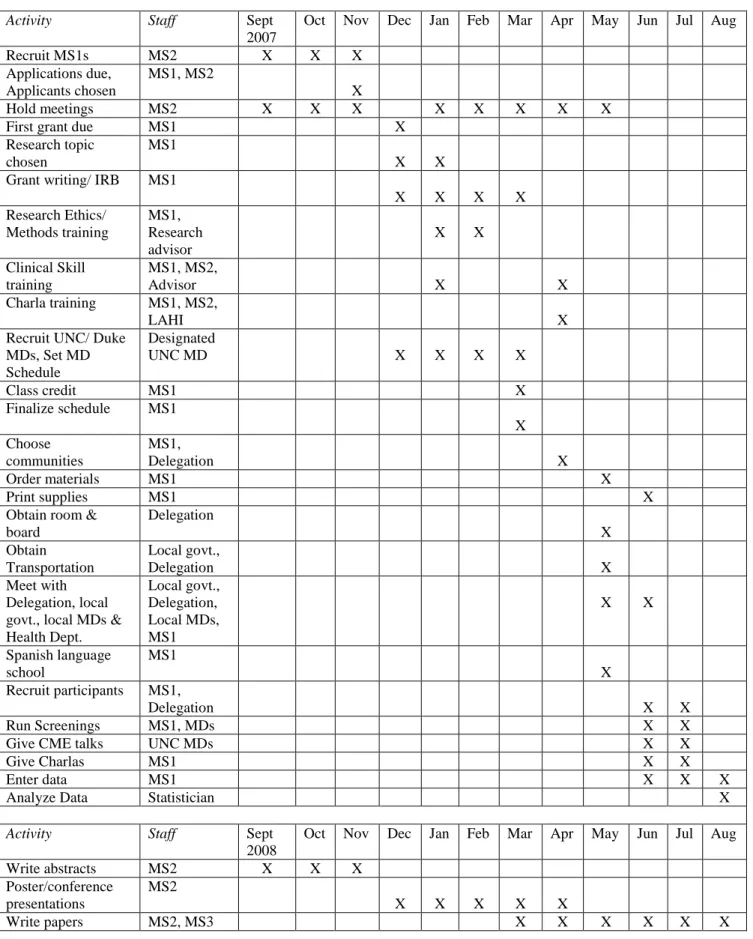
Table 3: Specific Activities Monthly Administrative Timeline
Activity Staff Sept
2007
Oct Nov Dec Jan Feb Mar Apr May Jun Jul Aug
Recruit MS1s MS2 X X X
Applications due, Applicants chosen
MS1, MS2
X
Hold meetings MS2 X X X X X X X X
First grant due MS1 X
Research topic chosen
MS1
X X
Grant writing/ IRB MS1
X X X X
Research Ethics/ Methods training
MS1, Research advisor
X X
Clinical Skill training
MS1, MS2,
Advisor X X
Charla training MS1, MS2,
LAHI X
Recruit UNC/ Duke MDs, Set MD Schedule
Designated
UNC MD X X X X
Class credit MS1 X
Finalize schedule MS1
X Choose
communities
MS1,
Delegation X
Order materials MS1 X
Print supplies MS1 X
Obtain room & board Delegation X Obtain Transportation Local govt.,
Delegation X
Meet with Delegation, local govt., local MDs & Health Dept.
Local govt., Delegation, Local MDs, MS1
X X
Spanish language school
MS1
X Recruit participants MS1,
Delegation X X
Run Screenings MS1, MDs X X
Give CME talks UNC MDs X X
Give Charlas MS1 X X
Enter data MS1 X X X
Analyze Data Statistician X
Activity Staff Sept
2008
Oct Nov Dec Jan Feb Mar Apr May Jun Jul Aug
Specific Activities Weekly Administrative Timeline
May 19-30 Spanish Language School
June 2-6 Organization Week
Sun June 8 Delegation introduces students to community at Catholic mass;
recruiting
Mon June 9 - Wed 11 Group 1 in Community 1, Group 2 in Community 2
Screenings 7am - 2pm, Charlas Tues/ Wed 6pm - 7pm
Thurs June 12 - Fri 13 Data entry, organize supplies for next week
Fri 13 – Sat 14 Free time
Mon June 15 – Fri Jul 18 Similar screening/ organization pattern as outlined above
10 communities visited
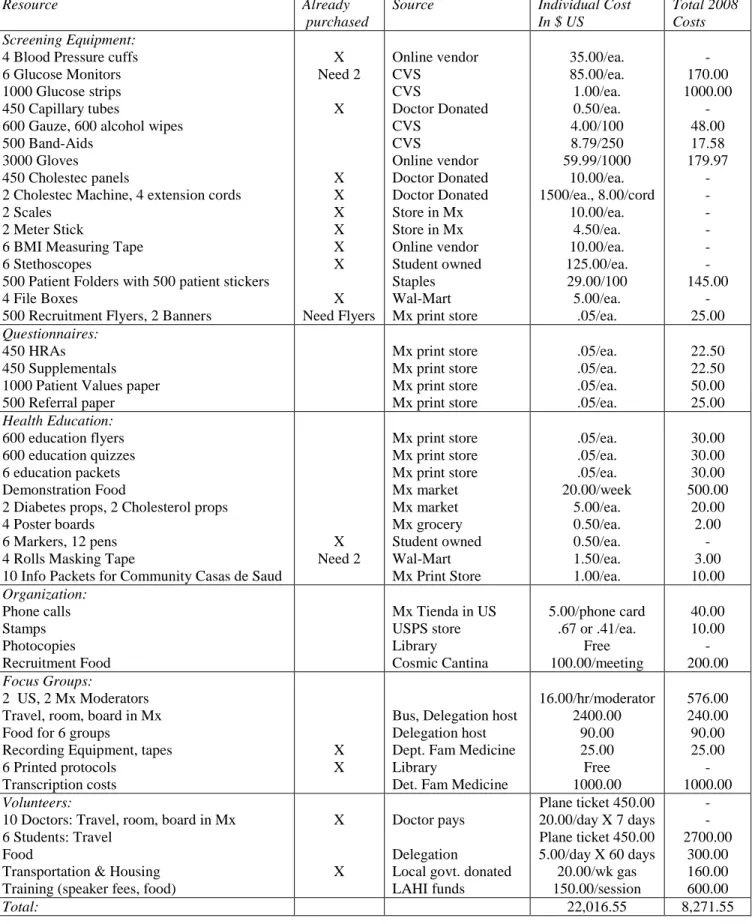
Table 4: Detailed Budget
Resource Already
purchased
Source Individual Cost
In $ US
Total 2008 Costs Screening Equipment:
4 Blood Pressure cuffs 6 Glucose Monitors 1000 Glucose strips 450 Capillary tubes
600 Gauze, 600 alcohol wipes 500 Band-Aids
3000 Gloves
450 Cholestec panels
2 Cholestec Machine, 4 extension cords 2 Scales
2 Meter Stick
6 BMI Measuring Tape 6 Stethoscopes
500 Patient Folders with 500 patient stickers 4 File Boxes
500 Recruitment Flyers, 2 Banners
X Need 2 X X X X X X X X Need Flyers Online vendor CVS CVS Doctor Donated CVS CVS Online vendor Doctor Donated Doctor Donated Store in Mx Store in Mx Online vendor Student owned Staples Wal-Mart Mx print store
35.00/ea. 85.00/ea. 1.00/ea. 0.50/ea. 4.00/100 8.79/250 59.99/1000 10.00/ea. 1500/ea., 8.00/cord 10.00/ea. 4.50/ea. 10.00/ea. 125.00/ea. 29.00/100 5.00/ea. .05/ea. - 170.00 1000.00 - 48.00 17.58 179.97 - - - - - - 145.00 - 25.00 Questionnaires: 450 HRAs 450 Supplementals 1000 Patient Values paper 500 Referral paper
Mx print store Mx print store Mx print store Mx print store
.05/ea. .05/ea. .05/ea. .05/ea. 22.50 22.50 50.00 25.00 Health Education:
600 education flyers 600 education quizzes 6 education packets Demonstration Food
2 Diabetes props, 2 Cholesterol props 4 Poster boards
6 Markers, 12 pens 4 Rolls Masking Tape
10 Info Packets for Community Casas de Saud
X Need 2
Mx print store Mx print store Mx print store Mx market Mx market Mx grocery Student owned Wal-Mart Mx Print Store
.05/ea. .05/ea. .05/ea. 20.00/week 5.00/ea. 0.50/ea. 0.50/ea. 1.50/ea. 1.00/ea. 30.00 30.00 30.00 500.00 20.00 2.00 - 3.00 10.00 Organization: Phone calls Stamps Photocopies Recruitment Food
Mx Tienda in US USPS store Library
Cosmic Cantina
5.00/phone card .67 or .41/ea.
Free 100.00/meeting 40.00 10.00 - 200.00 Focus Groups:
2 US, 2 Mx Moderators Travel, room, board in Mx Food for 6 groups
Recording Equipment, tapes 6 Printed protocols
Transcription costs
X X
Bus, Delegation host Delegation host Dept. Fam Medicine Library
Det. Fam Medicine
16.00/hr/moderator 2400.00 90.00 25.00 Free 1000.00 576.00 240.00 90.00 25.00 - 1000.00 Volunteers:
10 Doctors:Travel, room, board in Mx 6 Students: Travel
Food
X Doctor pays
Delegation
Plane ticket 450.00 20.00/day X 7 days Plane ticket 450.00 5.00/day X 60 days
- - 2700.00
Organizational Structure
The infrastructure that PPS works within is largely based on the Catholic Church of Santa
Cruz de Juventino Rosas; the Church provides the facilities, volunteers, and ensures the trust of
the community. PPS medical students run the screenings and hold health talks in the community
parish during June and July. The Delegation, an organization of PPS Church volunteers,
introduces the students at mass, coordinates housing, food, and transportation, and helps choose
communities each year. Medical students and Church volunteers selected the fifteen
communities in 2006 and 2007 based on a US migration rate of 60% or more, limited access to
health care due to geographic location, and population size between 200 and 5,000 persons.47
The PPS staff includes more than 50 volunteers in two years. In 2006, this volunteer pool
consisted of four MS1s, two undergraduate students, seven doctors and faculty, four family
members, and five Delegation members. In 2007, the volunteers included three MS1s, three
undergraduates, twelve faculty and doctors (eight new), the UNC Dean of Student Affairs, six
family members, and six additional Delegation members. Six MS1s have joined the project for
2008. Prior to the screenings, PPS coordinated a loose network of local doctors to receive and
manage at-risk referrals. Three doctors currently serve as the main referral avenues.
Participating Clients and Recruitment
PPS planners designed the cardiovascular screening program to reach adult Mexican men
and women living in the rural communities within a 30 mile radius of Juventino Rosas. Inclusion
criteria for research purposes includes being of Hispanic ethnicity, natives of Mexico, residents
of Guanajuato, and over the age of 30. In particular, the screening targets men older than 35 and
Thus far, PPS has screened over 2000 individuals and included 699 people in the research
component of the program. Eighty-two point seven percent of participants were women. The
high percentage of women was partially due to cultural norms, high migration rates, and PPS
holding screenings during the planting season. With a mean of 46.5 years, the participants have
been younger than we had hoped, likely due to cultural norms and age-specific responsibilities in
the communities. Yearly PPS screening goals are 1000 individuals for general screening and
more than 200 for research purposes. Recruitment consists of invitations over loudspeakers, the
distribution of flyers throughout communities, and weekly announcements at the Catholic masses.
Screening Methods Interviews:
First Year Medical Students obtain IRB approval from UNC-CH and verbally consent
participants. The trained, bilingual students interview each participant face to face using a
standard evidence based El Perfil de Bienestar survey. This 39 multiple choice questionnaire covers demographic information, past medical history, family history, dietary and lifestyle
behaviors including physical activity, tobacco and alcohol use, and social and psychological
health. Investigators supplement this risk appraisal with a secondary form that focuses on family
composition, migration history, education level, medications, and access to care and insurance.
Vitals, BMI, and waist-hip measurement:
The medical students assess clinical measures, recording weight (lbs) using two identical
blood pressure reading per arm using a blood pressure cuff and stethoscope, recording the mean
of the two blood pressures. Patients remove shoes for height and weight measurements. To
determine waist to hip ratios, students measure waist halfway between the lower rib margin and
iliac crest and hip circumference at the widest part over the greater trochanters.
Vitals, BMI, and waist-hip diagnostic guidelines:
Students record abdominal obesity as a waist to hip ratio > 0.85 in women and > 0.90 in
men.53 Research has shown that waist-hip ratio is equally, if not more, predictive of coronary
heart disease than BMI, therefore the PPS team assess this measure as well.54-57 In accordance
with the Adult Treatment Panel III (ATPIII) guidelines, we define overweight as a BMI >25 and
obese as BMI > 30. We consider average blood pressures between 121/81 and 139/89 mmHg as
pre-hypertension, between 140/90 and 159/99 mmHg as stage 1 hypertension, and ≥ 160/100
mmHg as stage 2 hypertension.11
Cholesterol and glucose measurement and diagnostic guidelines:
In a private room, the trained medical students draw one blood sample per patient in a
capillary tube and run samples in the Cholestec LDX® system to obtain fasting (> 8hrs) blood
glucose, total cholesterol (TC), and high density lipoprotein cholesterol (HDL-C), all recorded in
mg/dL. In accordance with American Heart Association and ATPIII statements, we define
elevated TC as > 200 mg/dL and low HDL-C as < 50 mg/dL for females and < 40 mg/dL for
males. Impaired fasting glucose is a glucose > 100 mg/dL. We define the Metabolic Syndrome as impaired fasting glucose plus two of the following criteria: blood pressure ≥ 130/85 mmHg,
40 in) in men and > 88 cm (> 35 in) in women.11, 58 Medical students provide results and
counseling on site, immediately following interviews and lab procedures. The process duration
averages one hour per participant.
Referrals
In 2006, the referral network consisted of Dr. Narveis, and the Juventino Rosas public Centro de Salud. Students gave participants with high values Dr. Narveis’s contact information
and address, as well as bus fare. The project did not have a cut-off for dangerously high values;
however, students used clinical discretion to decide which results warranted a home visit to the
patient by Dr. Narveis, who was able to prescribe medicine immediately.
In 2007, a similar network and referral system existed, with Drs. Narveis, Sanchez, and
Carolina fielding all referrals. In conversations with PPS leaders that year, villagers explained
that taking a bus to Juventino also signifies lost money in terms of time away from work.
Therefore, in spite of the PPS bus fare, villagers may not tap into the referral system.6 Dr.
Carolina was on-site with the students for several days to provide immediate counsel; in the
coming summers, this set-up may circumvent some of the access problems. To improve the
effectiveness of follow-up in the future, the 2008 PPS planners have begun to extensively
evaluate the referral system.
Future Program Improvement
As discovered in the preliminary evaluation assessment, some of the most important
follow-up, and community communication and empowerment. PPS will attempt to implement
some of the suggestions this year. In particular, PPS has been coordinating with the local medical
community to double the referral network and to have a Juventino Rosas physician at the
screenings at all times. Volunteers believe that an on-site physician, in a similar role to Dr. Carolina’s in 2007, is the most critical avenue to enhancing follow-up because the local doctors
speak the language, can prescribe appropriate medicines, and provide patients with a trusted face.
As of this summer, medical students will also be gathering longitudinal data and patient
identifiers, which should enhance follow-up and allow for outcome measurement.
This year, PPS will hold its first health education training classes, as well as a session on
cultural sensitivity. The 2008 MS1s are re-wording El Perfil de Bienestar surveys and testing them to increase cultural appropriateness. Additional changes, such as more frequent
decision-making meetings with both the Church Delegation and community members, should improve
communication and empowerment. As PPS begins a cyclical process of constant evaluation,
Program Evaluation Evaluation Overview
This portion of the paper is an evaluation of the Proyecto Puentes de Salud screening
process. An implementation evaluation is important for several reasons; it will help PPS leaders
know how well the program is meeting its objectives and goals, the magnitude of
implementation effectiveness or ineffectiveness and the avenues for improvement, and the
degree to which PPS is aligned with the target population needs. The program planners can use
the assessment to maximize project strengths and to identify and minimize barriers to
implementation, addressing immediate issues such as the proper direction of resources and
involvement of community stakeholders.
Ultimately, longer term evaluation will attempt to determine if PPS is increasing
cardiovascular knowledge, changing lifestyle practices, and improving cardiovascular health in
the communities surrounding Juventino Rosas. PPS will build the evaluation methods into the
planning framework of the program, promoting a constant process of improvement. Thus, the
evaluation at this juncture is formative, however planners will construct summative measures
now to support a future summative assessment.
Evaluation Models and Evaluators
The Evaluation Model and Its Inherent Limitations:
The structure of PPS’s evaluation aligns well with the decision/accountability-oriented
prototype described in Daniel Stufflebeam’s Evaluation Models.59 This form of evaluation is