By
Andrea Bulera Judge, IBCLC
A Master's Paper submitted to the faculty of the University of North Carolina at Chapel Hill
In partial fulfillment of the requirements for the degree of Master of Public Health in
the Public Health Leadership Program.
Abstract
The lactation consultant (LC) profession is a relatively new one. The field has grown over the past 25 years and, as a group, lactation consultants are trying to define their role in the healthcare team and the health system in general. As breastfeeding continues to emerge as an important public health benchmark and disease prevention strategy, the role of the lactation consultant stands to become more respected and diverse. The majority of those certified as lactation consultants come from clinical backgrounds and have most of their experience working one-on-one or in group settings with breastfeeding mothers and babies. While this will always be a large focus of the work of a lactation consultant, it is becoming increasingly evident that
understanding and reducing the barriers to optimal breastfeeding is the most effective way of improving breastfeeding initiation and duration rates. Hospital, health insurance and
The Lactation Consultant as Public Health Practitioner
Breastfeeding has been shown to have many preventive health benefits for mother and child. Children who are not breastfed have higher rates of ear, respiratory and gastrointestinal infections as well as asthma, obesity, diabetes and childhood leukemia (United States
Department of Health and Human Services [DHHS], 2009). The act ofbreastfeeding provides mothers with lower risk for diabetes, breast and ovarian cancer and postpartum depression. Breastfeeding saves on healthcare costs, reduces employee absenteeism and produces less waste than formula feeding. The US Surgeon General and American Academy of Pediatrics
recommend exclusive breastfeeding for the first 6 months of life, continuing into or beyond the second year of life (DHHS, 2009).
According to the National Immunization Survey the rate of initiation of breastfeeding has
increased in recent years (United States Centers for Disease Control and Prevention [CDC], 2009). However, exclusive breastfeeding and duration rates are still below Healthy People 2010 goals. This data set also shows us that there are disparities in breastfeeding rates between
different racial/ethnic and socio-economic groups. There are many social and environmental barriers that keep women from meeting their breastfeeding goals and cause women to choose the
less healthy option of formula feeding. Public health policies and programs are necessary to decrease societal barriers to optimal feeding and to enable women to breastfeed into or beyond their baby's second year of life.
International Board Certified Lactation Consultants (IBCLCs) are in the front lines of this effort as they are actively involved in helping individual women develop and meet their
breastfeeding goals. These professionals could also be involved in creating public policy and
breastfeeding. Most lactation consultants today come from a clinical background and may not have well developed skills in the practice of public health.
This paper will examine the public health skills that are necessary to lead an effective public health movement and will identify opportunities for development of public health and leadership skills for newly certifying and currently practicing IBCLCs.
Background
The lactation consultant profession is a relatively new one, just about to celebrate 25 years since standardization of the professional certification by the International Board Certified Lactation Consultants (IBLCE). The certificant is known as an International Board Certified Lactation Consultant (IBCLC). The creation of this credential was supported by La Leche League International (LLLI). LLLI was started in the 1950's by a group of nursing mothers who wanted to support each other and realized that a mother-to-mother support model might increase the breastfeeding rate. By the 1980's LLLI was the leading breastfeeding advocacy group and had developed a training model for breastfeeding support. The League convened a panel of experts to create a new organization to establish standards for a new profession of lactation consulting. Under the direction of Joanne Scott, a longtime LLL Leader, this new organization offered resources for the development of the IBLCE. The first exam offering the IBCLC credential was given in 1985 (Thurman & Allen, 2008). Prerequisites for the exam have changed over the years, but the components of the requirements have remained the same: a minimum number of hours working directly with breastfeeding mother/baby dyads and a
IBCLCs are encouraged to join the International Lactation Consultant Association (ILCA) as well as its national and local affiliates such as the US Lactation Consultant
Association (USLCA) and various state and regional organizations. These organizations offer
networking and career development resources as well as continuing education opportunities through webinars and conferences.
While LLLI still remains one of the major players in the breastfeeding advocacy arena,
the role of the typical US IBCLC during a given workday is likely to be more clinically oriented. Many IBCLCs come from a medical or nursing background and have little formal training in
public health concepts or practice. The IBLCE Clinical Competencies (2003) document makes reference to public health skills and states that one of the professional responsibilities of a lactation consultant is to "advocate for breastfeeding families, mothers, infants and children in
the workplace, community and within the health care system". Likewise, the IBLCE Scope of Practice (2008b) states that "IBCLCs have the duty to protect, promote and support
breastfeeding by:
• educating women, families, health professionals and the community about
breastfeeding and human lactation
• facilitating the development of policies which protect, promote and support breastfeeding
• acting as an advocate for breastfeeding as the child-feeding norm".
The IBLCE Exam Blueprint (2008a) lists Public Health as one of the categories of test question and includes the following topics: breastfeeding promotion and community education;
data collection for research purposes". However, there is no minimum education in
understanding or utilization of these concepts and there are few questions on the exam pertaining to these topics.
One of the tenets ofiBCLC practice is that clinical practice must be evidence based and the IBCLC is expected to stay current with the research so that he or she is giving the most accurate and up-to-date clinical advice possible. In order to best utilize limited financial and personnel resources and to have the largest impact on the health of the community, breastfeeding advocacy, breastfeeding rights and social justice, as well as promotion and protection activities should also be held to the same high standard of evidence-based practice. Approaching the task of breastfeeding promotion from a public health standpoint provides the tools to assess a
community's needs and better determine the efficacy of interventions and policies geared towards changing breastfeeding behaviors.
Methods
The primary methods used include I) review of the literature, and 2) e-survey data collection and analysis.
Literature review
First, a literature search was carried out to identify articles relating to lactation
included because of their publication in the JHL, making them likely to have been read by IBCLCs and translated to use in the field of lactation.
In addition, five years worth of issues of the Journal of Human Lactation (2005-2009) and the 2009 ILCA Conference Handbook were hand searched to assess relevance to improving understanding of the social ecological framework and public health practice. Titles, abstracts, key words, objectives and discussions were reviewed. Articles and presentations about clinical practices or the physiology, immunology, biochemistry or anatomy of lactation were excluded. Approximately 100 articles and 15 conference presentations were identified and categorized by topic related to the core functions of public health and public health leadership. The criteria that were used to determine the public health topics related to each article are shown in Appendix 1. Many articles contributed to multiple categories.
Key Informant Questionnaires
Email surveys were sent to six individuals determined to be key informants in the topic of public health activity within the breastfeeding promotion community. Participants were selected from a pool of current IBCLCs who are members of the Pennsylvania Professional Lactation Consultant Association (PRO-LC) and have direct experience with breastfeeding promotion or advocacy through membership or leadership roles in one of the following organizations: Pennsylvania Breastfeeding Coalition, US Breastfeeding Committee, ILCA, USLCA, IBLCE and the World Alliance for Breastfeeding Action (W ABA). Interview questions were developed based on the matrix used for the literature search and public health concepts described in Public
Institutional Review Board at the University of North Carolina at Chapel Hill and was found to be exempt from further review.
Literature Review
Review of basic public health concepts for the IBCLC
Core Functions and 10 Essential Services of Public Health.
To be an effective part of the public health team and best affect change in US
breastfeeding practices, the IBCLC must have a basic understanding of the principles of public health practice. According to the Institute of Medicine report The Future of Public Health, the
aim of public health is to "fulfill 'society's interest in assuring the conditions in which people can be healthy"( as cited in Rowitz, 2003). The three core functions that enable public health practitioners to work toward this goal are "assessment (identification of health problems), policy development (identification of possible solutions) and assurance (implementation of the solutions in the form of programs and services)" (as cited in Rowitz, 2003). Integral to this paradigm is the idea of ongoing evaluation to assess the status of the health problem and the effectiveness of policies, programs and services to continually improve upon the interventions and improve the health status of the community.
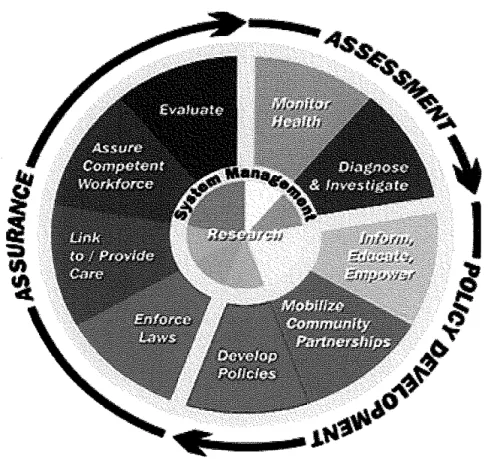
It is generally recognized that there are essential activities that must be performed by public health agencies to best fulfill the mission of public health. These activities were coined the Ten Essential Services by the 1994 Core Public Health Functions Steering Committee and are shown in Appendix C. (CDC, 2008). These essential services correlate to the core functions of public health as shown in Figure I. This model shows that public health practice is a cyclical process with continual community health evaluation, policy development and program
identifYing community health problems as well as diagnosing health hazards in the community. Policy development work includes efforts to inform, educate and empower the community about
health issues, mobilizing community partnerships and developing policy. The assurance function is carried out through law enforcement, linking people to or providing needed health
services, assuring a competent workforce and evaluating public health programs and policies. In this model, the tenth essential service of research is independent of any specific core functions but is an important foundation for each of the other services.
Figure L Core Functions of Public Health and the Corresponding Essential Services
Public Health Leadership.
Individual IBCLCs as well as their supporting professional organizations can serve as leaders in assuring that breastfeeding promotion is approached from a public health focus utilizing the core functions. Cocowitch and Upshaw (2006) define leadership roles to include being a change agent, team leader, mentor, stabilizer and spokesperson/advocate. Rowitz (2003, p. 46) considers the following qualities essential in public health leadership "commitment to social justice, an understanding of democracy, an understanding of the political process, communication skills, mentoring skills, decision making skills, and the ability to balance work and life outside work". While there are many defmitions ofleadership, a leader must be able to identify changes that need to be made, motivate others to make those changes, know how to go about making changes and communicate community health needs well to many different groups and stakeholders. Leadership is not an inborn trait and continues to develop as part of a lifelong process. Strong leaders are a valuable asset in any health promotion effort and can directly impact the success of a program as well as mentor others to develop similar skills.
Social Ecological Framework.
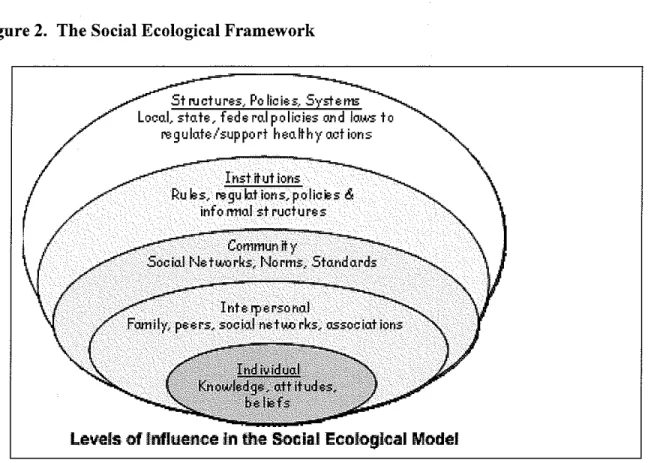
individual level. It is through this framework that we try to understand the problem of large disparities in breastfeeding rates along social, economic and racial parameters.
Figure 2. The Social Ecological Framework
Structures, Policies, Systems Local, state, hde ro.l policies rnd lows to
regulate I support h ea fr h y act ions
rnst it ut ions
Rub, regub.tions,policies &
info m1al st ruct u res
Community
Social Networks, Norms, Standards
Levels of Influence in the Socla.l Ecological Model
Public Health practitioners often develop social ecological models to better understand specific health problems. Such a model was developed to illuminate the complexity of the social and cultural factors affecting breastfeeding behavior (Bentley, Dee, & Jensen, 2003). In this model, the inner ring includes knowledge and beliefs about breastfeeding along with
breastfeeding skill. Interpersonal factors that impact a woman's breastfeeding decisions include opinions offamily, friends and healthcare providers, availability of peer networks and other family responsibilities. Community and organizational elements include hospital policies; employment or education obligations and leave policies; whether the mother has a safe,
breastfeeding toddler; access to appropriate, timely and accurate breastfeeding education and support; and whether she has access and time to breastfeed or express her milk upon return to
work.
The final layer of the socio-ecological model is that of policy such as those aimed at
protecting the rights of breastfeeding mothers and children; welfare reform; Women Infant and Children (WI C) supplemental nutrition programs; and insurance coverage and reimbursement. It
is at this level where we can try to effect change to create the social, physical and healthcare
delivery enviromnents that are most conducive to allowing individuals to make the healthiest choices. Quality clinical services can make the difference for individual nursing mothers and babies. Quality public health programs can make the difference for entire communities of
nursing mothers and babies by removing barriers to successful breastfeeding and making
individuals more likely to be committed to nursing their babies.
This socio-ecological model emphasizes the impact of a media so "powerful and
pervasive" (Bentley eta!., 2003) that it impacts every other level of the framework. The media has the power to shape individual beliefs and knowledge, community norms, and policy at all
levels. These factors influence a woman's initial breastfeeding decisions and continue to impact her decisions throughout the course of her breastfeeding experience. The media is also largely
responsible for normalizing formula and bottle feeding, and perpetuating myths about breastfeeding, over-sexualizing breasts and sensationalizing the topic of breastfeeding.
Literature Search
search focused on the evaluation of specific breastfeeding promotion programs or clinical interventions rather addressing the utilization of public health skills.
Two articles were identified that discussed the role of nurses in breastfeeding advocacy. Both articles were included in the literature review because of their publication in journals likely to be read by IBCLCs. One article discusses the development process and pitfalls of the
controversial 2003 risk -based breastfeeding promotion campaign developed by the Office of Women's Health (Merewood & Heinig, 2004). In addition to developing a Public Service Announcement (PSA) campaign, Community Demonstration Projects (CDP) were set up around the country to distribute and manage the risk-based public service announcement (PSA)
campaign. The article lists contact information for each CDP and encourages IBCLCs to become involved in the one closest to them. Another article was found in the Journal of Gynecology and Neonatal Nurses that describes the role of nurses in breastfeeding advocacy and policy
development (Humenick & Gwayi-Chore, 2001). The article gives an overview of the history of breastfeeding promotion and policy and outlines national breastfeeding goals. There is
discussion regarding the effect of formula promotion on social norms and the impact of maternity protection laws. The article suggests resources available to nurses to increase their individual knowledge of breastfeeding promotion activities and gives suggestions for getting involved in promotion efforts through local coalitions, developing written hospital breastfeeding policies and working towards ending in-hospital formula marketing practices.
Review of JHL articles from 2005-2009
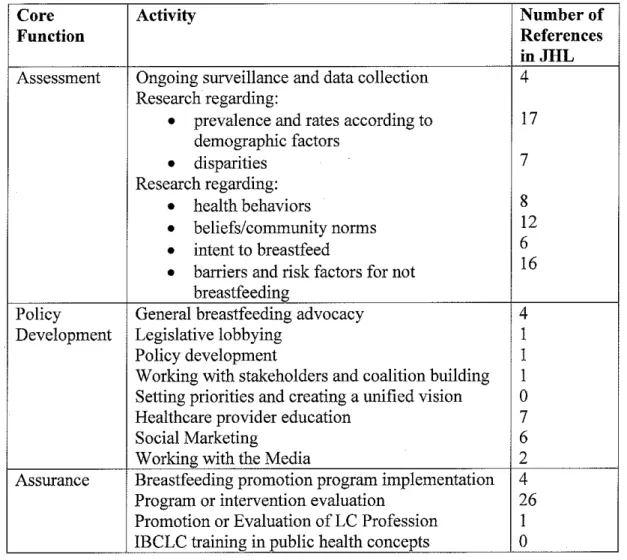
Table 1 -Core Functions of Public Health as published in JHL during years 2005-2009
Core Activity Number of
Function References
inJHL Assessment Ongoing surveillance and data collection 4
Research regarding:
•
prevalence and rates according to 17 demographic factors•
disparities 7Research regarding:
•
health behaviors 8•
beliefs/community norms 12•
intent to breastfeed 6•
barriers and risk factors for not 16 breastfeedingPolicy General breastfeeding advocacy 4
Development Legislative lobbying I
Policy development I
Working with stakeholders and coalition building I
Setting priorities and creating a unified vision 0
Healthcare provider education 7
Social Marketing 6
Working with the Media 2
Assurance Breastfeeding promotion program implementation 4
Program or intervention evaluation 26 Promotion or Evaluation of LC Profession I
IBCLC training in public health concepts 0
Assessment.
Activities that pertain to the assessment function of public health are well represented in
Policy Development.
Policy development was the least represented core function. Two articles mention the mechanics of policy development such as prioritizing agendas, lobbying, working with other stakeholders and forming and working within coalitions. One article presents a breastfeeding advocacy-training program for nursing students. This article describes an undergraduate level course designed to improve nursing students understanding oflactation physiology, support and advocacy, and clearly outlines steps for replicating the course. The course covers the concepts of cultural competency, community assessment, and program planning, implementation and
evaluation. (Spatz & Sternberg, 2005).
Another article presents a case study from Texas, which describes the process of organizing a breastfeeding advocacy group for the purpose of lobbying for a new breastfeeding bill during each legislative session. Although unlikely that many of the bills will become law, the intent was to keep breastfeeding on the agenda while providing frequent opportunities to educate legislators. The article clearly explains the process, starting with how to assemble a lobbying team and includes the topics of working with coalitions, researching and developing policy, working with legislators, finding a sponsor, forming alliances and testifYing at legislative hearings. The authors share their lessons learned with the hope of encouraging other groups to follow suit (Wilson-Clay eta!, 2005).
Assurance.
Heinig (2007) describes the process of promoting breastfeeding in the workplace using organizational theory. Although the author does not use public health theory, the article demonstrates how to break the promotion process into steps.
Two articles are written as how-to promotion guides for physicians. One article describes the process of developing a targeted breastfeeding promotion program for adolescent mothers and their support people. The article demonstrates the importance of intervening and supporting women at all levels of the social ecological framework (Feldman-Winter & Shaikh, 2007). Another article discusses the American Academy of Pediatrics Chapter Breastfeeding
Coordinators. The author describes the role of the coordinators in patient advocacy and policy development and offers examples of successful breastfeeding promotion programs that have been carried out around the country (Shaikh, 2009).
Specific program evaluation is well represented in the literature, however when the data is broken down into which type of program is most evaluated, the majority of programs
for improving these systems so as to "allow for a comprehensive assessment of US breastfeeding practices from a health disparities perspective" (Chapman & Perez-Escamilla, 2009a).
IBCLC's are required to obtain continuing education recoguition points (CERPs) for recertification every five years. Each issue of JHL provides an opportunity .for independent study to gain CERPS by answering questions about a specific article. Out of the 20 issues reviewed, 7 of the CERP opportunities dealt with PH concepts as opposed to clinical practice or the biological science ofbreastfeeding/breastmilk. CERP offerings became more public health focused in the later issues. The CERP opportunities are listed individually in Appendix D.
Leadership.
The theme of leadership in general, rather than public health leadership, was well represented in the editorial section of the Journal of Human Lactation, covering topics such as mentoring, groups dynamics and developing leadership skills that pertain to the field of lactation. In 2008, the JHL ran a 4-part series of guest editorials entitled Essential Leadership Skills written by the President of the ILCA Board of Directors. The series explored the concepts of vision, team building, collaboration and mentoring (Manne!, 2008d, 2008c, 2008b, 2008a).
ILCA 2009 Conference Agenda
Fifteen presentations were identified relating to public health practice. All were CERP-eligible. One common topic was that of developing a better understanding of research methods, including the topics of study design, common statistical methods and their meaning, reading graphs and tables, and analyzing research findings.
Assessment.
"The Science and Art of Breastfeeding Research: Alchemy or Alloy" (Martens, 2009) addressed the concept that "focusing on the person-level may negate important findings at the population-level when looking at risks and benefits." The objectives state that the presenter will address intervention at different levels as well as breastfeeding inequities in the entire population. One of the plenary sessions discussed poverty, gender equality and women's empowerment as they pertain to breastfeeding behaviors (Saadeh, Casanovas, & Creed, 2009). Chapman (2009b) presented on the topic of breastfeeding monitoring and surveillance, describing the importance of this effort and giving recommendations for improvement. This presentation was on data from the Chapman et al study mentioned in the JHL literature review.
Policy Development.
Two sessions aimed to help participants better understand a global public health policy or program. Smith (2009) looked at the WHO/UNICEF Baby-Friendly Hospital Initiative. The objective and abstract specifically mention the opportunities and resources for IBCLCs to be involved in local development of this policy and described in policy team building and use of assessment tools. Brooks and Walker (2009) discussed the International Code of Marketing of Breastmilk Substitutes, describing the legislative history of the code and mechanisms for
reporting violations and encouraging specific changes in IBCLC practice to show support for the code. Both sessions described the program or policy in detail, outlining its importance in
improving community breastfeeding behaviors and provided participants with specific skills for IBCLCs to use to implement the program or policy locally.
Assurance.
The objectives of these presentations dealt with sharing lessons learned and evaluating effectiveness.
Promotion of the IBCLC profession was presented by Carothers and Cox (2009) in
Happily Ever After: Promoting the IBCLC when the Glass Slipper Doesn't Fit. Objectives
included naming specific challenges to IBCLC promotion and identification specific strategies to promoting services to mothers, healthcare providers, colleagues and the media.
Leadership.
Morrison (2009) offered a session on leadership development for the IBCLC. Skills addressed included collaboration, team development, understanding the needs of stakeholders, managing and communicating a message, working with the media and public speaking. Results from Key Informant Survey
Responses were received from five of the six identified key informants and compiled and assessed for common themes as well as unique perspectives. Respondents were asked "In your opinion, where do we go from here? What are the most important barriers to optimal infant feeding that should be addressed at the community level at this point in time?'' Four themes emerged as barriers to exclusive breastfeeding: hospital policies and practices; lack of
knowledge of formula risks; return to school or employment and lack of societal acceptance for breastfeeding. The respondents stated that changes in hospital policies are necessary to ensure that well mothers and babies are kept together from birth and that formula use is not promoted through free samples. A recurring theme was the need for a campaign educating the public and healthcare providers about the risks of formula. One respondent stated,
"Women do not know the damage infant formula causes to the infant gut ... Our nurses
baby formula. The supplementation that goes on in our hospital is parent driven, not
staff driven. "
Multiple respondents indicated work or school obligations as common barriers to
maintaining exclusive breastfeeding. Short maternity leave and lack of support upon returning to work or school were both specifically mentioned. The most common theme was the lack of social acceptance for breastfeeding. Responses included:
"Mothers and breastfeeding newborns don't seem to bug anyone. Mothers with
breastfeeding toddlers at the playground do. Mothers needing pump breaks at work do. "
"People think bottle feeding is normal and breastfeeding is not ... They don't see moms
and babies/toddlers breastfeeding and they see bottles everywhere. I think we need a
grassroots movement to make breastfeeding more visible- confident, attractive, smiling
and laughing women, nursing babies while they interact with other confident, attractive,
smiling people (male and female, all races, all ages) who model acceptance and
support."
Respondents were asked, "Who are the key people that should be involved in assessing community need for breastfeeding promotion, developing breastfeeding policy and implementing and evaluating programs?" Responses included legislators, public health officials, community leaders, employers and faith communities. One respondent noted the importance of community involvement in health assessment,
"Folks in the community have to be encouraged to assess their own needs. Professionals
coming in from outside are guests and don't know how each particular community works.
Two respondents specifically mentioned the media as a key participant in the process.
"The key people should be the TV programs. I think TV drives the nation ... So
if
thegovernment got behind it and forced the TV programs to change, I think it would change
what we would see in the popular culture. "
"We need to find a way to deal with the fact that the word "breast" conjures up images
of "sex", "immodesty", and "cancer" in many people's minds before they remember to
think "babies, " care, " and "milk. "
Respondents were asked about what unique perspectives IBCLCs bring to the work of breastfeeding promotion. Respondents agreed that IBCLCs have a strong understanding of the physiology oflactation and the challenges women face when breastfeeding as well as a strong
foundation of the workings of the healthcare system. Multiple respondents stated that IBCLCs
tend to have a healthcare-oriented perspective and are less informed about politics and public health.
Respondents were asked to consider specific public health related skills and comment on
whether newly certified and more experienced IBCLCs have the understanding and basic competence in these areas to successfully promote breastfeeding. Respondents tended to agree that most IBCLCs focus on providing individual clinical services.
"I think the new IBCLC is looking at the individual mother-baby pair and not at the
whole picture. It is hard enough to just help the mother-baby pairs we encounter. The
"They are most frequently focused only on the lactation piece, and thus don't gain
appreciation that lactation dovetails into all public health services and programs. "
Respondents stated that individual IBCLCs who do have strong health promotion and advocacy skills acquired these skills through previous unrelated schooling or work experience rather than through their IBCLC training. Some respondents mentioned that the more
experienced IBCLCs naturally developed these skills through their work as and IBCLC. Others noted that it was more a product of chance or individual personality or interests that determined whether these skills improved over time.
Lastly, respondents were asked to list the skills and background knowledge that would be beneficial to an IBCLC who is newly involved in breastfeeding promotion. Responses included specifics such as
"conducting a needs assessment, understanding theories of behavior change,
marketing/advertising skills, public speaking skills. "
"training in lobbying and persuasive communication! Such as USBC "Advocacy Day in
Jan. 2010. Invaluable how-to skills were described, and then we were bused to Capitol
Hill to put them in motion. "
Multiple respondents stated the importance of watching and learning from those who know and use the skills well. One respondent thought it would be valuable for IBCLCs to attend a major public health conference such as APHA. Other respondents stated that internships in a public health agency or clinic would be a good method of training.
"New IBCLCs should be able to see people in action who know how to use these skills. I
advocacy project. This could be in some other area of MCH, where the IBCLC could
bring a breastfeeding perspective to another issue.! think we have a lot to gain from
collaboration on other issues whose advocates have got farther than we have got with
breastfeeding.
There was one theme that occurred throughout the responses for all questions.
Respondents commented on the fact that it is difficult for an IBCLC to get paid for the work they would do in breastfeeding promotion and advocacy and their time is largely filled with clinical duties.
Conclusions and Recommendations
IBCLCs are well placed to be leaders in this public health campaign because of their passion for breastfeeding and their experience working with nursing mother/baby dyads. If an IBCLC is fully engaged in clinical duties it clearly would limit the time available to be involved in breastfeeding promotion at every level outlined in the Core Functions and Essential Services. However, it is important for each IBCLC to understand the bigger picture and to work towards societal breastfeeding promotion at some level as part of the greater community and as a health worker. Likewise, it is reasonable that IBCLCs are represented at all levels of breastfeeding promotion and that ILCA and other professional organizations and coalitions maintain a united front on tackling the problem of low breastfeeding rates utilizing measures that are shown to work. Many IBCLCs may be unfamiliar with the big picture ofbreastfeeding promotion and the public health concepts and skills utilized with health advocacy at the community level.
Research is the foundation to the other nine essential services. It helps to define the
existence of a health problem, is utilized when developing alternatives to dealing with health
problems and provides the evidence to show the effectiveness of existing programs. The majority of articles and presentations reviewed were describing original research. Simply by reading these articles, the IBCLC increases understanding of some aspect of breastfeeding promotion. The importance of understanding research is reflected in the number of CERP
opportunities that exist to improve understanding and interpretation of research methods and design. Another approach to improving the understanding of research is to encourage IBCLC involvement with original research. ILCA or other professional organizations could advertise
existing research or funding opportunities and offer CERP credits for participation in research
projects. Assessment
There is a good amount ofliterature that discusses the activities of monitoring and
diagnosing health problems related to breastfeeding behaviors within a community. The
literature search results suggest that a lot of work is being done to understand the "who and why" of breastfeeding decisions. Each of these studies adds to the body of knowledge of the barriers
to successful breastfeeding and helps us to understand a little better which groups or
communities need more support or information to breastfeed more often and longer. Surveillance
and data collection systems exist which allow tracking of breastfeeding rates over time and within various racial/ethnic or socio-economic groups. By adding to this body of knowledge, the lactation community is better able to identify and understand possible causes for disparities in
The most important thing an IBCLC can do to improve hospital and community assessment is to collect high quality data. A hospital-based IBCLC could be involved in
deciding what breastfeeding data is collected at the institutional level and help develop a plan to ensure that all staff are correctly collecting data and the data is being used to assess clinical practices. Beginning in April2010, the Joint Commission will implement its new voluntary Perinatal Care Core Measure, with exclusive breast-milk feeding throughout the hospital stay as one of the reportable measures (Joint Commission on Accreditation ofHealthcare Organizations [JCAHO], 2009). The lactation consultant can educate and encourage hospital decision-makers to choose to report these measures, which would force staff to approach breastfeeding as a higher priority.
Knowing where to look for existing breastfeeding data is also beneficial for the IBCLC. The previously mentioned JHL article regarding national breastfeeding surveillance is a great resource for understanding what type of data is out there and knowing what type of data is still lacking. The most up to date national level data can be found at the CDC's breastfeeding website (CDC, 2009) where there are links to searchable databases and compiled statistics. This topic would be a valuable addition to a conference or could be offered as a web-based training through ILCA or USLCA.
Policy development
The IBCLC working within the policy development arena of public health will need to have the skills to inform, educate and empower the public, mobilize community groups and develop policy. These interventions will be most effective if they are carefully planned to be effective and sustainable, and evaluated and adapted as needed, using the concepts of public health science. The ultimate aim of breastfeeding promotion is to normalize optimal
breastfeeding in all communities while at the same time making quality support available to all women in order to achieve the desired behavior. Results from the key informant questionnaire showed that three of the four barriers to breastfeeding that were named by multiple respondents were barriers at the societal level within the realm of policy development. They included educating the public and healthcare providers, hospital policies and practices and maternal employment factors. IBCLCs with strong public health and leadership skills are an asset to the breastfeeding promotion movement and can help to ensure that breastfeeding becomes a priority health issue that remains on the legislative agenda thus receiving increased protection and
funding.
Most IBCLCs are familiar with the WHO/UNICEF I 0 Steps to Successful Breastfeeding, the Baby Friendly Hospital Initiative (BFHI) and the Ban the Bags Campaign. However, a hospital-based IBCLC may have limited time or power to spearhead the implementation of any of these programs. There is also likely to be resistance from hospital policy makers as
implementing regular education for staff there can be a culture shift, which creates a more supportive breastfeeding environment as well as nurses who are more comfortable with their skills in supporting breastfeeding mothers. This can free up the lactation consultant to be utilized
as more of a consultant role for the more complex cases as well as allowing her to begin to address some of the hospital policies that negatively impact breastfeeding. An understanding of
the socio-ecologic model may also help the IBCLC to frame breastfeeding policies as labor or cost saving in the long run.
Much breastfeeding policy work has been hospital focused such as the Ban the Bags
Campaign and BFHI. Policy work needs to extend outside of the hospital to help create an environment supportive ofbreastfeeding well past the immediate postpartum stage. No matter
what their work setting, IBCLCs can get involved in advocacy for new policies on maternity leave, insurance coverage for pumps and lactation services and workplace protections. These
policies can be lobbied for at the local, state or national level.
One respondent to the survey commented on the need for training in lobbying and political communication and shared the value ofleaming lobbying and advocacy skills by
observing someone more experienced and practicing the skills in actual legislative situations. There is a lot to be learned by joining existing coalitions, as there are likely people of all
experience levels already involved. These coalitions should not be limited to people whose main
focus is caring for breastfeeding women. It is important to include business owners, insurance
companies and other stakeholders. Following the work of other, well established coalitions around the country can also offer learning opportunities. They will often share what has worked well and what has not. One of these strong coalitions is the Massachusetts Breastfeeding
Breastfeeding Coalition, 2008). The Wilson-Clay et al (2005) article is a valuable tool for
teaching the legislative process. The JHL could consider running regular articles such as this one with detailed analysis and explanation of real-world use of one of the essential services of public health.
Educating the public is a large part of public health policy development. It is a two-pronged approach, first to give accurate information to expectant families to help them make informed decisions and second to change cultural norms. Multiple respondents in the survey identified social norms as a barrier to breastfeeding and the media was identified in the
interviews as being a powerful and necessary tool in the attempt to change those norms. Social marketing is a very important tactic for public education. It is more than just advertising. It
involves doing formative research to find out what it is the population you want to market
change to actually wants and reframing your message to something that seems acceptable. There are many books and articles written about social marketing and there is government-developed software called CDCynergy which teaches the process of researching and developing a social marketing campaign and guides the user through a step-by-step process of developing a social marketing campaign. The Social Marketing version of CDCynergy has an example of a WIC breastfeeding campaign( CDC, 2006).
year they choose a new theme breastfeeding advocates all over the world promote the same
message.
The goal in breastfeeding promotion is to reduce barriers to breastfeeding particularly
around maternal employment factors and social acceptance of breastfeeding. Bringing change in
both of these elements will require a strategic vision and plan that is carried out uniformly at the national and local levels. Skill is needed at the national level to prioritize messages and agendas. Once these priorities are identified, and the messages are crafted, materials can be developed to
distribute to those working around the country so that all members are utilizing high quality, evidence based materials in their promotion efforts. Specific talking points and strategies for talking with the media and policy makers can be made available and easily accessible so that
individuals know where to get them when they need them. This could help to create a unified vision and educate the public with clear, concise points. Having access to these materials may
also strengthen individual IBCLC skills in preparing talking points and understanding how to
interface with the media and legislative bodies.
A good example of this type of activity can be seen in the recent efforts to strengthen breastfeeding promotion within the WIC program. Kiran Saluja (2010), Deputy Director of the WIC Program that encompasses Los Angeles, testified before the US House of Representatives Committee on Education and Labor about the importance of promoting exclusive breastfeeding
within WIC. A written copy of the testimony was circulated by USLCA to all of its members
requesting that individuals follow-up with the committee using points outlined in the report. This report is a comprehensive example of the social ecological framework of breastfeeding promotion and could be used as an example from which to develop similar reports for state level
The media plays such a large role in our society that to truly change norms and behaviors, the lactation community must fmd a way to effectively work with the media and develop and control the media message. This is where having a unified vision, a chain of command and clear, concise talking points is very helpful. Organizations like ILCA, USLCA, USBC or local
coalitions can develop media kits so that IBCLCs know how to handle items such as press releases or interviews in order to relay a unified, consistent message to the public. An example of a mismanaged media opportunity can be found in the recent tragedy of the Haiti earthquake. Immediately after the earthquake there was an outpouring of concern from breastfeeding mothers who wanted to donate their milk. Because a plan was not in place to deal with this type of emergency and media event and because different organizations were talking to the press, there were many mixed messaged out there. Some of these messages undermined the value of human milk, stating that formula was the best and most realistic option for these mothers and babies. What started as an opportunity for good media attention and spreading the message of the value of domestic milk donation became a confused and sometimes contradictory debate in the media.
There is a lot to be learned from breastfeeding promotion programs that have not been successful. Merewood eta! (2004) spoke of this in their article about the 2003 PSA campaign. This campaign represented a shift in message from that of the benefits of breastfeeding to the risks of not breastfeeding. Proponents of the campaign claimed that breastfeeding should be considered the normal behavior by which other alternatives are measured and that risk-based messages are more effective at changing behaviors. Critics of the campaign, including the commercial infant formula lobby, claimed that the campaign unnecessarily utilized guilt and fear tactics. The article discusses the importance that breastfeeding advocates understand the
evaluation of the literature, which led to the shift in focus. The authors discuss the difficulties in changing attitudes and beliefs about a common behavior, as well as the controversial nature of shifting to a risk-based focus. "This kind of message will be highly controversial, and those who advocate it must be prepared for heavy opposition" (p.l42). This points out the importance of IBCLCs having a unified vision and talking points as well as understanding the policy
development process.
Assurance
The assurance function of public health practice encompasses the services of law enforcement, linking to or providing personal health services, assuring a competent workforce and evaluating health services and programs. When implementing new policies or programs it is important to make sure they are evidence based. The first step of the process is to do the research and then methodically develop the intervention. Only then can the program be implemented. Evaluation must be part of program implementation where it is planned for in the development stage and carried out according to plan. Information gathered from the evaluation phase is used to continually update programs and policies. The literature search mentions two articles that were specifically written to evaluate breastfeeding promotion programs ·delivered by physicians. Reading about the evaluation process is a valuable learning tool and helps to emphasize the importance of evaluation in public health planning and program development. Continuing coverage of these topics by the JHL and annual ILCA conference will offer the IBCLC exposure to the concepts and techniques of local and national program and policy evaluation.
but may not be as readily available as training for clinical skills. The public health focused trainings may also not meet current CERP requirements. It is important to identify strengths and weaknesses on an organizational level regarding which public health and leadership skills are
well represented among members. It would be helpful to survey current members ofiLCA or
exam candidates to determine confidence and skill level with breastfeeding promotion at the community level. When leaders in breastfeeding advocacy or related disciplines are identified it would be helpful to know where they got their training. A review of exam blueprint and the core curriculum would be helpful in assessing how comprehensive the coverage is of public health
concepts and skills.
ILCA and IBLCE could play an influential role in increasing the amount of training opportunities available to IBCLCs in the public health skills. A first step would be to develop
and require a minimum number of public health CERPS covering topics such as program
planning and evaluation, social marketing, coalition building, advocacy, crafting messages and talking with media. This would create more of a demand for these topics at conferences and in the JHL and might increase IBCLC attendance at public health focused conferences such as the
American Public Health Association (APHA) conference or the annual Breastfeeding and
Feminism Symposium offered through The Carolina Global Breastfeeding Institute (CGBI). The CGBI now offers the Mary Rose Training Initiative, including a public health-centric course of
study leading towards qualification to sit the IBLCE exam. This may be the first such course
available with a strong public health component. Public health concepts should be included as part of the curriculum as more formal programs for lactation education are developed. Offering courses at the bachelors or masters level will greatly impact the strength of the skills in the
breastfeeding advocacy skills could be adapted to lactation internships or newly developed college-level programs.
The profession would benefit from increased promotion to the public and other healthcare providers, which underscores the important role that IBCLCs play as part of the healthcare team. Presentations such as the Carothers et al (2009) session at the ILCA conference are a good start to helping individual IBCLCs identifY their local promotional needs and develop strategies to increase acceptance. To fulfill the essential service of providing health services, IBCLCs must be available to all who need them. Until IBCLC services and breastfeeding related expenses are reimbursed by insurance the clinical services will be available to only a subset of the population. Insurance reimbursement would allow IBCLCs to expand clinical services into populations at greater risk for not breastfeeding. With the expanded reach of clinical services would come expanded opportunities for public health program development in the populations who would most benefit.
Efforts should be made to create or find increased funding opportunities for IBCLCs to work in the areas of breastfeeding promotion and public health advocacy. Funding that would pay for public health tasks rather than clinical services would allow the IBCLC workforce to expand and improve upon their advocacy skills. As an organization it would be beneficial to have a goal to have more IBCLCs employed in state and local health departments, at insurance companies and in research centers as well as including advocacy tasks in the job description of hospital-based IBCLCs.
Leadership
because of an already emotionally charged climate in the breastfeeding promotion arena.
Lactation advocates will be most effective if they can communicate clearly, understand the wants and needs of other stakeholders, and show that they are willing to collaborate and compromise. The lactation promotion community is working against detrimental media messages and wealthy competitors such as the infant formula industry. The breastfeeding promotion cause will likely never have the same financial resomces as these other groups so they must compete with strong leadership, unified vision, strategic partnering and methods that are shown to be efficient and effective.
Leadership skills are addressed in the literature and at the annual conference and included the topics of collaboration, team building, communicating a message, creating a vision,
understanding stakeholder positions and mentoring. It would be beneficial for these training vehicles to continue to offer leadership focused material as well as discussing how these skills are essential to moving the breastfeeding agenda within the public health framework.
A recurrent theme in the key informant survey was the value of and need for mentoring in public health skills, particularly in learning to advocate, lobby and communicate needs to
clinical hours with hours spent observing experts in the field ofbreastfeeding advocacy would likely create a more well rounded candidate without sacrificing clinical excellence.
Although there is little formal training of IBCLCs in the art and science of public health practice, there is a strong advocacy component of the associated professional and credentialing organizations. Leaders have also emerged at the local, national and international levels with well-developed skills in advocacy, public speaking, lobbying, program development and other pertinent public health skills.
The passion of IBCLCs for the work that they do makes them ideal candidates to
Appendix A
Criteria for Literature Search Assessment Ongoing surveillance and data collection
Research regarding:
•
prevalence and rates according to demographic factors•
disparitiesResearch regarding:
•
health behaviors•
beliefs/community norms•
intent to breastfeed•
barriers and risk factors for not breastfeedingPolicy General breastfeeding advocacy Development Legislative lobbying
Policy development
Working with stakeholders and coalition building Setting priorities and creating a unified vision Healthcare Provider Education
Social Marketing
Working with the Media
Assurance Breastfeeding promotion program implementation Program or intervention evaluation
AppendixB
E-mail Questionnaire
In recent years, there has been improvement in national breastfeeding rates, although there are still disparities between breastfeeding rates of different racial and socio-economic groups. Organized public health programs such as the Baby Friendly Hospital Initiative (BFHI), 10 Steps, and Ban the Bags Campaign have helped to reduce some of the barriers in the birth setting. Yet, data shows us that women are not continuing to breastfeed for the recommended minimum duration of time. There is agreement in public health circles that there are social and environmental determinants of health that contribute to the trend of artificial feeding and early weaning of infants.
You have been identified as member ofPRO-LC who is both an IBCLC and involved with breastfeeding promotion at the public health/advocacy level or involved with the credentialing of IBCLCs. Please take a few minutes to complete this questionnaire, which I developed as part of my final paper for my Masters in Public Health. The topic is "The Lactation Consultant as Public Health Practitioner". I will look at your responses along with data on other training requirements for IBCLCs in order to craft recommendations for future training ofiBCLCs in public health/advocacy skills. Your responses may be directly quoted or may be compiled with the responses of other IBCLC' s. All responses will remain anonymous in the paper.
There is a possibility that the paper will be published at a future date. If you would like to read the results of my research, I will gladly forward a copy of the final paper to you upon its completion.
If you choose to participate please complete the following questions and return to me via email ([email protected]) by Wednesday. March 10, 2010. Please feel free to contact me with any questions.
Thank you for your time and sharing your thoughts! Andrea Judge, IBCLC
The Lactation Consultant as Public Health Practitioner Key Informant Survey
1) In your opinion, where do we go from here? What are the most important barriers to optimal infant feeding that should be addressed at the community level at this point in time?
2) Who are the key people that should be involved in assessing community need for breastfeeding promotion, developing breastfeeding policy, and implementing and evaluating programs? (i.e. health care providers, legislators, mothers, etc.)
3) Considering the work you have done so far in breastfeeding promotion at the community level, what unique perspective and skills do IBCLCs bring to the table? 4) Consider the following skills as well as any other skills you utilize in your work in
breastfeeding promotion
a. community health assessment b. policy development
c. program implementation and evaluation d. understanding and changing community norms e. social marketing
f. legislative advocacy g. health disparities h. coalition building
1. utilizing the media
J. health determinants and the concept that individual health behaviors are impacted by a variety of personal and societal factors
In your experience, do newly certified IBCLCs have an understanding and basic competence in public health concepts needed to successfully promote breastfeeding and advocate for breastfeeding dyads at the community level?
Would you answer differently for those re-certifying at the 10 or 20 year mark? 5) Please list the skills and background knowledge that you think would benefit an
IBCLC who is newly involved in breastfeeding promotion/advocacy at the community (local/national/international) level.
Appendix C
The 10 Essential Services of Public Health (CDC, 2008)
1. Monitor health status to identifY and solve community health problems.
2. Diagnose and investigate health problems and health hazards in the community.
3. Inform, educate and empower people about health issues
4. Mobilize community partnerships and action to identifY and solve health problems
5. Develop policies and plans that support individual and community health efforts.
6. Enforce laws and regulations that protect health and ensure safety. 7. Link people to needed personal health services and assure the
rovision of health care when otherwise unavailable.
8. Assure competent public and personal health care workforce. 9. Evaluate effectiveness, accessibility and quality of personal and
population-based health services.
AppendixD
Public Health Content offered as Continuting Education Recognition Points (CERPs) in the Journal of Human Lactation
Article Concepts addressed through quiz questions Predictors of preterm infant feeding Interpreting research
methods and perceived insufficient milk Understanding research process supply at week 12.
(Hill, Aldag, Zinaman, & Chatterton, 2007)
Does exclusive breastfeeding increase Interpreting research
after hospital discharge? A Greek study Understanding research process
(Bakoula et al., 2007)
Is Breastfeeding fair? Tensions in Understanding feminist perspective as it pertains to feminist perspectives on breastfeeding breastfeeding promotion
and the family
(McCarter-Spaulding, 2008)
Application ofthe baby friendly hospital Baby Friendly Hospital Initiative
initiative to neonatal care: suggestions by Understanding mothers opinions ofBFHI Swedish mothers of very preterm infants
(Nyqvist & Kylberg, 2008)
Inclusion of fathers in an intervention to Cultural Competency
promote breastfeeding: impact on Importance of including mothers' support systems in breastfeeding rates promotion efforts
(Susin & Giugliani, 2008)
Reasons for in-hospital supplementation BFHI
ofbreastfed infants from low-income Better understanding determinants famililes
(Tender eta!., 2009)
People's initiative to counteract Collaboration among groups
misinformation and marketing practices: Program design, implementation and evaluation the Pembo, Phillipines, breastfeeding
experience, 2006
(Salud eta!., 2009)
Effects of prenatal intervention on Intervention evaluation breastfeeding initiation rates in a Latina Cultural Competency immigrant sample
(Sandy, Anisfeld, & Ramirez, 2009)
How motivation influences breastfeeding Applying lessons learned to program development duration among low-income women Better understanding disparities
References
Bakoula, C., Nicolaidou, P., Veltsista, A., Prezerakou, A., Moustaki, M., Kavadias, G., Lazaris, D., Fretzayas, A., Krikos, X., Karpathios, T., & Matsaniotis, N. (2007). Does exclusive breastfeeding increase after hospital discharge? A greek study. Journal of Human Lactation :Official Journal of International Lactation Consultant Association, 23(2), 165-73; quiz
174-8. doi:10.1177/0890334407300384
Bentley, M. E., Dee, D. L., & Jensen, J. L. (2003). Breastfeeding among low income, african-american women: Power, beliefs and decision making. The Journal of Nutrition, 133(1 ),
305S-309S.
Brooks, E. & Walker, M. (2009). The International Code in everyday practice: Real life situations and interpretations. ILCA 2009 Conference and Annual Meeting, Orlando, FL.
Carothers, C., & Cox, K. (2009). Happily Ever After: Promoting the IBCLC when the Glass Slipper Doesn't Fit. ? ILCA 2009 Conference and Annual Meeting, Orlando, FL.
Chapman, D. J., & Perez-Escamilla, R. (2009a). US national breastfeeding monitoring and surveillance: Current status and recommendations. Journal of Human Lactation : Official Journal of International Lactation Consultant Association, 25(2), 139-150.
doi: 10.1177/0890334409332437
Chapman, D., Armah, R.A., Perez-Escamilla, R., & Merewood, A. (2009b). US national breastfeeding monitoring and surveillance. ILCA 2009 Conference and Annual Meeting,
Cocowitch, V., & Upshaw, V. (2007, May). Public Health Leadership Model, Healthy People in
Healthy Communities. Lecture presented in Public Health 791, University ofNorth Carolina,
Chapel Hill, NC.
Essential Public Health Services. (2010) Cayahuga Board of Health. Retrieved from
http://www.ccbh.net/ccbh/opencms/CCBH/services/ Administration/Preparation.html. Feldman-Winter, L., & Shaikh, U. (2007). Optimizing breastfeeding promotion and support in
adolescent mothers. Journal of Human Lactation : Official Journal of International
Lactation Consultant Association, 23( 4), 362-367. doi: 10.1177/0890334407308303
Heinig, M. J. (2007). Using organizational theory to promote breastfeeding accommodation in the workplace. Journal of Human Lactation : Official Journal of International Lactation
Consultant Association, 23(2), 141-142. doi:l0.1177/0890334407301617
Hill, P. D., Aldag, J. C., Zinaman, M., & Chatterton, R. T. (2007). Predictors ofpreterm infant feeding methods and perceived insufficient milk supply at week 12 postpartum. Journal of Human Lactation : Official Journal of International Lactation Consultant Association,
23(1), 32-8; quiz 39-43. doi:l0.1177/0890334406297277
Humenick, S. S., & Gwayi-Chore, M. 0. (2001). Leader or left behind: National and international policies related to breastfeeding. Journal of Obstetric, Gynecologic, and
Neonatal Nursing: JOGNN I NAACOG, 30(5), 529-540.
International Board of Lactation Consultant Examiners. (2003). Clinical competencies for
IBCLC practice.
Retrieved from http://www.iblce.org/upload/downloads/Clinica1Competencies2003 .pdf
International Board of Lactation Consultant Examiners. (2008a). IBLCE exam blueprint.
International Board of Lactation Consultant Examiners. (2008b ). Scope of practice for
international board certified lactation consultants.
Retrieved from http://www.iblce.org/upload/downloads/ScopeOfPractice.pdf
Joint Commission on Accreditation of Healthcare Organizations. (2009). The joint commission
introduces perninatal care core measures.
Retrieved from http://www.jointcommission.org/NewsRoom/NewsReleases/nr 112009.htm Manne!, R. (2008a). Essential leadership skills, part I. Journal of Human Lactation : Official
Journal of International Lactation Consultant Association, 24(1 ), 11-12.
doi: 10.1177/0890334407313343
Manne!, R. (2008b ). Essential leadership skills, part II. Journal of Human Lactation : Official
Journal of International Lactation Consultant Association, 24(2), 133-134.
doi:10.1177/0890334408317556
Manne!, R. (2008c). Essential leadership skills, part III: Fostering change through collaboration.
Journal of Human Lactation : Official Journal of International Lactation Consultant
Association, 24(3), 244-245. doi: 10.1177/0890334408320380
Manne!, R. (2008d). Mentoring future leaders. Journal of Human Lactation : Official Journal of
International Lactation Consultant Association, 24(4), 367-368.
doi:l 0.1177/0890334408324468
Martens, P. (2009). The science and art ofbreastfeeding research: Alchemy or alloy? ILCA 2009
Conference and Annual Meeting, Orlando, FL.
McCarter-Spaulding, D. (2008). Is breastfeeding fair? tensions in feminist perspectives on
breastfeeding and the family. Journal of Human Lactation : Official Journal of International
Lactation Consultant Association, 24(2), 206-212. doi: I 0.1177/0890334408316076
Merewood, A., & Heinig, J. (2004). Efforts to promote breastfeeding in the united states:
Development of a national breastfeeding awareness campaign. Journal of Human Lactation, 20(2), 140-145.
Morrison, C. (2009). Leadership Seminar: Communication and teamwork strategies. ILCA 2009
Conference and Annual Meeting, Orlando, FL.
Nyqvist, K. H., & Kylberg, E. (2008). Application of the baby friendly hospital initiative to neonatal care: Suggestions by swedish mothers of very preterm infants. Journal of Human Lactation : Official Journal of International Lactation Consultant Association, 24(3),
252-262. doi:IO.ll77/0890334408319156
Racine, E. F., Frick, K. D., Strobino, D., Carpenter, L. M., Milligan, R., & Pugh, L. C. (2009). How motivation influences breastfeeding duration among low-income women Journal of Human Lactation : Official Journal of International Lactation Consultant Association,
25(2), 173-181. doi:10.1177/0890334408328129
Rowitz, L. (2003). Public health leadership: Putting principles into practice. Sudbury, MA: Jones and Bartlett Publishers, Inc.
Saadeh, R., Casanovas, C., & Creed, H. (2009). Infant feeding and child survival: Translating
scientific evidence into practice. ILCA Conference and Annual Meeting, Orlando, FL.
Salud, M.A., Gallardo, J. I., Dineros, J. A., Gammad, A. F., Basilio, J., Borja, V., Iellamo, A., Worobec, L., Sobel, H., & Olive, J. M. (2009). People's initiative to counteract
2006. Journal of Human Lactation : Official Journal of International Lactation Consultant Association, 25(3), 341-9; quiz 362-5. doi: 10.1177/0890334409334605
Saluja, K. (2010, March 2). Testimony On behalf of the National WIC Association.
Before the Committee on Education and Labor of the United States House of
Representatives. Hearing on Improving Children's Health: Strengthening Federal Child Nutrition Program. Washington, DC.
Sandy, J. M., Anisfeld, E., & Ramirez, E. (2009). Effects of a prenatal intervention on
breastfeeding initiation rates in a latina immigrant sample. Journal of Human Lactation : Official Journal of International Lactation Consultant Association, 25( 4), 404-11; quiz
458-9. doi:l 0.1177/0890334409337308
Shaikh, U. (2009). American academy of pediatrics' chapter breastfeeding coordinators: Extending breastfeeding promotion and support outside the medical office. Journal of Human Lactation : Official Journal of International Lactation Consultant Association,
25(4), 455-457. doi:10.1177/0890334409347837
Smith, L. (2009). Global progress of the WHO/UNICEF Baby-Friendly Hospital Initiative.
ILCA 2009 Conference and Annual Meeting, Orlando, FL.
Spatz, D. L., & Sternberg, A. (2005). Advocacy for breastfeeding: Making a difference one community at a time. Journal of Human Lactation, 21(2), 186.
Susin, L. R., & Giugliani, E. R. (2008). Inclusion offathers in an intervention to promote
breastfeeding: Impact on breastfeeding rates. Journal of Human Lactation : Official Journal of International Lactation Consultant Association, 24(4), 386-92; quiz 451-3.
Tender, J. A., Janakiram, J., Arce, E., Mason, R., Jordan, T., Marsh, J., Kin, S., Jianping, H., &
Moon, R. Y. (2009). Reasons for in-hospital formula supplementation ofbreastfed infants from low-income families. Journal of Human Lactation : Official Journal of International Lactation Consultant Association, 25(1 ), 11-17. doi: 10.1177/0890334408325821
Thurman, S. E., & Allen, P. J. (2008). Integrating lactation consultants into primary health care services: Are lactation consultants affecting breastfeeding success? Pediatric Nursing,
34(5), 419.
United States Centers for Disease Control and Prevention. (2008). I 0 essential public health
services. Retrieved from http://www.cdc.gov/od/ocphp/nphpsp/EssentialPHServices.htm
United States Centers for Disease Control and Prevention. (2009). Breastfeeding data and statistics. Retrieved from http://www.cdc.gov/breastfeeding/data/NIS data/index.htm
United States Centers for Disease Control and Prevention. (2006). CDCynergy overview.
Retrieved from http://www.cdc.gov/healthmarketing/cdcynergy/
United States Department of Health and Human Services. (2009). Benefits of breastfeeding.
Retrieved from http://www.womenshealth.gov/breastfeeding/benefits/
Washington State Department of Health. (20 1 0). Models, factors and theories of change.
Retrieved from http://depts.washington.edu/waactionlplan/append/a.html
Wilson-Clay, B., Rourke, J. W., Bolduc, M. B., Stagg, J.D., Flatau, G., & Vaugh, B. (2005).