Prevalence of ADHD Diagnosis and Treatment in African-American Children and Adolescents:
A Systematic Review of the Literature
By Crystal Wilson
A Master's Paper submitted to the faculty of the University of North Carolina at Chapel Hill
in partial fulfillment of the requirements for the degree of Master of Public Health in
Table of Contents
I. Abstract 1
II. Introduction 2
Ill. Methods 13
IV. Results 16
V. Discussion 34
VI. Appendix 38
VII. References 43
VIIl. Tables and Figures
Figure 1. DSM Criteria for ADHD 3
Figure 2. Barriers to Diagnosis and Treatment
Of ADHD in African American Youth 4
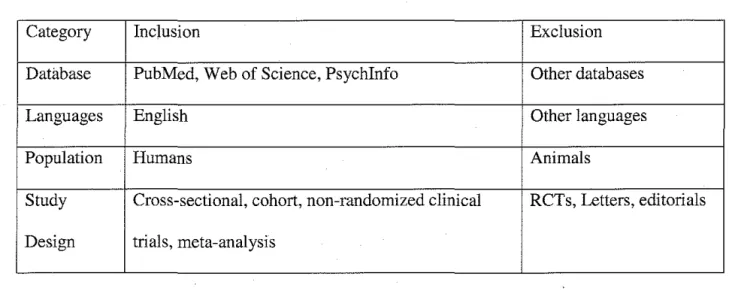
Table 1. General Inclusion/Exclusion Criteria 14 Table 2. Diagnostic and Treatment Prevalence
Inclusion/Exclusion Criteria 14
Figure 3. Flow diagram of systematic literature
search and assessment. 17
Table 3. Studies Addressing Prevalence of ADHD in African-American children
and Adolescents Compared to Caucasians 20
Table 4. Results for Studies Evaluating
Diagnostic Prevalence of ADHD 22
Table 5. Characteristics of Studies Addressing Treatment Rate of ADHD in
African-American children and Adolescents
Compared to Caucasians 26
Table 6. Results of Studies Evaluating Treatment
Abstract
Purpose: To systematically review the literature to determine 1) the diagnostic and 2) treatment prevalence of attention deficit hyperactivity disorder among African American youth and compare the prevalence to Caucasian children and adolescents.
Methods: Medline, Psychinfo, and Web of Science databases were searched from 1994-present for cross-sectional studies, cohort, non-randomized clinical trials, and meta-analyses that contained information regarding the diagnostic prevalence or prevalence of treatment for ADHD and compared African-Americans children and/or adolescents with Caucasian children and/or adolescents,. The author independently assessed studies for inclusion and quality.
Results: 10 studies met inclusion and quality criteria for diagnosis and/or treatment and thus received detailed evaluation. Four studies specifically compared prevalence of an ADHD diagnosis between African-Americans and Caucasians while 9 studies specifically addressed treatment rates for ADHD among different ethnic subgroups. Three of the four
(7 5%) of the articles examining diagnostic prevalence demonstrated there was no
significant difference in the likelihood of being diagnosed with ADHD between Caucasian American and African-Americans children. Of the articles examining treatment
prevalence, seven of the nine (71.4%) articles demonstrated African-Americans were less likely than Caucasian Americans to receive ADHD medications. Of note, other disparities in diagnosis and treatment of ADHD such as regional and health insurance factors were noted.
Introduction
Attention Deficit Hyperactivity Disorder (ADHD) is a neurobehavioral disorder
characterized by six or more symptoms of inattentiveness or hyperactivity-impulsivity that
have persisted for six months or more and that interfere with daily functioning (see Figure
1).1 It is among the most common psychiatric diagnoses of childhood in the United States
and affects over two million children nationwide, or 3-5% of the population under 18 years
of age.2'3 While it is estimated that African-Americans exhibit the same prevalence of
ADHD as the Caucasian population3, the true prevalence rate of ADHD among
African-Americans is largely unknown due to lack of research aimed at group. 4•5
Deficits in research may lead to disparities in recognition and treatment of ADHD
in the African-American population. Studies have shown that cultural factors influence the
manifestation of ADHD in ethnic groups differently than in Euro-American groups, and
thus research conducted primarily in Euro-American groups may not be generalizable to
other ethnic groups.6 Furthermore, lack of evidence of the true prevalence of ADHD in the
African-American community may lead to over- or under-diagnosis of ADHD by medical
professionals and teachers. Therefore it is imperative to identify whether or not disparities
truly exist by examining the prevalence of ADHD diagnosis and treatment among
African-American youth compared with Caucasian youth.
Several barriers exist that can lead to potential misdiagnosis (i.e. over-diagnosis or
under- diagnosis) and treatment of ADHD in African-American youth, and thus a
misrepresentation of the true prevalence in this population. These include factors involving
parents, health care providers, the healthcare system, teachers, and the education system.
Socioeconomic factors may also play a role in possible misrepresentation of ADHD in the
Figure 1. DSM IV Criteria for Attention Deficit Hyperactivity Disorder Either (1) or (2)
(1). 6 (or more) of the following symptoms of inattention have persisted for at least 6 months to a degree that is maladaptive and inconsistent with developmental level:
Inattention
(a) often fails to give close attention to details or makes careless mistakes in schoolwork, work, or other activities
(b) often has difficulty sustaining attention in tasks or play activities (c) often does not seem to listen when spoken to directly
(d) often does not follow through on instructions and fails to finish
schoolwork, chores, or duties in the workplace (not due to oppositional behavior or failure to understand instructions)
(e) often has difficulty organizing tasks and activities
(f) often avoids, dislikes, or is reluctant to engage in tasks that require sustained mental effort (such as schoolwork or homework).
(g) often loses things necessary for tasks or activities (e.g. toys, school assignments, pencils, books, or tools) (h) is often easily distracted by extraneous stimuli
(i) is often forgetful in daily activities
(2) 6 (or more) of the following symptoms of hyperactivity-impulsivity have persisted for at least 6 months to a degree that is maladaptive and inconsistent with developmental level
Hyperactivity
(a) often fidgets with hands or feet or squirms in seat
(b) often leaves seat in classroom or in other situations in which remaining seated is expected
(c) often runs about or climbs excessively in situations in which it is inappropriate (in adolescents or adults, may be limited to subjective feelings of restlessness)
(d) often has difficulty playing or engaging in leisure activities quietly (e) is often "on the go" or often acts as if "driven by a motor" (f) often talks excessively
Impulsivity
(g) often blurts out answers before questions have been completed (h) often has difficulty awaiting turn
(i) often interrupts or intrudes on others (e.g. butts into conversations or games)
B. Some hyperactive-impulsive or inattentive symptoms that caused impairment were present before age 7 years.
C. Some impairment from the symptoms is present in two or more settings (e.g. at school [or work] and at home).
D. There must be clear evidence of clinically significant impairment in social, academic, or occupational functioning.
Figure 2. Barriers to Diagnosis and Treatment of ADHD in African-American Yonth
Socio-demograp
hio Factors
Parental
Factors
Teacher/
Educator Factors
Health
C>rre
Provider
Potential Barriers to Diagnosis of ADHD in African-American Youth Parent level factors
Health behavior, including demand for health services, is believed to be influenced
by knowledge and beliefs held by individuals and their communities.2 Lack of knowledge
of ADHD, including its characteristics, etiology, how it is diagnosed, and treatment
options are factors that prevent parents of all ethnic and racial backgrounds from seeking
help for their children with ADHD. However, this ignorance of ADHD seems to affect
African-American parents to a larger extent than their Caucasian counterparts. In a study
by Bussing eta!, a sample of 486 parents (224 African-American parents and 262 white
parents) of 2nd_4th graders at high-risk for ADHD were surveyed by telephone and
subsequently participated in face-to-face interviews to examine their knowledge of ADHD.
Although most parents (83%) reported having previously heard about ADHD, parental
self-rated knowledge about ADHD varied considerably: 24% said they knew a lot, 30%
said they knew some, 32% said they knew a little, and 14% said they knew nothing about
ADHD. When the results were analyzed according to race, only 69% of African Americans
had ever heard about ADHD compared to 95% of Caucasian parents (p<O.OOl) and fewer
estimated that they knew some or a lot about ADHD (36% vs. 70%, p= <0.001).2
Another parental barrier that may influence help-seeking for their children with
ADHD lies in understanding the etiology of ADHD. The belief that inattention and
hyperactivity/impulsivity symptoms are solely due to behavioral problems and not a
medical condition may prevent parents from having the condition diagnosed by medical
believe that professional interventions are unnecessary.10 Differences in African-American
parental beliefs of causation of ADHD compared to Caucasian parents' beliefs may play a
role in the discordance in help seeking for ADHD behaviors. According to Bussing and
colleagues, when assessing parental beliefs of the origins of ADHD, significant differences
were apparent between African American and Caucasian parents. This was especially true
with regards to attributing ADHD to dietary sugar, genetics, and inherent shortcomings of
their child.2 While more than 40% of caregivers overall incorrectly assumed excess dietary
sugar to be the causal mechanism behind ADHD, twice as many African-American parents
(59%) as Caucasian parents (30%) believed this to be true. A mere 10% of
African-American parents were definitely sure that sugar was not the cause of.ADHD compared to
37% of Caucasian parents.2 Bussing eta! also found that African-American parents were
less likely to attribute genetics as a cause of ADHD (75% vs. 91%, Fisher's exact=0.017)
and were less likely to use medical labels to refer to the disorder (25% vs. 62%, Fisher's
exact=O.OOO). The authors postulate that "disregarding the mainstream medical notion of
ADHD may result in a lack of exchange about the disease within African American
communities," leading to a vicious cycle of misinformation about the disorder in this
. 2
commumty.
The social stigma associated with a diagnosis of ADHD may also serve as a barrier
for African-American parents to seek help for their children with symptoms of ADHD. In
a market research poll conducted by Harris Interactive, 41% of African-Americans parents
surveyed believed African-American children are more likely "mislabeled" as having
ADHD compared to other children whereas only 13% of Caucasian parents believed
African-American parents cited fear of stigmatization as a major reason for not seeking diagnosis
and treatment of ADHD.12
Health Care Provider Factors
Difficulties in standardizing a diagnostic tool for attention deficit hyperactivity
disorder create a potential for cultural differences among ethnic and racial groups to
influence the rate of diagnosis of ADHD. Bauermeister et al noted that both ADHD as a
disorder and the instruments designed to assess it were derived from the perspective of
Western professionals, using Western concepts of disorder and measurements, and without
regard to cultural difference. In fact, studies have shown that behavior rating scales, one of
the most common means of diagnosing ADHD, are not reliable across all ethnic groups. 9
A review of recognition of psychosocial problems in outpatient and ambulatory
care settings conducted by Kelleher et al found that African-American children were
identified less often as having behavioral problems by pediatricians.13 The reasons behind
this may be many fold. Fear of causing additional problems via labeling of children may be
a contributing factor to under-diagnosis of ADHD by physicians. In a qualitative study
conducted in Great Britain involving families of children with ADHD and their physicians,
Klasen and colleagues found that physicians were often reluctant to diagnose or medicalize
a child's inattentive and or hyperactive-impulsive behavior as ADHD because of the
stigma attached to it. 9 Another factor may be preconceived notions and stereotypes of
African-American behavior. According to Bailey et al, a common misperception of
African-American children is that they are more active than their peers from other
Teacher/Education System Factors
Since a large percentage of newly diagnosed ADHD cases are a result of
teacher/educator referral, examining factors that may influence differences in reporting
African-American and Caucasian students is essential. Similar to healthcare provider
biases, teachers may have their own conscious or subconscious stereotypes of
African-American youth that may potentiate misdiagnosis of ADHD. In a study examining teacher
reports of DSM-IV ADHD, oppositional defiant disorder, and conduct disorder symptoms
in schoolchildren, Nolan et a! found teachers rated a larger percentage of
African-American students as having ADHD as compared to Caucasian students (39.5% vs. 14.2%)
and that this finding was consistent with previous studies.14 The authors note that in some
cases teachers may have confused ADHD behaviors with other problems (e.g., low IQ,
anxiety, psychosocial stressors).
Also similar to health care providers, problems with assessing cultural factors in
behavioral rating scales may play a role in this seemingly over-diagnosis of African
Americans students by their teachers. DuPaul et a! assessed the factorial structure and
normative data of a teacher rating scale containing the 18 symptoms of ADHD and found
that teachers rated African American students significantly more hyperactive than
Caucasian students and scored them higher on both the hyperactivity-impulsivity and
inattention factors across all age ranges represented in this national sample. However, the
authors recommend exercising caution in interpreting these results as validity of the
structure of the test for each of the ethnic groups represented in the United States needs to
in Caucasian and African-American males, Reid et al found that although teachers rated
African American students higher on all symptoms across all age groups, further analysis
indicated the scale did not perform identically across all groups.7
Socioeconomic Factors
As encountered in other health care disparities, socioeconomic factors may play a
role in the proposed discrepancy in ADHD diagnosis between African-American and
Caucasian youth. Knowledge about ADHD tends to be less apparent in families from low
socioeconomic backgrounds compared to those from middle and high-economic
backgrounds. Poorer families often have limited access to medical care and as a result
underutilize health care services. Furthermore, low SES has been implicated as a risk
factor for ADHD.18
Potential Barriers to Treatment of ADHD in African-American Youth
According to Children and Adults with Attention Deficit/Hyperactivity Disorder
(CHADD), Caucasians are three times more likely to be referred for treatment of ADHD
compared to African Americans. In the few studies exploring medication rates across
races, ethnic minority children are 2 to 2.5 times less likely to be medicated than their
Caucasian counterparts.19 Factors at the parental level, health care system level, education
system, and the media may present barriers to treatment in African-American youth as
Parent level factors
Aside from the factors that present barriers to diagnosis of ADHD previously
described, some African-American parents may not see their child's ADHD as a large
problem and thus may not be receptive to receiving treatment services for their children.
Bussing et a!. conducted a two-phase study in which they attempted to examine
explanatory models of ADHD and model variation according to child characteristics.
Interviews were conducted with parents of 182 elementary school children to gather
information regarding their views on labeling and etiology of ADHD as well as their ideas
of the severity of symptoms in their child, the time course for the disorder, treatment
options, concerns and desired outcomes for their child's condition. The study investigators
found that African-America parents voiced less concerns over academic performance than
Caucasian parents (OR 0.41, 95% CI 0.19-0.91), and were less likely to request medication
treatment (OR 0.26, 95% CI 0.1-0.6) or school interventions (OR 0.39, 95% CI 0.15-1.0).
In general, parents of children not receiving treatment were less likely to voice
emotional/behavioral concerns than parents of children receiving treatment (OR 0.34, 95%
CI 0.17-0.70).11
Another barrier to parents seeking treatment of their child's ADHD is intra-cultural
issues of mistrust between African-Americans and the medical community. Bussing et a!.
postulates that because of the long history of inequitable medical treatment and abuse (e.g.,
Tuskegee experiment), African American parents may feel concerns over treatment options
for ADHD not for lack of knowledge about its effectiveness, but because they "may not
Impact of Misdiagnosis and Treatment of ADHD
Unrecognized and untreated attention deficit hyperactivity disorder can lead to
several long-term health and behavioral consequences. Untreated ADHD often hinders a
child's ability to function and participate in school and social functions, putting them at
greater risk for learning difficulties than children treated for ADHD.Z· 20 Symptoms of
ADHD have been associated with lower IQ and poorer academic performance than their
non-ADHD counterparts.22 Research shows that adults with untreated childhood ADHD
are more than twice as likely to be arrested, twice as likely to get divorced, and twice as
likely to hold 6 or more jobs in a 10-year period.21
Attention deficit hyperactivity disorder is associated with comorbid psychiatric
conditions such as depression, bipolar disorder, sleep problems, and phobias.21 These
conditions are often exaggerated in children with unaddressed and/or untreated ADHD. In
a study conducted by Abramowitz eta!, 275 Caucasian and male inmates were interviewed
and surveyed for evidence of childhood conduct problems and ADHD. The investigators
found that although to a much smaller degree than conduct problems, childhood ADHD
conferred a significant additional risk for the antisocial lifestyles aspects of
psychopathology seen in male prison inmates.22 A similar study conducted by Rabiner et
al23 sought to identify the predictors of aggressive offending persisting from adolescence
into young adulthood in a sample of 622 African American male offenders over a six-year
period. They found that higher rates of ADHD symptoms predict the persistence of
aggressive offending into young adulthood.23
There are other less legally serious comorbidities associated with ADHD that affect
questionnaires, which are designed to gather information across a range of health domains,
to determine quality of life across physical and psychosocial domains in a clinic-based
sample of 131 children who had a diagnosis of ADHD. Physical functioning (PF),
role/social limitations as a result of physical health (RP), bodily pain/discomfort (BP), and
general health perception (GH) were the physical health domains evaluated using the
50-item parent version of the Child Health Questionnaire. Psychosocial domains included the
following: role/social limitations as a result of emotional-behavioral problems (REB),
self-esteem (SE), mental health (MH), general behavior (BE), emotional impact on parent
(PTE), and time impact on parents (PTT). Additionally, a measure of limitations in family
activities (FA) and family cohesion (FC) were made. Compared with children without
ADHD, children with ADHD had "more parent-reported problems in terms of emotional
behavioral role function, behavior, mental health, and self-esteem. In addition, the
problems of children with ADHD had a significant impact on the parents' emotional health
and parents' time to meet their own needs, and they interfered with family activities and
f arm y co es10n. "1 h . , 24
Purpose of Systematic Review
The potential effects of misdiagnosed and treated attention deficit hyperactivity
disorder can have astounding consequences for the African-American youth population.
Before steps can be taken to address the issues presented, the true prevalence rate of
diagnosis and treatment must be understood. The purpose of this review is to examine the
diagnostic and treatment prevalence of attention deficit hyperactivity disorder among
African-American children and adolescents and compare the prevalence to Caucasian
Methods
Inclusion/Exclusion Criteria
Eligibility criteria were established a priori to identify studies that would answer
the questions: Is there a difference in the prevalence or incidence rate of diagnosis of
attention deficit hyperactivity disorder in African-American children/adolescents compared
to Caucasian children/adolescents? Is there a difference in the prevalence/ rates of
treatment of attention deficit disorder in African-American children/adolescents compared
to Caucasian children/adolescents? To answer both questions, criteria for studies were set
to include cross-sectional studies, cohort, non-randomized clinical trials, and meta-analyses
that compared African-Americans children and/or adolescents with Caucasian children
and/or adolescents. Studies were considered eligible for review if they contained subjects
aged 0-18 years with a diagnosis of ADD, ADD-H, or ADHD using the DSM-IV criteria,
contained information regarding the diagnostic prevalence or prevalence of treatment for
ADHD, and included results for both Caucasians and African-American
children/adolescents in their results. See tables 1, 2, and 3 for exclusion criteria. Titles or
abstracts of all potentially eligible studies were reviewed against these criteria. Possible or
definitely eligible studies were retrieved and reviewed in detail by one reviewer. (Tables 1
Table 1. General Inclusion/Exclusion Criteria
Category Inclusion Exclusion
Database PubMed, Web of Science, Psychinfo Other databases
Languages English Other languages
Population Humans Animals
Study Cross-sectional, cohort, non-randomized clinical RCTs, Letters, editorials
Design trials, meta-analysis
Table 2. Diagnostic and Treatment Prevalence Inclusion/Exclusion Criteria
Category Inclusion Exclusion
Publication Date 1994-present (year DSM-N criteria Before 1994
published)
Study Design Cross-sectional, cohort, non-RCT, meta- RCT's letters,
analysis editorials
Outcomes of Prevalence or incidence rate
Interest
Study Population Children and Adolescents (0 months-18 Adults
Search Strategy
Three different search engines were used to perform the literature review: Medline,
Web of Science, and Psychlnfo. Medline utilized the following search terms:
(African-American* OR Blacks OR Afro American) AND (ADHD OR ADD OR attention deficit
hyperactivity disorder, OR attention deficit disorder) AND (adolescent* OR teen* OR
pre-teen* OR children* OR child OR youngster* OR kid*). The search criteria for Web of
Science included a combination of the following search terms: [TS=(ADHD OR attention
deficit hyperactivity disorder OR ADD OR Attention deficit disorder) AND TS=(African
American* OR Blacks OR Afro American*) AND TS=(Children* OR adolescent* OR
teenager*), while the search string for Psychlnfo was similar: (ADHD OR ADD OR
attention deficit hyperactivity disorder, OR attention deficit disorder) AND
(African-American* OR Blacks OR Afro American). References from relevant articles were
hand-searched to identify additional articles for inclusion in this review.
Methodological Quality
Quality of each study was assessed by one reviewer according to the "Quality
Checklist for RCTs and Observational Studies" scale used in the AHRQ study of perinatal
depression and based on a Methodological Quality checklist developed by Downs and
Black, J Epidemiology and Community Health, 1998 (Evidence for review sheet). Items
assessed included reporting (i.e. were hypothesis/aim/objective and outcomes of the study
clearly described, etc.), external validity, bias, confounding, and power of the study to
detect a significant difference in effect size for one or more outcome measures. According
between 15 and 19 are considered fair, and scores of 14 and below are considered poor.
(Appendix 1).
Data Extraction
For reviews concerning diagnostic prevalence, data were extracted for 6 areas of
study: study characteristics (i.e. design), sample size, subject characteristics (age and sex),
outcomes measured (details about prevalence characteristics), methodological quality, and
main findings. Data were extracted similarly for reviews concerning treatment prevalence.
All extracted data for outcome measurements were rechecked against the original articles
at the time of data entry.
Results
Articles for Review
The initial Medline, Web of Science, and Psychinfo searches returned 168, 209,
and 44 articles respectively for a total of 421 articles. 335 articles were unique citations.
After reviewing titles and abstracts, 31 articles were pulled for review and their
bibliographies were examined for additional references. Seven additional relevant articles
were found. Of these 25 articles, 12 studies met initial inclusion criteria (Fig 2). These
studies were examined for quality using the Downs and Black methodological quality
checklist and studies that rated fair or better were included iri the review. Thus, 11 studies
Figure 3. Flow diagram of systematic literature search and assessment.
422 initial citations reviewed
31 potentially relevant studies identified for retrieval of full text
11 studies met inclusion criteria for diagnosis and/or treatment
10 studies met quality criteria
87 duplicate citations excluded
304 unique citations studies excluded on initial screen because abstracts did not address ADHD diagnosis and/or treatment in African Americans
20 studies excluded
- 18 did not compare rates of diagnosis and/or treatment between African Americans and Caucasians
- 2 studies excluded because did not distinguish ADHD from other mood/anxiety disorders and only gave info for general psychotropic
medications, not stimulants or ADHD meds specifically
Diagnostic Prevalence
Four studies specifically compared prevalence of an ADHD diagnosis between
African-Americans and Caucasians. Characteristics of these studies including study design.
purpose. methods of obtaining ADHD information, and whether or not the prevalence of
ADHD amongst different subgroups was a primary outcome are summarized in Table 3.
The Downs and Black scores for methodological quality for these studies ranged from
18-22. While tbe design of the studies hindered them from getting the maximum amount of
quality points, other factors contributed to the studies getting fair to good ratings. Stevens
et a! (2005) lost 4 points for failing to provide confidence intervals and actual probabilities
for the main outcomes. Stevens et al (2004) lost 5 points for internal validity/bias. Points
were deducted for failure to account for bias related to differential ascertainment of the
outcome between ethnic groups and reliability, (e.g. no standard diagnostic method was
mentioned in the study as used by the physician reporters), and failure to adjust for
different lengths of follow-up of study participants (e.g. study investigators reported ethnic
differences in tbe number of total visits but did not determine if total visits were due to the
number of different patients or the average number of visits per patient.) Rowland eta! lost
5 points for confounding, name! y failure to recruit participants over the same period of
time and failing to account for factors that may affect the likelihood of being diagnosed
and/or treated for ADHD (e.g., presence of health insurance or access to care.) Wasserman
et allost 2 points for external validity (e.g., study participants were from a small group of
children at high-risk for ADHD) and 3 points for confounding (e.g., investigators did not
determine the prevalence of ADHD amongst ethnic subgroups with respect to different
variables such as age, gender, and health insurance. Because of the different sampling
designs, formal statistical procedures and meta-analyses could not be performed. Results of
Table 3. Studies Addressing Prevalence of ADHD in African-American children and Adolescents Compared to Caucasians
Author; (Year) Study Purpose/Objectives Subjects/Inclusion Criteria Ethnic Subgroups ADHD Method of ADHD
Design No.(%) Diagnosis Assessment Prevalence a
Reporter (s) Primary
Outcome? Stevens, J ., Cross- To identify socio- N-27,802 (#of White-American Parents or Medical Yes Harman, J., and sectional demographic disparities in observations) 13,727(67.4%t, head of Expenditure Panel Kelleher25; 2005 different stages of ADHD Children ages 3-18yrs old African-American household Surveys (MEPS)
healthcare, including initial whose parents or head of 4981 (16.5%/, Household identification, follow-up household completed the Hispanic-American Component physician visits, and MEPS survey between 9094 (16.1%t
psychotherapy visits 1997-2000 (+)-weighted percentage of observations
Stevens J, Cross- To investigate ethnic and N-26,441 (#of White American Primary care ICD-9 codes and Yes Harman JS, sectional regional differences in observations) 16,406 (76%
t
physicians physicianKelleher KJ26
; childhood mental heallh Children 3-18yrs old who African American recorded surveys
2004 care in primary care, visited primary care 5074 (12%t of individual particularly with regards to providers in office-based Hispanic American patient encounters
ADHD clinics or outpatient 4117 (12%)+ hospital clinics involved in
the NAMCS and MHAMCS during
Rowland A et Cross- To estimate the prevalence N-7333 eligible children, White Parent Two question Yes at27
, 2002 sectional of medication treatment for 6099 (83% responded) 4437 (72.7%) survey
ADHD among public Children in grades 1-5 who Black elementary school children attended Johnston County 1208 (19.8%)
in grades 1 through 5 and to public elementary schools; Hispanic examine how prevalence Exclusions: Johnston 376 (6.2%)
varies by grade, sex and County children of Other race/ethnicity elementary school age 78 (1.3%)
Wasserman RC Prospective To determine the frequency N-22,059 entire study In sample Clinicians Clinicians Yes-general term et al28
; 1999 cohort study of identification of population; 3934 in sample population determined AHP AHP (attentional atlentional-hyperactivity population of children with (N~3934i status (see next and hyperactivity problems (AHPs)by psychosocial problems) column) by means problems) was clinicians and to examine Children ages 4-15 being White- 81.8% of parent used instead of factors associated with seen for acute, chronic and African American interview, child ADHD clinician identification of health supervision visits in 7.4% interview, school
AHPs in children practices of 401 pediatric Hispanic reports, recognized with and family practice 7.9% observation, psychosocial problems clinicians participating in Other standardized
the Pediatric Research in 2.8% assessment tools, Office Seuings (PROS) and or previous
Ambulatory Sentinel diagnosis by
Table 4. Results for Studies Evaluating Diagnostic Prevalence of ADHD
Study Quality Rating ADHD Prevalence OR P-value Confidence Conclusions Adjustment
Author Interval for
Confounders?
Stevens et al. 21 Caucasian ~~ p<0.05 ~~ White Yes-health
(2005) (Lost points for not American-5.1% American insurance,
reporting estimates African American- children were region of
of random variability 2.1% more likely to residence,
(exact p-value or a Hispanic American- be diagnosed age
CI, reliability,) 1.8% w/ADHD
compared to African-American and Hispanic American youths (5.1% vs. 2.1% and
1.8%,
Stevens et al 22 Caucasian ~~ ~~ No Yes-health
(2004)26 American-2.7% significant insurance,
African American- difference in region of
1.9% 0.62 0.083 0.36~1.07 rates of residence,
Hispanic American- ADHD age
0.8% between
0.27 0.005 0.11~0.66 Caucasian American youth and African-American vouth
Rowland et 18 (Lost points for Caucasian 1.0+ African- Yes--sex,
a!. (2002) not reporting American-10.8% American grade,
characteristics b/w African American- children were race/ethnicity eligible pop and 9.1% 0.9 0.19 0.7. 1..1 only slightly
sample pop; Hispanic American- less likely
inadequate 4.0% 0.4 <0.001 0.2, 0.6 than White
adjustment for Other-3.9% 0.4 0.1, 1.2 children to be
confounding diagnosed
according to . withADHD
insurance, family (adjusted
income, other factors prevalence
that affect access to ratio=0.90,
health care) 95% Cl=0.7~
1.1, p=0.19) though this difference was not statistically significant
Wasserman 21 (Lost points for Caucasian No Yes-parental
RC etal28; generalizability, American-40.8%* significant marital status, (1.999) confounding) African American- 0.954 0.90 ~~ difference in age, parental
3.7%* 1.062 0.86 ~~ rates of education
HispanicAmerican- ADHD level, health
3.5%* between insurance
Caucasian status, region, American attentional youth and subscale on African- Pediatric American Symptom youth Checklist +-AdJuSted for sex, grade and race/etbnic1ty
Stevens et al. (2005i5 used data from the 1997-2000 Medical Expenditure Panel
Survey (MEPS), a nationally representative survey of U.S. civilians, to determine if
ADHD diagnoses, stimulant usage, and number of health care visits varied by age,
race/ethnicity, region, and type of insurance. The authors used weighted percentages to
determine the number of children diagnosed with ADHD according to age, ethnicity,
region and type of insurance. They found White American children were more likely to be
diagnosed with ADHD compared to African-American youths (5.1% vs. 2.1% p<0.05).
They also found regional differences in ADHD diagnosis; children in the Northeast and
West were less likely to be diagnosed than children in the South (3.6% and 2.9% vs. 4.8%
respectively, p<0.05). Children who lived in the Midwest were more likely to be diagnosed
than children in the West (4.3% vs. 2.9% respectively, p<0.05).
In a study published a year earlier by the same group, Stevens et al (2004i6
examined data from the 1995-2000 National Ambulatory Medical Care Survey (NAMCS)
and the National Hospital Ambulatory Medical Care Survey (NHAMCS) to evaluate ethnic
and regional differences in primary care visits for children with respect to the frequency of
ADHD diagnosis, stimulant prescriptions, and other mental health diagnoses. Both surveys
sampled nationally representative groups of visits to primary care physicians. Of the
26,441 visits, 902 of them involved a child with a diagnosis of ADHD. The authors found
that the odds of an African American child being diagnosed with ADHD was 0.62
compared to White children but this was not statistically significant (p=0.83, 95% CI
0.36-1.07). Their study also found that with regards to type of health insurance, an ADHD
visits by children with other types of insurance (OR-2.23, p-value=0.011, 95% CI
1.21-4.11)
Rowland eta! (2002i7 sought to determine the prevalence of medication treatment
for ADHD among elementary school children in Johnston County, North Carolina during
1997-1998 and to see how the prevalence varied by grade, sex and race/ethnicity. Parents
from 17 elementary schools in Johnston County received a 2-item questionnaire containing
questions of whether a doctor or psychologist had diagnosed their child with ADHD and if
their child was currently taking medication prescribed by a clinician to help with
symptoms of ADHD. The authors found that African-American children were only slightly
less likely than White children to have been diagnosed with ADHD (adjusted prevalence
ratio=0.9, p<0.001, 95% CI 2.6, 3.7). Gender and age differences in ADHD diagnosis
emerged as significant.
Wasserman et al (1999i8 recruited physicians from the Pediatric Research
in Office Settings (PROS) and Ambulatory Sentinel Practice Network (ASPN) groups to
enroll 70 consecutive children ages 4 to 15 years who presented for non-emergency care
in their clinics. The authors compared children with newly-diagnosed attentional and
hyperactivity problems (AHPs) to those with other psychosocial problems using logistic
regression analysis. They found no significant difference between African-American
children being diagnosed with AHPs vs. White American children (OR=0.954, p=0.90).
Treatment Prevalence
Nine studies specifically addressed treatment rates for ADHD among different
ethnic subgroups. Characteristics of these studies are included in Table 5. The Downs and
Black scores for methodological quality ranged from 15-24; the average score was
twenty-one. Similar to the diagnostic studies, the studies were either cross-sectional or
longitudinal designs which precluded them from scoring perfect scores. Also other factors
contributed. Safer et al and Rowland eta! both had quality scores below average. Safer et
al's study, which scored the lowest, lost significant points for reporting, and internal
validity for bias and confounding. Safer failed to provide estimates of random variability
such as confidence intervals as well as actual probability values for the main outcomes.
Similar to the Stevens et al. 2004 study, the authors did not account for biases related to
differential ascertainment of the outcomes between groups (e.g. several different methods
of diagnosis were used by the physician reporters and were not standardized) thus making
the validity and reliability of the results questionable. Safer et al also did not factor
confounders such as presence or absence of health insurance or other socioeconomic
factors in the analysis. Rowland et allost 5 points for confounding as previously described.
All nine studies also used logistic regression to determine treatment prevalence among
different ethnic groups. Similar to the diagnostic studies, due to the difference in sampling
designs, formal statistical procedures and meta-analyses could not be performed. Results of
Table 5. Characteristics of Studies Addressing Treatment Rate of ADHD in African-American children and Adolescents Comuared to C
---Author; Study Design Purpose/Objectives Subjects/Inclusion Ctiteria Ethnic Subgroups ADHD Method of Assessment ADHD
(Year) No.(%) Treatment Treatment
Reporter (s) Rates a
Primary Outcome? Zito el a! Cross- To identify 1) the 1991 prevalence Children ages 5-14 who received N-99,217 Medicaid Person-based data set Yes (1998)'" sectional of psychotropic medication Medicaid in Maryland and were Caucasian 38,349 prescription created from Medicaid
(retrospective prescribed to African-American seen in ambulatory settings by (38.7%) reimbursement prescription reimbursement analysis) and Caucasian Medicaid recipient physicians during the 1991 fiscal African-American claims and claims and enrollment 'files
youths ages 5-14, 2) the race- year 60,868 enrollment 'files specific prevalence ration for the (61.3%)
most frequently prescribed psychotropic medication classes, and 3) the race and regional distribution of psychotropic and non-psychotropic medication classes
Bussing Prospective To describe the use and Children were eligible if they were N-220 Parents, school Surveys (Norbeck Social Yes etal cohort study persistence of ADHD medication enrolled in a particular North representing an database and support questionnaire,
(2005)30 treatment and of relevant school Central Florida public school overall response disciplinary Caregiver Strain
services during a 2 year period, to district during the 1998-99 rateof17%) referrals questionnaire, Diagnostic examine how these outcomes vary academic year, lived in a household Caucasian Interview Schedule for by gender and race; and to explore with a telephone, were not 152 (69.1%) Children 4lh edition (DISC-the roles of gender and race as receiving special education for African-American IV), and the Child and independent predictors of mental retardation or autism, and 69 (30.9%) Adolescent Services medication treatment and school were from Caucasian or African- Assessment) services. American backgrounds. Initial No.
eligible children=l2,009
Study participants were derived through a gender-stratified random design from the longitudinal study to produce a representative sample of children at high-risk for ADHD (N=l276)
Olfson et Cross- To examine national trends in the Children ages 3-18 whose parents 1987 survey Parents or head Medical Expenditure Panel Yes a! sectional outpatient treatment of ADHD or head of households completed (weighted of household Surveys (MEPS)
(2003)31
the household components of the samples) Household component 1987 and/or 1997 Medical White American given during four personal Expenditure Panel Surveys (70%) interviews in the 1987 No. from 1987 survey=8,367 African American survey and three personal No from 1997 survey=8,771 (15.4%) interviews in the 1997
Hispanic interview
Other (4.2%) 1997 survey (weighted samples) White American (65.1 %) African American (15.8%) Hispanic (14.7%) Other (4.4%)
LeFever Cross To determine the extent of Public school students enrolled in Breakdown for School nurses School nurses recorded No et al sectional medication use for ADHD in grades 2 through 5 in two sample not health-related information (1999)32 Southeastem Virginia Southeastern Virginia cities during available for all students receiving
the 1995-1996 school year. ADHD medication in Exclusions: students in non-graded school which was merged special education placements with the school districts (designed for children with severe comprehensive student intellectual impairments) database containing N=5,767 in City A and N=23,967 demographic information.
in City B. A subset of this new
A subset of this sample diagnosed database was made with ADHD was used to determine available to the principal
rate of treatment. investigator
City A subset N=467; City B subset N-2,199
FoxM, Cross- To perform a population-based Youths less than 20 years of age N-5574 Kansas Medicaid Person-based data set Yes Foster sectional examination of psychotropic drug enrolled in Kansas Medicaid and Caucasian prescription created from Medicaid
CH. prescription trends among low- receiving psychotropic drug Americans-81 I% reimbursement prescription reimbursement (1999}'5 income youths with respect to age,
prescriptions in 1995 African claims and claims and enrollment files ethnicity, gender, and region of Americans-12.5% enrollment files
residence Hispanics-3.5%
Safer DJ Cross- To determine the prevalence of Children enrolled in Maryland Caucasian School nurses School nurses collected Yes and sectional medication administered to public schools and receiving American-55.9% health-related and
Malever Maryland public school students ADHD medication treatment in African American- demographic information
M for the treatment of ADHD Aprill998;N=23,771 36.1% on all students receiving
(2000)" Hispanic-3.72% ADHD medication during
Asian-3.97% school hours and recorded Native American- it on a survey form 0.32%
Stevens, Cross- To identify socio-demographic N 27,802 (#of observations) White-American Parents or head Medical Expenditure Panel Yes et al sectional disparities in different stages of Children ages 3-18yrs old whose 13,727(67.4%)+, of household Surveys (MEPS)
(2005)" ADHD healthcare, including parents or head of household African-American Household Component initial identification, follow-up completed the MEPS survey 4981 (16.5%)\
Hispanic-psychotherapy visits American 9094 (16.1%)' (+)-weighted percentage of observations
Stevens Cross- To investigate ethnic and regional N-26,441 (#of observations) White American Primary care ICD-9 codes and physician Yes et al sectional differences in childhood mental Children 3-18yrs old who visited 16,406 (76%t physicians recorded surveys of
(2004)" health care in primary care, primary care providers in office- African American individual patient particularly with regards to based clinics or outpatient hospital 5074 (12%t encounters
ADHD clinics involved in the NAMCS and Hispanic MHAMCS during American
4117 (12%/
Rowland Cross- To estimate the prevalence of N-7333 eligible children, 6099 White Parent Two question survey Yes A et ae7, sectional medication treatment for ADHD (83% responded) 4437 (72.7%)
2002 among public elementary school Children in grades 1-5 who Black children in grades 1 through 5 and attended Johnston County public 1208 (19.8%) to examine how prevalence varies elementary schools; Hispanic by grade, sex and race/ethnicity Exclusions: Johnston County 376 (6.2%)
children of elementary school age Other auending private schools, receiving 78(1.3%) home schooling, attending middle
Table 6R
.
esu ts o I fS tudies Evaluatilll;! Treatment p reva ence t I or ADHDStudy Quality ADHD OR P-value Confidence Conclusions Adjustment for
Author Rating Treatment Interval Confounders?
Prevalence
Zito et al 23 (Lost Caucasian 2.5 -- Caucasians were Yes-region, (1998)" points for American- 2.5times more period of
not 3.76%+ likely to receive a enrollment in
reporting African 1.0 -- -- stimulant Medicaid
American- medication than
1.49%+
African-Americans;
p-values and CI given for psychotropic medications as a class, though not specifically for stimulants
Bussing et 23 Caucasian African-American Yes-adjusted
a! (2005i0 American- children with for
NIR' ADHD were 0.91 predisposing,
African 0.91, 3.46' --, <0.01 0.36-2.34; times as likely to need, and
American- 1.31-9.09 beonADHD enabling
NIR' medication variables (i.e.
compared to age, economic Caucasian status, parental children with characteristics, ADHD but this impairment was riot score, etc) statistically
significant (95% C1 0.36-2.34); African Americans were 3.46 times more likely to receive relevant school services for ADHD which was statistically significant
Olfson eta! 22 Caucasian White children Yes- Age,
(2003i1 Americans- -- -- were more than gender, family 1.1 %, 4.4%* twice as likely as income, health
African- African-American insurance
Americans- children to receive
0.3%, 1.7%* treatment(!.!%
Hispanic- vs. 0.3% in 1987,
0.3%, 1.5%* respectively and
Other-0.2%, 4.4% vsl.7% in
0.8%* 1997,
respectively).
LeFever et 24 Caucasian City A- White students Yes-age for a1 (1999)" Americans- Caucasian were grade, sex
NIR Am-2.1 P<O.OOl 1.74, 2.54 approximately African City B- twice as likely as Americans- Caucasian P<0.001 2.03, 2.41 Black students to
NIR Am-2.2 receive ADHD
Overall medication
treatment prevalence-City A=8.2%, City B-9.9%
FoxM, 21 Caucasian 1.20+ N/R 1.03,1.40 African Yes-age,
Foster CH. Americans- Americans were region, gender
(1999)" African less likely than
SaferDJ 15 Caucasian 5.2
and
Americans-MaleverM 3.4% (2000)" African
Americans- 1.0 1.5%
Hispanics- (3.U)
1.2%
Stevens et 21 Caucasian NR
al (2005)" Americans-76.%%& African Americans-60.5%& Hispanic- American-68.5%&
Stevens et 22 Caucasian al (2004)26
Americans-74.1%+& --African
Americans-72.4%+& 0.69
Hispanic-American- 0.28 69.6%+&
Rowland A 18 Caucasian et ae, 2002
American-8.2% 1.0 African
American-5.1% 0.7 Hispanic
American- 0.3 2.1%
-
-Refers specrfically to shmulant treatment#-Ratio of children receiving relevant school services for ADHD $-NIR=not reported
*Rate of receiving ADHD treatment in 1987 and 1997 &-Weighted percentage of children with ADHD
N/R P<0.05 0.247 0.008 --NR NR stimulant medication
NIR African Yes-grade Americans were 5
1h times less likely to be taking methylphenidate treatment during school compared to Caucasian Americans
NIR White American Yes-health children with insurance, ADHD were more region of likely to receive at residence, age least one stimulant prescription compared to African-American children with ADHD
There was no Yes-health statistically insurance, -- significant region of
difference in the residence, age likelihood of
0.37-1.30 receiving a stimulant 0.11-0.70 prescription
during outpatient visits to primary care providers between Caucasians and African-Americans
African American Yes-sex, grade, elementary school race/ethnicity -- students in
Johnston County, NC were 0.7 0.5, 0.8 times as likely to
be receiving O.l, 0.5 ADHD
medication treatment than Caucasian American elementary school students in Johnston County, NC
Three of the studies that reported treatment prevalence were also used in the
least one stimulant prescription compared to African-Americans with ADHD (76.5% vs.
60.5%, p<0.05). Interestingly, Stevens eta! (2005) also found that children with ADHD
who had private insurance were more likely than children on public insurance or who had
no insurance to receive at least one stimulant prescription. In the 2004 Stevens eta! study,
the authors found no ethnic differences in the likelihood of receiving a stimulant or
non-stimulant if a child had been diagnosed with ADHD (p>0.10) but did find a difference in
stimulant prescriptions relative to insurance status, identical to Stevens 2005 study.
Rowland eta! found that AD liD-diagnosed African American children were 0.7 times as
likely as Whites to be taking ADHD medication (p<0.001, 95% CI 0.6, 0.9).
Zito et al (1998f9 and Fox eta! (1999)35 both used Medicaid data to evaluate
variations in psychotropic drug use in children. Zito used Maryland Medicaid data from
the 1991 fiscal year to examine the prevalence of psychotropic medications, including
stimulants, prescribed to African-American and Caucasian Medicaid recipient youths ages
5-14 while Fox looked at 1995 Medicaid data from Kansas and one other Midwestern state
for children under 20. With regard to stimulant use, Zito et a! found that Caucasian youths
with Medicaid insurance aged 5-14 years were 2.5 times more likely to use stimulants than
African-American youths (no p-value or confidence intervals were reported for this
measurement). Methylphenidate was the most commonly prescribed stimulant, accounting
for 89.6% of stimulant use. Zito eta! examined period of enrollment as a possible factor in
the decreased amount of psychotropic medication use amongst African-American youth
but found that "continuous enrollment favored African-Americans (55% vs. 46% for
Caucasians)." Also, though not looking at stimulants specifically, the authors found that
youth compared to African-American youth. They postulated relatively less psychiatric
follow-up care and cultural differences including family attitude towards the mental health
system as possible reasons for this discrepancy. Fox found African American children
were less likely to receive stimulant medication than Caucasian children (OR 0.86 vs.
1.23). No tests of statistical significance were given in comparing these odds ratios.
Bussing eta! (2005)30 conducted a prospective cohort study using a
gender-stratified random design from a longitudinal study of elementary school students from a
North Central Florida school district to produce a representative sample of children at
high-risk for ADHD (N=1276). The authors found no difference in rates of medication
treatment amongst African-American and Caucasian youth though they did note that
African-American children utilized more special school services for ADHD.
Similar to the Stevens (2005)25 study, Olfson et a! (2003)31 used data from the
Medical Expenditure Panel Survey (MEPS) to examine national trends in the outpatient
treatment of ADHD and how it differs across race, gender, health insurance status, and
family income. The authors examined results from the 1987 and 1997 household
component of the MEPS and combined information from the two to examine relationships
between the two surveys with regards to stimulant prescriptions, psychotherapy visits, and
treatment visits. Samples were weighted to adjust for non-responseas well as to provide
unbiased national estimates. They found that White children were more than twice as likely
as African-American children to receive treatment (1.1% vs. 0.3%, respectively for 1987
survey, 4.4% vs. 1.7% respectively for the 1997 survey). Odds ratios, a p-value and 95%
confidence interval were not reported for this particular result. Although there was an
lagged behind Caucasian Americans in rates of treatment, even after controlling for
economic factors such as family income and health insurance status. The authors
concluded that cultural factors may play a role in this disparity.
LeFever eta! (1999) 32 and Safer et al (2000) both assessed the prevalence of
ADHD medication use amongst students in public schools. LeFever examined elementary
school students in two school districts in Southeastern Virginia while Safer looked at use
amongst all grade levels in all Maryland public schools. LeFever found White students
were approximately twice as likely as Black students to receive ADHD medication in both
cities (City A OR 2.1, p<0.001, 95% CI 1.74, 2.54; City B OR 2.2, p<0.001, 95% CI 2.03,
2.41). Safer found the White/Black methylphenidate prevalence ratio to range from 2.0:1
in elementary school, 2.6:1 in middle school, and 5.2:1 in high school. No estimates of
random variability or statistical significance were reported.
Overall, three of the four (75%) of the articles examining diagnostic prevalence
demonstrated there was no significant difference in the likelihood of being diagnosed with
ADHD between Caucasian American and African-Americans children. Of the articles
examining treatment prevalence, seven of the nine (71.4%) articles demonstrated
African-Americans were less likely than Caucasian African-Americans to receive ADHD medications.
While the heterogeneity of the studies precludes firm conclusions, the trend seems to
reveal that African American youth are diagnosed with ADHD at approximately equal
rates as Caucasian youths, but they are under-treated with respect to receiving ADHD
Discussion
The objective of this review was to identify studies that compared ADHD diagnosis
and treatment prevalence of African Americans with Caucasian Americans to determine if
any disparities exist. Overall, despite the relatively low quality of the evidence and the
inability to group study effects together in a meta-analyses, it appears that disparities do
exist in regards to ADHD treatment but not in diagnosis. In addition, other disparities in
ADHD were noted. Several studies reported regional and health insurance factors that
contributed to differences in both diagnosis and treatment of ADHD. While many of the
studies report controlling for these factors in their logistic regression models, examining
whether there is a specific interaction between the race/ethnicity and these factors certainly
deserves further investigation.
There are several limitations to this review. Primarily, the studies themselves were
not without methodological flaws. The majority of the studies were cross-sectional or
cohort designs which lends themselves to multiple biases. First, selection bias may have
been present in the majority of the studies. The self-selected nature of many of the studies
creates the potential for participants to be significantly different than non-participants
which could have varied significantly across different ethnic subgroups. The majority of
studies lacked adequate descriptions of techniques for adjusting for baseline group
differences; in fact only 1 (Wasserman) out of the 10 (10%) studies specifically reported
these differences. Secondly, 4 out of the 10 (40%) studies used parental surveys as a
method of determining ADHD diagnosis or medication treatment and did not use other
affected the results. Of the two studies that used clinician reports for diagnosis, one study
reported clinicians used a variety of tools to diagnose children with
attentional/hyperactivity problems. Wasserman eta!. reported the DSM-IV criteria were
only used to diagnose 38.3% of subjects. This could result in significant inter-rater
variability in diagnosis, which decreases the validity of this study's results. Confounding
could have played a role in the interpretation of results if all extraneous factors were not
adjusted for in the analysis. Access to care and socioeconomic factors have been shown to
be a determinant of whether children are recognized and treated for ADHD.18 Seven of the
10 (70%) studies factored in presence of health insurance in their analysis while only 2 of
the 10 (20%) examined family income as potential confounders. Statistical analysis varied
amongst the studies. Four of the 8 treatment studies and one of the diagnostic studies did
not report specific estimates of random variability which brings into question the reliability
of the reported values and subsequent conclusions. Finally, the ability to generalize the
results to all children was severely limited due to the widely different populations in the
various studies. One study used children at high-risk for ADHD, two considered only
children receiving Medicaid, three considered children enrolled in public schools, while
only three reported using nationally representative data.
In addition to limitations within specific studies, this review has its own limitations.
Even though three large search engines were used with rather broad search terms, there
were only 10 studies identified that ultimately met inclusion and quality criteria. This
could represent a paucity of published studies that specifically compare African Americans
initial search strategy. Quality for each study was assessed by only one reviewer, whereas
most systematic reviews use two or more to make the quality assessment more reliable.
In addition to the need for higher quality, population-based studies that examine the
disparate relationship between ADHD recognition and treatment in African American
youth, further research should be dedicated to examining the factors that affect ADHD
treatment rates in this subgroup. Bussing et al11 examined parental explanatory models of
ADHD to determine if differential understanding of ADHD across ethnic subgroups
contributed to the cultural variations in parental help seeking for children with ADHD.
Interestingly, with regards to ADHD treatment African American parents were more likely
than Caucasian parents to report they did not know what type of treatment their child
should receive (medication vs. psychosocial interventions vs. school interventions vs.
self-care) and were less likely than Caucasian parents to request medication treatment or school
interventions. In a similar study examining parental help-seeking for ADHD symptoms by
Bussing et al37 published seven years later, the authors found African American parents
were more likely than Caucasian parents to seek help from family members and less likely
from healthcare professionals. Since more often than not parents play a major role in
whether their child is treated for various conditions, perhaps parental-level factors are
contributing to the disparity seen in ADHD treatment.
In a study conducted by Arnold et al38 examining the responses of different ethnic
subgroups to ADHD treatment, the authors found African American children responded
equally to stimulant treatment as Caucasian children but benefited more than Caucasians
may have implications for overall treatment effectiveness of ADHD in African American
children.
In summary, based on the current literature, it appears that African-American youth
are equally diagnosed with ADHD but under-treated with respect to medication use.
Future directions for research include producing additional high-quality population-based
studies that examine disparities in ADHD diagnosis and treatment amongst ethnic
subpopulations and exploring potential interactions with socioeconomic, regional and
parental factors that may impact rates of ADHD treatmenton African American youth.
Furthermore, the development of culturally-sensitive messages in recognizing the
symptoms and treatment options for ADHD may benefit the minority community and
Appendix 1. Methodological Quality Worksheet
Quality Checklist for RCTs and Observational Studies
(used in the AHRQ study of perinatal depression and based on a Methodological Quality
checklistdeveloped by Downs and Black, J Epidemiology and Community Health, 1998). Reviewer's initials _ _ _ _ _
First Author _ _ _ _ _ Journal: _ _ _ _ _ _ _ _ _ _ _ _ _ _
Year published _ _
Reporting
1 Is the hypothesis/aim/objective of the study clearly
described?
2. Is the under! ying theory described?
3. Are the main outcomes to be measured clearly
described in the Introduction or Methods section?
4. Are the characteristics of the study population
included in the study clearly described?
5. Are the interventions under-study clearly described?
6. Was exposure to the intervention measured?
7 Are the distributions of principal confounders in
each group of study participants to be compared
clearly described?
8. Are the main findings of the study clearly described?
9. Does the study provide estimates of the random
variability (e.g., standard error, standard deviation,
confidence intervals, inter-quartile range) in the data
for the main outcomes?
10. Have all important adverse events/negative outcomes
that may be a consequence of the intervention been
Yes
2
Yes No
1 0
I I
0 0
1 0
1 0
I 0
P* No
I 0
Yes No
reported?
11. Have the characteristics of study participants lost to
follow up been described?
12
Have aetna! probability values been reported (e.g.,
0.035 rather than <0.05) for the main outcomes
except where the probability value is less than 0.001?
1 0
1 0
Total Reporting score: _ _
Yes No U/D
External Validity
13 Were the study participants asked to participate 1
representative of the entire population from which
they were recruited?
14. Were study participants who agreed to participate 1
representative of the entire population from which
they were recruited?
15. Were the staff, places, and facilities where the study 1
participants received the intervention representative of
the intervention the majority of subjects receive?
16. Were the screening criteria for study eligibility I
specified?
0 0
0 0
0 0
0 0
Total External Validity Score:
Internal Validity -Bias Yes No U/D
randomized controlled trial:
17. Was an attempt made to blind study participants to tbe 1 0 0
intervention they received?
18. Was an attempt made to blind those measuring the 1 0 0
main outcomes of tbe intervention?
Answer alternative 17 and 18 if this was not a
randomized controlled trial:
17. Were appropriate methods used to adjust for the 1 0 0
differences between groups witb and without tbe
intervention (to control for selection bias)?
18. Were appropriate methods used to account for any 1 0 0
biases related to differential ascertainment of the outcome in groups with or without tbe intervention?
19. If any of the results of the study were based on "data 1 0 0
dredging," was this made clear?
20. In trials and cohort studies, do tbe analyses adjust for 1 0 0
different lengtbs of follow-up of study participants, or in case-control studies, is the time period between the intervention and outcome tbe same for cases and controls?
21. Were the statistical tests used to assess the main 1 0 0
outcomes appropriate?
22. Was compliance witb tbe intervention reliable? 1 0 0
23. Were tbe main outcome measures used accurate (valid 1 0 0
and reliable)?
Total Bias Score:
Internal Validity - Confounding
24. Were the study participants in the different
intervention groups (trials and cohort studies) or were
tbe cases and controls (case-control studies) recruited
Yes No U/D
from the same population?
25. Were study participants in the different intervention 1 0 0
groups (trials and cohort studies) or were the cases and controls (case-control studies) recruited over the
same period of time?
26. Were study participants randomized to intervention 1 0 0
groups?
27. Answer this Q.27, if randomization occurred: was 1 0 0
the randomized intervention assignment concealed from both study participants and intervention staff until recruitment was complete and irrecoverable?
27. Answer this Q.27, if randomization did not occnr: 1 0 0
were study participants in the research or evaluation,
unaware of the study hypotheses?
28. Was there adequate adjustment for confounding in the 1 0 0
analyses from which the main findings were drawn?
29. Were losses of study participants to follow-up taken 1 0 0
into account?
Total Confounding Score:
Power
30. Did the study mention having conducted a power analysis to determine the sample size needed to detect a significant difference in effect size for one or more outcome measures?
No 0
Yes, one measure 1
Yes, two or more measures 2
Total Quality Score: _ _
_
(sum of all domain scores)
*P = Partially