ABSTRACT
The uses of formaldehyde in a medical center, commercial
availability, and possible health effects of exposure are
discussed. The new OSHA standard and the need for thisstudy are presented.
Formaldehyde usage is classified according to type,
location, and amount of use. A sampling strategy was
developed to determine possible exposures throughout the
medical center. Available sampling methods and analytical
procedures are listed and those chosen are discussed.
Sample results are presented by area according to type
of use. A brief discussion of operations being carried out
in each area and a summary of sampling results are given.
Results of almost all formaldehyde sampling were below new
OSHA standards. For those above prescribed OSHA levels, all
follow-up samples were below the standard after implementing
administrative controls. Recommendations are made to help
with continued formaldehyde sampling at the medical center.
The medical center is currently in compliance with the
new OSHA requirements. Reliable, efficient, and cost
effective means of routine sampling needed to stay in
compliance are discussed.
Page
ACKNOWLEDGEMENTS ... vi
I. INTRODUCTION ... 1
A. History and Use of Formaldehyde... 1
B. Commercial Availability of Formaldehyde ... 1
C. Uses in A Medical Center ... 2
II. HEALTH EFFECTS OF FORMALDEHYDE... 6
A. Irritant Properties ... 6
B. Dermal Effects ... 7
C. Respiratory Effects ... 8
D. Carcinogenic and Teratogenic Effects ... 9
E. Events Leading to New Standard... 11
F. New Standard ... 12
III. OBJECTIVES ... 13
IV. PERFORMING THE SURVEY ... 14
A. Determining Usage ... 14
B. Walk-Through Survey ... 15
C. Developing a Strategy ... 17
V. SAMPLING AND ANALYSIS ... 22
A. Sampling Methods and Analytical Procedures .. 22
B. Choosing Equipment ... 33
Pacfe
VI. SAMPLE RESULTS ... 37
A. Tissue Preservation ... 37
B. sterilization and Decontamination ... 52
C. Dilution ... 62
D. Miscellaneous... 67
VII. CONCLUSIONS ... 74
VIII. RECOMMENDATIONS ... 76
REFERENCES ... 78
APPENDIX 1 Materials Management List ... 83
APPENDIX 2 Preliminary Inspection Table... 84
APPENDIX 3 Employee Notification Form... 85
LIST OF TABLES Pacfe
Table 1 Draeger Tube Formaldehyde Grab Samples ... 16
Table 2 Formaldehyde Concentrations by Usage ... 20
Table 2A Classification by Type of Use ... 21
Table 3 Methods Available for Formaldehyde Sampling anA
Analysis ... 23
Table 4 Operational Parameters for Available
Methods ... 26Table 5 Advantages, Disadvantages and Liabilities of
Available Methods ... 27Table 6 Methods Used for Sampling ... 36
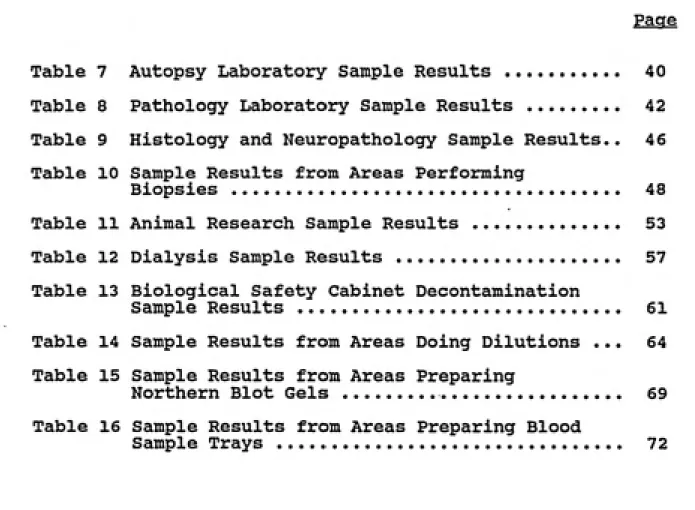
Table 7 Autopsy Laboratory Sample Results ... 40
Table 8 Pathology Laboratory Sample Results ... 42
Table 9 Histology and Neuropathology Sample Results.. 46
Table 10 Sample Results from Areas Performing
Biopsies... 48
Table 11 Animal Research Sample Results... 53
Table 12 Dialysis Sample Results... 57
Table 13 Biological Safety Cabinet Decontamination
Sample Results ... 61
Table 14 Sample Results from Areas Doing Dilutions ... 64
Table 15 Sample Results from Areas PreparingNorthern Blot Gels ... 69
Table 16 Sample Results from Areas Preparing Blood
Sample Trays ... 72
ACKNOWLEDGEMENTS
I want to thank Dr. David Fraser for advising me
throughout my studies with his invaluable knowledge and
experience. I also thank Dr. Wayne Thomann and all the good
people in the Environmental Safety Department of the Duke
University Medical Center for making this research possible.
Thanks go to Dr. Jerry Tulis for his help and expertise and
Carolyn Bishop for her guidance and patience with analysis
at the OHSG Lab. I thank my former bosses, Dan Brower for
giving me the chance to enter the field of industrial
hygiene and Rich Familia for inspiring me to return to
school for my Master's degree.I especially appreciate the chance to study industrial
hygiene at UNC and the financial assistance from the
Occupational Health Traineeship which helped make it
possible. Lastly, I would most like to thank my mom,
family, friends, and Mr. Brian Daisy for the emotional and
psychological support needed to complete my degree.
A. Formaldehyde is one of the most widely used chemicals in industrial and laboratory settings. It is used as a
preservative, a hardening and reducing agent, a corrosion inhibitor, and in the manufacturing of resins and other
compounds. In industry, it can be used in the manufacturing
of textiles, fertilizers, inks, glue, paper, wood, rubber, and pharmaceuticals. In health related occupations it is used by pathologists, autopsy technicians, morticians,
anatomists, nurses, and surgeons for tissue preservation,
sterilization, and decontamination. It has been estimated that up to one-third of all people occupationally exposed
are in medical or other health related services. Its wide
and extensive use in the medical setting is due to its attributes as a fixative, preservative, disinfectant, and
decontaminating agent.
B. Formaldehyde was first synthesized in 1859 by Alexander Butlerov. Nine years later A.W. Hoffman identified
formaldehyde when he passed an air-methanol mixture over a
hot platinum spiral. The commercial manufacturing of
formaldehyde began in 1889 and had reached over five billion
Formaldehyde is a colorless gas that is available
commercially in saturated solutions of 37.0 to 40.0% of
formaldehyde gas by weight in water. The solution is
commonly called formalin and is considered 100.0% formalin,
therefore one part formalin in nine parts of water is not a
4.0% solution but a 10.0% solution. Commercial formalinusually contains 10.0 to 15.0% methanol to increase shelf
life and keep formaldehyde from combining with oxygen to
produce formic acid.
C. Fixing fluids act as tissue preservatives, inhibiting
autolytic changes and bacterial growth. Fixatives help to
harden tissue by either crosslinking or denaturing and
precipitating protein in them. They also inactivate the
enzymes of cells, thereby avoiding digestion of proteins and
other macromolecular substances in the cell which would lead
to postmortem degeneration of tissue. Fixatives also kill
bacteria and other disease causing organisms which might be
present in the tissue.A 10.0% buffered formalin solution is the most popular
fixing agent in laboratories. Formalin's advantages include
that it is relatively inexpensive, penetrates rapidly, does
not overharden tissue, preserves fatty tissue, and permits
the use of a wide assortment of staining methods.
purposes increased dramatically when toxic metallic salts
4
were banned in the late 1800's. Embalming fluids typically contain 2.0% formalin, 2.0% phenol (to counteract the
formaldehyde bleaching effect), 6.0% glycerin (to soften
tissue and retard drying), 20.0% of 95.0% alcohol, and 70.0%
water.
Formaldehyde has long been used as a disinfectant. The application of formaldehyde for inactivation of
microorganisms was practiced before the turn of the
5
century. One of the first uses of formaldehyde vapor was
6
to fumigate sick rooms.
Formaldehyde is believed to inactivate bacteria, fungi,
molds, and yeasts by combining with amino groups of
proteins. In dilutions of 0.5 to 0.75%, formaldehyde kills
aerobic bacteria in six to twelve hours and anaerobic
bacteria in two to four days. It is used in place of heat
sterilization in hemodialysis units to sterilize the
dialysis machines. This is done by adding approximately
140.0 milliliters (mi's) of a 5.0% formalin solution to the
machine through a suction line and letting it sit overnight.
In some machines approximately 10.0 to 15.0 mi's of 37.0%
formaldehyde is sucked in and left overnight.
Formaldehyde is also used to decontaminate biological
rooms, or other enclosed spaces. It has become the chemical 7
of choice for space disinfection.
Formaldehyde can be generated from aqueous formalin
solutions containing 37.0 to 40.0% formaldehyde by heating
or vaporizing the solution or by mixing potassium
permanganate to formalin in a 40:60% by weight volume ratio
to cause an exothermic chemical reaction. Sodium
dichromate, bleaching powder, potassium or sodium chlorate, or caustic soda can be used with appropriate ratios in place
of potassium permanganate. The preferred method of
generating formaldehyde gas is by heating paraformaldehyde,
which is a solid polymer containing 91.0 to 99.0%
formaldehyde. Heating is done in an electric frying pan or
deep fat cooker at temperatures above 150.0 degrees
centigrade in an atmosphere of 21.0 degrees centigrade or greater and a relative humidity of 60.0% of more.
For restricted laboratories where infectious agents are
being used, decontamination must be done when that area is
to become an unrestricted general use laboratory. In the case of biological safety cabinets, a routine performance certification may be necessary every six to twelve months.
A decontamination of the cabinet must be done if infectious
agents were used in order to enter the cabinet at minimal
risk of infection. In the subject study, extensive
formaldehyde sampling was done during the decontamination of
biological safety cabinets and will be discussed in greater
preparation, pap smear samples, and blood sample tray
preparation. In all these cases a 10.0% buffered formalin
solution is used, either pre-made by the Pharmacy Department
II. HEALTH EFFECTS
Various health effects of inhalation and dermal contact
with formaldehyde have been reported. Formaldehyde is a
primary irritant, it is toxic, and it is regarded as an
occupational carcinogen. Responses have been produced upon
ingestion, inhalation, and adsorption through the skin.
Symptoms range from minor eye irritation to pulmonary edema
and death upon ingestion.
A. Among the first symptoms seen are burning of the eyes
(lacrimation) and irritation of the upper respiratory tract. Airborne concentrations as low as 0.1 parts per million
(ppm) can cause eye, nose, and throat irritation. Stephens used human subjects to determine an eye irritation threshold
of 1.0 ppm for five minutes. Morrill determined the
threshold for eye irritation to be between 0.9 and 1.6 ppm
and bourne and Seferian reported eye irritations at
concentration as low as 0.13 to 0.45 ppm. This threshold
limit may be impossible to determine quantitatively due to
variation in individual responses, but most studies seem to
support the lower ranges reported by Bourne and Seferian.
The inhalation of high concentrations of formaldehyde
or more.
B. It has been noted that dermal diseases and disorders
account for over a third of all reportable occupational diseases, and are a serious problem in the United States
12
workplace. Formaldehyde is one of the most common causes 12
of occupational skin disease. The major effects of formaldehyde on the skin are the development of both
irritant dermatitis and sensitization leading to allergic
. 13 contact dermatitis. It may also cause urticaria (hives).
Irritant dermatitis results from a direct injury to the skin and is more prone to occur or persist in atopic
individuals, encompassing 20.0 to 30.0% of the general
14
population. Cases of primary skin irritation due to
contact with formaldehyde have included erythema,
inflammation of skin folds, decay of fingernails, and
urticaria. Irritant reactions are more likely to occur
under conditions of low humidity, repeated wetting and
drying of the skin, temperature extremes, mechanical trauma,
pre-existing skin disease, and concomitant exposure to other
irritating substances. Repeated exposure to formaldehyde
15
can cause development of hypersensitivity.
According to Rostenberg, a 10.0% solution of formalin is
formaldehyde showed positive responses in five nurses who had developed papules and vesicles on their fingers and
faces after handling thermometers kept in a 10.0% formalin solution. Horsfall showed that 10.5 ppm of formaldehyde in
17
air can produce skin effects in sensitive individuals.
Experiments by Jordan showed that the level of formaldehyde in liquid products must be reduced to 0.3% before the
18
majority of sensitized individuals can tolerate them.
Once sensitized, a person may react to skin contact with any form of formaldehyde released from resins or other
compounds.
C. Formaldehyde is readily absorbed in the respiratory
system when inhaled because of its high solubility and
reactivity. It is thought that the upper respiratory tract removes 95.0% of airborne formaldehyde and only 5.0% reaches the bronchioles. This is supported by the fact that most
of the effects of formaldehyde on the respiratory system are
in the upper portion of the tract. Inhalation of
formaldehyde has been shown to cause ciliostasis of the
tracheal mucosa which could hinder the respiratory system's
ability to deal with environmental insults. Interstitial
inflammation of the lungs of various animals upon exposure
20
to formaldehyde was shown by Coon. Kane and Alarie have demonstrated a decrease in respiratory rates in mice, which
21
22
reduced compliance of the lungs. Histopathologic changes
were found in the nasal turbinates of rats exposed to
formaldehyde concentrations from 2.0 to 15.0 ppm for thirty
hours per week over an eighteen month period. Epithelial
dysplasia and squamous metaplasia were found in many rats at
all exposure levels. Inflammation of nasal mucous membranes
23
was found m some exposed animals.
D. Long term inhalation of formaldehyde gas is associated with nasal cancer in experimental animals. Some studies
in humans exposed to formaldehyde have demonstrated
increased nasal and nasopharygeal cancer.^^ In 1983 the
American Conference of Governmental Industrial Hygienists
(ACGIH) determined formaldehyde to be a suspect human
carcinogen and in 1987 the Environmental Protection Agency
(EPA) classified formaldehyde as a "Bl probable human
carcinogen." This has led the Occupational Safety and
Health Administration (OSHA) to regard formaldehyde as an
occupational carcinogen.
Preliminary results were released in 1980 by the Chemical Industry Institute of Toxicology (CUT) from a chronic toxicity and carcinogenicity study of inhaled
24
formaldehyde m rats and mice. These results showed that
10
five days per week over eighteen months developed squamous
cell carcinomas of the nasal cavities. The study was
completed in 1981 and final results published in 1983 showed
nasal cancers in rats exposed to 5.6 and 14.3 ppm, benign
nasal tumors in rats exposed to 2.0 ppm, and nasal cancer in
mice exposed to 14.3 ppm formaldehyde for six hours per day,
25
five days per week for twenty-four months.
In a separate study done by researchers at New York
University, twenty-five out of one hundred rats developed squamous cell carcinomas of the nasal cavity after exposure
to 14.0 ppm formaldehyde for six hours per day over 814
days, corroborating CIIT's finding that formaldehyde is an
2 6
animal carcinogen. Horton found no tumors of the lung
after exposing mice to levels of formaldehyde ranging from
40.0 to 700.0 ppm for three hours per week for up to
thirty-27
five weeks.
Current epidemiologic studies provide little evidence of increased risk of nasal cancer from formaldehyde exposure
but do indicate excesses of leukemia and cancers of the
28
brain and mouth. Further studies are underway although most epidemiologic studies are not yet completed. OSHA
believes that overall cancer mortality is not an appropriate
29
evaluation to determine causal relationships.
Gofmekler observed an increase of pregnancy in rats by
kidneys, and adrenals upon exposing pregnant mice to 0.8 and 0.01 ppm formaldehyde. The most marked changes were in the
30
kidney. After review of a report by Olsen and Dossing and
a report by Shumilina, OSHA stated that there appeared to be little, if any, risk of reproductive or teratogenic effects from the levels of exposure to formaldehyde typical of the
31
occupational environment.
Other biological effects have been noticed in animal
research. Korean studies have indicated increased arthritis
in rabbits upon intra-articular injections of
formalde-32
hyde. In male mice chronic exposure to formaldehyde is
associated with liver cytoplasmic vacuolar change and
testicular degeneration.
E. Throughout the years both the increased use of
formaldehyde and awareness of potential health effects have brought about changes in the standard for permissible
exposure. The changes made in the OSHA standard reflect the experimental evidence showing formaldehyde first as a
cytoplasmic poison causing irritation and dermal effects, later a systemic poison causing sensitization, and most recently a carcinogen causing nasal cancer in rats.
In 1943, Henderson and Haggard suggested an airborne . . 33
exposure limit for formaldehyde of 20.0 ppm. In 1946, the
12
ACGIH later set a 5.0 ppm ceiling limit in 1963, not to be
exceeded at any time. OSHA adopted a 3.0 ppm eight hour
time weighted average (TWA) and a 5.0 ppm ceiling limit in
1971 based on 1967 American National Standards Institute
(ANSI) standards. In 1973, the ACGIH lowered their
recommended ceiling limit to 2.0 ppm and as early as 1983 recommended a 1.0 ppm eight hour TWA TLV.
F. The new OSHA formaldehyde standard which became
effective February 2, 1988 is due in large part to the
evidence of its carcinogenicity. The latest standard is 1.0
ppm eight hour TWA permissible exposure level (PEL), 2.0 ppm
fifteen minute short term exposure level (STEL), and a 0.5
ppm eight hour TWA action level (AL)."^''' The peak allowable
exposure of 10.0 ppm for no more than thirty minutes was revoked.
The new standard carried with it a six month compliance
period meaning that by August 2, 1988 exposure determination, medical surveillance, and emergency
procedures must be completed. The deadline for laboratories
34
This study was conducted to demonstrate how a modern medical center could meet the requirements for compliance of
OSHA standards in a way that might serve as a model for
other medical centers. An additional objective was to
compare some of the formaldehyde sampling methods available
and make recommendations for continued and routine sampling.
The first objective was to plan a comprehensive survey of formaldehyde users at the medical center. A complete and
thorough survey is necessary before planning a sampling
IV. PERFORMING THE SURVEY
A. Because of formaldehyde's widespread and often sporadic
use, developing a sampling strategy at a medical center can
be difficult. There are many small unrelated departments using formalin in their own unique way. Accomplishing an adequate survey was critical in developing a good strategy.
The survey started by determining the distribution of
formaldehyde within the medical center. By finding out from
purchasing who is buying formaldehyde in any form, one can determine who is using it. In the case of this medical
center, the Central Pharmacy Department makes up 10.0%
buffered formalin from 37.0% formaldehyde and packages it in
one gallon containers. A lot of one hundred to two hundred
one gallon containers is periodically brought to the
Materials Management Department where it is distributed to
the departments that use it. Obtaining a list from
Materials Management of departments that had checked out the
formalin in the past six months helped identify users. An
example of this list can be found in Appendix Number One.
With this information, contact was made by phone with
each person or department on each list. Information was
gathered and recorded to further determine formaldehyde
usage. Information included what formaldehyde was being
used for, how much (quantity/time), how often, how long
during the day, how it was used (laboratory conditions,
hoods, personal protective equipment), what the current
status was, who was responsible for use, location of use
(building, laboratory number), and a contact name and phone
numbers. An example of the table used to gather this
information appears in Appendix Number Two.
It was determined from this information that
formaldehyde use was widespread, sometimes heavy, but more
often sporadic and minimal.
B. With the usage information in hand, a walk-through
survey was conducted. Each area using formaldehyde was visited for inspection and to obtain further information
from the employees and supervisor of that area. The number of people in that area and laboratory conditions were noted and possible sample scheduling or further contact was
established.
Screening was then done in the heavy use areas by taking
35
grab samples using National Draeger detection tubes. The
grab sample results gave an idea of exposure concentrations
in these areas and helped determine how much further
16
Table 1
Draeger Tube Formaldehyde Grab Samples
Area Sampled Date
6-6
PPM
# Of
Tubes
2
Activity
South Path. Lab (M324) <0.5 General
South Hist. Lab (M329) 6-6 -0.7 1 n
Autopsy Lab (M321) 6-6 <1.0 2 n
Autopsy Storage Room 6-6 1.0-1.4 1 H
Pharmacy Vault 6-6 <0.5 1 M
North Path. Lab (3 544) 6-7 <0.5 3 H
Dial. West 6-7 <0.5 2 N
Dial. Mix Room 6-7 -1.5 1 Dilution
Dial. Main Room 6-7 -0.7 1 General
North Dial. (9224) 6-8 -1.0 1 N
South Hist. Lab (M329) 6-8 -1.0 1 N
Dial. Main Room 6-8 <0.2 2 N
Dial. Home Train Room 6-8 <0.2 1 n
South Hist. Lab 6-8 -0.5 2 Dumping
Jones Lab #249 6-16 0.0 1 BSC Decon.
Dial. Mix Room 6-20 0.5-1.0 3 Dilution
Dial. West 6-21 0.0-0.5 3 N
Dial. North 6-24 -1.0 1 H
Path. = Pathology
Hist. = Histology
Care must be taken in using these results, as Balmat
found that monitoring for formaldehyde with the Draeger tube
3 6
can produce excessively high results. Another study
indicated the same problem at low and high levels of
37
humidity and temperature. However, to err on the high side is acceptable when using the tube as a screening device and the information obtained is still very useful in that context.
A master's report submitted to the faculty of the
University of North Carolina by Jolley showed that the
Draeger tube can also be used to measure peak exposures
38
during formaldehyde use. Jolley also used the Miran-IA Ambient Air Analyzer to measure peak exposures. The Miran can also be used as a pre-sample screening device in areas
of high formaldehyde usage.
C. The first step in planning a strategy is knowing your
resources. Becoming familiar with your work area,
colleagues, and what is available to you is essential. The
most critical issue is of course your budget, as most of
your plans revolve around what can or cannot be afforded.
Although a good study will have no financial boundaries,
this is not always the case.
With the usage information and the screening results,
where and when to sample was then determined. OSHA states
18
measurements must be unbiased and representative of employee
39
exposure. A well designed sampling strategy showing that
all employees are exposed below the PEL with a 95.0%
certainty is sufficient evidence that the exposure limits are being met, provided approved analytical methods are used
39
for measurements.
There is no best measurement strategy for all
situations. Some elements to consider when developing a strategy include the availability and cost of sampling equipment and analytical facilities, location and work
operations of employees, intraday and interday variations in the process, number of samples needed, and precision and accuracy of sampling and analytical methods. Systematic
changes in the exposure of an employee to formaldehyde can
be caused by the employee changing patterns of movement in the workplace, closing or opening doors and windows,
ventilation changes from season to season, changes in production processes or work habits of employees, and decreases in ventilation efficiency or failure of
engineering controls.
It was decided for this study to immediately and periodically sample the heaviest users. Areas such as
Autopsy, Surgical Pathology, and Dialysis were sampled much
more frequently than others because of their heavy usage.
The number of people exposed to formaldehyde in their work
area. Smaller use areas that had similar work practices
were included together. Worst case scenarios were then determined and sampled. Areas were broken down into heavy,
moderate, and low use by frequency or volume of use (Table
2). Type of use was then described for each category.
Table 2A shows how each area was classified as to type of
use.
Area samples may not be representative of employee
exposure. Personal samples better describe actual employee
exposure and should be used to document them. However, area
samples were taken in some cases to assess general room concentrations, to determine migration of formaldehyde into nearby areas, and in one specific area where formaldehyde exposure occurs but is used by more than one person. If
there was an area where formaldehyde was used sporadically
throughout the day by a number of employees entering and leaving that area, it was assumed that if the formaldehyde
concentration was below the action level in that area and
any one person working in that area would not be exposed
over the action level.
OSHA states that if employees may be exposed above the action level, the employer must measure the exposure. In this study exposure was measured initially and if the exposure was above the action level, further sampling was
done. If exposure was above the PEL, recommendations were
20
Table 2
Formaldehyde Concentrations by Usage
Area Type of Use Aver a ere PPM
Heavy Usacre
Autopsy Lab Tissue Preservation 0.12
Path./HiSt. Lab II II 0.29
Pharmacy Dilution 0.10
Autopsy Lab II
0.19
Dialysis II
1.84
Bio. Safety Cabinet Decontamination 0.23
Dialysis Sterilization 0.10
0.41 Avg.
Moderate Usage
Dialysis
Dial. West/North Dept. of Medicine Allergy. Pulm. Clinic
Inst, of All. Inf. Dis.
Sterilization Dilution Biopsies II Preservation 0.10 0.0 0.13 0.10 0.13 0.09 Avg. Low Usage Neuropathology
Heart,Lung, & Blood Inst,
Anat. Div. of OBGYN
Micro./Imm. Lab #316
II
RP #3 Lab #109
II
Preservation 0.03
II
0.0
Perfusion 0.03
Northern Blot Gel 0.03
Gel Transfer 0.21
Blood Trays 0.0
Reading Trays 0.0
Table 2A
Classification by Type of Use
Tissue Preservation Di lution SteriIi zat i on/Decontami lation
Autopsy Lab 8 Central Pharmacy 8 Bio. Safety Cabinet 6
Pathology Lab 7 Autopsy Lab 7 Dialysis Main 4
Histology Lab 4 Dialysis Main 5 Dialysis North 3
Dept. of Surgery Lab #125 3 Dial. North/West 3 Dialysis West 2
Neuropathology 3 Vivarium 2 Surgical Diag. Clinic 0.5 Vivarium 2 VA Pathology Lab 1 Surgical Out-Patient 0.5 Heart, Lung, Blood Inst. 2 Micro/Imm Dept (3) 1
Delivery Room 1 Perfusions Northern Blot Gels
VA Pathology Lab 1
Hyperbaric Clin Program 1 Hyperbaric Clin Prog 2 Micro/Imm Dept Lab #316 3
Rheum/Imm Lab #369 Carl 0 .5 Dept. Med. Lab #350 2 Lab #311 2
Div. Neurosurgery (Busse) 0 .5 Div of Neurosurgery 1 Lab #350 2 Emergency Department 0 .5 Dept of Micro/Imm 1 Lab #328 1
Surgical Diag. Clinic 0.2 Anatomy Div of OBGYN 1 Dept of Med/Neur. Div. RP #1 1
Surgical Out-Patient Clin 0 .2 " RP #3 1
Blood Tray Prep.
Dept of Micro/Imm RP #3
VA Pathology Lab
Reagent Prep.
Chemistry lab #341 0.5
Biopsy Specimens
Pap Smears
Dept of Med Endoscopy 4 Allergy & Pulmonary Clin 2
Allgy & Pulm. Clinic 2 Emergency Dept. 1 Surgical Diag. Clinic 1
Use Scale*
Lou 1
Moderate
10 Heavy
V. SAMPLING AND ANALYSIS
A. Accurate and precise measurements of formaldehyde in the workplace is becoming more important as the health effects are better understood. Formaldehyde sampling methods are numerous, varied, and still being researched and refined.
One of the earliest methods for collection and analysis of
40
formaldehyde m air was published in 1943. Growing
concern of the potential adverse health effects associated
with formaldehyde has generated renewed interest in sampling and analytical methods. Table 3 lists the methods available for formaldehyde sampling and analysis. Table 4 shows some
operational parameters and Table 5 lists some advantages,
disadvantages, and limitations.
The best known and most sensitive collection method is
the impinger with solution. Many different solutions can be used in the impinger to collect formaldehyde vapor including Girard T Reagent, distilled water, 3.0% hydrogen peroxide in
0.025 N sodium hydroxide, and 2,4 dinitro-phenylhydrazine
(DNPH) plus perchloric acid. The most common solution and
the one suggested in the National Institute of Occupational
Safety and Health (NIOSH) method 3500 is 1.0% sodium
Chromotropic
Acid (CTA)
Diffusive Monitors
P&CAM
125
P&CAM
235
Pararosaniline
(PR)
Collect in impinger with distilled water; add 1% chromotropic acid (CTA) followed by concentrated sulfuric acid; meanuro
spectrophotometrically at 580 nm.
Collect on alumina sorbent; desorb immediately into 1% solution
of methanol in water; determine formaldehyde by CTA method. Formaldehyde collected in sodium bisulfite solution in pnBnive
sampling badge; formaldehyde in solution determined by CTA method
(Dupont).
Formaldehyde collected on bisulfite-impregnated pad in passive
sampling badge; formaldehyde-bisulfite adduct oluted with v;nter;
formaldehyde determined by CTA method (3M).
Formaldehyde collected in water in an impinger; mix with solution
of tetrachloromercurate II plus sodium sulfate; add
pararosaniline solution and measure specphotometrically at 560
nm.
2,4 Dinitro-phenylhydrazine
(DNPH)
Formaldehyde collected in impinger with deionized water; add acidified pararosaniline followed by sodium sulfite; measure
spectrophotometrically at 570 nm.
Formaldehyde collected on 13 X molecular sieve, desorbed with
deionized water; formaldehyde determined by PR method.
Formaldehyde collected in bubblers containing DNPH in
hydrochloric acid, which react to form insoluble precipitate;
dissolve filtered precipitate in acetonitrile and measure, using high performance liquid chromatography with UV detection.
Formaldehyde collected in impingers containing 2,4-DNPII plus
perchloric acid (catalyst); measure hydrazone formed using IIPLC
TABLE 3. (Continued) Method 2,4 Dlnitro-phenylhydrazine (DNPH) (con't) 3-Mothyl-2-benzothiazolone (MBTH)
Govt No. Analytical Scheme
Collect formaldehyde on silica gel coated with DNPH; desorb with
acetonitrile; measure with HPLC with UV detection.
Formaldehyde collected on XAD-2 resin coated with 2,4 DNPH; hydrazone eluted with ethyl ether and measured using gas chromatography with flame ionization detection.
Formaldehyde collected on filter paper, silica gel, or in
impinger coated with/containing MDTH; add ferric chloride to form
blue cationic dye; measure spectrophotometrically at 635 nm or
670 nm. Glrard T Reagent Hydrazine (H2NNH2) Oxidative Charcoal N-Benzyleth-anolamine (BAE)
Collect formaldehyde in bubbler containing MBTH; add ferric chloride and sulfamic acid to form blue cationic dye; measure spectrophotometrically at 628 nm.
NIOSII Collect formaldehyde in impinger with Girard T reagent; measure S327 formaldehyde-Girard T reagent derivative by polarography.
Collect formaldehyde in bubbler using 10% methanol in water;
react solution with hydrazine (H2NNH2) to form formaldehyde-hydrazone; measure derivative by differential pulse polarography. NIOSH Collect formaldehyde on charcoal impregnated with oxidizing
318 agent; desorb in 0.1% hydrogen peroxide solution; measure formate
ion by ion chromatography.
NIOSH Collect formaldehyde on charcoal impregnated with BAE; the
354 benzloxazolidine formed is desorbed with isooctane and measured using capillary-column gas chromatography with flame ionization
detection.
2-HMP OSHA 52 Formaldehyde in air drawn through XAD-2 sorbent coated with
2-(hydroxymethyl) piperidine to form oxazolidine; oxazolidine desorbed with toluene and measured using packed column gas
Basic Peroxide
5,5'-dithiobis
(2-nitrobenzoic
acid) DTNB
Collect formaldehyde in impingers containing 3% hydrogen peroxide
in 0.025 N sodium liydroxide; measure formate ion formed using ion
chromatography.
Collect formaldehyde in impingers containing 0.025 M pH 7
phosphate buffer plus ~10""^ M EDTA; excess bisulfite^is added
the collected samples to form the 1:1 formaldehyde bisulfite
adduct; the excess bisulfite is reacted with DTHB to form a product measured spectrophotometrically at 412 nm; the amount bisulfite what has reacted with the formaldehyde is then
calculated by difference.
to
of
*E. R. Kennedy, A. W. Teass, and Y. T. Gagnon, "Formaldehyde Analytical Chemistry and
Toxicology," V. Turoski, Editor, Advances in Chemistry Series 210, 1905. Expanded by
TABLE 'i^. Operational Parameters for Available Methods^ Method ChromotropiC Acid Diffusive monitors Pararosaniline 2,4-DNPH Sampler Type Sample Rate (L/min) Sample Volume Measure Limit (ug/samp) Limit of Quantitation (ppm) impinger sorbent tube, alumina 1.0 0.2 60 6 1.5 1.0 0.020 0.14 badge badge 0.0017 0.0569 0.8 27 0.25 0.8 0.25 0.02 impinger bubbler molecular sieve sorbent tube 5.6 1.0 2.0 28 60 30 2.0 1.8 1.0 0.06 0.02 0.02 bubbler impinger
silica gel tube
coated XAD-2 tube coated 0.5-1.5 0.5-1.5 0.20 0.20 30 31 20 5 0.05 0.25 2.5 0.64 0.002 0.007 0.11 0.11 impinger bubbler 0.5 0.5 250 250 5.0 2.0 0.016 0.007
bubbler 0.1-0.2 18 6.0 0.25
bubbler 0.7-1.2 30 1.0 0.008
coated charcoal 0.2 100 3.0 0.02
XAD-2 coated 0.08 38 2.0 0.04
XAD-2 coated 0.1 24 0.48 0.013
impinger 0.5 30 2.0 0.05
impinger 0.26-5 4 0.12 0.009
MBTH Girard T Hydrazine Oxidative charcoal DAE-coated tube 2-HHP Basic Peroxide DTNB
*E. R. Kennedy, A. W. Teass, and Y. T. Gagnon, "Formaldehyde Analytical Chemistry and Toxicology," V. Turoski, Editor, Advances in Chemistry Series 210, 1985. Expanded by
Neefus and Gutknecht ,Rese*«
ͣ
JvT<
ͣ
|
ͣ
*^Jle XK^t^^^«^^tJ ^tP^ w.c-^ Mry.
Chromotropic P&CAM Acid 125
Simple instrumentation;
sensitive
Plienol, alcohols, olefins
interfere; requires work
with cone, sulfuric acid; absorbance of final solu¬
tion increases with time
Impingers difficult to use Diffusive Monitors P&CAM 235 Dupont 3M Pararosaniline (PR) 2,4 Dinitro-phenylhydrazine (DNPH)
Solid Borbent for col
lection; HCHO in meth¬
anol eluent stable for one month
Easy to use; exposed badge can be stored two weeks; humidity has
no effect.
Easy to use
Selectivity superior to CTA method, 2x detection
limit over CTA
Low detection limit
(0.Ing); no other organic interference
CTA method; loss of HCUO
on alumina sorbent after one hour
CTA method
CTA method; badges un¬ stable at high tem¬
perature
Small aldehydes, sulfite, SO2, cyanide,
hydroxyl-amine interfere; PR
tends to precipitate
Requires complex instru¬ mentation (HPLC)
Desorption efficien¬
cy about 85%
Response time about
3 seconds; should
detect 15-30 minute
peak exposure levels.
Sorbent must be kept
moist--problems at low R.H.
Impingers difficult
to use; 13x
molecii-iar sieve has 15 minute sampling
limit at 00% R.H.
Must desorb within
.1-2 days when col¬
lecting on silica
gel coated with 2,4-DNPII
W. R. Kennedy, A. V7. Teass, and Y. T. Gagnon, "Formaldehyde Analytical Chemistry and
Toxicology," V. Turoski, Editor, Advances in Chemistry Series 210, 1985. Expanded byjgy
Neefus and Gutknecht, Rrr ^ AfP^ N.c. ^ n,»:» K)
Method 3-Methyl-2-benzothiazolone (MBTH) Govt No. Girard T Reagent Hydrazine <H2NNH2) Oxidative Charcoal N-Benzyleth-anolamine (BAE) 2-(hydroxy-methyl) piperidine (HMP) NIOSH S327 NIOSH 3ia NIOSH 354 OSHA 52
TABLE S> (Continued)
Advantages Disadvantages
Samples stable for two
weeks
None
No phenol interference; relatively rapid pro¬
cedure; no interference from acrolein,
acetal-dehyde and benzalacetal-dehyde High sample capacity; exposed tube can be
stored one month; solid
sorbent easy to use
14 day sample stability;
solid sorbent easy to use; GC offers high
selectivity
Solid sorbent easy
to use; GC offers high selectivity; samples stable 18 days
Non-selective for
aldehydes
Complex instrumentation (polargraph) requires training in electro¬ chemistry; polargraphy not very selective Complex instrumentation
(pulse polargraph); electrochemistry lacks selectivity
Formate, formic acid
interfere; complex instrumentation (IC)
Complex instrumentation
(GC)
Complex instrumentation (GC); commercial tubes
not available
Limitations
Impingers difficult must measure devel¬
oped color within
one hour Impingers difficult to use Impingers difficult to use None Tube (BAE-coated chroraosorb 102)
capacity 150 /ig at 80% R.H.; compounds having equivalent GC
retention times will interfere.
Compounds containing nitrogen or phos¬
phorous could inter¬ fere if GC retention
time equivalent
Basic
Peroxide
5,5'-dithiobi8 (2-nitroben2oic acid) DTNB
High sample capacity
Simple instrumentation
Formate, formic acid interfere; complex instrumentation (IC)
Color-forming reaction must be timed exactly
Impingers difficult
to use
Impingers difficult
30
from the Intersociety Committee and designated P + CAM
42 . . . . , .
125. This method is considered "active" because air is
drawn through the impinger at a known flow rate by a
calibrated sampling pump.
Alternatives to the impinger sampling method have been sought due to the awkwardness of wearing an impinger and the likelihood of liquid spillage or breakage of the glass
impinger. There are also more interferences with the
impinger method by such chemicals or air contaminants as
phenols, alcohols, and olefins.
Another active method is drawing air at a known flow
rate through a sorbent tube. Many different sorbents have
been used, most coated or impregnated with specific
compounds. Since charcoal alone as a sorbent was found to be ineffective due to low recovery, many different sorbents
have been tried and are still being developed. Some of these sorbents include alumina, 13X activated molecular sieves, silica gel or XAD-2 resin coated with 2,4 DNPH, and
XAD-2 coated with 2-(hydroxymethyl)piperidine. The sorbent
suggested by NIOSH method 2502 (P+ CAM 354) is chromosorb
43
102 or XAD-2 coated with 2-(ben2ylamino)ethanol. These tubes are available commercially as Supelco ORBO-22 sorbent tubes. A new tube has just been developed and tested and
consists of silica gel impregnated with 20.0% sodium
bisulfite.'**
Another alternative to both impinger sampling and active
monitoring. This method is by far the easiest and simplest to use but can have many limitations.
This method consists of using a passive sampling badge that does not draw air in actively but by diffusion. The badge is less cumbersome to wear for the employee and can be used in area sampling for longer periods of time over
several work shifts if needed. It is lightweight, compact,
and less restrictive. It is simply clipped to the employee's collar or set in an area where there is
sufficient air movement. If the badge is put in an area
without sufficient air movement or where the air is
stagnant, diffusion may be inefficient causing inaccurate
monitoring. Other limitations include extreme temperatures,
extreme relative humidities, shelf life, post-use storage
capabilities, and inability to use for short term fifteen minute exposures.
Different types of commercially available badges include
the DuPont Series II type C-60, 3M 3720 and 3721, Kem
Medical Vapor-trak, and the Air Quality Research PF-20. The DuPont C-60 badge contains a sodium bisulfite solution and the 3M, Kem Medical, and Air Quality Research badges all use
a bisulfite impregnated pad. Each badge type has its own
advantages and limitations and should be carefully reviewed
before choosing a particular badge.
A wide variety of analytical methods are available for
32
corresponding analysis technique for each sampling
methodology while Table 4 lists some operational parameters. Because of formaldehyde's instability and reactivity, analytical methods do not involve direct measurement of the foirmaldehyde. A product of a reaction between formaldehyde and another chemical is measured instead.
The most common analytical procedures are the
chromotropic acid (CTA) and pararosaniline methods. Both
methods consist of a formation of colored products that can
be measured using a spectrophotometer. The CTA method forms a purple monocationic chromogen upon addition of
chromotropic acid and sulfuric acid to a two to four
milliliter aliquot of the formaldehyde sample. The
absorbance of the colored solution is read in a
spectrophotometer at 580.0 nanometers and is proportional to
the amount of formaldehyde in the solution. Impinger
samples and all diffusive monitors are analyzed using the
CTA method. Some sorbent tubes are analyzed in this way, such as an alumina sorbent and the new silica gel
impregnated with 20.0% sodium bisulfite tube. The CTA
method is described in the NIOSH 3500 method.
Another analytical procedure is gas chromatography with
a packed column and nitrogen-phosphorus flame ionization
detector (FID). This procedure is used for the commercial
45
XAD-2 tubes (Supelco ORBO-22) and is outlined by OSHA 52
include liquid chromatography with ultra-violet detection, ion chromatography, and polarography.
B. Part of the sampling strategy is choosing the
appropriate sampling equipment and means of analysis.
Equipment was chosen based on accuracy, reproducibility, cost, availability, ease of use, and how quickly results
could be obtained. Extensive literature research was
conducted in order to learn more about each method's
procedures, effectiveness, and limitations. Table 5 lists
some of these limitations which should be considered before
choosing which method to use.
Several different methods were used for comparison
purposes and to establish a reliable, cost efficient means
of sampling following this study. Two active methods were
used, the impinger with 20.0 ml of 1.0% sodium bisulfite
solution and a Supelco ORBO-22 sorbent tube. The impinger
method was used for short term personal sampling, from
fifteen minutes to one hour, and for long term (eight hour
TWA) area samples. It was chosen because it is the most
sensitive method, everything needed was readily available,
and because analysis could be done immediately in-house using a spectrophotometer.
The Supelco ORBO-22 sorbent tube was used for long term
personal and area sampling. It was chosen because it is
34
impinger and because it was originally planned to be
analyzed in-house, using an available gas chromatograph. It
was later decided that in-house analysis would be too
difficult and time consuming, therefore the tubes were sent to an accredited laboratory for analysis.
A third active method using 13X activated molecular
46
Sieves, suggested by Gold and a master's report submitted
to the faculty of the University of North Carolina by 47 ...
Hoffner, was initially tried. Their work showed that the
13X molecular sieves could be used to efficiently collect
formaldehyde. This method could be used at very little cost
because the tubes could be prepared by the person doing the
sampling and analysis could be done in-house using the
spectrophotometer. This method was abandoned due to poor
results and time restraints, but should still be considered
in the future for formaldehyde sampling.
Six different kinds of passive monitors were used during
this study. Monitors that were already in the Environmental
Safety Department and those that were sent as free samples
were used until a decision was made as to which fit our
needs. The monitors used were the DuPont Series II type
C-60, 3M3720, 3M3721, Kem Medical Vapor-trak, Air Quality
Research PF-20, and the Bacharach Air-Scan. The DuPont C-60
and 3M 3721 could be analyzed in-house using the CTA method
and the spectrophotometer. The 3M 3720, Kem Medical
the manufacturer for analysis. The Bacharach monitor was analyzed immediately after use and gave results within eight
to ten minutes by a staining method.
The Air Quality Research PF-20 and Bacharach Air-Scan monitors were both used only on two separate occasions. The
PF-20's use was discontinued due to cost and turn around
time for results. The Bacharach was no longer used because of cost, difficulty with analysis, and sample results.
The Kem Medical Vapor-trak was used throughout the study for fifteen minute short term sampling and long term
personal and area sampling. The Vapor-trak is the only
diffusive monitor recommended for short term sampling and
was used with and later in place of the impinger.
Both the DuPont C-60 and the 3M 3720 were used initially
for long term personal and area sampling. A field study
done by Kennedy and Hull compared the two methods for
48
performance and reliability. The DuPont C-60 was
eventually chosen over the 3M 3720 because both the monitors
and the sample results could be obtained more quickly. The 3M 3720 and 3721 were later compared but were discarded because of poor results and slow delivery of the badges.
36
Table 6
Methods Used for Sampling
Type of Sample
Long Term Personal
Long Term Area
Sampling Methods Used
ORBO-22 Sorbent Tube, DuPont C-60
Badge, Kem Medical Badge, 3M 3720/
3721 Badge, Air Quality Research PF-20, Bacharach Air-Scan
Impinger with 1.0% NaHSO., ORBO-22 tube, 13X Molecular Sieves, DuPont
C-60 Badge, 3M 3720/3721 Badge, Kem Medical Badge
Short Term Personal Impinger with 1.0% NaHSO,, Kem Medical Badge
A brief discussion is given for each area as to how
formaldehyde is used, how often, how many people use it, and conditions or handling procedures that existed. Results are then listed for air sampling done in that area. Heavy use areas are discussed first, followed by moderate and finally
low use areas. Table 2A shows the types of use and areas
that use formaldehyde in that way. All employees were
notified of the sampling results using the form found in
Appendix Number 3.
A. The largest and most widespread use of fonaaldehyde was
found to be for tissue preservation or fixation. It
includes the heaviest users of formaldehyde in Autopsy and Surgical Pathology. In most cases a 10.0% formalin solution
was used to preserve animal parts or human tissue for later
examination and experimentation.
The Autopsy Laboratory can be one of the largest users
of formalin at a medical center. Whenever an autopsy is
performed, all tissue removed from the body is placed in a
38
formalin. Autopsies are performed on unpreserved bodies received directly from the hospital. The bodies are kept refrigerated if an autopsy cannot be performed immediately
after death.
This medical center's Autopsy Lab has four technicians working in it. Two of the four assist in autopsies, one is responsible for formaldehyde dilution and occasional pot
dumping, and the fourth is a "runner" who transports bodies
and does general office work. Both area samples and
personal samples on the technicians were collected. Formaldehyde exposures can occur in three different
ways. The first is when a technician is in the laboratory assisting with an autopsy. The technician is responsible for laying out instruments, preparing the body, filling pots
and containers with formalin, and transferring the formalin
containers between the autopsy table and storage. Autopsies
are not done everyday and normally there are no more than
one or two in a day. There may be occasions when more than
two are done in a day, but it is a rare occurrence.
A second source of potential exposure in Autopsy is when
formaldehyde is diluted to 10.0% formalin. This will be
discussed in detail later with the other dilution
procedures.
The third potential source of exposure in Autopsy is
when pots containing brains in formalin are periodically
dumped approximately every six to twelve weeks. The
formalin in the pots is poured down a sink under the exhaust hood in the Autopsy Laboratory and normally takes
approximately thirty minutes to complete. The brains are then put in a plastic bag and later burned in an
incinerator. The technician wears gloves and an apron during the dumping procedure. All sample results are well below the OSHA PEL and STEL. All areas where formaldehyde
exposure can occur were well ventilated. Routine sampling
is suggested due to the high formaldehyde use. These
results are summarized in Table 7.
Another heavy user of formalin for preserving tissue is
the Surgical Pathology Laboratory. This laboratory receives
specimens from surgery or from areas doing biopsies in
containers with 10.0% formalin. The containers are kept on
a storage shelf in the laboratory for further examination.
There are two tissue specimen sectioning rooms where
pathology residents examine and describe these specimens.
Each of these rooms is small (approximately 7.5 feet by 7.5
feet) and has a cutting area with local exhaust ventilation
where the resident works. The resident removes the
specimens from the container, cuts and examines it while dictating, and places it in a small (approximately 1/2 inch
X 1 1/2 inches) perforated plastic container called a "tim".
The tims are then placed in a one gallon plastic container
Table 7
Autopsy Laboratory Sample Results
40
Sample Sample # Date Method Time (rains.)
88-A09 6-28 Impinger 438 88-A10 II
ORBO-22 438 88-A11 II
13X Sieve 438 88-A12 II
3M 3720 435 88-A13 11 DuP C-60
437 88-A14 II
Vapor-trak 436 88-67 9-1 Vapor-trak 33 88-69 9-1 II
15 88-71 9-20 II
30 88-35 8-8 DuP C-60 466
88-44 8-11 Vapor-trak 393
88-54 8-18 DuP C-60 452
PPH Comments
<det. limit Lab area sanple
0.22 "
0.002 II
0.33 II
0.38 II
0.15 II
<det. limit Pot dump
ͣ
Dumped small containers
0.04 Pot dump
0.18 Tech. in lab
<det. limit II
off, replaced with water, and the tims are brought to the
Histology Laboratory for processing and further examination.
Normally two or three doctors worked in a room during an
eight hour period, therefore area sampling was done in each
room near the cutting area to determine exposure.
Although many people worked in the Pathology Laboratory,
only one technician had the potential for exposure. The
technician is responsible for checking in each specimen
container (with opportunity to open it), keeping a five
gallon jug of formalin filled in each sectioning room,
setting up containers in sectioning rooms for residents to
work with, pouring off the formalin in the container that
residents place tims in, and transporting tims to Histology.
Personal samples were taken of this technician on several
different days. The results of these samples and of the area sections room samples are shown in Table 8. All samples results were well below the OSHA PEL, showing
adequate local exhaust ventilation in the sections room and
good work practices by the technician.
Smaller laboratories that are a part of the Surgical
Pathology Department include Histology and Neuropathology.
Formalin use in each of these laboratories is minimal. They
each receive specimens for preparation and examination on a
smaller scale than the Pathology laboratory.
The Histology Laboratory has two potential sources of
Table 8
Pathology Laboratory Sample Results
42
Area Sample # Date Method
Pathology 88-A25 7-28 Inpinger
Sample
Time (mins.)
450 88-A26 II
ORBO-22 11 88-A27 II 3M 3720 II
88-A28 II 3M 3721 II
88-A35 8-18 ORBO-22 484 88-A36 II DuP C-60 M
88-A42 9-1 Vapor-trak 300
88-16 7-14 ORBO-22 505 88-17 II
3M 3720 500 88-18 II
AQRPF-20 501 88-49 8-16 ORBO-22 480 88-50 II DuP C-60 II
88-62 8-30 Vapor-trak II
PPW
0.09 0.03
Comments
0.01 Sections room area sample
<det. limit »
0.14 " 0.05 " <det. limit "
0.09 » 0.03 »
technician responsible for it. The first procedure consists of loading specimens into tims and putting tims into a metal
basket to be processed. Some specimens are taken out of
pint containers with formalin, rinsed with water, and put in tims. Most of the tims are already filled with specimens and have been rinsed. This procedure is done at a sink in a
back room of the Histology Laboratory. It normally takes
ten to twenty minutes to complete and is done at the end of
every working day. It used to be done on a larger scale
three times a week after the first workshift but was
discontinued midway through this study. Fifteen minute
short term personal samples were taken during this
procedure.
The second source of exposure was found to be during the
dumping of formalin from one gallon jugs. Every Monday, Wednesday, and Friday three or four one gallon jugs are
removed from the processor and dumped along with two one
gallon water jugs and ten to fourteen one gallon jugs of
alcohol. This is done in a sink in the corner of the main
Histology Laboratory. The dumping takes fifteen to twenty
minutes, including re-filling all formalin, alcohol, and
water jugs. The technician wears rubber gloves and an apron
while performing this operation.
The first fifteen minute short term personal sample
taken was found to be above the OSHA STEL (88-48). A second
44
(88-65). During the dumping, the water tap was left running
the entire time. A similar high result was found in the
Dialysis unit (discussed later in Section C) when pouring
formalin in a sink while tap water was running. It was
therefore thought that the running water was creating
turbulence and causing formaldehyde vapor to be brought up
from the sink to the worker's breathing zone. Two
subsequent samples were taken on separate occasions. The
technician was asked to dump the formalin first without the
tap water running. In both cases the exposure was greatly
reduced, both being below the detection limit of the
sampling device (88-73, 88-82).
In the Neuropathology Laboratory, there are three
different people who can have minimal exposure to
formaldehyde. One potential source of exposure is loading
tims in a basket to be processed. All tims with specimens
have been rinsed with water before arriving in the
laboratory. The specimen containers are kept under an
exhaust hood and any specimen removal or pouring off of
formaldehyde from these containers is done at the sink in
the laboratory.
Another source of exposure includes making up slides by
putting one or two drops of 20.0% formaldehyde on them.
These slides are made up almost every day but only a couple
month or making four liters of Elvers fixative approximately
every six to eight weeks. Elvers fixative includes
formalin, glycerin, acetic acid, and alcohol.
Another procedure in the Neuropathology Department that
is a potential source of exposure is brain cutting. Every
Wednesday at four o'clock a doctor cuts and examines a number of brains while eight to twelve Pathology residents
surrounding him make observations. Each brain takes
approximately fifteen minutes to cut and normally one to
four are processed. The brains have been sitting in 10.0%
formalin for a period of time but are normally rinsed with
water and placed in a container with water before cutting.
This is done in a classroom on a cart with no local exhaust
ventilation. The doctor wears gloves and an apron.
The sample results for both Histology and Neuropathology
are summarized in Table 9. Except for the dumping procedure
in the histology laboratory discussed earlier, all samples
taken were below the OSHA PEL and STEL.
There are four areas that use formaldehyde for specimen
preservation during biopsies. These are the Endoscopy
Laboratory, the Allergy and Pulmonary Clinic, the Surgical
Diagnostic Clinic, and the OBGYN Clinic. All four use
formalin to preserve specimens as they are removed from a
patient during a biopsy. A pint container of formalin is kept on hand and opened long enough to drop the specimen in.
Table 9
Histology and Neuropathology Sample Results
46
Area Sample # Date Method
Histology 88-14 7-12 Impinger
Sample Time (mins.)
13
II 88-48
8-15 Vapor-trak 15
ͣ
1 88-65 8-31 II u
II 88-73 9-21 II H
u
88-82 10-12 II n
Neuropath 88-83 10-12 II
60
H 88-81 II II
480
PPH
0.12 3.97 0.65 <det. limit
0.02 0.04
Comments
Tim loading
Durrping
Brain cutting
whether a specimen will be taken until the biopsy is done.
Generally two to six biopsies are done in a day, therefore the container could be opened six times during the course of
a day for a total of less than thirty minutes.
Of the four units, the Endoscopy Laboratory has more
opportunity to use the formalin. There is normally more
than one nurse who assists in the biopsies, therefore area
samples were taken near the formalin container to determine exposure. An area sample was set up in the proctoscopy room
of the Surgical Diagnostic Clinic due to more than one
person assisting on the biopsies. Personal samples were
also taken in the Endoscopy Laboratory and the Allergy and
Pulmonary Clinic when only one person assisted with
biopsies. All results were below the OSHA PEL and are given
in Table 10.
There are three areas that use formaldehyde to preserve
specimens in after surgery. They are the Emergency
Department, the Delivery Room, and the VA Medical Center
Pathology Laboratory. Each uses formaldehyde very sporadically and has limited potential exposure.
In the Emergency Room, formalin is used to drop moles or lesions in that have been removed from a patient. The
greatest use of formalin in the Emergency Room is for preserving aborted fetuses. The fetus is put in an
appropriate container according to its size. The assisting
Table 10
Sample Results from Areas Performing Biopsies
48
Area Sample # Date Method
Endoscopy 88-A15 7-14 Impinger
Lab
88-A16 " 3M 3720
" 88-A17 " DuP C-60
" 88-A18 " ORBO-22
" 88-75 9-22 DuP C-60
All. 88-20 + Pulm.
S.D.C. 8a-A19 S.D.C. 88-A20 S.D.C. 88-A21
7-20 AQRPF-20
" ORBO-22
" 3M 3720
" DuP C-60
Sample
Time (mins.)
497 500 496 496 450
470
480
PPM Comttients
<det. limit Formalin container
opened five times
0.12 "
0.26 " <det. limit "
0.26 Personal-container
opened three times
Personal-container
opened one time
0.1
<det. limit Area-formalin not used
All.+Pulm. = Allergy and Pulmonary Clinic
later to the Surgical Pathology Laboratory. This may be
done once or twice a week as needed.
In the Delivery Room, specimens are put in containers with 10.0% formalin when doing bilateral tubal ligations or performing C-sections on patients. Each may be done two or three times in a day with the containers being opened for just a few seconds to drop specimens in. Both operations are emergency procedures, therefore use of formalin is unpredictable.
The VA Pathology Laboratory uses formalin even more
sporadically, only once or twice in a day once a week.
Specimens are put in containers with formalin and are
brought to the medical center's Pathology Laboratory.
No samples were taken in any of these three laboratories
due to the sporadic and unpredictable use. The potential
exposure was assumed to be represented by other areas that
use formaldehyde in a similar way more frequently.
Animal research is very prevalent in a medical research
facility. Many different animals are used, including pigs,
monkeys, dogs, rabbits, and mostly mice and rats. While the
volume of formaldehyde used does not approach that used by the Autopsy or Pathology Laboratories, the number of
laboratories conducting animal experimentation is greater
and the use is more widespread. Nine different laboratories
were found during this study that used some form of
50
There are five laboratories that use formalin during
animal surgery to store specimens. There are generally one
to four people performing surgery in each laboratory and it may be done anywhere from two or three times a week to once every two or three months. The containers are opened just long enough to introduce specimens in. In a one to two hour surgery the container might be opened for a total of ten to fifteen minutes.
The Institute of Allergy Infectious Diseases in the Department of Surgery does surgery one or two times in a
week. It is done on a table by one of three people with no
local exhaust ventilation. They also transfer these
specimens from test tubes to tims approximately once a
month. The transfer is done under a hood and ten to twenty
tubes are typically used taking ten to fifteen minutes.
The Division of Neurosurgery, the Rheumatology and
Immunology Research Laboratory, and the Vivarium all perform
animal surgery under a hood once every two to three months.
The Vivarium performs rat necropsies on a larger scale than
the other two laboratories, but none of the three did any
surgery during the time of this study so no sampling was
done.
The Heart, Lung, and Blood Institute is the fifth
laboratory using formaldehyde for animal research. One of two people periodically removed rat hearts from containers
photographs. This was done every two to three weeks on a
table and generally took three to six hours to complete,
depending on the number of hearts. The hearts were rinsed
with tap water at "a sink after removing from the formalin
and before cutting.
There are also four other laboratories and one mentioned previously that use some type of formaldehyde for animal perfusions. Two of these laboratories, the Hyperbaric Clinical Program and the Anatomy Division of the OBGYN
Department, use liquid formalin for perfusion during animal surgery. Each one has the formalin run into a cavity inside
the animal for ten to fifteen minutes during the surgery.
One person is responsible for the surgery and it is done as
needed on a workbench without local exhaust ventilation. It
is normally months between perfusions and is very
unpredictable.
The Division of Neurosurgery mentioned previously, the
Division of Allergy Clinical Care of the Department of
Medicine, and one laboratory of the Department of
Microbiology and Immunology also do animal perfusions. Each
of these three laboratories use paraformaldehyde when doing
animal surgery once every two to three months. One person
is responsible for heating and dissolving approximately ten grams of paraformaldehyde in fifty to one hundred
52
surgery or electromicroscopy of animals. This is also done under a hood. The fixative solution generally runs for ten to fifteen minutes during a one to two hour operation.
All nine laboratories use formaldehyde for tissue
preservation or fixation during animal research
sporadically, in small quantities, and the operators are generally well protected. Exposures to formaldehyde in any
of these laboratories was believed to be minimal. Sampling
could not be scheduled due to the unpredictable use,
therefore sampling was sporadic and minimal. The results of sampling done in all of the nine laboratories are shown in
Table 11.
B. Using formaldehyde for sterilization and decontamination
in a hospital setting can be traced back one hundred years
5
ago. Along with heat sterilization, it is one of the most
widely used means of inactivating microorganisms. The number of different areas that use formaldehyde for these purposes is not as great as the number that use it for tissue preservation and fixation, but the number of people in contact with formaldehyde in these areas and the
potential exposures are greater.
The biggest user of formaldehyde for sterilization
purposes is the Dialysis Laboratory. At the medical center
there are two units, a Hemodialysis unit in the North