REPUTATIONS, COMMITMENT PROBLEMS, AND PARTISAN THIRD PARTY INTERVENTIONS
Bo Ram Kwon
A thesis submitted to the faculty of the University of North Carolina at Chapel Hill in partial fulfillment of the requirements for the degree of Master of Arts in the Department of Political Science.
Chapel Hill 2008
ABSTRACT Bo Ram Kwon
Reputations, Commitment Problems, and Partisan Third Party Interventions (Under the direction of Mark Crescenzi)
Various theories have explained why committing to peace may be difficult, but many questions still need to be addressed, especially in regards to how belligerents manage to cooperate when they are incapable of making credible commitments on their own accord. This study suggests that a better understanding of reputations and third party interventions may help fill this gap. A reputation for violating previous dispute
settlements contaminates the bargaining environment by undermining trust and making one’s commitment to peace less credible. Since military interventions affect the
distribution of power in the post-settlement phase, on whose side the third party
ACKNOWLEDGEMENTS
Table of Contents
List of Figures ... v
List of Tables ... vi
Thesis ... 1
Introduction ... 1
Learning and Reputation ... 3
Commitment Problems, Bargaining, and Third Party Intervention: Theory and Hypotheses ... 8
Data Analysis Methods ... 18
Operationalization ... 21
Preliminary Findings ... 28
Conclusion and Discussion ... 33
Figures and Tables ... 36
List of Figures
Figures
1. When third parties are likely to intervene ... 36
2.1. Post-settlement outcomes after third party intervention ... 36
2.2. Post-settlement outcomes after third party intervention on stronger side ... 36
2.3 Post-settlement outcomes after third party intervention on weaker side ... 36
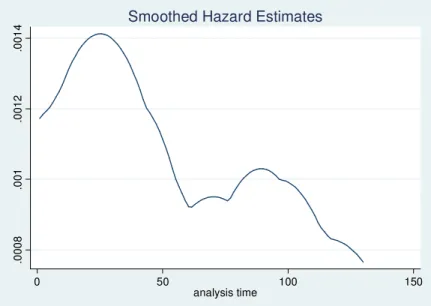
3.1 Cox proportional baseline hazard function with third party intervention ... 37
3.2 Cox proportional baseline hazard function without third party intervention .. 37
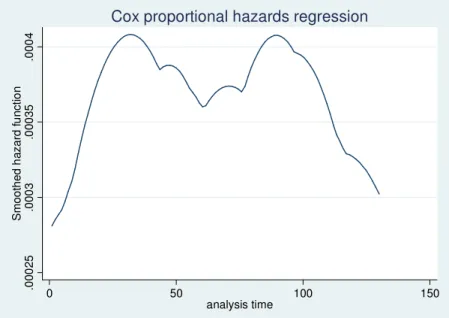
4. Smoothed hazard function under the influence of reputation ... 38
List of Tables Tables
Introduction
In international relations scholarship, numerous works on war and peace have
emphasized the importance of preventing the next war; the focus today is on how to
sustain the negotiated peace. With the number of interstate wars dwindling while the
number of protracted intrastate conflicts is rapidly increasing in the post Cold War period,
such theoretical transition is inevitable. Nonetheless, one area of research that transcends
these changes and remains highly significant to conflict resolution is that of third party
intervention.
Existing works on third party intervention in both interstate and intrastate
conflicts highlight its informational role in reassuring the disputants with a guarantee of
settlement enforcement (Walter 2002; Fortna 2004), while reporting conflicting findings
in regards to its effectiveness. The outcomes vary depending on the biasness of the
intervener, the timing of intervention, and the means adopted by the intervener (Kydd
2003; Regan 2002; Lindsay and Enterline 2002). Some formal models have even shown
that the challenger’s ability to manipulate the stakes of war can deter intervention
(Werner 2000). What can be implied from the literature is that the effectiveness of
adhere to prior settlements. Third party interventions are important since it contributes to
both areas by providing necessary information and making commitments credible.
Recognizing the importance of a state’s determination to make and keep the peace
as well as providing with opportunities to avoid conflict, this paper addresses the question
of what factors affect the stability of peace. The focus of this study is on how states
commit to peace in crises that recur despite a previous peace settlement and how third
party intervention may help overcome the obstacles to peaceful communication and
reduce commitment problems. The aim of this paper is to examine how a state’s
reputation and third party intervention interact in determining the stability of peace.
Specifically, I ask whether reputation affects a state’s willingness to end a crisis and if
this has any spillover effects on the durability of a negotiated peace. This is broken down
into two smaller questions on how reputation may create a bargaining environment where
third parties are more likely to intervene and how partisan third party intervention
generates costs by creating incentives to renegotiate previous settlements.
Using a Cox proportional hazard model, I find preliminary support for the
argument that reputation creates a demand for external support to facilitate cooperation
and that a guarantee of enforcement from third parties lead to longer bargaining periods.
A logit regression model produces mixed results in regards to the effect of partisan third
party intervention on the stability of post-settlement peace, providing with some
important leads to future research.
This study aims to provide a theoretical linkage between past behavioral histories
and commitment problems in bargaining for cooperation, while it re-examines the
renegotiate the terms of a prior settlement (Werner 1999). Departing from studies that
stress on the role of neutral third parties as enforcers of peace settlements, I make a
counter-intuitive argument that partisan third party interventions favoring the stronger
party may increase the probability of successful peace settlements.
The reputation concept used in this paper is substantively different from what is
discussed in terms of traditional deterrence. In the deterrence literature, reputation is
widely referred to as “a reputation for resolve or willingness to fight” (Schelling 1960),
which suggests that a threat made by a state with a strong reputation would be more
credible and is thus worth fighting for. My reputation term refers to the expectation of
whether or not a state will follow through with its commitment to the current negotiated
peace agreement based on its past record of compliance. This is rooted in the assumption
that commitments to formal dispute settlements are interdependent.
The paper proceeds as follows. The second section offers a critical review of the
literature on learning and reputation. The third section discusses the theoretical
framework for third party interventions and commitment problems. The forth section
covers the research design and operationalization of relevant variables. The fifth section
presents the empirical results and the last section concludes the paper with a discussion of
how to take this project forward.
Learning and Reputation
Research on learning in international relations is large and complex, partly due to
1994). On one hand, the rational choice framework claims that states reflect on the paths
of play and update their beliefs with new information based on their prior beliefs and at
least implicitly, experience (Filson and Werner 2002).1 On the other hand, qualitative research on foreign policy decision making has produced comparable studies on why
learning occurs so infrequently (Khong 1992; May 1992) or tend to occur in limited,
tactical form (Etheredge 1985). A review of quasi-experimental surveys demonstrated
that leaders’ decisions are strongly influenced by their prior beliefs, and are thus more
theory-driven than they are data-driven in assessing hypothetical crises (Koopman,
Snyder and Jervis 1990).
Nevertheless, there is significant evidence that learning processes affect state
bargaining behavior. Quantitative studies on enduring rivalries, alliance formation and
duration, and war onset claim that states learn from behavioral histories of conflict and
cooperation that have accumulated over time (Goertz and Diehl 1993; Crescenzi 2007;
Reiter 1996). For instance, Crescenzi (2007) claims that reputational histories for
initiating violence or aggression signal problems of credibility that may exacerbate crises
and make war more likely. States not only learn from direct experiences, but also indirect,
extra-dyadic experiences that are weighted according to their cooperative and conflicting
relationships with proxy states.
The representative works of Jervis (1976) and Leng (1983, 2000) show a
common understanding that policymakers learn from past experiences, particularly
drawing on lessons from history using analogies. Leaders are concerned with presenting
their policies as decisive or effective so they have a tendency to repeat successful policies
1
and do away with failed instances (Jervis 1976). Hence, learning is contingent on policy
outcomes and interdependence across time and between analogous events. Leng (1983,
2000) applies this to a coercive bargaining framework and maintains that such learning is
more likely in recurring crises. Since political leaders are constantly pressured to
demonstrate resolve, they associate foreign policy success and failures to the success and
failures of their bargaining strategies where failure is perceived as a lack of resolve.
Provided that states draw analogical lessons from previous dispute outcomes, especially
policies perceived as failures, this tendency is strengthened in rivalry relationships where
states fight with the same opponent multiple times. Therefore, leaders tend to repeat
successful tactics in previous crises and discard unsuccessful tactics and turn to more
coercive measures. While Leng (1983, 2000) offers a useful way to understand how states
learn in recurring crises, there is a qualification that the coercive bargaining model does
not go beyond the most recent crisis bargaining outcomes and falls short of addressing
the enduring effects of past offensive behavior.
Another line of research that recognizes the importance of past interactions
addresses how reputations affect state behaviors. 2 Classic theories of deterrence have maintained that demonstration of a strong reputation for resolve is critical for bargaining
as it can coerce others to behave in desirable ways without actually having to use force
(Schelling 1960). Although there is no binding rule that states should always implement
the threats they make, they are inclined to do so because once a challenger backs down,
its credibility will be undermined and effective communication of one’s intentions would
become increasingly difficult. The implication is that reputation for resolve is central to
2
effective diplomacy as it provides a foundation for sending costly signals and making
credible commitments.
Thus far, however, the importance of reputations associated with keeping or
breaking specific commitments to peace has not been adequately discussed. In the
meantime, what can be borrowed from the reputation and deterrence literature is the
question of whether or not commitments of the past and future are interdependent. As
previously mentioned, Jervis (1976) argues that reputations for resolve take effect over
time and are worth fighting for. In contrast, Press (2005) contends that the credibility of
threats in crisis situations is not contingent on a state’s past behavioral record but
determined by immediate calculations of military power and interests. Incorporating
insights from psychology, Mercer (1997) makes an overarching claim that a state’s
reputation is determined by the friend or foe relationship between the states involved in
the interaction. That is, since adversaries are generally expected to challenge and allies
are expected to extend support, attribution theory suggests that regardless of whether the
opponent lives up to one’s expectations or not, adversaries will gain reputations for being
resolute and allies will gain reputations for being irresolute. The take-home-point is that
the shadow of the past should apply within the boundaries of existing relationships,
which implies that the situation rather than a state’s disposition should determine one’s
reputation. In a given interstate relationship, unless the situation changes dramatically
that either foes become friends or vice versa, no amount of threatening or appeasement
can easily alter one’s reputation. According to this approach, the notion of historical
Mercer’s (1997) argument is subject to two further qualifications. First, the
relational conceptualization of reputation does not rule out the possibility that states may
pursue or defend other types of reputations. Reputation for resolve has no doubt been
central to research in international relations, especially during the Cold War. However, it
is not the only type. Reputations for trustworthiness (Larson 1997; Gelpi 1997, 2003),
honesty (Sartori 2002; Guisinger and Smith 2002) and reliability (Reiter 1996) have also
made their debut as important concepts in international relations.3
Second, Mercer’s argument offers a rather pessimistic view of the likelihood of
cooperation when states share a direct history of conflict. When states fight, they confirm
the existence of conflicting preferences and their desire to take advantage of each other.
According to Mercer, a reputation for being resolute will be formed among the
adversaries. If this is true, then cooperation among states amidst a history of conflict will
be extremely difficult to realize unless there is a fundamental change in the relationship.
That is, since there is so much distrust to begin with, any voluntary change in the
relationship would be qualified and cooperation would be unlikely.
Furthermore, what remains lacking in existing frameworks on reputation is the
notion of temporal interdependence between commitments to salient events, particularly
legitimate peace settlements that signal credible commitments to peace. We have seen
that works on crisis bargaining, war termination and the durability of peace emphasize
the importance of uncertainty and risk in the immediate future. Yet, few have
investigated the effects of learning that arise from reputations for not abiding by peace
3
For instance, Sartori (2002) makes the case that when a state has a reputation for bluffing, its
agreements, which may affect how disputants bargain for peace when a crisis recurs
within the same dyad. 4 It is one thing that a crisis recurs, and it is another when a crisis recurs despite a previous legitimate dispute settlement. In the latter case, the challenger
will earn a reputation for defecting as well as be discredited for initiating the dispute. The
defender would not only be affected by being targeted, but also by the undermining of
trust that was formed through prior negotiation efforts that include meeting at the
negotiating table, drafting an agreement, and signing onto it. Peace settlement violations
are salient events, as Fortna’s (2004) findings show that peace agreements are not mere
“scraps of paper” but actually constrain states to adhere to their commitment. According
to this logic, past violations of dispute settlements will create a reputation for not being
trustworthy, which will trigger commitment problems in analogous situations in the
future. If reputation matters, we should see rational states face commitment problems,
which leads them to fight longer or renege on previous peace settlements despite
unnecessary costs.
Commitment Problems, Bargaining, and Third Party Intervention: Theory and Hypotheses
The recent literature on war and bargaining emphasizes the importance of credible
commitments. The commitment problem explanation for war claims that conflict can
result when actors are incapable of making credible promises not to renege on a
4
negotiated peace settlement, which would be mutually preferred to fighting if it could be
enforced (Fearon 1995; Powell 2006).
In the case of civil wars, Walter (2002) focuses on the requirement for warring
parties to demobilize or disarm and submit to a joint political authority in the
post-conflict phase. Unlike interstate wars, this phase is necessary in settling civil wars to
make a transition from the bargaining to the implementation phase and establish peace.
However, the fact that disputants must give up the very means to enforce the peace
invokes a sense of vulnerability. In other words, the perceived risks to cooperation create
problems of credible commitment. Because the government generally has the upper hand
after a settlement is reached, the opposition party is reluctant to commit to disarmament.
At the heart of Walter's argument is that third party interveners can help actors overcome
the security dilemma by offering to closely monitor or punish defecting behavior and thus
increase the costs of any violation. Early detection of cheating will give the opponent
enough time to launch a countermeasure, while a clear indication of the severe
consequences of reneging on the agreed terms would deter potential cheaters from trying
to take advantage of its opponent. In this sense, the third party security guarantor reduces
fears of commitment as an impartial information provider that facilitates cooperation and
adherence to mutually agreed upon peace settlements.5
In respect to interstate wars, Werner (1999) links commitment problems with the
issue of why some settlements last longer than others. Unlike Walter (2002) who focuses
5
on the adversaries’ incentive to remobilize and rearm, Werner (1999) concentrates on the
incentive to renegotiate the terms of a prior agreement due to anticipated changes in the
distribution of capabilities and expected costs of fighting. Simply put, if either party
believes that a new conflict will result in more beneficial terms, they will be tempted to
defect from the prior settlement and fight for a better deal. In her analysis, the author
treats separately the effects of third party security guarantees and change in relative
power on peace stability. However, this approach is problematic on two main fronts.
First, this overlooks the different types of third party intervention and their impact. Third
parties not only act as neutral security guarantors, but also as partisan military supporters
due to previous alliance relationships or strategic considerations. Depending on whose
side a third party may intervene, third parties may contribute to a change in the
distribution of power, which would affect how states perceive a peace settlement to be
worthy of commitment. Second, this complicates the measurement of a state’s relative
power. Werner (1999) uses the COW power index that includes demographic, industrial
and military power to measure the difference in yearly growth rates to measure change in
the relative power. However, a measure for balance of power is not complete unless
external military assistance is included, especially since the very existence of a partisan
intervener could increase the threat perception of the opponent.
Thinking in terms of dyads, if a third party extends military support to the
stronger party, a “bandwagoning” effect will occur. Threatened by the strengthened
opponent, the weaker party would be more likely to commit to the current peace
settlement than risk another dispute and giving up more concessions. On the other hand,
for a greater victory. If a third party offers military support to the weaker state, a
“balancing” effect will arise. In this case, the opponent would fear that its military
advantage may be jeopardized and have an incentive to renegotiate and secure itself a
better deal while it can. The empowered (weaker) state may convince itself that a new
war might be worth fighting for. Both scenarios lead to a more precarious peace. The
implication is that when a third party takes sides, it will result in a shift in the power
balance and cause states to respond accordingly, rather than have a neutral and reassuring
effect. This is fundamentally different from Walter’s (2002) third party security guarantee
argument or Fortna’s (2004) peace agreement strength argument that concentrates on the
informational role of neutral third party intervention.6
The linkage between learning about reputation and third party intervention can be
established by understanding the conditions where states cannot peacefully renegotiate
the terms of a peace settlement and a third party intervenes with its own set of
preferences. For the purpose of this paper, I assume that third parties intend to end a
conflict rather than exacerbate the situation. According to classic bargaining literatures,
there are two types of peaceful bargaining techniques, explicit and tacit bargaining. Often
these two bargaining modes are adopted simultaneously; however, it is still important to
review the differences.
States may decide to consider a compromise solution to the conflict through
explicit bargaining which entails an explicit exchange of offers and counteroffers
(Schelling 1960). The explicit communication method allows actors to discuss a broad
range of multidimensional issues so that failure to reach a deal in one area could easily be
6
complemented with success in another, and also provides more room to make revisions to
prior agreements without hindering the entire peace process.Explicit bargaining also
enables state leaders to generate domestic audience costs to tie their hands and make their
decisions seem more credible (Fearon 1994). The drawback is that formal negotiations
take much time to prepare for and are less capable of responding to technological
development in timely fashion and unable to reflect domestic political conditions such as
recessions (Downs and Rocke 1990, pp. 10-13). In addition, explicit bargaining may
suffer from the dual-edged sword of domestic audience costs. Formal negotiations will
disclose information about the preferences, capabilities, and resolve of the government to
a wider domestic audience. This will make leaders highly accountable for their political
achievements and reputations, an aspect that is highly correlated with time pressure and
thus will inhibit both the launch of timely negotiations and willingness to compromise
their goals. Discussions on why some governments prefer to go private than to adopt
public forms of communication provides support for the logic behind audience
constraints.7
Thus, although explicit bargaining may reduce the probability of misinterpretation
and permit a trial and error process, the method itself is less responsive to change and
contains political restraints in that states will be reluctant to adopt it in situations where
cooperation seems unlikely. Even if they do, it will be ineffective in fast-progressing
situations such as crises since by the time that formal negotiations are set up, there is a
7
high probability that the crisis will have escalated or moved on to the next phase. Given
these constraints, the implication is that explicit bargaining will only be viable when there
is relatively little time pressure and the leaders of the contending states are reassured that
there is a mutual commitment to peace and bargaining is likely to yield positive outcomes.
Meanwhile, tacit bargaining is a way to influence the opponent’s policies through
its behavior rather than relying on policy statements and formal or informal diplomacy.8 This was the case for arms control during the Cold War, which called for actions that
sought to accomplish a goal that could only be realized by joint, voluntary behavior.
Formal negotiations simply dragged on for too long while the arms buildup continued,
and thus an alternative bargaining method was in desperate need to reach an agreement
on arms control and maintain it. Some examples of tacit bargaining include issuing
retaliatory tariffs in response to a trade barrier and holding back on using chemical
weapons in mass bombings in hope for the opponent to reciprocate.
The strength of tacit bargaining lies in its adaptability and responsiveness. First,
it allows for a quick response to technological developments and leadership changes. No
official meetings and speeches need to be made prior to taking any action. Second, it
provides room for gradual progress at low transaction costs, so that partial cooperation
can lead to cooperation on a greater scale. This permits decision makers to cooperate in
specific areas without having to agree on all fronts. Furthermore, since state actions are
less directly interpretable than words, it somewhat separates the bargaining process from
audiences at home and afar, which reduces the societal or political pressure to reach a
successful deal. However, this is also accompanied by limitations. If there is a high level
8
of uncertainty, chances are that actions will be misinterpreted and bargaining will spiral
into more contention. Since the true utility function of the opponent remains unknown,
and since state actions are so much more diverse than either cooperating or defecting, the
slightest increase in the perception of distrust between rival states will create excess noise
that leads to grim results. This is not to mention that signaling for cooperation through
actions as well as posing effective punishments against undesirable responses is very
costly (Downs and Rocke 1990, pp. 14-15). Hence, although tacit communication
complements some of the limitations of explicit bargaining, it may initiate or accelerate a
spiral of defection when the levels of mistrust are high.9
What can be commonly inferred from the above is that unless there is some way
to reassure the opponent of one’s willingness to reciprocate cooperation and confirm the
existence of a shared goal for conciliation, opportunities to peacefully renegotiate the
terms of the peace settlement may be delayed or missed altogether despite a state’s
willingness to avoid costly clashes. In this context, reputation becomes highly relevant.
Under the assumption that commitments are interdependent, a state’s reputation for not
9
This becomes clearer when we consider the different strategies within tacit bargaining. The tit-for-tat strategy shows that cooperation can be established when a state makes a cooperative gesture and the other reciprocates the previous move (Axelrod 1984). The anticipation of retaliation would extend the shadow of the future and facilitate cooperation. Yet, once either player decides to defect, cooperation comes to an abrupt end and a lock-in situation arises. This generates a rather dismal view of world politics, as a single instance of defection would terminate cooperation and initiate endless rounds of retaliation. To improve the chances of stable cooperation, Osgood (1962) proposed the use of unilateral conciliatory gestures (GRIT, Graduated and Reciprocated Initiatives in Tension Reduction) as a way to signal “a break with the immediate past that ostensibly mitigates the problem of distrust created by early interchanges” (Boyle and Lawler 1991, p. 1199). The prescription was to make small but firm and symbolic signals that are
abiding by dispute settlements will cast a long shadow of the past when states are
bargaining for peace. Then, behavioral histories for not abiding by peace agreements
should factor into making some disputes harder to settle than others since a state’s
commitment to peace will not be credible. Under these circumstances, the disputing states
need a third party intervener to facilitate peaceful interactions.
When states are bargaining in the shadow of power, third party interventions will
influence the expectations about the changes in relative capabilities, which will in turn
affect a state’s willingness to commit to peace. By favoring one side over another, third
parties will create a contrasting sense of security and fear or satisfaction and
dissatisfaction among the belligerents. Consequently, on whose behalf the third party
intervenes will play a significant role in determining how warring states perceive the
opportunities to renegotiate the terms of peace. The focus is on third party interventions
that employ the use of force. Mediation, often referred to as a subset of intervention using
peaceful means, is an effective way to prevent crisis escalation rather than affect
expectations of post-settlement power distribution.
Based on these arguments, a series of testable hypotheses can be derived.
Depending on whether the dispute issue was resolved during the crisis, the effect of
reputation on its duration may vary. On one hand, if a settlement is imposed on the
belligerents before the conflict issue is fully resolved, states may be reluctant to settle and
be more determined to contend until they are fully satisfied.10 Under the influence of reputation, the defender may wait for several iterations to make sure a settlement offer is
10
made repeatedly to make sure it is sincere and credible. Also, states may take longer to
process the opponent’s settlement offer or make offers of their own as they are sensitive
to bargaining outcomes and the associated domestic audience costs.11 In the end, the more states exchange offers and counter-offers of settlement to strike a peaceful bargain,
the longer the crisis will last.
H1: When a crisis ends in an imposed settlement, a crisis influenced by a
reputation for defecting from previous dispute settlements will last longer
than a crisis not affected by such reputation.
On the other hand, if the dispute issue was resolved and a voluntary settlement is
reached, states influenced by reputation may not necessarily take longer to commit to
peace. Such would be the case where the adversaries are satisfied with the terms of the
agreement and believe that another dispute on the same issue is unlikely.
H2: When a crisis ends in a voluntary settlement, a crisis influenced by a
reputation for defecting from previous dispute settlements will end
earlier than a crisis not affected by such reputation.
External support from third parties may help create an incentive to settle.
Cooperation theory suggests that a longer shadow of the future makes cooperation more
likely and sustainable. In the case a third party intervenes, it would guarantee a longer
shadow of the future which makes states care enough about the future payoffs. This will
prove especially effective when states are experiencing much difficulty over resolving the
dispute issue. Quantitative work on bargaining and third party interventions have found
that major powers are more likely to intervene or mediate in tougher cases that involve
11
ethnic or religious rivalry and territorial claims (DeRouen and Goldfinch 2005; Dixon
1996).
H3a: When a crisis ends in an imposed settlement and a third party
intervenes under the influence of a negative reputation, it is more likely
that the crisis will be short.
Meanwhile, Fearon’s (1998) distinction between bargaining, enforcement and the
interactions in between gives rise to competing expectations in regard to crisis duration.
In short, although a long shadow of the future may make enforcement easier and more
likely, it can also give states an incentive to bargain harder, delaying a timely agreement
to cooperate in anticipation of a better deal in the future. In this case, the likelihood of
longer crisis duration may rather increase with third party intervention. So, in cases
where the dispute issue is resolved, third parties will guarantee enforcement and lead to
longer bargaining periods.
H3b: When a crisis ends in a voluntary settlement and a third party
intervenes under the influence of reputation, it is more likely that the
crisis will last longer.
Once we have confirmed that reputation creates a hard case for bargaining that
needs external support, we need to consider how third party intervention affects the
durability of peace in the subsequent post-settlement period. The commitment problem
explanation for war recurrence gives rise to the expectation that when a third party
intervenes in favor of the stronger state, the remaining weaker state will have little
incentive to risk losing more than it already has and thus will be more likely to adhere to
will become greedier and attempt to accomplish a complete and decisive victory. In this
case, it is difficult to test a separate hypothesis.
In contrast, when a third party intervenes in favor of the weaker state, the
remaining stronger party may anticipate a shift in the balance of power against its current
advantage and be reluctant to commit to long term peace. The empowered weaker party
may also be tempted to gamble and fight for a better deal. In this case, tensions will be
more likely to escalate and the peace will be unstable.
H4: If the intervening third party favors the weaker state, the stronger side’s
commitment to peace will be weakened and tensions will be more likely to
re-escalate after the crisis.
Data Analysis Methods
The sample of crises under observation is a compilation of reinitiated crises
during 1929-1979. This dyadic level dataset was constructed to provide a baseline
distrust level among states that have a history of conflict as well as differentiate between
dyads that are affected by reputations for dispute settlement violations and those that are
not. There are a total of 115 international crises in the dataset, where 43 cases escalated
into a full scale war, 43 cases included minor or serious clashes, and the remaining 29
cases involved no violence. The reinitiated crises were selected based on Gelpi’s norms
dataset (1997, 2003) and the key variables are based on a compilation of the actor level
and dyadic level International Crisis Behavior (ICB) dataset, version 2.12 A more
12
commonly used dataset is the Correlates of War (COW) Militarized International Dispute
(MID) dataset, however, the ICB dataset was chosen as it contains more serious military
interactions and provides with detailed case summaries which will be used to
operationalize the relevant variables. Although the 50-year observation period is
relatively short, it spans across the ending of World War II and the beginning of the Cold
War period, which coincides with increased attention for reputations and institutions at
the international level. Also, as the effect of reputations is the focus of this study, it seems
most appropriate to follow Gelpi’s record of dispute settlements which is based on review
of documents and statements selected from the references of Brecher and Wilkenfeld
(1997) and Brecher, Wilkenfeld, and Moser (1988).
Two separate models are constructed to test hypothesis 1-3 and hypotheses 4. The
first is a Cox proportional hazard model that addresses “competing risks” to assess
whether or not reputations for not being trustworthy lead to longer crises or periods of
hostility. This is elaborated further in the following section. The second is a logit
regression model that examines whether partisan third party intervention affects state
decisions to renegotiate the mutually agreed upon status quo or terms of the previous
settlement.
A test of the first set of hypotheses employs event history analysis, which is also
referred to as survival or duration analysis. Event duration models estimate the effects of
independent variables on the length of time something lasts and can incorporate the
uncertainty about how long a phenomenon will continue into the future. The logic is that
each unit of analysis runs a “risk” of experiencing a critical event, where this experience
the duration of time that a unit spends before the transition occurs. Duration is referred to
as either “failure time” or “survival time” since a unit survives from some starting point
until they experience an event and ultimately fail. What is critical in interpretation is the
“hazard rate” or the probability where an event terminates at time t given that it survived
until that time. That is, the failure of an event is conditional on its survival, and thus
conditional on its past history. Since duration is modeled explicitly as a stochastic process,
the independent variables increase or decrease the probability of crisis termination but do
not predict exactly when the crisis will end.
As an indicator of commitment problems, the duration of crises is evidently
non-normally distributed (figure 2).13 Given that one of the main assumptions of ordinary least squares (OLS) regression is violated at the outset, it is inappropriate in dealing with
the question at hand. Fortunately, the unique features of duration data including
non-normal distribution, truncation, censored data points, and time-varying predictors can be
sufficiently addressed with event history analysis, which uses Maximum Likelihood
Estimation (MLE). Unlike OLS estimators that are BLUE, 14 there is no guarantee that ML estimators are unbiased. However, the rationale for using MLE is that when the
number of observations is sufficiently large, ML estimators will be almost identical to
OLS estimators. ML estimators even have a few desirable characteristics of their own.
First, MLE is a more general method of estimation, which makes it easy to maximize
estimators by adding certain restrictions. Second, the variance of Maximum Likelihood
13
The mismatch between the normal density plot and histogram and the positive values of duration shows that duration is not normally distributed.
14
estimators is smallest when the sample size increases asymptotically, which makes ML
estimators efficient.15
For the purpose of this study, I use a Cox proportional hazard model that does not
specify the baseline hazard rate as there is no set theory that determines the baseline
hazard function in international crises or wars.16 The model addresses multiple failures in what is otherwise known as a “competing risk” model. The competing risks approach
treats outcomes as a set of possible alternative crisis endings and models the relative
probability for a particular outcome as competing risks (Box-Steffensmeier and Jones
2004). That is, international crises may end in the disputants voluntarily accepting a
formal or informal agreement, or end in either side imposing a settlement on the other.
This enables us to obtain a more refined effect of the covariates for different types of
outcomes.
Operationalization
Dependent variables
Evidence of commitment problems can be found in crisis duration. If reputation
matters, dyads that include states with a reputation for not being trustworthy should face
15
Since ML estimators are not always unbiased, it is not BLUE. However, in the case that there is an unbiased ML estimator, this will be most efficient. In an asymptotic world where normality and consistency co-exist, the variance of ML estimators are the smallest, making it the most efficient. The downside of MLE is that if the selected distribution of the density function is incorrect, the estimates are false. Also, in cases where the PDF monotonically increases, the parameter θ that maximizes the Likelihood function may
not exist within [-∞, ∞].
16
Regan (2002) and Bennett and Stam (1996) use the Weibull specification assuming that the baseline hazard of intrastate and interstate conflict is monotonically increasing or decreasing. However, the
asymmetrical commitment problems, which lead to longer fighting periods. The
dependent variable, duration of crisis, is the time elapsed between the perception of a
triggered crisis and its termination, in days.
Escalation of tensions can be interpreted as forceful attempts to renegotiate the
terms of prior settlements. If third party intervention influences how states anticipate
post-settlement changes in the balance of power, the stability of peace may be contingent
on whose behalf the third party intervenes. The stability or duration of peace is coded as a
dichotomous variable that denotes escalation of tension. When post-settlement peace is
short-lived and crisis escalated among the principal adversaries during the subsequent
five-year period, it is denoted as 1. Otherwise, when a crisis did not recur during the
subsequent five-year period and that peace was more stable, this is denoted as 0.
Key Explanatory Variables
Reputation denotes whether or not there was a previous dispute settlement when
the crisis recurred. This is to indicate that the effect of violating a legitimate peace
agreement would carry onto the subsequent crisis through a learning process
Ideally, the measure for the influence of reputations should include a weighted
roll-over effect in that if a challenger earns a reputation for violating a peace agreement at
time t, then all dyads from t+1, t+2, t+3… are coded as being influenced by reputation
weighted by how close they are in terms of foreign policy and power (Crescenzi 2007)
and also by discount rate for memory loss. Not only will this take time into account, but
would also effectively incorporate extra-dyadic as well as dyadic learning, in other words,
small size of the dataset does not guarantee a robust measure using the Reputation
Information (RI) model (Crescenzi 2007). An alternative way is to code the roll-over
effect with a dichotomous variable. However, this would result in a disproportionate
number of cases coded as affected by reputation since some states are significantly more
likely to get involved in multiple crises over time and the dataset is rather small.
Thus, for the purpose of this paper, it is assumed that a reputation is gained when
a war is reinitiated despite a previous settlement.17 The measurement follows Gelpi’s (1997) coding rules for previous dispute settlements using the “form of outcome”
variable in the ICB dataset. Primarily, the existence of either explicit or tacit settlement is
identified, and violations either through reinitiation of a crisis or at any time during a
crisis is verified. The reinitiation of a crisis over the same issue itself generally
constitutes a violation. A total of 66 crises recurred despite a previous peace settlement,
so there is significant variation between dyads that are influenced by reputations for not
abiding by peace agreements and those that are not. It is expected that crises that are
influenced by negative reputations have a higher probability to last longer than others.
Third party intervention is measured as a whole and in partisan form. Primarily, a
dichotomous variable indicating all types of third party intervention is created by coding
as 1 when there was a great power intervention prior to World War II or a super power
intervention in the post World War II period, and 0 otherwise. The ICB dataset identifies
the US and the Soviet Union as superpowers in the post-1945, and Great Britain, France,
Italy, Germany, Japan and both the US and the Soviet Union as great powers in pre-1945.
It includes separate measurements for great power and super power intervention in a
17
crisis, both according to a distinct 9-point categorical scale.18 I make it a rule to only include interventions that include “high” levels of commitment, including covert,
semi-military or direct semi-military involvement of at least one great power or super power,
excluding those cases where either a great power or super power is a primary crisis actor
and not an intervener or joiner.
A dichotomous variable indicating partisan third party intervention, that is,
intervention in favor of the stronger state and intervention in favor of the weaker state
was constructed. First, I identified great power and super power interventions at the
“high” level. Second, I read through the ICB case studies to determine whether or not the
principal third party intervened in favor of the challenger or the defender. Multiple
interveners and single interveners were treated equally, especially when all were aligned
on the same side. When the super powers intervened on high levels on opposite sides,
they were both coded as 1. Third,based on the balance of power measurement, I
identified who was stronger between the defender and challenger. As a result, I was able
to obtain a crude measure of whether the third party decided to “balance” by militarily
supporting the weaker side or “bandwagon” by supporting the stronger.
Control Variables
Balance of power indicates the balance of the sum of military capabilities which
includes military expenditures, military personnel, and the ration of expenditures to
18
personnel. The balance is measured by calculating the ratio of the defender and
challenger’s capabilities with the addition of the support they receive from external
actors.19 As a key structural factor that affects war duration (Bennett and Stam 1996), the expectation is that when contending states observe a balance of power, they will be more
willing to resist in longer crises.
Change in the balance of power indicates the change in the challenger’s share of
capabilities within the dyad since the most recent crisis over the same issue. This is
measured by subtracting the defender’s capabilities from the previous dispute from its
current capabilities. Thus, a positive value implies that the challenger has grown stronger
since the previous crisis, while a negative value implies that the defender has grown
stronger.
History of conflict denotes the number of times the challenger and defender were
the primary disputants prior to the current one. Since this variable reflects extra-dyadic as
well as dyadic learning processes, all earlier crises between 1929 and 1979 are included.
This is based on the “centrality of violence” and “content of crisis outcome” variables of
the ICB dataset. The expectation is that the more numerous previous disputes between
states, the higher levels of distrust, so the more likely that a crisis will last longer. The
protracted conflict variable of the ICB dataset is used for robustness checks. Colaresi and
Thompson (2002) have pointed out that the rivalry and protracted conflict concepts
19
Gelpi (1997) measures the balance of capabilities as follows:
(defender + supporting capabilities)/[(defender + supporting capabilities) + (challenger + supporting capabilities)]
overlap in terms of their focus on historical context, goal incompatibilities, and stakes
that might be resolved coercively.
A separate dichotomous variable for territorial threat was created due to the
empirical evidence that territorial disputes are often more difficult to resolve than others
due to commitment problems. 20 For example, drawing from Starr’s (1988) opportunity and willingness framework, Senese (2005) claims that territory is a more consistent cause
of conflict than geographical proximity, especially at the war onset phase. Hensel (1996)
finds that territorial disputes between states are more likely to escalate and are more
conflictual than non-territorial contentions. Thus, the expectation is that territorial threats
lead to longer contending periods.
One democracy indicates that there is at least one democracy in the dyad. The
democratic peace literature claims that democratic states are more likely to settle disputes
peacefully (Maoz and Russett 1993; Dixon 1994), where Rousseau et al. (1996, p. 526)
emphasized that “the democratic peace is primarily a dyadic process when addressing the
escalation of international crises.” Since democracies prefer to use non-violent means for
dispute resolution, they are expected to reduce the probability of crisis escalation and thus
its duration. Joint democracy indicates a democratic dyad which is rare but also expected
to facilitate shorter crises.
Societal unrest captures assassinations, terrorism, general strikes, demonstrations
and riots. Theories of the diversionary use of force claim that when leaders face domestic
problems, they are more willing to use violence abroad (Howell and Pevehouse 2005;
20
DeRouen and Peake 2002). Similarly, one can reason that leaders who face internal
problems may be more willing to remain involved in crises for longer periods (DeRouen
and Goldfinch 2005). Using the ‘societal unrest’ variable of the ICB dataset, this variable
is coded 1 when there is a significant increase in social unrest prior to the crisis and 0
otherwise. The expectation is that societal unrest will increase the likelihood of longer
crises.
Duration of crisis is identical to the elapsed time between crisis trigger and
termination, in days. Stalemate is a dichotomous variable that indicates indecisive war
outcomes. Drawing from Werner’s (1999) analysis, these two variables serve as proxies
for difficulties in issue resolution. That is, the longer the duration of a crisis, and when
there is a stalemate, the more likely it is for tensions to re-escalate.
Number of actors denotes the number of states that were substantially involved in
the crisis, including the crisis actors. Substantial involvement refers to cases that include
any one of the follows: direct or semi-military; covert; economic, and political other than
mere statements of approval or disapproval by officials. As the number of actors
increases, the more likely it is for other states to join, and thus there is more incentive to
renegotiate previous settlement terms.
Pre-1945 is a dichotomous variable that denotes system polarity. Systemic,
structural factors may influence the stability of peace after a settlement. The expectation
is that the pre-1945 period be more unstable than the post-1945 period.
Joint intervention is a dichotomous variable that indicates whether or not both the
US and the Soviet Union intervene on a “high” level, including covert, semi-military and
intervention. Such controls are needed since there is empirical evidence that third party
interventions or joining behavior are strategic (Gent 2007; Kim 1991) and are more likely
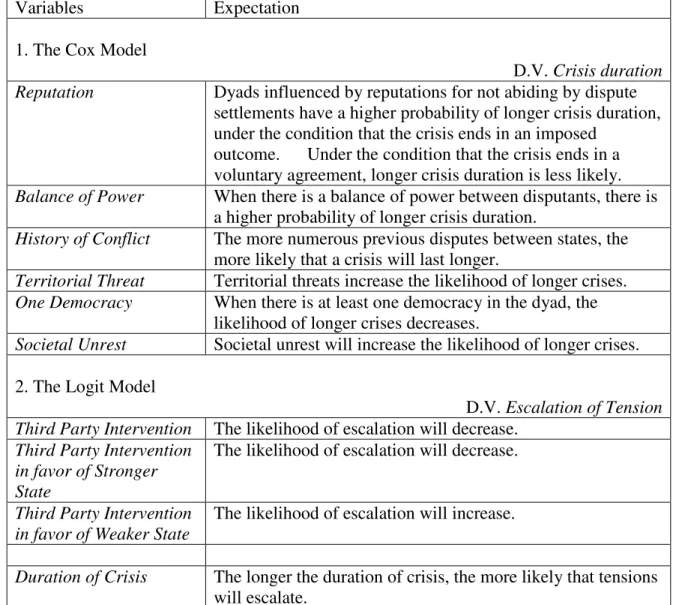
to lead to crisis escalation (Colaresi and Thompson 2002). Table 1 presents a summary of
the variables and expectations.
Preliminary Findings
For the purpose of interpretation, it is important to examine the given data and
know the general distributions of the key variables. In particular, we need to verify
whether third parties are more likely to intervene when the disputants cannot move
toward an agreement on their own accord due to high levels of distrust. I present a simple
crosstab between dyads that are affected by reputations for not abiding by dispute
settlements and third party intervention (figures 1, 2.1, 2.2, 2.3). It is shown that the given
sample of crises does not support the fact that third parties are more likely to intervene
when there is a crisis recurs despite a previous dispute settlement (figure 1). However,
there is some evidence that partisan intervention in favor of the strong state does not
increase the escalation of tensions (figure 2.2) and that when intervention occurs in favor
of the weaker state, there is a slightly higher tendency for tensions to escalate than when
intervention favors the stronger state (figure 2.3). An interesting finding is that when a
third party intervenes in general, it increases the likelihood of tension escalation in the
Reputation and its Effect on Crisis Duration
A Cox proportional hazard model does not explicitly define a baseline hazard rate,
however, it is still useful to graph the actual hazard rate. Figures 3.1, 3.2, 4 illustrate the
baseline hazard of crisis duration with and without support from third parties. The
estimated hazard rates are neither constant nor monotonous, which justifies the use of the
Cox model. It implies that international crises experience diverse momentum. The
proportional hazard assumption is also verified in figure 5.21 Despite larger gaps in the earlier and later time periods, it is shown that when a dyad is influence by reputation, the
probability of a crisis lasting until a certain time is higher than when it is not influenced
by reputation.
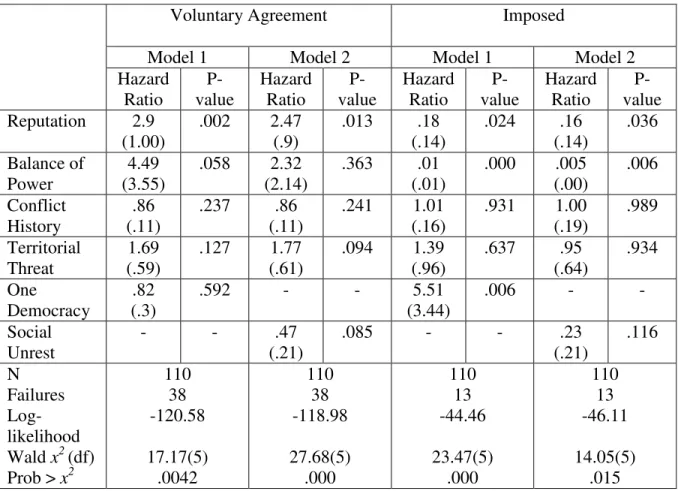
Table 2 presents the results of a Cox proportional hazard model. The coefficient
estimates in the model measure the impact of covariates on the hazard of crisis duration.
Positive coefficient estimates imply that the hazard is increasing with changes in the
covariate. Substantively, positive coefficient estimates imply shorter survival times while
negative coefficient estimates are associates with longer duration. A positive coefficient
that is less than 1 indicates that the hazard is increasing at a decreasing rate.
The results from the competing risk model ending with an imposed settlement
supports hypothesis 1. In model 1 under imposed settlement, the influence of reputation
is shown to reduce the hazard rate (.18), that is, the probability of a crisis ending at time t
given that the crisis continues until that time.22 This implies that when the crisis ends before the dispute issue is resolved, reputation increases the probability of longer
21
Harrel's C =.8126 indicates that we can correctly order survival times (crisis duration) for dyads 81 percent of the time based on the measurements of the control variables.
22
contending periods. The balance of power also slightly reduces the hazard rate, which
suggests that states with more equal powers tend to contend longer. The existence of a
democracy in the dyad is shown to greatly increase the hazard rate (5.51), which
increases the chances of shorter contention. In model 2 under imposed settlement, social
unrest did not have any significant effect on crisis duration, and the covariates for
reputation and balance of power were slightly smaller but still consistent with those of
model 1.
Model 1 under voluntary agreement shows support for hypothesis 2. As long as
the dispute issue is resolved and the situation is ripe for settlement, crises that are affected
by reputation will not necessarily last longer.23 It is shown that both reputation and balance of power of model 1 increase the hazard rate and thus reduce crisis duration.
In model 2 under voluntary agreement, there is moderate support for the argument
that when a state experiences societal unrest, leaders attempt to divert the public’s
attention by engaging their military powers in crises. There is also some support for
territorial threats, however, the findings are counter to expectation in that the hazard rate
increases the probability of shorter crises instead of reducing it. Surprisingly, conflict
23
history does not show any significant results, even when cross-examined with the
protracted conflict variable.
Third Party Intervention and its Effect on Crisis Duration
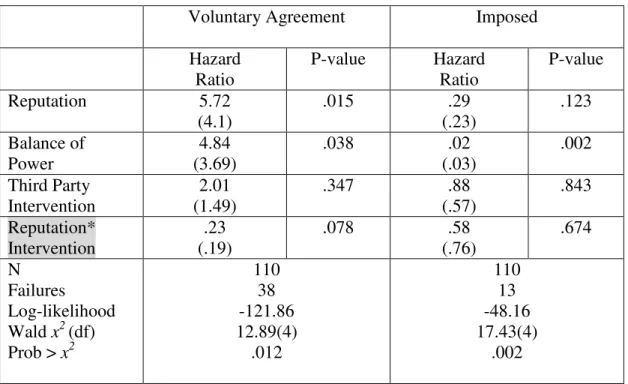
Table 3 shows the interaction effects of reputation and third party intervention,
once again, depending on how the crisis ended. The imposed settlement model does not
show any support for hypothesis 3a, however, the voluntary agreement model shows
support for hypothesis 3b. In the latter case, when a third party intervenes in the presence
of reputation effects, the hazard rate is positive and less than 1 (.23), and thus there is a
higher probability of longer crisis duration. Fearon’s (1998) explanation that a higher
likelihood of enforcement may lead to longer bargaining periods supports this finding.
The hazard rate for the balance of power variable is consistent with the findings from
table 1. The remaining components of the multiplicative term do not contain substantial
implications and are not separately interpreted (Braumoeller 2004).
Third Party Intervention and Post-Settlement Peace Stability
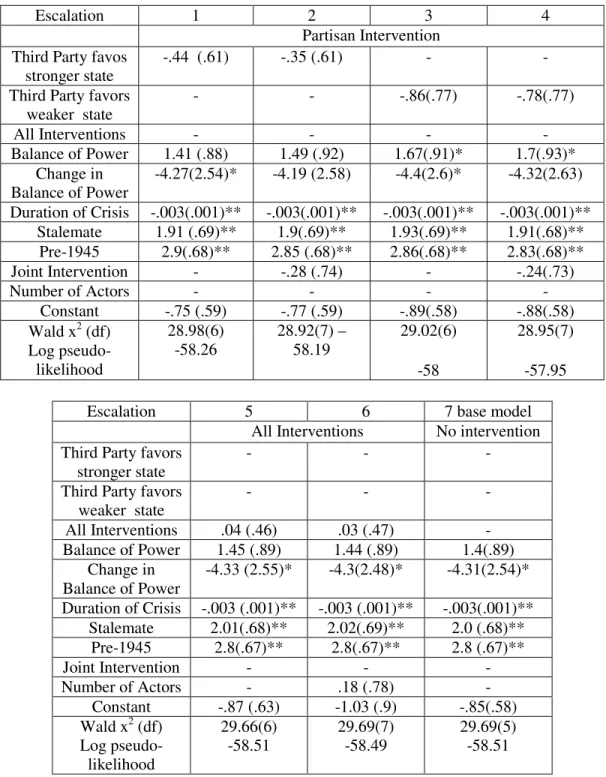
The results of the logit regression are shown in Table 4. Model 7 is without third
party intervention, models 1 to 4 estimate the effects of partisan third party intervention,
and models 3 and 4 estimate the effects of all third party interventions.
The statistical results for partisan intervention do not show support for hypothesis
4. The logit coefficients are not statistically significant, and the coefficients for both types
peace stability. For hypothesis 4 to hold, the coefficients for third party intervention
favoring the weaker state needs to be a positive value, meaning that tension escalation is
more likely. Third party intervention as a whole does not show any significant effect on
tension escalation.
The controls show consistent results across all models, including model 7. As
expected, there is strongest support for the fact that post-settlement peace is less stable
when the dispute issue was difficult to resolve and the crisis ended in a stalemate. The
pre-1945 period was found to be significantly less stable than the post-1945 period. The
duration of crisis was also one of the most significant factors, indicating that disputants
that fought for long period of time are less likely to face another dispute in the
post-settlement phase. However, since the coefficient is rather small, the effect of crisis
duration can be expected to be minimal. Balance of power was found to be statistically
significant in models 3 and 4, which implies that disputants with equal capabilities are
more likely to have an incentive to renegotiate for a better deal after a settlement is
reached.
What is interesting is the effect change in the balance of power has on peace
stability, a measure that includes military assistance from third parties. The negative
coefficient implies that an increase in the challengers’ relative capabilities enhances the
likelihood for a stable peace. That is, an increase in the change in the balance of power is
approximately 4.3 times more likely to reduce tensions within a dyad, making peace less
precarious. This means that when there is anticipation that the distribution of power
favors the challenger, post-settlement peace is more likely to be stable. As realists argue
military advantage and a good chance to win, this finding holds positive implications for
the reasoning that if third party intervention results in making the stronger party stronger,
the dissatisfied weaker party will be less likely to challenge the prior settlement . It is
difficult to make any further inferences from this measure (change in the balance of
power) since there is no knowing how much of the change is caused by the power growth
of the disputant per se or by external support.24
Conclusion and Discussion
This study sets out to examine whether a reputation for not abiding by dispute
settlements affects state decisions to commit to peace and explain how third party
intervention could facilitate cooperation between distrusting states. There is strong
evidence that this type of reputation increases the perception that the opponent will
renege on the agreement and thus leads to longer crisis duration, conditional on the fact
that the crisis ends in an imposed outcome and the dispute issue was not fully resolved.
The findings also show some evidence that when third parties join crises that recur
despite previous dispute settlements, states may contend for longer periods of time since
the very existence of third parties enhance the probability of enforcement and this creates
an incentive to bargain harder for a better deal. This suggests that reputations based on
state learning from behavioral histories can generate commitment problems and are thus
crucial to the crisis bargaining process.
24
In regard to the argument on the role of partisan third party interventions, only
indirect inferences could be made through a proxy for change in the distribution of power.
Provided that the basic theory is well founded on previous literatures on commitment
problems and incentives to renegotiate, two major improvements can be made in
obtaining more accurate and fine-grained measurements of third party military
interventions and their contributions to anticipated changes in relative capabilities. For
one, I would need to compile a detailed dataset on third party interventions in interstate
wars since I was unable to distinguish between states’ intentions of joining in other crises
with the current data set so that military interventions as a means of conflict management
and those due to spatial diffusion were difficult to separate. The case summaries were
also limited in that most details of interventions were accounts of the US and the Soviet
Union, and not so much about other major powers including France, Great Britain,
Germany, Italy, and Japan. Since third party interventions in the post-1945 period are
most likely to be dominated by superpower rivalry, a more detailed account of the major
powers in the pre-1945 period, much beyond what was observed in this study, is critical.
Next, in terms of anticipated changes in relative capabilities, three main issues
need further consideration. On one hand, if I intend to limit my hypotheses to relative
military capabilities and their effect on generating incentives to renegotiate prior
settlements, I would need accurate measures of the balance of power at the point of crisis
termination rather than when it is triggered. On the other hand, if I intend to be more
realistic and consider the notion of resolve as well as power, I would need to develop a
theoretical argument on whether the third party supported the challenger or the defender,
In conclusion, more research needs to be conducted in regards to how states can
overcome fears and risks of commitment and cooperate for long term benefits amidst
high levels of distrust. This study suggests that reputations for breaking legitimate
promises may affect state behavior in crisis bargaining. It also suggests that although
third parties can guarantee enforcement of dispute settlements, this may lead to longer
bargaining periods and varying levels of peace stability depending on whose behalf the
third party intervened. The preliminary findings of this study need to be further
investigated with particular attention to the different sources of commitment problems
Figures and Tables
Figure 1. When third parties are likely to intervene
Third Party Intervention
Previous Dispute
Settlement No Yes total
No
19 29 48
Yes
43 23 66
Total
62 52 114
Figure 2.1. Post-settlement outcomes after third party intervention
Post-settlement Outcomes* All Third Party
Intervention Tension Reduction Tension Escalation total
No 26 37 63
Yes 21 31 52
total 47 68 115
* The ICB dataset denotes post-settlement outcomes in regards to whether or not tensions recurred during the subsequent 5 year period. “Tension reduction” denotes cases where crisis did not recur among the principal adversaries during the subsequent 5 year period, and “tension escalation” denotes cases where crisis did recur among the principal disputants.
Figure 2.2. Post-settlement outcomes after third party intervention on stronger side
Post-settlement Outcomes Third Party in favor of
the Stronger state Tension Reduction Tension Escalation total
No 36 57 93
Yes 11 11 22
total 47 68 115
Figure 2.3 Post-settlement outcomes after third party intervention on weaker side
Post-settlement Outcomes Third Party in favor of
the Weaker state Tension Reduction Tension Escalation Total
No 42 64 106
Yes 5 4 9
Figure 3.1 Cox proportional baseline hazard function with third party intervention (crisis outcome: voluntary agreement)
0
.0
0
2
.0
0
4
.0
0
6
0 200 400 600 800 1000
analysis time
Smoothed Hazard Estimates
Figure 3.2 Cox proportional baseline hazard function without third party intervention (crisis outcome: imposed)
.0
0
0
8
.0
0
1
.0
0
1
2
.0
0
1
4
0 50 100 150
analysis time
Figure 4. Smoothed hazard function under the influence of reputation .0 0 0 2 5 .0 0 0 3 .0 0 0 3 5 .0 0 0 4 S m o o th e d h a z a rd f u n c ti o n
0 50 100 150
analysis time
Cox proportional hazards regression
Figure 5. Assessment of proportional hazard assumption
1 2 3 4 -l n [-ln (S u rv iv a l P ro b a b ili ty )]
0 2 4 6 8
ln(analysis time)
Table 1. Summary of variables
Variables Expectation
1. The Cox Model
D.V. Crisis duration Reputation Dyads influenced by reputations for not abiding by dispute
settlements have a higher probability of longer crisis duration, under the condition that the crisis ends in an imposed
outcome. Under the condition that the crisis ends in a voluntary agreement, longer crisis duration is less likely. Balance of Power When there is a balance of power between disputants, there is
a higher probability of longer crisis duration.
History of Conflict The more numerous previous disputes between states, the more likely that a crisis will last longer.
Territorial Threat Territorial threats increase the likelihood of longer crises. One Democracy When there is at least one democracy in the dyad, the
likelihood of longer crises decreases.
Societal Unrest Societal unrest will increase the likelihood of longer crises.
2. The Logit Model
D.V. Escalation of Tension Third Party Intervention The likelihood of escalation will decrease.
Third Party Intervention in favor of Stronger State
The likelihood of escalation will decrease.
Third Party Intervention in favor of Weaker State
The likelihood of escalation will increase.
Duration of Crisis The longer the duration of crisis, the more likely that tensions will escalate.
Stalemate When there is a stalemate, the more likely that tensions will escalate.
Number of Actors As the number of actors increases, the more likely it is for tensions to escalate.
Table 2.Cox proportional hazard model: reputation and crisis duration
Voluntary Agreement Imposed
Model 1 Model 2 Model 1 Model 2
Hazard Ratio P-value Hazard Ratio P-value Hazard Ratio P-value Hazard Ratio P-value
Reputation 2.9
(1.00)
.002 2.47
(.9)
.013 .18
(.14)
.024 .16
(.14) .036 Balance of Power 4.49 (3.55)
.058 2.32
(2.14)
.363 .01
(.01)
.000 .005
(.00) .006 Conflict History .86 (.11)
.237 .86
(.11)
.241 1.01
(.16)
.931 1.00
(.19) .989 Territorial Threat 1.69 (.59)
.127 1.77
(.61)
.094 1.39
(.96)
.637 .95
(.64) .934 One Democracy .82 (.3)
.592 - - 5.51
(3.44)
.006 - -
Social Unrest
- - .47
(.21)
.085 - - .23
(.21) .116 N Failures Log-likelihood Wald x2 (df) Prob > x2
110 38 -120.58 17.17(5) .0042 110 38 -118.98 27.68(5) .000 110 13 -44.46 23.47(5) .000 110 13 -46.11 14.05(5) .015
Table 3.Cox proportional hazard model: the effect of third party intervention
Voluntary Agreement Imposed
Hazard Ratio
P-value Hazard
Ratio
P-value
Reputation 5.72
(4.1)
.015 .29
(.23) .123 Balance of Power 4.84 (3.69)
.038 .02
(.03) .002 Third Party Intervention 2.01 (1.49)
.347 .88
(.57) .843 Reputation* Intervention .23 (.19)
.078 .58
(.76)
.674
N Failures Log-likelihood Wald x2(df) Prob > x2
110 38 -121.86 12.89(4) .012 110 13 -48.16 17.43(4) .002