AN INVESTIGATION OF THE SCHOOLING EXPERIENCES OF RURAL WORK-BOUND YOUTH: A PERSON-ORIENTED APPROACH
Bryan Clark Hutchins
A dissertation submitted to the faculty at the University of North Carolina at Chapel Hill in partial fulfillment of the requirements for the degree of Doctor of Philosophy in the School of
Education (Educational Psychology, Measurement, and Evaluation).
Chapel Hill 2017
Approved by:
Judith L. Meece
Jill V. Hamm
Soo-yong Byun
Dana Griffin
© 2017
ABSTRACT
Bryan Clark Hutchins: An Investigation of the Schooling Experiences of Rural Work-Bound Youth: A Person-Oriented Approach
(Under the direction of Judith L. Meece)
The benefits of postsecondary education (PSE) attainment are greater now than ever
before given today’s changing global economy. Despite rising enrollments, an alarming number
of youth drop out of college without attaining any credential. Also, a small, but substantive group
never attempt PSE. Rural youth, compared to nonrural youth, are less likely to enroll in a PSE
institution and are more likely to drop out and enter the workforce before completing school. Drawing on Bronfenbrenner’s bioecological model and person-oriented analysis, the purpose of
this study was to explore interindividual differences among a diverse sample of 1,655 rural
work-bound youth. The study was guided by three aims: 1) explore whether meaningful
subgroups of work-bound youth could be identified using cluster analysis on students’
self-reported educational and occupational aspirations, work orientations, family hardship, and
academic achievement; 2) evaluate how identified groups differed on perceived future
educational and occupational barriers and opportunities; and 3) explore group differences on students’ subjective evaluations of their schooling experiences.
the lowest occupational barriers compared to all other groups. Findings may inform researchers,
policymakers, and practitioners seeking more nuanced approaches to meet the transition needs of
AKNOWLEDGEMENTS
This dissertation could not have been completed without the support of many individuals.
First and foremost, I would like to thank my advisor and mentor, Dr. Judith Meece for creating
many of the opportunities that have shaped my professional career. Dr. Meece gave me the
opportunity to work on the Rural High School Aspirations (RHSA) study in a variety of
capacities at every stage of the study. Many of the competencies that I have developed as an educational researcher were made possible by Dr. Meece’s trust in me as an investigator on the
RHSA study. As a mentor, Dr. Meece encouraged me to pursue my interest in understanding the
aspirations and schooling experiences of work-bound youth. Most importantly, Dr. Meece has
patiently worked with me to help me clarify my thinking and bring greater depth and breadth to
my work. I am indebted to her for challenging me to become a better social scientist.
I would also like to thank other members of my committee for their unique contributions
to my work. To Dr. Jill Hamm, thank you for all of your constructive feedback on this
dissertation and your overall support in my graduate studies. In particular, you helped me early
on in my graduate studies to develop a program of studies that allowed me to pursue my interests
in both adolescent peer relations and the school to work transition. Your counsel throughout my
coursework and preparation for comprehensive exams was always greatly appreciated. To Dr.
Soo-yong Byun, thank you for all of your support over the course of my career. Much of my
scholarship, including this dissertation, would not be possible without your methodological
yourself available when I struggled. Your continued support has given me greater confidence as I
embarked on this dissertation.
To Dr. Dana Griffin, thank you for your continued support over the course of my
graduate studies. Working with you on publications and presentations has helped me expand my
view of educational systems, particularly the role that school counselors play in helping students
prepare for their futures. Also, your constructive feedback on my proposal helped me to clarify
my thinking in several areas which I hope is reflected in the final product. To Dr. Julie Edmunds,
thank you for all of your continued support throughout this process. Our conversations around
systems to support college and career readiness have greatly impacted the way that I approached
my dissertation as well as my work in general. Also, thank you for giving me the opportunity to
work on a variety of projects, particularly the early college high school work. This work has
provided me with greater context for how schools are preparing youth for the transition to
adulthood.
I would also like to thank Dr. Cathy Zimmer at Odum Institute at the University of North
Carolina at Chapel Hill for her technical assistance around data imputation and analysis.
Whenever I found myself stuck on an issue or in need of statistical expertise she was always
willing to help.
I would also like to acknowledge and thank other individuals and entities who offered
both direct and indirect support for my graduate studies and generally my development as an
educational researcher. I would like to acknowledge past and present colleagues at the Center for
Development Science (CDS), the National Research Center on Rural Education Support
(NRCRES), and SERVE at the University of North Carolina at Greensboro for their
Xie for giving me my first job and exposing me to the world of educational research. In
particular, Dr. Farmer provided me with opportunities to learn about the great diversity of rural
schools and students across the United States and he provided invaluable informal mentorship in
how to find a footing in the rural education research community. I would also like to thank
numerous UNC colleagues for their camaraderie and support over the years including: Matthew
Irvin, Jana Thompson, Jonathan Banks, Kim Robertson, Dylan Robertson, Karyl Askew, Abby
Hoffman, Belinda Locke, Sarah Wilda, Kerrylin Lambert, Maggie Gravelle, Charlotte Agger,
Zan Crowder, Victoria Schaefer, Erik Bentsen, Erin McDonough, Katy Day Malley, Daphne
Mills, and Cynthia Demetriou. These individuals were part of a rich intellectual community of
scholars that helped me grow as an educational researcher through our work together.
Finally, I would like to thank my family. I am not convinced that they know exactly what
it is that I do, but they are proud of me nonetheless. To Shelley Johnson, my mother, thank you
for your support and for instilling in me an appreciation for the role of education in my life. To
Ronald Hutchins, my father, thank you for your support and for reminding me that there are
various pathways to finding happiness in one’s work. I would also like to thank my brother,
Jason Hutchins, and sister, Heather Mosier, for lending an ear when I needed to complain about
TABLE OF CONTENTS
LIST OF TABLES ... x
LIST OF FIGURES ... xii
CHAPTER 1: INTRODUCTION ... 1
Statement of the Problem ... 2
Purpose of the Study ... 5
CHAPTER 2: REVIEW OF THE LITERATURE ... 9
Guiding Conceptual Framework ... 9
Overview of the Bioecological Model ... 10
Implications for Analysis ... 11
Overview of the School to Work (STW) Transition ... 13
Work-Bound Youth ... 16
Definitions of Work-Bound Youth ... 17
Descriptions of Work-Bound Youth ... 18
Schooling Experiences of Work-Bound Youth... 23
Limitations of Prior Research on Rural Work-Bound Youth ... 28
Guiding Research Questions ... 35
CHAPTER 3: METHODS ... 41
Sources of Data ... 41
Original RHSA Study ... 41
RHSA Study Follow Up ... 43
Current Study ... 44
Measures ... 46
Cluster Analysis Variables ... 46
Cluster Evaluation and Validation Variables ... 49
Perceived Hardship Variables ... 51
Schooling Experience Variables ... 53
Data Preparation and Screening ... 56
CHAPTER 4: RESULTS ... 65
Characteristics of the Analytic Sample ... 65
Research Question 1 ... 67
Research Questions 2 and 3 ... 85
Research Questions 4 and 5 ... 86
CHAPTER 5: DISCUSSION ... 99
Overall Findings... 100
Research Question 1 ... 101
Research Question 2 ... 105
Research Question 3 ... 107
Research Question 4 ... 108
Research Question 5 ... 110
Study Limitations ... 114
Implications for Research, Policy, and Practice ... 115
Conclusion ... 118
APPENDIX A: SUMMARY OF RHSA STUDIES CITED IN THIS DISSERTATION ... 120
APPENDIX B: RHSA FOLLOW UP STUDY STUDENT TRACKER RESULTS ... 123
APPENDIX C: SUMMARY OF NSC STUDENTTRACKER MEASUREMENT ERROR ... 125
APPENDIX D: CLUSTER RELIABILITY AND VALIDITY STUDY ... 128
APPENDIX E: MISSING DATA ANALYSIS AND IMPUTATION PROCEDURES FOR MULTINOMIAL LOGISTIC REGRESSION ... 134
LIST OF TABLES
Table
1. Characteristics of the Analytic Sample (n = 1655) ... 66
2. Descriptive Statistics on Clustering Variables... 68
3. Bivariate Correlations Among Clustering Variables ... 68
4. Descriptive Statistics on Cluster Fit Indices ... 70
5. Means and Standard Deviations for Preliminary Seven Cluster Solution ... 72
6. Means and Standard Deviations for Preliminary Six Cluster Solution ... 74
7. Means and Standard Deviations for Preliminary Five Cluster Solution ... 76
8. Means and Standard Deviations for Final Six Cluster Solution ... 81
9. Means and Standard Deviations for Full and Reliability Sample ... 84
10. Teacher-Reported Means and Standard Deviations on Cluster Educational Expectations and Grades... 85
11. Evaluation of Final Cluster Solution in Terms of Demographic Characteristics and Rural Locale ... 86
12. Descriptive Statistics on Multinomial Logistic Regression Variables by Work-Bound Cluster ... 92
13. Multinomial Logistic Regression Results Predicting Group Membership with Ambitious Cluster as Reference Group ... 93
14. Multinomial Logistic Regression Results Predicting Group Membership with Persistent Cluster as Reference Group ... 94
Membership with Average Cluster as Reference Group ... 96
17. Multinomial Logistic Regression Results Predicting Group
Membership with Multiple-Disadvantage Cluster as Reference Group ... 97
18. Multinomial Logistic Regression Results Predicting Group
Membership with Work-Focused Cluster as Reference Group ... 98
19. Comparison of 11th and 12th Grade Students from Original RSHA Sample Where Postsecondary Education Enrollment Records Were
Found and Not Found ... 124
20. Means and Standard Deviations for Full and Reliability Sample ... 130
21. Cluster Centroid Comparison Between Full and Reliability Sample ... 131
22. Teacher Reported Means and Standard Deviations on Cluster
LIST OF FIGURES
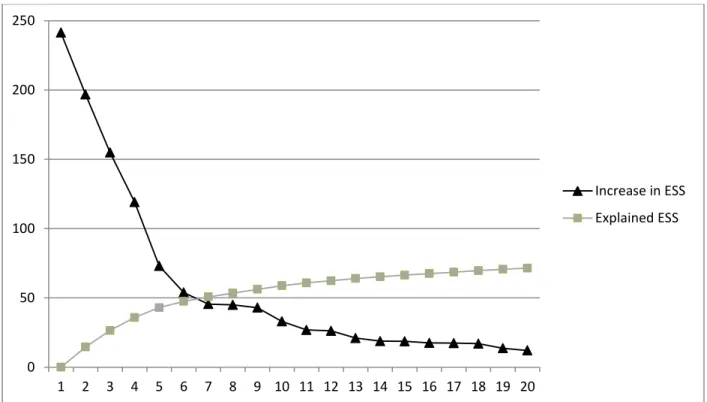
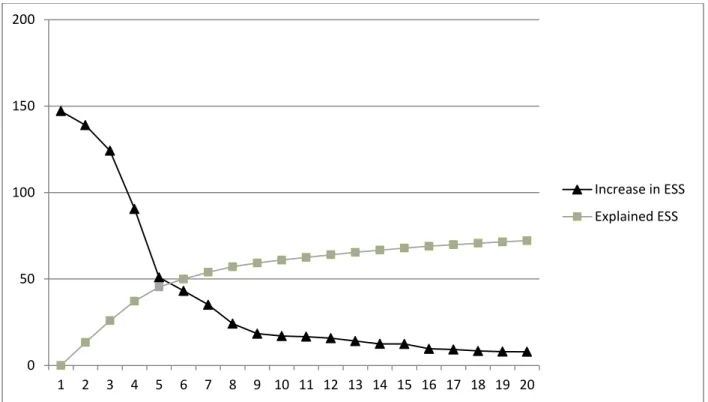
Figure 1 - Error sum of squares (ESS) plot for work-bound youth clusters ... 69
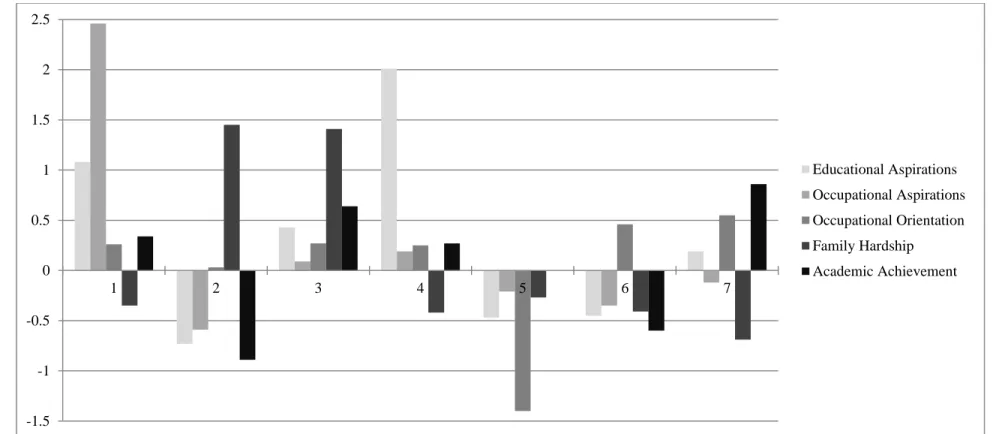
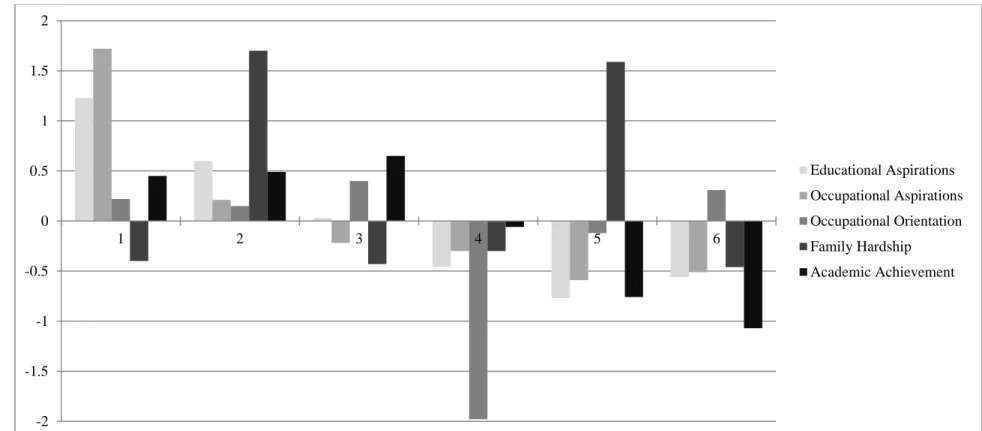
Figure 2 - Seven cluster solution standardized scores on clustering variables ... 73
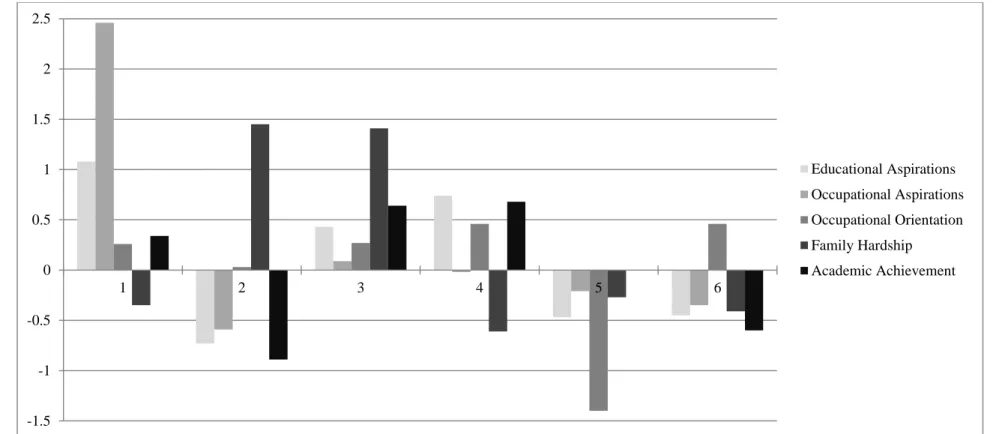
Figure 3 - Six cluster solution standardized scores on clustering variables ... 75
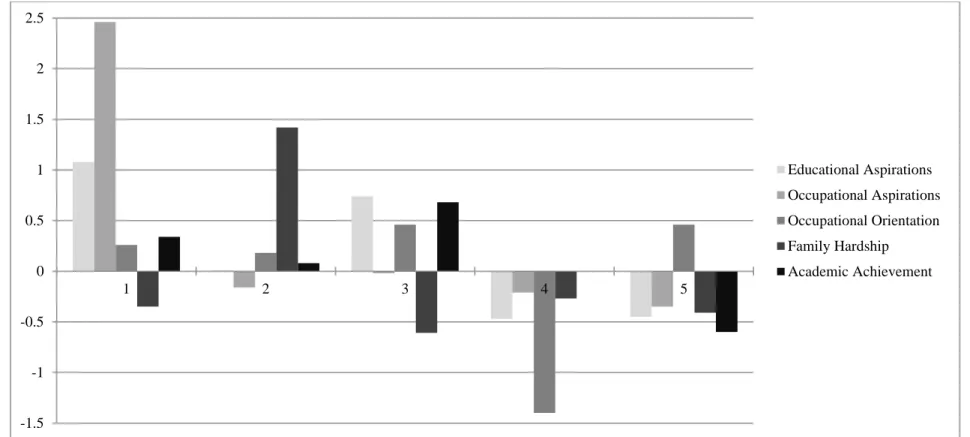
Figure 4 - Five cluster solution standardized scores on clustering variables ... 77
Figure 5 - Final cluster solution standardized scores on clustering variables ... 82
CHAPTER 1: INTRODUCTION
In today’s changing global economy, youth are encouraged to pursue postsecondary
education (PSE) as a way to improve their chances of a successful transition to adulthood
(Rosenbaum, Ahearn, Becker, & Rosenbaum, 2015; Schneider, 2009). Such encouragement from
parents, teachers, community leaders, and policymakers is understandable given that PSE
attainment has been linked to outcomes such as higher earnings, career satisfaction and stability,
better health, and overall life satisfaction (Danzinger & Ratner, 2010). Despite these benefits and
the ubiquitous message about the importance of PSE, approximately one-third of the class of
2015 did not enroll in any PSE institution after graduation (Bureau of Labor Statistics, 2016). In
addition, only 59.6% of the most recent cohort of youth who enrolled in a four-year institution
graduated within six years while only 27.9% of those who enrolled in a two-year institution
graduated within three years (National Center for Education Statistics, 2015a; 2015b).
Despite our efforts, approximately half of our youth either do not attempt or do not attain
a PSE credential (Rosenbaum et al., 2015). Though reasons are varied, these work-bound youth1 are more likely to come from backgrounds characterized by economic hardship and inadequate
educational preparation (Deil-Amen & Turley, 2007; Juntunen & Wettersten, 2005; Rojewski &
Kim, 2003). Most enter the workforce with little exposure to career development opportunities in
high school and few opportunities to take part in school to work (STW) transition programs and
services designed specifically for their needs. Given these hardships, most work-bound youth
will experience obstacles in the transition to adulthood without some form of PSE (Carnevale,
Jayasundera, & Gulish, 2016; Halperin, 1998; Rosenbaum et al., 2015; W. T. Grant Foundation,
1988).
Rural youth have high aspirations and are enrolling in PSE in ever greater numbers, but
enrollment and attainment is still lower among rural youth compared to nonrural youth (Byun,
Meece, & Irvin, 2012; Byun, Irvin, & Meece, 2015; Meece et al., 2013; Snyder & Dillow, 2010).
Much of this disparity is the result of economic inequality rather than rurality per se (Byun et al.,
2012; Byun et al., 2015). In fact, rural contextual factors such as strong connections between
schools, families, and the community are often found to positively influence youth development
(Crockett, Shanahan, & Jackson-Newsom, 2000; Elder & Conger, 2000). Despite these supports,
rural youth are more likely to be work bound than nonrural youth (Rojewski, 1999). Given that
rural work-bound youth face potential hardships related to poverty, geographic isolation, lack of
career development opportunities, and limited job prospects, developing a better understanding
of the diverse experiences of these youth is important for designing programs and services to
meet their transition needs (Crockett et al., 2000; Hutchins, Meece, Byun, & Farmer, 2012;
Rojewski, 1999).
Statement of the Problem
Most research on the transition to adulthood focuses on economically and educationally
advantaged youth who complete PSE (Bozick & DeLuca, 2011; Dietrich, Parker, &
Salmela-Aro, 2012; Juntunen & Wettersten, 2005). Work-bound youth are virtually ignored in many
reviews on the transition to adulthood other than to note that these youth are at risk for poor
2006; Zarrett & Eccles, 2006). Most findings on work-bound youth come from studies of
nonrural youth or studies comparing work-bound youth to college-bound youth with results
indicating that work-bound youth lag behind college-bound youth on most factors under
consideration (Hutchins et al., 2012; Rojewski, 1999; Rojewski & Kim, 2003). A problem with
this design is the implicit assumption that PSE attainment is a goal of all youth, thus the goals,
motivations, and achievements of college-bound youth become the standard against which
work-bound youth are evaluated (Bozick & DeLuca, 2011). Though many work-work-bound youth come
from disadvantaged backgrounds, experience problems in school, and experience problems
transitioning to adulthood, some do not. Some are purposeful in their transition preparations,
have contextual supports, and are satisfied with their transitions despite the lack of PSE
(Blustein, Philips, Jobin-Davis, Finkelberg, & Roarke, 1997; Blustein et al., 2002; Bozick &
DeLuca, 2011).
Although many investigators have pointed out that work-bound youth are diverse in
terms of motivations, goals, aspirations, and levels of contextual support (Hamilton & Hamilton,
2006; Herr & Niles, 1997; Juntunen & Wettersten, 2005), it is surprising that relatively few
studies of work-bound youth use theoretical and analytical frameworks to capture this diversity.
One example of this type of approach is person-oriented analysis, which is designed to explore
interindividual differences on developmental experiences by identifying homogenous subgroups
of individuals as the unit of analysis (Bergman & Trost, 2006; von Eye & Bergman, 2003).
Person-oriented analysis is particularly valuable for uncovering and understanding groups of
individuals whose behaviors and experiences differ from those who follow more commonly
To be sure, there are studies that are consistent with person-oriented analysis that have
uncovered important differences among work-bound youth, particularly understanding why some
work-bound youth enter the workforce after high school despite being academically prepared
(e.g., Burnell, 2003; Hahn & Price, 2008) or facing little economic hardship (Blustein et al.,
2002; Bozick & DeLuca, 2011). One problem with many of these studies is that interindividual
differences among work-bound youth are evaluated using single dimensions or simple
dichotomies (e.g. high vs. low socioeconomic status, high vs. low academic achievement). STW
transition outcomes, particularly PSE enrollment and attainment, are influenced by a complex
interplay of individual and contextual factors (Deil-Amen & Turley, 2007; Eccles, Vida, &
Barber, 2004); Missing from the literature are studies that use analytic techniques designed to
capture the variance and heterogeneity among work-bound youth using a wider range of
developmental experiences.
An equally important problem is that most studies of work-bound youth focus on
nonrural youth, which means less is known about the challenges and opportunities that rural
youth perceive in the STW transition despite the fact that rural youth represent 20% of students
in the U.S. (Johnson & Strange, 2007). Rural youth face unique challenges, such as the tension
between staying in the community and leaving to find work or PSE opportunities (Petrin,
Schafft, & Meece, 2014). However, rural youth may also have opportunities that are unavailable
to nonrural youth that may be especially helpful for work-bound youth. For example, rural youth
often benefit from greater connections to families, schools, and the community (Crockett et al.,
2000). Such connections may help rural work-bound youth find employment within the
community after high school. Given the challenges and opportunities that rural work-bound
enter the workforce directly after high school, there is a clear need for more research on how
these youth perceive opportunities and barriers to their future plans.
Additionally, less is known about how subgroups of work-bound youth differ on
schooling experiences given that most major studies of work-bound youth identify these youth as
a single group and then compare these youth to college-bound youth (e.g., Rojewski, 1999;
Rojewski & Kim, 2003). Work-bound youth, compared to college-bound youth, evidence a
variety of negative schooling experiences including lack of engagement, poor academic
performance, and lower levels of involvement in career preparation (Deil-Amen & Turley, 2007;
Juntunen & Wettersten, 2005; Hutchins et al., 2012). However, not all work-bound youth
experience academic problems, hold negative views about the importance of school, or fail to
take part in school-based programs and curricula that promote career and work skills
development (Blustein et al., 2002; Bozick & DeLuca, 2011; Burnell, 2003; Neumark &
Rothstein, 2007). Although there has been some work around how work-bound youth differ on
academic achievement, aspirations, and curriculum participation, there is less work available on
how these youth differ on specific perceptual experiences of schooling, such as competency and
value beliefs (e.g. academic self-concept, valuing, belonging) as well as participation in
potentially career enhancing activities such as career exploration (Hutchins et al., 2012). As
such, it is important to explore the schooling experiences of work-bound youth as some may be
more engaged and use school to inform decisions around the transition to work, whereas others
may be less engaged and leave school less prepared for work.
Purpose of the Study
The purpose of this study was to address limitations in the literature using data from the
continue their education beyond high school or left PSE before completing any degree. This
study was descriptive in nature and as such, designed to identify areas for future research by
addressing three primary aims. Given the treatment of work-bound youth as homogenous
samples in previous studies, the first aim was to use cluster analytic techniques (Bergman,
Magnusson, & El-Khouri, 2003; Bergman & Trost, 2006) to identify groups of similar
work-bound youth using a wider range of factors than has been used in previous subgroup analyses
(e.g., Hahn & Price, 2008). For this study, cluster analysis was conducted using work-bound
youth’s PSE and occupational aspirations, work orientations, perceived family economic
hardship, and academic achievement. These factors were selected because they predict STW
transition outcomes2, have been found to differentiate subgroups of work-bound youth in meaningful ways, and in the context of this study may indicate why certain groups of
work-bound youth do not complete PSE. More importantly, the identification of reliable and valid
clusters of work-bound youth that evidence meaningful differences on other indicators in this
study may provide an impetus for other investigators of work-bound youth to make greater use
of person-oriented analysis.
The second aim was to explore how the identified groups of rural work-bound youth
differed in their perceptions of job opportunities in the local community as well as perceptions of
PSE and occupational barriers. Perceptions of contextual opportunities and barriers can influence
how youth formulate and enact future plans (Lent, Brown, & Hackett, 1994; 2000). One area of
neglect in the literature is the lack of research on how work-bound youth themselves view STW
transition opportunities and barriers, particularly among work-bound youth with varying levels
of family support and academic preparation (Bozick & DeLuca, 2011). Although the RHSA
study does not include self-reported reasons why participants did not continue their education or
attain a PSE credential, available information on perceived work and educational opportunities
and barriers assessed at high school may uncover differences between identified groups of rural
work-bound youth that suggest why these youth did not continue or complete PSE.
The third aim of this study was to explore how the identified groups differed in their
perceptions of their schooling experiences. Three variables were selected to assess competency
and value beliefs about school (academic self-concept, school valuing, and school belonging)
and three variables were selected to assess engagement in specific activities designed to improve
STW transitions (participation in career counseling, participation in career exploration, and
program of study participation). The literature on work-bound youth suggests that these youth
are often less engaged in school as a result of feeling that their goals and aspirations may not be
valued if they have lower aspirations or more work-oriented goals (Burnell, 2003; Krei &
Rosenbaum, 2001; Rosenbaum et al., 2010). However, not all work-bound youth have low
aspirations, low academic achievement, or are particularly oriented toward work (Bozick &
DeLuca, 2011). In order to better serve the needs of these youth, it is important that we
understand who is more engaged in school and why.
This study will contribute to the literature in three ways. First, this study is one of the first
to identify subgroups of rural work-bound youth using a person-oriented or cluster-analytic
approach. Results from this study may provide a more nuanced perspective on who these rural
work-bound youth are and reasons why they did not continue or complete their education beyond
high school. Second, by exploring the schooling experiences of subgroups of work-bound youth,
results may help educators, researchers, and policymakers better understand which groups of
activities, and how these youth differ from those who are less engaged in school and more likely
to leave school less prepared for the transition to work.
Third, given the paucity of research on work-bound youth using a person-oriented
analytic framework and the descriptive nature of this investigation, results from this study may
provide information in areas such as variable selection and overall study design so that future
investigators can more effectively identify variables and methods to study the diverse
experiences of rural work-bound youth. Every effort was made to select theoretically relevant
variables and to use analytic techniques that were consistent with prior work on work-bound
youth (e.g., Bozick & DeLuca, 2011; Rojewski & Kim, 2003). However, given the uniqueness of
this analysis and some of the limitations in the literature, one goal was to provide methodological
CHAPTER 2: REVIEW OF THE LITERATURE
I begin this chapter by discussing the guiding conceptual framework. This study was guided by Bronfenbrenner’s bioecological model (Bronfenbrenner & Morris, 2006) for
theoretical support and person-oriented analysis for an analytic guide (Bergman et al., 2003).
Next, I provide an overview of the STW transition, emphasizing recent economic and labor
market trends, and the role of PSE as context for this investigation. I then review the literature on
work-bound youth, particularly studies of interindividual differences within this population.
Next, I discuss schooling experiences of work-bound youth, emphasizing career-enhancing
activities that may be particularly important for these youth. Finally, I discuss limitations in prior
work and present research questions addressed in this study. Because multiple studies cited in the
literature review and other chapters come from the RHSA study, I provide a summary of cited
studies in Appendix A for readers interested in the work conducted by RHSA investigators.
Guiding Conceptual Framework
Numerous frameworks have been used to understand the STW transition, but a limitation
of most studies is a focus on more economically and educationally advantaged youth (Eccles et
al., 2003; Lent & Worthington, 1999; Schwartz, Côté, & Arnett, 2005; Worthington & Juntunen,
1997; Worthington et al., 2005). A limitation of the work-bound youth literature in particular is a
lack of studies that explore the bidirectional influence of the person in context as well as studies
that explore interindividual differences within this population (Bozick & DeLuca, 2011; Juntunen & Worthington, 2005; Ling & O’Brien, 2013). Given these limitations, the current
with person-oriented analysis which seeks to understand individuals with similar developmental
experiences and is consistent with the bioecological model.
Overview of the Bioecological Model
Bronfenbrenner’s bioecological model is an extension of his earlier ecological systems
theory that focused on how contextual factors influence development within five concentric
systems of influence including the microsystem, mesosystem, exosystem, macrosystem, and chronosystem (Bronfenbrenner, 1979). The microsystem represents an individual’s immediate environment such as the home or school. The mesosystem, exosystem, and macrosystem
represent more distal influences (i.e., broader social, political, and economic forces) that directly
and indirectly influence development. The final level, the chronosystem, represents changes in
the individual and context across historical time (Bronfenbrenner & Morris, 2006). The
bioecological model retains these systems, but greater emphasis is placed on the bidirectional
interaction between individuals and their environments or what developmental researchers call
the person-in-context system (Bergman & Magnusson, 1994; Cairns & Cairns, 1994). For Bronfenbrenner, the primary mechanisms of development is the proximal process which he defined as, “the processes of progressively more complex reciprocal interactions
between an active, evolving biopsychological human organism and the persons, objects, and symbols in its immediate external environment” (Bronfenbrenner & Morris, 2006, p. 797). To
promote development, a person must regularly engage in developmentally supportive activities
in his or her immediate context and these activities must become more complex over time. In the
context of this study, a proximal process could be work-bound youth taking part in career
Before discussing how proximal processes unfold, it is important to emphasize the more
recent model’s distinction between environment and process. Relevant features of an
environment not only include objective properties, but also how the environment is subjectively
experienced by the individual (Bronfenbrenner & Morris, 2006). For example, while structural
characteristics of a school (e.g., size, location) play an important role in creating a context for development, from an ecological perspective, a student’s subjective evaluation of school (e.g.
sense of belonging, academic self-concept) plays an equally important role (Eccles & Roeser,
2010; Roeser, Urdan, & Stephens, 2009). Bronfenbrenner stressed the importance of
understanding both objective features of the environment and subjective experiences of that
environment, particularly when these elements do not operate in the same direction.
The way that individuals subjectively evaluate their environments and engage in
proximal processes is influenced by force3, resource, and demand characteristics of the
individual. Force characteristics are behavioral dispositions (e.g., interests) that can set proximal
processes into motion, sustain their operations, or impede these activities from taking places. Resource characteristics are defined as “biopsychological liabilities and assets that influence the
capacity of the organism to engage effectively in proximal processes” (Bronfenbrenner &
Morris, 2006, p. 812) such as knowledge, skills, and abilities. Demand characteristics are
characteristics that can invite or discourage reaction from the social environment. Two important
demand characteristics are gender and ethnicity given that these characteristics may influence
reactions from others in the microsystem (Tudge, Mokrova, Hatfield, & Karnik, 2009).
Implications for Analysis
Work-bound youth come to school with different dispositions and resources (e.g.,
academic orientation, achievement) that influence how they perceive school, which in turn
influences their levels of engagement. For example, suppose two work-bound students at the
same school have low educational and occupational aspirations, yet one values school more and
takes part in various extracurricular activities. School personnel may take notice and attempt to
collaborate more with this student. As a result, this student may be encouraged to enroll in a
specialized academic or career program whereas the other student may go unnoticed and miss
out on relational support and activity involvement that could promote career development.
Exploring how a combination of factors influence work-bound youth’s schooling experiences
may be more informative than focusing on any single factor.
One way to incorporate the person-in-context approach from the bioecological model into
a study design is through person-oriented analysis. The goal of person-oriented analysis is to
identify unique patterns among variables within individuals in order to identify groups of
individuals with similar developmental experiences (Bergman & Magnusson, 1997; Bergman &
Trost, 2006). These groups are identified to explore how they differ on outcomes of interest.
Person-oriented analysis, such as cluster analysis, is particularly valuable for uncovering and
understanding groups of individuals whose behaviors and experiences differ from those who
follow more commonly established developmental pathways (e.g., von Eye et al., 2006).
The person-oriented approach has been used in a number of studies designed to
understand how groups of youth with similar characteristics differ from other groups on
outcomes such as academic and social functioning (e.g., Estell, Farmer, Irvin, Thompson, &
Hutchins et al. 2007; Farmer, Irvin, Sgammato, Dadisman, & Thompson, 2009; Rodkin, Farmer,
Pearl, & Van Acker, 2000). However, person-oriented analyses have received considerably less
attention in the work-bound youth literature, which is often guided by the more traditional
(Garrett & Eccles, 2009).This approach is typically used in population-based studies where the
goal is to make inferences about relations among variables at the population level.
A limitation of a variable-oriented approach is the assumption that relations among
variables function the same for all individuals (Bergman et al., 2003). For example, in multiple
regression analysis each variable has the same weight for all individuals and reflects what is
characteristic of the average individual unless interaction terms are specified. It is assumed that
relations among variables studied at the group level can be used to make inferences about how
these variables function within individuals. Such approaches, while informative, can overlook
important within-group differences (Bergman & Trost, 2006). Both approaches have merit and
investigators using person-oriented analysis stress that both contribute to our understanding of
development (Bergman & Trost, 2006; Cairns & Rodkin, 1998). In fact, many studies, including
the current study, use both methods by identifying groups with similar experiences using
person-oriented methods, followed by variable-person-oriented analysis where group differences are evaluated
in relation to other individual or contextual factors (Bergman & Trost, 2006).
Overview of the School to Work (STW) Transition
The bioecological model posits that interactions between individuals and their proximal
contexts (e.g., home, school) exert the greatest influence on development (Bronfenbrenner &
Morris, 2006). Although this study is not focused on more distal ecological systems of influence,
it is important to briefly provide background information on the broader context for this study by
briefly describing the STW transition and the role of PSE in the lives of recent cohorts of youth.
The STW transition is considered the period in which youth leave formal schooling and
enter the workforce (Juntunen & Wettersten, 2005). For some, the transition begins at the
transition involves a prolonged combination of work and PSE before transitioning primarily to
work (Arnett, 2004; Mortimer, 2010; Symonds, Schwartz, & Ferguson, 2011). Regardless of
pathway, late adolescence and early adulthood are important times for youth to engage in career
enhancing activities to develop competencies needed for the transition (Eccles et al., 2003;
Hamilton & Hamilton, 2006; Shanahan, 2000; Zarrett & Eccles, 2006). A successful transition
has been defined differently across disciplines, but PSE and employment attainment are viewed
as particularly important given that both improve one’s chance of attaining economic
self-sufficiency (Blustein, Juntunen, & Worthington, 2000; Crockett & Crouter, 2014; Danzinger &
Ratner, 2010; Eccles et al., 2003; Garrett & Eccles, 2009; Shanahan, 2000).
Current labor market trends. Rapid economic, labor, and technological changes have made the STW transition more uncertain for recent cohorts of youth (Schoon & Silbereisen,
2009). Over the past four decades, the U.S. has seen a decrease in the number of unskilled labor
jobs as new technologies raise the demand for skilled workers (Danzinger & Ratner, 2010).
Rural communities in particular, have seen declines in industries such as farming, mining, and
timber harvesting, which typically provide relatively high pay for unskilled labor (Fussel &
Furstenberg, 2005; McGranahan, 2003). The South in particular, has experienced a loss in
manufacturing jobs that have historically supported middle and low-skilled workers (Beaulieu &
Barfield, 2000; McGranahan, 2003). Many rural communities struggle to attract and retain
employers due to the lack of skilled workers (Johnson, 2006).
Workers have faced wage stagnation and fewer opportunities for full-time employment
with benefits as employers are moving to part-time or contract work (Schoon & Silbereisen,
2009; Wisman, 2013). In many rural areas, agricultural, extraction, and manufacturing jobs have
Young workers face higher rates of unemployment as they are often the last to be hired and first
to be fired during uncertain times (Choudhry, Marelli, & Signorelli, 2012). Many youth go
through a period of floundering where they are either unable or unwilling to find stable employment, work in jobs of higher quality, advance in their careers, or pursue jobs that are
aligned with their goals (Hamilton & Hamilton, 2006; Kerckhoff, 2002; Vuolo, Mortimer, &
Staff, 2014). Rural youth may be more likely to flounder due to lack of job opportunities,
particularly for those who lack technical and advanced job skills (Fussel & Furstenber, 2005).
The U.S. is one of the few industrialized nations with no national policies, programs, or
services to meet the STW transition needs of work-bound youth (Halperin, 1998; Juntunen &
Wettersten, 2005; Rosenbaum, 2001; Symonds et al., 2011; W. T. Grant Foundation, 1988).
Recent legislation and policies, such as the No Child Left Behind Act of 2001 and Common
Core State Standards, were designed with the goal of improving students’ college and career
readiness (National Governors Association & Counsel of Chief State School Officers, 2010).
However, such initiatives place more emphasis on improving academic rigor, raising standards,
and promoting college readiness with less emphasis on career readiness (Rosenbaum et al.,
2010). The last major legislative effort to assist work-bound youth specifically was the
School-to-Work Opportunities Act of 1994 (STWOA), which set aside $1.5 billion dollars to help
schools create career development opportunities in collaboration with local businesses and
industries. However, funding for STWOA ended in 1999 (Neumark & Rothstein, 2007).
Role of postsecondary education attainment. Individuals with a bachelor’s degree earn, on average, 93% more than those with a high school diploma or less and this earnings gap has
widened since the 1970s (Danzinger & Ratner, 2010; Mishel, Bevins, Gould, & Sheirholz,
encouraged to “give college a try,” particularly a four-year degree, even those who have low
aspirations, inadequate academic preparation, or unrealistic beliefs about college expectations
(Goyette, 2008; Krei & Rosenbaum, 2001; Rosenbaum et al., 2010; Schneider & Stevenson,
1999). Such societal pressure may explain why adolescents today tend to have high, and
sometimes unrealistic, educational aspirations (Goyette, 2008; Meece et al., 2013; Reynolds,
Steward, MacDonald, & Sischo, 2006; Schneider & Stevenson, 1999).
Despite the benefits of PSE, not all youth benefit equally. For example, college graduates
who performed poorly in high school experience considerably fewer economic benefits
compared to graduates who were more academically prepared for college (Attewell & Lavin,
2007; Rosenbaum, 2001). Given rising tuition, the number of youth who are unprepared for
college (particularly four-year college), and the rise in jobs that require advanced/technical skills,
policymakers, educators, and researchers have taken notice of programs in high schools and
community colleges that can lead to quality job opportunities that do not require four-year
degrees (Arum & Roksa, 2010; Rosenbaum et al., 2010; Symonds et al., 2011). Although most jobs today require some PSE, only about half require a bachelor’s or advanced degree
(Carnevale, Smith, & Strohl, 2013). In fact, nearly one-third of those with an associate’s degree
or occupational certificate earn more than those with a bachelor’s degree by working in high
demand middle skills jobs (Baum, Ma, & Payea, 2013; Carnevale et al., 2013).
Work-Bound Youth
Work-bound youth are not well defined in the literature and do not represent a
homogenous group (Hamilton & Hamilton, 2006; Herr & Niles, 1997). Here I provide a
summary of work-bound youth that includes: PSE enrollment, demographic characteristics, PSE
achievement. The discussion is organized around the clustering variables to justify the use of
these variables to explore group differences. Using the bioecological model as a guiding
conceptual framework, PSE aspirations, occupational aspirations, and work orientations were
conceptualized as important force characteristics of the individual that can influence interactions with the school environment. Family hardship was conceptualized as a resource characteristic that can influence interactions with the school environment and PSE opportunities. For the
purposes of this study, academic achievement was conceptualized as both a force and resource characteristic because measures of achievement may provide information on a participant’s
disposition toward school (force) as well as possible preparation for PSE (resource). Finally,
demographic characteristics were conceptualized as important demand characteristics. I begin with a discussion of definitions of work-bound youth. Before doing so, it is
important to note that given the limited available research on rural work-bound youth
specifically, many of the studies reviewed in this section do not focus exclusively on rural youth.
Studies focused on rural youth will be included where available and designated as such. The
limitations of this existing research and its relevance for rural work-bound youth will be
discussed in a subsequent section as a justification for the current study.
Definitions of Work-Bound Youth
Work-bound youth are typically described as those who plan to enter the workforce after
high school, but definitions vary (Herr, 1995; Herr & Niles, 1997). For example, some studies
define work-bound youth as those who have strong work orientations or intend to work after
high school (Herr, 1997; Hutchins et al., 2012; Worthington & Juntunen, 1997). However, some
youth enter the workforce due to economic hardship or problematic schooling experiences and
et al., 2002; Bozick & DeLuca, 2011). Some authors have defined work-bound youth as those
who do not enroll in, or complete a four-year degree (Juntunen & Wettersten, 2005). Under this
definition, two-year degree recipients are considered work-bound. Other authors have used
imprecise definitions. For example, Rojewski and Kim (2003) defined college-bound youth as those who were “enrolled primarily in school regardless of employment status” (p.93) and
work-bound youth as those who were “primarily employed” (p.93) two years after high school. These
authors did not elaborate on what it means to be primarily in school or employed, nor did they
indicate whether work-bound youth in their study could also be in school.
Definitional issues aside, most researchers, educators, and policymakers seem primarily
concerned with those who do not attempt or attain any postsecondary credential regardless of
degree level (Halperin, 1998; Rosenbaum et al., 2015; W. T. Grant Foundation, 1988). In
addition, although work-bound youth have traditionally been defined as those who plan to work
after high school (e.g., Herr & Niles, 1997), Rosenbaum and colleagues (2015) have argued that
because most bound youth will try, but fail to attain a PSE degree, investigators of
work-bound youth should keep in mind that work-work-bound youth today are primarily college dropouts.
Descriptions of Work-Bound Youth
PSE enrollment. Although work-bound youth are often defined by not attempting PSE, the majority of these youth will attempt PSE at some point. Recent findings from the Educational
Longitudinal Study indicated that 86% of students who were in 10th grade in 2002, enrolled in some form of PSE within eight years of high school (Rosenbaum et al., 2015). Although more
rural youth are enrolling in PSE institutions (particularly two-year programs), rural youth are less
likely to enroll in PSE, or attain a credential compared to nonrural youth (Byun et al., 2012;
youth were more likely to delay PSE entry and be noncontinuously enrolled compared to urban
youth. Much of the disparity in PSE outcomes is related to socioeconomic disadvantage and
schooling experiences and not rurality per se (Byun et al., 2012; Byun et al., 2015).
Demographics. Male youth are more likely to be work-bound than female youth, a finding that has been replicated for rural youth (Hutchins et al., 2012; Rojewski, 1999; Rojewski
& Kim, 2003). When reasons for being work-bound are considered, male youth are more likely
to report a desire to work and make money (Bozick & DeLuca, 2011). Proportionally speaking,
youth of color are overrepresented among work-bound youth as these youth typically experience
lower graduation rates, PSE attendance, and PSE completion (Juntunen & Wettersten, 2005; Kao
& Thompson, 2003; Worthington, Flores, & Navarro, 2005). Although African American,
Hispanic, and Native American youth have been found to have high educational aspirations,
these aspirations tend to be unstable and begin to decline over the course of high school. This
decline may be due to the lack of family resources and parents’/guardians’ lower levels of
education, both of which have been found to strongly influence aspirations (Kao & Thompson,
2003). However, discrepancies between minority and nonminority youth can also be explained
by other factors including, but not limited to, more problematic schooling experiences and
discrimination (Kao & Thompson, 2003; Worthington et al., 2005).
Postsecondary education aspirations. In general, work-bound youth, including rural work-bound youth, have lower PSE aspirations compared to college-bound youth (Rojewski,
1999; Rojewski & Kim, 2003; Hutchins et al., 2012). However, most work-bound youth
Herr & Niles, 1997).4 Rural youth, in particular, may be less able or willing to pursue PSE due to economic barriers, inadequate academic preparation, or career indecision (Hutchins et al., 2012;
Provasnik et al., 2007). For others, barriers may be less of an issue. Some rural work-bound
youth see college as problematic because it delays the assumption of adult responsibilities. For
example, in a study of rural work-bound youth, Burnell (2003) identified a group of high
achieving work-bound youth who wanted to work and make money, but did not report disliking
school. However, they did dislike the fact that PSE delayed entry into the “real world.” Some
work-bound youth, particularly those from middle-class backgrounds and those who are
college-qualified, have lower aspirations for PSE that may result from the belief that their career goals do
not require PSE (Blustein et al., 2002; Burnell, 2003; Hahn & Price, 2008).
An important question is whether such beliefs are reasonable. Drawing on a nationally
representative sample of 2,640 work-bound youth from the ELS:2002 dataset, Bozick and
DeLuca (2011) found that youth who were work driven and experienced few schooling or
economic hardships tended to come from communities where PSE was less necessary for work,
suggesting that for some work-bound youth low aspirations and the decision to forgo PSE may
be reasonable. Work by Bowen, Chingos, and McPherson (2009) suggested that for some youth,
forgoing PSE may be an informed decision that results from career exploration, identity
development, and behavioral engagement in school. However, for some, low aspirations may
result from ineffective career exploration or lack of quality information around PSE, which can
create misunderstandings about the benefits of college and the steps that are necessary to attend.
Occupational aspirations and values. Most work-bound youth have stronger
orientations toward work than school and/or desire to assume adult responsibilities earlier than
college-bound youth (Burnell, 2003; Garrett & Eccles, 2009; Staff, Schulenberg, & Bachman,
2010; Vuolo et al., 2014). In general, work-bound youth aspire to low- and middle-skilled
occupations, whereas college-bound youth aspire to professional and skilled occupations (Bozick
& DeLuca, 2011; Rojewski & Kim, 2003). Work-bound youth also tend to differ from
college-bound youth in their work values. For example, Johnson and Elder (2002), using data from the
Monitoring the Future Survey, found that in a nationally representative sample of youth,
work-bound youth, when compared to college-work-bound youth, desired jobs that were more secure and
less altruistic in nature. They placed less importance on jobs that were personally challenging or
granted authority, and more emphasis on jobs that allowed them to use their skills and abilities in
areas where they could see results. In a study of rural work-bound youth, Burnell (2003) found
that while job stability was important, participants rarely mentioned career advancement or
taking on additional work-responsibilities like supervising others as a goal. Many aspired to jobs that were, in their words, “average,” “just right,” or “comfortable” or reported nonwork goals
such as spending time with friends and family or taking part in other leisure activities. Taken
together, these studies suggested that one reason that some work-bound youth aspire to low- or
middle-skilled occupations is that these occupations may reflect their career and personal values.
Family background. One of the strongest predictors of PSE enrollment and attainment is related to family background characteristics, particularly economic hardship and parents’ level of
education (Deil-Amen & Turley, 2007; Juntunen & Wettersten, 2005; Kao & Thompson, 2003).
Studies that have compared work-bound youth to college-bound youth consistently demonstrate
that work-bound youth are more likely to come from families with higher economic hardship,
lower parental education, and lower educational expectations for their children (Hutchins et al.,
For example, Hutchins and colleagues (2012), using data from the RHSA study, found
that work-bound youth who did not plan to continue their education or were unsure about PSE
perceived greater family economic hardship and lower parental educational expectations
compared to college-bound youth. This finding held for work-bound youth who planned to work
directly after high school, but also planned to continue their education. Rojewski (1999) also
found that family economic hardship was the strongest predictor of work-bound status for rural
youth. Interestingly, Bozick and DeLuca (2011) found that although some work-bound groups
were more likely to experience economic hardship and have parents with lower levels of
education, this was not true for those who had strong work orientations. Compared to youth
enrolled in two-year programs, these work-driven youth came from families with similar
economic backgrounds. However, these youth were less likely to have parents who earned a bachelor’s degree, compared to two-year degree enrollees, suggesting that even when economic
support is available work-driven youth may not enroll in PSE because of lack of family support.
Academic values and achievement. Work-bound youth, compared to college-bound youth, typically have more problematic schooling experiences, including lower levels of
achievement, engagement, school valuing, and greater involvement in delinquent behavior
(Deil-Amen & Turley, 2007; Finn & Zimmer, 2012; Juntunen & Wettersten, 2005; Staff et al., 2010).
Often, problems in school begin before high school and represent a developmental process that unfolds over the course of one’s time in school (Eccles & Roeser, 2009; Eccles et al., 2004). As
youth reach high school, negative prior schooling experiences, as well as lack of family
resources and support, may contribute to some youth developing stronger orientations to work
over school. Youth who have stronger orientations to work and have experienced problems in
work, particularly when these youth see education as less relevant for their futures (Staff et al.,
2010). This is not to say that strong work orientations conflict with school as not all work-bound
youth disengage from school (Blustein et al., 2002). However, youth who work long hours or
work in low quality jobs are more likely to perform poorly in school, misbehave, and skip school
(Mortimer, 2010; Staff et al., 2010).
Some work-bound youth feel that their interests and aspirations are not valued at school
(Burnell, 2003; Krie & Rosenbaum, 2001; Mortimer et al., 2002; Rosenbaum et al., 2010).
Results from qualitative studies of rural and nonrural youth discussed next suggest that
work-bound youth who seek out school staff for advice are often disappointed because they perceive
the information as less informative for their more work-oriented goals. Work in
stage-environment fit theory (see Eccles et al., 1993) suggests that when the needs of the developing
adolescent conflict with contextual affordances that negative outcomes, such as declines in
academic motivation, can occur. Work-bound youth may experience such a mismatch in school
because these youth have goals and aspirations that may conflict with the goals of school staff,
which are typically around improving rigor and promoting college (Rosenbaum, 2001).
Schooling Experiences of Work-Bound Youth
In the previous section I discussed work-bound youth’s academic achievement and
valuing in general. Here I focus on schooling experiences that may be particularly salient for
understanding how these youth prepare, or fail to prepare, for the STW transition through
academic and career advising, career related coursework, and participation in career exploration
as these activities represent important proximal processes that can promote career development.
Some work-bound youth experience problems with school staff because they perceive these
adults as less supportive or offering unhelpful advice (Burnell, 2003; Krie & Rosenbaum, 2001;
Mortimer et al., 2002; Rosenbaum et al., 2010). This perceived lack of support may not be
imagined. For example, Krei and Rosenbaum (2001) used interviews from counselors and
vocational teachers at 12 Midwestern high schools to explore what advice they gave work-bound
youth. They found that most counselors advised college to all without giving clear reasons why
or they failed to connect labor market trends to specific PSE pathways. Counselors framed the
choice as between going to a four-year college or getting a job. Few discussed technical
education, apprenticeships, or job certificates. However, vocational teachers were more willing
to discuss such opportunities and some were willing to help students find jobs. Unfortunately,
many rural work-bound youth do not take vocational classes and thus miss out on such support
(Hutchins et al., 2012; Rojewski, 1999).
Even high achieving work-bound students may perceive school personnel as less
supportive. For example, Burnell (2003) interviewed 26 rural high school seniors across schools
in New York who planned to work after school despite being prepared for college and found that
despite their strong desire to work, most felt that PSE was important. However, most reported
being told to go to college with little discussion of how specific PSE opportunities would meet
their needs. Also, many expressed frustration because they felt that they were making rational
and thoughtful decisions that were not being respected by school personnel. Research by Griffin
and colleagues (2011), using the full RHSA dataset, found that less than half of the rural youth in
this study talked to a teacher or school counselor about their futures. Though reasons were not
rural youth, particularly work-bound youth, may not be reaching out to adults at school if these
adults are perceived as less supportive and knowledgeable (Burnell, 2003; San Antonio, 2016).
Career curriculum. In recent years there has been concern around preparing youth for the rigors of PSE and improving job readiness skills; however, most of the effort has been
focused on improving academic rigor (Rosenbaum et al., 2010; Symonds et al., 2011). Efforts to
promote rigor may benefit college-bound youth, but it is not clear whether such efforts are
equally beneficial for work-bound youth who are in greater need of immediately employable
skills (Neumark & Rothstein, 2007). Although all youth may benefit from taking career and
technical education (CTE) courses or programs5 that are academically rigorous and promote career development, work-bound youth in particular may benefit by developing specific skills
that can aid these youth as they enter the workforce (Stone, 2011).
Aliaga, Kotamraju, and Stone (2012), using data from the ELS:2002, found that most
high school students took at least one CTE course. In fact, they found that 27% of students took
three or more CTE credits and 17% took three or more CTE credits in a specific occupational
area or sequence. Although encouraging, most studies have indicated that participation in formal
CTE and/or vocational/technical education programs is low. For example, Stone and Aliaga
(2007), using data from the National Longitudinal Survey of Youth (NLSY97), found that only
6.6% of youth reported themselves as CTE concentrators and only 5.9% reported dual
enrollment in an academic and CTE concentration. These numbers are similar to other studies
that generally find that participation in CTE oriented programs is less than 10% (Delci & Stern,
1999; Neumark, 2007; Rojewski & Kim, 2003).
5
In general, low income youth, youth of color, low academically achieving students, and
students whose parents have lower levels of education are all more likely to take part in career
and/or vocationally oriented programs (Kelly & Price, 2009). Studies of rural work-bound youth
have suggested that these youth are more likely to take part in more career and/or vocationally
oriented courses compared to college-bound youth (Rojewski, 1999). However, one concerning
finding is that most rural work-bound youth are less likely to take part in any specialized
program, including college and vocational education (Hutchins et al., 2012).
For example, in a study of rural work-bound youth, Rojewski (1999), using data from the
NELS:88, found that 46.7% of work-bound youth reported being in the general education track,
23.2% reported being in a vocational/technical track, and 19.1% reported being in the college
track. It is not clear why fewer work-bound youth take part in such programs. It could be that
some are unsure about their futures and do not want to commit to a specialized program. In terms
of more career-oriented programs, it may be that there is a stigma associated with such programs
given the strong four-year college focus (Halpern, 2012; Rosenbaum et al., 2010). Hutchins and
colleagues (2012), using the RHSA dataset, found that less than 3% of the rural youth who
planned to enter the workforce without continuing their education were enrolled in a college
preparatory program. However, these authors did not explore vocational program participation.
Recent work by Byun, Meece, and Agger (2017), using the RHSA dataset, suggested that
enrollment in a college preparatory program more strongly predicted PSE enrollment patterns
than aspirations. These studies suggest that most work-bound youth, regardless of geographic
location, take part in the general curriculum which provides little STW transition preparation.
job shadowing, school-based enterprise, community service, and cooperative education
(Neumark, 2007).6 All youth may benefit from career exploration programs, but such
opportunities may be particularly beneficial for work-bound youth. Unfortunately, few students
in general take part in STW exploration programs and few student characteristics predict
program participation (Joyce & Neumark, 2000; Stone & Aliaga, 2007). For example, Stone and
Aliaga found that approximately 10% of students reported taking part in more structured
activities such as job mentoring programs, whereas over 20% of students reported taking part in
less structured activities such as job shadowing. Although STW exploration participation differs
by the type of opportunity, participation across all programs is generally low.
One issue may be program availability. Hutchins and Akos (2013) conducted a study of
rural-nonrural differences in STW program availability using data from the ELS:2002
administrator survey. They found that about half of schools provided job shadowing or
community service (57% and 52%, respectively), but only about 25% offered internships,
mentorships, cooperative education, and school-based enterprise. Rural schools were slightly less
likely to offer exploration opportunities than nonrural schools, but most differences disappeared
after controlling for school size and percent of students receiving free and/or reduced-price
lunch. However, rural schools were more likely to offer vocational-technical programs than
nonrural schools. Only 14-18% of 10th graders in this study took part in community service, job shadowing, or cooperative education, and only around 5% took part in internships, mentorships,
and school-based enterprise. After controlling for program availability, the authors found that
students in college and vocational tracks were more likely to take part in various exploration
activities compared to those in the general track. Few meaningful differences were found based
on rurality but, results must be interpreted with caution given the low overall participation rates.
In general, prior studies suggest that few youth take part in STW exploration activities.
Availability may be a primary reason. Although STW exploration participation rates are low for
all students, such findings are particularly problematic for work-bound youth because there is
evidence to suggest that these programs are generally more effective for work-bound youth than
college-bound youth (Neumark & Rothstein, 2007).
Limitations of Prior Research on Rural Work-Bound Youth
Four limitations in the literature on work-bound youth will be addressed in this study.
These include: 1) limited studies that focus on the experiences of rural youth; 2) limited studies
on rural work-bound youth; 3) the lack of research on interindividual differences among rural
work-bound youth on perceived educational and occupational barriers; and 4) the lack of studies
on interindividual differences among rural work-bound youth on schooling experiences,
particularly on competency and value beliefs and on engagement in career exploration. I briefly
discuss these limitations before discussing five specific research questions.
Lack of focus on rural youth. Approximately one-third of all schools in the U. S. are located in rural communities (Johnson, Showalter, Klein, & Lester, 2014; Johnson & Strange,
2007). From an ecological perspective, rural youth experience a developmental context that may
be dissimilar to that of suburban and urban youth (Bronfenbrenner, 1979; Crockett et al., 2000).
However, there is a lack of research devoted to understanding how the rural ecology, particularly
rural schools, influences the transition experiences of rural youth and the research that is
available has been characterized as being of low quality (Arnold, Newman, Gaddy, & Dean,
studies of nonrural youth, making it necessary to focus on this understudied population (Byun et
al., 2012; Lichter & Johnson, 2007; Provasnik et al., 2007).
In terms of challenges, poverty tends to be more prevalent in rural communities and is
typically long lasting, intergenerational, disproportionately focused on families of color, and
more prevalent in remote areas (Provasnik et al., 2007). Rural youth face other challenges
including geographic isolation, less access to effective teachers, less exposure to adult role
models in professional or skilled occupations, less access to advanced and dual enrollment
coursework, limited opportunities for career/college counseling and exploration, and limited job
opportunities in the local community (Apostal & Bilden, 1991; Johnson & Strange, 2007; Monk,
2007; Petrin et al., 2014; Provasnik et al., 2007; Roscigno, Tomaskovic-Devey, & Crowley,
2006). Although economic hardship is not unique to rural youth, the added challenges associated
with persistent poverty and more limited community and school resources can create a unique
burden for rural youth (Elder & Conger, 2000; Hardré, 2007). Given these challenges, rural
youth often face a conflict between staying in the community or leaving to pursue educational
and employment opportunities in the transition to adulthood (Johnson, Elder, & Stern, 2005;
Petrin, Farmer, Meece, & Byun, 2011; Petrin et al., 2014).
The rural context also provides opportunities that can promote positive youth
development (Barley & Beesley, 2007; Roscigno et al., 2006). For example, rural youth may
benefit from strong connections between parents, schools, and the community, as well as smaller
schools that provide opportunity for student involvement (Burney & Cross, 2006; Crocket et al.,
2000; Elder & Conger, 2000; Irvin, Farmer, Leung, Thompson, & Hutchins, 2010). These
connections can be especially beneficial for rural youth who attend schools in high poverty areas
nonrural work-bound youth because such connections may translate into work opportunities
(Mekos & Elder, 1996). An additional benefit of the rural community is the nature of work that
many rural youth experience in adolescence. Shanahan, Elder, Burchinal, and Conger (1996)
found that rural youth are more likely to work to help support the family than nonrural youth,
and that this financial support can promote more positive relationships with parents. Obligations
to the family may help rural work-bound youth foster a sense of commitment to the family, the
community, and to adult responsibilities in general that may be beneficial in the STW transition.
Rural youth are attending college in greater numbers, but they are still more likely to be
work bound compared to nonrural youth (Byun et al., 2012; Byun et al., 2015; Rojewski, 1999).
Work-bound youth may experience challenges by not continuing their education, but some
work-bound youth may experience opportunities that are unique to growing up and remaining in a
rural community. Given the lack of research on work-bound youth in general, and the fact that
rural youth are more likely to be work-bound compared to urban and suburban youth, there is a
considerable need to better understand the experiences of rural work-bound youth.
There is also a need to recognize the considerable diversity across rural students, schools,
and communities, which is often ignored in studies of rural youth (Coladarci, 2007; Irvin et al.,
2011; Provasnik et al., 2007). For example, not all rural communities are characterized by
poverty. The highest and most persistent forms of poverty tend to be concentrated in the
Appalachia, Mississippi Delta, and southern Black Belt regions of the south (Johnson & Strange,
2007). In addition, rural schools differ in their proximity to urban areas, such that rural youth in
closer proximity to larger population centers may have better access to resources, such as