NEGOTIATED OR STOLEN? METHODS OF TRANSITION AND PATTERNS OF OPPOSITION-REGIME INTERACTION IN COMMUNIST EASTERN EUROPE
Katrina Nowak Dusek
A thesis submitted to the faculty of the University of North Carolina at Chapel Hill in partial fulfillment of the requirements for the degree of Master of Arts in the Department of Russian and East European Studies
Chapel Hill 2008
Approved by:
Dr. Milada Vachudova
ii © 2008
iii
ABSTRACT
KATRINA NOWAK DUSEK: Negotiated or Stolen? Methods of Transition and Patterns of Opposition-Regime Interaction in Communist Eastern Europe
(Under the direction of Dr. Milada Vachudova)
iv
TABLE OF CONTENTS
LIST OF TABLES………...vii
LIST OF FIGURES………viii
LIST OF TIMELINES………...ix
LIST OF ABBREVIATIONS ………..…...x
INTRODUCTION………...………..………1
I-1 Explaining Concepts and Theory ………..………..……….11
I-2 Case Studies, Data Analysis, Roadmap………..………...…….17
Chapter 1. REVIEW OF LITERATURE………..22
1.1 Pre-Transition………..…...23
1.2 Trajectory……….………..……...28
2. HUNGARY: NEGOTIATION AND THE STORY OF THE ELITE………...33
2.1 The Regime………..………...34
2.2 The Opposition………..………....40
2.3 Transition: Leading up to the Roundtable……….…….41
2.4 Event Data Analysis……….…………...……….…..43
v
3. POLAND: NEGOTIATION THE STORY OF THE OPPOSITION……….50
3.1 The Regime……….51
3.2 The Opposition………....57
3.3 Transition………...61
3.4 Event Data Analysis……….…..…64
3.5 Summary……….……….…..….72
4. CZECHOSLOVAKIA: NEITHER NEGOTIATED NOR STOLEN……….……….74
4.1 The Regime after 1968……….………...…77
4.2 The Opposition……….………...……79
4.3 Revolution and Transition……….……...…...82
4.4 Event Data Analysis……….………...85
4.5 Summary………....93
5. BULGARIA: THE STOLEN TRANSITION……….……….95
5.1 The Regime……….……96
5.2 The Opposition…………..……….………...100
5.3 Transition……….………...103
5.4 Event Data Analysis……….……….104
5.5 Summary……….……….109
6. ROMANIA: THE STOLEN REVOLUTION……….……...111
6.1 The Regime and Political Decay ……….…...112
6.2 Popular Resistance……….………...………...116
6.3 Revolution………...118
vi
6.5 Summary……….……….123 CONCLUSION……….…………..124 APPENDIX A: COMPARISON OF MOBILIZATION AND
REPRESSION EVENTS………130 APPENDIX B: METHODOLOGY: PROCESS OF ORGANIZING EVENT
DATA AND MULTIPLE-DATE ENTRIES……..………..………..131 APPENDIX C: METHODOLOGY: PROCESS OF RE-CODING EVENT DATA…...132 APPENDIX D: METHODOLOGY: CRITERIA FOR SELECTING EVENT
vii
LIST OF TABLES
Table I-1 Regime Atmosphere and Tier Rating……….………..18
Table 2-1 Regime Atmosphere Rating, Hungary………...34
Table 2-2 Timeline of Major Liberalizing Concessions granted by MSZMP…….….39
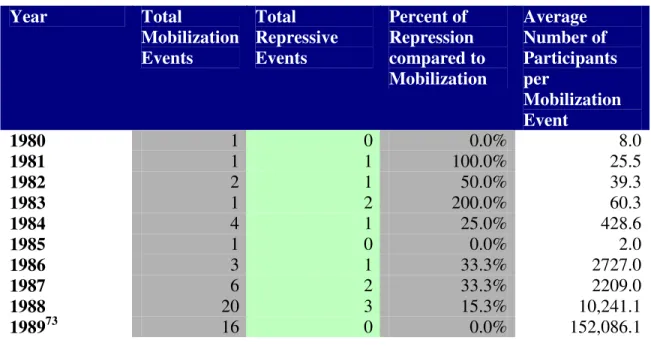
Table 2-3 Mobilization Growth 1980-1990, Hungary.………...………….…….45
Table 3-1 Regime Atmosphere Rating, Poland………51
Table 3-2 Mobilization Growth February 1988 to January 1989, Poland………68
Table 4-1 Regime Atmosphere Rating, Czechoslovakia………..74
Table 4-2 Mobilization Growth 1980-1990, Czechoslovakia………..87
Table 5-1 Regime Atmosphere Rating, Bulgaria……….96
Table 5-2 Mobilization Growth 1980-1990, Bulgaria………105
Table 6-1 Regime Atmosphere Rating, Romania………...112
Table 6-2 Challenges to the Romanian Regime……….117
Table 6-3 Mobilization Growth 1980-1990, Romania………...121
Table A-1 Mobilization and Repression Events across Five Case Studies………….130
viii
LIST OF FIGURES
Figure I-1 Mobilization-Liberalization Cycle Model…………..………...6
Figure I-2 Contributors to Regime Strength………..………...15
Figure 2-1 Hungary: Events of Interaction per Year……….44
Figure 3-1 May 1988 Events, Poland………70
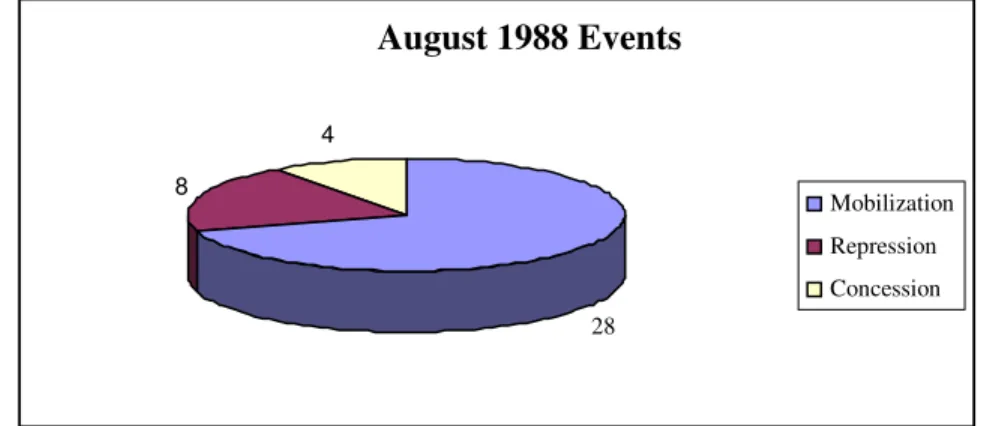
Figure 3-2 August 1988 Events, Poland………70
Figure 3-3 November 1988 Events, Poland………...71
Figure 4-1 Total Events and Charter 77 Events, 1987-1989……….88
Figure 4-2 Interaction Events Involving Charter 77………..89
Figure 4-3 Average Number of Participants per Mobilization Event, Czechoslovakia 1987-1989 ……….90
ix
LIST OF TIMELINES
Timeline 2-1 Mobilization-Liberalization Cycle in Hungary, 1988-1989………..46
Timeline 3-1 Mobilization-Liberalization Cycle in Poland, 1988………...64
Timeline 4-1 Mobilization-Liberalization Cycle in Czechoslovakia, 1989……….92
Timeline 5-1 Mobilization-Liberalization Cycle in Bulgaria, 1989-1990………...107
x
LIST OF ABBREVIATIONS
BCP: Bulgarian Communist Party EKA: Opposition Roundtable (Hungary) MDF: Hungarian Democratic Forum MSZMP: Hungarian Socialist Workers’ Party MSZP: Hungarian Socialist Party
NSF: National Salvation Front (Romania)
PRON: Patriotic Movement of National Rebirth (Poland) RCP: Romanian Communist Party
SZDSZ: Alliance of Free Democrats (Hungary) UDF: United Democratic Forces (Bulgaria)
INTRODUCTION
The collapse of communism in Eastern Europe took the world by surprise. While the political environment of the region had long been the subject of intense study, analysis and prediction, scholars were caught unaware by the events of 1989. The transitions were
surprising in three major ways: they were mostly peaceful, they occurred in rapid succession and, although they were interdependent, each was a consequence of the dynamic interaction between regimes and oppositions.
The characteristics of each pre-transition phase set individual countries on different trajectories. Some would quickly progress toward consolidated democracies; others would embark on indirect paths to forming a stabilized government. The circumstances that
brought a country to the point of transition very much affected the outcome of the transition. For this reason, an investigation into the developments that influenced the timing and method of each country’s transition becomes important in making sense of the divergent paths they would subsequently follow. What drove some regimes to negotiate with opposition forces while others could dictate the terms of transition?
Scholars have identified international and domestic factors that help explain variation in the timing and method of transition away from communist rule. The international scene is an obvious place to search for factors that can explain the different characteristics and
2
of Soviet history by publicly acknowledging a new brand of foreign policy that would later become known as the “Sinatra Doctrine” for suggesting that each country could make independent choices:
First and foremost we proceed from the premise that the entire system of the socialist countries’ political relation can and must be built on the basis of equality and mutual responsibility. No one has the right to claim special status in the socialist world. We consider the independence of every party, its responsibility to the people of its own country, and its right to decide the question of the country’s development to be unconditional principles1.
This policy effectively rendered obsolete the Brezhnev Doctrine, which the Soviet Union had previously used to maintain influence on its East European satellites. The impact of the Brezhnev Doctrine never left the collective memory of the Eastern bloc population and affected their behavior toward the regime: “But it was only that: the constraint, a dam placed against pressing waters…The change in the Soviet Union did not propel transformations… what it did was remove the crucial factor that had been blocking them”2. Once the
international constraint of Soviet foreign policy had been eliminated, the communist regimes across Eastern Europe were weakened, and opposition movements were potentially given more space in which to grow.
As influences from the East affected each transition country in a similar way, Western influences also cannot explain variation in domestic outcomes. While the West supported regime change, the various oppositions received no assurances of aid from Western governments. The pressures seen from the outside have a similar effect on all of the countries in question. This similarity cannot solve the question of variation.
1
As quoted in: Gedmin, J. 1992, The Hidden Hand: Gorbachev and the Collapse of East Germany, AEI Press, Washington, DC. (20)
2
3
What domestic factors then, can account for the variation that is seen in the timing and method of a transition? I argue that oppositions and regimes interacted differently in East and East Central European countries and these dynamics account for the characteristics of each transition. The effectiveness of pre-transition interaction to the opposition influenced the variation in timing and method. Pre-transition interaction is defined as the ways in which opposition groups respond to regime weakening and the ways in which regimes respond to mobilization.
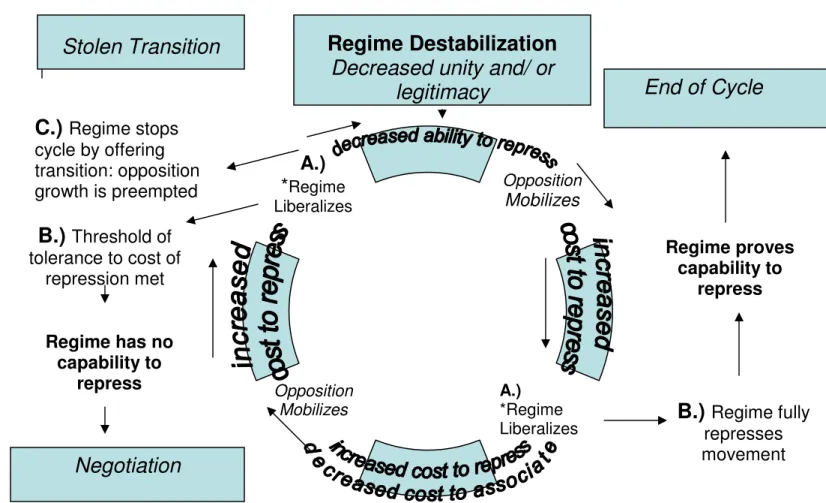
The effectiveness of pre-transition interaction refers to whether or not the interaction between the regime and the opposition made the opposition stronger. I propose a
“mobilization-liberalization cycle” that models opposition reaction to regime destabilization and the resulting counter-responses. The catalyst for a mobilization-liberalization cycle is a destabilizing event that weakens the unity and/or legitimacy of the regime3. This cycle of interaction models a process of strategic response, where the opposition perceives that the regime has become destabilized and may choose to respond through mobilization. The chosen response of the opposition group is a strategic decision based on their experience of previous regime response and the perceived capability of the regime to counter-respond to mobilization with repression at that moment in time.
Should an opposition opt to mobilize in response to regime destabilization, the regime is faced with the need to counter-respond. If the regime decides that the cost to repress the movement is too high, it may choose to offer concessions through a liberalizing act in order to acquiesce to the demands of the opposition. The consequence of this action to the regime
3
4
is a further increase in the cost of repression because the example has been set that the response to this level of mobilization is concession. However, the regime has calculated that a liberalizing response is the best strategy to stay in power.
In this scenario, the opposition achieves a success that contributes to its legitimacy and its unity. Because the regime chose to respond with no repression, the cost to associate with the opposition has been lowered, and the opposition movement will gain momentum through increased membership. Legitimacy is gained because the opposition has challenged the regime and gained concessions. If the regime does not respond to the mobilization event, the resultant effect is similar to an act of concession. The regime has demonstrated that it will not repress, indicating that the cost of repression is too high.
If at any point in the cycle the regime has demonstrated that the cost of repression is within tolerable limits, it will repress the mobilization. The cycle of
mobilization-liberalization is ended when the regime demonstrates that it can successfully repress the mobilization event. A new catalyst of regime destabilization is needed to re-initiate the mobilization-liberalization cycle. An example of this scenario is the repression of the Solidarity movement in Poland. By declaring martial law, the Polish regime ended the ongoing mobilization-liberalization cycle and demonstrated its ability to repress the opposition.
5
6
6
Opposition
Mobilizes
Opposition Mobilizes
A.) *Regime Liberalizes
A.) *Regime Liberalizes
B.)
Threshold of
tolerance to cost of repression met
Regime has no capability to
repress
B.)
Regime fully
represses movement Regime proves
capability to repress
Regime Destabilization
Decreased unity and/ or
legitimacy
End of Cycle
Negotiation
* The regime may offer a liberalizing concession, or in a variation of this model, may incompletely repress the movement. If the movement is not completely repressed, the opposition may opt to continue mobilization.
C.)
Regime stopscycle by offering transition: opposition growth is preempted
Stolen Transition
7
Oppositions that experienced mild regime atmospheres or oppositions that were not habitually and completely repressed were able to challenge regimes more successfully over the course of a mobilization-liberalization cycle. I define regime atmosphere as the
accumulation of the effects of previous regime actions. The timing of transition is correlated with the strength of the opposition: transitions in countries with comparatively mild regime atmospheres occurred earlier. A mild regime atmosphere created a scenario where an opposition could gain enough strength to challenge the ability of the regime to maintain power. These transitions provided an example for other regional opposition groups, but it will be seen that the severe regime atmospheres in these countries inhibited the development of a mobilization-liberalization cycle, and therefore the growth of cohesive oppositions.
Transitions in countries with the most severe regime atmospheres therefore, occurred later. Oppositions were generally weak and immature, and the regime was able to preempt transitions that favored the opposition and a democratic trajectory. The international
demonstration effect influenced both oppositions and regimes, and cannot be ignored in cases of later transition. The nascent opposition groups in the later transition cases desired change and were inspired by other regional transitions, but lacked the strength and organized structure to topple a regime. Furthermore, they lacked the legitimacy traditionally acquired through repeated interaction with the regime, and were unprepared to participate in
government. The elites, well aware of the fate of their neighboring regimes, were able to maintain power under the guise of democratization, and effectively “steal” the transition from adolescent oppositions.
8
relationship between regime atmosphere and opposition capability, it becomes obvious that the timing of the initial regime change is only a symptom of an underlying process. The goal of any authoritarian regime is to maintain its monopoly of power such that any rising
opposition can be systematically eliminated, thus maintaining the status quo and maximizing the duration of the regime4. If we accept that the goal of the regime is to maintain its power, then there must be some explanation that illuminates why some East European communist regimes willingly negotiated a transition with opposition groups, and knowingly accepted a loss of power. The ability of opposition groups to develop and challenge the regime through mobilization plays heavily into the decision to transfer power, and answers the question of why some regimes were able to thwart opposition attempts to challenge power. The puzzle therefore is not solely explaining variation in timing, but more importantly to investigate the recent history of regime-opposition interaction to explain the method of transition. Why in some cases were the elites forced to negotiate and why in others were they able to “steal” the transition from the opposition and embark on a pseudo-democratic trajectory?
Negotiating a transfer of power serves a strategic purpose for the regime. An opposition group whose perceived strength approaches that of the regime’s, poses a career-ending threat to the regime. If the regime calculates that it does not have the capability to assume the cost of fully repressing a threatening opposition, it may strategically choose to negotiate a transition of power. Under these circumstances, the regime may view a negotiated transition as its best method of maintaining some semblance of authority in the ensuing government. A regime therefore, may opt to negotiate a transfer of power when it a
4
9
faces an opposition whose increasing strength threatens the ability of the regime to maintain power.
A negotiation may not always have a positive result for the opposition. A regime may opt to bargain as a method to preempt the mature growth of the opposition. In such a transaction, the regime stands to retain a large portion of its power. Because of this, the post-transition trajectory is often undemocratic. In the case of Eastern Europe, opposition groups learned about the power of independent movements through the international demonstration effect. The example of other transitions however, also demonstrated to the regimes the consequences of negotiating with a mature opposition. This led some regimes in later transitions to strategically preempt the completing of a mobilization-liberalization cycle by offering to transition away from communism. In these cases, the regime maintained an overwhelming majority of its power because the immature oppositions were not unified and were unprepared to successfully negotiate to achieve democratic change. Because in these cases the opposition was marginalized, it is not a true negotiation. Even though the regime may have termed the transition process as a “roundtable”, the opposition had little or no sway in determining the outcome. For this reason, while some scholars will term such transitions as “negotiated transitions”, I will refer to them as “stolen transitions”.
10
transition where the opposition forces the regime to negotiate a transfer of power. This is because over the course of prolonged interaction, the opposition group gains unity and legitimacy for achieving concessions in successive confrontations with the regime. Protracted cycles are usually seen in countries with relatively mild regime atmospheres.
This thesis will also demonstrate that in some cases, an opposition can gain maturity through variations of the mobilization-liberalization cycle. In this example, the opposition continues to mobilize despite consistent repression. It is able to do so because the regime incompletely or inconsistently represses mobilization. Because the movement is not fully repressed, the opposition continues to confront the regime and is consequently matured through this modified mobilization-liberalization cycle. The model stipulates that the cost of repression must be met in order to end the cycle. Regimes that did not meet the costs to fully repress contributed to the maturing of the opposition by allowing for their continued activity.
11
The lack of strength of the opposition in these cases leads to examples of stolen transitions, where the regime is able to dictate the conditions of change. The cycle of mobilization-liberalization is prematurely halted by the pretense of a liberalizing act. In these cases, the undeveloped opposition is marginalized and they must wait for the
destabilization of the new regime in order to begin a new mobilization-liberalization cycle. The following section will describe several key concepts that I have introduced, and provide a review of key arguments in the literature on transitions. After providing this background, I will present five case studies. I will use event data from the European Protest and Coercion Event Data5 dataset to illustrate the existence or absence of complete
mobilization-liberalization cycles in Hungary, Poland, Czechoslovakia, Bulgaria, and
Romania. I then will discuss how the variation in patterns of interaction led to differences in post-transition trajectory.
Explaining Concepts and Theory
Why did communist elites choose to negotiate with oppositions in some countries, but not in others? In order to explain different opposition-regime interactions, I must first define key terms associated with my model. The first is the concept of regime atmosphere, which I use to represent a regime’s historical record of responding to internal confrontation. Regime atmosphere is the accumulation of the effects of previous actions, and I use it purposefully to measure levels of repression within a society from the time the major internal processes toward transition begin to occur through the time of the roundtable negotiations. A regime atmosphere also encompasses the constraints placed on society such as censorship, the ability
5
12
to travel, and other civil liberties. As much as regime atmosphere affects the ability of society to maneuver, it also affects the outlook of the regime. Comparatively mild regime atmospheres were overseen by comparatively liberal regimes, as the affects of liberties and modernization extended to the regime as well as the population. I use Freedom House scores combined with a rating from the Political Terror Scale6 to provide a numeric assessment of regime atmosphere. This combined scoring method allows me to classify the severity of regime atmosphere within each of my case studies.
Charles Tilly uses a similar term, regime environment, to define mechanisms that generate alterations in public politics, inequality, and networks of trust7. Although using a comparable term, I am attempting solely to define the accumulation of effects on a
population based on its experience under a regime, and how these effects in turn influence aspects of opposition and regime interaction. I do not apply this term to future alterations of the relationship, but to the situation during the pre-transition phase. I define this phase from 1987 to 1989, because all mobilization-liberalization cycles begin during this time. In defining the term as such, I relegate it to one specific moment in time, thus allowing it to encompass the entire status quo for a chronological point of reference. In addition, the broadness of the term allows me to encompass several other relevant factors.
The way in which a regime has historically responded to internal confrontation has a monumental effect on the ability of an opposition to grow. In cases of severe regime
atmosphere where repression does not allow for the growth of opposition movements, the
6
The Political Terror Scale is a yearly measure of political violence and terror. The scale is based on a 5-point “terror scale” developed by Freedom House. The data for the current scale is compiled from the Amnesty International annual country reports and the U.S. Department of State Country Reports on Human Rights Practices: Gibney, M., Cornett, L. and Wood, R. http://www.politicalterrorscale.org.
7
13
interaction between opposition and regime is going to be less intense and less frequent (but not less significant to the greater story). Conversely, a comparatively mild regime
atmosphere may allow for political space in which an opposition can mobilize. This scenario creates the opportunity for increasingly effective regime-opposition interaction. The
differences in regime atmosphere thus are key elements to explaining the variance seen in East European transitions.
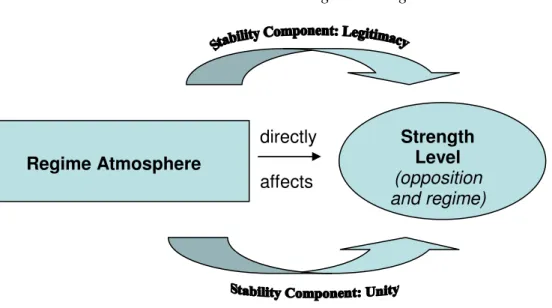
Regime atmosphere also encompasses the concept of “strength”, which is a term I use to describe the combined effect of legitimacy and unity of both regime and opposition groups. The Gurr-Lichbach component “organizational strength” provides a definition of strength that represents the size, cohesiveness, and coercive capability of each group. Their model also stipulates that the organizational strength of challenging groups is determined relative to the strength of opponents, and cannot be independently assessed8. My use of the term strength will follow the guidelines specified in the Gurr-Lichbach model9, with an emphasis on the unity and legitimacy of the opposition and the regime. To determine the increasing strength of an opposition, I will present the size of opposition movements as a ratio of number of participants to total population.
I also will frequently use the term “stability” to describe the state of the opposition or the regime, a term which is related to, but not interchangeable with strength. Stability refers to the degree of legitimacy or unity. Unity is simply a measure of a group’s cohesiveness. High degrees of unity and legitimacy correspond with a more stable entity. Obviously,
8
As stated in Francisco, R.A. 1993, “Theories of Protest and the Revolutions of 1989”, American Journal of Political Science, vol. 37, no. 3, pp. 663-680. (669-670)
9
14
declining legitimacy negatively affects the strength of a regime or opposition, because it indicates instability.
For the purposes of this thesis, legitimacy is identified by historical record. In the case of the opposition, legitimacy is determined by its previous record of gaining concessions or achieving a response of incomplete repression. These responses add to a record of
legitimacy because they show the ability of the opposition to elicit responses that reveal the inability or unwillingness of the regime to fully repress a mobilization. They therefore demonstrate the opposition’s strength because the regime perceives the cost to repress the opposition to be high. The ability of an opposition to gain legitimacy is again closely related to regime atmosphere: in cases of sustained and severe regime atmospheres, the opposition had difficulty gaining legitimacy as it lacks a recent record on which to base its legitimate existence. The regime also uses its historical record to justify its legitimate claim to power. Much of its legitimacy is based on the willingness of the population to “accept” the
15
FIGURE I-2: Regime Strength
The second major concept I use is cost of repression, which is taken from Daron Acemoglu and James A. Robinson’s Economic Origins of Dictatorship and Democracy10. I use it in the same terms as they present it: the cost to the elite to engage in repression11. The cost of repression is based on the ability of the elite to repress and the subsequent strength of the opposition. A regime that is weakened due to loss of unity or legitimacy experiences a higher cost of repression, and likewise a regime that faces a stronger opposition also has a higher cost to repress this movement. I will argue that the effects of decreasing strength lead to increasing opposition capability, and therefore produce a cumulative effect in the
increasing cost of repression to the regime.
The last concepts I will describe are perceived power, which I use to describe the state of the regime or the opposition and perceived capability which I use to depict the capacity of one group to response to the other. These concepts are important because they
10
Acemoglu, D. and Robinson, J.A. 2006, Economic Origins of Dictatorship and Democracy, Cambridge University Press, New York.
11
Acemolglu, D. and Robinson, J.A. (2006: 118-133)
Regime Atmosphere
directly
affects
Strength Level
16
relate the likelihood of both a regime’s decision to repress and an opposition’s decision to challenge. The decision for an opposition to mobilize is based on prior regime atmosphere (and thus the likelihood of a repressive response) and temporal perception of their own capabilities and of the power of the regime. The opposition will act at a time when it weighs its capabilities against to the perceived power of the regime, and judges a likely chance for achieving a concession in the form of a liberalizing act. In addition, the regime will choose its response based on its perception of opposition power.
This thesis investigates the characteristics of opposition-regime interaction in East European communist countries to understand the relationship between the pre-transition phase and post-transition trajectories. The elements that make up the pre-transition
environment directly affect the method of transition, and therefore the characteristics of the resulting government. I am primarily investigating the variation in pre-transition factors that drove some communist regimes to negotiate with opposition groups and others to dictate the terms of transition.
The following case studies will show that countries with comparatively mild regime atmospheres are most likely to support the mechanisms of the mobilization-liberalization cycle, because the regime has a record of offering liberalizing concessions, of failing to fully suppress mobilization, or of neglecting to respond to mobilization. These responses increase the cost of repression. An opposition that experiences a protracted
17
Countries with severe regime atmospheres did not provide the setting for completed mobilization-liberalization cycles. Oppositions that did not benefit from protracted
mobilization-liberalization cycles were at a disadvantage in eliciting favorable transitions, because the opposition movement lacked maturity and legitimacy, and the cost to repress remained low. Countries with these pre-transition characteristics were more likely to experience stolen transitions. The ensuing government was comprised of many elements of the former regime, and led the country on an indirect trajectory to consolidated democracy. The characteristics of pre-transition interaction between oppositions and communist regimes affect the likelihood of democratic trajectories. Therefore, investigating the variation in pre-transition interaction is fundamental to understanding the subsequent political paths of each country.
Case Studies, Data Analysis, Roadmap
18
TABLE I-1: Regime Atmosphere and Tier Rating
Pre-Transition Regime Atmosphere
Score
1987-1989
12Post-Transition
Trajectory
Rating
Freedom House13 Political Terror Scale14 Average ScorePR15 CL16 AI17 State18
Hungary 4.67 3.67 1.67 1.67 11.67 Tier 1
Poland 4.67 4.33 2.33 2.33 13.67 Tier 1
Czechoslovakia 6.67 6.00 2.67 3.00 18.33 Tier 2
Bulgaria 7.00 7.00 3.00 3.00 20.00 Tier 3
Romania 7.00 7.00 3.00 3.33 20.33 Tier 3
The trajectory rating is a score from Tier 1 to Tier 3, based on the immediate post-transition outlook for each country. A score of “1” indicates that the regime negotiated with a mature
12
Each number reported under “Freedom House” and the “Political Terror Scale” is the average score from 1987-1989. The number reported under “Average Score” is the average of the Freedom House scores and the Political Terror scores from 1987-1989.
13
Freedom House: www.freedomhouse.org
14
IBID
15
Political Rights: “…the freedoms to develop views, institutions, and personal autonomy apart from the state”
Freedom in the World Country Ratings: the Annual Survey of Political Rights and Civil Liberties, 1986-1987.
New York, Freedom House.
16
Civil Liberties: “Allow for the freedom of expression and belief, associational and organizational rights, rule of law, and personal autonomy without interference from the state” Freedom House:
www.freedomhouse.org/template.cfm?page=265#7
17
Amnesty International Score of the Political Terror Scale is derived from annual Amnesty International country reports. Gibney, M., Cornett, L. and Wood, R. http://www.politicalterrorscale.org.
18
U.S. Department of State Score of the Political Terror Scale is derived from the U.S. Department of State Annual Country Reports on Human Rights Practices. Gibney, M., Cornett, L. and Wood, R.
19
opposition. The trajectory for these countries is toward a consolidated democracy. A score of “3” indicates that the transition was stolen from an immature opposition during the course of the roundtable sessions and elections. The chart shows that these countries had the most severe regime atmospheres in the pre-transition phase. The immediate trajectory for these countries is a renewed authoritarian regime. A score of 2 indicates that the country shares characteristics from countries with a score of 1, but also shares elements with a country that earned a rating of 3. Czechoslovakia is a 2nd tier country because its immediate
post-transition trajectory is toward a consolidated democracy. The severity of its pre-post-transition regime atmosphere, however, indicates that consolidated democracy is not a likely outcome. The Czechoslovakia case study summary will show that a modified
mobilization-liberalization cycle produced a mature opposition despite the severity of regime atmosphere. Since the fall of these regimes, an abundance of research has been devoted to
describing these transitions, and I will use the findings of this research to support my concept of the mobilization-liberalization cycle. The main purpose of this literature to my thesis is to provide an accurate account of regime atmosphere and opposition capability during the pre-transition years. After providing relevant background information for each country, I will use empirical data from Dr. Ronald A. Francisco’s European Protest and Coercion19 database to illustrate the processes of interaction taking place in each of my case studies. This dataset is a compilation of worldwide news sources that report events of protest and coercion from 1980 to 1995, and thus provide an excellent source of opposition-regime interaction. While this dataset can by no means provide a completely accurate account of
19
20
each and every event of mobilization or coercion, I believe that it shows the necessary trends from which I can conclude that patterns of mobilization-liberalization are in fact taking place.
Many different factors affect the robustness of news source event data. As will be seen in the case studies, the amount of reported events from each country varies. This is due, in part, to the regime atmosphere of each country. The political restrictions present in each country affected the flow of information and the ability of foreign media to make reports. In addition, because the media is driven by interest, countries which attracted more international attention were more likely to have a higher incidence of protest and coercion events. Despite these shortcomings, event data which is compiled under consistent methodology is still considered to be an important and viable source of protest and coercion events20.
The data is vital to representing the patterns of interaction that transpired in each country. I have assembled all pertinent events21 within the dataset and re-coded them according to their role in the pre-transition phase of each country. In the case of the oppositions, I compiled all pertinent events of mobilization and divided them into cases of opposition mobilization and opposition de-mobilization. I applied similar logic to the cases of regime action, coding each elite event as either an act of concession or an act of repression. By organizing the events in this manner, I was able to discern patterns of interaction that developed between the opposition and the regime prior to transition. In case studies with
20
For further discussion on the robustness of protest event data, see Rucht, D. et al, 1999. Acts of Dissent: New Developments in the Study of Protest, Roman and Littlefield Publishers, Inc, New York.
21
21
favorable democratic trajectories, variations of mobilization-liberalization cycles developed, and could be traced back to one main catalyst event. Conversely, the case studies that revealed short and incomplete cycles developed more divergent trajectories toward a democratic government.
Much of this thesis will focus on transition theory. Therefore it is essential to provide a brief review of the existing prominent transition theory in order to highlight how the
CHAPTER 1: A REVIEW OF LITERATURE
The existing literature on transitions from authoritarian regimes is vast and includes decades of analysis on the ways in which regimes interact with rising oppositions groups. These analyses attempt to identify and correlate variation in the pre-transition, transition, and trajectory characteristics among countries that have transitioned from authoritarian regimes. The main bodies of literature that exist on transitology stem from three basic approaches to explaining transitional change: sweeping overviews that cast recent transition as a global trend toward democratization, transitology comparisons which create links between the transitions of Latin America and Southern Europe to communist Europe, and works focusing on comparing pre and post-communist societies to understand why these regimes collapsed22. This thesis falls into the third category of comparison, as I am attempting to identify patterns in pre-transition interaction that affect the method and trajectory of transition.
However, because there is such an immense body of prominent literature that
discusses this same topic, I must properly insert my research into this ever-growing body so that it can be understood in the greater context. The focus of my study is on the
pre-transition period in Eastern Europe. This stage of pre-transition encompasses several of the topics that are relevant to the mobilization-liberalization model: regime atmosphere, regime destabilization, and mobilization. I will devote the first section of this review to discussing
22
23
these factors as pre-transition elements, and evaluate my ideas against the conclusions of prominent scholars.
While the parameters of this thesis do not explicitly extend into the trajectory phase of transition, trajectory is an underlying theme because the characteristics of pre-transition dictate trajectory23. Understanding the dynamics of pre-transition allows for the
interpretation of the events that take place after transition, and this is the main contribution of this work. Two main topics must be delineated as they relate to the trajectory phase of transition: power and duration of the mobilization-liberalization cycle. The second section of this review will discuss these topics as they pertain to trajectory.
Pre-Transition
The main reason for studying the pre-transition stage is to understand the path that each country followed after the change in power. The mobilization-liberalization cycle shows how the dynamics of pre-transition interaction dictate later events. This relationship is widely accepted among transitology scholars: “…historical factors are critical in shaping the resources and especially the preferences of elites during the transition, as well as, more generally, transition trajectories”24. Many scholars differ in their opinions of what had the greatest impact: historical factors or processes. M. Steven Fish asserts that the processes outweigh historical factors: “Political struggles, actions and choices that took place during and after the onset of transition…are more important than legacies for determining variation
23
For more information on the post-communist trajectories for each case study, consult Vachudova, M. A. 2005,
Europe Undivided: Democracy, Leverage, and Integration after Communism, Oxford University Press, NY.
24
24
in trajectories of democratization”25. In my model these two factors are inexplicable. While the process (the mobilization-liberalization cycle) is the main factor that ultimately has the greatest effect on transition method and trajectory, the historical regime atmosphere dictates the characteristics of the cycle. For this reason, I cannot separate the concepts of history and mechanism.
The historical factor that I heavily emphasize is regime atmosphere. This pre-transition factor is surprisingly user-friendly in the East European case studies, as compared to Latin American and South European cases. The events in Eastern Europe in 1989 were unique to other periods of transition from authoritarian rule because the legitimacy and methods of rule for each regime was founded in communist ideology. This is an important similarity because a common scale of regime atmosphere can be developed and universally applied to Eastern European case studies. This is a unique tool of analysis that allows a direct comparison between a calibrated regime severity and pre-transition mobilization characteristics.
The first mechanism of the mobilization-liberalization cycle is the catalyst: destabilization. The most common form of destabilization is a regime split. Many
transitology scholars agree that the splitting of the elite is almost always the main underlying cause for regime change26. Many factors are incorporated into why a regime becomes disconnected. This is not a theme that I directly engage in my case studies, so I will take a
25
Fish, S. M. 1999, “Postcommunist Subversion: Social Science and Democratization in East Europe and Eurasia”, Slavic Review, vol. 58, no.4, pp. 794-823. (799)
26
25
few moments here to provide insight on regime splitting from the existing transitory literature.
Grzegorz Ekiert identifies many processes that are incorporated into what he
identifies as a “transitory phase”27, three of which describe events that caused destabilization in Eastern Europe. The first is the deterioration of ideology, which created an identity crisis within the communist parties. As the foundation of rule and legitimacy crumbled, the parties became less unified. The second is the failure of the centrally planned economies.
Economic crisis was a fundamental reason for regime split across Eastern Europe, as will be seen in the case studies. Lastly, the disappearance of international restraints played a large role in regime splitting. The reforms of the Soviet Union contributed largely to the
de-legitimization of East European communist regimes. Without the foundation provided by the ideology and the Soviet support that had historically bolstered weakening regimes, the
communist parties of Eastern Europe were vulnerable to softliner politicians who actively sought reform.
As was illustrated above, the conditions that caused the fragmentation of the elite challenged regime legitimacy. Adam Przeworski provides a pertinent explanation of legitimacy that articulates its relationship to regime collapse. He asserts that legitimacy is not the “source of the dynamic of regime change”28. In essence, legitimacy is not necessarily required for a regime to maintain its authority. If no other options for governance are
available then legitimacy is negligible, because there is no realistic alternative to the status
27
Ekiert, G. 1991, “Democratization Processes in East Central Europe: A Theoretical Reconsideration”, British Journal of Political Processes, vol. 21, no. 3, pp. 285-313. (286-7)
28
26
quo29. However, legitimacy is intricately related to the story of East European transitions, because the destabilization caused by a lack of legitimacy created new opportunities and new possibilities in the eyes of the population. Once a destabilizing catalyst initiated the
mobilization-liberalization cycle, the alternatives to the status quo became apparent and an opposition grew and aggressively sought a new alternative. I quote a passage from Russell Bova to illustrate this point:
Unpopular regimes can maintain their domination of society through repression that makes the cost of opposition very high, thus making the possibility of significant change seem remote…With the onset of
liberalization, however, not only do the costs and risks of opposition begin to fall but alternatives to the status quo ante that once seemed impossible now appear to be in the realm of possibility30
Stability offered through legitimacy was essential to the survival of communist regimes. The advent of reforms in the wake of the loss of legitimacy created an opening that was quickly infiltrated by organization from below.
Reform is always a dangerous undertaking for authoritarian regimes, because reforms create the opportunity for political alternatives. The mobilization-liberalization cycle clearly illustrates this trend. Any form of increased liberalization decreases the regime’s
concentration of power. The inherent danger in the mobilization-liberalization cycle is that as regimes opt to liberalize, the cost of repression increases. This means that the cost to associate with the opposition is decreased. Even more precarious to the regime is when the
29
Przeworski, A. (1986:52)
30
Bova, R. 1996, “Political Dynamics of the Post-Communist Transition: A Comparative Perspective” in
27
forces of mobilization are strong enough that the concessions offered have a de jure existence, and thus are legally official and binding for the future31.
Mobilization in response to political opening is made possible through civil society. The discussion on civil society could logically end here, except that the existence of a civil society is fundamentally at odds with communist ideology. A major unforeseen event in East European transitions was that the overwhelming force and the main actor in transitions from communism was the opposition32.
This creates a tricky point: how were regimes toppled by a movement from within society if no autonomous civil organization was permitted? This is where the effects of regime atmosphere and the subsequent likelihood of opposition development logically meet. The mobilization-liberalization cycle is perpetuated in countries with comparatively more lenient regime atmospheres. This means that the constraints on civil society are weaker. Oppositions emerge more readily in these situations and successfully drive the mobilization-liberalization cycle. The outcome of such cycles of interaction was more favorable to the opposition. The support for this conclusion is well documented: “A striking pattern appeared, in which transitions seemed to be conducted by negotiation if the old regime was no longer unified and if organizations in society had begun to exert autonomy”33 , although a
comparable pattern of opposition-regime interaction has yet to be added to the literature on elements of the pre-transition phase.
31
Acemoglu, D. and Robinson, J. (2006:131-71)
32
di Palma, G. 1996, “Legitimation from the Top to Civil Society: Politico-Cultural Change in Eastern Europe” in Liberalization and Democratization: Change in the Soviet Union and Eastern Europe, ed. N. Bermeo, The Johns Hopkins University Press, Baltimore.
33
28
Trajectory
Understanding the trajectories of post-communist transitions is vital to understanding the dynamics in the region today. The two concepts that I discuss in this thesis that are associated with trajectory are power and the duration of the mobilization-liberalization cycle. These concepts are the legacy of pre-transition interaction. The degree and direction of power differentiation at the point of transition has an enormous effect on the subsequent trajectory. The duration of the mobilization-liberalization cycle dictates the extent of power held by either the opposition or the regime, and therefore I am discussing duration as part of the trajectory and not as part of the pre-transition phase. Each case study country included in this thesis experienced a roundtable session. Because each country experienced a roundtable, I refer to the transitions as negotiations. Obviously, the utility of these negotiations largely varies and is a product of pre-transition factors.
My model of interaction shows that transitions that were negotiated in favor of the opposition groups occurred in situations where the opposition held the more powerful position. This conclusion is not supported by traditional transition literature based on the Latin American experiences. Scholars have argued that in the Latin American cases, transitions that resulted in democratic trajectories were negotiated when parity existed between the opposition and the regime. As the negotiations went forward, the oppositions mobilized in response to its perceived gains, and the regime negotiated to forestall the event of mobilization34.
The literature on Latin American cases cannot be universally applied to East
European cases. While it is true that in many East European cases the opposition continued
34
29
to gain strength and capability during the negotiations, the event of negotiation was the culmination of challenges already mounted by the opposition. East European literature follows the theory outlined by my model. Negotiations are most likely to lead to democracy when a power differentiation existed that favored the opposition: “…it was situations of
unequal distribution of power that produced the quickest and most stable transitions from communist rule. In countries with asymmetrical balances of power, it was the ideological orientation of the more powerful party that largely determined the type of regime to emerge”35. This scenario is depicted by the mobilization-liberalization model. In cases where the communists held the greater position of power, regimes emerged that resembled new authoritarian regimes, whereas in cases where the opposition held the upper hand, democratic ideals were more likely to prevail.
It logically follows that the discussion of power is intricately related to the duration of the mobilization-liberalization cycle. In a protracted cycle, the opposition has the luxury of consolidating ideas over time and coalescing around defined ideals. In cases of protracted cycles of interaction, the opposition groups had the most favorable transition because they held the greatest position of power. Therefore, their trajectories should result in democracy at a higher rate than rapid mass mobilization, and the ideals of such oppositions should play a large role in determining the characteristics of the resulting government. This indeed will be seen to be the case.
But what of cases where the mobilization-liberalization cycle is not clearly developed and has a short lifespan? These are the cases I refer to as stolen transitions. In these cases, the opposition mobilizes rapidly and is not coalesced under a defined set of goals to achieve
35
30
through mobilization. In addition, the regime quickly dissolves and while some leaders are ousted, lesser ranking officials from the communist party often fill their shoes. The new leaders stop the full development of the mobilization-liberalization cycle and assume leadership under the guise of reform. While the new leaders hold de facto power, they are inherently weak. Cases from Latin American and Southern Europe also model this trend: “These studies clearly suggest that a rapid decomposition of state power…is hardly
conducive to the establishment of viable democratic regimes”36. The Tier 3 cases presented in this thesis show a similar tendency for non-democratic trajectories.
Just as a protracted mobilization-liberalization cycle proved to be effective for the opposition, it also had benefits for members of the regime who embraced reform.
Communists who initiated reforms over time in the pre-transition period were better prepared for the advent of transition37. When transitions occurred quickly and without a period of preparation (accomplished through the mobilization-liberalization cycle), a void of political power was created: “…the swift disintegration of one-party states has left a dangerous political vacuum, setting in motion an often chaotic process of political change”38. Former communists filled these voids, but had little legitimacy under which to claim them.
Until now I have neglected the forces of ethnic nationalism in my discussion of East European transitions. Nationalism is a prevalent force that guided the trajectories of many East European countries, most notably those who lacked a defined pre-transition
mobilization-liberalization cycle, and therefore had neither a regime nor an opposition that
36
Ekiert, G. (1991: 288)
37
Snyder, T.and Vachudova, M. 1996, “Are Transitions Transitory? Two Types of Political Change in Eastern Europe Since 1989”, East European Politics and Societies, vol. 11, no. 1, pp. 1-35. (13)
38
31
was prepared to assume leadership. The void of political legitimacy was filled in many cases by former communists “who were able to use ethnic nationalism to forge new political identity and thereby convince electorates that they were legitimate participants in the new democratic party”39. The discussion of ethnic nationalism is crucial to understanding how the trajectories of each country were forged. However, while the forces of nationalism were undoubtedly present in the pre-transition phase, it is largely a discussion for post-transition scholars, and will not play a major role in the development of various
mobilization-liberalization cycles.
Because nationalist forces were prominent in many of my case studies, but were noticeably absent in others, I have removed all mobilization and repression events that were generated by ethnic nationalism. I did this in order to isolate mobilization against the regime from mobilization (and potential regime reaction) that was motivated by ethnic tensions. The purpose of my study is to show mobilization against the regime and subsequent regime reaction. By removing ethnic nationalism events, I eliminate potential mobilizations and reactions that are not representative of the dynamics encompassed in the mobilization-liberalization cycle. Studying ethnic nationalism is vital to understanding East European post-communist trajectories, but because it distorts the nature of the statistical data of
mobilization and repression, I will not include of nationalism in the pre-transition discussions of my case studies.
The importance of power and duration of the mobilization-liberalization cycle are clearly seen in the trajectory phase of transition. This section summarized prominent literature relating to the phases of transition, and allowed me to incorporate my model into the existing transitology scholarship. The following sections will present five case studies
39
32
CHAPTER 2: HUNGARY, NEGOTIATION AND THE STORY OF THE ELITE
The case of Hungary shows a mild regime atmosphere that permitted the development of a protracted mobilization-liberalization cycle. The consequences of such a cycle were a mature opposition, a negotiated transition, and a democratic trajectory. The lenient regime atmosphere that predominated in the 1980s developed due to an unstable regime. Failed economic policy and a declining standard of living led to tensions within the regime and resulted in hardliner and reform factions. As a result of this weakening, the regime offered concessions as a strategy to maintain power. The strategy ultimately failed, as such liberalizing acts allowed political space for opposition groups. While opposition activity occurred throughout the 1980s, a cohesive movement developed late in Hungary. The largest spike in activity occurred after the resignation of János Kádár, which signaled the instability of the regime and triggered the mobilization-liberalization cycle. Without an aggressive Soviet foreign policy to reinforce the Hungarian regime, the communists were ultimately forced to negotiate a transition with the opposition as a final strategy to maintain influence.
Table 2-1 depicts the regime atmosphere in Hungary prior to transition. The regime atmosphere score of 11.67 is an average score derived from Freedom House and the Political Terror Scale. Of the five case studies investigated in this thesis, Hungary has the mildest regime atmosphere in the pre-transition phase40. Hungary’s roundtable sessions were held
40
34
from 13 June 1989 to 18 Sept 198941, and were chronologically the second of such negotiations to take place.
TABLE 2-1: Regime Atmosphere Rating, Hungary42
Freedom House Political Terror Scale
Political Rights
Civil Liberties
Amnesty International
U.S. Dept of State
Total Score
1987 5 4 2 2 13
1988 5 4 2 2 13
1989 4 3 1 1 9
Average 3-Year Score:
11.67
The Regime
Long before an opposition movement capable of negotiating a transfer of power developed, changes within the Hungarian Socialist Workers’ Party (MSZMP) began to reduce the strength of the party. The deterioration of the economy was a major source of friction within the MSZMP, and over time served to divide the regime. In an attempt to assuage the developing economic crisis, MSZMP General Secretary János Kádár introduced a policy of “speeding up” the economy between 1985 and 1987, the result of which was
41
Welsh, H. A. 1994, “Political Processes in Central and Eastern Europe”, Comparative Politics, vol. 26, no. 4, pp. 379-394. (385)
42
35
increased foreign debt and chaos among the divided leadership43. The dire situation of the economy was a major factor in polarizing the party into hardliner and reformed-communist factions. The political softliners desired a semi-constitutional system that would in turn improve the living conditions of Hungarians while still affording the MSZMP substantial political influence44. Many of the reformed communists would eventually support the opposition movement, and would propel the post-transition trajectory toward a consolidated democracy.
The disunity of the elite destabilized the authoritarian regime and directly affected its legitimacy. After the 1956 Revolution, János Kádár had come to power under what has been termed a “surrogate” legitimacy45, based on his ability to restore government function. Kádár’s inability to normalize the economic crisis led to his replacement in 1988 by Karoly Grosz46. As a result of this change of leadership, any legitimacy associated with the Kádár regime was now in jeopardy.
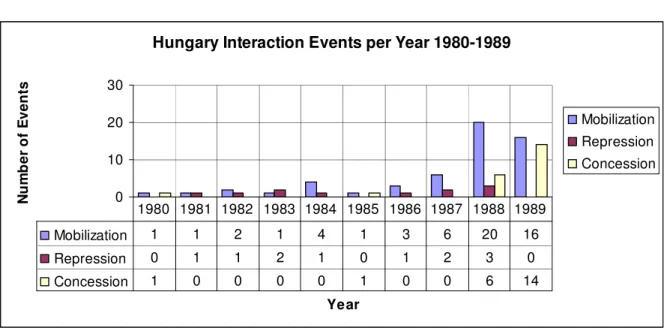
As will be shown in the event data analysis, there is a sharp increase in mobilization following the resignation of Kádár. The regime’s lack of ability to repress this mobilization led to liberalizing concessions and thus set the mobilization-liberalization cycle into motion. While this event can clearly be seen as the catalyst to the cycle, the preconditions to this event are also significant in determining the utility of the cycle to the opposition.
43
Lach, J. 2006, “The Political Economy in Hungary through Transition” in The Political Economy of
Transition in Eurasia: Democratization and Economic Liberalization in a Global Economy, eds. N. Graham & F. Lindahl, Michigan State University Press, East Lansing. (199)
44
Lach, J. (2006:199)
45
Kis, J. 1995, “Between Reform and Revolution: Three Hypotheses About the Nature of the Regime Change” in Lawful Revolution in Hungary, 1989-94, eds. B.K. Kiraly & A. Bozoki, Atlantic Research and Publications, Highland Lakes, New Jersey, pp. 33-60. (44)
46
36
Two main events in the 1980s exposed the declining legitimacy of the MSZMP and simultaneously revealed the growing strength of organized opposition to the regime. In 1987 and 1988 there began outbreaks of protest over the Bos-Nagymaros hydroelectric dam
project47, a “late Stalinist ‘gigantomaniac’ investment venture”48, with harmful
environmental consequences. The government of Hungary was unable to quell public discussion or repress movements against the dam, and eventually brought the question to the parliament. The parliament voted largely in favor to continue the dam, revealing that
although previous legislative reform authorized semi-competitive elections, the parliament was still not the voice of the people, but the voice of the MSZMP49.
The second major event that solidified the end of legitimacy for the MSZMP was the rehabilitation of historical figures from the 1956 Revolution. In the summer of 1988, a liberalizing act known as the Freedom of the Press Movement50 allowed for public discussion of events such as the 1956 uprising. Because the official version of the uprising was so closely associated with the legitimacy of the MSZMP, allowing debate threatened the
stability of the regime. The reburial of Imre Nagy and his associates was a large momentum swing in the favor of the opposition, because it offered political legitimacy to the movement of the 1950s, and allowed new opposition groups to claim authority based on their
connection to this historic movement.
47
Bozoki, A. 1993, “Hungary’s Road to Systemic Change: The Opposition Roundtable”, East European Politics and Societies, vol. 7, pp. 276-308. (277)
48
Kis, J.(1995:43)
49
Kis, J. (1995:43)
50
37
The legitimacy of the opposition was intensified through a comment released by regime softliner and politburo member, Imre Pozsgay, who stated that the 1956 Revolution was a “popular uprising”. This directly contrasted the official government term for the event: “counter-revolution”51. It provided the opposition with a legacy that they could inherit to reinforce their own legitimacy.
By January of 1989, it became clear that the MSZMP as a single party could no longer control the growing forces that challenged its hold on power. It had no plan for continuance and no social legitimacy. The reform wing of the MSZMP gained strength and overpowered hardliners within the party. In addition, “reform circles” of disillusioned party members began forming across the country. Irreconcilable ideological splits within the regime led to the eventual decision to proceed with a multiparty democracy, the terms of which would be reached through negotiations with the opposition and their Roundtable52. Negotiations commenced at a time where the power differentiation between the opposition and the regime largely favored the opposition.
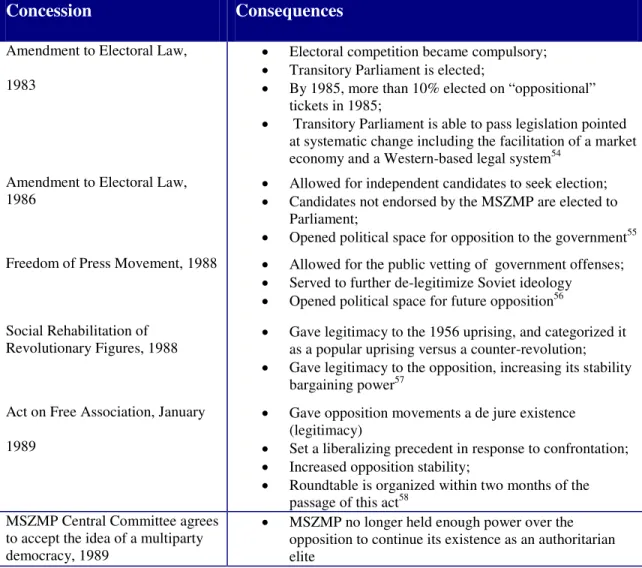
Table 2-2 depicts major concessions offered by the MSZMP in the 1980s. Early concessions were offered in response to crises that revealed weaknesses within the regime. In order to protect themselves against the declining economy and standard of living, the regime offered superficial liberalization such as amendments to the Electoral Law. While this amendment changed the composition of the Transitory Parliament, events such as the 1988 vote on the Bos-Nagymaros dam project revealed that the parliament was still just an extension of the MSZMP. Later concessions were the result of a growing opposition that
51
Bozoki, A. (1993:280)
52
38
39
TABLE 2-2:Timeline of Major Liberalizing Concessions granted by MSZMP53
Concession Consequences
Amendment to Electoral Law,
1983
• Electoral competition became compulsory; • Transitory Parliament is elected;
• By 1985, more than 10% elected on “oppositional” tickets in 1985;
• Transitory Parliament is able to pass legislation pointed at systematic change including the facilitation of a market economy and a Western-based legal system54
Amendment to Electoral Law,
1986 •
Allowed for independent candidates to seek election; • Candidates not endorsed by the MSZMP are elected to
Parliament;
• Opened political space for opposition to the government55 Freedom of Press Movement, 1988 • Allowed for the public vetting of government offenses;
• Served to further de-legitimize Soviet ideology • Opened political space for future opposition56 Social Rehabilitation of
Revolutionary Figures, 1988 •
Gave legitimacy to the 1956 uprising, and categorized it as a popular uprising versus a counter-revolution; • Gave legitimacy to the opposition, increasing its stability
bargaining power57 Act on Free Association, January
1989
• Gave opposition movements a de jure existence (legitimacy)
• Set a liberalizing precedent in response to confrontation; • Increased opposition stability;
• Roundtable is organized within two months of the passage of this act58
MSZMP Central Committee agrees to accept the idea of a multiparty democracy, 1989
• MSZMP no longer held enough power over the opposition to continue its existence as an authoritarian elite
53
This table was compiled using a variety of sources: Agh, A. 1998, Emerging Democracies in East Central Europe and the Balkans, Edward Elgar, Northampton, MA. ; Kis, J. (1995); Lach, J. (1995); and Bozoki, A. (1993).
54
Agh, A. (1998:76)
55
Kis, J. (1995:42)
56
Lach, J. (2006:200)
57
Bozoki, A. (1993:280)
58
40
The Opposition
The growth of the Hungarian opposition was aided by two main factors, the greatest of which was the ever increasing liberalized environment in Hungary. Throughout the decade of the 1980s, the regime offered political concessions in response to the economic decay and the deterioration of the standard of living. These crises illuminated the ideological differences among the MSZMP. As a result of the disunity and therefore instability, the capability of the regime to repress was diminished. The regime offered concessions to assuage the population and prevent uprising during periods of instability. While this strategy for staying in power worked in the immediate short-term, the long term effects of
liberalization was the growth of an opposition.
These concessions provided opposition groups a political space, solidified the legitimacy of the opposition movements, and provided the precedent for further concessions by the regime in response to challenges. Political institutions that appeared during the pre-transition period served to the benefit of the opposition and the deterioration of regime strength. As government concessions became protected by a de jure existence, a venue for political contestation was created and soon occupied by the growing opposition. The
increased liberalization led to non-violent mass demonstrations and a general increase in civil society participation, which weakened the ideologically-based institutional structures59.
The opposition grew immensely in the year prior to transition. The rate of growth increased rapidly up until the point of negotiation, when the cost to associate with the mobilization was lowest due to the ever-increasing cost to the regime to repress. From the early to mid-1980s, the opposition movement has existed mainly through clandestine
59
41
organizations. In stark contrast from countries such as Poland, it was absent from the public stage and did not have a large or cohesive following. It made its first public appearance in the form of writers seeking populist and nationalist change60. It wasn’t until 1987 and 1988 that the first oppositional “proto-parties” emerged61. The growing cohesiveness and breadth of the opposition in response to increased liberalization increased the capabilities of the oppositional groups.
In September of 1987, the Hungarian Democratic Forum (MDF) formed, following the model of Solidarity, although it did not represent the working class62. Its goal was to mediate a dialogue between the forming opposition groups and the Communist Party63. The MDF monopolized the oppositional movement until 1988, when more parties were formed. It is important to note that up until the Act on Free Association in January of 1989, the
opposition movement was still nascent. The two largest parties, the MDF and the Alliance of Free Democrats (SZDSZ) had only 10,000 and 1,500 members, respectively64.
Transition: Leading up to the Roundtable
The Opposition Roundtable (EKA) was formed in March of 198965 during a time when there was a vacuum of political legitimacy66. Because the opposition was maturing, it
60
Bozoki, A. (1993: 276)
61
Agh, A. (1998: 77)
62
IBID
63
Lach, J. (2006:199)
64
IBID
65
Lach, J (2006:201)
66