HARNESSING THE POWER OF LONELINESS: A SOCIAL FUNCTIONAL APPROACH TO LONELINESS AT WORK
Deirdre G. Snyder
A dissertation submitted to the faculty at the University of North Carolina at Chapel Hill in partial fulfillment of the requirements for the degree of Doctor in Philosophy in the
Kenan-Flagler Business School (Organizational Behavior).
Chapel Hill 2014
iii ABSTRACT
Deirdre G. Snyder: HARNESSING THE POWER OF LONELINESS: A SOCIAL FUNCTIONAL APPROACH TO LONELINESS AT WORK
(Under the direction of Alison Fragale)
iv
v
ACKNOWLEDGEMENTS
They often say it takes a village to raise a child and I think the same might be said of training a Ph.D student. I would not be here today without the friendship, love, and support of my friends, family, and faculty at Kenan-Flagler. First, I am profoundly grateful for the
guidance and support of my advisor, Alison Fragale. Alison embodies so many of the qualities I hope to emulate as I grow as an instructor and researcher. Alison’s vision and commitment are extraordinary, and she has been a source of constant insight and support. I hope I have picked up even a little of her ability to see the forest through the trees and ask good questions. Alison always had my back, often fighting for me when I did not even know a fight was brewing, and I am so thankful to have her on my side. She is both a mentor and friend and I hope this is just the beginning of a lifelong partnership.
My work would also not be where it is today without Jeff Edwards. In addition to being an amazing methods instructor, Jeff was also the best mentor teacher a novice classroom
instructor could have. I am thankful to both him and his wife Kamie for sharing their house in Chapel Hill and Kure Beach with all of the PhD students. The Edwards are truly a fine example of what it means to be kind and gracious hosts. I hope to return the favor the next time they visit Providence, RI.
vi
comments and questions. They have sharpened my thinking and writing and without their help I would not have reached this significant milestone.
I have also been surrounded by wonderful friends over the last five years, some old and some new. I’m thankful for my oldest friend Betsy Hamilton for loving us even though we are now and forevermore Tar Heels. I’m also especially thankful for my colleagues Virginia Kay and Christina Rader. Virginia taught me that there are very few problems in academia that cannot be solved with good chocolate and a bottle of wine, and also showed me, through her example, how generosity in service to others pays dividends beyond compare. I thank Christina for being an honorary member of the family and for inspiring the tradition of welcoming friends for Sunday dinners.
vii
TABLE OF CONTENTS
LIST OF TABLES ... x
LIST OF FIGURES ... xi
CHAPTER 1: THE SOCIAL FUNCTION OF LONELINESS ... 1
Introduction ... 1
Dimensions of Loneliness and its Social Function ... 6
CHAPTER 2: MODEL AND HYPOTHESIS DEVELOPMENT ... 10
Interpersonal Helping ... 10
Enhancing Motivation: The Need to Belong... 11
Enhancing Ability: Attributions for Loneliness ... 14
Interactive Effects of the Need to Belong and Attributions ... 17
CHAPTER 3: STUDY 1A ... 20
Study 1a: Methods ... 20
Participants ... 20
Manipulation ... 20
Procedures ... 21
Measures ... 21
viii
Manipulation Check ... 23
Test of Hypotheses ... 24
Study 1a: Discussion ... 25
CHAPTER 4: STUDY 1B ... 27
Study 1b. Method ... 27
Participants ... 27
Manipulation ... 27
Procedure ... 27
Measures ... 28
Study 1b: Results ... 31
Manipulation Check ... 31
Test of Hypotheses ... 32
Study 1b: Discussion ... 35
CHAPTER 5: STUDY 2 ... 37
Study 2: Methods ... 37
Participants ... 37
Procedure ... 37
Measures ... 38
Study 2: Results ... 40
ix
Test of Hypotheses ... 42
CHAPTER 6: GENERAL DISCUSSION ... 47
Theoretical Implications ... 49
Managerial Implications ... 51
Limitations and Directions for Future Research ... 52
Conclusion ... 55
APPENDIX: STUDY 2 RAT PUZZLES ... 68
x
LIST OF TABLES
Table 1. Means, Standard Deviations, and Correlations among Study 1a Variables...56
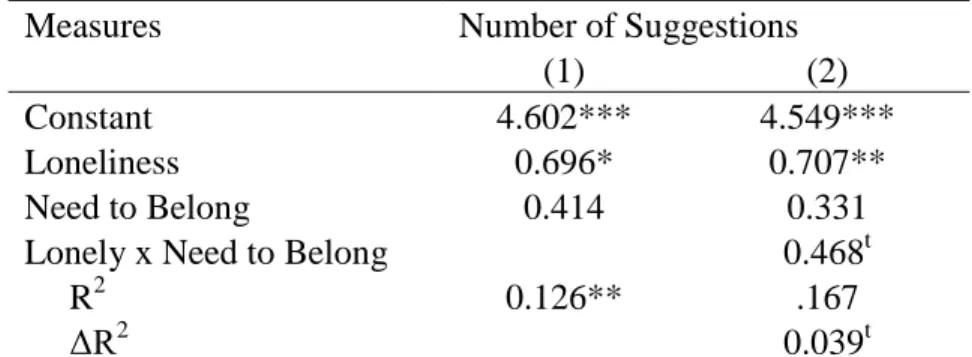
Table 2. Study 1a: OLS regressions to predict number of suggestions ...57
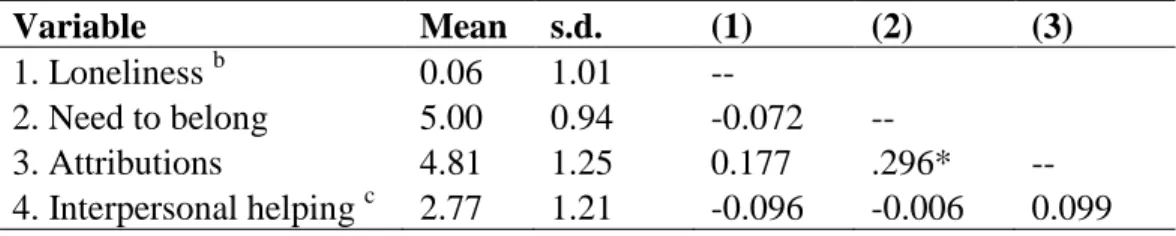
Table 3. Means, Standard Deviations, and Correlations among Study 1b Variables...58
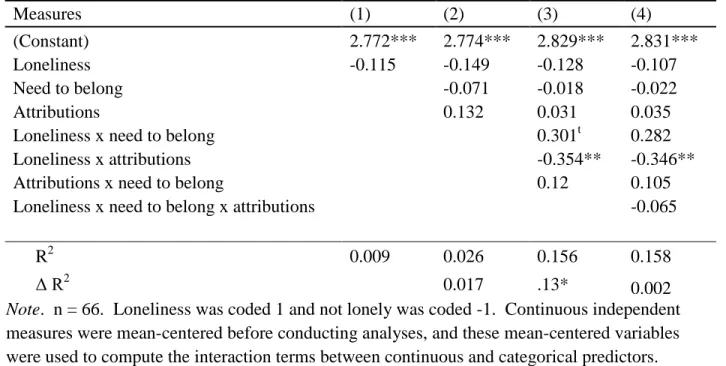
Table 4. Study 1b: OLS regressions to predict helping behavior ...59
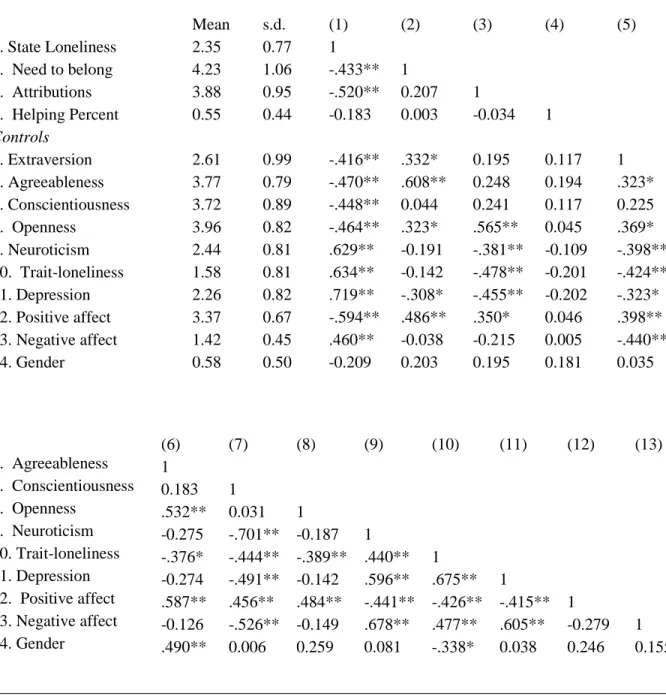
Table 5. Means, standard deviations, and correlations among Study 2 variables...60
Table 6. Study 2: OLS regression results for the effect of loneliness, the need to belong, and attributions on helping behavior...61
xi
LIST OF FIGURES
Figure 1. Study 1a: Number of suggestions as a function of loneliness
and the need to belong... 63 Figure 2. Study 1b: Helping behavior as a function of loneliness,
the need to belong, and attributions... 64 Figure 3. Study 1b: Three-way interaction between loneliness,
the need to belong, attributions and helping... 65 Figure 4. Study 2: Two-way interactions between loneliness and
the need to belong and attributions... 66 Figure 5. Study 2: Helping as a function of loneliness, attributions,
1
CHAPTER 1: THE SOCIAL FUNCTION OF LONELINESS Introduction
Loneliness, or the painful emotion felt when individuals perceive a discrepancy between their desired and actual social connections (Peplau & Perlman, 1982), is on the rise. A recent study conducted by AARP found that 35 percent of adults aged 45 and older indicated they felt lonely, compared with only 20 percent a decade ago (Wilson & Moulton, 2010). According to the study, loneliness was experienced equally among the sample regardless of race, gender, or education, but was even more prevalent among adults of working age from 45 to 60.
Changes in society and employment are colliding to create a perfect storm of conditions that may induce feelings of loneliness. The number of Americans living alone has increased to 27 percent in 2013, up from 17 percent in 1970 (Vespa, Lewis, & Kreider, 2013). Social networks are shrinking as the number of people saying they have no one with whom to discuss important matters nearly tripled between 1985 and 2004 (McPherson, Smith-Lovin, & Brashears, 2006) and Americans are less likely to attend church, join civic organizations, meet with friends, and socialize with family than in the past 25 years (Putnam, 2000).
The story is no more hopeful at work. Individuals used to feel a sense of security and community that came from long-term employment arrangements. However, changes in these relationships first became apparent in the 1980s when the labor markets became more
2
exacerbated these changes and sent a shock through corporate America that led to layoffs and underemployment, and caused others to work multiple jobs or longer hours just to make ends meet. Technological advances have made work inescapable, with email, texting, and
smartphones keeping employees connected long past the end of a typical work day. Changes in job design that allow for work-at-home, virtual teams, multiple team membership, and increased travel all have the potential to interrupt one’s ability to form and maintain valuable social
connections within and outside work. The end result is that adults are short on expendable income and often feel so exhausted at the end of the day they have neither time nor energy to devote to socializing with friends (Bernstein, 2013).
The notion that loneliness may arise from both the home and work environments is consistent with the typology of loneliness first conceptualized by Weiss (1973). Weiss
speculated that there were two different dimensions of loneliness, emotional and social, based on the nature of the social connection that was deficient. Emotional loneliness occurs when an individual lacks the bonds that form during intimate attachments such as with a parent, spouse, or romantic partner. Social loneliness is felt when an individual lacks friends or companions, or does not feel part of a larger community or group.
3
evaluations, decreased optimism, lower self-esteem (Hawkley & Cacioppo, 2010), and cognitive decline (Tilvis, 2004). In fact, a recent meta-analysis of 148 studies and more than 300,000 participants found that loneliness was as strong a predictor of early death as was alcoholism or smoking 15 cigarettes a day (Holt-Lunstad, Smith, & Layton, 2010).
Chronic loneliness has also been linked to numerous interpersonal disfunctions. For example, the chronically lonely are viewed more negatively in terms of their interpersonal attraction (Lau & Gruen, 1992; Rotenberg & Kmill, 1992), have a decreased ability to self-regulate as evidenced through decreased attention (Cacioppo et al., 2000), poorer performance on follow-up tasks (Baumeister, DeWall, Ciarocco, & Twenge, 2005), and exhibit more
aggressive behavior (Twenge, Baumeister, Tice, & Stucke, 2001). Moreover, chronically lonely individuals are prone to perceive social threats all around them (Cacioppo & Patrick, 2008) and have problems initiating and maintaining social contact (Horowitz, French, & Anderson, 1982). The chronically lonely may eventually come to devalue social interaction in general because integration attempts were tried and repeatedly failed (Spitzberg & Canary, 1985), or because their social skills gradually atrophy through lack of use or motivation (Heinrich & Gullone, 2006). Thus, lonely people appear to be both less likely to reach out to others and less attractive to be chosen as social partners by others (Cacioppo & Patrick, 2008).
With so much evidence for the myriad of negative interpersonal and physical outcomes associated with loneliness one might think it is an emotion to be avoided at all costs. However, evolutionary and social psychologists suggest that loneliness serves an adaptive function similar to other aversive human conditions—such as pain, hunger, or thirst—which encourage behavior that promotes survival (Cacioppo, Cacioppo, & Boomsma, 2014; Cacioppo et al., 2006;
4
ability to form relationships between individuals and within groups and Cacioppo and his colleagues argue that loneliness serves to motivate behavior that ingratiates the individual back into the group. However, very little empirical work has been done to test whether loneliness does in fact serve this social function.
This paper seeks to resolve the discrepancy between the negative outcomes associated with chronic loneliness and the functional perspective offered by Cacioppo and colleagues. I suggest that to fully understand the social function of loneliness, we need to examine the impact of state loneliness on behavior. An emotional state is a transient reaction to a specific event or circumstances (Lazarus, 1991a). Nearly everyone has experienced fleeting feelings of loneliness at different times throughout their lives. These transient feelings are captured in the construct of state loneliness, which describes the temporary affective state that arises when an individual recognizes a discrepancy between actual and desired social relations (Peplau & Perlman, 1982). These temporary feelings of loneliness are generally caused by something in the person or environment that can often be addressed (Young, 1982), but little is known about who is best able to address the emotion quickly or the specific circumstances that might lead to its relief or exacerbation.
5
is the spark that alerts an individual that belonging needs are not being met, interpersonal helping might be the salve that ingratiates the individual back into the group.
My dissertation explores the social function of loneliness in order to understand the promise and perils of the emotion. Isolating the behavioral implications of state loneliness can help us understand who is most likely to capitalize on its social function, and who is at risk for spiraling into chronic loneliness if the state feelings cannot be readily addressed. Such
knowledge may allow organizations to create interventions that can capitalize on the benefits of loneliness, while at the same time stop temporarily lonely employees from falling into the abyss of chronic loneliness.
In summary, this paper seeks to address three important questions—does loneliness serve a social function; how do state feelings of loneliness impact work-based behavior; and, who is best and least able to capitalize on state feelings of loneliness to improve social connections so that the emotion does not persist to chronic levels. I focus specifically on interpersonal helping as the dependent variable of interest because of its importance to effective organizational
functioning, as well as its potential to repair deficient social connections. I explore the impact of loneliness on interpersonal helping with three studies utilizing manipulated and measured state loneliness, as well as three different operationalizations of interpersonal helping.
This paper makes several important contributions. First, I explore the behavioral
6
most readily acted upon. Third, I utilize Vroom’s ability-motivation interaction hypothesis (Vroom, 1964) to show the impact of loneliness on helping behavior is inspired by both one’s motivation to belong to the group as well as one’s perceived ability to reconnect with others. The remainder of this paper unfolds as follows. First, I discuss the social function of loneliness, arguing that state loneliness can lead to interpersonal helping behavior. Second, I discuss two moderators that should impact the value of state-loneliness. Namely, the need to belong should impact one’s motivation to utilize helping as a way to ingratiate oneself back into the group, and one’s capacity to make unstable attributions for one’s loneliness should impact the perceived ability to use helping behavior to change one’s current emotional state. Third, I discuss how these two moderators may work in conjunction to amplify or attenuate the degree to which loneliness is positively associated with helping behavior.
Dimensions of Loneliness and its Social Function
Psychological theories of the self distinguish among the personal self, relational self, and collective self at the individual, collective, and group levels respectively (Brewer & Gardner, 1996). Loneliness researchers have applied this theoretical framework to the dimensions of loneliness and found that the individual, relational, and collective levels of analysis also characterize people’s mental representations of their social connections (Hawkley, Browne, & Cacioppo, 2005; McWhirter, 1990). Through factor analysis across student and adult samples, researchers found three separate facets within a single overarching loneliness construct (Hawkley et al., 2005).
7
relational isolation and is what Weiss (1973) labeled social loneliness. This factor refers to the perceived closeness of friends and family and involves whether or not the individual perceives there to be a group of like others who can be relied upon for support. The third factor or
dimension of loneliness is collective isolation and refers to the perception one has for belonging to a group or social entity that provides meaning beyond the level of the individual (Hawkley et al., 2005). Although Weiss originally differentiated between these types of loneliness, most contemporary loneliness researchers do not make this distinction. Therefore as reported throughout this dissertation, state loneliness refers to the transient occurrence of the emotion in general and I do not differentiate between the social or emotional domains.
We can extrapolate from the factors of loneliness to predict that individuals might feel lonely at work when they lack a friend or close colleague or when they lack connection to their work group or larger organizational entity. In fact, work group cohesion was the single largest predictor of loneliness at work: those who expressed less work group cohesion were more lonely, even after controlling for gender, marital status, race, and organizational level (Bell, Roloff, Van Camp, & Karol, 1990). Moreover, chronically lonely employees also felt less affective
commitment to their organization which negatively impacted task, team role, and relational performance (Ozcelik & Barsade, 2011).
While this research suggests negative outcomes to feeling lonely at work as manifest through decreased work group cohesion and performance, others suggest that loneliness is a driving force that motivates people to initiate social interactions (e.g., Sullivan, 1953; R. S. Weiss, 1973). This process is described in the theory of belonging regulation which proposes a regulatory system that is dedicated to maintaining a stable and acceptable level of social
8
2004). Gardner and colleagues suggest that loneliness serves as the trigger that causes one to recognize that belonging needs are not being fulfilled and encourages the individual to monitor the environment for cues and opportunities for inclusion. Individuals experiencing loneliness then use these cues to initiate and facilitate social inclusion.
Drawing from this theory, I propose that loneliness may manifest in functional behavior in several ways. First, feelings of loneliness alert individuals that their social connections are at risk and motivate behavior that will help restore valued social connections (Cacioppo et al., 2014; Pickett & Gardner, 2005). Second, if one is shunned from the group for having broken group norms or acted in selfish ways, feelings of state loneliness can serve as punishment. In this way, state loneliness might encourage people to act in ways that can restore their image by promoting an other-orientation (Cialdini & Kenrick, 1976) which proves one’s desire to belong to a valued social group. Third, state loneliness may promote behaviors that foster work group cohesion and reinforce affective commitment. From an evolutionary perspective, humans are adapted for group and communal living. Individuals who belong to a secure group receive food, protection, and shared resources. Moreover, through situational learning people are often able to see which behaviors ingratiate someone into a group as compared to those that lead to exclusion (Bandura, 1986; 1977) and groups consisting of members who feel secure and work together are more efficient, better able to develop creative solutions, adapt to new challenges, and outperform other less cohesive groups (Beal, Cohen, Burke, & McLendon, 2003). Thus, state loneliness can help can remind people of the importance of group membership and foster behavior that
9
10
CHAPTER 2: MODEL AND HYPOTHESIS DEVELOPMENT Interpersonal Helping
In general, helping behavior includes any effort that has as its goal improving the well-being of another person, including giving a gift, providing resources to accomplish a task, or even making a donation (Dovidio, Piliavin, Schroeder, & Penner, 2006). From an organizational standpoint, interpersonal helping behavior occurs when an individual voluntarily helps others with work-related problems in order to accomplish tasks or attain goals and is an important form of organizational citizenship behavior (Borman & Motowidlo, 1997; George & Jones, 1997; George & Brief, 1992; Podsakoff, MacKenzie, Paine, & Bachrach, 2000). Interpersonal helping promotes closeness to others, fosters group cohesion, and intimacy (Weinstein & Ryan, 2010) which may all address state feelings of loneliness.
Theories of social exchange propose that some relationships evolve over time into trusting, loyal and mutual commitments and that one of the best known ways to build
relationships is through reciprocity (Blau, 1964). When an individual feels loneliness at work, the person might reach out to colleagues with offers of help and assistance. By helping another individual, the person experiencing loneliness is in essence planting the seed for a future
11
mutual trust and reciprocated, supportive behavior. Ultimately, this may remedy feelings of loneliness caused by perceived gaps in social connections.
However, it is not just norms for reciprocity that lead to helping behavior. People often help others even in cases in which the beneficiary is a stranger they never expect to see again (e.g., returning a wallet, donating blood, posting online product reviews). Through the process of social learning, people observe others’ helping behavior and learn that there are social rewards for helping (Bandura, 1986; 1977). Moreover, there is ample evidence that people might help others in order to improve their bad mood (e.g., Baumann, Cialdini, & Kendrick, 1981; Cialdini, Darby, & Vincent, 1973b). In this way, helping serves as a reinforcer that makes them feel good, which may serve to reduce the negative feelings of loneliness. Finally, a person who feels lonely might also recognize the need to subjugate self-interest in order to help others accomplish team goals. By putting aside individual goals and helping others, one proves one’s value to the collective, and as part of a valued group, members feel more responsible for working on behalf of the community (Fiske, 2004). In fact, organizational identification and internalization have been linked to increased prosocial behavior and decreased turnover intent (O'Reilly & Chatman, 1986). By working toward the betterment of the group through helping behavior, an individual enhances his or her self-worth and can decrease state loneliness by reaffirming membership in a valued social group.
This leads to the following hypothesis:
Hypothesis 1. State loneliness is positively related to interpersonal helping behavior. Enhancing Motivation: The Need to Belong
12
subjective sense of well-being (Baumeister, 1991). Baumeister and Leary (1995) write that, “human beings have a pervasive drive to form and maintain at least a minimum quantity of lasting, positive, and significant interpersonal relationships” (p. 497) and that fulfilling the need to belong requires frequent interaction with others in order to create long-term, stable
relationships based on mutual concern (Baumeister & Leary, 1995).
Although the need to belong is essential for our well-being it not universally expressed in all humans. Individuals high in the need to belong are characterized by strong needs for
acceptance, strong negative reactions to anticipated exclusion or rejection, and are more preoccupied about their level of social regard (Leary, Kelly, Cottrell, & Schreindorfer, 2007). Notably, those high in the need to belong do not necessarily lack social inclusion, rather, they require a higher threshold of social connections to fulfill their belonging goals (Pickett et al., 2004). On the other hand, individuals with a low need to belong can be satisfied with relatively few social connections, care less about being included in the group, and are less concerned with the group’s perceptions (Kelly, 2001).
Baumeister & Leary’s (1995) belongingness hypothesis suggests that regardless of the level of the belonging need, real or perceived discrepancies in one’s belongingness status will produce an emotional response: positive when one’s belonging needs are fulfilled and negative when they are not. However, a direct connection between the need to belong and loneliness has not been consistently supported. In an effort to establish the construct validity of the need to belong scale, Leary, Kelly, Cottrell, & Schreindorfer (2013) found no relationship between the need to belong and loneliness among two university samples (n = 205, r = .02, and n = 325, r = -0.03), yet found the variables correlated at .25 among an adult MTurk sample. However,
13
Hughes, Waite, Hawkley & Cacioppo (2004) for the MTurk sample. Others have also found a correlation of .28 among an adult sample using the Russell (1996) UCLA Loneliness Scale (Version 3) (Mellor, Stokes, Firth, Hayashi, & Cummins, 2008). It could be that the college student population did not feel lonely because the students were better at fulfilling their
belonging needs due to the relatively easy access to a large pool of possible social connections, while the adult population felt a greater degree of unmet belonging goals such that those both high and low on the need to belong indicated they felt lonely.
One thing that seems certain is that it is not just the trait level of the need to belong that induces loneliness, but rather the degree to which one’s satisfaction with current social
connections matches the level that is necessary in order to satiate belonging goals. Loneliness should arise when belonging needs are not being met, regardless of whether the individual is high or low on the need to belong.
However, the motivational tendencies associated with the need to belong might differ based on whether a person is currently feeling lonely and how important the need to belong is for their well-being. Emotion theorists suggest that the intensity and motivational quality of an emotion is tied to the importance of the goal (Lazarus, 1991b). This implies that those for whom belonging goals are more important (i.e., who have a high need to belong) will be more
motivated to pursue activities that can repair or replace social connections than those for whom the goal is less important.
14
heightened sensitivity to social information including verbal and non-verbal social cues (Gardner et al., 2005). This suggests that those with a high need to belong paid closer attention to social cues that may have helped them detect opportunities for social inclusion.
Thus, I propose that the effect of loneliness on helping behavior is likely to be even stronger among people who have a high need to belong. This is because state-lonely individuals with a high need to belong feel an increased urgency and motivation to build connections to maintain their well-being, while at the same time are more attune to information that will help them navigate the social environment successfully. They may be particularly adept at sensing opportunities to help others as a way to establish social contact and build long-term positive relationships. In contrast, state-lonely individuals with a low need to belong may be less motivated to help others because the goal of reconnecting is less important to them and at the same time may be less able to notice helping opportunities within their social environment.
Hypothesis 2: The effect of state loneliness on interpersonal helping will be moderated by the need to belong, such that state loneliness is more strongly related to interpersonal helping when the need to belong is high rather than low. Enhancing Ability: Attributions for Loneliness
15
future. Controllability ranges from controllable to uncontrollable and describes the degree to which the individual can control the factor.
Consistent with Weiner’s framework, researchers have investigated causal attributions for loneliness and found that they fall along two dimensions: stable-unstable and internal-external (Michela, Peplau, & Weeks, 1982; Peplau, Russell, & Heim, 1979). Stable causes are those which are relatively unchanging and can be internal, such as physical unattractiveness or having an unpleasant personality; or external, such as other people having established groups that do not welcome new members readily. Unstable causes can likewise be internal, such as the person’s lack of effort to meet new people or lack of knowledge; and external, such as having a lack of opportunities to socialize.
16
According to attribution theory, how a person interprets the interpersonal failure impacts the success expectancies and coping strategies for resolving the failure (Abramson, Seligman, & Teasdale, 1978; Bandura, 1977; Weiner, 1979). Lonely individuals who attribute an
interpersonal failure to stable causes, such as a lack of ability, will be less hopeful about future successes and less sure of their ability to repair their social connections than those who attribute the failure to unstable causes, such as a lack of effort (Michela et al., 1982; Peplau et al., 1979). For example, if a person who feels lonely has tried repeatedly to reach out to others and been unsuccessful, the person will be more likely to attribute the loneliness to stable causes and will be less sure of his or her ability to proactively cope with the emotion. In support of this, one study found that lonely students who attributed their feelings to stable personality characteristics (e.g., low ability, personality traits) rather than to unstable factors (e.g, lack of effort, use of ineffective strategies) were less effective in an interpersonal follow-up task (Anderson, 1983).
On the other hand, if the individual has a past history of successfully addressing the feelings of loneliness as they occur, he or she is more likely to view the causes as unstable, and will have greater expectancies in his or her ability to repair the interpersonal belonging failure in the future. Those with unstable attributions should have greater expectancies in their ability to reconnect with others and, thus, be more likely to use proactive coping mechanisms. For example, individuals who made unstable attributions about the cause of their loneliness were more likely to indicate they would go to a party, or doing something else proactive to meet new people (Peplau et al., 1979).
This leads to the following pair of hypotheses:
17
will be positively related to interpersonal helping when attributions are unstable rather than stable.
Hypothesis 3b: State loneliness will be negatively related to interpersonal helping when attributions are stable rather than unstable.
Interactive Effects of the Need to Belong and Attributions
Thus, I propose that the impact of state loneliness on helping behavior is due in part to both the need to belong and the attributions people make for the cause of their loneliness. This suggests that in order for a state-lonely person to recognize and use helping behavior as a remedy for their loneliness, they must have either the motivation (i.e., the need to belong) or the ability (i.e., unstable attributions). But, what if they have both motivation and ability, would they be even more likely to help? And, are those who lack both the least likely to capitalize on opportunities for helping as a mechanism towards reinclusion?
The impact of the ability-motivation interaction was discussed by Vroom (1964) who suggested that performance improvements would be most obvious when motivation was high because that was when the variability of individual differences in ability would be more
meaningful. Applying this theory to the loneliness-helping link implies that individuals will be the most helpful when they hold unstable attributions for their loneliness such that they believe there is something they can do to address or remedy their failed social connections (i.e., they believe they have the ability to help) and when are motivated to reconnect with the group (i.e., have a high need to belong). This suggests a three-way interaction between loneliness, the need to belong and attributions on interpersonal helping.
18
lonely individuals with a high need to belong and who make unstable attributions should be more helpful than others who make unstable attributions because a) they are motivated to be part of the group and b) feel they can do something about their feelings of loneliness. It is logical that these individuals might utilize helping behavior as a way to improve their self-image as someone who warrants group inclusion and thereby ingratiate themselves back into the group or possibly as a means to improve their negative mood. On the other hand, well-connected others (i.e., the not-lonely) with a high need to belong and unstable attributions feel comfortable with their social connections. They want to be part of the group and in fact, feel that they are. These individuals should be less motivated to help either because they are already part of the group or because there is no need to repair a negative mood.
I suggest that the opposite is also true: Lonely individuals with a low need to belong who make stable attributions should be less likely to help than similar others who are not-lonely. This is because they see no recourse for their loneliness and have little desire to be part of the group anyway. Thus, they are unlikely to see helping as a remedy to their lonely feelings. On the other hand, not-lonely individuals who make stable attributions should feel comfortable with their social connections and expect that not to change. These socially-confident others should be more likely to help because either because they realize that helping others has led to their preferred social standing or because they see helping as part of the social norm for group inclusion.
This leads to the following hypotheses:
19
20
CHAPTER 3: STUDY 1A Study 1a: Methods
Participants
Eighty-one individuals (43 males) from a southeastern university participated in the study for credit as part of an introductory organizational behavior course. The mean age was 20.77 and sixty-nine percent were white. Participants were randomly assigned to one of two loneliness conditions (high vs. low).
Manipulation
21
received their feedback to write about why they thought they were more (or less) lonely than average.
Procedures
Between 6 and 12 individuals participated in each experimental session. As participants arrived, they were seated in one of two laboratory rooms, each at individual study carrels with computer terminals. The study was conducted online using Qualtrics. After signing an
electronic consent form, participants completed the need to belong scale (Leary et al., 2013), the loneliness manipulation and manipulation check of state emotions. Participants were then told that they were to provide feedback on a fellow undergraduate student’s cover letter that had been provided by the University’s business communication center and was an actual letter a student intended to send to a prospective employer. Participants were told that their comments would be sent to the student and were presented with an open-ended text box in which to offer their
feedback. Immediately following the cover letter task, students responded to a nine-item
measure of task engagement (Rich, Lepine, & Crawford, 2010). Finally, students were debriefed about the loneliness manipulation and false feedback before working on an unrelated study. Measures
Unless otherwise indicated, all items used a 7-point scale (1 = strongly disagree and 7 =
strongly agree).
22
State-Emotions. Immediately following the manipulation, participants were asked to respond to the degree to which they were feeling eight emotions in the present moment on a 5-point scale (1 = not at all and 5 = extremely). The words served as the primary manipulation check and included: lonely, isolated, connected, befriended, happy, cheerful, sad, and blue.
Task Engagement. Following the cover letter task participants were asked to reflect on their engagement in the task by responding to nine items of an engagement scale that was adapted from (Rich et al., 2010). The measure included items on physical engagement (e.g., “I exerted my full effort on this task”), emotional engagement (e.g., “I am proud of the
contributions I made to this letter”), and cognitive engagement (e.g., “I paid a lot of attention to this task”). A composite score was created for overall task engagement by averaging the responses to the nine items (α = .96).
Interpersonal helping. Helping was assessed by the number of unique suggestions that each participant entered into an open-ended text box within the survey software. The author and a second rater blind to the conditions each independently counted the number of ideas presented in each response. If a sentence included more than one unique idea, each idea was counted independently. Likewise, if a sentence included a statement of opinion (e.g., “This is a good letter”), but did not provide constructive feedback, it was not to be counted. The two raters achieved good consistency (ICC2 = .951) and agreement (ICC2= .947) that were well within conventional guidelines (LeBreton & Senter, 2008). Thus, the ratings were averaged to create a single measure of the number of suggestions for each participant.
Study 1a: Results
23
needed to agree to more than one of the statements in the modified loneliness scale. One
participant agreed with zero statements and another agreed to only one. The feedback was likely not credible for these two participants and they were removed from future analyses. Likewise, participants in the not-lonely condition who agreed to too many of these statements would have likely found it hard to believe that they were only in the 12th percentile. Three participants agreed to four or more of the statements and were likewise removed. Thus, five participants were removed because the false feedback manipulation was not credible based on their actual responses. An additional three participants were removed after noting their suspicion of the veracity of the cover letter task. The following analyses are conducted with the remaining 73 participants.
Table 1 provides the means, standard deviations, and correlations between the Study 1a variables. There is a positive relationship between loneliness and the number of suggestions (r = .31, p < .01) and there is no significant relationship between state loneliness and the need to belong (r = .11, p > .05).
Manipulation Check
24
feelings of loneliness and isolation primarily, but not sadness (sad, blue), or happiness (happy, cheerful), or connectedness (connected, befriended).
Test of Hypotheses
Table 2 provides the results of the regression analyses for the main effect of loneliness on interpersonal helping as well as the test of moderation for the need to belong. I regressed the number of helpful suggestions on the loneliness condition, the centered need to belong and the interaction between loneliness and the need to belong. There was a main effect of loneliness on the number of suggestions (Mlonely = 5.34, Mnot-lonely = 3.86, b = .707, t(69)=2.68, p < .01).
In addition, this main effect was qualified by an interaction between loneliness and the need to belong that did not reach conventional levels of significance (b = .468, t(69)=1.798, p
25
Hypothesis 1, predicting a main effect of loneliness on helping and for Hypothesis 2, predicting a moderating effect of the need to belong, which was significant for levels at slightly below the mean and higher.
Loneliness is experienced as a negative emotion, and research on emotions suggests that negative emotions inspire higher levels of systematic processing than positive emotions
(Schwarz, 2001; Tiedens & Linton, 2001). Thus, the increased number of suggestions made by lonely people could be an artifact of increased cognitive processing resulting from negative emotions. To rule this out as a mechanism for increased helpfulness, I tested task engagement as a mediator of the relationship between loneliness and the number of suggestions.
While task engagement did significantly predict the number of suggestions (b = .767,
t(63) = 4.51, p < .01), loneliness did not significantly affect task engagement (b = .07, t(63) = .367, p >.05), and including task engagement in the model did not significantly reduce the impact of loneliness on the number of suggestions (b reduces from = .678 without task engagement to b = .622 with task engagement in the model). In addition, participants in the lonely condition did not spend any longer on the task (as measured by seconds typing in the open-ended box) than participants in the not-lonely condition (Mnot-lonely = 332.96, Mlonely = 364.99, F (1,72) = .473,
p>.05), nor did they use more words (as counted by Excel) (Mnot-lonely = 98.91, Mlonely = 103.42, F (1,72) = .101, p>.05).
Study 1a: Discussion
26
evidence that state loneliness can actually spur people to action in a meaningful and positive way. Second, it reveals the importance of the need to belong as a moderator. Lonely individuals are more likely to help when they have an average or above average need to belong. This
27
CHAPTER 4: STUDY 1B
The objective of Study 1b was to add stable attributions as a potential moderator and test for a three-way interaction between loneliness, the need to belong, and attributions. This
experiment uses the same manipulation as in Study 1a and introduces a new dependent variable that has been used successfully in past research, albeit as a task to measure interpersonal
deviance (Christian & Ellis, 2011). Study 1b. Method
Participants
The sample included seventy-nine undergraduate business students who were enrolled in an organizational behavior class at a large university in the southeastern United States and participated in exchange for course credit. The average age of participants was 21.16 (s.d. = 3.10), 43 percent were women, and 76 percent identified as non-Hispanic white.
Manipulation
This study used the same loneliness manipulation as described in Study 1a in which participants were randomly assigned to one of two versions of a modified UCLA Loneliness scale (Russell, 1996), were provided with false feedback about their degree of loneliness, and then wrote about the reasons for their loneliness in an open-ended essay prompt (Wildschut et al., 2006; Zhou et al., 2008).
Procedure
28
conducted online using Qualtrics. After signing an electronic consent form, participants
completed basic personality measures including the same scale for the need to belong as used in Study 1a (Leary et al., 2013), responded to the modified UCLA Loneliness scale and received false feedback, and reinforced the manipulation via the writing task consistent with Study 1a. Next, participants responded to a measure of state emotions and then answered items from the Revised Causal Dimension scale (McAuley, Duncan, & Russell, 1992) in order to measure the attributions the participant made for their loneliness. Finally, participants logged onto temporary email accounts set up for each participant before the session and responded to three emails from undergraduate students (Christian & Ellis, 2011). Participants then returned to the Qualtrics survey to provide demographic information, and finally were told they had completed the study and could leave the lab. Participants were debriefed about the loneliness manipulation by email at the end of the day.
Measures
Need to Belong. The need to belong (Leary et al., 2007) was assessed with the same seven-item measure in Study 1a (α = .814).
State Loneliness. Immediately following the false feedback, participants were asked to rate their current level of emotions relative to their emotions when they first came to the study session with several bi-polar scales including sadder-happier, lonely-connected, abandoned-supported, depressed-elated, excluded-included. Items were anchored such that higher scores indicated more negative emotion. For example, the lonely item was anchored as follows: 7 =
Much more lonely, 4 = No change, and 1 = Much more connected.
29
loneliness contained in their essays with three items arranged on a seven-point bipolar scale: “permanent to temporary,” “stable over time to variable over time,” and “unchangeable to changeable.” Responses to these three items were averaged and higher values indicate more
stable attributions (i.e., permanent, stable over time, and unchangeable) while lower values indicate unstable attributions (i.e., temporary, variable over time, and changeable).
Interpersonal Helping. Interpersonal helping was assessed with an email task that was adapted from Evans & Gilliland (2006) and utilized in Christian & Ellis (2011). Participants were told that the business school was experimenting with a mentorship program and they were being asked to test out a new protocol in which undergraduates interested in the business school emailed questions to current upper-classman business school students. Participants were told that this was an important task because they could give younger students a preview of the business school and help them make their decision about whether or not to apply. Participants accessed these emails via a temporary email account that contained three messages from prospective students and were told to respond however they felt appropriate. Although
participants were led to believe these emails were from real students, all participants responded to the same three fictitious messages:
(a) Dear [Business School] Mentor, I am just curious about the classes they offer. I am planning on paying my own way thorough [sic] college and I am wondering if there are any classes that are a waste of my time and money there and if so why? Thanks—Raj. (b) I am interested in both music and business. Do you have an opinion on whether it would
be better to do a business management major and a music minor, or a music major and a business minor? I would ultimately like an A&R job in the recording industry.
30 And
(c) Are all the business students stuck up like it seems or are there some nice ones? Not to be rude but I dont [sic] really care much about getting in there anyway and so I am not even sure why im [sic] here.
jill
The author and a research assistant, both blind to condition, rated participant responses for interpersonal helping along five dimensions which were based loosely on measuring the opposite behaviors as the original authors who used the task to measure interpersonal deviance. Instead of measuring hurtful, rude, or embarrassing remarks as done by Christian & Ellis (2011), I measured each email response on the basis of five markers of helping behavior: 1) salutation and 2) signature; 3) language that reinforced a desire to help such as, “Hope this helps!” or “Great question!”; 4) inclusion of specific, helpful advice that addressed the question; and, 5) whether the tone of the email was helpful and friendly. Scores on each of these dimensions was summed, resulting in scores ranging from zero to five, with high scores indicating more helpful behavior. For example, a very helpful email response would contain several of these helping indicators (e.g., a salutation and signature which offers the possibility of future interactions, as well as concrete advice that answered the question at hand). An unhelpful email contained no salutation or signature, might have mocked the participant, and/or contained little advice that the participant could actually use.
31
significantly correlated (all r’s > .439, p < .01), I created a composite variable by averaging the scores on the three emails for each participant across both raters (α = .92).
Study 1b: Results
Four participants had to be removed for failing to follow the directions and completing the email task first before participating in the loneliness manipulation presented online via Qualtrics. In the same manner as with Study 1a, another nine participants were removed for responding to the loneliness scale in such a way that their feedback was not believable (i.e., I removed six participants in the not-lonely condition who agreed to four or more items and three participants in the lonely condition who agreed to one or fewer items). In total, 13 participants (16%) were removed from the sample. The results provided below are based on the remaining 66 participants (35 lonely, 31 not lonely).
Table 3 presents means, standard deviations and correlations between the Study 1b variables. This study failed to find a significant relationship between loneliness and
interpersonal helping (r = -.096, p > .05). Consistent with Study 1a, manipulating loneliness did correlated with the need to belong (r = -.072, p > .05). The need to belong was significantly correlated with attributions indicating that those with a high need to belong tend to hold more stable attributions about their current level of loneliness.
Manipulation Check
State Loneliness. Consistent with Study 1a, the effectiveness of the loneliness
manipulation was assessed in two ways. First, as intended, participants in the lonely condition agreed to more items than those in the not-lonely condition (Mlonely = 8.29 vs. Mnot-lonely = .58,
32
lonely (MLonely = 4.17, MNot-Lonely = 3.77, F(64) = 4.83, p < .05) and abandoned (MLonely = 4.09, MNot-Lonely = 3.74, F(64) = 5.48, p < .05), as well as sadder (MLonely = 4.40, MNot-Lonely = 3.74,
F(64) = 8.39, p < .01) and more depressed (MLonely = 4.37, MNot-Lonely = 3.65, F(64) = 12.26, p < .001). However, individuals did not feel any more excluded or included based on their loneliness feedback (MLonely = 4.00, MNot-Lonely = 3.77, F(64) = 2.11, p > .05).
Test of Hypotheses
Hypothesis 1 proposes that state loneliness leads to increased helping behavior. I
regressed helping on the loneliness condition, centered need to belong, centered attributions, and the interactions between the two. The results of this analysis can be seen in Table 4. In the first step I regressed helping on the loneliness condition and found no main effect of loneliness. In fact, the sign of the coefficient and correlation suggests that state-lonely people were less helpful (MLonely = 2.66, Mnot-lonely = 2.89; b = -.12, t(65) = -.771, p = .44). Thus, I found no support for Hypothesis 1.
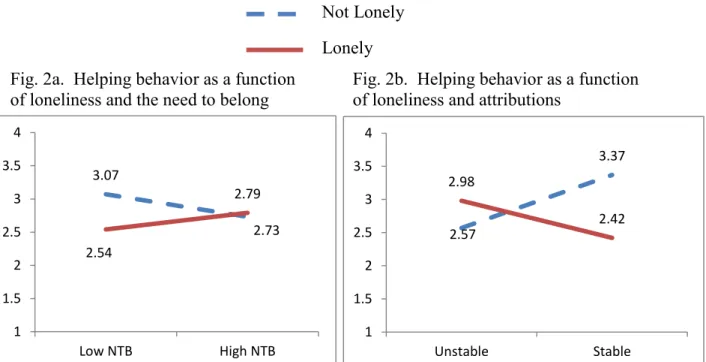
33
There was, however, a significant interaction between loneliness and attributions (b = -.354, t(60) = -2.763, p < .01). As can be seen in Figure 2b, plotting the simple slopes reveals that when individuals believe their degree of loneliness is stable and unlikely to change (Hypothesis 3b), lonely people are less helpful than not-lonely people (b = -.474, SE = .208, t = -.2275, p = .026). However, simple slopes analysis at the mean and one SD below the mean (i.e., when attributions are unstable) were not significant (b = .214, SE = .215, t = .997, p = .322). To further characterize the nature of this interaction I used the Johnson-Neymann technique and the SPSS script provided by Hayes & Matthes (Hayes & Matthes, 2009; Johnson & Neyman, 1936). The conditional effect of attributions on helping behavior transitioned to significance at an attribution score of .7823, b = -.345, SE = .17, t = -1.99, p = .05. Thus, there is a significant difference in helping among lonely and not lonely when attributions are above .7823 (i.e., when attributions are stable). Supporting Hypothesis 3b, I found that people who feel lonely and make stable attributions are significantly less likely to help than their non-lonely counterparts.
However, I did not find support for Hypothesis 3a: individuals experiencing loneliness who hold unstable attributions for this emotion were not more helpful than their non-lonely counterparts.
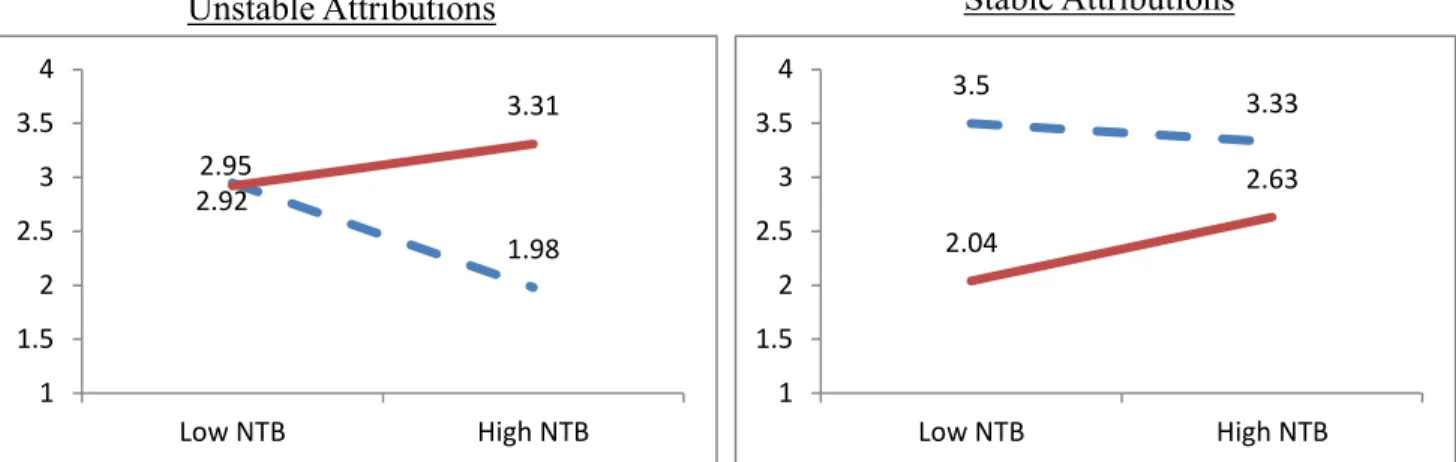
The three way interaction between loneliness, attributions and the need to belong was not significant (b = -.065, t(59) = -.402, p = .689). However, I utilized planned contrasts to test the specific hypotheses that lonely people with a high need to belong and unstable attributions would be more helpful than their not-lonely counterparts (Hypothesis 4a) and that lonely participants with a low need to belong and stable attributions would be less helpful than their not-lonely counterparts (Hypothesis 4b).
34
attributions were one standard deviation below the mean (i.e., unstable). This compares the estimates 3.31 and 1.98 and while the interaction did not reach conventional levels of
significance (b = .67, SE = .35, t = 1.93, p = .059), the results are in line with Hypothesis 4a such that lonely participants with a high need to belong and unstable attributions tended to be more helpful than their non-lonely counterparts.
To test Hypothesis 4b, I examined the conditional effects of loneliness on helping when the need to belong was one standard deviation below the mean (i.e., low need to belong) and attributions were one standard deviation above the mean (i.e., stable). This compares the points 3.5 and 2.04 again revealed an interaction that again did not reach conventional levels of
significance (b = -.73, SE = .42, t = -1.72, p = .09), although is indicative of a trend towards support for Hypothesis 4b. Specifically, lonely people with a low need to belong and stable attributions tended to be less helpful than their non-lonely counterparts.
To rule out task engagement as an explanatory factor consistent with Study 1a, following the email task participants were asked to reflect on their engagement in the task by responding to the same nine items (α = .96) used in Study 1a (Rich et al., 2010). While task engagement did significantly predict the helpfulness on the email task (b = .448, t(64) = 3.11, p = .003), loneliness did not significantly affect task engagement (b = -.031, t(64) = -.243, p = .81). In addition, participants in the lonely condition were no more engaged in the email task than participants in the not-lonely condition (M not-lonely = 5.43, M lonely = 5.37, F(1, 64) = .059, p = .81), nor did they use more words in their email responses (M not-lonely = 76.16, M lonely = 87.13,
35 Study 1b: Discussion
Study 1a revealed a main effect of loneliness on helping behavior and an interaction with the need to belong that were not replicated in Study 1b. However, I found strong evidence that the attributions lonely individuals make can impact helping behavior. Namely, when a lonely person makes stable attributions about their emotion, they are less likely to help. The results of probing the three-way interaction did not reach conventional levels of significance but were suggestive of a conditional effect of loneliness x attributions at different levels of the need to belong. Specifically, state-lonely people who had both a high need to belong and unstable attributions tended to be more likely to help than similar people who are not lonely, and when state-lonely people had a low need to belong and make stable attributions, they tended to be less likely to help than similar others who are not lonely. This experiment adds to what we know about the behavior of lonely people because it suggests that both motivation and ability are important, and shows the conditions under which lonely people might choose to help others.
One limitation of this study is that the modest sample size in the present study (n = 66) may have limited the statistical power and played a role in limiting the significance of some of the statistical comparisons conducted. To investigate this possibility I conducted a post hoc power analysis with the program G*Power (Faul, Erdfelder, Lang, & Buchner, 2007) to
determine whether I had enough power to detect the two-way and three-way interactions. This analysis revealed that the ΔR2
36
37
CHAPTER 5: STUDY 2
Study 2 utilizes an online sample from a national database of online workers. I utilized a measure of state loneliness to rule out the possibility that the results are an artifact of the
manipulation used in both Experiments 1a and 1b. Study 2 also utilizes a different dependent variable to capture helping behavior in which helping comes at a personal cost to the participant. Study 2: Methods
Participants
Participants were 65 members of the Amazon mTurk national database of online workers who were paid for their participation. Fifteen participants (23%) failed attention checks and were removed before completing the study. The remaining 50 participants were on average 37.48 years old. Of these, 30 were female and 41 were non-Hispanic white. Participants were predominantly employed (39 participants) with an average of 17.76 years work experience. Procedure
The study was conducted online via Qualtrics in exchange for pay. The average time spent on the study was 16.38 minutes, however four participants spent under nine minutes and one took over 35. Participants who spent either too little or too much time were likely not paying attention to the study or completed it with interruptions. Therefore, these five participants were removed from the sample. The results reported below are based on the remaining 45 participants.
38
association puzzles. Participants were told that as part of the study half of them would be randomly chosen to share any number of their correct answers with a future participant if they wanted to, and the other half would be randomly assigned to receive the number of correct answers chosen by a past participant. Participants learned that they would earn one entry into a $10 lottery for every puzzle they ultimately answered correctly; thus, helping the “partner” by sharing correct answers diluted the participant’s own chances in the lottery. In reality, all participants were told that they had randomly been chosen to share answers with a “partner.”
The verbal ability task utilized 20 items from the Remote Associates Test developed by Mednick & Mednick (1962, 1967) for their studies on creativity. In this task, participants are presented with three words and must come up with a fourth word that links the set together. For example, the answer to the puzzle containing the three words “paint, doll, and cat” is “house” as in house paint, dollhouse, and house cat. Participants saw two sample RAT puzzles and then had two minutes to complete 20 RAT puzzles (see Appendix A for the complete list of puzzles). Participants could leave puzzles blank if they did not know the answer. After two minutes, participants were given accurate feedback on the number of puzzles they solved correctly and were asked how many of those answers they would like to share with their partner, ranging from 0 if they did not want to share any answers, to the total number of puzzles they answered
correctly. Finally, participants provided demographic information, were debriefed, and paid. Measures
Unless otherwise indicated, items were measured with a five-point Likert-type scale ranging from 1 = “Strongly Disagree” to 5 = “Strongly Agree”.
State-Loneliness. A state measure of loneliness (α = .950) was collected by adapting the
39
during the past seven days on a scale of 1 to 5 (1 = never or 0 days; 5 = always or 7 days). Consistent with the traditional UCLA Loneliness scale, half of the items were positively worded (e.g., “How often did you feel that you were in tune with the people around you?”) and half were negatively worded (e.g., “How often did you feel alone”). Positively worded items were reverse coded and then averaged across all 20 items. High scores indicate higher levels of state
loneliness.
Need to belong. The need to belong (Leary et al., 2013) was assessed with the same seven-item measure in Study 1a and 1b (α = .871). Higher values indicate a stronger need to belong.
Attributions. Attributions (α = .793) for loneliness were assessed with the same three items from the Revised Causal Dimension scale (McAuley et al., 1992) as in Study 1b. Again, responses to these three items were averaged and higher values indicate more stable attributions (i.e., permanent, stable over time, and unchangeable) while lower values indicate unstable attributions (i.e., temporary, variable over time, and changeable).
Interpersonal Helping. Scores on the RAT ranged from zero to 20, with a mean of 8.11 (s.d. = 3.97). The number of answers provided to a partner ranged from zero to 11, with a mean of 4.11 (s.d. = 3.49). In order to create a dependent variable that equalized helping behavior across participants who ranged in verbal ability, a percentage of the number of solutions given and the total number of correct puzzles was created using the formula:
40
puzzles correctly and provided 10 answers to his/her partner, this person’s helping score is .50. The average participant offered just over half his/her correct answers (mean = .55, s.d. = .435).
Control Variables. I controlled for a number of variables because of their connection to loneliness or interpersonal helping. First, Big 5 personality variables, assessed using Donnellan, Oswald, Baird & Lucas (2006), have been linked to trait loneliness (Cacioppo et al., 2006; Teppers et al., 2013), as well as with helping behavior (Organ & Ryan, 1995). I also controlled for trait positive and negative affect, assessed using the PANAS-X (Watson, Clark, & Tellegen, 1988), as well as for trait loneliness as measured with the single item “lonely” among the PANAS-X measure. Controlling for these trait emotions can help reduce the potential for common method effects (Podsakoff, MacKenzie, Lee, & Podsakoff, 2003). Finally, I controlled for gender because research has shown that women are more likely to be helpful than are men (Farrell & Finkelstein, 2007).
Study 2: Results
41
suggests that those with a high need to belong may be less apt to feel state loneliness. This could be because they are better able to pick on the social cues that help them make friends and keep loneliness at bay (Gardner et al., 2005; Pickett et al., 2004), or simply because they have fulfilled the higher level of social contact to fulfill their belonging needs and thus do not feel lonely. In addition, although not significant, state loneliness (r = .18) and trait loneliness (r = -.20) correlate negatively with helping behavior suggesting individuals who are feeling loneliness either chronically or recently tend to be less helpful than their non-lonely counterparts.
Collinearity
Several of the variables in this study have medium to high correlations. In particular, state loneliness and depression correlate at .719. Following guidelines suggested by Tabachnick & Fidell (2007), I omitted depression from my analyses because it likely contains redundant information that will inflate the error terms and weaken my analysis. To further test for
42 Test of Hypotheses
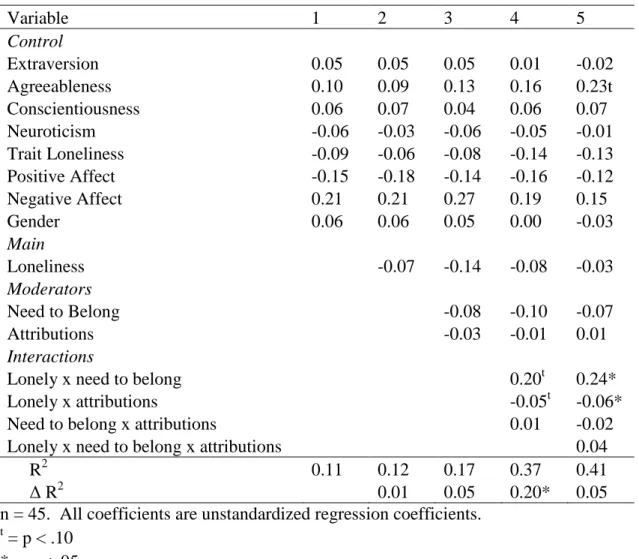
Table 6 shows the results of the hierarchical regression analyses testing my hypotheses. In the first step, I entered the control variables, none of which significantly affected helping behavior. Hypothesis 1 proposed that state loneliness will be positively related to interpersonal helping. As shown in Table 6, when I entered loneliness in the second step of the hierarchical regression, it did not have a significant relationship with helping behavior (b = -.07, p > .10). Thus, I did not find support for Hypothesis 1.
To test the significance of the need to belong and attributions as moderators, I entered the mean-centered variables in Step 3, all of the two-way interaction terms in Step 4, and the three-way interaction in Step 5. In Step 4, I found both the need to belong (b = .20, t(30) = 1.926, p = .064) and attributions (b = -.05, t(30 ) = -1.904, p = .067) to have interactions which led to a significant increase in the amount of variance explained ( Δ R2 = .20, F Δ (30) = 3.182, p = .038). The interactions between loneliness and the need to belong (b = .24, SE = .105, t(29) = 2.318, p
= .028) and loneliness and attributions (b = -.06, SE = .027, t(29) = -2.138, p = .041) became significant in Step 5 with the addition of the three-way interaction, although the three-way interaction itself was not significant (b = .04, t(29) = 1.491, p = .147).
43
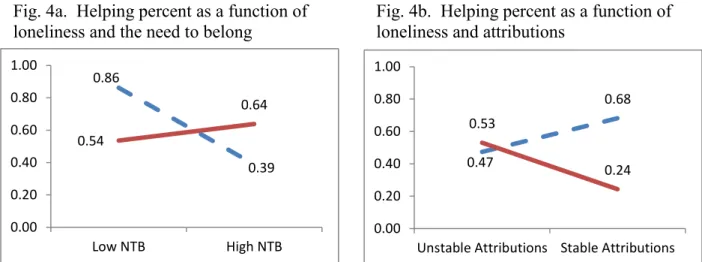
Analysis at the mean and one SD above the mean are not significant. Thus, I found that lonely people with a low need to belong were significantly less helpful than their non-lonely
counterparts. This provides support for Hypothesis 2.
To test Hypothesis 3a and 3b, I conducted a simple slope analysis of the interaction between loneliness and attributions. As can be seen in Figure 4b, the analysis of simple slopes reveal significant differences between state-lonely and non-lonely participants at both the mean (b = -.22, SE = .091, t = -2.45, p = .018) and at one SD below the mean (i.e., Hypothesis 3a; b = -.169, SE = .084, t = -2.01, p = .05) and at one SD above the mean (i.e., Hypothesis 3b; b = -.277, SE = .124, t = -2.236, p = .03). Thus, I find strong support for both Hypothesis 3a, in which state-lonely individuals who make unstable attributions are significantly more likely to help than non-lonely individuals with unstable attributions, and Hypothesis 3b, in which state-lonely individuals who believe their degree of loneliness is stable and unlikely to change are
significantly less likely to help than non-lonely individuals who also make stable attributions, suggesting attributions are indeed an important moderator of the state-loneliness and helping behavior link.
44
attributions were one standard deviation below the mean (i.e., unstable) was not significant (b = .28, SE = .2, t = 1.39, p = .18). Thus, Hypothesis 4a is not supported.
Hypothesis 4b predicted that among those with stable attributions, lonely people with a low need to belong would be less helpful than not-lonely people with a low need to belong. Analysis of the conditional effects of loneliness on helping when the need to belong is one standard deviation below the mean (i.e., low need to belong) and attributions are one standard deviation above the mean (i.e., stable) was significant (b = -.57, SE = .19, t = -2.93, p = .007). As shown in Figure 5, lonely people who make stable attributions and have a low need to belong are significantly less helpful than their non-lonely counterparts. Thus, I find support for
Hypothesis 4b.
Finally, I conducted a mediation analysis to once again rule out task engagement as an explanatory factor for the link between state-loneliness and helping behavior. I used a three item measure to assess task engagement (α = .825) including the items, “I exerted my full effort on this task,” “I devoted a lot of energy to this task,” and “I tried my hardest to perform well on this task.” State-loneliness did not predict task engagement (b = -.2538, t(35) = -1.49, p > .05), and task engagement did not predict interpersonal helping (b = .072, t(35) = .48, p > .05). I also added task engagement as a control variable in Step 1 of the regression analyses and it did not materially alter the results in subsequent steps.
Study 2: Discussion
There are two important limitations with Study 2. First, this study also suffers from a limited sample size that threatens the ability to find statistically significant results given the number of predictors in the model. A post hoc power analysis was conducted using the program
45 the regression equation yielded a ΔR2
of .201 (ΔF (3, 30) = 3.18, p = .038). This equates to a calculated effect size of f2 = .25 (between a medium and large effect size according to Cohen (1988)). Using an alpha level of p < .05 and testing the three two-way interactions and a total of 15 predictors yielded power of .76. A sample size of 49 would have been needed to reach the recommended power level of .80. Further post-hoc power analyses on the three-way interaction revealed that the non-significant results may also have been a result of a lack of statistical power. The addition of the three-way interaction in the regression equation yielded a ΔR2 of .045 (ΔF (1, 29) = 2.22, p = .147) or a calculated effect size of f2 = .047 (a small effect size given Cohen’s (1988) parameters) and achieved power of .29. The sample size would have needed to be 169 in order to reach conventional power levels of .80.
Second, this study utilizes a ratio (the number of answers shared/the number of correct answers) as the primary dependent variable. This was done to adjust the actual helping behavior (i.e., the number of shared answers) for the effect of ability or the total number correct that could have been shared. However, some researchers have cautioned against using ratios as dependent variables (see Kronmal, 1993 for a review) which could lead to incorrect or misleading
inferences about the effects of the independent variables on the dependent variable. One way to correct for this is to eliminate the ratio by using the numerator as the dependent variable and adding the denominator as a predictor. In this way, the coefficient measures the effect of loneliness on the number of shared answers after adjusting for the number correct. I reran these analyses using this approach and although the pattern of the results was the same, the
46