i
TICK-BORNE DISEASES IN NORTH CAROLINA: SEROEPIDEMIOLOGY OF SPOTTED FEVER GROUP RICKETTSIAE AND PREVENTION OF TICK BITES
AMONG OUTDOOR WORKERS
Meagan F. Vaughn
A dissertation submitted to the faculty of the University of North Carolina at Chapel Hill in partial fulfillment of the requirements for the degree of Doctor of Philosophy in the
Department of Epidemiology.
Chapel Hill 2013
iii ABSTRACT
Meagan F. Vaughn: Tick-borne Diseases in North Carolina: Seroepidemiology of Spotted Fever Group Rickettsiae and Prevention of Tick Bites Among Outdoor Workers
(Under the direction of Steven Meshnick)
Tick-borne diseases are the most common vector-borne diseases in the US. North Carolina suffers from some of the highest rates of Rocky Mountain spotted fever (RMSF), which can cause severe illness and death.
The first aim of this dissertation explored whether spotted fever group rickettsiae (SFGR) other than Rickettsia rickettsii are responsible for spotted fever rickettsioses in North
Carolina. A retrospective seroepidemiologic study was conducted in which the reactivity of paired sera from North Carolina patients who had been tested for RMSF we evaluated against a panel of SFGR, including R. rickettsii, R. amblyommii, and R. parkeri. Of the 106 eligible pairs tested, 21 patients seroconverted to one or more antigens. Cross-reactivity was observed in ten patients and seroconversions to single antigens occurred in 11 patients, including one against R. rickettsii, four against R. parkeri, and six against R.
amblyommii. These findings suggest that species other than R. rickettsii are associated with illness among North Carolina residents.
iv
v
ACKNOWLEDGMENTS
This dissertation was made possible by through the support of many people and the combination of a non-trivial amount of good fortune and opportune timing. I am ever grateful for my advisor and dissertation chair, Dr. Steve Meshnick. From the very beginning he was supportive of my interest in studying tick-borne diseases, despite it being outside of his own research area at the time. It was at his suggestion that we submitted the grant I had written for a class project that eventually became my dissertation and led to the most exciting and demanding learning experience of my life. Because of his encouragement, humor, and overall confidence in my abilities, I have grown as a person and as a researcher beyond my own expectations.
I cannot express how thankful I am to have met and worked with Sheana Funkhouser. She was the glue of the TICS study, and without her amazing dedication to the project we would never have achieved our ambitious goals. Over the hundreds (possibly thousands) of miles we spent together while recruiting study participants across the state, we had many wonderful conversations and memorable experiences. I am grateful not only for her support of the project and my work, but most of all for her friendship.
vi
sincerely appreciated. While I have always had an interest in vector-borne diseases, after taking Dr. David Weber’s course on the epidemiology of vector-borne and zoonotic
infections, my fascination with tick-borne diseases was solidified. His enthusiasm for my research and helpful critiques have always been much appreciated. I am also thankful for Dr. Jon Juliano, who has supported this project from the beginning and has provided the clinical perspective on tick-borne diseases. Dr. Feng-Chang Lin has been extremely helpful in providing statistical support, our discussions on different approaches for the analyses and how to asses and deal with missing data have been highly valuable.
Many thanks to my fellow students, particularly those in our dissertation support group (Kristen Rappazzo, Catherine Vladutiu, Emily Browuer, Melinda Eaton, and Bradley Layton), who always provided an ear or a shoulder, or some much needed laughs.
vii
For: Serological evidence for human infections with spotted fever group rickettsiae due to
species other than Rickettsia rickettsii in North Carolina
The authors thank Kalpana Patel, Erin Umberger, and Brenda Cummins (North Carolina State Laboratory of Public Health) for assistance with the serological testing. We also thank Dr. William Nicholson (Centers for Disease Control and Prevention) for providing the
antigens.
For: Effectiveness of long-lasting permethrin impregnated uniforms for tick bite prevention in
forestry, parks, and wildlife workers
We thank Insect Shield, LLC for treatment of study uniforms. We are indebted to Yancy King (NC Parks and Recreation), Karen Patterson (NC Forest Service), and Chuck Stanfill (NC Division of Environment and Natural Resources) for their invaluable assistance during the planning and recruitment phase, Joann Gruber (UNC) for assisting with data
viii TABLE OF CONTENTS
LIST OF TABLES ...xi
LIST OF FIGURES... xiii
LIST OF ABBREVIATIONS ... xiv
1. SPECIFIC AIMS ... 1
2. INTRODUCTION AND LITERATURE REVIEW ... 4
A. Seroepidemiology of spotted fever group rickettsiae ... 5
1. Clinical presentation of RMSF ... 6
2. Clinical and laboratory diagnosis of RMSF ... 6
3. Surveillance case definitions ... 7
4. Trends in incidence and mortality ... 9
5. Risk factors for RMSF ...11
6. Emergent and possible emerging SFGR in the US ...11
7. Prior seroepidemiologic studies of SFGR ...14
B. Tick bite prevention among outdoor workers ...16
1. Risk of tick bites and tick-borne diseases among outdoor workers ...16
2. Prevention strategies for tick bites and tick-borne diseases ...17
3. Permethrin impregnated clothing ...19
4. Long-lasting factory-based permethrin impregnated clothing ...20
5. Safety of Insect Shield permethrin impregnated clothing ...20
6. Efficacy of factory-based permethrin impregnated clothing ...21
7. Evaluating the effectiveness of long lasting permethrin impregnated clothing ...23
ix
3. PRELIMINARY STUDIES ...24
A. Occupational tick bite logs...24
B. North Carolina state employee workers compensation claims related to tick bites ...27
C. Pilot study: Effectiveness of long-lasting permethrin-impregnated clothing for the prevention of tick bites ...28
4. RESEARCH DESIGN AND METHODS ...31
A. Seroepidemiology of spotted fever group rickettsiae in North Carolina ...31
1. Selection of case patients ...31
2. Indirect Immunofluorescence Assay (IFA) ...31
3. Surveillance reports ...34
4. Outcome definition: seroconversion ...35
5. Sample size ...36
6. Human subjects ...36
7. Data analysis ...36
B. Permethrin impregnated uniforms for tick bite prevention among outdoor workers ...37
1. Study population ...38
2. Study protocols ...39
3. Outcome assessment ...41
4. Covariates ...42
5. Human subjects ...43
6. Data analysis ...45
7. Sample size and statistical power ...48
5. SEROLOGICAL EVIDENCE FOR HUMAN INFECTIONS WITH SPOTTED FEVER GROUP RICKETTSIAE DUE TO SPECIES OTHER THAN RICKETTSIA RICKETTSII IN NORTH CAROLINA ...50
A. Introduction ...50
x
C. Results ...54
D. Discussion ...60
6. EFFECTIVENESS OF LONG-LASTING PERMETHRIN IMPREGNATED UNIFORMS FOR TICK BITE PREVENTION IN FORESTRY, PARKS, AND WILDLIFE WORKERS ...63
A. Introduction ...63
B. Methods ...64
C. Results ...68
D. Discussion ...75
7. SUMMARY...80
A. Seroepidemiology of spotted fever group rickettsiae in North Carolina ...80
B. Preventing tick bites among outdoor workers using permethrin impregnated uniforms ...82
APPENDIX A: RMSF CASE REPORT FORM ...85
APPENDIX B: TICS BASELINE QUESTIONNAIRE ...88
APPENDIX C: TICS WEEKLY TICK BITE LOG ...96
xi
LIST OF TABLES
Table 1. Tick bite log data from Locations and Survey Units, NCDOT, 2006-2008 ...25 Table 2. North Carolina state employee workers compensation tick-related claims 2004-2009. ...28 Table 3. Estimates of tick bite incidence rates and incidence rate ratios from a pilot study on the effectiveness of Insect Shield ...30 Table 4. Variables abstracted from surveillance reports of patients tested for R. rickettsii by IFA at the NCSLPH ...35 Table 5. Possible seroconversion outcomes for each patient, excluding patients who had stationary titers against all three antigens. ...37 Table 6. Covariates to be evaluated for inclusion in multivariable regression analysis. ...43 Table 7. Statistical power based on mean differences in tick bites between
treatment and control groups for total sample size 100, 120, and 140. ...49 Table 8. Demographic and clinical characteristics of all patients with a
surveillance record available, patients with a surveillance record who
seroconverted to a SFGR, and patients with a surveillance record who did not seroconvert. ...55 Table 9. Assessment of seroconversion classification agreement between R. rickettsii, R. parkeri, and R. amblyommii antigens. ...57 Table 10. Clinical characteristics for patients with surveillance reports available who seroconverted to R. rickettsii, R. parkeri, and/or R. amblyommii antigens (n=12). Seroconversions are highlighted in bold. ...59 Table 11. Demographic characteristics and history of tick bites, tick-borne illness and usage of preventive measures by treatment group. ...70 Table 12. Comparison of assigned intervention, mean observed outcome, and baseline characteristics of active subjects, those lost to follow-up after the first year and those who never submitted uniforms ...71 Table 13. Incidence of work related tick bites, by treatment group and year of follow-up. ...73 Table 14. Sensitivity analysis of incidence of work related tick bites, excluding weeks with ≥ 50 tick bites reported by a subject. ...73 Table 15. Proportion of subjects reporting any chigger bites by treatment group and year of follow-up. ...74 Table 16. Proportion of subjects reporting frequent mosquito bites by
xii
Table 17. Subjects’ guesses of treatment assignment and Bang’s blinding index by group. ...75 Table 18. Number of uniforms submitted, frequency of washing, and estimated number of washes per year, by group ...76 Table 19. Proportion of subjects who reported using tick bite prevention
xiii
LIST OF FIGURES
Figure 1. Average reported annual incidence of Rocky Mountain spotted fever, 2010 ... 5 Figure 2. Incidence and case-fatality rates for Rocky Mountain spotted fever, 1920-2008 ..10 Figure 3. Age-specific incidence of Rocky Mountain spotted fever cases
reported between 2000 and 2008 ...11 Figure 4. Percent knockdown at 60 minutes for Insect Shield treated fabric (50% cotton, 50% nylon) ...22 Figure 5. Number of tick bites reported by Locations and Surveys Unit of NCDOT by week, 2006-2008 ...25 Figure 6. Mean number of tick bites per employee, 2008 ...27 Figure 7. Mean number of tick bites by treatment group, including total, work related, or non-work related tick bites from a pilot study on the
effectiveness of Insect Shield treated clothing for the prevention of tick bites ...29 Figure 8. Proportional Venn diagram showing seroconversions to R. rickettsii, R. parkeri, and R. amblyommii antigens and degree of cross-reactivity by indirect
xiv
LIST OF ABBREVIATIONS BSA: Bovine serum albumin
CI: Confidence interval
CDC: Centers for Disease Control and Prevention DEET: N,N-Diethyl-meta-toluamide
DNA: Deoxyribonucleic acid
ELISA: Enzyme-linked immunosorbent assay EPA: Environmental Protection Agency FITC: Fluorescein isothiocyanate GEE: Generalized estimating equations HGA: Human granulocytic anaplasmosis HME: Human monocytic ehrlichiosis IFA: Indirect immunofluorescence assay IgG: Immunoglobulin G
IgM: Immunoglobulin M IHC: Immunohistochemistry IRR: Incidence rate ratio
LLPI: Long-lasting permethrin impregnation
NCDENR: North Carolina Division of Environment and Natural Resources NCDFR: North Carolina Division of Forest Resources
NCDOT: North Carolina Division of Transportation
NCDPR: North Carolina Division of Parks and Recreation
xv RMSF: Rocky Mountain spotted fever
RR: Risk ratio
1 Chapter 1 SPECIFIC AIMS
As the incidence of tick-borne diseases continues to rise in the US, particularly for cases of Rocky Mountain spotted fever (RMSF) in the southern and southeastern US, questions as to the reasons for these dramatic increases continue to puzzle experts. The epidemiology of RMSF appears to be changing, and there is mounting evidence that infections with other spotted fever group rickettsiae (SFGR) are at least partly responsible for the increases in incidence and the decreases in case-fatality rates of reported cases of RMSF. Among outdoor workers, it has been well documented that the risk of tick-borne diseases is greater than that of the general population. These diseases, which can cause severe illness and death, are of particular concern for workers who have frequent exposure to tick-infested habitats, such as foresters, park rangers, land surveyors and other outdoor workers. Many North Carolina state employees with outdoor occupations report multiple tick bites each year, which indicates that existing tick preventive strategies may be ineffective. A new technology which allows clothing to be impregnated with long-lasting permethrin, a chemical known for its insecticidal properties, may be a simple method to reduce tick bites and tick-borne disease.
The specific aims for this dissertation are to:
2
2. Evaluate the effectiveness of wearing permethrin impregnated uniforms for the prevention of tick bites among North Carolina outdoor workers.
Aim 1 was accomplished through a retrospective analysis of North Carolina reportable disease surveillance data and stored serum samples at the North Carolina State Laboratory of Public Health (NCSLPH). Paired sera (acute and convalescent) submitted to the
NCSLPH from patients suspected to have a tick-borne illness from 2008 to 2010 were
tested against a panel of SFGR antigens using an indirect immunofluorescence assay (IFA). Criteria for inclusion in the study included patients for which there were paired sera available that had been submitted to the NCSLPH for testing against R. rickettsii and at least one of the sera had a titer ≥1:64. Data from the surveillance report were reviewed and information regarding clinical signs and symptoms, treatment, and recovery were extracted. Disease severity and patient outcomes were compared for patients who had serologically confirmed RMSF (four-fold or greater rise in titer to R. rickettsii between paired specimens) and patients who had fourfold or greater rises in titers to other SFGR (R. amblyommii or R. parkeri).
3
4 Chapter 2
INTRODUCTION AND LITERATURE REVIEW
5
Figure 1. Average reported annual incidence of Rocky Mountain spotted fever, 2010 [10]. In addition to rising incidence rates, the public health threat posed by tick-borne diseases has been compounded by the emergence of several “new” tick-borne diseases. The lone star tick (Amblyomma americanum) is one of the most abundant species of ticks in the southeastern US and is known for it’s aggressive feeding on large mammals, including deer and humans [11]. Formerly considered a “nuisance” species, the lone star tick is now known to be an important vector. Since the 1980s, increasing reports of an illness with clinical manifestations similar to Lyme disease has been described among people bitten by lone star ticks [12-14]. The etiology of this disease, named southern tick-associated rash illness or STARI, is still unknown. There is also evidence that other species of spotted fever group rickettsiae such as Rickettsia amblyommii and Rickettsia parkeri, previously thought to be non-pathogenic in humans, are capable of causing disease [15-19].
A. Seroepidemiology of spotted fever group rickettsiae
6
rickettsii are the American dog tick (Dermacentor variabilis), the Rocky Mountain wood tick (Dermacentor andersoni), and more recently the brown dog tick (Rhipicephaulus
sanguineus). Contrary to its name, the highest rates of RMSF are in central and eastern parts of the US, with North Carolina, Tennessee, Arkansas, and Oklahoma representing the states with the highest incidence of reported cases [2, 20]. D. variabilis is the established vector for R. rickettsii in this region, although R. rickettsii has been detected in less than 1% of these ticks in recent tick surveys [21-25].
1. Clinical presentation of RMSF
The typical constellation of symptoms for a case of RMSF includes fever, headache, and myalgia, followed by the development of a maculopapular rash which may progress to a petechial rash. Other symptoms reported include malaise, abdominal pain, nausea, vomiting, anorexia, or altered mental status. The onset of symptoms usually occurs within 14 days of the tick bite, although many patients do not recall being bitten. The rash is ultimately observed in approximately 80% of cases, although less than 50% have it at the time of first presentation to a medical provider [2]. The majority of cases reported have an onset of illness between April and September. RMSF is often a severe illness, and historical estimates of case-fatality rates in the early 20th century were well above 20%, while more recent estimates range between 2% and 6% [26]. Even with appropriate antibiotic treatment many patients are hospitalized; of the cases reported to the CDC between 1997 and 2002, 35% were hospitalized with a 1.4% case-fatality rate [3].
2. Clinical and laboratory diagnosis of RMSF
7
sera, detection of rickettsial DNA in blood or skin biopsy samples, immunohistochemical staining of skin biopsy tissue, and culture. Serologic testing is the primary method of laboratory diagnosis for RMSF; the most common methods used being the indirect
immunofluorescent antibody assay (IFA) and enzyme-linked immunosorbent assay (ELISA). The IFA is considered the gold standard since it is quantitative (unlike the ELISA) and has a high sensitivity and specificity (85-97% sensitivity and 100% specificity for a single
convalescent sample) [27]. A four-fold or greater change in IgG titer (seroconversion) against R. rickettsii antigen between appropriately timed acute and convalescent serum samples is sufficient for laboratory confirmation. Elevated IgG and IgM titers are usually not observed until the second or third week of illness, and detectable antibodies are often not found in acute samples collected in the first seven days of illness, therefore a second
sample collected 2-4 weeks after onset of illness is required to demonstrate seroconversion. For surveillance purposes, a single elevated IgG or IgM titer against R. rickettsii antigen can be used as supportive laboratory evidence for infection, but is not sufficient for confirmation as it may only represent the presence of antibodies from a prior infection. It is unknown how long antibodies to SFGR persist, but one study demonstrated that patients infected with R. rickettsii still had detectable antibodies after 12 months [28].
3. Surveillance case definitions
In 2010 the case classification for RMSF was changed by the Council of State and Territorial Epidemiologists to reflect the likelihood that some cases being reported as RMSF under the prior classification may be due to other SFGR, and is now designated as “Spotted Fever Group Rickettsiosis (including Rocky Mountain spotted fever)”. The current case definitions used for surveillance include [29]:
Suspected: A case with laboratory evidence of past or present infection but no
8
Probable: A clinically compatible case (meets clinical evidence criteria) that has
supportive laboratory results.
Confirmed: A clinically compatible case (meets clinical evidence criteria) that is
laboratory confirmed.
A clinically compatible case must have reported fever and one or more of the following symptoms or clinical findings: compatible rash, eschar, headache, myalgia, anemia, thrombocytopenia, or any hepatic transaminase elevation [29]. Clinical findings of anemia, thrombocytopenia, or hepatic transaminase elevation are defined as exceeding the
laboratory defined upper or lower bounds for normal values. Laboratory confirmation can be achieved by any one of the following methods:
Serological evidence of a fourfold change in immunoglobulin G (IgG)-specific
antibody titer reactive with Rickettsia rickettsii or other spotted fever group antigen by indirect immunofluorescence assay (IFA) between paired serum specimens (one taken in the first week of illness and a second 2-4 weeks later).
Detection of R. rickettsii or other spotted fever group DNA in a clinical specimen via
amplification of a specific target by PCR assay.
Demonstration of spotted fever group antigen in a biopsy or autopsy specimen by
immunohistochemistry (IHC).
Isolation of R. rickettsii or other spotted fever group rickettsia from a clinical
specimen in cell culture.
9 4. Trends in incidence and mortality
Since national surveillance for RMSF began in 1920, incidence in the US has gone through large fluctuations (Figure 2). Experts have suggested several possible reasons for some of the major periods of change, such as changes in agencies responsible for
collecting surveillance data, the death of prominent RMSF researcher Ralph Parker in 1949, changes in case definitions, the availability of improved diagnostic tests, improved education and disease reporting, and recognition of RMSF in the eastern US [26, 30]. Other factors that may have played a role in the changes in incidence observed in the US include
variation in the virulence of R. rickettsii, changes in use of pesticides (DDT), competition with other species of Rickettsia in tick vectors, and increased human contact with tick vectors due to increases in population, recreation, and suburbanization [26].
A general decreasing trend was observed through the 1980s and 1990s, reaching its lowest point at 1.4 cases per million in 1998. Since 1998 there has been unprecedented and dramatic rise in the incidence of RMSF, with more than a 5-fold increase in the span of a decade to an all-time high of 8.4 cases per million in 2008 [10]. This time period also marked a rapid decline in the reported case fatality rate for RMSF, which also reached an all-time low of 0.5% in 2008. Since treatment options and clinical management of cases of RMSF has not changed for many years, this decrease in mortality is difficult to explain. Several events related to RMSF surveillance occurred in the past decade that may account for some of the increase in incidence, including the introduction and promotion of a new case reporting form in 2001, changes in the case definition in 2004, publication of national guidelines for diagnosis, treatment, and management of tick-borne rickettsial diseases in 2006, and increases in the amount of funding for public health preparedness available to state health departments [30].
10
case-fatality from 1998 to 2008. The case-fatality rate among confirmed cases was 10 times that of probable cases between 2000 and 2007, and suggests that probable cases may represent previous exposure to a SFGR rather than an incident infection [30]. This theory is supported by several studies showing that seroprevalence to SFGR is between 6% and 12% based on serosurveys of adults and children in the US [31, 32]. In addition, a recent geospatial analysis of the relative severity of RMSF cases in the US by county found two clusters of less severe disease in central and south-central North Carolina [33]. This finding may indicate that there is better detection, diagnosis and treatment of RMSF in North
Carolina, or that milder strains or less pathogenic species of rickettsiae are circulating in this region. Since subclinical infection or mild infections with R. rickettsii are considered by experts to be rare or even non-existent [18], exposure to non-pathogenic or less pathogenic species of SFGR is likely to account for the relatively high seroprevalence to R. rickettsii and may also account for some of the increased incidence and decreased case-fatality
observed in recent years.
11 5. Risk factors for RMSF
RMSF occurs more frequently in males, of the cases reported between 2000 and 2007, 57% of cases were male [30]. While whites make up the majority of the reported cases (87% of cases reported from 2000-2007), American Indians suffer from disproportionately high rates of RMSF (16.8 cases per million compared to 4.4 cases per million for whites) [30]. Historically, the highest incidence of RMSF was seen in children under age 10 [2, 4], but in recent years the incidence of RMSF in older adults has surpassed that of children (Figure 3).
Figure 3. Age-specific incidence of Rocky Mountain spotted fever cases reported between 2000 and 2008. Source: http://www.cdc.gov/rmsf/stats/
6. Emergent and possible emerging SFGR in the US
Worldwide there are a large number of SFGR that are known to cause disease in humans, including Rickettsia africae (African Tick Bite Fever), Rickettsia conorii
12
In addition to R. rickettsii, several other species of SFGR have been isolated from ticks in the US, but most have not been implicated in causing human illness.
a. Rickettsia parkeri
Rickettsia parkeri was first isolated in 1939 from Gulf Coast ticks (Amblyomma maculatum) and was considered to be nonpathogenic for many years until 2002, when it was isolated from a patient in Virginia [19, 34]. Additional cases from Virginia, Mississippi, Kentucky, South Carolina, and Maryland were described in subsequent years [24, 35, 36]. R. parkeri appears to cause a milder illness than classic RMSF, and eschars at the site of inoculation are common (which are rarely described in cases of RMSF). A review of case reports submitted to the CDC between 1998 and 2007 for which an eschar or vesicular rash was reported found 12 confirmed and probable cases of R. parkeri rickettsiosis based on laboratory results using culture, PCR, IHC, or group-specific IFA against several species of SFGR [36]. R. parkeri rickettsiosis cases were less severe overall compared to RMSF cases; with lower percentages of hospitalization, death, nausea/vomiting, diarrhea, and coma/delirium/seizures. Eschars were present in nearly all cases. The range for A.
maculatum includes the coastal areas of the southeastern US and extends further inland in some states such as Kansas and Oklahoma [37]. Recent entomologic surveys in this region have found R. parkeri in 11-43% of Gulf Coast ticks [37-41].
b. Rickettsia amblyommii
Rickettsia amblyommii was first isolated from lone star ticks (Amblyomma americanum) in Tennessee in 1974 [42]. The range of A. americanum covers much of the eastern US, stretching as far north as New England and west to Texas and Oklahoma [2]. R.
13
pigs determined that the bacteria was nonpathogenic, and for many years it was assumed that it was nonpathogenic for humans as well [42, 45]. More recent studies have provided some evidence that R. amblyommii may cause a mild rickettsiosis in humans. Sanchez et al [46] conducted a seroepidemiologic investigation of military personnel from a unit who had trained in Virginia and Kansas, after which two cases of tick-borne illness had been
reported. Post-exposure sera was collected from the 109 individuals from that unit and 18 had elevated (≥1:64) titers against R. rickettsii, but only 33% reported a febrile illness. A subsequent reevaluation of the sera from 12 of those individuals showed that 5 of those sera had a greater specificity to R. amblyommii antigen than to other species of SFGR tested by Western blotting [47]. Billeter et al [16] published a report of a woman from central North Carolina who developed a rash after being bitten by a lone star tick that tested
positive for R. amblyommii, no other symptoms were reported and no clinical samples were available to confirm the etiology of the rash. Apperson et al [15] conducted active
surveillance for tick-borne illnesses in a central North Carolina county in 2006. Through physician-based surveillance, 16 probable cases of RMSF were identified, of which 6 had paired sera available. Since initial testing failed to confirm RMSF in these patients, they were retested against both R. rickettsii and R. amblyommii antigens, and higher titers to R. amblyommii were observed for all 6 patients, and 3 were found to seroconvert against R. amblyommii. The illnesses reported by these patients were relatively mild and none had the maculopapular or petechial rash typical of many cases of RMSF.
c. Other SFGR found in US tick populations
Several other species of SFGR have been found in tick populations in the US, and are currently considered of unknown pathogenicity for humans. Rickettsia bellii was isolated from D. variabilis from Arkansas in 1966; and has since been shown to infect a variety of species of ticks and is broadly distributed in the US [48-50]. Rickettsia montanensis
14
1963 [51]. This species is commonly found among Dermacentor spp. ticks across the US, and recent studies found R. montanensis in 10% of D. variabilis and 0.3% of A. americanum ticks in Tennessee and in 19.4% of D. variabilis ticks in North Carolina [23, 44]. To date the only evidence of human infection with R. montanensis was a child with an afebrile rash following the bite of an infected D. variabilis tick in Georgia [52]. The patient seroconverted to R. montanensis, but with a very low convalescent titer of 1:32. Rickettsia peacockii was first noted by Parker and Spencer in 1925 when it was found in D. andersoni ticks in
Montana [53] and is now considered to be a non-pathogenic endosymbiont of these ticks in the western US and Canada. In 1975 Rickettsia rhipicephali was isolated from
Rhipicephalus sanguineus ticks on dogs [54]. This species has also been isolated from several species of Dermacentor ticks in California, Montana, and South Carolina.
Antibodies to R. rhipicephali have been detected in 11% of dogs in North Carolina [55], but no evidence of human infection with this species has yet been documented. [19, 34]. In California, Rickettsia 364D has been implicated in causing an eschar associated illness decades after it was first identified in Dermacentor occidentalis ticks [56].
7. Prior seroepidemiologic studies of SFGR
In addition to the studies described above, several other investigators have compared serologic reactivity of patient samples against multiple SFGR antigens. Philip et al [57] used IgM and IgG IFA to examine serologic responses from RMSF patients and vaccinees
15
Rickettsia, and the authors found that all strains reacted to their homologous antigen with the highest titer, and with homologous titers at least 4-fold greater than heterologous titers.
Raoult and Paddock [59] evaluated 15 sera from patients that were known to be reactive to R. rickettsii using class-specific IFA with R. rickettsii and R. parkeri antigens. Higher titers (at least 4-fold) of both IgG and IgM antibody against R. rickettsii was observed in 4
patients, and against R. parkeri in 5 patients. No difference in titer between R. rickettsii and R. parkeri antigens was observed for 6 patients. Additional evidence of infection with R. parkeri was provided by Western blot analysis of the 4 patients that had higher titers against R. parkeri, which all reacted with a 120-kD protein of R. parkeri. In this study only single samples were tested for each patient, so seroconversion could not be demonstrated, and no clinical information was available.
Paddock et al [36] conducted comparative IgG and IgM serologies by IFA from confirmed (n=6) and probable (n=6) cases of R. parkeri rickettsiosis using R. parkeri, R. rickettsii, R. amblyommii, and R. akari antigens. Paired sera were only available for some of the patients, so reactivity was compared using a single sample from each patient. For patients with more than one sample, the first sample which gave a titer ≥ 1:64 against any antigen was used. IgG geometric mean titers were higher against R. rickettsii than for any other antigen and were positive (≥ 1:64) for 11/12 of the patients compared to 10/12 for R. parkeri, and 8/12 for R. amblyommii and R. akari antigens, although these differences were not statistically significant. IgM geometric mean titers were highest against R. parkeri
antigen, with 9/12 patients positive for R. parkeri, 8/12 for R. rickettsii, 7/12 for R. akari, and 5/12 for R. amblyommii (which was the only statistically significant result). Therefore, comparing single IFA titers from patients with suspected SFGR infections is unreliable for identification of the etiologic agent.
16
exposed to and infected by other SFGR carried by tick species in these regions. Some of these SFGR have been shown to cause human disease (such as R. parkeri), while the pathogenic potential of others has yet to be determined (such as R. amblyommii). The fact that the large majority of patients are diagnosed with RMSF (or a SFGR infection) using serologic methods with only R. rickettsii antigen combined with the fact that there is serologic cross-reactivity between species of SFGR makes it difficult to determine which agent(s) are responsible for the cases being reported. Until new diagnostic methods are developed which can distinguish between species of SFGR, or the use of molecular methods becomes more popular, the relative contributions of different species of SFGR to human morbidity will remain unclear. Prospective studies of patients with suspected tick-borne illness which include paired serologies, molecular detection and culture from whole blood and skin biopsies are needed to determine the etiologies of SFGR infections in this region. Unfortunately these types of studies would require significant effort and funds to identify a sufficient number of patients and to obtain the necessary clinical specimens within the critical window of time after onset. While it cannot ascertain etiology, a retrospective analysis using species specific IFA on paired sera from patients with suspected RMSF is a simple and inexpensive alternative that may shed some light on this issue.
B. Tick bite prevention among outdoor workers
1. Risk of tick bites and tick-borne diseases among outdoor workers
17
populations of outdoor workers, from the few studies which collected information on tick exposure it appears that many outdoor workers are exposed to ticks on a daily basis and tick bites are relatively common. A study of employees of the New Jersey Department of Environmental Protection and Energy (primarily outdoor workers) found that almost half of the study participants reported finding ticks on their skin or clothing at the end of the work day and had an overall mean of 3.5 (± 7.6) tick bites in the previous year, although there was considerable geographic variation [61]. In contrast to the paucity of data on tick bites, there has been a substantial amount of research focused on the occupational risk of tick-borne disease. There are more than 25 published studies on the risk of Lyme disease among outdoor workers, primarily among forestry workers, farmers, and park rangers [61-92]. The majority of these studies found that these populations of outdoor workers were at increased risk for exposure to Borrelia burgdorferi, the agent of Lyme disease. A recent serosurvey of National Park Service employees from the Great Smoky Mountains (in North Carolina and Tennessee) and Rocky Mountain National Park (in Colorado) showed that 22% of employees were seropositive for spotted fever group rickettsia, 3% were seropositive for Ehrlichia chaffeensis, 8% were seropositive for Anaplasma phagocytophilum, and none were seropositive for B. burgdorferi [93]. Covert and Langley, provided a review of the literature on occupational infectious diseases among forestry workers [67]. Of the twenty infectious diseases covered in the review, six were tick-borne diseases, including Lyme disease, tularemia, ehrlichioses, rickettsial diseases, central European encephalitis, and babesiosis.
2. Prevention strategies for tick bites and tick-borne diseases
18
and since there are no vaccines currently available1 for any of the tick-borne diseases endemic to the US they must therefore rely on the use of personal protection measures to prevent tick bites and tick-borne disease. The methods of tick bite prevention
recommended by NIOSH for outdoor workers include: wearing light colored protective clothing (long sleeves, long pants, and hat), tucking pants into socks or boots, regular application of insect repellant (at least 20% DEET) to exposed skin, spraying work clothing with permethrin (must be reapplied after several washings), thoroughly checking your body for ticks every day with prompt and appropriate removal of the tick, and washing work clothing in hot water to kill any ticks [60]. Consistent use of these tick bite prevention methods has been proven effective, but there is evidence that there is poor adherence to these recommendations. A study of outdoor workers employed by the state of New Jersey found that despite significant tick exposure in an area endemic for Lyme disease, less than a quarter of outdoor workers regularly practiced several of the recommended tick avoidance behaviors including using insect repellent on skin or clothes, tucking pants into socks, or wearing long sleeves in the summer [61]. Another study of federal and state employees with outdoor occupations in Lyme disease endemic areas of New York state had similar findings, where only 20% of employees reported using insect repellent on skin or clothing, and less than 10% tucked their pants into their socks [87]. The only tick bite prevention measures consistently used by the majority of outdoor workers from both studies was
wearing long pants and checking oneself for ticks. Among National Park Service employees from the Great Smoky Mountains and Rocky Mountain National Parks, less than half of employees reported using insect repellent while on the job, and only 9% treated their clothing with insecticide or repellent [93]. The need for reapplication of insect repellents ___________________________________________
1A recombinant vaccine for Lyme disease was licensed by the FDA in 1998, but was
19
combined with concerns about the toxicity of the chemicals in the repellants is likely to account for much of the underuse of these preventive measures. In addition, the
concentration of DEET needed to prevent tick bites is much higher than required to prevent mosquito bites. Poor adherence to currently available preventive measures by persons at high risk of tick-borne disease indicates that safer and more user-friendly tick-bite prevention strategies are needed.
3. Permethrin impregnated clothing
Permethrin [3-phenoxybenzl
(1RS)-cis,trans-3-(2,2-dichlorovinyl)-2,2-dimethylcycloprophanecarboxylate] is a synthetic chemical that is approved by the EPA for use as a contact repellent/insecticide for agricultural, residential, and personal use (on clothing only). Permethrin has the ability to repel, knockdown, and kill many arthropod vectors including but not limited to ticks, mosquitoes, sandflies, fleas, and chiggers [94]. Extensive studies on the toxicity of permethrin have shown that permethrin is safe for
20
[102]. Spray and dipping methods for treating clothing with permethrin require regular reapplication by the user to maintain high levels of activity after laundering. The need for reapplication and the possibility of overexposure to permethrin during the application process is burdensome and potentially harmful for the user, which are disincentives for the use of self-applied methods of permethrin treatment for clothing.
4. Long-lasting factory-based permethrin impregnated clothing
In recent years, factory-based methods for permethrin impregnation of clothing have been developed which allow clothing to retain long term insecticidal activity. Insect Shield, LLC, a company based in Greensboro, NC, has developed a process which combines factory-based technology with a proprietary formulation of permethrin that allows clothing to retain effective repellent activity for over 70 washes (the effective lifetime of a garment). Clothing treated by Insect Shield has undergone extensive safety testing and has been approved by the EPA for use among people of all ages, including pregnant women and children [103]. Insect Shield treated clothing is commercially available and is sold by several well-known outdoor marketers such as LL Bean and Orvis, and is a key component of the Department of Defense Insect Repellent System. Because the permethrin is very tightly bound to the fabric, there is less dermal absorption of permethrin as compared to clothing treated using spray or dipping methods and less contamination of waste water during laundering [103-105]. The use of permethrin impregnated uniforms for high-risk outdoor workers could be a simple, safe, and cost-effective method to reduce tick bites and exposure to tick-borne diseases.
5. Safety of Insect Shield permethrin impregnated clothing
21
EPA registration for insect repellent apparel in 2003. When registering a pesticide, the EPA identifies four levels of toxicity for the product and requires an associated Signal Word on the label for all but Toxicity Category IV, the most favorable of the categories. Insect Shield apparel is in this most favorable category IV and accordingly requires no Signal Word on its labeling. In addition to meeting EPA standards for safety, Insect Shield
conducted its own human biomonitoring study to determine the relative level of safety on the Insect Shield products compared to self-applied permethrin products. The results showed a level of safety two orders of magnitude safer than the standard used by the EPA [106]. 6. Efficacy of factory-based permethrin impregnated clothing
a. Knockdown testing
Knockdown testing is a widely accepted scientific laboratory methodology for determining the efficacy of insect repellent-treated clothing and measures the sublethal incapacitation of insects upon exposure to treated fabric. Knockdown testing of Insect Shield permethrin impregnated clothing against two tick species, Rhipicephalus
sanguineus and Ixodes scapularis, was performed by an independent laboratory, with ten replicates at each wash level [107]. The results of the testing showed that the treated clothing has a 90.4% and 100.0% knockdown rate within 60 minutes of exposure for R. sanguineus and I. scapularis after 80 washings, respectively (Figure 4). All samples tested against I. scapularis resulted in 100% knockdown within 15 minutes. In a comparison of the longevity of knockdown activity against Aedes aegypti mosquitoes, Insect Shield treated clothing retained over 80% knockdown activity after 80 washes, while Permanone sprayed clothing had 55% knockdown activity after only 5 washes. Since ticks are more sensitive to permethrin than mosquitoes [94], it is likely that the contrast in longevity between
22
impregnated clothing is highly effective as a tick repellent in a controlled laboratory setting and is likely to provide a high level of protection against tick bites in the field for significantly longer durations than for self-applied permethrin products.
Figure 4. Percent knockdown at 60 minutes for Insect Shield treated fabric (50% cotton, 50% nylon). [107]
b. Tick attachment studies
23
was conducted in an indoor setting in which volunteers were artificially infested with 30 nymphal Ixodes scapularis ticks and any attached ticks were counted and removed after 2.5 hours [109]. Subjects wearing permethrin treated clothing were 3.4 times less likely to have ticks attach to their body than subjects wearing untreated clothing. Those wearing
commercially treated clothing had fewer attachments than those wearing self-applied permethrin, but the difference was not statistically significant.
7. Evaluating the effectiveness of long lasting permethrin impregnated clothing
The effectiveness of long lasting permethrin impregnated uniforms against ticks over an extended period of time under actual field conditions has not previously been evaluated. We anticipate that the results of a randomized-controlled trial will show that the use of long lasting permethrin impregnated uniforms can significantly reduce the number of tick bites sustained by outdoor workers as compared to existing tick bite prevention methods. As an improved method of tick bite prevention that is simple, safe, and user-friendly, permethrin impregnation of uniforms would likely to appeal to employers who are concerned about the risk of tick bites and tick-borne diseases among their employees who are frequently
24 Chapter 3
PRELIMINARY STUDIES A. Occupational tick bite logs
Several divisions within the North Carolina Department of Environment and Natural Resources (NCDENR) and the North Carolina Department of Transportation (NCDOT) have instituted a tick bite reporting policy in order to collect information on the frequency of tick bites among employees. The use of these “tick bite logs” was motivated by the difficulties in obtaining workers compensation after developing medical complications due to tick bites. The tick bite logs are intended to serve as a mechanism to confirm an employee’s
25
2006 2007 2008 2006-2008
(Cumulative)
Total tick bites 115 72 77 264
Mean* 4.3 2.5 2.7 3.1
Standard deviation* 4.6 2.8 2.7 3.5
95% CI (Poisson distribution) 3.5, 5.1 1.9, 3.1 2.1, 3.3 2.7, 3.5
Range* 1 - 24 1 - 14 1 - 11 1 - 24
* Tick bites per employee among employees who reported at least one tick bite. Table 1. Tick bite log data from Locations and Survey Units, NCDOT, 2006-2008.
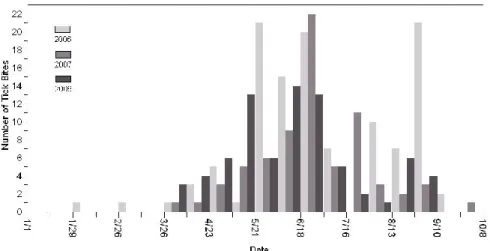
The peak season for tick bites was consistent across all three years, with most tick bites reported between April and August (Figure 5). We chose study periods of March through September for our study to ensure that we will capture the majority of the active tick season, including an extra month at the beginning and end of the peak season in the case of an early or delayed tick season in the study years.
Figure 5. Number of tick bites reported by Locations and Surveys Unit of NCDOT by week, 2006-2008.
26
that are covered by clothing. Using barrier methods such as tucking pants into socks or boots may prevent many ticks from getting inside pant legs, but previous studies of outdoor workers have shown that only a small percentage practice this method on a regular basis [61, 87]. The use of permethrin impregnated clothing is an alternative strategy that can prevent ticks from getting underneath clothing by immobilizing (and then killing) any ticks that come into contact with treated clothing.
27
Figure 6. Mean number of tick bites per employee, 2008. (a) Tick bites reported for each state park for employees of the North Carolina Division of Parks and Recreation. (b) Tick bites reported by county for employees of the North Carolina Division of Forest Resources. Data was unavailable for counties in white.
28
work “tick” in the claim from 2004-2009. Over the six year period there were 147 claims related to tick bites, with a total payout of over $114,000 (Table 2). Of note, in 2008 and 2009 a much lower percentage of claims were paid, which motivated the implementation of the tick bite logs across many of the divisions in DENR. Overall these claims are likely to grossly underestimate the true “cost” of tick bites among outdoor workers in North Carolina, as it is likely that many employees who seek treatment following a tick bite do not file a claim (personal communication, Chuck Stanfill, DENR Safety Director). Further studies are
needed to estimate the medical costs and lost work time due to tick bites and related illnesses.
Year related claims Tick Tick related claims paid payout Total
2004 19 14 $28,841
2005 29 25 $34,643
2006 20 16 $10,824
2007 38 29 $36,786
2008 22 9 $1,699
2009
(thru 9/9/09) 19 8 $1,286
TOTAL
(2004-2009) 147 101 $114,079
Table 2. North Carolina state employee workers compensation tick-related claims 2004-2009.
C. Pilot study: Effectiveness of long-lasting permethrin-impregnated clothing for the prevention of tick bites
29
shirts, pants, socks, hats, and boots. All subjects were instructed to launder their clothing as they normally would and to continue with their normal tick bite prevention measures,
regardless of their treatment status.
Participants completed questionnaires at the start of follow-up (March 2009) and at the end of follow-up (September 2009), and tick bites and outdoor work hours were reported on weekly tick bite logs for the entire follow-up period. During the follow-up period there were 68 tick bites reported by the subjects in the control group (mean=9.7 bites per subject), and 6 tick bites reported by the subjects in the treatment group (mean=0.7 bites per subject) (Figure 7). Crude incidence rates and incidence rate ratios were computed using negative binomial regression. Subjects wearing Insect Shield treated clothing had a 93% reduction (p<0.0001, 2-tailed Chi-square test) in the total incidence of tick bites compared to subjects using standard tick bite prevention measures (Table 3). This pilot study provides preliminary evidence that long-lasting permethrin-impregnated clothing may be highly effective against tick bites.
30 Tick Bite Rate
IRR* (95% CI†) p-value Control
Group
Treatment Group Total
(per 100 outdoor hours) 2.32 0.16
0.07 (0.02,
0.24) <0.0001 Work Related
(per 100 outdoor work hours) 4.68 0.05
0.01 (0.001,
0.11) <0.0001 Non-work Related
(per 100 outdoor non-work hours)
0.73 0.31 0.42 (0.10,
1.79) 0.24
*IRR: Incidence rate ratio †CI: Confidence interval
31 Chapter 4
RESEARCH DESIGN AND METHODS
A. Seroepidemiology of spotted fever group rickettsiae in North Carolina 1. Selection of case patients
Case patients were identified from a database of patients who were tested for RMSF at the North Carolina State Laboratory of Public Health, between 2008 and 2010. This
database included any patients for which sera had been submitted for serologic testing against R. rickettsii, which does not necessarily mean they had symptoms of RMSF, but just that their physician ordered the test. All sera submitted to the NCSLPH serology unit are retained and stored at -20 ºC for up to 3 years, so all patients listed in the database for which sera was available at the time of the study were candidates for inclusion in the study.
Eligibility criteria for inclusion in the study population consisted of:
Having been tested for RMSF by IFA at the NCSLPH between 2008 and 2010
Availability of paired sera (acute and convalescent)
At least one of the sera had a titer ≥ 1:64 against R. rickettsii
Patients were excluded from the study if there was only a single serum specimen available, if there was not sufficient sera remaining for additional testing, or if the sera could not be located.
2. Indirect Immunofluorescence Assay (IFA)
32
at the NCSLPH, as well as myself, after completing training by Gaylen Daves, the senior technician of the special serology unit.
a. Preparation of antigen slides
R. rickettsii, R, typhi, R. parkeri, and R. amblyommii antigens were provided by William Nicholson, Rickettsial Zoonoses Branch, CDC. Frozen lyophilized antigen was
resuspended sterile deionized distilled water. Antigen was spotted onto the wells of glass templated slides using capillary tubes. Each divided well was spotted with either R. typhi and R. rickettsii, or R. parkeri and R. amblyommii, to allow for side by side comparison of fluorescence and staining patterns. Antigens spots were allowed to air dry and then fixed in acetone for 15 minutes at room temperature. Slides were then stored in sealed boxes at -70 ºC until they were ready to be used.
b. Sample preparation and dilution
Frozen slides were placed at room temperature and allowed to warm while serial dilutions were being made. Dilutions were prepared in u-bottom 96-well microplates. The primary dilution of 1:64 was prepared in 3% egg yolk for the R. rickettsii antigen and 1% bovine serum albumin (BSA) in phosphate buffered saline (PBS) for R. parkeri, R.
amblyommii, and R. typhi. Remaining serial two-fold dilutions were made in PBS with 1% BSA for all antigens. Sera were diluted to a final dilution of 1:2048, except for positive control sera, which were diluted to 1:16384. Dilutions were applied to the slides and incubated in a humid chamber at 37 ºC for 30 minutes. Slides were rinsed in PBS, washed in PBS for 10 minutes, and washed in distilled water for 10 minutes, and air dried.
33 c. Reading slides and interpretation of results
Slides were read on a UV epifluorescence microscope, and wells were initially examined at low power (100x) and then high power (400x). After reading the negative control wells, the positive control and test samples were read from highest dilution to lowest dilution. Fluorescence was scored according to brightness and consistency of staining throughout the well on a scale of 4+, 3+, 2+, 1+, +/-, and -, with 4+ being the most intense fluorescence. Endpoint titers were recorded as the reciprocal of the dilution with 1+ fluorescence. If
staining intensity did not increase as expected from higher dilutions to lower dilutions or if non-specific staining of the egg yolk, cytoplasm, or nucleus was observed, then non-specific staining was noted and no endpoint titer could be determined. Staining for negative controls was confirmed by the absence of specific fluorescence (either +/- or -). Digital photos were taken of a small subset of samples to illustrate the fluorescence patterns that were observed for each antigen.
d. Quality control
34
noted, the senior technician reevaluated the slide and either made the final call on the endpoint titer or noted there was nonspecific staining, or suggested that the test be repeated. If a test needed to be repeated, both samples (acute and convalescent) were repeated together. For samples with a high level of debris or filmy appearance, the sera were centrifuged at 10,000 RPM for 5 minutes and/or heat inactivated for 30 minutes at 56 ºC, and the assay was repeated. For samples that did not give a titer against R. rickettsii that was within one dilution of the original titer, the assay was repeated and the titer that was found in the majority of the assays was accepted as the correct titer.
3. Surveillance reports
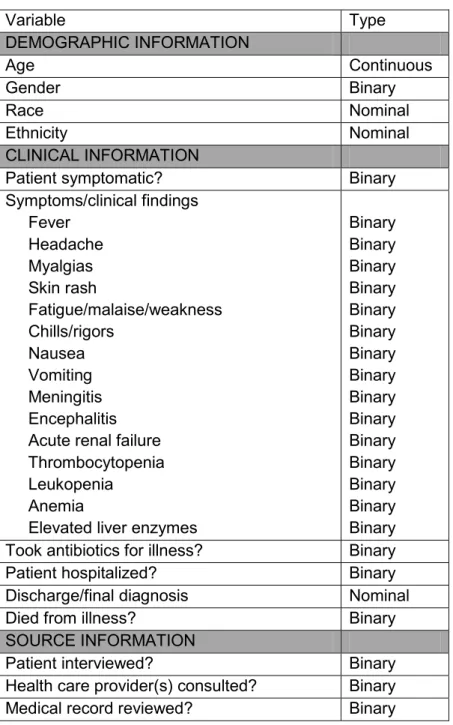
In North Carolina, when a patient tests positive against R. rickettsii antigen it is required that the results are reported to the NC Division of Public Health, and in each case, an effort is made by the state vector-borne nurse consultant to collect relevant clinical data from that patient to determine if that patient meets the case definition for “Spotted Fever Group Rickettsiosis (including Rocky Mountain spotted fever)”. In some cases a public health nurse will interview the patient or health care provider who saw the patient, in some cases the medical record is reviewed, and other cases no information other than the laboratory report is available. Surveillance reports from the NC Division of Public Health (NCDPH) were requested for all patients included in this study. Sample numbers from the NCSLPH were cross-referenced with event numbers in the North Carolina Electronic Disease Surveillance System (NCEDSS) and all available reports were provided in paper format (deidentified). A form was created in Qualtrics and relevant fields were entered into the form for each patient.
a. Variables
35
Variable Type
DEMOGRAPHIC INFORMATION
Age Continuous
Gender Binary
Race Nominal
Ethnicity Nominal
CLINICAL INFORMATION
Patient symptomatic? Binary
Symptoms/clinical findings Fever Headache Myalgias Skin rash Fatigue/malaise/weakness Chills/rigors Nausea Vomiting Meningitis Encephalitis Acute renal failure Thrombocytopenia Leukopenia
Anemia
Elevated liver enzymes
Binary Binary Binary Binary Binary Binary Binary Binary Binary Binary Binary Binary Binary Binary Binary Took antibiotics for illness? Binary
Patient hospitalized? Binary
Discharge/final diagnosis Nominal
Died from illness? Binary
SOURCE INFORMATION
Patient interviewed? Binary
Health care provider(s) consulted? Binary
Medical record reviewed? Binary
Table 4. Variables abstracted from surveillance reports of patients tested for R. rickettsii by IFA at the NCSLPH.
4. Outcome definition: seroconversion
36
increase but also a four-fold decrease in titer, which can occur when the acute sample is drawn later after the onset of illness at the peak of IgG production. For each antigen, the patient was classified as either a seroconversion, stationary titer (lack of four-fold or greater change in titer), or unknown (if one or more of the samples had non-specific fluorescence or was unreadable).
5. Sample size
IFA results from patients in the NCSLPH database that had been tested for RMSF between 2008 and 2010 who had at least two sera tested (n= 311) were reviewed. Of these patients, 126 (40.5%) had at least one sample with a titer of ≥1:64. Eight samples could not be located, so those eight patients were excluded, leaving 118 patients in the study.
Surveillance reports were available for approximately half of the patients. 6. Human subjects
This research was approved by the Institutional Review Board at the University of North Carolina at Chapel Hill. The use of the data was approved by the North Carolina Division of Public Health through a Data Use Agreement with Meagan Vaughn and Steven Meshnick. Since all data are deidentified, informed consent was not necessary as the risk to subjects was minimal.
7. Data analysis
a. Frequency of seroconversions
Standard descriptive statistics were calculated for demographic and clinical variables. Our principal interest was the frequency of seroconversions against each antigen. Patients who had an unknown outcome for any of the antigens were excluded from the analysis. With three antigens, there are seven possible combinations of seroconversion (excluding those patients who had stationary titers against all three antigens). Each patient who
37
degree of cross-reactivity and individual reactivity between the antigens. Positive percent agreement and negative percent agreement were calculated for R. parkeri and R.
amblyommii using seroconversion against R. rickettsii as the referent comparison. Outcome Antigen(s)
1 R. rickettsii
2 R. parkeri
3 R. amblyommii
4 R. rickettsii and R. parkeri 5 R. rickettsii and R. amblyommii 6 R. parkeri and R. amblyommii
7 R. rickettsii, R. parkeri, and R. amblyommii
Table 5. Possible seroconversion outcomes for each patient, excluding patients who had stationary titers against all three antigens.
b. Comparison of clinical profiles
Based on the theory that many patients in North Carolina are being infected with non-pathogenic or less non-pathogenic species of rickettsiae, I hypothesized that patients who seroconverted to R. parkeri and/or R. amblyommii had a less severe illness than those who seroconverted to R. rickettsii. Unfortunately, there was insufficient clinical data to make useful comparisons. Instead, the clinical profiles for the 12 patients with clinical data who seroconverted to at least one antigen are presented in a line listing.
B. Permethrin impregnated uniforms for tick bite prevention among outdoor workers The design for this study is a double-blind randomized controlled trial. The study was conducted for 2 tick seasons (19 months, March, 1, 2011 through Sept, 30, 2012).
38
administered to all participants at the start and end of the study period which collected general information on tick exposure and tick prevention practices.
1. Study population
The study population includes employees of the NC Division of Forest Resources (NCDFR), the NC Division of Parks and Recreation (NCDPR), NC Wildlife Resources Commission (NCWRC), and NC County and Local Parks and Recreation (NCCLPR). The NCDFR has offices in nearly all of the 100 counties in North Carolina, as well as 13 district offices and 3 regional offices. We recruited NCDFR employees who are based in regions 1 and 2, which correspond to the piedmont and coastal regions of the state. Employees from region 3 (the mountain region of the state) were not included in this study due to the low number of tick bites reported from that region. The NCDPR has staff at each of the 34 state parks and the 4 state recreation areas. We recruited employees from state parks that lie within the boundaries of the NCDFR regions 1 and 2, which includes 26 of the 38 state managed parks. The NCWRC has offices throughout the state including approximately 50 employees in the piedmont and coastal areas. Eligibility criteria included being over 18 years of age, spending an average of 10 or more hours of outdoor work per week during tick season, having to wear a uniform while on the job, and completion of written informed consent. Exclusion criteria included pregnancy or a planned pregnancy during the follow-up period (since exposure to an insecticide is involved), non-English speakers, or having a known allergy to insecticides.
39 a. Recruitment and retention
From the personnel database provided by NCDENR, all potential study participants from NCDFR and NCDPR were sent preliminary announcements with information about the study by email. Informational meetings were conducted at local and regional offices and parks throughout the study area between October 2009 and April 2010. Eligible employees were invited to enroll in the study at the informational meetings. Female employees who were interested in participating in the study were screened for pregnancy by self-report, and were offered a free pregnancy test. Upon enrollment into the study, subjects were given a small LED flashlight and 6 pairs of boot socks as a token of appreciation for their participation. Participants who completed the first year of follow-up were given an additional 6 pairs of boot socks as an incentive to complete the final year of follow-up.
2. Study protocols
a. Baseline questionnaire
After completing the informed consent process, study participants were asked to complete either a paper or web-based questionnaire which collected demographic and occupational information, history of tick-bites and tick exposure in the past year, history of tick-borne disease, and use of tick-bite prevention measures (Appendix B).
b. Randomization
Subjects were assigned a study ID number upon enrollment. Block randomization using block sizes of six generated through random numbers by computer was used to ensure the treatment and control groups had approximately equal numbers of participants in each group. The randomization list was released to the study investigators after all tick bite log data collection was completed in November 2012.
c. Collection and processing of uniforms
40
it was impossible to treat the entire set of uniforms for each subject at one time because they need to have a set of uniforms to wear while the other sets were being treated. Thus, the treatment process was conducted in two stages. Subjects were asked to send half of their spring/summer work uniforms, including overshirts, t-shirts, pants, shorts, hats, and socks directly to the Insect Shield facility in Greensboro, NC. Each shipment included a packing list that listed the number and type of garments included. Once the clothing was received at Insect Shield, all items of clothing were labeled with a small heat sealed label with the subject’s ID number to ensure proper processing and return to their owner. After determining the assigned treatment group for that identification number according to the randomization list, the clothing was either treated with permethrin according to Insect Shield’s patented process (treatment), or was simply washed and dried in a commercial washer/dryer (control). Clothing was folded and bagged by ID number, after which it was shipped back to the subject. The same process was repeated (using the existing treatment assignments) for any remaining items sent by the subject. Since many subjects ordered new uniforms during the study period, subjects were provided with shipping materials and instructed to send all new uniforms items to Insect Shield before wearing them. Clothing treated using Insect Shield technology has no odor, texture, or any other characteristic that would allow treated clothing to be distinguished from untreated clothing, thus subjects were blinded to their treatment status.
d. Tick bite logs
41
location of the tick bites on the body, the county where the tick bite(s) were most likely to have been acquired, whether they were on the job when the tick bite(s) were acquired, whether they had been using insect repellent at the time of the bite(s) and the type of repellent, and whether the tick(s) were collected. If there were no tick bites during a week, there was a checkbox to indicate that there were no tick bites. Subjects were also asked to record the number of work related and non-work related hours spent outdoors each week, which provided an estimate of the amount of potential exposure a subject had to tick-infested areas. At the end of each month subjects were asked to submit all tick logs from that month to the study investigators by mail or email. Email reminders were sent to all subjects the day that the tick bite logs were due (the first day of the month). If a subject did not submit their tick bite logs within one week of the reminder email then a second reminder email was sent.
e. Follow-up questionnaires
At the end of the first and second years, all subjects were asked to complete a follow-up questionnaire. These questionnaires were similar to the baseline questionnaire, but asked questions about work habits, tick exposure, and use of tick bite prevention measures during the study period. These questionnaires also asked about frequency of bites from
mosquitoes, chiggers, and midges. 3. Outcome assessment
42
mechanism would encourage subjects to remember to record tick bites. Since they were also asked to collect all attached ticks they removed from their body and mail them to the entomology laboratory at North Carolina State University, we attempted to validate the monthly totals from the tick bite logs by comparing this to the number of ticks found in the collection vial for each month.
4. Covariates
Information on covariates that could have affected the probability of acquiring tick bites during the study period (other than treatment assignment) were collected in the baseline and follow-up questionnaires. Variables that were evaluated as potential covariates are shown in Table 6.
Variable Variable type Data source
Age (at enrollment) Continuous Baseline questionnaire
Gender Dichotomous Baseline questionnaire
Race/ethnicity Nominal Year 1 questionnaire
DENR division Nominal Baseline questionnaire
Occupation Nominal Baseline questionnaire
Years at current position Continuous Baseline questionnaire
Education Nominal Baseline questionnaire
Number of tick bites in year prior to enrollment
Continuous Baseline questionnaire Previous diagnosis with a tick-borne
illness
Nominal Baseline questionnaire Average number of hours spent outdoors
per week on the job
Continuous Baseline questionnaire and tick logs
Average number of hours spent outdoors per week (non-work related)
Continuous Baseline questionnaire and tick logs
Frequency of wearing long pants when working outdoors
Ordinal Year 1 and Year 2 questionnaires Frequency of wearing a long sleeved shirt
when working outdoors
Ordinal Year 1 and Year 2 questionnaires Frequency of wearing a hat when working
outdoors
Ordinal Year 1 and Year 2 questionnaires Frequency of tucking pants into boots or
socks, or taping pants to boots
Ordinal Year 1 and Year 2 questionnaires Frequency of insect repellant use on the
skin while working outdoors
![Figure 1. Average reported annual incidence of Rocky Mountain spotted fever, 2010 [10]](https://thumb-us.123doks.com/thumbv2/123dok_us/8298646.2197758/20.918.135.483.138.422/figure-average-reported-annual-incidence-rocky-mountain-spotted.webp)




![Figure 7. Mean number of tick bites by treatment group, including total, work related, or non-work related tick bites from a pilot study on the effectiveness of Insect Shield treated clothing for the prevention of tick bites [110]](https://thumb-us.123doks.com/thumbv2/123dok_us/8298646.2197758/44.918.147.522.653.890/figure-treatment-including-effectiveness-shield-treated-clothing-prevention.webp)
![Table 3. Estimates of tick bite incidence rates and incidence rate ratios from a pilot study on the effectiveness of Insect Shield treated clothing for the prevention of tick bites [110].](https://thumb-us.123doks.com/thumbv2/123dok_us/8298646.2197758/45.918.128.813.105.363/estimates-incidence-incidence-effectiveness-insect-treated-clothing-prevention.webp)