Address for correspondence Dr. G. V.Seethalakshmi M.D. (DVL) 11, Mullai Nagar, Near Chandra mahal , Seelanaickenpatty ,Salem- 636 201,Tamilnadu, India.
Ph: 98434 66486
Email: [email protected]
Original Article
A comparative study of efficacy & tolerability of 30%
salicylic acid versus 20% salicylic acid + 10%
mandelic acid peel for acne vulgaris
Introduction
Acne vulgaris is one of the common skin diseases affecting at least 85% of the adolescents or young adults.1 It is a chronic inflammatory
disorder of the pilosebaceous unit that is associated with significant psychosocial repercussions.2 Acne vulgaris mostly affects the face resulting in impairment of self image, self esteem, depression, social phobia and anxiety.3 Various modalities of treatment like topical and systemic anti-bacterials, retinoids and sebostatics have been used in the treatment of acne and nowadays, clinicians seek to employ new technologies in acne care like chemical peeling.4
Mohammed Sidiq, Seethalakshmi Ganga Vellaisamy, Kannan Gopalan, Muthusamy Kandasamy
Department of Skin & STD, Vinayaka Mission’s Kirupananda Variyar Medical College & Hospital, Vinayaka Mission’s Research Foundation, Salem, Tamilnadu, India.
Abstract
Introduction Acne vulgaris mostly affects the face resulting in low self esteem, depression and social phobia thereby affecting the quality of life. Chemical peeling is still considered a simple procedure, requiring hardly any instrumentation which is done in day to day practice to treat acne vulgaris.Objective To compare the efficacy of 30 % salicylic acid peel (SA) versus 20% salicyclic acid peel with 10% mandelic acid peel (SMP) in the treatment of acne vulgaris.
Materials and Methods A total of 50 patients were selected and divided into two groups; A (treated with 30% salicylic acid peel) & B (treated with 20% salicyclic acid peel with 10% mandelic acid peel). Data were coded and analyzed.
Results Of the 50 participants, 41 completed all four sessions. Among those 41 patients, 23 belonged to group A and 18 belonged to group B. In group A, 51–75 % improvement was noted in 22 (96%) patients and one (4%) had 26-50% improvement. In group B, 51–75 % improvement was noted in 14 (78%) patients, Three (17%) had 26–50 % improvement, one (6%) patient showed less than 25% improvement.
Conclusion This study infers that reduction in active acne lesions was much more with 30% salicylic acid peel, whereas postacne melanosis reduced much with the combination peel (SMP). We conclude that both salicylic acid (SA) and Salicylic+Mandelic acid Peel are efficient, well tolerated and reasonably safe procedure that can be used as treatment modality in acne vulgaris.
Key words
Chemical peels are used to improve the appearance of the skin and have been used since antiquity. Chemical peeling is the application of chemical agent to skin that causes controlled destruction of part or whole epidermis with or without dermis leading to exfoliation and removal of superficial lesions followed by rejuvenation of new epidermal and dermal tissues.5 In spite of the advent of newer techniques and LASER, peeling is still considered as a simple procedure, requiring hardly any instrumentation to rejuvenate the skin.5 In addition to its epidermal resurfacing properties, it leads to remodeling of collagen and elastin fibers and deposition of glycosaminoglycans, thereby decreasing scars, too. Because of the resurfacing of the epidermis, the melanin content is decreased, and it is more evenly distributed, improving hyperpigmentation.6
Salicylic acid (SA) is a beta-hydroxy acid. Salicylic acid exhibits keratolytic properties as it solubilises intracellular cement. Its lipid solubility permits the interaction with multilamellar structures surrounding the keratinocytes in the stratum corneum and hair follicle, thereby exhibiting follicular atrophy and comedolytic action within the sebaceous unit.7 So, it is effective in comedonal and inflammatory acne.8 Mandelic acid is an 8-carbon alpha hydroxy acid (AHA) named after German “Mandel” meaning almond and derived from hydrolysis of an extract of bitter almonds, it has been studied for its possible use in common skin conditions like photoaging, irregular pigmentation, and acne. It is larger and stronger than glycolic acid molecule. Mandelic acid has a high melting point, partially soluble in water, and is freely soluble in isopropyl and ethyl alcohol.9
Salicylic-Mandelic acid peel (SMP) is a newer combination peel that combines the properties of
a BHA and an AHA. Salicylic acid is lipophilic and thus penetrates active acne lesions quickly.10 Mandelic acid is one of the largest AHAs and penetrates the epidermis more slowly and uniformly, making it an ideal peeling agent for the sensitive skin of patients with severe acne and pigmentation.9 So the combination of these two agents will be effective for the treatment of acne and its sequelae. But there are only few studies using these combination peels for the management of acne vulgaris. So this study is in the direction to throw light on efficacy and tolerability of 30% salicylic acid versus 20% salicylic acid + 10% mandelic acid peel for the management of acne vulgaris.
Objectives
To compare the efficacy of 30 % salicylic versus 20% salicyclic acid peel with 10% mandelic acid peel in the treatment of acne vulgaris.
Materials and Methods
systemic and dermatological examination. They were divided into two groups, 25 each, those with odd numbers of serial entry were grouped as A and those with even number entry were grouped as B.
The severity of acne in all the patients were graded on clinical grounds11 as: Grade 1-Comedones, occasional papules, Grade 2- Papules, comedones, few pustules, Grade 3-Predominant pustules, nodules & abcess and Grade 4-Mainly cysts, abcess and widespread scarring. Group A patients were treated with 30% salicylic acid every 15 days for four sessions. Group B patients were treated with a combination peel of 20% salicylic and 10% mandelic acid peel every 15 days for four sessions. Sensitive areas like the inner canthus of the eyes and nasolabial folds were protected with vaseline. After degreasing with acetone, the corresponding peel was applied on the cosmetic units of the face starting from forehead, right cheek, nose, left cheek and chin in that order. Feathering strokes were applied at the edges to blend with surrounding skin. Both Group A and Group B patients were advised to protect from sunlight by using sunscreen regularly at day time for the next 12 weeks.
Results were assessed based on serial photographs, clinical improvement & physician’s global assessment scale. The following graded scale was used for assessing the improvement: excellent (76- 100%), good (51- 75%), fair (26- 50%) and poor (0- 25%).12 The adverse effects were assessed. The clinical findings and results were recorded in the pre-designed proforma for analysis and interpretation of data. Descriptive statistics was done in the form of mean and SD. Fisher’s exact test was applied to analyze the data. Values were considered significant when P value was less than or equal to 0.05.
Results
A total of 50 patients participated in the study and they were allocated into two groups A and B. Those in group A were subjected to 30% salicylic acid peel every 15 days for four sessions and those in group B were treated with a combination peel of 20% salicylic and 10% mandelic acid peel every 15 days for four sessions of the 50 participants, 41 completed all four sessions. In these 41 patients who completed all four sessions, 23 belonged to group A and 18 belonged to group B. Of the 23 patients in Group A majority (91%) were in the age group of 17- 25 years. The mean age in group A was 20.4 years. In Group B also majority (94%) were in the age group of 17- 25 years and mean age in group B was 20.5 years. In group A, 15 were females (65%) and 8 (35%) were males and the female: male ratio was 1:0.5. In group B, 12 (67%) were females and six (33%) were males and the female: male ratio was 1:0.5. In both the treatment groups, female patients were more than the males. Out of 23 study subjects in Group A, 21(92%) people were in the age group of 17-25 years. In that 14 (61%) were females and 7 (31%) were males. Out of 18 study subjects in Group B, 17 (94%) patients were in the age group of 17-25 years. In that 11 (61%) were females and 6 (33%) were males.
Table 1 Comparison of percentage of improvement in different grades of acne between 30% salicylic acid peel and combination peel of 20% salicylic and 10% mandelic acid peel
Percentage of improvement
30% salicylic acid peel-Group A Acne grading
Combination peel of 20% salicylic and 10% mandelic
acid peel- Group B Acne grading
P value
Grade 1 Grade 2 Grade 1 Grade 2
No change 0 0 0 0 0
0-25% (Poor) 0 0 0 1(6%) 1
26-50% (Fair) 0 1(4%) 0 3(17%) 1
51-75% (Good) 4(17%) 18(78%) 2(11%) 12(67%) 0.569
75-100% (Excellent) 0 0 0 0 0
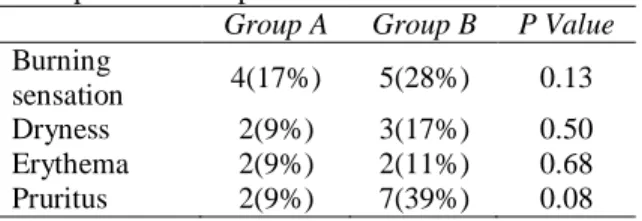
Table 2 Comparison of adverse effects between Group A and Group B
Group A Group B P Value Burning
sensation 4(17%) 5(28%) 0.13
Dryness 2(9%) 3(17%) 0.50
Erythema 2(9%) 2(11%) 0.68
Pruritus 2(9%) 7(39%) 0.08
Many patients also had worsening of acne lesions before menstrual cycles. In our study population, menstrual irregularities were seen in 5 (12%) patients, acanthosis nigricans in 6 (15%) patients, Polycystic Ovarian Disease (PCOD) in 6 (15%) patients and hirsutism in 2 (5%) patients. The duration of acne ranged from one to 24 months in both the groups. Out of 41 patients in our study, 23 (56%) people had acne for more than 12 months, seven (17%) had acne for 1-3 months, seven (17%) had acne for 3-6 months and four (10%) had acne for 7-12 months. Duration of acne in both the groups was comparable. Of the total 41 patients, six (15%) had grade I acne, 35 (85%) had grade II acne vulgaris.
Group A (30% salicylic acid peel): Physician’s global assessment scale was used to assess the decrease in acne lesions at the end of four sessions. Among the 23 patients of group A, 51- 75 % improvement was noted in 22 (96%) patients of which four (17%) had grade I acne and 18 (78%) patients had grade II acne before treatment (Figure 1). One (4%) out of 23 patient
had 26-50% improvement who was having grade II acne before treatment.
Group B (combination peel of 20% salicylic and 10% mandelic acid peel-SMP): Among 18 patients, 51 – 75 % improvement was noted in 14 (78%) patients of which 12 (67%) had grade II acne (Figure 2) and 2 (11%) patients had grade I acne before treatment. Three (17%) out of 18 patients had 26 – 50 % improvement who were having grade II acne before treatment. one (6%) patient out of 18 showed less than 25% improvement who was having grade II acne before treatment.
Comparison between 30% salicylic acid peel and SMP revealed that improvement was more frequent among acne patients treated with salicylic acid peeling compared to those treated with SMP. Fisher’s exact test was done, and the p value was not statistically significant (Table 1). It was observed in this study that there was a little bit more reduction in the acne lesions with 30% salicylic acid peel when compared with SMP whereas post acne melanosis decreased more with SMP as compared with 30% salicylic acid peel.
Adverse Effects:
a) Baseline photograph with Grade II Acne vulgaris
b) 51-75% clearance of lesions after four sessions of 30% salicylic acid peel
Figure 1 Results with 30% salicylic acid peel
a) Baseline photograph of a patient with Grade II Acne vulgaris
b) 51-75% clearance of lesions after four sessions of peel, along with decrease in post acne melanosis Figure 2 Results with combination peel of 20% salicylic and 10% mandelic acid peel 4(17%) patients in group A. Reports of dryness,
erythema and pruritus was seen in both the groups and it was more commonly seen in Group B, however the difference was not statistically significant. Dryness was the chief complaint in two (9%) people in group A and in three (17%) patient in group B, which subsided with moisturizing cream application. Both burning sensation and erythema which lasted for 24 – 36 hours, resolved spontaneously (Table 2).
Discussion
Acne is one of the most prevalent skin disease that presents to dermatologists. Diagnosis of acne is easy, however selection of treatment depends on multiple factors such as grading of acne, duration of disease, previous treatments taken, tendency for scarring and post inflammatory pigmentation. So treatment should be tailored to the individual patient and it must also take into account the impact of acne on patient’s quality of life. Various modalities of treatment options are available but there is a need for an effective additional therapy for accelerating the recovery in the management of acne vulgaris. Both topical and systemic retinoids act as mainstay in the treatment ladder for acne, chemical peeling is also gaining importance in that ladder especially in mild to moderate acne. This prospective study was carried out in 41 patients with mild to moderate acne.
In our study, age group of 17-25 years constituted a maximum (93%) number of acne patients, with a mean age of 20.5 years, which was more or less similar to other studies done elsewhere.6,13,14 It is a known fact that acne is a disease more prevalent in adolescents. However post adolescent or adult acne is also gaining importance.
Of the 41 patients, females (66%) outnumbered males (34%) with a male to female ratio of 1:0.5, which coincide with most of other studies.6,14-16 However Shishira et al13 observed more number of males than females in their study.
In our study, 59 % of patients noticed increase in acne due to diet containing oily food and regular rice intake, summer exacerbation was noted in 34% of patients, 29 % noted premenstrual flare and the incidence of stress induced exacerbation
was 50%. In a study conducted by Salomone et al.17 in Santiago, of 40 patients between 13 and 25 years of age, 70 % noted an increase in acne lesions with stress and 42% noticed an exacerbation with menstrual period, 58% noticed an exacerbation with foods, particularly dairy, mayonnaise and butter in 30%, chocolate in 27% and nuts in 12.5%. High glycemic index foods lead to hyperglycemia, reactive hyperinsulinemia and a resulting increase in insulin like growth-factor 1 (IGF-1) formation, increased androgens and an altered retinoid signalling pathway related to acne.18 A low glycemic index diet decreases IGF-1 levels and improves acne.19 Premenstrual flare was noticed in 12 (29%) female patients in our study. These patients kept developing new lesions and hence further investigations such as a hormonal profile and ultrasound were advised to rule out Polycystic Ovarian Disease (PCOD). About 6 patients (15%) had PCOD in our study. The premenstrual acne flare is well recognized. The pilosebaceous duct becomes smaller between day 15 to 20 of the menstrual cycle and the blockage leads to premenstrual flare of acne. However, the mechanism for this blockage is not known.20 Stoll et al. found an overall 44% prevalence of premenstrual flare21 which is little bit higher as compared to our study. Khanna and Pandhi noticed a mean reduction in the non inflammatory and inflammatory lesion count during the postmenstrual period.22
may result in increased growth of the lipophilic Propionibacteria. The association of these various factors with acne exacerbation noted in our study was in accordance with previous studies.
Patients with mild acne (Grade I) who were treated with 30% salicylic acid showed good improvement in 17% of the patients. On the other hand, 11% of the patients with mild acne who were treated with SMP showed good improvement. Patients with moderate acne (Grade II) who were treated with 30% salicylic acid showed fair improvement in 4% and good improvement in 78% of the patients. On the other hand, 17% of the patients with grade II acne who were treated with SMP showed fair improvement and 67% showed good improvement.
Comparison between 30% salicylic acid peel and SMP revealed that improvement was more frequent among acne patients treated with salicylic acid peeling compared to those treated with SMP. Fisher’s exact test was done, and the p value was not statistically significant. It was observed in this study that there was a little bit more reduction in the acne lesions with 30% salicylic acid peel when compared with SMP but it was not statistically significant. Post acne melanosis decreased more with SMP when compared with 30% salicylic acid peel.
Lee and Kim25 reported that salicylic acid peel was effective in reducing both inflammatory and non-inflammatory acne lesions. The majority of their patients (77.1%) reported moderate or good results. In our study also good response was seen in 78% of the patients who were treated with 30% SA peel. Sadaf Fasih et al.14 reported 90.7% of their patients showed good to fair response at one month follow up visit after six peeling sessions, which is more as compared to our study.
Kessler et al.26 compared 30% glycolic acid with 30% salicylic acid peel in the treatment of mild to moderately severe facial acne vulgaris, where salicylic acid peels demonstrated significant decrease in acne lesions like our study.26
The adverse effects in our study were easily manageable and did not affect the patients’ compliance except for one patient in Group B. Adverse effects were little bit more commonly seen in the patients treated with SMP than SA peel but it was not statistically significant. In our study erythema was noted in 9% of individuals with 30% SA peel which is comparable with Doaa S. Sayed et al.15 (7.5%). These results were similar to Bari et al.27 Dryness was seen in 17% of patients in SMP group which is comparable with Garg et al. (14.28%).6
Conclusion
We conclude that both salicylic acid (SA) and salicylic mandelic acid peel are efficient, well tolerated and reasonably safe procedure that can be used as treatment modality in acne vulgaris.
References
1. Morrone A, Franco G, Valenzano M. Clinical feature of acne vulgaris in 444 patients with ethnic. J Dermatol 2011; 38: 405-8.
2. Zaenglein AL, Graber EM, Thiboutot DM. Acne Vulgaris and Acneiform Eruptions. In: Goldsmith LA, Katz SI, Gilchrest BA, Paller AS, Leffell DJ, Wolff K.eds. Fitzpatrick’s Dermatology in General Medicine.8th ed. New York: McGraw-Hill; 2012.
3. Tan JK. Psychological impact of acne vulgaris: Evaluating the evidence. Skin Ther Lett 2001; 9: 1-3,9.
4. Kim RH, Armstrong AW. Current state of acne treatment: Highlighting lasers, photodynamic therapy, and chemical peels. Dermatol Online J. 2011; 17(3):2.
6. 6.Garg VK, Sinha S, Sarkar R. Glycolic acid peels versus Salicylic-Mandelic acid peels in active acne vulgaris and post-acne scarring and hyperpigmentation. Dermatol Surg 2009; 35: 59-65.
7. Levesque A, Hamzavi I, Seite S, Rougier A and Bissonnette R (2011): Randomized trial comparing a chemical peel containing alipophilic hydroxyl acid derivative of salicylic acid with a salicylic acid peel in subjects with comedonal acne. J Cosmet Dermatol 2011; 10: 174-8.
8. Briden ME: Alpha – hydroxyacid chemical peeling agents: Case studies and rationale for safe and effective use.Cutis 2004; 73: 18-24.
9. Taylor MB. Summary of Mandelic Acid for the Improvement of Skin Conditions. Cosmetic Dermatol 1999: 26-28.
10. Davies M, Marks R. Studies on the effect of salicylic acid on normal skin.Br J Dermatol 1976; 95: 187-92.
11. Tutakne M.A Vaishampayan S.S Acne, Rosacea, and Perioral Dermatitis. In: Valia. R.G, Valia R.A, Siddappa.K, editors. IADVL. 3rd ed. Vol 1. Bhalani; 2008; 27: 836-859.
12. Lloyd J: The use of microdermaabrasion for acne: a pilot study. Dermatol Surg 2011; 27: 329.
13. Shishira. R.Jartarkar, Mallikarjun.M, Bugude. Gangadhar, Manjunatha.P. Mandelic acid chemical peel in Acne vulgaris: A boon or a bane? IOSR Journal of Dental and Medical Sciences (IOSR-JDMS).e-ISSN: 0853, p-ISSN: 2279-0861.Volume 14, Issue 5 Ver. VII (May.2015), PP 32-35.
14. Sadaf Fasih, Asad Bilal Arif. Salicylic Acid Peeling In The Treatment Of Facial Acne Vulgaris. Pak J Physiol 2016; 12(4).
15. Doaa S. Sayed and Amira A. Abdel-Motaleb. Salicylic Acid Versus Lactic Acid Peeling In Mild And Moderate Acne Vulgaris. AAMJ, Vol.10, N.3, Sep, 2012, Suppl-2.
16. Lekakh O, Mahoney AM, Novice K, et al. Treatment of acne vulgaris with salicylic
acid chemical peel and pulsed dye laser: a split face, rater-blinded, randomized controlled Trial. J Lasers Med Sci. 2015; 6(4): 167-170. doi:10.15171/jlms.2015.13. 17. Salomone C, Nicklas C, Navarrete-Dechent
C, Droppelmann K, Perez-Cotapos ML. Comparitive study of dietary habits between acne patients and a healthy cohort. Indian J Dermatol Venerol Leprol [serial online] 2012 [cited 2013 Sep 24]; 78: 99-101. 18. Kaimal S, Thappa DM.Diet in dermatology:
Revisited. Indian J Dermatol Venerol Leprol 2010; 76: 103-15.
19. Spencer EH, Ferdowsian HR, Barnard ND. Diet and acne: A review of the evidence. Int J Dermatol 2009; 48: 339-47.
20. Williams M, Cunliffe WJ. Explanation for premenstrual acne. Lancet 1973; 2: 1055-7. 21. Stoll S, Shalita AR, Webster GF, Kaplan R,
Danesh S, Penstein A. The effect of the menstrual cycle on acne. Jam Acad Dermatol 2001; 45: 957-60.
22. Khanna VN, Pandhi KR. Relationship of acne with menstrual period. Indian J Dermatol Venereol Leprol 1991; 57: 138-40. 23. Al.Ameer AM, Al-Akloby OM. Dermographic features and seasonal variations in patient with acne vulgaris in Saudi Arabia: A hospital-based study. Int J Dermatol 2002; 41: 870-1.
24. Sardana K, Sharma RC, Sarkar R. Seasonal variation in acne vulgaris-myth or reality. J Dermatol 2001; 29: 484-8.
25. Lee HS, Kim IH: Salicylic acid peels for the treatment of acne vulgaris in Asian patients. Dermatol Surg 2003; 29: 1196–9.
26. Kessler E, Flanagan K, Chia C. Comparison of α- and β-hydroxyl acid chemical peels in the treatment of mild to moderately severe facial acne. Dermatol Surg 2008; 34: 45–51. 27. Bari AU, Iqbal Z, Rahman SB. Tolerance