Oral Tolerance Induction in Hemophilia B
Dogs Fed with Transplastomic Lettuce
Roland W. Herzog,
3,5Timothy C. Nichols,
2,5Jin Su,
1,5Bei Zhang,
1Alexandra Sherman,
3Elizabeth P. Merricks,
2Robin Raymer,
2George Q. Perrin,
3Mattias Häger,
4Bo Wiinberg,
4and Henry Daniell
11Department of Biochemistry, School of Dental Medicine, University of Pennsylvania, Philadelphia, PA 19104, USA;2Department of Pathology and Laboratory Medicine, The University of North Carolina, Chapel Hill, Chapel Hill, NC 25716, USA;3Department of Pediatrics, College of Medicine, University of Florida, Gainesville, FL 32610, USA;4Global Research, Novo Nordisk A/S, Måløv 2760, Denmark
Anti-drug antibodies in hemophilia patients substantially complicate treatment. Their elimination through immune tolerance induction (ITI) protocols poses enormous costs, and ITI is often ineffective for factor IX (FIX) inhibitors. More-over, there is no prophylactic ITI protocol to prevent anti-drug antibody (ADA) formation. Using general immune suppres-sion is problematic. To address this urgent unmet medical need, we delivered antigen bioencapsulated in plant cells to he-mophilia B dogs. Commercial-scale production of CTB-FIX fusion expressed in lettuce chloroplasts was done in a hydro-ponic facility. CTB-FIX (1 mg/g) in lyophilized cells was stable with proper folding, disulfide bonds, and pentamer as-sembly after 30-month storage at ambient temperature. Robust suppression of immunoglobulin G (IgG)/inhibitor and IgE for-mation against intravenous FIX was observed in three of four hemophilia B dogs fed with lyophilized lettuce cells expressing CTB-FIX. No side effects were detected after feeding CTB-FIX-lyophilized plant cells for >300 days. Coagulation times were markedly shortened by intravenous FIX in orally tolerized treated dogs, in contrast to control dogs that formed high-titer antibodies to FIX. Commercial-scale production, stability, pro-longed storage of lyophilized cells, and efficacy in tolerance in-duction in a large, non-rodent model of human disease offer a novel concept for oral tolerance and low-cost production and delivery of biopharmaceuticals.
INTRODUCTION
Currently, protein drugs for the treatment of human diseases are typi-cally administered intravenously (i.v.), such as in enzyme-replace-ment therapies (ERTs) for genetic diseases or monoclonal antibody therapies. Anti-drug antibody (ADA) formation is a serious compli-cation that not only renders therapy ineffective but can also cause severe immunotoxicities. Unfortunately, no immune tolerance proto-cols are currently available for patients to prevent ADA formation. General immune suppression can be applied, as for example in treat-ment of Pompe disease, but is not generally acceptable.1,2In the case of the X-linked bleeding disorder hemophilia, immune tolerance in-duction (ITI) protocols are attempted only after neutralizing anti-bodies (termed“inhibitors”) have formed. This strategy puts patients at risk of increased morbidity and mortality until the inhibitors are
eradicated, which can take months to years and is not effective in all patients.3,4Conceptually, oral tolerance offers an elegant solution. Uptake of orally administered protein by the intestinal immune sys-tem can induce a state of immune tolerance, in which responses to this specific antigen are systemically suppressed.5Although proof of principle has been achieved in numerous studies in mice, preclinical studies in large, non-rodent animal models are lacking. Oral tolerance induction has yielded only limited success in clinical trials for autoim-mune diseases.5,6However, multiple recent studies aimed to desensi-tize from food allergens suggest that oral tolerance is applicable to humans.7,8
However, a new emerging system offers potential solutions to afore-mentioned challenges. Protein drugs are expressed at high levels in plant chloroplasts, and lyophilized plant cells can be stored for several years maintaining their folding, assembly, and efficacy, which facilitate low-cost current good manufacturing practices (cGMP) production.9–12 Upon oral delivery, the plant cell wall (based on unique structural composition) protects protein drugs from acids and enzymes in the stomach, which are incapable of breaking down all glycosidic bonds. However, when intact plant cells reach the gut, commensal bacteria release cellulases and lyse plant cells, releasing protein drugs into the gut lumen.13,14When suitable tags are fused to protein drugs, they cross the gut epithe-lium and are delivered into circulation or the immune system.13,15 Therefore, engineered plant cells are exceptionally suitable for oral delivery of protein drugs, preventing protein degradation prior to reaching the small intestine and accomplishing transmucosal deliv-ery to the immune or circulatory system. However, initial studies supporting this concept have been done in small animal models (mice and rats) and are awaiting evaluation in large animal models that could offer valuable information on drug delivery, stability, and potential toxicity.
Received 13 October 2016; accepted 7 November 2016; http://dx.doi.org/10.1016/j.ymthe.2016.11.009. 5These authors contributed equally to this work.
Correspondence:Henry Daniell, Professor and Director of Translational Research, School of Dental Medicine, University of Pennsylvania, 240 South 40th Street, 547 Levy Building, Philadelphia, PA 19104-6030, USA.
The challenges for oral tolerance include protection from degradation prior to reaching the small intestine, efficient translocation across the intestinal epithelium and targeting of the gut immune system, and high cost of production of the protein antigen. Current recombinant production systems use fermentation facilities, which cost $500–$900 million,16,17and require prohibitively expensive purification of host proteins.18 In addition, purified proteins are highly unstable and require cold storage and transportation. In order to address these con-cerns, it is important to develop new strategies for production and oral delivery of protein drugs.
In previous studies, we documented that repeated oral delivery of frozen transplastomic leaf cells expressing CTB (cholera toxin B subunit) fusions of coagulation factor IX (FIX) prevented inhibitor formation and anaphylaxis to i.v. replacement therapy in hemo-philia B mice.19,20Similarly, inhibitor formation against factor VIII (FVIII) was suppressed in hemophilia A mice using an analogous approach.21,22Early studies utilized transplastomic tobacco, which, however, is not suitable for clinical application due to its nicotine con-tents. Therefore, we optimized chloroplast gene transfer and
expres-Figure 1. Characterization of CTB-FIX Protein in Different Batches of Lettuce Lyophilized Leaf Powder Used for Dog Studies
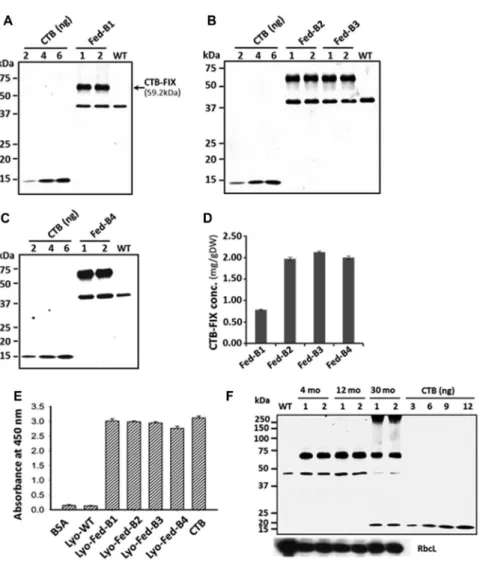
(A–C) Western blot analysis and quantification of CTB-FIX lettuce total leaf protein (TLP) (A) Fed-B1: batch 1, 2.0mg TLP per lane; (B) Fed-B2 and Fed-B3: batches 2 and 3, 1mg TLP per lane; and (C) Fed-B4: batch 4 2.0mg TLP per lane. (D) Concentration of CTB-FIX (mg/g DW) in four batches of leaf powder is shown. Data shown are means±SD of two independent experiments. (E) GM1 binding assay is shown—200mg total soluble protein (TSP) per assay, 20 ng CTB standard, 1% BSA, and 200mg TSP from lyophilized untransformed lettuce were used as negative controls. Data shown are means±SD of triplicates. (F) Western blot analysis of CTB-FIX protein in lyophilized leaves after long-term storage for 4, 12, and 30 months is shown. Equal protein loading is confirmed by re-probing with anti-Ru-bisco large subunit antibody on the same blot (RbcL). Anti-CTB rabbit polyclonal antibody (titer: 1:10,000) was used to detect CTB-FIX protein in all the western blots.
sion in lettuce.12Successful scale up of produc-tion and development of a storable edible plant product allowed us to evaluate the approach in a large animal model of hemophilia of similar size as pediatric patients that are likely candidates for oral tolerance.23,24
RESULTS
Production and Characterization of CTB-FIX Expressed in Lettuce Chloroplasts
observed in all the plant extracts, including untransformed wild-type control (lane“WT”inFigures 1A–1C). Therefore, the40-kDa poly-peptide cross-reacting with CTB antibody is an endogenous protein in lettuce cells and not due to cleavage of CTB-FIX fusion protein. Dry powder weight was adjusted to feed identical doses of CTB-FIX in all batches of dogs. Except for thefirst batch, during which growth conditions were optimized, all other batches showed similar levels of expression.
As pentameric structure of CTB-fusion protein is essential for bind-ing to GM1-ganglioside receptor of the intestinal epithelial cells, GM1-binding-based ELISA assay was used to evaluate stability of folding, disulfide bonds, and pentamer assembly of CTB-FIX in different batches.12,19,22,25 CTB-FIX protein extracts from all four batches of leaf powder showed strong binding affinity to GM1 ( Fig-ure 1E), confirming functional stability of the CTB-FIX pentamers in lyophilized leaves after prolonged storage at ambient temperature
for 30 months (Fed-B1), 14 months (Fed-B2), 12 months (Fed-B3), and 10 months (Fed-B4). For hemophilia B dog studies, the lyophi-lized leaves were used within 5–10 months of storage at ambient temperature, which is well within the effective shelf life of bio-encapsulated CTB-FIX (Table S2). As shown in Figure 1F, intact CTB-FIX monomer without any cleaved product was detected as the predominant band in all tested samples with equal loading amounts, which was confirmed by re-probing blots with antibody for a major chloroplast protein, Rubisco.
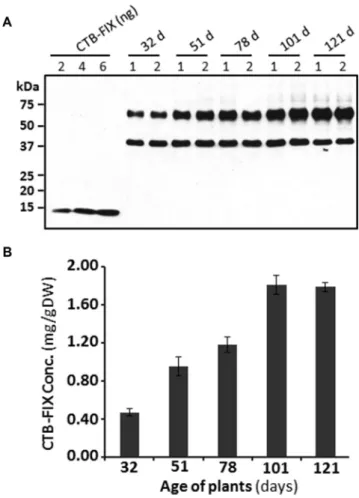
To facilitate translational studies of hemophilia B, we also used the Fraunhofer cGMP hydroponic system to generate clinical-grade CTB-FIX lettuce biomass. In order tofind an optimal growth condi-tion in this hydroponic system, a time course study was performed via harvesting different batches of leaves from the same population of plants at different plant age. The collected fresh leaves were lyophi-lized and ground into dry powder. We observed that the CTB-FIX expression levels increased as plants grew older. The CTB-FIX con-centrations (mg/g DW) infive tested plant ages (days) were 0.47± 0.04 (32 days), 0.95±0.10 (51 days), 1.18±0.08 (78 days), 1.81± 0.10 (101 days), and 1.79±0.05 (121 days), which were equivalent to 0.15% (±0.01%), 0.32% (±0.03%), 0.37% (±0.03%), 0.48% (±0.03%), and 0.57% (±0.01%) of total leaf proteins, respectively (Figure 2B). These results showed that high-level expression of CTB-FIX was obtained between 101 days and 121 days of plant growth, suggesting that the CTB-FIX lettuce leaves should be har-vested at later stages of plant growth in the hydroponic system, balancing this with biomass yield. The fresh weight (g) of the leaves harvested from 500 plants at five different ages were 1,304 (32 days), 1,068 (51 days), 1,368 (78 days), 926 (101 days), and 656 (121 days), respectively. Irrespective of the harvest time, CTB-FIX was highly stable during storage and no cleaved product was detected (Figure 2A). It should be pointed out that the CTB-FIX fusion lacks the pre-pro-peptide of FIX and thus is not subject tog-carboxylation, resulting in a complete lack of coagulation activity.
Antibody Formation against Human FIX in Hemophilia B Dogs upon Repeated i.v. Delivery
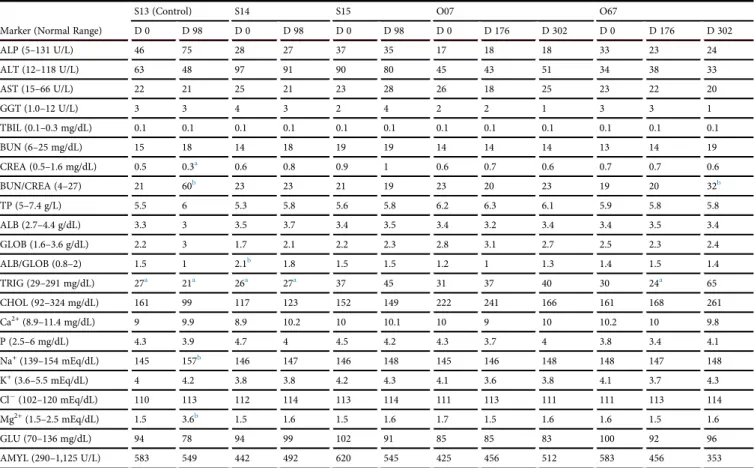
Outbred hemophilia B dogs (20–24 kg) of the UNC-Chapel Hill strain were used. These dogs have aF9 missense mutation, undetectable circulating FIX antigen and activity, and phenotypically severe hemo-philia B.26,27This strain of dog was chosen because it has a track re-cord of high degree of predictive accuracy for translational studies.23 First, a pilot study was performed to document safety of CTB-FIX in dogs and to try to identify a suitable protocol for i.v. FIX challenges for a follow-on study (Table S1). Bioencapsulated CTB-FIX was fed to two female hemophilia B dogs (O07 and O67) 2per week for 10 months in a dose that ranged from 0.05 to 0.1 mg/kg. CTB-FIX-ex-pressing lyophilized plant cells were mixed with canned dog food, and the dogs usually completely consumed the mixture in <5 min. The dogs were fed dry dog food on the other days. No adverse events were detected clinically, nor were there any significant changes in serum liver enzymes, serum creatinine, or total protein and albumin (Table 1).
Figure 2. cGMP Hydroponic Production of CTB-FIX
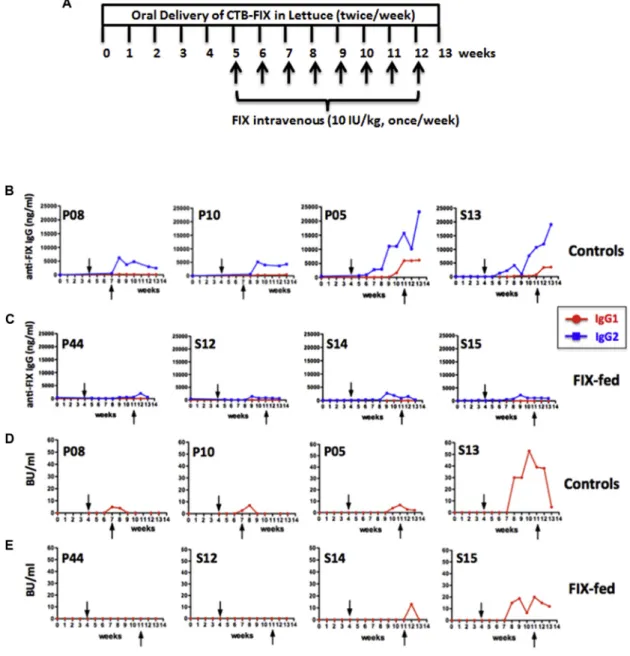
Two other female hemophilia B dogs (P08 and P10) received weekly i.v. injections of recombinant human FIX (10 IU/kg) for 4 weeks ( Fig-ure 3A). As a result, both animals formed human FIX-specific immu-noglobulin G2 (IgG2) (the equivalent to murine IgG1 and human IgG4) at 5 mg/mL (Figure 3B). Inhibitory antibodies were also detected at 5–7 BU/mL at week 5, which however declined to undetect-able within 1 week (Figure 3D). Therefore, we chose an extended treat-ment of eight weekly i.v. injections of FIX for subsequent experitreat-ments. Furthermore, to“standardize”the comparison of the humoral im-mune response to FIX in fed versus control dogs, we sought to estab-lish a challenge protocol that consistently raised IgG2 anti-FIX levels to >10 mg/mL. Two male dogs (P05 and S13) again formed IgG2 against FIX at 5 mg/mL after four injections (Figure 3B; hence, IgG2 anti-FIX formation is highly reproducible at a predictable titer and is independent of gender or age, which ranged from 15 months to 5 years). By eight injections in these two animals, IgG2 titers rose to 19–23mg/mL. Furthermore, both dogs (P05 and S13) additionally formed IgG1 at later time points (Figure 3B). One dog (S13) developed an inhibitory antibody by 1 week after the fourth i.v. injection, which peaked at 53 BU/mL and lasted for 6 weeks (Figure 3D). The other dog (P05) formed an inhibitor after the sixth injection, which peaked at 7
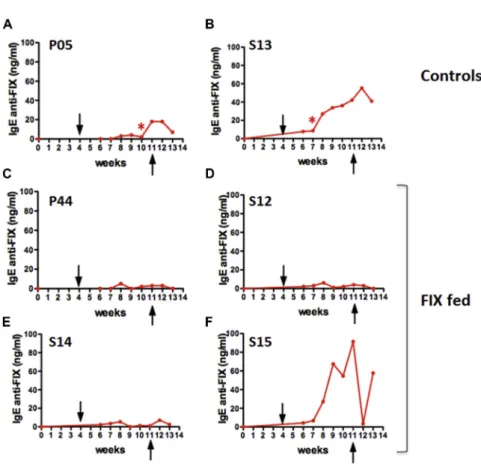
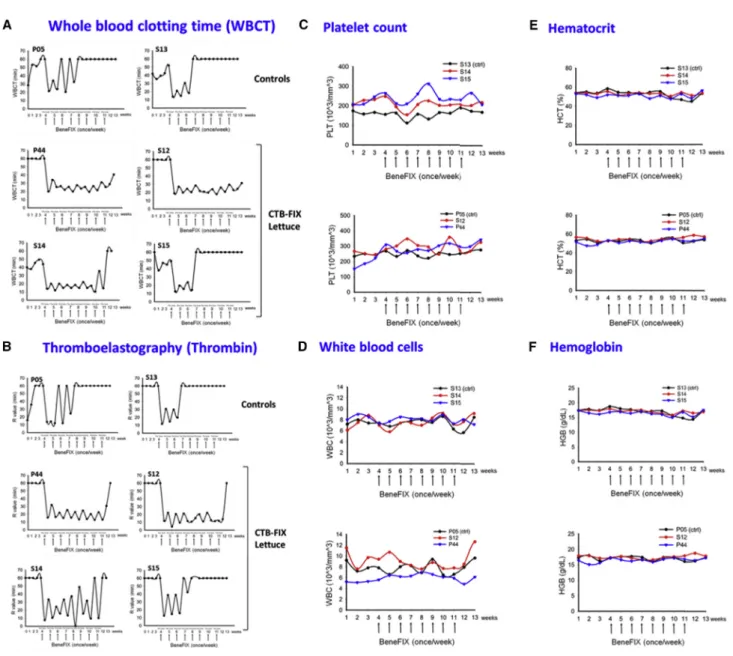
BU/mL and lasted for 4 weeks (Figure 3D). In addition, both dogs had visible anaphylactic reactions (including a transient drop in blood pressure and general unresponsiveness) at the fourth or seventh i.v. in-jection and developed circulating IgE against FIX (Figures 4A and 4B). To counter these anaphylactic reactions, antihistamine was given. Antihistamine was administered with all subsequent FIX injections to these control dogs out of precaution (orally tolerized dogs also received antihistamine with these late FIX injections in order to keep the treatment protocols identical). WBCT and thromboelastog-raphy showed complete correction of coagulation after each of thefirst three injections and partial correction upon the fourth injection ( Fig-ures 5A and 5B), correlating with the onset of anti-FIX formation. Coagulation times entirely failed to correct upon injections 5–8. Allergic reactions were also reflected in hematological parameters, characterized by a transient (<1 hr) drop in platelet and white blood cell (WBC) counts (Figures 5C and 5D).
Prevention of Antibody Formation by Oral Delivery of CTB-FIX in Lettuce
In contrast to the observation in the control dogs, three dogs (P44, S12, and S14) that received oral doses of lyophilized lettuce (mixed
Table 1. Serum Chemistry in CTB-FIX-Fed Dogs
Marker (Normal Range)
S13 (Control) S14 S15 O07 O67
D 0 D 98 D 0 D 98 D 0 D 98 D 0 D 176 D 302 D 0 D 176 D 302
ALP (5–131 U/L) 46 75 28 27 37 35 17 18 18 33 23 24
ALT (12–118 U/L) 63 48 97 91 90 80 45 43 51 34 38 33
AST (15–66 U/L) 22 21 25 21 23 28 26 18 25 23 22 20
GGT (1.0–12 U/L) 3 3 4 3 2 4 2 2 1 3 3 1
TBIL (0.1–0.3 mg/dL) 0.1 0.1 0.1 0.1 0.1 0.1 0.1 0.1 0.1 0.1 0.1 0.1
BUN (6–25 mg/dL) 15 18 14 18 19 19 14 14 14 13 14 19
CREA (0.5–1.6 mg/dL) 0.5 0.3a 0.6 0.8 0.9 1 0.6 0.7 0.6 0.7 0.7 0.6
BUN/CREA (4–27) 21 60b 23 23 21 19 23 20 23 19 20 32b
TP (5–7.4 g/L) 5.5 6 5.3 5.8 5.6 5.8 6.2 6.3 6.1 5.9 5.8 5.8
ALB (2.7–4.4 g/dL) 3.3 3 3.5 3.7 3.4 3.5 3.4 3.2 3.4 3.4 3.5 3.4
GLOB (1.6–3.6 g/dL) 2.2 3 1.7 2.1 2.2 2.3 2.8 3.1 2.7 2.5 2.3 2.4
ALB/GLOB (0.8–2) 1.5 1 2.1b 1.8 1.5 1.5 1.2 1 1.3 1.4 1.5 1.4
TRIG (29–291 mg/dL) 27a 21a 26a 27a 37 45 31 37 40 30 24a 65
CHOL (92–324 mg/dL) 161 99 117 123 152 149 222 241 166 161 168 261
Ca2+(8.9–11.4 mg/dL) 9 9.9 8.9 10.2 10 10.1 10 9 10 10.2 10 9.8
P (2.5–6 mg/dL) 4.3 3.9 4.7 4 4.5 4.2 4.3 3.7 4 3.8 3.4 4.1
Na+(139–154 mEq/dL) 145 157b 146 147 146 148 145 146 148 148 147 148
K+(3.6–5.5 mEq/dL) 4 4.2 3.8 3.8 4.2 4.3 4.1 3.6 3.8 4.1 3.7 4.3
Cl (102–120 mEq/dL) 110 113 112 114 113 114 111 113 111 111 113 114
Mg2+(1.5–2.5 mEq/dL) 1.5 3.6b 1.5 1.6 1.5 1.6 1.7 1.5 1.6 1.6 1.5 1.6
GLU (70–136 mg/dL) 94 78 94 99 102 91 85 85 83 100 92 96
AMYL (290–1,125 U/L) 583 549 442 492 620 545 425 456 512 583 456 353
TBIL, total bilirubin; TP, total protein; ALB, albumin; GLOB, globulin; TRIG, triglycerides; CHOL, cholecterol; GLU, glucose; AMYL, amylase. aValue lower than the normal range.
into their chow twice per week for 13 weeks to deliver 0.3 mg CTB-FIX/kg) showed robust suppression of IgG2 formation and entirely failed to form IgG1 or IgE (Figures 3C and 4C–4E). No anaphy-lactic reactions were observed. In these animals, eight weekly i.v. injections of FIX were given during weeks 4–11 of the oral toler-ance regimen (Figure 3A). Importantly, because of a lack of anti-FIX formation, coagulation times were corrected upon all eight i.v. injections of FIX (Figures 5A and 5B). These orally tolerized dogs had no detectable inhibitor throughout the experiment (P44
and S12) or showed a BU titer only at a single time point (S14;
Fig-ure 3E). A fourth dog (S15) fed with CTB-FIX responded only
partially to the oral tolerance protocol. Whereas IgG2 formation was still substantially suppressed and no IgG1 was detected, an in-hibitor still formed (Figures 3C and 3E) and coagulation times only transiently corrected (Figures 5A and 5B). In addition, the dog formed IgE and showed a transient decrease in platelet counts and WBC after the sixth i.v. injection (Figures 5C and 5D). In contrast to the other three orally treated dogs (P44, S12, and
Figure 3. Antibody Formation against Human FIX as a Function of Time
S14), this animal (S15) had a pre-existing antibody to human FIX (Figure S1) of unknown origin (the animal had no prior exposure to human FIX). However, even when this animal is factored in, average IgG2 titers 1 week after the last FIX i.v. injection were 32 times lower in the four orally treated compared to the control dogs that also received eight i.v. injections. When comparing the four experimental with all four control dogs, IgG2 peak titers were significantly lower for orally tolerized dogs (p < 0.05), even though two of the control dogs received only four i.v. injections (Figures 3B and 3C).
Lack of Toxicity following Oral Delivery of Bioencapsulated FIX
Consistent with our prior observations in hemophilic mice, none of the dogs that were fed with bioencapsulated CTB-FIX (0.3 mg/kg twice weekly for 3 months) formed antibodies against FIX prior to challenge with i.v. FIX, and no allergic reactions against the fed lettuce material were noted, indicating that oral delivery is not immunogenic. All dogs maintained good general health and normal eating habits and had no loss in weight (data not shown). During the entire feeding period, values of different liver enzymes, including alkaline phosphatase (ALP), alanine aminotransferase (ALT), aspartate aminotransferase (AST), and gamma-glutamyl transferase (GGT), remained in the normal range, indicating lack of liver toxicity after repeated administration of CTB-FIX lettuce for 302 days (10 months; Table 1). Long-term (302 days) feeding of CTB-FIX lettuce did not impair the
Figure 4. Specific IgE Formation against Human FIX as a Function of Time in Dogs that Received Eight Weekly i.v. Challenges with Recombinant FIX (A and B) Control dogs. (C–F) Dogs orally fed with CTB-FIX lettuce twice per week for 13 weeks (CTB-FIX fed) are shown. Asterisk indicates visible anaphylactic reaction to FIX i.v. delivery. Arrows indicate the first and the last intravenous challenge of recombinant FIX (Benefix; 10 IU/kg; once/week).
renal function as creatinine (CREA) and blood urea nitrogen (BUN) were maintained at normal levels. More intriguingly, consump-tion of extra carbohydrates derived from plant cells did not affect blood glucose levels in dogs fed with CTB-FIX lettuce. Hemato-logical parameters also remained normal in CTB-FIX-fed dogs (Figures 5C–5F), except for the animal that was not fully orally toler-ized and thus developed allergic reactions to i.v.-infused FIX. Finally, none of the CTB-FIX-fed dogs developed circulating antibodies against CTB (data not shown).
DISCUSSION
Our study demonstrates successful induction of oral tolerance, preventing pathogenic antibody formation in protein-replacement therapy in a large, non-rodent an-imal model of human disease. These results establish that both the concept of oral tolerance for therapeutic protein antigens and the approach of oral delivery of plant cells containing chloroplast-made proteins are not limited to mice. More specifically, the data support clinical development of oral administration of transplas-tomic lettuce as a means of prevention of antibody formation and anaphylaxis in patients with hemophilia.
Clinical Challenges for Tolerance Induction in Hemophilia
a favorable risk/benefit ratio, in part also because prediction of in-hibitor formation for a specific patient is not yet very accurate. Use of immune-suppressive drugs or genetic manipulations is therefore viewed with caution. However, an oral tolerance based on delivery of the antigen in an edible crop plant would be attractive. Multiple clinical trials on oral tolerance induction in patients with autoim-mune disease have largely failed to show efficacy despite excellent preclinical data in mice.6Autoimmune diseases are complex, often involving multiple antigens and immune dysregulation. However, other factors likely also contributed, such as insufficient protection
of the antigen from degradation and ineffective targeting to the gut immune system.29
Assessing the Potential of Plant-Based Oral Tolerance for Hemophilia in Different Species
Our new data on oral delivery of lettuce cells demonstrate effective-ness in a non-rodent model of genetic disease. Success in two very diverse species (mice and dogs) suggests that our approach is broadly applicable. Ultimately, we envision that pediatric patients with elevated risk for inhibitor formation to FIX (such as those withF9
Figure 5. Coagulation Times and Hematological Evaluations after Intravenous Recombinant Human FIX Injection into Control and CTB-FIX-Fed Hemophilia B Dogs
gene deletion) will be considered for a prophylactic oral immune tolerance protocol. In mice, CTB-FIX made in lettuce was effective over a broad dose range of 0.06–0.6 mg/kg.12Because delivery to the dogs was less controlled (compared to oral gavages in mice), and because their diet is less plant based, we chose a dose (0.3 mg/kg) closer to the highest tested dose in mice. Our prior studies in mice indicate that tolerance is sustained for some time after oral delivery is stopped, which remains to be studied in the canine model.12,19It would also be of interest to know whether the oral toler-ance induction regimen and subsequent i.v. injections of FIX could be done sequentially rather than overlapping. Thus far, our protocol always included a period when antigen was administered both orally (in form of bioencapsulated CTB fusion) and i.v. (in form of tradi-tional recombinant factor). Mechanistic studies in mice showed that this combination of oral and systemic administration of antigen amplified immune regulatory responses and thus enhanced the toler-ance response.20
Whereas hemophilia B mice and dogs showed similarities in their responses to i.v. delivery of FIX, there were also differences. In mice, inhibitors persisted after injections were stopped,19,20whereas in the dogs, inhibitor titers declined rapidly afterward. However, IgG2 formation against FIX in dogs persisted for several weeks with minimal decline and was highly reproducible, both with regard to timing and titers. Also highly reproducible was the resulting lack of correction of coagulation by the fourth tofifth injection. Inhibitor for-mation was much more variable and did not correlate well with IgG2 titers. Interestingly, there was good correlation between the onset of the inhibitor formation and of anaphylaxis or IgE formation. In he-mophilia B mice, inhibitor formation was more suppressed than IgG formation. Non-neutralizing antibodies persisted at considerable titers, although these did not enhance clearance of FIX or interfere with correction of coagulation.12In contrast, we observed robust sup-pression of binding antibodies in the canine model. Further studies are needed to characterize the severe allergic reactions to FIX in dogs and determine how they are similar or may differ from those seen in inhibitor patients or in the murine model. For example, the changes in hematological parameters are less typical in FIX inhibitor patients. Both the dogs and mice form IgE, which is why we refer to these as anaphylactic (as opposed to IgG-dependent“anaphylactoid” reactions). Antihistamine was useful to counter the reactions, whereas mice required antihistamine combined with anti-platelet activating factor.19,30,31 Abrupt reductions in blood pressure immediately following the i.v. administration of human FIX were consistent with cardiovascular complications in the dogs and similar to human anaphylactic reactions.
Oral tolerance was successful in three hemophilia B dogs. A fourth dog showed only a partial response. Whereas there could be natural variability in an outbred population, we noticed that this dog (in contrast to the other three) had a relatively low-titer antibody that re-acted to human FIX by ELISA prior to the onset of the study that may have confounded the results. Because this dog (S15) had not been exposed to this antigen before, the natural history of the antibody is
unknown. S15 only had two prior exposures during bleeding events to normal canine plasma that contains 5 mg/mL of canine FIX (spaced several months apart), making it unlikely, but not impossible, that there was a cross-reacting antibody against canine FIX. However, S12, S13, and S14 had higher exposure to normal canine plasma for bleeding events and had no pre-existing antibody that bound human FIX. Within this litter, S12 had the best response to oral tolerance in-duction but also had the highest prior exposure to normal canine plasma. One could therefore speculate that repeated treatment with normal canine plasma actually reduced the response to FIX, even when given in the context of a bleeding event. However, control dog P05 had similar high and frequent exposure to normal canine plasma for bleeding events and still formed a strong immune response. Therefore, we conclude that modifying effects, derived from genetic factors or exposure to normal canine plasma, have min-imal impact. As discussed above, all control dogs, regardless of litter, age, or gender, formed very similar levels of IgG2 against human FIX, which was substantially suppressed in orally tolerized animals.
Interestingly, oral delivery of bioencapsulated CTB-FIX reversed pre-existing inhibitors from >10 BU/mL to 1 or 2 BU/mL and prevented anaphylactic reactions in hemophilia B mice (correlating with a reversal of IgE formation) as long as oral delivery was continued when i.v. replacement therapy resumed.20Therefore, the approach has the potential to reverse the pathogenic antibody response to FIX. Future studies can address this question in the canine model, including a potential requirement to adjust antigen doses or frequency and duration of oral delivery when switching from a preventive application to reversal. In other studies, we induced oral tolerance to B-domain-deleted (BDD) FVIII.22 Whereas detailed dose responses to oral CTB-FVIII are still forthcoming, initial data suggest that the required antigen doses will likely be similar to those for CTB-FIX.22Ongoing work will determine whether a single BDD-FVIII antigen can be produced at adequate levels or whether a mixture of two transgenic lettuce plants (each expressing a portion of FVIII as published) will be superior.22 Importantly, recent ad-vances in chloroplast genomics and codon-optimization technology results in substantially increased transgenic protein expression.13,18 In general, FVIII is considered more immunogenic than FIX. Future translation work will show the extent to which the current oral toler-ance approach reduces the risk and magnitude of inhibitor formation in hemophilia A or whether adjunct therapeutic approaches may be needed.
immune system of the gut has evolved a complex regulatory network to maintain tolerance to dietary antigens while still providing mucosal tolerance against pathogens.34Recent studies have shown that regu-latory T cells (T-reg) are a key component of this mechanism, of which our approach takes advantage.20,35Upon CTB-mediated bind-ing to the GM1 receptor on the epithelium of the small intestine and translocation from the gut lumen, the FIX antigen is released via pro-teolytic cleavage and delivered to dendritic cells (DCs), including CD103+DCs that are critical for transport of antigen to the
mesen-teric lymph nodes and T-reg cell induction. Antigen presentation to MHC-II-restricted CD4+T cells results in induction of several subsets of T-reg cells. CD4+CD25+FoxP3+ T-reg cells and interleukin-10 (IL)-10-expressing LAP+CD4+CD25 FoxP3 T-reg cells systemi-cally enforce suppression of antibody formation, which we found to be antigen specific.20,36Immunological reagents in the canine model are limited (for example, an antibody to canine LAP is lacking). Nonetheless, we measured frequencies of FoxP3+T-reg cells in pe-ripheral blood of those dogs that received eight i.v. FIX challenges. Antigen-specific FoxP3+ T-reg cells suppress at low numbers so
that total FoxP3+T-reg cell frequencies may not significantly change.
However, it is intriguing that, in one of the orally tolerized dogs (S12), their frequency doubled over time during oral CTB-FIX delivery, whereas it declined in one of the control dogs (P05;Figure S2).
Distinct Advantages of Producing Antigens in Chloroplasts
In this novel protein drug production and delivery concept using transplastomic plants, genes encoding human blood proteins are stably integrated into the chloroplast genome of edible plants. When all copies of plastid genomes in each cell are modified, protein drugs can be expressed at high levels.37,38Lyophilized plant cells can be stored for several months or years at room temperature without protein drugs losing their efficacy.12,39,40Low-cost, commercial-scale production in a cGMP facility has also been recently achieved, facil-itating further clinical development.12Plant cells offer natural bio-encapsulation through their cell wall. Thus, the expressed protein is protected from stomach acids and digestive juices but is released in the small intestine, following degradation by enzymes produced by commensal bacteria. Although these basic concepts have been demonstrated in mice or rats, this is thefirst demonstration of feasi-bility of this concept in a non-rodent animal model, thereby advancing this concept further toward human clinical studies. The combination of bioencapsulation and efficient targeting reduces required antigen doses and are unique features of this low-cost drug delivery concept. This study shows that these features are similar in dogs and most likely in the human system.
However, there are always lingering questions on long-term, repeti-tive delivery of CTB fusion proteins. None of the dogs that were fed with bioencapsulated CTB-FIX for 98 days or 176 days formed anti-bodies against FIX prior to challenge with i.v. FIX, and no allergic re-actions against the fed lettuce material were noted, indicating that oral antigen delivery is not immunogenic. Good health and lack of liver or kidney toxicity after prolonged (>300 days) and repetitive feeding was observed. More importantly, consumption of additional
carbohy-drates derived from plant cells did not affect blood glucose levels in dogs fed with CTB-FIX lettuce. These studies provide solid founda-tion for advancing this approach toward human clinical studies.
Ability to store CTB-FIX for more than 30 months at ambient tem-perature is a major breakthrough that addresses the relatively short shelf life of many current protein drugs. This study further establishes conditions to deliver effective doses of CTB-FIX to a large animal model of hemophilia of similar size as pediatric patients that are likely candidates for oral tolerance. Our ability to produce cGMP-grade ma-terial in a US Food and Drug Administration (FDA)-approved facility and recent approval of plant cells for production of protein drugs similar to other cell culture systems argue well for further clinical advancement of this technology.12,41
MATERIALS AND METHODS
Generation and Characterization of Lettuce-Cell-Derived CTB-FIX Antigen
Transformation of lettuce (Lactuca sativa) cv. Simpson Elite chloro-plasts, analysis ofCTB-FIXtransgene integration, and homoplasmic transplastomic lines were performed as previously reported.12 To generate a large scale of lettuce biomass with high concentration of antigen, hundreds of CTB-FIX lettuce seeds were germinated on MS medium for 3 weeks in the growth room. The 3-week-old seed-lings were then transferred to the greenhouse and were grown up to 4 months. Lettuce leaves were harvested every3 weeks starting from 2.5-month-old plants. Fresh lettuce leaves were stored at 80C for several weeks or months. Frozen leaves were then sub-jected to lyophilization as previously described.12The freeze-dried leaves were ground intofine powder with coffee grinders at maximum speed for three times (5 s pulse/90 s off, each time). The dry leaf pow-der was packed in 500 mL moisture-free plastic bottles for shipping or storage at room temperature. Production of CTB-FIX lettuce leaves in Fraunhofer hydroponic system was carried out as described by Su et al.12Western blot analysis, GM1-ganglioside ELISA assay, and pro-tein stability detection of the CTB-FIX fusion propro-teins in lyophilized leaf samples were performed by following the protocols in previous publications.12,19
Animals and Treatment Schedule
15 months old) and P05 (male; 5 years old) were injected weekly at 10 IU/kg for 8 weeks. Finally, two additional dogs (O07 and O67; female; 3 years old) received oral CTB-FIX antigen at 0.03– 0.12 mg/kg twice per week for6 months.
Coagulation, Antibody, and Blood Chemistry Measurements
Coagulation times (whole blood clotting time [WBCT] and throm-boelastography [TEG]) as well as inhibitory antibody/Bethesda titers against human FIX were performed as published.42 Measure-ment of FIX-specific IgG1 and IgG2 titers in sera or plasma by ELISA were also as published.25An analogous ELISA to measure FIX-specific IgE in sera was established using reagents from Bethyl Laboratories. Briefly, wells were coated with serially diluted canine immunoglobulin containing known amounts of IgE to establish a standard curve. Other wells were coated with human FIX and then incubated with serum samples diluted 1:3. Horseradish perox-idase (HRP)-conjugated goat anti-dog IgE was used for detection. Complete blood counts were performed on a SCIL VetABC cali-brated for canine cells, and serum chemistries were performed by Antech Diagnostics.
SUPPLEMENTAL INFORMATION
Supplemental Information includes twofigures and two tables and can be found with this article online athttp://dx.doi.org/10.1016/j. ymthe.2016.11.009.
AUTHOR CONTRIBUTIONS
J.S., T.C.N., A.S., E.P.M., R.R., and B.Z. performed experiments. J.S., T.C.N., R.W.H., A.S., M.H., B.W., and H.D. analyzed the data. T.C.N., R.W.H., B.W., and H.D. wrote the manuscript. T.C.N., R.W.H., B.W., and H.D. designed and coordinated this project.
CONFLICTS OF INTEREST
M.H. and B.W. are employees of Novo Nordisk. R.W.H. and H.D. received a grant from Novo Nordisk. H.D. has several patents granted in the US or globally on biopharmaceuticals made in plant chloro-plasts. H.D. and R.W.H. havefiled patent applications on induction of oral tolerance induction in hemophilia.
ACKNOWLEDGMENTS
This work was supported by NIH grants R01 HL107904, R01 HL109442, and HL63098 and grants by Novo Nordisk to H.D., R.W.H., and T.C.N. The authors thank Dr. Xiaomei Wang for assis-tance with IgE ELISA. The authors thank Drs. Steven Streatfield and Joey Norikane for help in production of CTB-FIX lettuce at the Fruauhofer USA hydroponic facility.
REFERENCES
1.Doerfler, P.A., Nayak, S., Corti, M., Morel, L., Herzog, R.W., and Byrne, B.J. (2016). Targeted approaches to induce immune tolerance for Pompe disease therapy. Mol. Ther. Methods Clin. Dev.3, 15053.
2.Su, J., Sherman, A., Doerfler, P.A., Byrne, B.J., Herzog, R.W., and Daniell, H. (2015). Oral delivery of Acid Alpha Glucosidase epitopes expressed in plant chloroplasts sup-presses antibody formation in treatment of Pompe mice. Plant Biotechnol. J.13, 1023–1032.
3.DiMichele, D.M. (2012). Immune tolerance in haemophilia: the long journey to the fork in the road. Br. J. Haematol.159, 123–134.
4.Leissinger, C.A. (2016). Advances in the clinical management of inhibitors in hemo-philia A and B. Semin. Hematol.53, 20–27.
5.Wang, X., Sherman, A., Liao, G., Leong, K.W., Daniell, H., Terhorst, C., and Herzog, R.W. (2013). Mechanism of oral tolerance induction to therapeutic proteins. Adv. Drug Deliv. Rev.65, 759–773.
6.Weiner, H.L., da Cunha, A.P., Quintana, F., and Wu, H. (2011). Oral tolerance. Immunol. Rev.241, 241–259.
7.Burbank, A.J., Sood, P., Vickery, B.P., and Wood, R.A. (2016). Oral immunotherapy for food allergy. Immunol. Allergy Clin. North Am.36, 55–69.
8.Vickery, B.P., Scurlock, A.M., Kulis, M., Steele, P.H., Kamilaris, J., Berglund, J.P., Burk, C., Hiegel, A., Carlisle, S., Christie, L., et al. (2014). Sustained unresponsiveness to peanut in subjects who have completed peanut oral immunotherapy. J. Allergy Clin. Immunol.133, 468–475.
9.Daniell, H., Chan, H.-T., and Pasoreck, E.K. (2016). Vaccination via chloroplast ge-netics: affordable protein drugs for the prevention and treatment of inherited or in-fectious human diseases. Annu. Rev. Genet.50, 595–618.
10.Daniell, H., Lin, C.S., Yu, M., and Chang, W.J. (2016). Chloroplast genomes: diversity, evolution, and applications in genetic engineering. Genome Biol.17, 134. 11.Jin, S., and Daniell, H. (2015). The engineered chloroplast genome just got smarter.
Trends Plant Sci.20, 622–640.
12.Su, J., Zhu, L., Sherman, A., Wang, X., Lin, S., Kamesh, A., Norikane, J.H., Streatfield, S.J., Herzog, R.W., and Daniell, H. (2015). Low cost industrial production of coagu-lation factor IX bioencapsulated in lettuce cells for oral tolerance induction in hemo-philia B. Biomaterials70, 84–93.
13.Kwon, K.C., and Daniell, H. (2016). Oral delivery of protein drugs bioencapsulated in plant cells. Mol. Ther.24, 1342–1350.
14.Martens, E.C., Lowe, E.C., Chiang, H., Pudlo, N.A., Wu, M., McNulty, N.P., Abbott, D.W., Henrissat, B., Gilbert, H.J., Bolam, D.N., and Gordon, J.I. (2011). Recognition and degradation of plant cell wall polysaccharides by two human gut symbionts. PLoS Biol.9, e1001221.
15.Xiao, Y., Kwon, K.C., Hoffman, B.E., Kamesh, A., Jones, N.T., Herzog, R.W., and Daniell, H. (2016). Low cost delivery of proteins bioencapsulated in plant cells to hu-man non-immune or immune modulatory cells. Biomaterials80, 68–79. 16.Grabowski, H., Cockburn, I., and Long, G. (2006). The market for follow-on
bio-logics: how will it evolve? Health Aff. (Millwood)25, 1291–1301.
17.Spök, A., and Karner, S. (2008). Plant Molecular Farming: Opportunities and Challenges (European Communities) (JRC Scientific and Technical Reports). 18.Kwon, K.C., Chan, H.T., León, I.R., Williams-Carrier, R., Barkan, A., and Daniell, H.
(2016). Codon optimization to enhance expression yields insights into chloroplast translation. Plant Physiol.172, 62–77.
19.Verma, D., Moghimi, B., LoDuca, P.A., Singh, H.D., Hoffman, B.E., Herzog, R.W., and Daniell, H. (2010). Oral delivery of bioencapsulated coagulation factor IX pre-vents inhibitor formation and fatal anaphylaxis in hemophilia B mice. Proc. Natl. Acad. Sci. USA107, 7101–7106.
20.Wang, X., Su, J., Sherman, A., Rogers, G.L., Liao, G., Hoffman, B.E., Leong, K.W., Terhorst, C., Daniell, H., and Herzog, R.W. (2015). Plant-based oral tolerance to hemophilia therapy employs a complex immune regulatory response including LAP+CD4+ T cells. Blood125, 2418–2427.
21.Dolgin, E. (2014). Immunology: oral solutions. Nature515, S166–S167.
22.Sherman, A., Su, J., Lin, S., Wang, X., Herzog, R.W., and Daniell, H. (2014). Suppression of inhibitor formation against FVIII in a murine model of hemophilia A by oral delivery of antigens bioencapsulated in plant cells. Blood124, 1659–1668. 23.Nichols, T.C., Hough, C., Agersø, H., Ezban, M., and Lillicrap, D. (2016). Canine models of inherited bleeding disorders in the development of coagulation assays, novel protein replacement and gene therapies. J. Thromb. Haemost.14, 894–905. 24.Sabatino, D.E., Nichols, T.C., Merricks, E., Bellinger, D.A., Herzog, R.W., and
25.Herzog, R.W., Fields, P.A., Arruda, V.R., Brubaker, J.O., Armstrong, E., McClintock, D., Bellinger, D.A., Couto, L.B., Nichols, T.C., and High, K.A. (2002). Influence of vector dose on factor IX-specific T and B cell responses in muscle-directed gene ther-apy. Hum. Gene Ther.13, 1281–1291.
26.Evans, J.P., Brinkhous, K.M., Brayer, G.D., Reisner, H.M., and High, K.A. (1989). Canine hemophilia B resulting from a point mutation with unusual consequences. Proc. Natl. Acad. Sci. USA86, 10095–10099.
27.Herzog, R.W., Arruda, V.R., Fisher, T.H., Read, M.S., Nichols, T.C., and High, K.A. (2000). Absence of circulating factor IX antigen in hemophilia B dogs of the UNC-Chapel Hill colony. Thromb. Haemost.84, 352–354.
28.Peyvandi, F., Garagiola, I., and Young, G. (2016). The past and future of haemophilia: diagnosis, treatments, and its complications. Lancet388, 187–197.
29.Rawle, F.E., Pratt, K.P., Labelle, A., Weiner, H.L., Hough, C., and Lillicrap, D. (2006). Induction of partial immune tolerance to factor VIII through prior mucosal exposure to the factor VIII C2 domain. J. Thromb. Haemost.4, 2172–2179.
30.Markusic, D.M., Hoffman, B.E., Perrin, G.Q., Nayak, S., Wang, X., LoDuca, P.A., High, K.A., and Herzog, R.W. (2013). Effective gene therapy for haemophilic mice with pathogenic factor IX antibodies. EMBO Mol. Med.5, 1698–1709.
31.Sack, B.K., Wang, X., Sherman, A., Rogers, G.L., and Markusic, D.M. (2015). Immune responses to human factor IX in haemophilia B mice of different genetic backgrounds are distinct and modified by TLR4. Haemophilia21, 133–139.
32.Stanford, M., Whittall, T., Bergmeier, L.A., Lindblad, M., Lundin, S., Shinnick, T., Mizushima, Y., Holmgren, J., and Lehner, T. (2004). Oral tolerization with peptide 336-351 linked to cholera toxin B subunit in preventing relapses of uveitis in Behcet’s disease. Clin. Exp. Immunol.137, 201–208.
33.Chan, H.T., Xiao, Y., Weldon, W.C., Oberste, S.M., Chumakov, K., and Daniell, H. (2016). Cold chain and virus-free chloroplast-made booster vaccine to confer immu-nity against different poliovirus serotypes. Plant Biotechnol. J.14, 2190–2200.
34.Kuhn, C., and Weiner, H.L. (2016). Immunology. How does the immune system tolerate food? Science351, 810–811.
35.Kim, K.S., Hong, S.W., Han, D., Yi, J., Jung, J., Yang, B.G., Lee, J.Y., Lee, M., and Surh, C.D. (2016). Dietary antigens limit mucosal immunity by inducing regulatory T cells in the small intestine. Science351, 858–863.
36.Wang, X., Terhorst, C., and Herzog, R.W. (2016). In vivo induction of regulatory T cells for immune tolerance in hemophilia. Cell. Immunol.301, 18–29. 37.Boyhan, D., and Daniell, H. (2011). Low-cost production of proinsulin in tobacco and
lettuce chloroplasts for injectable or oral delivery of functional insulin and C-peptide. Plant Biotechnol. J.9, 585–598.
38.Ruhlman, T., Verma, D., Samson, N., and Daniell, H. (2010). The role of heterologous chloroplast sequence elements in transgene integration and expression. Plant Physiol. 152, 2088–2104.
39.Kwon, K.C., and Daniell, H. (2015). Low-cost oral delivery of protein drugs bio-encapsulated in plant cells. Plant Biotechnol. J.13, 1017–1022.
40.Kwon, K.C., Verma, D., Singh, N.D., Herzog, R., and Daniell, H. (2013). Oral delivery of human biopharmaceuticals, autoantigens and vaccine antigens bioencapsulated in plant cells. Adv. Drug Deliv. Rev.65, 782–799.
41.Shaaltiel, Y., Gingis-Velitski, S., Tzaban, S., Fiks, N., Tekoah, Y., and Aviezer, D. (2015). Plant-based oral delivery ofb-glucocerebrosidase as an enzyme replacement therapy for Gaucher’s disease. Plant Biotechnol. J.13, 1033–1040.