INVESTIGATING AN ONLINE STUDY GROUP AS A PATH TO CRITICAL DIGITAL WRITING FOR FOUR MIDDLE GRADES ENGLISH TEACHERS: A QUALITATIVE
STUDY
Kathryn Ann Jacob Caprino
A dissertation submitted to the faculty of the University of North Carolina at Chapel Hill in partial fulfillment of the requirements for the degree of Doctor of Philosophy in the School of
Education (Culture, Curriculum and Change).
Chapel Hill 2015
ii © 2015
ii ABSTRACT
KATHRYN ANN JACOB CAPRINO: Investigating an Online Study Group as a Path to Critical Digital Writing for Four Middle Grades English Teachers: A Qualitative Study
(Under the direction of Dr. Cheryl Mason Bolick)
Although current rhetoric around education emphasizes the importance of technology in the classroom and technologies have altered the ways in which we write, the English classroom looks much like it did a hundred years ago. Building on the literature of teachers as writers, technological pedagogical content knowledge, digital writing, new literacies, and critical literacy, this dissertation study contributes to the research gaps around inservice English teachers as digital writers and the connections between digital writing and critical literacy. This collective case study examines the digital writing practices of four inservice middle grades English
composition projects, reflect on their practice in regard to critical literacy, and note several challenges to enacting critical literacy in the middle grades English classroom. In order to help preservice and inservice English teachers engage in digital writing with a critical stance and have their students do the same, I provide a model for English educators and suggest teacher educators encourage English teachers to reflect on what counts as ‘real’ writing, reflect on writing
This work is dedicated to the family members and friends who have supported me throughout this process. I especially thank Mom, Dad, and Will - my very first students - for all of your support. And, of course, Mike, who encouraged me to take this journey with him. To Astrid, Huddy, and Mike’s family, thank you for all of your encouraging words, pictures, and emails. This work is also dedicated to the four teachers in this study who graciously welcomed me into
ACKNOWLEDGMENTS
There are many colleagues who have guided me through this process. To Cheryl, thank you for encouraging me to pursue my love of technology in the English classroom, listening and answering my many questions, and pushing me to compose something of which I am proud. To Jocelyn, for your support and guidance and for being behind the scenes of many of my
TABLE OF CONTENTS
Chapter 1: Introduction ... 1
Study Prologue ... 1
Study Rationale ... 3
Definitions, Theories, and Frameworks Informing the Study ... 6
Technological Pedagogical Content Knowledge ... 6
New Literacies ... 7
Critical Literacy ... 9
Social Justice ... 11
Study Introduction ... 12
Research Questions ... 12
Organization of the Dissertation ... 13
Chapter Summary ... 13
Chapter 2: Literature Review ... 14
Perspectives on Writing’s Importance ... 16
An Omnipresent Perspective ... 17
An Economic Perspective ... 18
An Educational Perspective ... 19
A Transformative Perspective ... 19
The Therapeutic Perspective ... 20
The Human Perspective ... 21
Teachers as Writers ... 22
The Research on Teachers as Writers ... 25
Teachers’ identities as writers ... 25
Teachers’ confidence in writing ... 27
Teachers’ lack of experience with digital writing ... 28
Teachers and Technology ... 30
ii
Technology knowledge and development. ... 32
Pedagogical knowledge... 33
Content knowledge. ... 35
Digital Writing ... 38
New Literacies’ Roots in Antiquity ... 38
Early Thoughts about Writing with Technology ... 39
Contemporary Understandings of Digital Writing ... 41
New Literacies ... 44
Research on Digital Writing and New Literacies ... 48
Multimodality complicates understandings of text. ... 48
Social nature ... 49
The ethos of new literacies... 49
Benefits of digital writing. ... 50
Critical Literacy ... 51
The Research on Teachers and Critical Literacy ... 52
Reflections on teacher identity ... 52
Use of children’s and young adult literature to develop critical literacy ... 53
Use of critical text production to develop critical literacy ... 55
A developmental approach to acquiring critical literacy ... 56
Digital Writing and Critical Literacy ... 57
Research on K-12 Students’ Digital Writing and Critical Literacy ... 62
Identity formation ... 62
A challenge to dominant narratives ... 63
Critical dialogue ... 63
Research on Teachers’ Digital Writing and Critical Literacy ... 65
Text production ... 65
Unawareness about the connection between digital writing and critical literacy ... 66
Chapter Summary ... 67
Chapter 3: Study Methodology ... 69
The Research Approach ... 69
iii
Participant Protection ... 73
Selection of the Case Study Participants ... 74
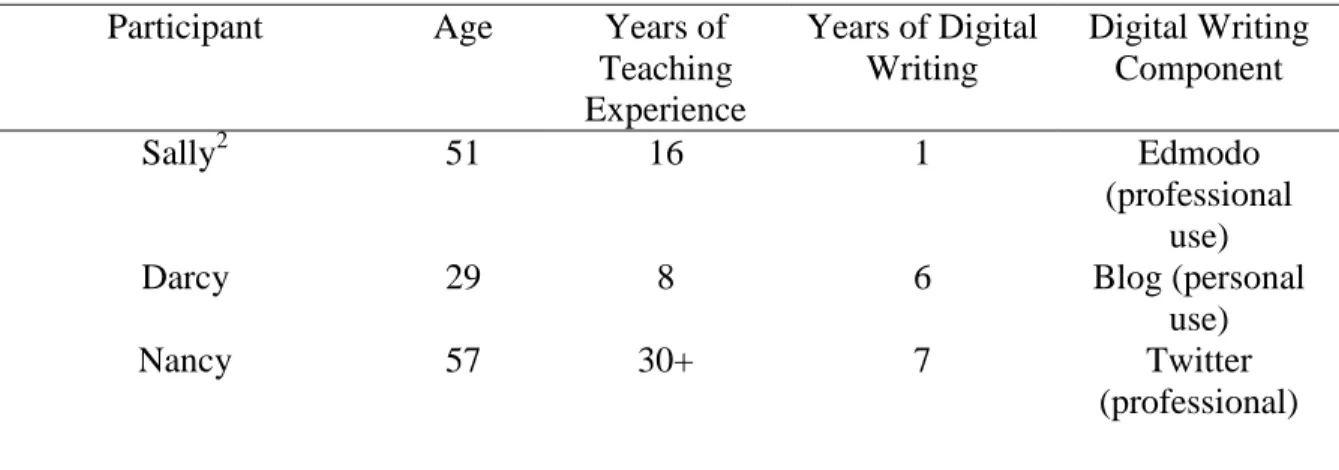
Sally ... 75
Darcy ... 75
Nancy ... 76
Becca ... 77
Positionality ... 77
Teacher-Writer ... 77
Teacher-Researcher ... 78
The Online Study Group ... 82
Data Collection ... 88
Interviews ... 89
Classroom Observations ... 90
Digital Writing ... 91
Review of Data Sources ... 92
Data Analysis ... 93
First Cycle Coding ... 94
Second Cycle Coding ... 95
Grounded Theory Approach ... 97
Credibility ... 98
Chapter Summary ... 99
Chapter 4: Research Findings ... 101
Narrative One – Sally... 101
Introduction ... 101
Teacher as Co-Writer Who “Help[s] Them Almost Write it”: ... 103
Consistent, Supportive, and Direct Writing Instruction ... 103
A Teacher-Writer Makes Sense of Digital Writing ... 106
Writing as “Liberating”: A Recommitment to Critical Literacy ... 109
Summary ... 113
Narrative Two – Darcy ... 114
iv
A Writing Teacher: “I Didn’t Really Consider Myself a Writer until Last Summer” ... 115
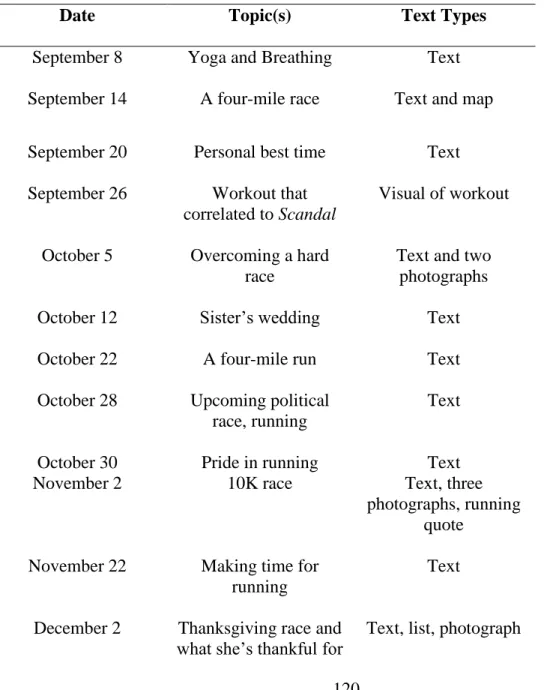
Multimodal Play: “The Intersection between Graphics and Words”... 119
Nuanced TPACK Awareness: “We’re a Lot of Open and Close Today” ... 122
Digital Spaces as (In)Authentic Outlets: “Those With Little Perceived Power Can Make a Difference with their Words”... 123
Summary ... 127
Narrative Three – Nancy ... 128
Introduction ... 128
Considerations of Safety: “I … Try to be Cautious” ... 129
A Movement toward the Original ... 132
Digital Writing as Problem-Solving: “Think of Problems you want … Resolved” ... 138
Considering Multiple Perspectives: “What Happened to these Voices?” ... 141
Summary ... 144
Narrative Four – Becca ... 144
Introduction ... 144
Digital Resistor: Writing Skills Now, Digital Writing “Later On” ... 146
Movement toward More Digital Writing: It’s a “Disservice” Not To ... 152
Questioning Perspectives ... 154
Challenges to Enacting Critical Literacy: “I Tend to Shy Away from Controversial Topics” ... 156
Summary ... 158
Chapter Summary ... 158
Chapter 5: Cross-Case Analysis... 160
Myriad Genres ... 161
Teachers as Digital Writers with Conventional Stances ... 164
Writing Pedagogy Reflective of Teachers’ Digital Writing and New Literacies Practices and Beliefs ... 165
Teachers’ Broadening Understandings of Digital Writing and New Literacies ... 170
Teacher-Centered Pedagogy ... 174
Technology Barriers... 177
Developing Understandings of Critical Literacy ... 180
v
Challenges to Implementing Critical Literacy ... 188
Chapter Summary ... 191
Chapter 6: Discussion ... 194
Findings... 194
Situating Findings within Literature ... 197
Teachers as Writers ... 197
Teachers as Digital Writers ... 198
Teachers as Digital Writers with a Critical Stance ... 199
Developmental Approach to Critical Literacy ... 202
Barriers to Digital Writing with a Critical Stance in the Secondary English Classroom ... 204
A Researcher’s Return to Positionality: A Reflection ... 206
English Education Implications ... 207
Engage Teachers in Reflecting on what counts as Writing ... 210
Engage Teachers in Writing Assignment Analysis ... 210
Engage Students in New Literacies Analysis of Digital Writing Spaces ... 211
Engage Teachers in Writing Digitally with a Critical Stance ... 212
Limitations ... 213
Time Frame ... 214
Types of Digital Writers ... 214
Participant Attrition ... 215
Researcher Role ... 215
Future Research Directions ... 216
Teachers’ Digital Writing Identities ... 216
Redesign of Online Study Group: Teachers as Personal Digital Writers with a Critical Stance ... 217
Pedagogical Practices of Teachers who Write Digitally with a Critical Literacy Stance ... 218
Students’ Digital Writing Practices... 218
Independent Writing Time ... 219
Digital Writing in the Special Education Classroom ... 219
Conclusion ... 219
Appendix A ... 221
vi
Appendix C ... 224
Appendix D ... 230
Appendix E ... 231
Appendix F... 232
Appendix G ... 233
Appendix H ... 234
vii
LIST OF TABLES
Table 1 - Participants……….74
Table 2 - Research Connected with Goals of Online Study Group………...84
Table 3 - Organizational Structure of Online Study Group………...………....85
Table 4 - Data Sources………...………92
Table 5 - Data and Research Questions………...………..92
Table 6 - Code List…………...……….95
Table 7 - Sally’s Edmodo Account Prompts…………...……….110
Table 8 - Darcy’s Blog Topics………...………..120
Table 9 - Nancy’s Haiku Posts……….133
Table 10 - Nancy’s Tweets……….……….134
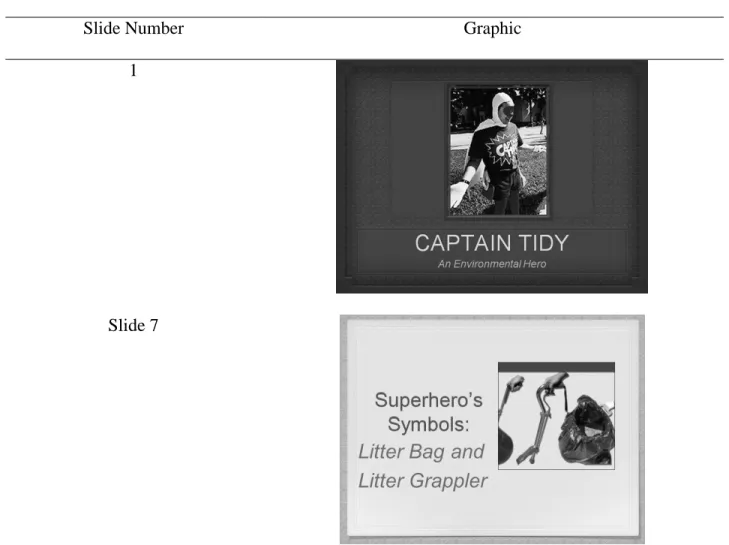
Table 11 - Nancy’s Slides………….………...139
Table 12 - Becca’s Wiki Posts……….………....146
Table 13 - Writing Assigned……….……….…..174
Table 14 - Definitions of Critical Literacy……….………….…180
viii
LIST OF FIGURE
1
Chapter 1: Introduction
I begin this introductory chapter with a study prologue and rationale. Next, I share the definitions, theories, and frameworks that informed the study; a study introduction; and research questions. Finally, I outline the organization of the dissertation and provide a chapter summary.
Study Prologue
I am a writer. When I was a little girl – underneath the light of the flashlight in my room with the purple carpet - I wrote stories in my journal about wanting to be a writer. I wrote poems and adapted Disney movies into scripts for neighborhood performances. When I was a teenager, I noticed drivers were not stopping for ambulances and wrote a letter to my city’s police
department requesting that cameras be affixed to the front of ambulances so as to ticket drivers who did not pull over. I never received a letter back. But it was in this moment that I learned that my writing had the potential to inspire change.
2
and influence the writing identities of their fellow writers: their students (Norman & Spencer, 2005). As a composition and English methods instructor, I position myself not only as a teacher of writing but also as a fellow writer, often sharing my work with my students. I want students to understand that I, too, struggle with aspects of the writing process and embrace those moments when a sentence or paragraph finally comes together and works. In addition to writing for
academic audiences, I write poetry and articles for local magazines. An avid digital writer, I write on Twitter, Facebook, iMovie, Pinterest, iMessage, my personal photography blog, and, of course, email.
As part of my graduate school assistantship, I supervise middle grades1 English students in our undergraduate middle grades program. One day last spring I was in one of my middle grades student teacher’s classroom. He assigned his seventh-grade students a journal prompt, asked them to start writing, and then proceeded to walk around and monitor students’ progress. In my notebook, I wrote Why don’t you write with the students? In fact, one of my most frequent comments to each of my student teacher supervisees is write with your students as much as you can. In our post-lesson conference, I asked him why he did not write with his students. He responded, I did write with first period but for this period I didn’t know what to write. As a future English educator, his response made me think about how teacher education programs prepare English teachers to be teachers of writing. Should the following Gillespie (1985) quote have resonance in today’s middle grades English classroom?
When we write, our classroom writing program and our interactions with our young writers can be based on knowledge we have earned ourselves rather than from others. We don’t need to give up our curriculum to the experts. We can just watch ourselves write. (p. 2)
1
3
As the vignette I shared above illustrates, English teachers do not always assume the role of teacher-writer, which Bishop (1999) defined as the “one who advocates that teachers write with and for their writing students as well and with and for their colleagues” (p. 9). And it is because of my firm belief in the idea of the teacher-writer that I embarked upon a dissertation study about teachers as digital writers.
Study Rationale
In this dissertation study, I researched how teachers who were digital writers moved toward understanding digital writing as a space for critical literacy. Work needed to be done in this area because preservice teachers tend to receive more training in teaching reading than teaching writing in their teacher preparation programs (Norman & Spencer, 2005). And, when writing is introduced into the curriculum of teacher
education, that writing is generally conventional writing (Hundley & Holbrook, 2013, p. 500) rather than that which is “non-printcentric” (NCTE, 2003) and a “literacy of the screen” (Conference on College Composition and Communication [CCCC], 2004). Therefore, teacher candidates are not prepared to teach the types of digital writing genres that characterize today’s writing practices. As an English teacher educator, I find this problematic for a variety of reasons.
4
Scholars have discussed digital writing’s non-static, ever-evolving nature (Bowen & Whithaus, 2013; Selfe & Selfe, 2009; Sewell & Denton, 2011), embedded power dynamics (Lemke, 1998), and social aspects (Bowen & Whithaus, 2013; Gee, 2010; Lankshear & Knobel, 2003; Street, 1995). Technology’s accessibility allows “‘everyday people’ to produce and not just consume media” (Gee, 2010, p. 12). Grabill and Hicks (2005) asserted that “writing teachers must commit to this digital rhetorical perspective on writing, or they will miss the opportunity to help their students engage effectively in the ICT [Information and Communication Technologies] revolution taking place right now” (p. 308).
Second, even though many scholars (e.g. Hicks & Turner, 2013; Hull, Scott, & Higgs, 2014; Morgan, 2010; Myers & Breach, 2004; Schieble, 2010) have advocated that writing teachers should be digital writers, many preservice English teachers have limited skills as digital writers (Hicks, Turner, & Stratton, 2013). Preservice teachers in Hundley and Holbrook’s (2013) qualitative study found digital writing difficult for myriad
reasons. They were challenged by the thought of perceiving writing as anything but “conventional print texts” (p. 506), acknowledged obstacles to composing with images rather than words, confessed to wanting more control as writers, and conceded
technology challenges. As Hull et al. (2014) suggested, this may be because “professional learning around digital media often focuses on tool use and neglects consideration of teachers as interested, creative producers of digital media artifacts” (p. 56).
5
students’ writing experiences but also their understandings of writing’s possibilities. For example, English teachers have limited experiences in writing digitally for social change (Turner & Hicks, 2011-2012). Many English teachers teach writing not only with a tentative grasp of how digital tools have altered understandings of what writing is but with a limited understanding of how writing can be done with a critical literacy stance. Tracing the teacher-writer’s evolution, Whitney, Hicks, Zuidema, Fredricksen, and Yagelski (2014) posited the teacher-writer has followed a particular trajectory: “the writing process phase (1970s and 1980s), the teacher research phase (1990s and 2000s), and, currently, teachers as advocates and intellectuals” (p. 177). The last phase
establishes a space for teachers to be advocates whereby “teachers write as a form of activism and resistance. Thus whereas earlier teacher-writers wrote for other educators, now teachers also write for the press, parents, and the public, whose opportunities to understand teachers’ perspectives may be few” (pp. 178). More work in the field of preservice and inservice teacher education needs to focus on helping English teachers understand how their writing, particularly their digital writing, can permit them to participate in discourse as advocates and intellectuals.
6
act” (p. 222). Though I shared research primarily about preservice teachers above, I think there are two reasons why work on inservice teachers as digital writers is necessary: First, methods professor-researchers often study their preservice methods students,
limiting the knowledge about inservice teachers. And, second, I do not believe I make too much of a leap to suggest that the same unfamiliarity and uncertainty about digital writing plagues inservice teachers as much as their preservice counterparts (McGrail, 2005; NCTE, 2007), especially when one considers how writing has changed since the time during which many practicing English teachers were enrolled in teacher preparation programs. Thus, my dissertation study contributed one of the few empirical studies about inservice middle grades English teachers as digital writers with a critical stance.
Definitions, Theories, and Frameworks Informing the Study I provide a full literature review in chapter 2. In the following paragraphs, I introduce the central definitions, theories, and frameworks that informed my dissertation study: technological pedagogical content knowledge, new literacies, critical literacy, and social justice.
Technological Pedagogical Content Knowledge
I structured my work around Mishra and Koehler’s (2006) TPACK framework, which is built upon Shulman’s (1996) idea of pedagogical content knowledge (PCK). In their seminal piece, Mishra and Koehler (2006) “extend it (PCK) to the phenomenon of teachers integrating technology into their pedagogy” (p. 1017). Instead of what
technologies are made available to teachers and students, these scholars advocate for “how the technology is used” (p. 1017). There have been critiques of TPACK’s
7
agree with Hughes and Scharber (2008) who advocated for “the explicitness of the TPCK concept at this point in time” (p. 89). I believe this explicitness helps teachers and teacher educators emphasize the technological component and will be necessary until classroom teachers are adept at integrating technology effectively with their content and pedagogy. As Mishra and Koehler argued:
though, Shulman’s approach still holds true, what has changed since the 1980s is that technologies have come to the forefront of educational discourse primarily because of the availability of a range of new, primarily digital, technologies and requirements for learning how to apply them to teaching. (p. 1023)
Whereas the explicit “T” may not be necessary in the future, the NCTE (2007) revealed “two-thirds of all teachers report feeling under-prepared to use technology in teaching …” Therefore, because teachers’ comfort levels with technologies impacts their likelihood to use technologies (Becker, 2001) and the ways in which digital tools have altered the ways in which we conceive of writing (NWP, 2010a), TPACK remains an important framework around which to consider teachers’ technology integration. New Literacies
8
Collier, Foley, Moguel, and Barnard (2013) asserted, “the definition of literacy now includes digital approaches to accessing, processing, and transmitting knowledge” (p. 263). Researchers typically focus on the Internet and the Information and
Communication Technologies (ICTs) as central to new literacy practices (Leu, Kinzer, Coiro, & Commack, 2004). Moving in the direction of creating a theoretical framework for new literacies, Leu et al. (2004) identified the following new literacies principles:
1. The internet and other ICS are central technologies for literacy within a global community in an information age.
2. The Internet and other ICTs require new literacies to fully access their potential. 3. New literacies are deictic.
4. The relationship between literacy and technology is transactional. 5. New literacies are multiple in nature.
6. Critical literacies are central to the new literacies.
7. New forms of strategic knowledge are central to the new literacies. 8. Speed counts in important ways within the new literacies.
9. Learning often is socially constructed within new literacies.
10.Teachers become more important, though their role changes, within new literacies classrooms. (p. 1589)
New literacy practices emerge as quickly as new technologies develop, and this emergent nature prevents an exact definition of new literacies (Coiro et al., 2008; CCCC, 2004; Leu, 2002; Leu et al., 2004). Nevertheless, certain features seem to characterize new literacies: social aspects (Lankshear & Knobel, 2006; Street, 1995), multimodal elements (Coiro et al., 2008), disruptions of the reader-writer relationship (Buckingham, 1993), collaborative qualities (Curwood & Cowell, 2011), and hypertextual paths (Swenson, Young, McGrail, Rozema, & Whitin, 2006). New literacies alter our understanding of what literacy is (Lankshear & Knobel, 2003), challenging preconceived notions of text (Lankshear & Knobel, 2007), complicating traditional linear understandings of text (Lambert & Cuper, 2008), and facilitating new genres.
9
believing, and knowing” (Gee, 2010, p. 32). Whereas the technical stuff focuses on the digital aspect of literacy, the ethos stuff focuses on one’s mindset and, in particular, one’s propensity to engage in Web 2.0 practices (Lankshear & Knobel, 2006). And thus technical stuff and ethos stuff become intertwined, as it is not only what a writer uses to compose but how he or she thinks about the composing process. As Janks and Vasquez (2011) wrote, new literacies practices permit a democratization of text production:
The move from knowledge consumption to knowledge production evident on Web 2.0 has removed previous forms of authorization and ownership …. Authorship is further challenged by new forms of text-making: mixing, mashing, cutting, pasting and re-contextualizing are taken-for-granted practices of the net generation. (p. 2)
Leu (2002) suggested the technical skills and beliefs embedded in new literacy practices: “the new literacies include the skills, strategies, and insights necessary to successfully exploit the rapidly changing information and communication technologies that continuously emerge in our world” (pp. 313-314).
Critical Literacy
10
part of a moral and political project that links the production of meaning to the possibility for human agency, democratic community, and transformative social action” (p. 15). Giroux (1998) believed “an emancipatory theory of literacy points to the need to develop an alternative
discourse and critical reading of how ideology, culture, and power work…” (p. 63).
It is important for me to establish my stance on the connection between new literacies and critical literacy. Some scholars have argued that new literacies can be understood as inherently critical from a sociocultural view of literacy (Watulak & Kinzer, 2012) and from the perspective that literacy is inherently grounded in power, culture, and identity (Luke &
Freebody, 1999; Street, 1995). In addition, Leu et al. (2004) argued critical literacies are central to new literacies. Other scholars, such as Myers and Eberfors (2010), have asserted new
literacies are not inherently critical. And it is this sentiment with which I agree. Whereas new literacies are not inherently critical, digital writing provides a space for writers to engage in critical literacy.
11
classroom permits students and teachers to write about issues of personal importance such that they feel empowered and can affect change in their lives and communities.
Social Justice
The field of English education is “focused on critical approaches to language, literature, and literacy” (Aslup & Miller, 2014, p. 196). I work from an understanding that these critical approaches have their roots in social justice pedagogy, which Moje (2007) defined:
Social justice pedagogy, or teaching to produce social justice, involves more the
providing equitable learning opportunities implied in the phrase ‘socially just pedagogy,’ although such opportunities are necessary ingredients of social justice pedagogy. From a social justice perspective, opportunities to learn must not only provide access to
mainstream knowledge and practices but also provide opportunities to question, challenge, and reconstruct knowledge. (pp. 3-4)
Like critical literacy, social justice is difficult to define (Conference on English Education [CEE], 2009); however, certain descriptions of social justice as applied to the writing classroom help make more concrete its abstractness. A teacher who promotes social justice empowers students to play an active role in critical evaluation of their worlds and facilitates students to take action that changes one’s life or community (Glasgow, 2001; Hackman, 2005). Christensen (2000a) used the phrase “rising up” to characterize such writing as emancipatory (p. vii). Chapman et al. (2011) believed writing with social justice in mind permits writers “to articulate their experiences, critique their world, and address those identified issues with subsequent action” (pp. 539-540). Chapman et al. (2011) continued:
A social justice approach to writing fosters an awareness of societal challenges that affect students’ families, communities, and the larger society. It affirms students’ multiple identities, creates solidarity among peers, builds students’ abilities to respond and embrace supportive criticism of their work, and targets authentic audiences for their finished products. (p. 539)
12
with Cochran-Smith, Barnatt, Lahann, Shakman, and Terrell’s (2009) resistance to the critique that social justice and content cannot coexist. Teachers must not be forgotten in this discussion of writing as a social justice act. The CCCC (1982) claimed English education programs should permit teachers to write “as a means of developing, shaping, representing, and communicating our perceptions of our world, our experiences, our beliefs, and our identity.”
Study Introduction
The purpose of this dissertation study was to examine the writing and pedagogical practices of middle grades teachers who were active digital writers and to examine what moves they made toward critical literacy in their writing or teaching. This collective case study contributed one of the few empirical studies about middle grades English teachers who are digital writers with a critical stance.
I facilitated an online professional development online study group through LEARN NC, a program of my institution that offers professional development to K-12 teachers, in order to help teachers understand the connection between digital writing and critical literacy. Four middle grades English teachers who were active digital writers engaged in this online study group to learn how to apply understandings of new literacies and critical literacy to their writing and teaching. These teachers composed a digital writing assignment with a critical literacy stance that served as a mentor text for their students. Data collected included before- and after-online study group interviews, teachers’ digital writing, study group postings, six classroom observations, and post-observation interviews.
13
The following research questions guided my study: (1) What are the writing practices of secondary English teachers who are active digital writers? (2) What does writing (digital and otherwise) pedagogy look like in the classrooms of teachers who are digital writers? (3) What factors move teachers toward critical literacy in their own writing and in their classroom practices?
Organization of the Dissertation
After this introductory chapter, I detail the literature and research that informed my work in a review of the literature in chapter 2. In chapter 3, I provide the
methodology for this collective case study. Case studies of each participant are provided in chapter 4, and a cross-case analysis of emergent themes is shared in chapter 5. And, finally, chapter 6 offers a review of the research questions and findings, a discussion of how my work extends the literature in the area of teachers as digital writers with a critical stance, implications for English educators, limitations, and future research directions.
Chapter Summary
14
Chapter 2: Literature Review
There is no question that technology nears the top of the contemporary education buzzwords list. The rhetoric of politicians, policy makers, teacher educators, administrators, teachers, and parents emphasizes the importance of helping students prepare for the 21st and 22nd centuries. In his 2012 National Council of Teachers of English Affiliate Breakfast Address, Morrell (2012a) suggested:
Being literate for this iPad generation of youth, these 22nd century youth, will mean processing and producing more information than you and I can even imagine today. It will also mean processing and producing information in modes and genres that we cannot imagine, that I won’t even live to see.
To this end, school districts spend millions of dollars to equip their schools with one-to-one initiatives and technology tools (Hofer & Grandgenett, 2012). However, though the
15
the possibilities and the unfortunate realities of technology’s place in the secondary English classroom engenders concern.
There are a few reasons for this discrepancy between the rhetoric about technology’s importance to our educational system and the images of today’s English classroom. One reason for this may be that new literacies are “slowly reaching our teacher education classes and high school classrooms” (Bailey, 2009, p. 209). In addition, the presence of technology does not automatically alter the English classroom and the types of literacy practices in which teachers and students engage: “Adding technology to instruction does not automatically create a meaningful change in learning or instruction” (Flanagan & Shoffner, 2013, p. 242). Ertmer’s (1999) first- and second-order barriers, the former being software and hardware and the latter being teachers’ beliefs about technology integration, remain. Based on the results of their qualitative case study of secondary English teachers, Flanagan and Shoffner (2013) claimed, “teachers must know how to integrate technology effectively into their practice in order to maximize its potential for student learning” (p. 255). These authors recommended “content-specific technology” instruction for both preservice and inservice teachers (p. 256).
16
teachers often selected to prepare their students for required standardized tests rather than ask them to compose for the community and take social action. Turner and Hicks’s work is one of only a few empirical studies about English teachers as digital writers and critical literacy. In fact, Wohlwend and Lewis (2011) cited few researchers have examined critical literacies and their relation to technology. Consequently, my dissertation study aimed to fill a gap in the research regarding English teachers as digital writers with a critical stance. As such, my project provided teachers a way to consider their digital writing, pedagogical practices, and
understandings of new literacies and critical literacy as they composed a piece of digital writing with a critical stance.
In this chapter, I share the theoretical literature and research studies upon which my research was built. First, I provide a justification for writing’s importance and then provide an argument for teachers as writers, in particular, teachers as digital writers. Next, I explore teachers and their knowledge and use of technology, providing a technological pedagogical content knowledge (TPACK) framework (Mishra & Koehler, 2006). Then, I discuss digital writing, new literacies, and critical literacy. And, finally, I share the possible connections between digital writing and critical literacy.
Perspectives on Writing’s Importance
Said to have originated in Mesopotamia around 3200 BC, China around 1250 BC, and Mesoamerica in 650 BC (Schmandt-Besserat & Erard, 2008), writing can be understood as a “medium of thought” (NCTE, 2004):
17
As Bazerman (2008) suggested, “we carry out complex activities and projects that would be impossible without recorded knowledge, planning, and coordination enabled by writing” (p. 1). He described writing as a “core element in human history” (p. 3). In the context of marginalized writing instruction within today’s classrooms and teachers’ unpreparedness to teaching writing (Graham, Gillespie, & McKeown, 2013), the question of why writing is so important seems particularly relevant. As Turner and Hicks (2011-2012) asserted:
Inasmuch as writing serves as a communicative tool, a representation of self, and a vehicle for articulating perspectives, writing is a part of the culture of power. Is has the potential to empower or oppress individuals, and it has the potential to maintain the status quo or transform the collective community” (p. 55)
In this section, I offer six perspectives on writing’s importance: omnipresent, economic, educational, transformative, therapeutic, and human.
An Omnipresent Perspective
One of the most validating statements on writing’s importance concerns its
omnipresence. Be it on rocks or Facebook, walls have been invaluable to the way both ancient and contemporary people have communicated via writing. In the forward to Graham and Perin’s Writing Next, Gregorian (2007) suggested:
Whether inscribed on a rock, carved in cuneiform, painted in hieroglyphics, or written with the aid of the alphabet, the instinct to write down everything from mundane
commercial transactions to routine daily occurrences to the most transcendent ideas – and then to have others read them, as well as read what others have written – is not simply a way of transferring information from one person to another, one generation to the next. It is a process of learning, and hence, of education. (p. 1)
18
to reading” (p. 162). A 2008 Pew Internet & American Life Project and National Commission on Writing (Lenhart, 2008) national phone survey found that 93% of teenagers write
electronically. In addition to its omnipresence, writing also has an economic value. An Economic Perspective
One cannot neglect the economic importance of writing. Schmandt-Besserat and Erard (2008) shared, “the function of writing when it came about in 3200 BCE was exclusively economic” (p. 8). Unquestionably, writing is still vital to workplace success. The NCTE (2008a) asserted, “We write differently – often digitally – and we write more than in the past. Technological advances, changing workplace demands, and cultural shifts make writing more important than ever, especially because the way we write often predicts academic and/or job success ….” Similarly, the National Commission on Writing for America’s Families, Schools, and Colleges (College Entrance Exam Board, 2004) emphasized the value business leaders place on writing in the workplace. Brandt’s (2009) biographical sociology work with multiple
workplace writers revealed the importance of writing in today’s workplace: Over fifty percent of employers are spending a majority of their time at the keyboard. Despite the necessity of written skills, employers are not impressed with candidates’ writing skills. An employer survey
19 An Educational Perspective
Many scholars have cited writing’s importance to education. In their meta-analysis, Graham and Herbert (2011) “found that writing about material read enhances reading
comprehension” (p. 726), “found that writing instruction enhances students’ reading,” (p. 731), and “found that increasing writing improves reading comprehension” (p. 731). Graham and Herbert found “four types of writing activities to be effective: extended writing, summary writing, note taking, and answering/generating questions” (p. 733). In their study of college writers, Fry and Villagomez (2012) summarized Zinsser’s (1988) concept of writing to learn: “Writing to learn (WTL) is the act of making a subject or topic clear to oneself by reasoning through it in writing; it is a pedagogical approach that uses writing to facilitate learning” (p. 170). These authors examined the writing of 53 preservice social studies teachers in college; twenty-five students were enrolled in a fall 2010 course, and 28 were enrolled in a spring 2011 course. The students in the 2011 course received WTL pedagogy. Results varied by analysis method: “Quantitative analysis revealed that writing to learn did not have a differential effect on student achievement of course goals…. [however] qualitative analysis revealed evidence
indicating students valued writing to learn as a way to make sense of course content ….” (p. 170). In addition to writing’s importance to the educational process, another important aspect to consider is writing’s propensity to evoke change.
A Transformative Perspective
20
instrument of thought. In the act of composing, writers learn about themselves and their world and communicate their insights to others. Writing confers the power to grow personally and to effect change in the world” (NCTE, 1985). In his essay History of Writing in the Community, Howard (2008) considered writing’s ability to evoke change: “Writing … became increasingly part of social experience, human identity, community activity, and aspirations for change” (p. 239).
The idea of writing as a change agent cannot be separated from social justice thought. Schneider (2013) proclaimed writing as a political act:
If you write privately, you change your own inner world, and that changes the outer world. If you write publicly, you give voice to what is, and that assists what is becoming. If you help someone else write the truth, you may not live long enough to know it, but you will have changed the world. (pp. 178-179)
A few research studies examined this idea of writing as a social justice act (Chapman et al., 2011). Fifth graders engaged in digital moviemaking to alter perspectives about urban youth in Love’s (2014) practitioner article about the power of hip hop literacy. Guzzetti and Gamboa’s (2004) qualitative work examined three adolescent girls constructed zines to address issues of oppression and marginalization. The change-effecting quality of writing cannot be ignored, especially in relation to digital writing and critical literacy.
The Therapeutic Perspective
Those who identify as writers understand the healing quality of reading a great poem or whittling down a paragraph of ideas to one succinct line. The medical humanities field examines writing’s therapeutic nature. Frank (1993) wrote about the epiphanies that can come from
21
Though writing and revising narratives of disability could not restore the crippled bodies of these writers, the insights gleaned from the heuristics of writing did seem to have therapeutic value for those grappling with the darker issues of chronic illness. (p. 831) For people who are ill, writing becomes a way to cope, a means by which to understand the situations in which they find themselves. In her text Bird by Bird: Some Instructions on Writing and Life, Lamott (1994) expressed writing’s power: “Writing has so much to give, so much to teach, so many surprises….The act of writing turns out to be its own reward” (p. xxvi). It would seem, then, that the writing process itself is curative.
The Human Perspective
Transcending human experience, writing’s esthetic quality is difficult to quantify. In his On Writing, novelist King (2000) suggested writing is deeply connected to our ethos as humans:
It starts with this: put your desk in the corner, and every time you sit down there to write, remind yourself why it isn’t in the middle of the room. Life isn’t a support-system for art. It’s the other way around. (p. 101)
He continued: “Writing is magic, as much the water of life as any other creative art. The water is free. So drink. Drink and be filled up” (p. 270). Gregorian (2007) conflated writing’s
importance with the need to leave a legacy. It is generally thought that the Phoenicians created the first alphabet; “clearly, the instinct for human beings to express their feelings, their thoughts, and their experiences in some lasting form has been with us for a very long time” (p. 1). There is this sense that writing extends people’s life past their mortality. In Writing Down the Bones, Goldberg (2010) penned:
22
The social nature of writing makes it a practice inherently connected to our humanity. As Ueland (1987) wrote, “this creative power and imagination is in everyone and so is the need to express it, i.e., to share it with others” (p. 5). For it is through “writing that we inscribe our place in the literate world and all the social systems that depend on literacy” (Bazerman, 2008, p. 1). And thus, for all of the perspectives on its importance (e.g. omnipresent, economic,
educational, transformative, and therapeutic), perhaps the most valid argument for writing’s importance is its inherent connection to what it means to be human.
Teachers as Writers
How teachers understand themselves as writers may play an important role in their writing pedagogy. Cremin and Baker (2010) wrote, “teachers in many countries are expected to model writing and demonstrate their proficiency as writers, yet this is potentially problematic if they lack self-assurance and positive writing identities” (p. 4). There may be connections between writing identities and content knowledge about writing. Also, teachers’ comfort levels with digital writing may be related to how much teachers model Web 2.0 practices in their classrooms (Greenhow et al., 2009). Considerations of teachers’ writing identities, especially perhaps their digital writing identities, and how these identities might impact pedagogy are particularly important when we take into account most English teachers have literature, not writing, backgrounds (Callahan, 2002; Gardner, 2014).
23
guidance and support through the writing process, not merely comments on the written product.” Smith (1994) wrote teachers
should write with their students, in order to provide demonstrations. I am not talking about teachers displaying to students the final drafts of their own hard-worked efforts, with all the effort being expended off-stage, but of actually writing at the same time as the students, at the same tasks as the students, as publicly as the students …. (p. 220) Acknowledging that students may benefit even if teachers are not expert writers, Graves (1983) believed “the teaching of writing demands the control of two crafts, teaching and writing. They can neither be avoided, nor separated” (p. 6). Calkins (1994) wrote, “When we teach writing, we will probably not begin by talking about writing, but rather, by demonstrating the power and purposes writing has in our lives, and by inviting students to discover ways that writing can enrich their lives as well” (p. 31). Elbow (1998) believed teachers should participate in what he described as the “teacherless” writing classroom as a fellow writer during writing workshop. Murray (1985) shared similar sentiments about viewing himself as a fellow writer in his writing classroom. In his introduction to the text Those who do, can Root (1996) described the
experiences of hundreds of teachers who partook in a teaching and writing workshop in Traverse City, Michigan, from 1986-1992: The workshop helped participants “make the word ‘writing’ in the term ‘writing teacher’ refer as much to something the teacher herself does as to the subject matter of her teaching” (p. xxi).
A few scholars have recognized the difficulties of asking teachers to be writers.
24
viewing assignments as a writer. In another piece, Jost (1990b) asserted that teachers do a lot of technical writing, but it is not the type of creative writing the scholars cited above expect
teachers to do. Furthermore, she argued, “We are teachers by choice, after all, and not professional writers” (p. 66).
While acknowledging these valid points, many scholars have suggested the benefits outweigh the challenges. Although Bishop (1999) claimed one could be an effective writing teacher without considering oneself a writer, she, ultimately, found value in the teacher-writer concept. In a NWP network newsletter, Gere (1980) acknowledged that asking teachers to do writing may indeed add to their professional burdens but was quick to acknowledge the benefits:
My private hunch – one not verifiable with existing research designs- is that teacher-writers not only have against the hedge against the forces of teacher burn-out. Through writing they avoid being cut off from the sources of their own power and creativity. (p. 2)
Whitney et al. (2014) shared the trajectory of the teacher-writer: “the writing process phase (1970s and 1980s), the teacher research phase (1990s and 2000s), and, currently, teachers as advocates and intellectuals” (p. 177). Whitney et al. stated that “these phases are additive: rather than one idea-set replacing one another, each augments the concept of the ‘teacher-writer’” (pp. 177-78). In each of these phases, teachers have different purposes as writers. Within a pedagogy that underscored process and workshop, teachers wrote to better “‘walk the talk’ when asking students to write” (p. 178). The trend toward teacher as researcher positioned teachers as “writ[ing] for the field, generating knowledge, and increasing teachers’
25
(pp. 178). Having established the theoretical scholarship on teachers as writers, I now move to empirical research on teachers as writers.
The Research on Teachers as Writers
In addition to a large theoretical rationale for the importance of teachers as writers, research studies have examined teachers as writers. What follows is a thematic look at research studies around teachers as writers. I separate research studies according to reoccurring research inquiries: teachers’ identity as writers, teachers’ confidence in writing, teachers’ lack of
experience with digital writing, and teachers’ digital writing spaces.
Teachers’ identities as writers. Research about teachers’ identities as writers has
provided some but not conclusive insight into teachers’ writing pedagogy. Bizzaro’s (1983) self-study helped him understand that he taught poetry in the way in which he wrote poetry.
Robbins’ (1996) case study work with high school teachers’ identities provided insight into the various ways in which three teachers position themselves as writers and teachers:
The case studies included here describe a teacher who writes but does not connect her own writing to her teaching, a teacher who does not use her writing directly in
instruction, and a teacher who writes and uses his writing in instruction but does not take a process approach. (p. 124)
26
writing histories and autobiographies. Four themes emerged from their research: preservice teachers tended to favor creative writing, teachers’ writing identities were impacted by positive and negative writing experiences in the past, there was a difference between motivating writers’ development and teaching writing, and whether a teacher believed writing instruction to be critical was based upon his or her writing beliefs. Limited to two elementary school teachers, Cremin and Baker’s (2010) case study revealed that teachers exist along a continuum of writer-teacher. Data analysis revealed a tension between participants’ roles as teachers and writers. The researchers’ graphic representation of teachers as writers illuminated the teacher-writer and writer-teacher on opposing ends, with a product for the system as an outcome for the former and a product for the self as an outcome for the latter. Representing “an ongoing oscillation ... teacher-writers writing for the system and more liberating identities: writer-teachers writing more for themselves” (p. 25), the diagram included institution and intrapersonal concerns and showcased emotional engagement, degree of authorial agency, and personal authenticity across a continuum of the practice of writing. The diagram calls our attention to the complexities and multifaceted nature of teachers’ identities, a concept both Alsup (2006) and Danielewicz (2001) studied in their separate examinations of six preservice English teachers.
Morgan (2010) acknowledged little is known about how teachers’ writing identities impact their pedagogy. Her qualitative study of her elementary methods students revealed preservice teachers often have negative views of themselves as writers and that a course designed with the specific purpose of writing methods instruction can positively affect teachers’
perceptions of themselves as writers. Gardner’s (2014) qualitative study with over a 100 elementary student teachers revealed that helping student teachers consider their writing
27
in Bishop’s (2009) qualitative study created digital literacy projects that enabled them “stabilize and/or improvise formations of [teacher] identity” (p. 31). Using interviews and analysis of students’ digital literacy projects, Bishop (2009) examined how the composition of multimodal digital texts enabled preservice teachers “to construct their sense of selves as undergraduate college students, elementary school teachers, other less prominent identities and/or composites of multiple identities” (p. 39).
Brooks’s (2010) case study of four elementary school teachers countered perceptions that teachers need to identify as writers and reveal this to their students to be effective writing
teachers. This case study revealed that instead of their literacy practices, teachers put most of their energies into students’ literacy practices. Via interviews and observations, teachers in Brooks’s study disagreed with theorists who claimed teachers should write. First, teachers had varying writing practices. And second, “teachers … all claimed a strong allegiance to knowing and supporting their students as readers and writers, rather than concerning themselves about showcasing their own reading and writing” (p. 189). Though Brooks’s work posited that teachers do not have to identify as writers to their students to be effective writing teachers, other research suggested a connection between teachers’ identities as writers and how they thought about or enacted writing pedagogy.
Teachers’ confidence in writing. Teachers’ confidence in writing appears to have
28
writing confidence. Data collection methods included questionnaires, interviews, observations, composing logs, reflections, and late-phase interviews. Despite the sustained model,
pedagogical effects varied; some teachers offered students more choices in writing topics, and others shared their composing practices and models with students. This study revealed that developing teachers’ confidence with writing can have pedagogical effects. Morgan’s (2010) qualitative study suggested preservice teachers were not confident in their writing abilities at the beginning of a writing methods course. This lack of confidence led them to focus on grammar, spelling, and punctuation, areas that, though important, are not what professional writers would consider substantive writing components. Professional writers, on the other hand, focus on “composing ideas, writing with simplicity and clarity, establishing a line of thought, providing detail that helps the reader live through the experience, and finding something meaningful to say” (p. 362). Considerations of teachers’ writing confidence should be further explored, especially perhaps in light of teachers’ lack of experience with digital writing.
Teachers’ lack of experience with digital writing. Published studies reported teachers’
lack of experience with digital writing. Howard’s (2014) qualitative study of preservice teachers examined teachers’ digital journals, interviews, questionnaires, and observations. Results
29
because of the technological tools. Digital writing allowed preservice teachers “to struggle with new composition structures and to consider what they do when they write conventionally” (p. 504). Preservice English teachers in Turner and Hicks’s (2011-2012) qualitative study did not believe that digital writing deserves the same status as traditional forms of writing. These researchers suggested English teachers need to understand the affordances of digital writing, including its connection to social justice, and realize digital writing deserves the same status as traditional writing: “Teachers, regardless of the facility with technology or their personal writing practices or past academic experiences, must engage as digital writers” (p. 57). A severe gap in the literature exists in relation to teachers as writers with a critical stance. Although some teachers were inexperienced with digital writing, some teachers exhibited great adeptness as writers in digital spaces.
Teachers’ digital writing spaces. Whereas some studies revealed teachers were
resistant or unfamiliar with composing in digital spaces, other studies highlighted teachers as digital writers. Schieble’s (2010) qualitative study of 15 preservice English students in a young adult literature course suggested that having preservice teachers design Moodle-based lessons that incorporated their personal social media accounts may encourage them to bring their students’ out-of-school literacy practices into their classrooms. Rodesiler (2014) suggested “little research has emerged regarding the features of the online contexts teachers weave as they engage in professionally orientated participation online” (p. 72). His qualitative case study examined teachers who were digital writers in professional spaces (e.g. professional
30
qualitative case study, the first author examined the second author’s Facebook account for five weeks. Roach revealed trends in the second author’s posts and replies, citing how her
understandings of the second author’s digital authorship and audience awareness could be applied to the writing classroom. Interestingly, teachers in Kist’s (2008) study revealed they feared administrative and parental push-back to their personal or professional Web 2.0 use. In their theoretical piece, Greenhow and Gleason (2012) investigated tweeting as a form of microblogging and called for additional research on teachers’ use of social media in the classroom.
Overwhelmingly qualitative, the research on teachers as writers was characterized by small participant pools, which often included the researcher’s methods students. Many studies examined elementary school teachers. Some studies have shown teachers who identify as writers improve instruction while other studies refuted the necessity of a writing teacher who identifies as a writer. Also, research showed writing confidence can have positive impacts in the writing classroom. Further, though some studies exhibited there are teachers who are active digital writers, there remains limited research on teachers as digital writers, including digital writers with a critical stance. Because “scant attention has been afforded teachers’ identities as writers with reference to their classroom roles and pedagogic practices as teachers of writing” (Cremin & Baker, 2010, p. 2), future large-scale work must examine how teachers’ identities as digital writers with critical stances influence their writing pedagogy.
Teachers and Technology
Literature in the area of teachers and technology has informed my work because teachers who write digitally with a critical stance and encourage students to do the same have to
31
English classroom. Zhao, Pugh, Sheldon, and Byers’s (2002) evaluation of 10 K-12 teacher teams over the course of a year found factors that affect technology implementation. The most important aspect was the teacher, particularly his or her knowledge of the technology’s
capabilities, understanding of connections between pedagogy and technology, and knowledge of school’s organizational and social culture. The technology project the teacher designed,
particularly its alignment with school culture, its connection to available resources, and its connection to teacher’s pedagogical practices, was also important. And, finally, the school context, including the school’s technological and human infrastructures and organizational culture, was important. Results of Hutchinson and Reinking’s (2011) national survey of 1,441 literacy educators revealed they had support for technology integration and believed in the importance of technology integration. Interestingly, though, over two-thirds of the respondents revealed technology played a supplementary role and considered integration in terms of
enhancing previous goals rather than reimagining new curricular goals made possible by technologies. Survey results also indicated several technological barriers to integration, including not having enough laptops for each student or students not having e-mail accounts.
The TPACK framework (Mishra & Koehler, 2006) was designed to help educators consider how technology integration fits with their content area and pedagogy. Because the ways in which teachers understand and conceive of technology integration as related to the English content and their pedagogy impacts whether they include digital writing with a critical stance in their classroom, my work is informed by TPACK (Mishra & Koehler, 2006). In what follows, I define TPACK and examine teachers’ practices and beliefs, focusing specifically on technology, pedagogy, and content.
32
TPACK builds upon Shulman’s (1996) idea of pedagogical content knowledge (PCK) and resonates with English Technological Pedagogical Content Knowledge (ETPCK) (Hughes & Scharber, 2008). Coined by Hughes, ETPCK is TPACK related specifically to the English classroom. These authors suggested that teachers engage in the following in order to move toward the most effective technology integration: meta-cognition about their teaching with technology practices and “…cognitive conflict with English content knowledge…” in order to engage with “…new perspectives within literacy such as new literacies and critical literacy…” (p. 104). Though I acknowledge Brantley-Dias and Ertmer’s (2013) critiques about the vagueness and ambiguity of the TPACK framework, I agree with the work of Hughes and
Scharber (2008) whose research study with three English teachers and technology integration led them to advocate that English education “needs the explicitness of the TPCK concept at this point in time” (p. 89). TPACK’s connection to digital writing is, ultimately, what I am
interested in, as “most teachers graduating with disciplinary credentials that will certify them to teach English have not formally studied digital forms of writing” (Hicks & Turner, 2011-2012, p. 63). Important to teachers and teachers educators alike, the TPACK framework is comprised of three main knowledge bases: technology knowledge, pedagogical knowledge, and content knowledge, components I unpack in the following sections.
33
classroom (p. 1524). In order to help such novices, Pope and Golub (2000) provided principles and practices for infusing technology into the methods course: use technology in context,
understand the links between technology and literacy, model simultaneously content learning and technology use, understand when to and when not to use technology, offer a multitude of ways to use technology, think about the assessment of technology products, and consider equity and diversity as they relate to technology. Graham, Burgoyne, Cantrell, Smith St. Clair, and Harris (2009) suggested teachers progress from technology knowledge to TPACK. As such, technology instruction may have to focus on the tools at first – before the incorporation of pedagogy and content. Teacher education and professional development must focus on developing teachers’ technological competence and help them learn not only what technological tools fit best in the English classroom but how to use these tools.
Pedagogical knowledge. The second component to consider is teachers’ pedagogical
knowledge, as teachers’ pedagogical beliefs influence their technology integration. Teachers’ beliefs are especially important considering that although classroom management concerns may indeed be barriers to technology use (Bowman, 2000; Pasternak, 2007), teachers’ beliefs may be able to overcome management anxieties (Ertmer, 1999).
A teacher’s pedagogical belief affects whether and in what ways he or she will integrate technology. For example, teachers with less traditional pedagogies and views about knowledge integrate technology more effectively. Greenhow et al. (2009) discussed that schools still have a rather traditional view of knowledge and “still dominant is a view and use of the Web as
34
(p. 61). These traditional pedagogical views reduce technology integration to information retrieval rather than transforming the ways students read and write with digital technologies.
Conversely, technology integration may be richer in classrooms in which teachers have constructivist pedagogies, as these teachers use technology to enhance their students’ higher-order thinking skills (Becker, 2001). Teachers who understand “knowledge is multimodal, co-constructed, and performed or represented, not absorbed” (Miller, 2007, p. 65) may integrate technology in robust ways. Greenhow et al. (2009) proposed that teachers engage in the use of Web 2.0 tools whereby “knowledge is decentralized, assessable, and co-constructed by and among a broad base of users” (p. 247). Although technology can be used to transfer simply knowledge to students, it can also be used to help students create their own meaning, which is a more transformative use of technology (Hammond & Manfra, 2009). When used successfully, Web 2.0 tools can help create a constructivist classroom environment that takes the focus away from teacher-centered learning (Adcock & Bolick, 2011). Aligning with a constructivist approach, the CCCC (2004) recommended the following in order to engage students in digital writing: “introduce students to the epistemic (knowledge-constructing) characteristics of information technology,” “provide students with opportunities to apply digital technologies to solve substantial problems common to the academic, professional, civic, and/or personal realm of their lives,” “include much hands-on use of technology,” “engage students in the critical evaluation of information,” and “prepare students to be reflective practitioners.”
Pedagogies that value students’ out-of-school literacy practices may lead to greater technology integration. Allowing students to bring in their
35
Often, students’ out-of-school literacy texts are written for real authentic purposes (Turner, 2012). The space between students’ school and out-of-school literacy practices can be narrowed if teachers realized technology’s ability to increase student engagement (Spires et al., 2013). Hicks and Turner (2013) advocated for an integration of digital writing within the curriculum instead of incorporating it only if time permits. They wrote:
Student use blogs, podcasts, and digital movie-making programs, yet these digital writing tools are often brought in at the end of the unit, usually if there is ‘extra’ time after all the normal content (and test prep) has been covered, and never in a sustained, inquiry-based manner. (p. 58)
Additionally, Hicks and Turner provided five ways teachers are destroying digital literacy: privileging quantity over content, counting the number of slides or images, abandoning the interactive element of blogging by turning blog posts into question and answer sessions between teacher and students, condemning “digitalk,” assigning writing tasks that can be determined through a quick Internet search, and using ‘cool’ technology tools without purpose.
If teachers are to incorporate digital writing in their pedagogy, they need to consider how technologies fit within their pedagogical beliefs and practices. Teachers with non-traditional, student-centered, constructivist pedagogies appear more likely to integrate technology into their classrooms. However, as we will discover in the subsection on content knowledge, teachers must emphasize literacy practices over technology tools (Hicks & Reed, 2007). In addition to their pedagogical beliefs and practices, teachers’ knowledge about the evolving nature of the English discipline may impact their digital writing pedagogies.
36
technology in context and understand the links between technology and literacy. As such, technology use should meet content-specific learning goals (Alvine, 2000; Bull, Bell, Mason, & Garofalo, 2002; Ertmer, 1999; Hofer & Owings-Swan, 2005; Hughes, 2004; Hughes & Scharber, 2008; International Society for Technology, 2000; Mishra & Koehler, 2006; Sahin, 2011;
Swenson, Rozema, Young, McGrail, & Whitin, 2005). Understandings of the evolving nature of the English discipline (Bull et al., 2002) needs to include “what the new forms of reading and writing entail” (Kist, 2013, pp. 42-43). Teachers need to understand how digital tools have altered the ways in which we read, for example, the differences between reading text on screens versus in printed books. Also, teachers need to understand digital writing’s genre possibilities and ever-changing qualities, which are, in part, due to digital writing’s social and multimodal nature. Only after teachers understand the evolving nature of reading and writing embodied in these new understandings of the English discipline can they consider integrating technology in authentic ways.
37
understanding of technologies and the Internet as literacy tools rather than technology tools. Here, the English content is foregrounded.
Pedagogical and content knowledge in teacher training. Though there seems to be mounting evidence that teacher pedagogical training matters (Darling-Hammond, 2000), more research is needed in order to contribute more knowledge to the field about what content
knowledge teachers need to have to teach English and, more specifically, writing. We know that teaching English requires teachers to transform their content knowledge into accessible formats (Ball & Forzani, 2009). In this complex process, teachers are not just transferring what they know to students but rather considering students’ needs as they break down complex material, so it is accessible to students with a wide array of interests and abilities. Smith, Bowen, and Dohm (2014) articulated the challenge in this area: “though much value has been placed on subject matter knowledge, we still have little valid research documenting the impact of English teachers’ subject matter knowledge on student achievement” (p. 120). And though there are “a number of large-scale studies have found relationships between teacher effectiveness and the quantity of training teachers have received in subject matter and content-specific teaching methods” (Darling-Hammond & Hammerness, 2005, p. 395), scant empirical evidence is available for whether arts and sciences or teacher education courses, which both enroll future English