ScholarWorks @ Georgia State University
ScholarWorks @ Georgia State University
Middle and Secondary Education Dissertations Department of Middle and Secondary Education
5-15-2020
Science Teachers' Understanding of Formative Assessment and
Science Teachers' Understanding of Formative Assessment and
its Practice with Three-dimensional Teaching and Learning
its Practice with Three-dimensional Teaching and Learning
Yotah KoulagnaFollow this and additional works at: https://scholarworks.gsu.edu/mse_diss
Recommended Citation Recommended Citation
Koulagna, Yotah, "Science Teachers' Understanding of Formative Assessment and its Practice with Three-dimensional Teaching and Learning." Dissertation, Georgia State University, 2020.
https://scholarworks.gsu.edu/mse_diss/95
This Dissertation is brought to you for free and open access by the Department of Middle and Secondary Education at ScholarWorks @ Georgia State University. It has been accepted for inclusion in Middle and Secondary Education Dissertations by an authorized administrator of ScholarWorks @ Georgia State University. For more information, please contact [email protected].
ACCEPTANCE
This dissertation, SCIENCE TEACHERS’ UNDERSTANDING OF FORMATIVE
ASSESSMENT AND ITS PRACTICE WITH THREE-DIMENSIONAL TEACHING AND LEARNING, by YOTAH KOULAGNA, was prepared under the direction of the candidate’s Dissertation Advisory Committee. It is accepted by the committee members in partial fulfillment of the requirements for the degree, Doctor of Philosophy, in the College of Education & Human Development, Georgia State University.
The Dissertation Advisory Committee and the student’s Department Chairperson, as
representatives of the faculty, certify that this dissertation has met all standards of excellence and scholarship as determined by the faculty.
_________________________________ Renee S. Schwartz, Ph.D.
Committee Chair
_________________________________ ______________________________ Patrick J. Enderle, Ph.D. Jodi Kaufmann, Ph.D.
Committee Member Committee Member _________________________________
Gertrude Tinker Sachs, Ph.D.
Committee Member
_________________________________ Date
_________________________________ Gertrude Tinker Sachs, Ph.D.
Chairperson, Department of Middle and Secondary Education
_________________________________ Paul A. Alberto, Ph.D.
Dean
AUTHOR’S STATEMENT
By presenting this dissertation as a partial fulfillment of the requirements for the advanced degree from Georgia State University, I agree that the library of Georgia State University shall make it available for inspection and circulation in accordance with its regulations governing materials of this type. I agree that permission to quote, to copy from, or to publish this
dissertation may be granted by the professor under whose direction it was written, by the College of Education’s Director of Graduate Studies, or by me. Such quoting, copying, or publishing must be solely for scholarly purposes and will not involve potential financial gain. It is understood that any copying from or publication of this dissertation which involves potential financial gain will not be allowed without my written permission.
NOTICE TO BORROWERS
All dissertations deposited in the Georgia State University library must be used in
accordance with the stipulations prescribed by the author in the preceding statement. The author of this dissertation is:
Yotah JAB Koulagna 6478 Dunmoor Drive Jonesboro, GA 30236
The director of this dissertation is:
Renee’ S. Schwartz
Department of Middle and Secondary Education College of Education
Georgia State University Atlanta, GA 30303
CURRICULUM VITAE Yotah Koulagna
ADDRESS: 6478 Dunmoor Drive
Jonesboro, GA 30236 EDUCATION:
Ph.D. 2019 Georgia State University
Teaching and Learning
Masters Degree 2010 Western Governors University
Science Education
Bachelors Degree 2001 Clayton State University
Health Administration
Bachelors Degree 1992 University of Yaounde
Biology
PROFESSIONAL EXPERIENCE:
2008- Present Science Teacher
Love Joy High School 1578 McDonough Rd. Hampton, GA
2006-2008 Science Teacher
Sequoyah Middle School
Riverdale, GA
PRESENTATIONS AND PUBLICATIONS:
Koulagna, Y. (2019, April). Science Teachers’ understanding of Formative Assessment and its
Practice with Three-Dimensional Teaching and Learning. Paper presented at the meeting of National Association for Research in Science Teaching (NARST), Baltimore, MD.
Enderle, P., Sengul, O., Koulagna, Y., Grooms, J., & Sampson, V. (Submitted). How implementing and refining an argumentation instructional model can shape science teacher beliefs. Science Education
Enderle, P., Sengul, O., Koulagna, Y., Grooms, J., & Sampson, V. (2017, April). The impact of implementing and refining an argumentation instructional model on science teachers’ beliefs. Paper presented at the meeting of National Association for Research in Science Teaching (NARST), San Antonio, TX.
Koulagna, Y. (2016, June). My Hair and I: Breaking the Chain and Redefining Beauty. Presented at the biannual Glorious Hair meeting, Georgia State University, GA
Wade, K., Roman, S., Schoene, M., Koulagna, Y., Spurly, J. (2016, March). Using Culturally Relevant Pedagogy in Science Classrooms. Presented at the annual meeting of the National Science Teachers Association, Nashville, TN.
Wade, K., Roman, S., Spurley, J., Schoene, M., & Koulagna, Y. (2016, February). Using culturally relevant pedagogy in secondary science classrooms. Paper presented at the Georgia Science Teachers Association conference, Stone Mountain, GA.
Koulagna, Y. (2015, October). Formative Assessment Tasks: Science Teacher’s Perception,
Flexibility, and Strategies used in the Process of Creating and Implementing Assessment Tasks. Presentation at the annual meeting of the Southeastern Association for Science Teacher Education (SASTE), Columbus State University, GA.
Koulagna, Y., Bloxson, K., Hilaski, D. (2013, October). Teacher Professional Development and Culturally Relevant Pedagogy. Presentation at the annual meeting of the Georgia
Association of Teacher Educators, Jekyll Island, GA. PROFESSIONAL ORGANIZATIONS
2007 to Present Georgia Association of Educators
2013 to Present National Science Teacher Association
SCIENCE TEACHERS’ UNDERSTANDING OF FORMATIVE ASSESSMENT AND ITS PRACTICE WITH THREE-DIMENSIONAL TEACHING AND LEARNING
by
YOTAH KOULAGNA
Under the Direction of Dr. Renee Schwartz ABSTRACT
Formative assessment is increasingly being recognized as a necessary process to improve instruction and enhance learning (Black & Wiliam, 1998; Herman, 2013; Kingston & Nash, 2011). However, the concept of formative assessment is elusive; its definition muddled in policy, practice, and research due to variable goals and perspectives (Bennett, 2011; Black & Wiliam, 1998; Dunn & Mulvenon, 2009). Paired with the dominance of high-stake summative assessment (Furtak & Ruiz-Primo, 2008), formative assessment compared to summative assessment is less appealing to teachers. Compounding to this problem is teachers' lack of formative assessment knowledge and skills especially in the new era of integrating components for three-dimensional teaching and learning advocated by the Framework for K-12 Science Education (NRC, 2012) and the Next Generation Science Standard (NGSS) (NGSS Lead State, 2013). The objective of this qualitative case study was to explore secondary science teachers' understanding of formative assessment and three-dimensional teaching and learning. Three teachers were purposefully selected to participate in the study. A situated lens as the conceptual framework guided the exploration of the research problem and the description of the relationships between specific variables identified in the study. Social constructionism informed the analysis and meaning made from the study, guided the adjustments and decisions taken, and directed the ongoing research to develop a detailed picture of secondary science teachers' understanding and practice of formative
assessment and three-dimensional teaching and learning. Data were collected using semi-structured interviews, observations, and documents (lesson plans and assessment tasks). Data analysis occurred iteratively with data collection. Analysis of interview data indicated that teachers understood the concept of formative assessment, and they believed that 3D teaching was a complicated process that required integration of the three dimensions. Analysis of observation and document data indicated that teachers were acclimating to the practice of 3D. They made small changes to their instruction and explored ways to assess students' understanding of 3D learning formatively. They constructed their lessons and assessment task with guidance from the performance expectations of the standard and were mindful of the necessity to integrate the three dimensions. Although cognizant of this synergy, they encountered challenges in the process. Insight from this study has the potential to assist teachers and other stake holders embracing 3D teaching and formative assessment of 3D learning.
INDEX WORDS: Formative Assessment, in-service Science Teachers, Three-Dimensional Teaching and Learning
SCIENCE TEACHERS’ UNDERSTANDING OF FORMATIVE ASSESSMENT AND ITS PRACTICE WITH THREE-DIMENSIONAL TEACHING AND LEARNING
by
YOTAH KOULAGNA
A Dissertation
Presented in Partial Fulfillment of Requirements for the Degree of
Doctor of Philosophy in
Teaching and Learning in
Middle and Secondary Education in
the College of Education Georgia State University
Atlanta, GA 2019
Copyright by Yotah J. Koulagna
DEDICATION
This dissertation is dedicated to my two courageous children, Bungha Bengyella and Kapsa Bengyella, you were loving, patient, understanding, supportive to me, and critical to this circuitous journey. You gave me a reason to keep sailing even when the tides were rough.
ACKNOWLEDGMENTS
I will start by thanking the almighty God for giving me good health and a sound mind throughout this journey. To my family and friends, I say thank you for giving me unconditional support and all the food and encouragement, for listening when I needed someone to talk to, and for reassuring me whenever I stumbled.
This academic pilgrimage has been met with turns and twists and I am humbled and thankful to everyone who has counseled me in any capacity at each level of achievement, especially my dissertation committee. Your insightful feedback is very much appreciated. To Dr. Gertrude Tinker Sachs, you extended a hand and lifted me up when I was down, and you continuously coached and cheered me on. You provided a strong shoulder for me to lean on and edge forward, for that I say than you. To Dr. Renee Schwartz, my committee chair, you boarded the train when I was experiencing academic disorder and you gave me direction towards research and scholarship. Thank you for your patience and for guiding me towards the finish line. To Dr. Patrick Enderle, your office was always open, and you were always ready to provide me with expert advice and the motivation I needed; thank you immensely. To Dr. Jodie Kaufmann, you said “yes I will help you” with no reservation and your advice was critical and timely to the last leg of this expedition. To my dream team, again I say mercy beaucoup.
TABLE OF CONTENT
LIST OF TABLES ... vi
LIST OF FIGURES ... vii
1. PROBLEM ... 1
Background ... 1
Informing teaching and learning ... 1
Feedback potential ... 3
Three-dimensional teaching ... 4
Teacher thinking and Practice ... 7
Problem statement ... 9
Purpose ... 11
Research Questions ... 12
Significance of Study ... 12
Assumption and Limitations ... 13
Overview of the Study ... 13
2. LITERATURE REVIEW ... 15
Introduction ... 15
Criteria for inclusion and exclusion ... 16
Search engine and terminology... 17
Definitions of Formative Assessment ... 17
Embedded Formative Assessment Tasks ... 19
Complexity of Classroom Conversations and Response Trajectory ... 22
Perception on and Nature of Feedback ... 27
Formative Assessment Support and Change in Teachers Practices ... 30
Formative Assessment and Teacher Knowledge... 37
Sequencing Learning for Formative Assessment Practice ... 41
Three-Dimensional Teaching and Formative Assessment ... 43
Student-centered three-dimensional teaching practices ... 44
Design approaches to support teachers in three-dimensional learning ... 48
Integrated assessment items for assessing students’ three-dimensional learning ... 50
Significance Research Findings ... 53
Teacher role and thinking with formative assessment... 53
Student role in FA and student achievement... 54
Status of three-dimensional teaching, learning, and formative assessing ... 55
Limitations and Strengths of the Studies ... 56
Directions for Future Research ... 57
3. METHODOLOGY ... 60 Introduction ... 60 Theoretical Framework ... 60 Social constructionism ... 62 Situated learning ... 63 Conceptual Framework ... 65
Qualitative Study Methodology ... 69
Case Study Design ... 69
Participants ... 72 Data Sources ... 74 Procedures ... 76 Data collection ... 76 Data analysis ... 77 Trustworthiness ... 80 Ethical procedure ... 82 4. RESULTS ... 83 Case 1. Chelsey ... 84
Teacher’s Understanding of Formative Assessment- Checkpoints ... 84
Formative Assessment Practice - Eliciting Evidence and Adjusting Teaching and Learning 85 Formative assessment practice: resources ... 89
Formative assessment practice: challenges ... 89
Three-Dimensional Teaching: Teacher’s Conception of Integrated Science Instruction ... 92
Three-Dimensional Practice: Teacher’s Enactment of Integrated Science Instruction ... 93
Three-dimensional practice: challenges ... 96
FA3D: Gaging Students’ Integrated Science Knowledge and Adjusting Instruction... 98
Formative assessment of 3D: challenges ... 101
Chelsey’s Summary ... 101
Case 2. Paul ... 103
Teacher’s understanding of Formative Assessment- Constant Checks ... 103
Formative Assessment Practice: Eliciting Evidence and Adjusting Teaching and Learning 104 Formative assessment practice: resources ... 107
Three-Dimensional Teaching: Teacher’s Conception of Integrated Science Instruction ... 108
Three-Dimensional Practice: Teacher’s Enactment of Integrated Science Instruction ... 109
Three-dimensional practice: resources... 113
Practice of 3D: challenges ... 113
FA3D: Gaging Students’ Integrated Science Knowledge and Adjusting Instruction... 114
Formative assessment of 3D teaching: challenges ... 117
Paul’s Summary ... 118
Case 3. Andria ... 120
FA Practice: Eliciting Evidence and Adjusting Teaching and Learning ... 121
Formative assessment practice: resources ... 124
Formative assessment practice: challenges ... 124
Three-Dimensional Teaching: Teacher’s Conception of Integrated Science Instruction ... 125
Three-Dimensional Practice: Teacher’s Enactment of Integrated Science Instruction ... 126
Three-dimensional practice: resources... 128
Three-dimensional practice: challenges ... 128
FA3DL: Gaging Students’ Integrated Science Knowledge and Adjusting 3D Instruction .... 130
Formative assessment of 3D: challenges ... 134
Andria’s Summary ... 135
Cross Case Synthesis ... 136
Teachers’ Understanding of Formative Assessment ... 137
How Teachers Track What Students Know, Have Learned, and Adjust Science Instruction138 Teachers’ Conception of Integrated Science Instruction ... 141
Teachers’ Enactment of Integrated Science Instruction ... 143
How Teachers Gaged Students’ Integrated Science Knowledge and Skills and Adjusted Instruction ... 146 5. DISCUSSION ... 150 Question 1. ... 150 Question 2. ... 153 Question 3. ... 155 Question 4. ... 162
Embracing Three-Dimensional Teaching and Learning ... 167
Informing Three-dimensional Teaching and Learning for Clarity and Reinforcement. ... 169
Shift in Thinking and Teaching ... 171
Students as key players in three-dimensional teaching and learning ... 172
Emerging themes for three-dimensional teaching ... 176
Factors that Influenced How Teachers Formatively Assess Three-Dimensional Learning... 176
Limitations ... 177
Implications for Future Studies ... 178
REFERENCES: ... 182
LIST OF TABLES
Table 1. Participants and their descriptions ... 74
Table 2. Data collection procedure and duration ... 77
Table 3. Interview data analysis procedure ... 78
Table 4. Three-dimensional Science Practice ... 95
Table 5. Paul’s Practice of 3D ... 112
Table 6. Andria’s Practice of 3D ... 127
Table 7. Teachers’ Understanding of FA ... 137
Table 8. Teachers’ Practice of FA ... 138
Table 9. Teachers’ Understanding of 3D ... 141
Table 10. Teachers’ Practice of 3D ... 143
Table 11. Teachers’ Frequency of Planned and Unplanned FA of 3D Leaning ... 147
LIST OF FIGURES
Figure 1. Integrating practices with assessment elements... 66 Figure 2. Methodological Framework for exploring FA of 3D Teaching/ Learning. ... 68 Figure 3. Formative Assessment of Three-dimensional Learning... 179
1
.
PROBLEM BackgroundIn the past, most teacher education programs did not formally offer assessment as a course of study (Darling-Hammond & Bransford, 2005) and most pre-service and in-service teachers learned about assessment from their days as students and from seeing others teach or according to Lortie (1978), from their apprenticeship of observation. In addition, the yearly in-service trainings and the sporadic professional development do little to fill the void for most teachers. Recent research also indicates that about 60% of pre-service teachers receive little to no training on formative assessment and only 40% receive minimal training (Stevens, 2012). Most teachers therefore enter the classroom lacking the knowledge and skills for practicing
assessment. This deficit exists as teachers have become experts in summative assessment due to pressure from high stake testing (Darling-Hammond & Bransford, 2005).
Informing teaching and learning
High achieving countries focus more on formative assessment to produce noticeable outcomes for school-based assessment tasks (Darling-Hammond & McCloskey, 2008). Formative assessment was first authored in the literature by Bloom in 1969. He defined
formative assessment as an evaluative process necessary “to provide feedback and correctives at each stage in the teaching-learning process” (p. 48). Twenty years later, Black and Wiliam (1998), described formative assessment as encompassing “all activities undertaken by teachers, and/or by their students, which provide information to be used as feedback to modify the teaching and learning activities in which they are engaged” (pp. 7-8). Formative assessment is thus a descriptive, interpretive, and steering process which teachers and students engage in, to elicit and act upon evidence about the teaching and learning. It employs feedback as
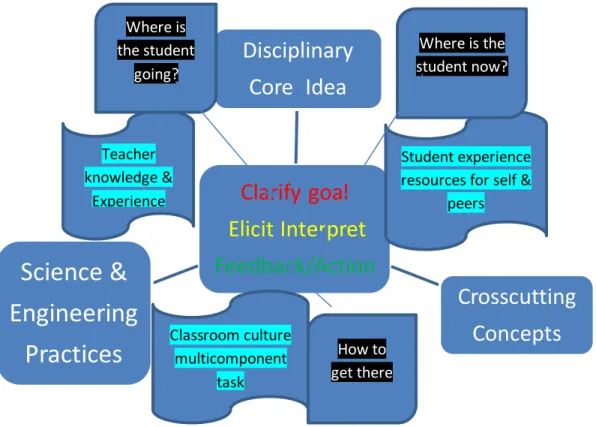
correctives/adjustments at every step of the teaching and learning journey (Black & Wiliam, 1998; Bloom, 1969) and uses evidence to make better founded decisions about teaching and learning than decisions without such evidence (Black & Wiliam, 2009). Formative assessment can be informal or formal. During informal assessment, the teacher acts impromptu or on the fly (Ruiz-Primo & Furtak, 2007) to students’ ideas and thus provides evidence for continuous learning. Assessment is formal when evidence is gathered to plan for lesson and used before and/or after instruction and learning, therefore provides evidence of students’ learning. Emphasis on classroom assessment encourages the need to clarify in advance the lesson’s objective for students (Where they are going), to assess and inform students on their present situation (Where they are), and to provide students with information as feedback or road map of how to meet their objective (How to get there) (Black & Wiliam, 1998; Sadler, 1989). Teachers in the process gain revealing information about students’ current and evolving progress to help them adjust
instruction and improve students understanding of concepts (Yin et al., 2008).
Increasing acknowledgement and surmounting evidence exist today on the role formative assessment plays in improving instruction and helping students achieve concept mastery
(Herman, 2013). Formative assessment elicits evidence of learning at each point of instruction to understand “how student is evolving as a learner” and “how to assist the learner to his/her
pathway to mastery” (Sadler, 1989, p. 121). Formative assessment is timely as the teacher uses the information immediately to make instructional adjustments (remediate, reteach concept and skills) and help build local capacity to sustain this shift overtime (Black & Wiliam, 1998; Sadler, 1989). This assessment provides varied opportunities for students to apply the knowledge and skills learned to solve problems and raise expectations (Black & Wiliam, 1998;
low-stake nature of FA couple with its feedback potential help students develop confidence in the ability to express their understanding freely, it gives voice to all students as they engage in inquiry, and it welcomes and value students’ experiences in discussions and development of knowledge (Ruiz-Primo & Furtak, 2007). Formative assessment is thus a fair assessment as it levels the playing field for all students. Formative assessment projects forward as a safeguard and is hence an asset to teaching and learning. Formative assessment can improve two-way communication that is reflexive and relational between teacher and student giving them shared authority over learning (Buck, Trauth-Nare & Kaftan, 2010; Stiggins, 2002). It is a partnership between teacher and student, each equally responsible for the richness of assessment
conversations. It provides teachers and students with opportunities to identify areas of
weaknesses to minimize them and increase areas of strengths to master curriculum and improve performance (Chappius & Chappius, 2008).
Feedback potential
Formative assessment is grounded on the theoretical model of learning and its regulation, using interactive descriptive feedback as a vehicle (Black & William, 2009; McTighe &
O’Connor, 2009). Formative feedback transforms learning by helping students internalize
features of good work. It provides students with a clear vision of targeted skills, appraises current progress, and explains how to improve (Rushton, 2005; Shepard, 2005). Shepard suggests that reflexive constructed feedback guides students’ judgement, affects self-perceptions of
competence, focuses on developing habits of thinking for deep learning not rote memorization that comes with surface learning. Feedback fosters cooperative learning, active engagement amongst peers and development of self and peer assessment skills. Formative feedback should be timely, non-evaluative, supportive, and specific or relevant to future assignments. Feedback can
also be delayed as with written responses. It can involve verification of accuracy, explanation of correct answer, or serve as hints and prompts (Shute, 2008). The power of feedback (Hattie & Timperley, 2007) is thus in its directives to eliminate the gap between student’s actual and reference levels of conceptual understanding. However, pressure from grading and teacher workload often result in a kind of feedback that suffers from timeliness, quality, and quantity, losing its effectiveness as a formative tool (Glover & Brown, 2006). Feedback renders previous formative assessment obsolete since students use the information to adjust their thinking and progress, therefore, teacher must reassess to continuously adjust and keep teaching and learning on track (Heritage,2011). This feedback loop is thus necessary to provide equal opportunity to meet the intellectual and social needs of all students (Sadler, 1989).
During feedback conversations, the teacher facilitates dialectic discourse that shapes participation which in turn is shaped by the discourse (Anderson, Zuiker, Taasoobshirazi, & Hickey, 2007). The teacher elicits and recognizes students’ ideas and communication skills and uses the evidence to adjust instruction, while students participate in assessment conversations as critiques to their peers and to their own ideas. Formative assessment thus is concerned with appraising the quality of responses that can shape and improve students’ competency therefore eliminating the inefficiency of guess-work learning (Sadler, 1989). Formative assessment according to Heritage (2011), is “an approach to teaching and learning that uses feedback as centerpiece in a supportive classroom context” p.19) to move the teaching and learning forward.
Three-dimensional teaching
Much is expected of what U.S. science teachers should know and can do based on popular discourse on students’ achievement in science, engineering, and technology (National Research Council- NRC, 2010). Fortunately, teachers’ expected facility with different
knowledge, how students learn concepts, and how to teach, is aided by continuous scholarship on teaching and learning science. The National Research Council Framework’s vision is for
students to acquire knowledge and skill in a sequence of stages that develop their understanding of aspects of three-dimensional practices in each standard (NRC, 2012). The vision requires that each standard and its performance expectations combine three dimensions:
1. Science and Engineering Practices (SEP)- teachers should explain the skills and knowledge scientists engaged in to investigate the natural world such as building models and theories, and the skills and knowledge that engineers use to design and build models and systems.
2. Crosscutting Concepts (CCC)- teachers should make explicit the concepts that provide organizational schema to link knowledge from the different domains of science. This include cause and effect; patterns, similarity, and diversity; scale, proportion, and quantity; energy and matter; structure and function; systems and system models; stability and change.
3. Disciplinary Core Ideas (DCI) - teacher’s instruction and assessment should be grounded in the core ideas of the domain. These ideas must have a broad importance or can organize concepts; be an instrument for understanding or investigating
complex ideas and solving problems; consider students interest and experiences or individual and societal needs; be teachable and learnable across grade level and with increasing sophistication (NRC, 2012).
Involvement in scientific discussions deepen students’ insight, curiosity, and responsibility to figure out why certain aspects of the natural world works. The rationale for integrating the three dimensions is that to fully understand science and engineering ideas, students must engage in
inquiry and discourse practices to develop and refine such ideas; students need a specific context to develop competence in practices; students use crosscutting concepts to make connections between and as intellectual tools across discipline (NRC, 2012).
Science learning is three-dimensional. To solidify students' learning, repeated opportunities to participate in scientific thinking and practices must be provided to enable students to slowly build an understanding of how new knowledge assimilates with old experiences (National Academic of Science, Engineering, and Medicine [NASEM], 2017). Robust learning mandates coherence among instruction, curriculum standards, and assessment. Aligning the teaching, curriculum goal, and assessments to past and future grades help expand students' understanding of CCCs and DCIs, and their skills with SEPs (NASEM, 2017). This synergy helps traces the path through which students make progress by explaining what they are expected to know and be able to do. Reform documents suggest that teachers anchor their instruction in phenomena so students can actively engage in science thinking to be able to make connections and understand how and why science ideas are important (NASEM, 2017; NGSS, 2016). Engaging all students in three-dimensional teaching requires that teachers strive to
structure instruction that, is student centered, weaves the three dimensions, is flexible for student to explore, is cumulative, provides repeated opportunity to engage students with ideas, uses engaging phenomena that motivate students to explain it, and caters to the needs of all students (NASEM, 2017).
The formative notion of looking forward and continuously assessing where students are relative to the standard or learning goals is possible with the teacher first mapping the learning sequence (Herman, 2013). Even though Georgia did not adopt the NGSS recommendations, Georgia Standards of Excellence are heavily reliant on NGSS. The Next Generation Science
Standards and the Framework for K12 science education considered learning as a trajectory through which students evolve throughout the unit, year, or K12 while participating in three-dimensional learning (NRC, 2012). The cognitive model of how science learning progresses is based on sequencing learning to provide a baseline for diagnosing and evaluating the gap (Heredia & Furtak, 2014; Heritage, 2008). Learning progression according to Shepard (2019), is a detailed model of learning composed of the learning goal, an intermediate step, and the
instructional strategy for achieving the goal. To be effective, learning progression requires a simultaneous design of the instructional activities, the assessment, and the teacher’s learning support. This pathway to mastery according to NGSS is a key theme in science learning and coherence in science education (NRC, 2012). Sequencing provides information about how student’s understanding and ability to apply scientific concepts develop more sophisticated overtime and helps teacher know where students are at each stage of learning with respect to success criteria. Formative assessment practice must be linked to the learning goal through learning progression to support classroom assessment for three dimensions (Shepard, 2019).
Teacher thinking and Practice
A shift from external/summative forms of assessment to an increasing emphasis on classroom assessment is not a new phenomenon(Black & Wiliam, 1998; NRC, 2001). However, formative assessment practice is scarce in science classrooms. It is understood that teachers’ beliefs system is influenced by their beliefs in science, in self, and in teaching. Beliefs and attitudes also shape the way teachers interpret and respond to change and challenges (Jones & Leagon, 2014). Belief about self (self-efficacy) according to Jones and Leagon (2014),
influences teachers’ behavior towards practice/instruction, motivation, success of professional development, and towards educational reform. They are confident that teachers’ prior
self-efficacy or the ability to get things done. Science teachers will need more than belief in ability to embrace the instructional principle of three-dimensional teaching and be willing to monitor the teaching and student learning minute by minute.
Throughout their lives as learners, teachers have established and nurtured their perception and beliefs about teaching. They have in the process, personally constructed their own
knowledge and beliefs about teaching that influence “the structure of the classroom, the way the curriculum is interpreted, and how instructional practices are enacted” (Jones & Leagen, 2014, p. 832). To change their disposition towards reform messages, science teachers must be
self-motivated, believe in the potential of the new strategy, and be provided with necessary resources (Borko, Davinroy, Bliem, & Cumbo, 2000). It takes a long time for teachers to build a practice that works and changing to a new one is very difficult. Asking a teacher to embrace a new way of doing things, according to Lee and Wiliam (2005), “is like asking a golfer to change his or her swing during the tournament” (p. 13). They believe that change is a slow process because
teachers want to keep what has been successful. Teachers need continuous support to integrate new strategies into their existing practices. Therefore, before high school science teachers can embark on this reform journey, credible evidence that formative assessment does improve practice and students’ learning must be presented (Lee & William, 2005) and teachers must develop an understanding of the nature and process of formative assessment (Dunn & Mulvenon, 2009) with three-dimensional learning. If teachers lack the knowledge and support, and
assessment tasks are simply inserted as special activities into their lesson especially in the new context of three-dimensional teaching, they will have difficulty enacting them. Given that teachers’ personalities as well as their classroom settings has the power to shape and constrain practices, the pattern may become automatic resulting in resistant to reflection or change
(Putnam & Borko, 2000). To help teachers overcome the reluctance of implementing formative assessment of three-dimensional teaching and learning, we need to understand teachers’ status of such practices couple with the willingness to change their view of pedagogy and the curriculum they are responsible for implementing (Rushton, 2005).
Problem statement
The concept of formative assessment is elusive, its definition muddled in policy, practice, and research due to variable goals and perspectives (Bennett, 2011; Black & Wiliam, 1998; Dunn & Mulvenon, 2009). Teachers need a clear understanding of formative assessment, sound formative assessment strategies and tools to obtain valid inferences of students’ learning. While teachers tacitly assess students’ understanding daily, assessment is usually reserved for the end of the lesson or unit and feedback information are rarely used to adjust instruction (Furtak & Ruiz-Primo, 2008). Assessment as such is viewed mostly as a tool to judge what students have been taught (Darling-Hammond & Bransford, 2005), by concentrating on the limited properties of test with little connection to the learning experiences of students (Black & Wiliam, 1998). Although a shift from summative towards the more impactful formative assessment has been endorsed (Black & Wiliam, 1998), its practice is still sparse.
Evidence supporting the positive impact of formative assessment on student learning (Black & Wiliam, 1998; 2009) has come mostly from laboratory studies or unreliable records with no ecological validity (Yin et al., 2008) thus not generalizable to real-life science classroom setting. Likewise, empirical studies have focused predominantly on students’ thinking, learning, and nature of knowledge gained, but little related to teachers understanding and how they create learning experiences aligned with formative assessment (Putnam & Borko, 2000). Among the few studies that investigated science teachers’ formative assessment practices, some created
tasks for teachers to embed into their lessons (Tomanek, Talanquer, & Novodvorsky, 2007; Wiliam, Lee, Harrison, & Black, 2004; Yin et al., 2008), while others gave teachers one-time limited training to create structured tasks to embed into their lesson (Kang et al., 2014; Metin, 2013). Though these are positive steps towards highlighting the importance of tasks in formative assessment, little effort has been made to uncover high school science teachers’ understanding of formative assessment especially as it relates to assessing three-dimensional teaching and
learning.
The Next Generation Science Standards is changing the way teachers think about teaching and learning. This change requires a shift from assessing knowledge of content to assessing understanding of core ideas using crosscutting concepts and appropriate science and engineering practices. It is obvious that teachers could benefit from developing new strategies as they transform standards into rigorous science tasks that require students to perform beyond basic competency level by focusing on explanatory reasoning and exploratory abilities with higher order thinking skills (NRC, 2001). The payoff will come when teachers can link the curriculum standard to their instruction and assessment (such that the goal of the lesson and the curriculum align to past and future grades) and weave the dimensions together seamlessly for the outcome to be cumulative (NASEM, 2017). Teachers must think differently about assessment for three-dimensional teaching and learning. The new formative assessment will gage how students use SEP in the context of CCC and DCI, and use a variety of challenging tasks (that provide specific and varied evidence of students’ status), so the teacher can adjust instruction to focus on students’ progress along the learning pathway. Tracking the path towards mastery by explaining what students are expected to know and be able to do, based on learning goals (for each topic and level) would help the student learn to transfer knowledge and reasoning to gain information
from one domain to another (NASEM, 2017). However, information on three-dimensional learning is theoretical with minimal verifiable development available to guide teachers on how to proceed (Fick, 2017). Furthermore, the NRC Framework’s recommendation to create new
system of assessment to monitor student’s understanding and progress of three-dimensional learning has yet to yield evidence to guide teachers (Fick, 2017; Harris et al., 2015; Herman, 2013). Although assessments from testing programs assess the practices and challenging
concepts, their designs do not factor three-dimensional learning yet (NASEM, 2017). Therefore, teachers must rely on their own experiences of how learning evolves to develop assessment that integrate SEP, CCC, and DCI to facilitate three-dimensional teaching and learning. To encourage classroom formative activity, information on science teachers’ knowledge and pedagogy of three-dimensional teaching is essential.
Purpose
The purpose of this study was to explore science teachers’ understanding of formative assessments and how they elicit and interpret students’ integrated science knowledge to adjust instruction and improve students’ three-dimensional learning. The study also explored teachers understanding of three-dimensional teaching and the strategies used and/or challenges used to implement formative assessment. Another reason for the study is that in order to help teachers integrate FA into their practices, it must be known what they understand and do. Therefore, this study identified formative assessment strategies used by these teachers to promote students’ understanding and application of science concepts and to understand inherent obstacles, challenges, and necessity for implementing formative assessment with three-dimensional teaching.
Research Questions
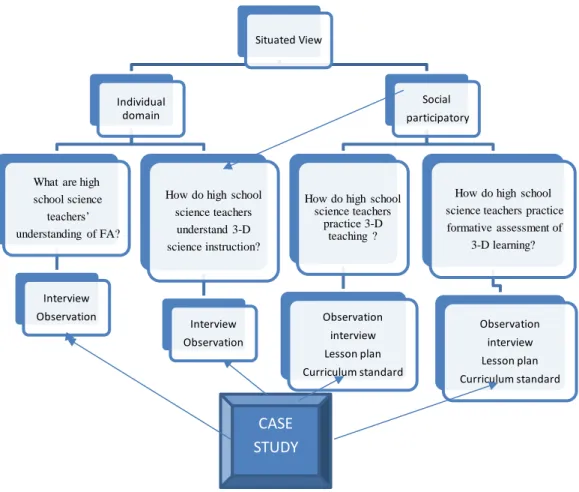
The following four questions guided the direction of this study:
1. What are high school science teachers’ understanding of formative assessment?
2. How do high school science teachers understand three-dimensional science instruction? 3. How do high school science teachers practice three-dimensional teaching?
4. How do high school science teachers practice formative assessment of three-dimensional learning?
Significance of Study
The previous sections provided some justification that science teachers lack the
knowledge of creating formative assessment tasks and struggle with its implementation (Darling-Hammond & Adamson, 2013; Metin, 2013). Besides, there are no verifiable formative
assessment strategies for monitoring and improving three-dimensional teaching and learning (Fick, 2017; Harris, 2015; Herman, 2013). Because teaching, learning, and assessment are social practices involving the construction of meaning, formative assessment is vital in tracking how and when learning is happening with three-dimensional teaching. This study is significant because it provided an image of secondary science teachers' perspectives and practice of formative assessment in the era of three-dimensional teaching and learning. Gaining an
understanding of science teachers' knowledge and practice of formative assessment is necessary. The information could provide valuable insight towards packaging and tailoring the appropriate grain size for strategies and resources that could lead to significant changes in teaching practices and student learning (NRC, 2012; Wiliam et al., 2004). Administrators, professional
development facilitators, and teacher education programs could also gain practical information to support teachers with three-dimensional teaching and assessing learning. Furthermore, insight
from exploring these questions could provide clarity into the concept of formative assessment, as minute learning goals of summative assessment, and reposition teachers' views of formative assessment as an additional burden (Jenkins, 2004). Individual research collectively endeavors to build on the incremental science knowledge base. As part of a collective effort, this study also aimed to contribute to laying the groundwork for future research and development of formative assessment for three-dimensional teaching and learning.
Assumption and Limitations
When teachers track students’ past, current, and evolving progress to provide students with corrective feedback and adjust their instruction, teachers can improve their practice as well as students learning. Reform based strategies like quality formative assessment could provide teachers with opportunities to practice developing scientific explanations for phenomena and gathering critical information about student’s learning to continuously guide their instruction. Teachers intuitively elicit students’ ideas during instruction and as such are not purposefully using the feedback information to clarify the objective of the lesson, assessing students’ pre- and present conceptions, and providing a road map of how to meet their objectives. This study was limited to high school science teachers’ knowledge, experience, and flexibility, to implement and formatively assess three-dimensional practices.
Overview of the Study
This chapter provided background information and a rational for conducting the study. Chapter two explored the literature on formative assessment in science classrooms to provide a detail account of the status of formative assessment, what issues has been investigated, and what still need further exploration. Chapter three described the methodology that guided the direction of this study and the design that lead the quest and collection of necessary data to answer the
research questions. Chapter four described and developed cases for the three teachers and created a cross case synthesis of the cases for commonalities and differences that emerged. Chapter five answered the research questions and discussed the findings and suggestions for future studies.
2. LITERATURE REVIEW Introduction
According to the National Research Council’s report, it is possible to close and even eliminate the achievement gap in US K12 science education (NRC, 2012). One way to improve all students learning documented by many is through formative assessment (Anderson & Palm, 2017; Black & Wiliam, 1998; Herman, 2013; Kingston & Nash, 2011). Despite this growing recognition for formative assessment, teachers are reluctant to practice it due to- 1) dominance of high-stake summative assessment (Furtak & Ruiz-Primo, 2008); 2) teachers lack the knowledge of creating assessment tasks and struggle with its implementation (Anderson & Palm, 2017; Darling-Hammond & Adamson, 2013; Heredia et al., 2016). Heritage (2008) argued that learning is a developmental process. Understanding how students may progress throughout a domain can help teachers develop formative assessment abilities (Bennett, 2011; Heritage, 2009; Herman, 2013). Therefore, teachers need knowledge of the pathway along which students evolve across the unit and where they are concerning the learning goals as they participate in practices to develop core ideas in science (NRC, 2012). However, there are no verifiable formative assessment strategies for improving teachers’ three-dimensional teaching and learning (Fick, 2017; Herman, 2013). Insight into how science teachers collect, analyze, and interpret data of students’ evolving sophistication of disciplinary core ideas is essential. The goal of this review was to critically explore and synthesize current information on formative assessment and three-dimensional teaching and learning, to identify what is present in the literature and what needs further exploration. The analysis of literature was divided into two parts; the first section includes criteria for including and excluding articles, search engines, terminologies, and a table to provide a summary visual of the articles reviewed. The second section comprises the body of
the paper containing the literature discussed under the following headings- 1) Definition of formative assessment; 2) Embedded formative assessment task 3) Classroom conversations and response trajectory 4) Perception on and nature of feedback loop 5) Professional development and teacher change 6) Formative assessment in relation to teacher knowledge 7) Sequencing learning for formative assessment 8) Three-dimensional teaching and learning. This review concluded with significant findings, limitations of the studies and the gap, implications, and thoughts for the future, and suggested questions for further investigation.
Criteria for inclusion and exclusion
The articles included in this review met the following criteria
• Time frame was after Black and Wiliam’s (1998) seminal work (given that relevant sources were included in their review)
• Sources were primary studies reported by the original researchers
• Population of science teachers and their students and exception given to teachers and students of mathematics and other discipline if the study provides unique insight to FA.
• The level spans from elementary to higher education, to expand the context and sources
• Data type was either self-collected data or data as part of a team of a project
• Language of study was English
• Studies that reported findings on at least one feature of FA such as descriptive feedback, self-assessment, scaffolding, learning progression, goal and success criteria,
collaboration or classroom interaction and dialogue.
• Studies on professional development and others that enhance teachers’ practice and quality of FA, and studies that examine teachers’ thinking and practice of FA
• Studies relevant to FA, provided relevant insights, added to the academic discourse, and provided implication and recommendation for future research.
The Following Criteria Were Used to Exclude Articles
• Studies that discuss FA in general in other disciplines
• Studies that mainly compares FA to summative assessment with no input or output variables
• Literature reviews on FA although their reference lists served as sources for potential articles to be included
Search engine and terminology
Terminologies identified from these review articles included formative assessment, classroom assessment, assessment for learning, three-dimensional teaching/learning, and secondary science. These terms were used to search for articles in EBSCO Host-ERIC,
Academic Search Complete, Education Full Text, and Google Scholar. This review started with a Google scholar search for literature reviews on FA. The result yielded three original articles whose reference lists served as a starting point for relevant terminologies and article sources. A challenge with the article search using these key terms was that they are not used uniformly to address the interest of this paper. FA will be used as an umbrella term to include an assessment where the primary purpose in its design and enactment is to improve instruction and foster student learning (Black, Harrison, Lee, & Marshall, 2004).
[Table 14.- see Appendix]
Definitions of Formative Assessment
The use of formative assessment remains an mystery as many different definitions
be a persistent shortage of scientific evidence of its impact so long as vagueness in the constitutive and operational definition exist (Dunn & Mulvenon, 2009). Researchers use different terminologies to mean the same thing, and sometimes, the same vocabulary to say different things (Black & Wiliam, 1998; Meyer, 1992). A clear definition is essential to help researchers’ document effectiveness and compare its impact across studies and transfer the knowledge to other contexts. Early on, Bloom (1969) defined formative assessment as an
evaluative process “… to provide feedback and correctives at each stage in the teaching-learning process” (p. 48). Chappuis and Stiggins (2002) defined a formative assessment as an assessment designed to monitor students’ progress during the learning process. While Black and Wiliam (1998), described formative assessment as encompassing “all activities undertaken by teachers, and/or by their students, which provide information to be used as feedback to modify the teaching and learning activities in which they are engaged” (pp. 7-8). Assessment in their definitions was interpreted as instruments for collecting information about students’ progress during the learning process (Dunn & Mulvenon, 2009) and adjust instruction during instruction. A more inclusive definition by Chappuis et al. (2012) goes beyond looking at what happens during instruction to include teachers and students assessing students’ strengths and weaknesses, knowledge, and skills before, during, and after instruction. The Framework for K12 education’s goal provides a similar definition for assessment as, “an ongoing activity, one that relies on multiple strategies and sources for collecting information that bears on the quality of student work and that then can be used to help both the students and the teacher think more pointedly about how the quality might be improved” (NRC, 2001, p. 30). The teacher and students recognize and respond to the student’s learning, and the teacher adjusts instruction to enhance learning and teaching during learning and teaching (Bell & Cowie, 2001). The trend that keeps
repeating in the literature is that “it is not the instrument that is formative; it is the use of the information gathered, by whatever means, to adjust teaching andlearning, that merits the “formative” label” (Chappuis, 2009, p. 4). Black and Wiliam (2009) argue that, a
practice in a classroom is formative to the extent that evidence about student
achievement is elicited, interpreted, and used by teachers, learners, or their peers, to make decisions about the next steps in instruction that are likely to be better, or better founded than the decisions they would have taken in the absence of the evidence that was elicited (p. 7).
Embedded Formative Assessment Tasks
Teachers have become experts in implementing standardized tests over the years, but the same does not apply to formative tasks. Model for teachers’ reasoning about assessment requires a combination of cognitive, observational, and interpretive skills (NRC, 2001). The essence of creating assessment tasks is for teachers to explore different factors or reconstruct formative assessment strategies to accommodate their classroom style, to inform them about students’ evolving understanding continuously. The teacher assesses the gap and provides timely feedback to students on how to close the gap in their knowledge (Black & Wiliam, 2004a). These mini-assessments are coordinated with end-of-unit mini-assessments to signal a unit’s organizational goal and give direction to the teacher (Shavelson et al., 2008). Thus, in creating new assessment tasks, the skills and knowledge incorporated should be that which is assessed (Black & Wiliam, 1998; Tomanek et al., 2007). Formative assessments tasks as fragments of formal assessments are embedded at strategic junctures in the curriculum or unit to create goals or sub-goals directed towards teachable moments before the student progresses to the next lesson (Yin et al., 2008).
The studies reviewed in this section highlight the complexity of constructing and challenges in implementing embedded formative assessments.
Wiliam et al. (2004) conducted a study to examine the achievement of secondary school students in classrooms where teachers made time to develop formative assessment strategies. In this study, 24 mathematics and science teachers were selected, trained with formative assessment strategies/techniques, and given a choice to choose which strategies to use. They assessed
students with assessment instruments. The authors acknowledged that the test lacked curricular validity (did not measure necessary concepts nor were aligned with the curriculum).
Observations and results of the interquartile range in effect size on test results revealed that teachers’ practices were slow to change, and any observable change was towards the end of the year. Wiliam et al. (2004) attributed the quality of formative assessment to the teachers’
expertise level and suggested that using embedded formative assessment improved students’ achievement in externally mandated assessments. However, Wiliam et al. (2004) cautioned the acceptance of their results based on different units of comparison. They suggested further research on students’ achievement in classrooms where teachers formally embed assessments into their lessons.
Yin et al. (2008) conducted a similar study to that of Wiliam et al. (2004) but embedded a formative assessment aligned with the curricular goal and summative assessment with a different outcome. Six experimental teachers taught a formative assessment embedded curriculum. The purpose of this quantitative exploratory study was to determine whether the embedded formative assessment task can improve students’ motivational beliefs, students’ achievement, and
conceptual change. The results of a motivational belief questionnaire and achievement
influence on students’ motivation, achievement, and conceptual change. Yin et al. (2008) noted that trained teachers varied in degree of implementation of embedded formative assessment which, affected students’ outcomes differently. Their results revealed the difficulty of
implementing formative assessment even after providing teachers with training on how to use the information to improve teaching and student learning. They cautioned about solely embedding formative assessment into the curriculum without inviting teachers to participate in its design and provide follow up in-progress training.
In a similar study, Tomanek et al. (2007) explored science teachers' reasoning associated with task selection or evaluation of factors used as a planned formative assessment. The goal was to identify teachers' knowledge and beliefs that ground their assessment decisions. Data were collected from 24 first and 27 second-year teachers in a Science Teacher Preparatory Program (STPP) and 41 experienced science teachers who usually collaborate with the STPP faculty as mentors. They used formative assessment probes as a data collection instrument. However, the reliability and validity of their instrument was questionable and used as a pilot tool. Descriptive analysis of probes for teachers thinking revealed that task selection and evaluation was based on two themes: (1) "Characteristics of the tasks" and (2) "characteristics of students or the
curriculum" (Tomanek et al., 2007, p. 1119). They found no relation between being able to judge the level of thinking demanded of the task and teachers' training or experience. However,
selecting tasks based on students or curriculum characteristics was related to teaching
experience. They implied that (1) teachers reasoned with factors that sometimes work against the selection of tasks with the potential of assessing students' understanding of concepts. (2)
Prospective and experience teachers must be afforded the opportunity to question their beliefs about assessment and interpretation of evidence of student understanding.
These studies highlight teachers' reasoning about selecting assessment tasks and the challenges in creating and implementing embedded formative assessment. Wiliam et al. (2004) and Yin et al. (2008) findings on the relationship between teacher enactment and student achievement indicated that teachers had variable expertise and affected students' success differently. While Wiliam et al. (2004) reported a significant improvement in students' achievement with embedded assessment tasks, Yin et al. reported the contrary. Both studies found that experience alone is not enough for the effective implementation of formative
assessment. Tomanek et al. (2007) reported that training or experience had no relationship with being able to judge the level of thinking of tasks. These studies suggest that teachers need more training in constructing or participation in co-constructing and enacting formative assessment tasks.
Complexity of Classroom Conversations and Response Trajectory
Evidence in learning science indicates that affinity is more towards talking science than reading science (Lemke, 1990; Roth, 2005). The dynamics of talk provides an interactive medium for exploring and knowing about the world scientifically. Therefore, whole-class discussions create opportunities for students and peers to question and provide a rationale for scientific claims and for the teacher to solicit, monitor, and enhance students learning. Classroom talk is vital to many approaches to learning but difficult to coordinate because of the challenges to manage rich classroom discourse and inquiry activity in unison (Anderson et al., 2007). These daily assessment conversations or instructional dialogues were embedded in an activity currently taking place in the classroom. It can allow the teacher to gather information about the status of students’ conception, language use or communication skills, mental models, or used as strategies to guide instruction (Ruiz-Primo & Furtak, 2006). However, classroom talk does not reveal
students’ complete conceptions to the whole class. Adding another component of curriculum-embedded assessment as written explanation (silent talk) could provide a broader definition of feedback that addresses each student’s need (Furtak & Ruiz-Primo, 2008). Thus, formative assessment as a tool can be employed at any level of student-student-teacher interaction during daily classroom talk to improve students’ conceptual understanding and assist teachers
continuously gain insight about students’ level of understanding (Bell & Cowie, 2001; Furtak & Ruiz-Primo, 2008). This section described studies that demonstrate the impact of formal
(planned) and informal (unplanned) formative assessment in the classroom using various kinds of discourses.
Focusing on discussions between students,Anderson et al. (2007) conducted a study to understand how research efforts to document discursive classroom routines informed the process of advancing participation in scientific inquiry and performance on high-stake achievement. Using a situated lens, Anderson et al. (2007) explored “individual student performance on individual test items as examples of specific types of discourse, allowing a coherent examination of transfer of understanding across very different ways of knowing” (p. 1742). Videotape
discussions from groups of 11th and 12th grade students and their pre-and posttest results were
analyzed. The results highlighted students’ engagement in classroom conversation, the role of answer rubrics, and the teacher facilitation that was better coordinated to scaffold more
productive discursive trajectory classroom talk in the second year. Anderson et al. (2007) noted an improvement in teacher providing informal feedback during classroom conversations and more productive discussions with the use of answer rubrics. Also, a varying degree of learning was reflected in group discourse on quiz feedback and on gains in the examination and test. The implication from this study is that the role and nature of group discourse couple with teacher
intervention affect the quality of students’ movement along the discursive trajectory from informal formative feedback conversation to more formal assessment activities.
Looking at discourses between students and teachers, Ruiz-Primo and Furtak (2007) explored how students develop an understanding of concepts during daily whole-class
conversations. They used the Elicit, Student respond, teacher Recognize and Use (ESRU) model to distinguish the quality of informal assessment practices across teachers and to determine whether this quality can be linked to student performance. Videotapes of classroom
conversations were collected from three middle school teachers trained in the implementation of the FAST (Foundational Approach for Science Teaching) curriculum. The analysis of discourse transcripts indicated a range of informal assessment frequencies, from incomplete (ERS or IRE/F) to complete conversation cycles (ESRU). They made the inference that better informal assessment practices could be linked to better student performance, and the ESRU model was useful in capturing differences in teachers’ informal assessment practices. However, this conclusion is drawn from data for only a single teacher.
Furtak and Ruiz-Primo (2008), in a similar study, added a written portion to students’ responses to classroom talk to capture students’ complete conception of knowledge status, and compare this status with the learning goal. Their study examined the relative utility of the formal and informal functions of four types of formative assessment prompts in eliciting middle school students’ ideas about sinking and floating through written responses and classroom discussions. Videotape of written assessment and discussion implementation were collected from four Romance project teachers. Data analysis indicated that all prompts elicited a high percentage of students’ ideas at the expected levels, but below-level conceptions were expressed more in
writing as compared to discussions. Many more students provided responses containing multiple conceptions in writing as compared to students’ responses in whole-class discussions, and some prompts were more successful than others in eliciting a range of students’ ideas. Furtak and Ruiz-Primo (2008) noticed that teachers were not using whole-class settings efficiently to elicit students’ conceptions and suggested that teachers need more familiarity with prompts for effective implementation. They recommended that teachers should base their judgment on students’ conception of both written work and classroom discussion. Besides, future research should explore in greater depth ways teachers implement different assessment prompts and the extent of feedback provided to students about the conceptions elicited in the prompts.
Ruiz-Primo and Furtak (2006) compared how four middle school science teachers from the same experimental group used questioning as an informal formative assessment method to measure students’ learning. The purpose was to understand how informal assessment looks like in the context of scientific inquiry, the different levels of informal assessment practices, and whether these different levels were linked to levels of student learning. Data were collected from videotapes of classroom conversations and responses from pre-posttest assessments, and
embedded assessments prompt. The analysis results indicated that 1) teachers used complete cycles only 26% of the time and most cycles were 95% epistemic in nature 2) the pattern of change in students’ post-test results reflected a change in teacher’s informal formative
assessment practice 3) teachers using complete ESRU cycle had students with high performance. Ruiz-Primo and Furtak (2006) conclude that it is important to provide teachers with tools with which to respond in immediate and effective ways. They suggested that future studies were needed to revise scientific inquiry domains but did not indicate challenges/limitations with their study. Also, future studies could use ESRU coding techniques to explore discourse in the context
of embedded assessment. Ruiz-Primo and Furtak (2006) asserted that evidence from their study could be used to design assessment courses for preservice teachers and professional development on informal formative assessment strategies.
Hickey et al. (2012) study intended to promote meaningful participation in the discursive construction of shared domain knowledge and improved achievement with a design strategy made up of three different levels of assessment (informal/close, semi-formal/proximal, and formal/distal level). Through a situated lens, Hickey et al. (2012) rationalized that using different forms of assessment makes using and aligning them easy, such that an assessment can serve a formative function in one situation and summative function in another. Data were collected through informal observations and videotapes of feedback conversations then aligned to establish collective accountability in students’ participation. A sociocultural lens was used to analyze these data for disciplinary discourse and interaction for better understanding. Results indicated that enhancement in feedback conversations parallel gains in proximal exams and distal test. Hickey et al. (2012) claimed that their study provided support for an assessment design model that embeds informal formative assessment into inquiry-oriented activities, assesses and
improves the activity-assessment combo, and evaluates the combo against externally developed standardized test items. Limitation of their study was in the challenge of using researcher-developed assessment to evaluate formative assessment practices and failure to clarify the difference between formative and summative functions. Hickey et al. (2012) suggested that the introduction of individually oriented formative assessment into existing classroom instruction may lead to reduce learning.
These studies revealed mixed results with teacher intervention. Increase facilitation improves teacher's domain knowledge, scientific inquiry, and achievement (Anderson et al.,
2007; Hickey et al., 2012). Frequent use of incomplete cycle conversations was observed more than complete cycles. However, increasing the use of complete cycle conversations leads to improved teacher practice and students' performance (Ruiz-Primo & Furtak, 2006, 2007). Different assessment prompts elicited different conceptual ideas from students (Furtak & Ruiz-Primo, 2008). The studies in this section focused on teachers' practice with different forms of assessments, and the challenges observed may stem from a lack of teachers' understanding of formative assessment.
Perception on and Nature of Feedback
Formative assessment provides fuel for teaching and learning in the form of descriptive feedback along the way (McTighe & O’Connor, 2009). Feedback is critical for the formative evaluation as it provides students with a clear vision of the skills to be learned, appraises current progress, and explains how to improve (Rushton, 2005; Shepard, 2005). Feedback thus addresses the goal of the lesson by aiming to answer three questions. Where is the student going? Where is the student now? And “how to get there”? (Hattie & Timperley, 2007). Reflexive constructed feedback guides students’ judgment and affects self-perceptions of competence and focuses more on assessing deep learning and away from rote memorization that comes with surface learning. It fosters cooperative learning, active engagement amongst peers, and development of self and peer assessment skills (Sadler, 1989). Feedback, in general, gives information about how successful or not something has been done. Thus, the power of feedback arises from its ability to provide that factor necessary to eliminate the disparity between student’s present and anticipated level of conceptual understanding (Hattie & Timperley, 2007). Meeting students’ physical, intellectual, and social needs require practice in a supportive environment involving a feedback loop (Sadler, 1989). Feedback is a system-control function that connects both the need of the teacher and the