W&M ScholarWorks
W&M ScholarWorks
Dissertations, Theses, and Masters Projects Theses, Dissertations, & Master Projects
2018
A Program Evaluation of an After-School Reading Intervention
A Program Evaluation of an After-School Reading Intervention
Program in a Small Urban Elementary School
Program in a Small Urban Elementary School
Erin Kershner
College of William and Mary - School of Education, [email protected]
Follow this and additional works at: https://scholarworks.wm.edu/etd Part of the Educational Assessment, Evaluation, and Research Commons
Recommended Citation Recommended Citation
Kershner, Erin, "A Program Evaluation of an After-School Reading Intervention Program in a Small Urban Elementary School" (2018). Dissertations, Theses, and Masters Projects. Paper 1550153927.
http://dx.doi.org/10.25774/w4-v80z-0817
This Dissertation is brought to you for free and open access by the Theses, Dissertations, & Master Projects at W&M ScholarWorks. It has been accepted for inclusion in Dissertations, Theses, and Masters Projects by an authorized administrator of W&M ScholarWorks. For more information, please contact [email protected].
A PROGRAM EVALUATION OF
AN AFTER-SCHOOL READING INTERVENTION PROGRAM IN A SMALL URBAN ELEMENTARY SCHOOL
A Dissertation
Presented to the
The Faculty of the School of Education
The College of William and Mary in Virginia
In Partial Fulfillment
Of the Requirements for the Degree Doctor of Education
By
Erin Elizabeth Sadler Kershner September 2018
A PROGRAM EVALUATION OF
AN AFTER-SCHOOL READING INTERVENTION PROGRAM IN A SMALL URBAN ELEMENTARY SCHOOL
By
Erin Elizabeth Sadler Kershner
Approved September 25, 2018 by
Jennifer Parish, Ed.D. Committee Member
Margaret Constantino, Ph.D. Committee Member
Michael F. DiPaola, Ed.D. Chairperson of Doctoral Committee
Table of Contents List of Tables ... ix List of Figures ...x Abstract ... xi Chapter 1: Introduction ...2 Background ...2 Program Description ...4 Context ...6
Description of the Program ...9
Overview of the Evaluation Approach ...12
Program Evaluation Model ...12
Purpose of the Evaluation ...13
Focus of the Evaluation ...13
Evaluation Questions ...13
Definition of Terms...15
Summary ...19
Chapter 2: Review of Related Literature ...21
The Case for Vocabulary Instruction ...21
The Vocabulary Gap ...22
The Importance of Early Oral Vocabulary ...23
Vocabulary Acquisition and Instruction ...24
Making Meaning Vocabulary Curriculum ...26
Allocated Versus Engaged Learning Time ...28
Characteristics of Effective After-School Programs ...29
Relationships and Belonging ...32
Self-Efficacy ...35
Summary ...38
Chapter 3: Methods ...40
Participants ...42
Teachers ...42
Parents of Program Participants ...43
Data Sources ...46
Qualitative Data: Teacher Perceptions...47
Qualitative Data: Parent Perceptions ...51
Data Collection ...53
Data Analysis ...54
Teacher Perception Data ...54
Parent Perception Data ...55
Delimitations, Limitations, and Assumptions ...56
Delimitations ...56 Limitations ...57 Assumptions ...57 Ethical Considerations ...58 Propriety ...58 Utility ...59
Feasibility ...60
Accuracy ...61
Chapter 4: Findings ...62
Participants ...62
Teachers ...63
Parents of Program Participants ...63
Summary of Findings for Study ...65
Evaluation Question #1 ...65
Evaluation Question #2 ...68
Evaluation Question #3 ...71
Persistence...72
Positive Response to Challenging Work...74
Confidence in Reading ...75
Goal-setting in Reading ...77
Evaluation Question #4 ...78
Persistence...80
Positive Response to Challenging Work...81
Confidence in Reading ...83 Motivation/Goal-setting in Reading ...84 Evaluation Question #5 ...85 Other/Unintended Outcomes ...87 Time ...87 Home-school communication ...88
Data ...88
Chapter 5: Discussion and Recommendations ...90
Discussion of Findings ...91
Vocabulary ...91
Stamina ...93
Self-Efficacy ...95
Implications and Recommendations ...99
Recommendation #1: Continue use of Making Meaning curriculum materials during ARC and make it available for Tier 1 instruction. ...101
Recommendation #2: Continue to provide students with time for independent reading of their choosing in a relaxed, positive, quiet setting. ...101
Recommendation #3: Emphasize consistent attendance as a requirement of ARC. ...102
Recommendation #4: Incorporate more explicit goal-setting and student monitoring of progress toward goals to enhance self-efficacy in reading. ...102
Recommendation #5: Seek ways to increase students’ personal libraries at home. ...103
Recommendation #6: Continue to provide after-school access to expert instructors who can provide support and feedback to students in reading. ...103
Recommendation #7: Continue to provide snack and recess as part of the program. ...104
Recommendation #8: Maintain the small, relatively homogenous student groupings in ARC. ...105
Recommendation #9: Communicate with parents about student progress and ways
to support that progress at home. ...105
Additional Recommendations ...106
Consider shortening the program and providing more incentives/resources for teachers in order to reduce opportunity costs. ...106
Consider making ARC a K-2 program. ...108
Incorporate effective elements of ARC into Tier 1 instruction as much as possible. ...108
Recommendations for Future Research ...109
Summary ...110
Appendix A: Student Reading Assessment Data for 2016-2017 and 2017-2018 ...111
Appendix B: Teacher Focus Group Protocol ...116
Appendix C: Parent Interview Protocol ...118
Appendix D: Most Significant Change Parent Focus Group Protocol ...120
Appendix E: Parent and Teacher Participant Informed Consent Forms ...121
Appendix F: Checklist for Focus Group Interviews ...123
Appendix G: Fall 2017 Staff Survey Items Related to Propriety Standards...124
Appendix H: Sample Leadership Team Agenda with Emphasis on Open Dialog ...125
References ...126
Acknowledgments
This work could not have been completed without the support of many. In particular, I would like to thank:
Dr. Michael DiPaola, my dissertation committee chair, for his expertise, encouragement, advice, and support.
My committee members, Dr. Peggy Constantino and Dr. Jennifer Parish, who provided practical insight and support for refining the research proposal and study.
My cohort in the EPPL program at William & Mary. Our summers and weekends together provided much-needed space and dialog to reflect on my practice, refine my research goals, and engage in continuous learning.
My school staff, especially instructional team members, whose leadership and sense of self-efficacy in instruction are exemplars in the field. I could not have done it without your cheerleading and unwavering support.
The parents and teachers who generously shared their time and perspectives for this study.
My parents, for instilling the value of education at an early age, and for the selfless giving of time, perspective, and resources to help make this whole endeavor happen.
My children, for assuming greater independence and responsibility at home, and for tolerating marathon stretches of physical and mental mom-absence.
My husband, for helping me maintain perspective, for picking up loose ends, filling the house with laughter and good meals, and never losing patience.
List of Tables
Table 1. State/District Comparison of Reading SOL Pass Rates in 2015-2016 ...7
Table 2. State/District/School Comparison of 2016 Reading SOL Pass Rates by Subgroup ...8
Table 3. Characteristics of All ARC Participants ...45
Table 4. Characteristics of 2-Year ARC Cohort Compared to Total ARC Population ...46
Table 5. Analysis Methods for Evaluation Questions ...47
Table 6. Alignment of Teacher Focus Group Questions and Evaluation Questions...50
Table 7. Characteristics of Teacher Focus Group Participants ...63
Table 8. Characteristics of Parent Respondents ...65
List of Figures
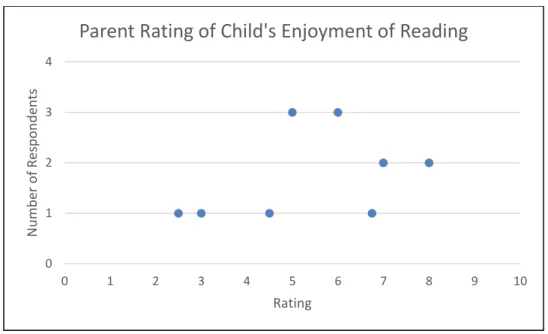
Figure 1. ARC Logic Model ...10 Figure 2. Parent Rating of Child’s Enjoyment of Reading ...79
Abstract
The purpose of this study was to conduct a program evaluation of an after-school reading intervention program for reluctant readers. The program is part of a school district initiative to help young students establish positive, productive habits and dispositions toward reading. Program participants included teachers in the after-school program and parents of students who participated for two years. The evaluation questions were designed to assess the perceptions of those stakeholders on the benefit of the program for student participants. Both teachers and parents perceived that the program benefited students’ receptive vocabularies. Teachers found that the program significantly improved students’ ability to read independently for longer and longer periods of time. Likewise, parents noticed that their children were more willing to initiate reading at home, while many also found that their children would persist at independent reading because they were enjoying it more. The program was credited with improving elements of students’ self-efficacy in reading, such as confidence, persistence, and positive emotional
responses to challenging tasks. Goal-setting, as a subset of self-efficacy, was a less obvious outcome of the program. Small, relaxed and supportive after-school learning environments where students developed strong relationships with peers and their after-school teacher helped to make the program enjoyable for students and optimized
outcomes. Recommendations for further study on the program outcomes at other schools and quantitative outcomes after more years of program implementation are included.
A PROGRAM EVALUATION OF
AN AFTER-SCHOOL READING INTERVENTION PROGRAM IN A SMALL URBAN ELEMENTARY SCHOOL
CHAPTER 1 INTRODUCTION Background
Adults often ask children, “What do you want to be when you grow up?” Regardless of the answer, in order to make their dreams come true, children must first become successful readers and writers. A report by the Annie E. Casey Foundation (2014) indicated that students who are able to comprehend text on grade level by the end of third grade are more likely to graduate from high school and obtain successful
employment in adulthood. Yet, despite efforts to improve reading comprehension for students in the early grades, only 20% of U.S. fourth graders from households of poverty were reading on grade level at the time of the report, compared to 51% of students from households with higher income. In Virginia, results of fourth grade performance on the 2015 National Assessment of Educational Progress (NAEP), showed similar, although slightly higher, results. While 43% of fourth graders in Virginia were proficient in reading by NAEP standards, the second-highest percentage in the nation, only 22% of students from households of poverty were reading at or above grade level, with 3% scoring at the advanced level. By contrast, 58% of students not eligible for free or reduced-price lunch were reading at or above grade level, with 22% scoring at the
advanced level (National Center for Education Statistics, 2016). Both at the national and state levels, the percentages of students reading on grade level are weak, but the sizable gaps between students of poverty and students of economic means (a 31% gap nationally,
a 36% gap in Virginia) suggests that educators have a significant problem to tackle in our nation’s elementary schools before we can ensure that all students will become self-actualized, literate adults.
The World Literacy Foundation has described extensively the negative effects of functional illiteracy on quality of life. While complete illiteracy refers to the inability to read and write at all, functional illiteracy refers to an inability to apply reading, writing, or mathematical skills in a way that enables the individual “to accomplish tasks that are necessary to make informed choices and participate fully in every-day life” (World Literacy Foundation, 2015, p. 4). In both developed and developing nations, individuals with lower literacy skills earn about one-third less than their literate peers, with little opportunity to increase their earnings over the course of a lifetime. Additionally, literate individuals can expect to triple their earnings from the start to the end of their careers (World Literacy Foundation, 2015).
Illiteracy is linked to lower quality of life issues beyond individual lifetime earnings. Health problems are more abundant for illiterate or low-literate individuals because they tend to have limited access to preventative health programs that promote good hygiene and proper nutrition. There is a strong correlation between crime and illiteracy, as more than half of incarcerated individuals are functionally illiterate and nearly 40% of adjudicated juveniles have learning problems (Darling-Hammond, 2010). These issues can cycle through generations as well. Illiterate parents cannot read to their children, increasing the chances that their children will start school approximately one year behind children from literate families, thus repeating the cycle of illiteracy and poverty. The cost of illiteracy, not just to the individual, but also to the nation, is
staggering. The World Literacy Foundation (2015) estimated the cost to the U.S. (in welfare, health care, and judicial services) to be $362 billion, or 2% of its annual gross domestic product (GDP).
Because the ability to read is fundamental to success in our U.S. culture and the success of our culture, it is imperative for schools to ensure that all students attain strong literacy skills. They must intervene effectively to close the reading achievement gaps, enabling all students to experience early and lasting success in school and beyond. Many programs, practices, products, and curriculum models are available for schools and districts to choose from, not all of which have sound research backing their effectiveness (see What Works Clearinghouse for examples: https://ies.ed.gov/ncee/wwc). The goal of this program evaluation is to determine the worth of a district-developed, after-school intervention program that is designed to improve the reading habits and achievement of elementary-aged students at one elementary school in central Virginia.
Program Description
Prior to 2016, efforts to provide additional, targeted reading support to students at risk of reading failure in Baker City Schools (pseudonym) had been designed by
individual schools and dependent upon individual school budget constraints. All elementary schools employed at least one reading specialist to work daily with the lowest-proficiency readers. Most schools employed classroom teachers to provide weekly after-school intervention, although the content and duration of the intervention varied. Some schools also employed hourly tutors, again with varying curriculum targets, instructional approaches, and intensity. Methods of identifying the students for these myriad interventions varied not only from school to school but also from grade
level to grade level within the same school. Likewise, the relative effectiveness of these interventions varied by location and year.
Baker City’s strategic plan called for a comprehensive, coordinated approach to intervention that would help guarantee that 100% of students would be on grade level in reading and math by 2017. Reading achievement, as measured by the state’s Standards of Learning (SOL) tests, generally held at 75-80% proficient, with sizable achievement gaps between all students and Black students, students with disabilities, and economically disadvantaged students. To help fulfill the goal of 100% proficiency, the school district applied for and received a grant from the Virginia Department of Education for extended school year/school day funds. This 3-year, $300,000 grant afforded the school district 1 year for planning and 2 years to implement an extended learning program for students in Grades 1-6 aimed at improving students’ reading achievement and attitudes about reading. The grant funds were made available in the 2015 Appropriation Act of the Commonwealth following the 2012 publication of a study of year-round schooling by the Joint Legislative Audit and Review Commission (2012). That Commission found that in Virginia and other parts of the country, year-round schooling might help to increase the rate of academic improvement for some subgroups such as Black, Hispanic, limited English proficient, and economically disadvantaged students.
A section of the report addressed the lack of evidence supporting the effectiveness of Expanded Instructional Time (EIT) in improving student achievement, but noted that very few school districts used EIT to provide intervention for students. Instead, EIT in Virginia was mostly used as a way to accommodate scheduling needs and to bank
closures. The program funded under the grant, After-school Reading Club (ARC; pseudonym), is not a year-round school model, but an EIT intervention model specifically designed to improve reading achievement for students from some of the subgroups identified in the Joint Legislative Audit and Review Commission (2012) report. ARC completed its two years of grant-funded implementation in the spring of 2018 at all seven of Baker City’s elementary schools.
Context. This program evaluation is focused on the implementation of the ARC program at one of Baker City’s elementary schools. Baker City is a small urban school district in central Virginia that serves approximately 4,300 students. Six elementary schools (preK-Grade 4) of about 300-350 students each feed into one upper elementary school (Grades 5-6). One middle school (Grades 7-8) and one high school serve the school district. Class size average for the district is 19:1. In 2015-2016, 53.6% of students in the district were eligible for free or reduced-price lunch and five elementary schools received Title I funds (Virginia Department of Education Office of School Nutrition Programs, 2016). The district student body was 40% White, 36% Black, 11% Hispanic/Latino, 6% Asian/Pacific Islander/Hawaiian, and 7% other. Approximately 26% of students received gifted education services and 14% received special education services. English Language Learners comprised 9% of the population.
In 2015-2016, 76% of all students in the district (Grades 3-8, combined) demonstrated reading proficiency, as measured by the state’s SOL non-writing assessment; this rate was 4% below the state average. Baker City students with disabilities, economically disadvantaged students, and Black and Asian students all performed below state averages, while English Language Learners, White, and Hispanic
students performed slightly above state averages. As shown in Table 1, Grade 3 pass rates for the district generally trailed state pass rates, while Grade 4 pass rates exceeded that of the state in most demographic subgroups. In both third and fourth grade reading, SOL pass rates were lower than average pass rates in the district and state for Black students, students with disabilities, and economically disadvantaged students. Students with limited English proficiency achieved higher pass rates in Baker City than the state average, and exceeded the district average pass rate at both third and fourth grades. While the gaps between other subgroups were larger in third grade at the district level than the state level, the opposite was generally true in fourth grade. Proficiency rates for Black students were comparable in fourth grade at the state and district level, but because fourth graders across the district performed better than the state average, the gap in performance for Black students in fourth grade reading was higher at the district than the state level (Virginia Department of Education, 2017).
Table 1
State/District Comparison of Reading SOL Pass Rates in 2015-2016
Third Grade Fourth Grade
Group Virginia BCS Virginia BCS
All Students 76% 71% 77% 80%
Black 62% 51% 64% 63%
SWD 49% 36% 48% 56%
ED 64% 55% 65% 71%
LEP 68% 73% 63% 82%
Note. SOL = Standards of Learning; BCS = Baker City Schools; SWD = students with disabilities; ED = economically disadvantaged; LEP = limited English proficient. Adapted from “Virginia School Quality Profiles,” Virginia Department of Education,
The elementary school that is the focus of this evaluation is the only non-Title I school in the district, with approximately 38% of students in kindergarten through fourth grade qualifying for free or reduced-price meals. Its SOL scores in reading were above the district and state average for all students from 2013-2017. Achievement gaps persist, particularly for Black students, students with disabilities, and economically
disadvantaged students. Table 2 shows that, in 2015-2016, while the school’s average pass rate was above that of the state, students from these three subgroups had lower proficiency rates than the state, demonstrating a larger achievement gap within the school than the state. These larger gaps in performance have been noted across several years on both SOL tests and internal formative assessments of reading. Compared to the overall pass rate for the school, in 2016 20% fewer Black students passed the reading SOL, 40% fewer students with disabilities passed, and 23% fewer economically disadvantaged students passed. Membership in one of these subgroups, therefore, was used as a consideration for inclusion in the ARC program at this elementary school.
Table 2
State/District/School Comparison of 2016 Reading SOL Pass Rates by Subgroup
Group State District School
All Students 76% 76% 82%
Black 63% 58% 62%
SWD 48% 42% 42%
ED 64% 62% 59%
LEP 63% 66% not reported –
small n Note. SOL = Standards of Learning; SWD = students with disabilities; ED =
economically disadvantaged; LEP = limited English proficient. Adapted from “Virginia School Quality Profiles,” Virginia Department of Education, 2017.
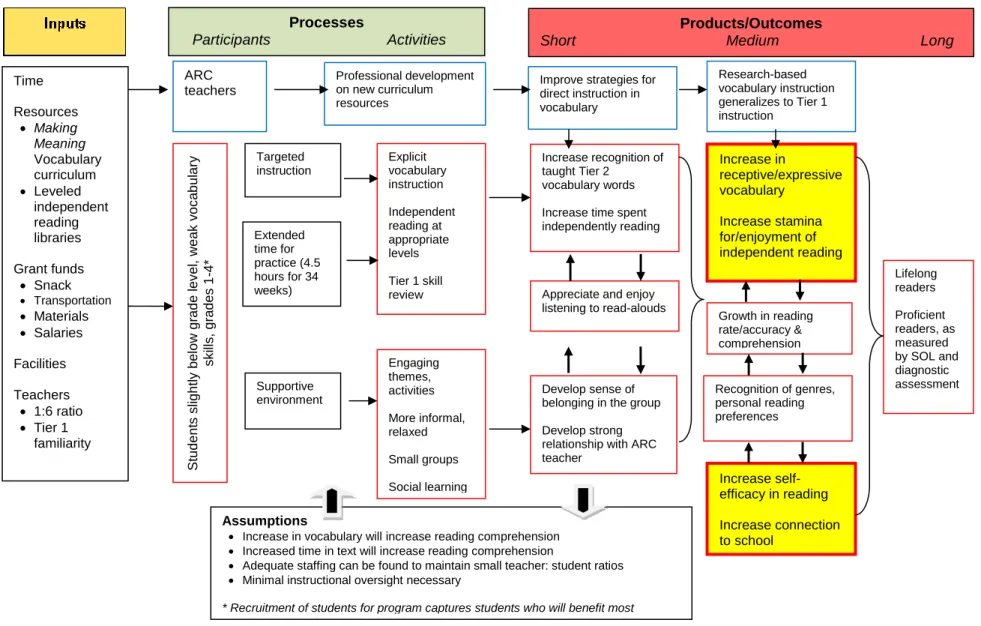
Description of the program. During the 2016-2017 school year, the district dedicated extended learning time grant funds to an after-school program called After-school Reading Club, or ARC. It was launched in all the After-school district’s elementary and upper elementary schools in order to provide more coordinated, targeted, and evidence-based reading intervention for identified students. More specifically, the program was intended to serve students with weak vocabulary skills and with reading habits often associated with reluctant readers (lack of stamina, inability to identify reading preferences, frequent abandonment of texts, reported dislike for reading). The logic model for this program (see Figure 1) includes assumptions that if students experience targeted instruction, spend extra time reading highly engaging independent level texts, and connect more deeply with the learning environment, they will experience growth and success that will ultimately lead to reading proficiency and lifelong enjoyment of reading.
Figure 1. ARC Program Logic Model, based on Stufflebeam’s Context-Inputs-Processes-Products model of program evaluation. Time Resources Making Meaning Vocabulary curriculum Leveled independent reading libraries Grant funds Snack Transportation Materials Salaries Facilities Teachers 1:6 ratio Tier 1 familiarity Professional development on new curriculum resources ARC teachers Explicit vocabulary instruction Independent reading at appropriate levels Tier 1 skill review
Improve strategies for direct instruction in vocabulary
Appreciate and enjoy listening to read-alouds
Develop sense of belonging in the group Develop strong relationship with ARC teacher
Assumptions
Increase in vocabulary will increase reading comprehension
Increased time in text will increase reading comprehension
Adequate staffing can be found to maintain small teacher: student ratios
Minimal instructional oversight necessary
* Recruitment of students for program captures students who will benefit most
Research-based vocabulary instruction generalizes to Tier 1 instruction Lifelong readers Proficient readers, as measured by SOL and diagnostic assessment Engaging themes, activities More informal, relaxed Small groups Social learning Increase recognition of taught Tier 2 vocabulary words Increase time spent independently reading Increase self-efficacy in reading Increase connection to school Increase in receptive/expressive vocabulary Increase stamina for/enjoyment of independent reading Recognition of genres, personal reading preferences Extended time for practice (4.5 hours for 34 weeks) Targeted instruction Supportive environment Stu d e n ts s lig h tl y b e lo w g ra d e l e v e l, wea k v o c a b u la ry s k ill s , g ra d e s 1 -4* Processes Participants Activities Products/Outcomes
Short Medium Long
Growth in reading rate/accuracy & comprehension
Students were selected for ARC based on their need for more support in reading, but certain exclusions applied. Students receiving significant Tier 3 reading interventions and students with significant behaviors that would prevent them from successfully
accessing the additional instructional time were not considered strong candidates. Instead, schools were charged with finding “fence sitters” who might just need a little extra boost in order to become confident, competent readers. In 2016, a variety of beginning-of-year assessments were used to find qualified candidates: AIMSweb fluency probes, PALS reading assessments, Spring 2016 SOL scores, and Spring 2016 Measures of Academic Progress (MAP) scores, in particular. Students who might not yet love reading or see themselves as readers/learners were considered prime candidates for a program that would provide them with an opportunity to connect more frequently and intimately with the content and their teacher. The program was promoted as an extension of Tier 1 instruction (initial, differentiated instruction in the regular classroom intended to cover the general curriculum), and to the extent possible, teachers would teach their own students after school, in order to facilitate overlap between Tier 1 and after-school instruction.
ARC ran three consecutive days per week for 90 minutes per day. For the first 30 minutes, students had recess and snack time. In the third- and fourth-grade groups, recess was unstructured. In first and second grades, the days alternated between a structured movement/literacy program and unstructured free play. The remaining 60 minutes of the program involved five to seven students with a classroom teacher focused on vocabulary development, independent reading with conferencing, and other teacher-designed small group activities. Teachers were provided with a vocabulary development program,
reader’s workshop curriculum, and leveled independent reading texts from the Making Meaning curriculum (Center for the Collaborative Classroom, 2015).
Overview of the Evaluation Approach
This program evaluation falls within the pragmatic paradigm and use branch of program evaluation. As its name suggests, the pragmatic paradigm is aimed at
determining what is useful to the various stakeholders within a specific context. Pragmatists recognize that knowing what works and what is valued within a context is fundamental, as the findings of the evaluation should be meaningful and useful to those who commissioned the evaluation and the evaluand’s stakeholders. Mertens and Wilson (2012) cite the axiology of pragmatic program evaluation as being utilitarian; in other words, do the ends justify the means? To that end, the ARC evaluation questions and data collection plan were designed to help determine whether and how the program has been beneficial to specific stakeholders within a specific context, and in relationship to competing wants and needs.
Program evaluation model. Stufflebeam’s (2000) CIPP model provides the overarching design of this program evaluation. In particular, the CIPP model helps to examine the degree to which the identified inputs and processes combine effectively to achieve the desired outcomes of the program (Mertens & Wilson, 2012). A product or impact evaluation, interchangeable names for the final part of the CIPP model, can help to identify the benefits as well as unintended consequences of the program for various stakeholders. The perspectives of various stakeholders on the benefit of the program can be evaluated using qualitative research methods. The CIPP model allows for stakeholder involvement—and therefore greater buy-in—at various stages of the evaluation, such as
coming to agreement about the logic model and determining the evaluation questions that are most relevant to the current evaluation cycle. It also allows for both formative and summative purposes to be addressed within the evaluation.
Purpose of the evaluation. At the end of the 3-year grant cycle, the school district will need to determine whether to reapply for grant funds or to terminate the program. The adopted budget for the 2018-2019 school year does not include funding to continue the program absent grant funds. The purpose of this program evaluation was to determine the perceptions of teachers and parents of the benefit of the program for student participants, with a focus on medium-term outcomes. Results of the study are intended to help provide a basis for recommendations regarding the program’s
continuation, continuation with modifications, or termination.
Focus of the evaluation. This evaluation relied on qualitative data to determine the perceived benefit of the program for its participants, as well as its overall worth in relation to competing wants and needs. Medium-term outcomes of the ARC logic model refer to dispositions and habits that students are meant to develop as a result of program participation. The medium-term outcomes that were the focus of this impact evaluation are highlighted in yellow on the logic model (Figure 1). The long-term outcome of creating lifelong readers is not possible to evaluate. Given the small cohort, short duration of the program thus far, and varied influences on student achievement that cannot be isolated, it would be invalid to assert causation between program participation and the medium-term outcomes related to reading comprehension and fluency reflected in the logic model. Any correlations noted between student achievement and program participation are restricted to perception data from parents and teachers.
Evaluation questions. The theory of action of the ARC program presumes that the processes of targeted vocabulary instruction; additional time for high-interest independent reading; and small, supportive learning environments will lead student participants to demonstrate increased stamina for and enjoyment of reading, experience increased self-efficacy as readers, and demonstrate increased connections to and
enjoyment of school overall. The evaluation questions were designed to probe the benefit of these key processes on the intended program outcomes. Research questions for the two stakeholder groups were targeted toward what they are likely to know or have
noticed about student participants. Fully understanding the benefits and opportunity costs of the ARC model could help inform the district as it continues to pursue evidence-based approaches to ensuring reading proficiency for all students by the end of third grade. Questions addressed by this evaluation included:
1. What are the perceptions of ARC teachers regarding the benefit of the program for students’ receptive and/or expressive vocabulary?
2. What are the perceptions of ARC teachers regarding the impact of the program on students’ reading stamina?
3. What are the perceptions of ARC teachers regarding the impact of the program on students’ behaviors that are reflective of self-efficacy in reading?
4. What are the perceptions of parents of ARC participants regarding the impact of the program on students’ enjoyment of reading?
5. What are the perceptions of parents of ARC participants regarding students’ enjoyment of, and willingness to attend school and ARC?
Definitions of Terms
After-school Reading Club (ARC)—An after-school reading program for students in Grades 1-6 developed and implemented through state extended school year
funding. The program meets after school 3 days per week for 34 weeks, 1.5 hours each day. Five to seven students work with one teacher.
AIMSweb — An assessment system that provides universal screening and progress monitoring tools in reading, writing, math, and spelling for Grades K-8.
Assessments are brief, predictive, and sensitive to improvement. Data reports are norm-referenced and assist teachers in making decisions about which students are most in need of interventions and supports, as well as advancement.
AIMSweb R-CBM—A specific subtest of the AIMSweb system, a Reading Curriculum-Based Measure that records the number of words a student reads accurately on a one-minute timed grade-level passage. R-CBM measures are frequently referred to as “fluency” measures, but are strictly rate/accuracy measures.
Benefit—an advantage, help, or enhancement.
Connection to school—A sense of belonging, a willingness to attend, and/or an affinity for staff, other students, and/or the activities that take place at school.
Extended Instructional Time (EIT)—Additional time provided for instruction, added either as minutes on the end of the day or as additional days in a school year. Fluency—Reading a text using prosody, expression, and phraseology in a manner that
reflects comprehension of the text (Allington, 2009).
Functional literacy—An ability to apply reading, writing, or mathematical skills in a way that enables the individual “to accomplish tasks that are necessary to make
informed choices and participate fully in every-day life” (World Literacy Foundation, 2015, p. 4).
Impact evaluation—“An evaluation that assesses a program’s effects and the extent to which the program’s goals were achieved” (Mertens & Wilson, 2012, p. 559). Independent reading—Reading alone, generally a text that is easy to read. Students are
independent with a text when they have adequate background knowledge and can decode the words quickly with 99-100% accuracy (Allington, 2009).
Measures of Academic Progress (MAP)—Computer-adaptive testing that provides individual student scores compared to a normative national sample. MAP testing is designed to show student growth within a subject area from year to year and as compared to other students with similar score histories. MAP testing was
conducted for all students in Baker City Schools in reading and math in Grades 2-4 in 2015-2016.
Phonological Awareness and Literacy Screener (PALS)—A screening, diagnostic, and progress-monitoring tool used for Virginia’s Early Intervention Reading Initiative. Students in Grades K-3 are assessed on skills such as phonological awareness, alphabet knowledge, letter-sound knowledge, concept of word, word knowledge, and oral reading in context. Students who score below a normed threshold are required to receive intervention services in addition to regular classroom instruction in their schools (University of Virginia Curry School of Education, 2018).
Reading accuracy/rate—The number of words read correctly from a grade level passage within a minute.
Reading comprehension—The ability to understand and make use of what has been read. Comprehension includes the ability to draw conclusions, make inferences and summarize.
Reading stamina—The amount of time a student can read independently without stopping or losing focus.
Reluctant readers—Students who spend little time engaging in independent reading. Poor vocabulary, inability to identify reading preferences, frequent abandonment of texts, and low stamina for reading often characterize reluctant readers. They may or may not articulate verbally that they do not enjoy reading or do not perceive themselves to be good readers.
Rich vocabulary instruction—A type of instruction that introduces words in context, provides definitions, and requires students to use and manipulate the words in new contexts.
Self-efficacy—“A context-related judgment of personal ability to organize and execute a course of action to attain designated levels of performance” (Zimmerman, 1995,
p. 218). Sub-functions of self-efficacy include self-monitoring, goal-setting, evaluation, strategy use, and time planning and management. Strong self-efficacy contributes to motivation and perseverance in the face of challenging tasks (Bandura, 1995).
Small group instruction—Generally no more than six students working with a teacher at any given time.
Summed score—A score produced by the PALS assessment on the fall and spring assessments that considers the various skills considered foundational to the
reading demands of each grade level. Each assessment window has a normed benchmark summed score. Students who score below the benchmark have significant reading deficits for their grade level and require intervention. Supportive learning environment—A learning situation in which strong relationships
exist between teacher and student. Teachers know about their students’
backgrounds, interests, strengths and weaknesses, and can use this knowledge to help students progress academically and socially.
Tier 1 instruction—Regular classroom instruction provided by a certified teacher. All students have access to Tier 1 instruction, which, statistically, enables
approximately 80%-85% of students to progress through the curriculum without further intervention. This initial instruction is referred to as Tier 1 in a 3-tiered system of instructional supports often referred to as Response to Intervention (RTI). Instruction at Tiers 2 and 3 is characterized by increased frequency,
duration, or intensity, as students demonstrate a need for more targeted instruction in order to meet grade level standards.
Tier 2 instruction—Additional, small group instruction that is required for approximately 10%-15% of the population in order to make adequate progress through the curriculum. Tier 2 instruction can be provided by the classroom teacher or an instructional specialist.
Tier 3 instruction—Individual or small group instruction, often using a systematic, structured, curriculum and delivered by a trained specialist such as a reading teacher or special educator. Tier 3 instruction is reserved for students who are
significantly behind in the curriculum (more than two grade levels below current grade placement), generally 5% of the population.
Virginia Standards of Learning Assessment (SOL)—End of grade tests administered in the Commonwealth of Virginia to determine student proficiency levels in core content. Tests are a combination of multiple choice and technology-enhanced (fill in the blank, matching, drag and drop, etc.) items. Students in third and fourth grade take SOL tests in reading and math each year.
Worth—“The value of the evaluand in a particular context” (Mertens & Wilson, 2012, p. 562).
Summary
Reading is a fundamental skill for lifelong learning and success in adulthood. Yet, on both international and state assessments, large percentages of elementary-aged students fail to demonstrate mastery of reading comprehension skills. Furthermore, some demographic subgroups experience significantly lower reading proficiency pass rates, as measured by tests such as NAEP and the Virginia SOLs. It is significantly more
challenging to close gaps in reading comprehension the older students become
(Allington, 2009). Effective early intervention is critical for ensuring that all students are able to read and attain functional literacy.
In the 2015-2016 school year, Baker City School District was awarded a 3-year grant to implement an early intervention, extended instructional time program focused on reading comprehension. Students in first through fourth grade were provided the
equivalent of 17 additional full days of instruction in reading through a required after-school reading program that focused on vocabulary development; a small, supportive
environment; and additional time to read high-interest, independent-leveled texts. The purpose of this program evaluation was to determine the perceptions of teachers and parents of the benefit of the program for student participants. Specifically, the researcher was interested in learning about the degree to which program participation had a
perceived impact on students’ vocabularies, on behaviors and skills associated with self-efficacy in reading (stamina, perseverance, goal-setting, strategy use), and overall enjoyment of school. Unintended outcomes and opportunity costs of the program for families and teachers were also explored in order to inform recommendations for programmatic changes that might enhance the program’s overall worth.
CHAPTER 2
REVIEW OF RELATED LITERATURE
What follows is a review of the extant literature surrounding the key elements of the theory of action for the After-school Reading Club (ARC) program—the importance and effectiveness of vocabulary instruction; additional time for high-interest independent reading; and small, supportive learning environments. These programmatic inputs are discussed in terms of their demonstrated potential to have a positive impact on student achievement and self-efficacy in reading. In order to solve the achievement gap in reading and eradicate the problem of functional illiteracy for all students, supplementary programs such as ARC must be supported by strong evidence of effectiveness.
The Case for Vocabulary Instruction
Word knowledge, or vocabulary, and “reasoning in reading” were first suggested by Davis (1942) as the two most important, independently operating processes involved in reading comprehension. He asserted that these processes comprised 89% of the variance in reading comprehension, with word knowledge being the greater of the two factors. The literature continues to describe the strong correlation between vocabulary knowledge and reading comprehension. It is difficult to prove causation between a large oral vocabulary and strong reading comprehension skills because the two processes both hinge on meaning-making, albeit at different levels of syntax. Nonetheless, the National Reading Panel (2000) asserted that even without a significant body of empirical evidence, there is reason to believe that stronger receptive vocabularies can affect greater reading
comprehension. To that end, in their discussion of the five key elements of effective reading instruction—phonemic awareness, phonics, fluency, vocabulary, and
comprehension—vocabulary instruction is paired with, and discussed first, in their chapter titled “Comprehension.”
The Vocabulary Gap
Children from wealth have typically been exposed to significantly more words and more complex vocabulary through both conversation and picture book texts, creating a critical vocabulary gap that is evident before students start kindergarten. A common estimate is that by the time they enter kindergarten, children from wealthy homes are exposed to 30 million more words than children growing up in poverty (Hart & Risley, 2003). Differences in the size of children’s vocabulary as early as 18 or 24 months of age have been correlated to socioeconomic status (Farkas & Beron, 2004; Fernald,
Marchman, & Weisleder, 2013; Weisleder & Fernald, 2013). By the age of 24 months, children from high SES households have been found to be 6 months ahead of children from poverty with regard to language processing skills that are directly related to vocabulary acquisition (Fernald et al., 2013). These differences have been found to be the result not only of the quantity of exposures, but also the quality of verbal interactions between caregiver and child and the degree of language processing involved in those interactions. Overheard or indirect speech is qualitatively inferior to child-directed speech, the latter of which is more prevalent in higher income and professional households.
Significant vocabulary gaps that are present at 36 months between Black and White students and poor and wealthy students have been found to persist through age 13
(Hart & Risley, 2003). The research is contradictory about whether the gap continues to widen over the course of the school years (Hart & Risley, 2003; Pullen, Tuckwiller, Konold, Maynard, & Coyne, 2010) or whether vocabulary growth is fairly comparable for children from different economic and racial backgrounds (Farkas & Beron, 2004), effectively leaving the size of the gap intact. Regardless, the instruction students are receiving in school is not effectively closing the vocabulary gap.
The Importance of Early Oral Vocabulary
Children need to have a strong oral vocabulary as they learn to read. As they begin to decode words, they need to be able to recognize those decoded letter strings as familiar words. “When the word is not in the learner’s oral vocabulary, it will not be understood when it occurs in print” (National Reading Panel, 2000, p. 4). Vocabulary, therefore, represents the medial ground between decoding and comprehension. Having a strong vocabulary allows a child to more readily self-check in the decoding stages of reading, and then also to make meaning of what is read.
Once a student makes the transition from learning to read to reading to learn, vocabulary continues to play an important role. It is estimated that in order to adequately distill meaning from a text, the reader must have command of 90% to 95% of the words in the text (Hirsch, 2003). Knowing the vast majority of the words in the text allows the reader to comprehend the overall meaning of the text and make appropriate guesses about unknown words. When vocabulary skills do not match the demands of the text, readers might be able to accurately decode the text, but will not understand it. This phenomenon has been suggested as a reason for the growing gaps in reading achievement that become apparent around fourth grade (Chall, Jacobs, & Baldwin, 1990; Hattie, 2009), as texts
become more complex and students with poor vocabulary can no longer rely primarily on strong decoding skills. Having a schema for both the vocabulary and the text’s context is critical to text comprehension.
Vocabulary Acquisition and Instruction
Young children tend to gain their vocabulary knowledge incidentally, through conversation and storybook listening. Even once schooling begins, the vast majority of words that students learn happen incidentally. For those students whose early
experiences do not include vocabulary-rich exposures, the challenge for schools becomes finding the best strategies to boost their vocabularies so that both learning to read and reading to learn happen successfully. The National Reading Panel (2000) suggested that the actual kind of vocabulary instruction undertaken is less important than that teachers intentionally and frequently engage in vocabulary instruction. Elleman, Lindo, Morphy, and Compton (2009) also concluded that the type of vocabulary instruction used is less relevant than the fact that vocabulary instruction takes place: “No matter what type of vocabulary instruction was used, it produced the same effects on comprehension as any other type of vocabulary instruction” (p. 25). This finding was also supported in a study of third grade classrooms, where the amount of vocabulary instruction was quantified across all parts of the literacy instructional block. Those teachers who incorporated vocabulary instruction throughout the block—instead of only during the specific vocabulary or guided reading lesson—were found to have increased low-income students’ vocabulary knowledge significantly (Carlisle, Kelcey, & Berebitsky, 2013). Likewise, the overall strategy, vocabulary instruction—not a specific kind of vocabulary
instruction—was found to have the highest effect size of the five pillars of reading instruction in Hattie’s (2009) synthesis of meta-analyses related to student achievement.
Regardless of the kind of instruction, key elements do seem to exist. They include multiple exposures, rich contexts, repetition, high engagement, provision for student discussion, storybook reading and read-louds, and a variety of instructional methods (National Reading Panel, 2000). Rich vocabulary instruction, also known as robust vocabulary instruction, is an approach that incorporates most of these elements and has been suggested as an effective means of boosting the word knowledge of students with low initial vocabularies (Beck & McKeown, 2007). In this form of explicit
instruction, children are exposed to new vocabulary words through multiple exposures in rich contexts, and are asked to manipulate those words through discussion and other meaningful activities. Researchers studying the effectiveness of this approach have found that children with reading difficulties and/or low initial vocabularies learn new words at a greater rate using this explicit instruction over incidental exposures (Elleman et al., 2009; Elley, 1989; Nelson & Stage, 2007; Pullen et al., 2010; Vadasy, Sanders, & Herrera, 2015). Few effects have been seen on distal (norm-referenced) measures of vocabulary or reading comprehension, as it is hypothesized that those measures are not sensitive enough to find the differences in vocabulary caused by targeted instruction (Elleman et al., 2009; National Reading Panel, 2000). While teacher-made criterion-referenced measures did show significant increases in vocabulary knowledge, this difference in measures also speaks to the enormity of the vocabulary gap problem that teachers and schools must tackle. Frequency, duration, and intensity of the instruction
are likely key components of successfully increasing vocabulary knowledge to a great degree.
Making Meaning Vocabulary Curriculum
Because of the significant gap in vocabulary skills associated with weaker
readers, the school district determined that a vocabulary component would be required in the ARC program. Making Meaning is a comprehensive reader’s workshop curriculum developed by the Center for the Collaborative Classroom, a nonprofit educational organization that provides curriculum materials and professional development related to early literacy and mathematical learning. Curriculum kits include read-alouds for whole group instruction, a vocabulary lesson for each day of the week related to the read-aloud, and a classroom set of leveled texts that are highly engaging. Reading comprehension and vocabulary lessons complement one another and are unified through a series of pre-selected read-alouds. The district has made the reading comprehension aspect optional, but requires the read-aloud and vocabulary instruction to be included in each ARC lesson. In the introduction to the Making Meaning vocabulary program, the authors list seven different components of the vocabulary program that have been gleaned from some of the research on children’s vocabulary development. They rely primarily on the work of Beck, McKeown, and Kucan; Buaman and Kame’enui; and Stahl in their selection of fundamental underpinnings of the program. The seven components are:
Provide explicit instruction in a set of carefully chosen, high-utility words.
Begin instruction by introducing a word in context.
Provide a student-friendly definition of the word and examples of the way it is used
Give students the opportunity to engage actively with the word in meaningful ways when they first encounter it, such as applying it to their own
experiences.
Have students practice using the word through engaging activities.
Provide multiple exposures to the word over an extended period of time.
Teach strategies that students can use to learn words independently, such as recognizing synonyms, antonyms, and words with multiple meanings, and using context to determine word meanings. (Center for the Collaborative Classroom, 2015, p.xii)
These seven elements of the program are clearly situated within the seminal work related to vocabulary development and reading comprehension. The expectation is that 102 vocabulary lessons taught from this curriculum will provide a substantial boost to students’ vocabulary knowledge.
Extended Time for Learning
The ARC program is designed to provide students with three hours of additional literacy instruction per week for 34 weeks. During this time, students receive direct instruction in vocabulary through the aforementioned Making Meaning curriculum. The remainder of the time is to be a teacher-designed combination of review of skills and concepts covered during regular classroom instruction and independent reading in appropriately leveled texts. Teachers are encouraged to conference with students about their reading and to facilitate opportunities for students to discuss their books with one another. The proportion of time spent on various activities is dependent upon the ARC teacher, who, in many—but not all—cases also serves as the students’ Tier 1 reading
teacher. (In the ideal situation, the ARC and classroom teacher is the same individual, allowing for more efficient recognition of student needs and coordination between what happens during the day and what happens after school. It also helps to strengthen relationships that are already in place.) In addition to the extended time for literacy, students have 30 minutes per day (the program runs 3 days per week) of snack and recess, some of which is structured for the primary-aged students.
Allocated Versus Engaged Learning Time
Time for learning was one of three issues identified by A Nation at Risk
(Commission on Excellence in Education, 1983) in need of reform in the country’s public schools. In that report, a correlation was drawn between the lower test scores of
American students and fewer hours spent in school, compared with students from leading industrialized nations. This correlation then prompted the assumption that students will learn more if they have more time in school. Instructional time has been a policy issue that has recurred periodically, paired with perceived crises in the quality of educational outcomes achieved by U.S. public schools. In 1994, the National Education Commission on Time and Learning reported that the country had made significant strides in
addressing standards and expectations, but that no progress had been made in increasing the amount of time students spent learning. In 1999, WestEd (Aronson, Zimmerman, & Carlos, 1998) released a study asserting that no empirical data or longitudinal studies yet existed that examined the effects of lengthening instruction time on student learning. They exposed a weak link between allocated time (number of days in the school year, number of hours in a day) and student learning. Time was found to be a factor only to the extent that what is available is used effectively—in the service of academic learning:
“The research suggests that the higher the quality of instruction, especially as it
accommodates students’ differing educational backgrounds, abilities and learning styles, the greater the academic achievement” (Aronson et al., 1998, p. 4). Karweit (1985) similarly found that not even time-on-task (also called engaged learning) has a causal relationship with learning. Rather, the key to student success is the degree to which teachers differentiate instruction by readiness and interest such that students are actively engaged in learning activities that appropriately challenge them.
The WestEd group cautioned that schools considering extending school time would do well to first analyze the degree to which time is already effectively used (Aronson et al., 1998). Only if it is determined that there is already a high percentage of engaged learning time should additional time for learning be considered as an
intervention strategy. With regard to literacy, both Tier 1 instruction and interventions should contain what Allington (2002) referred to as the Six Ts of Reading Instruction— Time, Texts, Teach, Talk, Tasks, and Tests. He postulated that since students who are behind in reading require significant additional time in appropriately leveled text, it only makes sense that that time should be provided outside the regular school day. Otherwise, as far too often happens in classrooms, the students are pulled from time in Tier 1 reading instruction for their intervention, thereby denying them the extra time they need to catch up to grade level standards (Allington, 2002, 2009).
Characteristics of Effective After-School Programs
After-school programs have long been seen as a solution to the failure of major American institutions (the family and schools) to properly supervise, support, and ensure the safety of low-income children (Lauer, Wilkerson, Apthorp, & Snow, 2006).
Academic remediation or acceleration became a new goal of after-school programs in the 1990s, as schools experienced a more urgent need to ensure all students achieved at equal levels (Fashola, 1998). In his early review of after-school and extended school day programs, Fashola (1998) described the difficulty in analyzing the effectiveness of the programs in terms of academic results for at-risk students: diversity of programming, non-at-risk populations served, variance in attendance policies, and lack of
methodologically sound evaluation procedures.
Given the goal of many after-school programs (including ARC) to improve academic outcomes for students at risk of learning problems or failure, programs need to be evaluated with these specific student populations. Fashola (1998) identified features of 34 programs he reviewed with the greatest promise of positive results for at-risk students. For academic components to be effective, the curriculum of the after-school program should be closely aligned with that of the regular school day. In addition, effective teachers should be retained to teach in the after-school program and time should be allotted for some one-on-one tutoring between teachers and students. In a later meta-analysis of after-school programs targeting reading, the presence of individual tutoring was found to be one of the most positive moderating effects on student achievement in reading (Lauer et al., 2006). Staff training and a structured program with accompanying curriculum materials tend to have better outcomes for at-risk students. Finally,
evaluation should be embedded within the program, and community and student groups should be involved in identifying needs and planning to meet those needs.
Expanding upon Fashola’s (1998) work, Lauer et al. (2006) described several other elements of effective after-school academic programs. In their meta-analysis of 35
out-of-school-time programs, they found that interventions targeting primary-aged students (Grades K-2) had a greater impact than those targeting upper elementary
students (Grades 3-5). Activity focus was not a significant moderator of effect size in the Lauer et al. (2006) study. In other words, students could participate in activities other than those targeting literacy explicitly and still make statistically significant gains in reading achievement over the control group. Some researchers advocate providing students with activities that do not follow the mold of the traditional school day,
particularly for upper elementary and middle school students from minority and/or at-risk populations (Hall, Yohalem, Tolman, & Wilson, 2003; Miller, 2003). Instead, students should have more opportunities to choose activities that promote leadership,
collaboration, and problem-solving, all foundational skills to success in school. With regard to amount of time, students benefitted most when the intervention lasted for more than 45 hours and fewer than 210 hours for the school year (Lauer et al., 2006).
Lauer et al. (2006) cautioned that while modest effect sizes can be achieved with after-school literacy programs for at-risk students, the effects from these programs themselves are not likely adequate for closing the achievement gap between at-risk and on-grade-level students. However, others have found that when at-risk students
participate in after-school enrichment programs, they have better social and academic outcomes, even 2 years after participation (Miller, 2003). Specifically, in a study of at-risk third graders, Posner and Vandell (as cited in Miller, 2003) found that “time in enrichment activities was associated with better grades, work habits, adjustment, and relationships with peers, while time with adults was associated with improved conduct
ratings by teachers and better grades in school” (p. 48). These “soft skills” are complementary to academic skills, and equally critical to student success.
Relationships and Belonging
While many of the researchers investigating the links between time and learning focus on the quality of the instruction as it meets the needs of individual learners, other factors of Out of School Time programs have been found to benefit students, particularly those at risk of learning failure. The National Institute on Out-of-School Time (Hall et al., 2003) suggested that the quality of the relationships between individuals is another significant factor in the ability of after-school programs to increase student achievement: “They also need personal attention; strong, respectful relationships with adults; a culture of peer support, clear rules, high expectations and real assessments; and challenging experiences and opportunities for self-direction, participation and contribution within the organization and the community” (Hall et al., 2003, p. 21).
Supportive environments are critical to student success not only in after-school programs, but also in all formal school settings. Much of the research on the connection between relationships and learning has focused on the affective aspects of learning, or student habits of mind influenced by those relationships. When students experience supportive, caring high-quality relationships with adults at school, they have a stronger connection to school, motivation to succeed, pro-social values and behaviors, and perseverance in learning and life tasks (Hall et al., 2003; Miller, 2003; Werner &
Brendtro, 2012). This “connectedness,” thus, is a key element of future success in school and beyond. While some students come to school already pre-disposed to be connected
or find a trusting adult, for other students, that connection must be intentionally made for them.
In addition to a positive effect on student motivation and attitude toward schooling, there is also evidence that strong relationships with teachers are correlated with increases in reading achievement for typically developing elementary-aged readers. In a study of the effects of both the quality of relationships and quantity of instructional exposures in reading and math, Pianta et al. (2008) suggested that positive emotional relationships between teachers and students “matter somewhat” when it comes to reading achievement for third and fifth grade students (p. 388). Using the data from their earlier NICHD Study of Early Child Care, where 1,364 children from 10 different states in the country were followed from birth through fifth grade, Pianta et al. noted that for every one point gain in emotional climate, third graders outscored national reading growth norms by 1.6 points, while fifth graders outscored norms by 3.7 points. These gains were realized even after controlling for poverty level, gender, or baseline reading levels. The authors posited that the non-experimental field study they conducted provides evidence that improving the emotional quality of classroom interactions will cause, to some extent, greater achievement gains in elementary-aged students. Hattie (2009) also suggested that there are some significant academic effects created by supportive environments. Strong interpersonal relationships between students and teachers have an effect size of d = 0.72, suggesting that the small, focused environment that allows for deeper relationships in a less formal setting may also help to boost student achievement.
It has been conjectured that connectedness through strong relationships can more easily be established when class sizes are small (Miller, 2003). Teachers are more likely
to have more time to get to know their students informally and to become familiar with their learning preferences and areas of strength and weakness. Further, smaller classes afford students more opportunities to engage and discuss with peers and for teachers to provide individual attention to students, two elements of effective reading instruction (Allington, 2002). Small classes also promote better peer relations and sense of
belonging within the group (Bascia, 2010). Smaller group sizes can foster shared goals and positive experiences around learning, facilitating a group identity characterized by positive orientation to school and greater academic achievement. Said differently, group cohesion (called peer influences by Hattie), created through a focus on a common task or goal, has an effect size of d = 0.53 (Hattie, 2009). Cohesion is often found to be stronger in smaller groups, such as those used in ARC. Morrison and McDonald Connor (2002) posited that schooling effects are strongest on early literacy when teachers can take an individualized approach to literacy instruction, based on students’ initial vocabulary and decoding skills. In their 10-year longitudinal study of kindergarten and 1st grade
classrooms in one school district, they found that 72% of literacy instruction tended to involve child-managed activities, such as sustained silent reading, but that students who entered school with weaker literacy skills required more teacher-managed instruction. Morrison and McDonald Connor suggested that designing the optimal balance between teacher-managed instruction and child-managed instruction for each individual student would produce the greatest gains in literacy. While class size has a more distal effect on student learning than teacher instruction, teachers are better able to attend to individual needs when they are instructing smaller groups of students.
The theory of action for ARC posits that strong relationships should be forged between students and teachers in order to connect students, not just to ARC, but to school in general. The initial goal was for all students in ARC to have their classroom teacher also be their after-school teacher. Spending time on activities more individually aligned to student needs and interests in a more relaxed environment that promotes informal conversation and relationship-building was intended to increase the student’s connection to his or her teacher and to the learning (reading) process. While not all students were ultimately matched with their classroom teachers after school, ARC theory rests on the research that suggests that a connection with any meaningful adult in school will have positive benefits for students’ learning trajectories. It also subscribes to the idea that the smaller group setting will allow for greater access to individualized, more meaningful and potent instruction for students at risk of learning failure.
Self-Efficacy
The social cognitive theory of Albert Bandura has made a compelling case for the importance of self-efficacy in academic achievement. Self-efficacy is defined as “a context-related judgment of personal ability to organize and execute a course of action to attain designated levels of performance” (Zimmerman, 1995, p.281). Self-efficacy is task-specific, related to one’s judgment of ability to perform a specific set of tasks, as opposed to general conceptions of self-worth or personal qualities. It is also multi-dimensional, meaning that an individual’s self-efficacy beliefs may be different for math, English, or tasks related to performing arts. Self-efficacy is likely influenced by external factors such as the level of competitiveness versus cooperation, or noise level of the educational environment, and is thus context-specific. It is relevant only to mastery
criteria, rather than normative or other criteria; thus, an individual perceives his or her self-efficacy with regard to his or her ability to complete an activity at a designated level of mastery, not in comparison to his or her peers. Social comparisons, however, have an impact on one’s self-efficacy. Observing a peer of perceived equal skill fail or succeed has a correlative effect on one’s self-efficacy. In other words, if a student watches a friend of perceived similar skill fail, his or her own self-efficacy might be diminished: he is likely to think to himself, “if he can’t do it, I certainly can’t.” Self-efficacy is also measured prior to task initiation, thus having a causal impact on academic motivation (Bandura, 1995; Zimmerman, 1995, 2000).
Much of the research on self-efficacy has focused on adolescents and adults and math self-efficacy (Bandura, 1995; Lee & Jonson-Reid, 2016; Zimmerman, 2000), but there is also evidence that students as young as first grade can accurately report self-efficacy and distinguish it from related but different concepts such as self-concept and motivation (Lee & Jonson-Reid, 2016). Self-efficacy has been found to have a reciprocal relationship with perseverance, effort, and motivation. It is a mediator of student
achievement and emotional responses to learning tasks, regardless of student aptitude or ability. A student with high self-efficacy is more likely to have reduced stress and anxiety when presented with academically challenging tasks (Zimmerman, 2000).
Self-efficacy research converges with research on small educational environments with regard to the benefits of promoting strong relationships and a sense of belonging for students at school. Students who are better able to self-regulate their behavior and form positive relationships with classmates are characterized by greater self-efficacy in social functioning and self-regulatory functioning, both of which contribute to academic