Factors that influence early career nurse employment outcomes, settings and intention to remain in the workforce: A prospective cohort study
Amanda Jacqueline Cottle
Bachelor of Nursing, Master of Health Practice majoring in Health Professional Education
A thesis submitted for the degree of Doctor of Philosophy at The University of Queensland in 2019
Abstract
A shortage of nurses currently exists both globally and in Australia, as
attested to by the literature and the Australian government. In Australia, this shortage is felt more acutely in out-of-hospital settings. Ineffective recruitment processes and poor retention rates of Early Career Nurses (ECNs) have contributed to the shortage. Strategies to improve the supply of ECNs to the hospital and out-of-hospital settings have been implemented. However, little research has been conducted on the factors that impact on ECN employment outcomes and effective retention strategies. This study aimed to identify the factors influencing initial employment outcomes and settings for ECNs, and to clarify which factors attributed to ECNs’ intention to remain in their position and the profession over their first year post-graduation.
This study employed a prospective cohort design guided by transition theories.The target population was final-year students enrolled in undergraduate nursing programs in Australia. Non-probability convenience sampling was used to recruit students graduating from two universities in different states. An online survey tool, the Early Career Nurse Employment Experience Survey (ECNEES), was developed and data were collected across three time points over 12 months, commencing in November 2016.
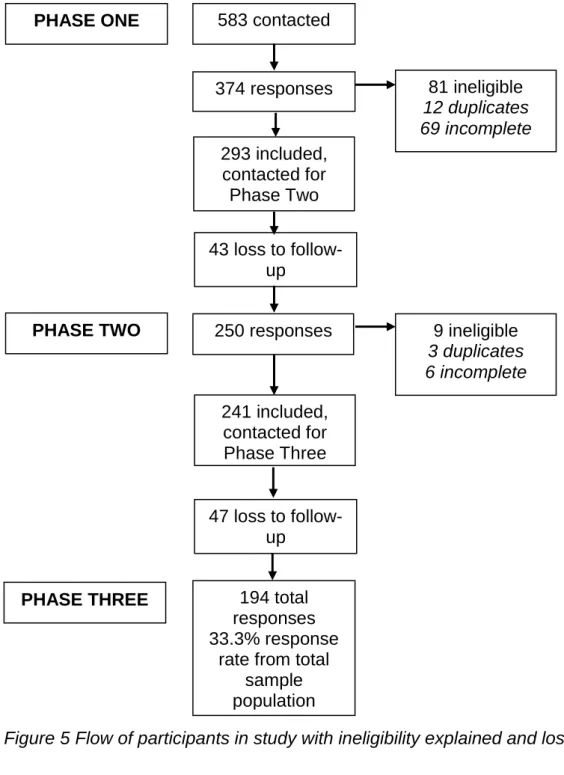
The initial response rate was 64.2% (𝑛 = 374) with 81 responses ineligible due to duplicates (𝑛 = 12) and incomplete responses (𝑛 = 69), leaving a sample population of 293 participants. Overall loss to follow-up was 33.8% and the final sample retained from Phase Three (𝑛 = 194) was used in data analysis. After 12 months the professional turnover rate in the sample was 6.7% in total, comprising 3.1% leaving a Registered Nurse (RN) job and not taking another, plus 3.6% never beginning RN work post-graduation. Logistic regression was used to analyse the data. Analysis showed English as a first language was a predictor of employment as an RN. Analysis identified different factors that impact on employment in different settings. For ECNs previous healthcare experience or a preference for the out-of-hospital setting predicted employment in the out-of-out-of-hospital setting. Undergraduate employment, Grade Point Average (GPA) > 5.51 or previous relationships with employers were predictors of working in the hospital setting. Logistic regression showed higher Work Environment, Support and Encouragement (WESE) scores and stress in personal life were the only predictors of ECNs intending to remain in the
profession. Statistical modelling could not predict ECNs’ intention to remain in their current position.
Success in employment is impacted by ECNs having English as a Second Language (ESL). This may be due to a misalignment between English language requirements enforced by the regulatory board prior to registration and industry standards during recruitment, leading to a bias against ECNs with ESL. Different factors impact on securing employment in the hospital versus out-of-hospital setting. Relationships with industry and preferences play a large role in the employment setting for ECNs. Improving recruitment to the priority out-of-hospital areas may require workforce policy that creates dedicated supported positions for ECNs in these settings. Differences were apparent between ECNs’ intention to remain in their position and their intention to remain in the profession. Today’s ECNs desire job mobility within nursing, which may be leading to superior career outcomes in the profession.
The National Health Workforce Dataset collected by the Department of Health should collect demographic information on languages spoken by nurses. It may also be timely for a review of the healthcare industry’s English language expectations. Longitudinal research that reviews current transition theories in the out-of-hospital setting and ECN populations with ESL will strengthen the theoretical basis needed to develop evidence-based retention strategies for these groups. Finally, all
stakeholders should focus on facilitating ECN career progression through flexible working contracts and flexible career pathways that facilitate transfer between departments, organisations, and sectors. These strategies will assist in the effective recruitment and retention of the ECN population required to combat the nursing shortage.
Preliminary Pages Declaration by author
(All candidates to reproduce this section in their thesis verbatim)
This thesis is composed of my original work, and contains no material previously published or written by another person except where due reference has been made in the text. I have clearly stated the contribution by others to jointly-authored works that I have included in my thesis.
I have clearly stated the contribution of others to my thesis as a whole, including statistical assistance, survey design, data analysis, significant technical procedures, professional editorial advice, financial support and any other original research work used or reported in my thesis. The content of my thesis is the result of work I have carried out since the commencement of my higher degree by research candidature and does not include a substantial part of work that has been submitted to qualify for the award of any other degree or diploma in any university or other tertiary institution. I have clearly stated which parts of my thesis, if any, have been submitted to qualify for another award.
I acknowledge that an electronic copy of my thesis must be lodged with the University Library and, subject to the policy and procedures of The University of Queensland, the thesis be made available for research and study in accordance with the Copyright Act 1968 unless a period of embargo has been approved by the Dean of the Graduate School.
I acknowledge that copyright of all material contained in my thesis resides with the copyright holder(s) of that material. Where appropriate I have obtained copyright permission from the copyright holder to reproduce material in this thesis and have sought permission from co-authors for any jointly authored works included in the thesis.
Publications included in this thesis No publications included.
Submitted manuscripts included in this thesis No manuscripts submitted for publication.
Other publications during candidature No other publications.
Contributions by others to the thesis No contributions by others.
Statement of parts of the thesis submitted to qualify for the award of another degree
No works submitted towards another degree have been included in this thesis. Research Involving Human or Animal Subjects
Ethical clearance was obtained from the UQ Behavioural & Social Sciences Ethical Review Committee (BSSERC), clearance number: NMSW 2016/02 (see Appendix F for approval letter). Gatekeeper approval from the Head of School, Nursing, Midwifery & Social Work at the University of Queensland and the Associate Dean of Teaching and Learning from the University of Technology Sydney was obtained and submitted with the application.
Acknowledgements
In these acknowledgements the author recognises those who have been instrumental in the completion of the project.
Primary supervisor Dr Marion Tower for guiding this research from inception to completion. Her supervision was unwavering and encouraging always. Her
contribution to me as a researcher, teacher, and person has been life-changing. I am humbled to have her mentorship in my career.
Supervisor Dr Rob Eley for joining the supervisory team during data collection and providing important feedback on statistical analysis. A firm mind coupled with a gentle nature has contributed greatly to this work being completed on time and to this standard.
Professor Catherine Turner for commencing supervision at the beginning of candidature and providing instrumental advice for the survey design.
Director of Research and HDR co-ordinator School of Nursing, Midwifery and Social Work, Professor Jill Wilson, for her leadership.
Milestone reviewers were instrumental in shaping this thesis. Adjunct Professor Veronica Casey provided the industry perspective at all three thesis milestones. Dr Jacqueline Jauncey-Cooke provided an outsider’s academic slant on feedback for the thesis for the final two milestones. Professor Fiona Bogossian reviewed the research proposal in its infancy and offered incredible insights into the research process.
Professional editor, William Hatherell, provided copyediting and proofreading services, according to the guidelines laid out in the Australian standards for editing practice (Institute of Professional Editors Limited, 2013).
Karen Cook who in her role as Director of Innovation and Reform at the Health Workforce Reform Branch, Health Workforce Division, Department of Health, Australian Government provided guidance regarding national recruitment policy.
Michelle Gunn in her role as Director of Nursing in the Office of the Chief Nursing and Midwifery Officer, Clinical Excellence Division within the Department of Health, Queensland Government provided knowledge on graduate supported positions in Queensland.
Health Workforce Data Analysis Section of the Health Workforce Reform Branch, Health Workforce Division, Department of Health, Australian Government for
their specialised analysis of national data to allow comparisons to be made to the current dataset.
Associate Professor Regina Fink and Kathy Casey for their permission to use Casey-Fink survey instruments as part of the survey design.
From the University of Technology Sydney (UTS), Associate Dean (Teaching and Learning) Joanne Gray, Dr Tamara Power, Priya Nair, Aileen Wiley and Carmen Axisa, for their assistance in obtaining ethical clearance and disseminating the
survey to the UTS cohort.
Michael Fagg, University of Queensland (UQ) Health and Behavioural Sciences Faculty Team Librarian, for his assistance with literature searches, keywords and Endnote.
The HDR students found on the bottom floor of building 35 for their open minds, amazing intellect and unwavering support, especially Areum Hyun who has accompanied me through every stage of this journey. To think that when we started we were a couple of single nurses and we leave as nurse researchers, leaders in our field, marrying the men we love and you even bringing life into this world. I am so proud of us and I’ll treasure our friendship for the rest of my life.
Finally, to the man I married weeks before handing in this thesis. To thank you for your unconditional love, and immense contribution to our home while I completed this task seems inconsequential compared to your efforts. However, I offer my
humble gratitude and promise to always give you my best. Despite your acknowledgement that you’ll never read this in its entirety, I recognise your
significant contribution to my mental health without which I would never have been able to go on. Adding your name to my own is truly one of my proudest
Financial support
This research was supported by a University of Queensland Research Scholarship. Keywords
Nursing, education nursing graduate, health workforce, employment, work engagement, longitudinal
Australian and New Zealand Standard Research Classifications (ANZSRC) ANZSRC code: 111099, Nursing not elsewhere classified, 100%
Fields of Research (FoR) Classification FoR code: 1110, Nursing, 100%
Dedications
This thesis is dedicated to my parents for supporting my desire to learn, from driving me to and from school, to letting me leave the nest, none of this is possible without
you. But mostly this thesis goes to Laetitia Ann Cottle for making me feel like I can do anything I set my mind to, and Dr Ceaira May Cottle for always guiding the way.
Table of Contents
Abstract ... ii
Preliminary Pages ... iv
Dedications ... xii
Table of Contents ... xiii
List of Figures. ... xix
List of Tables. ... xx
List of Abbreviations ... xxiii
Explanation of Key Terms ... xxv
Chapter 1 Introduction ... 1
1.1 Global Nursing Workforce Shortage ... 1
1.2 Factors Related to the Nursing Workforce Shortage in Australia ... 8
1.2.1 Factors related to increased demand for nurses in Australia. ... 8
1.2.2 Factors related to the decreased supply of nurses in Australia. ... 10
1.2.2.1 Aging workforce. ... 11
1.2.2.2 Nurse turnover. ... 11
1.2.2.3 Graduate nurse supply. ... 12
1.2.2.4 Graduate nurse retention. ... 13
1.2.2.5 Workforce priority areas. ... 14
1.3 Strategies to Increase Supply of the Nursing Workforce in Australia ... 16
1.3.1 Expanded nursing roles. ... 17
1.3.2 Geographical redistribution. ... 18
1.3.3 Migration. ... 18
1.3.4 Increased domestic graduate workforce. ... 19
1.4 Aim of Study ... 21
1.5 Overview of Chapters ... 21
Chapter 2 Review of the Literature ... 24
2.1 Methods ... 24
2.2 Securing Employment for Tertiary Graduates ... 25
2.2.1 Human capital level. ... 26
2.2.1.1 Educational institution and academic achievement. ... 26
2.2.1.2 Readiness for practice... 27
2.2.1.3 Employment experience. ... 28
2.2.2 Demographics of tertiary graduates. ... 29
2.2.2.1 English as a second language. ... 29
2.2.2.2 Gender. ... 30
2.2.2.3 Age. ... 30
2.2.2.4 Geographical location... 31
2.2.3 Clinical placements and vocational degrees. ... 31
2.2.3.1 Preferences of employment setting. ... 33
2.3 Retention of Early Career Nurses... 34
2.3.1 Job satisfaction. ... 37
2.3.2 Work environment. ... 38
2.3.3 Support. ... 39
2.3.4 Stress. ... 40
2.3.5 Demographics and human capital. ... 41
2.4 Conclusion ... 43
Chapter 3 Methods ... 44
3.1 Research questions. ... 44
3.2 Methodology ... 44
3.2.1 Stages of transition theory. ... 45
3.2.2 Transition shock. ... 46
3.3 Study Design ... 47
3.3.2 Participants. ... 48
3.3.2.1 Inclusion criteria. ... 49
3.3.2.2 Study population characteristics. ... 49
3.3.3 Participant recruitment. ... 50
3.3.4 Sample size. ... 51
3.4 Research Instruments ... 51
3.4.1 Survey content and construct validity. ... 52
3.4.2 Early Career Nurse Employment Experience Survey (ECNEES) sections. ... 54
3.4.2.1 Demographics, human capital and clinical placement. ... 54
3.4.2.2 Readiness for practice... 55
3.4.2.3 Work environment. ... 55
3.4.2.4 Support... 56
3.4.2.5 Stress. ... 56
3.4.2.6 Job satisfaction. ... 56
3.4.2.7 Intent to remain. ... 57
3.5 Data Collection Phases ... 57
3.5.1 Phase One. ... 58
3.5.2 Phase Two. ... 58
3.5.3 Phase Three. ... 59
3.6 Minimising Loss to Follow-Up ... 59
3.7 Ethical Considerations ... 60
3.7.1 Informed consent. ... 61
3.7.2 Incentives... 61
3.7.3 Privacy and confidentiality. ... 61
3.8 Explanation and Details of Statistical Tests ... 62
3.8.1 Exploration of differences. ... 62
3.8.2 Exploration of relationships. ... 63
3.9 Conclusion ... 65
Chapter 4 Results ... 66
4.1 Description of the Sample ... 66
4.2 Cleaning of Data... 68
4.2.1 Handling of missing data. ... 69
4.3 Response rate ... 70
4.4 Demographics and Human Capital ... 71
4.5 Employment Applications and Offers ... 72
4.6 Employment Outcomes ... 73
4.7 Employment Characteristics ... 77
4.8 Readiness for Practice ... 79
4.9 Work Environment ... 81
4.10 Support ... 82
4.11 Stress ... 84
4.12 Job Satisfaction ... 85
4.13 Intention to Remain ... 87
4.14 Logistic Regression Exploring Factors Influencing Initial Employment Outcomes . 90 4.15 Logistic Regression Exploring Factors Influencing Employment in Hospital versus Out-of-Hospital Settings ... 91
4.16 Multiple Statistical Tests Exploring Intent to Remain in the Profession and Current Position ... 93
4.16.1 Which factors influence ECN intention to remain in the profession? ... 94
4.16.1.1 Which factors influence stress outcomes for ECNs? ... 96
4.16.1.1.1 Which factors influence readiness for practice scores? ... 97
4.16.1.2 Which factors influence work environment, support and encouragement scores? ... 97
4.16.1.2.1 Which factors impact on job satisfaction scores? ... 98
4.16.2 Which factors influence ECNs’ intention to remain in their current position? ... 98
Chapter 5 Discussion ... 102
5.1 The Impact of ESL on Securing Employment as an RN ... 103
5.1.1 The impact of ESL on ECN experience in the workplace. ... 109
5.2 Factors Influencing Where ECNs Secure Employment ... 111
5.2.1 Impact of preferences and clinical placement on employment setting. ... 112
5.2.2 Impact of undergraduate employment and previous healthcare experience on employment setting. ... 115
5.2.3 Impact of academic achievement and educational institutions on employment setting. ... 117
5.3 Factors that Impact on Intention to Remain ... 119
5.3.1 Intention to remain in a position. ... 120
5.3.2 Intention to remain in the profession. ... 121
5.3.2.1 Relationship between WESE and intention to remain. ... 122
5.3.2.1.1 Relationship between job satisfaction and WESE. ... 123
5.3.2.2 Relationship between stress and intention to remain. ... 126
5.4 Limitations ... 127
5.5 Conclusion ... 128
Chapter 6 Conclusion ... 130
References ... 133
Appendices ... 159
Appendix A Example of contact methods ... 160
Appendix B Expert panel ... 163
Appendix C Phase One ECNEES tool 1 ... 164
Appendix D Phase Two ECNEES tool 2 ... 170
Appendix E Phase Three ECNEES tool 3 ... 183
Appendix F Ethical clearance letter NMSW 2016/02 ... 191
Appendix G Consent form ... 192
Appendix I Comparison of demographics ... 194
Appendix J Open-ended response: Reason for being a nurse ... 195
Appendix K Open-ended response: Decision to not apply ... 196
Appendix L Employment contract details ... 197
Appendix M Predictor variables: Successful application to preference area ... 198
Appendix N Predictor variables: Employment outcome over time ... 199
Appendix O Predictor variables: Employment setting over time ... 200
Appendix P Confidence in caring for patients loads ... 201
Appendix Q Readiness for practice details ... 204
Appendix R Work environment, support and encouragement details ... 209
Appendix S Job satisfaction details ... 210
Appendix T Predictor variables: Intention to remain in the profession ... 211
List of Figures.
Figure 1 Global factors related to the increased demand for nurses ... 6
Figure 2 Global factors related to the decreased supply of nurses ... 7
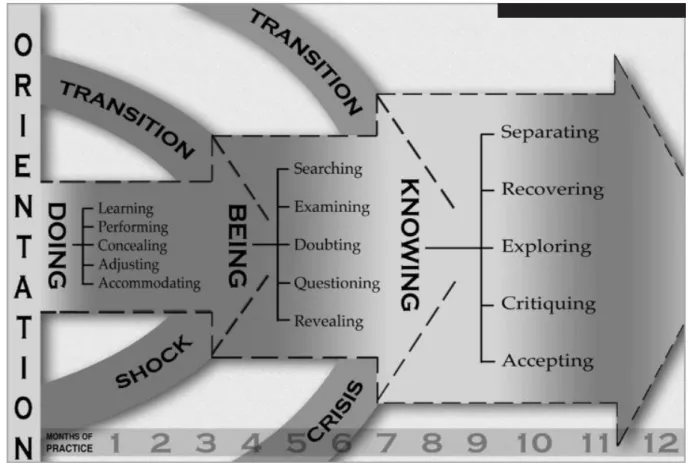
Figure 3 The Stages of Transition Theory (Duchscher, 2008) ... 46
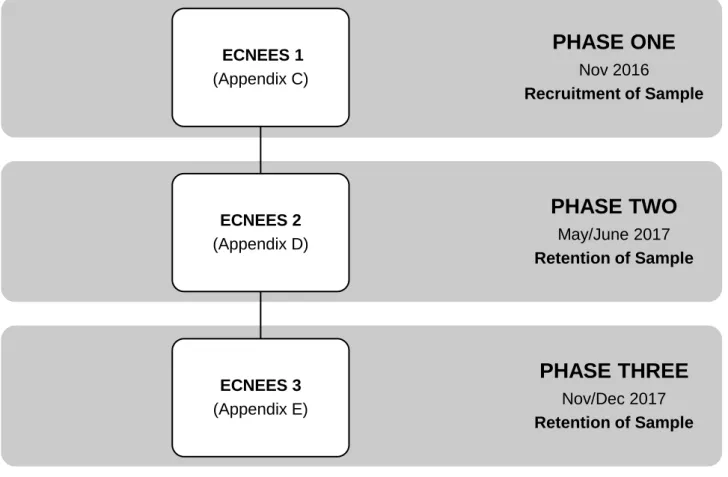
Figure 4 Data collection phases ... 58
Figure 5 Flow of participants in study with ineligibility explained and loss to follow-up ... 71
Figure 6 Number of employment applications and offers ... 72
Figure 7 Flow of participants’ employment outcomes at Phase Two ... 74
Figure 8 Flow of participants’ employment outcomes at Phase Three ... 75
Figure 9 Employment setting experiences as frequencies ... 78
Figure 10 Support items provided and desired as percentage of the total sample ... 83
Figure 11 Satisfaction with job elements showing changes from Phase Two to Phase Three ... 87
Figure 12 Confidence in caring for two patients as a percentage of phase sample ... 201
Figure 13 Confidence in caring for three patients as a percentage of phase sample ... 201
Figure 14 Confidence in caring for four patients as a percentage of phase sample ... 202
Figure 15 Histogram of readiness for practice total scores Phase One ... 205
Figure 16 Normal Q-Q plot for readiness for practice total score Phase One ... 206
Figure 17 Histogram of readiness for practice total scores Phase Two ... 206
Figure 18 Normal Q-Q plot for readiness for practice total score Phase Two ... 207
Figure 19 Histogram of readiness for practice total scores Phase Three ... 207
List of Tables.
Table 1 Studies Reporting ECN Turnover and Retention ... 35
Table 2 Early Career Nurse Employment Experience Survey (ECNEES) Sections ... 54
Table 3 Minimising Loss to Follow-Up ... 60
Table 4 Demographic Characteristics as a Percentage of the Phase Sample ... 67
Table 5 Details of Categories for Collapsed Continuous Variables ... 68
Table 6 Allocation of Practice Specialty and Geographical Location into Category ... 69
Table 7 Relationship to Current Employer as a Percentage of the Sample ... 77
Table 8 Employment Setting Outcomes According to English Language Group ... 79
Table 9 Time at which Difference in Readiness for Practice Total Scores Occurs ... 80
Table 10 Comparing Readiness for Practice Scales by English Language Group ... 80
Table 11 Work Environment, Support and Encouragement Score Comparison between English Language Groups ... 81
Table 12 Comparisons of Support Items (Given and Desired) Between Employment Settings ... 84
Table 13 Comparisons of Support Items (Provided and Desired) Between English Language Groups ... 84
Table 14 Characteristics of Stress as a Percentage of the Sample ... 85
Table 15 Intention to Remain in Employment Descriptive Statistics ... 88
Table 16 Level of Agreement with Intention to Remain Items from RFP and WESE Scales ... 88
Table 17 Comparison of Intention to Remain in Workforce by English Language Groups 90 Table 18 Binary Logistic Regression Modelling to Predict Employment as a Registered Nurse at Phase Two ... 91
Table 19 Binary Logistic Regression Modelling to Predict Employment Setting ... 93
Table 20 Binary Logistic Regression Modelling to Predict Intention to Remain in the Profession ... 95
Table 21 Binary Logistic Regression Modelling to Predict Stress ... 97
Table 22 Correlation between Work Environment, Support, and Encouragement Scale and Job Satisfaction ... 98
Table 23 Binary Logistic Regression Modelling to Predict Intention to Remain in Current Position ... 99
Table 25 Descriptive Statistics on Fixed Contract Length and Weeks to Commence Work ... 197 Table 26 Details on Employment Conditions as a Percentage of Sample ... 197 Table 27 Frequencies and Collinearity Statistics for Predictor Variables as a Function of Successful Application to Preference Area ... 198 Table 28 Frequencies and Collinearity Statistics for Predictor Variables as a Function of Employment Outcome Over Time ... 199 Table 29 Frequencies and Collinearity Statistics for Predictor Variables as a Function of Employment Setting Over Time ... 200 Table 30 Friedman Descriptive Statistics of Confidence in Caring for Increasing Patient Loads over Time ... 202 Table 31 Difference in Level of Confidence in Managing Patient Care Load over Time .. 203 Table 32 Location of Where Difference in Confidence Managing Patient Care Loads
Occurs ... 203 Table 33 Descriptive Statistics for Readiness for Practice Total Scores and Subscales . 204 Table 34 Friedman Descriptive Statistics for Readiness for Practice Scores Over Time . 205 Table 35 Mann-Whitney U Test Comparing Readiness for Practice Scales by Employment Setting ... 208 Table 36 Work Environment, Support and Encouragement Scale Scores by Phase ... 209 Table 37 Comparison of Work Environment, Support and Encouragement Scores over Time ... 209 Table 38 Work Environment, Support and Encouragement Total Score Differences
between Employment Setting Groups... 209 Table 39 Descriptive Statistics of Satisfaction with Job Aspects (1= very dissatisfied,
5=very satisfied) ... 210 Table 40 Change in Satisfaction with Job Aspects over Time ... 210 Table 41 Job Satisfaction Scores by Phase ... 210 Table 42 Frequencies and Collinearity Statistics for Predictor Variables as a Function of Intention to Remain in the Industry at Phase Two ... 211 Table 43 Frequencies and Collinearity Statistics for Predictor Variables as a Function of Intention to Remain in the Industry at Phase Three ... 212 Table 44 Frequencies and Collinearity Statistics for Predictor Variables as a Function of Stress at Phase Three ... 213
Table 45 Frequencies and Collinearity Statistics for Predictor Variables as a Function of Intention to Remain in Current Position at Phase Three ... 214
List of Abbreviations ABS Australian Bureau of Statistics
AHPRA Australian Health Practitioner Regulation Agency AIHW Australian Institute of Health and Welfare
AIN Assistant in Nursing
ANMAC Australian Nursing & Midwifery Accreditation Council ANMF Australian Nursing & Midwifery Federation
BSSERC Behavioural and Social Sciences Ethical Review Committee CALD Culturally and Linguistically Diverse
CFA Confirmatory Factor Analysis CI Confidence Intervals
CP Clinical Practice
EAL/D English as an Additional Language/Dialect ECN Early Career Nurse
ECNEES Early Career Nurse Employment Experience Survey EEN Endorsed Enrolled Nurse
EFA Exploratory Factor Analysis
EN Enrolled Nurse
ELP English Language Proficiency ESL English as a Second Language GCA Graduate Careers Australia GPA Grade Point Average
HWA Health Workforce Australia Md Median 50th Percentile
MLTSSL Medium and Long Term Strategic Skills List
NCLEX-RN National Council Licensure Examination – Registered Nurse NHPA National Health Priority Area
NiPHC Nurses in Primary Health Care
NMBA Nursing and Midwifery Board of Australia NMSW Nursing, Midwifery and Social Work NP Nurse Practitioner
NSW New South Wales
OR Odds Ratio
PM&C Department of the Prime Minister and Cabinet
QLD Queensland
RFP Readiness for Practice
RHPP Rural Health Professionals Program
RN Registered Nurse
SAE Standard Australian English
SD Standard Deviation
STSOL Short-Term Skilled Occupation List TDM Total Design Method
WESE Work Environment, Support and Encouragement WHO World Health Organisation
UG Under Graduate
UK United Kingdom
USA United States of America
UTS University of Technology Sydney UQ University of Queensland
Explanation of Key Terms
Australian Nursing Degree: In Australia, nursing is a regulated profession and a nursing degree is a vocational degree incorporating a minimum of 800 hours of workplace experience (Australian Nursing & Midwifery Accreditation Council [ANMAC], 2012). The Health Practitioner Regulation National Law Act (New South Wales Government, 2009; Queensland Government, 2013) requires that programs of study resulting in qualification as a Registered Nurse (RN) (Bachelor or Master’s degree in Nursing) are approved by the Nursing and Midwifery Board of Australia [NMBA]), and then accredited by the Australian Nursing & Midwifery Accreditation Council (ANMAC).
Australian Registration Process: In Australia to apply to become a RN, individuals must first have completed an approved and accredited program of study (ANMAC, 2012). Subsequently, they must meet the requirements of the core registration standards (Nursing and Midwifery Board of Australia [NMBA], 2016e). These standards include requirements related to criminal history (Australian Health Practitioner Regulation Agency [AHPRA], 2015), continuing professional development (CPD) (NMBA, 2015b), recency of practice (NMBA, 2016d), professional indemnity insurance arrangements (NMBA, 2016c), and English language skills (NMBA, 2015a).
Early Career Nurse (ECN) is a commonly used term to refer to Registered Nurses during their initial years in the profession. Other terms used in the literature for this population include but are not limited to graduate nurse, newly qualified nurse, new graduate nurse, and novice nurse. The term Early Career Nurse is being used more widely in recent research both in Australia and overseas and is the term used in this thesis. This term enables a more longitudinal approach to looking at this population over the transition period from student to professional, which is known to take several years (Flinkman & Salanterä, 2015; Kidd, O'Leary, & Sloane, 2014; McKillop, Doughty, Atherfold, & Shaw, 2015; Murrells, Robinson, & Griffiths, 2008).
English as a Second Language (ESL): English as Foreign Language (EFL) refers to environments where English is taught to students in a non-English-speaking country; as Australia is an English-speaking country, this term is not used in this thesis. English as a second Language (ESL) traditionally refers to the use, or study of, the English language by
non-native speakers in an English-speaking environment (Gunderson, Odo, & D'Silva, 2013). Although ESL is the traditional term used, in many cases it is incorrect. This is because a lot of people have English as their third, fourth or fifth language. Therefore other terms have been developed such as Teaching English to Speakers of Other Languages (TESOL), English as an Additional language (EAL), and English Language Learner (ELL). Although its shortcomings are recognised by the author, the traditional term English as Second Language (ESL) will be used in this thesis as English is the most commonly spoken language in Australia (Australian Bureau of Statistics, 2017a), and the term is widely used and understood in the nursing literature.
Formal structured support programs: Formal structured support programs are a technique used by industry to create working environments that support new nurses’ transition into the clinical environment (Chen & Lou, 2014; Missen, McKenna, & Beauchamp, 2014). In the literature, and in practice, they are called many things: graduate nurse programs, transition programs, support programs etc. and vary in components and length. For these reasons in this thesis, the term formal structured support program is used to refer
collectively to all formal industry programs to assist the transition of ECNs into the work environment over a period of time.
Nurse: The lack of a universal definition of "nurse" is a key issue identified in this thesis. Different international organisations have at different times used different definitions, often related to educational level and/or years of training (Buchan & Calman, 2005). Broad-based definitions of "nursing" may include multiple levels of education (e.g. Assistants in Nursing [AIN], Enrolled Nurses [EN], and Registered Nurses [RN]). The primary focus of this thesis is on Registered Nurses (defined below). To avoid confusion “nurse” is used as a collective term when multiple levels of education of nurses are being grouped as one, when the nursing workforce is being referred to as a whole, and when the source cited is not clear on the type of nurse being referred to.
Registered Nurse (RN): This thesis focuses on Registered Nurses as a subset of the nursing workforce. A Registered Nurse is defined by the NMBA as (2016e, p. 6) “a person who has completed the prescribed education preparation, demonstrates competence to practise and is registered under the Health Practitioner Regulation National Law as a Registered Nurse in Australia”.
Shortage: The author recognises a lack of a universally agreed upon definition of
“shortage”. In this thesis Oulton’s (2006, p. 34) definition is applied. A workforce shortage is “considered to be an imbalance between demand for employment and the available supply”.
Turnover: Despite the wide use of the term, there is a lack of consistency in the definition of “turnover” (Kovner et al., 2014). To explore the factors that result in an ECN being lost from the profession, in this thesis a clear distinction between “turnover from the profession” and “turnover from the position” is maintained. “Turnover from the position” is defined as any change in an RN’s job: for example, a participant who has stopped working for an employer and moved to another, or remained working for the same employer but changed roles, for example by moving from an RN position on the casual pool to an RN position on the rehabilitation ward. “Turnover from the profession” is defined as including any
participant who has never worked as an RN despite meeting the requirements to do so, and those who have worked as an RN in the past but were no longer working in any RN capacity.
Chapter 1 Introduction
1.1 Global Nursing Workforce Shortage
This chapter begins by discussing the varying definitions of “nurse” and the diversity in nursing workforce requirements globally, funnelling to focus on the Australian context. The global causes for nursing shortages are then identified as a decrease in supply and increase in demand. The Australian factors are discussed in detail with a spotlight on decreased supply. The Australian strategies implemented to increase supply are explained, with increasing the domestic graduate nurse workforce highlighted as an integral strategy and the focus of this research. This leads to the aims of the study and overview of the chapters included in this thesis.
The World Health Organisation’s (WHO) role in health workforce planning is to support its member states with information and governance to empower policymakers to make evidence-based health workforce decisions (World Health Organization [WHO], 2018b). The WHO developed the threshold of 59.4 skilled health professionals (midwives, nurses, and medical practitioners) per 10,000 people to show the pattern of health worker availability globally (Campbell et al., 2014). The ratio of nurses and midwives to medical practitioners is three to one, and in most countries nurses and midwives constitute more than half of the health workforce (Australian Institute of Health and Welfare [AIHW], 2016a; WHO, 2018a). In 2017, approximately half of WHO member states had less than 30
nursing and midwifery personnel per 10,000 people, while a quarter had less than 10, suggesting a deficit in the required nursing workforce globally (WHO, 2018a). However, quantifying the global nursing shortage remains challenging due to varying definitions and issues with quality, access, and currency of data (International Labour Organization, Organization for Economic Co-operation and Development, & World Health Organization, 2016; Madarasz, 2018; Oulton, 2006).
One of the issues in quantifying the nursing workforce shortage is that few countries have comprehensive and valid nursing workforce data (Campbell et al., 2014). Another is that those that do collect health workforce information define nurses differently. For example, the Organization for Economic Cooperation and Development (OECD) whose role it is to promote policies to improve the economic and social well-being of people around the world, define “nurses” as all "practicing" nurses providing direct health services to patients (Organisation for Economic Co-operation and Development [OECD], 2018b).
However, some countries include only nurses working in hospitals, while others include nurses working in the health sector as managers, educators, and researchers (OECD, 2018b). Adding to the difficulty is the fact that WHO Global Health Observatory data drawn from over 150 countries do not differentiate between nurses and midwives (WHO, 2018a). This highlights the complexity of drawing conclusions related to health workforce data globally.
While definitions of the nurse vary globally, there is consensus in the literature that an overall global nursing shortage exists. However, even the term “shortage” is
contentious, due to the varying needs of different countries. As 118 countries were deemed below the WHO’s threshold (Campbell et al., 2014), an overall global health professional shortage may exist. However, 68 countries were deemed above this same threshold (Campbell et al., 2014), suggesting the shortage may be felt more acutely in some areas. For example, the most recent OECD data shows that Norway had the highest nurse per 10,000 inhabitants rate in 2017 (177), while Indonesia had the lowest (12)
(OECD, 2018b), suggesting a wide variance in the availability of nurses.
According to the OECD and the WHO, in 2017 Australia had 116 nurses per 10,000 inhabitants (OECD, 2018b), and 126 nurses and midwives per 10,000 inhabitants (WHO, 2018a). Comparatively, Australia has appropriate nursing workforce ratios. Australia’s Registered Nurse (RN) workforce is increasing, by almost 10% from 2013 (215,481) to 2016 (236,948) (Health Workforce Data [HWD], 2017). Of importance, the percentage of RNs unemployed and looking for work also increased from 1.6% in 2009 to 2.7% in 2015 (AIHW, 2016b; HWD, 2017). Despite this, Australian Government data shows that in the medium to long term demand for nurses in Australia will exceed supply: the shortfall is projected to be approximately 85,000 nurses by 2025, and 123,000 nurses by 2030 (HWA, 2014b). For the purposes of this study, a nursing shortage relates to “an imbalance
between the demand for employment and the available supply” (Oulton, 2006, p. 34). In this case the demand for employment pertains to demand for nurses to meet population requirements.
The extent of nursing shortages varies from country to country, and indeed region to region within countries, and specialty to specialty within healthcare. For example, in the United Kingdom, there is a shortage of 5.4% of nurses in the North East, compared to 13.8% in South London (these measures are regional averages and will also mask wider variances between individual organisations and specialties) (Health Education England, 2016). Despite these regional and speciality variances the literature shows today’s global
nursing shortage is impacted by both a decrease in the supply and an increase in demand for nurses. These global factors are described below.
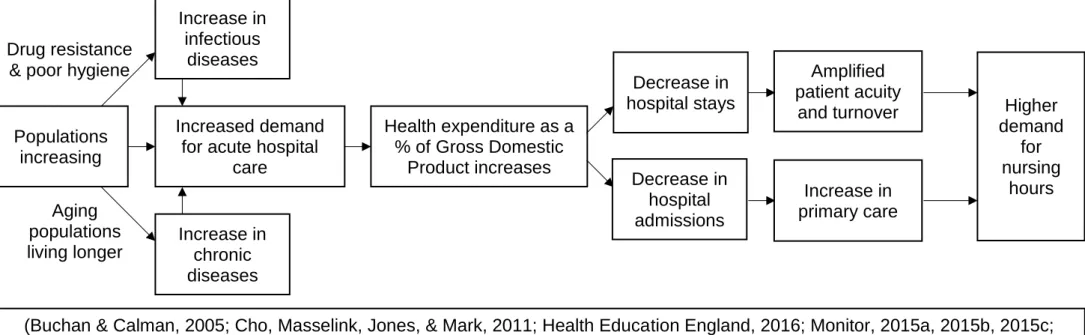
There is a wealth of information about factors that contribute to the increased demand for nurses in the global health workforce. Populations are growing, aging, and living longer, thus placing additional demand on health services. One government
response is to increase health expenditure as a percentage of the gross domestic product (HWA, 2011). Furthermore, drug resistance, poor hygiene, and economic and
environmental factors have allowed the emergence of new infectious diseases and promoted the re-emergence of those thought to be waning (Buchan & Calman, 2005; Jones et al., 2008; Oulton, 2006). A trend has also been reported towards shorter hospital stays by patients suffering from more complex and chronic conditions, resulting in
increased patient acuity while in hospital (Cho et al., 2011; Oulton, 2006). In this context “acuity” describes the nursing care and time required to meet the needs of patients (Paulsen, 2018; Seago, 2002). Although the length of inpatient hospital stay may be reducing, aging and increasing populations may ensure that demand for acute hospital care globally continues to increase (Health Education England, 2016; Monitor, 2015c; Oulton, 2006). Consequently, patient acuity and increased patient turnover cause a higher demand for nursing hours.
The pressure of increased patient acuity and patient turnover on the healthcare system has resulted in efforts to reduce patient admissions (Oulton, 2006). One way of reducing demand for acute hospital care and delivering clinical, financial and operational improvements is through changing patient flows from hospital-based care to ambulatory, out-of-hospital settings such as primary care (Monitor, 2015b). These new care pathways are most commonly staffed by nurses, again increasing the demand for nurses (Monitor, 2015a). The factors that contribute to the increased demand for nurses globally are summarised in Figure 1.
Coupled with the increased demand is a decreased supply of nurses available to the global workforce. Developed nations are battling with an aging nursing workforce, resulting in many nurses approaching retirement (Buchan, 2002; Campbell et al., 2014; Oulton, 2006). A diminishing applicant pool is also decreasing the supply of nurses (Campbell et al., 2014; Oulton, 2006). Traditionally young females were the target of recruiters for nursing; however, today’s young females have many alternative employment opportunities available to them, meaning that they are less likely to choose nursing as a career (Buchan,
2002). Therefore, the ratio of nurses approaching retirement to those available to commence work is unbalanced, resulting in an inadequate supply.
Compounding the issue of reduced numbers of younger people entering nursing is the impact of attrition of nurses to other sectors (Health Education England, 2016; Wiskow et al., 2010). Research has shown nurses leave their jobs because of unfavourable work conditions, including excessive workloads, inadequate support staff, violence, stress, burnout, wage disparities, unfair remuneration, lack of professional development, and little involvement in decision making (Buchan, 2002; Buchan & Calman, 2005; Campbell et al., 2014; Oulton, 2006). The increasingly academic nature of nursing education results in transferable skills. Therefore, if the work environment is unfavourable, nursing education may be used as a stepping stone to other areas of study or careers outside nursing (Cunich & Whelan, 2010).
Nursing supply is also impacted by the migration of nurses between geographical locations. Nurses are known to relocate from rural to urban areas (Cho et al., 2014; Hall et al., 2013) and from developing nations to more developed countries for work (Galbany-Estragues & Nelson, 2016; Wiskow et al., 2010). Factors contributing to nursing mobility within their home country include seeking full-time work, opportunities for career
advancement and better employment conditions, such as increased pay and
social/managerial support (Cho et al., 2014; Hall et al., 2013; Ujvarine et al., 2011). In developing nations, nurses are willing to cross national boundaries for work because of factors such as low pay in their home country, poor career structures, lack of opportunities for further education, and in some countries, the threat of violence (Buchan, 2002).
Developed nations welcome these nurses to help fill gaps in local supply (Health Education England, 2016).
Indeed the Australian healthcare system is increasingly reliant on health workers who are born overseas (Negin, Rozea, Cloyd, & Martiniuk, 2013). While this practice may help alleviate the lack of supply in one country, the ethics surrounding this recruitment practice are questionable, as the shortage has simply been redistributed to a country less well equipped to deal with it (Buchan, 2002). For example, the WHO estimates that in the future Asia may have the largest health workforce shortage in numerical terms (Campbell et al., 2014). Meanwhile in Australia in 2011 overseas-born medical practitioners, nurses and midwives were most likely to be from South and Southeast Asia (Negin et al., 2013). Therefore, in recent years, international agreements on not taking skilled employees from developing nations have emerged (Health Education England, 2016). Nevertheless,
geographical migration results in the redistribution of workforce shortages, impacting on nursing workforce supply. The factors contributing to a decrease in the supply of nurses globally are summarised in Figure 2.
Figure 1 Global factors related to the increased demand for nurses
Increase in infectious
diseases Drug resistance
& poor hygiene
Populations increasing
Increased demand for acute hospital
care Higher demand for nursing hours Decrease in hospital stays Health expenditure as a % of Gross Domestic Product increases Amplified patient acuity and turnover Aging populations living longer Increase in chronic diseases Decrease in hospital admissions Increase in primary care
(Buchan & Calman, 2005; Cho, Masselink, Jones, & Mark, 2011; Health Education England, 2016; Monitor, 2015a, 2015b, 2015c; Oulton, 2006; Schmets, Rajan, & Kadandale, 2016).
Figure 2 Global factors related to the decreased supply of nurses Unfavourable working conditions Diminishing applicant pool Increasing retirement of aging nurses Attrition to other sectors Decreased supply of nurses Current nursing workforce Turnover Migration
(Buchan & Calman, 2005; Campbell et al., 2014; Cho, Lee, Mark, & Jones, 2014; Flinkman, Leino‐Kilpi, & Salanterä, 2010; Galbany-Estragues & Nelson, 2016; Hall et al., 2013; Hayes et al., 2012; Health Education England, 2016; Kovner, Brewer, Fatehi, &
1.2 Factors Related to the Nursing Workforce Shortage in Australia
As in most other countries, the nursing profession in Australia is the largest health workforce (HWA, 2014b). The density of skilled health professionals (midwives, nurses, and physicians) in 2010 was 126.3 per 10,000, well above the WHO threshold of 59.4 (Campbell et al., 2014). Despite this, a 2012 report published by HWA identified that population health trends, combined with an aging nursing workforce and poor retention rates, would lead to an imminent and acute nursing shortfall of approximately 85,000 nurses by 2025 (HWA, 2014b). As in other countries, the current Australian nursing shortage is impacted by both a decrease in supply and an increase in demand for nurses (Cunich & Whelan, 2010; Health Workforce Australia, 2012a, 2014a). Interestingly, in Australia there also seems to be difficulty in recruiting all available graduates into the profession (HWA, 2014c). The overall picture of the nursing shortage does not explain why graduates may meet barriers to employment as RNs. Further analysis of where the
shortfalls in the Australian workforce exist is required. The factors relating to increased demand for nurses and decreased supply of nurses in Australia is described below. 1.2.1 Factors related to increased demand for nurses in Australia.
Like many other countries, Australia has an aging population with increased acuity. In addition, Australia also has increased consumer expectations and a growing private
healthcare sector (Buchan & Calman, 2005; Campbell et al., 2014; HWA, 2014b; Oulton, 2006). In Australia the three levels of government – federal, state and territory, and local – are collectively responsible for providing universal health care through a two-tiered health system (Glover, 2017). The federal government funds the first tier through a universal public health insurance program called Medicare, which provides free or subsidised access to care (Glover, 2017). Private health insurance is the second tier, which offers more choice of providers and faster access to nonemergency care (Glover, 2017). Australian government policies such as lifetime health cover1 and the introduction of income testing for private health insurance rebates have resulted in the growth of the private health sector in Australia (AIHW, 2018b). This growth in the private sector can be
1 Lifetime health cover is an initiative introduced by the Australian Government to encourage Australians to
purchase private hospital insurance by enforcing higher premiums for every year people remain without cover after age 30 (AIHW, 2018b).
seen in the following developments: the number of RNs working in the private sector increasing from 2009 to 2012 at a faster rate than in the public sector (HWA, 2014b); almost half of all Australians having private health insurance (AIHW, 2017c); and total health expenditure contributed by private health insurance funds rising as the Australian Government share declines (AIHW, 2018b). This growth of the private healthcare sector in Australia redistributes where people seek healthcare and is a contributing factor in the increase in demand for nurses.
Demand for nurses in Australia is in part also due to an aging population. In Australia “older” people are described as 65 years or above, and the “very old” as 85 years or above (AIHW, 2016a). The number of older Australians is expected to grow, both in absolute terms and as a proportion of the total population. By 2056, it is projected 22% of the population will be considered “older” (Australian Bureau of Statistics [ABS], 2013). As the Australian population continues to age, improvements in medical care will also allow people to live longer with illness and be more likely to live with chronic disease (AIHW, 2016a). In Australia, infectious diseases have been replaced by chronic diseases as the leading cause of ill health and death (AIHW, 2016a). The incidence of chronic and multiple chronic diseases will likely increase, as will the prevalence of risk factors such as obesity and physical inactivity (AIHW, 2016a).
This increase in chronic diseases and risk factors is not isolated to older generations; indeed they are issues found to be growing in all generations within Australia. Therefore, to meet these augmented care demands and improve the efficiency and affordability of the Australian healthcare system, the nine National Health Priority Areas (NHPAs) were
established2 along with the National Strategic Framework for Chronic Conditions
(Australian Government, 2017). The NHPAs focus attention and policy on the areas that contribute significantly to the burden of disease3 in Australia while the strategic framework aims to deliver more effective and coordinated national response to chronic conditions. Therefore nursing roles in primary care, chronic disease management, and preventive
2 The nine NHPAs agreed by the Australian Health Ministers’ Advisory Council between 1996 and 2012 are:
1. Cancer control (1996) 2. Cardiovascular health (1996) 3. Injury prevention and control (1996) 4. Mental health (1996) 5. Diabetes mellitus (1997) 6. Asthma (1999) 7. Arthritis and musculoskeletal conditions (2002) 8. Obesity (2008) 9. Dementia (2012) (AIHW, 2018a).
3 Burden of disease is the quantified impact of a disease or injury on a population using the disability life year
(DALY) measure. DALY refers to one year of healthy life lost, either through premature death or living with a disability due to illness or injury (AIHW, 2016a).
services are being expanded and becoming an important component of reforms (Doiron, Hall, Kenny, & Street, 2014; Productivity Commission, 2005). Consequently, although the continued increase in patient acuity will increase demand in the hospital setting, demand in the out-of-hospital setting will also grow, resulting in the increased demand for nurses in more diverse roles with expanded scopes of practice.
Despite this aging population, health outcomes such as life expectancy and mortality rates for Australian people are very good. Indeed in one study, Australia is ranked as the best globally (Schneider, Sarnak, Squires, Shah, & Doty, 2017). Furthermore, the overall burden of disease in Australia is actually decreasing, and 85% of Australians over 15 report their health as good or better, placing Australia in the top five OECD countries for this measure (AIHW, 2016a). However, this broadly positive picture of health ignores inequalities within the Australian community. In Australia all groups do not achieve the same levels of health, with analysis of burden of disease at the national level masking health issues for particular populations (AIHW, 2016a). Indeed the Australian Burden of Disease study (AIHW, 2011) found differences in the disease burden among states and territories, with the Northern Territory having higher disease burden rates than the other jurisdictions. This study also found large inequalities across socioeconomic groups and remoteness areas. People living in rural and remote areas, the lowest socioeconomic groups, Indigenous Australians and people living with a disability generally have higher rates of illness, health risk factors and death than other Australians (AIHW, 2016a). Along with the chronicity of the aging population and desire to reduce inequalities, consumer expectations in Australia also continue to escalate, compounding the demand for nurses in the Australian healthcare system (Australian Government, 2014).
1.2.2 Factors related to the decreased supply of nurses in Australia.
Supply of nurses in Australia is affected by an aging nursing workforce, nurse turnover rates, graduate nurse numbers and their retention in the profession, and a lack of preference among nurses to work in priority workforce areas. The focus of this thesis is on the available supply of nurses to help meet workforce demand, and therefore each of these aspects is explored in detail below. Of particular interest is the supply of domestic graduate nurses.
1.2.2.1 Aging workforce.
Supply of nurses in Australia is affected by the age profile of the workforce. The current workforce is aging. In Australia, the age of retirement for all workers is increasing (ABS, 2017c), including in the nursing workforce. The international financial crisis
impacted on government budgets and caused a restructuring of spending, resulting in delayed retirement of nurses (HWA, 2014b; McCalla-Graham & De Gagne, 2015). Although in the short term this increase in retirement age resulted in more nurses
remaining in the profession, it is predicted to have big impacts on the nursing workforce in the coming years as the current nursing workforce is aging (AIHW, 2016b; HWA, 2014b). In 2016 over half of the total employed nursing workforce was over 45 years old (HWD, 2017). Eventually this aging workforce will retire, leaving a large workforce gap and increasing demand for nurses. The aging of the nursing workforce is not new and is expected to continue into the future (Doiron & Jones, 2005; Health Workforce Australia, 2014a; Shah & Long, 2003).
1.2.2.2 Nurse turnover.
To date in Australia, there is limited published information on nursing turnover rates. A major deficit in the limited current knowledge is that published turnover data is only taken from hospital settings. Therefore what we know of nursing turnover in Australia only reflects the hospital setting. Literature reviews have found that researchers use a variety of inconsistent turnover definitions, measurement instruments, and reporting strategies
(Cavanagh, 1989; Flinkman et al., 2010; Hayes et al., 2012; Hayes, O’Brien-Pallas, et al., 2006; Kovner et al., 2014; Roche, Duffield, Homer, Buchan, & Dimitrelis, 2014). Therefore actual nurses’ turnover rates, intent to leave, intent to remain and the causes of each measure are difficult to quantify. In the current study turnover from a position was defined as any change in RN job. For example, turnover from a position includes a participant who stopped working for an employer and moved to another, or who remained working for the same employer but changed roles, for example moving from an RN position on the casual pool to an RN position on the rehabilitation ward. Turnover from the profession was
defined as any participant who had worked as a RN and was no longer working in an RN capacity.
Historically, Australian data show a turnover rate of 38% in the Northern territory (data collected 2006-2007) (Garnett et al., 2008), and 17.7% in New South Wales (data collected 1986-2000) (Doiron, Hall, & Jones, 2008). Queensland has reported turnover rates of 12% for those aged 50-59 and 31.9% for those under 29, although this data is now over 20 years old (Queensland Health, 1999). The most recent Australian data showed turnover rates from three states, New South Wales (12.9%), Australian Capital Territory (14.5%) and Western Australia (16.7%), and an overall turnover rate of 15.1% (Roche et al., 2014). Turnover was defined as “the voluntary transfer or resignation of registered nursing staff from their primary employment position” (Roche et al., 2014, p. 354). The studies identified here focused either on a single state or territory, or on nurses leaving a position, and therefore did not identify whether the nurses had indeed left the profession. The most recent Australian data is within the global average for developed countries of 10-20% (Health Education England, 2016; Morris, 2006; Nusing Solutions Inc., 2018; O'Brien‐ Pallas, Murphy, Shamian, Li, & Hayes, 2010)). The Australian data shows the extent of shortages vary from region to region within countries, similar to the data reported from the United Kingdom (Health Education England, 2016). However, these measures are regional averages and variances between individual organisations and specialties remain unknown. Indeed the Australian data was only taken from hospital settings; the out-of-hospital setting has not been explored.
1.2.2.3 Graduate nurse supply.
Historically, the limited supply of nursing graduates from Australian universities led to gaps in workforce supply (Shah & Long, 2003). In Australia, nursing is a nationally
regulated profession. Programs of study resulting in qualification as a Registered Nurse (RN) must be approved by the National Board, the Nursing and Midwifery Board of Australia, (NMBA), and then accredited by the accreditation authority, the Australian Nursing and Midwifery Accreditation Council (ANMAC)) (Queensland Government, 2009). ANMAC (2012) requires accredited academic institutions to deliver nursing programs incorporating a minimum of 800 hours of workplace experience (commonly referred to as “clinical placements”), not inclusive of simulation activities, and to provide exposure to a variety of healthcare settings. It is widely acknowledged that there are mutual benefits to education providers, health services and students from clinical placements; however, clinical placements can be finance- and resource-intensive (Victorian State Government,
2017). In Australia, entry-level registered nursing courses have been demand-driven courses at university since 2009, but in recent years have been oversubscribed. In 2011, 21,937 applications were made for university nursing in Australia, with only 16,338 applicants offered positions, reflecting finite university and clinical training capacity (Mason, 2013b). This limited capacity affects the number of graduate nurses provided to the workforce through this avenue, resulting in limited supply.
1.2.2.4 Graduate nurse retention.
In addition to limited numbers of nursing students, nurse turnover and an aging nursing workforce, the retention of graduate nurses also influences workforce supply (Cunich & Whelan, 2010). In this thesis retention refers to enabling nurses to practice in their profession longer and reducing the rates at which they leave the profession to work in other occupations (HWA, 2014c). Data from HWA (2014b) suggest that the rate at which nurses leave the profession varies by age. New graduates in all professions have higher rates of mobility than those who have spent more time in the workforce (Kidd et al., 2014). However, RN graduates’ exit rates from the profession are high at approximately 7.2% of 20-29-year-olds (HWA, 2014b). The phenomenon of younger nurses being more likely to leave the profession is not new (Doiron & Jones, 2006), nor novel to Australia (Frijters, Shields, & Price, 2007; Suzuki et al., 2006). Temporary and permanent exits from the profession are much higher in Australia for nurses up to the age of 35, and for those up to 10 years post-graduation, compared to those over 35 and under 60 (HWA, 2012b).
Historically, it has been argued that this situation is usually a result of younger nurses taking on parenting and/or home duties, reflecting the female domination of the profession (HWA, 2012b). The trend towards substantial movement in and out of the profession and across positions has been documented in the Australian context since the 1990s.
However, a lack of longitudinal follow-up means it is not known what proportion of the temporary exists from the profession end up being permanent, nor which factors impact on this decision, for example, dissatisfaction, family commitments or career progression (HWA, 2012b).
1.2.2.5 Workforce priority areas.
A further consideration affecting workforce supply in Australia is that there are some areas of health care and some geographical locations that are more challenged in
recruiting and retaining graduates. It should be noted, however, that this challenge is not isolated to graduates and is reflected more generally in the Australian nursing workforce (HWA, 2014c), and among healthcare professionals globally (Abrahamsen, 2019; Kloster, Hoie, & Skar, 2007; Wareing, Taylor, Wilson, & Sharples, 2017). Areas experiencing difficulties in recruiting and retaining nursing staff include out-of-hospital settings such as mental health care, aged care, primary care, community support, and in rural and remote areas of Australia, especially where nurses work with Aboriginal and Torres Strait Islander people (HWA, 2014c). This is significant as these out-of-hospital settings represent the current areas of workforce need. The Australian government has identified that
strengthening the role of nurses in the out-of-hospital setting provides clinical benefits, including improved access, case management and care coordination with longer
consultations, and enhanced teamwork across the interdisciplinary team (Department of Health, 2018). Ultimately this also leads to more cost-effective practice as it removes unnecessary duplication of work (Department of Health, 2018).
Despite the positive impact nurses may have in these out-of-hospital settings, graduating nurses do not often seek employment in these settings. Graduate nurses observe that remuneration in out-of-hospital settings is less than in higher acuity areas; this is coupled with perceived limited career progression, lower professional status, and the perception that non-hospital based nursing does little to contribute to nurses’ clinical development (Abbey et al., 2006; Algoso, Peters, Ramjan, & East, 2016; Stevens, 2011; van Iersel, Latour, de Vos, Kirschner, & Scholte Op Reimer, 2016). There is only limited literature currently available on the factors associated with the intention of graduates to seek employment in the out-of-hospital setting (Trepanier et al., 2013). However, a further description of the factors impacting on the workforce supply to the aged care, mental health and rural and remote areas is provided below.
Aged care is an out-of-hospital setting that struggles to recruit nurses. A literature review found that graduate nurses feel discouraged from entering the aged care sector because they perceived a limited skill set was required to work there (Algoso et al., 2016). Modelling has shown that from 2014 demand began to exceed supply in aged care, with a workforce gap of 13,000 nurses, or 26% of the required nursing workforce, projected in
2030 (HWA, 2014a). A compounding factor is that within aged care the nursing workforce is aging disproportionately faster than in other areas (HWA, 2014a). This is concerning as the proportion of the population who are “very old” (aged 85 and over) in Australia is increasing (projected to be 1 million, or 3.2% of the population, by 2036), as life
expectancy, both at birth, and over the course of a person's life, increases (ABS, 2013; AIHW, 2016a). This suggests that this patient demographic is increasing, which may result in increased demand for nurses in this sector.
A developing issue that will impact on the number of RNs required to meet the demand of the aged care sector is the current push to legislate nurse-to-patient ratios. Currently, staffing of residential aged care facilities is left to the determination of aged care providers (House of Representatives Standing Committee on Health Aged Care and
Sports, 2018). A survey conducted in 2016 found that current ratios are 60 to 100
residents per RN, and that the RN may be on call rather than on site (Australian Nursing & Midwifery Federation [ANMF], 2016b). However, a recent government report
recommended legislation to require residential aged care facilities to have a minimum of one RN on site at all times (House of Representatives Standing Committee on Health Aged Care and Sports, 2018). This would increase the number of RNs required to be employed by aged care facilities. Therefore, this projection of the undersupply of nurses in the aged care sector may be exacerbated in the future.
The recruitment and retention of the mental health nursing workforce has also been identified as a major issue (Cleary & Happell, 2005; Harrison, Hauck, & Hoffman, 2014). Mental health nursing is reported as having a low professional status and is often ranked as the least desirable career option for nursing graduates (Happell & Gaskin, 2013). Mental health areas suffer similar issues to the aged care sector in that the majority of the RN workforce is older (HWA, 2014a). RNs working in mental health have the highest percentages in the 45-54 and 55-64 age groups, while concurrently having one of the smallest percentages in the 20-34 year age group across all sectors (HWA, 2014a). Modelling in 2014 showed the mental health nursing workforce having the largest
undersupply of all sectors (of approximately 18,500) by 2030 (HWA, 2014a). A number of factors contribute to this situation, including the aging of the workforce and a low rate of new entrants in the younger age groups, coupled with high exit rates (HWA, 2014a). Despite attempts by academia and clinical practice to increase recruitment, such as funded programs like the major in Mental Health Nursing, mental health is not a preferred specialty of new graduates (Harrison et al., 2014; Stevens, Browne, & Graham, 2013).
Therefore, attracting workforce supply into mental health nursing remains a challenge, suggesting undersupply will remain in the future.
Rural and remote areas of Australia also suffer from a nursing workforce undersupply (Bennett, Barlow, Brown, & Jones, 2012; Lea & Cruickshank, 2015b). The restructuring of rural health services and condensing of infrastructure have significantly impacted on the workforce ratios and skill mixes within rural healthcare facilities in Australia (Lea & Cruickshank, 2015b). Populations in these areas have a lower life expectancy, higher rates of some diseases and higher injury rates, coupled with poorer access to, and use of, health services compared to metropolitan communities (AIHW, 2016a). The changes in workforce ratios and skill mix coupled with the health demographics are reflected in the role of the rural and remote RN. RNs working with these communities require a different skill set compared to metropolitan communities. The diversity and complexity of rural nursing practice mean nurses working in this setting must have a strong theoretical and practical knowledge base (Lea & Cruickshank, 2015b). For these reasons, there has been a concern expressed in the literature about the employment of graduates in rural practice. Historically, graduates have favoured large urban hospitals over smaller rural hospitals because of the perceived opportunities for support (Hayes, Orchard, et al., 2006). Multiple studies have shown this perceived lack of support is often the real life experience of graduate nurses and this lack of support results in attrition (Keahey, 2008; Lea & Cruickshank, 2015a, 2015b; Nayda & Cheri, 2008).
1.3 Strategies to Increase Supply of the Nursing Workforce in Australia
The Australian government has identified the nursing workforce shortage as a
national issue and scenario modelling has shown this shortfall can be significantly reduced by a coordinated approach across governments, employers, the profession and the tertiary education sector (HWA, 2014c). Health workforce reform in Australia is focused on four strategies: improving productivity and flexibility of the current workforce by expanding nursing roles; redistribution of the workforce to geographic areas in need; the use of immigration to meet workforce needs; and increasing the domestic graduate workforce to increase supply (HWA, 2012a). An overview of the strategies is provided below with a focus on increasing the domestic graduate workforce as the core strategy that informed this study.
1.3.1 Expanded nursing roles.
Technological advancements ensure that today’s healthcare settings are continually evolving. Career development for nurses may provide the opportunity to adopt expanded nursing roles, which not only benefits individual nurse career progression but also
increases access to health care for the population (Mason, 2013b). Expanded nursing roles improve access to health care through flexible, integrated care strategies that increase the continuity of nursing care at an advanced practice level (Mason, 2013b). Preparing nurses to be equipped with the essential knowledge, professionalism, and skills to practise in contemporary healthcare settings will require progressive training and
perhaps role expansion (Gardner, Chang, & Duffield, 2007; Masso & Thompson, 2016). Expanded nursing roles in Australia can be separated into advanced nursing practice roles and Nurse Practitioner (NP) positions. Nurses who identify as having advanced nursing practice are reported to have expanded levels of autonomy, skills, and decision making (Gardner et al., 2007), and incorporate professional leadership, education and research into their clinically based practice (NMBA, 2016b). However, the NMBA acknowledges that currently advanced nursing practice refers to level of practice as opposed to a role, with variations in definitions causing a lack of clarity (2016b). On the other hand, the Nurse Practitioner (NP) role is an expanded nursing role that is distinguishable by legislation, scope of practice, and masters’ level postgraduate education (Cashin et al., 2015; Gardner, Gardner, Middleton, & Della, 2009; NMBA, 2014).
Despite this lack of clarity, in Australia expanded scope of practice nurse roles are being developed to meet reform needs within the healthcare system by improving the flexibility and productivity of the nursing workforce (Masso & Thompson, 2016; Productivity Commission, 2005). These roles include expanding the scope of practice of Enrolled Nurses (EN), RNs and NPs while also advocating for their placement in new settings. One example is the Australian government currently incentivising some out-of-hospital settings to employ nurses, for example, the Practice Nurse Incentive Program, which supports eligible general practices to offset the cost of employing a nurse in primary care (Department of Health, 2019). Other examples include the Nursing and Allied Health Scholarship and Support Scheme (NAHSSS), which facilitates the continued professional development of nurses in both geographic areas and professions where there are
shortages, and the Nursing and Allied Health Rural Locum Scheme (NAHRLS),