
VOLUME 18 ISSUE 10 FEBRUARY 2014 ISSN 1366-5278
Enhancements to angioplasty for peripheral
arterial occlusive disease: systematic review,
cost-effectiveness assessment and expected
value of information analysis
Emma L Simpson, Benjamin Kearns, Matthew D Stevenson,
Anna J Cantrell, Chris Littlewood and Jonathan A Michaels
peripheral arterial occlusive disease:
systematic review, cost-effectiveness
assessment and expected value of
information analysis
Emma L Simpson, Benjamin Kearns,
Matthew D Stevenson, Anna J Cantrell,
Chris Littlewood and Jonathan A Michaels*
The University of Sheffield, School of Health and Related Research (ScHARR),
Sheffield, UK
*Corresponding author
Declared competing interests of authors:none
Published February 2014
DOI: 10.3310/hta18100This report should be referenced as follows:
Simpson EL, Kearns B, Stevenson MD, Cantrell AJ, Littlewood C, Michaels JA. Enhancements to angioplasty for peripheral arterial occlusive disease: systematic review, cost-effectiveness assessment and expected value of information analysis.Health Technol Assess2014;18(10).
Health Technology Assessmentis indexed and abstracted inIndex Medicus/MEDLINE,Excerpta
Medica/EMBASE,Science Citation Index Expanded(SciSearch®) andCurrent Contents®/
ISSN 1366-5278 (Print)
ISSN 2046-4924 (Online)
Five-year impact factor: 5.804
Health Technology Assessmentis indexed in MEDLINE, CINAHL, EMBASE, The Cochrane Library and the ISI Science Citation Index and is assessed for inclusion in the Database of Abstracts of Reviews of Effects.
This journal is a member of and subscribes to the principles of the Committee on Publication Ethics (COPE) (www.publicationethics.org/).
Editorial contact: [email protected]
The full HTA archive is freely available to view online at www.journalslibrary.nihr.ac.uk/hta. Print-on-demand copies can be purchased from the report pages of the NIHR Journals Library website: www.journalslibrary.nihr.ac.uk
Criteria for inclusion in theHealth Technology Assessmentjournal
Reports are published inHealth Technology Assessment(HTA) if (1) they have resulted from work for the HTA programme, and (2) they are of a sufficiently high scientific quality as assessed by the reviewers and editors.
Reviews inHealth Technology Assessmentare termed‘systematic’when the account of the search appraisal and synthesis methods (to minimise biases and random errors) would, in theory, permit the replication of the review by others.
HTA programme
The HTA programme, part of the National Institute for Health Research (NIHR), was set up in 1993. It produces high-quality research information on the effectiveness, costs and broader impact of health technologies for those who use, manage and provide care in the NHS.
‘Health technologies’are broadly defined as all interventions used to promote health, prevent and treat disease, and improve rehabilitation and long-term care.
The journal is indexed in NHS Evidence via its abstracts included in MEDLINE and its Technology Assessment Reports inform National Institute for Health and Care Excellence (NICE) guidance. HTA research is also an important source of evidence for National Screening Committee (NSC) policy decisions.
For more information about the HTA programme please visit the website: www.hta.ac.uk/
This report
The research reported in this issue of the journal was funded by the HTA programme as project number 09/116/01. The contractual start date was in January 2011. The draft report began editorial review in July 2012 and was accepted for publication in December 2012. The authors have been wholly responsible for all data collection, analysis and interpretation, and for writing up their work. The HTA editors and publisher have tried to ensure the accuracy of the authors’report and would like to thank the reviewers for their constructive comments on the draft document. However, they do not accept liability for damages or losses arising from material published in this report.
This report presents independent research funded by the National Institute for Health Research (NIHR). The views and opinions expressed by authors in this publication are those of the authors and do not necessarily reflect those of the NHS, the NIHR, NETSCC, the HTA programme or the Department of Health. If there are verbatim quotations included in this publication the views and opinions expressed by the
interviewees are those of the interviewees and do not necessarily reflect those of the authors, those of the NHS, the NIHR, NETSCC, the HTA programme or the Department of Health.
© Queen’s Printer and Controller of HMSO 2014. This work was produced by Simpsonet al. under the terms of a commissioning contract issued by the Secretary of State for Health. This issue may be freely reproduced for the purposes of private research and study and extracts (or indeed, the full report) may be included in professional journals provided that suitable acknowledgement is made and the reproduction is not associated with any form of advertising. Applications for commercial reproduction should be addressed to: NIHR Journals Library, National Institute for Health Research, Evaluation, Trials and Studies Coordinating Centre, Alpha House, University of Southampton Science Park, Southampton SO16 7NS, UK.
Published by the NIHR Journals Library (www.journalslibrary.nihr.ac.uk), produced by Prepress Projects Ltd, Perth, Scotland (www.prepress-projects.co.uk).
Professor Tom Walley Director, NIHR Evaluation, Trials and Studies and Director of the HTA Programme, UK
NIHR Journals Library Editors
Professor Ken Stein Chair of HTA Editorial Board and Professor of Public Health, University of Exeter Medical School, UK
Professor Andree Le May Chair of NIHR Journals Library Editorial Group (EME, HS&DR, PGfAR, PHR journals)
Dr Martin Ashton-Key Consultant in Public Health Medicine/Consultant Advisor, NETSCC, UK
Professor Matthias Beck Chair in Public Sector Management and Subject Leader (Management Group), Queen’s University Management School, Queen’s University Belfast, UK
Professor Aileen Clarke Professor of Health Sciences, Warwick Medical School, University of Warwick, UK
Dr Tessa Crilly Director, Crystal Blue Consulting Ltd, UK
Dr Peter Davidson Director of NETSCC, HTA, UK
Ms Tara Lamont Scientific Advisor, NETSCC, UK
Professor Elaine McColl Director, Newcastle Clinical Trials Unit, Institute of Health and Society, Newcastle University, UK
Professor William McGuire Professor of Child Health, Hull York Medical School, University of York, UK
Professor Geoffrey Meads Honorary Professor, Business School, Winchester University and Medical School, University of Warwick, UK
Professor Jane Norman Professor of Maternal and Fetal Health, University of Edinburgh, UK
Professor John Powell Consultant Clinical Adviser, National Institute for Health and Care Excellence (NICE), UK
Professor James Raftery Professor of Health Technology Assessment, Wessex Institute, Faculty of Medicine, University of Southampton, UK
Dr Rob Riemsma Reviews Manager, Kleijnen Systematic Reviews Ltd, UK
Professor Helen Roberts Professorial Research Associate, University College London, UK
Professor Helen Snooks Professor of Health Services Research, Institute of Life Science, College of Medicine, Swansea University, UK
Please visit the website for a list of members of the NIHR Journals Library Board: www.journalslibrary.nihr.ac.uk/about/editors
Abstract
Enhancements to angioplasty for peripheral arterial occlusive
disease: systematic review, cost-effectiveness assessment
and expected value of information analysis
Emma L Simpson, Benjamin Kearns, Matthew D Stevenson,
Anna J Cantrell, Chris Littlewood and Jonathan A Michaels*
The University of Sheffield, School of Health and Related Research (ScHARR), Sheffield, UK *Corresponding authorBackground:There have been rapid technological developments aimed at improving short- and long-term results of percutaneous transluminal balloon angioplasty (PTA) in peripheral arterial occlusive disease (PAD).
Objectives:To assess current clinical effectiveness and cost-effectiveness evidence of additional techniques to standard PTA for PAD, develop a health economic model to assess cost-effectiveness and to identify where further research is needed.
Data sources:Relevant electronic databases, including MEDLINE, EMBASE and The Cochrane Library were searched from inception to 2011, between May and October 2011.
Methods:Systematic reviews were conducted of clinical effectiveness and cost-effectiveness. The population was participants with symptomatic PAD undergoing endovascular treatment for disease distal to the inguinal ligament. Interventions were modifications of and adjuncts to PTA in the peripheral circulation, compared with conventional PTA. Outcomes included measures of clinical effectiveness and costs. Data were extracted from randomised controlled trials (RCTs), which were quality assessed using standard criteria. Where appropriate, meta-analyses usingfixed- and random-effects methods produced relative risks (RRs). A discrete-event simulation model was developed to assess the relative cost-effectiveness of the interventions from a NHS perspective over a lifetime. The patient populations of intermittent claudication (IC) and critical limb ischaemia (CLI) were modelled separately. Univariate and probabilistic sensitivity analyses were undertaken.
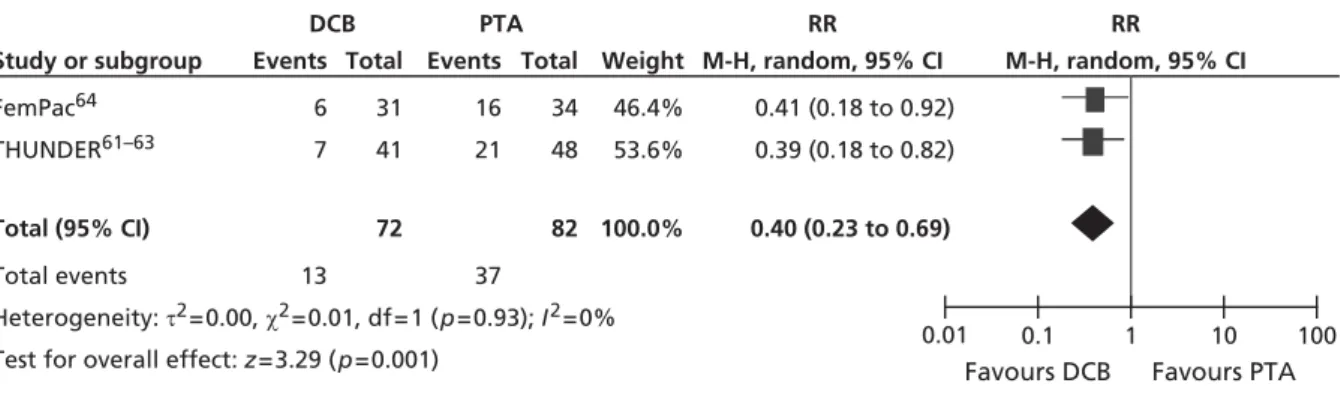
Results:In total, 40 RCTs were included, many of which had small sample sizes. Significantly reduced restenosis rates were shown in meta-analyses of self-expanding stents (SES) {RR 0.67 [95% confidence interval (CI) 0.52 to 0.87]}, endovascular brachytherapy (EVBT) [RR 0.63 (95% CI 0.48 to 0.83)] at 12 months and drug-coated balloons (DCBs) at 6 months [RR 0.40 (95% CI 0.23 to 0.69)], and single studies of stent-graft or drug-eluting stent (DES), compared with PTA; a single study showed
improvements with DES versus bare-metal stents (BMSs). Compared with PTA, walking capacity was not significantly affected by cutting balloon, balloon-expandable stents or EVBT; in SES, there was evidence of improvement in walking capacity after up to 12 months. The use of DCBs dominated both the assumed standard practice of PTA with bailout BMS and all other interventions because it lowered lifetime costs and improved quality of life (QoL). These results were seen for both patient populations (IC and CLI). Sensitivity analyses showed that the results were robust to different assumptions about the clinical benefits
attributable to the interventions, suggesting that the use of DCBs is cost-saving.
Limitations:Differing definitions of restenosis made direct comparison across trials difficult. There were few data available for walking capacity and QoL.
Conclusions:The evidence showed a significant benefit to reducing restenosis rates for self-expanding and DESs, stent-graft, EVBT and DCBs. If it is assumed that patency translates into beneficial long-term clinical outcomes, then DCB and bail-out DES are most likely to be the cost-effective enhancements to PTA. A RCT comparing current recommended practice (PTA with bail-out BMS) with DCB and bail-out DES could assess long-term follow-up and cost-effectiveness. Data relating patency status to the need for reintervention and to the probability of symptoms returning should be collected, as should health-related QoL measures [European Quality of Life-5 Dimensions (EQ-5D) and maximum walking distance].
Study registration:This study is registered as PROSPERO CRD42012002014.
Contents
List of tables . . . .ix
List of figures. . . .xiii
Glossary. . . xv
List of abbreviations. . . xvii
Scientific summary. . . .xix
Chapter 1 Background 1
Clinical presentation 1
Anatomical distribution 2
Treatment pathway 2
Limitations of current techniques 3
Chapter 2 Definition of decision problem 5
Purpose of assessment 5
Place of the intervention in the treatment pathway 5
Included interventions 5 Absorbable stents 5 Self-expanding stents 5 Balloon-expandable stents 5 Drug-eluting stents 5 Stent-graft 5 Atherectomy 5 Cutting balloon 6 Cryoplasty 6 Radiation 6 Drug-coated balloon 6 Laser angioplasty 6 Excluded interventions 6 Pharmacological interventions 6
Combined surgical procedures 6
Other techniques 6
Interventions above the inguinal ligament (aortoiliac segment) 7
Relevant comparators 7
Population 7
Methods for assessment 7
Review stage 1 7
Review stage 2 7
Chapter 3 Systematic review of the clinical effectiveness of enhancements
to angioplasty 9
Methods 9
Identification of studies 9
Inclusion criteria 10
Exclusion criteria 10
Results 11
Quantity and quality of studies 11
Clinical effectiveness results 15
Discussion 53
Chapter 4 Assessment of cost-effectiveness 55
Systematic review of existing cost-effectiveness evidence 55
Searches 55
Results 55
Summary 62
Independent economic assessment 62
Methods 62
Assessment of cost-effectiveness 67
Estimate of base-case model parameters 67
Data for interventions 76
Results 78
Chapter 5 Discussion 91
Chapter 6 Conclusions 95
Implications for practice 95
Recommendations for future research 95
Acknowledgements 97
References 99
Appendix 1 Search strategy 111
Appendix 2 Excluded studies 117
Appendix 3 Data extraction of included studies 119
Appendix 4 Quality assessment of included studies 217
Appendix 5 Summary 229
Appendix 6 Quality assessment forms (cost-effectiveness systematic review) 231 Appendix 7 Additional details for the base-case model parameters 233
List of tables
TABLE 1 Summary of included trials 12
TABLE 2 Absorbable-metal-stent and restenosis 16
TABLE 3 Absorbable-metal-stent and late lumen loss 17 TABLE 4 Absorbable-metal-stent and complications 17
TABLE 5 Self-expanding-stent and restenosis 17
TABLE 6 Self-expanding stent and need for reintervention 21 TABLE 7 Self-expanding stent and Rutherford classification 22 TABLE 8 Self-expanding stent and walking capacity 22
TABLE 9 Self-expanding stent and QoL 23
TABLE 10 Self-expanding stent and complications 24
TABLE 11 Balloon-expandable stent and restenosis 25 TABLE 12 Balloon-expandable stent and need for reintervention 27 TABLE 13 Balloon-expandable stent and walking capacity 28 TABLE 14 Balloon-expandable stent and complications 28 TABLE 15 Paclitaxel-eluting stent and restenosis 30 TABLE 16 Paclitaxel-eluting stent and survival from adverse events 30
TABLE 17 Sirolimus-eluting stent and restenosis 31
TABLE 18 Sirolimus-eluting stent and need for reintervention 31 TABLE 19 Sirolimus-eluting stent and Rutherford classification 32 TABLE 20 Sirolimus-eluting stent and complications 32
TABLE 21 Stent-graft and restenosis 33
TABLE 22 Stent-graft and clinical success 33
TABLE 23 Stent-graft and Rutherford classification 34
TABLE 24 Stent-graft complications 34
TABLE 25 Atherectomy and restenosis 35
TABLE 27 Atherectomy and complications 36
TABLE 28 Cutting balloon and restenosis 36
TABLE 29 Cutting balloon and need for reintervention 36
TABLE 30 Cutting balloon and clinical symptoms 37
TABLE 31 Cutting balloon and walking capacity 37
TABLE 32 Cutting balloon complications 37
TABLE 33 Cryoplasty and restenosis 38
TABLE 34 Cryoplasty and need for reintervention 38
TABLE 35 Cryoplasty and improvement 39
TABLE 36 Cryoplasty and complications 39
TABLE 37 Endovascular brachytherapy and restenosis 40 TABLE 38 Endovascular brachytherapy and late lumen loss 41 TABLE 39 Endovascular brachytherapy and need for reintervention 43 TABLE 40 Endovascular brachytherapy and clinical improvement 44 TABLE 41 Endovascular brachytherapy and walking capacity 44 TABLE 42 Endovascular brachytherapy and complications 45
TABLE 43 External beam radiation and restenosis 45
TABLE 44 External beam radiation and need for reintervention 46 TABLE 45 External beam radiation and clinical change 46
TABLE 46 Drug-coated balloon and restenosis 47
TABLE 47 Drug-coated balloon and late lumen loss 47 TABLE 48 Drug-coated balloon and need for reintervention 48 TABLE 49 Drug-coated balloon and clinical change 50
TABLE 50 Drug-coated balloon and complications 51
TABLE 51 Laser and restenosis 51
TABLE 52 Laser and clinical success 52
TABLE 54 Inclusion criteria for the systematic review of economic evaluations 56 TABLE 55 Cost-effectiveness results from the BASIL trial 60 TABLE 56 Cost-effectiveness results from the NICE CEA 62 TABLE 57 Clinical classifications of PAD used in this assessment 63 TABLE 58 Effectiveness data, specific to patients with IC, used in the
economic analysis 68
TABLE 59 Effectiveness data, specific to patients with CLI, used in the
economic analysis 69
TABLE 60 Effectiveness data, applicable to all patients, used in the
economic analysis 70
TABLE 61 Data on health-related QoL (as measured by EQ-5D) and costs
(2009/10 UK pounds) used in the economic analysis 70
TABLE 62 Details of the two studies used for complication rates 72 TABLE 63 Costs and effects for interventions: femoropopliteal arteries 76 TABLE 64 Costs and effects for interventions: infrapopliteal arteries 77 TABLE 65 Evidence sources for the clinical effectiveness of each intervention 78 TABLE 66 Full incremental analysis of PTA and all the potential interventions 79 TABLE 67 Incremental probability (%) of being cost-effective for specified levels
of willingness to pay 80
TABLE 68 Breakdown of costs 81
TABLE 69 Breakdown of utilities and life-years 81
TABLE 70 Full incremental analysis of PTA and all the potential interventions 82 TABLE 71 Incremental probability (%) of being cost-effective for specified levels
of willingness to pay 83
TABLE 72 Breakdown of costs 84
TABLE 73 Breakdown of utilities and life-years 84
TABLE 74 Incremental costs (vs. comparator) for each intervention against age
in patients with IC 85
TABLE 75 Incremental QALYs (vs. comparator) for each intervention against age
in patients with IC 86
TABLE 76 Incremental costs (vs. comparator) for each intervention against age
TABLE 77 Incremental QALYs (vs. comparator) for each intervention against age
in patients with CLI 86
TABLE 78 Costs and QALYs when amputation costs are removed 87 TABLE 79 Costs and QALYs when ipsilateral disease progression is not affected
by the intervention 88
TABLE 80 Costs and QALYs for interventions applied to infrapopliteal arteries in
patients with CLI 89
TABLE 81 Life table of patency for patients with IC and stenosis of the
femoropopliteal arteries 234
TABLE 82 Details of the studies used in Huninket al.98 234
TABLE 83 Overview of studies reporting QoL that were considered for this
economic evaluation 238
TABLE 84 Overview of studies reporting procedural costs that were considered
for this economic evaluation 241
TABLE 85 Overview of studies reporting long-term costs that were considered
List of
fi
gures
FIGURE 1 Flow diagram of study selection (based on a revised version of the
PRISMA diagram).8 11
FIGURE 2 Forest plot of comparison: 1 SES vs. PTA, restenosis 6 monthsfixed
two studies. 19
FIGURE 3 Forest plot of comparison: 1 SES vs. PTA, restenosis 6 months random
two studies. 19
FIGURE 4 Forest plot of comparison: 1 SES vs. PTA, restenosis 12 monthsfixed
three studies. 19
FIGURE 5 Forest plot of comparison: 1 SES vs. PTA, restenosis 12 months random
three studies. 19
FIGURE 6 Forest plot of comparison: 1 SES vs. PTA, restenosis 12 monthsfixed
two studies. 20
FIGURE 7 Forest plot of comparison: 1 SES vs. PTA, restenosis 12 months random
two studies. 20
FIGURE 8 Forest plot of comparison: 2 BES vs. PTA, restenosis at 12 monthsfixed. 26 FIGURE 9 Forest plot of comparison: 2 BES vs. PTA, restenosis at 12 months random. 26 FIGURE 10 Forest plot of comparison: 2 BES vs. PTA, restenosis at 24 monthsfixed. 27 FIGURE 11 Forest plot of comparison: 2 BES vs. PTA, restenosis at 24 months random. 27 FIGURE 12 Forest plot of comparison: 4 EVBT vs. PTA, restenosis at 6 monthsfixed
two studies. 41
FIGURE 13 Forest plot of comparison: 4 EVBT vs. PTA, restenosis at 6 months
random two studies. 42
FIGURE 14 Forest plot of comparison: 4 EVBT vs. PTA, restenosis at 12 monthsfixed
three studies. 42
FIGURE 15 Forest plot of comparison: 4 EVBT vs. PTA, restenosis at 12 months
random three studies. 42
FIGURE 16 Forest plot of comparison: 5 DCB vs. PTA, restenosis at 6 monthsfixed. 48 FIGURE 17 Forest plot of comparison: 5 DCB vs. PTA, restenosis at 6 months random. 48 FIGURE 18 Forest plot of comparison: 5 DCB vs. PTA, TLR at 6 monthsfixed. 49 FIGURE 19 Forest plot of comparison: 5 DCB vs. PTA, TLR at 6 months random. 49 FIGURE 20 Forest plot of comparison: 5 DCB vs. PTA, TLR at 24 monthsfixed. 49
FIGURE 21 Forest plot of comparison: 5 DCB vs. PTA, TLR at 24 months random. 49 FIGURE 22 Summary of economic evaluation selection and exclusion. 56 FIGURE 23 Diagram of the structure of the decision model. 64 FIGURE 24 Diagram of the health states modelled. 65 FIGURE 25 Percutaneous transluminal balloon angioplasty; cumulative failure
rates over time for the two patient populations. Based on the meta-analysis of
Huninket al.98 71
FIGURE 26 Bypass surgery; cumulative failure rates over time for the two patient
populations. Based on the meta-analysis of Huninket al.98 73
FIGURE 27 Incremental cost-effectiveness acceptability curve for the base-case model results (all but two of the interventions have probabilities ≈0 for all
willingness-to-pay thresholds) 79
FIGURE 28 Cost-effectiveness plane showing incremental clinical effectiveness
and costs of selected interventions vs. the comparator (base case). 80
FIGURE 29 Results of EVPI. 81
FIGURE 30 Incremental cost-effectiveness acceptability curve for the base-case model results (all but two of the interventions have probabilities ≈0 for all
willingness-to-pay thresholds) 83
FIGURE 31 Cost-effectiveness plane showing incremental clinical effectiveness
and costs of selected interventions vs. the comparator (base case). 83
FIGURE 32 Results of EVPI analysis. 85
FIGURE 33 Funnel plot of studies reporting restenosis. 228 FIGURE 34 Regression analysis of the association between the proportion of patients with an occlusion and the proportion with CLI. (a) With possible outliers [weighted by sample size (see table for numbers)]; and (b) without (excluding study 4) 235 FIGURE 35 Weibull models used to predict failure. Conditional failure rates are
conditional on surviving beyond year 1. Solid line=observed; dashed line=
modelled (Weibull). 236
FIGURE 36 Average cost by run number for patients with IC. 243 FIGURE 37 Average QALY by run number for patients with IC. 243 FIGURE 38 Average cost by run number for patients with CLI. 243 FIGURE 39 Average QALY by run number for patients with CLI. 243
Glossary
Dominated (simple) When an intervention is less effective and more expensive than its comparator.
Meta-analysis A statistical method whereby the results of a number of studies are pooled to give a combined summary statistic.
Posterior distribution A representation of the knowledge associated with the true value of a population parameter after combining the prior distribution with sample data.
Prior distribution A representation of the knowledge associated with the true value of a population parameter in addition to any sample data.
Relative risk The ratio of the probability of an event occurring in an exposed group relative to a non-exposed or control group.
List of abbreviations
ABPI ankle–brachial pressure
index
ABSOLUTE randomized balloon
angioplasty versus stenting with nitinol stents in the superficial ankfemoral artery
AMS absorbable metal stent
AMS INSIGHT bio-absorbable metal stent investigation in chronic limb ischaemia treatment
BES balloon-expandable stent
BMS bare-metal stent
BS bypass surgery
CB cutting balloon
CEA cost-effectiveness analysis
CEAC cost-effectiveness
acceptability curve
CI confidence interval
CLI critical limb ischaemia
DCB drug-coated balloon
DES drug-eluting stent
DESM discrete-event simulation
model
EBRT external beam radiotherapy
EQ-5D European Quality of Life-5
Dimensions
EQ-VAS EuroQol visual analogue
scale
ESC European Society of
Cardiology
EVBT endovascular brachytherapy
EVPI expected value of perfect
information
FAST Femoral Artery Stenting
Trial
FemPac Femoral Paclitaxel trial
IC intermittent claudication
ICER incremental
cost-effectiveness ratio
ITT intention to treat
LEVANT I the Lutonix paclitaxel-coated balloon for the prevention of
femoropopliteal restenosis trial
MACE composite outcome for
adverse events including death, stroke, myocardial infarction, revascularisation, embolisation in treated limb, worsening of 1+ Rutherford category NICE National Institute for Health
and Care Excellence
PAD peripheral arterial occlusive
disease
PRISMA Preferred Reporting Items for Systematic Reviews and Meta-Analyses
PTA percutaneous transluminal
balloon angioplasty
QALY quality-adjusted life-year
QoL quality of life
QVA quantitative vessel analysis
RCT randomised controlled trial
RESILIENT randomised study comparing the Edwards self-expanding LifeStent with angioplasty alone in lesions involving the superficial femoral artery and/or proximal popliteal artery
RR relative risk
SES self-expanding stent
SF-36 Short Form questionnaire-36
SF-8 Short Form questionnaire-8 items
SIROCCO SIROlimus-Coated COrdis
self-expandable stent trial
TASC Trans-Atlantic Inter-Society
Consensus
THUNDER local taxane with short exposure for reduction of restenosis in distal arteries
TLR target lesion revascularisation
TTO time trade-off
TVR target vessel revascularisation
VARA VAscular RAdiotherapy trial
VascuCoil intracoil femoropopliteal stent trial
VSGBI The Vascular Society of
Scienti
fi
c summary
Background
Peripheral arterial occlusive disease (PAD) is a cause of major morbidity in the UK. There have been rapid technological developments aimed at improving the short- and long-term results of percutaneous transluminal balloon angioplasty (PTA).
Objectives
This report aimed to assess current evidence on the clinical effectiveness and cost-effectiveness of additional techniques designed to improve the results of standard transluminal balloon angioplasty for PAD, to develop a health economic model to assess cost-effectiveness and to identify areas where further primary research is needed.
Data sources
The following electronic databases were searched from inception to 2011: MEDLINE; MEDLINE In-Process & Other Non-Indexed Citations (Ovid); EMBASE (Ovid); The Cochrane Library; Cumulative Index to Nursing and Allied Health Literature (CINAHL); Science Citation Index (via ISI Web of Science); Social Science Citation Index (via ISI Web of Science); Conference Proceedings Citation Index–Science (CPCI-S) (via ISI Web of Science); UK Clinical Research Network Portfolio Database; Current Controlled Trials; and ClinicalTrials.gov. Searches were conducted between May and October 2011.
Methods
Systematic reviews were conducted of clinical effectiveness and cost-effectiveness of enhancement to angioplasty. Additional focused searches were conducted on the natural history and quality of life (QoL) for PAD.
The population was participants with symptomatic PAD undergoing endovascular treatment for disease distal to the inguinal ligament. Interventions were techniques used as an adjunct to, or as a replacement for, balloon angioplasty in the peripheral circulation. Conventional PTA was the main comparator. An expert group of clinicians assisted in the identification of relevant technologies, known trials and important outcome measures. Outcomes included measures of clinical effectiveness, restenosis and the need for reintervention, and costs. Data were extracted from randomised controlled trials (RCTs), which were quality assessed using standard criteria.
A discrete-event simulation model was developed to assess the relative cost-effectiveness of the
interventions from a NHS perspective over a lifetime. The patient populations of intermittent claudication (IC) and critical limb ischaemia (CLI) were modelled separately. Univariate and probabilistic sensitivity analyses were undertaken.
Results
In total, 40 RCTs were included, although many had small sample sizes. Significantly reduced restenosis rates were shown in meta-analyses of self-expanding stents (SES) {relative risk (RR) 0.67 [95% confidence interval (CI) 0.52 to 0.87]}, endovascular brachytherapy (EVBT) [RR 0.63 (95% CI 0.48 to 0.83)] at 12 months and drug-coated balloons (DCBs) at 6 months [RR 0.40 (95% CI 0.23 to 0.69)], and single studies of stent-graft or drug-eluting stent (DES), compared with PTA; a single study showed improvement of DES versus bare-metal stents (BMSs). Compared with PTA, walking capacity was not significantly affected by cutting balloon, balloon-expandable stents or EVBT; in SES, there was evidence of improvement in walking capacity after up to 12 months.
The use of DCBs dominated both the assumed standard practice of PTA with bail-out BMSs and all other interventions because it lowered lifetime costs and improved QoL. These results were seen for both patient populations (IC and CLI). Sensitivity analyses showed that the results were robust to different assumptions about the clinical benefits attributable to the interventions, suggesting that the use of DCBs is cost-saving.
Discussion
Despite many studies being identified, there remains uncertainty in the results of the report. Clinically, there was evidence of a significant benefit to reducing restenosis rates for SES, stent-graft, EVBT and DCB compared with PTA and for DES compared with BMS. If it is assumed that patency translates into beneficial long-term clinical outcomes, then DCB and bail-out DES are most likely to be the cost-effective enhancements to PTA.
A RCT comparing current recommended practice (PTA with bail-out BMS) with DCB and bail-out DES could assess long-term follow-up and cost-effectiveness. Data relating patency status to the need for reintervention and to the probability of symptoms returning should be collected, as should health-related QoL measures [European Quality of Life-5 Dimensions (EQ-5D) and maximum walking distance].
Study registration
This study is registered as PROSPERO CRD42012002014.
Funding
Funding for this study was provided by the Health Technology Assessment programme of the National Institute for Health Research.
Chapter 1
Background
P
eripheral arterial occlusive disease (PAD) is a cause of major morbidity in the UK. Disease in the arteriesto the legs causes a reduction in the circulation and can present clinically as intermittent claudication (IC; pain on walking), which can severely impair lifestyle. More severe disease may present as critical ischaemia with rest pain, ulceration or gangrene in the lower extremities.
In recent years, there has been a rapid increase in the use of endovascular treatment, particularly
percutaneous transluminal balloon angioplasty (PTA). In this procedure, a device is inserted through a small puncture under local anaesthetic and a narrowed or blocked area of artery is opened up by the inflation of balloons. There is a high demand for PTA for PAD, with in excess of 20,000 procedures per annum in England (based on data for 2010–11).1Revascularisation strategy is individual to the patient, and
treatment by vascular specialists, or within specialised vascular centres, is recommended by the European Society of Cardiology (ESC) guidelines2and the Vascular Society of Great Britain and Ireland (VSGBI).3
There have also been rapid technological developments aimed at improving the short- and long-term results of this treatment. Such developments include the use of stents, drug-eluting stents (DESs), drug-eluting balloons, cryotherapy, atherectomy and drug treatments. Many of these techniques have been developed for use in the coronary circulation and extended to the peripheral circulation or may be evaluated in the peripheral circulation with a view to using similar methods in the coronary circulation. The purpose of this report was to evaluate the range of additional technologies that are available and identify the clinical situations in which they are most likely to be of benefit, or those technologies for which further research studies are justified.
When considering the introduction of new technologies, there are a number of considerations regarding the clinical situation that may be relevant to the applicability and outcome of particular techniques and may therefore be important in defining subgroups that are important in the consideration of the new technologies. These are particularly the clinical stage or symptomatic presentation of the condition being treated, the anatomical distribution of disease and the place of the endovascular procedure in the treatment pathway.
Clinical presentation
The majority of patients with PAD will present with symptoms of IC (pain in the muscle of the leg brought about by walking). This may vary in severity from mild pain that occurs only after considerable exercise or when going uphill, to severe pains that stop activity after only a few paces. It may also affect one or both legs.
More severe PAD may result in insufficient blood supply to the legs, even at rest. In these circumstances, the patient may develop rest pain, particularly nocturnal pain when the legs are elevated in bed and, in the more advanced stages, tissue loss, ulceration and gangrene. The severity of the symptoms of PAD may be classified using a variety of scales, the most common being the Fontaine or Rutherford classifications. These may be used in research settings, although they are consistently used in routine clinical practice. The classifications divide up patients depending upon the severity of the condition based upon IC and critical limb ischaemia (CLI) and then further subdivide them. The Fontaine classification uses subdivisions based upon pain-free walking distance, whereas the Rutherford classification uses the results of the treadmill exercise test and ankle–brachial pressure index (ABPI) measurements.
In addition, PAD is associated with other forms of arterial disease, particularly ischaemic heart disease and cerebrovascular disease. In many patients with generalised atherosclerosis, there is some degree of
asymptomatic PAD, and mild degrees of IC are quite common in the general population: the Edinburgh Artery Study reported a prevalence of 4.5% [95% confidence interval (CI) 3.5% to 5.5%] in people aged 55–74 years.4Those with IC may go on to develop worsening symptoms, although it is quite
common for symptoms to remain static for many years and only a small proportion, probably around 5–10% over 5 years,5will go on to develop critical ischaemia, about a quarter of whom may eventually
require amputation.
As the clinical presentation has a significant bearing on outcome and particularly the risk of reocclusion following an endovascular procedure, this is an important aspect to be taken into consideration when evaluating new technologies.
Anatomical distribution
Both IC and CLI may be the result of a reduction in bloodflow due to narrowing or occlusion of the arteries to the lower limb at any level. From the point of view of management, the levels of arterial disease are often divided into aortoiliac, that is affecting anywhere in the aorta or common and external iliac arteries, and infrainguinal, those arteries below the inguinal ligament. Disease below the inguinal ligament is also often further subdivided into femoropopliteal disease, that is disease in the femoral arteries and popliteal artery above or below the knee and infrageniculate or distal disease, referring to those vessels below the popliteal artery (anterior and posterior tibial and peroneal arteries).
Owing to the differences in arterial calibre and bloodflow, the natural history and outcomes of treatments may be expected to differ among the different anatomical sites. The position, size and accessibility of different vessels may also give rise to particular technical challenges. There are many other ways in which the anatomical distribution of disease may be important in determining treatment; these include:
l whether there is a partial or complete occlusion of a vessel
l the length of any area of disease that requires treatment
l the accessibility of the diseased area of artery
l the eccentricity of any residual lumen
l the presence or absence of calcification.
The presence or absence of disease either proximal or distal to the area being treated is also a major determinant of the potential success of any procedure. It is therefore important to consider all these issues when evaluating a new technology, particularly as some technologies may be especially useful for dealing with a specific clinical situation, such as when there is calcification or a very eccentric lumen.
Treatment pathway
Many of the new technologies that are considered in this report have been evaluated primarily in relatively simple, short stenotic or occluded areas of a single vessel. However, in practice, PAD is a chronic condition in which there are often multiple areas of disease, and the patient may undergo a series of different treatments over many years. Endovascular treatments may be used for multiple areas of disease as an adjunct to other interventions. This may be either simultaneous or as part of a planned series of procedures for disease at different sites. They may also be used for the retreatment of areas that have previously been treated by endovascular means or in the treatment of stenosis in arterial bypass grafts. Although these are relevant areas in which some of the technologies considered in this report may be used, these situations are often specifically excluded or simply not represented in the clinical trials.
Limitations of current techniques
Percutaneous transluminal angioplasty has been widely adopted and is a common and useful procedure in the management of peripheral arterial disease; however, it has certain limitations and potential risks that may be addressed by some of the new technologies considered in this report.
The site and extent of disease may determine whether or not endovascular treatments are possible. Longer occlusions of small distal arteries are increasingly difficult to treat and have poor outcomes. However, there is no absolute criterion to determine suitability, as is demonstrated by the variability of clinicians’readiness to randomise patients in some trials.6
When endovascular treatment is attempted, there may be failure or complications at any stage of the procedure:
l There may be failure to gain access to the site of the disease.
l It may prove impossible to cross the occluded segment with the device used for treatment.
l It may prove impossible to reopen the vessel sufficiently to obtain a suitable lumen.
l Procedural complications may occur, including bleeding at the puncture site, embolisation of material from the diseased segment of artery, dissection, perforation or immediate reocclusion.
l After a successful initial procedure, there is a risk of late restenosis and reocclusion causing recurrence of symptoms.
New techniques associated with angioplasty may address any of these potential difficulties in carrying out the procedure. The technologies that are considered in this report are primarily concerned with either increasing the effectiveness of the initial recanalisation or preventing late restenosis. For example, stents, laser and atherectomy devices are intended to improve the immediate result, whereas DESs, drug-coated balloons (DCBs) and radiotherapy are unlikely to affect the immediate anatomical result but are aimed at reducing the rate of subsequent restenosis and reocclusion.
In addition to these there are other technologies that have not been considered in this report, such as developments in catheters and guide-wire technology, which may improve access and closure devices, which may reduce the risk of the complication of postprocedure bleeding.
Chapter 2
De
fi
nition of decision problem
Purpose of assessment
This report aimed to answer the following research questions:
What are the clinical effectiveness and cost-effectiveness of additional techniques designed to improve the results of endovascular treatment (standard transluminal balloon angioplasty) for PAD?
For which of these techniques is further primary research likely to lead to information that will improve the clinical effectiveness and cost-effectiveness of care for this condition?
Place of the intervention in the treatment pathway
The techniques under consideration in this assessment were those that are used either as a replacement for or in conjunction with conventional balloon angioplasty. In general, treatments were considered that occupy the same place as balloon angioplasty in the treatment pathway for PAD.
Included interventions
This assessment is of new endovascular techniques that may be used to either supplement or replace existing endovascular procedures to improve the circulation of the lower limb in cases of PAD. The following interventions were included.
Absorbable stents
This is a type of stent that is bio-absorbable.7
Self-expanding stents
This is a type of bare-metal stent (BMS) that expands when implanted.
Balloon-expandable stents
This is a type of BMS that requires expansion with a balloon.
Drug-eluting stents
There are a number of designs of metal stents that are coated with drugs that are gradually released and may reduce the rate of restenosis. These include stents that release cytotoxic or immunosuppressant drugs. These have been quite widely used in the coronary circulation and various configurations are now available that are suitable for use in the peripheral circulation.
Stent-graft
Stents may be covered with graft material, usually ePTFE (expanded polytetrafluoroethylene), to produce stent-grafts. Large stent-grafts are now commonly used for treating aneurysms and smaller-diameter versions are available for use in the peripheral arteries. Such devices may be inserted by a percutaneous route or may be used as a part of surgical procedures.
Atherectomy
Whereas conventional balloon angioplasty or stenting does not remove the occluding material but opens up and stretches the lumen of the vessel, atherectomy is a technique that attempts to remove some of the
occluding material. There are a number of proprietary devices for this technique, including the Simpson catheter, the Rotablator®(Boston Scientific Corporation, Natick, MA, USA) and the SilverHawk™
(ev3 Endovascular Inc., Plymouth, MN, USA) atherectomy device. Again, these may be divided into subgroups depending upon the mechanism of action, with available devices being either‘rotational’, removing material in a concentric fashion, or‘directional’in nature, removing material from one aspect of the arterial wall.
Cutting balloon
The cutting balloon (CB) is a device that combines a conventional angioplasty balloon with small blades that cut the atheroma at the time of dilatation.
Cryoplasty
This is a method that combines transluminal angioplasty using a balloon with the cryotherapy by cooling the vessel wall. The technique uses inflation of the balloon with a cooling mixture rather than the standard use of contrast medium.
Radiation
Radiation therapy has been used to try and reduce restenosis following angioplasty. This may be carried out through different techniques. Endovascular brachytherapy (EVBT) uses small radioactive probes that can be inserted through an endovascular route. External beam radiotherapy (EBRT) applies radiation from outside the body.
Drug-coated balloon
A recent development has been the use of balloons coated in drugs similar to those used for DESs in order to deliver the agent at the time of angioplasty. Paclitaxel-coated balloons have been used elsewhere and have recently become available in the UK.
Laser angioplasty
There was a considerable body of research published in the late 1980s regarding the use of lasers to unblock arteries. The majority of devices that were used at that time have subsequently been withdrawn. However, there are some devices still available that use excimer lasers as part of an atherectomy procedure to ablate occluding material.
Excluded interventions
Pharmacological interventionsThe separate effects of pharmacological measures aimed at altering patency were not specifically considered, except when the use of a particular agent was required as an integral part of a new endovascular technique.
Combined surgical procedures
Some new techniques, such as remote femoral endarterectomy, require a combined surgical and
endovascular approach. Many of the others may also be combined with surgical procedures and, in some cases, may be used for different indications in patients who would not necessarily be amenable to conventional endovascular techniques.
Other techniques
There are a number of other new endovascular techniques that may be used as an adjunct to angioplasty. These include closure devices, devices to protect from embolisation and techniques for thrombolysis or thrombectomy. These will be considered only when they are a component of one of the other techniques referred to above.
Interventions above the inguinal ligament (aortoiliac segment)
The outcome of endovascular treatment is also known to be heavily influenced by the site and distribution of arterial occlusive disease. Aortoiliac disease affects the larger vessels above the inguinal ligament. Conventional angioplasty, with or without the use of stents, has been common practice in this area for some years and clinical results are generally good, with lower rates of restenosis or reocclusion. In view of this, the potential advantages of new techniques to improve outcomes are likely to be very much smaller in absolute terms, with very large clinical studies being required to demonstrate significant clinical benefit. The current assessment will therefore focus on disease below the inguinal ligament.
Relevant comparators
The comparator was conventional PTA. Bail-out stenting was included as a possible comparator for any of the interventions, BMSs were considered as a comparator for DESs and sham radiation was included as a possible comparator for radiation interventions.
Population
The population was participants with symptomatic PAD undergoing endovascular treatment for disease distal to the inguinal ligament. Patients with either IC or CLI were included.
Methods for assessment
Review stage 1A comprehensive search was undertaken to systematically identify clinical effectiveness and cost-effectiveness literature concerning endovascular techniques to supplement or replace balloon angioplasty in the infrainguinal arterial circulation. Systematic reviews were conducted and reported in accordance with the PRISMA (Preferred Reporting Items for Systematic Reviews and Meta-Analyses) statement.8
The clinical effectiveness review methods and results are reported inChapter 3andAppendices 1–4. The clinical effectiveness review is registered as Prospero registration number CRD42012002014 (www.crd.york.ac.uk/prospero/index.asp).
The cost-effectiveness review is reported inChapter 4.
Review stage 2
Where utility data were unavailable from studies identified in review stage 1, literature reviews were conducted to provide data to populate the economic model. This comprised data on the utilities associated with health states relating to the natural history of treated and untreated PAD. The results of this review are reported inChapter 4.
Development of a health economic model
A new economic evaluation of the cost-effectiveness of technologies for the management of PAD was developed. The model is reported inChapter 4.
Chapter 3
Systematic review of the clinical
effectiveness of enhancements to angioplasty
Methods
Identification of studies
A comprehensive search was undertaken to systematically identify clinical effectiveness literature
concerning enhancement to angioplasty in adults with PAD. The search involved combining terms for the population (PAD) with terms for the interventions and then combining these terms withfilters designed to retrieve systematic reviews, randomised control trials (RCTs) and economic evaluations as appropriate. The search strategy comprised the following main elements:
l searching of electronic databases
l contact with experts in thefield
l scrutiny of bibliographies of retrieved papers.
The preliminary list of interventions included the following: BMSs, DESs, drug-eluting balloons, stent-grafts, cryotherapy, brachytherapy, external beam radiation, CBs and atherectomy. Following consultation with experts and scoping searches, the search terms of scoring balloons and ultrasonic angioplasty were added. The following electronic databases were searched from inception for published and unpublished
research evidence:
l MEDLINE (Ovid) 1950–present
l MEDLINE In-Process & Other Non-Indexed Citations (Ovid) (for latest publications)
l EMBASE (Ovid) 1980–present
l The Cochrane Library including the Cochrane Systematic Reviews Database, Cochrane Controlled Trials Register, Database of Abstracts of Reviews of Effects (DARE), Health Technology Assessment (HTA) and NHS Economic Evaluation Database (NHS EED) databases 1991–present
l Cumulative Index to Nursing and Allied Health Literature (CINAHL) (EBSCO) 1982–present
l Science Citation Index (via ISI Web of Science) 1900–present
l Social Science Citation Index (via ISI Web of Science) 1956–present
l Conference Proceedings Citation Index-Science (CPCI-S) (via ISI Web of Science) 1990–present
l UK Clinical Research Network (UKCRN) Portfolio Database
l Current Controlled Trials
l ClinicalTrials.gov.
Other online searches included the US Food and Drug Administration’s website, the European Medicines Agency’s website and relevant conference proceedings. These included the proceedings of the VSGBI, the European Society of Vascular and Endovascular Surgery, the British Society of Interventional Radiology, the Cardiovascular and Interventional Radiological Society of Europe, the Society of Interventional Radiology and the Society for Vascular Surgery.
Searches for clinical effectiveness studies were performed by an information specialist (AC) in May 2011. References were collected in a database, and duplicates removed.
Searches for cost-effectiveness were conducted in May 2011 and are discussed inChapter 4. Additional focused searches were conducted on MEDLINE tofind literature on the natural history of PAD and
literature on restenosis and quality of life (QoL) in October 2011. Published data were used, and trial authors were not contacted. Bibliographies of included studies were searched for potential additional trials. The search strategy for MEDLINE is provided inAppendix 1.
Inclusion criteria Population
The population was participants with symptomatic PAD undergoing endovascular treatment for disease distal to the inguinal ligament. Patients with either IC or CLI were included.
Interventions
Interventions were techniques used as an adjunct to, or as a replacement for, balloon angioplasty in the peripheral circulation.
These were as follows: absorbable stents, self-expanding stents (SESs), balloon-expandable stents (BESs), DESs, stent-graft, atherectomy, CB, cryoplasty, radiation by EVBT or EVRT, DCB and laser angioplasty.
Comparator
The comparator was conventional PTA. Bail-out stenting was included as a possible comparator for any of the interventions, BMSs were considered as a comparator for DESs, and sham radiation was included as a possible comparator for radiation interventions.
Outcomes
Reported outcomes included patency or restenosis measures, need for reintervention, disease-specific and generic measures of QoL, clinical status, exercise tolerance or walking distance, pain (patient-reported pain scores and analgesic use), limb salvage, complications and adverse events. Cost outcomes are discussed
inChapter 4.
Study design
Initially, RCTs were searched. As data were available from these, other study types from further down the accepted hierarchy of evidence were not sought. Meta-analyses and systematic reviews of RCTs were sought to identify RCTs that met the inclusion criteria of this review.
Exclusion criteria Interventions
Pharmacological interventions, combined surgical procedures and devices that have been withdrawn, such as older laser angioplasty devices, were not considered, as well as interventions above the inguinal ligament (aortoiliac segment).
Publication types
Studies that were published only in languages other than English, studies based on animal models, and preclinical and biological studies were excluded, as were narrative reviews, editorials and opinion pieces. Reports published as meeting abstracts were excluded only when insufficient details were reported to allow inclusion.
Study selection was made by one reviewer and checked by another, based on the above inclusion and exclusion criteria. Citations were sifted by title and abstract, and those remaining after abstract sift were sifted by full papers. Studies excluded at full-paper screening were placed inAppendix 2.
Data extraction, critical appraisal and synthesis
Data were extracted by one reviewer and checked by another, using a standardised form. The forms are shown inAppendix 3. Data were extracted with no blinding to authors or journal. Quality was assessed according to criteria based on NHS Centre for Reviews and Dissemination (CRD) Report No. 4.9Quality
assessment forms are shown inAppendix 4. Prespecified outcomes were tabulated and discussed within a descriptive synthesis. For some interventions, meta-analyses were precluded as a result of differences in outcomes. For example, definitions of patency varied across trials and there were also differences in populations, interventions and length of follow-up. When appropriate, meta-analyses were undertaken usingfixed- and random-effects methods. Meta-analyses were carried out using Review Manager 5.1 (The Nordic Cochrane Centre, Copenhagen, Denmark). The Mantel–Haenszel methods have been shown to be more reliable than other methods when there are relatively few studies with small sample sizes, so these were employed, with bothfixed and random effects, as recommended by the Cochrane Collaboration.10
Results
Quantity and quality of studies Study selection
The search of electronic databases yielded 9501 article citations with duplicates removed. Additional searching yielded one reference and two conference presentations. The sifting process is shown in
Figure 1, aflow diagram adapted from PRISMA recommendations.8Title sifting excluded 8175 citations.
There were 1329 abstracts sifted. In total, 95 references were full-text screened.Appendix 2shows 34 studies that were excluded at the full-paper sifting stage with reasons for exclusions.
There were 40 RCTs accepted into the review, published in 61 references, comprising 53 articles from peer-reviewed journals with additional data in eight conference presentations (Table 1). Following literature
Articles identified through database searching with duplicates removed
(n = 9501)
Additional relevant articles identified through other sources
(n = 3)
Articles screened by title (n = 9504) Articles excluded (n = 8175) Articles screened by abstract (n = 1329) Articles excluded (n = 1234)
Articles screened by full text (n = 95)
Articles included in narrative review (n = 61 articles describing 40 RCTs)
Articles excluded (n = 34)
TABLE 1 Summary of included trials Trial (trial name,
author, date) Sample size Intervention Comparator Follow-up
Outcomes reported
AMS INSIGHT, Bosiers
et al. 200911
117 CLI AMS PTA 6 months Patency, late lumen loss, complications Dicket al. 200912 73 (of whom
69 IC, 4 CLI)
SES PTA 12 months Restenosis, walking capacity, complications VascuCoil, Greenberg et al. 200413 266 ‘symptomatic leg ischaemia’ SES (IntraCoil®, Sulzer/ IntraTherapeutics, St. Paul, MN, USA)
PTA 9 months TLR, complications
FAST, Krankenberg et al. 200714 244 (of whom 226 IC, 7 CLI, 11 data unavailable)
SES (nitinol) PTA 12 months Restenosis, TLR, Rutherford category, walking capacity, complications RESILIENT, Lairdet al. 201015
206 IC SES PTA 12 months Restenosis, TLR/TVR, walking capacity, QoL, complications ABSOLUTE, Schillinger et al. 2006,162007,17 Sabetiet al. 200718 104 (of whom 91 IC, 13 CLI)
SES (nitinol) PTA 24 months Restenosis, reintervention, Rutherford category, walking capacity, QoL, complications Becqueminet al. 200319 227 (of whom 180 IC, 47 CLI) BES (Palmaz®, Cordis, a Johnson & Johnson interventional systems company)
PTA 12 months Restenosis, complications
Cejnaet al. 200120 141 (154 limbs
of which 108 IC, 46 CLI)
BES (Palmaz) PTA 24 months Patency, complications
Grimmet al. 200121 53 IC BES (Palmaz) PTA 24 months Patency, need for
reintervention, walking capacity, complications Randet al. 200622 51 CLI BES (Carbostent™,
Sorin, Biomedica, Italy)
PTA 6 months Patency, complications
Vroegindeweijet al. 199723
51 IC BES (Palmaz) PTA 12 months Patency, complications Zdanowskiet al.
199924
32 CLI BES (tantalum) PTA 12 months Restenosis, need for reintervention, complications Zilver PTX, Dakeet al. 2010,25 Ansell 2011,26 Dakeet al. 200827 479 (Rutherford category 2 or above)
DES (paclitaxel) PTA (with potential second randomisation to DES or BMS) 12 months Patency, complications
TABLE 1 Summary of included trials (continued) Trial (trial name,
author, date) Sample size Intervention Comparator Follow-up
Outcomes reported SIROCCO, Dudaet al. 2002,282005,29 200630 93 (of whom 46 Rutherford category 1 or 2, 47 Rutherford category 3 or 4)
DES (sirolimus) SES 24 months Restenosis, TLR/TVR, complications
Rastanet al. 201131 161 (of whom
86 IC, 75 CLI)
DES (sirolimus) BMS (placebo coated) 12 months Patency, TLR, Rutherford category, complications Saxonet al. 2003,32 200833 197 (of whom 175 IC, 21 CLI, 1 unknown) Stent-graft (nitinol covered)
PTA 12 months Patency, Rutherford category, complications Nakamuraet al. 199534 39 IC Atherectomy (transcutaneous extraction catheter)
PTA 6 months Patency, complications Vroegindeweijet al. 1992,351995,36 Tielbecket al. 199637 73 IC Atherectomy (directional)
PTA 24 months Patency, Rutherford category,
complications Amighiet al. 200838 43 (of whom
35 IC, 8 CLI)
CB PTA 6 months Restenosis, symptoms, walking capacity,
complications Dicket al. 200839 39 (of whom
30 IC, 9 CLI)
CB PTA 6 months Restenosis, need for reintervention, walking capacity, complications Jahnkeet al. 201040 86 (of whom
66 IC, 20 CLI)
Cryoplasty PTA 9 months Patency, symptoms, complications Spiliopouloset al. 201041 50 (60 limbs included, of which 36 IC, 24 CLI)
Cryoplasty PTA 36 months Patency, TLR, complications Gallinoet al. 2004,42 Bonviniet al. 200343 (results of Diehm et al. 200544and Zehnderet al. 200345) 156 IC (in two arms relevant to this review, from four-arm trial) Radiation (EVBT) plus PTA PTA and placebo drug
36 months Patency, need for reintervention, Rutherford category, complications Zehnderet al. 200345 (results of Diehm et al. 200544and Gallinoet al. 200442/ Bonviniet al. 200343) 100 (of whom 92 IC, 8 CLI) Radiation (EVBT) plus PTA PTA and placebo drug
36 months Restenosis, need for reintervention, Rutherford category Hagenaarset al. 200246 24 (of whom 12 IC, 12 CLI) Radiation (EVBT) plus PTA
PTA 6 months Restenosis, late lumen loss Kruegeret al. 2002,47
200448
30 (unclear how many IC/CLI; all Fontaine 2a-3) Radiation (EVBT) plus PTA PTA plus sham radiation
24 months Restenosis, need for reintervention, walking capacity Vienna-2, Wolfram et al. 2006,49Minar et al. 2000,50 Wolframet al. 200551 113 (of whom 88 IC, 25 CLI) Radiation (EVBT) plus PTA
PTA 60 months Restenosis, TLR/TVR
TABLE 1 Summary of included trials (continued) Trial (trial name,
author, date) Sample size Intervention Comparator Follow-up
Outcomes reported Vienna-3, Pokrajac et al. 2005,522000,53 Wolframet al. 200551 96 (of whom 77 IC, 19 CLI) Radiation (EVBT) plus PTA PTA plus sham radiation 12, 24 months Restenosis, TLR/TVR, complications
VARA, van Tongeren
et al. 200554
60 (of whom 52 IC, 8 CLI)
Radiation (EVBT) plus PTA
PTA 12 months Restenosis, need for reintervention, Rutherford category, complications Wyttenbachet al. 2007,55200456 20 (unclear how many IC/CLI, but all Rutherford category 3 or above) Radiation (EVBT) plus PTA PTA 3, 24 months
Late lumen loss
Fritzet al. 200457 95 (of whom
94 IC, 1 CLI)
Radiation (external beam) plus PTA
PTA plus sham radiation
12 months Restenosis, Fontaine stage
Therasseet al. 200558 99 (of whom
27 IC, 72 CLI)
Radiation (external beam, three doses) plus PTA
PTA plus sham radiation
12 months Restenosis, need for reintervention
LEVANT I, Scheinert
et al. 201059,60
101 (of whom 94 IC, 7 CLI)
DCB (paclitaxel) PTA with uncoated balloon
6 months Late lumen loss, TLR
THUNDER, Tepeet al. 200861–63 102 (in two relevant arms of three-arm trial), Rutherford categories 1–5
DCB (paclitaxel) PTA with uncoated balloon
24 months Restenosis, late lumen loss, TLR, Rutherford category, complications FemPac, Werket al. 200864 87 (of whom 82 IC, 5 CLI)
DCB (paclitaxel) PTA with uncoated balloon 24 months Restenosis, TLR, Rutherford category, complications Belliet al. 199165,66 68 (of whom
48 IC, 20 CLI)
Laser angioplasty (thermal)
PTA 12 months Symptoms, complications Fisheret al. 199667 82 (of whom
76 IC, 6 CLI)
Laser angioplasty (hot-tip)
PTA 24 months Restenosis
Lammeret al. 199268 116 (of whom
84 IC, 32 CLI) (1) Laser angioplasty (pulsed XeCI); or (2) laser angioplasty (Nd: YAG, thermal)
PTA 12 months Patency, complications
Spieset al. 199069 25 IC Laser angioplasty
(Nd:YAG, thermal)
PTA 2 weeks Complications
Tobiset al. 199170 40 (of whom
35 IC, 5 CLI)
Laser angioplasty PTA 12 months Patency, complications
AMS, absorbable metal stent; FemPac, Femoral Paclitaxel trial; SIROCCO, SIROlimus-Coated COrdis self-expandable stent trial; TLR, target lesion revascularisation; TVR, target vessel revascularisation; VARA, VAscular RAdiotherapy trial.
searches, the Zilver PTX25–27trial published an additional paper,71which confirmed the results included
from abstracts.
There was one RCT of absorbable metal stents (AMSs),five RCTs of SESs and six RCTs of BESs. There were three trials of DESs, of which one concerned paclitaxel and two sirolimus. There was one trial of stent-graft, two of atherectomy, two of CB and two of cryoplasty. Of the 10 RCTs of radiation, eight employed EVBT and two employed EBRT. Three RCTs of DCB were included andfive RCTs of laser angioplasty. Trials of stents, stent-graft, CB, cryoplasty and DCB versus PTA allowed bail-out stenting in the PTA group, when deemed medically necessary. Bail-out atherectomy was permitted in one atherectomy trial
(Vroegindeweijet al.36), and, of the radiation trials, the comparator PTA group had oral placebo in two RCTs
(Gallinoet al.,42Zehnderet al.45) and sham radiation in four RCTs (Kruegeret al.,47,48Vienna-3,51–53
Fritzet al.,57Therasseet al.58).
Further study details are shown inAppendix 3.
Critical appraisal
Appendix 4shows the quality assessment for the included studies. Method of allocation concealment was
considered adequate in 11 of the trials [AMS INSIGHT (bio-absorbable metal stent investigation in chronic limb ischaemia treatment),11Becqueminet al.,19Grimmet al.,21Randet al.,22Vroegindeweijet al.,23,35,36
Rastanet al.,31Tielbecket al.,36Amighiet al.,38Dicket al.,39VARA (VAscular RAdiotherapy trial),54FemPac
(Femoral Paclitaxel trial)64]. Both the method used to generate allocation sequences and the method of
allocation concealment were considered adequate in seven of these trials (AMS INSIGHT,18Becquemin
et al.,19Grimmet al.,21Rastanet al.,31Amighiet al.,38Dicket al.,39VARA,54FemPac64). For other trials,
reporting of randomisation methods was unclear.
There was blinding for assessors in at least one of the study outcomes in 20 trials [Dicket al.,12FAST
(Femoral Artery Stenting Trial),14ABSOLUTE (randomized balloon angioplasty vs. stenting with nitinol stents
in the superficial femoral artery),16–18Becqueminet al.,19Randet al.,22SIROCCO (SIROlimus-Coated COrdis
self-expandable stent trial),28–30Rastanet al.,31Amighiet al.,38Spiliopoulouset al.,41Diehmet al.44analysis
of Gallinoet al.42and Zehnderet al.45trials, Kruegeret al.,47,48Vienna-3,51–53Wyttenbachet al.,55,56
Fritzet al.,57Therasseet al.,58THUNDER (local taxane with short exposure for reduction of restenosis in
distal arteries),61–63FemPac,64Lammeret al.68]. Blinding of clinicians to the endovascular techniques used in
these studies would have been difficult or impossible. One trial (FemPac64) mentioned that the blinding of
clinicians was attempted, but the difference in appearance of DCB and uncoated balloons meant that clinicians were likely to know which intervention was being used. There was explicit blinding of patients in eight trials (SIROCCO,28–30Rastanet al.,31Kruegeret al.,47,48Vienna-3,51–53Fritzet al.,57Therasseet al.,58
THUNDER,61–63FemPac64).
Intervention and control groups were largely comparable at baseline in all trials. Some trials reported one variable that was not equal across treatment groups at baseline [AMS INSIGHT,11Dicket al.,12RESILIENT
(randomised study comparing the Edwards self-expanding LifeStent with angioplasty alone in lesions involving the superficial femoral artery and/or proximal popliteal artery),15Zilver PTX,25–27SIROCCO,28–30
Rastanet al.,31Nakamuraet al.,34Vroegindeweij’s group,35–37THUNDER,60–62Fisheret al.67]. When studies
measured more outcomes than they reported, this was because of future expected reports [LEVANT I (the Lutonix paclitaxel-coated balloon for the prevention of femoropopliteal restenosis trial),59,60Spieset al.69].
Only one trial had an imbalance in dropouts between treatment groups (Hagenaarset al.46). An analysis of
patients in their allocated groups according to the intention-to-treat (ITT) principle was available for all trials, although for two trials (Gallinoet al.,42Zehnderet al.45) this was only available for the combined
analysis of these two trials (Diehmet al.44).
Clinical effectiveness results
Absorbable metal stent
One RCT identified compared AMS with PTA (AMS INSIGHT11) in CLI patients. The AMS INSIGHT11trial
provided patency data on 94 lesions at 6-month follow-up (Tables 2and3). AMS fared significantly worse than PTA (p= 0.013) in terms of restenosis measured by core-lab quantitative vessel analysis (QVA). A patency measure including major amputation or target lesion revascularisation (TLR) as failure showed no significant difference between treatment groups. For adverse events, a measure including major amputation or death did notfind any significant difference between groups at 1-month follow-up (Table 4).
Self-expanding stent
Five RCTs compared SESs with PTA. The populations comprised mostly IC patients, but also some CLI patients.
Three RCTs (Dicket al.,12RESILIENT,15ABSOLUTE16–18) showed an advantage for SES over PTA in terms of
restenosis (Table 5). Of these, one study (ABSOLUTE16–18) had only a trend favouring SES at 6 months but
significant results at 1 and 2 years, whereas the other studies reached and maintained significance at 3–6 months (Dicket al.12) and 6–12 months (RESILIENT15). One RCT found no significant difference
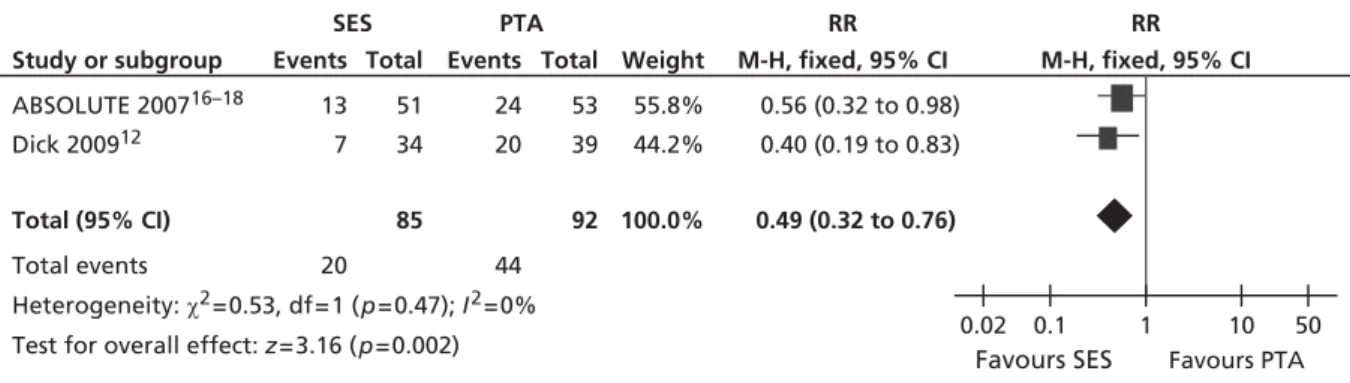
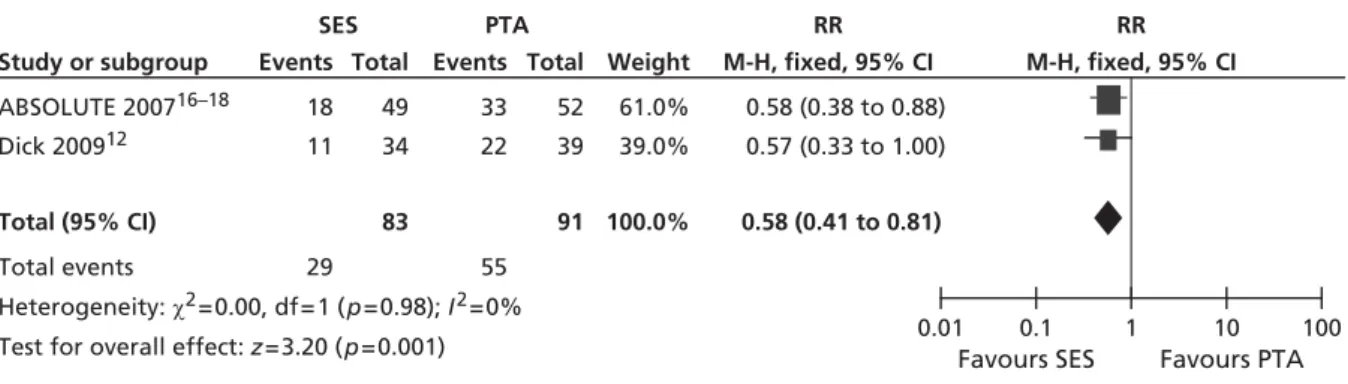
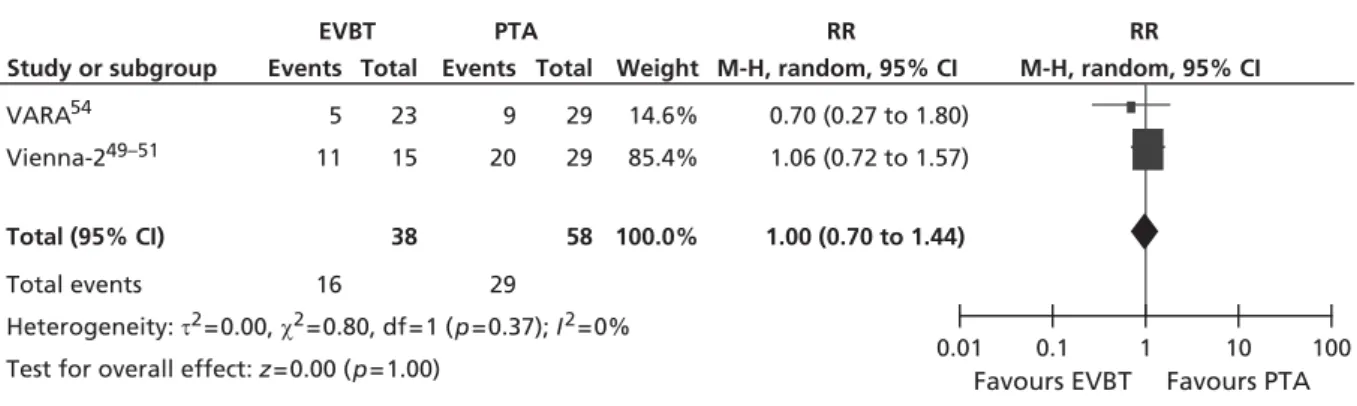
between groups at 1-year follow-up (FAST14). Meta-analysis (Figures 2–7) for restenosis at 6 months
TABLE 2 Absorbable-metal-stent and restenosis
Study Follow-up Definition of restenosis/ patency PTA lesions analysed (n) PTA lesions with restenosis (%) AMS lesions analysed (n) AMS lesions with restenosis (%) Comparative statistic AMS INSIGHT (Bosiers et al. 200911)
6 months Patency was defined as the absence of a haemodynamically significant restenosis (> 50%) documented by digital subtraction angiography and confirmed by the core-lab QVA 50 42a 44 68.2a p= 0.013 Primary patency rates determined by colour-flow Doppler ultrasound and defined as the absence of a haemodynamically significant restenosis (> 50%), derived from the ratio of the PSV at the lesion segment to that at the proximal part, a major amputation or a TLR 50 11.9a 44 19.8a p= 0.270
PSV, peak systolic velocity.




![Crystal structure of [tris(pyridin 2 ylmethyl)amine κ4N]copper(II) bromide](data:image/gif;base64,R0lGODlhAQABAIAAAP///wAAACH5BAEAAAAALAAAAAABAAEAAAICRAEAOw==)