J
ENA
E
CONOMIC
R
ESEARCH
P
APERS
# 2010 – 010
Institutions, Culture, and Open Source
by
Sebastian von Engelhardt
Andreas Freytag
www.jenecon.de ISSN 1864-7057
The JENA ECONOMIC RESEARCH PAPERS is a joint publication of the Friedrich Schiller University and the Max Planck Institute of Economics, Jena, Germany. For editorial correspondence please contact [email protected]. Impressum:
Friedrich Schiller University Jena Max Planck Institute of Economics
Carl-Zeiss-Str. 3 Kahlaische Str. 10
D-07743 Jena D-07745 Jena
Institutions, Culture, and Open Source
§Sebastian von Engelhardt*, Andreas Freytag**
Abstract
§
Financial support from the KLAUS TSCHIRA FOUNDATION is gratefully acknowledged.
Furthermore, we would like to thank participants at the 13th Annual Conference of The International Society for New Institutional Economics at the University of California at Berkeley, 2009, the participants of the Mika Widgrèn Memorial Workshop on Rules, Games and Democracy in Turku, September 7-9, 2009, as well as the participants of the DFG Graduate School ‘The Economics of Innovative Change’ in Jena for valuable com-ments and suggestions. In particular we would like to thank Oliver Kirchkamp, Florian Noseleit, Maria Ales-sandra Rossi, Francesco Rullani and Matti Viren.
*
Friedrich-Schiller-University Jena, Department of Economics and Business Administration. E-mail:
**
Friedrich-Schiller-University Jena, Department of Economics and Business Administration, and European The paper analyzes the impact of institutional and cultural factors on a
re-markable economic activity: the production of so-called open source software (OSS). OSS is marked by free access to the software and its source code. Copyright-based OSS licenses permit users to use, change, improve and re-distribute the software, which is designed and developed in a public, collabo-rative manner. OSS seems to be an example of a ‘private provision of a pub-lic good’.
While the supply-side microeconomics of OSS (individual characteristics of OSS developers, role of firms etc.) are well explored, it is not known which institutional and cultural factors explain different OSS activities across countries. For this reason, we perform a cross-country study analyzing how the number of OSS developers per inhabitants and the level of OSS activity of a country depend on institutional and cultural factors. Our findings are that a culture characterized by individualism/self-determination, abundance of social capital interpreted as interpersonal trust, an optimistic view of scien-tific progress, a low degree of regulation as well as good protection of intel-lectual property rights is favoring OSS activities. Our study thus contributes to the understanding of the role of cultural and institutional factors in general as well as in particular with respect to OSS. Additionally, it improves the un-derstanding of the supply-side of OSS.
Key Words: Open Source, Culture, Institutions, Social Capital, Trust, Regulation, Entrepreneurial Spirit, Individualism, Intellectual Property Rights
1 Introduction
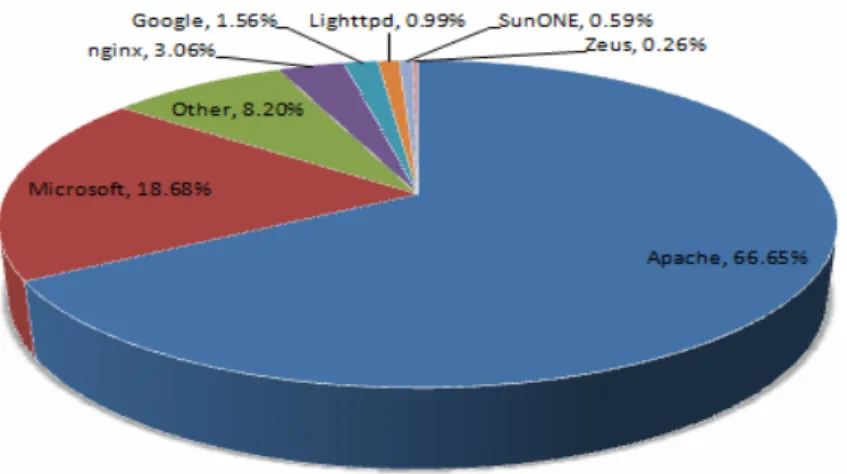
The software industry is characterized by innovations not only at the level of products but also at the level of market organization, i.e. institutions. In the case of open source software (OSS), the source code – the human-readable recipe of a software program – is ‘open’ (disclosed). This implies general access to the software and its source code, as well as the right to read, modify, improve, redistribute and use it. This principle of openness is codified in the (copy-right based) OSS licenses. Hence, OSS seems to represent a “new intellectual property para-digm” (Maurer & Scotchmer, 2006), i.e. a new type of ownership concept that leads to differ-ent allocations of intellectual property rights and differdiffer-ent modes of organization as compared to so called proprietary software. OSS is developed by a decentralized but nevertheless well organized ‘community’ that consists of thousands of volunteers who develop software, often without direct monetary reward, and firms that are engaged in OSS. Some OSS – like the Apache Webserver software (see figure 1) – have a remarkable market share. Thus, OSS ap-pears to be a successful example for a “private provision of a public good” (Johnson, 2002).
Figure 1: Server Share amongst the Million Busiest Sites, March 2009
(Source: Netcraft's March 2009 Web Server Survey, www.netcraft.com)
OSS has been in the focus of economic research for some years, see Rossi (2006), Lerner & Tirole (2005a) and Schiff (2002) for overviews. We contribute to this literature by analyzing the influence of a country’s institutional and cultural framework on the supply-side of OSS. In this context we refer to Williamson's analytical framework (Williamson 2000, see figure 2) and point out that, so far, economic research on OSS focus on level three and four only:1
1
The following list is not intended to be exhaustive. Furthermore, we do not mention legal scholars like Benkler (2002), or Lessig who interprets the code to be a standard (Lessig, 2006, 1999). Also Raymond (1999) and other protagonists of the OSS-community are not mentioned in the list.
Figure 2: Williamson’s four interrelated levels of social and institutional analysis
(Source: Williamson 2000, p 597)
• Micro-level institutions and governance structures: Research on the institutions of OSS and its governance structures (Gehring 2006, Weber 2004) comprises the fol-lowing interconnected aspects: the role, choice and rationale of OSS-licenses (Sen et al. 2008, D’Antoni & Rossi 2007, Polanski 2007, Bessen 2006, Gambardella & Hall 2006, Gaudeul 2005, Lerner & Tirole 2005b), organizational issues and gov-ernance structures (Langlois & Garzarelli 2008, Mateos-Garcia & Steinmueller 2008, Sadowski et al. 2008, Hertel 2007, Jørgensen 2007, de Laat 2007, Markus 2007, O’Mahony 2007, 2003, O’Mahony & Ferraro 2007, Demil & Lecocq 2006, Johnson 2006, Franck & Jungwirth 2003), and the resulting allocation of effort and resources, the role of participants respectively (Au et al. 2009, Sen et al. 2009, den Besten et al. 2008, David & Rullani 2008, Giuri et al. 2008, Fershtman & Gandal 2007, Dalle & David 2005, von Krogh et al. 2003).
• Motives and incentives of contributors: Another important branch analyzes the in-centives and (extrinsic and intrinsic) motives of individual OSS developers, asking the question of “Why should thousands of top-notch programmers contribute freely to the provision of a public good?” (Lerner & Tirole 2002). There is much litera-ture dealing with this question on the individual level, both from economics and other social sciences. A prominent economic explanation refers to extrinsic motiva-tions: the acquisition of a reputation-signal (Lerner & Tirole 2002). But intrinsic motives also play a role. We will come back to this later in section 2.3 (hypotheses 4 and 6), thus we mention here only David & Shapiro (2008) where the reader can find an overview of recent empirical results.
• Incentives and role of firms: Beside the motives of individual contributors, the en-gagement of firms is of interest. Here research analyses the role firms play within the OSS community (Henkel 2009, West & O’Mahony 2008, Dahlander 2007, Dahlander & Magnusson 2006, 2005), to which projects companies contribute (Lerner et al. 2006), and the rationale for firms to develop in OSS (Llanes & de Elejalde 2009, Dahlander & Wallin 2006, Henkel 2006, 2004, Harison & Cowan 2004, Hawkins 2004) including hybrid and dual-licensing strategies etc. (Campbell-Kelly & Garcia-Swartz 2009, Comino & Manenti 2007, Koski 2007, 2005, Välimäki 2003). Related to this is the literature analysing OSS as a variant of user innovations, collective inventions etc. (Pollock 2008, Osterloh & Rota 2007, Giuri et al. 2010, Kogut & Metiu 2001, Lamastra Rossi 2009, von Hippel 2005, Lakhani & von Hippel 2003, von Hippel & von Krogh 2003)
• Impact on market outcome: Finally, another topic of research is the impact of OSS on competition and resource allocation. Authors to be mentioned here are for ex-ample Lanzi (2009), Bitzer & Schröder (2007), Gaudeul (2007), Sen (2007), Casadesus-Masanell & Ghemawat (2006), Economides & Katsamakas (2006), Bitzer (2004), and Mustonen (2003). The subject also includes work analyzing growth-effects, intensity of aggregate software development respectively (v. Eng-elhardt & Swaminathan 2008, Garzarelli et al. 2008, Chen et al. 2007, Saint-Paul 2003).
Thus, with respect to OSS, there is still lack of knowledge regarding the levels one and two, i.e. regarding the so-called “embeddedness” (informal institutions, customs, traditions, norms, religion) and the institutional environment (formal rules of the game, in particular property rights).
Our paper fills this gap, as we are interested in the conditions for OSS activities on the level of society. We take into consideration the microeconomics of OSS and search for the conditions for these aspects. For this purpose, we perform a cross-country study analyzing how the per capita number of a country's OSS developers registered at SourceForge2 is shaped by institutional and cultural factors. In particular, we take into account aspects of the legal system and regulation, social capital, the openness to novelty, the degree of individual-ism/self-determination of a society as well as its attitude toward competition.
The remainder of the paper is structured as follows: In section 2, we discuss the theoretical foundations of the paper and derive the hypotheses for the empirical study. In section 3, we operationalize the variables and describe the data and its sources. This data is used to perform the empirical assessment in section 4, where the regression results are presented. In section 5 we compare and discuss the results before we end with a summary in section 6.
2 Theoretical Considerations and Hypotheses
Countries differ in the number of OSS developers per capita as well as in the level of OSS activity (von Engelhardt et al. 2010, Gonzalez-Barahona et al. 2008). These differences can not be solely explained by GDP, education and aspects of ICT, like access to the internet.
In general, cultural and institutional factors that belong to level one and two of William-son's framework shape human interaction (see also 2.1) and therefore have an impact on the microeconomic level. Hence, in order to derive hypotheses about the influence of institutional and cultural factors on OSS developers and their activities, we will link insights about the mi-croeconomics of OSS with the level of institutional and cultural factors.
This is a relatively new approach. The only study (we are aware of) linking cultural factors with the geographics of OSS developers is Ramanujam (2007).3 Ramanujam uses data from Ghosh (2006) and Hofstede’s cultural indicators to analyze how differences in national cul-ture affect or influence the participation in OSS. He links the geographical distribution of de-velopers with the four dimensions of national cultures considered by Hofstede (1991). Ra-manujam states a positive correlation between the share of OSS developers and
2
SourceForge is an internet platform for OSS developers to control and manage OSS development. In a sense it is a virtual center where the developers of a certain OSS project can meet, discuss, coordinate their tasks, upload new developed codes etc. SourceForge is seen as the world's largest site hosting OSS-projects. While access to the developer-areas needs registration, finished version of software can be downloaded by anybody. 3
Ramanujam’s hypothesis is that “Cultural differences amongst the programmers from different regions lead to measurable differences in their participation in the open source movement. In other words national cultural differences influence the participation of programmers in development of OSS” (Ramanujam 2007, p 16). When interpreting his results he gives some plausible explanations for his findings. Nevertheless, study seems a bit vague with respect to theoretical foundation.
ism', whereas 'Power Distance' and 'Uncertainty Avoidance' are negatively correlated each. However, the results should be interpreted with care, as there is no correction or control for aspects like number of inhabitants, GDP, internet access etc. Furthermore, with respect to OSS contribution Ramanujam (2007) distinguishes only four regions, whereas the paper at hand runs regressions with data from about 70 countries, and analyzes several cultural and institutional factors including norms and attitudes.
2.1 The role of culture, informal and formal institutions
Nowadays it is consensus among economists that institutions “matter”, as they define the in-centive structure of a society and are therefore the underlying determinants of economic per-formance (North 1994, p 359). This means that human interaction is structured and shaped by “humanly devised constraints”, and these institutions “are made up of formal constraints (e.g., rules, laws, constitutions), informal constraints (e.g., norms of behavior, conventions, self-imposed codes of conduct), and their enforcement characteristics.” (North 1994, p 360). Fol-lowing North informal institutions belong to „the heritage called culture“ (North 1990 p 37). This is in line with Williamson's framework, as his level 1 (“ebeddedness”) is characterized by the set of informal institutions, namely customs, traditions, norms and religion (William-son 2000, see also figure 2). Therefore some economists analyze culture in terms of informal institutions like social conventions or individual beliefs like interpersonal trust or (rational) cultural beliefs that are self-enforcing (Guiso et al. 2008, Myerson 2002, Greif 1994, p 915).
However, although informal institutions belong to the sphere of culture, not everything be-longing to culture is an (informal) institution. Although culture shapes human interaction, some parts of culture are not institutions by definition, as they lack of enforcement character-istics. Nevertheless, this part of culture also affects economic behavior, as it is linked to indi-vidual values and preferences. Research focusing on this aspect of culture can be found in e.g. Rabin (1993) and Akerlof & Kranton (2000, using the concept of ‘identity’). Bowles (1998) treats preferences as cultural traits, and Bisin & Verdier (2001) model intergenerational cul-tural transmission as transmission of preferences, while Fernandez & Fogli (2009) analyze the impact of culture in terms of preferences and beliefs on women’s work and fertility.
In addition, the different aspects and dimensions of culture can influence each other, and there are also interdependencies between the sphere of culture and formal institutions. How culture influences the implementation of formal rules was for example analyzed by Greif's seminal article about the impact of cultural beliefs on the introduction of different organiza-tions (Greif 1994). Other examples for research dealing with the interaction of culture and
(formal) institutions are Tabellini (2008a, 2007), the research dealing with informal vs. formal institutions and the transition of economics.
This discussion of the literature4 leads to two implications regarding the role of culture: 1. Culture has an impact on economics, as it influences economic behavior either in
forms of social conventions, in forms of beliefs, or in forms of individual values and preferences.
2. Culture “embeds” and thus shapes lower-level institutions. This means that certain cul-tural characteristics can foster or hinder the implementation and/or functioning of insti-tutions.
2.2 The Phenomena of OSS and institutional and cultural factors
Being a social-economic phenomenon, OSS development has several dimensions, which are interconnected and can overlap. First, OSS has similarities to technical science and scientific culture: Its principle of openness and reputation mechanism remind of open science. Many OSS developers are at universities. Historically the idea of OSS comes from software-science and is rooted in scientific culture, implying the willingness to help each other and to discuss problems in online-forums. Additionally, (open source) software development is connected to the search for new solutions. And OSS has a strong technical aspect: software can be seen as a logical machine, and is clearly connected to computers and the internet. Second, OSS is a
public good game, or collective action, being linked to complementary assets on the individ-ual level; in that sense, contribution to OSS is always a means to an end. Either somebody (further) develops the code for own purpose or receives utility from doing so. In the latter case OSS is a (globally coordinated) leisure activity, a task that is done for self-fulfillment and self-determination. There are also extrinsic motives such as building reputation signals or generating income with OSS business models, i.e. selling complementary products like ser-vice or hardware. Third, OSS is a new intellectual property right paradigm. The existence
4
Additionaly to the literature mentioned in the text there is a variety of research. The following list of further examples is not intended to be exhaustive, but rather to give an impression of the range of research on culture and economics. An overview and an introduction can be found in Fernández (2008), see also Guiso et al. (2006) for a summary of research. A discussion about the concept of culture in economic research is Heyde-mann (2008) vs. Nugent (2008), while Jackson (1993) discusses “culture, society and economic theory”. Scholars like Svetozar Pejovich and Eckehard F. Rosenbaum have analyzed the role of culture in the process of transition of (former) socialist economies (Pejovich 2003, Rosenbaum 2001). This is related to the inter-play of on formal and informal institutions like e.g. Williamson (2009) deals with. Tabellini (2008b) analyzes norms and values on cooperation, taking into account (a) that individuals also value the act of cooperating per se, and (b) the social embeddednes of the players (“within a circle of socially connected individuals”). Hen-rich (2000) analyzes the impact of culture on ultimatum game bargaining, and Alverson (1986) examines games that "play people". Bénabou & Tirole (2006) connect beliefs and voting in a model with an "Ameri-can" and an "European" equilibrium in endogenously shared ideology.
and success of OSS seem to challenge the conventional wisdom about the proper role of intel-lectual property rights. It is important to notice that the several OSS licenses (and the OSS business models) rely on copyright law, and that the governance of the different OSS projects is to some extend based on trademarks etc. Another dimension of OSS is its entrepreneurial spirit: Beside the fact that there exist a variety of OSS business models, OSS projects are set up or supported by individuals who want to solve a problem or implement a new feature. Thus OSS in general is based on the idea of individual initiative. Clearly the openness of the code is a precondition here but a sense for pragmatic solutions helps also.
For these aspects we develop hypotheses of how institutional or cultural factors have an influence on OSS development. We break up the phenomena OSS into several elements, iden-tify the more general, underlying aspects, and then connect these with the institutional or cul-tural factor that is or is not in favor of the particular aspect. It is important to notice that these general aspects are not exclusively linked to OSS. For example: We argue that OSS is an ex-ample of an individualistic, self-deterministic behavior. In a society with a strong culture of individualism/self-determination, we expect more individualistic, self-deterministic behavior. As OSS development is such behavior, we expect to see more OSS. We thus argue that it is the cultural spirit of a country that makes it more likely that individuals choose certain tasks with specific characteristics, in our case develop OSS.
2.3 The Hypotheses
This section derives the hypotheses. Before we discuss the relation of the different institu-tional and cultural factors to OSS development in detail, we first take into account the infor-mation and communications technologies (ICT) because of two reasons: First, the supply- and demand-side of the ICT-sector are of importance for OSS. One extrinsic motive to develop OSS is to build up reputation signals for the job market, and the size of such jobs markets is linked to the supply-side of ICT. Furthermore, some OSS activities are connected to OSS business models.5 Here the potential size of the demand-side is of importance. Second, inter-net access is a technical and cultural precondition to participate in OSS. Without interinter-net there is no access to the online community of OSS developers. In addition, without some internet experience, there are mental barriers to join the OSS community which is rooted in the cyber-space culture ("hacker-culture"). Taking this together our first hypothesis is:
H1: ICT is beneficial both for the number of OSS developers and the OSS activity level.
5
Since the OSS code itself cannot be a profit center, such OSS business models are based on selling complemen-tary products (Maurer & Scotchmer 2006, p 289, 290ff). This can be hardware like servers or mobile phones, premium versions or different kinds of service like maintenance etc.
Next we discuss the cultural and institutional factors. We first focus on science: OSS de-velopment is a collaborative way of developing novelty. The process of (open source) soft-ware development is a search for new solutions, i.e. an innovative process as such. Thus, OSS development can be described as “coordinating innovation” (Kugler, 2005). Additionally, the rise of OSS is an innovation at the level of how to organize software development, and some authors discuss it as a new intellectual property paradigm (Maurer & Scotchmer, 2006) or re-gard OSS as an „intellectual property revolution“ (Pisano 2006).
In this context we make use of the notion of culture that connects culture with preferences and values: In societies that are more open to novelty, in particular that are more open to new ideas, a higher share of people would prefer new ideas. Such preferences are a good precondi-tion for the adopprecondi-tion of the OSS model of software development and also for active participa-tion, i.e. the search for new solutions. Therefore we expect the following:
H2: A preference for new ideas on the level of society has a positive impact on the num-ber of OSS developers as well as on the OSS activity level.
Another aspect is also related to science, i.e. the similarities to technical science and scien-tific culture: OSS itself has a strong technical aspect. It is a novelty from the “cyber space”, clearly connected to computers and the internet and therefore to the technical aspect of scien-tific progress. Additionally, software development is an art to build a logical machine. Sec-ond, historically the idea of OSS stems from software-science and is therefore rooted in scien-tific culture. For example, the best known OSS license, the GPL, was developed by Richard Stallman. Richard Stallman worked in the MIT Artificial Intelligence Lab. When in the 1980s more and more software became closed source (i.e. sold as “proprietary software”) Stallman started the GNU project in order to defend and foster a “free” – in terms of “open” – culture of software development. This finally led to the GPL licenses. Still today, the OSS commu-nity has “scientific-alike” aspects: There is a culture of discussing problems and helping each other in online-forums, and many OSS developers are at universities. As for openness and the reputation mechanism, similarities to open science can be observed (Dalle & David 2005, Lerner & Tirole 2002, Giuri et al. 2002).
We now argue that a positive attitude towards technical science and/or scientific progress at all is in favor of OSS. Such a pro-science culture (in terms of attitudes, i.e. preferences and values) may support the science-alike formal and informal institutions of the OSS community. Based on this, we state the following hypothesis:
H3: A positive attitude towards scientific progress has a positive impact on the number of OSS developers and on the level of OSS activities.
Contributing to OSS can be a means to an end, because the developers directly receive utility from doing so. For example, Hars & Ou (2002) found that “self-determination” was with about 80% agreement the strongest intrinsic motive. Other authors report that “fun” and enjoyment of programming work itself or of solving problems, and an intellectual challenge are important motives for individuals to contribute to OSS (Luthiger Stoll 2007, Lakhani & Wolf 2005, Hertel et al 2003, Lakhani et al 2002). Thus OSS seems to meet values and pref-erences which are connected to a culture of individualism and self-determination. Here we have again the link between culture and preferences: in a culture with a higher degree of indi-vidualism/self-determination, one would expect that more people engage in individualistic hobbies. As research on the intrinsic motives of OSS developers suggest that OSS ment is an activity that fits such preferences, we expect to see an impact on OSS develop-ment:
H4: The degree of individualism/self-determination of a society has a positive impact on the number of OSS developers as well as on the OSS activity level.
Although individual OSS contribution is a means to an end, linked to (complementary) as-sets (i.e. intrinsic or extrinsic motives), the OSS development process still is a public good game. This brings us to social capital, which is related to ties between people. While some refer to the number of ties only, others stress the features, strength or quality of such ties, which includes aspects like trust. Probably the most known (and widely accepted) definition of "social capital" is by Putnam (1993, 1995). Putnam states that social capital „refers to fea-tures of social organization such as networks, norms, and social trust that facilitate coordina-tion and cooperacoordina-tion for mutual benefit“ (Putnam 1995, p 67). Therefore measures of social capital can take aspects like number of people somebody is (weakly) connected to, but also aspects like social, i.e. interpersonal trust and social engagement into account. We focus on interpersonaltrust in this paper.
Thus, the theoretical concept (or aspect) of culture we refer to in this context is culture as beliefs, namely interpersonal trust.6 For the purpose of this paper it is not relevant where this country-specific level of interpersonal trust comes from (e.g. as result of a general `social' game, or from several sub-games): What matters is the implication of (ex ante) interpersonal trust on the behavior of individuals with respect to the international public good game OSS. First, individuals with more trust will expect less free-rider behavior and more reciprocal
6
In economics the notion of `social capital' differs. While some refer to the number of ties only, others stress the features, strength or quality of such ties, which includes aspects like trust. Therefore measures of social capi-tal used in the literature take into account aspects like number of people somebody is (weakly) connected to, or social, i.e. interpersonal trust and social engagement. We focus on interpersonal trust in this paper.
havior. Thus, they are more likely to contribute to OSS themselves. Second, the literature on public good problems indicates that interpersonal trust has a positive impact on cooperation and reciprocate behavior (Yamagishi et al. 2005, de Cremer 1999, Ostrom 1998, Yamagishi & Yamagishi 1994). Hence having more individuals with higher interpersonal trust should yield more OSS contributions, more reciprocate behavior etc. from that specific country. Such be-havior is then stabilized: the ex ante beliefs are supported by the outcome of the game as OSS is a successful public good game. Voluntary code-contribution and reciprocity is part of the OSS community culture (Gosh et al. 2002, Lakhani et al. 2002). Therefore we expect the fol-lowing:
H5: Social Capital in terms of interpersonal trust has a positive impact on the number of OSS developers as well as on the OSS activity level.
So far, we have concentrated on intrinsic aspects (motives, preferences beliefs). Now we turn to extrinsic motives, incentives etc. In particular we will focus on aspects of OSS that are linked to the enforcement, the enforcement mechanisms respectively, of particular institu-tions. We first analyze an informal institution of OSS (the reputation mechanism) before we discuss the impact of the protection of intellectual property rights on OSS.
Extrinsic motives of OSS developers are for example self-marketing, peer recognition and reputation within the community (Lakhani et al. 2002, Hars & Ou 2002). Career aspects are directly linked to extrinsic motives like the improvement of programming skills, i.e. the in-vestment in human capital, and the aim to build up reputation signals for the job market (Lak-hani & Wolf 2005, Hertel et al. 2003, Gosh et al. 2002, Hars & Ou 2002, Lak(Lak-hani et al. 2002, in all cases these motive were stronger than the motives related to peer recognition). We sum up these two sets of motives as “reputation mechanism”. Such a reputation mechanism is an incentive structure based on the merit principle. In addition, the relevance of such perform-ance signals indicates competition, especially when it comes to the job-market.
The reputation mechanism is an informal institution of the OSS community that has a peer-based (positive) enforcement mechanism. This enforcement mechanism itself is of interest with respect to the role of culture: Positive attitudes towards the merit principle and competi-tion foster and support such enforcement mechanisms of performance based reputacompeti-tion. If more individuals will accept the idea of individual performance signals, more peers will be willing to reward good contributions. Finally, more agents will see the need for and have a preference for the achievement of such signals. In a nutshell, we analyze how culture in terms of preferences and values can foster or hinder the functioning of an institution, namely the effectiveness of its enforcement mechanism. Thus, in a country with a more positive attitude
towards competition and the merit principle, it is more likely to find software developers or students who engage in OSS with the goal to send reputation signals (for “sportive” peer-competition as well as for career aspects).
H6: A culture of positive attitudes toward competition and the merit principle has a posi-tive impact on the number of OSS developers as well as on the OSS activity level.
We now turn to the enforcement of a formal institution, namely the de facto protection of intellectual property rights (IPRs). OSS challenges the traditional wisdom of the exclusive use of IPR, and is often seen as a new IPR paradigm. So, at a first glance, the relationship be-tween protection of IPRs and OSS may not be clear. Some parts of the OSS movement, like the GPL-founder Richard Stallman, argue against intellectual property while others oppose this.7 However, in fact OSS licenses are “real” legal licenses, since they define the scope of transferred rights and are based on copyright law (de Laat 2005). Especially Stallman's GPL uses a so-called ‘Copyleft’-principle which ensures that the licensed software stays “open”. Basically this is achieved via restricting the right to redistribute in the following way: Any further developed software as well as any derived work must be licensed as a whole under the GPL. Thus, intellectual property law is used to ensure that OSS stays OSS as the GPL is based on copyright (Gehring 2006, pp 62, 70). In addition there exist a variety of different OSS licenses differing in how they restrict the usage of the code. In particular firms ‘owning’ OSS projects make use of sophisticated licenses and dual-license strategies, as it is crucial for them to define exactly what is exclusively owned and what not.8 Obviously, such legal ar-rangements are only possible and effective if intellectual property rights are respected and such licenses can be enforced.9 Furthermore, the OSS incentive and governance structures are based on trademarks. Core developers of an OSS project control the project by using passive control rights that are their exclusive rights to decide whether to accept or reject contributions (von Engelhardt 2008, p 24, see also McGowan 2001, Wendel de Joode et al. 2003, p 20). These passive control rights are enforced by using the concept of ownership regarding the da-tabase in which the software is stored and the name – thus, the trademark – of the project.
7
Some parts of the open source community argue in an anti intellectual property way. The "Free Software Foun-dation" opposes the use of the term “intellectual property”, and its president Richard Stallman refuses the idea of intellectual property, arguing that because of moral reasons no one should be allowed to claim prop-erty rights on information or knowledge. This view is opposed by figure like Eric S. Raymond, co-founder of the Open Source Initiative. Raymond supports the idea of property right claims, and hence also of intellectual property rights, but simply argues that proprietary software (in the sense of closed source software) is simply an inefficient way of developing software (see Weber 2004). Others like e.g. Greg Perkins also point out that “Open Source depends on the idea of the individual human right to private property” (Perkins 1998).
8
For more details the different licenses see e.g. Lerner & Tirole (2005), for dual licenses see Välimäki (2003). 9
This prevents cloning of projects and supports the signaling function of the project’s name. Here protection of IPRs supports indirectly the OSS-governance structures and the informal institution 'reputation'. Thus both, the non-commercial part of the OSS community as well as the firms involved, benefit in practice from the possibility to define and enforce IPRs. There-fore we state the following:
H7: The protection of intellectual property rights has a positive impact on the number of OSS developers or on OSS activity level.
Finally we take into account a set of formal institutions: the degree of regulation of eco-nomic activity and its impact on OSS development. We argue that more regulation is not in favor of OSS development and even hinders it. In general, a high degree of regulation in-creases (transaction) costs of entrepreneurial activities and individual initiatives. This de-presses such activities, and thus also OSS. As argued above, OSS has an entrepreneurial spirit as it is based on the idea of individual initiatives and pragmatic problem solving. The oppor-tunity to have access to and to flexibly use the code (individualize, further develop etc.), fos-ters additional entrepreneurial activities. Hence OSS can be a precondition for OSS based start-ups, enable firms to run OSS business models etc. Strong and distortive regulation of economic activities in a country has a negative impact on doing business and thus also on OSS by firms. Furthermore, in the long run strong regulations can also affect the attitudes of the inhabitants negatively: It should not only decrease the number of such activities but also the entrepreneurial spirit in general. So the theoretic argument is that entrepreneurial attitudes or spirit foster entrepreneurial activities. The “payoff” of such activities depends on regula-tion. Thus high regulation increases transaction costs and hence lowers the payoff. This fi-nally leads to less entrepreneurial activities and in the long run also to less entrepreneurial spirit. Because of its characteristics, OSS belongs to entrepreneurial activities, is based on en-trepreneurial spirit respectively. Thus we should see a negative impact here:
H8: A high degree of intense economic regulation has a negative impact on the number of OSS developers as well as on the OSS activity level.
In addition, some control variables are necessary. The data about the geographic origin of OSS developers show that most OSS contributions come from developed countries. There-fore, we control for GDP per capita. Furthermore, we control for education, because studies like Ghosh et al. (2002) indicate that OSS developers are well-educated software engineers or ICT students. Additionally, most programming languages are based on English and the whole communication and coordination of OSS projects is done in English.
3 The Data
Regarding the institutional and cultural aspects we make use of date available from different resources, data on the geographical location of the OSS developers are collected by our own.
3.1 Data about OSS Developers registered at SourceForge
SourceForge is the largest site hosting OSS projects,10 and an often used source for research on OSS (see e.g. Au et al. 2009, Giuri et al. 2010, David & Rullani 2008, Eilhard 2008, zalez-Barahona et al. 2008, Fershtman & Gandal 2008, Comino et al. 2007, Robles & Gon-zalez-Barahona 2006, Lerner et al. 2006, Xu et al. 2006, Lerner & Tirole 2005). Our informa-tion about the geographical origin of OSS developers registered at SourceForge is derived from data offered by the SourceForge Research Data Archive.11 This archive contains some of the information stored at the SourceForge web-page. The latest data available for our purpose are of the year 2006 and deliver approximately 1.4 million datasets which have to be cleaned of all duplicates, fake accounts and non reliable data. We then assign to each user his or her geographical origin by making use of information about the indicated email address, time zone, and IP-address. Additionally we are also able to assign to each user the number of posted messages. In the following we give a brief description of how we derived the data, for more details about the data mining process please refer to von Engelhardt et al. (2010).
By registration at SourceForge users have to indicate a valid email address. If the email address ends with a country-coded Top-Level Domain (TLD) one can identify the user's country, like in the case of .de, .uk, .nl etc. In case of a generic TLD like .com or .org we use the Second-Level Domain (SLD) to locate of the server of the email service provider. Given the developer has indicated a well-defined and unique time zone, this can be used to assign a country to a user (e.g. "Europe/Berlin" implies Germany). And finally, if the IP-address is in the data we can locate the respective developer (the server of the used internet service provid-ers respectively) via GeoIP.12 The data-set we use in this paper is derived by the following method: First, available IP addresses are used to assign developers. Then the rest of develop-ers are assigned by country-coded TLD, the remaining ones via time zone, and finally the rest are geographically identified using the SLD approach. Thereby, we can assign 94% of all us-ers to their countries. Clearly IP, time zone and counry-coded TLD are more reliable than the SLD-based approach (this is also reflected by the matching rates we get from cross-checking
10
See also the footnote on page 4. 11
SRDA is offered by the University of Notre Dame under a special agreement for scientific research. 12
the identification methods, see von Engelhardt et al. 2010). Therefore we also run our regres-sions with a dataset that does not contain the SLD-based identifications. With the information about posted messages we are able to distinguish active developers (those who had posted in 2006) from non-active ones. Furthermore, counting the number of messages posted by users from a country delivers data about the OSS activity of the different countries.
Weighting all these information by the number of inhabitants in 2006 (source: Worldbank 2007), we finally end up with the following country-specific information: (a) Number of OSS developers per 1,000 inhabitants, (b) Number of active OSS developers per 100 inhabitants, and (c) Level of OSS activity (Number of posted messages per 10,000 inhabitants). As we have information about activity levels, our data offers more information about global OSS activities than any other non-survey data we are aware of.
3.2 Data on GDP, Education and ICT
The probability that a country’s inhabitant becomes an OSS developer rises with the degree of economic and technical development, in the latter case mainly with the access to the internet. We take into account the GDP ppp (purchasing power parity) per capita for 2006. As a meas-ure for education we use the combined gross enrollment ratio for primary, secondary and ter-tiary schools with a four-year lag ("education (2002)"). We took both from Norris (2009), the original data source are Worldbank (2007) and UNDP (2004). We have to take into account aspects of ICT. However, worldwide data about e.g. the number of software developers, size of the software sector or other differentiated data about the ICT sector are poor. The best data available refer to internet access.13 Thus we use the number of internet users per inhabitants (“inet users”) as a proxy here. The data for this come from the International Telecommunica-tion Union (2006).
3.3 Data on Cultural Factors and Social Capital
One main source for our analysis is the World Values Survey (WVS) offering a wide range of country-specific cultural data. It is often used in cross-cultural research. We refer to this for our cultural variables about using data from the waves of 1990, 1995/1998 and 1999/2000 from the online-dataset at www.worldvaluessurvey.org (category `Online Data Analysis').
13
At least for some countries, data about the share of employees working in the ICT sector is available. But as internet access is a precondition for OSS, we want to have this in our regression in any case. But with share of ICT employees and internet users we clearly run into problems of multicollinearity here: each internet ac-cess must have been installed by someone working in the ICT sector. Therefore we decided to leave this data out and use internet usage only. We also decided not to use real prices of ICT because of a lack of data.
However, not all questions were asked in all countries, and additionally not in all inter-views. Thus we have to correct for that and eliminate all those with too little overall cover-age.14 Some of the questions have an ordinal scale for the possible answer. Although it is very common to use the mean of such answers, this is quite critical from a methodological point of view, as in this case one treats ordinal scaled data like being on an interval scale. It is better to choose a certain threshold, i.e. for example count the percentage of answers with scale 4 or smaller. As we want to be able to distinguish groups (here countries) from each other with respect to a certain characteristics, a good way to find such a threshold is to “ask the data”. Thus, we look at the direction the answers point to, choose those of interest, and then set dif-ferent plausible thresholds. In a next step we compare the variance, and choose those with the higher variance, as this is an indication by the data that we made the right cut in order to measure the difference of the respective category. (If variances were close to each other, we choose that threshold with the distribution closer to the normal distribution). Whenever we refer to WVS data henceforth, they were, if necessary, treated in the way just described.
3.3.1 Social Capital: Interpersonal Trust
Interpersonal trust is measured by the average percentage of respondents saying ‘most people can be trusted’. (The question is “Generally speaking, would you say that most people can be trusted or that you need to be very careful in dealing with people?” Possible answers are “Most people can be trusted” and “Can't be too careful”). We label this “interpersonal trust”.
3.3.2 Degree of Individualism/Self-Determination
To measure the degree of individualism/self-determination is more complicated. It is based on Hofstede's definition of individualism, which „pertains to societies in which the ties be-tween individuals are loose: everyone is expected to look after himself or herself and his or her immediate family“ (Hofstede 1991 p 52). He developed the individualism index for 50 countries based on a world-wide survey of IBM employees that was carried out during 1978-83. The questions the individualism index was built upon was whether the job leaves suffi-cient time for personal and family life, considerable freedom to adopt own approaches, in-cludes challenging work, offers opportunities to improve and learn new skills, etc. (Hofstede 1991, p 49 ff). Hence, based on these categories, high scores in individualism indicate the
14
In case of questions that were not asked in 100% of all interviews in a country (but with a sufficient high per-centage) we additionally have to correct the percentage of answers, as the numbers one receives from the WVS online-dataset always sum up with the “not asked”- share to 100%.
prevalence of individual interest in a society, i.e. in a sense that people would like to (and can) “do what they want to do”. We use an updated and further developed version of Hofstede’s measure, namely a merge of ratings provided by Triandis' and Hofstede's scores (Suh et al. 1998, p 485, Diener et al. 2000 and Oishi 2000).
Obviously the concept of ‘Individualism’ in the tradition of Hofstede's definition should correlate with leisure time preferences, preferences for independence and self responsibility etc. Here we can again make use of the WVS data. Treating the data as described above lead to the following categories for “leisure time” and “self-responsibility”:
• Leisure time: % of all respondents of a country saying “1 Very important”. (Question asks about how important leisure time is in ones life.)
• Self-responsibility: % of all respondents of a country ranging from 1 to 4. (Question asks to put oneself on a range 1 to 10 expression own opinion, with 1 = People should take more responsibility to provide for themselves, vs. 10 = The government should take more responsibility to ensure that everyone is provided for.)
Additionally, the WVS data delivers the percentage of all respondents of a country who mentioned that “feeling of responsibility” is an important quality children shout learn at home. (They were given a list of qualities that children can be encouraged to learn at home. They should choose up to five they consider to be especially important.).
We want to have one single measure for the degree of individualism/self-determination. Assume that a certain characteristic (like the degree of individualism/self-determination) can-not be measured directly, but several indicators for this characteristic are available. Then prin-cipal component analysis (PCA) is a useful tool to identify the meaningful underlying vari-able(s) and construct this based on the data available. In other words, the PCA tries to find components that explain the maximum amount of variance, reducing the dimension of the data and detecting the structure in the relationships between variables. We construct a princi-pal component labeled “self-determ/indiv”, that consists of the individualism scores men-tioned above, “leisure time”, “self-responsibility” and whether a child should learn responsi-bility. The Kaiser-Meyer-Olkin measure of sampling adequacy of “self-determ/indiv (PCA)” is 0.683.
3.3.3 Attitudes Toward Competition and the Merit Principle
For the degree of positive attitudes toward competition and/or the merit principle we are also able to construct a principal component, labeled “competition/merit” consisting of variables from the WVS, measuring attitudes towards income differences as incentives, whether
com-petition is perceived as good or harmful, and the importance to teach a child independence: • Income differences as incentives: % of respondents of a country ranging from 7 to 10
(Question asks to express own opinion, using a range from 1 = Incomes should be made more equal, up to 10 = We need larger income differences as incentives.)
• Competition is good: % of respondents of a country ranging from 1 to 2. (Question asks to range oneself according to opinion about “Competition is good, it stimulates people to work hard and develop new ideas, vs. Competition is harmful, It brings the worst in people. Range: 1 = Competition is good, 10 = Competition is harmful.)
• Importance to teach a child independence: % of all respondents of a country who men-tioned that “Independence” is an important quality children shout learn at home. (They were given a list of qualities that children can be encouraged to learn at home. They should choose up to five they consider to be especially important.)
However, this component is problematic, as it has a Kaiser-Meyer-Olkin measure of sampling adequacy of 0.517. Therefor we run regression with and without competition/merit.15
3.3.4 Attitudes towards Novelty (New Ideas and Scientific Progress)
Fianlly, data on attitudes towards novelty, i.e. a preference for new ideas and scientific pro-gress also come from the 1990, 1995/1998 and 1999/2000 waves of the World Values Survey. We apply the following:
• “prefer new ideas” is the % of all respondents of a country preferring new ideas over old ones by ranging from 8 to 10. (The survey asks to rate oneself on a scale about "Ideas stood test of time better vs. New ideas better", with 1 = Ideas that stood test of time are generally best, up to 10 = New ideas are generally better than old ones.) • “science advances help” is the % of all respondents of a country saying that scientific
advances we are making will help mankind. (The question is "In the long run, do you think the scientific advances we are making will help or harm mankind?" Possible an-swers: 1 Will help, 2 Will harm, 3 Some of each.)
3.4 Data on IPR Protection and Regulation
In order to evaluate the degree of regulation, we use the Economic Freedom of the World In-dex (Gwartney et al. 2008). The report offers an inIn-dex of regulation, called “Area 5: Regula-tion of Credit, Labor, and Business”. This index is built upon several sub-indices measuring
15
credit market regulations, labor market regulations, and business regulations (Gwartney et al. 2008, p 189ff). We use it in order to measure the degree of regulation in a society in 2006, and denote this variable by “degree of regulation”.16
With respect to IPR, we use of one of the sub-indices of Gwartney et al. (2006) belonging to the property right section: the sub-index of the protection IPR (“2C Protection of intellec-tual property”) for the year 2004, the latest IPR-data available. This IPR sub-index is based on data from the Global Competitiveness Report of the World Economic Forum.17 We denote this index by “IPR protection (2004)”. Another measure related to IPR are the figures about the software piracy rates in 2006, taken from the Fifth Global Software Piracy Study (Busi-ness Software Alliance 2007).
4 Empirical Results
To test hypotheses H1 through H8, we run linear regression models (OLS), varying the en-dogenous variable as well as the set of explanatory variables.18 The results appear quite robust and are displayed in tables 1 through 3. All three tables are structured as follows: After the control variables, the influence of the variables presenting hypotheses H1 through H8 is shown. We present the three most representative models (for each table equations I, II and III respectively), each with and without "competition/merit (PCA)" (indicated by a and b). While other variables are skipped in single models, social trust, internet users and IPR are used across the board.19 We are able run regressions with up to 70 countries, and we are able to dis-tinguish with respect to the level of activities.
Table 1 presents the regression results for the number of OSS developers per 1,000 inhabi-tants including those localized using the information about the SLD. In the Appendix the reader can find the same regressions for OSS developer data without those localized using the information about the SLD. In a second step, we run regressions for the active OSS develop-ers per 100 inhabitants, again including those localized via SLD, for the results without SLD see the Appendix. Finally, we analyze the OSS activity level. As usual we present the results with those located via SLD while the other version can be found in the Appendix.
16
The original measure is indexing de-regulation (the lower the degree of regulation the higher the score). In order to avoid confusion we use an inverse version such that highly regulated countries have high scores. 17
Question: IPR protection "in your country is 1 = weak and not enforced, up to 7 = strong and enforced”. 18
In order to deal with possible heteroskedasticity we run the regressions with robust standard errors, i.e. het-eroskedastic-consistent estimates. Furthermore, we check for possible problems with multicolinearity by looking at the pairwise correlations, and also checking the Variance Inflation Factors.
19
We present results with IPR protection only. We also run regressions with software piracy rates. It turns out that the piracy rates are never significant, while the rest remains basically the same, only regulation becomes insignificant.
5 Comparison and interpretation of the results
In this section we compare and interpret the results of the different estimation models. The control variables do not contribute to the explanation of OSS activities. The evidence for the other variables is mixed, as the following discussion of the variables in the order as intro-duced in the hypotheses shows.
The share of internet users is positively correlated with OSS activities and significant, which supports hypothesis 1. As already mentioned, this can be interpreted with respect to two aspects. First, internet access is a precondition for participating in OSS development. Second, the number of internet users is a proxy for the size of the ICT sector, which has a positive impact on the supply-side of OSS via OSS-reputation signals for ICT-job-markets and the potential market size for OS business models.
Surprisingly “prefer new ideas” is positively but not significantly correlated with OSS ac-tivities. Thus, hypothesis 2 has to be rejected, as country-wide openness to new ideas is not encouraging participation in OSS. Interestingly, this is different with respect to the attitude towards scientific progress (hypothesis 3): A positive attitude towards scientific progress (sci-ence advances help) is clearly significant with respect to the number of developers. It is also significant with respect to active developers, and the activity level where it has its lowest sig-nificance level. The preference for new ideas and the attitude towards scientific progress measure different aspects (someone who likes new ideas can still be skeptical about the im-pact of scientific progress). Nevertheless one might expect that it is the combination of both that is beneficial for OSS. The argument would be that openness to new ideas has to meet a preference for scientific aspects in order to fit into the OSS community. Therefore, we also run regressions with an interaction term, but this is never significant.
As for hypothesis 4, stating that the degree self-determination of a society has a positive impact on the number of OSS developers as well as on the OSS activity level, the number of (active) OSS developers at SourceForge is indeed positively correlated with the degree of in-dividualism. Interestingly the significance level rises when it comes to the activity level (see table 3). This fits our expectations. OSS development can be a way of individualistic fulfillment. Therefore, it is highly plausible that societies with high account of self-determination are experiencing a higher OSS activity level.
The number of OSS developers is positively correlated with the degree of interpersonal trust. Therefore hypothesis 5 is not rejected, fitting also our expectations. Again, despite the fact that this variable is highly significant throughout all equations, it is interesting to notice that this factor is more significant when applied to the activity level. In a society generating
mutual trust, private provision of public goods indeed seems more likely.
A culture of positive attitudes toward competition and the merit principle is not relevant: the principal component “competition/merit” was never significant (nor was the positive atti-tude towards competition solely). Therefore hypothesis 6 has to be rejected. A possible expla-nation could be that individualistic self-fulfillment aspects and self-determiexpla-nation are more important on the level of culture.
How do IPRs affect OSS activities? In the regressions of model I and III the number of ac-tive OSS developers and the level of activity both are positively correlated with the degree of protection of IPR. Hence, hypothesis 7 cannot be rejected. It seems that indeed the supply-side of OSS benefits from the security of IPRs. This is plausible if one remembers that, as al-ready mentioned, OSS licenses are build upon copyright law, OSS projects use trademark law, etc. OSS relies on the idea of IPR, although it uses this institution in a new way. The deny of IPR as such might even harm the supply of OSS. We have to discuss an often men-tioned objection in this context here: The argument would be that in societies with a low de facto protection of IPRs there is not so much need for OSS, as one can get software for free (or at least at low costs) anyway. This shall explain why we have more OSS contribution when IPR protection is strong. Hence, this argument sees OSS as a substitute for pirated soft-ware. However, this explanation is not convincing because of various reasons. First, if OSS is a substitute for piracy software we should see an effect of piracy rates. But piracy rates are never significant (see footnote 19). Second, OSS is far more than just “cheap” software: the key element of OSS is that one has access to the source code and can thus further develop it etc. A pirated copy of proprietary software (closed source software) is still just a copy of the binary code. Whereas the source code is the human-readable recipe of software, the binary code is not readable by humans. Thus piracy software can not be a substitute for OSS as it is missing the source code. Finally, the objection mixes up demand- and supply-side arguments. The argument points to the demand-side, but we analyze the supply-side of OSS: the number of (active) developers and the activity level.
In most regressions with regulation the variable has a negative sign and is significant. Thus we find support for hypothesis 8. OSS activities obviously depend on regulations, exactly as other entrepreneurial activities and individual initiatives are positively correlated with lower regulation, i.e. a set of reasonable regulations.
Positive attitudes toward competition and the merit principle, protection of IPRs, and less regulation are all aspects that relate to OSS and OSS business models. One might argue that it is precisely the combination of less regulation and a sense for competition, or less regulation
and good IPR protection, or even the combination of the three, that is in favor of business and thus also of OS business models. This could then affect the OSS activities as well. Therefore we also run regressions with such interaction terms. The results are clear: only the interaction term of IPR protection and regulation is significant (positively) in some regressions. It has an impact only if we examined the activity level and the active developers.
6 Summary
The paper presents a cross-country study of how the relative number of OSS developers and the OSS activities of a country depend on institutional and cultural factors that belong to level one and two of Williamson's framework. For this purpose we break up the phenomena OSS into several elements, identifying more general, underlying aspects. We then connect these aspects with institutional and cultural factors. In detail we have examples of the impact of cul-ture in terms of values and preferences and in forms of beliefs, and of how culcul-ture can foster or hinder the implementation and/or functioning of institutions. In addition we have examples of how formal ‘level two’-institutions have an impact on the functioning of lower-level formal and informal institutions (IPR protection) and on the outcome, thus payoffs, of certain activi-ties.
We can assign 1.3 million OSS developers from SourceForge to their countries, that equals 94% of the total at SourceForge in 2006. With the posted messages we have a proxy for the activity of each developer. We are able to run regressions with about 70 countries, as the data about the cultural and institutional variables are not available for all the countries existing.
Beside the fact that internet access is an important factor for the supply-side of OSS, our findings indicate that a positive attitude towards scientific progress as well as a culture of self-determination/individualism is in favor of OSS. The same is true for interpersonal trust. IPR protection is significant in some regressions, always with a positive sign. And finally less market regulation fosters OSS.
Our analysis shows that the non-equal geographical distribution of OSS activities is not driven by aspects like GDP and education, and only partly by internet access. It can mainly be explained by the differences in several cultural and institutional factors. This underlines the importance of these factors. Hence this study shows the impact of such factors on mi-cro(economic) behavior, using the case of OSS development as a special example. This can help to better understand the role such cultural and institutional factors play. But it also im-proves the understanding of the phenomena OSS. Our findings support a view of OSS as be-ing an entrepreneurial activity that relies on trust as well as on IPR protection. It has a strong
individualistic/self-deterministic aspect, combined with a spirit of individual initiatives. The fact that OS can be (the basis of a) business model is also supported by our findings, as the results for market regulation and IPR protection show.
References
Akerlof, G. A. & Kranton, R. E. 2000, ‘Economics and identity’, The Quarterly Journal of Economics, MIT Press, vol. 115(3), 715–753.
Alverson, H. 1986, ‘Culture and economy: Games that "play people"’, Journal of Economic Issues,
20(3), 661–679.
Asay, M. 2009, ‘Open source: It's about capitalism, not freebies’ cnet online article, February 9, 2009 6:02 AM PST, news.cnet.com/8301-13505_3-10159370-16.html
Au, Y. A. & Carpenter, D. & Chen, X. & Clark, J. G. 2009, ‘Virtual organizational learning in open source software development projects’, Information & Management46(1), 9 – 15.
Baake, P. & Wichmann, T. 2004, ‘Open source software, competition and potential entry‘, Berlecon Research Papers 5, Berlecon Research, Berlin.
Bénabou R. & Tirole, J. 2006, ‘Belief in a just world and redistributive politics’, The Quarterly Journal of Economics, 121(2), 699–746.
Benkler, Y. 2002, ‘Coase’s penguin, or, linux and the nature of firm’, Yale Law Journal112(3), 369– 437.
Bessen, J. 2006, Open source software: Free provision of complex public goods, in J. Bitzer
P. Schröder, eds, ‘The Economics Of Open Source Software Development’, Elsevier, p. 57–81. Bisin, A. & Verdier T. 2001, ‘The economics of cultural transmission and the dynamics of
preferences’, Journal of Economic Theory, 97, 298–319.
Bitzer, J. & Schröder, P. J. H. 2007, ‘Open source software, competition and innovation’, Industry and Innovation14(5), 461 – 476.
Bitzer, J. 2004, ‘Commercial versus open source software: the role of product heterogeneity in competition’, Economic Systems28(4), 369–381.
Bowles, S. 1998, ‘Endogenous preferences: The cultural consequences of markets and other economic institutions’, Journal of Economic Literature, 36(1), 75-111.
Business Software Alliance 2007, Fifth Annual BSA and IDC Global Software Piracy Study.
Campbell-Kelly, M. & Garcia-Swartz, D. D. 2009, ‘Pragmatism, not ideology: Historical perspectives on IBM’s adoption of open-source software’, Information Economics and Policy21(3), 229 – 244.
Casadesus-Masanell, R. & Ghemawat, P. 2006, ‘Dynamic mixed duopoly: A model motivated by Linux vs. Windows’, Management Science52(7), 1072–1084.
Chen, M. X. & Iyigun, M. & Maskus, K. E. 2007, ‘General public licensing and the intensity of aggregate software development’, Economics of Innovation and New Technology16(5-6), 451 – 466.
Comino, S. & Manenti, F. M. & Parisi, M. L. 2007, ‘From planning to mature: On the success of open source projects’, Research Policy36(10), 1575 – 1586.
Comino, S. & Manenti, F. M. 2007, ‘Dual licensing in open source software markets’, Department of Economics Working Papers 0718, Department of Economics, University of Trento, Italia.
de Cremer, D. 1999, ‘Trust and fear of exploitation in a public goods dilemma’, Current Psychology,
18(2), p 153-163.
D’Antoni, M. & Rossi, M. A. 2007, ‘Copyright vs. Copyleft licencing and software development’, Working Paper of the Department of Economics University of Siena.
Dahlander, L. & Magnusson, M. G. 2005, ‘Relationships between open source software companies and communities: Observations from nordic firms’, Research Policy34(4), 481 – 493.
Dahlander, L. & Magnusson, M. G. 2006, Business models and community relationships of open source software firms, in J. Bitzer P. J. Schröder, eds, The Economics of Open Source Software Development, Elsevier, Amsterdam, pp. 111 – 130.
Dahlander, L. & Wallin, M. W. 2006, ‘A man on the inside: Unlocking communities as complementary assets’, Research Policy35(8), 1243 – 1259.
Dahlander, L. 2007, ‘Penguin in a new suit: A tale of how de novo entrants emerged to harness free and open source software communities’, Industrial and Corporate Change16(5), 913 – 943. Dalle, J.-M. & David, P. A. 2005, ‘The allocation of software development resources in open source
production mode’, in: J. Feller, B. Fitzgerald, S. Hissam and K. Lakhani, eds, Perspectives on Free and Open Source Software, The MIT Press, Boston), 297–328.
David, P. A. & Waterman, A. & Arora, S. 2003, ‘FLOSS-US. the free/libre/open source software survey for 2003’, Technical report, Stanford Institute for Economic Policy Research.
David, P. A. & Rullani, F. 2008, ‘Dynamics of innovation in an ’open source’ collaboration environment: Lurking, laboring, and launching floss projects on sourceforge’, Industrial and Corporate Change17(4), 647 – 710.
David, P. A. & Shapiro, J. S. 2008, ‘Community-based production of open-source software: What do we know about the developers who participate? ’, Information Economics and Policy20(4), 364 – 398.
Demil, B. & Lecocq, X. 2006, ‘Neither market nor hierarchy nor network: The emergence of bazaar governance’, Organization Studies (01708406)27(10), 1447 – 1466.
den Besten, M. & Dalle, J.-M. & Galia, F. (2008), ‘The allocation of collaborative efforts in open-source software’, Information Economics and Policy20(4), 316 – 322.
Diener, E. & Gohm, C. L. & Suh, E. & Oishi, S. 2000, ‘Similarity of the relations between marital status and subjective well-being across cultures’, Journal of Cross-Cultural Psychology
31(4), 419–436.
Economides, N. & Katsamakas, E. 2006, ‘Two-sided competition of proprietary vs. open source technology platforms and the implications for the software industry’, Management Science
52(7), 1057–1071.
Eilhard, J. 2008, ‘Loose contracts, tight control? Firms on SourceForge’, CERNA Working Paper. von Engelhardt, & S. Swaminathan, S. 2008, ‘Open source software, closed source software or both:
Impacts on industry growth and the role of intellectual property rights’, Discussion Papers of DIW Berlin 799, DIW Berlin, German Institute for Economic Research.