Workshop on
Complex Materials
for Nonlinear Optics
Program
Wednesday 29 January 2020
09.30 Registration Lab Tour 10.30 Lab Tour I12.00 Registration & Lunch 13.50 Opening
14.00 Tailored Disorder I (Chair: R. Savo)
S. Skipetrov (14.00 - 14.35) R. Pierrat (14.35 - 14.55) G. Montemezzani (14.55 - 15.15) C. Denz (15.15 - 15.50)
15.50 Coffee Break
16.30 Spatial, Temporal and Quantum Control I (Chair: M. Celebrano)
S. Gigan (16.30 - 17.05) A. Pasquazi (17.05 - 17.40) U. Tegin (17.40 - 18.00) 18.00 Poster Pitches
18.30 Poster Session & Apéro
Thursday 30 January 2020
09.00 From Bulk to 2D Systems I (Chair: R. Grange)
M. Scalora (09.00 - 09.20) A. Marini (09.20 - 09.55) A. Solntsev (09.55 - 10.15) M. Celebrano (10.15 - 10.35) 10.35 Coffee Break
11.00 From Bulk to 2D Systems II (Chair: F. Setzpfandt)
D. Gerace (11.00 - 11.35) C. Cojocaru (11.35 - 12.10) R. Le Dantec (12.10 - 12.45)
Program
Programm
14.00 Uhr 06-lauftext + Bold Begrüssung 06-lauftext Quis num dit pelecea natur
14.15 Uhr 06-lauftext + Bold Quis num dit pelecea natur
06-lauftext Itate none non ne veles autecto in cuptatiusa volup-tatus sent, quat re cus aut es quias sequiaturi cupis sinumenisi omnis qui sapis ea volupta epedio voluptam.
14.35 Uhr 06-lauftext + Bold Quis num dit pelecea natur
06-lauftext Nequi nobis delessi cus experiore ma quamusam explibus, omnienim nimil eaquamenis es audigni.
15.45 Uhr 06-lauftext + Bold Kaffepause
16.15 Uhr 06-lauftext + Bold Quis num dit pelecea natur
06-lauftext Nequi nobis delessi cus experiore ma quamusam explibus, omnienim nimil eaquamenis es audigni Quis num dit. 16.35 Uhr 06-lauftext + Bold Quis num dit pelecea natur
06-lauftext Quis num dit pelecea natur Nequi nobis delessi cus experiore ma quamusam explibus, omnienim nimil eaquamenis es audigni.
16.55 Uhr 06-lauftext + Bold Quis num dit pelecea natur 06-lauftext Quis num dit pelecea natur
17.45 Uhr 06-lauftext + Bold Apéro riche 12.45 Lunch
14.00 Tailored Disorder II (Chair: S. Gigan)
M. Abbarchi (14.00 - 14.35) P. Yazhgur (14.35 - 15.10) L. Schertel (15.10 - 15.30) 15.30 Coffee Break
16.10 Tailored Disorder III (Chair: S. Skipetrov)
L. Dal Negro (16.10 - 16.45) R. Sapienza (16.45 - 17.20) H. Galinski (17.20 - 17.55) 18.00 Poster Session
18.50 Meeting point ETH Link Bus Stop (see map on last page) 18.54 Transfer to ETH Zentrum
19.30 Dinner
Friday 31 January 2020
09.00 From Bulk to 2D Systems III (Chair: M. Scalora)
T. Ellenbogen (09.00 - 09.35) F. Setzpfandt (09.35 - 09.55) N. Cherroret (09.55 - 10.15) 10.15 Coffee Break
10.45 Spatial, Temporal and Quantum Control II (Chair: R. Sapienza)
M. Chekhova (10.45 - 11.20) P. Goldner (11.20 - 11.55) N. Strkalj (11.55 - 12.15) 12.15 Closing 14.15 Lab Tour II
Program
Content
Abstracts ... 5
Tailored Disorder I ... 5
Spatial, Temporal and Quantum Control I ... 8
From Bulk to 2D Systems I ... 12
From Bulk to 2D Systems II ... 17
Tailored Disorder II ... 20
Tailored Disorder III ... 24
From Bulk to 2D Systems III ... 27
Spatial, Temporal and Quantum Control II ... 30
List of Posters ... 33
List of Participants ... 33
Organizing Committee ... 35
Funding ... 35
Content
Abstracts - Tailored Disorder I
Tailored Disorder I
(Chair: R. Savo)
Second Harmonic Generation in the Regime of
Anderson Localization
Sergey E. Skipetrov1*
1 Univ. Grenoble Alpes, CNRS, LPMMC, 38000
Grenoble, France
We compute the average intensity of the second optical harmonics generated by a strongly scattering random medium in which the fundamental wave experiences Anderson localization. Similar to the pre-vious work [1] in which the problem was treated for a weakly disordered medium and the diffusion approximation was applied, we assume that the locally generated sec-ond-harmonic signal is proportional to the square of the fundamental-wave intensity, and that the phase matching is random. Our
calculation is based on the recent results for the intensity distribution inside a strongly disordered medium [2]. Second harmonic generation at a mobility edge is also dis-cussed. Our results may be of practical interest for future nonlinear optical device exploiting strong disorder to increase the time of interaction between light and matter and thereby enhance the efficiency of non-linear optical phenomena.
[1] Makeev, E.V. & Skipetrov, S.E., Opt. Commun. 224(1–3), 139 (2003)
[2] Skipetrov, S.E. & Sokolov, I.M. arXiv:1907.05299 (2019)
Photon echoes in disordered media
Romain Pierrat1*, Rémi Carminati1,Jean-Louis Le Gouët2
1 ESPCI Paris, Université PSL, CNRS, Institut
Langevin, 1 rue Jussieu, 75005 Paris, France
2 Laboratoire Aimé Cotton, CNRS, Université
Paris-Sud, ENS Cachan, Université Paris-Saclay, 91405 Orsay Cedex, France
Photon echoes are a non-linear light-matter interaction process that belongs to the four-wave mixing class such as CARS. There are routinely used for the optical dipole lifetime T2 measurement in samples of high optical
quality. Substituting cheap and rough pow-ders to these high-quality crystals would thus be of considerable practical interest. Moreover, the successful observation of photon echoes in rare-earth-ion-doped powders calls for a better understanding of the multiply scattered echo signal [1]. The goal of this work is to present a multiple scattering theory of photon echoes genera-tion in strongly disordered powders based on a diagrammatic approach. In particular, analytical expressions for the average echo
Abstracts - Tailored Disorder I
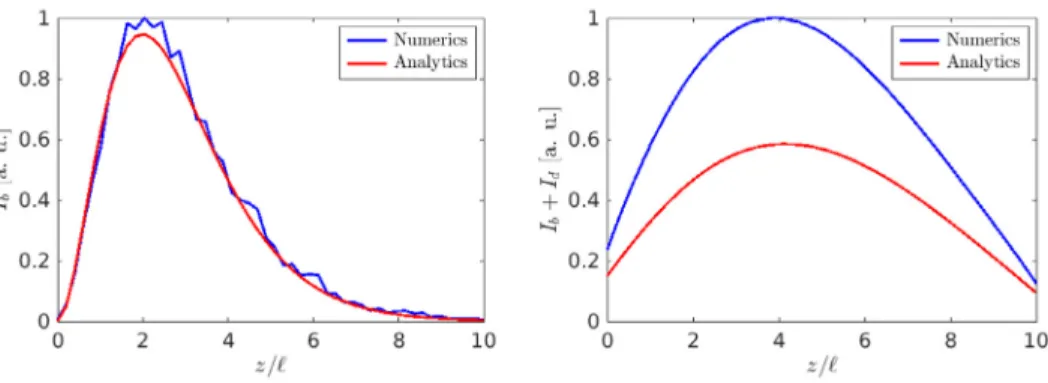
signal as well as for its correlation with the incident beam are derived and compared with ab-initio numerical simulations [2]. Figure 1 shows the typical behavior of echo signal in a slab geometry as a function of the depth. Since an important enhancement is observed compared to a homogeneous
medium, this work might also open the way to applications in energy conservation.
[1] Beaudoux, F., Ferrier, A., Guillot Noël, O., Chanelière, T., Le Gouët, J.-L. & Goldner, P. Opt. Express 19, 15236 (2011).
[2] Pierrat, R., Carminati, R. & Le Gouët, J.-L. Phys. Rev. A 97, 063816 (2018).
Relaxing Phase-matching With Segmented
Composite Approaches
Germano Montemezzani1*, Mouhamad
Al-Mahmoud2, Virginie Coda1, Andon A.
Rangelov2
1 Université de Lorraine, CentraleSupélec, LMOPS,
F-57000 Metz, France
2 Department of Physics, Sofia University, James
Bourchier 5 blvd., 1164 Sofia, Bulgaria
It is well known that phase-matching is crucial for any nonlinear-optical frequency
conversion processes in thick materials. The necessity to fulfill the phase matching condition generally limits the conversion to a narrow wavelength and temperature range, unsuitable to accommodate the spectrum of ultrashort pulses or widely tunable laser sources. Increasing the robustness of the process by relaxing the phase matching conditions is therefore crucial in such cas-es. The use of very short crystals increases
Figure 1. Ballistic (left) and total (right) intensity of the echo signal as a function of the normalized depth in a slab geometry illuminated by a plane-wave at normal incidence. l is the scattering mean-free path. The analytical model for the total intensity has a limited accuracy since it is derived in a large scale limit which explains its discrepancy compared to the numerics.
Abstracts - Tailored Disorder I
the bandwidth but suffers of a tradeoff with the conversion efficiency. While one of the alternative techniques in this context in-volves an adiabatic evolution of the phase matching condition along the propagation direction, here we will discuss an approach based on properly segmented crystals. This technique is inspired by similar robust schemes used in quantum dynamics of a two-level system (e.g. in nuclear magnet-ic resonance) to prepare a given quantum state in a fault-tolerant way [1]. The idea is to segment the nonlinear material in regions of different thickness and mutually reversed nonlinearity in such a way as to optimize the nonlinear conversion robustly over a wide range of parameter space. Specifically, the robustness is given with respect to the phase mismatch parameter Δk and the variation of the pump intensity [2]. This technique
can be easily combined with conventional quasi-phase matching (QPM) by domain reversal. It can be applied to sum frequency generation (SFG) [2], second-harmonic gen-eration (SHG) [3] or other nonlinear optical frequency conversion processes such as optical parametric amplification (OPA) [4]. In the presentation the background for the composite technique will be elucidated and few recent examples will be given.
[1] Levitt, M. H., Progr. Nucl. Magn. Reson. Spectrosc., 18, 61. (1986).
[2] Rangelov, A. A., Vitanov, N. V., Montemezzani, G., Opt. Lett., 39(10), 2959. (2014).
[3] Ehrlich, Y., Rangelov, A. A., Montemezzani, G., Suchowski, H., Opt. Lett., 44(15), 3837. (2019). [4] Al-Mahmoud, M., Coda, V., Rangelov, A. A., Montemezzani, G., (to be submitted).
... ... ... ... ... ... ... ... ...
From Caustic Photonic Lattices to Disordered
Caustic Networks
Cornelia Denz1*, Alessandro Zannotti1,
Daniel Ehrmanntraut1, Philip Menz1
1 Institute of Applied Physics and Center for
Nonlinear Science (CeNoS), University of Muenster, Germany
Caustic light is key to many actual ad-vances in structured light and random waves. On the one hand, tailored caus-tic beams serve as fabricating light for (nonlinear) material processing, transfer complex momentum flows for
advanced optical trapping, and enable novel high-resolution imaging methods. On the other hand, networks of caustics appear as high-intensity ramifications by focusing random light rays. This linear focusing, caused by strong wave front aberrations and denoted as branched flow, yields waves with extreme ampli-tudes – so called rogue waves, origi-nally studied in oceanography. Optics has proven to be an excellent testbed to
Abstracts - Tailored Disorder I
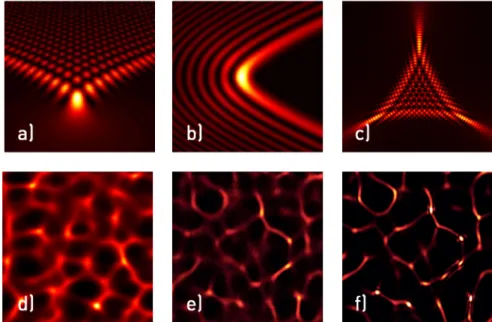
Figure 1. a)-c):Transverse optical caustics. a) Pearcey caustic b) swallowtail caustic, c) elliptic umbilic caustic, d)-e) Propagation of Gaussian random phase fields results in caustic networks of different sharpness. Phase hubs are d) ΔΦ e) 2 ΔΦ and f) 4 ΔΦ.
Programm
14.00 Uhr 06-lauftext + Bold Begrüssung 06-lauftext Quis num dit pelecea natur
14.15 Uhr 06-lauftext + Bold Quis num dit pelecea natur
06-lauftext Itate none non ne veles autecto in cuptatiusa volup-tatus sent, quat re cus aut es quias sequiaturi cupis sinumenisi omnis qui sapis ea volupta epedio voluptam.
14.35 Uhr 06-lauftext + Bold Quis num dit pelecea natur
06-lauftext Nequi nobis delessi cus experiore ma quamusam explibus, omnienim nimil eaquamenis es audigni.
15.45 Uhr 06-lauftext + Bold Kaffepause
16.15 Uhr 06-lauftext + Bold Quis num dit pelecea natur
06-lauftext Nequi nobis delessi cus experiore ma quamusam explibus, omnienim nimil eaquamenis es audigni Quis num dit. 16.35 Uhr 06-lauftext + Bold Quis num dit pelecea natur
06-lauftext Quis num dit pelecea natur Nequi nobis delessi cus experiore ma quamusam explibus, omnienim nimil eaquamenis es audigni.
16.55 Uhr 06-lauftext + Bold Quis num dit pelecea natur 06-lauftext Quis num dit pelecea natur
17.45 Uhr 06-lauftext + Bold Apéro riche investigate different linear and nonlinear mechanisms as modulation instability for the formation of rogue waves as spa-tio-temporal wave phenomena originating from optical disorder.
In our contribution, we compare free space propagation of caustic structures [1,2] with propagation in a nonlinear re-fractive index material and demonstrate wave guiding as well as soliton formation by higher-order caustics [2]. We show that free-space branched flows of light caused by wave front distortions in form of correlated Gaussian random phase fields form caustic networks with controllable extension and sharpness.
This focusing is enhanced by nonlinear refractive index structures. Beyond prop-agating in homogeneous media, we fabri-cate tailored two-dimensional disordered photonic lattices in such a nonlinear me-dium to investigate the interplay of linear focusing and scattering. We find optimal conditions for enhanced focusing of waves with extreme intensities by controlling the size and strength of the disordered pho-tonic refractive index structure.
With these tools in hand, we are able to link different mechanisms of rogue wave formation that are commonly studied separately and discuss their interplay. Our work demonstrates that non-linear focusing can enhance the formation of rogue waves, thereby introducing an
optical platform that allows exploring rogue waves beyond the optical realiza-tion and allows new insights into general spatio-temporal wave dynamics.
[1] Zannotti, A., Diebel, F., Denz, C. Dynamics of the optical swallowtail 4catastrophe. Optica, 1157-1162 (2017).
[2] Zannotti, A., Rüschenbaum, M., Denz, C. Pearcey solitons in curved nonlinear photonic caustic lattices. J. Opt. 19, 094001 (2017).
Abstracts - Spatial, Temporal and Quantum Control I
Spatial, Temporal and Quantum Control I
(Chair: M. Celebrano)
Light in Complex Media: From Imaging to Quantum
Information Processing
Sylvain Gigan1*
1 Sorbonne Université
Light propagation in complex media is an extremely challenging problem in optics, due to the multiple scattering of light. It is also an important issue in biomedical imaging, to develop optical methods able to penetrate tissues. I will show how wavefront shaping has, in the last decade, revolutionized the field and allowed diffraction-limited imag-ing through or in complex media [1]. Beyond imaging, it has been realized that complex media in combination with wavefront shap-ing can be used for many other functions. In my talk, I will illustrate a emerging ap-plication: quantum information. I will show
how a complex medium, here a multimode fiber, can be used to emulate linear trans-formations, that we can subsequently use as a platform to propagate of indistinguishable photons pairs. I will show how this paradigm can be used for information processing, for emulating a coherent absorption experi-ment, and discuss its prospects for scalable photonic quantum computing [2].
[1] S. Rotter, S. Gigan. Rev. Mod. Phys. 89, 015005 (2017)
[2] S. Leedumrongwatthanakun, L. Innocenti, H. Defienne, T. Juffmann, A. Ferraro, M. Paternostro, S. Gigan. arXiv:1902.10678 [quant-ph]
Microcombs Based on Laser Cavity Solitons
Alessia Pasquazi1*, Maxwell Rowley1,Pierre-Henry Hazard1, Hualong Bao1,
Luana Olivieri1, Antonio Cutrona1, Juan
Sebastian Totero Gongora1, Sai T. Chu2,
Brent E. Little3, Roberto Morandotti4,
Gian-Luca Oppo5, David J. Moss5, Marco
Peccianti1
1 Emergent Photonics (EPic) Lab, University of
Sussex, BN1 9QH, UK
2 City University of Hong Kong, Tat Chee Avenue,
Hong Kong, China
3 Xi’an Institute of Optics and Precision Mechanics,
Chinese Academy of Science, Xi’an, China
4 INRS-EMT, 1650 Boulevard Lionel-Boulet,
Varennes, Québec, Canada J3X 1S2
5 SUPA, Department of Physics, University of
Abstracts - Spatial, Temporal and Quantum Control I
Dissipative solitons are self-confined pulses which appear in driven and lossy systems when the phase dispersion is balanced by the nonlinear phase-shift. Temporal cavi-ty-solitons belong to this class and have been largely studied in a ‘driven’ configu-ration, where an external pumping source is resonantly coupled in the nonlinear mi-cro-resonator to sustain and excite the soli-tary pulses. More recently, we demonstrated that it is possible to generate localised puls-es in a configuration where the micro-cavity is inserted in a fiber laser loop. We reported the observation of laser cavity-solitons [1], which have previously attracted large atten-tion especially in spatial configuraatten-tions. By merging their properties with the physics of both micro- resonators and multi-mode systems, this scheme represents a funda-mentally new paradigm for the generation, stabilisation and control of solitary optical pulses in micro-cavities.
In general, laser cavity-solitons are a highly efficient class of cavity-solitons because they are intrinsically background-free. This is in stark contrast to cavity-solitons ob-tained in nonlinear Kerr cavity driven by an external source and described by the well-known Lugiato-Lefever equation. Currently, these self-localised waves form on top of
a strong background of radiation, usually containing 95% of the total power for bright configurations [2].
Our laser cavity-solitons cover a spectral bandwidth exceeding 50 nm and are induced with average powers more than one order of magnitude lower than those typically used in state-of- the-art soliton micro-combs [1]. Very importantly, in stark contrast to tem-poral cavity-solitons based Lugiato-Lefever systems, our bright laser cavity-solitons are background-free, and we achieve a mode-efficiency [2] above 75%, compared to typical 1% - 5% for bright solitons real-ised with standard approaches. Moreover, we can affect the soliton repetition-rate with a simple approach. The free-spectral range of the fiber cavity can be affected by a delay line that modifies the fibre cavity length and, hence, the mode-spacing. In turn this tunes the position of the mode of the system and the repetition rate of the micro-comb. In this presentation, we will discuss the range of existence of Turing patterns and solitons and possible approaches to their generation and control in our system.
[1] H. Bao, et al. Laser Cavity-Soliton Microcombs. Nat. Photonics 13, 384 (2019).
[2] X. Xue, et al. Microresonator Kerr frequency combs with high conversion efficiency. Laser Photonics.
Abstracts - Spatial, Temporal and Quantum Control I
Tailoring Spatiotemporal Nonlinearities in
Multimode Fibers for Spectral and Spatial Shaping
Uğur Teğin1,2*, Babak Rahmani2, EiriniKakkava1, Navid Borhani1, Christophe
Moser2, Demetri Psaltis1
1 Optics Laboratory, École Polytechnique Fédérale
de Lausanne, Lausanne, Switzerland
2 Laboratory of Applied Photonics Devices, École
Polytechnique Fédérale de Lausanne, Lausanne, Switzerland
Single-mode optical fibers have been used for various applications such as fiber la-sers, optical imaging and nonlinear optics. Recently multimode fibers started to attract attention for the aforementioned applications by including the spatial degree of freedom. Specifically, in graded-index multimode fibers (GIMFs), ultrashort pulse propagation with complex modal interactions revealed new nonlinear dynamics for beam shaping, frequency conversion and ultrashort pulse generation [1,2]. Here, we present control of multimode nonlinearities with a machine learning approach for single-pass pulse propagation and generation of high-quality beam shapes by tailoring nonlinearities in spatiotemporal mode-locked fiber lasers. To understand and control the single-pass spatiotemporal nonlinear propagation in GIMF, we experimentally generate datasets by changing the initial modal excitation of the test fiber (GIMF with 62.5µm core diam-eter) and record the spectral changes in for the peak powers capable to trigger cascad-ed Raman scattering and supercontinuum
generations. These collected results are employed to train deep neural networks to understand nonlinear propagation which later used for controlling the frequency generation [3].
So far, temporally Gaussian-shaped (dis-sipative soliton) pulses are generated in spatiotemporally mode-locked lasers with low beam quality. In our study, we aim to generate Kerr induced self-beam clean-ing while spatiotemporal mode-lockclean-ing achieved. To reach the experimentally re-ported power threshold of the self-beam cleaning we generated amplifier soliton pulses for the first time in a spatiotempo-rally mode-locked laser. Self-similar pulse propagation causes less dispersion than the total cavity thus after the gain fiber pulses with a short duration can reach high peak power to trigger self-beam cleaning in GIMF. We numerically and experimentally achieved sub-200 fs pulses with M2-value < 1.4 from a multimode laser cavity [4].
In conclusion, we have presented a novel method to understand and control sin-gle-pass spatiotemporal nonlinearities in GIMFs with deep neural networks. With our laser studies, we have presented a way to generate high-quality output beams from a multimode fiber laser cavity by pulse shaping. Overall, the present approaches show paths to understand and tune complex nonlinear propagation in multimode fibers
Abstracts - Spatial, Temporal and Quantum Control I
and can be implemented for other spatio-temporal nonlinear effects.
[1] Krupa, K., Tonello, A., Shalaby, B. M., Fabert, M., Barthélémy, & Couderc, V. Nature Photonics, 11(4), 237. (2017).
[2] Teğin, U., & Ortaç, B. Scientific Reports, 8(1), 12470. (2018).
[3] Teğin, U., Rahmani, B., Kakkava, E., Borhani, N., Moser, C., & Psaltis, D. arXiv:1909.10561. (2019).
[4] Teğin, U., Kakkava, E., Rahmani, B., Psaltis, D., & Moser, C. arXiv:1904.08456. (2019). Accepted to Optica. ... ... ... ... ... ... ... ... ... ... ... ... ... ... ... ... ...
Abstracts - From Bulk to 2D Systems I
From Bulk to 2D Systems I
(Chair: R.Grange)
Electrodynamics of Conductive Oxides: Induced
lin-ear dielectric anisotropy, harmonic generation, and
retrieval of the effective dielectric constant
Michael Scalora1*, Laura Rodriguez Sune2,
Maria Antonietta Vincenti3, Domenico
de Ceglia4, Zachary Coppens5, Neset
Akozbek5, Jose Trull2, Crina Cojocaru2
1 Charles M. Bowden Research Center, AMRDEC,
RDECOM, Redstone Arsenal, AL 35898-5000 - U.S.A.
2 Universitat Politècnica de Catalunya, Physics
Department, Rambla Sant Nebridi 22, 08222 Terrassa, Barcelona, Spain
3 Department of Information Engineering – University
of Brescia, Via Branze 38 25123 Brescia, Italy
4 Department of Information Engineering – University
of Padova, Via Gradenigo 6/a 35131 Padova, Italy
We undertake a detailed theoretical study of electromagnetic pulse propagation effects in an indium tin oxide nanolayer in the linear and nonlinear regimes. We use the constitutive relations to retrieve the effective dielectric constant and show that in the linear regime nonlocal effects induce a robust, anisotropic, dielectric response hitherto unknown: lon-gitudinal and transverse effective dielectric functions are strongly and differently mod-ulated along the propagation direction, and
display different epsilon-near-zero cross-ing points. In the nonlinear regime, at high intensities hot carriers are the dominant mechanism for third harmonic generation, induce a redshift of the plasma frequency and a corresponding translation of the ef-fective nonlinear dispersion curves. The shift can then be used to accurately predict and quantify nonlinear refractive index changes as a function of incident peak power density. Our results suggest that large, nonlinear refractive index changes can occur without the need for epsilon-near-zero modes to couple with plasmonic resonators. We also predict the presence of additional absorp-tion resonances that arise from longitudinal oscillations of the free electron gas, which give way to corresponding resonances in the second and third harmonic spectra, and the onset of optical bistability at sufficiently large intensities. The key to unraveling the basic physical mechanisms that play a fun-damental role in the dynamics is a realistic propagation model able to extract accurate, basic information from the interaction as it occurs.
Abstracts - From Bulk to 2D Systems I
Ultrafast Nonlinear Optical Response of
Two-dimensional Materials
Andrea Marini1*
1 Department of Physical and Chemical Sciences,
University of L'Aquila, Via Vetoio, 67100 L'Aquila, Italy
Optical nonlinearity in photonic materials enables a large number of applications such as frequency conversion, all-opti-cal signal processing, and non-classiall-opti-cal sources of light. The speed of solid-state electronic devices, determined by the tem-poral dynamics of charge carriers, could potentially reach unprecedented petahertz frequencies through direct manipulation by optical fields, consisting in a million-fold increase from state-of-the-art technology. In graphene, charge carrier manipulation is facilitated by exceptionally strong cou-pling to optical fields, from which stems an important back-action of photoexcited carriers. Here we report the instantaneous response of graphene to ultrafast optical fields, elucidating the role of hot carriers on sub-100 fs timescales. The observed nonlinear response and its dependence on interaction time and field polarization reveal the back-action of hot carriers over timescales commensurate with the optical
field. An intuitive picture is given for the carrier trajectories in response to the opti-cal-field polarization state. We note that the peculiar interplay between optical fields and charge carriers in graphene may also apply to surface states in topological insulators with similar Dirac cone dispersion relations. Furthermore, we report harmonic genera-tion and saturable absorpgenera-tion in graphene, discussing free-carrier generation and their ultrafast temporal dynamics in the atomi-cally thin material. We further discuss the nonlinear optical properties of transition metal dichalcogenides, illustrating cavity- enhanced second-harmonic generation and parametric down-conversion and demon-strating that phase-matching free operation can be achieved in photonic micro-cavities embedding two-dimensional semiconduc-tors as nonlinear optical media. Our results are promising for the development of inte-grated optical parametric oscillators and micro-sources of entangled photons.
[1] M. Baudisch et al., Nat. Commun. 9, 1018 (2018). [2] A. Ciattoni et al., Light: Sci. & Appl, 7, 5 (2018).
... ...
Abstracts - From Bulk to 2D Systems I
Second-harmonic Generation in Multilayer
Hexagonal Boron Nitride
Sejeong Kim1, Johannes E. Fröch1,
Augustine Gardner1, Chi Li1, Igor
Aharonovich1, Alexander S. Solntsev1*
1 University of Technology Sydney, Ultimo, New South
Wales, 2007, Australia
We report second-harmonic generation (SHG) from thick hexagonal boron nitride (hBN) flakes with approximately 109-111 layers. The resulting effective second-order susceptibility is similar to previously report-ed few-layer experiments [1], despite the ex-pected drop-off with an increasing number of layers. This confirms that thick hBN flakes
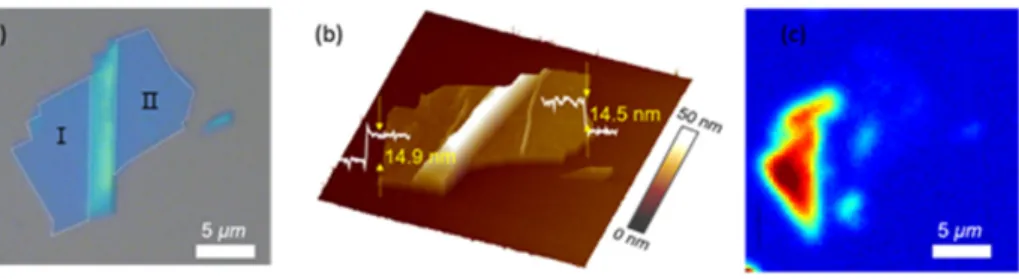
can serve as a platform for nonlinear optics [2], which is useful because thick flakes are easy to exfoliate while retaining a large flake size. We also show spatial second-harmonic maps revealing that SHG remains a useful tool for the characterization of the layer structure even in the case of a large number of layers.
[1] Y. Li, Y. Rao, K. F. Mak, Y. You, S. Wang, C. R. Dean, and T. F. Heinz, Nano Letters, 13, 3329-3333 (2013). [2] A. Autere, H. Jussila, Y. Dai, Y. Wang, H. Lipsanen, and Z. Sun, "Nonlinear Optics with 2D Layered Materials," Adv. Mater., 30, 1705963 (2018).
... ... ...
Figure 1. Spatial SHG mapping. (a) Optical image of hBN flake with areas of different layer number labeled as I and II. (b) AFM map of the flake. (c) Spatial SHG intensity mapping across hBN sample. Region I shows strong SHG signal while the signal from region II is negligible. This is because hBN layers are stacked in 2H order, where the sites for boron and nitrogen are alternating, and the inversion symmetry in only broken for an odd number of layers.
Abstracts - From Bulk to 2D Systems I
Engineering Plasmonic Nanoantennas for Efficient
Nonlinear Photon Conversion at the Nanoscale
Michele Celebrano1*, Andrea Locatelli2,Lavinia Ghirardini1, Attilio Zilli1, Giovanni
Pellegrini1, Paolo Biagioni1, Xiaofei
Wu3, Swen Grossman3, Luca Carletti2,
Costantino De Angelis2, Lamberto Duò1,
Bert Hecht3, Marco Finazzi1
1 Politecnico di Milano, Physics Department, 20133
Milano, Italy
2 University of Brescia, Department of Information
Engineering, 25123 Brescia, Italy
3 University of Würzburg, Nano-Optics & Biophotonics
Group - Department of Physics - Experimental Physics 5, 97074 Würzburg, Germany
The optimization of nonlinear optical pro-cesses at the nanoscale is a key challenge in state of the art nanoscience, given their po-tential key role in the development of build-ing blocks for quantum-optical networks as well as in molecular sensing. In this context, plasmon-enhanced nonlinear effects are gaining ground thanks to the development of innovative nanoantenna designs and hybrid nanostructures. [1-2]
I will describe our approach to attain plas-mon-enhanced second harmonic genera-tion (SHG) by means of broken-symmetry nanoantenna working in the near infrared region of the electromagnetic spectrum. This nanoantenna behaves like a strongly coherent nanoscale light source, featuring extremely low multiphoton luminescence in the visible range and a marked third
harmonic generation (THG) along with an intense SHG [3].
Due to the relatively low nonlinear conver-sion efficiencies in these nanoscale systems, a widely accepted approach consists in treating different order nonlinear process-es in plasmonic nanoantennas, such as, for instance, THG and SHG, as independent phenomena. We show that this paradigm can dramatically fail in these highly non-cen-trosymmetric nanoantennas, finding evi-dence of a SHG-mediated cascaded effect in THG (see Figure).
This mechanism can be unveiled thanks to
the commensurate emission yields of SHG and THG processes in this nanostructure. We have disentangled this cascading effect from bulk Χ(3)-mediated THG thanks to the unique
nonlinear emission fingerprint of these pro-cesses, which can be identified through the analysis of the overall emission polarization state [4]. This result demonstrates the pos-sibility of tailoring the coupling efficiency
Figure 1. Pictorial description of the cascaded effect in broken-symmetry plasmonic nanoantennas.
Abstracts - From Bulk to 2D Systems I
between nonlinear processes in plasmonic nanoantennas and represents a crucial step towards the realization of nanoscale photon conversion and manipulation at room tem-perature, opening new possibilities in quan-tum optics and nonlinear optical sensing.
[1] Kauranen, M., Zayats, A. V. Nature Photonics 6 737-748 (2012).
[2] Butet, J. et al. ACS Nano, 9, 10545–10562 (2015).
[3] Celebrano, M. et al. Nat. Nanotech. 10, 412−417 (2015).
[4] Celebrano et al. NanoLett. ASAP Article DOI: 10.1021/acs.nanolett.9b02427. ... ... ... ... ... ... ... ... ... ... ... ... ... ... ... ... ...
Abstracts - From Bulk to 2D Systems II
From Bulk to 2D Systems II
(Chair: F. Setzpfandt)
Photonic Crystal Cavities for Enhanced Nonlinear
and Quantum Optics
Dario Gerace1*
1 Dipartimento di Fisica, Università degli Studi di
Pavia, via Bassi 6, 27100 Pavia, Italy
Photonic crystal (PC) cavities allow to ef-ficiently confine the electromagnetic field, achieving very long photon lifetimes (large Q-factor) in the smallest confinement vol-umes (diffraction-limited V). Hence, any nonlinear process scaling with the Q/V ratio may be strongly enhanced in these systems. As an example, simultaneous second- (SH) and third-harmonic (TH) generation has been shown to occur under continuous wave excitation and unprecedented conversion efficiency from crystalline silicon PC cavi-ties [1]. Similar results have later been ob-tained in different material platforms, such as GaN [2]. In order to further enhance the nonlinear generation processes, it would be highly desirable to design PC cavities with multiply resonant conditions, i.e. possess-ing cavity modes at fundamental frequency and at higher harmonics simultaneously. In practice, it has proven very difficult to engi-neer PC cavities fulfilling multiply resonant conditions. Here I will report on a recent strategy allowing to design doubly resonant PC cavities for enhanced SH generation [3]. The protocol is based on engineering a PC lattice supporting a photonic gap at
fundamental frequency, and a bound state in the continuum (BIC) at SH, thus allow-ing to relax the constraint of engineerallow-ing a SH photonic band gap in order to achieve a doubly resonant PC cavity. Preliminary ex-perimental results on GaN material platform will be reported, showing an unprecedented enhancement of SH generation as compared to the non-resonant case in [2]. Finally, the relevance of these results for a number of proposed applications in nonlinear and quantum optics will be discussed, such as low-power nonlinear optics in hybrid mate-rial nanophotonics [4], and the quest to ulti-mately achieve the regime of single-photon nonlinearities in passive materials exploiting doubly resonant cavities [5].
[1] M. Galli et al., Optics Express 18, 26613 (2010). [2] M. S. Mohamed et al. APL Photonics 2, 031301 (2017).
[3] M. Minkov, D. Gerace, S. Fan, Optica 6, 1039 (2019). [4] A. Majumdar et al., ACS Photonics 2, 1160 (2015). [5] A. Majumdar, D. Gerace, Physical Review B 87, 235319 (2013).
Abstracts - From Bulk to 2D Systems II
Harmonic Generation in the Opaque Region of GaAs:
The Role of the Surface and Magnetic Nonlinearities
Crina Cojocaru1*, LauraRodríguez-Suné1, Michael Scalora2, Jose Trull1
1 Universitat Politècnica de Catalunya, Physics
Department, 08222 Terrassa (Barcelona), Spain
2 Charles M. Bowden Research Center, CCDEVOM
AVMS Redstone Arsenal, AL 35898-5000 – U.S.A.
Theoretical predictions show that if a beam is incident onto a generic nonlinear crystal, three components of harmonic beams are generated: one in reflection and two in trans-mission. One of the transmitted components travels with the group velocity and the ab-sorption according to material dispersion at the harmonic wavelength. The second one, known as “phase locked” (PL) component, is trapped and dragged along with the pump. This PL harmonic component, having its origin in the inhomogeneous solution of the nonlinear equation, is generated very close to the surface and it propagates into the material with the same phase velocity and absorption coefficient as the fundamental beam, regardless of the dispersion at the harmonic frequency. These two harmonic components can only be distinguished when they are induced with short pulses and far from the usual phase-matching condition [1]. These predictions were experimentally vali-dated first in transparent materials [2] and later it was demonstrated that phase locking leads to the inhibition of linear absorption of the harmonics in absorptive materials [3,4].
In spite of these studies, there is still a lack of fundamental knowledge regarding the generation of harmonics near the surface under these unusual conditions.
In this work we study in detail the generation of the PL SH and TH in the opaque region of GaAs, both in reflection and transmis-sion. We show that measurement of the angular and polarization dependence of the observed harmonic components allows one to infer the different nonlinear mechanisms that trigger these processes, including not only the bulk nonlinearity, but also surface and magnetic Lorentz contributions, which usually are either hidden by the bulk con-tributions or assumed to be negligible. The experimental results are compared with a detailed numerical model that takes into account these different effects. Our results suggest that the intensity of the SH signal generated by the surface can be more in-tense than the signal generated by the bulk. Although the PL harmonic generation has a very low efficiency, these findings have sig-nificant repercussions and are consequen-tial in nanoscale systems, which are usually investigated using only dispersionless bulk nonlinearities, with near-complete disre-gard of surface and magnetic contributions and their microscopic origins.
Abstracts - From Bulk to 2D Systems II
[1] V. Roppo, M. Centini, C. Sibilia, M. Bertolotti, D. de Ceglia, M. Scalora, N. Akozbek, M. J. Bloemer, J. W. Haus, O. G. Kosareva, V. P. Kandidov, Phys. Rev. A 76, 033829 (2007).
[2] E. Fazio, F. Pettazzi, M. Centini, M. Chauvet, A. Belardini, M. Alonzo, C. Sibilia, M. Bertolotti and M. Scalora, Opt. Express 17 3141 (2009).
[3] V. Roppo, C. Cojocaru, F. Raineri, G. D’Aguanno, J. Trull, Y. Halioua, R. Raj, I. Sagnes, R. Vilaseca, and M. Scalora, Phys. Rev. A 80, 043834 (2009).
LiNbO
3and BiFeO
3Harmonic Nanoparticles
Ronan Le Dantec1*, Florian Riporto1,
Kévin Bredillet1, Yannick Mugnier1
1 Univ. Savoie Mont Blanc, SYMME, F-74000
Annecy, France
Harmonic nanoparticles are inorganic oxide nanocrystals displaying a very rich nonlinear response because of their noncentrosym-metric crystal structure [1]. They have been proposed as new types of exogenous con-trast agents for multiphoton imaging appli-cations [2]. In this talk, we will present some of the routes concerning the preparation of BiFeO3 and LiNbO3 harmonic nanoparticles, among the most promising nanomaterials with high harmonic generation efficiency and low cytotoxicity. Recently, we used a low-cost precipitation technique that allows the preparation of almost phase-pure BiFeO3. For LiNbO3 a solvothermal approach was developed and well-crystallized and phase-pure nanoparticles were obtained with low polydispersity.
We will also discuss about the nonlinear optical characterization of harmonic na-noparticles using second harmonic scat-tering (SHS). SHS is based on ensemble
measurements with colloidal suspensions, and this technique is better suited than multiphoton microscopy to retrieve quanti-tative parameters such as nonlinear optical susceptibilities. Thanks to the use of a tun-able femtosecond laser, second harmonic spectroscopy on both LiNbO3 and BiFeO3 nanoparticles was performed in the 700 – 1300 nm range, showing a well-defined resonance for BiFeO3 [3].
[1] D. Staedler, T. Magouroux, R. Hadji, C. Joulaud, J. Extermann, S. Schwung, S. Passemard, C. Kasparian, G. Clarke, M. Gerrmann, and others, Acs Nano, 6(3), 2542. (2012).
[2] C.-L. Hsieh, R. Grange, Y. Pu, and D. Psaltis, Opt. Express, 17(4), 2880. (2009).
[3] J. Riporto, M. Urbain, Y. Mugnier, V. Multian, F. Riporto, K. Bredillet, S. Beauquis, C. Galez, V. Monnier, Y. Chevolot, V. Gayvoronsky, L. Bonacina, and R. Le Dantec, Opt Mater Express, 9(4), 1955. (2019).
Abstracts - Tailored Disorder II
Tailored Disorder II
(Chair: S. Gigan)
Solid-state Dewetting of Si(Ge)-based Complex
Nano-architectures and their Applications in
Photonics
Marco Abbarchi1*, Marco Salvalaglio2,
Maher Naffouti1, Andreas Voigt2,
Thomas Wood1, Thomas David1, Luc
Favre1, Antoine Ronda1, Isabelle
Berbezier1, David Grosso1, Mario
Lodari3, Monica Bollani3
1 AMU, CNRS IM2NP, UMR 7334, 13397 Marseille,
France
2 Institute of Scientific Computing, TU Dresden,
01062 Dresden, Germany
3 IFN-CNR,Via Anzani 42, 22100 Como, Italy Dewetting is a ubiquitous phenomenon in nature: many different thin films of organic and inorganic substances share this shape instability driven by surface tension and mass transport. This spontaneous phe-nomenon leads a thin film to break and drip in isolated islands. Here, I will address two distinct cases of solid-state dewetting: 1) templated dewetting of silicon and 2) spon-taneous dewetting of silicon-germanium. Templated solid-state dewetting can be used to frame complex nanoarchi- tectures, na-nowires (up to 0.75 mm long) and connected circuits of monocrys- talline silicon on in-sulator with unprecedented precision and reproducibility over large scales [1]. Phase-field simulations quantitatively benchmark
the experimental results revealing the dom-inant role of surface diffusion as a driving force for dewetting and the role of faceting in stabilizing the nano- structures. I will discuss the use of these ordered structures as dielectric Mie resonators for visible and NIR light manipulation [2,3].
Spontaneous dewetting of thick SiGe layers leads to the onset of spinodal- like struc-tures as accounted for by the feastruc-tures of Minkowski-functionals and evolution of Betti numbers [4]. The formation of these disordered structures is interpreted in the framework of the Cahn-Hilliard-Cook theory of phase separation in analogy with spinodal dewetting of polymers and liquid-metals. I will discuss the possibility to exploit this bottom-up, self-assembly method to form hyper-uniform, dielectric metasurfaces at visible and near-infrared frequencies [5] over ultra-large scales.
[1] M. Naffouti et al., Sci. Adv. 3 : eaao1472 (2017) [2] M. Abbarchi et al. ACS nano 8, 11181 (2014) [3] T. Wood et al. ACS photonics 4, 873 (2017). [4] S. Herminghaus et al. Science 282, 916 (1998) [5] Z. Ma et al., Journal of Applied Physics 121, 244904 (2017)
Abstracts - Tailored Disorder II
Amorphous Photonic Band Gap Materials
Fabricated by Colloidal Self-assembly
Pavel Yazhgur1*, Joshua Ricouvier2,Patrick Tabeling2, Geoffroy Aubry1,
Frank Scheffold1
1 University of Fribourg, Switzerland 2 ESPCI, France
Most of photonic band gap (PBG) materials fabricated and studied today are periodic na-nostructures. Recently discovered well-en-gineered disordered photonic materials not only are argued to be more convenient in fabrication, but also offer isotropy, allowing, for example, create free-form wave guides, displays or non-iridescent ultra-resistant pigments. Surprisingly, the fabrication of such amorphous photonic materials is com-pletely dominated by the top-down approach and suffer from its severe limitations (cost, time scale, defects, resolution, etc.). To overcome this bottleneck, I will present some concepts of all-dielectric disordered photonic materials, which can be potentially fabricated by colloidal self-assembly. Using microfluidic-assisted assembly of droplets, we experimentally produce disordered 2D
materials with very low level of long-range density fluctuations - hyperuniformity. Hyperuniformity has been shown as a guide-line for creating disordered PBG materials and fabrication of hyperunifrom materials is often considered as a first step to create amorphous PBG materials. By drying these 2D emulsions, we get a material with even lower long-range density fluctuations and stronger short-range order, which finally open a PBG for TE (electric field in plane) polarization. The obtained results suggest that photonic foams are potentially excellent candidate for disordered 3D PBG materials. Finally, I will present some results concern-ing photonic properties of small disordered nanoparticle assemblies (photonic balls), which are useful to create structural colors.
[1] Ricouvier, J., Tabeling, P., & Yazhgur, P. PNAS, 116(19), 9202. (2019).
[2] Ricouvier, J., Pierrat, R., Carminati, R., Tabeling, P., & Yazhgur, P. PRL, 119(20), 208001. (2017).
... ... ... ...
Abstracts - Tailored Disorder II
Scattering in Advanced Photonic Glasses:
Why Isotropic Structural Color Will Never be Pure!
Lukas Schertel1,2*, Gianni Jacucci1,Lukas Siedentop2, Janne-Mieke
Meijer2, Georg Maret2, Silvia Vignolini1
1 University of Cambridge, Lensfield Road,
Cambridge, CB2 1EW, United Kingdom
2 Universität Konstanz, Universitätsstraße 10,
78457 Konstanz, Germany
Colors of materials usually originate from a combination of wavelength dependent absorption and scattering. Controlling the color without the use of absorbing dyes is of practical interest, not only because of unde-sired bleaching but also regarding the use of biopolymer based environmental-friendly materials. Color control without dyes can be achieved by tuning the material’s scattering properties in controlling size, spatial ar-rangement and shape of scatters.
Periodically ordered colloidal structures such as opals, where iridescent colors arise from Bragg diffraction, are well estab-lished. Their colors are, however, strongly dependent on the angle of view because of the periodicity of interparticle distance giv-ing rise to narrow diffraction maxima. For certain applications in coatings, paints, as well as cosmetics, this angular dependency is undesirable. The disorder counterpart, photonic glasses (PGs), have become of interest as these possess isotropic prop-erties and can produce angle-independent structural colors. Still, a limited range of colors was produced so far by self-assembly
of monodisperse spheres to PG as well as strong color purity has not been achieved in these materials.
A recently developed quantitative scatter-ing model [1] allows us to fully capture the observed isotropic structural colors of PGs produced so far. The model predicts the re-flectance spectra and the expected sample color solely from the scatter size, refractive index, filling fraction, structural order and sample thickness [2]. To compare the re-flectance spectra predicted by the model we prepare optical thin films of PGs by random aggregation of non-absorbing, monodis-perse colloidal polystyrene (PS) spheres and measure their spectral reflectance over the entire visible spectrum. By varying the colloidal scatter size we can obtain blue, green, red and purple colors repeatably, as predicted by the model. In addition, changing the effective sample thickness enables us to tune between vivid colors and white broad-band reflectance. The good agreement be-tween the model and experiment for PS and TiO2 PGs enables us to map the parameter space and to predict the range of color hues for different refractive index PGs. Still, for PGs made of assemblies of monodisperse colloids color purity is limited.
Experimentally, more advanced scatter morphologies have been shown to improve the achievable color purity. Thus, we use finite difference time domain simulations to
Abstracts - Tailored Disorder II
explore the limitations of color purity and saturation of isotropic structural colors in advanced scatter morphologies such as inverse photonic glasses or hollow sphere glass structures. Clearly, this study points out that high color saturation cannot be combined with isotropy in scattering and appearance, especially for red hues.
[1] Schertel, L., Wimmer, I., Besirske, P., Aegerter, C.M., Maret, G., Polarz, S., & Aubry, G.J. Phys. Rev. Materials, 3, 015203, (2019)
[2] Schertel, L., Siedentop, L., Meijer, J.‐M., Keim, P., Aegerter, C. M., Aubry, G. J., & Maret, G., Advanced Optical Materials, 7, 1900442, (2019)
... ... ... ... ... ... ... ... ... ... ... ... ... ... ... ... ...
Abstracts - Tailored Disorder III
Tailored Disorder III
(Chair: S. Skipetrov)
Engineering Hyperuniformity: Wave Transport &
Localization in Nanoparticle Arrays
Luca Dal Negro1,2,3*
1 Department of Electrical and Computer
Engineering & Photonics Center, Boston University, 8 Saint Mary’s street, Boston, MA 02215-2421 USA
2 Department of Physics, Boston University, 590
Commonwealth Avenue, Boston, MA 02215, USA
3 Boston University, Division of Materials Science
and Engineering, 15 St Mary’s St, Brookline, MA 02246
The ability to design complex wave fields and electromagnetic interactions in optical structures with aperiodic geometries pro-vides novel opportunities to advance nano-photonics and metamaterials technologies. In particular, recent progress in the theory, fabrication, and characterization of dielectric nanostructures with tailored disorder and hyperuniform geometries establish a novel strategy to enhance the linear and nonlinear optical responses of engineered optical me-dia with unique scattering and wave localiza-tion properties. In this talk, I will discuss our recent work on the design and engineering
of hyperuniform and anti-hyperuniform ar-rays of scattering nanoparticles. Specifically, I will present the experimental demonstra-tion of novel scattering arrays of dielectric nanoparticles, named isotropic scattering arrays (ISAs), with intensity optimized using the collective coordinate control method, which give rise to targeted ring-shaped regions in Fourier space. Enhanced light extraction and directional light emission are demonstrated experimentally on large-scale (1 mm2) ISAs arrays fabricated atop LED
ceramic converter materials. Finally, using the rigorous dyadic Green’s matrix spectral method with electric and magnetic scatter-ing contributions, we describe the multiple scattering and wave localization problems in both hyperuniform and anti-hyperuniform media with unbounded density fluctuations and address their potential for critical device applications to solid-state lighting, lasing, and optical spectroscopy using Si-based optical materials.
... ... ...
Abstracts - Tailored Disorder III
Nanophotonic Lasers on a Graph
Riccardo Sapienza1*1 Department of Physics, Imperial College London,
United Kingdom
Random lasing — for which disorder is exploited to enhance stimulated emission — has emerged as a paradigmatic phe-nomenon of complex lasers [1]. In this talk I will discuss our recent efforts to control laser light emission in unconventional la-ser architectures, where light flows and get amplified on a random graph, supported by a material nanostructured sub-wavelength networks [2]. The network is composed of interconnected polymer nanofibers that are doped with a laser dye (Rhodamine-6G). Network lasers offer the advantage of strong modal competition for the gain, a property that can be exploited for control and tuning. In particular networks can be modelled with a graph description of Maxwell’s equations, and the lasing action by a steady-state ab
initio laser theory (netSALT) [3], which in-cludes nonlinear mode interaction.
We demonstrate lasing from the network, over a wide range of frequencies corre-sponding to many Anderson localised net-work modes. I will also discuss how unbal-ancing the mode competition is an effective strategy for spectral control and signal processing. The complexity of the photonic network lasers brings the opportunity to sin-gle-out a lasing frequency out of the spectral haystack by selectively illuminating a very small subset of the network links.
[1] Determining random lasing action, R. Sapienza Nature Review Physics, 1, 690 (2019)
[2] A nanophotonic laser on a graph, M.Gaio, D. Saxena, J. Bertolotti, D. Pisignano, A. Camposeo, R. Sapienza, Nature Comm. 10, 226 (2019) [3] Steady-state ab initio laser theory on a graph, A. Arnaudon, D. Saxena, S. Yaliraki, M. Barahona, R. Sapienza, in preparation.
Large-area Disordered Metamaterials
Henning Galinski1*1 Laboratory for Nanometallurgy, Department of
Materials, ETH Zürich, Zürich, Switzerland
Today, optical metamaterials and meta-surfaces are produced using lithography techniques and typically cannot be scaled above the gram level. In addition, the optical response of metamaterials is often designed for a specific polarization, which makes
them unsuitable for many real-world appli-cations using unpolarized light. In this talk, I will present two examples of our ongoing efforts to use disorder as a design parame-ter to create scalable optical metamaparame-terials: (i) Network Metamaterials are metama-terials fabricated via dealloying, a versa-tile wet-etching technique, that allows to nanostructure large areas in a fast and
Abstracts - Tailored Disorder III
cost-effective fashion. Despite the lack of both symmetry and long-range order, these networks possess complex light-matter in-teractions, generating an ensemble of sur-face plasmon (SP) waves that, due to nanos-caled disorder, are not able to propagate and acquire the character of localized waves. The local subwavelength confinement of light leads to the formation of near-perfect ab-sorbing states, which can be used for plas-mon-assisted energy conversion. (ii) Metal induced crystallization in quasi-random metasurfaces is a new design approach to create large-area epsilon near-zero materi-als. Here, the preferential crystallization of an amorphous semiconductor at the metal/ semiconductor interface is used as design
parameter. The induced crystallization gen-erates new epsilon near-zero states corre-sponding to a hybridized plasmonic mode emerging from selective coupling of light to the Ångstrom-sized crystalline shell of the semiconductor.
I will chart a course how these two ap-proaches can be used in nonlinear optics, e.g. for photonic materials with extremely large optical nonlinearities or second har-monic generation.
[1] Galinski, H., Fratalocchi, A., Döbeli, M., Capasso, F. Advanced Optical Materials 5, 1600580 (2017).
[2] Galinski, H., Wyss, A., Seregni, M., Ma, H., Schnabel, V., Sologubenko, A., & Spolenak, R. NPG Asia Mater, 11, 58 (2019) ... ... ... ... ... ... ... ... ... ... ...
Abstracts - From Bulk to 2D Systems III
From Bulk to 2D Systems III
(Chair: M. Scalora)
Nonlinear metasurfaces for THz generation
Tal Ellenbogen1,2,*1 Department of Physical Electronics, School of
Electrical Engineering, Tel-Aviv University, 6997801 Tel-Aviv, Israel
2 Center for Light-Matter Interaction, Tel-Aviv
University, 6779801 Tel-Aviv, Israel
The last two decades have witnessed dra-matic advances in generation, manipulation and detection of THz radiation that forecast various desirable applications including op-tical characterization of various materials, biomedical imaging, molecular spectros-copy, and faster wireless communication to give just a few examples. However, despite the intensive efforts to tame the THz band, there is still a substantial lack of simple methods to generate, control and meas-ure THz waves. Recently it was shown that nonlinear metasurfaces can be used to gen-erate broadband THz radiation. Here I will present recent advancements in the ability of nonlinear metasurfaces to generate THz waveforms by demand.
I will show that the ability to engineer the properties of each single nonlinear dipole emitter on the metasurface, provides un-precedented controllability over the spa-tiotemporal structure of the THz waves that are emitted from the nonlinear meta-surfaces [1]. I will demonstrate the direct generation of single-cycle Hermite-Gauss (1,0) wavepackets. Intriguingly, the radiation
from such metasurface shows a single-cycle quadrupole field propagating in free space. This type of single-cycle wavepacket can-not be achieved by standard phase-plate based beam shaping techniques. Moreover, I will show how to generate dispersed [1] or focused few-cycles THz pulses [2] with engineered dispersion and tunable carrier frequency. I will also show that the carrier envelop can be further controlled by the spa-tial design of the metasurface [3]. Moreover, I will introduce a new waveguide configura-tion platform [4], which can be used to gen-erate broadband THz radiation directly into the waveguide, and to tune the frequency of the generated THz. These unprecedented control capabilities open the door to de-velop new and improved THz spectroscopy and imaging tools. In addition, they motivate more fundamental research of new ways to further enhance and control THz generation by nanostructured materials.
[1] S. Keren-Zur, M. Tal, S. Fleischer, D. M. Mittleman, & T. Ellenbogen, Nature Communications 10, 1778 (2019).
[2] E. Minerbi, S. Keren-Zur, & T. Ellenbogen, Nano Lett. 19, 6072-6077 (2019).
[3] S. Keren-Zur, & T. Ellenbogen, Opt. Express 27, 20837-20847 (2019).
[4] S. Sideris, & T. Ellenbogen, Opt. Lett 44, 2590-2593 (2019).
Abstracts - From Bulk to 2D Systems III
Lithium Niobate Metasurfaces for Parametric
Three-wave Mixing
Anna Fedotova1, Mohammadreza
Younesi1, Jürgen Sautter1, Reinhard
Geiss1, Thomas Pertsch1,2, Isabelle
Staude1, Frank Setzpfandt1*
1 Institute of Applied Physics, Abbe Center of
Photonics, Albert-Einstein-Straße 15, 07745 Jena, Germany
2 Fraunhofer Institute for Applied Optics and
Precision Engineering, Albert-Einstein-Straße 7, 07745 Jena, Germany
Lithium niobate (LN) is an attractive material for nonlinear photonics due to its wide trans-parency range and high second-order non-linearity. However, almost all applications of LN to date were using bulk LN crystals or waveguides. Although isolated Mie-type nanoresonators in lithium niobate have been shown very recently [1], nonlinear functional metasurfaces based on densely packed ar-rangements of such nanoresonators have not yet been demonstrated.
In our contribution, we will show experimen-tal results from nonlinear metasurfaces con-sisting of LN nanocubes realized in a LN thin film on a SiO2 substrate. Compared to other demonstrations of nonlinear metasurfaces featuring Mie-type resonances [2], LN has a comparatively low refractive index of only
2.1 at the wavelength of 1 µm. Nevertheless, electric dipole (ED) and magnetic dipole (MD) Mie-type resonances could still be observed. We could demonstrate, that the ED and MD resonances enhance the conversion efficien-cy for second- harmonic generation, that the generated second harmonic is predom-inantly emitted in the forward direction, and that the specific structure of the nonlinear tensor of LN leads to significantly different dependences of the generated light on the polarization of the excitation for the ED and MD resonances.
With these results, we show that resonant metasurfaces based on lithium niobate are a suitable platform for parametric three-wave mixing. Due to the large transparency range of LN, a wide spectral range from the UV to the mid-IR can be addressed and our work is a step towards using the potential of LN metasurfaces for nonlinear applications.
[1] F. Timpu, J. Sendra, C. Renaut, L. Lang, M. Timofeeva, M. T. Buscaglia, V. Buscaglia, and R. Grange, ACS Photonics 6, 545 (2019)
[2] F. Löchner, A. Fedotova, S. Liu, G. Keeler, G. Peake, S. Saravi, M. Shcherbakov, S. Burger, A. Fedyanin, I. Brener, T. Pertsch, F. Setzpfandt, and I. Staude, ACS Photonics 5, 1786 (2018)
Abstracts - From Bulk to 2D Systems III
Simulating Quantum Mechanics with Light in
Disordered and Nonlinear Materials
Tamara Bardon-Brun1, Dominique
Delande1, Nicolas Cherroret1*
1 Laboratoire Kastler Brossel, Sorbonne
Université, CNRS, ENS-PSL University, Collège de France ; 4 Place Jussieu, 75005 Paris, France
A current exciting question deals with the realization of photonic setups allowing to reproduce phenomena usually encountered in quantum systems. Recent examples in-clude the observations of light superfluidity in nonlinear materials or, in disordered me-dia, of Anderson localization of light, optical Hall effects and even photonic topological insulators.
In this context, an interesting strategy con-sists in propagating light beams through materials – e.g. photonic waveguide arrays or 2D optical fibers – displaying refrac-tive-index variations in two transverse di-rections but homogeneous along the optical axis. In the paraxial limit, light then mimics the behavior of a quantum matter wave, the wave equation mapping onto a Schrödinger equation where the optical axis coordinate plays the role of time. In the presence of transverse disorder, this mapping was first exploited to demonstrate 2D Anderson local-ization of optical wave packets, analogous to what is achieved in cold-atomic systems. In the presence of an index nonlinearity, light can even behave effectively like a quantum
fluid of interacting particles and display, e.g., superfluidity.
In my talk, I will show that nearly paraxial light propagation in dielectric materials can be exploited to achieve optical analogues of two important quantum mechanical phe-nomena. The first is the spin Hall effect, which can be observed with polarized light by using of transverse disorder [1]. The opti-cal spin Hall effect manifests itself by helic-ity-dependent shifts of beam trajectories, in complete analogy with electrons subjected to spin-orbit interactions. The second phe-nomenon is the spontaneous emergence of quasi long-range spatial coherence of light [2]. This property can be observed in Kerr nonlinear materials, and reproduces the behavior of interacting quantum Bose condensates in low dimensions.
[1] Bardon-Brun, T., Delande, D., & Cherroret, N., Phys. Rev. Lett., 103, 043901 (2019).
[2] Bardon-Brun, T., & Cherroret, N., in preparation.
Abstracts - Spatial, Temporal and Quantum Control II
Spatial, Temporal and Quantum Control II
(Chair: R. Sapienza)
Microscale spontaneous parametric
down-conversion
Cameron Okoth1, Andrea Cavanna1,
Tomas Santiago1, Maria Chekhova1*
1Max Planck Institute for the Science of Light,
91058 Erlangen, Germany
Nanoscale generation of biphotons via spontaneous parametric down-conversion (SPDC) is a challenging goal. At the same time, it offers unique radiative character-istics: the frequency angular spectrum generated is extremely broad and as such it promises a two- photon correlation width, in time and position, narrower than anything observed before. Additionally, it gives an insight into the subwavelength resonances for vacuum fluctuations. However, SPDC is a relatively weak effect, linear in the pump power, and its nanoscale observation is masked by fluorescence.
In our recent works [1,2] we make an important step towards this goal, demon-strating SPDC from an effective length of 1.4 micrometer. Using correlation methods, we retrieve the spectral and polarization properties despite the strong fluorescence background.
We use a 6.8 µm layer of lithium niobate in a geometry where the strongest nonlinear tensor component is fully used but the phase
matching is not satisfied. Photon pairs are generated effectively from a single nonlinear coherence length (1.4-3 µm, depending on the pump wavelength). Under 170 mW CW pumping at 500 nm, we register 1 kHz of photon pairs.
Working in the regime that is free of phase matching results in an ultrabroad frequency angular biphoton spectrum. We measure a frequency spectrum around 150 THz and an angular spectrum of 30 degrees. As a result, two-photon correlations are expected to be subwavelength in space and nearly subcycle
Figure 1. Ultra-narrow optical line in Eu3+:Y 2O3
Abstracts - Spatial, Temporal and Quantum Control II
in time. Meanwhile, transverse wavevector and energy are strictly conserved, which leads to the photon pairs displaying an ex-tremely high degree of continuous-variable entanglement. We demonstrate this using stimulated-emission tomography.
The efficiency can be increased by passing to materials with huge nonlinearity, i.e. GaAs, GaP or other semiconductors. The length can then be reduced to the nanoscale, without a reduction in the coincidence rate.
Further developments include: integration into optical chips and nanostructuring the nonlinear material.
[1] C. Okoth, A. Cavanna, T. Santiago-Cruz, and M. V. Chekhova, arXiv:1902.11218v2 [quant-ph]. [2] C. Okoth, E. Kovlakov, F. Bönsel, A. Cavanna, S. Straupe, S. P. Kulik, and M. V. Chekhova, arX-iv:1907.09888v1 [quant-ph].
Rare Earth Doped Crystals for Optical Quantum
Technologies
Philippe Goldner1*
1 PSL Research University, Chimie ParisTech,
CNRS, Institut de Recherche de Chimie Paris, France
Quantum technologies are developed to overcome classical limits in communication and processing but also in new areas like sensing, imaging and simulations. They will impact all aspects of life by allowing e.g. ul-tra-secure communications, simulation of complex drug molecules, or new bio-medi-cal imaging techniques.
Rare earth doped crystals have been recently considered for these applications because of their long- lived quantum states, or narrow linewidths, for optical and spin transitions. This unique property in the solid-state, observed at low temperature, make these materials very promising for quantum light- matter interfaces.
Recent results obtained in rare earth doped crystals include quantum teleportation, record-long optical storage and optical or superconducting resonator enhanced interactions.
In this talk, we will review recent results obtained in our group on long optical and spin coherence lifetimes in bulk and na-no-structured crystals. These results have been obtained by careful material choice and development combined with rare earth de-coupling from noise using clock transitions or dynamical techniques [1-2].
[1] Serrano, D., Karlsson, J., Fossati, A., Ferrier, A., Goldner, P., Nat. Commun. 9, 2127 (2018). [2] Ortu, A., Tiranov, A., Welinski, S., Fröwis, F., Gisin, N., Ferrier, A., Goldner, P., Afzelius, M., Nat. Mater. 17, 671–675 (2018).
Abstracts - Spatial, Temporal and Quantum Control II
Probing Ultrathin Ferroelectricity in Perovskite Thin
Films Using Nonlinear Optics
Nives Strkalj1*, Chiara Gattinoni1,
Alexander Vogel2, Rea Haerdi1,
Antonella Rossi1, Marta D. Rossell2,
Nicola A. Spaldin1, Manfred Fiebig1,
Morgan Trassin1
1 Department of Materials, ETH Zurich, 8093
Zurich, Switzerland
2 Electron Microscopy Center, Empa, 8600
Dübendorf, Switzerland
The development of low-energy-consuming electronics based on ferroelectrics is hin-dered by the loss of net polarization in the ultrathin regime caused by polar disconti-nuities at the interfaces. So far, either the charge screening of the bottom or the top interface has been engineered to set the polarization domain state and direction. The lack of techniques to disentangle the contri-butions from each interface renders elusive
the understanding of their joint impact gov-erning the final polarization state. Taking PbTiO3 as a model system, we investigate the polarization dynamics during the synthesis and isolate each interface contribution to a thin film polarization using in situ optical second harmonic generation (ISHG) [1,2]. By tailoring the interface chemistries towards a collaborative configuration, we stabilize a polarization enhancement and a robust polarization state in a multilayer architec-ture. Exploring the uncharted territory of the competition and collaboration of interfaces opens new degrees of freedom for the inte-gration of ferroelectrics in oxide electronics.
[1] De Luca, G., Strkalj, N. et al., Nat. Commun., 8, 1419. (2017).
[2] Strkalj, N., De Luca, G. et al., Phys. Rev. Lett., 123, 147601. (2019). ... ... ... ... ... ... ...
List of Posters / List of Participants
List of Posters
Bohn Justus -University of Exeter Optical Switching of an Epsilon-Near-Zero Plasmon Resonance in Kretschmann Configuration
Clementi Marco - Università degli Studi di Pavia
Photonic Crystal Cavities with Comb-like Spectrum for Integrated Nonlinear Optics in Silicon
Devaud Louisiane - Laboratoire Kastler Brossel
Eigen-modes of the Time-gated Transmission Matrix in Complex Media for Temporal Energy Control
Heugel Toni - ETH Zurich
Parametric Oscillators in the Nonlinear Regime
Jacucci Gianni - University of Cambridge Role of Anisotropy and Refractive Index in Scattering and Whiteness Optimization
Morandi Andrea - ETH Zurich
Disordered Lithium Niobate Assemblies for Second Harmonic Generation Müller Jolanda - ETH Zurich
Numerical Analysis of Random Quasi-Phase Matching in Assemblies of Birefringent Materials
Savo Romolo - ETH Zurich Random Quasi-Phase Matching is Disordered Optically Resonant Micro-structures
Wang Xiyue (Sissi) - ETH Zurich Lithium Niobate as a Platform for Integrated Photonic Devices with Complex Geometry
Zilli Attilio - Politecnico di Milano Sum Frequency Generation from Individual AlGaAs Nanocylinders
List of Participants
Abbarchi Marco, IM2NP Marseille, [email protected] Aellen Marianne, ETH Zurich, [email protected]Bohn Justus, University of Exeter, [email protected]
Celebrano Michele, Politecnico di Milano, [email protected]