Cord blood Services
Dr
Sergio
Querol
Cord Blood Programmes
Banc Sang i
Teixits (Barcelona,
Spain)
Anthony
Nolan (Nottingham,
UK)
Services
•
CBB
–
Unrelated
–
Related
–
Autologous
•
CB
Infusion
•
Biobanking
•
CordPharm
Advantages of
CB
Assuming equivalent outcomes to adult sources:
•
Equitable /
Universal
•
Timely (“off
‐
the
‐
shelf”)
•
Practical (multiple options)
•
Donor care:
attrition,
safety
•
Sustainable
Cord
blood
is
a
naturally
discarded
That
contains
a
high
proportion
of
circulating
haematopoitic
stem
Foetal and neonatal peripheral blood contains
circulating stem cell filling a constant space
Edad
Hgb Hematies Hcto (%) Eritro (%) Leucos PMN (%) Plaquetas CD34
10ª semana
ND
ND
ND
90
1,1
0
ND
56
18-21ª semana
11,69
2,85
37
45
2,57
6
234
50
22-25ª semana
12,2
3,09
39
21
3,73
6,5
247
55
26-29ª semana
12,91
3,46
41
21
4,08
8,5
242
41
30-parto
13,64
3,82
44
17
6,4
23
232
40
SCU
15,3
4,3
49
4
15,7
50
290
47
Dia 1 postnatal
18,4
4,8
58
3
18,8
70
192
20
Dia 3 postnatal
17,8
4,6
55
1
9,5
50
213
5
Hgb: g/dL; Htes: 10e9/L, Leucos: 10e3/u; Plaquetas:10e6/mL; CD34: cel/uL
0 0.05 0.1 0.15 0.2 0.25 0.3 0 7 14 21 28 35 42 49 56 TIME (HOURS
Able
to
reconstitute
the
0
0.2
0.4
0.6
0.8
1
0
10
20
30
40
50
60
Days
Pr
obabilit
y
Lower or equal 10 (N = 60)
Median = 23 days
Greater than 10 (N = 32)
Median = 14 days
P < 0.0001
Myeloid Engraftment
Absolute number of CD34+ cells infused (x10
6
)
But
also
carries
a
unique
profile
of
100 101 102 103 104
CD25
100 101 102 103 104CD127
80.4 2.11 91.1 6.67 100 101 102 103 104CD25
100 101 102 103 104CD4
1.27 6.2 9.68 11.7 72.4 100 101 102 103 104CD25
100 101 102 103 104CD4
39.6 5.04 2.45 52.9 3.18 100 101 102 103 104CD25
100 101 102 103 104CD127
42.5 44.2 8.92CD4+
CD4+
Adult
Cord
Cord
Tregs are
a
much
more
defined
population
0
20
40
60
80
100
120
140
160
180
Allo
Tregs A
Tregs B
Pool
Pool
CD25neg A
CD25neg B
100 101 102 103 104 CD25 100 101 102 103 104 CD4 36.5 61.1 100 101 102 103 104 FOXP3 0 20 40 60 80 100 % of Max 97 3.01 100 101 102 103 104 CD4 100 101 102 103 104 CD25 1.21 4.82 63.1 30.8CB Tregs suppress third party alloreactions
Suppressor/Responder ratio
0/1 1/10 1/10 1/10 1/20
1/10 1/10
Mean cpm
CD56
subpopulations
in
CB
and
PB
CB
PB
CD56
CD16
100 101 102 103 104 100 101 102 103 104A
B
C
3.45 91.5 3.55 100 101 102 103 104 100 101 102 103 104Heterogeneous
expression
of
CD56
on
CB
NK
cells
6.2
78
Effect of KIR Ligand Mismatching on GVH Direction
after UCBT: LFS in AML and ALL
Willemze R et al. EBMT 2008
AML
ALL
Allowing
HLA
mismatch
HLA
Match
out of 10
HLA Match out of 6
10 of 10
• 79%
14%
9 of 10
• 26%
16%
8 of 10
• 8%
• 49%
64%
7 of 10
• 4%
• 49%
• 19%
• 5%
6 of 10
• 7%
• 29%
• 33%
• 6%
5 of 10
• 7%
• 35%
• 11%
22%
4 of 10
• 43%
• 27%
3 of 10
• 36%
• 4%
2 of 10
• 7%
2 of 6
(N=14)
3 of 6
(N=52)
4 of 6
(N=113)
5 of 6
(N=72)
6 of 6
(N=19)
N=216
High Resolution HLA Match
Source: COBLT study
Providing
cure
to
haematological
malignancies
disorders
(GVL
effect)
with
an
attenuated
risk
of
severe
Defective Th1
responses
of
UCB
T
cells
may contribute to a
reduce
GVHD
9
UCB
T
cells are
largely naïve
due to low exposure to
environmental pathogens that decrease their activation
capacity
9
Impaired
expression and
activation of
Th1
‐
driven
transcription factors
(i.e. T
‐
bet,
STAT4,
NFAT
pathway)
leading
to reduce
capacity to produce
IFN
‐
g.
9
IL10
production
during TCR
stimulation which drives
Th2
responses
Impaired activity of
UCB
‐
derived DCs
9
CB
‐
CD14+
derived DC
produce
lower amount of
TNFa
and
defect in
IL12
production
9
Lower expression of
HLA
‐
DR,
CD40,
CD86,
CD83
after LPS
stimulation,
with normal
LPS
receptors (CD14
and
TLRs)
that
can
be restored after prolonging stimuli.
9
Higher ratio
of
pDCs
(CD123+)
over mDCs (CD11c+)
9
Inability of
a
full
maturation generate antigen tolerance that
maybe related to
plasma
factors
as
M
‐
CSF
and
IL4
EFF/REG
BALANCE
OF
HLA
‐
SPECIFIC
NAIVE
T
CELLS
Subpopulation x10(8)
Cord Blood
Mobilized PB
CD4+CD45RA+CD25-
3.1
73
CD4+CD45RA+CD25+
0.2
0.4
Effector/Suppressor
x16
x199
MATCH
DEGREE
9/10
5/10
CB
2/1
16/1
BM/PB
22/1
199/1
Total infused T cells
Leukemia
‐
free
Survival
Children
Adjusted Probability,
%
0
20
40
60
80
100
12
24
36
48
60
0
Months
CB matched (n=35) 60%
CB 1-Ag MM high (n=157) 45%
BM matched (n=116) 38%
CB 2-Ag MM (n=267) 33%
CB 1-Ag MM low (n=44) 35%
Biology of
double CBT
engraftment
(summary from Eldjerou et
al.
Blood 2010)
9
When 2
CB
units with similar
potency are
concomitantly infused to a
conditioned patient,
immunecompetition between them select the winner
(i.e.
CD3 contain
,
T cell alloreactivity
(Gutman et
al,
Blood 2010)
9
In
a
mouse
model (NSG)
which predicts the clinical winner unit,
co
‐
infusion of
CD34+
selected
cells promotes a
mixed chimera.
Adding
‐
back
CD34‐fractions
of
any of
them ,
restored single
donor dominance
that coincides
with their donor origin.
9
It has
been shown that when there is a
significative difference on cell potency between the 2
CB
Dual CB transplants (CB plus CD34+TPD) provide
comparable results to siblings in AL/MDS
Additionally,
it
might
contain
certain
Cord blood and CNS regeneration
Escolar ML et al. New Engl J Med 2005, May 19
Krabbe’s disease
Multicompatiple donors
Haplotipo HLA
Frecuencia
Número homozigotos
A*29, B*44, DRB1*07
7,1%
16
A*30, B*18, DRB1*03
5,0%
11
A*01, B*08, DRB1*03
5.2%
7
A*03, B*07, DRB1*15
3.6%
2
A*23, B*44, DRB1*07
2.3%
2
A*02, B*44, DRB1*01
2.7%
2
A*02, B*44, DRB1*07
5.9%
2
This
properties
suggested
the
development
of
relatively
large
inventories
of
ready
‐
to
‐
use,
fit
‐
for
‐
purpose
tissue
products
for
bone
marrow
transplantation:
CORD
Responsibilities
of
CBB
Donor
Management
and
Collection
Recruitment
and consent
Screening
and testing
Eligibility
Determina‐
tion
Collection
and
documenta‐
tion of
infant donor
health at
birth
Processing
Testing
Processing
Labeling
Cryopreser‐
vation
Banking
Storage
Release for
Listing
Listing CB
units
Selection
and
reservation
Release for
administra‐
tion
Distribution
Records
CB unit
disposition
FACILITY:
CLEAN
ROOM
Manufacture
Cryogenics
Distribution
Reception
C
D
Ground
floor:
b1.5k t15K3k
5.5k
CRF
CBIS
Cryoservice/ MVE/Chart CliniMacs Sepax/CoolMix, Biosafe Reference samples FluidXFMS
106m2
5.5k
5.5k
5.5k
Size:
~25,000
Reception
Distribution
Manufacturing
Cryopreservation
Long-term storing
CORD BLOOD PROGRAMME CONCORDIA-BST
BARCELONA CBB
Last 12 months
Mean (SD) Median(Range)
Volume of cryopreserved units (gr, including cryoprotectant)
25.9 (0.8)
25.9 (21.6-29.3) n=478
NC/mL (x10e6)
46.5 (16)
44 (16-159)
NC after processing (x10e6)
1206 (414) 1133 (404-3799)
RBC/mL (x10e9)
2.2 (1.4)
2 (0.1-3.5)
Platelet/mL (x10e6)
683 (184)
679 (61-1399)
Hgb gr/dL
7.6 (4.1)
7.3 (0.3-24)
Hto (%)
23 (12)
22 (1-75)
Lymph (%)
41 (8)
40 (24-72)
Mono (%)
7 (5)
6 (0.3-57)
Granulo (%)
52 (10)
54 (8-72)
CD34 (%)
0.34 (0.21) 0.31 (0.02-2.24) CV 62%
CD34 cryopreserved (x10e6)
4.35 (3.68)
3.41 (0.3-33.4)
CD34 viability (% 7AAD+)
99 (1)
100 (92-100)
NC yield (%)
83 (10)
85 (34-112)
RBC depletion (%)
88 (9)
90 (27-99)
Platelet depletion (%)
50 (13)
49 (8-99)
ELIGIBILITY
CONFORMITY
COMPATIBILITY
BATCH
RELEASE
FOLLOWUP
INFORMED CONSENT
TRANSMISIBILITY
SAFETY
PURITYPOTENCY
IDENTITY
COMPATIBILITY
MATCH
DOSE
HLA
GENDER
GROUP
MATERNAL HLA
ENGRAFTMENT
GVHD
RELAPSE
E‐DFS/OS
CBU VALIDATION
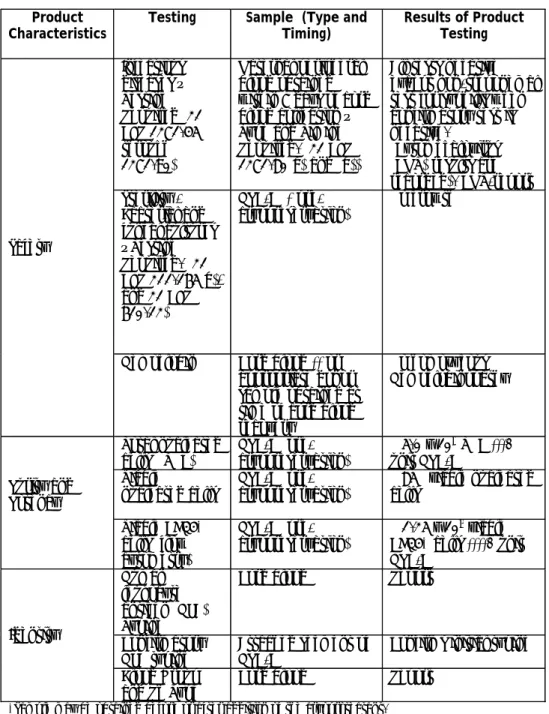
Table 2. Required and recommended tests and tests results according US FDA for cord blood and HPC-C (final cord blood product) (reference 45)
Product Characteristics
Testing Sample (Type and Timing) Results of Product Testing Safety Infectious diseases – Testing Required (21 CFR 1271.45 through 1271.90) Maternal peripheral blood obtained within 7 days of cord blood collection – Type and Timing Required. (21 CFR 1271.80(a) and (b))
All tests negative except non-treponemal test for syphilis when confirmatory test is negative. (Cytomegalovirus (CMV) results are recorded). CMV-report Sterility - Bacterial and fungal cultures – Testing Required. (21 CFR 211.165(b), and 21 CFR 610.12) HPC-C *(pre- cryopreservation) No growth
Hemoglobin Cord blood ** or appropriate donor sample obtained at time of cord blood recovery No homozygous Hemoglobinopathy Purity and Potency Total nucleated
cells (TNC) HPC-C (pre-cryopreservation) ≥ 5.0 x 10
8 TNC ***/
unit HPC-C Viable
nucleated cells HPC-C (pre- cryopreservation) ≥cells 85% viable nucleated Viable CD34+ cells (flow cytometry) HPC-C (pre-cryopreservation) ≥ 1.25 x 10⁶ viable CD34+ cells ****/ unit HPC-C Identity Human leukocyte antigen (HLA) Typing
Cord blood Report
Confirmatory
HLA typing Attached segment of HPC-C Confirms initial typing Blood Group
and Rh Type
Cord blood Report
*Sample may be obtained before or after addition of the cryoprotectant.
**Cord blood = cord blood before undergoing volume reduction.
***Based on 20 kg recipient, a target dose of ≥ 2.5 x 10⁷ nucleated cells/kg and 70% post-thaw
recovery = 1.7 x 10⁷ nucleated cells/kg.
****Based on CD34+ cells ≥ 0.25% of TNC prior to freezing.
Qualified
CBU
QUALITY:
Safety:
-Serology on cord blood
Identity:
-HLA
-Blood group and gender
- Maternal haplotype
Potency:
-CFU/CD34/CLONE
-Viability
-NC recovery
-Volume
•Safety
•Identity
•Potency
What to do:
•Built quality in front
•Verify: releasing tests
100 101 102 103 104 Annexin 100 101 102 103 104 7AAD 28.6 37.7 9.7 23.5
An 100147
Low viability frozen
cord
Transplanted cord
successful engraftment
An 100012
mid viability frozen
cord
100 101 102 103 104 Annexin V 100 101 102 103 104 7 AAD 29.9 3.28 2.51 63.6 0.53 5.29 40.4 52.7 100 101 102 103 104 Annexin 100 101 102 103 104 7AAD 1.78 36.3 3.56 58Frozen cords can have a high degree of variability
Assessment with Annexin V and
7AAD of the ISHAGE gated stem
cells reveals that there can be a
significant number of apoptotic cells
present post thaw of cord units.
CFC / 105TNC n=13 0 20 40 60 80 100 120 140 160 180 200 0 50 100 150 200 250 300 UCB BAG A T T A CHED S E G M E N T CD 34 / 103TNC n=20 0,0 0,5 1,0 1,5 2,0 2,5 3,0 0,0 0,5 1,0 1,5 2,0 2,5 3,0 UCB BAG A T T A CH E D SE G M ENT ECLONE n=13 0 10 20 30 40 50 60 70 80 90 100 0 20 40 60 80 100 120 UCB BAG A T T A CH E D SE G M ENT Y = 0,930 x + 0,008. R2=0,85 Y = 0,711x + 10,31. R2=0,83 Y = 0,540 x + 29,130. R2=0,78 C ) A ) B ) CFC / 105TNC n=13 0 20 40 60 80 100 120 140 160 180 200 0 50 100 150 200 250 300 UCB BAG A T T A CHED S E G M E N T CD 34 / 103TNC n=20 0,0 0,5 1,0 1,5 2,0 2,5 3,0 0,0 0,5 1,0 1,5 2,0 2,5 3,0 UCB BAG A T T A CH E D SE G M ENT ECLONE n=13 0 10 20 30 40 50 60 70 80 90 100 0 20 40 60 80 100 120 UCB BAG A T T A CH E D SE G M ENT Y = 0,930 x + 0,008. R2=0,85 Y = 0,711x + 10,31. R2=0,83 Y = 0,540 x + 29,130. R2=0,78 Y = 0,930 x + 0,008. R2=0,85 Y = 0,711x + 10,31. R2=0,83 Y = 0,540 x + 29,130. R2=0,78 C ) A ) B )
Rodriguez L, Garcia J and
Querol S. Biol Biol Blood
Marrow Transpl 2005
PREDICTIVE UTILITY OF THE ATTACHED SEGMENT IN THE QUALITY CONTROL
OF A CORD BLOOD GRAFT.
CD34
CFU
Analysis
of
37
pairs
Barcelona
CBB
units
‐
H.La
Fe
‐
Valencia
TC
CFUGM
is
the
most
predictive
factor
for
granulocyte
recovery
gm/g
R
2
= 0.4248
0 0.5 1 1.5 2 2.5 3 0 10 20 30 40emix/g
R
2
= 0.1165
0.00 0.50 1.00 1.50 2.00 2.50 3.00 3.50 4.00 4.50 0 10 20 30 40 CD34/ul vs gR
2=
0 50 100 150 200 250 300 0 10 20 30 40 NC/ml vs gR
2= 0.065
0 5 10 15 20 25 30 35 40 0 10 20 30 40R
2
=0.42
R
2
=0.12
R
2
=0.16
R
2
=0.07
QMS:
continous improvement:
Figure 1. Figurative representation of the quality of the international cord blood
inventory (400,000 units from 107 cord blood banks according www.bmdw.org) and
suitability for adult and paediatric transplantation based on accreditation,
administrative and quantitative factors – The Iceberg effect
•
No attached segment
•
No viable test ever performed
•
No CD34 enumeration
•
Mislabeling risk
•
Counting discrepancies
•
Only 19 CBB accredited by
FACT-Netcord worldwide
•
Units below 12.5 x10
8total nucleated cells,
(patient body weight <50kg)
•
Units above 12.5 x10
8total nucleated cells
(patient body weight>50kg)
Non accredited banks
Non standard units
Suitable
for children
Suitable
for adults
78%
16%
6%
Cord blood
programme
CONCORDIA-BST has 14,000
active units and
provided 235
transplants in
2010 (ratio
1.7%)
Querol S et al. Bone Marrow
Transplantation, 2010,
Why
national
programmes?
–
Meeting
National
Regulations
–
Pre
‐
defined
Quality
–
Easy
Logistics
–
Better
Feedback
–
R&D
using
CB
surplus
Querol S, Rubinstein P, Marsh SG, Goldman J, Madrigal JA. Cord blood banking:'providing cord blood banking for a nation'.
Br J Haematol 2009;147(2):227-35
LIMITATIONS OF THE ADULT BONE MARROW REGISTERS: ACCESS AND TIME
Cord
blood
diversity
compared
to
an
adult
registry:
the
NHSBT
experience
0
20
40
60
80
100
per
c
ent
a
ge
C
auc
as
oi
d
As
ia
n
Bl
ac
k
O
rient
al
O
ther
Mi
xe
d
BB
MR
CB
B
Courtesy Prof Navarrete, NHSBT
Formal
Search
Time
BM
19 days (1-257)
30 days(10-101
)
50 days
(32-293)
(n = 58)
Rapid Availability
13.5 days (2-387)
(n = 50)
UCB
Donor identified
Donor available
Barker et al. 2002 Biol Blood & Marrow Transplant