Th(IV)/U(VI) Sorption on
Modified SBA–15 Mesoporous Materials in Fixed–Bed Column
Dolatyari, Leila; Yaftian, Mohammad Reza*
+Phase Equilibria Research Laboratory, Department of Chemistry, Faculty of Science, University of Zanjan, I.R. IRAN
Rostamnia, Sadegh
Organic and Nano Group, Department of Chemistry, Faculty of Science, University of Maragheh, Maragheh, I.R. IRAN
ABSTRACT: The sorption of thorium and uranium ions by functionalized SBA–15 mesoporous silica materials with Schiff base ligating groups N–propylsalicylaldimine (SBA/SA) and ethylenediaminepropylesalicylaldimine (SBA/EnSA) from aqueous solution was investigated in fixed-bed column method. The effect of pH, sample solution volume, and the column design parameters such as sample and eluent flow rates, and column bed height were studied. These investigations allowed to obtain the experimental breakthrough curves. Regardless to the adsorbent used, application of the columns with 2.5 cm bed height and sample flow rate 0.4 mL/min, resulted in the quantitative removal of 0.5 mg of Th(IV) and U(VI) ions from 200 and 250 mL aqueous solutions, adjusted at pH 4. The quantitative desorption of the loaded ions provided a preconcentration factor of 40 and 50 for Th(IV) and U(VI), respectively. Breakthrough studies showed the higher capacity of the column packed with SBA/EnSA in comparison to that packed with SBA/SA. The breakthrough curves indicated that both of the sorbents presents higher capacity towards uranium than thorium ions. The columns could be used for at least 3 sorption-desorption cycles. The investigated columns were examined for the recovery of Th(IV) and U(VI) from tap water and seawater samples.
KEYWORDS:Removal; Recovery; Adsorption; Th(IV); U(VI); Schiff base functionalized SBA–15; Fixed–bed column.
INTRODUCTION
With the rapid development of nuclear energy and nuclear industry, a large number of radioactive wastes is produced. Radioactive elements contamination can reach the food chain and enter into living bodies, start emitting electromagnetic radiations that can cause progressive and
irreversible damage human health. For the work safety in the nuclear industry and human health [1,2], on the one hand, and the increasing need for radionuclides for the production of electricity, on the other, the removal and recovery of long-lived radionuclides such as thorium(IV)
* To whom correspondence should be addressed.
+E-mail: [email protected]
and uranium(VI) ions from resources such as seawater and industrial wastewater is an important environmental concern [3]. It is noteworthy that sea water contains uranium, more than thousand times more than the quantity available in mines [4]. This source would provide an abundant supply for nuclear power generation. Thorium(IV) is predicted to be able to replace uranium as fuel in nuclear reactors [1]. For these reasons, great efforts are being made to develop the processes for the separation and recovery of uranium and thorium ions [5–15].
Sorption is considered to be the most effective and convenient technique because of its simplicity, reliability, selectivity, high capacity of adsorbents ease of handling and environmental safety [16–21]. In sorption process of radionuclides, both of batch and continuous flow methods have been investigated, although the most of these investigations were restricted to the batch equilibrium studied [16–31]. In a batch system, separation process of adsorbents from aqueous solution is usually complex and time–consuming and the data obtained under batch conditions are generally not applicable to most treatment system where contact time is not sufficiently long for attaining to an equilibrium condition. It has been shown that the fixed–bed column method is easier and more useful for real wastewater treatment from industrial sources [2,31–37].
In our recent reported works [38,39], two SBA–15 mesoporous silica materials functionalized by Schiff base ligands N–propylsalicylaldimine and ethylenediaminepropylesalicylaldimine, named respectively as SBA/SA and SBA/EnSA (Fig. 1), have been synthesized and their potentials for removal of thorium and uranium in batch, experiments were investigated. The present work extended these investigations for the removal and recovery of the same species by SBA/SA and SBA/EnSA in a fixed–bed column method. The effect of design parameters, such as bed height, flow rate and volume of the sample was studied and the breakthrough profile for the sorption was obtained. Breakthrough points and breakthrough curves are very important characteristics for process design, dynamic response, and operation of a sorption column because they directly affect the feasibility and economic aspects of the sorption phenomena. In addition, Th(IV) and U(VI) sorption behavior in three consecutive sorption-desorption cycles have been investigated. Finally, the presented procedures were examined for the removal of the studied ions from tap water and seawater samples.
Fig. 1: Structure of the investigated adsorbents.
EXPERIMENTAL SECTION
Reagents and materials
All the chemicals used were analytical grade and were obtained from Merck, Fluka or Acros chemical companies. The SBA–15 mesoporous silica material was synthesized according to the procedure reported in the literature [40,41] and was functionalized by the methods described in the previous studies [38,39,42,43]. In summary, the adsorbents were prepared as follow; calcinated SBA–15 was functionalized by (3–aminopropyl)triethoxysilane to obtained amino functionalized SBA (SBA/NH2). N–
propylsalicylaldimine (SBA/SA) was resulted by the reaction of SBA/NH2 with salicylaldehyde. The
SBA/prEn was prepared by adding (2–aminoethyl– aminopropyl)trimethoxysilane to the calcinated SBA– 15. The resulted diamino–functionalized SBA–15 type mesoporous was reacted with salicylaldehyde to obtain SBA/EnSA. SBA/SA and SBA/EnSA were characterized by using XRD, SEM, TEM, FT–IR, and TGA. Stock solutions of thorium and uranium ions (1000 mg/L) were prepared by dissolving an appropriate amount of Th(NO3)4 and UO2(NO3)2.6H2O salts in
deionized water containing 0.01 mol/L HNO3. The
The pH values of these solutions were adjusted by addition of diluted nitric acid or sodium hydroxide solutions (0.1 mol/L).
Instrumentation
An Inductively Coupled Plasma Optical Emission Spectrometry (ICP–OES, Spectro Genesis, Germany), a peristaltic pump, and a cyclonic spray chamber with a concentric nebulizer were used for determination of thorium and uranium ions. The purity of argon gas used in the analysis was 99.999%. A Metrohm digital pH–meter (model 780, Switzerland) was used for pH measurements. A peristaltic pump (pump drive 5101, Heidolph, Germany) was applied for passing the water samples from a container to the bottom of the packed column. Deionized water, with a resistivity of 18.2 MΩ cm, was produced by a M–UV–3+ Zolalan (Iran) water
purification system.
Fixed-bed column adsorption experiments
The adsorption efficiency of SBA/SA and SBA/EnSA towards Th(IV) and U(VI) ions were investigated by using fixed–bed column apparatus. A 100 mg portion of the adsorbents were filled into a self–made polypropylene columns with inner diameter 0.5 cm and bed height 2.5 cm. Column plugged with a small piece of glass–wool at both ends. For removing all contaminants and preconditioning the bed, the column was washed with 5 mL of absolute ethanol and 20 mL of deionized water. An aqueous solution containing 10 mg/L of the ions pumped at a flow rate of 0.4 mL/min
by using the peristaltic pump. The retained ions were eluted with 5 mL of 1 mol/L HNO3 solution, at a flow rate
0.25 mL/min. To obtain the optimum conditions for the extraction procedure of Th(IV) and U(VI) ions, design parameters including bed height of column and flow rates of sample and eluent, sample solution pH, volume and type of eluent for the desorption of analytes from the adsorbents were assessed. The percent of the adsorption and metal ions eluted were calculated by Eqs. (1) and (2) [44]:
100 C
) C (C % Adsorption
0 e
0
(1)
100 adsorbed ions metal of Amount
eluted ions metal of Amount %
eluted ions
Metal (2)
Where Ce and C0 are the metal ions concentration
in effluent liquid phase and the inlet metal concentration in the solution in mg/L, respectively.
The performance of packed beds was described by the concept of the breakthrough curve [45,46]. For breakthrough studies, 100 mg of the sorbent was taken in a column. The aqueous solution (10 mg/L at pH 4) was passed through the column, and the effluent was collected periodically. The samples were analyzed for the remaining metal ions concentration by ICP–OES. Operation of the column was stopped when the effluent metal concentration reached a constant value, i.e. the value close to that of the influent concentration. A breakthrough curve was obtained by plotting the ratio C/C0 against the effluent volume (Veff) or
time for a given bed height, where C is the metal ions concentration in effluent liquid phase and C0 has the same
definition given in Eq. (1) [44,47]. The breakthrough time (tb), the time at which metal concentration in the effluent
reached 5% of the influent value (Ct = 0.05 C0) and
exhaustion point (te), the time at which metal concentration in
the effluent exceeded 95% of the influent value (Ct = 0.95 C0)
were used to evaluate the adsorption performance of the adsorbent bed under specified conditions [45,48,49].
RESULTS AND DISCUSSION
Sample solution pH
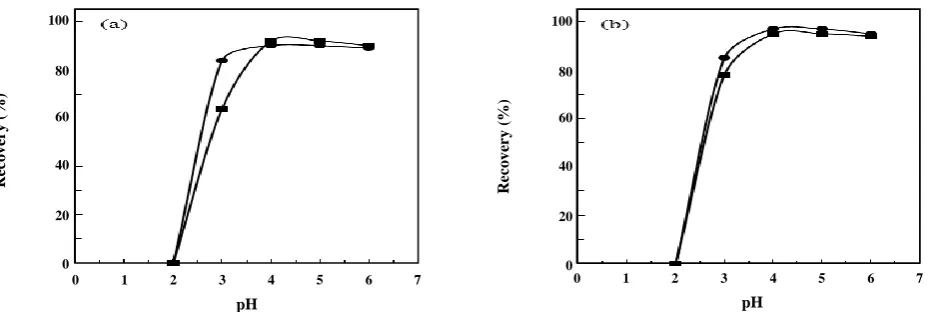
Fig. 2 Effect of pH on the percent recovery of Th(IV) and U(VI) ions by SBA/SA (a) and SBA/EnSA (b). Conditions: sample concentration, 10 mg/L; sample volume, 50 mL; eluent, 5 mL of HNO3 1.0 mol/L; Flow rate of elution,
0.25 mL/min, column bed 2.5 cm.
Elution of the adsorbed ions
An important step in a fixed–bed column studies is the efficient desorption of the adsorbed analyte from the adsorbent. It was confirmed that the desorption of the studied ions from the adsorbents can be quantitatively attained by using a solution of nitric acid [38, 39]. The optimization of the eluent volume was done by passing the different volume of the nitric acid solution (3, 5, 10 and 25 mL) through the column, with a flow rate 0.25 mL/min. The results indicated that 5 mL of the nitric acid the solution was sufficient for quantitative elution of the adsorbed Th(IV) and U(VI) from the column, regardless of the adsorbent used.
Sample flow rate
The sample flow rate through the column is a significant parameter for an efficient fixed–bed column adsorption process. In fact, it is one of the parameters controlling the time of analysis [50, 51]. The effect of sample flow rate on the adsorption of Th(IV) and U(VI) ions by SBA/SA and SBA/EnSA were examined by passing the sample solution (adjusted at pH 4) with flow rates 0.25–0.95 mL/min through the columns containing 100 mg (2.5 cm height) of the adsorbents (Fig. 3). It was found that a nearly quantitative recovery of uranyl ions (> 90%) can be achieved by applying the sample flow rate in the range of 0.25–0.95 mL/min, through the columns containing SBA/SA or SBA/EnSA. The fast kinetics of the adsorption, as that observed in the experiments [38, 52], makes possible the use high sample solution flow rate for the process.
In the case of thorium ions, a quantitative recovery by both of the studied adsorbents was observed by using sample flow rates <0.75 mL/min. Above this flow rates, the recovery of sorption decreases considerably. This can be described by the kinetic control of the process at the higher applied flow rates. These results conduct us to use a flow rate of 0.4 mL/min for continuing the experiments.
Eluent flow rate
The flow rate of eluent must be optimized to ensure an effective desorption of the analytes from the surface of the adsorbent [53]. To this end, the loaded adsorbents were eluted with 5 mL nitric acid solution (1 mol/L), at different flow rates from 0.25 to 0.95 mL/min (Fig. 4). Uranyl and thorium ions were desorbed almost completely from the column packed with SBA/EnSA by applying the eluent flow rates ≤0.83 and ≤0.6 mL/min, respectively. This condition was attained for thorium and uranyl ions from the column packed with SBA/SA by passing the eluent with the flow rates <0.4 mL/min. The results conduct using a flow rate of 0.25 mL/min for desorption of the studied metal ions from the columns packed with the Schiff base functionalized mesoporous silica adsorbents.
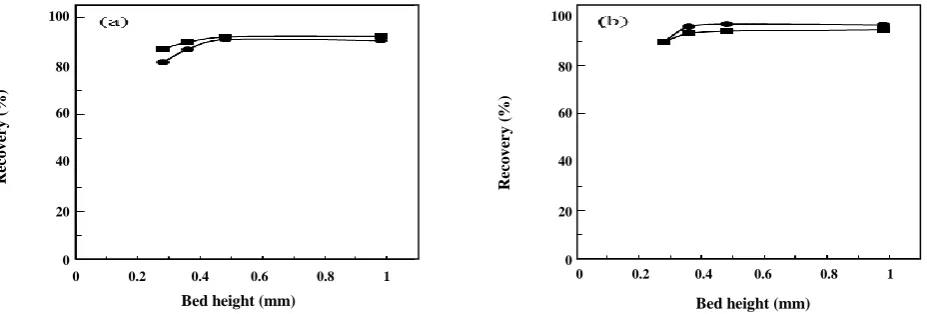
Bed height
The effect of bed height on the adsorption efficiency of Th(IV) and U(VI) ions was investigated by using the columns packed with 0.05 g, 0.075 g, 0.1 g and 0.15 g equal to 12, 18, 25 and 49 mm, respectively of the sorbents (Fig. 5). The results show the recovery
100
80
60
40
20
0
R
ec
o
v
er
y
(
%)
100
80
60
40
20
0
R
ec
o
v
er
y
(
%)
0 1 2 3 4 5 6 7
pH
0 1 2 3 4 5 6 7
Fig. 3: Effect of the flow rate of the sample on the percent recovery of Th(IV) and U(VI) ions by SBA/SA (a) and SBA/EnSA (b). Conditions: sample concentration, 10 mg/L; pH 4; sample volume, 50 mL; eluent, 5 mL of HNO3 1 mol/L;
Flow rate of elution, 0.25 mL/min; column bed, 2.5 cm.
Fig. 4: Effect of flow rate of elution on the percent recovery of Th(IV) and U(VI) ions by SBA/SA (a) and SBA/EnSA (b). Conditions: sample concentration, 10 mg/L; pH 4; sample volume, 50 mL; Flow rate of sample, 0.4 mL/min; eluent, 5 mL of HNO3
1 mol/L; column bed height, 2.5 cm.
Fig. 5: Effect of bed height on the percent recovery of Th(IV) and U(VI) ions by SBA/SA (a) and SBA/EnSA (b). Conditions: sample concentration, 10 mg/L; pH 4; sample volume, 50 mL; Flow rate of sample, 0.4 mL/min; eluent, 5 mL of HNO3 1 mol/L;
Flow rate of eluent, 0.25 mL/min. 100
80
60
40
20
0
R
ec
o
v
er
y
(
%)
100
80
60
40
20
0
R
ec
o
v
er
y
(
%)
0 0.2 0.4 0.6 0.8 1
Sample flow rate (mL/min)
0 0.2 0.4 0.6 0.8 1
Sample flow rate (mL/min)
100
80
60
40
20
0
R
ec
o
v
er
y
(
%)
100
80
60
40
20
0
R
ec
o
v
er
y
(
%)
0 0.2 0.4 0.6 0.8 1
Elution flow rate (mL/min)
0 0.2 0.4 0.6 0.8 1
Elution flow rate (mL/min)
100
80
60
40
20
0
R
ec
o
v
er
y
(
%)
100
80
60
40
20
0
R
ec
o
v
er
y
(
%)
0 0.2 0.4 0.6 0.8 1
Bed height (mm)
0 0.2 0.4 0.6 0.8 1
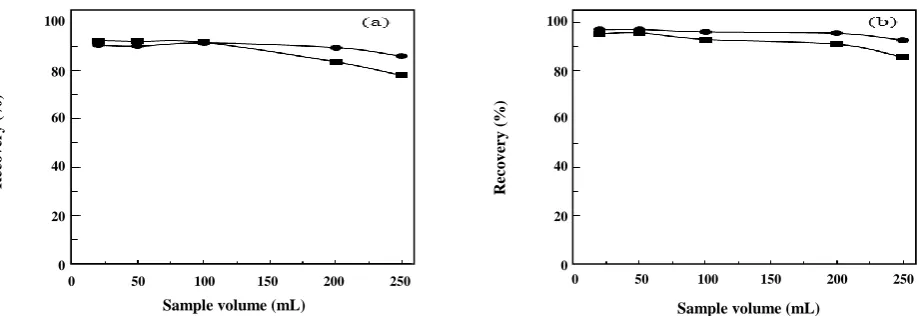
Fig. 6: Effect of sample volume on the recovery of Th(IV) and U(VI) ions by SBA/SA (a) and SBA/EnSA (b). Conditions: sample amount, 0.5 mg of each ions; sample flow rate, 0.4 mL/min; eluent, 5 mL of HNO3 1 mol/L;
eluent flow rate, 0.25 mL/min.
percentage increase with increasing the bed height of both adsorbents. This effect was more pronounced for SBA/SA, probably due to the availability of more binding sites on this sorbent.
Sample solution volume
One of the parameters indicating the efficiency of an adsorbent is its potential for removal of a trace amount of an analyte from a solution. To evaluate this potential of the studied mesoporous materials, the recovery of Th(IV) and U(VI) ions (0.5 mg) in different volume of aqueous solution, 20, 50, 100, 200 and 250 mL by SBA/SA and SBA/EnSA sorbents (100 mg) was investigated (Fig. 6). This means that the concentration of the aqueous solutions was in the range 25–2 mg/L. There was no significant change in the efficiency of the recovery of the sorbents towards uranyl and thorium ions up to 250 and 200 mL, respectively. Therefore, a preconcentration factor of 50 and 40 for uranyl and thorium ions can be achieved by the presented method. These results show the excellent potential of SBA/SA and SBA/EnSA for recovery and preconcentration of these ions at trace levels.
Reusability of the column
The possibility of regeneration and reusing of a sorbent gives an economic advantage for its applying for removal process of an analyte from wastewater streams [34]. In this study, Schiff base functionalized SBA–15 were used for 3 adsorption-desorption cycles by using the columns packed with 0.1 g (bed height of 2.5 cm) of
sorbent and passing the sample solutions (10 mg/L of metal ions) through the columns with a flow rate 0.4 mL/min. The loaded sorbents were regenerated propelling a solution of 1 mol/L HNO3 with 0.25 mL/min flow rate
through the columns. The columns then, reused for adsorption experiments. It was found that both of the studied sorbents are able to be used at least for three adsorption-desorption cycles. The results are shown in Table 1.
Breakthrough studies
The breakthrough curve for the adsorption of Th(IV) and U(VI) onto the studied sorbents are shown in Fig 7. The corresponding breakthrough time and exhaustion time are presented in Table 2. The breakthrough time and exhaustion time for both of the studied ions onto SBA/EnSA are higher than SBA/SA. The appearance of the breakthrough time for thorium was taken place earlier with respect to that of uranium ions. This indicated that higher capacity of sorbents towards uranium ions. These results agree with those obtained in the batch system studies [38,39]. The breakthrough time for thorium ions started after 265 and 310 mL of the solution passed through the columns packed with SBA/SA and SBA/EnSA, respectively. These values for uranium ions were found to be 280 and 670 mL of the columns filled with SBA/SA and SBA/EnSA, respectively.
Recovery of Th(IV) and U(VI) from real samples The developed columns were applied to the elimination of injected Th(IV) and U(VI) ions (10 mg/L) in tap water (Zanjan, Iran) and seawater (Anzali region,
100
80
60
40
20
0
R
ec
o
v
er
y
(
%)
100
80
60
40
20
0
R
ec
o
v
er
y
(
%)
0 50 100 150 200 250
Sample volume (mL)
0 50 100 150 200 250
Table 1: Results of the recovery percentage of Th(IV) and U(VI) ions in three cycles.
Sorbent Metal Ion
Recovery (%)
Cycle 1 Cycle 2 Cycle 3
SBA/SA
Th(IV) 92.7 91.5 90.6
U(VI) 91.4 90.9 90.2
SBA/EnSA
Th(IV) 95.6 95.4 93.8
U(VI) 97.2 96.9 95.5
Table 2: Results of the breakthrough curve study for Th(IV) and U(VI) ions sorptiona.
Sorbent Metal ion tb (min) te (min) Ve (mL)
SBA/SA
Th(IV) 112 662 265
U(VI) 275 700 280
SBA/EnSA
Th(IV) 200 775 310
U(VI) 775 1675 670
aConditions: pH 4, concentration: 10 mg L-1, column bed 2.5 cm, flow rate 0.4 mL min-1
Fig. 7: The breakthrough curve for Th(IV) and U(VI) ions onto SBA/SA (a) and SBA/EnSA (b). Conditions: sample concentration, 10 mg L−1; pH 4; Flow rate of sample, 0.4 mL min−1, column bed 2.5 cm.
Caspian sea, Iran) samples. The results of the adsorption of the spiked ions into the samples by using 2.5 cm packed columns and by transferring the samples with a flow rate 0.4 mL/min are given in Table 3. These results confirm the potential of the studied adsorbents for removal of Th(IV) and U(VI) ions from the examined water samples.
CONCLUSIONS
Fixed–bed or column adsorption is a popular option in the practical application of adsorption process. This
work demonstrated the adsorption characteristics of Th(IV) and U(VI) ions by the column system packed with two functionalized SBA–15 mesoporous adsorbents with Schiff base ligands N–propylsalicylaldimine (SBA/SA) and ethylenediaminepropylesalicylaldimine (SBA/EnSA). Under selected conditions, i.e. sample solution 50 mL containing 10 mg/L of Th(IV) and U(VI) ions adjusted at pH 4, 0.1 g of one of the adsorbents (equals to 2.5 cm bed height) and sample flow rate 0.4 mL/min, the columns packed with each of the adsorbents were able to
1
0.8
0.6
0.4
0.2
0
C
/C
0
1
0.8
0.6
0.4
0.2
0
C
/C
0
0 100 200 300 400
Effluent volume (mL)
0 100 200 300 400
Table 2: Results of the breakthrough curve study for Th(IV) and U(VI) ions sorptiona.
Sorbent Metal ion tb (min) te (min) Ve (mL)
SBA/SA
Th(IV) 112 662 265
U(VI) 275 700 280
SBA/EnSA
Th(IV) 200 775 310
U(VI) 775 1675 670
aConditions: pH 4, concentration: 10 mg/L, column bed 2.5 cm, flow rate 0.4 mL/min.
remove more than 93 percent of Th(IV) and U(VI) ions. Desorption of the ions from the adsorbents by using 5 mL nitric acid 1 mol/L as eluent, by a flow rate 0.25 mL/min, allows a quantitative desorption of both ions. In addition, the packed columns with both adsorbents permit decontamination of trace amounts of Th(IV) and U(VI) ions from water solutions and are able for a preconcentration of these ions with concentration factors of 40 and 50, respectively. The breakthrough curve profile indicated that adsorption capacity for SBA/EnSA is higher than SBA/SA towards the studied metal ions. Both adsorbents showed a higher affinity towards U(VI) ions with respect to Th(IV) ions. The stability of the adsorbents allowed using the packed columns with the studies adsorbents at least for three adsorption-desorption cycles. It was shown that the proposed method is potentially useful for recovery of thorium and uranium ions from the tap and seawater samples.
Acknowledgments
The research council of the University of Zanjan is profoundly acknowledged for the support of this work during the years 2013-2015 (Grant Number 19839-92-9).
Received : Mar. 23, 2016 ; Accepted : Mar. 6, 2017
REFERENCES
[1] Anirudhan T.S., Suchithra P.S., Senan P., Tharun A.R., Kinetic and Equilibrium Profiles of Adsorptive Recovery of Thorium(IV) from Aqueous Solutions
Using Poly(methacrylic acid) Grafted
Cellulose/Bentonite Superabsorbent Composite,
Ind. Eng. Chem. Res., 51: 4825−4836 (2012).
[2] Peng G.W, Ding D.X, Xiao F.Z., Wang X.L., Hun N., Wang Y.D., Dai Y.M., Cao Z., Adsorption of Uranium Ions from aqueous Solution by Amine
Group Functionalized Magnetic Fe3O4
Nanoparticle, J. Radioanal. Nucl. Chem., 301:781– 788 (2014).
[3] Sun Y., Wang Q., Chen C., Tan X., Wang X., Interaction between Eu(III) and Graphene Oxide Nanosheets Investigated by Batch and Extended X–Ray Absorption Fine Structure Spectroscopy and by Modeling Techniques, Environ. Sci. Technol.,
46:6020−6027 (2012).
[4] Carboni M., Abney C.W., Taylor–Pashow K.M.L., Vivero–Escoto J., Lin W., Uranium Sorption with Functionalized Mesoporous Carbon Materials, Ind. Eng. Chem. Res., 52:15187−15197 (2013).
[5] Kumar J.R., Kim J.S., Lee J.Y., Yoon H.S., Solvent Extraction of Uranium(VI) and Separation of Vanadium(V) from Sulfate Solutions Using Alamine 336, J. Radioanal. Nucl. Chem., 285: 301–308 (2010). [6] Harrison J.J., Zawadzki A., Chisari R., Wong H.K.Y.,
Separation and Measurement of Thorium,
Plutonium, Americium, Uranium and Strontium in Environmental Matrices, J. Environ. Radioact., 102:
896–900 (2011).
[7] Sehati N., Shiri−Yekta Z., Zamani A.A., Yaftian M.R., Noshiranzadeh N., Solvent Extraction of
Th (IV) and Eu (III) ions by 3,
5−di−tert−butyl−2−hydroxy−benzaldehyde Oxime from Aqueous Chloride Media, Sep. Sci. Technol.,
47: 670−676 (2012).
[8] Kim C.J., Kumar J.R., Kim J.S., Lee J.Y., Yoon H.S., Solvent Extraction Studies on Uranium Using Amine Based Extractants and Recovery From Low Grade ore Leach Liquors, J. Brazil. Chem. Soc., 23:
[9] Kedari C.S., Pandit S.S., Gandhi P.M., Separation by Competitive Transport of Uranium(VI) and Thorium(IV)
Nitrates Across Supported Renewable Liquid Membrane Containing Trioctylphosphine Oxide as Metal
Carrier, J. Membrane Sci., 430: 188–195 (2013). [10] Nilchi A., Shariati Dehaghan T., Rasouli Garmarodi S.,
Kinetics, Isotherm and Thermodynamics for
Uranium and Thorium Ions Adsorption from Aqueous Solutions by Crystalline Tin Oxide
Nanoparticles, Desalination, 321: 67–71 (2013). [11] Shiri-Yekta Z., Yaftian M.R., Nilchi A., Silica
Nanoparticles Modified with a Schiff Base Ligand: An Efficient Adsorbent for Th(IV), U(VI) and Eu(III) Ions, Korean J. Chem. Eng., 30: 1644–1651 (2013). [12] Mola M., Nieto A., Peñalver A., Borrull F., Aguilar C.,
Uranium and Thorium Sequential Separation From
Norm Samples by Using a SIA System, J. Environ.
Radioact. 127: 82–87 (2014).
[13] Tan M., Huang C., Ding S., Li F., Li Q., Zhang L., Liu C., Li S., Highly Efficient Extraction Separation of Uranium(VI) and Thorium(IV) From Nitric Acid
Solution with di(1-methyl-heptyl) Methyl
Phosphonate, Sep. Purif. Technol., 146: 192–198 (2015).
[14] Karamzadeh Z., Yaftian M.R., Shiri–Yekta Z., Nilchi A., Dolatyari L., Extraction-Separation of Eu(III)/Th(IV) Ions with a Phosphorylated Ligand in an Ionic Liquid, Iran. J. Chem. Chem. Eng. (IJCCE),
35(2): 89–95 (2016).
[15] Koorepazan Moftakhar M., Habibi L., Yaftian M.R., Selective and Efficient Ligandless Water–in–Oil
Emulsion Liquid Membrane Transport of
Thorium(IV) Ions, Iran. J. Chem. Chem. Eng. (IJCCE),
35(4): 125–134 (2016).
[16] Anirudhan T.S., Bringle C.D., Rijith S., Removal of Uranium(VI) from Aqueous Solutions and Nuclear Industry Effluents Using Humic Acid−Immobilized Zirconium−Pillared Clay, J. Environ. Radioact.,
101: 267–276 (2010).
[17] Sadeek S.A., Moussa E.M.M., El–Sayed M.A., Amine M.M., Abd El–Magied M.O., Uranium(VI) and Thorium(IV) Adsorption Studies on Chelating
Resins Containing Pentaethylenehexamine as a Functional Group, J. Disper. Sci. Technol., 35: 926– 933 (2014).
[18] Chen S.W., Guo B.L., Wang Y.L., Li Y., Song L.J., Study on Sorption of U(VI) onto Ordered
Mesoporous Silicas, J. Radioanal. Nucl. Chem., 295: 1435–1442 (2013).
[19] Guerra D.L., Viana R.R., Airoldi C., Adsorption of
Thorium Cation on Modified clays MTTZ Derivative,
J. Hazard. Mater., 168: 1504–1511 (2009).
[20] Sana, S., Roostaazad, R., Yaghmaei, S., Biosorption of Uranium (VI) From Aqueous Solution by Pretreated
Aspergillus Niger Using Sodium Hydroxide, Iran. J. Chem. Chem. Eng. (IJCCE), 34(1): 65-74 (2015). [21] Bursali E.A., Merdivan M., Yurdakoc M.,
Preconcentration of Uranium(VI) and Thorium(IV)
From Aqueous Solutions Using Low−Cost
Abundantly Available Sorbent, J. Radioanl. Nucl. Chem., 283: 471-476 (2010).
[22] Belgacem A., Rebiai R., Hadoun H., Khemaissia S., Belmedani M., The Removal of Uranium (VI) From
Aqueous Solutions onto Activated Carbon
Developed From Grinded Used Tire, Environ. Sci. Pollut. Res., 21: 684-694 (2013).
[23] Mellah A., Chegrouche S., Barkat M., The Removal of Uranium (VI) From Aqueous Solutions onto Activated Carbon: Kinetic and Thermodynamic
Investigations, J. Colloid. Interface. Sci., 296: 434– 441 (2006).
[24] Zhang H., Wang J., Zhang B., Liu Q., Li S., Yan H., Liu L., Synthesis of a Hydrotalcite-Like Compound From Oil Shale ash and Its Application in Uranium Removal, Colloid Surface A, 444: 129–137 (2014). [25] Qian L.J., Zhao J.N., Hu P.Z., Geng Y.X., Wu W.S.,
Effect of pH, Fulvic Acid and Temperature on Sorption of Th(IV) on Zirconium Oxophosphate, J. Radioanl. Nucl. Chem., 283: 653–660 (2010). [26] Chen L., Gao X., Thermodynamic Study of Th(IV)
Sorption on Attapulgite, Appl. Radiat. Isotopes, 67: 1–6 (2009).
[27] Tan X.L., Wang X.L., Fang M., Chen C.L., Sorption and Desorption of Th(IV) on Nanoparticles of Anatase Studied by Batch and Spectroscopy
Methods, Colloid Surface A, 296: 109–116 (2007). [28] Chen C.L., Wang X.K., Sorption of Th (IV) to Silica
as a Function of pH, Humic/Fulvic Acid, Ionic Strength, Electrolyte Type, Appl. Radiat. Isotopes,
[29] Zhao D.L., Feng S.J., Chen C.L., Chen S.H., Xu D., Wang X.K., Adsorption of Thorium(IV) on MX−80 Bentonite: Effect of pH, Ionic Strength and Temperature, Appl. Clay. Sci., 41: 17–23 (2008). [30] Sharma P., Tomar R., Synthesis and Application of
an Analogue of Mesolite for the Removal of Uranium(VI), Thorium(IV), and Europium(III) from Aqueous Waste, Micropor. Mesopor. Mater., 116: 641−652 (2008).
[31] Sharma P., Sharma M., Tomar R., Na−HEU Zeolite Synthesis for the Removal of Th(IV) and Eu(III) From Aqueous Waste by Batch Process, J. Taiwan. Inst. Chem. Eng., 44: 480−488 (2013).
[32] Xiong C., Meng Y., Yao C., Characters of Kinetic and Equilibrium of Adsorption of Eu(III) by an Cation Exchange Resin, Iran. J. Chem. Chem. Eng. (IJCCE),
30(1): 97−105 (2011).
[33] Vijayaraghavan K., Jegan J., Palanivelu K., Velan M., Biosorption of Cobalt(II) and Nickel(II) by Seaweeds: Batch and Column Studies, Sep. Purif. Technol., 44: 53–59 (2005).
[34] Naddafi K., Nabizadeh R., Saeedi R., Mahvi A.H., Vaezi F., Yaghmaeian K., Ghasri A., Nazmara S., Biosorption of Lead(II) and Cadmium(II) by Protonated Sargassumglaucescens Biomass in a
Continuous Packed Bed Column, J. Hazard. Mater.,
147: 785–791 (2007).
[35] Vijayaraghavan K., Jegan J., Palanivelu K., Velan M., Biosorption of Copper, Cobalt and Nickel by Marine Green Alga Ulvareticulata in a Packed Column, Chemosphere, 60: 419–426(2005).
[36] Riazi M., Keshtkar A.R., Moosavian M.A., Batch and Continuous Fixed−Bed Column Biosorption of
Thorium(IV) From Aqueous Solutions: Equilibrium
and Dynamic Modeling, J. Radioanal. Nucl. Chem.,
301: 493–503 (2014).
[37] Han R., Wang Y., Yu W., Zou W., Shi J., Liu H., Biosorption of Methylene Blue from Aqueous
Solution by Rice Husk in a Fixed−Bed Column, J. Hazard. Mater., 141: 713–718 (2007).
[38] Dolatyari L., Yaftian M.R., Rostamnia S., Removal of Uranium (VI) Ions from Aqueous Solutions
Using Schiff Base Functionalized SBA-15
Mesoporous Silica Materials, J. Environ. Manage.,
169: 8–17 (2016).
[39] Dolatyari L., Yaftian M.R., Rostamnia S., Adsorption Characteristics of Eu(III) and Th(IV) Ions onto Modified Mesoporous Silica SBA–15 Sorbents, J. Taiwan. Inst. Chem. Eng., 60:174−184
(2016).
[40] Zhao D., Feng J., Huo Q., Chmelka B.F., Stucky G.D., Nonionic Triblock and Star Diblock Copolymer and Oligomeric Surfactant Syntheses of Highly Ordered,
Hydrothermally Stable, Mesoporous Silica
Structures, J. Am. Chem. Soc., 120: 6024–6033 (1998).
[41] Hong–ping L., Chih−Yuan T., Ching–Yen L., Detailed Structural Characterizations of SBA–15 and
MCM–41 Mesoporoussilicas on a High−Resolution Transmission Electron Microscope, J. Chin. Chem. Soc., 49: 981–988 (2002).
[42] Hami Dindar M., Yaftian M.R., Pilehvari M., Rostamnia S., SBA–15 Mesoporous Materials Decorated with Organic Ligands: Use as Adsorbents for Heavy Metal Ions, J. Iran. Chem. Soc., 12: 561– 572 (2015).
[43] Hami Dindar M., Yaftian M.R., Rostamnia S., Potential of Functionalized SBA–15 Mesoporous
Materials for Decontamination of Water Solutions From Cr(VI), As(V) and Hg(II) Ions, J. Environ. Chem. Eng., 3: 986–995 (2015).
[44] Tavakoli H., Sepehrian H., Semnani F., Samadfam M.,
Recovery of Uranium From UCF Liquid
Waste by Anion Exchange Resin CG-400: Breakthrough Curves, Elution Behavior and Modeling Studies, Ann. Nucl. Energy, 54: 149– 153 (2013).
[45] Apiratikul R., Pavasant P., Batch and Column Studies of Biosorption of Heavy Metals by Caulerpalentillifera, Bioresource Technol., 99: 2766–2777 (2008).
[46] Xiong C.; Yao C. Adsorption Behavior of MWAR Toward Gd(III) in Aqueous Solution, Iran. J. Chem.
Chem. Eng. (IJCCE), 29(2): 59–66 (2010).
[47] Ararem A., Bouzidi A., Mohamedi B., Bouras O., Modeling of Fixed-Bed Adsorption of Cs+ and Sr2+
onto Clay–Iron Oxide Composite Using Artificial
Nural Network and Constant–Pattern Wave
[48] Ghasemi M., Keshtkar A.R., Dabbagh R., Safdari S.J., Biosorption of Uranium(VI) From
Aqueous Solutions by Ca-Pretreated
Cystoseiraindica Alga: Breakthrough Curves Studies and Modeling, J. Hazard. Mater., 189: 141–149 (2011).
[49] Shahbazi A., Younesi H., Badiei A.R., Functionalized SBA-15 Mesoporous Silica by Melamine–Based Dendrimer Amines for Adsorptive Characteristics of Pb(II), Cu(II) and Cd(II) Heavy Metal ions in Batch and Fixed Bed Column,Chem. Eng. J., 168: 505–518 (2011).
[50] Zhefeng F., Hg(II)–Imprinted Thiol–Functionalized Mesoporous Sorbent Micro–Column Preconcentration of Tace Mercury and Determination by Inductively
Coupled Plasma Optical Emission Spectrometry,
Talanta, 70: 1164–1169 (2006).
[51] Ebrahimzadeh H., Tavassoli N., Amini M.M., Fazaeli Y., Abedi H., Determination of Very Low Levels of Gold and Palladium in Wastewater and Soil Samples by Atomic Absorption after Preconcentration
on Modified MCM–48 and MCM–41, Talanta, 81:
1183–1188 (2010).
[52] Ebrahimzadeh H., Shekari N., Tavassoli N., Amini M.M., Adineh M., Sadeghi O., Extraction of Trace Amounts of Silver on Various Amino–Functionalized Nanoporous Silicas in Real Samples, Microchim. Acta, 170:171–178 (2010).
[53] Zhang J., Zhang G., Zhao C., Quan X., Jia Q., On–Line Preconcentration/Separation of Inorganic Arsenic and Antimony by Poly (aryl ether ketone) Containing Pendant Carboxyl Groups Prior to
Microwave Plasma Atomic Spectrometry