by Vanessa R Fry
A dissertation
submitted in partial fulfillment of the requirements for the degree of
Doctor of Philosophy in Public Policy and Administration Boise State University
DEFENSE COMMITTEE AND FINAL READING APPROVALS
of the dissertation submitted by
Vanessa R Fry
Dissertation Title: Pay for Success Financing: Diffusion Dynamics in the U.S. Date of Final Oral Examination: 16 May 2019
The following individuals read and discussed the dissertation submitted by student Vanessa R Fry, and they evaluated her presentation and response to questions during the final oral examination. They found that the student passed the final oral examination.
Rebecca L. Som Castellano, Ph.D. Co-Chair, Supervisory Committee
Leslie Alm, Ph.D. Co-Chair, Supervisory Committee
Stephanie L. Witt, Ph.D. Member, Supervisory Committee
iv
v
I am very grateful for all of the support I’ve received from my mentors, colleagues, friends, and family these last several years as I’ve worked through my courses, comprehensive exam, and dissertation. You all are more than amazing.
My sincere gratitude goes to my entire dissertation committee. Each showed belief in me and my work and pushed me to be the best scholar possible throughout this process. I am extremely fortunate to have received guidance from such an incredible committee of scholars. Dr. Les Alm’s energy and passion encouraged me each step along this journey. His remarkable ability to provide timely and constructive feedback as well as his attention to detail enabled me to quickly improve my work throughout the process. I am grateful to Dr. Stephanie Witt for her willingness to join committee midstream. Her deep knowledge of state and local government provided me with essential ingredients that are deeply embedded within this dissertation. Dr. Rebecca Som Castellano offered unwavering support from the first day we met nearly six years ago. She is a remarkable scholar, steadfast in her commitment to her research and students. I am fortunate to be able to call her a mentor and friend.
vi future.
The Idaho Policy Institute team is one I’m proud to be a part of. Thanks to each of you for your flexibility and support as I navigated through my dissertation process. Dr. Greg Hill has been a tremendous mentor, partner, and friend. I’m so thrilled to be able to continue our work together building IPI.
My friends and colleagues outside Boise State have provided me with a tremendous amount of support and strength. Dr. Steven Crane has been a mentor, colleague, and friend for over a decade. He encouraged me to join the first cohort of students in Boise State University’s Public Policy and Administration PhD program knowing full well that I love being part of a startup. For the last three years Scott
Schwenk has been my guide. I am forever grateful for my relationship with Scott and for the path of deep personal and professional work we continue to walk together. Thank you for enabling me to bring grace, patience, and love into all I do.
Boise Mayor Dave Bieter and Ada County Commissioner Diana Lachiondo are the reasons behind my focus on Pay for Success. Thanks to you both for believing in me and my research. It’s inspiring to witness what elected officials like yourselves have been able to accomplish using data to drive decisions.
vii
viii
Across the United States (U.S.), communities struggle with numerous social and environmental issues while the funding to provide programmatic services to address these issues continues to diminish. As such, actors both inside and outside of government are seeking new policy solutions that both effectively and efficiently address these issues. Significant hurdles to embarking on a new policy approach exist, however, including a lack of up-front funding and a reluctance to take on the risk inherent in implementing new programs. A recent innovation in the policy domain, Pay for Success (PFS) financing, has been specifically designed to overcome these hurdles. Policy innovation does not come easily, however, and change within government is often slow and
ix
DEDICATION ... iv
ACKNOWLEDGEMENTS ...v
ABSTRACT ... viii
LIST OF TABLES ... xiv
LIST OF FIGURES ...xv
LIST OF ABBREVIATIONS ... xvi
CHAPTER ONE: INTRODUCTION ...1
CHAPTER TWO: BACKGROUND AND CASE ...6
Diffusion of Pay for Success to the U.S. ...6
Applicability of Pay for Success in the U.S. ...8
Structure of Pay for Success ...10
PFS Projects in the U.S. ...14
Research Objectives ...15
Conclusion ...17
CHAPTER THREE: FRAMING THE PROCESS OF DIFFUSION OF INNOVATION ...18
The Policy Making Process ...18
Stages Heuristic ...19
Agenda Setting ...21
x
Policy Innovation and Diffusion ...27
Internal Determinants...30
External Determinants ...31
Policy Entrepreneurs ...33
Significance of Research...37
Conclusion ...38
CHAPTER FOUR: METHODOLOGY ...40
Influences on Research Design ...41
Research Objective ...41
Experience...41
Prior Research ...42
Research Design...43
Case Studies ...45
Quantitative or Qualitative Research? ...46
Quantitative Methods ...48
Qualitative Methods ...49
Research Model ...50
...51
Defining the Case ...51
Quantitative Data Collection...51
Quantitative Data Collection...52
xi
Content Analysis ...60
Data Collection ...60
Interviews ...61
Sampling and Data Collection ...61
Participant Observation ...62
Data Collection ...62
Data Analysis ...63
Quality of Data ...66
Conclusion ...67
CHAPTER FIVE: RESULTS ...69
Process of PFS Diffusion in the U.S. ...69
How PFS has Diffused across the U.S.? ...70
Why PFS has Diffused across the U.S.? ...78
Internal Determinants...79
Internal Determinants: PFS Enabling Legislation ...79
Internal Determinants: Social Pressure ...84
Internal Determinants: Economic Constraints ...88
External Determinants ...91
External Determinants: Coercive Determinants ...91
External Determinants: Policy Learning ...100
External Determinants: Imitation ...103
xii
Team Cohesion ...105
Building Trust ...106
Prior Personal Relationships ...107
The PFS Network ...108
Actors Engaged in PFS Diffusion ...109
Government Agencies ...111
Intermediaries ...113
Service Providers ...116
Investors ...117
Role of the Policy Entrepreneur ...120
Access to Decision Makers ...121
Access to Resources ...123
Utilization of Strategy ...124
Emerging Findings ...126
Conclusion ...128
CHAPTER SIX: DISCUSSION AND CONCLUSION ...131
Theoretical Framework: Findings and Implications ...131
Agenda Setting ...132
Diffusion of Innovation...133
Policy Entrepreneurs ...138
Limitations of the Study...140
xiii
REFERENCES ...145
APPENDIX A ...161
Pay for Success Projects in the U.S. ...162
APPENDIX B ...179
Interview Protocol ...180
APPENDIX C ...182
Recruitment Email ...183
APPENDIX D ...184
Issue Areas of Pay for Success Projects ...185
APPENDIX E ...186
xiv
Table 2.1 Federal Agencies with Funds Appropriated for PFS Projects ... 14
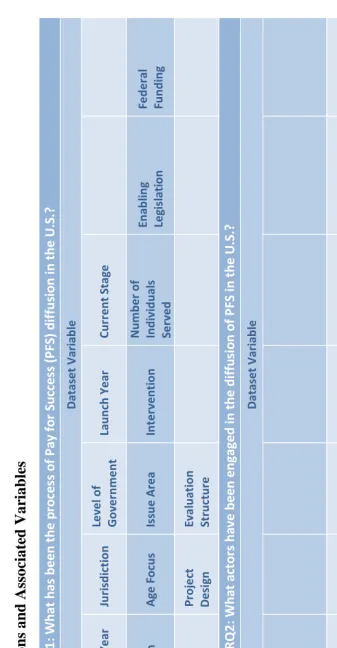
Table 4.1 Research Questions and Associated Variables ... 54
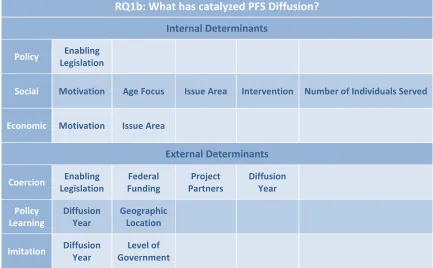
Table 4.2 Diffusion Determinants and Associated Variables ... 56
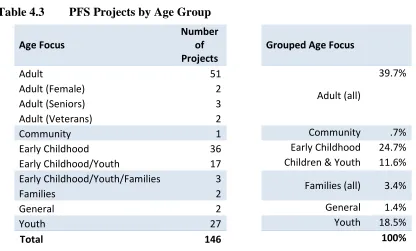
Table 4.3 PFS Projects by Age Group ... 57
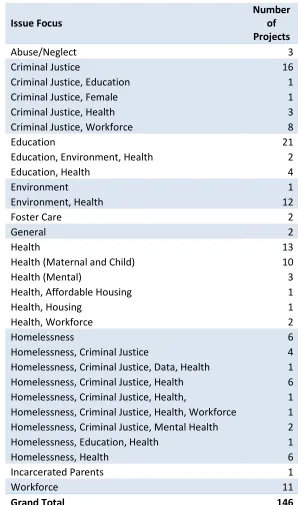
Table 4.4 PFS Projects by Issue Area ... 58
Table 4.5 Coding Scheme ... 64
Table 4.6 Research Questions and Associated Parent Nodes ... 65
Table 5.1 PFS Projects by Diffusion Year and Jurisdiction ... 74
Table 5.2 PFS Projects by Feasibility Year and Current Phase ... 76
Table 5.3 Relationship between Legislative Efforts and Diffusion ... 81
Table 5.4 Distribution of PFS Projects by Issue Area ... 85
Table 5.5 Distribution of PFS Projects by Age Focus ... 86
Table 5.6 Federal Legislation Supporting PFS ... 93
Table 5.7 Federal Government Project Support ... 96
Table 5.8 Distribution of Federal Grants by Agency and Recipient ... 98
Table 5.9 PFS Projects by Development Year and Level of Government ... 104
xv
Figure 2.1 Overall Funding for Housing, Health, and Human Services Block Grants
with Estimated Decrease ... 9
Figure 2.2 Pay for Success Mechanics ... 13
Figure 3.1 Diagram of the Multiple Streams Approach ... 24
Figure 4.1 Research Planning and Design... 44
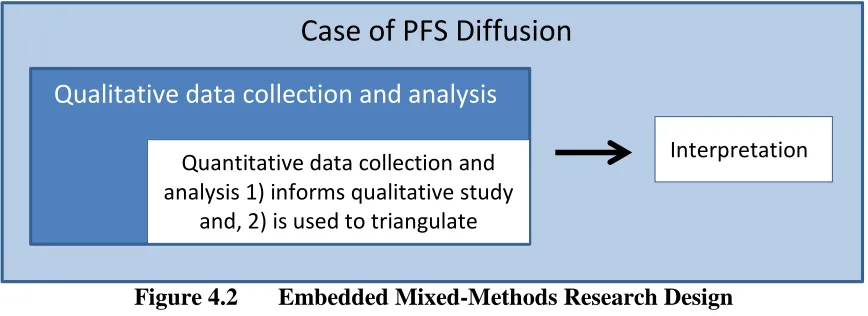
Figure 4.2 Embedded Mixed-Methods Research Design ... 51
Figure 5.1 New State-level Diffusions by Year with Distribution Curve ... 71
Figure 5.2 New Project-level Diffusions by Year with Distribution Curve ... 72
Figure 5.3 PFS Diffusion across the U.S... 75
Figure 5.4 PFS Activity Level by State ... 77
Figure 5.5 State PFS Legislative Efforts ... 80
Figure 5.6 Number of Projects by Diffusion Year and Federal Funding ... 97
Figure 5.7 Distribution Network of Federal Grants by Agency and Frequency ... 99
Figure 5.8 Jurisdictional Level and PFS Projects... 111
Figure 5.9 PFS Projects and Financial Intermediary Locations ... 114
xvi
CNCS Corporation for National and Community Service DoEd United States Department of Education
DoL United States Department of Labor
HMP Her Majesty’s Prison
HUD United States Department of Housing and Urban Development
MSA Multiple Stream Approach
PE Policy Entrepreneur
PFS Pay for Success
SIB Social Impact Bond
SIF Social Innovation Fund
CHAPTER ONE: INTRODUCTION
“If the misery of the poor be caused not by the laws of nature, but by our institutions, great is our sin.”
posits this under-investment has contributed to underperformance of numerous government-funded programs.
As budget constraints and social and environmental problems continue to put pressure on communities across the U.S., actors both inside and outside of government are seeking new policy solutions that both effectively and efficiently address these issues. Many scholars suggest these new policies and approaches are what is needed to make impactful improvement (Baliga, 2013; Cartwright & Stegenga, 2012; Liebman, 2018; Nussle & Orszag, 2015; Osborne, 1993; Seftor, 2016). However, significant hurdles to embarking on a new policy approach exist, including a lack of up-front funding and a reluctance to take on the risk inherent in implementing new programs. A recent
innovation in the policy domain, Pay for Success (PFS) financing, has been utilized by jurisdictions across the U.S. to overcome these hurdles. PFS is a financing model that enables outcome-oriented public spending through the financing of social or
environmental interventions with private sector and/or philanthropic capital. The interventions, often delivered by nonprofit service providers, are evaluated for their outcomes and only if the outcomes are met do investors get paid back their capital. At their core, PFS projects seek to use evidence-based approaches to address societal issues such as homelessness, recidivism, and school readiness.
of federal agencies including the Corporation for National and Community Service (“Serve America Act,” 2009/2012), the U.S. Department of Justice (Second Chance Act, 2008/2012), the U.S. Department of Labor (“WIOA,” 2014), and the U.S. Department of Housing and Urban Development (“FAST Act,” 2015). This Obama era funding ceased in 2017. However, under the Trump Administration, the U.S. Department of the Treasury is managing $100 million in funding appropriated under the 2018 Social Impact
Partnerships to Pay for Results Act (SIPPRA). SIPPRA, part of the Bipartisan Budget Bill of 2018, seeks to support multi-sector partnerships that will leverage government funding to scale up evidence-based programs that seek to improve the lives of families and individuals by addressing some of the most pressing problems in the U.S.
(“SIPPRA,” 2018). Distribution of SIPPRA funding will begin no later than November 2019.
understand how policy innovations may diffuse across the U.S, including consideration of both the process of diffusion and the role of actors involved in this diffusion. Thus, the objective of my dissertation is twofold:
1. Provide a deep examination of the diffusion of the policy innovation PFS across the U.S.
2. Explore the role(s) of the actors who have facilitated PFS diffusion. In order to meet these objectives, I look to the literature on agenda setting, diffusion of innovation, and policy entrepreneurship to inform the research design, implementation, and analysis. To examine the case of PFS diffusion in the U.S. an embedded, mixed methods, case study approach utilized data collected through elite interviews, participant observation, and a quantitative data set I created.
This dissertation is organized into six chapters, including this introduction.
Chapter 2 provides an in-depth background on PFS in the U.S. The chapter first traces the origins of PFS to the United Kingdom and follows the policy innovation’s initial
diffusion to the U.S. Then a description of the structure of PFS outlines the actors engaged in PFS projects and provides an overview of the mechanics of an implemented policy. This discussion provides an opportunity to understand the complexity of the instrument. Next, I provide a short review of PFS projects in the U.S. Finally, I end the chapter with an articulation of my research questions.
diffusion of policy innovations further explains factors associated with the catalysts that prompt a jurisdiction to innovate. To help understand the roles of the actors involved in the diffusion of PFS literature on the role of policy entrepreneurs is examined. Finally, Chapter 3 articulates the contributions my research makes to the academy as well as its broader implications to policy and practice.
Chapter 4 details the research methodology I utilized to collect and analyze the data used in this study. The chapter begins by describing what influenced the research design and then provides an explanation of the research design itself. Next, a presentation of the research model includes a description of the quantitative and qualitative
approaches utilized to answer the research questions. The chapter ends with a discussion of the validity and reliability of the research.
Chapter 5 provides the results of my research and discusses the findings. First, I examine the process of PFS diffusion across the U.S., discuss the determinants catalyzing PFS diffusion, and outline the elements of successful diffusion. Then I examine the actors engaged in PFS diffusion and discuss the tactics utilized by actors to influence diffusion. Finally, I discuss unexpected findings that emerged during my research.
CHAPTER TWO: BACKGROUND AND CASE
The purpose of this chapter is to provide an overview of Pay for Success (PFS) in the U.S. I first discuss the origins of PFS and its initial diffusion to the U.S. I then discuss the applicability of PFS in the U.S. and describe the structure of PFS including the
mechanics of an implemented policy. Next, I provide a short review of PFS projects in the U.S. Finally, I end the chapter by providing an articulation of my research questions.
Diffusion of Pay for Success to the U.S.
On April 21, 2009 President Barack Obama signed into law the Edward M. Kennedy Serve America Act, which created the Social Innovation Fund (SIF), housed in the Corporation for National and Community Service (CNCS), a Federal agency (“Serve America Act,” 2009/2012). The SIF provided capital for state and local governments to explore policy innovations and outcome-oriented approaches to some of the country’s most pressing social issues, essentially providing funding that could be used to catalyze policy change. First Lady Michelle Obama succinctly articulated the basic notion of SIF by stating,
The idea is simple: find the most effective programs out there and then provide the capital needed to replicate their success in communities around the country. By focusing on high-impact, results-oriented non-profits, we will ensure that government dollars are spent in a way that is effective, accountable and worthy of the public trust (Goldstein, 2009).
CNCS worked closely together to both deploy the SIF and ensure it supported the changes intended by President Obama. One policy innovation catalyzed by these efforts was PFS.
PFS is a financing model that enables outcome-oriented public spending through the financing of social or environmental interventions with private sector and/or
philanthropic capital. In its simplest form, PFS permits a jurisdiction to borrow capital from investors and direct it to towards interventions that address the fundamental causes, or upstream factors, of an issue. The jurisdiction pays returns on the investment based on the achievement of specific, predetermined outcomes of the intervention.
The concept of PFS (initially referred to as a Social Impact Bond or SIB) was developed in the United Kingdom and launched in 2010. This initial project was modeled after a social nonprofit organization’s (Ashoka) effort to create a ‘Contingent Revenue Bond’ focused on providing funding for water sanitation projects in developing countries (Nicholls & Tomkinson, 2015). The idea was to institute an intervention that would divert use of expensive, acute, and reactive health services catalyzed by consuming contaminated drinking water. The avoided health care costs could then be used to fund additional clean water projects. However, upfront funding was needed to pay for the initial intervention. Ashoka proposed for-profit investors provide the capital and be paid back upon successful delivery of safe water.
pounds from philanthropic and private sector investors. The funds were given to nonprofits who carried out evidence-based programs shown to reduce repeat criminal offenses, also known as recidivism. This program sought to reduce recidivism rates by 7.5% over seven years. If the program reached that benchmark, investors would receive at least a 2.5% return on their initial investment.
One year after launch of the HMP Peterborough SIB, New York City’s mayor, Michael Bloomberg, identified a number of severe social issues facing the city. Due to budget constraints, the city was forced to prioritize some issues over others. Of particular importance to Mayor Bloomberg was recidivism in the juvenile justice system. Nearly half of all incarcerated adolescents at the city run detention center on Rikers Island were recidivating within one year of being discharged (Rudd, Nicoletti, Misner, & Bonsu, 2013, p. ix). Without breaking this cycle, these youth, mostly coming from low- and middle-income families, could spend a significant portion of their lives in the criminal justice system. The Mayor shared the desire to address this issue with his staff. Soon afterwards, New York City Deputy Mayor Linda Gibbs learned about the Peterborough SIB (Greenblatt & Donovan, 2013). Since the SIB’s inception recidivism rates at HMP Peterborough had been reduced. The staffer shared the SIB concept with Mayor
Bloomberg and, thus, the PFS concept was introduced to the U.S. with New York City launching the first project in 2012.
Applicability of Pay for Success in the U.S.
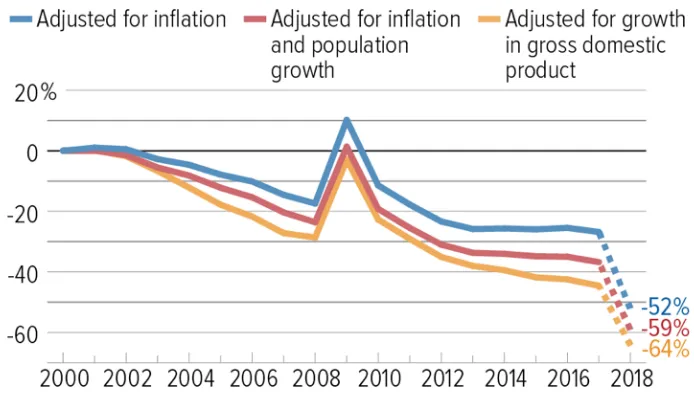
address those challenges is becoming more limited (Shapiro, DaSilva, Reich, & Kogan, 2016). Under the Trump Administration projections indicate an even steeper decline, as demonstrated in Figure 2.1 (from Reich et al., 2017).
Figure 2.1 Overall Funding for Housing, Health, and Human Services Block
Grants with Estimated Decrease
PFS addresses the funding gap by allowing jurisdictions that adopt the policy innovation to borrow private and/or philanthropic capital to fund interventions that address the persistent issues facing a community. Such a response is attractive as the rise of neoliberalism in the U.S. supports moving away from government spending and devolution of government from social service provision (Harvey, 2007).
over the long run, as reported by the Government Accountability Office (Sager, 2015). Evaluation of programs effectiveness has also been an issue. For example, effectiveness of social service spending in the U.S. has historically been evaluated by measuring a set number of outputs (e.g., number of nights in an emergency homeless shelter), rather than focusing on the metrics associated with the desired results or long-term outcomes of a program (e.g., ending homelessness) (Gustafsson-Wright, Garndiner, & Putcha, 2015; Sager, 2015). When outcomes are not thoroughly operationalized and assessed it
becomes challenging to identify where public money is being spent on programs that are ineffective and not meeting a policy’s intended objective (e.g., ending homelessness). PFS seeks to address these issues by defining outcomes and evaluating performance, and, thus, measuring the success (or failure, as it may be) of an intervention (Berlin, 2016; Galloway, 2014; Gustafsson-Wright et al., 2015). In summary, PFS offers an attractive policy alternative to jurisdictions faced with tight budget constraints that want to implement programs to address severe social or environmental issues burdening their communities. In the next section I discuss the structure of PFS.
Structure of Pay for Success
PFS is not unlike traditional government contracts and other complex service acquisitions utilized by U.S. government (Azemati et al., 2013). It too has a multifaceted and rather complicated contracting structure. Like pay for performance contracts, where government either rewards or sanctions a contractor based on their fulfillment of
specified outcomes (U.S. Government Accountability Office, 2002), PFS measures success based on the performance of a service provider. However, PFS can be
finance to areas where public capital is limited (Azemati et al., 2013; Macomber, 2016; Warner, 2013).
PFS is still relatively new in the U.S., therefore there is yet to be a formulaic process for launching a project. However, jurisdictions considering adoption of PFS generally first conduct an assessment to determine the feasibility of structuring a PFS initiative. This assessment itself is quite an undertaking and generally takes six months to one year to complete. Such assessments typically examine a number of factors including plausible interventions, potential investors, political will, and community capacity to determine if PFS would be an appropriate tool to address the issue identified. PFS practitioners have identified seven key components utilized when examining the feasibility of a jurisdiction to further pursue a PFS project (Crossgrove Fry, 2016)1:
Target Population - there must be a targetable, high-need population that is
aligned with the community and government’s policy priorities.
Stakeholder Engagement - public, private, and nonprofit sector actors must be
engaged and interested in PFS financing.
Value Creation - a project must provide value (economic, social and/or political)
to the government entities and financiers involved with the project.
Data - data must be available and easily accessible to track and evaluate the
selected intervention and its effectiveness.
Evidence-based - the proposed intervention must be evidence-based, conducive
1I helped develop the seven criteria through a Policy Innovation Fellowship (2015-2016) granted by the
to rigorous evaluation, and provide safeguards for the target population.
Scalability - there must be the ability to scale and replicate the chosen
intervention with program fidelity.
Capital - sufficient government and commercial/philanthropic capital must be
available to finance the project.
If any one of these components cannot be fulfilled, then a PFS project will likely not prove successful and, thus, is unlikely to be pursued (Crossgrove Fry, 2016).
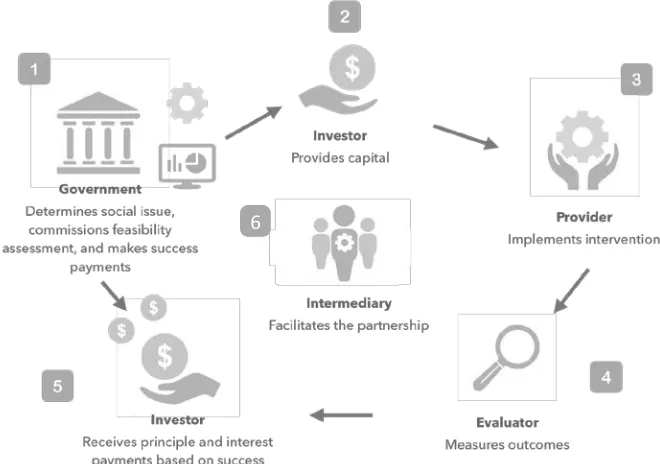
If the assessment supports PFS feasibility, then the community may engage in implementing a PFS project. Most PFS projects are structured, via complex contracts, as multi-stakeholder partnerships that engage the private, public, and nonprofit sectors (Sager, 2015). Rather than being mandated or required, the mechanics of PFS projects, as well as the roles of the actors engaged, have gradually evolved since the inception of PFS in the U.S. A review of PFS projects in the U.S., and the associated scholarly and applied literature, demonstrates a typical PFS initiative is comprised of six main sets of actors: a target population, government, intermediaries, investors, nonprofit service providers, and evaluators (Baliga, 2013; Gustafsson-Wright et al., 2015; Nonprofit Finance Fund, 2019a, 2019b; “Social Innovation Fund,” 2019; Sorenson Impact Center, 2016). A
Figure 2.2 Pay for Success Mechanics
1. First government identifies a social issue and commissions a feasibility assessment.
2. Next government procures capital from private sector and/or philanthropic investors.
3. This funding is then used to pay service providers for the selected intervention.
4. An external evaluator closely monitors the service provider’s ability to achieve outcomes.
5. If the outcomes are reached then the governmental jurisdiction (or another payor) makes success payments back to the investor(s). If the outcomes are not reached the investor does not receive payment. 6. Most PFS projects in the U.S. have hired an intermediary to coordinate
the effort.
PFS Projects in the U.S.
The U.S. government has supported a number of PFS projects through the release of funding opportunities to support feasibility analyses, capacity building, and
construction of PFS financing initiatives. A 2015 Government Accountability Office report shows that four Federal agencies have supported PFS initiatives by awarding funding or releasing requests for proposals (see Table 2.1) (Sager, 2015). President Obama’s 2017 budget request included up to $345 million in PFS related spending, with authority housed within Housing and Urban Development, the Department of Justice, the Department of Education, and the Corporation for National and Community Service (Office of Management and Budget, 2016).
Table 2.1 Federal Agencies with Funds Appropriated for PFS Projects
Agency Program Name Amount
Department of Labor Workforce Innovation Fund $24 million Corporation for National and Community
Service Social Innovation Fund $12 million
Department of Housing and Urban
Development and Department of Justice Demonstration PFS Supportive Housing million Up to $10
In 2017, with the change in the Presidential Administration, the White House Office on Social Innovation was closed. In February of 2018, President Donald Trump’s Budget request proposed elimination of CNCS in Fiscal Year 2019 and with it all of SIF’s funding. Yet, the Consolidated Appropriations Act of 2018, otherwise known as the Omnibus Spending Bill, increased CNCS funding by $33.6 million to total $1.06 billion for Fiscal Year 2018. The bill also included $100 million for a new PFS program
When my research commenced in March 2016, 11 jurisdictions (in nine states) had launched PFS projects in the U.S. including: Boston, MA; Chicago, IL;
Commonwealth of Massachusetts; Connecticut; Cuyahoga County, OH; Denver, CO; New York City, NY; New York State; Salt Lake County, UT; Santa Clara County, CA; and South Carolina. Most of these initial projects had support from the SIF. Despite Federal budgetary uncertainty under the Trump Administration, PFS continued to proliferate. As of February 14, 2019, 28 PFSinitiatives have launched and another 118 more are under formal consideration (see Appendix A).2 The projects launched thus far seek to enable public investment to address issues related to homelessness, recidivism, school readiness, early childhood and maternal health, mental health, workforce development and water contamination.
Research Objectives
As noted above, PFS is both a multisector initiative and a form of performance-based contracting where government pays only if specified results are achieved. As a policy innovation it has been perceived as a means to enable government to be more effective and efficient with limited resources (Gustafsson-Wright et al., 2015). Despite this, research on PFS, including in the policy sciences, has been limited. The research that has been published has been primarily in the fields of economics, finance, social work and criminal justice. This research has provided case studies as well as literature focused on the economic viability of PFS and the validity of the evidence-based interventions. However, it is important for PFS to also be viewed through a public policy and administration lens, in part because of the significance the tool itself can have in
2For the purpose of this research, Pay for Success is considered to be under formal consideration when a
application (Baliga, 2013; Cox, 2011; Evans, 2013; Fitzgerald, 2013; Fox & Albertson, 2011; Gustafsson-Wright et al., 2015; Jackson, 2013; Macomber, 2016; Warner, 2013). In addition, little has been done to understand the spread of this policy innovation across the U.S. and, specifically, who has championed its adoption. Thus, there are both applied and theoretical implications of my research as it contributes to both policy studies and policy in practice.
This dissertation seeks to more fully understand how and why PFS has
proliferated across the U.S. As mentioned in Chapter 1, the objective of my dissertation is twofold:
1. Provide a deep examination of the diffusion of the policy innovation PFS across the U.S.
2. Explore the role(s) of the actors who have facilitated PFS diffusion. In order to achieve this objective, and understand what catalyzes a jurisdiction to innovate, I ask the following questions:
1. What has been the process of Pay for Success (PFS) diffusion in the U.S.? 1a. How has PFS diffused across the U.S.?
1b. What has catalyzed PFS diffusion in the U.S.? 1c. What factors led to successful PFS diffusion?
2. What actors have been engaged in the diffusion of PFS in the U.S.?
2a. What sectors do the actors involved in the diffusion of PFS represent?
2c. What tactics do PFS actors use to influence diffusion?
Conclusion
In this chapter I’ve introduced the policy innovation PFS, discussed the origins of PFS, and traced its initial diffusion to the U.S. in 2012. I’ve presented PFS as a policy alternative in the U.S. to jurisdictions facing budget constraints and issue burden. A description of the structure of PFS outlines the complexity of the policy innovation. A short review of PFS projects in the U.S. shows the policy innovation has diffused across the U.S. with support from the federal government. Finally, I ended the chapter by providing an articulation of my research objectives and associated research questions.
CHAPTER THREE: FRAMING THE PROCESS OF DIFFUSION OF INNOVATION As mentioned in the previous chapter, this dissertation is focused on
understanding how and why Pay for Success (PFS) has proliferated across the U.S. and examining the actors engaged in the diffusion. To guide my study, I use three distinct sets of literature: agenda setting, diffusion of innovation, and policy entrepreneurism. First, literature on the agenda setting phase of the policy making process can frame our understanding of how an idea gets the attention of policy makers. Agenda setting’s relationship to the theory of diffusion of policy innovations further explains factors associated with the catalysts that prompt a jurisdiction to innovate. To help understand the roles of the actors involved in the diffusion of PFS I look to literature on the role of policy entrepreneurs. Finally, in this chapter I articulate the contributions this research makes to the academy as well as its broader implications.
The Policy Making Process
purposive course of action followed by an actor or set of actors in dealing with a problem or matter of concern.”
The process of policy making process has been a focus of study in policy sciences since the mid-1900s. During the early period of inquiry into policy sciences, research focused on the policy process itself, but considered the process to really just be the legislative component involved in policymaking (Lasswell, Lerner, & Fisher, 1951). Scholars at this time often indicated that the main actors in policy making were the elected officials themselves. Research pointed to a dichotomous relationship between policy makers and policy implementers with some positing institutional controls should be in place that remove discretion from the bureaucracy; while others argued that administrators should have discretion in the policy making process (Friederich, 1940; Waldo, 1948). However, within a few decades a new set of scholars began to articulate the policy process as more encompassing. For example, Demir and Nyhan (2008) suggest more recently that the politics-administration relationship be conceptualized in a mode that is less dichotomous and more cooperative. These more contemporary scholars recognized the role of multiple actors, and thus expanded inquiry of the policy process beyond the hands of elected officials.
Stages Heuristic
The first stage of the process, agenda setting, considers why certain problems, among many, receive the serious attention of decision makers (J. E. Anderson, 2010). Research on this stage focuses on getting the decision makers, in most cases elected officials, to consider taking action on a problem (Baumgartner & Jones, 2009; Cairney, 2011; Cobb, Ross, & Ross, 1976; Kingdon, 1984; Nelson, 1984). Once on the agenda, policy formation, or stage two, takes place. This is the stage when government develops a set of pertinent and acceptable proposed courses of action for dealing with a public problem (J. E. Anderson, 2010). Once a course of action, or a policy, is selected, policy adoption can occur. In this third stage support for the specific proposal is legitimized or authorized (Balla, 2001; F. S. Berry & Berry, 1990; Mintrom, 1997a). Once adopted, a policy must be implemented in stage four. Researchers focusing on this phase examine the application of the policy by a government’s administrative machinery, the
bureaucracy (Hill & Hupe, 2009; Hjern & Hull, 1982; Lester & Goggin, 1998; Pressman & Wildavsky, 1984; P. Sabatier & Mazmanian, 1980). Finally, stage five provides for evaluation of the policy in an effort by the government to determine first whether the policy was effective and second the reasons behind its effectiveness (Carlson, 2011).
interested in the diffusion of the innovation PFS (i.e., when PFS is first considered by a jurisdiction) I focus my examination in this study on the agenda setting stage.
Agenda Setting
It is in the agenda setting stage of the policy making process that a proposed solution (i.e., policy) must get the notice of decision makers and get placed on the government’s agenda for action. This stage recognizes that there are many problems that governments face, but only some of them will receive the attention of government and spur action (Cairney, 2011). Agenda setting research seeks to understand how and why some issues get the attention of policy makers, while others do not. Thus, it is at this stage that can help answer the research question What has been the process of Pay for Success (PFS) diffusion in the U.S.?
Agenda setting itself is affected by a number of factors. Cairney (2011, p. 183) summarizes the challenges associated with getting a topic noticed by policy makers via two statements:
1. There is an almost unlimited amount of policy problems that could reach the top of the policy agenda. Yet, very few issues do.
The dominance of rational choice theory invoked by early scholars such as Simon (1947) painted policy makers out to be ‘rationally bound decision makers’ with limited information and time available to inform their decision making. Issues populate a seemingly never ending and always growing list of problems to be addressed by policy makers. The depth and breadth of the issues facing policy makers creates challenges in getting a specific issue to rise to the attention of policy makers (Knott & Wildavsky, 1980). This generates a certain amount of ‘load’ (M. D. Jones et al., 2016) felt by policy makers, which impacts their willingness and ability to address an issue. Today scholars tend to still agree – those in a position to make policy decisions are often busy and have competing interests vying for their attention (Jenkins-Smith & Sabatier, 1994). Policy makers also take into account factors that help to determine the political importance of addressing a particular issue and the palatability of solutions. Through a meta-analysis of agenda setting literature, M.D. Jones et al. (2016) established that for a policy solution to ultimately get on the agenda of policy makers it must have three characteristics: it must be technically feasible, have adequate resources, and be acceptable in terms of societal values.
As with the policy process itself, scholars, recognizing the importance and complicated nature of agenda setting, have sought to better understand it through a number of frameworks. Cohen, March, and Olson (1972) introduced the garbage can model of decision processes. The garbage can model rejects the notion of a linear
empirically falsifiable theories into the policy sciences, Jenkins-Smith and Sabatier (1994) examine policy change and agenda setting through the Advocacy Coalition Framework (ACF). ACF allows for causal inferences in regard to agenda setting, and does so across broad policy subsystems, rather than examining a specific jurisdiction. However, ACF posits policy change occurs incrementally and generally requires investigation over a long period of time (on average, 10 years), so it isn’t a suitable framework for a relatively new policy innovation, such as PFS.
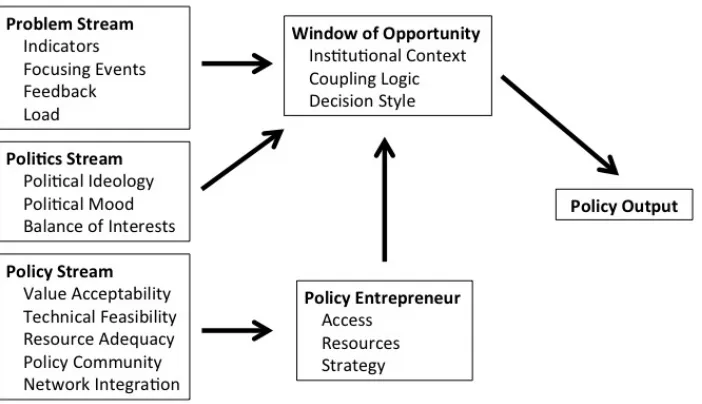
Kingdon’s (1984, 2002) Multiple Streams Approach (MSA) also brings
Figure 3.1 Diagram of the Multiple Streams Approach (adapted from Jones et al., 2016)
The problem stream is where issues are identified (B. D. Jones & Baumgartner, 2005). This can happen due to factors within the jurisdiction itself via internal indicators – for instance, a jurisdiction’s number of opioid deaths reaches an all-time high. A focusing event can also get the attention of policy makers (Birkland, 1998). Such an event can be internal or external to a jurisdiction – for instance, a school shooting. The political stream is made up of both elected officials inside government and the
overarching political mood (Zohlnhöfer, Herweg, & Huß, 2015). Researchers, academics and others are the primary players in the policy stream (M. D. Jones et al., 2016). These actors develop specific policy alternatives to deal with an identified issue. Actors within this stream may try to convince one another of the worthiness of particular ideas or policy solutions.
through something as routine as an annual appropriation (Farley et al., 2007; M. D. Jones et al., 2016). When the window is opened, all three streams have the chance to come together and push the issue to the forefront of a policy maker’s agenda (Kingdon, 2002). As such, windows of opportunities can enable action in an otherwise stagnant policy environment. Oftentimes individual actors can be associated with such action.
According to Kingdon (2002, p. 180) it is relatively easy to identify an individual (or set of individuals) central in moving a subject (i.e., policy or solution) up on policy makers’ agendas and into a position for enactment. Kingdon has labeled this individual a ‘policy entrepreneur’ (PE). PEs have been defined as those actors in a community that seek to initiate dynamic policy change and that have the skills and capacity to frame a policy issue, or take advantage of a window of opportunity, in order to get the attention of policy makers, provide for a policy solution that is acceptable and feasible, and/or usher a policy solution through implementation (Baumgartner & Jones, 2009; Kingdon, 2002; Mintrom, 1997a).
jurisdictions and to strengthen the component of MSA literature. However, my interest in agenda setting also lies in its relationship with the diffusion of policy innovations, like PFS. I posit that innovation and diffusion literature overlaps with MSA’s problem stream, politics stream, policy stream and the window of opportunity. Next, I describe the factors associated with the process of diffusion of policy innovation, associate it with the
aforementioned components of MSA, and then further examine Kingdon’s concept of PEs. This literature helps frame my research to answer the research questions: How has PFS diffused across the U.S.?, and What has catalyzed PFS diffusion in the U.S.?
Innovation and Diffusion
Defining Innovation
Innovation is the application of a new method, idea or product (Rogers, 2003). Innovation occurs in the public, private and nonprofit sectors. It has been studied in many fields and literatures, including the policy sciences (F. S. Berry & Berry, 2014; B. D. Jones & Baumgartner, 2005; Shipan & Volden, 2012; Walker, 1969), business (e.g., Rogers, 2003; Schumpter, 1911) and sociology (Cochrane, 1979; Jasanoff, 2011; Otero, 2008; R. A. Schurman, 2003). Oftentimes the people behind designing and launching new ideas, products or services are known as entrepreneurs. The following review of diffusion of innovation literature demonstrates that innovation is motivated by a range of factors based on the context of the innovation and the actors engaged in diffusing it.
discouraged in a free market economy like the U.S. However, once generated, knowledge is easily shared at little or no cost. Thus, inventors run the risk of putting time and capital into developing a new concept and not being able to receive a return on their investment. However, in an era of neoliberalism, innovation has been posited as necessary for
economic growth (Otero, 2008). As such, government takes several steps to incentivize innovation. In one approach, governments make property rights available to the creators of knowledge. In the U.S. it is part of Article I, Section 8 of the Constitution which gives “inventors the exclusive rights to their . . . discoveries” (1787). A number of policies have been implemented in the U.S. to further enable innovation. For instance, U.S. patent law encourages innovation by granting limited property rights to useful, and otherwise intangible, intellectual output or knowledge. Therefore, a new concept is turned into a private good, or intellectual property, which is excludable from the use of others (Weimer & Vining, 2017). By privatizing an otherwise non-excludable good, such as knowledge, the U.S. government is able to encourage, or catalyze, more innovation by making it economically valuable. In other words, these policies allow an inventor or entrepreneur the capability to distribute or ‘diffuse’ their new product, service or idea in the
marketplace and enable return on their investment made in research and development. Next, I examine diffusion of innovation theory as it applies to the policy sphere. Policy Innovation and Diffusion
novel idea, but it can also occur when a policy is introduced for the first time in a new setting. As defined by Rogers (2003, p. 5), diffusion is “the process by which an innovation is communicated by certain channels over time among members of a social system.”This spread of information, via the diffusion process, enables jurisdictions to learn about and consider new policies (i.e., policy innovations). Therefore, a policy solution is innovative upon its initial invention as well as when a new jurisdiction considers it, even after it’s been adopted in, thus diffused from, another jurisdiction. Policy innovation does not come easily, however. Change within government is often slow and methodical (F. S. Berry & Berry, 1990; Boushey, 2012; Mintrom & Vergari, 1998; Shipan & Volden, 2008; Stream, 1999; Walker, 1969).
In 1962, Rogers identified four factors associated with diffusion of innovation: the innovation itself, time, communication, and the social system. For my study, PFS is the innovation, in the form of a policy. The effects of time are widely acknowledged in the diffusion of innovation literature (Rogers, 2003). Tracking timing of diffusion to individual actors enables scholars to calculate diffusion rate and also determine
innovativeness of actors adopting the innovation. Innovators and early adopters are the terms Rogers (2003) uses for actors that adopt innovations in the early stages. Those actors that adopt in the later stages, after the majority of the actors have adopted the innovation, are deemed laggards. When it comes to policy innovation, scholars since Walker (1969) have identified that certain states tend to fall into one category or the other (innovator/early adopter or laggard). These states share common characteristics;
based (Rogers, 2003; Walker, 1969). Rogers posits the larger states may be more likely to innovate because they face certain issues, like social issues, sooner or with greater
intensity than the laggard states and therefore must adopt new policies to address the issues.
In regard to communication and the social system, Rogers (2003) was particularly interested in the context of each. In other words, what is the setting of the communication or the environment of the social system? Other scholars provide examples of such
context. For instance, geography can be an important factor to consider as oftentimes officials from a jurisdiction will communicate with a peer jurisdiction due to the notion they share “similar resources, social problems, and administrative styles” (Walker, 1971, p. 381). In the time of Walker’s studies (e.g., 1969) it seemed the communication
structure available tended to favor interaction between neighboring jurisdictions. Other scholars (e.g., Shipan & Volden, 2012) have acknowledged geographic clustering and also suggest that the modern policy makers have a greater capacity to look for solutions more broadly than merely turning to their neighbors.
San Francisco, CA, other earthquake prone regions began instituting stricter building codes to protect their communities from similar destruction (Reitherman, 2006). I discuss the internal and external factors that may influence the adoption of a policy innovation in greater detail below and relate them to MSA’s framework.
Internal Determinants
Many factors internal to a jurisdiction may enable innovation (F. S. Berry & Berry, 2014). Such internal determinants tend to be political/policy oriented, economic, or social. Political or policy-oriented determinants could be something as simple as enabling legislation that allows a jurisdiction to consider a particular policy innovation. Economic factors, such as retirement of debt, could encourage passing of a new bond to raise revenue to a new issue facing the jurisdiction. For instance, Quiggin (2006)
demonstrates how fiscal policies impact how jurisdictions contract or otherwise spend revenue and thus help or hinder policy innovation. Finally, jurisdictions often face social issues, such as a homeless encampment, that catalyze innovation in order to address the issue at hand. Each of these internal determinants can be associated with MSA’s problem steam in that they are indicators or focusing events. Further, the severity of a political, economic or social issue facing a jurisdiction has been proposed to be a factor
encouraging innovation (Allard, 2004; Mintrom & Vergari, 1998; Stream, 1999). Such factors can also be associated with MSA’s problem stream in that they are indicators of the load a particular issue places on a jurisdiction.
states (Matisoff, 2008). Such external factors, or external determinants, are further discussed below.
External Determinants
Factors influencing innovation external to a jurisdiction can include punctuating events, normative pressure, imitation, competition, coercion and policy learning (F. S. Berry & Berry, 2014; Boushey, 2012; Shipan & Volden, 2008). Punctuating events, such as the aforementioned 1906 San Francisco earthquake, are much like MSA’s focusing events. Normative pressure, imitation, competition, and coercion are best associated with MSA’s political stream. They cause a policy or issue to get the attention of policy makers due to relationships with another jurisdiction.
Normative pressure occurs when jurisdictions feel compelled to conform to standards in place in other jurisdictions (Walker, 1969). As such, a jurisdiction may feel pressure to adopt a policy because the jurisdiction may be perceived poorly if they do not adopt. This happened when smoking began to be banned in restaurants and other public locations (Shipan & Volden, 2008). By not adopting a ban on smoking, politicians could look ‘bad’ in the face of others, so they were influenced to also adopt smoking bans. Imitation occurs when a jurisdiction aspires to be like another jurisdiction and, therefore, imitates the policies other jurisdictions have put in place (Boushey, 2012). Competition often occurs between neighboring or peer jurisdictions. In these cases, one jurisdiction may adopt of policy, like tax incentives, to benefit their constituencies. Fear of
actions of another actor attempting to impose their preferred policy solution on another government (P. A. Sabatier, 2007). For instance, state level planning and zoning guidelines can be utilized to influence affordable housing development across a state, spurring cities to enact new ordinances (Graham, Shipan, & Volden, 2013). Another coercive tactic impacting a jurisdiction’s decision to pursue a new policy is the
availability of funding (i.e., economic incentive) offered by a higher level of government (F. S. Berry & Berry, 2014, p. 313).
Yet another external factor impacting diffusion may be the influence of people outside a jurisdiction during interactions or through networks (Rogers, 2003). This is more than mere imitation. Rather this ‘policy learning’ is interactive and happens in both formal and informal settings, in person or through virtual online networks. The National Conference of State Legislatures (NCSL) is a formal forum in which policy makers can learn from one another. NCSL offers both an online platform for communicating with other states and it also brings elected officials together at national conferences to discuss policy innovations. Other conferences focus on bureaucrats within government and others still may bring together people to discuss a specific policy subsystem, like healthcare.
Policy Entrepreneurs
As policy makers within jurisdictions consider solutions to address issues faced by their communities, certain actors influence their decisions. PEs have been recognized as such actors who set the agenda of policy makers (Kingdon, 2002) and “[whose] presence and actions can significantly raise the probability of legislative consideration and approval of policy innovations” (Mintrom, 1997a, p. 738). Scholars have identified the aforementioned internal and external determinants as contributing PE’s agenda setting efforts (Mintrom & Vergari, 1996). To accomplish this, PEs essentially shepherd a
proposed policy solution through the policy making process by first helping to identify, facilitate and create opportunities that can enable a proposed solution to get the notice of policy makers (Kingdon, 2002).
PEs have been found to face significant hurdles in gaining the attention of policy makers who are reluctant to take on the financial and political risks inherent in
implementing new programs. To surmount these hurdles, PEs use their knowledge, power, resources and tenacity to effectively call attention to a policy solution, such as PFS (Baumgartner & Jones, 2009; F. S. Berry & Berry, 2014; Kingdon, 2002; Mintrom, 1997a). They also use logic and narrative to couple the problems and solutions (coupling logic) and provide the information needed (Zahariadis, 2014) for policy makers’
decisions (M. D. Jones et al., 2016).
advantage” (p.165). By this definition, PEs are essentially individual change agents who are continuously on the lookout for opportunities to interject their policy or solution. However, individual actors can also be motivated into policy entrepreneurship through some sort of disruption (focusing event) or through other shifts (indicators) in a
government system generally held in place by inertia (Kingdon, 2002). School shootings and natural disasters are focusing events shown to compel individuals into policy
entrepreneurship (Farley et al., 2007; Samuels, 2013; Smith-Walter, Peterson, Jones, & Nicole Reynolds Marshall, 2016). Roberts and King (1991) found PEs were motivated by indicators showing declining performance in public schools.
Scholars have identified PEs in the bureaucracy (Arnold, 2015; Hopkins, 2015) as well as being more elite players in the policy process (Kingdon, 2002; Mintrom, 1997a; Palmer, 2015; Zahariadis, 2014). PEs can be found both within and outside of
government. As such, it must be noted that there are differences in the values and motivational factors between private, nonprofit and public sector employees when
promoting innovation (Lyons, Duxbury, & Higgins, 2006). Thus, one must question what actors may gain from promoting a particular innovation. For instance, some might be motivated by monetary benefit, political recognition, or social or environmental justice. For others it may simply part of their job. Below I work to further illustrate the role of PEs by providing examples of two classic PEs, a government insider and a scientist.
able to plead his case and promote policy alternatives that would lead to safer vehicles. In this role as a PE, Nader was able to successfully promote policies that would force the U.S. automotive industry to internalize the negative consequences of motor vehicles, which resulted in the Motor Vehicle Safety Act of 1966 (MacLennan, 1988).
Rachel Carson, with her seminal book Silent Spring (1962), is often lauded as the key opponent against pervasive chemical use in U.S. agriculture (Levenstein, 1988). However, Carson was not alone in her quest. She was able to get organizations like the National Audubon Society and political elites like President John F. Kennedy to question the safety of widespread, and lightly regulated, chemical use (Griswold, 2012). With Carson as their policy entrepreneur, this loose coalition of actors was up against powerful chemical industry proponents. Actors from within federal agencies like the U.S.
Department of Agriculture and chemical companies like DuPont argued that without chemical applications in agriculture many would go hungry (Darby, 1962).
impacting chemical use in the U.S. Ultimately the political stream at the federal level became receptive to change, but only after state-level policy windows were opened via the efforts of a nongovernmental PE, Rachel Carson.
As this example illustrates, policy entrepreneurship is impacted by many factors, and “success,” defined as getting an issue on policy makers’ agendas, is never solely within the control of the PE. Advocating for, influencing, and shaping policy innovations is helped or hindered by other factors such as the impact of other individuals, groups, or coalitions; changes in political climate; or other external factors that shift the focus of political agendas (Kingdon, 2002). In addition, PEs rarely work alone. Rather, they are active participants within a complex network of actors that influence the policy process. In this regard, some have suggested PEs can play the role of brokers between opposing viewpoints and, therefore, have the ability to bring together diffuse interests to address a policy issue (Mintrom & Norman, 2009).
Other factors have also been found to set PEs apart from other actors in the policy process and previous literature indicates that most PEs have certain common
these three factors are aligned that PEs have been shown to be causal mechanisms for agenda setting (Hopkins, 2015; Huitema et al., 2011; Mintrom, 1997a).
PE literature seeks to identify actors engaged in policy diffusion, identify the power dynamics and relationship structure of actors engaged in diffusion, and examine PEs’ efforts to enable acceptance of a policy innovation. The literature helps to answer the research questions: What actors have been engaged in the diffusion of PFS in the U.S.?; What sectors do the actors involved in the diffusion of PFS represent?; What is the geographical representation of the actors?; and, What tactics do PFS actors use to influence diffusion?
Significance of Research
As stated above, this research seeks to understand the diffusion of PFS across the U.S. Studying the diffusion of this policy innovation is of academic and social
Russell, & Jones, 2014; M. D. Jones et al., 2016; Liu, Lindquist, Vedlitz, & Vincent, 2010). My research primarily examines PEs’ efforts at the subnational level. In the U.S. system of federalism, it is the states that have traditionally been thought as the
laboratories of democracy (Fording, 2003; Galle & Leahy, 2008; Markell, 1994). Further, with neoliberalism and devolution lower levels of government are increasingly having to engage in problem solving, with less assistance from the federal government (Harvey, 2007). As PFS has diffused to both states and local jurisdictions I assert more broadly that it is subnational jurisdictions, states as well as counties and cities, that serve as hubs for innovative public policy.
Research on PFS also has limitations. To date, PFS literature has not adequately addressed the influence of the various sectors and actors engaged in PFS diffusion. However, because PFS involves the interests of multiple sectors, this research builds on previous PFS literature by addressing the role of public, private and nonprofit sectors in policy diffusion, which I determine through identification of the actors engaged in PFS diffusion. Finally, what I present is an embedded, mixed methods case study of the diffusion of PFS, addressing Berry and Berry’s (2014) critique that the vast majority of diffusion studies are quantitatively focused.
Conclusion
In this chapter I have examined three distinct sets of literature: agenda setting, diffusion of innovation, and policy entrepreneurism. Literature on agenda setting and diffusion of innovation explains factors associated with the catalysts that prompt a
sheds light on the roles of the actors involved in the diffusion policy innovations. This literature will help my analysis of the roles of the actors who have facilitated PFS diffusion.
CHAPTER FOUR: METHODOLOGY
This chapter presents my research design, data collection and data analysis procedures that I used to answer my research questions. In this chapter I discuss both the practical procedures as well as their theoretical foundations.
The specific research questions were formulated in Chapter 2 and are restated below:
1. What has been the process of Pay for Success (PFS) diffusion in the U.S.? 1a. How has PFS diffused across the U.S.?
1b. What has catalyzed PFS diffusion in the U.S.? 1c. What factors lead to successful PFS diffusion?
2. What actors have been engaged in the diffusion of PFS in the U.S.?
2a. What sectors do the actors involved in the diffusion of PFS represent? 2b. What is the geographical representation of the actors?
2c. What tactics do PFS actors use to influence diffusion?
Influences on Research Design
Research Objective
A number of social science scholars (Bryman, 2016; Creswell, 2013; Franklin, 2012) agree that it is the research questions that should drive the methodological approaches utilized in research, rather than a particular researcher’s training or
preference. Gilardi finds this to be “particularly acute in diffusion research” (2016, p. 15) as the research ‘templates’ designed by previous scholars are mostly quantitatively
focused and do not allow for a deeper understanding of why diffusion occurs. Adhering to the intent of the research questions is also particularly important when considering the role theory plays in this research. My primary intention was to use theory as a means to examine a particular phenomenon, the diffusion of PFS in the U.S. It is important to note that the aim of this study is not to quantify or measure something; rather it is to improve upon the understanding of a particular case, PFS diffusion in the U.S. These factors led to the semi-inductive nature of this study. Rather than using theory to build and test
hypotheses, the theories presented in Chapter 3 have been utilized to understand
mechanisms and processes. Thus, my research objective led to my use of these theories as an a priori frameworktoguide my research design, implementation and analysis. My objectives required my research design to be flexible enough to expand knowledge of the field of PFS and enable identification of patterns within the data to add to growth in PFS knowledge and inform theoretical development.
Experience
2013). As a practitioner, professor, and researcher I have been engaged in the PFS field since 2009 when I began teaching about the concept at Presidio Graduate School in San Francisco as part of the institution’s Capital Markets class. From 2009 through 2014 my engagement was passive, participating in trainings, conferences, and webinars focused on the topic. I engaged directly with PFS actors through these events and began building professional relationships. In 2015 I became a Policy Innovation Fellow for the city of Boise, ID, where I conducted a feasibility assessment on utilizing PFS to address issues related to chronic homelessness. My fellowship was funded by the White House Office of Social Innovation and the Corporation for National and Community Service. I received direct technical assistance, training, and support through the Sorenson Institute at the University of Utah. Through this fellowship I continued to develop my knowledge in the PFS field and also built a strong network with PFS actors. It was this knowledge and network that provided a foundation for the methodology presented in this chapter. This led me to select a methodological approach where I could use my background and experience to design the research and implement data collection (Tracy, 2013). Prior Research
regarding what factors should be examined to explain how, why, and at what rate PFS spread across the U.S. Diffusion of policy innovation research was consulted for the research design, particularly for identifying factors regarding internal and external determinants influencing diffusion and actors engaged in PFS diffusion. Much of the diffusion of policy innovation literature has been quantitative and focused on drawing causal inferences using large datasets (F. S. Berry & Berry, 2014). However, the small population (only 12 PFs projects in the U.S.) presented problems for utilizing any explanatory research from past studies (Berman & Wang, 2012). Such factors led to my study of PFS to be largely descriptive in nature (Creswell, 2013).
Research Design
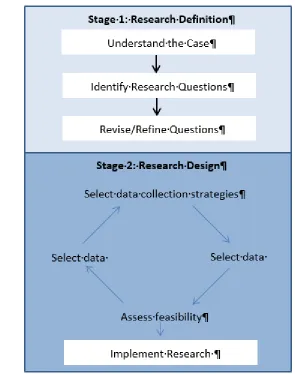
Figure 4.1 Research Planning and Design (adopted from Bickman & Rog, 2008)
When I first I began to gather background information on the topic of the
embedded, mixed-methods, case study approach emerged as the most pragmatic and comprehensive design. I articulate the benefits of such an approach through a discussion of the use of case studies in research as well as the attributes and limitations of
quantitative, qualitative, and mixed-methods research.
Case Studies
As I was interested in examining PFS diffusion in the U.S. from its inception to present day (2009-2019) a single case study approach was taken in my research. Case study research allows for in-depth, empirical inquiry and analysis of a phenomenon (i.e., a program, a process, event, an individual, a group, etc.) in a defined location and over a set period of time (Creswell, 2013; Franklin, 2012; Yin, 2017). Previous studies on diffusion of innovation have utilized a single case study approach to examine diffusion of a particular policy, such as Mintrom and Vigari’s (1998) examination of state education reform, Montalvo and Kemp’s (2008) clean energy study, and McGrady’s (2016) study of sustainability diffusion across Colorado ski resorts.
Yin (2017) describes three types of case studies:
1. Exploratory case studies are utilized to determine research objectives and questions of a subsequent study.
2. Descriptive studies aim to provide a complete account of a phenomenon within the selected context.
3. Explanatory case studies seek to examine relationships and establish causal inferences.
My research is modeled primarily from Yin’s descriptive approach. I collected
diffused across the U.S. I also examined relationships, but without making causal inferences. This type of collection of data through multiple sources and techniques is often the best approach to develop an in-depth understanding of a case (Crowe et al., 2011).
Quantitative or Qualitative Research?
The qualitative versus quantitative debate in social science research once created a chasm between the “power of ideas” and the “power of numbers” (Franklin, 2012, p. 2). Qualitative data tended to be classified as subjective, inductive, and exploratory while quantitative data was viewed as more objective, deductive, and explanatory; yet none of these traits are truly exclusive to one methodology (Atieno, 2009) and each has its own limitations (Creswell, 2013). An increasing number of scholars consider both approaches to have not only a justified place in academic research but suggest they can complement one another when combined in a study (Brannen & Moss, 2012; Bryman, 2016; Creswell, 2013; Earley, 2007; Franklin, 2012; Tashakkori & Teddlie, 1998). Indeed, scholars have demonstrated that some studies require both qualitative and quantitative research to fully address the questions posed in the study (Strasser, Binswanger, Cerny, & Kesselring, 2007; Swanson, Olson, Miller, & Lawrence, 2008; Wakefield, Warren, & Alsobrook, 2011). In the case of the research presented in this dissertation I utilized a mixed-methods approach.
quantitative and qualitative research is concurrent (Creswell, 2013). The mixed methods approach employed in this study enables the quantitative research to be embedded within the more predominant qualitative study to both inform the qualitative research and triangulate the results (Kanga, Njeru, Wachera, & Rutere, 2015).
Mixed method research can address the limitations of quantitative and qualitative research when utilized as discrete methodologies (Brannen & Moss, 2012; Creswell, 2013; Franklin, 2012; Kanga et al., 2015). Some of the benefits include the following.
• Qualitative data recognizes individual opinions and experiences, whereas quantitative data collection and analysis aggregates individuals into ‘like’ groups which enables systematic comparisons but may give a false impression of homogeneity.
• Qualitative analysis can enable subjectivity and bias on behalf of the
researcher whereas quantitative analysis provides for a more objective view of the data collection and analysis.
• Quantitative research can reveal what is going on while qualitative research explores how and why.
Perhaps the most powerful attribute of mixed methods research is that its pluralistic approach enables triangulation across different methods examining the same phenomenon. Triangulation allows for several different research techniques in the same study to confirm and verify data gathered through each of the techniques (Franklin, 2012) and to increase internal validity of the research (Crowe et al., 2011). As such
triangulation helps to control researcher bias (Creswell, 2013; Tracy, 2013), which is of importance in this study due to my personal association with the PFS sector.
Mixed methods research is not without its faults. It generally requires more effort, and thus more time, to design and implement the study (Creswell, 2013). Further,
analysis in mixed methods studies is can be complex, which may add to the length of time of the study. Mixed methods studies have been criticized as not being rigorous nor providing opportunity for causal inferences (Crowe et al., 2011). Despite these
challenges, which I address in a subsequent section, my research questions led to the choice of utilizing a mixed methods research model for this study.
Below I further describe the quantitative and qualitative methods used in this research. I first provide a broad overview of each method, and I follow this with more detailed information about how each method was utilized to answer my research questions.
Quantitative Methods
In quantitative research numeric data is collected in order to examine
relationships through the use of statistical analysis or computational or mathematical techniques (Creswell, 2013). As such, it allows researchers to test hypotheses regarding correlations or relationships between variables. Quantitative research allows for