World Maritime University
The Maritime Commons: Digital Repository of the World
Maritime University
World Maritime University Dissertations
Dissertations
2014
Review of South Africa's marine pollution
prevention measures, particularly those regarding
vessel-source oil pollution
Sibusiso Rantsoabe
World Maritime UniversityFollow this and additional works at:
http://commons.wmu.se/all_dissertations
Part of the
Environmental Law Commons
This Dissertation is brought to you courtesy of Maritime Commons. Open Access items may be downloaded for non-commercial, fair use academic purposes. No items may be hosted on another server or web site without express written permission from the World Maritime University. For more information, please [email protected].
Recommended Citation
Rantsoabe, Sibusiso, "Review of South Africa's marine pollution prevention measures, particularly those regarding vessel-source oil pollution" (2014).World Maritime University Dissertations. 476.
WORLD MARITIME UNIVERSITY
Malmo, Sweden
REVIEW OF SOUTH AFRICA’s MARINE POLLUTION PREVENTION MEASURES, PARTICULARLY THOSE REGARDING VESSEL-SOURCE OIL POLLUTION
By
SIBUSISO RANTSOABE
South Africa
A dissertation submitted to the World Maritime University in partial
Fulfillment of the requirements for the award of the degree of
MASTER OF SCIENCE In
MARITIME AFFAIRS
(MARINE ENVIRONMENTAL AND OCEAN MANAGEMENT)
2014
iii
Acknowledgements
First of all I would like to give praise to God almighty, without whom I would not have
been able to garner the strength for such an enormous task as this. I would like to thank my supervisor, Professor Neil Bellefontaine, for his guidance, his patience and for
always being able to lift me up, as well as my specialization head Professor Larry Hildebrand for direction and guidance during the development of the topic. My special
thanks to Dr Tidings Ndhlovu for his support. Special thanks are also reserved for the library team for the excellent service they provided me during the writing of this
dissertation.
I would also like to thank my family for the sacrifices they made to allow me the
opportunity of studying at the World Maritime University. Last but not least I would like
to thank my sponsors for granting me this wonderful opportunity to further my studies at WMU. I would like to thank The Department of Transport, The South African Maritime Authority, South African Maritime Safety Authority, Department of Higher Education and
iv
Abstract
Title of dissertation: Review of South Africa’s marine pollution prevention
measures, particularly those regarding vessel-source oil pollution
Degree: Master of Science in Marine Affairs
South Africa lies in one of the world’s busiest shipping lanes. The peculiar waters of South Africa serve to explain the treacherous sailing conditions. The large traffic volume transiting around Cape Horn and the large number of ships sailing towards the country’s ports makes the coast vulnerable to oil pollution. It is with this view in mind that the author of this dissertation will review South Africa’s Marine Pollution Prevention Measures, particularly those regarding vessel-source oil pollution, with emphasis on the operational level.
This dissertation will review and analyse national marine pollution prevention measures related to vessel-source oil pollution. Roles and responsibilities of different stakeholders will be investigated and analysed. The roles of the DEA and SAMSA will be critically reviewed with emphasis on their legal mandates regarding oil pollution prevention and responses. The status of Conventions will be examined, as well as their enactment into domestic law. A major maritime nation, Sweden, will be studied for purposes of gap analysis and review of the lessons that South Africa can learn on vessel-source oil pollution measures.
v
TABLE OF CONTENTS
Declaration………. ii
Acknowledgements………...iii
Abstract………..iv
Table of contents………v
List of Tables………..viii
List of Figures……….ix
List of Abbreviations and Acronyms……….x
Chapter 1. INTRODUCTION ... 1
1.1 Background ... 1
1.2. Objectives ... 4
1.3 Methodology ... 5
1.4 Organization of the dissertation ... 5
CHAPTER 2. VESSEL-SOURCE POLLUTION AND ITS EFFECTS ... 6
2.1 Pollution ... 6
2.2 Type of vessel – source pollution ... 7
2.2.1. OIL POLLUTION ... 8
vi
2.2.3 ALIEN AND INVASIVE SPECIES ... 9
2.2.4 WASTE WATER AND CONTAMINATED BALLAST TANK RESIDUES ... 11
2.2.5 EMISSIONS ... 12
2.2.6 Antifouling paints ... 13
2.2.7 Noise ... 13
2.3 Legal regime and international instruments ... 13
2.4 Summary ... 15
CHAPTER 3: VESSEL-SOURCE OIL POLLUTION ... 16
3.1 Accidental discharges ... 17
3.1.1 MAJOR OIL TANKER DISASTERS ... 17
3.2 Operational discharges ... 21
3.3 Effects of Vessel - source oil pollution on the marine environment ... 23
3.3.1 SHORT TERM EFFECTS... 23
3.3.2 LONG TERM EFFECTS ... 24
3.4 Legal Regime ... 25
3.5 Summary ... 26
CHAPTER 4: VESSEL-SOURCE OIL POLLUTION (SOUTH AFRICA) ... 27
4.1 Background ... 27
4.2 Major vessel-source oil pollution incidents in South Africa ... 29
4.2.2 APOLLO SEA ... 31
4.2.3 M/V TREASURE ... 31
4.3 Vessel source-oil pollution (Legal Regime) ... 32
4.4 Major Role Players (Legal mandates, operational cooperation) ... 39
4.4.1 THE DEPARTMENT OF TRANSPORT (DOT) – SOUTH AFRICAN MARITIME SAFETY AUTHORITY (SAMSA) ... 39
4.4.2 THE DEPARTMENT OF ENVIRONMENTAL AFFAIRS (DEA) ... 43
4.4.3 SOUTH AFRICA’S NATIONAL CONTINGENCY PLAN FOR THE PREVENTION AND COMBATING POLLUTION FROM SHIPS AND OFFSHORE INSTALLATION (SANCP). ... 45
vii
CHAPTER 5: SWEDEN ... 52
5.1 BACKGROUND ... 52
5.2 LEGAL REGIME AND INTERNATIONAL CONVENTIONS ... 54
5.3 MAJOR ROLE PLAYERS ... 55
5.3.1 SWEDISH COAST GUARD ... 56
5.3.1.1 Sea Watch and Response………..56
5.3.1.2 Oil Spill Response………..57
5.3.1.3 Oil Spill Preventative Measures……….58
5.3.1.4 Resources and Equipment……….58
5.3.1.5 Emergency Exercise……….59
5.4 Swedish Maritime Authority ... 60
5.5 The Swedish Civil Contingencies Agency (MSB) ... 61
5.6 Places of Refuge ... 62
5.7 Chapter concluding analysis and Summary ... 62
6. Gap analysis (Sweden vs South Africa) ... 64
7. Conclusion ... 69
8. Recommendations and further research ... 71
viii
List of Tables
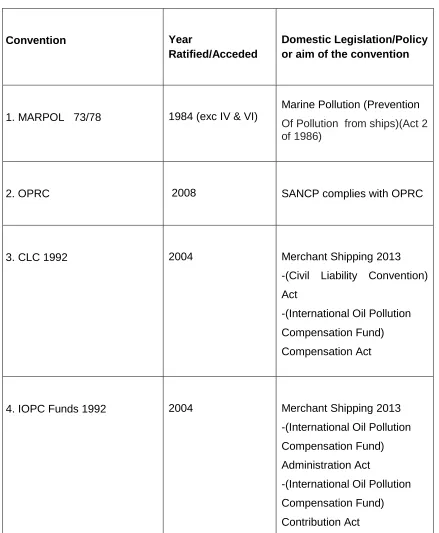
Table 1 Status of conventions (South Africa)………33-34
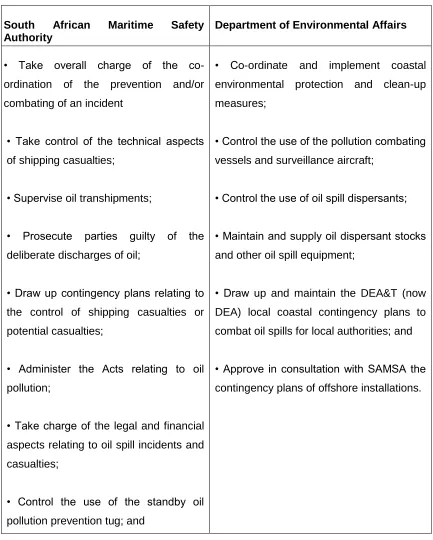
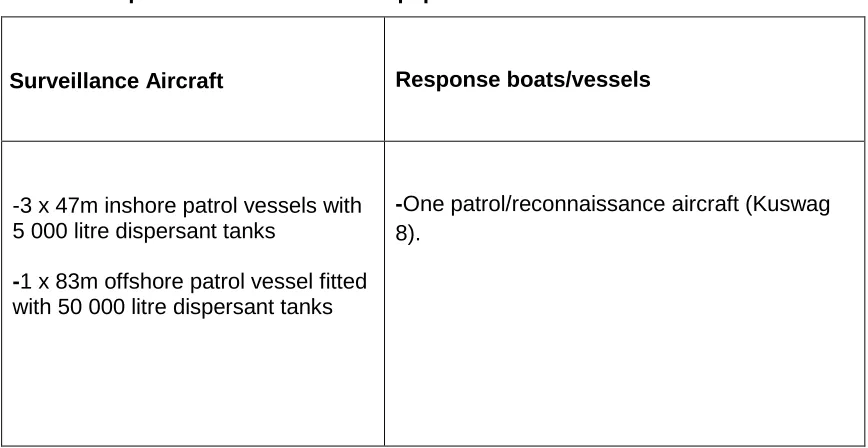
Table 2 SANCP-DEA & SAMSA duties……… 46-47
Table 3 Response & Surveillance Equipment (South Africa)………49
Table 4 Status of Conventions (Sweden)………54-55
Table 5 Response & Surveillance Equipment (Sweden)……….57
Table 6.1 Maritime Administration and Conventions (Sweden vs RSA)… 64-66
Table 6.2 Oil Pollution Prevention & Response………..67
Table 6.3 Aerial Surveillance for operational discharges & enforcement….67-68
ix
List of Figures
Figure 1 Alien & Marine Invasive Species………10
Figure 2 Major Oil Spills since 1967………18
Figure 3 Oil Spill per Decade as percentage of the total spilt between 1970 & 2009………21
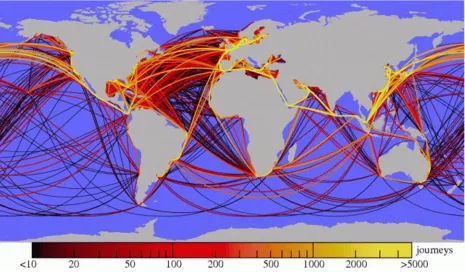
Figure 4 Shipping Routes………..……….28
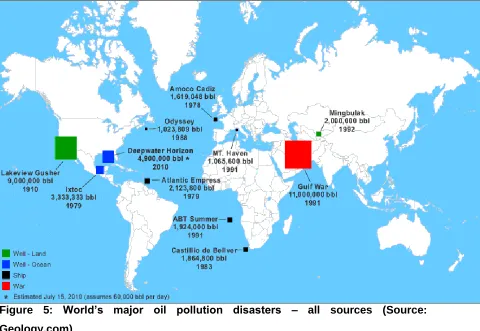
Figure 5 World’s Major Oil Pollution Disasters……….………30
Figure 6 SAMSA business centres………...………41
Figure 7 Sweden- Baltic Coast………..………52
x
List of Abbreviations and Acronyms
CLC Civil Liability Convention
CO2 Carbon Dioxide
DAFF Department of Agriculture, Forestry and Fisheries
DEA Department of Environmental Affairs
EEDI Energy Efficiency Design Index
HFO Heavy Fuel Oil
IMCO Inter-Governmental Maritime Consultative Organization
IMO International Maritime Organization
IOPC International Oil Pollution Compensation Funds
MARPOL International Convention for the Prevention of Pollution from ships
NOX Nitrogen Oxides
OILPOL Oil Pollution Convention of 1954
PAH Polycyclic Aromatic Hydrocarbon
PBT Persistent Bio-accumulation and Toxic Compounds
PIB Poly-iso-butylene
RSA Republic of South Africa
xi
SANCP South Africa’s National Contingency Plan for the Prevention and Combating Pollution from Ships and Offshore Installations
SEEMP Ship Energy Efficiency Management Plan
SOX Sulfur Oxide
UN United Nations
UNCLOS United Nations Convention on the Law of the Sea
HELCOM Helsinki Commission
MLASA Maritime Law Association of South Africa
SLAR Side-Looking Airborne Radar
IR/UV Infrared/Ultraviolet Line Scanner
1
Chapter 1. INTRODUCTION
1.1 Background
The tendency for mankind to overstate the ocean’s assimilative ability has generally led to exaggerated claims about Marine pollution. Because of the oceans’ vastness, they
are often perceived as bottomless pits (Nybakken, 2001). The oceans cover almost three-quarters of the earth’s surface area, and are comprised of 1.3 billion km3 of water
(Global Ocean Commission Report, 2014). Little wonder that mankind believed that its
assimilative ability was infinite and its resources were inexhaustible.
The Law of the Sea Convention defines marine pollution as:
the introduction by man, directly or indirectly of substances or energy into the marine
environment, including estuaries, which results or is likely to result in such deleterious
effects as harm to living resources and marine life, hazards to human health, hindrance
to marine activities, including fishing and other legitimate uses of the sea, impairment of
quality of use of sea and water and reduction of amenities (UNCLOS, 1982).
Recently, marine environmental protection has been elevated on the agenda to become
the most important ecological issue of modern times. With the emergence of environmental consciousness capturing the world’s attention, so has protection of the
marine environment (Tan, 2005). This has not only largely been due to new knowledge regarding marine pollution but also to people’s greater awareness of the oceans’
2
are the world’s largest ecosystem and have a central role in supporting all life on earth.
They provide a wide variety of services and resources that support humans (Global Ocean Commission Report, 2014). As such, preservation of these resources has
become paramount for the survival of humankind.
Because they make the headlines, major oil spills are the most known form of marine pollution, although major oil pollution disasters involving tankers account for only 10%
of oil pollution of the marine environment (IOI, 2010). Over the last few years, issues like rising sea levels and ocean acidification have climbed up the list. The oceans are
becoming more acidic as their PH continues to drop. The general consensus amongst the world’s scientists is that acidification of the oceans is largely due to Greenhouse
gases (Husley, 2012). Microplastics have also gained attention from scientists over the last few years. It was discovered that, with repeated exposure to wave action, saltwater and solar radiation, plastics break down into microplastics that continue to exist in the
marine environment for years (International Ocean Institute, 2010). Most problems
related to the oceans are of anthropogenic origin. Anthropogenic sourced marine pollution includes discharges from land-based sources, ships, atmospheric deposition, ocean dumping and offshore oil and gas installations (Tan, 2005:.3).
Indeed, 80% of discharges into the marine environment are land-based marine pollution
(Global Ocean Commission, 2013). Land-based sources of marine pollution can be further divided into point and non-point sources. Point sources include industrial effluent
pipes, industrial stack emissions and municipal sewage and waste water pipes with non-point sources originating from diffused sources such agricultural runoffs.
A lot of resources have been committed by the international community to curbing
land-based marine pollution, particularly since the strain that is exerted on the marine environment by anthropogenic pollution is beginning to show in many coastal waters
3
more and more hypoxic areas discovered in many coastal waters around the world. Around 500 hypoxic zones have been reported around the world and are currently threatening areas of critical ecological importance (STAP, 2011). Hypoxia results from
nutrient over-enrichment of coastal waters through a process called eutrophication.
Vessel-sourced pollution is by no means an insignificant contributor to marine pollution. Global trade continues to grow and, with the global merchant fleet seating at over
50,000, vessel-source-pollution cannot be ignored (International Ocean Institute, 2010). The impact of ships on the environment is considerable. Major vessel source pollution
consists of garbage, air emissions, sewage, ballast water, and accidental and operational oil pollution. Oil and cargo residues leave traces in the marine environment,
while air emissions have introduced high values of sulphur oxides, nitrogen oxides and particulate matter (Vidas and Schei, 2011).
Ballast water is another issue that is currently high on the list of not only the shipping
fraternity, but also marine environmentalists worldwide. There is strong evidence showing that certain species have been transferred from one region to another through ship’s ballast water (Vidas and Schei, 2011). Studies in Europe have revealed that more than 1,000 non-indigenous aquatic species have been recorded across Europe’s
coastal waters. The species were also found in the navigational inland waterways used
by ocean-going vessels. These species have been problematic as they have a negative effect on indigenous species through predation and competition which leads to changes
in the ecosystem (Vidas and Schei, 2011).
Vessel-source pollution continues to be a threat to the environment. Major oil spills are not the only culprits but operational discharges, which include a deliberate element, are
a continuous threat as well. Major oil spills will make the news and often resources including oil spill responses are put in place immediately to prevent damage or further
4
anywhere, and with culprits escaping detection, the effects of these types of pollution can be devastating to the marine environment.
1.2. Objectives
South Africa lies in one of the world’s busiest shipping lanes. South African waters are known to provide some of the world’s treacherous sailing conditions, with vessels prone
to encountering structural damages, thus making the waters vulnerable to oil pollution. It is with this in mind that the author will review South Africa’s Marine Pollution
prevention measures, particularly those regarding vessel-source oil pollution with emphasis on the operational level.
The objectives of this dissertation are:
1. To review and analyse National Marine Pollution Prevention Measures that are related to vessel-source oil pollution;
2. To summarize and assess the responsibilities of different stakeholders, mainly the South African Maritime Authority and The National Department of Environmental Affairs
regarding marine oil pollution by ships;
3. To review and analyse South Africa's National Contingency Plan for the Prevention
and Combating of Pollution from Ships and Offshore Installations (SANCP). In addition, the author will establish whether relevant IMO Conventions have been ratified; and,
4. To compare and contrast South Africa’s situation with one of the major Maritime
5
1.3 Methodology
The methodology used for data collect is qualitative methods. Structured interviews with
relevant stakeholders, namely, the Department of Environmental Affairs, the Department of Transport and the South African Maritime Safety Authority, including its wing, the Maritime Rescue Coordination Centre were conducted.
Sweden was chosen for the purposes of gap-analysis. The criterion was to identify a
major maritime nation with a coast and maritime traffic that is almost similar to South Africa. The aim will be to look at Sweden’s oil pollution management and enforcement
measures to mitigate against vessel source pollution. Good practices will be identified and considered as possible recommendations for South Africa to adopt.
1.4 Organization of the dissertation
The study will begin with a broader and general outlook into marine pollution, followed by vessel-source marine pollution. Different types of vessel-source marine pollution and their effects on the marine environment will be discussed including the regulation
regime pertaining to vessel-source marine pollution will be discussed.
The dissertation will then examine vessel-source oil pollution. Operational and
accidental oil spills will be described and discussed, including the fate and effects of oil pollution on the marine environment. Major oil-spill disasters will be identified, with their
impact and effect on the marine environment briefly discussed.
South Africa’s marine pollution prevention measures particularly those dealing with
vessel-source oil pollution will be reviewed and analysed. Ratification of relevant IMO and international instruments pertaining to oil pollution will be ascertained. Major oil spill
6
stakeholders in ocean governance, particularly related to marine pollution, will be reviewed. Lastly, a major maritime nation for gap analysis will be identified and recommendations given.
CHAPTER 2. VESSEL-SOURCE POLLUTION AND ITS EFFECTS
2.1 Pollution
Maritime transport has always been important to people around the world. In the early
development of modern maritime transport, ships were used for passenger travel. However, that market was out-competed by the advent of air travel. Ships are still vitally important as they carry goods and the number of merchant vessels grew significantly
with industrialization and continues to grow (IOI, 2010). The current global trade volumes could not be met without the use of maritime transport. Currently around 90%
of global trade is carried through the sea by the International maritime community (Vidas and Schei, 2011).
Over the years, ships have polluted the marine environment in many forms. Even though tanker disasters tend to take the limelight, there are different kinds of
7
for many negative effects on the environment. Maritime transport not only pollutes the sea but also land and air. Ships, regardless of whether they are at sea or in ports, in their normal operations release harmful emissions into the atmosphere through their
exhaust systems. The fact that ships are manned by human beings means that domestic waste is generated by default. Cargo also poses its own conundrum as well
as paints used on the ship’s hull (Vidas and Schei, 2011). Ships other than tankers nowadays carry various hazardous cargoes which pose a threat to the ocean. There
have been many efforts over the years from the maritime community to put together instruments that ensure the ocean and the whole marine environment is preserved and
protected (Tan, 2005).
The nature of international maritime transport makes it a trans-jurisdictional industry
and has led to the maritime industry establishing its own regulations. The regulations governed by the international maritime industry have been intense over the years. The
result has been a decline in the amount of oil and other pollutants entering the oceans from ships. It is estimated that between 1973 and 1989 the decline in oil and other pollutants entering the oceans from ships was 75% (Tan, 2005).
2.2 Type of vessel – source pollution
Apart from oil pollution, ships generate different kinds of pollution in both the marine
environmental and the environment in general. Ships carry noxious and harmful substances, contaminated ballast water, sewage effluent, domestic and industrial litter,
8
2.2.1. OIL POLLUTION
Vessel-source oil pollution can be split into operational and accidental discharges.
Operational discharges emanate from normal shipboard operations i.e. engine rooms and cargo tanks cleaning, while accidental discharges emanate from maritime
accidents, including major oil spills (Gold, 1998). Pollution through tanker accidents has been on the decline since the early 1970s and 1980s. Oil spills and, in general, oil
inputs into the ocean by tankers have been reduced by 63% from the highs of the 1980s. Over the same period, oil released from tanker accidents has gone down by
75% and from tanker operations by 90% (Nellemann, Hain and Alder, 2008). The effect of oil pollution will be discussed in chapter 3.
2.2.2 GABBAGE (SOLID WASTE)
Like households, ships generate a lot of domestic waste and a considerable amount of
waste from cargo operations. The shipping industry is a major source of marine litter in the oceans. Regulations do allow for certain types of waste to be discharged at sea
under certain conditions which might be contributing to the problem of vessel-source pollution. Enforcement at sea is difficult and almost impossible, thus ships can dispose
of waste in the high seas without repercussions (Vidas and Schei, 2011). Over 110,000 tonnes of garbage in the United States of America is from ship generated solid waste.
This includes items that make up household waste such as glass, wood, rubber and packing material (Molnar and Koshure, 2009).
There are many forms of solid waste produced by ships, including plastics. Plastics are becoming a major environmental issue with scientists increasingly concerned about the potential impact of releases from plastic debris of persistent bio-accumulation and toxic
compounds (PBTs). PBTs are credited with many health problems in marine life including endocrine disruptions, mutagenicity and carcinogenicity. The major sources of
9
significant contributor of plastic found at sea. On the shipping front, cruise liners, merchant shipping and recreational boats are the major culprits. Plastics are not biodegradable and are buoyant, remaining in the marine environment for years.
Through photo-degradation and abrasion, they do, however, break down into smaller pieces which are termed microplastics (particles up to 5 millimetres in diameter). The
danger with microplastics is that they can be consumed by the smaller families of marine life (UNEP, 2011; Wabnitz and Nichols, 2010). Plastic has been found in guts of
leatherback turtles blocking the passage of food. The logical assumption is that turtles mistake plastic for jellyfish (Mrosovsky, Ryan and James, 2009).
2.2.3 ALIEN AND INVASIVE SPECIES
2.2.3.1 Ballast water
Apart from cargo tanks and bunker fuel tanks, ships are equipped with ballast water tanks. Ballast water is taken in especially if the ship is not fully laden or not carrying cargo all. This water is used to improve the ship’s stability and sea keeping.
Ballast water which is collected in another region is often discharged before the ship
reaches its next port. Clearly, this water can serve as a vector for the introduction of alien and invasive species into the new environment (Molnar and Koshure, 2009).
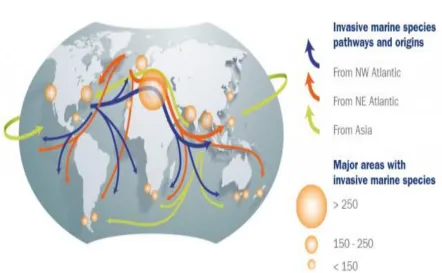
There are other means by which alien species can be transported from one region to another, including natural means, but shipping by the nature of its trade is the major
contributor as depicted in Figure 2.1. In an example that is often cited, the pacific acts as a migration barrier for migration through natural means. The reason is that the zooplankton larval phase is too short to allow natural means distribution across the
pacific. However, ships crisscross the oceans enabling them to transport species from one ocean to another. The majority of the species are said to die during the voyage, but
a number survive, making it into the new environment. A ship’s ballast water can contain millions of organisms which, if taken in the context of busy waterways and busy
10
threaten native species, altering habitats and affecting ecosystem function (Gollasch and Nehring, 2006).
Figure 1: Invasive species pathways through shipping (Source: Dockwise)
As a result of the negative impact to local ecosystems, the introduction of invasive
11
2.2.3.2 BIOFOULING
Another form of alien and marine invasive species’ introduction to foreign environments is called biofouling. Organisms attach themselves to a ship’s hull and are transported from one region to another. Species mostly involved are both calcareous and non–
calcareous; they attach themselves to the hulls of ships. They not only affect the marine environment but are considered a nuisance as they slow down the ship by increasing drag (Potters, 2013).
2.2.4 WASTE WATER AND CONTAMINATED BALLAST TANK RESIDUES
Ships produce black and grey water, the former being sewage effluent while the latter is water from kitchen sinks, showers and galleys. Sewage effluent from ships is less
diluted than municipal sewage as there is less water involved. Modern ships have sewage treatment plants, holding tanks or a disinfection system on board. Discharge of
sewage from plants at sea is regulated by MARPOL. Even before regulation, it was standard practice to discharge sewage away from coastal areas. Sewage effluent may contribute to eutrophication in busy coastal lanes, affecting the ecosystem which, in
turn, can affect fisheries, coastal livelihoods and tourism. Grey water contains residues from detergents which can be toxic to marine life. Busy coastal lanes with protected
bays and areas of low tidal exchange are the most vulnerable as polluted water may be consumed by species like shellfish leading to food safety problems (Molnar and
Koshure, 2009).
Residues from cargo tanks which have been used for ballast purposes are also a
source of marine pollution. A recent example is the case involving 4,000 dead birds (around 18 species altogether) that were washed up on the coast of the English
Channel in early 2013,covered with a sticky substance. Polyisobutylene, commonly referred to in the maritime industry as PIB, was later identified as the sticky substance
12
This oil additive is released into the sea during tank-cleaning and during discharges of polluted water from tanks. Until recently, it was permissible to release PIB into the sea under determined conditions as per MARPOL (UK Chamber of Shipping, RSPB, MCS,
RSPCA, The Wild Life Trust, 2014). Polyisobutylene is a hydrophobic substance which, when in contact with water, coalesces into a waxy glue-like formation. Various seabird
species which dive into the water for food are particularly vulnerable. After a concerted effort from wildlife conservation organizations and maritime organizations to push for a total ban of PIB, IMO agreed to reclassify it. The IMO’s Working Group on the
Evaluation of Safety and Pollution Hazards of Chemicals has since agreed to classify
high-viscosity PIB as category x for carriage by ships. This means that PIB will be prohibited for discharge at sea. Effective implementation is projected for 2016 (UK Chamber of Shipping, RSPB, MCS, RSPCA, The Wild Life Trust, 2014).
2.2.5 EMISSIONS
Merchant ships generally use Heavy Fuel Oil (HFO) for engine propulsion. HFO is a blend of refinery residue. HFO is considered dirty oil because of lack of refinement. It
emits high concentrations of Sulphur Oxide (SOX) and Nitrogen Oxide (NOX), particulate matter and Carbon dioxide (CO2). Shipping total fuel consumption was
estimated at 369 million tonnes in 2007 and was predicted to rise to 486 million tonnes by 2020 (Vidas and Schei, 2011). CO2 emissions in this same period were estimated at
1,015 million tonnes, meaning that shipping in general contributes 3.3% of global emissions. In 2007, international shipping contributed 870 million tonnes, corresponding to 2.7% of the global total. Looking from outside shipping, this might seem like a small
percentage; however, this industry has a lot of room for improvement which includes among others substitution of Heavy Fuel Oil with cleaner fuel (Bazari and Longva,
13
2.2.6 Antifouling paints
Ships use anti-fouling paints in their hulls which prevent marine organisms from
attaching to the hull and affecting the speed of the ship by increasing drag, resulting in higher fuel consumption. Anti-fouling paints containing tributyl tin (TBT) were the
preferred choice for painting the underside of ships from the 1970s. They were regarded as effective biocides (Tan, 2006).
TBT is arguably the most toxic substance ever to be introduced into natural waters deliberately (Steward and Thompson 1994; Molnar and Koshure, 2009). TBT causes
imposex in mollusks which leads to rapid population decline as reproduction is inhibited (Molnar and Koshure, 2009).
2.2.7 Noise
Noise pollution is normally associated with the noise ships make while in port. However, recent studies and cases have shown that noise from ships while at sea has negative
impacts on marine mammals. In March 2000 a pod of whales suffered traumatic injuries
and became stranded in the Bahamas. A total of 14 beaked whales and 2 minke whales were stranded and 6 of the beaked whales died. The cause was later traced to the US Navy’s use of mid-range sonar. Studies on the effects of anthropogenic noise on
mammals like beaked whales are continuing (Cox, Ragen, Read, Vos and Baird, 2006).
2.3 Legal regime and international instruments
The maritime industry was already conscious of the considerable negative impact of ships on the marine environment as early as the beginning of the 21st century. By the 1970s, environmental consciousness within the industry was gaining momentum and
14
Sea (SOLAS) in 1974 (Vidas and Schei, 2011). However, the revolution had actually begun a few years earlier in 1926 during the International Conference in Washington. The conference that was attended by representatives of 13 maritime States produced
the first international convention relating to oil pollution of the marine environment. The convention might not have been ratified but was a step in the right direction (Gold,
2006).
Several attempts were made in subsequent years at regulating vessel source pollution
but none were successful. In 1948, a Maritime Conference was convened in Geneva by the UN and the Inter-Governmental Maritime Consultative Organization (IMCO) was
established. IMCO was the precursor to the International Maritime Organization (IMO) (Tan, 2006). The rising world economy in the 1950s which came with huge demand for
oil prompted the stakeholders to look at the pollution problem again. In 1954, another milestone was reached with the conclusion of the International Convention for the Prevention of Pollution of the Sea by Oil (OILPOL) (Gold, 2006).
In 1958 and 1960, the UN Conference on the Law of the Sea was held. Marine pollution
did not feature much on the agenda during both conferences. The subsequent UN Conference on the Law of the Sea held in 1973 and 1982, resulting in the United Nations Convention on the Law of the Sea (UNCLOS), saw the elevation of the marine
pollution issue. In the 1970s, there was growing consciousness about marine pollution with a number of international conferences aimed at protection of the marine
environment by regulating vessel-source pollution. In 1973 an instrument to combat marine pollution, the International Convention for the Prevention of Pollution from Ships
(MARPOL 73), was established. MARPOL was to become the flagship marine pollution Convention. It came out of IMCO International Conference on Marine Pollution held in
the same year. MARPOL superseded the regime established by OILPOL 54 and MARPOL unlike OILPOL 54, which dealt only with oil, covered all aspects of pollution from ships (Tan, 2006).
The International Convention on the Control of Harmful Anti-fouling Systems on ships
15
paints and establishes a mechanism to prevent the potential future use of other harmful substances (IMO, 2001). In 2011 the IMO member States agreed on technical regulations aimed at reducing shipping CO2 emissions and entered into force in
January 2013 as an amendment to MARPOL. The measures consist of a system of energy efficiency design index (EEDI) for new builds. The IMO EEDI is expected to
ensure an estimated 25-30% reduction in emissions by 2030. There is also the Ship Energy Efficiency Management Plan (SEEMP) to be used by all ships. The SEEMP
relates to operational measures that can be taken to reduce CO2 emissions during operation of ships currently in service (ICS, 2013). Establishment of Emission control
areas in North America and Europe sees giant steps towards cleaner ships.
The maritime industry under the IMO has adopted a number of self-regulatory
instruments over the years, with the ship owners feeling the pinch. The instruments demand huge capital investments and the cost of compliance has become a major part
of the business of shipping. The measures to reduce Greenhouse Gas emissions and the Ballast Water Management Convention will result in increases in costs amounting to trillions of US dollars. The shipping industry needs to be commended as these
measures are the first to be adopted industry wide (ICS, 2014).
2.4 Summary
Ships have a major impact on the marine environment. They produce a variety of pollutants ranging from litter, to greenhouse gases and ballast water. In the beginning, oil pollution by tankers was seen as the only main threat and the maritime States’ early
deliberations focused solely on it. However, in the 1970s environmental consciousness gained momentum, culminating in the adoption of MARPOL, which has a wider scope
covering all aspects of technical pollution by ships.
The establishment of IMCO, the precursor to the IMO, propelled the development of
16
Shipping being a trans-jurisdictional industry needed a supranatural body to govern and regulate its operations. The IMO, a specialized agency of the United Nations with 170 member States, has filled that gap. The instruments adopted over the years have
ensured that the impact on the marine environment is minimized. Notwithstanding this, it is important to note that the complicated nature of ocean governance as envisaged by
the Convention on the Law of the Sea makes enforcement difficult.
The shipping industry continues to grow, and more ships are being built, which might
mean more threats. However, the outlook is more positive as new builds are set to fall in line with EEDI; ships of the future are expected to be more environmentally friendly.
CHAPTER 3: VESSEL-SOURCE OIL POLLUTION
Whenever vessel-source pollution is mentioned, oil pollution springs to mind. Indeed, oil
pollution of the marine environment has been the subject of many International conferences and conventions for almost a decade. The spectacular sinking of a tanker spilling thousands of tonnes of crude oil will always grab the public and law makers’
attention and the condemnation of the shipping industry never ends. However, in practice, vessel-source oil pollution is not the major source of pollution in the ocean. Big
17
3.1 Accidental discharges
Accidental discharges were perceived early by the maritime nations as the major threat to the marine environment. As tankers were getting bigger and crude oil demand grew,
the thought of a major disaster involving an oil tanker weighed heavily on the minds of the maritime states. Shortly after World War I, the United States and the League of
Nations sought an international agreement on measures to combat vessel-source oil pollution. However, it was not until 1926 that the first convention relating to oil pollution
of the sea was introduced (Gold, 2006). This was the beginning of concerted efforts to combat vessel-source oil pollution, which continued well into World War II and beyond, and culminated in the conclusion of the International Convention for the Prevention of
Pollution of the Sea by Oil (OILPOL).
As mentioned in chapter 2, oil pollution of the oceans has been on the decline from the
1970s and 1980s. From the highs of the 1980s, oil spills and general discharges by tankers have been reduced by 63% and, significantly, over the same period, oil
released from tanker accidents has gone down by 75% (Nellemann, Hain and Alder, 2008).
3.1.1 MAJOR OIL TANKER DISASTERS
Accidental discharges from ships cannot only happen through tanker disasters, but also
through cargo ship accidents that cause the release of bunker oils. The amount might seem relatively small, but an accident occurring in coastal waters can have a huge
impact on the marine environment. There have been a number of big oil tanker disasters, some big by volume of oil released and others by impact on the marine
18
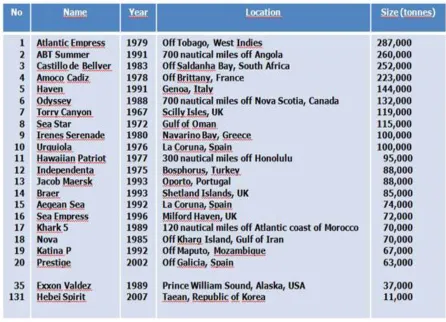
Some of these accidents were a catalyst for the development of maritime safety and environmental protection regulations/conventions. A selected number of the major oil pollution disasters will be discussed below (and for a full list see Figure 2).
Figure 2: Major oil spills since 1967 (Source: IOPF)
i. In 1967, Torrey Canyon, carrying almost 120,000 tonnes of crude oil, grounded off Scilly Island in the UK. The area of the spill covered an arc of
19
magnitude of the disaster, coupled with extensive media coverage, played a role in influencing public opinion (Gold, 2006).
ii. The grounding of the Exxon Valdez in 1989, which spilt about 36, 000 tonnes of oil (crude) in Alaska's Prince William Sound, caused devastating
damage to the marine environment. This incident might not seem huge in comparison to the tonnes of oil released by other big maritime disasters, but
it occurred in a very sensitive area. It is estimated that 250,000 seabirds, 300 harbour seals and 900 bald seals were killed and marine life continued
to suffer years after the disaster (National Research Council, 2007). This incident had a great influence on the improvement of maritime navigational
aids as well as phasing out of single hull tankers. MARPOL was amended after the incident and double hull designs were introduced. Single hull tankers are expected to be phased out by 2015 (ICS, 2014). Exxon's total
costs for compensation payments of about US$ 5 billion are still the subject
of litigation even today. Exxon is also believed to have spent a similar amount on the clean-up operations. The cost of this incident has been very high to the marine environment as well as the maritime industry (ICS, 2014).
iii. The largest of the oil spill disasters involving a tanker in history was the
Atlantic Empress incident in 1979. The Atlantic Empress was a Very Large Crude Carrier (VLCC), with a deadweight (DWT) of 250,000. It collided with
another VLCC the Aegean Captain off the coast of Trinidad and Tobago. There were 26 lives lost as well as 287,000 tonnes of crude oil released to
the marine environment. The spill never reached shore and as a result of the explosions that followed the collision, most of the oil was burnt off (Read,
2011).
20
spilling tonnes of crude oil which drifted onto Galician beaches and France. The tanker continued to discharge oil for weeks after sinking. The environmental damage was immediate (García-Mira, Real, Uzzell, Juan and
Pol, 2006). Prior to sinking and having realized the ship was leaking oil, the Prestige had sought refuge to allow discharge of cargo; however, authorities
in both Spain and Portugal denied it docking rights. The stricken tanker could not survive the rough seas and eventually met its fate. This disaster
drew a lot of media and public attention in Spain, especially since the public was directly affected as the oil reached beaches. There was an outcry at
how this incident had been handled as many felt it could have been averted by allowing the stricken vessel into Port (Pulido, 2007).
The demand for energy continues to grow and the tanker fleet continues to grow. In
2010 the growth in energy commodities demand saw the tanker trade volume reach 2.767 million tonnes. The increase in demand in 2010 stimulated the new build and
second hand market (Lun, Himola, Goulielmos, Lai and CHENG, 2013). The amount of seaborne oil has increased by an estimated 50% from the late 1980s to now. Common sense dictates that the sea is more vulnerable now than during the period between the
1970s and the late 1980s because of increased fleet numbers and capacity. However, the opposite seems to be true as we have seen a dramatic decrease in the number of
21
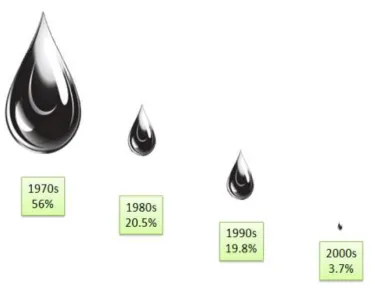
Figure 3: Oil spill per decade as percentage of the total spilt between 1970 and 2009 (Source: ITOPF)
3.2 Operational discharges
Maritime disasters may be described as events, while operational discharges are a
daily occurrence. Operational discharges can be attributed to human error, poor maintenance and deliberate illicit acts. They may stem from broken hoses, defective
valves, leaks from manifolds and flanges. Poor manning of bunker stations may be the cause of oil spills during bunkering (Alexopoulos and Dounias, 2003).
22
from engines, which gather in bilges from day to day operations, rank as some of the worst types of pollution. This is mainly because such waste is steady and “occurs everywhere” (UNEP, 2014).
Marine pollution through operational oil discharges is estimated at 207,900 tonnes per
year (bilge and fuel oil sludge + oily ballast residue-fuel tanks + cargo tank washing). These discharges consist of oil/oily water collecting in engine room bilges that are
discharged deliberately at sea. Residues from fuel tanks, cleaning and cargo tank washing are also highlighted in the figure mentioned above (GESAMP, 2007).
Coastal states spend huge amounts of money on surveillance and enforcement of
regulations related to operational discharges. It is important to note that as much as human error and poor maintenance are one of the causes of operational discharges, intentional discharges remain major contributors. Unscrupulous crew members
deliberately discharge oil at sea as well as in coastal waters hoping not to be detected.
Some of these discharges occur during the night when they are difficult to detect. These discharges often remain undetected until sea birds, penguins or other marine life are washed up in coastal areas. It is for this exact reason that coastal states spend huge
capital on this issue. To prevent operational discharges requires manpower, advanced technology for surveillance and sampling equipment, including surveillance planes and
vessels. Not all coastal states are able to provide such defences and, as a result, the coastal waters are vulnerable to operational discharges. In the Baltic Sea, huge
resources have also been allocated to combating ship-source oil pollution. Through the Helsinki Commission, the region conducts regular aerial surveillance that has resulted
23
3.3 Effects of Vessel - source oil pollution on the marine environment
Oil pollution has an impact on the marine environment. The effects can be both
immediate and long term. Other than directly impacting the marine environment, oil pollution can also affect coastal livelihoods. Oil can affect the marine environment by
physical smothering, chemical toxicity and, in the long term, loss of key organisms can cause ecological changes and, indirectly, through habitat loss, result in elimination of species that are very critical for sustenance of the ecology (ITOPF, 2013).
3.3.1 SHORT TERM EFFECTS
Oil spill effects are influenced by a number of factors, not just the quantity, but the weather, season and location of incident are also some of the major factors. For
instance, a small spill in terms of tonnage in close proximity to a highly sensitive area like a Marine Protected Area or bird breeding colonycan have detrimental effects. Other than being toxic to marine life, polycyclic aromatic hydrocarbons, the components in crude oil, are also difficult to clean. Oil can choke animals and stick to the animals’ bodies and plumage of birds. Oil slicks can cause breakdown in seabird and mammals’ thermal insulation. Sticking to birds’ plumage also inhibits mobility thus affecting ability
to feed (Hulsey, 2012).
Birds, including penguins, are normally the first prominent casualties during an oil spill.
They normally prompt a huge response involving clean-up operations and evacuation. These costs may run to millions of dollars. In 1989, the Exxon Valdez spilled about
37,000 tonnes of oil in the sensitive marine environment of Alaska's Prince William Sound. An estimated 250,000 seabirds and 2,000 sea otters, including unaccounted
fish and other marine life, were killed (National Research Council, 2007).
24
although the 2,000 tonnes of oil spilled by the Apollo Sea when it sank off South African waters in 1994 was a relatively small amount, in reality, it impacted 10,000 penguins. In 2000, the Treasure spilled half the amount of oil as the Apollo Sea but had double the
impact with over 20,000 penguins covered in oil and a further 20,000 evacuated.
3.3.2 LONG TERM EFFECTS
Polycyclic aromatic hydrocarbons (PAHs), the components of crude oil, are known to
exist in the sediment and marine environment long after an oil spill. Hydrocarbons in the long term cause physiological and behavioural disruptions in certain marine species which include altering the reproductive capacity (Hulsey, 2012).
The coastal communities also suffer long term economic effects as fishing grounds might take long to recover. Thomas Shirley, the chair of biodiversity and conservation at
the Harte Research Institute, which is studying the impact of Deep Horizon spill, states that entire generations of shrimp, crab, oysters and other commercially important
marine life were likely to be wiped out and may require decadal recovery times. The impact is not only felt by the ecosystem, but the economy will also be affected for years
to come. The demand for seafood harvested from the Gulf was likely to be affected because of consumer perceptions related to oil spills (Yale Environment 360, 2010). In
case of the Exxon Valdez disaster, long term effects to the ecosystem were discounted since rapid recovery was touted. Contrary to these claims, evidence from scientific
research conducted over the years has demonstrated that not all affected species and ecosystem recovered rapidly. Protracted recovery is particularly evident in near-shore
25
3.4 Legal Regime
Oil Pollution was the catalyst for all maritime regulations. The first International
Conference on Marine Pollution was held in 1926 in Washington. The conference which was attended by 13 maritime nations produced the first International Convention on Oil
Pollution of the Marine Environment. Even though the convention was not successful, it provided an important platform for future conventions. Following the establishment of
IMCO in 1948, maritime nations converged again under its umbrella to deliberate on regulations of oil pollution. In 1954, an important convention was concluded called the International Convention for the Prevention of Pollution of the Sea by Oil (OILPOL)
(Gold, 2006).
The United Nations held its first UN Conference on the Law of the Sea in 1958, and
another in 1960. The United Nations Convention on the Law of the Sea (UNCLOS) resulted from conferences held in 1973 and 1982. The Convention spelt out
responsibilities regarding marine pollution. In 1973, the International Convention for the Prevention of Pollution from Ships (MARPOL 73) was established after IMCO's
International Conference on Marine Pollution held in the same year. MARPOL replaced OILPOL 54 with its expanded scope (Tan, 2006).
Subsequent to the Torrey Canyon disaster in 1967 which polluted over 190 km of the United Kingdom coastline with costs estimated at over $5 million, the first set of
conventions dealing with liability and compensation were established. In 1969 the International Convention on Civil Liability for Oil Pollution Damage (CLC 1969) was
established and entered into force in 1975. The International Convention on the Establishment of an International Fund for Compensation for Oil Pollution Damage (1971 Fund Convention) was established in 1971 and entered into force in 1978. This
Convention established the International Oil Pollution Compensation Fund (1971 IOPC Fund) which provides a second tier of compensation in respect of damage exceeding
26
The 1992 CLC and 1992 Fund Convention improved on the previous Conventions by increasing the maximum amount of compensation, as well as widening the relevant geographical scope of application of the Conventions. These Conventions entered into
force on May 30, 1996. Following the incident involving the Erika in 1999, it was apparent that the compensation amounts needed to be increased further. In 2000, the
compensation levels available under the 1992 Conventions were raised by 50% by way of tacit amendments that came into force in 2003. It is important to note that even
though most of the original Contracting States to the 1969 CLC have adopted the 1992 CLC and denounced the 1969 Convention, some States have not done so. As a result,
the 1969 and 1992 CLC co-exist (UNCTAD, 2012).
The vessel-source oil pollution regulatory framework today not only deals with pollution
of the environment, but also involves liability and compensation. It has been developed into a robust and highly regulatory framework.
3.5 Summary
Vessel-source oil pollution continues to be a major problem. It is encouraging though to note that the maritime industry has over the years worked towards minimizing its
impact. As the statistics have revealed, the number of oil spills and major incidents has decreased despite the increase in trade and size of vessels. This positive development
can be attributed to the well developed and robust legal framework that exists in the maritime industry.
Operational discharges continue to be a problem that unfortunately requires huge
resources to combat. The shipping industry has taken commendable steps in showing commitment towards climate change mitigation. The maritime industry, through the
27
CHAPTER 4: VESSEL-SOURCE OIL POLLUTION (SOUTH AFRICA)
4.1 Background
South Africa is the 9th largest country in the continent of Africa. It has a land area of 1.2 km3. South Africa has a coastline of about 3000km making it the second longest coastline in Africa after Somalia. If the vast waters which include the territorial waters
and the Exclusive Economic Zone (EEZ) are taken into account, South Africa ascends to be the largest country on the continent (SAMSA, 2013). In the words of the South
African Maritime Safety Authority;
South Africa occupies a geo-strategic position, a maritime choke point, in the
Southern Hemisphere, being surrounded by 3 great oceans - the Indian South
Indian, Atlantic, and Southern Oceans (SAMSA, 2013).
����������������������������������� �����������������������������������
South Africa lies in one of the world’s busiest shipping lanes with around 12,000 ships
visiting the countries' 8 ports annually. In addition, thousands of ships transit through
South African waters to various destinations (see Figure 4). The coast is home to some of the most pristine areas which are rich in biodiversity. The coast is also known for
28
referred to as the "Cape of Storms" and the south-east coast, as the “Wild Coast” (Mearns, Olivier and Jordaan, 2012).
Figure 4: Shipping routes (source: Bernd Blasius)
South Africa has high levels of both terrestrial and marine biodiversity. In fact, 10,000 species of marine plants and animals have been recorded in South Africa. This equates
to almost 15% of the known global marine species. The coastal conditions in themselves are highly diverse in terms of weather, productivity and oceanographic
variability among others (DEA, 2014). According to Tunley (2009), there is a total network of 22 Government Gazetted Marine Protected Areas (MPA) in South Africa.
29
by prohibiting discharge of oil or oily water residues into the sea from vessels of 400 gross tonnage and above (Tunley, 2009).
4.2 Major vessel-source oil pollution incidents in South Africa
There have been a number of vessel-source oil pollution incidents within South African waters over the years, some involving huge amounts of oil and others with less oil
spilled but far greater impacts on marine species. According to GESAMP (2007), between 1997 and 2007 there was a slight increase in estimated accidental oil spills in
South African waters, although the total estimated number of oil spills each year has remained below 20,000 tonnes. Figure 5, puts into perspective the Castillo de Bellver
disaster when compared to other major international oil pollution disasters. Below is a selected list of the major oil spills both in tonnage of oil spilled and effect on the marine environment and life. The example below highlights the fact that it is not only large
crude carriers that are a threat to the marine environment but bunker oil from other
30
Figure 5: World’s major oil pollution disasters – all sources (Source: Geology.com)
4.2.1 CASTILLO de BELLVER
On 06 August 1983, the Castillo de Bellver laden with 267,000 tonnes of oil caught fire
(GESAMP, 2007). This was South Africa's biggest oil spill to date and one of the world's top 5 maritime disasters involving tankers (see Figure 4.2). The ship was 112 km
North-West of Cape Town when it caught fire. The flame engulfed ship drifted off-shore and later broke in two. The stern section with an estimated 100,000 tonnes of oil remaining
in its tanks sank 24 miles off the coast in deep waters. The remaining bow part was towed further away from the coast where it sank. Of the total amount of oil on board,
31
subsequently drove it offshore (ITOPF, 2010). The prevailing weather conditions at the time of the incident and position of the ship prevented oil from reaching the coastline.
4.2.2 APOLLO SEA
The circumstances surrounding this incident were bizarre and contributed to the delayed response that resulted in a loss of life and pollution of the marine environment.
On the evening of 22 June 1994, there were reports of a suspected oil spill when heavily oiled African Penguins were discovered ashore on Dassen Island which is
situated North West of Cape Town and is a seabird breeding colony. Oil was also discovered on the shoreline around the Island. This baffled the authorities as there was
no reported incident in the area. For at least 3 days after the discovery, the evacuation of the penguins was not possible because of extreme weather conditions. The weather
also delayed responses and any containment efforts. It was not until after a week that the source of the pollution was identified. By that time the oil slick had reached some of Cape Town's favourite beaches as oiling of the rocky shoreline and sandy beaches
were observed. The source was identified as the Chinese-owned bulk carrier the Apollo
Sea laden with 124,000 tonnes of iron ore, which had sailed from Saldanha Bay on the 20th June 1994. Apparently some 4 hours after departing Saldahna Bay, the ship suffered a serious fracture and sank spilling its 2,400 tonnes of bunker heavy fuel. Around 1,000 penguins were oiled and half of them died. There was no “May day” call
sent from the ship, thus resulting in the environmental damage and, most unfortunately,
the loss of all her 36 crew (Moldan, 1997).
4.2.3 M/V TREASURE
In 2000, the bulk ore carrier MV Treasure sank North of Cape Town between Dassen Island and Robben Island. These islands support the largest and 3rd largest colonies of African penguins. An estimated 1,400 tonnes of oil was released into the sea. While this
32
et al, 2006). The Treasure had earlier sought refuge in Cape Town after experiencing flooding in its number 4 cargo hold. The ship was refused shelter and ordered to sail 50 miles offshore. Unfortunately, after just 10 miles it sank (Devanney, 2009).
This resulted in one of the biggest penguin evacuations in history. As a result of the
spill, about 19,000 African Penguins, the majority from Robben Island and Dassen Island and a few from around Saldahna Bay were covered in oil. These birds were
taken to the rehabilitation center run by the Southern African Foundation for the Conservation of Coastal Birds (SANCCOB) where they were washed, cleaned and fed.
Unfortunately, and despite all attempts to save them, close to 2,000 penguins died at the rehabilitation center (Barham et al, 2006). The oiled penguins constituted 20% of
the total species population. The number of affected penguins was even higher and estimated at over 40,000. About 20,000 penguins that were not covered in oil were removed from the polluted area and relocated 800 km away to Port Elizabeth
(Crawford, 2000).
4.3 Vessel source-oil pollution (Legal Regime)
This section will look at Conventions dealing directly with oil pollution, in terms of prevention, compensation and response. Conventions related to safety, which is also
vital in marine environmental protection have been deliberately excluded.
4.3.1 LEGAL REGIME (Conventions and regional treaties)
33
TABLE 1: Status of Conventions
Convention Year
Ratified/Acceded
Domestic Legislation/Policy or aim of the convention
1. MARPOL 73/78
1984 (exc IV & VI)
Marine Pollution (Prevention
Of Pollution from ships)(Act 2 of 1986)
2. OPRC
2008
SANCP complies with OPRC
3. CLC 1992 2004 Merchant Shipping 2013 -(Civil Liability Convention) Act
-(International Oil Pollution Compensation Fund)
Compensation Act
4. IOPC Funds 1992 2004 Merchant Shipping 2013 -(International Oil Pollution
Compensation Fund) Administration Act
-(International Oil Pollution Compensation Fund)
34
5. INTERVENTION 1969 &
Protocol 73
1986 Marine Pollution(Intervention)
(Act.No.64 of 1987)
6. UN Law of the Sea
convention - UNCLOSC 82
1997 Maritime Zones Act (Act 15 of 1994)
7. London Convention 1972 &
1996 Protocol
1972 ratified in 1978
1996 ratified 1998
-Dumping at Sea Control Act 73 of 1980
-NEMA: Integrated Coastal Management Act 24 of 2008
8. Nairobi Convention 2002 Convention for the Protection, Management and
Development
of the Marine and Coastal
Environment of the East
African
Region and related Protocols
9. Abidjan Convention 2002
The Convention for
Cooperation in the Protection, Management
and Development of the
Marine
35
the
Atlantic Coast of the West, Central and Southern Africa
Region
10.Bunker Convention 2001 Not a party n/a
Data source: SAMSA, DIRCO, (Yuen & Kumssa, 2011), IMO and Parliament of South Africa.
Key:
1. SANCP - South Africa's National Contingency Plan for the Prevention and Combating of Pollution from Ships and Offshore Installations
2. NEMA - National Environmental Management Act
3. MARPOL 73/78 - International Convention for the Prevention of Pollution from Ships.
4. OPRC 90- International Convention on oil Pollution Preparedness Response and Cooperation.
36
6. IOPC Fund 92 - The International Oil Pollution Compensation Funds
7. BUNKER 2001- International Convention on Civil Liability for Bunker Oil
Pollution Damage
4.3.1.1 MARPOL 73/78
South Africa has ratified MARPOL and only ratified 4 annexures, namely; Annexure I, Annexure I & II, Annexure III & Annexure V in 1984. Annexure IV and VI, have not been
acceded to. The 4 annexures have been enacted into domestic legislation through the Marine Pollution (Prevention of Pollution from ships) (Act 2 of 1986). However, the
matter regarding Annexure IV & VI is currently with parliament after the Portfolio Committee on Transport at a seating on 29 July 2014 recommended that the
Annexures be acceded to and sent to parliament for processing. In suggesting to the committee that they approve the two annexes, Ms. Phumelele Ngema, the
Parliamentary Law Advisor, stated that:
the two annexes were not a deviation from the other four annexes of the
Convention. “They both fit into the existing legislative framework”. (Parliament of
RSA, 2014).
4.3.1.2 OPRC
South Africa ratified the International Convention on Oil Pollution Preparedness,
Response and Cooperation (OPRC 90) in 2008. South Africa's National Contingency Plan for the Prevention and Combating of Pollution from Ships and Offshore
37
i. Designation of SAMSA
ii. Designation of Maritime Rescue Coordination Centre - MRCC (part of SAMSA) iii. Smit tugs on standby
vi. The formulation of the South African Contingency Plan for the Prevention and Combating of Pollution from Ships and Offshore Installations (Personal interview [4],
August 03, 2014).
4.3.1.3 CLC CONVENTION AND IOPC FUND CONVENTION
South Africa had enacted the earlier version of CLC into domestic legislation. However, even though the country acceded to the CLC and IOPC 92 in 2004, it has taken over 8
years to enact the latest amendments into domestic law. The delay in enacting the amendments has arguably deprived the country of making claims under the new
Conventions' updated limits which ensure much higher compensation. South Africa was fortunate since there were no major tanker incidents during the period (Cliffe Dekker Hoffmeyer, 2013).
The act was finally signed into law during the writing of this paper. However IMO Consultants in their Mission Report to South Africa recommended that the proposed bills for implementation of both the CLC and the Fund Convention be put on hold. The
reasons were not substantiated; however, it can be assumed that it was influenced by the proposed Merchant Shipping Bill which was to bring together the fragmented
maritime legislation in South Africa. The recommendations were challenged by The Maritime Law Association of South Africa (MLASA). Their primary concern was the lack
of transparency regarding the recommendations and the cumbersome process (over 8 years) by which the Bill saw the light of day. The MLASA further argued that delaying
the bills will deprive the claimants, in the event of a major tanker pollution incident, their rights to claim against the Fund. In their view, this will leave the South African
38
4.3.1.4 BUNKER CONVENTION
South Africa, along with Australia, Canada, Finland, Norway and Sweden, made a joint
submission to the 75th session of the IMO's Legal Committee on the need for a bunker convention. The submission was partly motivated by the UK P & I Club's report
(Analysis of Major Claims 1993). The report stated that when it comes to pollution claims regarding incidents, half the claims involve ships not carrying oil cargo (IMO,
2001). Interestingly South Africa has not ratified the Convention. South Africa is not a party to the Convention.
4.3.1.5 INTERVENTION CONVENTION
The Intervention Convention and the protocol were ratified in 1986 and the law enacting
it into domestic law is the Marine Pollution (Intervention) Act 64 of 1987.
4.3.1.6 UNITED NATIONS CONVENTION ON THE LAW OF THE SEA (UNLOSC)
South Africa ratified the convention in 1997. The country also actively participated in the
establishment of the International Seabed Authority. The Maritime Zones Act (Act 15 of 1994) conforms to the regulation with regards to the limits of the territorial sea,
contiguous zone, exclusive economic zone and continental shelf (DIRCO, 2006). All the relevant maritime boundaries are defined under the same Maritime Zones Act, ICM Act
and National Environmental Management Act (Act No. 107 of 1998) (NEMA) (DEA, 2014).
4.3.1.7 NAIROBI AND ABIDJAN CONVENTIONS
South Africa acceded to both the Nairobi Convention and the Abidjan Convention in