A new framework to evaluate urban design using
urban microclimatic modelling in future climatic
conditions
Dasaraden Mauree1*, Silvia Coccolo1, Dasun Perera1, Vahid Nik2,3, Jean-Louis Scartezzini1, Emanuele Naboni4
1 Solar Energy and Building Physics Laboratory, Ecole Polytechnique Fédérale de Lausanne, Lausanne,
Switzerland
2 Division of Building Physics, Department of Building and Environmental Technology, Lund University,
SE-223 63, Lund, Sweden
3 Division of Building Technology, Department of Civil and Environmental Engineering, Chalmers University
of Technology, Gothenburg, Sweden
4 Institute of Architecture and Technology, School of Architecture, The Royal Danish Academy of Fine Arts,
Schools of Architecture, Conservation and Design
* Corresponding author: [email protected], +41 21 693 55 56.
Abstract:Building more energy efficient and sustainable urban areas that will both mitigate the effect of climate change and adapt for the future climate, requires the development new tools and methods that can help urban planners, architect and communities achieve this goal. In the current study, we designed a workflow that links different methodologies developed separately, to derive the energy consumption of a university school campus for the future. Three different scenarios for typical future years (2039, 2069, 2099) were run as well as a renovation scenario (Minergie-P). We analyse the impact of climate change on the heating and cooling demand of the buildings and determined the relevance of the accounting of the local climate in this particular context. The results from the simulations showed that in the future there will a constant decrease in the heating demand while for the cooling demand there will be a significant increase. It was further demonstrated that when the local climate was taken into account there was an even higher rise in the cooling demand but also that the proposed renovations were not sufficient to design resilient buildings. We then discuss the implication of this work on the simulation of building energy consumption at the neighbourhood scale and the impact of future local climate on energy system design. We finally give a few perspective regarding improved urban design and possible pathways for the future urban areas.
Keywords:Climate change; energy system sizing; sustainable urban planning; urban climate; urban design.
1. Introduction
The Intergovernmental Panel on Climate Change (IPCC) stated in their last report that anthropogenic greenhouse gases are responsible for the current climate change [1]. As such urban areas are responsible for more than 70% of the emissions with over half of the world population living in urban areas. It is hence crucial to develop more sustainable urban areas that will significantly reduce the carbon footprint of cities while at the same time taking into account the rising temperatures and the vulnerability of the urban spaces.
In recent years, we have been confronted with climate mitigation and adaptation, putting emphasis on the idea that urban areas need to be modified to cope with both changes. While mitigation tries to reduce the impact of climate change by lowering building consumptions and emissions, adaptation aims to decrease the harmful effects of climate change.
This topic is vital since contemporary cities were not designed with climate change in mind. Urban geometries, surfaces, building forms and envelopes were designed according to organizational
and aesthetical ideals rather than to adapt to climatic changes, which is only becoming an issue nowadays. To mitigate and adapt, operation on the building envelope could be seen as a logic type of intervention. Within this respect, the paper test such type of intervention with the case of the EPFL campus in Lausanne.
The objective of this paper is twofold. The primary aim is the understanding of the impact of climate change and of the future local climatic conditions on the energy demand of buildings, as well as its sensitivity as a function of the envelope characteristics. Secondly, an urban simulation workflow that supports the use of advanced future weather scenarios is discussed. Although, some of recent studies have developed a workflow based on tools coupling [2–4], for urban simulation, there is however still a need to evaluate the performance of the coupling in a context of climatic change.
Changing Climate and Changing Buildings
It is common knowledge that the properties of materials used in building envelopes and the insulation values play an essential role in their thermal response and environmental impact. Primarily two effects must be considered: 1) The envelope characteristics directly affect the heating and cooling loads generated to ensure indoor comfort. 2) The envelopes constitute an essential element in an urban site, transforming the microclimate, that has a substantial impact on building energy demand and outdoor and indoor comfort indirectly [5–7]. It is thus attractive to explore envelope strategies as a mitigation strategy for climate change as they play on direct and indirect effects on the indoor comfort [8].
Buildings are important components of the built environment which are influenced by both the long and short term changes of the future climate [9,10]. Building energy demand will change in response to future climate change, with cooling and heating demand generally going in opposite directions. Net increases or decreases largely depend on a region’s cooling or heating demand dominance [11]. It is thus key to understand how and local climate change affects building energy demand distinguish between heating and cooling. Furthermore, it is critical to have a look at data that are hourly, and that also look into peak demand (for peak demand is the most critical factor in the long-term planning for energy system capacity) [12]. There exist several impact assessment studies on buildings, about the future energy demand and challenges [13–15], retrofitting buildings [16–18], as well as wind loads, rain and the microclimate [19–22].
Urban Simulation workflows for Climate Change
Multiple tools have been developed in the recent decades for a broad range of applications to address sustainability in urban areas. Meteorological models (for example WRF [23], MESO-NH [24]) have been improved to include parameterizations such as BEP-BEM [25–27] or TEB [28] or UCM [29], that would better show the influence of urban areas on meteorological variables. These developments were an important leap for the representation of the urban heat island phenomena [30]. However, these models do not have a sufficiently high horizontal or vertical resolution to appropriately describe buildings in urban areas.
Other models such as CitySim [31] or Envi-Met [32] have detailed radiative transfer calculations. Their main purpose is primarily to analyse the energy consumption of buildings and provide their enhanced description. Envi-Met is used to perform microclimatic studies of the flows around buildings. CitySim, can be run for the 8760 hourly time-steps, but it does not take into account for local airflows and hence lacks of a proper description of the micro-climate so particular to urban areas. Envimet, however cannot be run over a full year to have a comprehensive evaluation of the microclimate, as such simulation would take months.
often must be modeled with Computational Fluid Dynamics (CFD). CFD models have been used to provide a better description of the air flows around buildings [35–37]. These models require significant computational resources and are not practical for the evaluation of urban planning scenarios which thus becomes a tedious task. Mauree et al., [38,39] have therefore developed an urban canopy model, CIM to provide high-resolution vertical profiles to building energy models. In a previous study, they validated the coupling of CIM with CitySim and demonstrated the advantage of the coupling in the simulation of building energy use in an urban district [4].
The remaining issue is to use a proper set of predicted climatic data, for producing future climatic scenarios adapted to urban areas and to determine the relevance of using the multi-scale coupling to provide meaningful information to urban planners.
The paper is structured as follows. In Section2, a description of the different tools used is given. We explain how future climatic data was generated, how it was used as input for CitySim to calculate the surface temperatures, and then used as boundary conditions for CIM. We then show in Section3 how the wind speed and air temperature differ in an urban context and how relevant it is to use local climatic data in the evaluation of energy consumption. We consequently demonstrate the resiliency of the built areas with a refurbishment scenario for the future climate. To end with, Section4discusses the implications of the simulations and the results on the energy system sizing as well as on the urban design.
2. Materials and Methods
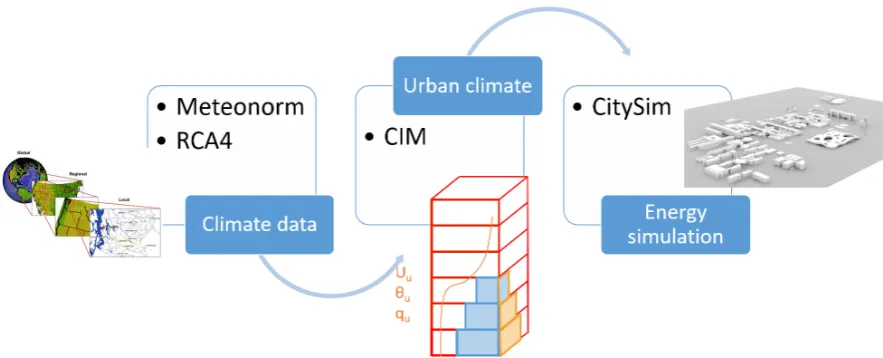
In this section a brief description of the different methodologies used to create the dataset for the energy simulations tools as well as the building energy model is given. Fig1illustrates the process for the simulation of the energy consumption at the district scale.
Figure 1.Schematic illustration of the simulations
2.1. Preparation of climate files for future scenarios
conditions, it is important to consider several future climate scenarios. In this work, four global climate models (GCMs), forced by two representative concentration pathways (RCPs), RCP4.5 and RCP8.5, were dynamically downscaled by RCA4 for the spatial resolution of 12.5km. The considered future climate scenarios are: RCA4- 1) CNRM-CM5-rcp45, 2) CNRM-CM5-rcp85, 3) ICHEC-EC-EARTH-rcp45, 4) ICHEC-EC-EARTH-rcp85 and 5) IPSL-CM5A-MR-rcp85. More information are available about the climate scenarios and calculating some of the climate parameters in [40,44] respectively. A valid impact assessment should consider several climate scenarios for periods not shorter than 20-30 years. In this work, the assessment was made for three periods of 2010-2039, 2040-2069 and 2070-2099. Consequently, another major challenge in the impact assessment of climate change will be dealing with the large data sets (as it is discussed thoroughly is some previous works [14,44,45]). This results in enormous calculation loads, especially when microclimate, retrofitting of buildings and sizing of the energy system are considered. To overcome the computational challenges, while not neglecting extreme climatic conditions, representative weather data sets are generated as described by Nik [44]. In this method, each 30-year period is represented by three 1-year weather data sets: typical downscaled year (TDY), extreme cold year (ECY) and extreme warm year (EWY). The application of the method has been verified for energy [44,46] and hygrothermal simulation of buildings [47]. A more detailed description about preparing the climate data for building simulations is given by Nik [40].
2.2. CitySim
CitySim is an urban energy modelling tool [48], able to quantify the energy demand from the building to the city scale. The thermal model of buildings is based on an analogy with the electrical circuit, or more precisely on a simplified resistor-capacitor network [31,49]. The radiation model, previously validated with Radiance, is based on the Simplified Radiosity Algorithm (SRA). With the SRA, the radiant external environment is represented by two hemispheres, discretized into several solid angles [50]. CitySim provides the energy needs of buildings, as well as the electricity demand and the energy produced by renewable energy sources. Results obtained by the software were previously validated with the BESTEST, showing a sound correlation between them [51]. CitySim works dynamically, providing the results in hourly values, and by including the interactions within the built environment. Among other, the inter-reflections between buildings’ surfaces as well as the mutual shading are calculated. In order to perform the calculations, hourly weather data are required, such as those generated by the software Meteonorm [52], or by on-site monitoring. Recent development of the model considers the inclusion of the microclimatic conditions, by calculating the evapotranspiration from the ground [53,54] and the impact of greening on the outdoor human comfort [55].
2.3. CIM
CIM is an urban canopy model that can be used in an offline mode to provide high resolution data for building energy simulation tools [39]. It has already been coupled with CitySim to take into account the particularities of urban areas, to improve building energy simulations [4]. CIM is a column module where the Navier-Stokes equations are reduced in one-dimension. Flow is resolved for the two components in the horizontal direction and also the the air temperature along the vertical axis.
du dt =
d dz
µtdu dz
+fus (1)
dθ
dt = d dz
κtdθ dz
whereuis the mean horizontal velocity (m s−1),θis the potential temperature (K),µtandκtare the momentum and heat viscosity coefficients (calculated using a 1.5 turbulence closure) and fus andfθs are the source terms representing the fluxes that will impact the flow.
Additionally, CIM resolves its own equation for the turbulent kinetic energy providing an enhance description of turbulent flow over complex terrain while not significantly using computational resources. More details can be found in Mauree et al., [39].
2.4. Study case
(a)Map of the EPFL campus
(b)Integration of PV panels on the site
Figure 2. (a) Map of the EPFL campus, Switzerland (extracted from plan.epfl.ch) This image is taken from Open Street Map whose copyright notices can be found here: https://www.openstreetmap.org/copyright (CC-BY-SA-2.0) and (b) Example of PV integration on the EPFL campus (Alain Herzog / EPFL).
Renovation scenarios
Table 1.Set of scenarios.
Years Metenorm CIM Renovation
2039 X X
2069 X X
2999 X X X
as a function of the envelope characteristics. Simulations of a hypothetical refurbishment of the university campus according to the high energy efficiency standard Minergie-P were performed [56]. Minergie [58] is a well-established standard, commonly applied to the Swiss construction market; further stringing standard is Minergie-P, which implies a lower energy demand. To use the standard, all buildings are well insulated with 35cm of EPS and triple glazing with an infrared coating. The novelty in the proposed approach is the fact that the Minergie standard is applied to an entire campus, not only to one building and the simulations are performed for the end of the century.
3. Results
Table1summarizes the simulations that have been run for the different climatic scenarios. The results from these runs are described hereafter.
3.1. Analysis of the future climate in an urban context
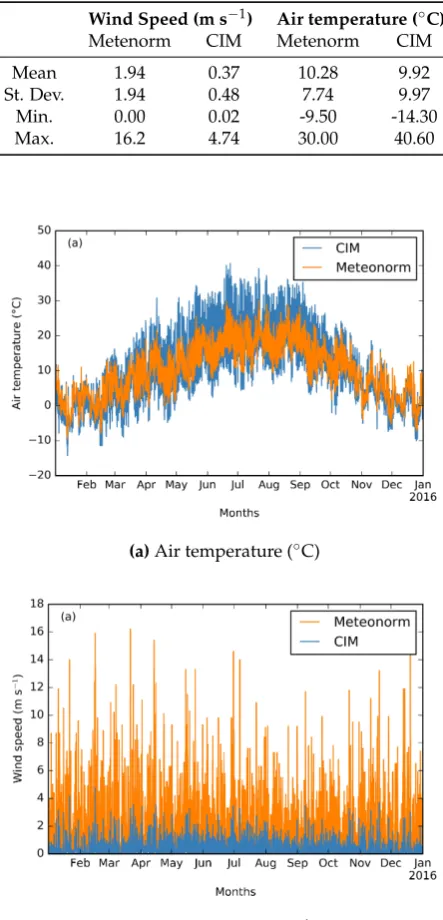
Table 2.Statistical analysis from the Meteonorm and CIM dataset.
Wind Speed (m s−1) Air temperature (◦C)
Metenorm CIM Metenorm CIM
Mean 1.94 0.37 10.28 9.92
St. Dev. 1.94 0.48 7.74 9.97
Min. 0.00 0.02 -9.50 -14.30
Max. 16.2 4.74 30.00 40.60
(a)Air temperature (◦C)
(b)Wind speed (m s−1)
Figure 3. Changes between Meteornorm and CIM dataset for the (a) Air temperature (◦C) and (b) Wind speed (m s−1).
(a)Without CIM
(b)With CIM
(a)Without CIM
(b)With CIM
Figure 5.Change in wind speed (m s−1) for 2039, 2069 and 2099 (a) Without CIM and (b) With CIM.
Table 3.Energy demand of the site for all scenarios.
Climatic data Heating Total demand Cooling Total demand
(GWh) (GWh)
2039 32.42 -2.79
2069 30.19 -3.99
2099 28.05 -5.83
2099-MinP 18.41 -9.62
2039-CIM 35.22 -5.81
2069-CIM 33.52 -7.26
2099-CIM 31.33 -9.12
2099-MinP-CIM 21.29 -14.60
The impact of considering the micro-climate on the energy demand as was demonstrated by Mauree et al., [4], will be explained further in particular concerning the future climate in the next sections.
3.2. Energy consumption for the EPFL campus
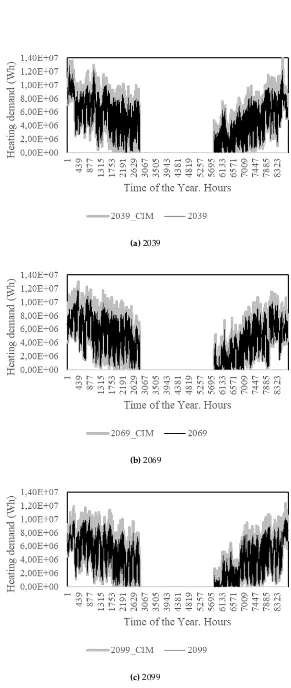
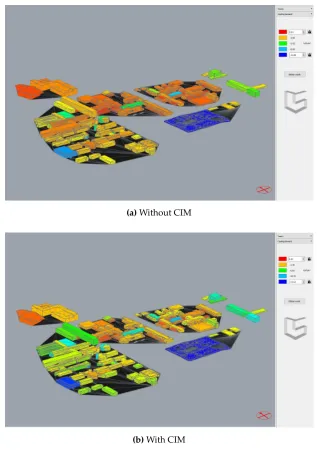
The energy demand of the site is significantly influenced by both the climatic and microclimatic data. Indeed, Table3summarizes the total heating and cooling demand of the campus, according to the future climatic conditions 2039,2069 and 2099, as well as the microclimatic weather data, as computed by the Canopy Interface Model (2039-CIM, 2069-CIM and 2099-CIM). It is quite interesting to notice that the heating demand decreases in the future climatic scenarios, by 7%, 15% according to the climatic data 2069 and 2099, respectively. But, when simulating with the CIM microclimatic data, the total heating demand decreases less, by 5% and 12%. Additionally, when simulating with the CIM microclimatic data, the heating demand appears higher compared to the climatic data: this is due to the so called cool air pool effect, related to the dense urban environment, which characterizes the site. When looking at the cooling demand, the campus will face an increase of it, due to the future climatic scenario, by 30% and 52% in 2069 and 2099, respectively.
(a)2039
(b)2069
(c)2099
(a)Without CIM
(b)With CIM
(a)Without CIM
(b)With CIM
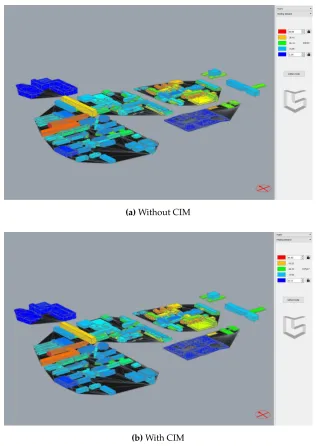
Figure 8.Map of the cooling demand for the EPFL campus for 2099 (a) Without CIM and (b) With CIM.
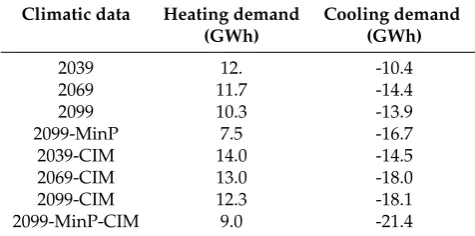
To better understand the impact of microclimatic modelling data in the thermal behaviour of the campus, further analysis is performed on the peak demand of the campus. Table4summarizes the peak demand for heating and cooling for each of the scenarios. It can be observed that there are substantial differences between the peak demand. From the simulations, it can be seen that the rise in temperature due to climate change will be mostly responsible for an increase of 33% in the peak cooling demand (w.r.t the 2039 scenario). When taking the local climate, this increase jumps to 73%. On the contrary, the peak heating demand for 2039 and for 2099 with CIM are very similar and present a trivial difference.
3.3. Renovation scenario
Table 4.Peak energy demand of the site for all scenarios.
Climatic data Heating demand Cooling demand
(GWh) (GWh)
2039 12. -10.4
2069 11.7 -14.4
2099 10.3 -13.9
2099-MinP 7.5 -16.7
2039-CIM 14.0 -14.5
2069-CIM 13.0 -18.0
2099-CIM 12.3 -18.1
2099-MinP-CIM 9.0 -21.4
and CIM data, per each year). It is quite interesting to notice that the difference is slightly higher when working with well insulated buildings, indeed, when comparing the 2099 climatic data, the difference corresponds to 14%. Table3also gives the heating and cooling demand with these two scenarios. It can be highlighted that on the one hand there is a non-trivial decrease (76%) in the heating demand but that on the other hand the cooling demand is increased by the same order of magnitude (71%). It is also noteworthy to mention that the differences vary as functions of the months, as an example, it corresponds to the 33% during the month of September, and by 10% during the month of April. Additionally, if the peak demand is considered (see Table4), significant differences were noted between the base case (2039) and the renovation scenarios (with and without CIM).
4. Discussions and Conclusions
4.1. Impact of considering the urban climate
The results presented in Section3demonstrated that while taking into account climate change in future energy simulation, it is not sufficient. Local climatic data is essential to design more sustainable urban areas. Indeed, the results showed that there were often unexpected behaviours due to the non-linear and complex processes found in urban areas. Firstly, it was evident to notice that the demand is fluctuating mostly when using the Canopy Interface Model, than when using the climatic data. This is directly related to the physical properties of the built environment, which impact and thermal behaviour of buildings. Naturally, this varied both in time and space: according to the urban geometry, as well as during the day-night-time cycles. Indeed, during daytime the urban surfaces (due to their thermal and physical properties) are hotter than the rural areas, hence increasing the air temperature. During the night-time, some areas of the campus refresh faster than others (due to their high sky view factor), consequently creating several microclimatic conditions within site. Other studies should be conducted with additional tools to verify the results we have shown and to assess the urban energy consumption. When looking at the renovated scenarios, it was highlighted that the annual difference in the energy demand (around 14%) when taking the local climate into account was similar to previous studies.
4.2. Energy system design
Figure 9.Fluctuations in monthly average energy potential for wind speed (at the height of 50 m) and solar irradiation.
The main campus site of EPFL is blessed with both solar and wind energy. Monthly energy potential for both these energy sources are presented in Fig.9. When analysing Fig.9, it is clear that the energy potential for wind speed would be complementary to solar energy potential. Solar energy potential is higher during the summer while the wind energy potential is higher during the winter. EPFL is already having roof-top installed solar PV park with the capacity approaching to 2 MW of peak power. However, it does not have any wind turbines installed within the campus. The campus benefits from Lake Geneva when it comes to heating. Heat pumps are used to heat up the water of the lake during moderate winters. Co-generation gas turbines which generate both heat and electricity are used during the intensive winters and fossil fuels are used to power up the gas turbines. The peak heating demand at present is 32.42 MW which is expected to reduce continuously due to climate change. In contrast, cooling peak power is expected to grow continuously up to 21.4 MW. This makes it essential to bring up notable changes to the energy systems. Absorption chillers might have to be introduced in order to cater the cooling demand using gas turbines. However, use of gas turbines would not be the best solution due to its carbon impact.
Renewable and sustainable energy solutions can be used to replace the contribution of gas turbines. Building integrated wind turbines will be an effective solution in this context which has a higher energy potential during the winter. Energy storage might be required to support such an extension to the renewable energy integration within the campus site. EPFL already hosts 720 kVA/500 kWh battery storage system. However, energy storage should be extended further to facilitate further renewable energy integration while maintaining system autonomy. However, it is important to quantify the requirements for energy storage, renewable energy components and the other energy conversion devices. This can achieved with energy system design tool [60] and on the principles proposed by Vandevyvere and Stremke [61].
4.3. Improved urban design and future transition pathways
to more substantial emissions, which in turn would exacerbate climate change and global warming. The paper touches energy conservation measures to mitigate the influence of local climate change on building energy use. These consisted of the building envelope renovation according to Minergie. The work only deals with one measure, adding insulation that showed no potential to mitigate the impact of climate change on the total building energy use and the corresponding carbon emissions.
The cooling demand is increased and given its higher cost it is worth to challenge the strategy proposed by Minergie of further increase insulation levels. With climate change in mind, this approach needs to be revised to manage the cooling scenario. Given the high “architectural value” of several of the buildings at EPFL campus, a further study would be necessary to understand what buildings should be retrofitted. Typical facade retrofitting solutions cannot always be applied at EPFL, where the exteriors of buildings cannot be modified due to the preservation of the original design. The non-invasive transformation of existing buildings should look at nanoscale solutions that can change reflectivity, emissivity and absorptivity of facades.
Buildings have time-varying interactions with the local climate condition for the heating or cooling systems; changes of the surrounding climate condition affect building energy consumption. Thinking of a retrofit scenario, it would be essential that the envelope perform for the environments that it faces: inside and outside. While this paper focuses mainly on the energy required to achieve comfort according to Minergie’s prescriptive targets, further attention should be dedicated to achieving a microclimate that mitigates cooling loads. This means the development of envelope solutions that reduce shortwave and longwave thermal exchanges creating a cooler environment where the buildings stand.
Sensitivity studies should clarify whether intervention on the building envelope or intervention in the outdoor surfaces types is more effective in reducing building cooling loads. It will be verified whether an individual envelope strategy can neutralise the increases in cooling energy usage or a combination of several site-based passive strategies may counteract the effects of climate change on cooling energy usage. The EPFL configuration, characterised by very high sky view factor and where the effect of short-wave and long-wave solar radiation on construction surfaces, can produce massive outdoor local overheating. Further interventions should thus aim at reducing the campus heat island. Accurately, the study should compare the impact of added vegetation [54,62], and selective urban materials to envelope measures.
While measures for remodelling building envelopes in response to climate change was one focus of the paper, to devise adequate countermeasures for existing buildings, it is essential to understand how the energy consumption behaviour of a building may collaborate with the local microclimate. To this end, more design strategies for building and site remodelling will be studied, and their potential for mitigating the increases in cooling energy usage discussed.
4.4. Perspectives
The primary aim of this study was to develop a framework to address the issue of providing key information to urban planners, architect, engineers working on sustainable design. Lundgren and Kjellstrom [63] previously mentioned that there was indeed a lack of studies to link localized climate to energy demand, specially cooling, in urban areas and that this was crucial for the adaptation of urban areas in response to the current climate change while also decreasing their carbon and energy footprint. Other future studies should also look at the implication of sustainable urban design on the society. [64] already pointed out that this was crucial for the best implementation of the solutions but that there was a need “better understanding the problem by variety stakeholders”. This study hopes to reduce this knowledge gap by providing a new methodology which should be extended in multiple other cities and in different urban configuration and climatic regions.
Formas, the Swedish Research Council and the COST Action RESTORE CA16114, supported by COST (European Cooperation in Science and Technology". Funding for publication in Open Access was provided by COST.
Author Contributions:D.M., S.C., D.P., V.N., J-L.S. and E.N. conceived and designed the experiments; D.M. and S.C. performed the experiments; D.M., S.C., D.P. and E.N. analyzed the data; V.N. provided the climatic data ; D.M., S.C., D.P., V.N., J-L.S. and E.N. wrote the paper.
Conflicts of Interest:The authors declare no conflict of interest. The funding sponsors had no role in the design of the study; in the collection, analyses, or interpretation of data; in the writing of the manuscript, and in the decision to publish the results.
1. IPCC. Working group I contribution to the IPCC Fifth assessment report on climate change 2013: The physical science basis; Geneva: Intergovernmental Panel on Climate Change, 2013.
2. Mauree, D.; Kämpf, J.H.; Scartezzini, J.L. Multi-scale modelling to improve climate data for building energy models. Proceedings of the 14th International Conference of the International Building Performance Simulation Association; , 2015.
3. Lim, T.K.; Ignatius, M.; Miguel, M.; Wong, N.H.; Juang, H.M.H. Multi-scale urban system modeling for sustainable planning and design. 157, 78–91.
4. Mauree, D.; Coccolo, S.; Kaempf, J.; Scartezzini, J.L. Multi-scale modelling to evaluate building energy consumption at the neighbourhood scale. PLOS ONE2017,12, e0183437.
5. Santamouris, M.; Papanikolaou, N.; Livada, I.; Koronakis, I.; Georgakis, C.; Argiriou, A.; Assimakopoulos, D. On the impact of urban climate on the energy consumption of buildings. Solar Energy2001,70, 201–216. 6. Mauree, D.; Coccolo, S.; Kämpf, J.; Scartezzini, J.L. Multi-scale modelling to assess human comfort in urban canyons. Expanding Boundaries - Systems Thinking in the Built Environment - Proceedings of the Sustainable Built Environment (SBE) Regional Conference Zurich 20162016.
7. Coccolo, S.; Mauree, D.; Naboni, E.; Kaempf, J.; Scartezzini, J.L. On the impact of the wind speed on the outdoor human comfort: a sensitivity analysis. Energy Procedia2017,122, 481–486.
8. Alonso, C.; Martín-Consuegra, F.; Oteiza, I.; Asensio, E.; Pérez, G.; Martínez, I.; Frutos, B. Effect of façade surface finish on building energy rehabilitation. Solar Energy2017,146, 470–483.
9. Nik, V.M.; Sasic Kalagasidis, A.; Kjellström, E. Assessment of hygrothermal performance and mould growth risk in ventilated attics in respect to possible climate changes in Sweden. Building and Environment 2012,55, 96–109.
10. Nik, V.M.; Sasic Kalagasidis, A. Impact study of the climate change on the energy performance of the building stock in Stockholm considering four climate uncertainties. Building and Environment2013, 60, 291–304.
11. Dirks, J.A.; Gorrissen, W.J.; Hathaway, J.H.; Skorski, D.C.; Scott, M.J.; Pulsipher, T.C.; Huang, M.; Liu, Y.; Rice, J.S. Impacts of climate change on energy consumption and peak demand in buildings: A detailed regional approach. Energy2015,79, 20–32.
12. Mauree, D.; Perera, A.T.D.; Scartezzini, J.L. Influence of Buildings Configuration on the Energy Demand and Sizing of Energy Systems in an Urban Context. Energy Procedia2017,142, 2648–2654.
13. de Wilde, P.; Coley, D. The implications of a changing climate for buildings.Building and Environment2012, 55, 1–7.
14. Nik, V. Hygrothermal Simulations of Buildings Concerning Uncertainties of the Future Climate. PhD thesis, Chalmers University of Technology, 2012.
15. Braun, M.R.; Beck, S.B.M.; Walton, P.; Mayfield, M. Estimating the impact of climate change and local operational procedures on the energy use in several supermarkets throughout Great Britain. Energy and Buildings2016,111, 109–119.
16. Chow, D.H.C.; Li, Z.; Darkwa, J. The effectiveness of retrofitting existing public buildings in face of future climate change in the hot summer cold winter region of China. Energy and Buildings2013,57, 176–186. 17. Nik, V.M.; Mata, E.; Sasic Kalagasidis, A.; Scartezzini, J.L. Effective and robust energy retrofitting measures
for future climatic conditions—Reduced heating demand of Swedish households. Energy and Buildings 2016,121, 176–187.
19. Reid, J.; Garvin, S. Wind driven rain: assessment of the need for new guidance. BRE Scotland-Scottish Enterprise Technology Park A2011,1533015.
20. Steenbergen, R.D.J.M.; Koster, T.; Geurts, C.P.W. The effect of climate change and natural variability on wind loading values for buildings. Building and Environment2012,55, 178–186.
21. Emmanuel, R.; Krüger, E. Urban heat island and its impact on climate change resilience in a shrinking city: The case of Glasgow, UK.Building and Environment2012,53, 137–149.
22. Nik, V.M.; Sasic Kalagasidis, A.; De Wilde, P. Climate Change and Wind-Driven Rain – a Preliminary Study about Climate Uncertainties : FutureBuild2013.
23. Skamarock, W.C.; Klemp, J.B.; Dudhia, J.; Gill, D.O.; Barker, D.M.; Duda, M.G.; Huang, X.H.; Wang, W.; Powers, J.G. A description of the advanced research WRF version 2. Technical report, DTIC Document, 2008.
24. Lafore, J.; Stein, J.; Asencio, N.; Bougeault, P.; Ducrocq, V.; Duron, J.; Fischer, C.; Héreil, P.; Mascart, P.; Masson, V.; Pinty, J.; Redelsperger, J.; Richard, E.; Arellano, J.G. The Meso-NH Atmospheric Simulation System. Part I: adiabatic formulation and control simulations.Annales Geophysicae1997,16, 90–109. 25. Martilli, A.; Clappier, A.; Rotach, M.W. An Urban Surface Exchange Parameterisation for Mesoscale
Models.Boundary-Layer Meteorology2002,104, 261–304.
26. Krpo, A.; Salamanca, F.; Martilli, A.; Clappier, A. On the Impact of Anthropogenic Heat Fluxes on the Urban Boundary Layer: A Two-Dimensional Numerical Study. Boundary-Layer Meteorol2010,136, 105–127. 27. Salamanca, F.; Martilli, A.; Tewari, M.; Chen, F. A study of the urban boundary layer using different urban parameterizations and high-resolution urban canopy parameters with WRF.Journal of Applied Meteorology and Climatology2011,50, 1107–1128.
28. Masson, V. A Physically-Based Scheme For The Urban Energy Budget In Atmospheric Models. Boundary-Layer Meteorology2000,94, 357–397.
29. Kusaka, H.; Kondo, H.; Kikegawa, Y.; Kimura, F. A Simple Single-Layer Urban Canopy Model For Atmospheric Models: Comparison With Multi-Layer And Slab Models.Boundary-Layer Meteorology2001, 101, 329–358.
30. Oke, T.R. The energetic basis of the urban heat island.Quarterly Journal of the Royal Meteorological Society 1982,108, 1–24.
31. Robinson, D.Computer Modelling for Sustainable Urban Design: Physical Principles, Methods and Applications; Routledge, 2012.
32. Bruse, M.; Fleer, H. Simulating surface–plant–air interactions inside urban environments with a three dimensional numerical model.Environmental Modelling & Software1998,13, 373 – 384.
33. Martin, M.; Wong, N.H.; Hii, D.J.C.; Ignatius, M. Comparison between simplified and detailed EnergyPlus models coupled with an urban canopy model.157, 116–125.
34. Palme, M.; Inostroza, L.; Villacreses, G.; Lobato-Cordero, A.; Carrasco, C. From urban climate to energy consumption. Enhancing building performance simulation by including the urban heat island effect. 145, 107–120.
35. Allegrini, J.; Dorer, V.; Carmeliet, J. Wind tunnel measurements of buoyant flows in street canyons.Building and Environment2013,59, 315–326.
36. Dorer, V.; Allegrini, J.; Orehounig, K.; Moonen, P.; Upadhyay, G.; Kämpf, J.; Carmeliet, J. Modelling the urban microclimate and its impact on the energy demand of buildings and building clusters. Proceedings of BS, 2013.
37. Allegrini, J.; Carmeliet, J. Simulations of local heat islands in Zürich with coupled CFD and building energy models. Urban Climate2017.
38. Mauree, D. Development of a multi-scale meteorological system to improve urban climate modeling. PhD thesis, Université de Strasbourg, 2014.
39. Mauree, D.; Blond, N.; Kohler, M.; Clappier, A. On the Coherence in the Boundary Layer: Development of a Canopy Interface Model. Front. Earth Sci.2017,4.
40. Nik, V. Climate Simulation of an Attic Using Future Weather Data Sets - Statistical Methods for Data Processing and Analysis. PhD thesis, Chalmers University of Technology, 2010.
42. Nik, V.M.; Coccolo, S.; Kämpf, J.; Scartezzini, J.L. Investigating the importance of future climate typology on estimating the energy performance of buildings in the EPFL campus. Energy Procedia2017,122, 1087–1092. 43. Samuelsson, P.; Gollvik, S.; Kupiainen, M.; Kourzeneva, E.; Berg, V.D.; Jan, W.The surface processes of the
Rossby Centre regional atmospheric climate model (RCA4); SMHI, 2015.
44. Nik, V.M. Making energy simulation easier for future climate – Synthesizing typical and extreme weather data sets out of regional climate models (RCMs). Applied Energy2016,177, 204–226.
45. Nik, V.M.; Sasic Kalagasidis, A.; Kjellström, E. Statistical methods for assessing and analysing the building performance in respect to the future climate. Building and Environment2012,53, 107–118.
46. Nik, V.M.; Arfvidsson, J. Using Typical and Extreme Weather Files for Impact Assessment of Climate Change on Buildings. Energy Procedia2017,132, 616–621.
47. Nik, V.M. Application of typical and extreme weather data sets in the hygrothermal simulation of building components for future climate – A case study for a wooden frame wall. Energy and Buildings2017, 154, 30–45.
48. Robinson, D.; Haldi, F.; Kämpf, J.; Leroux, P.; Perez, D.; Rasheed, A.; Wilke, U. CitySim: Comprehensive micro-simulation of resource flows for sustainable urban planning. Proc. Building Simulation, 2009. 49. Kämpf, J.H.; Robinson, D. A simplified thermal model to support analysis of urban resource flows.Energy
and Buildings2007,39, 445 – 453.
50. Robinson, D.; Stone, A. Solar radiation modelling in the urban context. Solar Energy2004,77, 295–309. 51. Walter, E.; Kämpf, J.H. A verification of CitySim results using the BESTEST and monitored consumption
values.Proceedings of the 2nd Building Simulation Applications conference2015, pp. 215–222. 52. Remund, J. Quality of Meteonorm Version 6.0. Europe2008,6, 389.
53. Upadhyay, G.; Mauree, D.; Kämpf, J.H.; Scartezzini, J.L. Evapotranspiration model to evaluate the cooling potential in urban areas - A case study in Switzerland. 2015.
54. Coccolo, S.; Kaempf, J.; Mauree, D.; Scartezzini, J.L. Cooling potential of greening in the urban environment, a step further towards practice. Sustainable Cities and Society2018.
55. Coccolo, S. Bioclimatic design of sustainable campuses using advanced optimisation methods. Submitted, Ecole Polytechnique Fédérale de Lausanne, 2017.
56. Coccolo, S.; Kaempf, J.; Scartezzini, J.L. The EPFL Campus in Lausanne: New Energy Strategies for 2050. Energy Procedia2015,78, 3174–3179.
57. Magalhães Carneiro, C. Extraction of Urban Environmental Quality Indicators using LiDAR-Based Digital Surface Models. PhD thesis, 2011.
58. Minergie, S. Technical report, 2017.
59. Guen, M.L.; Mosca, L.; Perera, A.T.D.; Coccolo, S.; Mohajeri, N.; Scartezzini, J.L. Improving the energy sustainability of a Swiss village through building renovation and renewable energy integration2018. 158, 906–923.
60. Perera, A.T.D.; Nik, V.M.; Mauree, D.; Scartezzini, J.L. Electrical hubs: An effective way to integrate non-dispatchable renewable energy sources with minimum impact to the grid. Applied Energy2017, 190, 232–248.
61. Vandevyvere, H.; Stremke, S. Urban Planning for a Renewable Energy Future: Methodological Challenges and Opportunities from a Design Perspective.4, 1309–1328.
62. Ambrosini, D.; Galli, G.; Mancini, B.; Nardi, I.; Sfarra, S. Evaluating Mitigation Effects of Urban Heat Islands in a Historical Small Center with the ENVI-MetR Climate Model.6, 7013–7029.
63. Lundgren, K.; Kjellstrom, T. Sustainability Challenges from Climate Change and Air Conditioning Use in Urban Areas. 5, 3116–3128.