mechanical neck pain in a military aviator
Bart N. Green,
DC, MSEd*,†Andrew S. Dunn,
DC, MEd, MS‡,§LCDR Solomon M. Pearce,
DO**Claire D. Johnson,
DC, MSEd††* Chiropractic Division, Department of Physical and Occupational Therapy, Naval Medical Center, San Diego, Marine Corps Air Station Miramar, Branch Medical Clinic, San Diego, CA 92145-2002. Tel: 858-577-9948. Email: [email protected]
† Associate Editor, National University of Health Sciences, 200 E. Roosevelt Road, Lombard, IL 60148. ‡ Staff Chiropractor, VA Western New York Health Care System, 3495 Bailey Avenue, Buffalo, NY 14215. § Adjunct Associate Professor, New York Chiropractic College, 2360 State Rte. 89, Seneca Falls, New York 13148. ** Flight Surgeon VMFAT-101, Marine Corps Air Station Miramar, PO BOX 452028, San Diego, CA 92145. †† Professor, National University of Health Sciences, 200 E. Roosevelt Road, Lombard, IL 60148.
Disclaimer: The views expressed in this article are those of the authors and do not refl ect the offi cial policy or position of the Department of the Navy, Department of Defense, or the United States Government.
This work was performed in part by United States government employees in a government facility and therefore cannot be copyrighted.
Douleur au cou non radiculaire découlant des structures musculosquelettiques locales, connue sous le nom de douleur mécanique au cou ou trouble somatique, très prévalente auprès des pilotes d’avion de combat à réaction. La gestion de ce problème inclut des décisions à la fois d’ordre thérapeutique et aeromédicale.
En plus de médicaments anti-infl ammatoires non stéroïdiens, les guides de dérogation recommandent de l’exercice thérapeutique et de la thérapie manuelle comme traitement pour la douleur somatique de la colonne vertébrale chez les pilotes. Ces traitements sont employés dans de nombreuses installations militaires. Toutefois, il n’existe à présent aucune étude publiée qui décrit l’usage de la thérapie manuelle chez les pilotes d’avion de combat à réaction. Nous rapportons le cas d’un pilote instructeur de F/A-18 qui a éprouvé un soulagement à long terme d’une douleur mécanique au cou non complexe à la suite d’une gestion interdisciplinaire qui incluait la thérapie manuelle et un programme d’exercices à domicile. Les considérations diagnostiques, les options de traitement conservatrices et les soucis au plan aéromédical font l’objet d’une discussion.
(JCCA 2010; 54(2):92–99)
m o t s c l é s : douleur au cou; thérapie manuelle; aviation; rééducation par l’exercice; manipulation, colonne vertébrale.
Non-radicular neck pain arising from local
musculoskeletal structures, known as mechanical neck pain or somatic dysfunction, is highly prevalent in the fi ghter jet aviator population. The management of this problem includes both therapeutic and aeromedical decisions. In addition to non-steroidal anti-infl ammatory medications, waiver guides recommend therapeutic exercise and manipulative therapy as treatments for somatic spine pain in aviators, and such treatments are employed in many military locations. However, there are currently no published studies that describe the use of manipulative therapy for fi ghter jet aviators. We report the case of an F/A-18 instructor pilot who experienced long-term relief of uncomplicated mechanical neck pain following interdisciplinary management that included manipulation and a home exercise program. Diagnostic considerations, conservative treatment options, and aeromedical concerns are discussed.
(JCCA 2010; 54(2):92–99)
Introduction
Fighter jet aviators are exposed to large tensile, axial com-pression, and shear forces when fl ying, especially during aerial combat maneuvers (ACM).1 Non-radicular neck pain arising from mechanical structures in the neck (som-atic pain) is a common outcome of exposure to high gravi-tational (G) forces.2 The weight of the helmet and oxygen mask and the various non-neutral head postures assumed when observing for enemy aircraft contribute to this prob-lem.1 Spinal disorders can result in disability3 and condi-tions that may disqualify pilots from fl ight duties.4 Thus, neck pain in the fi ghter jet aviator population has a nega-tive impact on work performance, productivity, and is a threat to combat readiness.5 In addition to non-steroidal anti-infl ammatory drugs (NSAIDs) and short courses of analgesics, the US Navy Aeromedical Reference and Waiver Guide and the US Air Force Waiver Guide rec-ommend mobilization exercises and manipulative therapy in the management of mechanical non-radicular spine pain.6,7 Despite recommendations by these guides and the high prevalence of neck pain,8 we could fi nd no published studies that describe the use of manual therapy, spinal manipulation, or spinal mobilization and therapeutic ex-ercise for managing mechanical neck pain in aviators. In this article we present the case of a jet fi ghter aviator with uncomplicated mechanical neck pain who had a favorable response to conservative interdisciplinary management using manual therapy and therapeutic exercise.
Case report
A 38-year-old male active duty US Marine Corps F/A-18 instructor pilot with 2693 total fl ight hours, of which 2134 were in the F/A-18 (fi ghter/attack aircraft), was referred by his fl ight surgeon to one of the naval hospital’s on-sta-tion doctors of chiropractic for treatment of intermittent neck pain. The neck pain was experienced intermittently over a period of two years, the most recent episode being initiated after assuming an instructor role that involved fl ying frequent ACM training sorties during the previous eight weeks. The pain was located in the right side of his neck and worsened when he turned or laterally fl exed his head to the right. The neck pain became more bothersome during and after ACM. Typically the pain was described as being dull and aching in character; however it could become sharp with rapid right rotation of the neck or under high G situations. He experienced diffi culty turning
his head to the “check six” position because of pain and decreased range of motion, thereby interfering with his ACM capabilities. The patient was referred to the chiro-practor when it had not resolved with a two-week course of acetaminophen, fl ight grounding, and topical applica-tions of heat and had been present for more than 8 weeks. The pain did not interfere with sleeping and had no fea-tures related to time of day. He denied radiating pain, par-esthesia, upper or lower extremity weaknesses, bowel or bladder incontinence, visual disturbances, dizziness, or headache. His numerical pain scale rating for severity was 3/10 (10 represented by ‘the worst pain imaginable’) and his Neck Disability Index9 score was 6%. The patient was a very healthy male Marine engaging in multiple forms of exercise per week, including running, yoga, weightlifting, Marine fi tness training, and mountain biking. He did not smoke or drink, was not under any new stress and had a stable married home life.
His gross active neck range of motion was visibly de-creased for right rotation and right lateral fl exion. Stiff-ness was observed by both the patient and the doctor at the end range of passive right rotation as well as with right lateral fl exion. The patient experienced pain on the right side of the neck with axial loading of the neck in the neu-tral position.10 In the sitting position, manual axial trac-tion11 decreased his pain and increased his active range of motion. Neural tensioning through contralateral rota-tion and extension of the neck while the upper extremity was abducted with the elbow, wrist, and fi ngers passively extended11 elicited no radiating pain, numbness, or tin-gling in the upper extremities. Tenderness to palpation was present in the right cervico-thoracic paravertebral and upper trapezius muscles.12 No signs of infection were present, and there were no abnormal neurological fi nd-ings detected with dermatome assessment, deep tendon refl ex testing, upper extremity myotomal strength testing, or Valsalva’s maneuver.
the best available evidence of the limited utility of plain radiographs, CT, or MRI for patients with acute, non-radicular neck pain.12
As recommended by the US Navy Aeromedical Ref-erence and Waiver Guide and the US Air Force Waiver Guide, in addition to the medication already tried, the management plan included mobilization exercises and manipulative therapy. No fi ndings in the history or exam-ination were present that would contraindicate spinal manipulation. The patient was treated by a chiroprac-tic practitioner with more than 600 hours of training in spinal manipulation/manual therapy and over 16 years of practice experience. Four treatments occurred over fi ve weeks; treatments were modifi ed based upon the patient’s improved signs and symptoms at each consecutive visit. During the fi rst offi ce visit, the patient was treated using high velocity, low amplitude, manual manipulation of the upper thoracic and lower cervical spine to improve right lateral fl exion and right rotation. These manipulations were selected based upon the presence of pain, decreased symmetry in active and passive range of motion, and ten-derness to palpation.14 The cervical spine was manipulat-ed in the supine position using a spinous process contact and the thoracic spine in the prone position using a modi-fi ed pisiform contact.14 Active stretching of the right up-per trapezius muscle was also up-performed while digital pressure was applied by the provider to tender areas locat-ed in the muscle. In addition, home stretches for the upper trapezius muscles15 were prescribed 3–5 times daily and the patient was advised to hold each stretching position for 30 seconds. The patient reported an immediate reduc-tion in pain and improved mobility after the fi rst visit. At the three-week follow up, he had stiffness without pain and had been returned to fl ying, but had only fl own two ACM missions. The previous treatment was repeated.
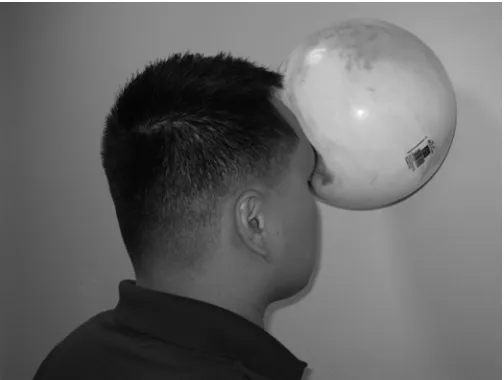
At the four-week follow up visit (third treatment), im-provements in outcome measures included minor limited range of motion, mild tenderness to palpation, and stiff-ness with no neck pain. He had fl own a few ACM mis-sions to ascertain a rigorous response to treatment. Since he was still having some residual stiffness, reduced range of motion, and tenderness to palpation, the treatment protocol was repeated once more. Standing multiplanar isometric endurance home exercises for the neck muscu-lature16 were prescribed in an effort to enhance paracer-vical muscular strength and endurance, based upon the
increased physical demands of the neck musculature dur-ing fl ight (Figure 1). These exercises were aimed at func-tional restoration and therefore modifi ed to closely mimic the tasks associated with fl ying the F/A-18.
At the eight-week follow up (fi fth visit, no treatment, re-examination only), he reported no pain and no stiffness and had fl own numerous ACM missions without a recur-rence of neck pain. His Neck Disability Index score was 0/50. Examination revealed full active and passive ranges of cervical motion and no tenderness to palpation. The patient had no subsequent neck pain episodes that were reported to his fl ight surgeon or chiropractic physician over the ensuing 6 months and deployed to the combat theater without incident.
Discussion
Mechanical neck pain is a common disorder in the general population13 and is typically described as a local,
non-rad-icular pain that is sometimes increased with movements of the neck.17 The anatomical sources of mechanical neck pain typically include muscles, ligaments, and joints of the cervical spine.17 Uncomplicated mechanical neck pain must be differentiated from radicular pain, in which neurologic pathology is present (e.g., disc herniation, nerve root entrapment) as these conditions may be man-aged differently.18 A thorough history and physical exam-ination will help to determine if neck pain is mechanical and to rule out signs or symptoms of major pathology, such as fracture, myelopathy, neoplasm, or systemic dis-ease.12 These pathologies (i.e., “red fl ags”) should receive immediate and additional investigation. Red fl ags for neck pain history are presented in Figure 3. Diagnostic imaging and laboratory studies are not typically necessary for mechanical neck pain unless they are needed to rule out potentially pathologic conditions.12
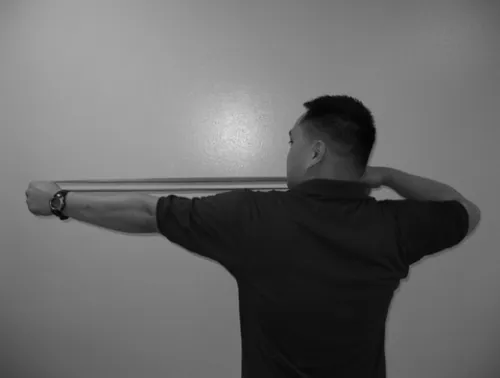
The Neck Pain Task Force has established an updated classifi cation of neck pain. These include: Grade I (no signs or symptoms of major pathology and minor inter-ference with activities of daily living); Grade II (no signs or symptoms of major pathology and major interference with activities of daily living); Grade III (no signs or symptoms of major pathology and presence of neurologic signs, which may include decreased deep tendon refl exes, sensory, or motor defi cits); and Grade IV (signs or symp-toms of major pathology, such as fracture, neoplasm, systemic disease, or myelopathy).13 Conservative meth-ods for the treatment of neck pain may include NSAIDS (e.g., ibuprofen, naproxen). However prolonged treatment with NSAIDS is not recommended due to some of their associated complications (e.g., gastric bleeding). Some-times muscle relaxants are prescribed (e.g., cyclobenzap-rine, metaxalone), but they are considered temporarily disqualifying from fl ight duties due to the potential side effects (e.g., dizziness, drowsiness). Cervical collars are typically not recommended, as the research evidence does not support their use.19 Manual therapies (e.g., mobiliza-tion, manipulation) and physical treatments (e.g., physio-therapy, exercise) have evidence to support their use for uncomplicated neck pain without severe neurologic defi -cit.19,20 To address mechanical dysfunction, manipulative and physical therapies in addition to exercise may assist with treatment of the current episode and the prevention of future neck pain. Manipulation should be performed by healthcare providers who are trained in this proced-Figure 2 Standing isotonic scapular stabilization
exercises. The patient stands upright and slightly contracts the abdominal and interscapular muscles for stability. An elastic therapy band is used to create resistance and the patient simulates the movement associated with shooting an arrow from a bow. These exercises employ 2-second concentric muscle contractions from the starting point to the point of tension, a 5-second isometric hold at the point of
ure. If a fl ight surgeon does not have this training, he or she can work in conjunction with an on-station osteopath, chiropractor, or physical therapist who is trained in these procedures.
While the management of mechanical neck pain in the aviation community may be similar to that of the general population, there are some important differences of which fl ight surgeons and other healthcare providers should be aware. Of special consideration are the prevalence of neck pain in this population and the aeromedical consequences when managing these patients. The prevalence of neck pain in fi ghter jet aviators ranges from 26.8%5 to 89.1%,21 and because of its commonality has been called a work-related musculoskeletal disorder of fi ghter jet aviators.8 In comparison, the 12-month prevalence of neck pain in the general population ranges from 30–50%.22 Neck pain not only diminishes pilot concentration and function during fl ight23 but also can be severe enough to ground pilots or result in decreased fl ying time.4 Since neck pain can result in disability or progress to a non-waiverable fl ight dis-qualifi cation,4 neck pain in the fi ghter jet aviator popula-tion has a negative impact on performance and is a threat to combat readiness.5
The US Navy Aeromedical Reference and Waiver Guide states that neck and back pain from biomechan-ical derangements of the spine and resulting muscle aches and spasms, known as somatic dysfunction,6 are not con-sidered to be disqualifying for fl ight status unless the condition is persistent or has required hospitalization.6 For pain that does not require a waiver, the Waiver Guide recommends mobilization exercises, physical therapy,
manipulation, and occasional use of fl ight surgeon pre-scribed NSAIDs for a short-term course of care to manage back or neck pain.6,7 These medications are considered disqualifying for fl ight if used chronically and would then require a waiver.6 Muscle relaxants are considered disqualifying and should not be used by military aviators while on fl ying status. The use of therapeutic exercises,6,7 manual therapy provided by a physician,6 or manipula-tion7 are not considered disqualifying for fl ight. Thus, for this unique population, conservative non-pharmaceutical management may be considered when developing a treat-ment plan.
The literature discussed below suggests that individ-uals who have neck pain have diminished muscle control and coordination. It has been noted that fi ghter pilots who do not have neck pain possess greater effi ciency of neck extensor muscles (more antagonistic muscle EMG activ-ity) than non-pilot subjects24 and greater neck extensor muscle strength than pilots with neck pain.25 However, Seng et al have demonstrated that asymptomatic pilots do not have greater isometric strength than non-pilot con-trols and advocate for on-land neck muscle strengthening exercises for aviators.26 O’Leary, Falla, and Jull identifi ed that neck pain subjects have altered coordination between the superfi cial and deep neck muscles, poorer kinesthetic sense, and higher rates of muscular fatigue when exposed to sustained loads,27 which may explain the difference in muscle strength between pilots with and without neck pain, as noted by Ang et al.25 Exposure to G forces during regular fl ying has been associated with limited increases in isometric neck muscle strength,28 suggesting that fl ight-Figure 3 Red fl ags for neck pain, which suggest more ominous underlying pathology than uncomplicated mechanical
neck pain and may require further evaluation (adapted from reference 18).
• Progressive neurologic defi cit (e.g., loss of strength, paresthesias, loss of bowel/bladder control, loss of balance/ coordination)
• Coughing or sneezing makes the pain radiate
• Signs of instability or spinal cord compromise (inability or unwillingness to move neck due to pain, unbearable pain) • Vascular defi cit
• Signs or symptoms of infection
• History of trauma, cancer, bone disease, neurologic disease, systemic diseases, or immunosupression (e.g., HIV/AIDs, infl ammatory arthritis, or recent corticosteroid use)
induced gains in strength are negligible to counteract the forces placed on the body during ACM.
Several authors have investigated the potential use of strengthening programs to prevent neck pain in this population. It has been shown that pilots who engage in muscle endurance training have less acute in-fl ight neck pain,29 and pilots engaged in a supervised neck-specifi c strength and fl exibility program demonstrated signifi cant increases in neck strength and endurance compared to pi-lots provided a home exercise program.30 Recently, it has been shown that certain isotonic elastic band exercises and resistance machine neck strengthening exercises can generate similar neck muscle activation to G forces in the z axis measured in-fl ight and may represent a useful and job-specifi c physical training program for pilots involved in ACM.31 However, to our knowledge, there are no pro-spective controlled investigations of the effi cacy of neck exercises for neck pain in fi ghter pilots that can inform clinical practice decisions.
While there are anecdotal reports of aviators receiving manipulative therapy for neck pain,8,23 the effectiveness of this therapy in managing neck pain in fi ghter jet aviators is not reported in the literature. It is known that manual ther-apy is an effective non-pharmacological and non-surgical treatment option for whiplash and non-whiplash associated neck pain in the general population,19 and it would seem rational to extend those results to the fi ghter aviator popula-tion. Hence, it is theoretically plausible that pilots with som-atic neck pain may benefi t from a rehabilitation program that includes proprioceptive activities, spinal manipulation or mobilization, muscle co-activation, and neck muscle strength and endurance training. This was the rationale em-ployed in the rehabilitation of the pilot in this case.
In the highly work-motivated fl ight community it is vitally important that members of the medical team work together to minimize patient recovery time while ensuring maximum fl ight safety. Flight surgeons are best qualifi ed to interpret aviation safety guidelines, such as those in the US Navy Aeromedical Reference and Waiver Guide, and therefore, a close working relationship between the manual therapist and the pilot’s fl ight surgeon is in-valuable. In this manner, appropriate modalities can be maximized, consistent follow-up can be ensured, and all regulations can be closely followed. By utilizing the skills and knowledge unique to each medical team member, the pilot can be maintained on fl ight status, or returned to it
quickly, without breaking any aviation safety regulations or endangering the aviator.
There are limitations to this case report. Although the patient improved and was released from care after only fi ve visits, the time over which these treatments were given was considered suboptimal. The patient was not able to be seen as frequently as desired due to schedul-ing confl icts. A higher treatment frequency over a shorter duration would have been preferred to optimize treatment response related to manipulative and soft tissue therapy.32 Range of motion assessment, such as dual inclinometry, would have been preferred over visual assessment. Limit-ations inherent to the case report design prevent one from generalizing beyond this single case since this was a non-controlled retrospective study. The natural history of neck pain is episodic and recurrent13 and may possibly explain the short term resolution of his neck pain. Summarily, this case study reports one pilot presenting with neck pain that was interfering with his job performance, who was motiv-ated to maintain a high level of job-relmotiv-ated function, and who appeared to have a favorable response to a conserva-tive management approach that is under-reported within this population. We hope this report stimulates further research interest in the treatment and prevention of neck pain in this population.
Conclusion
Neck pain is highly prevalent in fi ghter jet aviators and can compromise mission safety and aviator function.3,8 Chronic neck pain and some medications may be con-sidered disqualifying for fl ight for military pilots ac-cording to the US Navy Aeromedical Reference and Waiver Guide. Manual therapy and therapeutic exercise are recommended for treating this problem and are not considered disqualifying. Therefore, applying these con-servative options that help with managing pain and func-tion for aviators could be considered. In this case, a pilot with neck pain was managed following these recommen-dations and was able to successfully continue fl ying with-out return of pain or dysfunction.
Endnotes
References
1 Coakwell MR, Bloswick DS, Moser R, Jr. High-risk head and neck movements at high G and interventions to reduce associated neck injury. Aviat Space Environ Med. 2004; 75(1):68–80.
2 Green ND, Brown L. Head positioning and neck muscle activation during air combat. Aviat Space Environ Med. 2004; 75(8):676–680.
3 Voge VM, Tolan GD, Nixon WE. Chronic back disability: USAF offi cers at separation and exposure to +Gz. Mil Med. 1996; 161(4):221–224.
4 Bailey DA, Gilleran LG, Merchant PG. Waivers for disqualifying medical conditions in U.S. Naval aviation personnel. Aviat Space Environ Med. 1995; 66(5):401–407.
5 Yacavone DW, Bason R. Cervical injuries during high G maneuvers: a review of Naval Safety Center data, 1980– 1990. Aviat Space Environ Med. 1992; 63(7):602–605. 6 Acromite MT. U. S. Navy Aeromedical Reference
and Waiver Guide. Pensacola: U.S. Navy, 2008. Available from: http://www.med.navy.mil/SITES/ NAVMEDMPTE/NOMI/NAMI/ARWG/Pages/ AeromedicalReferenceandWaiverGuide.aspx.
7 U.S.AirForce. Air Force waiver guide.: U.S. Air Force, 2007. Available from: http://aviationmedicine.com/ resources/fi les/PDF/VFS_attachments_07/USAF%20 Wavier%20Guide%20PDF.pdf.
8 Drew WED. Spinal symptoms in aviators and their relationship to G-exposure and aircraft seating. Aviat Space Environ Med. 2000; 71:22–30.
9 Vernon H. The Neck Disability Index: state-of-the-art, 1991–2008. J Manipulative Physiol Ther. 2008; 31(7):491–502.
10 Wainner RS, Fritz JM, Irrgang JJ, Boninger ML, Delitto A, Allison S. Reliability and diagnostic accuracy of the clinical examination and patient self-report measures for cervical radiculopathy. Spine. 2003; 28(1):52–62. 11 Rubinstein S, Pool J, Tulder Mv, Riphagen I, Vet Hd.
A systematic review of the diagnostic accuracy of provocative tests of the neck for diagnosing cervical radiculopathy. Eur Spine J. 2007; 16:307–319. 12 Nordin M, Carragee EJ, Hogg-Johnson S, Weiner SS,
Hurwitz EL, Peloso PM, et al. Assessment of neck pain and its associated disorders: results of the Bone and Joint Decade 2000–2010 Task Force on Neck Pain and Its Associated Disorders. Spine. 2008; 33(4 Suppl):S101–22. 13 Haldeman S, Carroll L, Cassidy JD, Schubert J, Nygren
A. The Bone and Joint Decade 2000–2010 Task Force on Neck Pain and Its Associated Disorders: executive summary. Spine. (Phila Pa 1976) 2008; 33(4 Suppl):S5–7. 14 Peterson D, Bergmann T. Chiropractic technique:
principles and procedures. 2nd ed. St. Louis: Mosby, 2002.
15 Valachi B, Valachi K. Preventing musculoskeletal disorders in clinical dentistry. J Am Dent Assoc. 2003; 134:1604–1612.
16 Ierna GF. Rehabilitation of sports injuries. In: Hyde TE, Gengenbach M, editors. Conservative management of sports injuries. 2nd ed. Sudbury: Jones and Bartlett, 2005:157–206.
17 Manchikanti L, Boswell MV, Singh V, Benyamin RM, Fellows B, Abdi S, et al. Comprehensive evidence-based guidelines for interventional techniques in the management of chronic spinal pain. Pain Physician. 2009; 12(4):699–802.
18 Guzman J, Haldeman S, Carroll LJ, Carragee EJ, Hurwitz EL, Peloso P, et al. Clinical practice implications of the Bone and Joint Decade 2000–2010 Task Force on neck pain and its associated disorders: From Concepts and Findings to Recommendations. Spine. (Phila Pa 1976) 2008; 33:S199–S213.
19 Hurwitz EL, Carragee EJ, van der Velde G, Carroll LJ, Nordin M, Guzman J, et al. Treatment of neck pain: noninvasive interventions: results of the Bone and Joint Decade 2000–2010 Task Force on Neck Pain and Its Associated Disorders. Spine. (Phila Pa 1976) 2008; 33(4 Suppl):S123–52.
20 Bronfort G, Haas M, Evans R, Bouter L. Effi cacy of spinal manipulation and mobilization for low back pain and neck pain: a systematic review and best evidence synthesis. The Spine Journal. 2004; 4(3):335–356.
21 Kikukawa A, Tachibana S, Yagura S. G-related
musculoskeletal spine symptoms in Japan Air Self Defense Force F-15 pilots. Aviat Space Environ Med. 1995; 66(3):269–272.
22 Hogg-Johnson S, van der Velde G, Carroll LJ, Holm LW, Cassidy JD, Guzman J, et al. The burden and determinants of neck pain in the general population: results of the Bone and Joint Decade 2000–2010 Task Force on
Neck Pain and Its Associated Disorders. Spine. 2008; 33(4 Suppl):S39–51.
23 Simon-Arndt CM, Yuan H, Hourani LL. Aircraft type and diagnosed back disorders in U.S. Navy pilots and aircrew. Aviat Space Environ Med. 1997; 68(11):1012–1018. 24 Lecompte J, Maisetti O, Guillaume A, Skalli W, Portero
P. Neck strength and EMG activity in fi ghter pilots with episodic neck pain. Aviat Space Environ Med. 2008; 79(10):947–952.
25 Ang B, Linder J, Harms-Ringdahl K. Neck strength and myoelectric fatigue in fi ghter and helicopter pilots with a history of neck pain. Aviat Space Environ Med. 2005; 76(4):375–380.
27 O’Leary S, Falla D, Jull G. Recent advances in therapeutic exercise for the neck: implications for patients with head and neck pain. Aust Endod J. 2003; 29(3):138–142. 28 Burnett AF, Naumann FL, Burton EJ. Flight-training effect
on the cervical muscle isometric strength of trainee pilots. Aviat Space Environ Med. 2004; 75(7):611–615.
29 Hamalainen O, Vanharanta H, Bloigu R. Determinants of +Gz-related neck pain: a preliminary survey. Aviat Space Environ Med. 1993; 64(7):651–652.
30 Alricsson M, Harms-Ringdahl K, Larsson B, Linder J, Werner S. Neck muscle strength and endurance in fi ghter pilots: effects of a supervised training program. Aviat Space Environ Med. 2004; 75(1):23–28.
31 Netto KJ, Burnett AF, Coleman JL. Neck exercises compared to muscle activation during aerial combat maneuvers. Aviat Space Environ Med. 2007; 78(5):478–484.
32 Haas M, Groupp E, Aickin M, Fairweather A, Ganger B, Attwood M, et al. Dose response for chiropractic care of chronic cervicogenic headache and associated neck pain: a randomized pilot study. J Manipulative Physiol Ther. 2004; 27(9):547–553.
Supporting the Canadian Chiropractic Research Foundation means
Building Excellence through Research
Dr. Richard Goldford DC, BSc, DC, MBA, FCCSS(C), FCCRS(C) Chief Operating Offi cer,
Austin Rehab Group, 125 Norfi nch Dr. Suite 200
Toronto ON M3N 1W8