S T U D Y P R O T O C O L
Open Access
Study protocol: realist evaluation of
effectiveness and sustainability of a
community health workers programme in
improving maternal and child health in
Nigeria
Tolib Mirzoev
1, Enyi Etiaba
2*, Bassey Ebenso
1, Benjamin Uzochukwu
2, Ana Manzano
3, Obinna Onwujekwe
2,
Reinhard Huss
1, Nkoli Ezumah
2, Joseph P. Hicks
1, James Newell
1and Timothy Ensor
1Abstract
Background:Achievement of improved maternal and child health (MCH) outcomes continues to be an issue of
international priority, particularly for sub-Saharan African countries such as Nigeria. Evidence suggests that the use of Community Health Workers (CHWs) can be effective in broadening access to, and coverage of, health services and improving MCH outcomes in such countries.
Methods/design:In this paper, we report the methodology for a 5-year study which aims to evaluate the context, processes, outcomes and longer-term sustainability of a Nigerian CHW scheme. Evaluation of complex interventions requires a comprehensive understanding of intervention context, mechanisms and outcomes. The multidisciplinary and mixed-method realist approach will facilitate such evaluation. A favourable policy environment within which the study is conducted will ensure the successful uptake of results into policy and practice.
A realist evaluation provides an overall methodological framework for this multidisciplinary and mixed methods research, which will be undertaken in Anambra state. The study will draw upon health economics, social sciences and statistics. The study comprises three steps: (1) initial theory development; (2) theory validation and (3) theory refinement and development of lessons learned. Specific methods for data collection will include in-depth interviews and focus group discussions with purposefully identified key stakeholders (managers, service providers and service users), document reviews, analyses of quantitative data from the CHW programme and health information system, and a small-scale survey. The impact of the programme on key output and outcome indicators will be assessed through an interrupted time-series analysis (ITS) of monthly quantitative data from health information system and programme reports. Ethics approvals for this study were obtained from the University of Leeds and the University of Nigeria.
(Continued on next page)
* Correspondence:[email protected]
2Health Policy Research Group & the Department of Health Administration and Management, College of Medicine, University of Nigeria Enugu-Campus, Enugu 400001, Nigeria
Full list of author information is available at the end of the article
(Continued from previous page)
Discussion:This study will provide a timely and important contribution to health systems strengthening specifically within Anambra state in southeast Nigeria but also more widely across Nigeria. This paper should be of interest to researchers who are interested in adapting and applying robust methodologies for assessing complex health system interventions. The paper will also be useful to policymakers and practitioners who are interested in commissioning and engaging in such complex evaluations to inform policies and practices.
Keywords:Realist evaluation, Community health workers, Maternal and child health, Conditional cash transfer, Nigeria, Mixed methods, Health systems research
Background
In this paper, we report a protocol for realist evaluation study of DeteRminants ofEffectiveness and sustainabil-ity of a noVel Community HeAlth Workers (CHWs) programMe in imProving maternal and child health in Nigeria (REVAMP project).
Achievement of improved maternal and child health (MCH) outcomes continues to be an issue of inter-national priority for achieving the health-related Sus-tainable Development Goals (SDGs), particularly for sub-Saharan African countries [1]. In Nigeria, for ex-ample, despite the significant reduction in maternal and neonatal mortality since 2003 by 50 and 23 %, respect-ively, these still remain high at 545/100,000 and 37/ 1000 births, respectively, particularly in rural areas where most vulnerable groups reside [2, 3].
Evidence suggests that the use of CHWs can be effect-ive in broadening access to, and coverage of, health ser-vices and improving MCH outcomes [4–6]. The use of CHWs was promoted in an attempt to implement inter-ventions using lower cadres of workers to accelerate achievement of universal healthcare coverage [7–10].
However, to guide further development and imple-mentation of CHW programmes in different contexts, it is necessary to better understand what makes CHW pro-grammes successful in achieving desired outcomes and under what circumstances they succeed [11, 12]. As new programmes emerge or existing programmes scale up, comparing the effectiveness of CHW programmes be-tween different contexts becomes important. This is due to the diversity of country contexts and complexity of CHW programmes, which require combinations of ele-ments at micro (i.e. individual), meso (organisational) and macro (i.e. system) levels [7, 13]. Studies have ex-plored the effectiveness of CHW programmes in improv-ing MCH outcomes [14, 15], productivity of CHWs [12], costs and cost-effectiveness of CHW initiatives [4, 16], power relations and acceptance of CHW programmes by the public [6, 17] and effectiveness of associated con-ditional cash transfers (CCTs) linked to uptake of ser-vices [18, 19]. While studies have explored the effects of supply- and demand-side interventions separately
[15, 18, 19], the combined effects of the two—such as the added value of CCTs within health programmes—are rarely assessed within the same intervention.
CHW programmes are inherently complex, and their success is mediated by how the intervention is imple-mented within the health system context. Theory-driven forms of evaluation help understanding such complexity by studying how the different elements are intertwined [20] and recognising the role of context as a key influ-ence in the production of outcomes [21]. The UK Med-ical Research Council (MRC) guidance for evaluating complex interventions also states that process evaluation can help ‘assess fidelity and quality of implementation, clarifycausal mechanismsand identifycontextual factors associated with variation in outcomes’[22].
Realist evaluation (RE) is a theory-driven evaluation method that is increasingly used for studying the imple-mentation of complex interventions within health sys-tems, including in low- and middle-income countries [23–25]. A realist approach emphasises the contingent nature of programme outcomes and addresses questions about what works, in which setting, for whom, in what circumstances and why [26]. In RE, researchers develop middle-range theories that take account of how Context (at micro, meso and macro levels) influences interven-tion processes orMechanisms(e.g. actors’ behaviours in implementing intervention) to produce intended and unintendedOutcomes. This is known as the C-M-O con-figuration [26], and without accounting for all these di-mensions, some aspects of the programme may go unrecorded, thus affecting the validity and reliability of results [27] and preventing replication [28].
10,000 CHWs, comprising 1000 Community Health Extension Workers (CHEWs) and 9000 volunteer Vil-lage Health Workers (VHWs). The supply component also included infrastructure development, improving availability of supplies and medicines and activation of Ward Development Committees (WDCs). This com-bination was intended to improve access to quality health services and ultimately reduce maternal and child morbidity and mortality. The demand component of the SURE-P/MCH programme aimed to increase utilisation of health services during pregnancy and at birth through the use of CCTs, i.e. financial incentives to pregnant women to register at a Primary Health Care (PHC) centre, receive health check-ups while pregnant, deliver at a health facility and take their baby for vacci-nations. CCTs also target Traditional Birth Attendants (TBAs) to incentivise them to accompany pregnant women to PHC facilities. Since December 2012, CCTs have been implemented in selected SURE-P/MCH sites in 9 of the 36 states of Nigeria (SURE-P/MCH + CCT). Preliminary evidence indicates that paying CCTs to pregnant mothers is linked to increase antenatal care visits and facility deliveries [2]. While the average num-ber of PHC facilities in each Nigerian state is typically between 1000 and 4000, the SURE-P/MCH was imple-mented in clusters of 12 to 21 health centres within se-lected states. Phase 2 of the SURE-P/MCH was launched in late-2013 and aimed for an incremental expansion to a further 12 to 21 facilities in the selected states.
Key officials in the Ministry of Health at Federal, State and Local Government levels expressed interest in asses-sing the performance of SURE-P/MCH and SURE-P/ MCH + CCT (the‘interventions’) and key contextual in-fluences on the achievement of their objectives. Based on this interest, and following the competitive evaluation of research proposals from the Joint MRC/ESRC/DFID/ Wellcome Trust health systems research initiative call 1, in June 2015, we initiated a 5-year research programme to assess the MCH component in Anambra state. In October 2015, 6 months after being elected, the new President of Nigeria announced his decision to reverse fuel subsidy reduction in order to catalyse the economic growth, effectively withdrawing government funding to SURE-P. However, the interest from Nigerian health offi-cials in learning lessons for improving MCH outcomes remained high. We discussed the best course of action for our research with Nigerian health authorities and our funders. Options discussed included stopping or amending the research, as well as technical and political implications of each option from the different (policy-makers’and the funder’s) perspectives. The eventual de-cision was to continue with the study, using the original methodology, though with the addition of assessment of sustainability of achieved changes and effects of
on-going lobbying and advocacy efforts on entrenching the MCH on the political agenda in Nigeria.
The purpose of this paper is to share the study proto-col for realist evaluation of CHW programme in Nigeria. In the discussion, we also use to share some key initial methodological outputs which were pro-duced since the start of the project [30]. This paper should be of interest to researchers who are adapting and applying robust methodologies for assessing com-plex health systems interventions and policymakers and practitioners who are interested in commissioning, and engaging in, similar evaluations.
Study objectives and location
The aim of this study is to inform strengthening, scaling up and ensuring sustainability of CHW programmes. This will be achieved by investigating two intervention strategies (i.e. with and without CCTs) of a Nigerian CHW programme to understand what contextual factors promote equitable access to quality services and examin-ing the conditions under which these changes can be sustained following withdrawal of funding.
The specific objectives of the study are to:
1. Develop an in-depth understanding of the contextand theprocess of implementationof the interventions, including relationships between health workforce and infrastructure and supplies 2. Identify, assess and compare the intervention
outputs(e.g. skills and practices of CHWs and effectiveness and efficiency of Primary Health Care facilities) andoutcomes(e.g. equitable access to quality MCH services and attainment of MCH outcome targets) during and after withdrawal of targeted support to the programme
3. Develop an empirically based and theoretically grounded dynamicmodelof complex relations between the actors, context, implementation process, outputs and outcomes of the interventions during, and after withdrawal, of targeted support to the programme
4. Assess the role of different advocacy and lobbying efforts in entrenching MCH on the political agenda and strengthening the provision of MCH services, following the suspension of targeted support to SURE-P/MCH
5. Develop transferable best practices forscalability (expansion within a broadly similar context) and generalisability(expansion to different contexts) of the lessons learned
This 5-year study is implemented in Anambra state, located in the southeast of Nigeria with a total of 4420 PHC facilities serving a population of 4.2 million. It was identified in consultation with the Federal and State Ministry of Health (MOH) and the SURE-P national team lead. We will select three study clusters, corre-sponding to Local Government Areas (LGAs): one with SURE-P/MCH, one with SURE-P/MCH + CCT and one with no intervention. A cluster is made up of four PHC facilities and one General Hospital (GH). The two inter-ventions (i.e. SURE-P/MCH and SURE-P/MCH + CCT) will be assessed against each other and against the no implementation site. LGAs will be selected in the discus-sion with State MOH policymakers and programme managers based on high maternal mortality ratios and existence of effective and committed district health leadership.
Methods/design
Study conceptual framework
Realist evaluation provides an overall methodological approach for the project and will guide development, testing and refining of middle-range theories through the analysis of the relationships between the context (at macro, meso and micro levels), mechanisms and out-comes [31]. We will use social science methods to ex-plore views of key actor groups. Economic evaluation will be used to identify the programme costs against the outcomes [32, 33], using an incremental approach to compare intervention costs with benefits, compared with standard practice [16, 34]. Statistical analysis of quanti-tative data from the health management information system (HMIS) and SURE-P monitoring and evaluation (M&E) system will enable us to determine the extent to which the interventions achieved improvements in MCH services.
Mixed methods study designs that are increasingly used to evaluate complex interventions [35] include the exploratory (qualitative methods followed by quantita-tive),explanatory (quantitative then qualitative), embed-ded (one dataset provides a supportive secondary role) and convergent (both datasets are complementary to each other) models [35, 36]. We shall deploy the conver-gent model to allow continuous integration and triangu-lation of quantitative and qualitative findings.
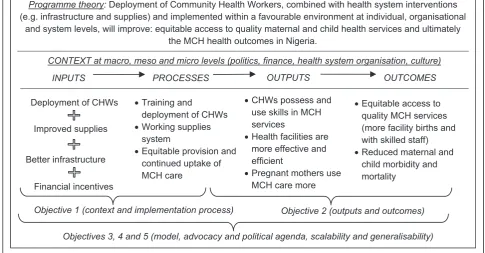
The project uses an input-process-output-outcome continuum (see Fig. 1) to explore how inputs affect processes and how processes lead to outputs and ul-timately outcomes. Implicit in the figure are the inter-vention implementation outcomes, i.e. acceptability, adoption, appropriateness, feasibility, fidelity, imple-mentation cost, penetration and sustainability of the interventions [37], which often influence the progres-sion from inputs to processes, outputs and outcomes within health programmes.
We will also assess the relationships within each stage: whether and how the different inputs complement each other; any catalysing or mutually negating effects be-tween the processes (e.g. implications of staff absences due to training on availability and quality of MCH ser-vices) and any relations between the different outputs and between the different outcomes.
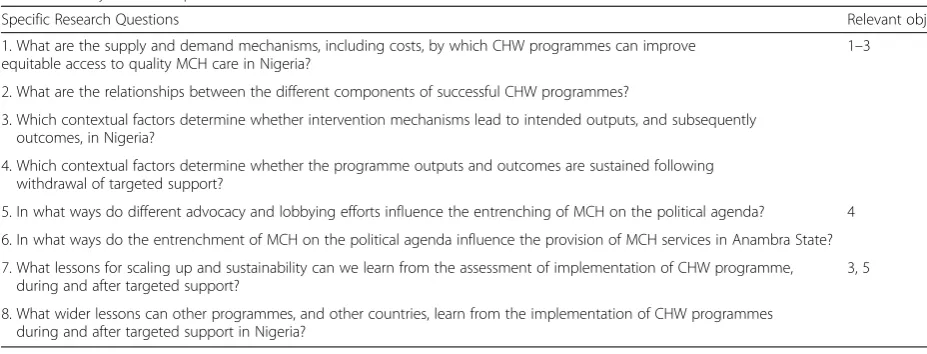
We recognisecontextas a key influence in achieving the intended results. Therefore, instead of attributing changes in health outcomes to the SURE-P/MCH only, we will explore the contribution of the interventions to achievement of desired effects within the real con-text. We will explore context at the macro level (e.g. political and resource environment), at the meso level (e.g. organisations and their roles) and micro level (e.g. capabilities, values and interests of individuals) [38, 39]. We will also assess the relationship between the supply and demand programme components, Table 1Study research questions
Specific Research Questions Relevant objective
1. What are the supply and demand mechanisms, including costs, by which CHW programmes can improve equitable access to quality MCH care in Nigeria?
1–3
2. What are the relationships between the different components of successful CHW programmes?
3. Which contextual factors determine whether intervention mechanisms lead to intended outputs, and subsequently outcomes, in Nigeria?
4. Which contextual factors determine whether the programme outputs and outcomes are sustained following withdrawal of targeted support?
5. In what ways do different advocacy and lobbying efforts influence the entrenching of MCH on the political agenda? 4 6. In what ways do the entrenchment of MCH on the political agenda influence the provision of MCH services in Anambra State? 7. What lessons for scaling up and sustainability can we learn from the assessment of implementation of CHW programme,
during and after targeted support?
3, 5
which are recognised to provide the continuum of care [40].
Study design and methods
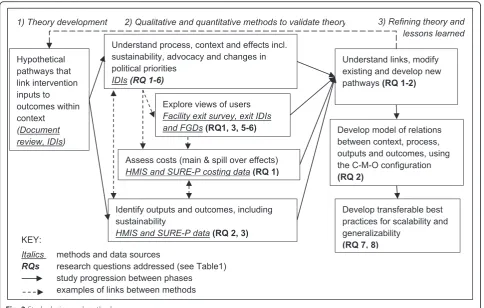
The study methodology will include three steps (Fig. 2): (1) initial theory development; (2) theory validation and (3) theory refinement and development of lessons learned. During step 1, we will develop specific hypothetical pathways (i.e. middle-range theories) that link interven-tion inputs to processes, outputs and outcomes within the context of Anambra state. The SURE-P programme theory (see Fig. 1) provides an overarching hypothesis, and more specific hypothetical pathways will represent the middle-range theories (MRT) to help us explore the C-M-O configurations within the programme. These hy-potheses will be developed in discussions with programme managers and implementers.
The specific hypotheses will draw upon two data col-lection methods: (a) review of key documents (SURE-P implementation manual, relevant federal and state-level policies, e.g. reproductive and/or MCH, health work-force) and (b) a limited number (3–5 in total) of initial in-depth interviews (IDIs)with purposefully selected fed-eral and state SURE-P programme managers.
In addition to assessing whether the target indicators are achieved, we will identify how they are achieved (i.e. exploring the intervention mechanisms); identify the key contextual facilitators and constraints and analyse in
what ways these contextual influences affected the achievement of outcomes.
The specific hypotheses will be driven by the study re-search questions (see Table 1) and will relate to the key programme targets ([40] p. 17)
Reduction of MMR by 59 % from 545/100,000 live births to 320/100,000 live births
Reduction of neonatal mortality rate by 22 % from 37/1000 live births to 29/1000 live births
Increased percentage of pregnant women receiving focused antenatal care (ANC) by 52% from 50 % coverage
Increased percentage of skilled birth attendance by 63 % (from 16 % baseline)
Increased postnatal care attendance within 2 days of birth by 63 % (from 16 % baseline)
Increased family planning attendance by 26 % (from 1 % baseline)
The hypotheses can cover more than one indicator. An example involving the first two indicators might be: ‘deployment of CHWs, combined with improvement in infrastructure and supplies when implemented within the health systems context of Nigeria, will help reduce maternal and neonatal mortalities to 320/100,000 and 7/ 1000 live births respectively’.
i.e. intra-component and inter-component, respectively. An example of the former is: ‘training and deployment of CHWs combined with a working supplies system, and implemented in the context Nigerian health system, will achieve increase in skilled birth attendance by over 60 % and improve equitable provision of MCH care’. An ex-ample of the latter is: ‘financial incentives, combined with increased access to MCH care following deploy-ment of CHWs and improved infrastructure will im-prove the uptake of antenatal care by pregnant mothers (by over 50 %)’.
Duringstep 2, we shall use a mix of methods to valid-ate hypothetical pathways. Qualitative methods will in-clude (a) IDIs with key actors, including service users, (b) reviews of key documents and (c) exit IDIs and focus group discussions (FGDs) with service users and their family members. Quantitative methods will include ana-lysis of quantitative and costing data from (a) HMIS, (b) SURE-P M&E and (c) a structured facility exit survey. The qualitative and quantitative methods will be inte-grated throughout to answer the eight study research questions.
UsingIDIs, we will explore actors’understandings and views about the intervention’s context and processes (or mechanisms), their expected and unexpected effects (outputs and outcomes) and effects of advocacy and
lobbying in entrenching the MCH on the political agenda. This will give us greater understanding of the health system context, including the links with relevant policies, practices and programmes (e.g. consistency of SURE-P management with overall governance approaches; or support to CHWs within staff supervision and per-formance appraisal systems).
The respondents for IDIs, identified through purposive sampling, will include health facility managers, CHWs, PHC staff and health planners and programme managers at local, state and federal levels. A detailed list of respon-dents will be developed within step 1, and snowballing will be used to identify any further informants. We ex-pect to have 30–45 IDIs to represent views of key actor groups in Anambra state (10–15 per each cluster) and about 30 at federal level. However, if we reach data sat-uration earlier, these numbers may decrease.
English where required. A framework approach will be used for analysis to test hypotheses, while allowing for emergence of new themes [41].
The impact of the programme on a range of key out-put and outcome indicators will be assessed through an interrupted time-series analysis (ITS) of monthly (the unit of analysis) quantitative data from HMIS and SURE-P M&E monthly programme reports. The aim of the ITS analysis is to identify discontinuities in the time series associated with, and potentially caused by, the introduction of the SURE-P programme to health facil-ities. These include both immediate changes in the level of an indicator following the intervention, and long-term changes in the trend of an indicator (over time) follow-ing the intervention, as compared to control health facilities.
A general model for an ITS regression analysis (which will be adapted to allow for comparison between SURE-P/MCH, SURE-P/MCH + CCT and control clusters) is:
Yt ¼ β0þ β1Ttþ β2Itþ β3TtItþ β4Xtþ εt
where Yt is a dependent outputs (e.g. delivery by
skilled birth attendants, facility based delivery, ANC 4+, postnatal care within 48 h) or outcome (e.g. neonatal and perinatal deaths);Ttis a time series trend variable;It
is an intervention dummy variable (taking a value of 1 in areas where the intervention is implemented and 0 otherwise);TtItis time after the intervention; Xtis a
co-variate andεitis an error term. The parameterβ0 repre-sents the baseline level of the dependent variable; β1 represents the baseline trend in the dependent variable; β2 isolates any shift in the level (intercept) of the dependent variable following the introduction of the pol-icy;β3isolates any shift in the rate of change (slope) fol-lowing the introduction of the policy and β4 represents the effect of a covariate.
The datasets will consist of indicator panels compris-ing health facilities within the three clusters in Anambra state where the two variations of the intervention are occurring (SURE-P/MCH and SURE-P/MCH + CCT, re-spectively), as well as a cluster where neither variation is implemented, which will function as a control. The panels will use data from each facility in the three study clusters covering the period from at least 12 months be-fore and 12 months after the intervention began in the two intervention clusters and equivalent periods for the control cluster.
The quality of government and programme indicators will first be assessed by comparing the data with relevant indicators from the demographic surveillance system, and we will adjust the HMIS/M&E variables accordingly in the case of major discrepancies.
Findings from step 1 will be used to hypothesise the likely changes (interruptions in trends and levels) in the time series to make predictions to be verified during the ITS analyses. Methods will be used that adjust, where necessary, for problems typical to time-series estimation (e.g. autocorrelation), and important covariates will also be adjusted for, while multilevel methods will be used to address variation across health facilities. The assessment of the ITS design against standard quality checklist [42] is shown in Additional file 1.
This quantitative analysis interrelates with the quali-tative IDIs mentioned earlier. For example, at the out-put level, we might expect that facility delivery rates will increase: the quantitative analysis will quantify the rate of change; the reasons for the change at this rate will then be explored using qualitative methods. At the outcome level, increased rates of facility delivery could help improve delivery outcomes, leading to a reduction in perinatal deaths. Conversely, it could also lead to the admission of more high-risk pregnancies, causing an in-crease in facility deaths.
In addition to clinical service outcomes shown in Fig. 1, the mixed methods approach will enable us to also ana-lyse the intervention implementation outcomes, e.g. ac-ceptability of the intervention by the communities and front-line service providers, appropriateness of the inter-vention design to the current context of PHC facilities in Anambra state and sustainability of changes achieved from the implementation of interventions in the longer term [37].
We will explore views of MCH service users on SURE-P, its costs and effects. The respondents will be current and former service users, recruited at the point of exiting from health facilities. The data will be col-lected using three methods. First, small-scale facility exit survey(about 300 respondents) will use structured questionnaire to explore user perceptions about the programme and their experiences in accessing MCH care. Second, facility exit IDIs will be conducted with 20–25 purposefully identified users to explore in-depth their views. Last, at least two FGDswill be conducted, each involving 6–8 service users including members of their families, to enable comparison of their views and exploring the dynamics of their discussion.
SURE-P costs. An incremental cost-effectiveness ana-lysis will be undertaken (cost per additional skilled de-livery and associated care).
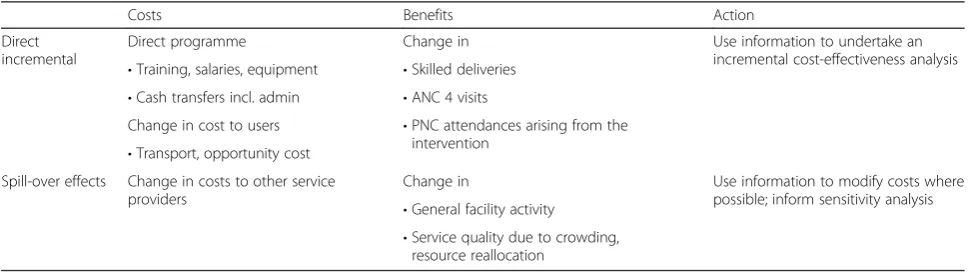
We realise, however, that implementation of a new programme can have an impact that goes beyond the direct programme beneficiaries and will consider these effects qualitatively through conducting IDIs with key actors referred to earlier. The additional costs on the supply side are likely to be training midwives and CHWs, salaries, equipment and other supplies (Table 2). On the demand side, there are costs of the cash transfers themselves (conditional on using services), transporta-tion to the health facility and opportunity costs of facility use to the women and their carers. From a wider social perspective, the impact of the interventions is likely to affect the costs of obtaining services. More accessible midwives/CHWs, for example, may reduce the cost to households of obtaining care.
These costs will be captured through a small facility exit survey of women who have used services both be-fore and after implementation of the SURE-P/MCH to understand how user costs have changed over time. These costs will be apportioned between the key SURE-P indicators: change in antenatal attendances, skilled de-liveries and postnatal attendances.
Spill-over effects and unintended consequences of the programme will be tracked, quantified and also ex-plored qualitatively. Evidence from elsewhere [43] is that demand-side programmes can impact on other services, through over-crowding and excessive bed-occupancy. Other services might also be affected by resources (or their lack) such as drugs and theatre time that are channelled into the new programme. These costs represent opportunity costs of the programme that contribute to the overall cost that may vary across contexts. We will use the understanding of the context in which interventions are operating to identify these consequences. We will also track significant non-quantifiable effects and will include estimates in the in-cremental cost-effectiveness analysis.
The uncertainty and likely variability of costs and ef-fectiveness, particularly the spill-over effects, mean that sensitivity analysis will form an important part of the reporting of the economic evaluation. Sensitivity analysis captures the influence on cost-effectiveness ratios of change in major assumptions [16]. In addition to changes in exogenous variables such as pay scales and size of the programme, we will include key contextual changes that can impact on the cost-effectiveness of the programme. This may include the range of other ser-vices offered and occupancy levels.
During step 3, we will refine our hypothetical path-ways, develop a model of the complex relations between the actors, context, intervention processes, outputs and outcomes, and develop transferable best practices for scalability and generalisability of the programme. This will allow us to answer most of our research questions. Although we do not anticipate any further data collec-tion for this stage, we do not see a linear progression be-tween the steps: i.e. as part of the analysis, we are likely to identify further pathways which may require further data collection and analysis.
The project workplan showing overlaps between the three steps is included in Additional file 2. The 5-year duration is feasible and should allow sufficient time for developing robust multidisciplinary methodology, asses-sing longer-term outcomes, conducting individual and organisational capacity strengthening [44], adequate consultations with actors and facilitating uptake of pro-ject results into policy and practice [45].
Ethics and research governance
Ethical approvals for this study were obtained from the University of Leeds (ref: SoMREC/14/097) and the Univer-sity of Nigeria (ref: NHREC/05/02/2008B-FWA00002458-1RB00002323). These are available in Additional files 3 and 4, respectively.
The project will be carried out with full respect of current relevant legislation (e.g. the Charter of Funda-mental Rights of the EU) and international conventions
Table 2Key variables and considerations for economic evaluation
Costs Benefits Action
Direct incremental
Direct programme Change in Use information to undertake an
incremental cost-effectiveness analysis
•Training, salaries, equipment •Skilled deliveries
•Cash transfers incl. admin •ANC 4 visits
Change in cost to users •PNC attendances arising from the intervention
•Transport, opportunity cost Spill-over effects Change in costs to other service
providers
Change in Use information to modify costs where
possible; inform sensitivity analysis
•General facility activity
(e.g. Helsinki Declaration). The methods development, data collection and analysis will take account of the fol-lowing issues:
Anonymityof study respondents will be preserved and ensured at all times as respondent(s) request. Unnecessary collection of personal data will be avoided, and respondents will have the right to review outputs and withdraw consent. All personal data will be coded, removed from the data for analysis and stored separately. Only designated research staff will have access to the keys linking the data with the personal information.
Informed consentwill be obtained from all study participants, and in the case of refusal, alternative means of data collection will be explored
(e.g. alternative respondents)
Specific emphasis will be placed onconfidentiality and other data protection issues, which will include security of data storage and access rights to data. Only members of teams identified by the PIs in each institution will have access to the data. Where project data are stored on an institutional server, it will be password-protected and only members of the research team will have access to the passwords.
The project will be implemented according to standard governance practices at the University of Leeds and Uni-versity of Nigeria. This includes ensuring regular commu-nication between the partners and engagement with policymakers and practitioners; quality assurance through regular peer-review within and between the teams; appro-priate mentoring and coaching support to more junior re-searchers and equal opportunities to both genders.
Communication and dissemination of results
Adequate communication of results is an essential com-ponent of this study. We will ‘embed’the research into policy and practice, working with the federal, state and local actors. This approach, developed by the Nuffield Centre, has been effective in many countries in improv-ing the quality and effectiveness of the scaled-up programme [46]. The Health Policy Research Group, University of Nigeria has developed three models for getting research into policy and practice (GRIPP), which will also be applied in this study.
Decision-makers will be continuously engaged in a research-policy partnership to facilitate adoption of les-sons learned [45]. Specific methods of communicating research will include combinations of:
a. Developing short and practical policy briefs to national and international policymakers and practitioners
b. Delivering presentations at local, state and federal meetings in Nigeria and relevant international meetings;
c. Regular project review meetings and continuous engagement with key decision-makers
d. Developing newsletters, press-releases and interviews in the media aimed at communicating the key project findings to the public in Nigeria and more widely
e. Developing a dedicated website where the project results will be publicly accessible by national and international decision-makers, practitioners and academics
f. Delivering presentations at national and
international conferences and publication of articles in peer-reviewed academic journals with emphasis on open access
g. Developing a project research report for the funder, with a publishable executive summary
Discussion
Our study should improve understanding of the per-formance and functioning of complex system interven-tions involving both supply and demand sides. The study results will also inform strengthening the differ-ent aspects of the Nigerian health system, e.g. assess-ment of context will inform best practices in PHC staff performance management; assessment of the added value of CCTs will inform further demand-side finan-cing schemes.
Since the start of the project, a detailed methodology handbook has been developed to guide data collection and analysis [30]. This handbook is available upon re-quest. Two supplementary materials are included from this handbook. First, the initial Logic Model (LM) (see Additional file 5) was developed for the SURE-P/MCH. A LM is a visual way of organising and displaying infor-mation about a strategy or programme. A coherent LM is a thread of evidence-based logic that connects design, planning, implementation and evaluation of programmes [47]. LMs can assist stakeholders to un-tangle, clarify and share their understanding of complex relationships amongst programme elements [47]. The LM for SURE-P/MCH was developed using a combin-ation of documents review, informal consultcombin-ations with SURE-P/MCH manager and a technical workshop that involved researchers from the Universities of Leeds and Nigeria.
Os. The relationships between and amongst these Cs, Ms and Os will be explored as part of the data collec-tion and analysis. The IWTs subsequently guided the identification of the specific information areas for the data collection and analysis.
Two aspects of the environment within which the study is being implemented are worth noting. First, the policy environment in Nigeria within which the research is being undertaken is favourable to ensure a high-quality analysis, inform theoretical debate and ensure the uptake of results into policy and practice, as we found within our previous collaborative projects. The commitment by key health decision-makers at Anambra state to engage with this research is particularly encour-aging. Second, gaps in the literature on the CHWs, com-bined with an increasing interest in applied research from policymakers and funders, create a favourable en-vironment for the study provide a timely contribution to an on-going debate about effectiveness of complex CHW interventions.
This study will make an important and timely contri-bution to health systems strengthening in Nigeria. Evalu-ation of complex interventions such as SURE-P and their longer-term impact on MCH outcomes requires a comprehensive understanding of intervention context, implementation, mechanisms and outcomes. The multi-disciplinary and mixed methods realist approach that will be used in the study will facilitate such evaluation.
Additional files
Additional file 1:Assessment of ITS design against quality criteria. (DOCX 29 kb)
Additional file 2:Project workplan. (DOCX 22 kb)
Additional file 3:Ethics approval from the University of Leeds. (PDF 555 kb)
Additional file 4:Ethical approvals from the University of Nigeria. (ZIP 1568 kb)
Additional file 5:Pre-implementation Logic Map for SURE-P/MCH. (PDF 110 kb)
Additional file 6:Initial Working Theories. (DOCX 37 kb)
Abbreviations
ANC, antenatal care; CCT, conditional cash transfers; CHEWs, Community Health Extension Workers; CHWs, Community Health Workers; FGD, focus group discussion; HMIS, health management information system; IDI, in-depth interview; IWT, initial working theory; M&E, monitoring and evaluation; MCH, maternal and child health; MOH, Ministry of Health; PHC, Primary Health Care; REVAMP, deteRminants ofEffectiveness and sustainability of a noVel Community HeAlth Workers programMe in imProving maternal and child health in Nigeria; SURE-P, Subsidy Reinvestment and Empowerment Programme; VHWs, Village Health Workers; WDCs, Ward Development Committees
Acknowledgements
The authors wish to acknowledge the contributions from Dr Lawrence Ezenwa in developing the original study research proposal, health authorities at the Ministry of Health of the Anambra state in engaging with discussions on the study design, and staff at the College of Medicine, University of
Nigeria Enugu campus for contributing towards the development of the methodology handbook reported in this paper.
Funding
The study protocol reported in this paper has been evaluated through open competitive peer-review process as part of the Joint MRC/ESRC/ DFID/Wellcome Trust health systems research initiative call 1 and accepted for funding (grant ref: MR/M01472X/1). Neither of the funders had any role in the design of this study.
Authors’contributions
TM, BU, OO and RH jointly conceived the study; TM, EE, BE, BU, AM, OO, RH, NE, JN and TE developed the study proposal; TM led the writing of this paper with the contributions from EE, BE, BU, AM, OO, RH, NE, JH, JN and TE. All authors read and approved the final version of the manuscript.
Competing interests
The authors declare that they have no competing interests.
Ethics approval and consent to participate
Ethical approvals for this study were obtained from the School of Medicine Research Ethics Committee at the Faculty of Medicine and Health at the University of Leeds (ref: SoMREC/14/097) and the Health Research Ethics Committee at the University of Nigeria Teaching Hospital, Enugu (ref: NHREC/05/02/2008B-FWA00002458-1RB00002323). These are available in Additional files 3 and 4, respectively. Informed consent will be obtained from all study participants, and in the case of refusal, alternative means of data collection will be explored (e.g. alternative respondents).
Author details
1Nuffield Centre for International Health and Development, University of Leeds, Charles Thackrah Building, 101 Clarendon Road, Leeds, UK.2Health Policy Research Group & the Department of Health Administration and Management, College of Medicine, University of Nigeria Enugu-Campus, Enugu 400001, Nigeria.3School of Sociology and Social Policy, Social Sciences Building, University of Leeds, Leeds, UK.
Received: 24 April 2016 Accepted: 24 May 2016
References
1. UNICEF, WHO. Countdown to 2015. Maternal, Newborn and Child Survival. Accountability for Maternal, Newborn and Child Survival: An Update on Progress in Priority Countries. Geneva: World Health Organization; 2012. 2. FMoH. Country Implementation Plan for Prioritized Life-Saving Commodities
for Women and Children. Abuja: Federal Ministry of Health; 2013. 3. FMoH. Saving newborn lives in Nigeria: Newborn health in the context of
the Integrated Maternal, Newborn and Child Health Strategy. 2nd ed. Abuja: Federal Ministry of Health; Save the Children, Jhpiego; 2011.
4. Onwujekwe O, Uzochukwu B, Ojukwu J, Dike N, Shu E. Feasibility of a community health worker strategy for providing near and appropriate treatment of malaria in southeast Nigeria: An analysis of activities, costs and outcomes. Acta Trop. 2007;101(2):95–105.
5. Green A, Thomas C, Newell JN, Baral SC, Byanjankar L. The contribution of volunteers to a successful community-orientated tuberculosis treatment centre in an urban setting in Nepal: A qualitative assessment of volunteers' roles and motivations. J Health Organ Manag. 2007;21:554–72.
6. Onwujekwe O, Dike N, Ojukwu J, Uzochukwu B, Ezumah N, Shu E, et al. Consumers stated and revealed preferences for community health workers and other strategies for the provision of timely and appropriate treatment of malaria in southeast Nigeria. Malar J. 2006;5(1):117.
7. Jaskiewicz W, Tulenko K. Increasing community health worker productivity and effectiveness: a review of the influence of the work environment. Hum Resour Health. 2012;10(1):38.
8. Frehywot S, Mullan F, Payne P, Ross H. Compulsory service programmes for recruiting health workers in remote and rural areas: do they work? Bull World Health Organ. 2010;88:364–70.
9. Bhutta ZA, Memon ZA, Soofi S, Salat MS, Cousens S, Martines J.
10. Gopalan SS, Mohanty S, Das A. Assessing community health workers’ performance motivation: a mixed-methods approach on India's Accredited Social Health Activists (ASHA) programme. BMJ Open 2012, 2(5). 11. Lay health workers in primary and community health care for maternal and
child health and the management of infectious diseases
12. Lehmann U, Sanders D. Community health workers: What do we know about them? The state of the evidence on programmes, activities, costs and impact on health outcomes of using community health workers. Geneva: WHO; 2007.
13. Lewin S, Munabi-Babigumira S, Glenton C, Daniels K, Bosch-Capblanch X, van Wyk BE, Odgaard-Jensen J, Johansen M, Aja GN, Zwarenstein M et al: Lay health workers in primary and community health care for maternal and child health and the management of infectious diseases (Review). Cochrane Database of Systematic Reviews 2010 2010(Issue 3).
14. Jokhio AH, Winter HR, Cheng KK. An Intervention Involving Traditional Birth Attendants and Perinatal and Maternal Mortality in Pakistan. N Engl J Med. 2005;352(20):2091–9.
15. Gilmore B, McAuliffe E. Effectiveness of community health workers delivering preventive interventions for maternal and child health in low- and middle-income countries: a systematic review. BMC Public Health. 2013;13(1):847.
16. Uzochukwu B, Obikeze E, Onwujekwe O, Onoka C, Griffiths U. Cost-effectiveness analysis of rapid diagnostic test, microscopy and syndromic approach in the diagnosis of malaria in Nigeria: implications for scaling-up deployment of ACT. Malar J. 2009;8(1):265.
17. Lehmann U, Gilson L. Actor interfaces and practices of power in a community health worker programme: a South African study of unintended policy outcomes. Health Policy Plan. 2013;28(4):358–66.
18. Gopalan SS, Mutasa R, Friedman J, Das A. Health sector demand-side financial incentives in low- and middle-income countries: A systematic review on demand- and supply-side effects. Soc Sci Med. 2014;100:72–83. 19. Barham T. A healthier start: The effect of conditional cash transfers on
neonatal and infant mortality in rural Mexico. J Dev Econ. 2011;94(1):74–85. 20. Stame N. Theory-Based Evaluation and Types of Complexity. Evaluation.
2004;10(1):58–76.
21. Pawson R, Tilley N. Realistic Evaluation. London: SAGE Publications; 1997. 22. MRC. Developing and Evaluating Complex Interventions. London: Medical
Research Council; 2008.
23. Maluka S, Kamuzora P, SanSebastian M, Byskov J, Ndawi B, Olsen O, et al. Implementing accountability for reasonableness framework at district level in Tanzania: a realist evaluation. Implement Sci. 2011;6(1):11.
24. Prashanth NS, Marchal B, Hoeree T, Devadasan N, Macq J, Kegels G, Criel B. How does capacity building of health managers work? A realist evaluation study protocol. BMJ Open 2012, 2(2).
25. Robert E, Ridde V, Marchal B, Fournier P. Protocol: a realist review of user fee exemption policies for health services in Africa. BMJ Open 2012, 2(1). 26. Pawson R, Tilley N. Realist Evaluation. London: Sage Publications Limited; 1997. 27. Wolff N. Randomised trials of socially complex interventions: promise or
peril? J Health Serv Res Policy. 2001;6(2):123–6.
28. Lindsay B. Randomized controlled trials of socially complex nursing interventions: creating bias and unreliability? J Adv Nurs. 2004;45(1):84–94. 29. The-Presidency. Subsidy Reinvestment and Empowerment Programme
(SURE-P): 2012 Annual Report. Abuja, Nigeria: Subsidy Reinvestment and Empowerment Programme (SURE-P); 2013.
30. Ebenso B, Manzano A, Uzochukwu B, Huss R, Etiaba E, Ensor T, et al. Research Methodology. REVAMP project:‘Determinants of effectiveness and sustainability of a novel community health workers programme in improving mother and child health in Nigeria’. Leeds, UK: University of Leeds; 2015.
31. Pawson R, Manzano-Santaella A. A realist diagnostic workshop. Evaluation. 2012;18(2):176–91.
32. Karki D, Mirzoev T, Green A, Newell J, Baral S. Costs of a successful public-private partnership for TB control in an urban setting in Nepal. BMC Public Health. 2007;7(1):84.
33. Mirzoev T, Baral S, Karki D, Green A, Newell J. Community-based DOTS and family member DOTS for TB control in Nepal: costs and cost-effectiveness. Cost Eff Resour Alloc. 2008;6(1):20.
34. Adam T, Lim SS, Mehta S, Bhutta ZA, Fogstad H, Mathai M, et al. Cost effectiveness analysis of strategies for maternal and neonatal health in developing countries. BMJ. 2005;331(7525):1107.
35. Ozawa S, Pongpirul K. 10 best resources on…mixed methods research in health systems. Health Policy Plan. 2014;29(3):323–7.
36. Pommier J, Guevel M-R, Jourdan D. Evaluation of health promotion in schools: a realistic evaluation approach using mixed methods. BMC Public Health. 2010;10(1):43.
37. Proctor E, Silmere H, Raghavan R, Hovmand P, Aarons G, Bunger A, et al. Outcomes for Implementation Research: Conceptual Distinctions, Measurement Challenges, and Research Agenda. Adm Policy Ment Health. 2011;38(2):65–76.
38. Ricketts JA. The making of Jamaica’s‘National Policy for Persons with Disabilities 2000’: macro, meso and micro factors. Disabil Soc. 2010;25(5):551–64. 39. Hudson J, Lowe S. Understanding the Policy Process: Analysing Welfare
Policy and Practice. 2nd ed. Bristol: Policy Press; 2009.
40. NPHCDA. Programme Implementation Manual. Subsidy Reinvestment and Empowerment (SURE) Programme. Abuja, Nigeria: National Primary Health Care Development Agency; 2012.
41. Ritchie J, Spencer L. Qualitative data analysis for applied policy research. In: Bryman A, Burgess R, editors. Analyzing Qualitative Data. New York: Routledge; 1994.
42. Ramsay CR, Matowe L, Grilli R, Grimshaw JM, Thomas RE. Interrupted time series designs in health technology assessment: lessons from two systematic reviews of behavior change strategies. Int J Technol Assess Health Care. 2003;19(4):613–23.
43. Witter S, Khadka S, Nath H, Tiwari S. The national free delivery policy in Nepal: early evidence of its effects on health facilities. Health Policy Plan. 2011;26 suppl 2:ii84–91.
44. Mirzoev T, Lê G, Green A, Orgill M, Komba A, Esena RK, et al. Assessment of capacity for Health Policy and Systems Research and Analysis in seven African universities: results from the CHEPSAA project. Health Policy Plan. 2013. doi:10.1093/heapol/czt065.
45. Mirzoev T, Omar M, Green A, Bird P, Lund C, Ofori-Atta A, et al. Research-policy partnerships - experiences of the Mental Health and Poverty Project in Ghana, South Africa, Uganda and Zambia. Health Res Policy Syst. 2012;10(1):30.
46. COMDIS-HSD.‘How To’Guide On Research & Development: The Embedded Approach. Leeds, U.K: COMDIS-Health Service Delivery; 2012.
47. Knowlton LW, Phillips CC. The Logic Model Guidebook: Better Strategies for Great Results. 2nd ed. Los Angeles: SAGE Publications; 2012.
• We accept pre-submission inquiries
• Our selector tool helps you to find the most relevant journal
• We provide round the clock customer support
• Convenient online submission
• Thorough peer review
• Inclusion in PubMed and all major indexing services • Maximum visibility for your research
Submit your manuscript at www.biomedcentral.com/submit