R E S E A R C H
Open Access
Advancing the application of systems thinking in
health: understanding the growing complexity
governing immunization services in Kerala, India
Joe Varghese
1*, V Raman Kutty
2, Ligia Paina
3and Taghreed Adam
4Abstract
Background:Governing immunization services in a way that achieves and maintains desired population coverage levels is complex as it involves interactions of multiple actors and contexts. In one of the Indian states, Kerala, after routine immunization had reached high coverage in the late 1990s, it started to decline in some of the districts. This paper describes an application of complex adaptive systems theory and methods to understand and explain the phenomena underlying unexpected changes in vaccination coverage.
Methods:We used qualitative methods to explore the factors underlying changes in vaccination coverage in two districts in Kerala, one with high and one with low coverage. Content analysis was guided by features inherent to complex adaptive systems such as phase transitions, feedback, path dependence, and self-organization. Causal loop diagrams were developed to depict the interactions among actors and critical events that influenced the changes in vaccination coverage.
Results:We identified various complex adaptive system phenomena that influenced the change in vaccination coverage levels in the two districts. Phase transition describes how initial acceptability to vaccination is replaced by a resistance in northern Kerala, which involved new actors; actors attempting to regain acceptability and others who countered it created several feedback loops. We also describe how the authorities have responded to
declining immunization coverage and its impact on vaccine acceptability in the context of certain highly connected actors playing disproportionate influence over household vaccination decisions.
Theoretical exposition of our findings reveals the important role of trust in health workers and institutions that shape the interactions of actors leading to complex adaptive system phenomena.
Conclusions:As illustrated in this study, a complex adaptive system lens helps to uncover the‘real’drivers for change. This approach assists researchers and decision makers to systematically explore the driving forces and factors in each setting and develop appropriate and timely strategies to address them. The study calls for greater consideration of dynamics of vaccine acceptability while formulating immunization policies and program strategies. The analytical approaches adopted in this study are not only applicable to immunization or Kerala but to all complex interventions, health systems problems, and contexts.
Keywords:Causal loop diagram, Complex adaptive systems, Governance, Immunization, India, Kerala, Systems thinking, Trust, Vensim
* Correspondence:[email protected] 1
Centre for Chronic Disease Control and Governance Hub, Public Health Foundation of India, Delhi NCR, Plot No. 47, Sector 44, Gurgaon 122002, India Full list of author information is available at the end of the article
Background
Organizing immunization services to protect the society against preventable diseases is a core function of public health. In India, the Universal Immunization Programme (UIP) introduced in 1985, targets 27 million infants and 30 million pregnant women every year and is one of the largest in the world [1]. Though UIP has improved the availability of vaccines and cold chain management compared to earlier immunization programs, the system has not yet achieved sustained improvement in vaccination coverage in many Indian states [2,3]. It has been slated as a mechanistic approach, which was simplistically expected to improve immunization coverage through the improvements in health infrastructure, financing, supplies, and better management practices [4,5]. This approach has typically failed to account for the unique characteristics, interactions, and needs within local systems and the diversity of actors impacting a house-hold’s decision to vaccinate. Such an approach was often constrained by a lack of understanding of the complex behaviour of local health systems, which often do not respond as expected to external interventions and policies. Furthermore, such an approach can only provide a limited explanation for fluctuations in immunization coverage rates, over time.
This paper describes an application of systems think-ing to understand the complex phenomena underlythink-ing
changes in vaccination coverage in India. Specifically, this study seeks to use a complex adaptive system (CAS) lens to understand the features of a complex system that governs childhood immunization in parts of the Indian state of Kerala, where immunization coverage drastically declined after a period of high coverage.
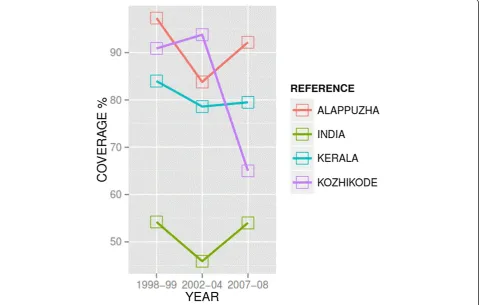
Kerala holds a special place in the global public health discourse for its remarkable health achievements despite low economic status [6]. Unlike the national average of full immunization coverage (of BCG, Polio, DPT and measles) of 54.2%, Kerala had achieved over 84% in the late 1990s before starting to decline in subsequent years (Figure 1) [7]. This decline mostly involved the northern districts of Kerala. The reduction of coverage in north-ern districts in Kerala is a concnorth-ern for public health au-thorities as it negates herd immunity that protected communities against the potential spread of vaccine-preventable diseases [8,9]. The sudden decline in immunization coverage, in a state where vaccines were uncritically accepted as a social good in the past, has puzzled public health officials and experts [10].
Theoretical underpinnings
Our study adopted a CAS-lens for exploring the factors that influenced immunisation services in Kerala and identified many characteristics of the CAS phenomena
in the discussion. CAS exhibit the capacity to self-organize, adapt, and learn from past experiences, which often re-sults in counterintuitive and unintended effects or para-doxical behaviour [11,12]. CAS may exhibit various unique features, such as path dependence, feedback loops, scale-free networks, emergent behaviour, and phase transition.
Path dependence refers to non-reversible processes that have similar starting points yet lead to different outcomes due to different choices made along the way. Feedback loops that feed into the system explain how small changes can grow into large consequences that can be‘reinforcing’ a particular outcome or may lead the system to go back to an original state, what is called‘balancing’or goal-seeking loops. Phase transitions occur at tipping points when sys-tems show sudden changes even without any additional inputs. Scale-free networks refer to the formation of influ-ential hubs that can shift the focus and power of networks by exerting higher influence on other actors in the net-work through their multiple interconnectedness, hence activating a change in behaviour. CAS can also exhibit emergent behaviour when smaller entities jointly create a spontaneous order and show organised behaviour.
In the context of the governance of public health inter-ventions, such as immunizations, complexity is generated from the diverse and dynamic nature of interactions be-tween the system’s actors and the multiple interacting fac-tors such as values, culture, history, norms, and distribution of power and information in societies. Furthermore, the interconnectedness between the various actors of the sys-tem means that their actions inevitably create ripple effects that cause continuous change and adaptation of the inter-vention in the entire system [13].
Exploring these complex system features in Kerala will shed light on the factors that drove the unexpected changes in immunization coverage and will provide in-sights into the types of system adaptations that must be considered by national immunization programs.
Methods
A qualitative case study design was used to obtain an un-derstanding of immunization coverage in Kerala. The data used in this paper originated from a larger study seeking to understand the governance of immunization in two states in India [14]. Initial findings from this earlier study highlighted the need to further explore the complexity of immunization services in one of the states–Kerala – where we observed surprising trends in immunization coverage (Figure 1).
Two districts in Kerala were randomly identified from high and low coverage districts in the state [7]. The tricts were Alappuzha, a better performing (90.2%) dis-trict in terms of immunisation coverage as per the third District Level Health Service survey, and Kozhikode, a
poor performing (65%) district. In each of these districts, better performing and poor performing areas in terms of immunisation service were identified with the help of dis-trict level managers. Though the difference in immunization coverage between two areas within the districts was mar-ginal, the identification of different locations helped in col-lecting information from diverse contexts. From each area, two primary health centres and a private health facil-ity were selected for observation of the immunisation ser-vices and interviewing the practitioners.
The main data sources included a literature and docu-ment review (including news reports), in-depth interviews, focus group discussions, and observations of immunization services. All data collection was undertaken by the first author in Malayalam (local language), over a period of six months during late 2009 and early 2010.
In each district, in-depth interviews were carried out with immunization service providers from public and pri-vate sector, those who facilitate vaccination, such as com-munity health workers, and those who opposed it. We used a snowball sampling method, whereby, at the end of the interview, the respondent’s suggestion was asked about other important stakeholders in order to identify the next respondent. The experts interviewed were also identified using a snowball method based on their research experi-ence on immunization or their expertise of immunization service, either as a past or present state or district level immunization program implementer.
Focus group discussions were undertaken with mothers of children below five years of age and one with the health workers of one of the primary health centres. The mothers were identified and invited with the help of community workers and the discussions were arranged in one of the local houses or local Anganwadies (pre-school and nutri-tion centres for women and children). The number of par-ticipants per focus group discussion varied from 7 to 10.
children along with making qualitative observations from this engagement for the research. Non-participant obser-vations were made during immunisation sessions at health facilities, outreach immunisation sessions, and review meetings of field staff in charge of the immunisation programme. Important observations were noted onsite and, at the end of the day, a full record of the field notes was prepared by appropriately commenting on each of these activities.
All interviews and focus group discussions were digitally recorded, transcribed, and translated into English. Content analysis was applied to the transcripts of interviews and focus group discussions, as well as the field notes of obser-vations [15]. The various categories for content analysis, as informed by the application of a CAS lens, were identi-fied prior to the analysis. Using these categories, we used a deductive coding of the data. Atlas.ti ver.7 was used for ar-ranging the text according to codes and managing the codes in the interpretive phase.
The three different methods were used for data collec-tion from various types of respondents; observacollec-tion, inter-views, and focus groups involving various sources of information helped in triangulating the findings. In order to reduce the subjective bias of the first and second authors due to their prior information of the functioning of Kerala’s health system, a peer scrutiny of the analysis was done by the third author who assessed the assumptions made.
Based on the qualitative data analysis, a causal loop dia-gram (CLD) was developed using Vensim PLE [13,16]. CLDs are qualitative representations of underlying mental models and are typically used to illustrate feedback and in-teractions among health system actors [17]. For this study, the purpose of the CLD was to assist in the identification and interpretation of the feedback loops that emerged in the context of immunization. The CLD was also used to guide the brainstorming discussion among authors about other complex phenomena that governed the analysis period. The variables used in the CLD were derived from the qualitative data, as well as from the literature on de-terminants of immunization coverage. The CLD uses standard notation, where positive arrows denote that two variables change in the same direction, and negative arrows denote that two variables change in opposite direc-tions. An arrow with a double hash mark on it (||) indi-cates that there is a time delay in the relationship denoted. Reinforcing loops, which indicate that variables have an overall amplifying effect, are labelled with an “R” and a loop symbol. Balancing loops, which indicate that vari-ables have an overall dampening effect, are labelled with a
“B” and a loop symbol. The loop symbol is either clock-wise or counter-clockclock-wise, depending on the direction in which the loop is read [17]. Where there were multiple loops, we numbered them in the order in which they ap-pear in the text. We used the CLDs not only as a summary
of the content analysis, but also to conceptualize and de-velop additional potential linkages between factors. Dotted arrows have been used to denote those potential add-itional relationships that were not empirically explored.
The study protocol was reviewed for ethical and tech-nical clearance by the Institutional Review Board (Sree Chitra Tirunal Institute for Medical Science and Tech-nology, Thiruvananthapuram, India). Written permission for data collection was obtained from state level health officials as well as from district level officials and partici-pation in the study was made voluntary by ensuring in-formed consent from all participants and the possibility to withdraw at any time. All identifiers of the study par-ticipants from the transcripts of the data were removed by the first author to ensure anonymity of the study participants.
Results
The fieldwork included 7 participant and 7 non-participant multi-site observations, 5 focus group discussions, and 17 interviews with beneficiaries, community intermediar-ies (community health workers, nutrition and pre-school teachers and community leaders), and providers from public and private sector. The study also involved key in-formant interviews with 6 experts.
As described in the introductory section, our analysis of trends in immunization coverage in both districts showed a sudden decline in immunization coverage in Kozhikode; based on three rounds of the District Level Household and Facility Survey, Kozhikode showed a decline after the second round of the survey in the 2002–2004 period. The full immunization coverage in Kozhikode district in north-ern Kerala dropped from 94% (2002–2004) to 65% (2007– 2008). During the same period, the coverage in a southern district, Alappuzha, had in fact gone up from about 84% to around 92%. The decline in immunization coverage in Kozhikode is, in fact, a reversal of the trend from the earl-ier period between the first (1998–1999) and the second survey (2002–2004), which showed improvement in vac-cination coverage.
may be explained by other factors such as poor socio-economic status of the region, absence of public health human resources, or anomalies in the reporting of vaccin-ation coverage.
In the following section, we first illustrate the feedback loops that emerged as a result of interactions among the key actors and contributed to phase transitions from vac-cination acceptance to resistance. We introduce two sep-arate CLDs that are relevant to the acceptability phase and vaccine-resistance phase to discuss the contrasting fea-tures of these two phases. We also describe the feedback that affected the districts differently after showing a high level of vaccine acceptability in the beginning. Next, we show how the authorities have responded to this problem of decline in immunization coverage and discuss the im-pact of their response in the presence of certain highly connected actors playing a disproportionate influence over a household’s vaccination decision.
Phase 1: Acceptability
As mentioned in the introduction, the UIP heralded a shift compared to earlier programs in both the availability and acceptability of immunizations in Kerala. After a decade of implementation, society perceived vaccines to be effective in the prevention of certain diseases and coverage increased significantly. Figure 2 displays the CLD illustrating the fac-tors promoting the acceptability of immunization under UIP. There were several actors who contributed to this. Public allopathic doctors were important sources of health education and encouraged immunization. Private sector allopathic doctors also contributed to this effort either in collaboration with UIP or through their independent ef-forts. A large part of the success of the UIP program during this period was credited to the joint efforts of health field workers and anganwadi workers (AWW). These two groups belonged to different sectors – field-staff are de-ployed by the public health department and the AWW, the pre-school educator and nutrition worker belonged to the Integrated Child Development Program. Field-staff fostered acceptability to vaccination through their regular house visits and constant interactions with mothers, and AWWs increased the community’s awareness of immunisation pro-grammes. The vaccine literacy of the households was
increased not only by the constant interactions of these two workers with the households, but also because of their sta-tus in the community as a trusted source of health information.
Within a household, the mothers played a significant role in vaccination decisions as she held most of the vaccination-related information. The media contributed by carrying positive messages about immunization to commu-nity households. In the CLD depicting the reinforcing loop displayed in Figure 2 we also observed that the prevention of diseases through vaccines reinforced the household’s ac-ceptability to immunization. The widespread acac-ceptability of vaccines is reflected by the absence of major opposition to immunization programs during this phase, as well as by a significant increase in the overall vaccination coverage (Kerala = 84%; national average = 54.2%) [18].
In a push for polio eradication, a polio vaccination cam-paign was introduced in 1995 as part of the Global Polio Eradication Initiative [19] by administering additional oral polio vaccine to all children under five on two national immunization days. Despite initial opposition from some medical professionals, the campaign was generally well re-ceived, benefiting from ongoing civil society participation. The opposition was from some physicians in academic set-tings as well as some private doctors who questioned the need for additional oral polio vaccine for a state like Kerala, when the state already had high routine immunization coverage. Initial opposition was neutralized by the public’s confidence in vaccination in general and considerable state support for the program. For example, according to our re-spondents, there was extensive participation in the program implementation by several actors, including several govern-ment departgovern-ments, in addition to health, as well as Pan-chayats (village level elected governance institution), NGOs, and schools. In 2000, a case of polio was reported in Kerala. Although this event was seen as a failure of the public sys-tem, the impact on the immunization program was not im-mediately evident and the efficacy or safety of the vaccine was not questioned.
Phase 2: Opposition
The polio case in Kerala was followed by a series of crit-ical events related to immunization-created feedback
Routine immunization acceptability
Routine Immunization
Coverage +
Prevention of diseases
+ +
R
Health field workers AAWs
Public allopathic doctors Private allopathic
doctors
Household's trust in immunization Household education
about immunization + +
+ + +
+ +
+
+
loops that influenced sudden changes to the social ac-ceptability of vaccines. Figure 3 displays the CLD that shows increased complexity and the new feedback loops that emerged. In this phase, which illustrates a number of events from 1995 to the present, we note many more actors and unexpected consequences–some arising with a delay– as well as the emergence of opposition to immunization.
Though opposition to the polio campaign emerged right at the start of the programme, these discussions mostly remained within academic circles. In 1999, the federal government decided to strengthen the polio eradication drive and introduced Intensified Pulse Polio Immunisation (IPPI). This included additional polio vaccination days and initiated mop-up rounds, which mandated the field workers and volunteers to reach out to unvaccinated chil-dren in their households and vaccinate them. The imple-mentation of the programme was closely monitored by the public health authorities for providing logistics sup-port and for achieving complete coverage.
However, some groups began seeing the IPPI programme, for which the state had mobilized significant resources, as an opportunity to bring out their own grievances. In 2002, the Kerala Government Medical Doctors’Association (KGMOA) publically questioned the need for IPPI in Kerala and referred to the arguments raised by some medical professionals in the beginning of the program; they announced their non-cooperation with the program. The announcement coincided with a strike called by the
association for better service conditions and was partly used as a bargain for their negotiations. They justified their stand in a press conference as a scientific argument. Though KGMOA had later backtracked and cooperated, this incident had triggered the first open debate on any immunization program in Kerala and emboldened many other groups, such as alternate system providers and some religious leaders, to raise objections against immunization programs (refer to reinforcing loop R1).
The public protest carried out against the IPPI cam-paign by the alternative medicine proponents was in fact a debate on the superiority of alternative medicine. For example, homeopathy professionals, on several occasions in the past, had direct confrontation with professionals representing allopathic medicine in Kerala. One of such conflicts started as far back as the 1970s, when allopathic providers opposed the initiation of a graduate programme in homeopathy in Kerala–described as the first of its kind anywhere in world. A leader of one of the homeopathic associations which has strong membership in northern Kerala described their campaign against IPPI programme as the payback time for the humiliation they had suffered from the hands of allopath.
“We cannot accept it. They declare themselves that they are big people; but we don’t feel so. If all the three systems need to coexist, then there has to be mutual recognition. When we recognise allopathy as a medical
Level of opposition from private allopathic
doctors Level of opposition
from academic allopathic doctors
Level of opposition from alternative providers &
religious leaders
Frequency of negative media reports on immunization programs Level of opposition from
Kerala Government Medical Officers Association
Public debate/protest
Polio campaign acceptability
Japanese encephalitis (JE) vaccine
side-effects +
Lack of parental consent for JE JE vaccine
acceptability
-+
+
Health field workers
-+
+
Level of opposition to polio campaign
+
AWWs
Routine immunization
coverage
Prevention of diseases
+ B2
+
+ R2 R1
-Household Education about immunization
Households trust in immunization +
+
+
-Routine Immunization
acceptability +
-+ +
-R3
B1
+ R4 +
+ R5
Trust in ASHA workers +
+
-+
system, and if they do not reciprocate it, where is the question of dialogue? That is why we not only practice
[oppose vaccinations], but we also preach to our patients against polio[vaccine].”–Homeopathic association leader Khozhikhode
The alternative medicine providers staged open protests in the north, including in the Kozhikode district. A popu-lar health magazine of a naturopathy group had carried several articles against pulse polio immunisation, one of which was by a well-known naturopath who spoke at sev-eral public meetings against vaccines, especially the polio campaign. From 2005 onwards, opposition to IPPI from groups who opposed vaccination in general, such as hom-eopathy associations and experts of naturopathy, were joined by some religious organizations and was widely publicised. They often cited the opposition of IPPI by the allopathic professionals and KGMOA. This reinforced their arguments and gave credibility for their public pro-test (see reinforcing loop R2). Though the same groups broadcast their opposition messages across the entire state, coverage in the south was not affected by the outcry against immunization, but the northern districts began to show a decline. In the context of declining acceptabil-ity of the polio campaign, the debates that challenged the immunization programs received further credibility (refer to R3). The change in acceptability, in turn, increased public debate; especially as the negative media coverage of these events increased, thus causing a further dampening effect on vaccine acceptability (refer to balancing loop B1). Although these frequent debates were centred on IPPI, they began to influence the community’s trust in vaccines (reinforcing loop R4). Additionally, as the incidence of vaccine-preventable diseases was drastically reduced with time, the general population felt gradual loss of fear due to relative unfamiliarity of vaccine-preventable diseases in the state. This subsequently reduced routine vaccine acceptability and created a dampening effect on vaccine acceptability (see balancing loop B2). The reinforcing loop R5 denotes a potential amplifying effect of low levels of vaccine acceptability over a long period of time on a household’s trust in vaccination. In the face of losing inter-est in immunization, the health workers found it difficult to convince the parents to vaccinate their children.
“Earlier we had cases to show to people, now they are not seeing cases; it is now like a riddle to them. We now feel that the days ahead will be even tougher”–
Health worker (female), Kozhikode
In 2006, a death was reported after a school immunization program in Kozhikode district. As a result, there was an eruption of immediate public protest and violence against the local public health staff and facilities, as the safety
of vaccines were again challenged [20,21]. Immunisation programmes, and especially the field immunisations and school-based immunisation programmes, had to be stopped in most districts of northern Kerala.
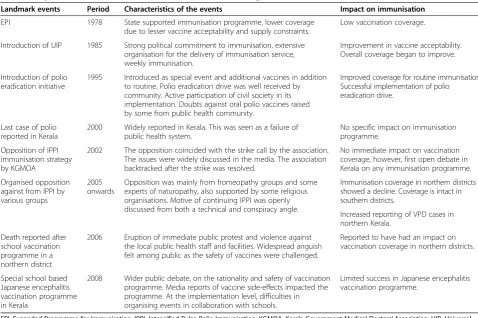
Table 1 summarizes the critical events described above, and, in retrospect, their impact on the immunization system.
Though the routine immunisation programme was car-ried out in a similar manner, and both districts initially reached very high coverage levels, the northern district ended up with a decline in coverage for routine vaccina-tions. Protest against IPPI by the practitioners of alternate medicine, especially homeopathy, which is more popular in northern Kerala, was a major factor. In northern Kerala many homeopathic practitioners have actively discour-aged their clients from immunising their children. Several study respondents believed that the strong in-fluence of homeopathic medicine practitioners on house-holds in northern Kerala helped convincing them against immunisation.
“Because they[homeopathy practitioner]have a family physician status and have good relationship with some of their clients, they oppose them from accessing the mainstream[allopathic]system. This is the limitation of the health department personnel. We are not fully able to reach to them.”–Health official (male), Kozhikode district
In northern Kerala, the popular synonym for any vac-cination has always been ‘polio injection’. This pointed to the possibility that a targeted campaign against polio immunization in northern Kerala perhaps had an impact larger than its objective of opposing repeated polio drops. One of the experts interviewed reasoned that as the soci-ety did not differentiate between polio vaccines and the other vaccines, the resistance against immunization, which originally initiated against polio campaign, might have moved to routine immunization.
Official response to decreasing immunization coverage
An immediate state public health department’s response to the decline in the public image of immunization in northern Kerala has been to strengthen the programme which included assigning high immunization coverage targets to staff at all levels and a close scrutiny of their achievements. It was observed, for example, that during the regional review meetings, if the coverage of a par-ticular vaccine was less than expected, a close scrutiny and justification was sought from the fieldworker and the supervisor.
Over-emphasis on coverage targets created perverse incentives for health providers to inflate their coverage estimates, and has made the immunization coverage data generated by the health department grossly unreliable as evident from several independent surveys which re-ported significantly lower levels of coverage. Besides, it often resulted in coercion of resistant households for vaccination. During the mop rounds for polio eradica-tion campaign, heated exchanges between health field workers and members of households that are resistant to immunize their children were observed in many places; “…may be because when it is forced, they may think it is for the others benefit not for their benefit” –
commented one of the experts who is also a district level immunization program manager.
Another strategy used in responding to the crisis was to confront with the groups that opposed immunization. For example, the public health administration, which is dominated by allopathic system of medicine, retaliated against homeopathic professionals by issuing a govern-ment order to set-up vaccine booths in governgovern-ment- government-owned homeopathy dispensaries. They described this as a strategic move and prominently projected it in a press conference and in the press statements issued on the previous day of the campaign. The homeopathy practi-tioners’ association found this step as intimidating and one of their office-bearers who was interviewed commu-nicated the association’s resolve to oppose the program more strongly.
The official response also included the use of commu-nity intermediaries to counter the misinformation against immunization. However, many of the field staff in Kerala had accepted that their ability to influence families in health-related decisions have reduced over the years, espe-cially with the decline in the frequency of house visits. The introduction of community health workers known as Accredited Social Health Activists (ASHAs) has, therefore, Table 1 Major events and its influence on immunization coverage
Landmark events Period Characteristics of the events Impact on immunisation
EPI 1978 State supported immunisation programme, lower coverage
due to lesser vaccine acceptability and supply constraints.
Low vaccination coverage.
Introduction of UIP 1985 Strong political commitment to immunisation, extensive organisation for the delivery of immunisation service, weekly immunisation.
Improvement in vaccine acceptability. Overall coverage began to improve.
Introduction of polio eradication initiative
1995 Introduced as special event and additional vaccines in addition to routine. Polio eradication drive was well received by community. Active participation of civil society in its implementation. Doubts against oral polio vaccines raised by some from public health community.
Improved coverage for routine immunisation. Successful implementation of polio eradication drive.
Last case of polio reported in Kerala
2000 Widely reported in Kerala. This was seen as a failure of public health system.
No specific impact on immunisation programme.
Opposition of IPPI immunisation strategy by KGMOA
2002 The opposition coincided with the strike call by the association. The issues were widely discussed in the media. The association backtracked after the strike was resolved.
No immediate impact on vaccination coverage, however, first open debate in Kerala on any immunisation programme.
Organised opposition against from IPPI by various groups
2005 onwards
Opposition was mainly from homeopathy groups and some experts of naturopathy, also supported by some religious organisations. Motive of continuing IPPI was openly discussed from both a technical and conspiracy angle.
Immunisation coverage in northern districts showed a decline. Coverage is intact in southern districts.
Increased reporting of VPD cases in northern Kerala.
Death reported after school vaccination programme in a northern district
2006 Eruption of immediate public protest and violence against the local public health staff and facilities. Widespread anguish felt among public as the safety of vaccines were challenged.
Reported to have had an impact on vaccination coverage in northern districts.
Special school based Japanese encephalitis vaccination programme in Kerala
2008 Wider public debate, on the rationality and safety of vaccination programme. Media reports of vaccine side-effects impacted the programme. At the implementation level, difficulties in organising events in collaboration with schools.
Limited success in Japanese encephalitis vaccination programme.
played a positive influence in decision making of the par-ents on immunization. ASHA’s status as local women known to the other members of the community gave her special advantage in influencing the perceptions of com-munity on immunization issues. During her house visits information is shared as part of a day-to-day communica-tions. The messages related to health and immunization gets discussed and exchanged during such interactions. In addition, in their role as teacher of pre-school children, AWWs also had special access to mothers when they come to drop or pick up their children from the pre-school and used the opportunity to influence mothers’ be-haviour towards immunizing their children. One of the experts interviewed had noted that the health department overlooked the potential of AWWs which resulted in gradual decline of the role of AWWs in immunization. The future potential of the right kind of interactions of AWWs and ASHAs with the households to create reinfor-cing loops to improve trust in vaccination is denoted by dotted arrows and loops in the Figure 3. Likewise, we also anticipate a change in disease situation due to reduction in vaccine coverage which may increase vaccine accept-ability in future and improve household’s trust in vaccines. Nevertheless, an important limitation of the strategy to use community level workers, such as ASHAs, to im-prove household acceptability of immunization was often observed during home visits. The mothers whose children were not vaccinated said that the decision not to vaccinate was taken by the male members of their households. “When we speak to mothers many of them will point fingers at husband, father-in-law, or mother-in-law.” – commented one of the paediatricians inter-viewed when asked about her ability to convince families who refuse vaccination. There was a greater likelihood that the male members got influenced by external fac-tors, such as the media and the public protests, used by the alternative medicines groups. Given that the mobilization strategies used by the public health system, including ASHAs, were often designed to target mothers in the households and community, the impact of these strategies was not as intended given the important role of the male members.
Discussion
Using a CAS lens facilitated the identification and under-standing of unintended consequences and unexpected phenomena. Our CLDs illustrated the complexity under-lying immunization coverage in the northern districts of Kerala and showed that the campaigns and the messages targeting against special immunization programs by some of the interest groups had consequences larger than intended as it affected households’acceptability of routine immunization. The events that occurred at different points in time had a delayed and cumulative impact on
vaccine acceptability. Our findings also showed that sev-eral informal day-to-day societal interactions within the households and community played crucial roles in creat-ing and changcreat-ing vaccine acceptability. For example, the decision making for immunization during the phase of vaccine resistance in northern Kerala showed a prominent role of male members of the households in contrast to the role played by mothers during the acceptability phase.
A crucial question proposed is regarding how the pub-lic health departments governing immunization programs can retain or regain vaccine acceptability in complex con-texts such as in Kerala. Our CLDs shows that several events, related or unrelated to immunization programs, affected vaccine acceptability through new actors and their interactions (Figure 3). These new interactions influenced the pathways of feedback that created vaccine acceptability in the beginning (Figure 2). The comparison of two re-gions in Kerala showed greater impact of feedback from actors, such as practitioners of alternate systems of medi-cine, negatively affecting vaccine acceptability in northern Kerala as they have stronger influence over households. Therefore, understanding what factors influenced the direction of the feedback and modulated its potential to impact the vaccine acceptability pathway assumes importance.
The study findings, as well as our review of the literature, shows ‘trust’ as an important factor that modulates this feedback between actors [22,23]. For example, our findings reveal that from a period of suspicion and rejection, vac-cines have achieved public confidence mainly through a positive feedback mechanism facilitated by its capacity to demonstrate reduction of diseases in the community (Figure 2). Information against immunization programs and the occasional reporting of vaccine-related adverse events undermined a household’s trust in immunizations. In the context of a low burden of vaccine-preventable diseases (due to several years of good vaccination cover-age), the reductions in trust created a negative feedback loop that dramatically affected vaccination acceptability and coverage. We discuss our findings in the light of two theoretical interpretations of trust; trust in expert sys-tems, and interpersonal trust, to understand the feed-backs and to explore strategies for the better governance of immunization services [22].
especially from different sources of expertise, is import-ant and can be achieved by engaging in dialogue that generates consensus rather than direct confrontation with other systems of medicine, as attempted by the public health department in Kerala. We also see a possi-bility of immunization programs regaining household trust when vaccine-preventable diseases reappear with the decreasing coverage (denoted by a dotted arrow with delay mark in Figure 3).
The role that the media played in such contexts in informing households with conflicting messages on immunization and how the key actors trusted each infor-mation requires attention. As observed by Giddons, plurality of information, a feature of late modernity, is a reality of many societies in the developing world and has implications on governing public health functions like immunization services [27]. For example, in Kerala, where increased penetration of 24 hours local electronic news media and several widely-read health publications, are informing households on every immunization-related side-effect and public debate on immunization programs. Sensitizing the media for more responsible reporting and using it to convey appropriate health messages are options that public health departments may use in such situations, even though it is unlikely to eliminate all unwanted infor-mation from reaching households.
In the second interpretation, trust is approached as a cognitive phenomenon or a judgment based on a ra-tional gamble and therefore household perception of other actors’interests is important. One of the strategies of the public health department to influence the house-hold level decision making using community level func-tionaries like ASHAs, therefore, has a potential (denoted by a dotted arrow in the Figure 3). Because of the social networks in which ASHAs are interconnected, house-holds can perceive them to serve their interests. Previous studies from other health system settings also conform this finding [28]. A study of treatment-seeking behaviour in urban Sri Lanka noted the perception of community on the motives of healthcare workers as a central factor to the formation of trust in health services, especially in the face of uncertainty about health conditions [29].
Trust in health workers can also be explained through the notions of ‘affective trust’, which is developed through emotional bonds and obligation generated through their repeated personal interactions with the households [28]. However, we observe that the trust created by community level health functionaries is intrinsically related to how they interacted with the households. In the backdrop of widespread misinformation against immunization in Kerala, when the functionaries are forced to deliver against rigid performance targets, it leads to coercive practices and may undermine the health worker’s long-term trust with the community. Thiede’s analysis of origin of trust
and mistrust in healthcare draws a similar conclusion that, while trust enhanced communication of health workers, it was the process of communicative interaction that gener-ated trust in the first place [23].
In the bureaucratic context of implementation of UIP, there was limited recognition of the need to influence informal interactions that retains trust in vaccines and in the public health department that governs immunization programs. The governance of immunization was seen as an exercise to ensure control and order through top-down hierarchical interactions. At each level, the program is conceived as an array of demands to be met. This absolves the capacity of the system to adapt to emerging complex-ity. Similar observations on public health bureaucracy have been made by other studies that looked at target-driven top-down implementation of public health pro-grams in the South-East Asian context [30-32].
This study has various strengths and limitations. Using a CAS framework to guide data analysis and interpretation contributed to understanding the com-plexity involved in the governance of immunization services in a developing country context. It showed how system thinking concepts and methods can be applied to a complex question such as changing house-hold acceptability to immunization. We also showed how tools such as CLDs can be used to explore social phenomena interlinked to governance of public health functions and interpret feedback loops that influenced the change in vaccination coverage. Development of CLDs based on content analysis of qualitative data and using these CLDs to guide further thinking of the com-plex system behaviour is arguably a unique feature of this analysis.
Published: 26
Conclusions
We argue, through this article, that the evidence base of public health programs, such as immunizations, should go beyond epidemiological and economic analysis. Our study emphasizes the need for public health governance systems to take into consideration the nature of multiple interactions when societies organize themselves to man-age a public function like immunization. This perspec-tive goes beyond the conventional assumption that the government’s public health department is the sole gov-ernor of public health issues divorced from wider soci-etal forces such as other key providers, social networks, and the households themselves with which the decision to vaccinate lie. It should make a careful consideration of multiple interactions involving the actors and their perceptions and ideas, which are shaped by factors such as trust.
The traditional approach to public health governance is directed by hierarchical organization designed to direct, control, and/or to even prevent interactions. However, complexity ensures that interactions will lead to unpre-dictable changes. The effort of the public health depart-ment should be to influence the multiple interactions of various governance actors and institutions.
Abbreviations
AWW:Anganwadi workers; ASHA: Accredited Social Health Activist; CAS: Complex Adaptive System; CLDs: Causal loop diagrams; IPPI: Intensified Pulse Polio Immunisation; KGMOA: Kerala Government Medical Doctors’ Association; UIP: Universal Immunization Programme.
Competing interests
The authors declare that they have no competing interests.
Authors’contributions
JV and VRK contributed to the design, implementation, analysis, and interpretation of data and LP and TA contributed to the analysis and interpretation of data. All authors were involved in drafting and revising the manuscript. All authors read and approved the final manuscript.
Acknowledgements
JV acknowledges the post-doctoral training supported by Fogarty Inter-national Center and the Eunice Kennedy Shriver National Institute of Child Health & Human Development at the National Institutes of Health (grant no. 1 D43 HD065249). The views expressed are those of the authors and not those of the organizations they represent.
Funding
This paper is part of the Thematic Series entitled:“Advancing the application of systems thinking in health”. The Series was coordinated by the Alliance for Health Policy and Systems research, World Health Organization. The publication of the Series and the associated capacity building and dissemination activities were carried out with the aid of a grant from the International Development Research Centre, Ottawa, Canada.
Author details
1Centre for Chronic Disease Control and Governance Hub, Public Health
Foundation of India, Delhi NCR, Plot No. 47, Sector 44, Gurgaon 122002, India.2Achutha Menon Centre for Health Science Studies, Sree Chitra Tirunal Institute for Medical Science and Technology, Thiruvananthapuram, India. 3Department of International Health, Johns Hopkins University School of
Public Health, Baltimore, USA.4Alliance for Health Policy and Systems Research, World Health Organization, Geneva, Switzerland.
Received: 26 January 2014 Accepted: 30 July 2014
References
1. Ministry of Health and Family Welfare:National Vaccine Policy.New Delhi: Government of India; 2011.
2. Sharma S:Immunization Coverage in India.Institute of Economic Growth: University of Delhi; 2007.
3. Datar A, Mukherji A, Sood N:Health infrastructure and immunization coverage in rural India.Indian J Med Res2007,125:31.
4. Banerji D:Crash of the immunization program: consequences of a totalitarian approach.Int J Health Serv Plan Adm Eval1990,20:501–510. 5. Streefland PH, Chowdhury AMR, Ramos-Jimenez P:Quality of vaccination
services and social demand for vaccinations in Africa and Asia.Bull World Health Organ1999,77:722–730.
6. Sen A:Health in development.Bull World Health Organ1999,77:619–623. 7. International Institute for Population Sciences (IIPS):District Level Household
and Facility Survey (DLHS-3), 2007-08.Mumbai: IIPS; 2010.
8. Naha AL:Vaccine-Preventable Diseases on the Rise in Malappuram.The Hindu; 2013.
9. Chitharanjan S:Concern over Resurgence of Vaccine-Preventable Diseases.The Times of India; 2013.
10. Need for Effective use of Immunisation Schemes.[http://www.hindu.com/ 2008/05/18/stories/2008051850720200.htm]
11. Plsek PE, Greenhalgh T:Complexity science: the challenge of complexity in health care.BMJ2001,323:625–628.
12. Paina L, Peters DH:Understanding pathways for scaling up health services through the lens of complex adaptive systems.Health Policy Plan 2012,27:365–373.
13. Sterman JD:Learning from evidence in a complex world.Am J Public Health2006,96:505–514.
14. Varghese J, Raman Kutty V, Ramanathan M:The interactions of ethical notions and moral values of immediate stakeholders of immunisation services in two Indian states: a qualitative study.BMJ Open2013, 3:e001905.
15. Elo S, Kyngäs H:The qualitative content analysis process.J Adv Nurs2008, 62:107–115.
16. Forrester JW:Industrial Dynamics.Hoboken, NJ: Wiley; 1961. 17. Sterman JD:Business Dynamics: Systems Thinking and Modeling for a
Complex World.Ney York, NY: McGraw Hill; 2000.
18. International Institute for Population Studies:Reproductive and Child Health Project Rapid Household Survey (Phase I & II).Mumbai: IIPS; 1999.
19. Nair VM:Polio eradication–global initiative; strategy challenged in Kerala, India.J Public Health Med2002,24:207–210.
20. Pulse Polio Drive Needs a Booster Shot.The Hindu. [http://www.thehindu. com/todays-paper/tp-national/tp-kerala/pulse-polio-drive-needs-a-booster-shot/article1779221.ece]
21. Pulse Polio Covers 80 Per Cent of Target in Malappuram.The Hindu. [http:// www.thehindu.com/todays-paper/tp-national/tp-kerala/pulse-polio-covers-80-per-cent-of-target-in-malappuram/article1779625.ece]
22. Gilson L:Trust in health care: theoretical perspectives and research needs.J Health Organ Manag2006,20:359–375.
23. Thiede M:Information and access to health care: is there a role for trust? Soc Sci Med2005,61:1452–1462.
24. Hall MA, Dugan E, Zheng B, Mishra AK:Trust in physicians and medical institutions: what is it, can it be measured, and does it matter?Milbank Q 2001,79:613–639.
25. Pattison S:Ethical debate: vaccination against mumps, measles, and rubella: is there a case for deepening the debate? Dealing with uncertainty.BMJ2001,323:840.
26. Renne E:Perspectives on polio and immunization in Northern Nigeria. Soc Sci Med 19822006,63:1857–1869.
27. Giddens A:The Consequences of Modernity.Stanford, CA: Stanford University Press; 1990.
28. Gilson L, Palmer N, Schneider H:Trust and health worker performance: exploring a conceptual framework using South African evidence.Soc Sci Med2005,61:1418–1429.
29. Russell S:Treatment-seeking behaviour in urban Sri Lanka: trusting the state, trusting private providers.Soc Sci Med 19822005, 61:1396–1407.
30. Justice J:The bureaucratic context of international health: a social scientist’s view.Soc Sci Med1987,25:1301–1306.
31. Banerji D:Hidden menace in the universal child immunisation programme.J Indian Med Assoc1986,84:229–232.
32. Chaturvedi S, Dasgupta R, Adhish V, Ganguly KK, Rai S, Sushant L, Arora NK: Deconstructing social resistance to pulse polio campaign in two North Indian districts.Indian Pediatr2009,46(11):963–974.
doi:10.1186/1478-4505-12-47
Cite this article as:Vargheseet al.:Advancing the application of systems thinking in health: understanding the growing complexity governing immunization services in Kerala, India.Health Research Policy and Systems 201412:47.
Submit your next manuscript to BioMed Central and take full advantage of:
• Convenient online submission
• Thorough peer review
• No space constraints or color figure charges
• Immediate publication on acceptance
• Inclusion in PubMed, CAS, Scopus and Google Scholar
• Research which is freely available for redistribution