Psychology Research and Behavior Management
Dovepress
R E V I E W
open access to scientific and medical research
Open Access Full Text Article
The therapeutic effectiveness of using visual art
modalities with the bereaved: a systematic review
Rachel E Weiskittle Sandra E Gramling
Department of Clinical Psychology, Virginia Commonwealth University, Richmond, VA, USA
Abstract: Bereaved individuals are increasingly considered at risk for negative psychological
and physiological outcomes. Visual art modalities are often incorporated into grief therapy interventions, and clinical application of art therapy techniques with the bereaved has been widely documented. Although clinicians and recipients of these interventions advocate for their helpfulness in adapting to bereavement, research investigating the efficacy of visual art modalities has produced equivocal results and has not yet been synthesized to establish empiri-cal support across settings. Accordingly, this review critiempiri-cally evaluates the existent literature on the effectiveness of visual art modalities with the bereaved and offers suggestions for future avenues of research. A total of 27 studies were included in the current review. Meta-analysis was not possible because of clinical heterogeneity and insufficient comparable data on outcome measures across studies. A narrative synthesis reports that therapeutic application of visual art modalities was associated with positive changes such as continuing bonds with the deceased and meaning making. Modest and conflicting preliminary evidence was found to support treat-ment effectiveness in alleviating negative grief symptoms such as general distress, functional impairment, and symptoms of depression and anxiety.
Keywords: grief, expressive arts, bereavement, therapy, efficacy
Introduction
Bereavement is a ubiquitous human experience that often recurs throughout a lifetime.1
Coping with the death of a loved one is often challenging and can affect bereaved individuals across multifaceted domains. Along with heightened emotions and long-ing for the deceased, bereaved individuals may experience symptoms of depression,
anxiety, and cognitive disorganization.2 Those bereaved may also endorse physical
manifestations of their distress, such as increased fatigue, greater propensity for devel-oping illness, and overall poorer physical health outcomes than their non-bereaved
counterparts.3,4 These symptoms are collectively identified as the negative symptoms
of grief and can catalyze a myriad of functional complications, including decreased
academic performance,5 job productivity, and quality of life.6
Early grief theories, such as those pioneered by Freud7 and Kubler-Ross,8
paral-leled the universalistic aspect of bereavement by conceptualizing grief as a predictable
process of identifiable stages.9 However, research has increasingly informed a paradigm
shift toward a more nuanced understanding of loss. A large body of empirical evidence indicates multiple trajectories of grief rather than one standardized process, and leaders in the field suggest that reactions to loss can be as varied as the bereaved individuals Correspondence: Rachel E Weiskittle
Department of Clinical Psychology, Virginia Commonwealth University, 806 West Franklin Street, PO Box 842018, Richmond, VA 23284-2018, USA Tel +1 804 828 1193
Fax +1 804 828 2237 Email [email protected]
Journal name: Psychology Research and Behavior Management Article Designation: REVIEW
Year: 2018 Volume: 11
Running head verso: Weiskittle and Gramling
Running head recto: A systematic review of visual arts and grief therapy DOI: http://dx.doi.org/10.2147/PRBM.S131993
Psychology Research and Behavior Management downloaded from https://www.dovepress.com/ by 118.70.13.36 on 26-Aug-2020
For personal use only.
Dovepress
Weiskittle and Gramling
themselves.10,11 Some people demonstrate considerable
resil-ience when faced with loss,10 others experience significant
but temporary impairment, and approximately 10–15% find themselves “stuck” in a persistent state of intense,
compli-cated grief.12 Characteristics of the bereaved or of their loss
can impact these grief trajectories. For example, relationship to the deceased and expectedness of the loss have been found to be particularly salient in influence on the intensity of grief
reactions.12–14 As such, contemporary models of grief
empha-size that the ways people adapt to loss vary as a function of individual differences.
Theorists and researchers currently embrace a range of empirically validated frameworks that account for the variegated trajectories of bereavement experiences, but two theories have emerged as the most demonstrable in empirical promise. First, the dual-process model of bereavement posits that grieving a loved one entails oscillating between orienta-tion to the loss (i.e., continuing bonds with the deceased by expressing emotion related to the death and reconnecting with the memory of the loved one) and restoration of contact with a changed world (i.e., reengaging relationships and
experimenting with new life roles).15 Second, the meaning
reconstruction model of grief views grieving as a process of reaffirming or reforming a world of meaning that has been
challenged by loss.16 In this constructivist-rooted perspective,
people create and maintain a system of beliefs that permit them to anticipate and respond to their surroundings. Events’ ascribed meaning must be either assimilated into the existing belief system or the system must be accommodated to make
congruent meaning of the event.17 The death of a loved one
is often a challenging event to make meaning of; as such, this model in summary characterizes grief as the process of reconstructing one’s belief system and making meaning of
one’s loss.18 These two predominant bereavement theories are
complementary. Both the dual-process model and the mean-ing reconstruction model view grief as a life-long process of renegotiating continuing bonds with the deceased and
formulating meaning into life after the loss.19 The meaning
reconstruction model proposes that the search for meaning is the bereaved individual’s quest following loss, and the dual-process model’s cognitive oscillation of grief helps explain
how the meaning is created.20
Research investigating the applicability of these models demonstrates signs of efficacy, particularly in regard to the ways in which continuing bonds with the deceased and meaning making are important mechanisms of success-ful adaptation to bereavement. Continuing bonds with the deceased facilitates grief resolution by helping the bereaved
to preserve a sense of identity and meaningful connection
with the past.21,22 When the bereaved are successful in finding
meaning, evidence indicates that they fare better than their counterparts who struggle to make sense of the experience. Specifically, studies have reported that finding meaning is related to higher subjective well-being and more positive
immune system functioning.23,24 Research provides
empiri-cal support for the processes proposed by the field’s leading bereavement theories and suggests that bereaved people struggling to adjust to their loss could benefit from inter-ventions driven around these two domains. As such, most empirically informed grief therapies aim to provide avenues for patients to explore continued bonds with the deceased, the personalized meaning behind their loss, and a reconstruction
of purpose in life without their loved one.11
As bereavement theory evolved away from ubiquitous stage models toward more contextualized processing of var-ied individual loss, grief therapy similarly evolved in scope to
include a range of treatment modalities.25 Many practices have
made alterations to traditional grief psychotherapy to avoid
a “one-size-fits-all” approach to treatment.26–28 An alteration
frequently endorsed is the incorporation of expressive art modalities. Expressive art modalities are defined as the use of dance, drama, drawing, music, painting, photography, sculpture, and writing within the context of psychotherapy,
counseling, rehabilitation, or medicine.29 Expressive art
therapies are sometimes referred to as integrative or creative art therapies when purposively used in combination with
treatment.30 Many manualized grief interventions incorporate
expressive art techniques, such as Shear et al’s31,32 treatment
for complicated grief. Thompson and Neimeyer33 recently
published a clinical manual with more than 50 suggested expressive art interventions to use with bereaved clients. The authors encouraged practicing grief therapists to use expressive art modalities to augment their existing clinical bereavement practice and incorporating expressive arts into grief therapy has been hailed as a way for clinicians to take
their “game” to the next level.33,34
Not only has the incorporation of expressive arts with traditional grief therapy become increasingly documented but it is also common for those seeking grief therapy to receive care from a certified art therapist. More than 80% of trained art therapists report working with bereaved individuals. Fur-ther, bereavement/grief is self-reported as one of the top 10
specialties of practicing art therapists.35 In fact, peer-reviewed
art therapy journals frequently publish educational editorial materials on grief theory in an effort to empirically inform
art therapists’ existing practice.19 Thus, bereaved individuals
Psychology Research and Behavior Management downloaded from https://www.dovepress.com/ by 118.70.13.36 on 26-Aug-2020
Dovepress A systematic review of visual arts and grief therapy
seeking therapeutic assistance for adjusting to their losses are likely to encounter exposure to expressive art modalities within a therapeutic context.
Theoretical support for the frequent combination of expressive arts and bereavement within a therapeutic setting can be found in the fields’ overlapping treatment goals. Art therapists’ orientation toward externalizing processes and facilitating insight meld naturally with meaning-focused
therapeutic practice.25 The spontaneous creation of art,
poetry, and performance offers a way to memorialize the relationship with the deceased and facilitate continuing
bonds.36 Echoing the dual-process model’s oscillating
con-ceptualization of grief, theoretical models of art therapy
posit that creativity is both a restorative and assertive act.37,38
Malchiodi40 noted that therapeutic art making served four
purposes, which notably echo the assimilation and accom-modation processes of the dual-process model: confronting mortality, meaning making, crisis resolution, and authentic emotional expression. Finally, both the leading theories of grief (i.e., the dual-process model and meaning recon-struction model) and of expressive arts (i.e., the expressive
therapies continuum39) argue that creating meaning is the
leading mechanism of change.
Although the expressive arts in general have been suggested by many clinicians as useful tools to facilitate adaptation to loss, use of the visual arts has particularly burgeoned within the field in recent years. Visual arts such as drawing, painting, photography, and multimodal forms
have been commonplace in grief therapy.33 Specifically, the
creation of mandalas, scrapbooks, and thematic collages are among the most frequently implemented expressive art techniques with the bereaved. For example, photography, ie, the creation of a photographic narrative of the deceased
loved one, is one of the core techniques in Shear et al’s32
manual for complicated grief. Visual arts’ frequent use in the field is congruent with available historical context. Mourning and grief in funeral rituals often employ visual art to express loss, love, and remembrance across
cul-tures.40,41 In addition, visual memorials are often created
for remembrance, documentation, and healing for family
and community of the decedent.42 Remarkably, despite the
prevalence of implementing expressive art techniques with the bereaved, only recently studies have begun to investigate its efficacy or effectiveness. Given the frequent clinical application of visual art modalities for those bereaved, it is imperative that more investigative work be performed to evaluate this method of treatment, and a thorough review of the literature is warranted.
Materials and methods
Objectives of the empirical review
This paper reviews and integrates the literature on the thera-peutic application of visual art modalities with a bereaved population. Specifically, this review 1) evaluates empirical studies that report findings regarding the clinical effectiveness of visual art modalities as applied to the bereaved population; 2) identifies key mechanisms that may influence outcomes; 3) synthesizes the mechanisms identified across different functional outcomes; and 4) discusses weakness of the current state of the literature as well as promising avenues for future investigation. In addition, the paper discusses methodological considerations for future work examining whether visual arts are effective in promoting adaptation to bereavement when used in a therapeutic context.
Definitions of terms
This review utilizes the dual-process model of bereavement and the meaning reconstruction model to inform its evalu-ation of treatment effectiveness. This section provides and briefly describes the following terms used to categorize the review’s scope and findings: 1) continuing bonds; 2) mean-ing makmean-ing; 3) negative grief symptomatology; and 4) visual art modality.
Continuing bonds
“Continuing bonds” is a term that reflects the “ongoing
attachment to the deceased.”48 Continuing bonds with the
deceased can be experienced emotionally, through miss-ing, yearnmiss-ing, and feeling strongly connected to the loved
one,49 and cognitively, by thinking of and remembering the
deceased person.50 Continuing bonds can behaviorally entail
talking to the loved one, maintaining his or her belongings post loss, feeling the presence of the loved one, and passing
on the deceased’s habits or virtues to others.51 Importantly,
accepting the reality of the death and communicating the narrative of the loved one’s life arc are also manifestations of
adaptive continuing bonds with the decedent.48 “Continuing
bonds” is most often measured in quantitative bereavement
research with the Continuing Bonds Scale (CBS).52 In
quali-tative research, “continuing bonds” is commonly measured by the presence and frequency of the endorsements of the aforementioned characteristics.
Meaning making
Meaning making, according to Thompson and Janigian,53
is the “ability to develop new goals and purpose, or to con-struct a sense of self that incorporates the significance of
Psychology Research and Behavior Management downloaded from https://www.dovepress.com/ by 118.70.13.36 on 26-Aug-2020
Dovepress
Weiskittle and Gramling
an experience.” Drawing from this definition, researchers propose that meaning making following loss is a cyclical course in which the pain of bereavement (i.e., negative grief symptoms) prompts efforts to find meaning in the challenging event of the loss, with new meanings forming and integrating
into a system of beliefs.18,54,55 In summary, meaning making
during bereavement refers specifically to the reconciliation or reconfiguration of preexisting meanings with the death of a loved one. Meaning making can be manifested in the fol-lowing documentable ways: sharing views that relate to the
philosophical aspects of death and dying such as fairness;55
questioning, examining, and changing global meaning;56
discussing topics of religious connotations;55 expression
of lessons learned, new insights gained, or changes in self
or family since the death;55 and expression of strengthened
familiar relations following the loss.57 Qualitative
investiga-tion of meaning making during bereavement often prompts participants to describe their loss experience in their own words and codes responses on the presence of the aforemen-tioned documentable manifestations. For example,
Lichten-thal et al58 assessed meaning-making processes in parents
who had lost a child with open-ended written prompts (e.g., Have there been any ways in which you have been able to
make sense of the loss of your child?).Similarly, Wheeler59
observed a “crisis in meaning” among bereaved parents in a qualitative study that revealed themes of parents’ struggle to make sense of why the loss occurred, wondering what could have been performed to prevent the loss, preserving the significance of their child’s life, and positive gains related to the loss. Quantitative measurement of meaning making during bereavement is most often assessed by directly ask-ing participants to estimate how much they have been able
to “make sense of ” a loss on a Likert scale.60
Negative grief symptoms
Traditional grief theory suggested that bereavement was a one-dimensional experience of suffering, and research has historically focused on the negative outcomes following loss. However, our improved understanding reformulates bereavement as a complex system of experiences that can include positive changes, such as the aforementioned
reconstruction of identity, meaning, and purpose.61 Thus,
the negative aspects of bereavement are no longer con-sidered to be the only formulation of grief, but are still viewed as integral and commonly endorsed components
of bereavement.62 These negative grief reactions generally
cause distress or impairment to the bereaved. The reactions may be exhibited affectively, emotionally, behaviorally,
physiologically, cognitively, or socially.63 Negative grief
symptoms are measured in the literature by endorsement of depressive symptoms, anxiety, poor social/relational functioning, cognitive disorganization, and physical health
attributes.64 Quantitative measures of normative levels of
negative grief symptoms are numerous, such as the Core Bereavement Items (CBI) and the Hogan Grief Reaction
Checklist (HGRC).65,66 Quantitative measures of
compli-cated grief symptoms include the Inventory of Complicompli-cated Grief (ICG) and the Texas Revised Inventory of Grief
(TRIG).67,68 The aforementioned measures of negative grief
symptoms have the strongest presence in bereavement literature, because they demonstrate strong psychometric properties across a number of bereaved populations.
Visual art modality
The scope of the review focuses on the effectiveness of visual art modalities within the context of bereavement therapy. Treatment parameters within the expressive arts are
notoriously opaque.59 The American Art Therapy Association
defines visual art as “drawing, painting, sculpture, and other
art forms.”69 For the purpose of this review, “other art forms”
will echo previously published definition of visual art found in cross-disciplinary literature by including the following: printmaking, crafts (e.g., collage and scrapbooking), graffiti,
photography, and ceramics.70 In an effort to replicate existing
reviews of the expressive arts as treatment modalities,43–45
this review included studies that utilized visual art as both primary and adjunctive therapies.
Methods
Search procedure and review parameters
Pertinent peer-reviewed studies were identified through key-word searches in scientific databases that target the majority of published literature in the social and medical fields (e.g., PsycINFO, PubMed, Wiley Online Library, Web of Knowl-edge, and Google Scholar). Search terms (or word stems) consisted of (“art therap*” OR “arts psychotherap*” OR “expressive art*” OR “creative arts psychotherap*” OR “cre-ative psycholog*” OR “visual art*”) AND (“bereave*” OR “grief ” OR “death”); where * denoted any wild card. After the initial search, specific examples of therapeutic visual art modalities (e.g., mandala and scrapbooking) were searched based on the previous findings to ensure comprehensiveness. Manual searches of prominent relevant journals (e.g., Death Studies, OMEGA, Art Therapy, and Arts in Psychotherapy) were also conducted. The reference sections of identified manuscripts were screened for additional studies. Finally,
Psychology Research and Behavior Management downloaded from https://www.dovepress.com/ by 118.70.13.36 on 26-Aug-2020
Dovepress A systematic review of visual arts and grief therapy
a separate search was conducted in thesis/dissertation data-bases using the same terms.
Studies in the current review satisfied the following inclusion criteria: 1) the study reported original research investigating psychosocial outcomes of therapeutic visual art modalities; 2) the intervention was specific to the modality of visual art (as opposed to music therapy, dance/movement therapy, play therapy, or drama therapy); 3) study participants had experienced bereavement-related loss; and 4) the study was in print or published in English.
The first author screened the abstracts of all identified articles for relevance to the current review, and full-text articles of pertinent studies were obtained. A total of 168 full-text articles were obtained and screened by the first author, of which 141 were excluded for the following reasons: did not
examine effectiveness of therapeutic visual art modalities (n =
131); participants had not experienced bereavement-related
losses (n = 4) and were not in the context of interventions
(n = 6).
Results
A total of 27 studies met all of the inclusion criteria. Table 1 provides details on the research design, sample composition and demographics, outcomes, and key findings of these stud-ies. The subsequent sections first reviews the studies’ research design characteristics. The following design components will be evaluated: study design, intervention characteristics (e.g., group vs. individual intervention, qualifications of individual administering intervention, and length of intervention), and outcome measurement. Subsequently, study results are summarized by the factors central to grief processing, as
identified by Stroebe and Schut15 in the dual-process model
of bereavement and by Neimeyer16 in the meaning
reconstruc-tion model: 1) continuing bonds, 2) meaning making, and 3) negative grief symptomatology. The empirical support for each domain is discussed.
Study design
Study samples were heterogeneous across studies. Fifteen (56%) of the studies had a child/adolescent sample, 10 (37%) had an adult sample, and two (7%) had a combined sample with a focus on family systems. Ages ranged from 18 to 94 years in the adult samples and 5 to 17 years in the child/ adolescent samples. Average total number of participants was
26 (SD = 24.3). The majority of studies were correlational
with no control group (93%). Of the experimental designs,
one study used a waitlist control group71 and one used a
treatment as usual control.72 Approximately 19% of studies
were cross-sectional, while 81% were longitudinal; 33% of studies included a follow-up session. The majority of stud-ies were qualitative in nature (62%), while 19% were mixed methods and 19% were quantitative.
Intervention characteristics
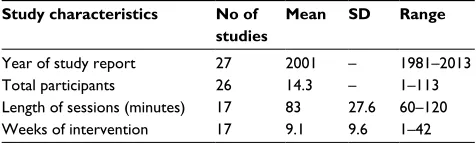
Most of the included studies used a group intervention (63%), although individual (30%) and family (7%) approaches were also represented. The interventions included psychotherapy and counseling with adjunct visual art modalities (33%), art therapy support groups (33%), individual art therapy inter-ventions (26%), and interinter-ventions using both individual and group formats (8%). The interventions were conducted by certified art therapists (7%), licensed counselors or psycholo-gists (26%), art therapy doctorate students (26%) clinical psychology doctorate students (30%), and co-facilitators of licensed clinicians and certified art therapists (11%). Interventions spanned an average of 9 weeks for an average number of 83-minute sessions, totaling an average of 6.7
intervention hours per participant. Other characteristics of
the samples and the studies are presented in Table 2. These variables were usually coded on the basis of the mean, but the medians or midpoints of the ranges were used when authors
failedto report this information.
Outcome measurement
Outcome measurement varied widely across studies despite similarities in treatment outcome foci. There was insufficient statistical information to obtain a pooled estimate of treat-ment effect; thus, creating a meta-analysis of the incorporated studies was beyond the remit for the current investigation. Outcomes were assessed using three different reporting methods: participants’ self-report, reports of significant oth-ers, and clinician-rated judgment. Instruments that required the participants to respond to questions about themselves on a conventional rating scale or open-ended were considered self-report. Rating scales that involved the evaluation of outward behaviors by other reporters were grouped as other report. Finally, there were instances in which outcomes were determined by a trained professional’s assessment of the par-ticipants’ functioning that was usually based on an accepted standard of distress (e.g., severity of depressive symptoms) or the participants’ artwork created during the intervention (e.g., Kinetic Family Drawing [KFD]). Approximately 56% of studies used participants’ self-report, 11% included reports of significant others, and 89% used various formats of clinician-rated judgment as a form of outcome measurement.
Approxi-mately 26% of studies used only clinician-rated judgments
Psychology Research and Behavior Management downloaded from https://www.dovepress.com/ by 118.70.13.36 on 26-Aug-2020
Dovepress
Weiskittle and Gramling
Table 1
Studies examining visual art treatment modalities with bereaved participants
Study
Study design
Control group
Sample characteristics
Intervention
Outcomes
Main findings
Bates
76
Cross-sectional, qualitative
N/A
Nine bereaved adults (four female) One 90-minute individual session
Meaning making
Improved acceptance of the loss and meaning made from the death
Brodie
78
Longitudinal, case study, qualitative
N/A
One maternally bereaved adolescent female
Individual art therapy sessions
Continuing bonds, meaning making, general distress Internalizing the reality of the death and meaning making were expressed with and facilitated by the participant’s paintings in tx
Carew
75
Case study, quantitative
N/A
Two bereaved children
Individual art therapy sessions
PTSD (IES), social functioning (CBC), continuing bonds, family functioning (KFD)
Significant reductions in PTSD and improvement in family functioning, “ns” cognitive functioning and social functioning
Chilcote
115
Longitudinal, mixed methods
N/A
113 children (ages 5–13
years) who had
experienced death from a recent tsunami Four 60-minute weekly group sessions PTSD, general distress, family functioning Through semi-structured drawing prompts, participants shared trauma and pain not previously verbalized
Coar
73
Longitudinal, qualitative
N/A
14 bereaved adolescent females Eight 60-minute weekly group therapy sessions Continuing bonds, meaning making, general distress Participants acknowledged their loss more readily following creation of ceramic mandalas and memory wall, “ns”
general distress
Ferszt et al
77
Longitudinal, qualitative
N/A
Eight incarcerated bereaved women Eight 60-minute weekly individual art therapy sessions Meaning making, general distress, self-esteem Participants expressed “bottled-up” grief sx not otherwise verbalized; self-esteem improved
Finn
80
Longitudinal, qualitative
N/A
Five bereaved children (four boys; ages 11–13
years)
Nine 60-minute weekly group counseling sessions
Social functioning, aggression
Participants improved in adjustment to loss, decreased aggression
Hernandez
116
Longitudinal, mixed methods
N/A
11 bereaved children/ adolescents (ages 6–14
years)
Six 50-minute weekly group therapy sessions
Anxiety (RCMAS)
Younger participants significantly decreased overall anxiety sx (n
=
4); older participants significantly
increased anxiety sx (n
=
5)
Herring
93
Longitudinal, quantitative
N/A
77 children/adolescents (59 female; ages 5–18
years)
Twelve group sessions over a 3–4-month time Grief (CARED, TRIG), PTSD (CPSS), complicated grief (IGTS)
Significant reductions in grief, “ns” difference in PTSD and IGTS
Hornbeck
117
Case study, qualitative
N/A
Three bereaved adult women Ten 120-minute weekly group sessions
General distress, stress
Participants improved in adjustment to loss
Hubnik
118
Longitudinal, mixed methods
N/A
25 paternally bereaved children (ages 7–12
years)
Six 60-minute weekly group therapy sessions General distress, cognitive functioning Drawings facilitated grief expression and indicated appropriate cognitive functioning
Isis
119
Cross-sectional, qualitative
N/A
Three bereaved adult women (ages 35–50
years)
Individual therapy sessions
Continuing bonds
Improved acceptance of significant other’s death
Kerewsky
120
Longitudinal, qualitative
N/A
One bereaved adult male
Individual and group sessions
Continuing bonds, meaning making, general distress The AIDS memorial quilt fostered meaning making, connectivity with the deceased, and exploration of mortality
Kohut
121
Longitudinal, mixed methods
N/A
15 bereaved individuals (adults and children) Four 120-minute group therapy sessions Continuing bonds, meaning making, general distress Memorial scrapbooking helped participants accept the reality of the death and validate life without the loved one
(
Continued
)
Psychology Research and Behavior Management downloaded from https://www.dovepress.com/ by 118.70.13.36 on 26-Aug-2020
Dovepress A systematic review of visual arts and grief therapy
Study
Study design
Control group
Sample characteristics Intervention Outcomes Main findings Kwan 122
Longitudinal, qualitative
N/A
Six bereaved older adults (ages 78–94 years) Six 90-minute weekly group (n=
3) and individual (n
=
3)
sessions
Continuing bonds, meaning making Participants’ acceptance of the death and meaning made from the loss sig. increased
Lang
123
Case study, qualitative
N/A
Two maternally bereaved female adolescents (age 16 years) 90-minute weekly group therapy sessions
General distress
Improvement in mood and social functioning
Lu
101
Case study, qualitative
N/A
One paternally bereaved child refugee (male; age 5 years) Forty-two 60-minute weekly individual therapy sessions Continuing bonds, PTSD, general distress Improvement in acceptance of loss and exploration of trauma event
Maier
72
Longitudinal, qualitative
N/A
10 bereaved adults
Six 120-minute weekly group therapy sessions Continuing bonds, relational functioning Connection to the deceased and emotional coping increased in communication about the deceased
Mango
124
Case study, qualitative
N/A
One bereaved older adult female
Weekly group therapy sessions
Meaning making
Increased acceptance of the death
McIntyre
100
Case study, qualitative
N/A
One paternally bereaved children
Weekly group therapy sessions
General distress
Individuality and connectivity in shared bereavement experiences through art
Peiffer
125
Longitudinal, qualitative
N/A
Five bereaved adults
Six 60-minute individual therapy sessions over the span of 3
months
General distress, meaning making Sharing and discussion of drawings most helpful in grief expression
Phillips
126
Case study, mixed methods
N/A
One bereaved adolescent (male; age 15
years)
Weekly individual and group therapy sessions Continuing bonds, academic achievement, social functioning Increase in social functioning, increased expression of continuing bonds
Schut et al
71
Longitudinal, quantitative
Control
group,
randomized, concurrent, TAU 52 bereaved adult inpatients Twenty 120-minute group sessions over 3
months
General health (GHQ)
Tx group had sig. greater health improvement than control
Serazin
127
Cross-sectional, qualitative
N/A
15 bereaved children (nine female; ages 6–12
years)
Group session
Continuing bonds, meaning making Improved connectivity to loved one and meaning made from loss
Simon
128
Longitudinal, qualitative
N/A
Seven spousally bereaved adults
Weekly individual sessions
Continuing bonds, meaning making, general distress
Improved acceptance of significant other’s death
Webb- Ferebee
94
Cross-sectional, quantitative
Control
group,
randomized, waitlist, TAU 27 bereaved individuals (adults, ages 26–66
years,
children ages 3–15
years)
Attendance of a 3-day overnight camp for bereaved families Anxiety (BAI), depression (BDI), family relations (FES), social functioning Sig. increase in family functioning, children’s social functioning, children’s anxiety, and adult depressive sx
Wells
92
Longitudinal, quantitative
N/A
34 bereaved children
Eight 60-minute weekly group therapy sessions
Self-efficacy (IPFI), positive outlook (T-CRS), academic achievement
Improved grades in the tx group but
“ns”
difference
between the tx and control groups at follow-up
Abbreviations:
BAI, Beck Anxiety Inventory; BDI, Beck Depression
Inventory; CARED, characteristics, attributions, and responses
after exposure to death;
CBC, Child Behavior Checklist; CPSS, Child PTSD Symptom Scale; FES,
Family
Environment Scale; GHQ,
General
Health Questionnaire; IES,
Impact of Event Scale; IGTS,
Intrusive Grief
Thoughts Scale; IPFI, Individual Protective Factors Index; KFD, Kinetic
Family
Drawing; N/A, not applicable; ns, not
significant; PTSD, postt raumatic stress disorde r; RCMAS, Revised Measure of Children’s Ma nifest Anxiety Scale; sig., significant; sx, symptoms; TAU, treatment as usual; T-CRS, Teacher–Child Rating Scale; TRIG, Texas Revised Inventory
of Grief; tx, treatment.
Table 1
(
Continued
)
Psychology Research and Behavior Management downloaded from https://www.dovepress.com/ by 118.70.13.36 on 26-Aug-2020
Dovepress
Weiskittle and Gramling
as reporting methods. Overall, researchers used the three reporting methods to assess outcomes in eight domains: general distress (48%), continuing bonds (44%), meaning making (41%), relational functioning/social adjustment (11%), trauma symptoms (9%), cognitive functioning (6%), anxiety (6%), and depression (3%). Research outcomes of the continuing bonds and meaning making domains are reviewed in more detail in the following sections. The domains of gen-eral distress, trauma symptoms, relational functioning/social adjustment, cognitive functioning, anxiety, and depression are subsequently reviewed within the combined context of negative grief symptoms. Some qualitative studies indicated an outcome focus of “grief ” or “healing from the loss” but did not delineate specific characteristics of these treatment aims. Upon further review of these studies, it became evident that investigators were looking for signs of general distress secondary to the participants’ bereavement. Thus, these outcome domains were categorized as general distress and were included in the review of negative grief symptomatol-ogy. The following sections present a summary of results categorized by the three outcome domains of: 1) continuing bonds, 2) meaning making, and 3) negative grief symptoms. The empirical support for each domain is discussed.
Continuing bonds
A total of 12 (44%) studies examined continuing bonds as an outcome measure of treatment effectiveness. The majority of studies investigating continuing bonds were qualitative. The aggregate of these findings suggests that visual art modalities facilitated participants’ adaptive preservation of ties with the deceased, and investigators usually argued this finding as an indicator of the treatment thereby aiding the healing process of grief. One important theme that arose across these qualitative studies was acceptance of the death.
Maier72 found that participants who created a scrapbook
memorializing their deceased loved ones in a grief support group reported that the scrapbooks helped them with “radical acceptance” of the loss as the creation process helped them
“witness the reality” of the decedent’s life arc. Coar73 found
that participants that completed eight 60-minute weekly
group therapy sessions incorporating the creation of ceramic mandalas facilitated participants’ adaptation to their loss and cultivated continued ties with the deceased. One study stood out by its singularity in measuring continuing bonds with projective measurement of participant artwork created during the intervention. Carew evaluated continuing bonds in his sample of parentally bereaved children with the KFD
test,74 in which participants are asked to draw a picture of
their families.75 Carew found that his participants’ family
drawings incorporated the deceased caregivers more inte-grally following their individual art therapy sessions than their pre-intervention KFDs, and interpreted this finding as
indication of improved continuing bonds with the decedent.74
Another theme that arose within the domain of continuing bonds was maintaining adaptive attachment to the decedent while coming to terms with the loss, a hallmark of the dual-process model’s oscillating dual-process of grief. For example,
narrative theme evaluations conducted by Bates76 of her
bereaved participants revealed endorsement of fondness and storytelling about the deceased that entailed the full life arc of their life story, demonstrating persevering attachment with healthy acknowledgment of the death.
Meaning making
A total of 11 (41%) studies examined meaning making as an outcome measure of treatment effectiveness. Interestingly, no included study evaluated this marker of bereavement adapta-tion quantitatively, despite available measures. Instead, stud-ies focused on qualitative self-report, often by participants’ evaluation of treatment at follow-up, and clinician-rated judg-ment. In a study of eight bereaved incarcerated women who completed 60-minute weekly individual therapy sessions, all participants expressed increased understanding of the events surrounding their loss and the ways in which it impacted their
emotional health and self-esteem.77 Clinician-rated judgment
was frequently made from inferences about participants’
visual art output. For example, Brodie78 reported evidence of
her case study’s meaning-making processing through paint-ing modalities by her use of the figure emergpaint-ing from the ground, a motif originally connected to meaning exploration
by Simon.79 Finn80 reported that incorporating visual art
tech-niques in her group counseling program for bereaved youth helped her clients adjust to their loss and learn new coping skills based on participants’ written evaluation of the group.
Finn80 gathered quantitative data on participants’ rating of
how well they met five distinct therapeutic goals on a 4-point scale where higher scores indicated greater achievement of the objective, and reported that participants rated each item
Table 2 Study characteristics
Study characteristics No of studies
Mean SD Range
Year of study report 27 2001 – 1981–2013
Total participants 26 14.3 – 1–113
Length of sessions (minutes) 17 83 27.6 60–120
Weeks of intervention 17 9.1 9.6 1–42
Psychology Research and Behavior Management downloaded from https://www.dovepress.com/ by 118.70.13.36 on 26-Aug-2020
Dovepress A systematic review of visual arts and grief therapy
with a 3 or 4 (indicating strong endorsement of the objectives) but failed to provide mean and SD of the scores.
Negative grief symptoms
A total of 15 (56%) studies examined grief symptomatology as an outcome measure of treatment effectiveness. In the general bereavement literature, assessment of negative grief symptomatology can encompass a myriad of outcomes such as various functional impairments, physical health symptoms, emotional well-being, and psychological concerns. This review’s included studies used the following specific domains to investigate the overall outcome of negative grief symp-tomatology: general distress, depression, anxiety, cognitive functioning, relational functioning/social adjustment (i.e., social functioning, family functioning, relational function-ing, and self-esteem), trauma symptoms, general physical health, academic achievement, aggression, and complicated grief symptoms. This outcome domain entailed the major-ity of quantitative measures used by the reviewed literature. The included studies quantitatively evaluated the following components of negative grief outcomes: symptoms of anxiety
with the Beck Anxiety Inventory (BAI)81 and the Revised
Measure of Children’s Manifest Anxiety Scale (RCMAS);82
depressive symptoms with the Beck Depression Inventory II
(BDI-II);83 social/familiar functioning with Family
Environ-ment Scale (FES);84 social functioning with the Child
Behav-ior Checklist (CBC)85 and the Teacher–Child Rating Scale
(T-CRS);86 resiliency with the Individual Protective Factors
Index (IPFI);87 symptoms of posttraumatic stress disorder
(PTSD) with the Child PTSD Symptom Scale (CPSS)88 and
Impact of Event Scale (IES);89 complicated grief
symp-toms with the Intrusive Grief Thoughts Scale (IGTS)90 and
the TRIG;68 and physical health with the General Health
Questionnaire (GHQ).91 In addition, Wells92 recorded grade
marks of pediatric participants as a quantitative measure of academic achievement.
Reviewing these results cumulatively, there is modest but conflicting evidence for visual arts’ effectiveness in
addressing these syndromes. Schut et al71 found that both the
treatment group receiving weekly group art therapy sessions and the waitlist control group demonstrated general health improvement over the course of the study, but that the treat-ment group receiving weekly art therapy sessions improved
significantly more than the control group. Wells92 found that
in a sample of bereaved children (n = 34) receiving weekly
art therapy sessions found a slight overall improvement in the measured outcomes of academic achievement, self-efficacy, and positive outlook, but there was no statistically significant
difference between the treatment and control group at follow-up in these domains. Similarly, after traumatically bereaved children completed 12 therapeutic sessions with adjunct
visual art modalities, Herring93 reported results that
evi-denced significant reductions in cognitive and affective grief reactions and avoidance symptoms similar to those found in randomized controlled trials of grief-focused interventions, as measured by the CPSS and the IGTS. However, reductions in reexperiencing and arousal symptoms were not found. In fact, arousal symptoms appeared to increase throughout treat-ment for a subgroup of children who reported high levels of
anger and fighting by current caregivers.93 Webb-Ferebee94
found that younger participants significantly decreased over-all anxiety symptoms, while older participants significantly increased anxiety symptoms, as measured by the RCMAS.
Visual art modality
The visual art modalities administered by included studies were heterogeneous. Thirteen (48%) studies evaluated inter-ventions that administered multiple modes of therapeutic visual art techniques. For example, one study evaluated grief outcomes following participants’ completion of photographic essays and process-oriented assemblages about their loved
one.76 Another study asked participants to draw an abstract
picture depicting the feelings of their grief, create a memory box, and draw a metaphorical bridge of the progress of their
grief, among other activities.117 Nine (33%) studies
imple-mented therapeutic drawing or painting exercises. Specific examples of drawing or painting examples include a family
portrait drawing and drawing the feelings of their grief.92
Two studies (7%)72,121 examined impact of a scrapbooking
bereavement group in which bereaved individuals created a scrapbook about their loved one. One study evaluated participants who created ceramic mandala tiles to create a
mosaic reflection.73 Another study assessed making a
memo-rial quilt.120 Finally, one study investigated the use of Chinese
brush strokes in bereavement-related tasks.122
Discussion
The purpose of this review was to evaluate the extant litera-ture regarding visual art therapy techniques with a bereaved clinical population. The number of studies that were relevant
to this particular review was limited (n = 27), qualifying the
strength of conclusions drawn from key results. Further, the heterogeneity of the reviewed studies offers weak external validity and limits their findings’ generalizability to other set-tings or populations. The variations in the model and content of visual art modalities also lend complication in determining
Psychology Research and Behavior Management downloaded from https://www.dovepress.com/ by 118.70.13.36 on 26-Aug-2020
Dovepress
Weiskittle and Gramling
efficacy and replicability. Nevertheless, a number of interest-ing trends emerged that provide avenues for future research considerations.
When reviewed cumulatively, the included experimental studies documented modest improvements in the facilitation of continuing bonds and meaning making with participants who experienced visual art treatment modalities compared with participants assigned to a control group or who under-went alternative treatments. Nonexperimental studies also provided support for visual art modalities as an effective tool to facilitate continuing bonds and meaning making, although the majority of these findings were qualitative and based on subjective self-report or clinician-rated judgments. There is weaker support for this treatment modality’s efficacy in alleviating negative grief symptoms, as was exemplified by both qualitative and quantitative investigation. Indeed, some studies reported conflicting results within their own participants, as some improved in negative grief symptoms over the course of treatment while others showed no signifi-cant improvement or even worsened. This finding provides support for the distinction between these constructs and the movement for conceptualizing grief as a multidimensional experience. Our findings indicate that therapeutic use of visual art modalities with bereaved populations may aid the methods for acquiring positive skills in adapting to bereave-ment (i.e., sense making, benefit finding, and preservation of the loved one’s legacy) but there is less evidence to support its effectiveness in alleviating the pain of loss. This result is congruent with the existing literature on the investigated domains of grief. For example, meaning making and post-loss have been found to predict the positive outcomes for bereaved
individuals across numerous studies.95 It is also notable that
meaning making is a difficult process for the bereaved and is rarely successful even in those who intentionally search
for meaning following a loss,96 which lends particular
sig-nificance to the documented facilitation of meaning made in bereaved participants.
The minimal impact on negative grief symptoms may also be congruent with recent literature. The degree to which any intervention significantly alleviates negative symptoms within the range of normative grief reactions (as opposed to
complicated grief) has been contended in the literature.97,98
A meta-analysis of bereavement interventions suggested that treatment recipients with indications of complicated grief experience the greatest benefit and alleviation of functional
impairment.11 Further, negative grief symptoms may not be
the most reliable marker of “progress” following the death of a loved one. A prospective study conducted by Bonanno
et al99 found strong evidence against the idea that those who
do not exhibit grief following a loss are insecurely attached and emotionally distant. Thus, the absence of negative grief symptoms is not necessarily a marker of successful or unsuc-cessful adaptation to the death, especially considering that courses of grief responses are variegated, with some
indi-viduals endorsing delayed or inhibited grief.10 There is also
substantial evidence that negative grief symptoms alleviate over time for the majority of those bereaved, even without
the assistance of therapeutic intervention.99 Thus, much of
bereavement therapy aims to facilitate the strength-based approaches to grief, focusing on positive outcomes and
cog-nitive understanding of the impacts of the loss.96 Thus, grief
therapy is sometimes considered a preventative approach to bereavement, to buffer possible manifestations of impaired functioning, rather than the traditional aims of psychotherapy
for direct alleviation of targeted symptoms.11 As such, this
review’s finding that visual art modalities demonstrate some evidence of developing positive outcomes but not impacting negative outcomes may indicate congruent trends with exist-ing treatment aims for the bereaved.
Perhaps the most convincing piece of evidence in sup-port of continued research can be found in the self-resup-port measures collected by investigators. Participants overwhelm-ingly endorsed a positive subjective impact of the treat-ments incorporating visual art modalities. Across several studies, participants rated their well-being as significantly
improved.100,101 Although this finding is ineffectually captured
with measurement of objective changes, it warrants further attention and perhaps speaks to the efficacy of visual art tech-niques witnessed by clinicians across disciplines. The use of positive or growth-oriented measures (e.g., personal growth, posttraumatic growth, benefit-finding, and self-efficacy) could be an avenue of future research that provides insight into participants’ experiences and whether they translate to objective outcomes.
Limitations and considerations for future
research
The findings of this review highlight significant problems in number, content, and rigor of the relevant existing literature. Our review uncovered substantial weaknesses in the follow-ing domains: 1) operationalized definitions, 2) study design, 3) outcome measurement, 4) underreporting of individual difference variables, and 5) underreporting of intervention characteristics and development. Each domain is examined in more detail in the following sections followed by consid-erations for addressing each domain.
Psychology Research and Behavior Management downloaded from https://www.dovepress.com/ by 118.70.13.36 on 26-Aug-2020
Dovepress A systematic review of visual arts and grief therapy
Operationalized definitions
A reappearing difficulty in compiling the current literature review was the paucity of operational definitions, particularly within the niche of visual art interventions. Where does one differentiate between visual art therapy techniques, art as therapy, expressive art modalities, and creative expressionism within psychotherapy? As previously noted, this review could not rely on an existing operational definition of therapeutic visual art modalities. Rather, the inclusion criteria for types of interventions reviewed were created with reference to
multidisciplinary sources.69,70 Expressive art therapy has
historical difficulty in forming an accurate, comprehensive, and concise definition of its services (a thorough historical
review is given in the study by Kalmanowitz and Potash102).
The American Art Therapy Association’s current definition of its treatment parameters has been contradictorily criticized for both its detail and incompleteness: (art therapy is)
art media, the creative process, and the resulting artwork to explore their feelings, reconcile emotional conflicts, foster self-awareness, manage behavior and addictions, develop social skills, improve reality orientation, reduce anxiety, and increase self-esteem.69
This definition is difficult to truncate, and researchers have recommended for American Art Therapy Association to seek a simpler definition that more clearly conveys the scope of
the profession.104,105 Spooner105 describes the expressive
arts’ lack of operational definitions as a marketing problem: because practitioners using these methods are unable to clearly articulate their scope of practice to other disciplines, art therapy is suffering from a lack of brand awareness. The confusion over treatment characteristics and categorization is negatively affecting researcher’s ability to conduct research with reliable terminology. This is especially true when dis-ciplines outside of art therapy attempt to evaluate efficacy of modalities within the scope of their practice, as is the case in the current review. Used consistently, clear and memorable definitions would enhance the empirical study of expressive arts in therapy. Specifically, clarifying treatment terminology and defining brackets of intervention would facilitate cross-disciplinary research methods investigating the expressive arts as therapeutic modalities.
Study design
The review of included studies’ methodologies points to the importance of rigorous study design. Only 7% of included studies used a control group. Researchers have highlighted the importance of using control groups in research with
bereaved.106 For intervention efficacy studies, particularly
with the bereaved, it is evident that an active control group is essential to help establish causation and strengthen internal validity. Without control groups, it is difficult to examine whether the suggested facilitation of meaning making and continuing bonds could be attributable to the visual art intervention or whether these effects occurred due to other factors. When using control groups, other important aspects of study design with bereaved populations are the use of random or matched assignment, inclusion of enough participants for sufficient power due to high rates of
attri-tion, and preventing poor adherence to the intervention.99
Bereavement researchers have advocated for evaluation of grief therapies to be conducted in a laboratory setting or in an online format for increased validity and reliability and
decreased attrition to reach necessary statistical power.107
This would improve intervention efficacy, which can later be generalized as appropriate, but is difficult in application for clinicians conducting research alongside their existing clinical practice.
Practicing clinicians who use expressive art modalities with grieving individuals are often confident of the thera-peutic benefits, but can rarely explain with precision how the artwork was produced in therapy or what specific factors
contributed to client improvement.108 Furthermore, many
clinicians often express doubt in the feasibility of commu-nicating therapeutic benefits of the expressive arts through research. Consequently, quantitative analysis of visual art effectiveness is scant, and qualitative analysis is varied in form and rigor. The findings of this review reveal a heavy reliance of the case study approach in research conducted by both psychologists and art therapists. The case study avenue of research provides helpful qualitative detail on individual treatment levels, but leaves a paucity of generalizable quan-titative data or other evidence for larger-scale effectiveness. The frequent implementation of single case design may reflect the regularity of visual arts’ use within the clinical field. Indeed, one significant finding from this review was the prevalence of practicing clinicians’ as the primary research investigators. However, if the majority of the literature on the use of visual arts with grief therapy is conducted by practicing clinicians as this review suggests, the field’s aim of more robust research methodology faces some barriers. For example, the majority of clinicians do not work in settings conditional for experimental research. Community mental health clinics, private practice, and small nonprofit organiza-tions rarely have formal structures or financial support for complex study design, requiring clinicians in these settings
Psychology Research and Behavior Management downloaded from https://www.dovepress.com/ by 118.70.13.36 on 26-Aug-2020
Dovepress
Weiskittle and Gramling
to navigate research endeavors on their own. Art therapists may face particular challenges in conducting independently driven, robust methodologies as research is often only periph-erally incorporated into art therapy education programs. Art therapists report feeling far more confident about their clini-cal skills than research skills, and offer skepticism in their
ability to provide evidence for their practices’ efficacy.105 This
mindset is demonstrable by art therapists’ reported distaste
for the spreading “clinification syndrome” of art therapy,105 a
term used to describe the perception of increased favoritism of empirically driven treatment approaches at the detriment of art therapists’ uniquely layered artistic expertise.
Accordingly, one future avenue of research that is sensi-tive to the needs of practicing clinicians aiming to evaluate their practice is the implementation of baseline symptom measurement. Pre–post outcomes provide empirical support and can elevate the rigor of clinical evaluation to a single-case experimental study. Using brief quantitative measures in this regard could also benefit the clinician’s therapeutic practice as results offer feedback and potential courses of discussion within the treatment setting. Specific examples of possible quantitative measures are offered in the following section.
Outcome measurement
The majority of quantitative outcome measures used in the included studies were well validated and reliable measure-ment tools. Collectively, these measures allowed assess-ment of a wide scope of negative grief symptoms, but were limited in their ability to quantitatively capture treatment effects on continuing bonds and meaning making. Most studies additionally included an essay evaluation form, which typically used single items to assess the participants’ subjective experiences during and after the intervention. Other measures developed by the researchers were based on several single-item Likert-scale questions and were sometimes used as supplemental measurement tools, but investigators puzzlingly did not report the mean or SD of these outcomes. Nonetheless, the inclusion of a variety of assessments helped provide triangulation of data and is a methodological strength.
A noted trend in the outcome measurement of the included studies of this review is the propensity to rely on participants’ artwork created during grief treatment as an
indicator of outcome change. For example, Carew75 used
the KFD style to measure family environment and rela-tional functioning. Many studies that included this form of clinician-rated judgment outcome measurement were not
mixed methods, and this pattern compromises their internal validity. Luckily, increased recognition of theory-driven data has yielded a number of empirically validated measures of bereavement adaptation. The CBS is a brief measure that rates 10 dimensions of continuing bonds (e.g., reminiscing,
linking objects, and ongoing expressions of love).52
Meaning-making processes can be reliably assessed with prompts for participants to consider whether they have been able to
make sense of their loss and in what ways.58 For a singular
but comprehensive measure of grief symptomatology, the HGRC provides a multidimensional report on both nega-tive and posinega-tive aspects of bereavement experiences, such
as personal growth, anger, and cognitive disorganization.66
Since the HGRC’s development, it has been identified as one of the most widely employed instruments for measuring grief
reactions and personal growth after a loss.109 In addition, the
HGRC has been found to be compatible with the meaning reconstruction model of grief, allowing for consistency in grief conceptualization, symptom tracking, and treatment
aims.17 This section only listed a limited number of measures
and focused on the outcomes investigated for the purpose of this review (i.e., continuing bonds, meaning making, and negative grief symptomatology), where a more comprehen-sive review of available bereavement measurements is given
in the studies by Minton and Barron110 and Neimeyer.111
Outcome measurement used in the included studies of this review provides modest preliminary support for visual art treatment modalities’ effectiveness in facilitating continu-ing bonds and meancontinu-ing makcontinu-ing, largely based on subjective outcome measures of participant self-report and investigators’ clinical judgment. In addition to objective outcome measures of continuing bonds and meaning making, future research may benefit from assessment of other positive changes that can occur during bereavement such as posttraumatic growth and positive identity changes. These outcomes can be reli-ably assessed through well-established measures such as the Personal Growth subscale of the HGRC and the Grief
and Meaning Reconstruction Inventory.66,112 Use of these
measures in future research endeavors will address the paucity of objective outcome measurement in the literature while also capturing possible intervention effects that would have otherwise been missed. When used in conjunction with clinician-rated judgment of symptom improvement and projective tests of visual artwork created during the course of the intervention, these tools can facilitate validation and clarification of the mechanisms of change within existing clinical practice.
Psychology Research and Behavior Management downloaded from https://www.dovepress.com/ by 118.70.13.36 on 26-Aug-2020
Dovepress A systematic review of visual arts and grief therapy
Underreporting of individual difference variables
Given the complexity of individual difference variables’ influence on adjustment to bereavement, it is especially important to report participant demographics and character-istics of the loss experience when evaluating the effectiveness of grief therapies. However, few of the reviewed studies reported participants’ type of loss (i.e., homicide, suicide, illness, or accident), expectedness of the loss, relationship to the deceased, or other important variables that influence the trajectories of grief expressionism. Future intervention research should not only gather this information for inclu-sion of publications but also allow it to inform clinician decision-making of intervention characteristics. Current bereavement theory emphasizes the variety within reactions to bereavement, despite its ubiquitous nature, and is begin-ning to inform the development of applicable interventions based on participant characteristics. This is evidenced by
Thompson and Neimeyer’s33 recently published manual of
more than 50 expressive art techniques to incorporate into grief therapy, many of which are introduced by guiding the reader in situational characteristics of the client or the death experience that would yield most efficacious results.
If research further substantiates the benefit of therapeu-tic visual art modalities with the bereaved, empirical focus should shift to investigation of possible mechanisms of change. This next step would be advanced by identifying treatment components most salient to influencing measurable outcomes. For example, in the included studies of this review, visual art modalities were often an adjunct to other formula-tion of grief therapy. Parceling psychoeducaformula-tion about grief, exposure to grief cues, encouragement of emotional expres-sion, cognitive or meaning-oriented interventions, and group format vs. individual disclosure would allow for an elevated understanding of the underlying influencers of objective out-comes in this modality of grief therapy. Investigating these characteristics may enhance bereavement interventions by providing guidance on the ways individual difference vari-ables influence the efficacy of particular treatment methods.
Underreporting of intervention characteristics and development
A rarer but equally problematic limitation of included stud-ies was the exclusion of specific treatment descriptions. Every included study identified the visual art modality used within the treatment setting (e.g., drawing about the loss and making a memorial scrapbook) but few specified treatment detail over time. This is especially problematic to the literature’s treatment reliability as only 9% of included
studies reported following a treatment manual. Similarly, few studies explained the theoretical underpinnings and the operational implementation of their interventions. It was rare for studies to describe how the interventions were developed, which empirically informed theories were drawn from, or proposed hypotheses for agents of change. This reference deficit to theoretical frameworks has been similarly impli-cated in literature reviews of bereavement therapies unrelated
to expressive arts.11 Future research endeavors aiming to
investigate treatment efficacy would enhance their method-ology and appropriateness if informed by specific treatment aims rooted in existing grief theory. Furthermore, as in most intervention research, investigators in the reviewed studies failed to qualify their findings with clarification over which clients were treated by the same therapist. This absence can pose validity issues, as researchers have noted that such nesting can lead to the overestimation of treatment benefit
because of therapist effects or group effects.113,114
Conclusion
This review examined the clinical effectiveness of using visual art modalities in a therapeutic context with bereaved individuals. The applicability of the Stroebe and Schut’s dual-process model of bereavement and Neimeyer’s meaning reconstruction model for understanding treatment outcomes and conceptualizing future avenues of research was also investigated. The heterogeneity of the studies investigated by this review indicates that visual art modalities are a psychotherapeutic approach adaptive to an assortment of clinical situations. Although this review revealed modest but promising preliminary evidence of visual art modali-ties’ effectiveness with a bereaved population, the existing literature is scant, heterogeneous, and thereby difficult to generalize. Important work in the area of using visual art modalities with grief therapy has been completed, but the designs of the majority of the available studies do not provide sufficient evaluation of this treatment modality and a great deal of work remains. Findings from our review suggest that grief interventions using visual art techniques facilitate continuing bonds and meaning making, but there is little evidence to support a significant impact on negative grief symptomatology. Furthermore, we know very little of the processes by which visual arts facilitate continuing bonds and meaning making. Given the multitude of individual differ-ences and responses to loss, future research into the increas-ingly varied methods of grief therapies used to address the diversity of the bereavement experience is warranted. In the next stage of research examining expressive art as treatment
Psychology Research and Behavior Management downloaded from https://www.dovepress.com/ by 118.70.13.36 on 26-Aug-2020