www.pharmascholars.com
110
Review Article
CODEN: IJPNL6
EXPLORING SOLID LIPID NANOPARTICLES FOR INTRANASAL
ADMINISTRATION OF STREPTOMYCIN
Indu Pal Kaur* and Manoj Kumar Verma
University Institute of Pharmaceutical Sciences, Panjab University, Chandigarh, India
*Corresponding author e-mail:
[email protected]
ABSTRACT
Streptomycin, the foremost class of drugs called aminoglycosides to be discovered is the only antibiotic remedy for tuberculosis. Streptomycin cannot be given orally, but must be administered by regular intramuscular injections as it is reported to have unreliable absorption throughout the GIT. Further to this, its use in cerebral tuberculosis is minimal as it does not cross the blood brain barrier and drug induced irreversible ototoxicity (Type B toxicity) additionally limits its use. Furthermore, streptomycin is majorly excreted unchanged in urine, as a result of which it is accumulated in kidneys, leading to nephrotoxicity when given continuously for more than 2-3 months. Hence the treatment with streptomycin cannot exceed beyond this period. In the present work we propose the newer drug delivery concepts for effective delivery of streptomycin in a bioavailable form with minimal side effects. Further, a nasal route of administration is also proposed to accomplish its rapid delivery to the brain and diminish the side effects associated with its use considering a controlled slow release from the developed system. Enhancing bioavailability and minimizing serious side effects with suggestion of a noninvasive nasal route would help successfully alleviate systemic and cerebral tubercular infections.
Key words:
Streptomycin, Intranasal, Solid lipid nanoparticles and Biodistribution.
INTRODUCTION
Aminoglycosides contain aminosugars linked to an aminocyclitol ring by glycoside bonds. They are polycations and their polarity is in part responsible for pharmacokinetic properties shared by all members of the group. They are not absorbed adequately after oral administration, inadequate concentrations are found in cerebrospinal fluid and all are excreted relatively rapidly by the normal kidney. The aminoglycosides are used primarily to treat infections caused by aerobic gram-negative bacteria; they interfere with protein synthesis in susceptible microorganisms and they are bactericidal in contrast to most inhibitors of microbial protein synthesis which are bacteriostatic1.
Streptomycin is one of the cost effective antitubercular drugs (ATDs) and is recommended in certain categories of tuberculosis (TB) patient’s e.g patients showing relapse/treatment failure,
compulsory withdrawal of isoniazid and rifampicin, TB meningitis, HIV-infected TB patients receiving protease inhibitors and certain cases of multidrug resistance2. In addition among aminoglycosides streptomycin is associated with the least resistance and exhibits no cross-resistance to other aminoglycosides3.
TUBERCULOSIS
Tuberculosis (TB) is a major cause of illness and death worldwide, especially in Asia and Africa. About one third of the total global population gets infected with Mycobacterium tuberculosis every year. More than half of the untreated or inconsistently treated patients die. Inspite of the availability of drugs & of a well defined therapeutic regimen (WHO) recurrence of the disease is common. The standard regimen for the treatment of drug
International Journal of Pharmacy
www.pharmascholars.com
111
susceptible tuberculosis is two months of isoniazid (INH), rifampin and pyrazinamide followed by four months of INH and rifampicin (patients with concomitant infection with tuberculosis and HIV may require treatment for a longer period).When streptomycin is added to this regimen because of
suspected or proven drug resistance, the
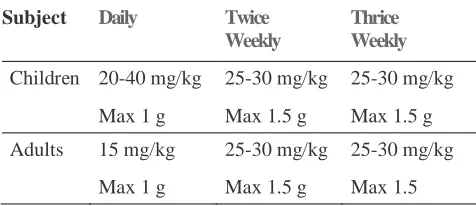
recommended dosing for streptomycin1 is as shown in Table 1.
Table 1: The recommended dosing for Streptomycin1
Subject Daily
Twice Weekly
Thrice Weekly
Children 20-40 mg/kg 25-30 mg/kg 25-30 mg/kg
Max 1 g Max 1.5 g Max 1.5 g
Adults 15 mg/kg 25-30 mg/kg 25-30 mg/kg
Max 1 g Max 1.5 g Max 1.5
Streptomycin is usually administered daily as a single intramuscular injection. A total dose of not more than 120 g over the course of therapy should be given unless there are no other therapeutic options. In patients older than 60 years of age the drug should be used at a reduced dosage due to the risk of increased toxicity. Multiple drug therapy (Isoniazid, Rifampicin, Streptomycin and Pyrazinamide) of aggressive nature and a long duration (1-2 years) is usually recommended, for the control of tuberculosis, to avoid development of resistance. The problem is further aggravated by the fact that all the four antitubercular drugs (ATDs) agents except rifampicin are expected to show poor permeation across the BBB (Blood Brain Barrier) as indicated by their low Log P values. Rifampicin though having a favorable Log P (2.7), has a poor solubility, which can again affect its bioavailability.
With no new ATD having been launched in the last 50 years, it becomes imperative to develop suitable carrier systems for the existing ATDs to tailor their entry into systemic circulation and even to brain for the control of cerebral tuberculosis. Developing suitable delivery systems will exhibit a trifold benefit of improved targetability, permeability and a controlled release.
TUBERCULOUS MENINGITIS (TBM)
Tuberculosis of the central nervous system (tuberculous meningitis; TBM) accounts for almost 5% of the extrapulmonary cases. Meningitis, a particularly severe form of tuberculosis, occurs most frequently in countries with high incidence of
tuberculosis and may result in death or severe neurologic impairment in most patients, despite antitubercular therapy. The disease first discovered in 1836 by Green, still lacks a perfect therapy. Difficulty in diagnosing, managing and deciding the optimum dose; the drug related limitations and duration of treatment; and adjunctive corticosteroid therapy and neurosurgical interventions in TBM pose a great challenge to the physicians throughout the world4. WHO recommends isoniazid, pyrazinamide, ethambutol, rifampicin and streptomycin as first line treatment of cerebral tuberculosis1. Out of these five enlisted drugs, streptomycin is administered intramuscularly.
STREPTOMYCIN
Streptomycin is a bactericidal antibiotic in therapeutic dosage. The mode of action involves interference with normal protein synthesis and production of "faulty proteins". Streptomycin is active against susceptible strains of many
gram-negative and gram-positive organisms, and
M. tuberculosis. When used alone, bacterial
www.pharmascholars.com
112
25µg/mL. Ototoxicity is largely irreversible and results from progressive destruction of vestibular or cochlear sensory cells, which are highly sensitive to damage by aminoglycosides5.
INTRANASAL ROUTE OF ADMINISTRATION
Drugshave been administered nasally for therapeutic and recreational purposes since ancient times. Psychotropic drugs and hallucinogens were snuffed for their purposes by the Indians of South America, and this practice is currently widespread among abusers of cocaine and heroin. Traditionally the nasal route has been used for delivery of drugs for local treatment of diseases such as nasal congestion, allergy and infections. The interest in and importance of the systemic effect of drugs administered via the nasal route have however expanded over recent decades. Nasal administration offers an interesting alternative, for achieving systemic drug effects, to the parenteral route, which can be inconvenient, or impractical if a drug is intended for the treatment of chronic disease; or oral administration, which can result in unacceptably low bioavailability because of significant degradation in the GIT due to enzymatic or acidic environment or metabolized to a high degree via the first pass effect in the liver. The nasal epithelium is a highly permeable monolayer, the sub-mucosa is richly vascularised and hepatic first pass metabolism is avoided after nasal administration. Other attractive feature includes the rather large surface area (180 cm2 because of the presence of large no. of microvilli) of the nasal cavity and the relatively high blood flow, which promotes rapid absorption, porous endothelial membrane and highly vascularised tissue providing an attractive site for rapid and efficient systemic absorption; furthermore, self medication is easy and convenient. Currently, nasal administration is used therapeutically for the systemic absorption of drugs in a variety of indications, including sumatriptan for migraine6, the antidiuretic desmopressin for the treatment of diabetes insipidus7, and oxytocin for the stimulation of breast milk ejection. Other drugs still in the research and development pipeline, which have potential for administration nasally includes vitamin B12 or hydroxocobalamine, various benzodiazepines
and the dopamine agonist apomorphine for patients with Parkinsonism. Nasal Drug delivery provides a viable alternative for the administration of many pharmaceutical agents. Some of the major advantages offered by the nasal route include:
Rapid absorption into the systemic circulation.
Rapid onset of therapeutic action.
Elimination of first pass hepatic metabolism. Avoids degradation of drugs in the gastrointestinal tract, resulting from acidic or enzymatic degradation.
Rich vasculature and highly permeable structure of nasal mucosa results in higher bioavailability thus requiring lower doses of a drug molecule.
More flexible dosing schedule and control of drug effects.
No pulmonary toxicity. Less drug degradation.
Easily accessible, non-invasive route, thus better patient compliance.
Self-medication is possible through this route.
Offer lower risk of overdose.
Easy accessibility to blood capillaries. Direct transport into systemic circulation and CNS is possible.
Does not have any complex formulation requirements.
Various studies have demonstrated that intranasal administration offers a practical, noninvasive, and an alternative route of administration for rapid drug delivery to the brain8-10. Intranasal drug delivery also offers the advantages that drugs can be administered simply, cost effectively, and conveniently11. Direct transport of drugs to the brain circumventing the brain-barriers following intranasal administration provides a unique feature and better option to target drugs to brain12-14. The neural pathway between the nasal mucosa and the brain provide a unique pathway for noninvasive delivery of therapeutic agents to the CNS12, 14-16. The olfactory neural pathway provides both intraneural and extraneural pathways into the brain. The intraneural pathways involve axonal transport and require hours to days for drugs to reach different brain regions17-20. The extraneural pathway, however probably relies on bulk transport through perineural channels, which deliver drugs directly to the brain parenchymal tissues, to the cerebrospinal fluid or both.
www.pharmascholars.com
113
an inverse log correlation between intranasal absorption and the molecular weight of water-soluble compounds. Hence, the paracellular route will be less efficient for large molecules and is dependent upon the molecular weight of the drug with a general molecular size cut – off of less than 1000 Dalton. The extent of absorption of a drug thus depends on molecular weight particularly for hydrophilic compounds and the absorption reduces significantly if for high molecular weight (greater than 1000 Daltons) drugs except with the use of penetration enhancers. It has been reported that a good linear correlation exists between the Log percentage drug absorbed nasally and the log molecular weight of water soluble compounds suggesting the participation of aqueous channels in the nasal absorption of water soluble molecules.
The second mechanism involves transport through a lipoidal route that is also known as the transcellular process. Latter is responsible for the transport of lipophilic drugs by an efficient concentration dependent passive diffusion process (receptor or carrier mediated/vesicular transport mechanism). This pathway is especially suited for small lipophilic molecules or large molecules. Drug solubility is a major factor in determining absorption of drug through biological membranes. It not only limits the drug absorption per se, it can also limit a formulator’s ability to formulate a product if the drug is not sufficiently soluble in the desired vehicles. As nasal secretions are more watery in nature, a drug should have appropriate aqueous solubility for increased dissolution. Particles deposited in the nostrils need to be dissolved prior to absorption. If the drug remains as particles in nostrils, or if they are cleared away from the nasal cavity, one may not observe absorption of the drug.
NANOPARTICLES AS OPTION FOR INTRANASAL BRAIN DELIVERY
Nanoparticles are solid colloidal particles ranging in size from 1 to 1000 nm (below 1μm) and composed of macromolecular material. Nanoparticles could be polymeric or lipidic, the later are frequently referred as solid lipid nanoparticles (SLNs). Polymeric nanoparticles are carrier systems presenting diameters lower than 1 μm that can be named nanocapsules or nanospheres depending on their composition. The presence of oil in the nanocapsules leads to a vesicular structure while its absence in nanospheres provides a matricial organization of the polymeric chains. Considering the encapsulation mechanisms the drug can be entrapped, dispersed, dissolved within or adsorbed21-26.
SLNs are taken up readily by the brain because of their lipidic nature. The bioacceptable and biodegradable nature of SLNs makes them less toxic
as compared to polymeric nanoparticles.
Supplemented with small size which prolongs the circulation time in blood, feasible scale up for large scale production and absence of burst effect makes them interesting candidates for study.SLNs combine the advantages of polymeric nanoparticles, fat emulsions and liposomes while simultaneously avoiding their disadvantages27. The advantages of SLNs include the following:
1. The nanoparticles and the SLNs particularly those in the range of 120–200 nm are not taken up readily by the cells of the RES (reticulo endothelial system) and thus bypass liver and spleen filtration28.
2. Controlled release of the incorporated drug can be achieved for upto several weeks29-31. Further, by coating with or attaching ligands to SLNs, there is an increased scope of drug targeting32,33.
3. SLN formulations stable for upto three years have been developed. This is of paramount importance with respect to the other colloidal carrier systems34,35. 4. High drug payload.
5. Excellent reproducibility with a cost effective high pressure homogenization method as the preparation procedure36.
6. The feasibility of incorporating both hydrophilic and hydrophobic drugs37-39.
7. The carrier lipids are biodegradable and hence safe40-42.
8. Avoidance of organic solvents33.
9. Feasible large scale production and sterilization29,
43
.
Solid lipid nanoparticles (SLN) were developed at the beginning of the 1990s as an alternative carrier system to the existing traditional carriers, such as emulsions, liposomes and polymeric nanoparticles44. SLN made of solid lipids (lipids being solid at room and body temperatures) are submicron colloidal carriers (50–1000 nm) dispersed either in water or in an aqueous surfactant solution45. Compared to other particulate carriers, SLNs show distinct advantages, as drug delivery system46 of a good tolerability, biodegradation47 and the possibility of production on large industrial scale48. Also, it has been reported that nanoencapsulation of proteins in lipid nanoparticles improves their bioavailability, prolongs their blood residence time and/or modifies their biodistribution49,
50
www.pharmascholars.com
114
coating of SLNs may permit the interaction and transport of SLN through the nasal mucosa and therefore bring great benefit improved including compliance, as nasal drug carriers especially for vaccines. Various reports on coating polymeric nanoparticles with PEG gave promising results as vaccine carriers. Hydrophilic particles are preferable to hydrophobic ones in terms of their utility as mucosal carriers.
OUR RESEARCH WORK
Streptomycin is a potential candidate for effective therapy for tubercular meningitis, provided suitable strategies to gain an entry into the brain, are used. The restrictive mechanisms, imposed by blood brain barrier (BBB), need to be overcome by the development of novel drug carriers systems. Thus we developed solid lipid nanoparticles (SLNs) of streptomycin, to achieve high plasma and brain concentrations. The proposed formulation was envisaged to show improved stabilization, better permeation due to surfactants and cosurfactants and enhanced bioavailability, controlled drug delivery and, consequently better, improved and rapid delivery to brain with diminished side effects. Streptomycin loaded SLNs (S-SLNs) were prepared
using microemulsification technique and
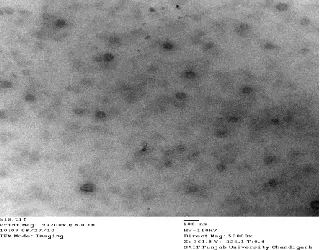
characterized for particle size distribution (d50=153.7
nm), shape (TEM, Fig 1) drug content (89%), entrapment efficiency (60%), and zeta potential (-3mv). Biodistribution studies of S- SLNs and free streptomycin (F-S) in the brain and blood of mice following intranasal (IN) and intravenous (IV) administration, were examined using technetium labeled (99mTc-labeled) free drug solution (F-S) and S-SLNs (Fig 2 A & B). Brain/blood uptake ratios were calculated at different time points following IV and IN administration of S-SLNs vis-à-vis F-S. The results showed 4 times, higher brain/blood ratio in case of SLNs, in comparison to free drug administered similarly, suggesting effective transport
of drug following S-SLNs administration,
(unpublished data). This investigation demonstrates
a more rapid and larger extent of transport of streptomycin into the brain with IN S-SLNs, as compared to F-S and the results were equally or more significant than when the drug was administered parenterally (invasive route). Further S-SLNs shows 6 times lower concentration in kidney as compared to the free drug, indirectly indicating chances of fewer nephrotoxic side effects.
CONCLUSIONS
Usefulness of drug agents which have poor intrinsic permeability and or stability issues upon oral administration can be suitably redesigned in terms of a suitable carrier system and an alternative route of
administration to achieve the desired
pharmacodynamic effect. The present investigation elaborates the problems associated with the use of streptomycin, as an effective antitubercular agent and the ways to intercept these limitations using solid lipid nanoparticles as the proposed delivery system. Further intranasal delivery is explored as an alternative to invasive parenteral route. Latter can improve patient compliance with therapy and the use of SLNs can result in achieving better or similar effect with the same or lower dose. Reducing dose or plasma concentration is of utmost importance in case of streptomycin, considering the severe and irreversible side effects associated with its use. This may help in overcoming the problem of limiting its use to not more than 2-3 months in an entire ATD therapeutic regimen of a minimum of 9 months and extending to even upto one and half years. In vitro effectiveness of streptomycin against ATD is very promising and the possibility of using it throughout the entire course of therapy may help reduce the total tenure of regimen and also resistance to therapy commonly encountered with other ATDs.
ACKNOWLEDGEMENT
www.pharmascholars.com
115
Fig 1: TEM picture of S-SLNs
Fig 2: Gamma scintigraphs of99mTc labeled A) F-S B) S-SLNs 1 h Post IN administration
REFERENCES
1. Chambers HF. The Pharmacological Basis of Therapeutics. Brunton LL, Lazo JS and Parker KL (eds). USA; McGraw Hill publication: 2005.
2. World Health Organization, Treatment of tuberculosis: guidelines for National programmes. Geneva; 2003. 3. Sánchez-Silos RM, Pérez-Giraldo C, Blanco MT, Morán FJ, Hurtado C, Gómez-García AC. Resistance to
vancomycin, LY333328, ciprofloxacin and trovafloxacin of community-acquired and nosocomial strains of Enterococcus faecalis isolated in Badajoz (Spain) with and without high-level resistance to streptomycin and gentamicin. Chemotherapy, 2001; 47(6): 415-20.
4. Smith I. Mycobacterium tuberculosis pathogenesis and molecular determinants of virulence. Clin. Microbiol. Rev., 2003; 16(3): 463-96.
5. Brummet RE. Animal models of aminiglycoside antibiotic ototoxicity. Rev. Infect. Dis., 1983; 5(Suppl 2): 294-303.
6. Duquesnoy C, Mamet JP, Sumner D, Fuseau E. Comparative clinical pharmacokinetics of single doses of sumatriptan following subcutaneous, oral, rectal and intranasal administration. Eur. J. Pharm. Sci., 1998; 6(2): 99-104.
7. Eller N, Kollenz CJ, Bauer P, Hitzenberger G. The duration of antidiuretic response of two desmopressin nasal sprays. Int. J. Clin. Pharmacol. Ther., 1998; 36: 494-500.
8. Wermling DP, Miller JP, Archer SM, Manaligod JM, Rudy AC. Bioavailability and pharmacokinetics of lorazepam after intranasal, intravenous and intramuscular Administration. J. Clin. Pharmacol. 2001; 41(11): 1225-31.
A
Brain
www.pharmascholars.com
116
9. Dorman DC, Brenneman KA, McElveen AM, Lynch SE, Roberts KC, Wong BA. Olfactory transport: A direct route of delivery of inhaled manganese manganese phosphate to the rat brain. J. Toxicol. Environ. Health., 2002; 65(20): 1493-511.
10. Dragphia R, Caillaud C, Manicom R, Pavirani A, Kahn A, Poenaru L. Gene delivery into the central nervous system by nasal instillation in rats. Gene. Ther., 1995; 2: 418-23.
11. Liu XF, Fawcett JR, Thorne RG, Frey WH. Intranasal administration of insulin-like growth factor-I bypasses the blood-brain barrier and protects against focal cerebral ischemic damage. J. Neurol. Sci., 2001; 187(1-2): 91-7.
12. Illum L. Transport of drugs from the nasal cavity to central nervous system. Eur. J. Pharm. Sci., 2000; 11(1):1-18.
13. Illum L. Nasal drug delivery: Problems,possibilities and solutions. J. Controlled Release, 2003; 87(1-3):187-98.
14. Vyas TK, Shahiwala A, Marathe S, Misra A. Intranasal drug delivery for brain targeting. Curr. Drug Delivery, 2005; 2:164-75.
15. Thorne RG, Frey WH. Delivery of neurotrophic factors to the central nervous system. Clin. Pharmacokinet., 2001; 40(12):907-46.
16. Mathison S, Nagilla R, Kompella UB. Nasal route for direct delivery of solutes to the central nervous system: fact or fiction? J. Drug Targeting, 1998; 5:415-41.
17. Thorne GR, Emory CR, Ala TA, Frey WH. Quantitative analysis of the olfactory pathway for drug delivery to the brain. Brain Res., 1995; 692(1-2):278-82.
18. Baker H, Spencer RF. Transneuronal transport of peroxidase-conjugated wheat germ agglutinin (WGA-HRP) from the olfactory epithelium to the brain of the adult rat. Exp. Brain Res., 1986; 63(3):461-73. 19. Balin BJ, Broadwell RD, Salcman M, El-Kalliny M. Avenues for entry of peripherally administered protein
to the central nervous system in mouse, rat, and squirrel monkey. J. Comp. Neurol., 1986; 251:260-80. 20. Broadwell RD, Balin BJ. Endocytic and exocytic pathways of the neuronal secretory process and
trans-synaptic transfer of wheat germ agglutinin-horseradish peroxidase in vivo. J Comp. Neurol., 1985; 242: 632-50.
21. Soppimath KS, Aminabhavi TM, Kulkarni AR, Rudzinski WE. Biodegradable polymeric nanoparticles as drug delivery devices. J. Controlled Release, 2001; 70(1-2):1-20.
22. Couvreur P, Barrat G, Fattal E, Legrand P, Vauthier C. Nanocapsule technology: a review. Crit. Rev. Ther Drug Carrier Syst., 2002; 19(2): 99-134.
23. Schaffazick SR, Guterres SS, Freitas LL, Pohlmann AR. Caracterizac ¸a˜o e estabilidade fıˆsico-quimica de sistemas polimericos nanoparticulados para administrac¸a˜o de fa´rmacos. Química. Nova., 2003; 26:726-37.
24. Lopes E, Pohlmann AR, Bassani V, Guterres SS. Polymeric colloidal systems containing ethionamide: preparation and physico-chemical characterization. Pharmazie, 2000; 55(7): 527-30.
25. Cruz L, Schaffazick SR, Dalla Costa T, Soares LUM, G., da Silveira NP, Shapoval ES, et al. Physico-chemical characterization and in vivo evaluation of indomethacin ethyl ester-loaded nanocapsules by PCS, TEM, SAXS, interfacial alkaline hydrolysis and antiedematogenic activity. J. Nanosci. Nanotechnol., 2006; 6(9-10): 3154-62.
26. Cruz L, Soares LU, Dalla-Costa T, Mezzalira G, da Silveira NP, Guterres SS, et al. Diffusion and mathematical modeling of release profiles from nanocarriers. Int. J. Pharm., 2006; 313(1-2): 198-205. 27. Polt R, Porreca F, Szabo LZ, Bilsky EJ, Dvavis P, Abbruscato TJ, et al. Glycopeptide enkephalin analogues
produce analgesia in mice, evidence for penetration of the blood-brain barrier. Proc. Natl. Acad. Sci. U.S.A., 1994; 9(15):7114-8.
28. Chen Y, Dalwadi G, Benson HAE. Drug delivery across the blood-brain barrier. Cur Drug Deliv., 2004; 1(4): 361-76.
29. Muller RH, Mäder K, Gohla S. Solid lipid nanoparticles (SLN) for controlled drug delivery-a review of the state of the art. Eur. J. Pharm. Biopharm., 2000; 50:161-77.
30. Muller RH, Mehnert W, Lucks JS, Schwarz CM, A.Z. , Weyhers H, Freitas C, et al. Solid lipid nanoparticles (SLN) - an alternative colloidal carrier systems for controlled drug delivery,. Eur. J. Pharm. Biopharm., 1995; 41:62-9.
31. Muhlen AZ, Schwarz C, Mehnert W. Solid lipid nanoparticles for controlled drug delivery - drug release and release mechanism. Eur. J. Pharm. Biopharm., 1998; 45(2): 149-55.
www.pharmascholars.com
117
33. Dingler AF. Lipid-Nanopatikel als kolloidale wirkstoff-tragersysteme zur dermalen Applikation. Berlin; 1998.
34. Diederichs JE, Muller RH. Liposomes in cosmetics and pharmaceutical products. Pharm. Ind., 1994; 56(3):267-75.
35. Freitas C, Müller RH. Effect of light and temperature on zeta potential and physical stability in solid lipid nanoparticles (SLN) dispersions. Int. J. Pharm., 1998; 168:221-9.
36. Gohla SH, Dingler A. Scaling up feasibility of the production of solid lipid nanoparticles SLN. Pharmazie, 2001; 56(1): 61-3.
37. Fundaro A, Cavalli R, Bagoni A, Vighetto D, Zara GP, Gasco MR. Non-stealth and stealth solid lipid nanoparticles(sln) carrying doxorubicin: pharmacokinetic and tissue distribution after i.v.administration to rats. Pharm. Res., 2000; 42(4): 337-43.
38. Chen D, Yang T, Liang W, Zhang Q. In vitro and in vivo study of two types of long circulating solid lipid nanoparticles containing Paclitaxel,. Chem. Pharm. Bull., 2001; 49: 1444-7.
39. Reddy JS, Venkateshwarlu V. Novel delivery systems for drug targeting to the brain. Drugs Future, 2004; 29(1): 63-83.
40. Siekmann B, Westesan K. Submicron-sized parenteral carrier systems based on solid lipids. Pharm. Pharmacol. Lett., 1992; 1:123-6.
41. Yang S, Zhu J, Lu Y, Liang B, Yang C. Body distribution of camptothecin solid lipid nanoparticles after oral administration. Pharm. Res., 1999; 16:751-7.
42. Tabatt KSM, Olbrich C, Muller RH. Effect of cationic lipid and matrix lipid composition on solid lipid nanoparticles by solvent emulsification–diffusion technique. Eur. J. Pharm. Biopharm., 2004; 57:155-62. 43. Gasco MR, Method for producing solid lipid microspheres having a narrow size distribution. US Patent,
US 188837, 1993
44. Muller RH, Lucks JS, inventors; Azneistoffträger aus festen Lipidteilchen feste Lipid Nanosphären (SLN). EU Patent, EU 0605497, 1996.
45. Rawat M, Singh D, Saraf S, Saraf S. Nanocarriers: Promising Vehicle for Bioactive Drugs. Biol. Pharm. Bull., 2006; 29:1790-8.
46. Kaur IP, Bhandari R, Bhandari S, Kakkar V. Potential of solid lipid nanoparticles in brain targeting. J. Control. Release, 2008; 127:97-109.
47. Muller RH, Maaen S, Weyhers H, Specht F, Lucks JS. Cytotoxicity of magnetiteloadedpolylactide, polylactide/glycolide particles and solid lipid nanoparticles. Int. J. Pharm., 1996; 138:85-94.
48. Muller RH, Lippacher A, Gohala S, editors. Solid lipid nanoparticles (SLN) as carrier system for the controlled release of drugs. D.L. Wise377-391 ed. New York; 2000.
49. Garcia-Fuentes M, Torres D, Alonso MJ. New surface-modified lipid nanoparticles as delivery vehicles for salmon calcitonin. Int. J. Pharm., 2005; 296:122-32.
50. Müller RH, Runge S, Ravelli V, Mehnert W, Thunemann AF, Souto EB. Oral bioavailability of cyclosporine: solid lipid nanoparticles (SLN) versus drug nanocrystals. Int. J. Pharm., 2006; 317:82-9. 51. Muller RH, Keck CM. Challenges and solutions for the delivery of biotech drugs - a review of drug
nanocrystal technology and lipid nanoparticles. J. Biotech., 2004; 113:151-70.